Nicholas

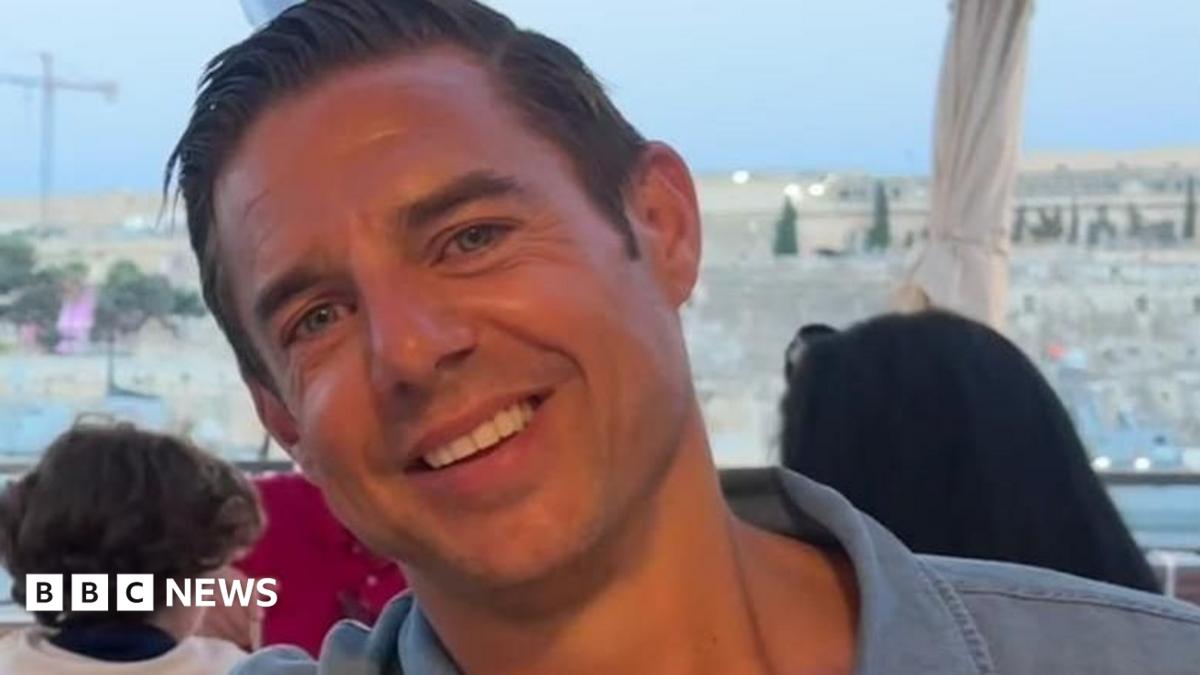
Raised in Alabama, Nicholas Brownlee is now a world-class opera star

Nicholas Brownlee had just fallen in love with opera and was eager to see if his emerging bass-baritone voice could handle Richard Wagner’s music. It did not go well.

“I kept reading how you have to wait to sing this big repertoire,” Brownlee said. But there was one bit of Wagner — Wolfram’s “Song to the Evening Star” from “Tannhäuser” — that’s “a little bit lighter. I figured it was more appropriate.”

So he brought it to his teacher, Thomas Rowell, at the University of South Alabama and asked what he thought.

“I just laughed at him and told him to go away,” Rowell recalled. “He knew that big voice was there, and he was so eager to try on the clothes, but they didn’t fit for a while. It was still a very young instrument.”

Reminded of that exchange nearly 20 years later, Brownlee smiles. “I was a bit ambitious,” he said. “But this was just me.”

Now that ambition — what he calls “a fire in my belly that burns brighter every day,” — has helped propel Brownlee to the very top of his profession at age 37. And he’s done it by singing a lot of Wagner.

Brownlee recently made his debut as Wotan, embattled king of the gods, in “Die Walküre” at the Bavarian State Opera House, part two of a complete “Ring” cycle directed by Tobias Kratzer. He had previously sung the role in “Das Rheingold,” the opera that opens the cycle.

The critics reached for superlatives. “A heroic baritone straight out of a textbook,” wrote Markus Thiel in Merkur, “with a powerful, resonant voice, a force of nature.” Carlota Moseguí in Platea Magazine praised his voice and said Brownlee “possesses all the qualities to become the definitive Wotan of his generation.”

Next, Brownlee heads to the Wagner shrine in Bayreuth, Germany, where he will star as the title character in “Der Fliegende Holländer” (“The Flying Dutchman.”) And his upcoming season is one Wotan after another.

“It’ll be ‘Siegfried’ time in Munich, then ‘Walküre’ time in Buenos Aires, then ‘Rheingold’ time in Barcelona,” he said. Add to that two of the “Ring” operas in Frankfurt and then two complete cycles next summer back in Munich.

“It’s a once-in-a-lifetime thing to have a student who goes that far, especially from a small regional state university like ours,” said Rowell, who remains close friends with Brownlee and officiated his wedding to mezzo-soprano Jennifer Feinstein. “I have to pinch myself. I’m enjoying it vicariously.”

Does Brownlee worry at all about damaging his voice from so much heavy singing?

“I don’t think you’re supposed to say this, but no, not really,” he replied. “We like to put this big stamp on Wagner and say ‘Be Careful!’” But he said he finds the demands of each opera different enough to help him avoid burnout.

Still, he promises that his roles the following season will be more varied, including a return to one of his favorites — Baron Scarpia in Puccini’s “Tosca.” And down the road are two Verdi roles — the villainous Iago in “Otello” and the comic Falstaff.

Of the latter, he said, “I want to flex a different muscle. I talk fast, I’m a bubbly, fun guy, but what I do on stage is so serious all the time. Boy it would be fun to just be a jolly fat guy!”

Just how did a boy from a working-class family in a small town outside Mobile, Ala., become one of a handful of go-to singers in the world for these demanding roles?

His first success as a vocalist actually came as the youngest grandchild in a large extended family, performing Conway Twitty imitations to grab attention. Classical music had to wait until he fell under the spell of his high school choral director.

When he went to college, he planned to study conducting, but Rowell heard him sing and cajoled him into joining the Mobile Opera chorus.

“I went in the first day and I hated it,” Brownlee recalled. “I said, this is in Italian, who cares? That’s for stuffy elite people, not for us blue-collar fellas.”

Still, his curiosity made him determined to figure out why some people loved the art form. So he sat by the side of the stage one night to watch the emotional final scene of Verdi’s “La Traviata,” when the heroine dies after being reunited with her lover.

“When she said, ‘O, gioia!’ and she fell into his arms, and now she’s dead, Alfredo’s weeping over her, and Germont is feeling half-responsible, I was weeping uncontrollably,” he said. “And I didn’t even know what they were saying.”

That’s when he started taking voice lessons, and from there followed years of study and apprenticeships both in the U.S. and later in Germany. Along the way he competed twice in the Metropolitan Opera’s National Council Auditions.

The first time, still in his early 20s, he made it to the semifinals in New York. “I did not go on to the finals, which was absolutely correct,” he said. “Failure is a great lesson.” (Coincidentally, one of the winners that year was Ryan Speedo Green, who performed Wotan in May at Walt Disney Hall and will bein the Met’s upcoming “Ring” cycle.)

Brownlee returned in 2015, and this time he took home one of the top prizes. Other awards have followed, including in 2025, best male singer at the International Opera Awards and the Richard Tucker Award for most promising American singer.

Yet this American singer is still barely known to most opera audiences in his native country. Brownlee’s career has so far been largely in Germany, where he and Feinstein are raising their two daughters and are currently applying for dual citizenship.

“I can perform anywhere in Europe and be home in two hours to see my girls,” he said. “In America that’s just not something you can do.”

He may be rooted in Europe for now, but major U.S. houses are beckoning with increasing urgency.

When he appeared at Chicago’s Lyric Opera this past spring as the prophet Jochanaan in Richard Strauss’ “Salome,” general director John Mangum called his performance “absolutely thrilling.” He said Brownlee is “definitely going be at the top of our list” as the company charts its future Wagner performances.

And Peter Gelb, the Met’s general manager, who heard him sing a major role for the first time during the Munich run of “Walküre,” said “I was blown away. … We’ll definitely be offering him big roles at the Met in upcoming seasons.”

Silverman writes for the Associated Press.

Source link

‘Masters of the Universe’ review: Nicholas Galitzine has the power

What will today’s kids think of He-Man, the muscle-bound ’80s relic with the most iconic bob after Anna Wintour? Launched in an era where machismo meant a goofy wrestler or metal singer with an eight-octave falsetto, the steroidal beskirted barbarian has always been a bit ridiculous. C’mon, his name is He-Man. What in the testosterone is that?

And so, director Travis Knight (“Bumblebee”) has made his reboot of “Masters of the Universe” a dopey, friendly comedy about modern masculinity in crisis with a He-Man who openly wonders what kind of a man to be. Hurtled out of the kingdom of Eternia as a boy, this Prince Adam (a terrifically game Nicholas Galitzine) came of age in Oklahoma City as a sweet guy who happens to be obsessed with swords. Instead of transforming into the strongest man in the galaxy to protect his throne from the evil duo of Skeletor (voiced by Jared Leto) and Evil-Lyn (Alison Brie), earthbound Adam parries HR complaints while sitting behind a desk plate that labels his gender identity not as He-Man but He/Him.

Times have changed. Even He-Man’s talking pet tiger (Tom Wilton) asks for consent before giving him a lick.

Galitzine’s He-Man is more Clark Kent than Superman, a gentle, funny, under-estimated dweeb. On a blind date, his descriptions of magical griffins and burning deserts sound humiliatingly immature. Dumped before dessert, he sulks home where his bro-y roommate (Christian Vunipola) secretly watches the weepie “The Notebook” when no one is looking as the soundtrack spins an acoustic cover of the Cure’s “Boys Don’t Cry.” Every man in this movie has a public persona and a private one. Even Adam’s irritable female boss, Suzie (Sasheer Zamata), hides under a people-pleasing mask. “This is my mega-serious face,” she says with an unnerving grin.

The performances are good; the plot, postcard-sized: Adam returns to Eternia, unleashes his alter-identity He-Man and wrestles with the pressure to live up to his new biceps. Although Adam must rescue his royal parents (James Purefoy and Charlotte Riley) from Skeletor, he reaches for empathy before a blade. Could Skeletor really be that bad, he asks his childhood friend Teela (Camila Mendes). “He has a skull for a face,” Teela insists. In this world, everyone’s measured against their looks.

Here’s another question: Could Skeletor really be Jared Leto? Physically, of course not. Skeletor is all pixels with a clattering jaw perfect for chewing the scenery. (The bully is especially hilarious when the story transplants him to an ordinary weight-lifting gym — call him Skele-Chad.) Leto’s grumbling Brit-inflected baritone is an unrecognizable concoction of trilled r’s and plummy vowels — and the best performance he’s done in years. With apologies to Bette Midler, you should hear the gravitas Leto brings to calling his minions “the buttworms beneath my feet.”

Yes, that’s the humor level of the dialogue. Chris Butler, Aaron Nee, Adam Nee and Dave Callaham have written a heavy-handed script in which, when Castle Grayskull comes under attack, Idris Elba’s soldier is forced to yell, “We’re under attack!” You know, in case the exploding laser beams weren’t obvious.

Obviousness is this film’s handicap — and the main joke. In this movie’s lore, juvenile Adam, played by an adorable Artie Wilkinson-Hunt, is the guilty child who invented his meathead He-Man moniker, as well the nicknames of his allies Ram-Man, Mekaneck and Fisto, who all look exactly as they sound to their chagrin. “I don’t fist anyone,” Fisto (Jóhannes Haukur Jóhannesson) protests. The grown-ups in the audience snicker.

Knight was a kid himself when the cartoon version of “He-Man and the Masters of the Universe” debuted on television. As with his “Transformers” spin-off “Bumblebee,” he makes movies like a child who loves taking his action figures out of the box and giving them a silly soul.

He’s no hack: Knight’s debut film, “Kubo and the Two Strings,” was nominated for an Academy Award for animation. Raised with an affection for brands (his father, Phil Knight, is the co-founder of Nike), he also feels obliged to include so much fan service for his generation that kids will have to swashbuckle through confusing callbacks to discover He-Man for themselves. One battle scene is scored to 4 Non Blondes’ “What’s Up?” simply as a nod to a He-Man mash-up video that went viral back in 2005, a clash as wonky as it sounds. Yet Daniel Pemberton’s opening theme music is a rousing crescendo of stadium rock synthesizers. You can hear Queen guitarist Brian May in the score — not merely as an influence. It’s actually him.

Culturally, hyper-machismo has oscillated from cool to lame to ironically cool and back again for decades. Even Queen itself was deemed lame until “Wayne’s World” resurrected “Bohemian Rhapsody” as headbanging slapstick. If you spot a guy swaggering like a brute from Eternia on the sidewalk, masked or not, he probably thinks he’s more awesome than everyone else does. Likewise, when He-Man smashes skulls to a wailing metal soundtrack, I no longer know if I’m meant to be snickering with the electric guitars or at them. Neither does the movie, which seems to decide each scene’s individual tone on a coin flip.

Frankly, the dorky version of Adam is more fun than the heroic He-Man, even with Knight hammering us every minute to laugh that he’s a total weakling. Galitzine embraces the indignity. Zooming through the air in a flying Sky-Sled, he wedges his face into a triple chin. Dazed and enthusiastic, Galitzine’s human charm counterbalances Eternia’s synthetic feel, a blandscape of bright forests and cliffside dungeons that looks dated — not to 1983 but to last decade’s greenscreen-heavy would-be fantasy franchises like “Clash of the Titans” and “John Carter.”

Please don’t make Galitzine do five of these movies, even though he’s very good. An unusually pretty leading man who is quirkier and funnier than he looks, Galitzine is the kind of rising talent Hollywood rarely knows how to handle. In his previous roles, he gave off the impression of being flummoxed by his own attractiveness, whether as a queer prince (“Red, White & Royal Blue”), a Harry Styles-esque pop star (“The Idea of You”) or a popular football jock whose high school classmates are oblivious that he has the IQ of a second-grader (“Bottoms”). Here, Galitzine multiplies that self-conscious gag times a thousand, visibly dazzled by his own six-pack when he transforms from himbo to gym-bro. Even Skeletor is agog over the “big long sword dangling between his thighs.”

Smartly cast, Galitzine could prove to have the potential of Brad Pitt, another blond hunk who longed to get weird, chafing against roles that made him take off his shirt until he hit 55 and realized it was a flex. But shouldering a wobbly, expensive summer tentpole is a risk — just ask Sam Worthington or Taylor Kitsch. If “Masters of the Universe” tanks, here’s hoping Galitzine summons the strength to dig himself out of the rubble.

‘Masters of the Universe’

Rated: PG-13, for sequences of violence/action, some suggestive material, and language

Running time: 2 hours, 21 minutes

Playing: Opening Friday, June 5 in wide release

Source link

‘Buffy’ star Nicholas Brendon’s cause of death revealed

Indiana officials have disclosed the official cause of death for “Buffy the Vampire Slayer” star Nicholas Brendon, who died in March.

The Putnam County Coroner confirmed in a report shared with The Times on Tuesday that the actor, best known for portraying the loyal and wisecracking Xander Harris, died of atherosclerotic and hypertensive cardiovascular disease. Acute pneumonia and a previous myocardial infarction — a heart attack — were listed as contributing factors in his death.

Brendon died March 20, his family announced in a statement on his social media pages. The family said he died of natural causes, which was also confirmed by the coroner’s report. The report also noted that Brendon had “90% blockage” in his right coronary artery. He was 54.

“He was passionate, sensitive, and endlessly driven to create,” his family said on Instagram in March. “Those who truly knew him understood that his art was one of the purest reflections of who he was.”

Prior to his death, Brendon experienced multiple health issues. He was hospitalized in 2022 after he was diagnosed with a congenital heart defect and after suffering a cardiac incident. The “Criminal Minds” star also underwent multiple spinal surgeries to manage cauda equina syndrome, a rare condition in which nerve bundle in the lumbar or sacral spine are compressed or not functioning properly. His serious spinal injury was triggered by a fall in 2021 that required emergency surgery to prevent paralysis, his manager Theresa Fortier said in a statement at the time.

The coroner’s report described the scene of Brendon’s death, noting that because of the actor’s “declining health” Fortier had spent more time with him and notified authorities of his passing. The report confirmed there were no “obvious signs” of foul play and that “nothing seemed out of place or disturbed” in Brendon’s home, which appeared to be under renovation. Fortier told officials that the actor — a longtime smoker — was dealing with a “persistent” cough, complaining about chest pain and “self-medicating” with over-the-counter drugs prior to his death, according to the report. Brendon also declined further medical treatment.

According to the report, Brendon also had a “markedly enlarged heart,” “moderate” blockage in some of his left arteries and small bowel inflammation.

In addition to “Buffy” and “Criminal Minds,” Brendon was known for roles in the TV series “Without a Trace,” “Private Practice” and “Kitchen Confidential.”

Times staff writer Clara Harter contributed to this report.


Source link