With families struggling to find affordable summer breaks a savings platform has explained how healthcare workers can stack discounts to save up to £200 on peak-season TUI trips. The demand for budget holidays is rising as shoppers search for cheaper ways to get away.
With TikTok searches for ‘money saving tips’ up 45% and the cost-of-living crisis still impacting budgets, families are feeling the pressure. Health Service Discounts has partnered with TUI to provide healthcare professionals with a ‘Holidays for Heroes’ access code for up to an extra £100 off.
The exclusive NHS discount can be stacked on top of all TUI & First Choice package holiday deals, allowing key workers to claim TUI’s current deals plus their extra NHS discount on top. That includes family-friendly resorts with ‘Kids Go Free’ deals, last-minute Marella Cruises from £729 per person and budget hotel stays from just £30 per person.
How to access the deal:
The offer is available for NHS staff, retired healthcare staff, students in healthcare, dental practice staff, pharmacy staff, GP staff, private healthcare staff, members of a foundation trust, hospice staff, healthcare volunteers and healthcare charity staff.
MoneySavingExpert has shared important safety advice for holidaymakers
Millions of holidaymakers could be affected (stock photo)(Image: ITV)
MoneySavingExpert (MSE) has issued a travel warning to millions of people. Founded by journalist and broadcaster Martin Lewis, MSE regularly posts consumer advice for Brits. In the latest Money Tips Email, the experts offered advice for anyone booking holidays.
In the email, the team told readers: “Summer is coming, and if you’re booked to go away and haven’t got your insurance yet, you need to do it NOW, today, straight away!” As the experts pointed out, booking travel insurance as soon as you book your holiday offers the maximum protection, including cover if something happens that prevents you from travelling.
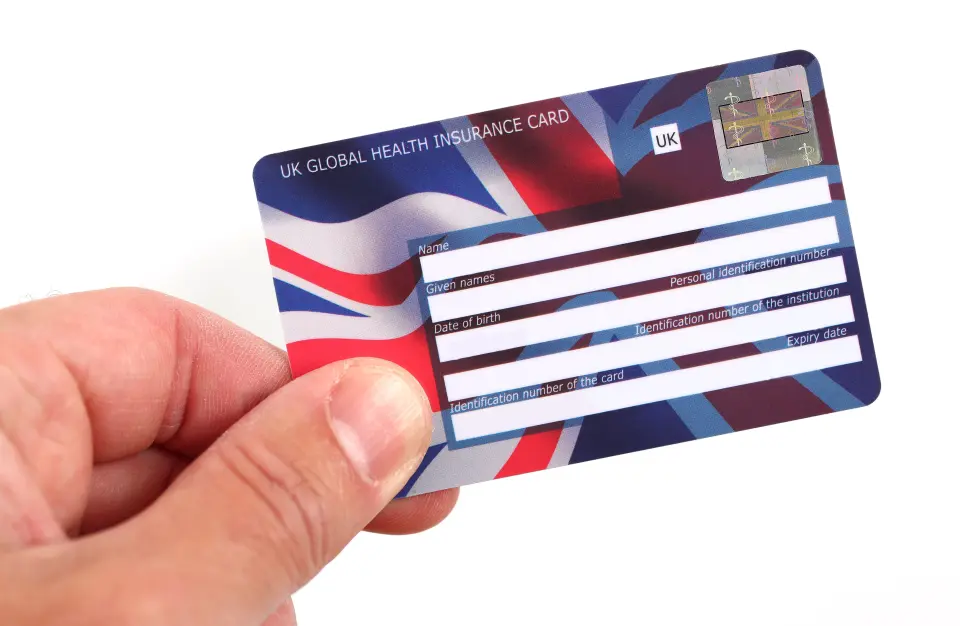
Before setting off, it’s also advised to get a Global Health Insurance Card if you’re travelling to Europe. In the alert, MSE revealed that over two million cards are expected to expire this year. As a result, millions could miss out on the benefits if they don’t renew ahead of upcoming holidays.
The UK Global Health Insurance Card enables holidaymakers to access healthcare without paying more than a local resident would while travelling in the European Economic Area.
The NHS explains: “The UK Global Health Insurance Card (GHIC) lets you get necessary state healthcare in the European Economic Area (EEA), and some other countries, on the same basis as a resident of that country. This may be free or it may require a payment equivalent to that which a local resident would pay.
“The UK GHIC has replaced the existing European Health Insurance Card (EHIC). If you have an existing EHIC you can continue to use it until the expiry date on the card. Once it expires, you’ll need to apply for a UK GHIC to replace it.”
While people are advised they should also take out travel insurance, it could help you avoid paying the excess if you need medical treatment during your trip. MSE said: “Going to the EU? Ensure you’ve a valid (free) GHIC/EHIC – over 2m expire this year.
“The ‘Global Health Insurance Card’ (GHIC) and its predecessor, the EHIC, give access to state-run hospitals or GPs, mainly in European countries, for the same price as a local. So if they don’t pay, you don’t either. Over two million expire this year, check yours.”
A UK GHIC is free, and you can apply through the NHS website. The NHS advises avoiding unofficial websites, which may charge an application fee. People can apply for a new card up to nine months before their current card expires.
The NHS says: “You can apply for a UK GHIC if you’re a resident in the UK. You can also add your family members to your application when you apply.”
More than four million people had problems with a package holiday in the past year, a survey for Citizens Advice suggests. The survey found 76% of adults had been on a package holiday before, and 34% of them had experienced a problem. Some 8% had suffered an issue within the last 12 months specifically, equating to an estimated four million travellers, it said.
The charity said it received about 14 complaints a day about package holidays, including issues such as unexpected changes to the hotel, denied refunds, and poor customer service. Of the 3,500 package holiday complaints made to the Citizens Advice Consumer Service in the past year, 42% involved all-inclusive packages abroad.
A third of complaints (33%) related to the quality of the holiday falling short of the agreed deal, such as hotels being misdescribed, bad food or unavailable facilities. Customer service failures made up 19% of complaints, including long waits on the phone, ignored complaints and administration errors made by firms.
As a result, one in four of those who experienced an issue with a package holiday (25%) said they suffered stress, anxiety or upset, while 17% had to pay extra for daily expenses. Citizens Advice encouraged holidaymakers to check what protections were included within their booking.
One complainant, Zorana, a semi-retired NHS doctor from north-east England, reported spending £6,300 on an all-inclusive, seven-night trip to Lanzarote with her daughter through a UK holiday operator. Torrential rain on the second day resulted in “nightmare” flooding, leaving hotel guests without electricity, water, food or internet.
However the woman said she received no on-site support from their operator, causing them considerable stress. Zorana, 66, said: “We spent the morning on the beach and planned the sauna for later. But when we were eating lunch the rain started and didn’t stop.
“By the time we got to the spa, the hotel told us we couldn’t go in because it was flooded. Half an hour later the electricity had gone. Without electricity, everything stopped. There was no more internet and no more water because the pumps were not working.
“We all gathered in the hotel lobby, to hear what was going on. It was the weekend and reps from all the other travel companies were there, talking with people, reassuring them, giving them information. Some were already distributed to other places. We asked, ‘Where is our rep?’ And we were told he doesn’t work on weekends.
“We were very angry. Hotel staff told us our travel company was always a problem and never helped people. We came home after five days and I started to chase the travel company for a refund. But the customer service adviser said they can’t deal with it because compensation was offered. But their offer was not adequate.
“I mentioned the lack of support, the delay, the value of the holiday, that I had to find and pay for another hotel, and because of this it was reasonable that they should give me all my money back. I feel a victim twice over because I had the stress of our holiday being ruined, and then months of trying to get compensation.”
Citizens Advice consumer spokeswoman Jane Parsons said: “Too often, people are left stressed and disappointed when their dream holidays are spoiled because they’re not getting what they paid for. To make matters worse, they’re having to spend a lot of time and effort trying to resolve issues, sometimes with no luck.
“A record of any issues that occur and evidence should be kept – like clear details of what went wrong and when, photos and receipts. If something goes wrong with your holiday you might be able to get compensation from the company you booked with. You should tell them about any issues as soon as possible – if you don’t say anything until you get home you might get less compensation, or none at all.”
Chartered Trading Standards Institute chief executive John Herriman said: “This research highlights the real impact poor practice in the travel sector can have on consumers, specifically the problems for consumers booking holidays online, particularly through social media.
Left out of pocket
“Too many people are left out of pocket or dealing with stress when holidays don’t meet what was promised. What should be a time to relax and unwind can turn into the opposite. While it’s vital consumers understand their rights, check the protections included and keep clear records if something goes wrong, businesses must meet their legal obligations and ensure they deliver the standard of service people have paid for – and resolve issues raised quickly.
“Strong consumer protection depends on both informed consumers and responsible traders.”
Consumers are entitled to compensation for a holiday if it was lower in value than the one booked, spending extra money was required because of a problem, a large part of the booked services were not provided, something goes wrong that causes distress or disappointment or if the holiday was completely ruined.
Yonder surveyed 2,018 adults between April 17-19 about their experiences with package holidays, including problems. Respondents were asked to exclude issues outside the operator’s control, like geopolitical events or natural disasters.
This is a “natural” part of being a woman, he said
10:35, 06 Jun 2026Updated 11:03, 06 Jun 2026
Dr Amir shared some advice on weight gain that older women might experience(Image: Getty)
A doctor has revealed why women start to put on belly fat as they age, stating it’s a “normal” part of life. According to the expert, women can expect to see their weight fluctuate when they get older.
In a clip from his podcast No Appointment Necessary, shared to his Instagram page, Dr Amir Khan issued some reassurance about weight before and after the menopause. He explained how fat is distributed on the body differently as a result of this hormonal change.
As a consequence of these hormonal shifts, the body can experience a broad range of symptoms that can impact both physical and mental health. These include hot flushes, mood swings, and brain fog.
Content cannot be displayed without consent
However, it can also affect how your body stores fat. On the podcast, his co-host Cheery Healey said: “Lots of women find that when they go through perimenopause and menopause, they gain weight.”
Dr Amir responded: “So, before the menopause, fat distribution in women is usually around the hips, thighs, and buttock area. And that fat distribution is completely normal and healthy and women should have fat there, you don’t want to lose it.”
He explained why. “It’s really good for your fertility,” he said.
“It’s really good for your overall health. It is expected and needed.”
But after menopause, you might notice that you are more prone to weight gain around the tummy. Dr Amir continued: “After the menopause, as the hormones shift, things change.
“And that fat usually deposits around the tummy area and the hips as well and so people can refer to it as a ‘meno belly’. It’s not really a great term but it is just the shift of weight, really.”
He added: “Normal, natural, not the end of the world, part of being a woman, an adult woman.” His advice is supported by the NHS website, which says: “Weight gain during perimenopause and menopause is common.
“It often happens around the stomach and upper body.”
Other symptoms of menopause
The other symptoms of menopause, as listed by the NHS, include:
Changes to your periods
Hot flushes and night sweats
Sleep problems
Mood changes, poor memory and brain fog
Vaginal problems such as dryness, a burning feeling, irritation or itching in and around the vagina
UTIs (urinary tract infections)
A faster, slower or more noticeable heartbeat (palpitations)
Weakening bones (loss of bone density), which can lead to osteoporosis
Feeling the need to pee more or not being able to control when you pee (urinary incontinence)
Headaches and migraines that are worse than usual
Muscle aches and joint pains
Hair thinning or hair loss
Skin changes, including dry and itchy skin
Reduced sex drive (loss of libido)
Sensitive teeth, painful gums or other mouth problems
The health body says you should contact your GP if:
You think you have symptoms of menopause or perimenopause and want to know what your options are
You have symptoms like a fast heartbeat (palpitations)
You still have periods but your bleeding pattern has changed and you’re bleeding more, not less, than before
You have not had a period for 12 months or more, and you have any vaginal bleeding
The most commonly prescribed treatment for menopause symptoms is hormone replacement therapy (HRT).
A DISNEY legend has been rushed to hospital after suffering a stroke, leaving his nearest and dearest concerned.
The musician, known for films such as Aladdin and Beauty and The Beast, is currently under medical care following the scary incident.
Sign up for the Showbiz newsletter
Thank you!
Disney icon Peabo Bryson has sadly suffered a stroke, with his family asking for ‘prayers’ during the difficult timeCredit: Not known clear with Picture DeskThe singer is known for being the man behind the titular song in Beauty and The Beast, alongside Aladdin’s A Whole New WorldCredit: Alamy
Paebo Bryson is best known for songs such as Aladdin’s A Whole New World and the titular track for Beauty And The Beast, a duet with Celine Dion.
The family of Peabo, who is now 75, have shared that he suffered a stroke this week in a worrying ordeal.
In a statement shared with Variety, they said: “Two-time Grammy Award-winning singer, songwriter and balladeer, Peabo Bryson — the voice behind the Oscar-winning Disney songs ‘Beauty and the Beast’ and ‘A Whole New World’ — has suffered a stroke and is currently under medical care.
“At this time, the family requests privacy as they navigate this deeply personal moment together.
Peabo, along with Celine Dion, won a Grammy award for the Beauty and The Beast hitCredit: YouTubeHe also has a string of solo hits and has still been performing in recent yearsCredit: Getty
“The thoughts, prayers and love of friends and fans are welcomed and deeply appreciated.”
Hailing from South Carolina, Peabo is married to singer Tanya Bryson (née Boniface) and a dad to eight-year-old son Kitt and older daughter Linda.
Peabo has had a lengthy music career with numerous accolades under his belt.
In 1992, his performance of Beauty and the Beast with Céline Dion won him a Grammy award in 1992.
A Whole New World, which he performed with Regina Belle, also bagged him the gong the following year.
Alongside his Disney hits, R&B star Peabo has a string of solo hits across the ’70s, ’80s and ’90s.
Songs If Ever You’re in My Arms Again, Can You Stop the Rain and Feel The Fire all hit the top end of the charts.
Back in 2019, he suffered a mild heart attack and was hospitalised.
At the time, his family assured doctors expecting Peabo to make a full recovery, with his health appearing in check up until this new scare.
Millions of people face the prospect of having to pay an extra £1,000 if they want to take a holiday abroad in 2026.
One in five people on NHS waiting lists plan to holiday abroad without travel insurance, according to a recent survey, risking falling ill overseas and incurring hefty healthcare fees. There are currently more than 7.1million adults waiting for consultant-led treatment – and a further 1.7million waiting for a diagnosis – with many unable to take out insurance policies due to the high cost.
Of the 95% who are on, or have been on, a waiting list in the last three years and refuse to miss their holiday, 15% have paid up to £1,000 extra to ensure they’re protected. Many insurers keep their premiums low by not covering existing medical conditions, meaning patients on waiting lists with potentially serious conditions will need to take out specialist cover.
Those waiting for a condition to be diagnosed will find it particularly difficult to find appropriate travel insurance – and one in four plan to holiday without the correct cover. One in 20 currently waiting to be seen by the NHS have found accessing specialist travel insurance so difficult, or so expensive, they haven’t holidayed abroad because of it.
The poll of 2,034 adults commissioned by Wellsoon from Practice Plus Group found adults with hernias are the most likely to holiday without the correct cover, followed by those with cancer. The hardest conditions to find insurance for are heart or blood pressure issues followed by musculoskeletal issues including arthritis, hip or knee pain, back pain, neck or shoulder pain.
A spokesperson for Practice Plus Group said: “It’s a story we hear regularly from people who have a health issue they want to be addressed before they go on holiday, but they’re on a waiting list. They’re worried about going away when they’re in limbo, potentially needing to seek medical help a long way from home and not knowing how much it might cost.
In April 2021, the Financial Conduct Authority introduced new requirements to help consumers with more serious pre-existing medical conditions (PEMCs) better navigate the travel insurance market. Firms that sell travel insurance are required to signpost consumers to one of two directories of specialist firms that provide this type of insurance – one of which is the MoneyHelper directory, provided by the Money and Pensions Service.
A spokesperson from the Money and Pensions Service, which provides a directory of specialist firms that offer travel insurance for pre-existing conditions, said: “If you have a pre-existing health condition you must disclose this to your insurer. Otherwise, when you come to make a claim, it could be rejected.
“Depending on your circumstances, you may be asked to complete a medical exam. This will allow insurance providers to tailor your travel insurance policy to cover your needs. Taking specialist medical travel insurance will give you peace of mind that your medical condition is covered in the event of a claim.
“Our MoneyHelper service provides contact details of companies which specialise in this.”
P&O Cruises passengers are urged to check the rules for their destination before packing certain medications
10:10, 24 May 2026Updated 10:10, 24 May 2026
Certain items are banned and passengers risk trouble if they aren’t aware(Image: Getty)
P&O Cruises passengers heading to specific destinations worldwide are being advised to pay special attention to the medications they bring. The cruise operator is a favoured option for countless Britons, carrying between 500,000 and 600,000 travellers annually.
P&O Cruises operates a fleet of seven vessels. This collection features both family-oriented choices and adult-only ships, spanning from massive floating resorts to more intimate, traditional boats. All the ships go to numerous nations, including Norway, the Caribbean, and the Canary Islands.
For those with bookings to Japan or voyages exploring the Arabian Gulf, it’s essential to verify what medications are permitted. These nations enforce stringent regulations, and particular medicines are prohibited for personal import and non-prescription use.
This includes codeine, which is frequently found in paracetamol tablets. On the P&O Cruises website, the operator outlines all the crucial information passengers require, reports the Liverpool Echo.
It states: “Please be aware that some prescriptions, over-the-counter drugs, complementary therapies and other medicines that are purchased in the UK may be illegal in the United Arab Emirates and are therefore banned in the country. Japan also has rules regarding such medication. Penalties can be severe if banned substances are found when entering these countries.”
It states: “Codeine, for example, is banned and no products containing codeine, which may include paracetamol, may be imported or sold in the United Arab Emirates. An import Certificate from the Japanese or UAE Authorities would be required in order to take such products into the countries, and this does not guarantee the products will be permitted.”
According to the NHS, codeine is a potent opioid painkiller and is often combined with paracetamol to treat moderate pain that standard paracetamol alone cannot alleviate. This combination is typically known as co-codamol.
Codeine is categorised as a narcotic. You’re prohibited from bringing it into Japan for personal use without obtaining strict prior authorisation. Codeine is also designated as a controlled substance in the UAE.
If you’re taking medication and have any uncertainty, contact the appropriate embassy before your arrival:
United Arab Emirates London Embassy Medical Department: 020 7486 6281
Japanese Embassy: 0207 465 6500
You may also check for further information at www.fco.gov.uk.
P&O Cruises also advises that anyone travelling with medications and/or syringes should carry a prescription. It clarifies: “All medications should be kept in their labelled dispensing bottles or packages. If the medications are ‘controlled’ or injectable drugs, it is also advisable to carry a doctor’s letter.
“For the United Arab Emirates, it is essential to carry a prescription for any medication, as well as a medical report if you are travelling with syringes or other medical equipment. We strongly advise you to seek advice if any of the above affects you.”
People visiting these islands could be at risk of high UV levels
The ultraviolet radiation risk has been raised to “extreme” in parts of the Canary Islands(Image: Getty)
People have been urged to take certain precautions as the ultraviolet radiation risk at a popular holiday destination area has been raised to “extreme”. Health officials in the Canary Islands have elevated the UV risk across several of the islands.
According to the Canary Islands Health Department, UV radiation levels are presently classified as “very high” across all islands. And Fuerteventura, Lanzarote and Gran Canaria have reached the highest “extreme” warning category.
Prolonged exposure to ultraviolet radiation can lead to serious health complications, including DNA damage, severe sunburn, allergic skin reactions, eye conditions and a heightened risk of skin cancer, including melanoma. Health experts also caution that UV exposure can suppress the immune system and even trigger the reactivation of viruses such as cold sores.
The alert particularly impacts those who spend lengthy periods outdoors, whether for work or leisure, as well as individuals with fair skin, light eyes or a family history of skin cancer. Children and older adults are also regarded as especially at risk.
As reported by Canarian Weekly on May 21, health authorities are strongly advising people to avoid direct sunlight between 11am and 5pm wherever possible, seek out shaded areas and wear protective clothing, wide-brimmed hats and approved sunglasses with UVA and UVB protection. The application of SPF 50 sunscreen is highly recommended, even on overcast days.
Authorities also issued a reminder to parents that babies under one year old should never be exposed directly to sunlight, as their skin is particularly sensitive and incompatible with most sun creams. The Canary Islands consistently record some of the highest UV radiation levels across Spain throughout the year, owing to their geographical position and climate.
How to apply sunscreen
The NHS warns that most people do not apply enough sunscreen. As a guide, adults should aim to apply around six to eight teaspoons of sunscreen if you’re covering your entire body.
If sunscreen is applied “too thinly”, the amount of protection it gives is reduced. If you plan to be out in the sun long enough to risk burning, sunscreen needs to be applied twice:
30 minutes before going out
Just before going out
Sunscreen should be applied to all exposed skin, including the face, neck and ears, and head if you have thinning or no hair, but a wide-brimmed hat is better. Sunscreen needs to be reapplied liberally and frequently, and according to the manufacturer’s instructions.
This includes applying it straight after you have been in water, even if it’s “water resistant”, and after towel drying, sweating or when it may have rubbed off. It’s also recommended to reapply sunscreen every two hours, as the sun can dry it off your skin.
Further to this, the NHS recommends you should do the following to stay safe in the sun:
Spend time in the shade between 11am and 3pm
Never burn
Cover up with suitable clothing and sunglasses
Take extra care with children
Keep babies under six months out of direct sunlight
Use at least factor 30 sunscreen – make sure to use enough and re-apply frequently
JOHN Lennon’s son Julian has revealed his devastating health diagnosis while sending a warning to his fans.
The son of the iconic singer from The Beatles has opened up about being diagnosed with coronary heart disease and pre-diabetes.
Sign up for the Showbiz newsletter
Thank you!
Julian Lennon is the son of John Lennon and his first wife CynthiaCredit: GettyHe followed in his famous dad’s footsteps and became a musicianCredit: Getty
The 63-year-old musician, who followed in his father’s footsteps and had the hit Too Late For Goodbyes, opened up in a recent social media post.
Taking to social media, Julian said in a post: “After being diagnosed with Coronary Heart Disease & a Pre-Diabetic, I urge you all to get checked out sooner rather than later.
“You never know what hidden health issues you may have, even after exercising and eating as much ‘good/healthy’ food as possible.
“Even with these ailments, I’ve managed to catch them early enough, to be able to reverse some of the damage and will hopefully be able to live a healthy long life!
“Please get checked out, before you’re checked out…
“And last but not least, thanks to all the Doctors who have helped and guided me on this new journey so far… Truly.”
Fans rushed to support Julian amid his health woes.
“Be well Julian! I’m on the same journey,” said one fan.
“Dear Julian, You are very thoughtful to share this, especially for our benefit. Good luck with your new healthier journey. Please keep us updated,” added a second.
“Good advice. Trying to be better at it now. Take good care,” penned a third.
This isn’t Julian’s first health concern.
In 2020, the musician revealed he had to undergo an emergency operation to remove a cancerous growth from his head.
The singer had visited his dermatologist, who noticed a lump on his head which he had had all his life “looked and felt a little different”.
After having a biopsy, the results showed that the mole was cancerous and Julian got it removed immediately.
Writing on social media at the time, he said: “She urged me to have a Biopsy 2 days ago, which I obliged…
“Only to learn, 24 hrs later, that it was malignant/cancerous, and that her recommendation was to get it removed immediately, which is what happened today…
“Hopefully we managed to remove all that was cancerous, but the mole is being sent off again, for a further/deeper analysis, and I’ll have those results next week.”
Julian is the son of John Lennon and his first wife Cynthia, who sadly died in April 2015.
BBC RADIO 2 legend Bob Harris has shared a new health update with fans, after revealing that his cancer has spread.
The radio star, who previously revealed he was forced to take a break from broadcasting as a result of his health issues, posted a new image of himself with a big grin and a thumbs up.
Sign up for the Showbiz newsletter
Thank you!
Bob Harris shared a new health update with fans, after revealing that his cancer has spreadCredit: Instagram/whisperingbobBBC Radio 2 legend Bob has experience recent setbacks in his cancer battleCredit: Instagram/whisperingbob
Bob, 80, could be seen sitting at home in a gown and appeared in good spirits, while writing to fans: “Hiya Folks! I hope you’re all ok. Sending you all my love.”
The star, who is resting up at home and out of hospital, was flooded with sweet messages from fans.
One person wrote: “Sending all the love your way,” while another added: “Fab photo Looking great. Keep up the good work.”
Last month, he shared how his cancer has spread from his prostate to his upper spineCredit: Instagram/whisperingbobBob shared a photo of himself walking with a stickCredit: Instagram
Last month, he shared how his cancer has spread from his prostate to his upper spine.
Taking to Instagram to update his fans at the time, Bob shared a photo of himself walking with a stick.
“I’m sorry it’s been so long since I last posted but the past few weeks have proved to be an extremely testing time,” he penned in the caption.
Bob went on: “When I posted last time from hospital, we were trying to find the reason for the excruciating pain I was feeling in my back.
“Several scans later, we discovered that my prostate cancer has got into my upper spine…really frightening news.
“So, I immediately began a course of radiotherapy – two weeks in hospital in total – to bring things back under control. Thankfully I’m back at home now, on the pathway to recovery and feeling stronger every day.”
He added: “I have started a programme of rehab and today I got out into this glorious weather for the first time with my son @expiredfilmclub who took the photograph.
“Just want to send so much love to Zoe and to everyone who have been in touch.
What are the symptoms of prostate cancer?
Symptoms of prostate cancer can include:
needing to pee more frequently, often during the night
Katie Strick swapped London for Australia, only to find herself returning to the United Kingdom after just 18 months after discovering what life was really like Down Under
13:21, 04 May 2026Updated 13:22, 04 May 2026
A woman who quit the UK for Australia returned home after 18 months(Image: Getty Images)
A woman who quit the United Kingdom for a sunny life in Australia has decided to move back after realising what life Down Under is truly like. Katie Strick and her partner spent 18 months in Australia before making the decision to move back home.
Katie says she made the decision to swap south London for Sydney after striking up a long-distance relationship with a former university friend. Writing in The Times, she admits the chance to join him in his beachside flat “wasn’t a hard sell”.
But after a year-and-a-half, Katie found herself heading back to London. Her first struggle, she says, was the rental market in Sydney.
She found the cost of a flat is around the same in Australia as London. She also admits “friends and family naturally rank highly when I list the reasons for coming back”.
Katie however says the reasons for the move were much more than that. She wrote: “The reasons are rarely sexy: green space, quality of the press, a low risk of shark attacks and being a short train ride from my parents’ home town don’t quite have the same ring as living next to the beach when you shout them across a pub — but they mattered more than I expected.”
She acknowledges that Australia has “more sunshine” as well as “happier, healthier, more outdoorsy people,” but found herself missing the cobbled streets, country pubs, and British humour. She concedes it’s “hard not to miss those things” when you are “a 24-hour flight away”.
She says the Middle East conflict has also led to a “sense of uncertainty” for Brits flying from Australia. Dubai, once a popular layover, became embroiled in the conflict in March when it was struck by Iran.
Katie expected some “pushback” from her friends in Australia, but admits she was taken aback by the level of confusion from people back home too. She says many joked she would regret it when her boyfriend is “conscripted” or would be making another U-turn soon enough.
While she says it can seem difficult to say “exactly what you feel far away from,” she says “you do”. She accepts she has a “sense of day-to-day belonging” from visiting grandparents or meeting a friend’s baby, things that can’t be replicated through FaceTime.
Having moved back to London, Katie has however found herself wondering if she made a mistake. She recalls one moment she was catcalled by a drunk man at Clapham Junction, and dodging crowds in Soho.
On the other hand, she says there have been “moments of pure nostalgia” as she strolled through her favourite London park on a spring evening, or the appreciation she has for the NHS and architecture of the UK. She says her partner will soon land back in the UK, meaning that she gets to experience the “rollercoaster of emotions” from her return all over again.
Katie isn’t the only Brit who has quit the UK for Australia and found themselves moving back. Manchester-born Jessica McMaster recently made the same move after finding “four problems” with life Down Under.
Jessica cited the cost of living, distance from loved ones, visa and work restrictions, and weather as reasons for her move. Jessica, who lived in Melbourne, said: “Sometimes it would rain for days and be really cold and dark.
“Summer lasted about six months, which was amazing, long, bright days, great cafés, runs by the beach, but people think it’s always 30-degree heat. Melbourne can have four seasons in one day. In winter it was cold and rainy, so at times it felt like being back in Manchester, but without your family and friends.”
Dr Xand van Tulleken told viewers ‘it can be like a heart attack for your legs’
Dr Xand van Tulleken told viewers they should ‘never’ just write leg pain symptoms off(Image: BBC)
A BBC doctor has given a worrying update for anyone who has woken up in the morning with a pain in the leg. Appearing on BBC Morning Live, Dr Xand van Tulleken told viewers they should ‘never’ just write symptoms off as what happens due to ageing.
Many people get aches and pains, but specific discomfort in the legs should be investigated, he said. Host Helen Skelton said: “We’re looking at protecting our health now, though. And if you started this morning with a pain in your leg, you’re not alone.
“It’s thought that one in five people over the age of 60 is living with a blood vessel disorder.“ Dr Xand said “It’s really important that no one should ever regard any symptoms they have as just part of getting older. If you have a symptom and you don’t know why you have it, you need to get an explanation.
“Whether it’s shortness of breath or pain in your legs. There are lots of different causes for pain in your legs, but this morning we’re talking about peripheral arterial disease, which is a sort of intimidating medical term, but really we mean just peripheral, meaning it’s at the outside of your body. It’s in your legs rather than being in your heart or your brain.”
Arterial disease might be the cause – and that’s a condition which can mean there are serious health issues at stake beyond just aching legs. Dr Xand said “Arterial disease is the same problems that gives us heart attacks and strokes. Your blood vessels narrow over time. They can calcify, they harden, they clog up with cholesterol, and you are left with a narrower space for blood to flow through and that means that you’re not getting a sufficient blood supply to your legs and that can give you leg pain.
“And you can think of it a little bit like in the same way that some people get angina, they get heart pain when they exercise, when they move around. This is a bit like angina for your legs. And sometimes if those blood vessels completely clog off, it can be like a heart attack for your legs.”
The NHS says many people with PAD have no symptoms. However, some develop a painful ache in their legs when they walk, which usually disappears after a few minutes’ rest. The medical term for this is “intermittent claudication”.
The pain can affect 1 or both legs, range from mild to severe, and usually goes away after a few minutes when the person rests their legs.
Other symptoms of PAD can include:
hair loss on your legs and feet
numbness or weakness in the legs
brittle, slow-growing toenails
ulcers (open sores) on your feet and legs, which do not heal
changing skin colour on your legs, such as turning paler than usual or blue – this may be harder to see on brown and black skin
shiny skin
in men, erectile dysfunction
the muscles in your legs shrinking (wasting)
The NHS adds: “The symptoms of PAD often develop slowly, over time. If your symptoms develop quickly, or get suddenly worse, it could be a sign of a serious problem requiring immediate treatment.”
Dr Xand added: “The quality of the pain is quite specific. I mean, the way that people describe it and it typically wouldn’t be a pain that you’d get when you’re just sitting still, much like angina. It’s the pain that comes from not getting enough oxygen to your muscles. Those blood vessels aren’t working. And so, people tend to describe a kind of deep, heavy ache, like they’re just not, and you can almost feel that thing of just not getting enough.
“It’s a bit like if you’re lifting weights at the gym, if you go beyond your limits, you know, your muscles really start to hurt. It’s a similar thing. The pain is called claudication, but it’s that kind of pain. And typically, if you rest, it’ll go away again. So, that’s the that’s the kind of pain, but there are other changes that you can look for as well.”
He said people might see changes in their legs which could indicate the problem. Dr Xand said: “If you do look at your legs, you may see some changes if you don’t have a good enough blood supply. So, things like loss of hair on your legs would be an examples. The hair the hair can’t grow anymore because you’re not getting enough nutrients to your leg.
“Cold feet, the warm blood from the middle of your body is no longer reaching your feet. Ulcers or cuts are not healing because your immune system carried in your bloodstream is not reaching those and so you’re getting skin breakdown. You’re not getting antibodies and white blood cells and things like that. Changes in skin tone. So, your skin may look kind of mottled and gray as if it’s not getting enough blood. And then your toenails, you may think, I haven’t cut my toenails in a while. Well, are they just simply growing because they’re not getting the nutrients from the bloodstream that they need. So, those are things that might be a clue.”
Tackling the problem
A main cause is smoking, Dr Xand said, and also making sure people get cholesterol, blood pressure measured and check if you have diabetes. He said exercise is a good way of trying to improve the situation: “This may sound a bit a bit paradoxical, may sound like it’s hard to exercise, you’re getting pain when you exercise, but doing some exercise can stimulate the growth of new blood vessels. It can help those blood vessels open up.
“It will lower your cholesterol. It will lower your blood pressure. It will lower your stress. It will improve your blood sugar. You get so many wins from doing a bit of exercise.”