Forty-two million face food aid delays after the nation’s top Court lets US president pause full SNAP payments.
Published On 8 Nov 20258 Nov 2025
Share
The United States Supreme Court has allowed President Donald Trump’s administration to temporarily withhold about $4bn in federal food aid for November, leaving 42 million low-income Americans in need uncertain about their benefits amid the nation’s longest-ever government shutdown.
Justice Ketanji Brown Jackson issued the administrative stay on Friday, giving a lower court more time to assess the administration’s request to only partially fund the Supplemental Nutrition Assistance Program (SNAP), better known as food stamps.
Recommended Stories
list of 3 itemsend of list
The SNAP programme supports Americans whose income falls below 130 percent of the federal poverty line. For the 2026 fiscal year, the maximum monthly benefit is $298 for an individual and $546 for a two-person household.
The Supreme Court order pauses a ruling by a federal judge in Rhode Island that had required the government to immediately release the full amount of funding.
The stay will remain in place until two days after the 1st US Circuit Court of Appeals in Boston rules on whether to block the lower court’s decision. SNAP typically costs between $8.5bn and $9bn each month.
Earlier this week, District Judge John McConnell, appointed by former President Barack Obama, accused the Trump administration of withholding SNAP funds for “political reasons”. His ruling ordered the US Department of Agriculture (USDA) to use money from a separate child nutrition fund, worth more than $23bn and financed through tariffs, to cover the shortfall in food assistance.
‘Judicial activism at its worst’
The administration had planned to provide $4.65bn in emergency funding, half the amount needed for full benefits. It argued that McConnell’s ruling would “sow further shutdown chaos” and prompt “a run on the bank by way of judicial fiat”, according to filings by the Department of Justice.
US Attorney General Pam Bondi praised the Supreme Court’s intervention, calling McConnell’s order “judicial activism at its worst”.
The 1st Circuit Court of Appeals on Friday refused to immediately halt McConnell’s ruling before the Supreme Court’s stay was announced. The USDA had already informed state governments that it was preparing to distribute full SNAP payments, triggering confusion among officials and recipients as the administration appealed.
SNAP benefits lapsed at the start of November, for the first time in the programme’s six-decade history. Many recipients have since turned to food pantries or cut back on essentials like medication to stretch their limited budgets.
The next hearing in the 1st Circuit is expected soon, while millions of families wait to see whether full benefits will resume.
It was a cold November morning, and I had travelled with my family to our ancestral temple in a village in Tamil Nadu. My sister’s 11-month-old baby was to be tonsured for the first time – a religious head-shaving that in Hinduism is a way of discarding the evil eye and removing any negativity from past lives; a new start.
My wife drove, but asked me to park the car while she went inside with our son and her parents. I walked around the front of the vehicle and slid into the passenger seat. But when I tried to park, I felt resistance. As I pressed down on the accelerator, I noticed a middle-aged man running towards me, waving his arms frantically as he yelled for me to move the car backwards.
My mind raced as I reversed. I prayed silently that I hadn’t hurt anyone.
It was only when I got out of the car that I saw her. The thin, frail woman who now lay on the ground, shaking and murmuring. Panicked, my mind tried to make sense of how she’d come to be there – she must have sat down, assuming I’d already parked – and how badly injured she was. She curled into a foetal position as I sat down beside her and gently placed her head on my lap.
“Does it hurt anywhere, paati (granny)?” I asked.
She nodded, pointing to her leg.
I slowly pulled back the torn sari near her knee. The flesh was missing.
“You’ve been hurt, but we’ll take care of it,” I promised.
“No one will take care of me … just let me sit,” she pleaded.
Villagers started to gather, but kept their distance. One man said the woman slept on the streets near the temple and was often seen begging. A woman chided her for always sitting too close to cars. “If you don’t do something now, no one will take care of her, and she’ll die,” a man muttered before leaving.
Between groans, the woman told me her name: Chinnammal.
“Can you find my bag, thangam?” she asked, using a Tamil term for a loved one that translates to “gold”. She was in pain, but speaking to me, the person who had caused it, with such kindness.
I looked around and found her old cotton bag. It was stuffed to the brim with an open packet of chips, a half-eaten bun, a few 10-rupee notes, and some clothes.
The ambulance arrived, but there was only the driver, and it would take at least three people to lift her safely; we needed another pair of hands. There were close to 25 people around us, but no one moved.
“No one will come to lift her. She’s from a different caste. I have come to do temple rituals – otherwise, I would help,” a priest explained before hurrying away.
My wife, who had by now seen the commotion and approached, stepped forward to help, and together, we lifted Chinnammal into the ambulance. I climbed in with her.
[Jawahir Al-Naimi/Al Jazeera]
I could see from her face that the pain came in waves. I sat next to her, one arm under her shoulders, in a kind of half-hug.
“My bag?” she asked, looking relieved when I placed it beside her hand.
“You are the first person to take me in a car,” she told me, her voice trembling.
She called me saami, a Tamil term that translates to God. I couldn’t understand how she could show me such love and respect. I asked for her forgiveness, but she simply asked me to help her sit up.
When we pulled into the hospital, two nurses in neatly pressed white uniforms appeared with a stretcher. I helped the ambulance driver lift Chinnammal onto it and wheeled her into the hospital. I told the nurses what I knew of her injuries, while they exchanged uneasy glances. When Chinnammal lurched forward and vomited, the nurses scolded her and backed away in disgust.
Inside the emergency room, the nursing manager explained that Chinnammal’s blood pressure and heart rate were high, but she was stable. She had two major injuries – a broken hip and severe grazing that would require skin grafts. Her leg, he said, was not so serious and would heal quickly.
Chinnammal reached for my hands. Hers were small and bony, but her grip was firm. Her eyes flickered, drifting in and out of focus. A soft-spoken doctor told me it was a miracle she was stable after sustaining such serious injuries.
She quietly listened to the doctor speak, but when he mentioned it would take three months for her hip to heal, Chinnammal started to wail.
“I will visit you every weekend, paati,” I reassured her.
The hospital staff took Chinnammal for an electrocardiogram, and when she returned, now hooked up to a heartbeat monitor, she grasped my hands again. She tugged on one. I leaned in. “Ask them to give me medicine to die,” she said.
I assured her that the doctors would take good care of her and that I would be there to make sure of it.
“They won’t,” she replied.
Then she looked into my eyes and lost consciousness.
I grabbed hold of her hand, but it was limp. I fell to the floor, sobbing.
Chinnammal was pronounced dead at 8.30 am on November 20, 2022. She was about 75 years old.
[Jawahir Al-Naimi/Al Jazeera]
Chinnammal’s story
Chinnammal didn’t always live on the streets. As a younger woman, she was impeccably dressed, with flowers woven into her neatly plaited hair.
She hadn’t always begged for handouts either. She worked hard to farm a piece of land for her family, but her married life was difficult. Her husband was an alcoholic, and Chinnammal had to raise her daughter, run the house, and farm their land with little help.
She doted on her daughter and was happy when she married a man from a nearby village. A few years after her daughter married, Chinnammal’s husband died. Chinnammal adapted easily to life as a widow. She enjoyed visiting her daughter and son-in-law and would take them homemade sweets. When they struggled to conceive, Chinnammal worried, but she was overjoyed when they decided to adopt. She loved watching her grandson grow. He became her “everything”.
That joy was short-lived. Chinnammal’s daughter fell ill with a severe form of diabetes. When Chinnammal wasn’t at her daughter’s bedside, she was at the temple, praying for her, or concocting various treatments from herbs that she hoped would help.
But nothing worked, and Chinnammal watched her daughter slowly die.
That was the moment Chinnammal’s life changed. She stopped interacting with people. Some villagers started to harass and steal from her. She once filed a police complaint against a drunk neighbour who harassed her, but the police refused to help. Late one night, when she caught the man near her home, she threatened him with a sickle.
In her grief, Chinnammal no longer cared where she slept, what she ate, or how she dressed. She started to sleep by the temple, clutching her cloth bag close to her.
[Jawahir Al-Naimi/Al Jazeera]
After Chinnammal’s death
A few hours after Chinnammal’s death, I went to the local police station and handed myself in.
A police officer contacted Chinnammal’s son-in-law to release her body and begin the family’s settlement case against me.
Her son-in-law initially refused to claim her body. The investigating officer told me he’d said, “She should have died a long time ago. She was just a burden … You can ask them to bury her and move on.”
But the officer insisted, and the man reluctantly came to the station.
When he arrived, I gave Chinnammal’s bag to the police officer, who inventoried its contents and shared the details with her son-in-law. His demeanour changed. He wanted to claim the body and register himself as her closest living relative, he explained.
“There was close to two lakhs ($2,250) in the bag you surrendered, and now this guy is trying to claim it and the compensation that the government might pay,” the police officer told me.
Chinnammal’s death felt like losing a loved one. I knew I had caused it. But she had shown no anger or animosity towards me. In her final hours, she had treated me with kindness and compassion. She had shared her love for her daughter and grandson with me, held my hand, and spoken tenderly to me despite her pain.
At the hospital, a doctor had tried to console me. “What if you had hit a child?” he’d asked. “Could you live with yourself?”
“She had lived her life,” he reasoned. But his reasoning made no sense to me.
The following day, I went to the temple to help the police with their investigation. As I stared at the spot where my life had changed, a priest interrupted my thoughts.
“You did a good job,” he said. Thinking he was chastising me, I apologised.
“No, I mean it,” he responded. “Nobody used to go near her. Local drunks used to steal the money she collected. So she used to cuss and throw stones at anyone who came near her. She had absolutely no one in this world.”
Even the temple staff used to chase her away, he explained.
“I think she chose to go through you. Through you, she died with dignity, the dignity that was denied to her in life,” he said, urging me to be at peace.
But nothing could give me peace.
I stopped driving. For a year, I withdrew from friends and family. I couldn’t sleep and, when I did, I’d see Chinnammal in my dreams. Whenever I was alone, I would think about her, replaying that day in my mind and wondering what might have happened had I done something differently.
Nearly a month after her death, I was able to track down the contact information for Chinnammal’s 19-year-old grandson. I called to ask for his forgiveness, and he asked me about the last moments I spent with her.
Three months later, at the court hearing, I was found negligent and ordered to pay a fine of 10,000 rupees ($115) to the court. At the hearing, I met Chinnammal’s grandson. I hugged him, and though he barely spoke, I could feel the warmth of his forgiveness – just like that of his paati’s.
In her dying moments, Chinnammal taught me the value of life – every life.
Chinnammal means “small mother”.
A neighbour who had known her said, “She spent her whole life caring for her daughter, and, even in death, she ensured that her family was taken care of [with her savings]. Her mind and body may have given in, but she never stopped being a mother.”
[Jawahir Al-Naimi/Al Jazeera]
This story was told to Catherine Gilon by Maverick Prem. Information about Chinnammal’s life was gathered from interviews with her former neighbours, who asked not to be named. Her family declined to be interviewed for this story.
Maverick continues to pay his respects to Chinnammal at the temple grounds where she spent her final years. In addition to the court fine, he made a voluntary donation to Chinnammal’s grandson.
Nov. 7 (UPI) — Cornell University on Friday reached an agreement with the Trump administration to allocate $60 million that would end government investigations and restore several hundred million dollars in research funding for the private school.
Cornell has now joined four other elite universities in making deals.
The allegations stem from accusations of anti-Semitism and admissions discrimination. Cornell, located in Ithaca, N.Y., settled after Brown University, Columbia University, the University of Pennsylvania and the University of Virginia.
Cornell reached the deal with the Department of Justice, Department of Education and Department of Health and Human Services that “will protect Cornell’s students from violations of federal civil rights laws, including from discrimination based on race, sex, or national origin, and promote America’s hardworking farming and rural communities,” according to a DOJ news release.
The Ivy League school agreed to pay a $30 million fine and to invest another $30 million for programs to improve efficiency and lower costs in agriculture and farming. Cornell is a land-grant school that conducts agricultural research. The money will be spread out over three years.
The Trump administration froze more than $1 billion in research funding at the school.
Cornell’s president, Michael Kotlikoff, during his State of the University address in September, said officials didn’t know how the government reached that figure.
He said Cornell had accounted for “nearly $250 million in canceled or unpaid research funds.”
Kotlikoff had said he didn’t want the government to “dictate our institution’s policies.”
“The months of stop-work orders, grant terminations and funding freezes have stalled cutting-edge research, upended lives and careers, and threatened the future of academic programs at Cornell,” he said in a statement to the Cornell community.
“With this resolution. Cornell looks forward to resuming the long and fruitful partnership with the federal government that has yielded, for so many years, so much progress and well-being for our nation and our world.”
The five-page document reads: “This agreement is not an admission in whole or in part by either party. Cornell denies liability with respect to the subject matter of the Investigations.” The deal goes through Dec. 31, 2028.
“Both parties affirm the importance of and their support for academic freedom,” the agreement said. “The United States does not aim to dictate the content of academic speech or curricula, and no provision of this agreement, individually or taken together, shall be construed as giving the United States authority to dictate the content of academic speech or curricula.”
In the agreement, the school and government “affirm the importance of and their support for civil rights, and Cornell has a “commitment to complying with federal civil rights laws and agrees to include the Department of Justice’s ‘Guidance for Recipients of Federal Funding Regarding Unlawful Discrimination.”
Cornell agreed to provide discrimination training to faculty and staff members.
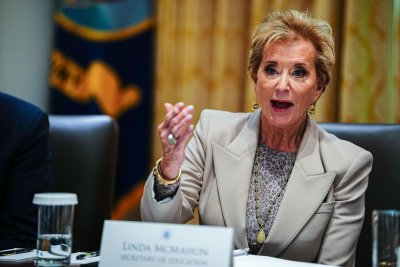
“The Trump administration has secured another transformative commitment from an Ivy League institution to end divisive DEl policies,” Secretary of Education Linda McMahon said.
“Thanks to this deal with Cornell and the ongoing work of DOJ, HHS, and the team at ED, U.S. universities are refocusing their attention on merit, rigor, and truth seeking — not ideology. These reforms are a huge win in the fight to restore excellence to American higher education and make our schools the greatest in the world.”
Attorney General Pam Bondi also praised the deal, saying, “Recipients of federal funding must fully adhere to federal civil rights laws and ensure that harmful DEI policies [diversity, equity and inclusion] do not discriminate against students.
“Today’s deal is a positive outcome that illustrates the value of universities working with this administration — we are grateful to Cornell for working toward this agreement.”
“The Trump Administration is actively dismantling the ability of elite universities to discriminate based on race or religion,” HHS Secretary Robert F. Kennedy Jr. said. “The DOJ’s agreement with Cornell strengthens protections for students against anti-Semitism and all other forms of discrimination.”
The investigations into Cornell centered on campus demonstrations against Israel in the war with Hamas that began on Oct. 7, 2023, and demands to diversify from weapons manufacturers that supplied the Israeli military.
McMahon had said the protests “severely disrupted campus life” and Jewish students were fearful on campus.
Despite a nearly $12 billion endowment, university officials warned about layoffs and “a comprehensive review of programs and head count across the university.”
In the other deals, Penn and Virginia had no financial penalties, while Columbia agreed to a $200 million fine and Brown committed to spend $50 million on workforce development programs.
Harvard hasn’t reached a deal and individually sued in April. The federal government said it would freeze more than $2.2 billion in grants and $60 million in contracts after Harvard refused to agree to demands, including eliminating DEI programs.
Also, another $1 billion in federal health research contracts to Harvard could be withheld. The IRS is considering rescinding the tax-exempt status of the university. And the administration has threatened Harvard’s ability to enroll foreign students.
A Justice Department lawyer told a federal judge Thursday that the University of California system wasn’t close to reaching an agreement. The schools include UCLA.
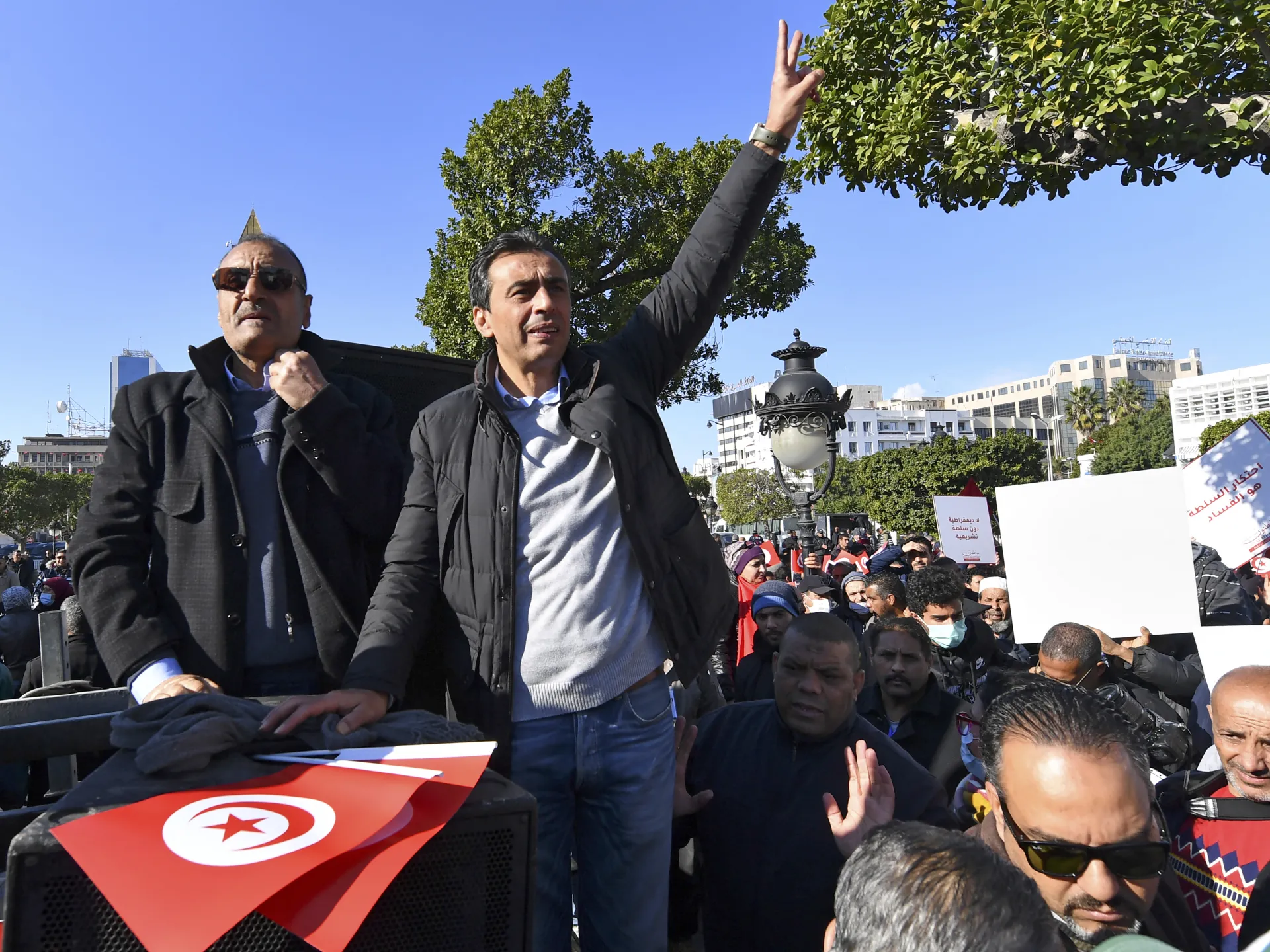
Prominent members of Tunisia’s political opposition have announced they will be joining a collective hunger strike in solidarity with jailed politician Jawhar Ben Mbarek, whose health they say has severely deteriorated after nine days without food.
Ben Mbarek, the cofounder of Tunisia’s main opposition alliance, the National Salvation Front, launched a hunger strike last week to protest his detention since February 2023.
Recommended Stories
list of 3 itemsend of list
Ben Mbarek’s father, veteran activist Ezzeddine Hazgui, said during a news conference in the capital Tunis on Friday that his son is in a “worrisome condition, and his health is deteriorating”.
Hazgui said his family would launch a hunger strike in solidarity with his jailed son.
“We will not forgive [Tunisian President] Kais Saied,” he added.
The leaders of Tunisia’s major opposition parties also declared on Friday that they would go on hunger strike in solidarity with Ben Mbarek.
Among them is Issam Chebbi, the leader of the centrist Al Joumhouri (Republican) Party, who is also behind bars after being convicted in the same mass trial as Ben Mbarek earlier this year. Wissam Sghaier, another Al Joumhouri leader, said some party members would follow suit.
Rached Ghannouchi, the 84-year-old leader of the Ennahdha party, who is also serving a hefty prison sentence, announced he was joining the hunger protest.
Ghannouchi was convicted in July of “conspiring against state security”, adding to previous convictions, including money laundering, for which he has been sentenced to more than 20 years in prison and for which he claims innocence.
A post on his official Facebook page said Ghannouchi’s hunger strike sought to support Ben Mbarek, but he was also taking a stand to defend “the independence of justice and freedom in the country”.
Ben Mbarek was sentenced in April to 18 years behind bars on charges of “conspiracy against state security” and “belonging to a terrorist group”, in a mass trial slammed by human rights groups as politically motivated.
Rights groups have warned of a sharp decline in civil liberties in the North African country since Saied won the presidency in 2019.
A sweeping power grab in July 2021, when he dissolved parliament and expanded executive power so he could rule by decree, saw Saied jail many of his critics. That decree was later enshrined in a new constitution – ratified by a widely boycotted 2022 referendum – while media figures and lawyers critical of Saied have also been prosecuted and detained under a harsh “fake news” law enacted the same year.
Most recently, lawyer and outspoken Saied critic Ahmed Souab was sentenced to five years in prison on October 31 under Decree Law 54, as the legislation is known.
The Tunisian League for Human Rights said there have been “numerous attempts” to persuade Ben Mbarek to suspend his hunger strike, but he has refused, saying he is “committed to maintain it until the injustice inflicted upon him is lifted”.
Prison authorities denied on Wednesday that the health of any of its prisoners had deteriorated because of a hunger strike.
The Arab Organisation for Human Rights in the UK said questions have been raised regarding the prison administration’s compliance with laws governing medical care for detainees on hunger strike and the “safeguarding of their right to physical safety and human dignity”.
“Tunisian law explicitly stipulates the state’s responsibility to protect the life of any prisoner, even if that person chooses hunger strike as a form of protest,” the rights group said in a statement on Friday.
“The prison administration is therefore obliged to ensure appropriate medical care and regular monitoring,” it said, adding that Ben Mbarek’s protest reflects “a broader climate of political and social tension that transcends his personal situation”.
“His action represents a form of protest against detention conditions and judicial processes that many view as influenced by current political polarisation,” the group said.
“Ultimately, the case of Jawhar Ben Mbarek exposes a deeper crisis concerning respect for the rule of law and the principle of accountability,” it added.
يواصل أستاذ القانون الدستوري جوهر بن مبارك إضرابه المفتوح عن الطعام في محبسه منذ 29 أكتوبر الماضي داخل السجن المدني ببلي (ولاية نابل)، احتجاجاً على اعتقاله فيما يُعرف بقضية “التآمر على أمن الدولة”.
Translation: Constitutional law professor Jawhar Ben Mbarek continues his open-ended hunger strike in his place of detention since October 29 inside the civil prison of Belli (Nabeul Governorate), in protest against his arrest in what is known as the “conspiracy against state security” case.
Available data show that Ben Mbarek’s health condition is becoming increasingly fragile with the continued complete abstention from food, which places his physical state in a critical phase requiring precise and constant medical monitoring.
Trump calls it a ‘disgrace’ that South Africa is hosting the G20, reiterates debunked claims of a ‘genocide’ against white farmers.
President Donald Trump has said no United States officials will attend this year’s Group of 20 (G20) summit in South Africa, citing the country’s treatment of white farmers.
Writing on his Truth Social platform on Friday, Trump said it was a “total disgrace that the G20 will be held in South Africa”.
Recommended Stories
list of 3 itemsend of list
“Afrikaners (People who are descended from Dutch settlers, and also French and German immigrants) are being killed and slaughtered, and their land and farms are being illegally confiscated,” Trump wrote, reiterating claims that have been rejected by authorities in South Africa.
“No US Government Official will attend as long as these Human Rights abuses continue. I look forward to hosting the 2026 G20 in Miami, Florida!” he added.
Since returning to the White House in January, Trump has repeatedly claimed that white South Africans are being persecuted in the Black-majority country, a claim rejected by South Africa’s government and top Afrikaner officials.
Trump had already said on Wednesday that he would not attend the summit – which will see the heads of states from the world’s leading and emerging economies gather in Johannesburg on November 22 and 23 – as he also called for South Africa to be thrown out of the G20.
US Vice President JD Vance had been expected to attend the meeting in place of the president. But a person familiar with Vance’s plans told The Associated Press news agency that he will no longer travel to South Africa.
Tensions first arose between the US and South Africa after President Cyril Ramaphosa introduced a new law in January seeking to address land ownership disparities, which have left three-quarters of privately owned land in the hands of the white minority more than three decades after the end of apartheid.
The new legislation makes it easier for the state to expropriate land, which Ramaphosa insists does not amount to confiscation, but creates a framework for fair redistribution by allowing authorities to take land without compensation in exceptional circumstances, such as when a site has been abandoned.
Shortly after the introduction of the Expropriation Act, Trump accused South Africa of “confiscating land, and treating certain classes of people VERY BADLY”.
“The United States won’t stand for it, we will act,” he said.
In May, Trump granted asylum to 59 white South Africans as part of a resettlement programme that Washington described as giving sanctuary after racial discrimination.
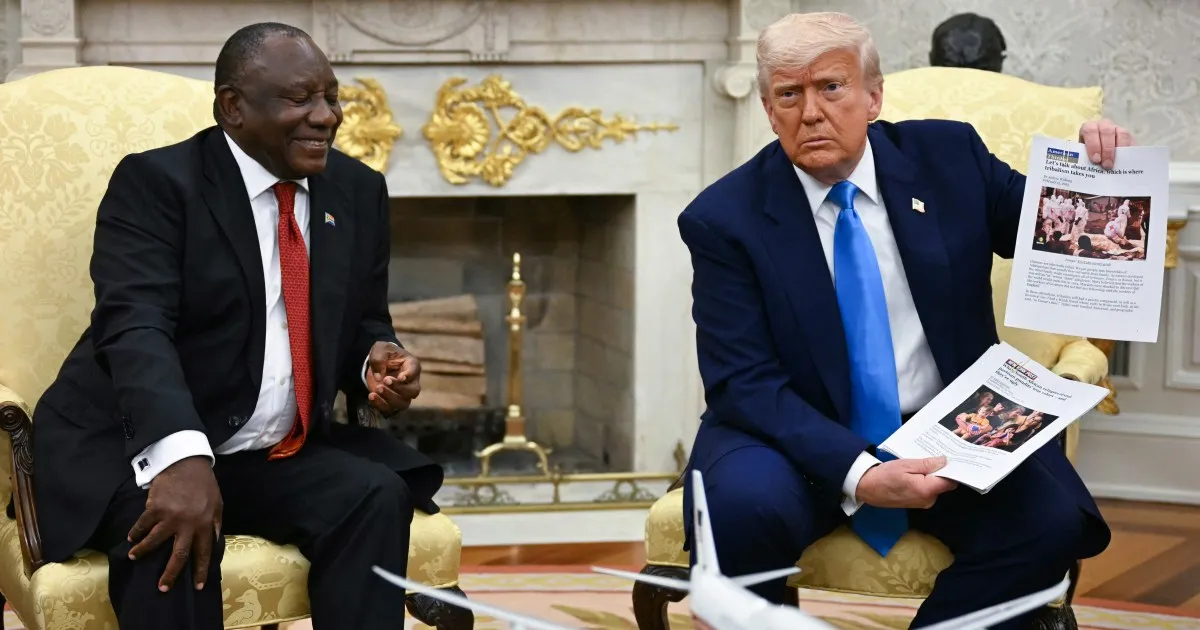
The same month, when Trump met with President Ramaphosa in the White House, he ambushed him with the claim that a “genocide” is taking place against white Afrikaners in his country.
Ramaphosa denied the allegations, telling Trump “if there was Afrikaner farmer genocide, I can bet you, these three gentlemen would not be here”, pointing to three white South African men present – professional golfers Ernie Els and Retief Goosen, and South Africa’s richest man, Johann Rupert.
South African historian Saul Dubow, professor of Commonwealth history at the University of Cambridge, previously told Al Jazeera that there is no merit to “Trump’s fantasy claims of white genocide”.
Dubow suggested that Trump may be more angry about South Africa’s genocide case filed against Israel in the International Court of Justice over its war on Gaza.
Nonetheless, the Trump administration has maintained its claim of widespread persecution. On October 30, the White House indicated that most new refugees admitted to the US will be white South Africans, as it slashed the number of people it will admit annually to just 7,500.
“The admissions numbers shall primarily be allocated among Afrikaners from South Africa pursuant to Executive Order 14204 and other victims of illegal or unjust discrimination in their respective homelands,” the White House said.
North Korea issues warning as Washington and Seoul agree on strengthening military ties.
Published On 8 Nov 20258 Nov 2025
Share
North Korea’s defence minister, No Kwang Chol, has condemned the arrival of a United States aircraft carrier at a port in South Korea and warned that Pyongyang will take “more offensive action” against its enemies.
The minister’s warning comes a day after North Korea launched what appeared to be a short-range ballistic missile into the sea off its east coast.
Recommended Stories
list of 4 itemsend of list
“We will show more offensive action against the enemies’ threat on the principle of ensuring security and defending peace by dint of powerful strength,” the defence minister said, according to a report on Saturday by the North’s state-run Korean Central News Agency (KCNA).
“All threats encroaching upon the sphere of the North’s security” will become “direct targets” and be “managed in a necessary way”, South Korea’s Yonhap news agency also reported the defence minister as saying.
The missile launch on Friday followed after Washington announced new sanctions targeting eight North Korean nationals and two entities accused of laundering money tied to cybercrimes, and a visit to South Korea by US Defense Secretary Pete Hegseth.
Commenting on the visit by US and South Korean defence chiefs to the border between North and South Korea, as well as their subsequent security talks in Seoul, the North Korean defence minister accused the allies of conspiring to integrate their nuclear and conventional weapons forces.
“We have correctly understood the hostility of the US to stand in confrontation with the DPRK to the last and will never avoid the response to it,” No said, using the initials of the North’s official name, the Democratic People’s Republic of Korea.
A TV screen shows a North Korean missile launch at the Seoul Railway Station in Seoul, South Korea, on Friday [Lee Jin-man/AP Photo]
According to KCNA, the defence minister made his comments on Friday in response to the annual South Korea-US Security Consultative Meeting (SCM) and the recent arrival of the USS George Washington aircraft carrier and the Fifth Carrier Strike Group at a port in Busan.
The arrival of the US strike group also coincides with large-scale joint military drills, known as Freedom Flag, between US and South Korean forces.
While in South Korea for the SCM talks this week, Hegseth posted several photos on social media of his visit to the Demilitarized Zone (DMZ) between the North and the South.
Hegseth said that the core of Washington’s alliance with Seoul would remain focused on deterring North Korea, although the Trump administration will also look at flexibility for US troops stationed in South Korea to operate against regional threats.
I visited the DMZ with my ROK counterpart, Minister Ahn, to meet the brave troops of the U.S., ROK, and UN Command that maintain the military armistice on the Peninsula.
Our forces remain ready to support President Trump’s efforts to bring lasting peace through strength. pic.twitter.com/Uy6gab0zwl
Pyongyang described the DMZ visit by Hegseth and his South Korean counterparts as “a stark revelation and an unveiled intentional expression of their hostile nature to stand against the DPRK”.
Pyongyang’s latest missile launch, which Japan said landed outside its exclusive economic zone, came just over a week after US President Donald Trump was in the region and expressed interest in a meeting with North Korean leader Kim Jong Un.
On Friday, the US said it was “consulting closely” with allies and partners over the ballistic missile launch.
“While we have assessed that this event does not pose an immediate threat to US personnel or territory, or to our allies, the missile launch highlights the destabilising impact” of North Korea’s actions, the US Indo-Pacific Command said in a statement.
Nov. 7 (UPI) — President Donald Trump on Friday wants the U.S. Justice Department to investigate the meatpacking industry for possible price fixing and collusion.
Trump posted about the situation on Truth Social while flying to South Florida for the weekend and after he met in the White House with three Republican senators from beef-producing states, who are opposed to importing beef from Argentina.
“I have asked the DOJ to immediately begin an investigation into the meatpacking companies, who are driving up the price of beef through illicit collusion, price fixing, and price manipulation,” Trump posted.
“We will always protect our American Ranchers, and they are being blamed for what is being done by a majority of foreign-owned meatpackers, who artificially inflate prices and jeopardize the security of our Nation’s food supply.
“Action must be taken immediately to protect consumers, combat Illegal monopolies, and ensure these corporations are not criminally profiting at the expense of the American people. I am asking the DOJ to act expeditiously.”
A short time later, he posted: “Cattle prices have dropped substantially, the price of boxed beef has gone up — therefore, you know that something is ‘fishy.’ We will get to the bottom of it very quickly. If there is criminality, those people responsible will pay a steep price!”
After the messages, Attorney General Pam Bondiposted on X: “Our investigation is underway! My Antitrust Division led by @AAGSlater has taken the lead in partnership with our friend @SecRollins at @USDA.”
Brooke Rollins is the agriculture secretary and Abigail “Gail” Slater leads the DOJ’s Antitrust Division.
The top four meatpackers control more than about 85% of the U.S. market — American companies Tyson and Cargill with JBS and National subsidiaries of Brazilian companies.
“This consolidation allows them to suppress prices paid to ranchers while keeping consumer prices high,” Farm Action said. “Importing more beef into this rigged system will not lower costs for families or restore fair markets for producers.
Three of the companies have been sued.
In October, Cargill and Tyson agreed to pay $87.5 million to settle a case alleging price fixing for beef while also denying any wrongdoing.
Earlier this year, JBS agreed to pay $83.5 million for its portion of a separate suit over alleged cattle price fixing.
Trump was taking aim on meatpacking instead of cattle raising, which has been affected by drought, smaller herds, labor shortages and lingering COVID-19 effects, Axios reported.
Trump has said overall grocery prices are going down but concedes beef costs are rising.
A CNN fact check pointed out in September that they were 1.4% higher than in January, when Trump returned to office, according to the Consumer Price Index.
There was a 0.6% increase in average grocery prices from July 2025 to August 2025, the biggest month-to-month jump in three years
Beef is up 13% in one year — the highest over most food items — according to the CPI.
Trump has attempted to increase the nation’s beef supply with increased imports.
The cattle industry and legislators, including Republicans, have opposed this move.
“President Trump’s plan to buy beef from Argentina is a betrayal of the American rancher,” Farm Action said.
“Those of us who raise cattle have finally started to see what profit looks like after facing years of high input costs and market manipulation by the meatpacking monopoly.
“After crashing the soybean market and gifting Argentina our largest export buyer, he’s now poised to do the same to the cattle market. Importing Argentinian beef would send U.S. cattle prices plummeting -and with the meatpacking industry as consolidated as it is, consumers may not see lower beef prices either. Washington should be focused on fixing our broken cattle market, not rewarding foreign competitors.”
Senate Majority Leader John Thune of South Dakota, opposes the imports.
“This isn’t the way to do it,” Thune told Semafor in October. “It’s created a lot of uncertainty in that market. So I’m hoping that the White House has gotten the message.”
Trump met with some Republican senators from beef-producing states: Sen. Cindy Hyde-Smith of Mississippi, Tim Sheehy of Montana and Markwayne Mullin of Oklahoma.
Hyde-Smith is a Republican from Mississippi whose family raises cattle. She is opposed to the imports.
In October, he announced plans to quadruple the tariff quota for imported Argentine beef from 20,000 to 80,000 metric tons. Any imports above this new quota with no tariff would still be subject to a higher 26.4% tariff.
In October, Trump authorized $20 billion loan to Argentina’s government and another $20 billion in financing from private lenders and sovereign wealth funds. It has been described as a bailout to Argentine President Javier Milei.
A US judge will not allow President Donald Trump to deploy National Guard members to the city of Portland, Oregon.
The ruling is the latest in a weeks-long court battle over whether the president violated federal law when he sent troops to a US city despite objections from local officials.
Troops had been blocked from deploying to the city due a temporary court order. Now, that order is permanent.
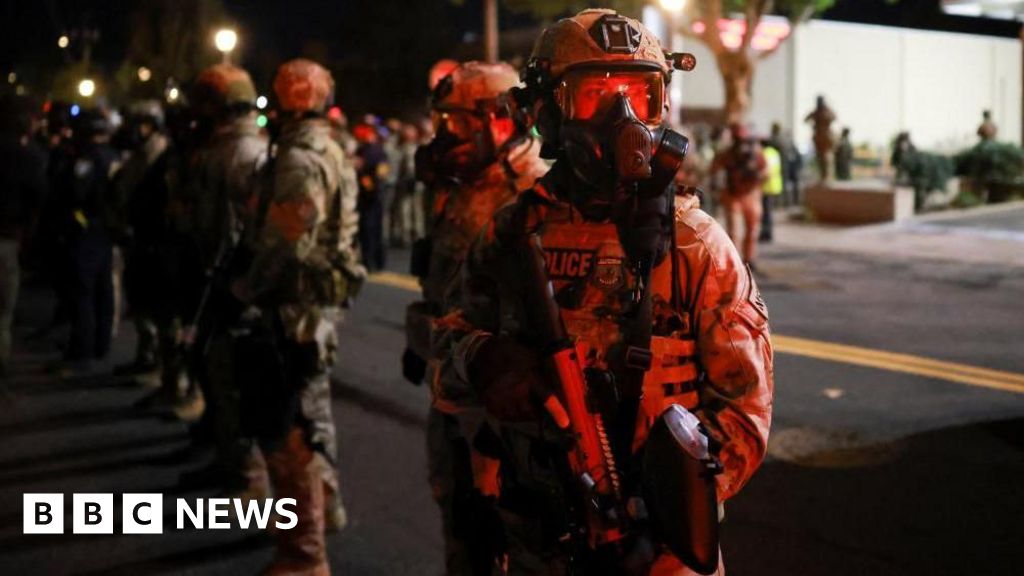
The Portland deployment is part of a series of efforts by Trump administration to subdue protests against federal immigration raids in primarily Democrat-led cities, including Chicago, Los Angeles and Washington DC.
The decision by US District Judge Karin Immergut, a Trump appointee, isthe first time the Trump administration was permanently blocked from deploying troops to a city.
The administration is widely expected to appeal the decision, though, and the issue could end up before the Supreme Court.
When she ruled against the Trump administration earlier this month, Judge Immergut issued two temporary restraining orders. One blocked Trump from mobilising the Oregon National Guard to Portland, while another, broader order stopped him from sending in any troops from any state to Oregon. Trump had tried to send forces from California and Texas.
In the 106-page ruling, Judge Immergut said that she was not blocking the president from ever using National Guard troops, but said that in Portland “the President did not have a lawful basis to federalize the National Guard”.
She wrote that there was neither a rebellion or danger of a rebellion where the president needed to deploy troops.
She also said Trump had violated the 10th amendment of the US Constitution, which gives states any powers not explicitly granted to the federal government.
The judge added that she would leave it to a higher court to set a standard for when a president can “deploy the military in the streets of American cities”, but that “wherever this line precisely is, defendants have failed to clear it. “
In Oregon, there have been competing narratives between state and local officials and the Trump administration on what exactly is happening on the ground.
The Department of Justice has described the city as “war-ravaged” and said there has been a violent siege at a Portland immigration detention facility.
“As we have always maintained, President Trump is exercising his lawful authority to protect federal assets and personnel following violent riots that local leaders have refused to address,” the White House previously said.
But local officials and many city residents have said the violence is not widespread and is contained by Portland police.
“This case is about whether we are a nation of constitutional law or martial law,” Portland’s attorney Caroline Turco said.
US district judge blocks Donald Trump’s use of military force to tackle protests against immigration officers.
Published On 8 Nov 20258 Nov 2025
Share
United States President Donald Trump unlawfully ordered National Guard troops to Portland, Oregon, a federal judge has ruled, marking a legal setback for the president’s use of the military for policing duties in US cities.
The ruling on Friday by US District Judge Karin Immergut is the first to permanently block Trump’s use of military forces to quell protests against immigration authorities.
Recommended Stories
list of 4 itemsend of list
Immergut, a Trump appointee, rejected the administration’s claim that protesters at an immigration detention facility were waging a rebellion that legally justified sending troops to Portland.
Democrats have said Trump is abusing military powers meant for genuine emergencies such as an invasion or an armed rebellion.
Oregon Attorney General Dan Rayfield described the ruling as a “huge victory” and the “decision confirms that the President cannot send the Guard into Oregon without a legal basis for doing so”.
“The courts are holding this administration accountable to the truth and the rule of law,” Rayfield said in a post on social media.
BREAKING NEWS: We just secured a final court order blocking National Guard deployment!
Today’s ruling is a huge victory for Oregon. The courts are holding this administration accountable to the truth and the rule of law. pic.twitter.com/ffzgj0zCjM
— Attorney General Dan Rayfield (@AGDanRayfield) November 8, 2025
Portland’s Mayor Keith Wilson also applauded the decision, saying it “vindicates Portland’s position while reaffirming the rule of law that protects our community”.
“As I have said from the beginning, the number of federal troops needed in our city is zero,” Wilson said, according to local media reports.
The City of Portland and the Oregon Attorney General’s Office sued in September, alleging that the Trump administration was exaggerating occasional violence to justify sending in troops under a law permitting presidents to do so in cases of rebellion.
Echoing Trump’s description of Portland as “war-ravaged”, lawyers from the Department of Justice had described a violent siege overwhelming federal agents in the city.
But lawyers for Oregon and Portland said violence has been rare, isolated and contained by local police.
“This case is about whether we are a nation of constitutional law or martial law,” Portland’s lawyer Caroline Turco had said.
The Trump administration is likely to appeal Friday’s ruling, and the case could ultimately reach the US Supreme Court.
A review by the Reuters news agency of court records found that at least 32 people were charged with federal crimes stemming from the Portland protests since they began in June. Of the 32 charged, 11 pleaded guilty to misdemeanours, and those who have been sentenced received probation.
About half the defendants were charged with assaulting federal officers, including 14 felonies and seven misdemeanours.
Prosecutors dismissed two cases.
Charging documents describe protesters kicking and shoving officers, usually while resisting arrest.
Three judges, including Immergut, have now issued preliminary rulings that Trump’s National Guard deployments are not allowed under the emergency legal authority cited by his administration.
Weekly insights and analysis on the latest developments in military technology, strategy, and foreign policy.
Welcome to Bunker Talk. This is a weekend open discussion post for the best commenting crew on the net, in which we can chat about all the stuff that went on this week that we didn’t cover. We can also talk about the stuff we did or whatever else grabs your interest. In other words, it’s an off-topic thread.
Also, a reminder:
Prime Directives!
If you want to talk politics, do so respectfully and know that there’s always somebody that isn’t going to agree with you.
If you have political differences, hash it out respectfully, stick to the facts, and no childish name-calling or personal attacks of any kind. If you can’t handle yourself in that manner, then please, discuss virtually anything else.
No drive-by garbage political memes. No conspiracy theory rants. Links to crackpot sites will be axed, too. Trolling and shitposting will not be tolerated. No obsessive behavior about other users. Just don’t interact with folks you don’t like.
Do not be a sucker and feed trolls! That’s as much on you as on them. Use the mute button if you don’t like what you see.
So unless you have something of quality to say, know how to treat people with respect, understand that everyone isn’t going to subscribe to your exact same worldview, and have come to terms with the reality that there is no perfect solution when it comes to moderation of a community like this, it’s probably best to just move on.
Finally, as always, report offenders, please. This doesn’t mean reporting people who don’t share your political views, but we really need your help in this regard.
Nov. 7 (UPI) — A 4% reduction in flights took effect Friday after Transportation Secretary Sean Duffy ordered the reduction to ease stress on air traffic controllers during the federal government shutdown.
About 1,000 flights across 40 airports were canceled Friday. There also are delays amid controller shortages with flight reductions at the mandated airports by the Federal Aviation Administration. A 10% reduction is planned for next Friday.
Through Friday night nationwide, there have been 1,494 cancellations and 5,543 flight delays, according to FlightAware. The most cancellations were at Ronald Reagan Washington National Airport: 83 departures at 18% and 75 arrivals at 16%. This includes ones not linked to tower staffing issues, such as equipment problems or weather.
Flights were delayed an average of four hours tonight heading to Reagan, according to the FAA. There were 148 arriving delays, or 32% of flights, and 204 departure delays, or 45%.
United Airlines and American Airlines announced they have cut their flights by 4% for Saturday. This means 220 for American, which has the most flights, and 168 for United the third-biggest airline.
Delta Airlines, with the second-most flights, didn’t announce plans but canceled 170 on Friday.
And Southwest Airlines said about 100 flights will be canceled Saturday.
Control towers at several airports Friday are facing staffing shortages, including in San Francisco, Atlanta and others, CNN reported.
On Friday, there were staffing shortages at nine towers; 12 at TRACONs, which handle flights arriving or departing airports; and eight at the Air Route Traffic Control Center that handle flights at high altitudes.
USA Today reported that Duffy told Democrats who criticized his decision to cut flights, “Open the damn government.”
The federal government has been closed since Oct. 1, and the shutdown is now the longest in history at 38 days.
The staffing shortage is getting worse because air traffic controllers are quitting, said Nick Daniels, president of the National Air Traffic Controllers Association, to CNN.
“Controllers are resigning every day now because of the prolonged nature of the shutdown,” Daniels said. “We’re also 400 controllers short – shorter than we were in the 2019 shutdown.”
Daniels told CNN that controllers have to be “perfect” at work, and financial concerns can cause issues with their concentration.
“We are always being used as a political pawn during a government shutdown,” Daniels said. “We are the rope in a tug-of-war game.”
In one city, pilots have stepped in to help. At North Las Vegas Airport, a group of pilots delivered food and supplies for controllers and their families.
“I’ve been in the situation where I’ve had an in-flight emergency, and the air traffic controllers make a difference,” pilot Jeffrey Lustick told CNN affiliate KTNV. “They help you get to the ground safely. They alert people that you need help … air traffic controllers save lives.”
The pilots have made two deliveries to the controllers.
“The relationship between air traffic controllers and pilots is one of trust … they have to be able to survive, and we want them to stay here and continue to provide support to our community,” he said.
Airlines will decide which flights to cancel based on revenue, Michael Taylor, senior travel advisor at JD Power, told USA Today.
“All these airlines have shareholders, and their job as managers is to maximize revenue and margin and profit to the airline sales and keep your airline stock up,” Taylor said. “So they’re going to start first at looking – if you want 10% reduction in number of aircraft, well then we will cut those markets out that we’re not going to make the most money.”
There are other considerations, such as crew and aircraft placement, Taylor said. But the money is the bottom line.
“It won’t seem to travelers that there’s any rhyme or reason to it at all. It’ll seem random, but what’s really driving it is someone in corporate headquarters saying, ‘OK, you want the number of aircraft lowered? Fine. I’ve got to keep my revenue high. I’m going to take out the ones I don’t make any money on. It’s as simple as that,'” Taylor added.
Some travelers are making multiple backup plans, including different days and routes.
“What I’m worried about is getting to Houston in time for a procedure that’s been scheduled for quite some time and there’s some urgency,” Neil Lyon told CNN about flying from Santa Fe, N.M. I’m dealing with this, and I’m just thinking about the tens of thousands, or millions, who are dealing with other really serious circumstances that are impacted by what the situation is.”
Almost a decade ago, I would have wagered my entire wealth on the defeat of candidate Donald Trump in the primaries of the 2016 U.S. presidential election. My premises were clear: presidential elections should be contests among politicians, of which the U.S. has an abundance, making it unlikely for an outsider to succeed; Americans are well-educated, mature citizens unlikely to elect a non-politician; and Trump’s provocative personality would deter the majority from voting for him. I was proven wrong, but this lesson led me to anticipate his victory in the 2024 elections after reevaluating my premises.
My understanding of American intellect has made me overlook a significant portion of society that prioritizes personality over substance, favoring a strong, assertive persona instead of a competent candidate. Elections blend many factors influencing citizens’ decision-making, with power being a major element in American life. Trump’s political incompetence was overshadowed by his ability to manipulate power, convincing over fifty percent of the population to support him—a quality clearly lacking in his 2024 challenger. For Republicans, the victory was cause for celebration — even if it happened by an “insurgent power manipulation.”
While politics revolves around power, democracy was conceived to constrain it and to enable its lawful and moral exercise. The primary challenge for the U.S. is determining how citizens and their leaders can wield power constructively and ethically within a democratic framework. Current polarization in the U.S. isn’t merely a divide between Republicans and Democrats; it encompasses a myriad of issues and policies on both sides, such as abortion, gender identity, and immigration. The underlying struggle remains the interaction between democracy and power that shapes their mindsets.
American society, perhaps like many others, exists in two parallel realities. One ideal reflects a belief in a nation that genuinely upholds liberal democratic values, supported by a system of checks and balances and the rule of law. In contrast, a significant segment of society downscales this notion, accepting that the United States is fundamentally a nation of power—one that should be guided by the realities of its superpower status, often involving elements of violence in its policies, including leadership selection that Trump threatened during the election process.
It is evident that the Democratic Party leadership failed to present a “powerful” presidential candidate in 2024 or effectively engage its base in the democratic process of candidate nomination. This deficiency has reinforced Trump as the strongman that many believe the U.S. needs. Recent polls show that most voters think Trump is pushing the limits of his constitutional authority, yet the nation must accept that his return to power came through a democratic process.
Ultimately, I realized that the American intellect that has shaped my understanding of the U.S. for decades isn’t purely fact-driven; it tends to twist facts depending on the media outlet or institution, which often highlights issues in ways that align with what they define as their “corporate mission” at the expense of true democracy. This mechanism is supported by a multitude of influential writers and podcasters who shape societal thoughts and behaviors. This troubling phenomenon has been countered by social media, which offers alternative, often unaccountable, views that may be entertaining but lack substantiation.
Regrettably, freedom of expression is widely accepted even when if entails provocation or incendiary that significantly contributes to escalating violence in the United States. The average gun ownership rate, estimated at 120 firearms for every 100 people—the highest in the world—amplifies personal power and can easily incite violent actions during conflicts. A small fraction of enraged citizens can commit crimes fueled by personal firearms, exemplified by incidents like the assassination of Charles Kirk. The prevalence of guns among citizens bolsters the phenomenon of a power-driven presidency and society.
Trump is, in fact, a byproduct of American citizens’ overvaluation of power at the expense of democracy. Although he promised to avoid military conflict, politics is notorious for broken promises. Striking Iran and targeting suspected drug smugglers in international waters exemplifies illegal violence that nonetheless strengthens his power status among supporters. Meanwhile, the recent massive protests, part of the No Kings movement against Trump’s policies, represent a form of “soft democracy,” activity which may not resonate with the “power segment” of society. What the United States needs is a clear set of norms, policies, and public order to advance its democracy. This doesn’t imply transforming the nation into an autocracy but rather clarifying many grey areas, such as freedom of speech and incitement. The US military spending, which accounts for roughly 3.4% of GDP, is not intended to defend the nation against a specific enemy; rather, it aims to maintain superpower status in contrast to the unrealistic small budget used by previous administrations to promote democracy, reflecting the nation’s interests in both areas. In my view, the U.S. does not faithfully adhere to democratic principles; instead, power is the true driving force that reflects its nature.
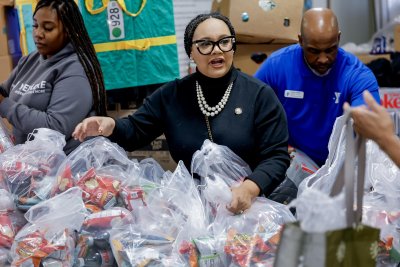
Rep. Nikema Williams, D-Ga., helps distribute food aid bags during a free food distribution at the Young Family YMCA in Atlanta on Thursday. The YMCA’s weekly neighborhood food distribution gave out nearly 10,000 pounds of food to about 400 families. Photo by Erik S. Lesser/EPA
Nov. 7 (UPI) — The Trump administration on Friday night appealed to the U.S. Supreme Court after a federal appeals court upheld a district judge’s order to pay full benefits in November to 42 million in the Supplemental Nutrition Assistance Program.
A short time earlier, the 1st District Circuit left in place a decision on Thursday by Rhode Island federal Judge Jack McConnell, who ordered the administration to pay out the full benefits within one day, saying, “People have gone without for too long.”
The three-member appeals court’s decision means the U.S. Department of Agriculture must take steps to disperse the electronic payments, which are staggered each month. Earlier Friday, the agency said it notified states that it is working to process the payments.
The panel was Chief Appellate Judge David Barron, appointed by President Barack Obama, and Gustavo Atavo Gelpi Jr. and Julie Rikelman, both picked by President Joe Biden.
The judges said that they are still considering a bid for longer relief while assessing the appeal.
Attorney General Pam Bondiposted on X the Trump administration will ask the Supreme Court to stay the Rhode Island-based lower court judge’s ruling, which she called “judicial activism at its worst.”
“A single district court in Rhode Island should not be able to seize center stage in the shutdown, seek to upend political negotiations that could produce swift political solutions for SNAP and other programs, and dictate its own preferences for how scarce federal funds should be spent,” Bondi said.
Seven days ago, McDonnell and U.S. District Court of Massachusetts Judge Indira Talwani told the Trump administration to access available funds to continue. They were both nominated by Obama.
On Monday, the administration told the judge it only had reserved money to pay out 50% of the total $9 billion cost. Then, it was raised to 65%.
The judge directed USDA to find $4 billion “in the metaphorical couch cushions.”
McConnell said the administration could use Section 32 funds, which the USDA uses to help with child nutrition programs. But the administration rejected that plan.
In the appeal, DOJ claimed that the judge’s order “makes a mockery of the separation of powers.” Lawyers said transferring funds would mean diverting money from Child Nutrition Programs.
“Unfortunately, by injecting itself with its erroneous short-term solution, the district court has scrambled ongoing political negotiations, extending the shutdown and thus undercutting its own objective of ensuring adequate funding for SNAP and all other crucial safety-net programs,” they said.
Plaintiffs in the case, which are nonprofit organizations, asked for the full payment, and McConnell agreed.
“The evidence shows that people will go hungry, food pantries will be overburdened, and needless suffering will occur” if SNAP is not fully funded, he said.
“While the president of the United States professes a commitment to helping those it serves, the government’s actions tell a different story,” McConnell wrote in a written order.
The federal government has been shut down since Oct. 1, and the shutdown is now the longest in history.
In every past shutdown, emergency funds have been used to fund the program.
McConnell also mentioned a social media post that Trump made, saying he refused to release any more funds until “the radical-left Democrats open up government, which they can easily do, and not before.”
The post was used as evidence that the administration would ignore McConnell’s order.
The race for access to Central Asia’s natural resources is intensifying.
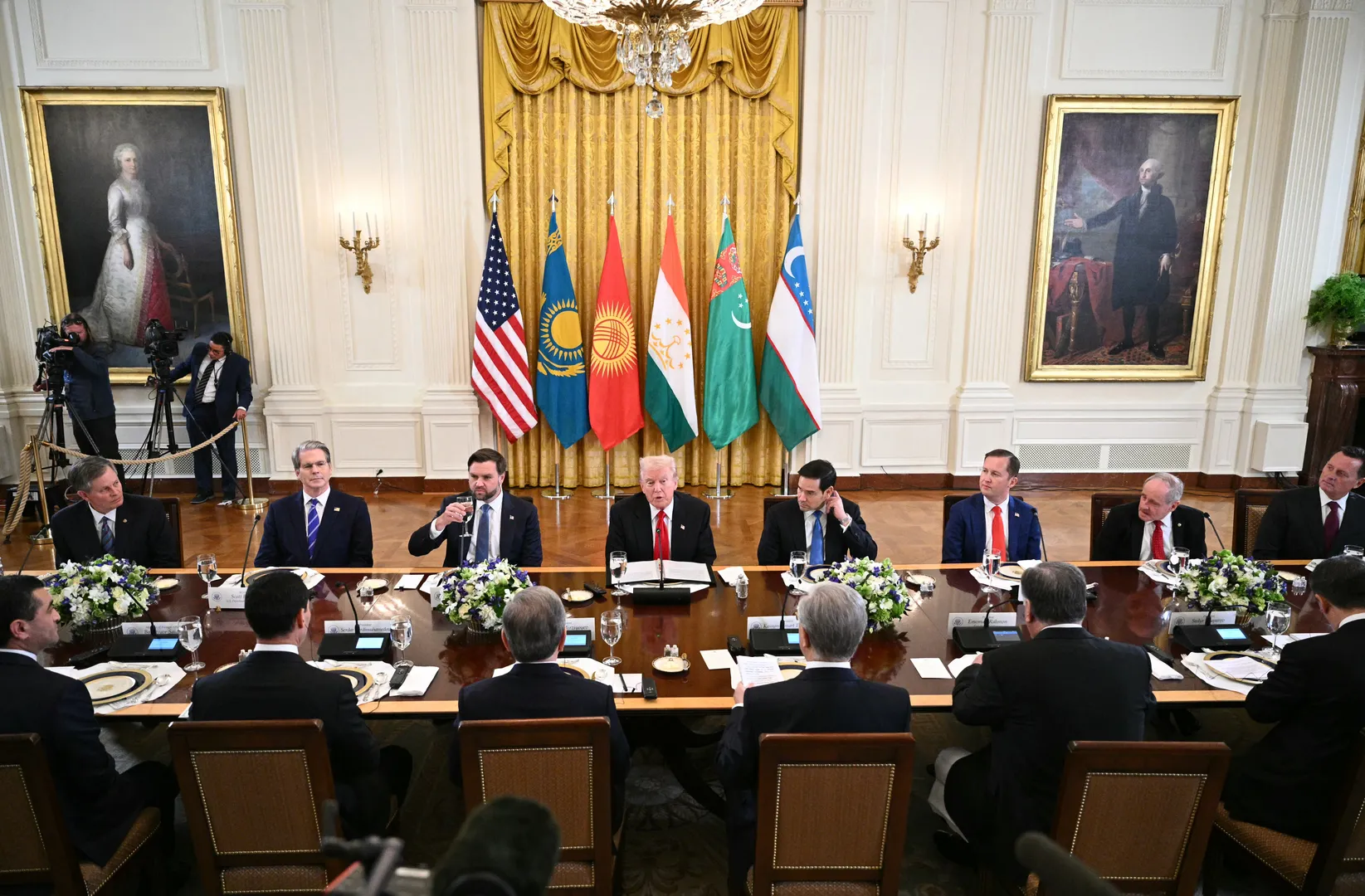
United States President Donald Trump has set his sights on the C5 nations, comprised of Kazakhstan, Uzbekistan, Kyrgyzstan, Turkmenistan and Tajikistan.
He hosted a summit with their leaders at the White House, as Washington aims to get access to the mineral-rich region and reduce its reliance on China for imports of critical minerals.
But the leaders of the C5 face a delicate balancing act to make deals with the US without annoying Moscow or Beijing.
The meeting in Washington came just a month after Russia’s Vladimir Putin attended a summit with the C5.
And earlier in the year, the Chinese president also met C5 leaders, hoping to maintain China’s role in the region.
So, can Washington succeed in a region long dominated by Russia, and where China is making inroads?
Presenter: Nick Clark
Guests:
Zhumabek Sarabekov – Acting Director at the Institute of World Economics and Politics in Kazakhstan
William Courtney – Senior Fellow at the RAND Corporation
Dakota Irvin – a Senior Analyst at PRISM Strategic Intelligence
Turkiye accuses Israeli officials of ‘genocide and crimes against humanity’ over Israel’s war on Gaza.
Published On 7 Nov 20257 Nov 2025
Share
Turkiye says it has issued arrest warrants for genocide against Israeli Prime Minister Benjamin Netanyahu and other senior Israeli officials.
Among 37 suspects listed are Israeli Defence Minister Israel Katz, National Security Minister Itamar Ben-Gvir and army chief Lieutenant General Eyal Zamir, according to a Friday statement from the Istanbul prosecutor’s office, which did not publish the complete list.
Recommended Stories
list of 3 itemsend of list
Turkiye has accused the officials of “genocide and crimes against humanity” that Israel has “perpetrated systematically” in its war on Gaza since October 2023.
“The October 17, 2023, attack on the al-Ahli Baptist Hospital claimed 500 lives; on February 29, 2024, Israeli soldiers deliberately destroyed medical equipment; … Gaza was placed under blockade, and victims were denied access to humanitarian aid,” it said.
The statement also refers to the “Turkish-Palestinian Friendship Hospital”, built by Turkiye in the Gaza Strip and bombed by Israel in March.
Israel denounced the move as a “PR stunt”.
“Israel firmly rejects, with contempt, the latest PR stunt by the tyrant [President Recep Tayyip] Erdogan,” Foreign Minister Gideon Saar posted on X.
The Palestinian group Hamas welcomed the announcement, calling it a “commendable measure [confirming] the sincere positions of the Turkish people and their leaders, who are committed to the values of justice, humanity and fraternity that bind them to our oppressed Palestinian people”.
Turkiye’s announcement comes almost one year after the International Criminal Court (ICC) issued arrest warrants for Netanyahu and his former defence minister, Yoav Gallant, for alleged “war crimes”.
Turkiye last year also joined South Africa’s case accusing Israel of genocide at the International Court of Justice (ICJ).
Israel’s war on Gaza has killed at least 68,875 Palestinians and wounded 170,679 since October 2023.
Despite some progress in delivering food to Palestinians in the besieged Gaza Strip, the enclave – ravaged by Israeli bombardment and racked by hunger – remains in urgent need of humanitarian assistance, the United Nations has said.
The UN and its partners have been able to get 37,000 metric tonnes of aid, mostly food, into Gaza since the October 10 ceasefire, but much more is needed, UN spokesperson Farhan Haq told reporters on Friday.
Recommended Stories
list of 3 itemsend of list
“Despite significant progress on the humanitarian scale-up, people’s urgent needs are still immense, with impediments not being lifted quickly enough since the ceasefire,” Haq said, citing reports from the UN’s humanitarian service, OCHA.
Haq was critical that entry of humanitarian supplies into Gaza continues to be limited to only two crossings – the al-Karara (also known as Kissufim) and Karem Abu Salem (Kerem Shalom) crossings.
There is no direct access to northern Gaza from Israel or to southern Gaza from Egypt, while NGO staff are being denied access, he said.
Earlier this week, the UN said it had distributed food parcels to one million people in Gaza since the ceasefire, but warned it was still in a race to save lives.
The UN’s World Food Programme stressed all crossing points into the Gaza Strip should be opened to flood the famine-hit territory with aid, adding that no reason was given for why the northern crossings with Israel remained closed.
Palestinians across Gaza continue to face shortages of food, water, medicine and other critical supplies as a result of Israeli restrictions.
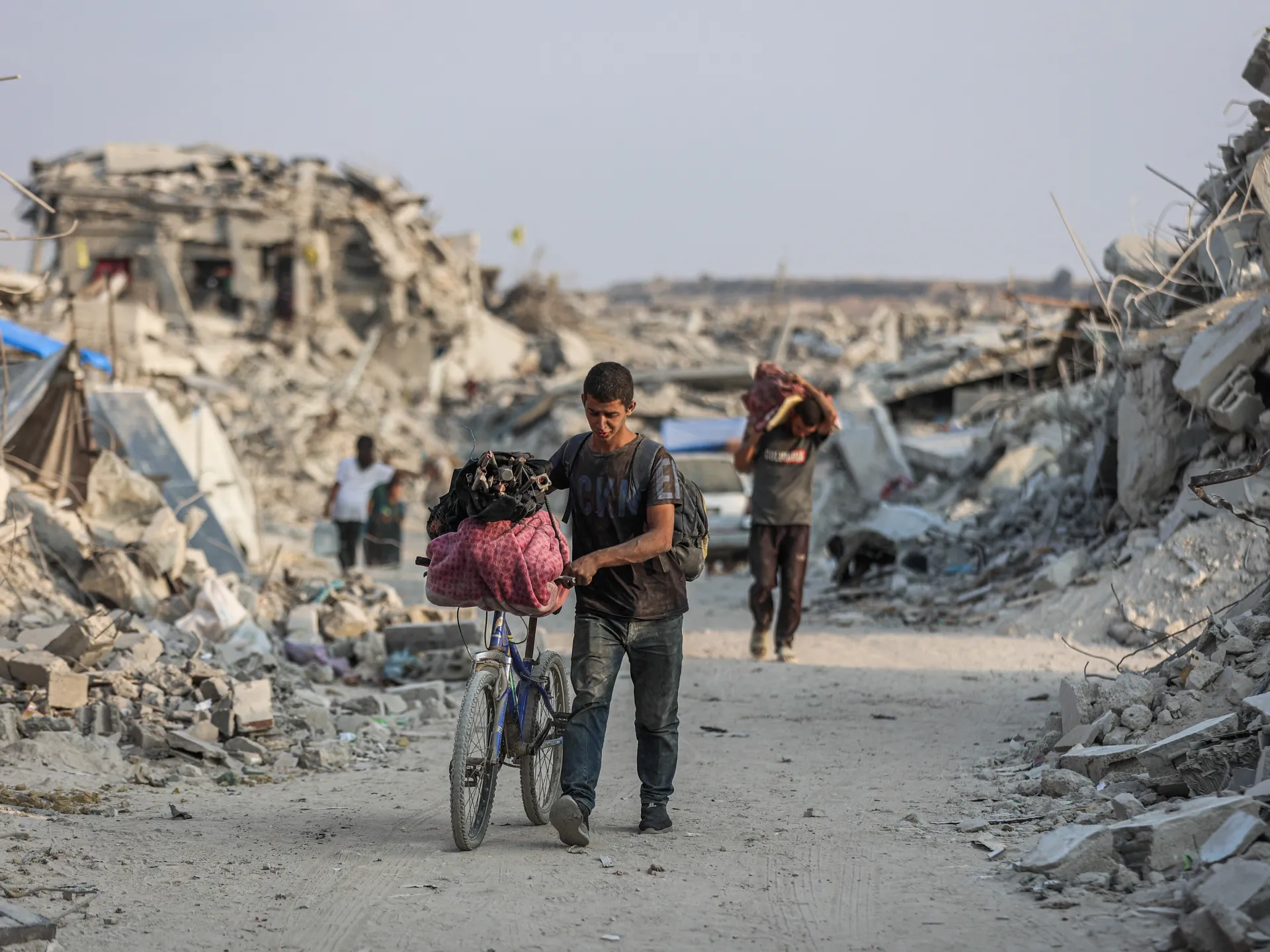
Many families also lack adequate shelter as their homes and neighbourhoods have been completely destroyed in Israel’s two-year military bombardment.
Chris Gunness, the former spokesperson for UNRWA, the Palestinian refugee agency, said Israel is committing a war crime by blocking aid to Gaza.
Speaking to Al Jazeera, Gunness noted that tens of thousands of Palestinians – mainly children – remain at risk of malnutrition. He also said that if Israel doesn’t meet its obligation “to flood the Gaza Strip with humanitarian aid”, then third-party countries must act.
“Israel has made it clear that it wants to commit a genocide against the Palestinians, it wants to ethnically cleanse them, and it wants to starve them,” he said.
Captive’s body returned
The ceasefire between Israel and Hamas came into effect on October 10, after both sides agreed to a United States-brokered 20-point plan aimed at ending the war. But since it was announced, Israel has repeatedly launched attacks, killing dozens of people, with its forces remaining in more than 50 percent of the territory.
More than 220 Palestinians have been killed since the ceasefire took effect, according to the Ministry of Health in the enclave.
Israel has also been carrying out a wave of demolitions in parts of Gaza under its continued control east of the so-called yellow line, where Israeli forces are stationed.
The latest demolitions on Friday included residential buildings east of Khan Younis in southern Gaza, according to Al Jazeera reporters in the Strip.
Meanwhile, Prime Minister Benjamin Netanyahu’s office confirmed Israel received from the Red Cross the remains of one of the last six captives held by Hamas in Gaza.
The Israeli military later confirmed that a coffin containing the deceased captive’s body had “crossed the border into the State of Israel” after being delivered by the Red Cross.
It said the body was being sent to a forensic facility in Tel Aviv for identification.
At the start of the truce, Hamas’s armed wing, the Qassam Brigades, released all 20 surviving captives. In return, Israel freed hundreds of Palestinian political prisoners, including the bodies of slain Palestinians from Gaza, many showing signs of torture.
Of the 28 deceased Israeli captives that Hamas agreed to hand over under the deal, it has so far returned 22 – 19 Israelis, one Thai, one Nepali and one Tanzanian – excluding the latest body.
The last six deceased captives include five seized on October 7, 2023 – four Israelis and one Thai – as well as the remains of a soldier who died in 2014 during one of Israel’s previous assaults on Gaza.
Israel has accused Hamas of dragging its feet in returning the bodies of deceased captives. The Palestinian group says it continues to press for proper equipment and support to comb through vast mounds of rubble and debris – where some 10,000 Palestinians killed in Israeli bombardments are still buried.
More than 68,000 Palestinians have been killed during Israel’s two-year war.
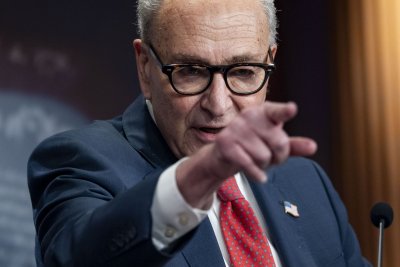
Nov. 7 (UPI) — Democrats are ready to end the federal government shutdown if Republicans agree to extend Affordable Care Act credits for another year, Senate Minority Leader Chuck Schumer announced Friday afternoon.
Schumer, D-N.Y., said Senate Democrats favor passing a temporary funding measure and three other bills that would fund the federal government for one year, CNN reported.
“Democrats are offering a very simple compromise,” Schumer said on the Senate floor.
“Now, the ball is in the Republicans’ court,” he added. “We need Republicans to just say yes.”
Schumer’s announcement came after Senate Majority Leader John Thune, R-S.D., earlier said the Senate will work through the weekend to negotiate reopening the federal government and possibly vote after a bipartisan effort failed Thursday.
Thune wanted to hold another vote on the House-approved continuing resolution to fund the federal government through Nov. 21, but Senate Democrats aren’t on board, he told media earlier Friday.
“Our members are going to be advised to be available if, in fact, there’s a need to vote,” he said.
“We will see what happens and whether or not, over the course of the next couple of days, the Democrats can find their way to re-engage again,” Thune added.
Thune earlier this week expressed optimism that a funding agreement would be made this week, but that ended after Senate Democrats met on Thursday.
“All I know is that the pep rally they had at lunch yesterday evidently changed some minds,” he said Friday.
“We had given them everything they wanted and had asked for,” Thune explained. “At some point, I was gonna say they have to take ‘yes’ for an answer, and they were trending in that direction.”
The impasse is due to Senate Democrats not trusting President Donald Trump to agree to extend Affordable Care Act tax credits that expire after December and to stop firing federal employees, The Hill reported.
Senate Democrats held a working lunch on Thursday, as referenced by Thune, during which they rejected a bipartisan proposal to reopen the government.
Sens. Gary Peters, D-Mich., Jeanne Shaheen, D-N.H., and Angus King, I-Maine, had worked out a deal with the GOP, which buoyed Thune’s hope of ending the government shutdown on its record 38th day.
Senate Democrats discussed the bipartisan proposal during their Thursday lunch and rejected it due to their distrust of the president.
The proposal would have included a short-term funding measure to reopen the government and a three-year appropriations bill that would have funded the Agriculture Department, Veterans Affairs, military construction and the legislative branch.
The USDA funding would have meant full funding for currently suspended Supplemental Nutrition Assistance Program benefits.
Lacking strong guarantees that the president would support extending Affordable Care Act credits that initially were enacted during the COVID-19 pandemic and that are scheduled to expire at the end of the year, the Senate Democrats said they won’t support the bipartisan plan to move forward.
Despite the continued opposition from Senate Democrats, Thune doesn’t expect the shutdown to continue into the Thanksgiving holiday weekend at the end of the month, he said while appearing on Fox News Friday.
Thune needs at least five more Senate Democrats to join with Democratic Party Sens. John Fetterman of Pennsylvania, Catherine Cortez Masto of Nevada and King, who caucuses with Senate Democrats, to approve the continuing resolution.
Fetterman, Masto and King consistently have voted in favor of continuing the 2025 fiscal year budget while negotiating the budget for the 2026 fiscal year, which started on Oct. 1.
Republican Sen. Rand Paul of Kentucky is the only Republican senator to continually vote against the measure.
The House-approved continuing resolution consistently has received a majority of support in the Senate, but it has not received the 60 votes needed to overcome the Senate’s filibuster rule for passage.
United States Senate Majority Leader John Thune has promptly swatted down a Democratic offer to reopen the US government and extend expiring healthcare subsidies for a year, calling it a “nonstarter” as the partisan impasse over the shutdown continued into its 38th day.
Senate Democratic Leader Chuck Schumer made the offer to reopen the government on Friday as Republicans have refused to negotiate on their demands to extend healthcare subsidies. It was a much narrower version of a broad proposal Democrats laid out a month ago to make the health tax credits permanent and reverse Medicaid cuts that Republicans enacted earlier this year.
Recommended Stories
list of 4 itemsend of list
Schumer offered Republicans simultaneous votes to end the government shutdown and extend the expiring healthcare subsidies, along with a bipartisan committee to address Republican demands for changes to the Affordable Care Act.
“All Republicans have to do is say yes,” Schumer said.
But Republicans quickly said no, and Thune reiterated that they would not trade offers on healthcare until the government is reopened. “That’s what we’re going to negotiate once the government opens up,” Thune said after Schumer made his proposal on the floor.
Thune said he thinks the offer is an indication that Democrats are “feeling the heat”.
“I guess you could characterise that as progress,” he said. “But I just don’t think it gets anywhere close to what we need to do here.”
It was unclear what might happen next. Thune has suggested a weekend Senate session was possible. US President Donald Trump called on the Senate to stay in town “until they have a Deal to end the Democrat Shutdown”.
Despite the impasse, lawmakers in both parties were feeling increased urgency to alleviate the growing crisis at airports, pay government workers and restore delayed food aid to millions of people. Thune pleaded with Democrats as he opened the Senate on Friday to “end these weeks of misery”.
Moderates continue to negotiate
As leaders of the two parties disagreed, a small group of Democrats led by New Hampshire Senator Jeanne Shaheen continued to negotiate among themselves and with rank-and-file Republicans on a deal that would end the shutdown.
The group has been discussing for weeks a vote for a group of bills that would pay for parts of government – food aid, veterans programmes and the legislative branch, among other things – and extend funding for everything else until December or January. The three annual spending bills that would likely be included are the product of bipartisan negotiations that have continued through the shutdown.
But the contours of that agreement would only come with the promise of a future healthcare vote, rather than a guarantee that Affordable Care Act subsidies are extended by the end of the year. Many Democrats have said that this is unacceptable.
Still, Republican leaders only need five additional votes to fund the government, and the group involved in the talks has ranged from 10 to 12 Democratic senators.
Republicans eye new package of bills
Trump urged Republicans at a White House breakfast on Wednesday to end the shutdown quickly and scrap the legislative filibuster, which requires 60 Senate votes for most legislation, so that they bypass Democrats altogether and fund the government.
“I am totally in favour of terminating the filibuster, and we would be back to work within 10 minutes after that vote took place,” Trump said on Friday.
Republicans have emphatically rejected Trump’s call, and Thune has instead been eyeing a bipartisan package that mirrors the proposal the moderate Democrats have been sketching out. But it is unclear what Thune, who has refused to negotiate, would promise on healthcare.
The package would replace the House-passed legislation that the Democrats have now rejected 14 times. That bill would only extend government funding until November 21, a date that is rapidly approaching after six weeks of inaction.
A choice for Democrats
A test vote on new legislation could come in the next few days if Thune decides to move forward.
Then Democrats would have a crucial choice to make: Do they keep fighting for a meaningful deal on extending the subsidies that expire in January, while prolonging the pain of the shutdown? Or do they vote to reopen the government and hope for the best as Republicans promise an eventual healthcare vote, but not a guaranteed outcome?
After a caucus meeting on Thursday, most Democrats suggested they would continue to hold out for Trump and Republican leaders to agree to negotiations.
“That’s what leaders do,” said Senator Ben Ray Lujan, Democrat from New Mexico. “You have the gavel, you have the majority, you have to bring people together.”
Hawaii Democrat Senator Brian Schatz said Democrats are “obviously not unanimous”, but “without something on healthcare, the vote is very unlikely to succeed”.
Johnson delivers setback to bipartisan talks
Democrats are facing pressure from unions eager for the shutdown to end and from allied groups that want them to hold firm. Many Democrats have argued that the wins for Democrats on Election Day show voters want them to continue the fight until Republicans yield and agree to extend the health tax credits.
A vote on the healthcare subsidies “has got to mean something”, said Vermont Senator Bernie Sanders, an independent who caucuses with the Democrats. “That means a commitment by the speaker of the House, that he will support the legislation, that the president will sign.”
But Speaker Mike Johnson, a Republican from Louisiana, made clear he will not make any commitments. “I’m not promising anybody anything,” Johnson said on Thursday when asked if he could promise a vote on a healthcare bill.
Nov. 7 (UPI) — The U.S. Department of Homeland Security has dispersed an additional $155 million for western North Carolina to fund 130 projects from Tropical Storm Helene.
The funding is the most allocated in the state for the storm, which struck the western Appalachian region Sept. 27, causing widespread river flooding and landslides with 30 inches of rain in some areas. There were 85 direct and indirect deaths in the state.
The 2024 storm was the costliest and deadliest in North Carolina’s history at $60 billion. Helene had intensified into a Category 4 hurricane and made landfall in western Florida before hitting the Carolinas. The total impact was $79.8 billion, according to the National Oceanic and Atmospheric Administration.
More than $957 million has been provided for road repair, debris removal, infrastructure repair and emergency protective measures. Since Donald Trump became president Jan. 20, more than $632 million in public assistance reimbursements have been approved to support the recovery efforts in North Carolina.
A senior HHS spokesman said Trump and HHS Secretary Kristi Noem “are committed to streamlining aid and supporting North Carolina’s recovery from Tropical Storm Helene and other disasters. These millions of dollars in federal assistance will help communities repair critical infrastructure, restore essential services and continue rebuilding stronger for the future.”
The grants from the Federal Emergency Management Agency include $54 million to the North Carolina Department of Transportation to rebuild roads and bridges.
Also, $40 million was awarded for two utilities — French Broad Electric Co. and Rutherford Electric Membership Corp. — for repairs and emergency protective measures.
Other funding includes $14.8 million to Henderson County, $9.6 million to Buncombe County, $1.6 million for city of Boone, $1.4 million for Paddy’s Creek Beach and Catawba Beach, $1.3 million to the Buncombe County School District.
A $1.4 billion pool of grant money for a homebuilding program that now has more than 4,000 applicants. Also, another grant program allows FEMA to buy out private properties with applications pending for months.
Anisimova went into the match having won six of their previous 10 meetings, though they have met at each of the past three Grand Slams and Sabalenka edged that particular head-to-head two wins to one.
She prevailed in straight sets in the French Open fourth round and the US Open final, while Anisimova was victorious over three sets in their Wimbledon semi-final.
Their semi-final in Riyadh promised much – and delivered.
The first two games took 18 minutes to complete. Anisimova saved three break points to hold in the opener, then Sabalenka fought back from 0-40 down to do likewise.
The match clock had just ticked past an hour when Sabalenka eventually clinched the first set.
Anisimova, who failed to win the opening set in all four of her matches during her WTA Finals debut, responded brilliantly by racing into a 4-0 lead in the second and levelling the contest.
In a tight decider, Sabalenka’s backhand return winner to settle the seventh game sealed a decisive break of serve, and there was a warm embrace between the two players at the net when Anisimova sent a forehand wide on match point.
“I told Amanda that she should be proud of her season – she’s played incredible tennis for the whole season and it’s just the beginning,” said Sabalenka.
“I know she’s probably disappointed but there are many more things coming her way.”