news

North Korean women’s club to play rare football match in the South | Football News

Naegohyang FC will play the South’s Suwon FC on May 20 in the semifinal of the Women’s Asian Champions League.

A North Korean women’s football club will become the first sports team from the country to play in South Korea since 2018 when they visit this month, Seoul’s Ministry of Unification has confirmed.

The neighbours remain technically at war after their 1950-53 conflict ended in an armistice rather than a peace treaty, and sporting and cultural exchanges between them are very rare.

Recommended Stories

list of 4 itemsend of list

Naegohyang Women’s FC will play the South’s Suwon FC Women on May 20 in the semifinals of the Asian Champions League.

The visiting delegation will include 27 players and 12 club staff, the ministry said on Monday. South Korea’s football association told the AFP news agency that the team would arrive on May 17.

They will fly into Incheon airport on an Air China flight from Beijing, a Unification Ministry official said.

The winner of the match at Suwon Sports Complex, south of the capital Seoul, will play the final of Asia’s top women’s club competition against either Australia’s Melbourne City or Japan’s Tokyo Verdy Beleza on May 23.

“The losing team in the semifinal will return home on Thursday, May 21, with no third-place playoff scheduled,” the ministry statement added.

The match will be the first time a North Korean sports team has played in the South since shooting, youth football and table tennis delegations travelled there in 2018.

The last time Pyongyang sent a women’s football team to the South was in 2014, when the North Korean national team took part in the Asian Games in Incheon.

Founded in 2012 and based in the North Korean capital, much of Naegohyang’s squad is “made up of national team-level players”, the ministry said.

North Korea’s national team is one of the dominant forces in Asian women’s football, winning multiple international titles in recent years, especially at the youth level.

The most recent one came in November last year, when they defeated the Netherlands 3-0 in the final of the U-17 Women’s World Cup.

Source link

All-round hero Hardie helps Babar Azam’s Peshawar Zalmi win PSL 2026 | Cricket News

Aaron Hardie’s brilliant all-round performance ensured Peshawar Zalmi clinched their second Pakistan Super League cricket title with a five-wicket win over newcomers Hyderabad Kingsmen, despite an early wobble in the run chase in the final.

Hardie grabbed 4-27 to bowl out Hyderabad for a below-par 129 all out in 18 overs and then hit a fluent 56 not out off 39 balls to anchor Peshawar to 130-5 in 15.2 overs, in front of a packed crowd at the Gaddafi Stadium in Lahore on Sunday.

It completed a redemption arc for Peshawar’s captain Babar Azam, who finished the franchise-based T20 tournament as its leading run-scorer after finding himself in and out of Pakistan’s T20 squad in recent years.

“It’s a very big achievement for me, for Peshawar Zalmi and all the fans,” Babar said after winning his first PSL title as skipper.

“Throughout the tournament, we’ve performed really well as a team … Every player executed the plans they were given in batting, bowling, and fielding. Our plan was to go match by match.”

Pakistan’s cricket player and Peshawar Zalmi captain Babar Azam (C) celebrates after receiving the trophy from Pakistan Cricket Board (PCB) chairman Mohsin Naqvi (C, back) after winning the Pakistan Super League (PSL) Twenty20 final match against Hyderabad Kingsmen at the Gaddafi Stadium in Lahore on May 4, 2026. (Photo by Arif ALI / AFP)
Peshawar Zalmi captain Babar Azam celebrates after receiving the trophy [Arif Ali/AFP]

The crowd at the Gaddafi Stadium in Babar’s hometown chanted his name and erupted in joy when Hardie scored the winning runs for the team in yellow and pink kits.

Peshawar, who won the toss and chose to chase, had slumped to 40-4 inside the first five overs after losing Babar for a golden duck, while Mohammad Haris, Kusal Mendis, and Michael Bracewell also fell for single-digit scores.

But Hardie, who smashed nine fours, then combined in a match-winning stand of 85 runs with Abdul Samad (48), who missed out on his half-century before holing out in the deep when Peshawar needed only five runs for victory.

“It was just a great game of cricket,” Hardie said. “Kingsmen came out of the blocks really hard. They’ve certainly had a lot of momentum from the last couple of games and they carried that in, but I’m really proud of the way the boys were able to fight back.”

Peshawar Zalmi's Australian cricket player Aaron Hardie (L) and teammate Pakistani cricket player Farhan Yousaf celebrate their team's win at the end of the Pakistan Super League (PSL) Twenty20 final match between Hyderabad Kingsmen and Peshawar Zalmi at the Gaddafi Stadium in Lahore on May 3, 2026. (Photo by Arif ALI / AFP)
Aaron Hardie, left, was named the player of the final [Arif Ali/AFP]

Peshawar were favourites for the title after losing only one game in the tournament, with Babar, who scored two centuries, equalling Fakhar Zaman’s PSL record of 588 runs in one edition of the tournament.

Earlier, Saim Ayub (54) scored a fighting half-century to help Hyderabad post 129.

Hyderabad had a productive power play of 69-2, despite Hardie having captain Marnus Labuschagne (20) caught behind off a rising delivery, and Maaz Sadaqat’s early aggression was cut short to just 11 runs when he half-heartedly pulled pace bowler Mohammad Basit to deep backward square leg in the first over.

However, Hyderabad lost momentum and crashed to 73-6 in the space of nine balls after the power play for just two runs.

The slide began when Usman Khan, coming into the final with half-centuries in the last three successive games, was trapped leg before wicket by the tournament’s leading wicket-taker Sufyan Moqim (1-23).

Irfan Khan and Kusal Perera were run out due to some sharp fielding by Bracewell, and between those dismissals, Glenn Maxwell was undone by Nahid Rana’s (2-22) pace and got caught first ball while going for a pull against the Bangladesh fast bowler.

Ayub stretched the total beyond the 100-run mark with a knock of 54 off 50 balls before he fell in Hardie’s last over as he top-edged a pull to mid-on, before the fast bowler wrapped up the innings by having No 11 batter Akif Javed caught behind.

Spectators cheer from the stands during the Pakistan Super League (PSL) Twenty20 final match between Hyderabad Kingsmen and Peshawar Zalmi at the Gaddafi Stadium in Lahore on May 3, 2026. (Photo by Arif ALI / AFP)
Spectators cheered for Babar Azam’s Peshawar in his hometown [Arif Ali/AFP]

The Australian batter, who was visibly moved to tears after leading Hyderabad into the final in a dramatic last-over win over Islamabad United in the second qualifier on Friday, admitted that his team did not post an imposing target.

“As a batting group, we probably left a few runs out there,” Labuschagne said. “We showed once again that belief in the side and what we can do, putting them four for 40, but just not enough runs on the board tonight.”

Hyderabad had a fairytale run in the tournament when they came back strongly after losing their first four league games, and also knocked out both former champions Multan Sultans and Islamabad United in the playoffs.

“Tonight hurts,” Labuschagne said. “But reflecting on what an amazing tournament we’ve put together, coming from four losses to winning four in a row, getting bowled out for 80 then winning by 100, and then winning two games to get into the final, we’ve made so many great memories and I’m just so proud of the team, it’s been an awesome effort.”

Source link

Fireworks in Milan as Inter clinch Serie A title with a 2-0 win over Parma | Football News

Inter Milan win their 21st Scudetto, edging Napoli, with three matches remaining in the Italian football league season.

Celebrations have erupted across Milan after Inter clinched the Serie A title with a 2-0 victory over Parma, sending thousands of supporters into the streets.

The Piazza del Duomo was filled with fans clad in blue and black on Sunday, moments after the final whistle at the nearby San Siro, as flares and fireworks lit up the night sky.

Marcus Thuram opened the scoring in first-half stoppage time before Henrikh Mkhitaryan sealed the win 10 minutes from time. The winners moved up to 82 points and clinched their 21st Scudetto with three matches remaining in the campaign.

Inter entered the match knowing a point would be enough after second-placed Napoli were held to a 0-0 draw at Como on Saturday, and their own result the next day handed them an unbeatable 12-point lead at the top.

Despite the scarcity of clear-cut chances, Inter controlled much of the first half and established themselves deep in the Parma half.

The hosts came close in the 25th minute when a powerful close-range shot from Nicolo Barella struck the underside of the bar. The rebound then hit Parma goalkeeper Zion Suzuki on the back, but the Japan international reacted quickly to tip the ball away from near the line and out of danger.

Thuram sparked a frenzy among the home supporters in first-half stoppage time, slotting home after being found unmarked by a Piotr Zielinski through ball to put Inter ahead.

Soccer Football - Serie A - Inter Milan v Parma - San Siro, Milan, Italy - May 3, 2026 Inter Milan's Marcus Thuram celebrates scoring their first goal REUTERS/Daniele Mascolo
Marcus Thuram opened the scoring for Inter [Daniele Mascolo/Reuters]

The second half followed a similar pattern with Inter remaining in control but failing to capitalise on their dominance as supporters inside the stadium grew increasingly focused on the clock ticking to 90 minutes.

Federico Dimarco delivered a near-perfect cross to Denzel Dumfries in the closing stages, but the defender failed to control his first touch, sending the close-range effort high over the bar and missing the chance to seal the match.

Mkhitaryan sealed the victory 10 minutes from time, tapping in a low cross from Lautaro Martinez to secure the points and spark title celebrations among Inter supporters.

For Inter, the triumph offered redemption after the heartbreak of last season when the club lost the Serie A title on the last match day before a 5-0 thrashing by Paris Saint-Germain in the Champions League final.

“We feel so happy now. It was not easy to start again after a season where we lost all the competitions we were in right at the end, but I am very happy today with this achievement,” Martinez said.

“It was a very important objective for us, perhaps many didn’t see us being favourites considering what happened last term, but we worked so hard on and off the field.”

The atmosphere in the Italian metropolis stood in stark contrast to a year ago when supporters faced the combined heartbreak of losing the league title to Napoli on the final day and suffering defeat in the Champions League final.

“I have no words. In spite of everyone who jinxed us from start to finish. Go Inter, always,” Inter fan Fabio said. “Wonderful. Amazing. And compared to how it ended last year, this year we deserve everything.”

Many supporters were seen in tears at the celebrations.

“It was more than deserved. It was a difficult league season at the start because it was always there, neck and neck,” fellow Inter fan Federico said.

The festivities are expected to continue ahead of the Coppa Italia final on May 13 when Lazio stand in the way of a domestic double for Inter.

Soccer Football - Serie A - Inter Milan fans celebrate winning Serie A - Milan, Italy - May 3, 2026 Inter Milan fans celebrate after winning the Serie A at the Duomo Square REUTERS/Claudia Greco
Fans celebrate at Piazza del Duomo in Milan [Claudia Greco/Reuters]

Source link

Venezuela’s Oil Reform: Governance, Sovereignty, and Recovery

Venezuela has gone through many stages in its assertion of ownership over natural resources and relationship with foreign corporations. (Venezuelanalysis / AI-generated image)

Venezuela’s recent Hydrocarbon Law reform has sparked fierce debates about its short- and long-term implications. In this essay, Blas Regnault, an energy policy analyst and researcher, offers an in-depth analysis of the new legislative framework, from the significant changes to the state’s governance over its natural resources to his perspective on a sovereign recovery of the oil industry.

The recent hydrocarbon reform: an overview

It is important to distinguish between two closely connected but analytically separate developments: first, US oversight of Venezuelan oil revenues after Maduro’s kidnapping; and secondly, the new Hydrocarbon Law itself. The first is an externally imposed mechanism that conditions oil sales, revenue collection, transport, and the distribution of oil proceeds to US interests. The second is a domestic legal reform whose constitutionality and political legitimacy have been widely questioned.

It remains unclear whether the new law is fully operative in practice, or whether it is only being applied selectively while its fiscal substance is displaced by the US revenue-control mechanism. But the outcome is largely the same: a loss of fiscal automaticity and a form of fiscal sovereignty under tutelage in relation to Venezuelan oil income.

In other words, the crisis of governance in the Venezuelan oil sector, together with its chronic lack of transparency since 2017, now culminates in a profound loss of sovereign control over all three dimensions of the business: its rentier dimension, belonging to the nation; its fiscal dimension, belonging to the state; and its shareholder dimension, linked to the role of the state oil company PDVSA as principal participant in extraction and commercialisation.

Therefore, the new law is not simply a technical reform. It is not merely about updating contracts, modernising procedures, or making the sector more attractive to investors. The deeper issue is that the reform changes the way the nation is compensated for the use of the subsoil and therefore alters the very governance of the sector. What is at stake is the relationship between sovereignty, ownership of the subsoil, and public income.

It is true that, on paper, the law formally preserves state ownership over the resource. But the business models it opens weaken the practical substance of that ownership. And that is the crucial point. Ownership is not a decorative legal formula. Ownership means that the state, acting on behalf of the nation, has the right to decide whether the resource remains underground or is extracted; and if it is extracted, under what conditions, with what public charge, and for whose benefit. The recent reform softens the link between ownership and the nation’s participation as owner of the subsoil, turning something that was once grounded in a general rule into something negotiable, adjustable, and highly discretionary.

A useful way of understanding the economic and social significance of the reform is to distinguish the different streams of public income historically associated with oil in Venezuela. Under the former hydrocarbon law, the nation participated in the oil business through three distinct channels: as owner, as tax authority, and as shareholder. The first channel, corresponding to ownership, was royalty. The second was taxation, arising from the state’s fiscal authority over the activity. The third was dividends, arising when the state participated through PDVSA and therefore received income in its capacity as stakeholder rather than as landlord or tax authority.

This distinction matters because the oil business has historically involved different claimants competing over the fruits of extraction. In a sector marked by extraordinary profitability and strategic importance, the owner of the rent, the fiscal authority, and the capitalist operator all seek to maximize their share of the value generated. In the Venezuelan framework that prevailed before 2026, those three roles were clearly present: the nation as owner of the subsoil, the state as fiscal authority, and the operator as capitalist actor. The new law alters the balance between them.

Illustration of the different revenue streams in the Venezuelan oil industry. (Venezuelanalysis)

Royalty

The royalty is where the change is most revealing. As already noted, royalty is the clearest expression of ownership. It is paid upfront. It does not depend on profit. It is charged before taxes are assessed and before the remaining income covers the factors of production; that is, wages, interest, profits, and the other claimants on the project. In other words, royalty is not part of the production costs. If the oil price is 100 dollars per barrel and the agreed royalty rate is 30 per cent, the owner receives 30 dollars per barrel straight away. That is the proprietorial logic in its purest form.This has long been a battleground in the global oil industry. The dispute over rent has historically taken place between the operating companies, whether private national oil companies acting as operators, and the owner of the resource, that is, the landlord. Depending on the property-rights regime, that owner may be a private individual, as in parts of Texas, or the state, as in Venezuela and in most oil-exporting countries. Whether in Texas, Alaska, Saudi Arabia, Kuwait, Norway, the United Kingdom, Nigeria, or Venezuela, the property-rights regime has been the principal legal instrument through which the owner secures a share of the rent. It is a legitimate exercise of sovereignty, recognised by all parties involved in the global oil business.

Table 1: Effect of royalty rates on the nation’s per-barrel income using Merey 16 prices, Venezuela, January–March 2026

Month (oil price)

30% royalty

10% royalty

1% royalty

Jan 2026 ($43.21)

$12.96

$4.32

$0.43

Feb 2026 ($52.31)

$15.69

$5.23

$0.52

Mar 2026 ($86.00)

$25.80

$8.60

$0.86

Source: author’s calculations based on OPEC-MOMR January – March 2026 for Merey 16

And yet the new law, in practical terms, empties out that proprietorial logic by turning royalty into a negotiable variable within a range of zero to 30 per cent, something highly unusual in the global oil business. The potential scale of the loss becomes immediately clear once one thinks in terms of export volumes. At an oil price of 86 dollars per barrel, a 1 per cent royalty leaves the nation with less than one dollar per barrel, whereas a 30 per cent royalty yields 25.8 dollars. If Venezuela exports 800,000 barrels per day, that means roughly 688,000 dollars per day under a 1 per cent royalty, compared with 20.64 million dollars per day under a 30 per cent royalty. This is a dramatic compression of the owner’s income. It shows that a high oil price cannot compensate for the hollowing out of the royalty. Put simply, under the new law, higher oil prices will no longer automatically translate into greater income for the nation if royalties are arbitrarily lowered to the benefit of transnational capital. This is not a marginal fiscal concession; it is a radical compression of the nation’s proprietorial income. 

Taxes

Turning to taxes, under the previous legal framework, the fiscal regime included not only taxes on profits, but also local and municipal taxes on oil activity, together with other parafiscal charges and special contributions linked to extraordinary profits. These different channels gave the public side several routes through which to capture value from extraction. Under the new law, much of that architecture is displaced and compressed into an integrated tax on gross income that will also be set in a discretionary fashion up to a fixed ceiling. According to supporters of the reform, this new framework is designed to ensure the project’s “economic equilibrium.” But the political significance of that shift is considerable. What was previously structured through several distinct legal claims can now be more easily absorbed into a flexible package, negotiated project by project. In that sense, this is not simply simplification; it is a substantial thinning of the fiscal claim. Once the fiscal architecture becomes thinner, the public claim over oil value becomes weaker, more flexible, and ultimately more negotiable.

Table 2 illustrates the magnitude of the change using the March 16, 2026, marker Merey 16 price. Under the previous regime, taxes and parafiscal charges alone could amount to about $31 per barrel, or 36 percent of the barrel price. Under the post-reform interim scenario, that could fall to about $17.6 per barrel, or 20.5 percent.

Table 2: Tax and parafiscal take per barrel before and after the reform

Fiscal Component

Former Law (reference model)

Post-reform scenario

Difference

Taxes and parafiscal charges per barrel (USD)

$31

$17.6

-$13.4

As share of barrel price (%)

36%

20.5%

-15.5%

Note: Figures are illustrative and based on the March 2026 Merey 16 price of US$86 per barrel, using the reference model for the former regime and the intermediate scenario for the post-reform regime.
Source: Authors’ calculations based on the comparative fiscal scenarios and March 2026 Merey 16 price data.

Dividends

Finally, there are dividends arising from state equity participation, and these too must be distinguished from both royalty and taxation. Dividends are not paid because the nation owns the subsoil, nor are they collected because the state exercises fiscal authority over the activity. They arise because the state participates in the business as shareholder and therefore receives part of the profits in its capacity as investor. In other words, dividends represent the state’s participation in the profits of the business itself. But that income is not necessarily available for immediate public use in the same way as royalty or taxation. Part of it may be retained within the company, used for reinvestment, capital expenditure, debt service, or the wider financial needs of the enterprise. So, unlike royalty, which expresses ownership, or tax, which expresses fiscal authority, dividends are tied to the corporate logic of the business. Depending on the ownership structure, this channel of participation may range, illustratively, from zero to 60 per cent of distributable profits.

International jurisdiction of potential oil litigation

There is also an important jurisdictional dimension. By reducing the fiscal share captured by the state and by placing greater weight on contractual flexibility, the reform moves the sector towards a framework that is more exposed to international arbitration. At the same time, the sanctions and licensing regime has become part of a broader architecture of control over the oil business: control over access to the fields, control over marketing channels, and control over financial access to revenues. So, this is not merely a domestic fiscal reform. It is also part of a broader reordering of the legal and financial chain through which Venezuelan oil is governed.

Key takeaways

Supporters of the new law argue that it delivers increased flexibility, greater operability, improved investment prospects, and greater bankability. And that is not a trivial argument. In a country that has experienced production collapse, sanctions, institutional erosion, and a loss of market share, it is understandable that policymakers would seek a framework that appears more attractive to capital. In that sense, the reform may indeed reduce perceived risk and make projects easier to finance. It may also simplify part of the gross take and make negotiations easier. In that sense, the reform should not be caricatured. But it also entails the abandonment of each of the nation’s and the state’s historic roles in the sector, undermining the institutional fabric that once gave the oil economy a degree of stability and rationality.

For that reason, the disadvantages of the reform ultimately outweigh its potential benefits. What is lost is fiscal automaticity. That means the nation is no longer guaranteed a stable share by rule, but must now negotiate it, justify it, or recover it through more uncertain channels. Put differently, the reform replaces payment-by-rule with payment-by-negotiation on a case-by-case basis. In practical terms, each contract will generate its own conditions over each of the principal sources of public income arising from oil activity.

What is also lost is the clarity of a system in which the state charges because it owns the resource, not because the project happens to be commercially convenient. Once royalties become variable and fiscal terms are subordinated to the “economic equilibrium” of the project, the centre of gravity shifts. The guiding principle is no longer the nation as sovereign owner; it becomes the financial viability for the investor/operator. That is a profound political change presented as technical pragmatism.

In summary: the 2026 reform does not abolish formal ownership, but it hollows it out in practice. It replaces a more proprietorial fiscal logic with a more contractualized and discretionary one. That may attract investment, but it also weakens the automatic link between national ownership and national income. Whatever mechanism one chooses to emphasize, the result is much the same: 

  • The nation no longer receives royalty by rule, but under externally conditioned arrangements. What is presented as flexibility is a retreat from ownership. 
  • The state compresses its fiscal participation at every level. 
  • The state oil company weakens its position as an investor. 

Once that happens, the central question is no longer simply, “How much is the state collecting?” but rather “Who decides, under what rules, with what traceability, and with what accountability?”

Shell oil wells in Lake Maracaibo, Western Venezuela, in the 1950s. (Archivo Fotografía Urbana)

The historical context of Venezuela’s oil legislation

Venezuela’s oil history is not just a history of contracts or companies; it is a history of how the nation has tried to define its authority over the subsoil. Venezuela did not begin from the same position as many oil-exporting countries in West Asia or North Africa. It was already an independent republic when it developed its mining and hydrocarbons legislation. That matters, because it means Venezuela built a national jurisdictional framework around state ownership of mines and deposits, rather than inheriting a colonial concessionary order imposed from outside. That distinction is central.

From the early twentieth century onwards, successive legal frameworks progressively consolidated the republic’s sovereign claim over oil-bearing land. In other words, Venezuelan oil law was historically moving towards a more explicit assertion of the nation’s right to charge for the extraction of its natural wealth. This is one reason Venezuela mattered so much internationally: not only because it was a major producer, but because it became a reference point for fiscal regimes and sovereign oil governance, including later in the wider OPEC environment. In that sense, Venezuela’s experience was historically complete in a way that few other oil-producing countries were.

Nevertheless, there is a paradox surrounding the 1975-1976 nationalization of the oil industry. On paper, it ought to have marked the culmination of national control, but it did not deepen sovereignty. In practice, it helped produce a shift towards a more internationalized governance structure. The Ministry, as representative of the owner-nation, was gradually displaced by state oil company PDVSA, and PDVSA increasingly operated under a logic of global business rather than one of public sovereign rule. So instead of the owner-state speaking directly, the national oil company became the intermediary, and that had long-term consequences. Put differently, PDVSA, together with international oil capital, gained ground in the long struggle to reduce the landlord’s direct grip over rent.

This is where the historical relationship with Western transnational corporations becomes more nuanced than a simple story of foreign domination versus nationalist resistance. The issue is not merely the presence of Western companies, but the governance structures they operate under. Venezuela moved from a more classic proprietorial regime towards a more cessionary one, and later, especially in the late 1980s and 1990s, towards more liberal or non-proprietorial arrangements. The oil opening (“Apertura Petrolera”) of the 1990s is especially important here, because it reduced the fiscal burden and shifted the framework in a way that centralized the operator’s conditions. That was already a major break.

The Chávez years brought a partial reversal. The restoration of the property right was not merely ideological posturing; it was a restoration of a more classical fiscal logic, in which the sovereign character of the state take was reaffirmed. But that restoration took place amid other contradictions, including the politicization of PDVSA and the accumulation of debt. So even that phase did not resolve the deeper institutional tensions.

The 2026 reform, then, does not emerge from nowhere. It is a new chapter of a long historical movement: from national jurisdiction, to nationalization, to cessionary governance, to the oil opening, to partial reassertion, to crisis and collapse, and now to a new form of contractualization from a position of weakness. Venezuela’s oil history has been a struggle not simply over who owns the oil, but over who governs the terms on which ownership is exercised. The present reform is the latest chapter in that struggle, but it is a particularly radical one because it comes after institutional erosion and under a global order that is far more contractual, litigious, and externally structured than the one Venezuela faced in the mid-twentieth century.

Chevron, Eni, Repsol, and Shell are among the corporations to have struck contracts under the new and improved conditions. (Venezuelanalysis)

Oil in the present geopolitical battle

The current geopolitical context of the US-Israeli aggression against Iran should, in principle, strengthen Venezuela’s bargaining position. When West Asia becomes more unstable, supply security rises as a strategic concern, and oil regains immediate geopolitical urgency, countries with large reserves and an established production history become more valuable. 

Venezuela has occupied that position before. Venezuelan oil played an important strategic role for the Allies during the Second World War, for example. Today, renewed disruption around Iran and the Strait of Hormuz has again tightened the market and raised the geopolitical value of accessible barrels.

That is precisely why the current outcome appears so paradoxical. If global conditions improve Venezuela’s leverage, one would expect the country to negotiate from a stronger position and to demand a larger participation. One would expect a legal framework that captures more rent, not less; that uses geopolitical scarcity to reinforce state take, not to dilute it. But the current reform, alongside the sequence of deals with foreign conglomerates, and combined with US control over revenues, seem to move in the opposite direction.

This leads to the second point: the geopolitical issue is not only price or supply. It is also about control. What is emerging is a form of sovereignty under tutelage. Venezuela may formally remain the owner of the resource, but effective control over commercialization, revenue channels, and external validation appears increasingly conditioned from outside. Whether one calls that tutelage, external supervision, or subordinated reintegration, the takeaway is the same: sovereignty over the resource is no longer identical to sovereignty over the business. Recent US licenses illustrate the point very clearly. Washington has opened the door to renewed oil transactions with PDVSA, but under Treasury oversight and with proceeds channelled into US-administered accounts. That is not normal sovereign control over national oil income.

This is where the distinction between the origin and the destination of rent becomes especially useful. Even before we ask what is done with oil income socially or politically, we first need to know how that income is generated: through what pricing, what discounts, what fiscal structure, and through which payment channels. If that first level is opaque, then both the origin and the destination of rent become politically indeterminate. In other words, the problem is not only that the country may receive less revenue. The problem is that the country may not even be able to clearly verify what it is owed, how, and why. That is a much deeper sovereignty problem.

As a result, a geopolitical context that would, in theory, favor Venezuela, sees the country re-entering global markets with weakened sovereignty, under a framework of greater flexibility for operators and less certainty for the nation. That is why the debate is no longer only about production volumes or export flows. The real debate is about the jurisdictional and political order that now governs Venezuelan oil: who authorizes, who commercializes, who arbitrates disputes, who tracks the proceeds, and who answers to the country.

Blas Regnault was a guest on the Venezuelanalysis Podcast.

What does a sovereign recovery look like?

Moving from critique to programme is difficult, and the first honest thing to say is that no one can predict the exact path ahead. Venezuela is emerging from collapse, sanctions, loss of market share, institutional erosion, and a deep social crisis. Any recovery scenario, therefore, is bound to be politically fraught. But one thing is clear: if the country does not rebuild the public intelligibility of oil income, then any so-called recovery may simply reproduce opacity, distrust, inequality, and social tension.

A sovereign recovery does not mean autarky. It does not mean excluding foreign firms, nor does it mean mechanically returning to an earlier model. It means something more precise: restoring the link between ownership, public rule, and accountable income capture. In other words, if the nation owns the resource, then the nation must be able to know, verify, and govern how value is extracted from it. That means transparency over net prices, discounts, taxes, royalties, exemptions, payment channels, and the destination of funds. Without that, there can be no recovery in any meaningful sovereign sense. It would simply be resumed extraction.

A sovereign recovery also requires stripping away some of the ideological confusion that usually surrounds debates on natural resources. As Bernard Mommer argued more than twenty years ago, the governance of natural resources is, in many ways, a more elementary question than the conventional left-right divide suggests. In the case of oil and minerals, the deeper divide is above versus below. It is the tension between those who live and work on the surface (the nation, society, the public realm) and those who make their living from the subsoil.

That is why the question of ownership comes before the question of distribution, that is, before the question of what is done with the income generated by oil activity. Only after establishing the governance over the resource and the rules over its extraction does the familiar left-right question properly arise: how that income is used, whether for social spending, public services, etc., or private accumulation. 

The first step, then, is transparency. Not as a slogan, but as an institutional obligation. Who is selling? At what net price? Under what discounts? With what deductions? Paid where? Audited by whom? These are not minor administrative questions. They are the very mechanics of sovereignty in an extractive economy. If the country cannot answer them, then the state is no longer exercising full command over its principal source of income.

The second step is to move away from excessive discretion and back towards intelligible general rules. Contracts will always matter in oil. But there is a difference between contracts operating within a strong public framework and contracts effectively replacing public rule. Once everything becomes negotiable in the name of investment or “economic equilibrium,” the public realm shrinks and the executive realm expands. That is politically dangerous in any country, but especially in one where oil historically underpinned a broader social pact.

The third step is to reconnect oil income with social legitimacy. This is not an abstract issue. It is whether oil wealth translates to salaries, living standards, public services, social protection, and some minimum sense of collective benefit. If the country enters a new extractive cycle in which more oil is produced but public income remains narrow, opaque, or externally conditioned, then social tensions are likely to intensify rather than diminish. That is why a sovereign recovery cannot be measured by production figures alone. It must be judged by whether the nation regains an intelligible and legitimate claim over the income stream.

In simple terms, the average Venezuelan citizen is aware of fluctuations in crude prices because they know they affect the national budget. Oil income is widely and legitimately perceived as income belonging to the nation, and therefore as something that ought to support public services and collective welfare. Even when that income is later misused (through corruption, clientelism, or mismanagement) the underlying perception remains: oil revenue belongs to all Venezuelans.

That is also why the current situation can be described as one of sovereignty under tutelage. The country may still be sovereign in formal terms, yet it operates under external supervision in practical terms. Unless that gap is closed, the language of recovery will remain politically fragile.

Blas Regnault is an oil market analyst and researcher based in The Hague, whose work explores how oil prices move across time and what they tell us about the global economy. Drawing on years of experience in central banking, energy research, and international consulting, he brings together political economy, business cycles, production costs, and petroleum governance in a way that is both rigorous and accessible.

He has spent much of his career studying the deeper forces behind oil price trends and fluctuations, always with an eye on the institutional and geopolitical realities of the global petroleum market. Later this year, he will publish his book, Political Economy of Oil Prices: Trends and Business Cycles in the Global Petroleum Market, with Routledge.

The views expressed in this article are the author’s own and do not necessarily reflect those of the Venezuelanalysis editorial staff.

Source link

Trump says US to begin escorting ships in Strait of Hormuz | US-Israel war on Iran

NewsFeed

US President Donald Trump has announced ‘Project Freedom’, a naval mission to escort stranded ships through the Strait of Hormuz starting Monday, warning any interference will be met “forcefully”. The move comes amid a fragile US-Iran truce, with Tehran warning it would treat US intervention as a breach.

Source link

Iran Ceasefire Means Trump Needs No Congressional Approval To Continue War: White House

The 60-day clock for President Trump to seek congressional approval for further military actions against Iran was stopped by the April 7 ceasefire, a senior White House official claimed to The War Zone Friday morning. As we previously noted, the president faced a deadline today under the War Powers Resolution of 1973 to obtain permission from Congress to continue fighting.

The White House decision comes as the now-paused war is at a stalemate, with both sides believing they can outlast the other. Meanwhile, Trump is considering options for a new round of strikes while Iranians say they have presented new plans for working toward a peace deal.

“For War Powers Resolution purposes, the hostilities that began on Saturday, February 28 have terminated,” the official told us, speaking on condition of anonymity to discuss the matter. “Both parties agreed to a two-week ceasefire on Tuesday, April 7 that has since been extended. There has been no exchange of fire between U.S. Armed Forces and Iran since Tuesday, April 7.”

The administration’s statement today follows War Secretary Pete Hegseth’s Congressional testimony yesterday that “the 60-day clock pauses or stops in a ceasefire.”

🚨🛑🚨
US Defense Secretary Pete Hegseth says a ceasefire could pause the 60-day war powers deadline, but Senator Tim Kaine argues the law may not allow it.
Source::CNN news pic.twitter.com/NfzHb79NEC

— Naki (@Naki_BK8) May 1, 2026

Under the War Powers Resolution, the use of armed forces should be terminated within 60 days unless Congress has declared war or voted to approve a 30-day extension. Since Trump formally notified Congress about the Iran war on March 2, that deadline fell today. Even though several other presidents have simply ignored the War Powers Resolution, the Trump administration is now arguing that the measure doesn’t really apply to their operation just yet.

It remains unclear how or if Congress will react. It adjourned yesterday for a week-long recess. On Thursday, the Senate rejected the latest of many resolutions intended to halt the war, The Washington Post noted

Republican lawmakers appear to be deferring to Trump on the issue of the War Powers Resolution. Senate Majority Leader John Thune, R-S.D., told The Associated Press on Thursday that he doesn’t plan on a vote to authorize force in Iran or otherwise weigh in.

“I’m listening carefully to what the members of our conference are saying, and at this point I don’t see that,” Thune said.

Republican Sen. Kevin Cramer of North Dakota said he’d vote for an authorization of war if Trump asked for it. But he questioned if the War Powers Act, passed during the Vietnam War era as a way for Congress to claw back its power, is even constitutional.

“Our founders created a really strong executive, like it or not like it,” Cramer said.

In a post on X, Republican Sen. Susan Collins of Maine, who joined with nearly all Democrats for the vote, said Trump’s authority as commander in chief is “not without limits.”

The 60-day deadline “is not a suggestion; it is a requirement,” she said, adding that further military action “must have a clear mission, achievable goals, and a defined strategy for bringing the conflict to a close.”

As I have said since these hostilities with Iran began, the President’s authority as Commander-in-Chief is not without limits. The Constitution gives Congress an essential role in decisions of war and peace, and the War Powers Act establishes a clear 60-day deadline for Congress…

— Sen. Susan Collins (@SenatorCollins) April 30, 2026

UPDATES

Iran says that it has “delivered its latest proposal for negotiations based on efforts to end the war to Pakistan,” the official Iranian IRNA news outlet reported on Friday.

“Iran handed over the text to Pakistan – a mediator for negotiations with the United States – on Thursday evening,” IRNA stated, without providing any details about what it entailed.

​Iranian Foreign Ministry Spokesperson Esmaeil Baqaei emphasized in a television interview “that ending the war and establishing a sustainable peace remain Tehran’s main priorities in negotiations with the United States,” according to IRNA.

However, how much the new proposals will move the needle is unclear. Trump’s major demand is that Iran give up its nuclear ambitions. Baqaei’s comments followed those yesterday by Iran’s Supreme Leader, Ayatollah Mojtaba Khamenei, that seem to be in opposition to Trump’s demand. Khamenei said that his country will protect its “nuclear and missile capabilities” as a national asset and that the only place Americans belong in the Persian Gulf is “at the bottom of its waters.”

As we noted yesterday, the injured Iranian supreme leader rarely communicates publicly and Trump claims there is a fracture in Tehran’s government, making negotiations difficult. The schism in Iranian leadership should come as no surprise. This is exactly what we predicted could happen before the war even started.

Pakistan has been serving as an intermediary between the U.S. and Iran. Talks in Islamabad on April 11 concluded without reaching an agreement to end the war.

Iran submitted a revised negotiation proposal to the United States through Pakistani mediators on Thursday, IRNA news agency reported on Friday.

Foreign ministry spokesman Esmail Baghaei earlier said Tehran seeks a durable peace in talks with Washington, even as senior clerics… pic.twitter.com/UwdvXeVDOU

— Iran International English (@IranIntl_En) May 1, 2026

While details of the new plan are unknown, CNN International Diplomatic Editor Nic Robertson said that from talking to sources, it could involve a situation where the U.S. lifts its blockade of Iranian ports at the same time Iran ends its closure of the Strait of Hormuz.

At the 11th hour in Pakistan Iran’s proposal arrives – will it go far enough for the US President – here’s what we know about it pic.twitter.com/j7r4QB5sUB

— Nic Robertson (@NicRobertsonCNN) May 1, 2026

U.S. Central Command commander Adm. Brad Cooper and Joint Chiefs of Staff Chairman Gen. Dan Caine briefed President Trump Thursday night for 45 minutes “on new operational plans for potential strikes against Iran,” Axios reported on X, citing two senior American officials.

As we noted yesterday, CENTCOM has prepared three options, according to Axios. They include: 

  • “Short and powerful” waves of strikes on Iran, likely including infrastructure targets. 
  • “Taking over part of the Strait of Hormuz to reopen it to commercial shipping. Such an operation could include ground forces,” one source told the outlet.
  • A “special forces operation to secure Iran’s stockpile of highly enriched uranium.” As we have reported in the past, such an operation faces tremendous challenges and great risk for a questionable chance of success.

“President Trump has all the cards as negotiations continue, and he always has all options at his disposal to ensure that Iran can never possess a nuclear weapon,” White House deputy press secretary Anna Kelly told us Friday morning in response to our query about the briefing. CENTCOM declined comment and the Joint Chiefs have not responded to our request.

מפקד פיקוד מרכז של צבא ארה”ב האדמירל בראד קופר וראש המטות המשולבים הגנרל דן קיין תדרכו הלילה את הנשיא טראמפ במשך 45 דקות על תכניות מבצעיות חדשות לתקיפות אפשריות נגד איראן, כך לפי שני בכירים אמריקנים https://t.co/p4GOe8rdAf

— Barak Ravid (@BarakRavid) May 1, 2026

Addressing one of those options listed by Axios, Iranian MP and member of the negotiation delegation Mahmoud Nabavian warned that if Iranian leaders are assassinated in any attack, leaders of Persian Gulf nations “will be killed and their palaces destroyed.”

Iranian MP and member of the negotiation delegation Mahmoud Nabavian states that if Iranian leaders are assassinated in any attack, all of the complicit despots in the Persian Gulf will be killed and their palaces destroyed. pic.twitter.com/JUioYttQtc

— Seyed Mohammad Marandi (@s_m_marandi) May 1, 2026

While Israel has managed to meet its military objectives against Iran, leaving the Islamic Republic with highly enriched uranium would be a huge mistake, a senior military official told the Israeli Ynet media outlet.

The air force established an “Iran Department,” and the goals that had been set were achieved, the anonymous official told the publication.

“Now we will see whether another ‘clarification’ is needed to make them sit down for negotiations,’” the senior military official told the outlet, adding that “without a solution to the issue of uranium enrichment and the nuclear program, it will be one major failure.”

Israel Air Force chief exits with warning: no nuclear deal with Iran would be ‘a major failure’

Maj. Gen. Tomer Bar is ending 39 years in uniform after leading the Israel Air Force through October 7, internal reservist turmoil, his…https://t.co/AOAmxFbB64 pic.twitter.com/xwsLRe3Zyn

— Ynet Global (@ynetnews) May 1, 2026

An Iranian official claims that last night, “small enemy drones appeared to assess the country’s air defense, and Iran’s air defense responded decisively.”

“The Islamic Republic must respond offensively to the presence of micro-drones so that the enemy does not make such a mistake again,” said Ali Khodarian, Iranian National Security Commission of the Parliament Member. He did not say whose drones flew over Iran.

The War Zone cannot independently verify that claim, but this would be very much in line with preparations for resuming the air war. Stimulating an enemy’s air defense network via decoy drones would provide critical intelligence on the enemy’s electronic order of battle, including the status and locations of threat emitters and Iran’s ability to respond.

JUST IN: Iranian National Security Commission of the Parliament Member, Khodarian:

“Last night, small enemy drones appeared to assess the country’s air defense, and Iran’s air defense responded decisively. The Islamic Republic must respond offensively to the presence of… pic.twitter.com/pri0iBauOd

— Sulaiman Ahmed (@ShaykhSulaiman) May 1, 2026

Khodarian’s comments follow video emerging on social media last night showing Iranian air defenses firing over Tehran.

In a major sign of growing cooperation between Israel and Gulf nations spurred by the war, Israel “sent sophisticated weapons systems — including an advanced laser — to the United Arab Emirates to help defend the Gulf monarchy from a ferocious onslaught of Iranian missiles and drones,” Financial Times reported.

Israel sent the UAE a version of its Iron Beam laser defense system, FT stated, citing one person familiar with the deployment and another with knowledge of the preparations to operate the system.

As we have previously explained, Iron Beam is a trailer-mounted weapon using directed-energy to destroy targets, including rockets, mortars, and drones. Reports described the system as firing “an electric 100-150 kW solid-state laser that will be capable of intercepting rockets and missiles.”

It was first deployed by Israel earlier this year to defend against incoming Hezbollah projectiles from Lebanon. 

Israel also provided UAE with its lightweight Spectro surveillance system, “which helped the Gulf nation detect incoming drones, especially Shaheds, from as far as 20km away,” the publication stated. The system “integrates a wide range of digital imaging, high-definition optical sensors and advanced lasers, providing simultaneous multi-spectral observation capabilities and enabling ultra-long-range detection,” according to the Israel manufacturer Elbit

In addition to Iron Dome, #Israel dispatched a version of the Iron Beam laser-based air defense system to the United Arab Emirates during the recent fighting with #Iran to help protect the Gulf nation from missile and drone attacks. https://t.co/AAuUpfxyxK

— Jason Brodsky (@JasonMBrodsky) May 1, 2026

A satellite image emerging on social media purports to show that Iran is continuing to load oil onto tankers at Kharg Island.

“No sign yet Tehran has run out of storage, despite baseless claims from the White House,” Javiar Blas, energy and commodities columnist at Bloomberg stated on X. 

As we previously reported, Trump suggested that Iran’s oil infrastructure could “explode” in about three days because of mechanical and geologic issues exacerbated by the blockade.

Transits of the Strait of Hormuz continue to decline during the ongoing closure by Iran and U.S. blockade of Iranian ports.

As of April 30, “Hormuz crossings reduced to seven transits, split between four commercial and three non-commercial movements, with direction broadly balanced at four west-to-east versus three east-to-west,” the global trade intelligence firm Kpler stated on X. “Only two laden west-to-east crossings were recorded, under Pakistani and Comoros flags carrying [refined petroleum] and dry bulk, while higher-risk tonnage remained limited with just three shadow or sanctioned vessels observed and the rest assessed low-risk.”

No new physical attacks have been recorded since April 22, Kpler added, with permissive passages continuing.

Strait of Hormuz | Daily Vessel Crossings

As of 30 April, Hormuz crossings halved d/d to seven transits, split between four commercial and three non-commercial movements, with direction broadly balanced at four west-to-east versus three east-to-west.
Only two laden west-to-east… pic.twitter.com/y5Mc39xarg

— Kpler (@Kpler) May 1, 2026

The UK Maritime Trade Operations (UKMTO) group says strait transits have fallen by more than 90%, leaving 850 merchant ships and around 20,000 sailors trapped inside the Gulf and unable to leave. 

The Royal Navy maritime monitoring team has warned that shipping through the Strait of Hormuz has fallen by more than 90 per cent, with 850 merchant ships and around 20,000 sailors trapped inside the Gulf and unable to leave. Click image for more.https://t.co/XgKDZjSzql

— UK Defence Journal (@UKDefJournal) May 1, 2026

Despite a ceasefire, Israel said it has continued attacking Hezbollah positions in southern Lebanon.

Troops from the Paratroopers Brigade, Givati Brigade, Commando Brigade, and the Fire Brigade (214), under the command of the 98th Division, have operated in recent weeks in the area of the town of Bint Jbeil to clear the area of Hezbollah infrastructure and eliminated its fighters, the IDF said on Telegram.

“During the operations, the troops dismantled more than 900 terrorist infrastructure sites, located hundreds of weapons, and eliminated more than 200 terrorists in close-quarters combat and precise airstrikes.”

“After it was identified as booby-trapped, the Israeli Air Force struck and dismantled the stadium as part of the division’s efforts to locate and dismantle infrastructure used for terrorist purposes,” IDF claimed. “The IDF will continue to operate against threats to the citizens of the State of Israel and IDF forces, in accordance with the directives of the political echelon.”

IDF Division 98 completed a large-scale clearing operation in southern Lebanon. Hundreds of Hezbollah infrastructure sites destroyed, over 200 terrorists eliminated, and massive weapons stockpiles seized.

A town stadium rigged by Hezbollah as a booby-trapped compound was among… pic.twitter.com/l0SGpZXI1h

— Open Source Intel (@Osint613) May 1, 2026

Contact the author: howard@thewarzone.com

Howard is a Senior Staff Writer for The War Zone, and a former Senior Managing Editor for Military Times. Prior to this, he covered military affairs for the Tampa Bay Times as a Senior Writer. Howard’s work has appeared in various publications including Yahoo News, RealClearDefense, and Air Force Times.


Source link

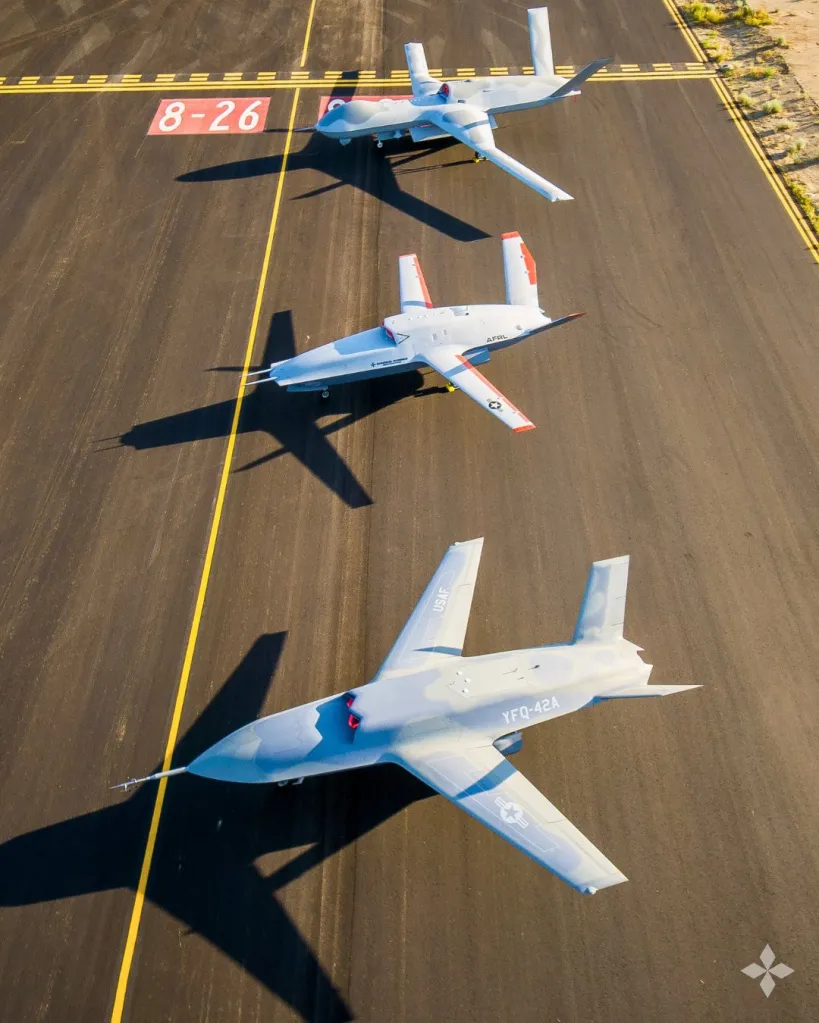
Could The X-BAT Stealth Fighter Drone Change The Air Combat Game?

Shield AI revealed a revised planform configuration and new details about its extremely ambitious X-BAT jet-powered autonomous stealth ‘fighter’ drone at April’s Sea-Air-Space 2026 convention, as detailed by TWZ. At the event, I was able to speak at length with Armor Harris, the chief designer of X-BAT, who was keen to discuss the status of the project. You can read TWZ’s original deep dive exclusive interview with Harris that was published when X-BAT first emerged from the shadows last October here.

The tail-sitting X-BAT, designed to take off vertically and land the same way, is planned to start vertical takeoff and landing (VTOL) testing before the end of this year. Harris explained how it is designed to fly combat missions under the control of the company’s Hivemind artificial intelligence “pilot” and how Shield AI has designed-in payload bays that are roughly the same size as those found on the F-35, which will enable it to carry many of the same weapons as the stealthy crewed fighter.

The X-BAT concept is aimed to disrupt not just the budding advanced autonomous drone marketplace, but parts of the fighter market too. So much hangs on the VTOL element that the airframe is designed around, so to say that a lot is riding on those tests is an understatement.

Here is the full interview from the show floor at Sea-Air-Space:

Meet The Man Behind The X-BAT Autonomous VTOL Fighter Drone thumbnail

Meet The Man Behind The X-BAT Autonomous VTOL Fighter Drone


Source link

Three dead in suspected hantavirus outbreak on Atlantic cruise ship | Health News

Three of six passengers who fell ill from suspected rodent-transmitted virus have died, and one is in intensive care, the WHO says.

Three people have died on a cruise ship in the Atlantic, with at least one confirmed to have suffered from hantavirus, a rare disease transmitted to humans from rodents.

Health authorities are now investigating a suspected outbreak of the virus on the MV Hondius, which is sailing from Ushuaia in Argentina to Cape Verde.

Recommended Stories

list of 3 itemsend of list

In a statement on Sunday, the World Health Organization said that one case had been confirmed and at least five other passengers were suspected of being infected.

“Of the six affected individuals, three have died, and one is currently in intensive care in South Africa,” WHO said in a statement.

“Detailed investigations are ongoing, including further laboratory testing and epidemiological investigations. Medical care and support are being provided to passengers and crew. Sequencing of the virus is also ongoing.”

WHO added that it was “facilitating coordination” between countries to evacuate the two other passengers showing symptoms of the infection.

Hantavirus, a rare disease transmitted to humans through the droppings or urine of infected rodents, can be fatal in severe cases and cause hemorrhagic fever.

Infected couple among casualties

South Africa’s National Department of Health said earlier on Sunday that there had been an outbreak of a “severe acute respiratory illness”, which had killed at least two people, and that a third person was in intensive care in Johannesburg, according to the AFP news agency.

The ministry’s spokesperson, Foster Mohale, confirmed that the patient being treated in Johannesburg tested positive for hantavirus.

A 70-year-old was the first to develop symptoms. He died on the ship, with his body now being held on the island of Saint Helena, a British territory in the South Atlantic, the spokesman said.

The patient’s 69-year-old wife also fell sick and was evacuated to South Africa, where she died in a Johannesburg hospital, he added.

Mohale told AFP that authorities have not confirmed the nationalities of the deceased. But the person in intensive care was reported by AFP to be a 69-year-old Briton.

Source link

Thousands in India’s Manipur mark three years since ethnic clashes began | Newsfeed

NewsFeed

Thousands of protesters gathered in India’s northeastern Manipur state to mark three years since ethnic violence erupted in May 2023 between the majority Meitei and minority Kuki-Zo communities. The conflict, driven by disputes over land and political power has killed nearly 260 people and displaced around 60,000.

Source link

Israel To Buy Extra F-15IA and F-35I Squadrons

After years of high-tempo operations in the Middle East, the Israeli Air Force is set to get two new fighter squadrons, one each of the F-15IA and the stealthy F-35I Adir. This will bring the total of F-35I squadrons to four and will add a second squadron of F-15IAs. While the numbers involved were not stated, the IAF has recently bolstered its fighter inventory in the form of 25-aircraft squadrons. This is almost certain to be the case here, too, which would provide the service with an additional 25 examples of each type, for an eventual inventory total of 100 F-35Is and 50 F-15IAs.

שתי טייסות קרב חדשות לצה״ל: ועדת השרים להצטיידות אישרה את תכנית משרד הביטחון וצה״ל לרכש שתי טייסות קרב חדשות מסוג F35 ו-F15IA, בהיקף של עשרות מיליארדי ש”ח

להמשך קריאה בנושא: https://t.co/r8t3p6GGRb

צילומים: לוקהיד מרטין ובואינג pic.twitter.com/8GoqxkWOk0

— משרד הביטחון (@MoDIsrael) May 3, 2026

The Israeli Ministry of Defense confirmed on its official social media channels that, over the weekend, the country’s Ministerial Committee on Procurement approved its plan to simultaneously procure two new fighter squadrons.

“The scope of the deals is estimated at tens of billions of shekels and includes the integration of the squadrons into the Air Force, comprehensive support, spare parts, and logistics,” the ministry said.

In a statement today, Israeli Prime Minister Benjamin Netanyahu referenced the two new squadrons. He also noted that, as part of Israel’s investment in military independence through domestic production of armaments and defense technology, the country “will develop groundbreaking Israeli-made aircraft.” He provided no further details about this project, although a fighter, along the lines of the failed Lavi, or even more likely, some kind of Collaborative Combat Aircraft (CCA) type drone, is a possibility, as are different types of intelligence, surveillance, and reconnaissance (ISR) platforms. We also know of the existence of at least one secretive Israeli drone, referred to as RA-01 and used for covert missions, and further developments along these lines should not be ruled out. We are trying to get clarity on this aspect of the announcement.

Prime Minister Benjamin Netanyahu:

“Israel is stronger than ever, and Israel must always be significantly stronger than our enemies.

Therefore, I advocate for two principles: Strengthening and independence.

Full remarks >>https://t.co/c7QJEIYXT3 pic.twitter.com/rZTIGOyAba

— Prime Minister of Israel (@IsraeliPM) May 3, 2026

Now that the acquisition has been approved by the Ministerial Committee, the Director General of the Ministry of Defense has authorized its procurement delegation in the United States to proceed with signing the deals with U.S. government and military officials “in the near future.”

A pair of IAF F-35A Adir and a single F-15I Ra’am join a U.S. Air Force B-52H Stratofortress bomber during a joint exercise. IAF via X

Neither a delivery timeline nor the likely costs of the deals have been specified.

In a statement, Israeli Minister of Defense Israel Katz explained that the two-squadron procurement is driven by “operational lessons learned from the campaign against Iran [that] require us to accelerate our force buildup.”

Israel and the United States launched airstrikes on Iran on February 28, but a ceasefire has been in place since April 8. While the U.S. Navy maintains a blockade of ⁠Iranian ports, the IDF remains heavily engaged in fighting in Lebanon.

An F-35I, apparently seen during Operation Lion’s Roar, armed with external JDAM and AIM-9X Sidewinder. IAF via X

According to Katz, the Israeli campaign against Iran, Operation Lion’s Roar, “again demonstrated the power of the Air Force and its crucial role in safeguarding the security of the State of Israel. The operational lessons learned from this campaign compel us to continue accelerating our force development to ensure the Air Force’s superiority in the decades to come.”

As well as operations against Iran, Israeli aircraft have also conducted strikes against Iranian-backed Hamas militants in Gaza and Hezbollah militants in Lebanon following the October 7, 2023, attacks on Israel. Long-range strikes have also been flown against targets in Syria and Yemen in recent years.

“The procurement of these squadrons is a central part of the ‘Magen Israel’ program, which is designed to ensure the Israel Defense Forces maintains a sustained qualitative edge,” Katz added. “Our mission is clear: to stay one step ahead of our enemies.”

Magen Israel — Israeli Shield in Hebrew — includes other investments, too. As well as the new additional new fighters, it will provide funding for what is described as “a technological leap forward in the development and integration of autonomous flight capabilities, next-generation advanced defense systems, and the establishment of Israeli military superiority — both defensive and offensive — in space.”

The Magen Israel initiative has been approved by Prime Minister Netanyahu and the defense minister and will provide a budget of close to $120 billion over the next 10 years. Some of the funding for the new aircraft will almost certainly come from the United States, which delivers billions of dollars in military funding to Israel each year, largely tied to American weapons. Since October 7, 2023, Washington has surged tens of billions of dollars more, fast-tracking arms to the IDF.

UNSPECIFIED, ISRAEL - AGUST 11: (ISRAEL OUT) In this handout image supplied by the Israeli Government Press Office (GPO), Israeli Prime Minister Benjamin Netanyahu, Defence Minister Ehud Barak and Chief of Staff Gabi Ashekenazy review an F-15 fighter jet during visit an Israeli Air Force base, on August 11, 2009 in Israel. (Photo by GPO via Getty Images)
Israeli Prime Minister Benjamin Netanyahu in the cockpit of an F-15 fighter during a visit to an Israeli Air Force base. Photo by GPO via Getty Images

Maj. Gen. (res.) Amir Baram, the director general of the Israeli Ministry of Defense, described the procurement as the “first and central step in implementing […] force buildup for a challenging security decade.”

“In the face of evolving threats in the region and alongside immediate procurement for wartime needs, we are committed to acting now to ensure the IDF’s military superiority even a decade from now and beyond,” Baram continued. “Operation Lion’s Roar has once again demonstrated the crucial importance of the strategic partnership between Israel and the U.S. and the need for advanced air power. The combination of the two squadrons’ distinct capabilities will provide the Air Force with full flexibility to address a wide range of combat scenarios.”

Israel signed a contract, with a ceiling of $8.58 billion, for its first 25 F-15IAs in December last year. These will be the first new Eagles that the country has acquired since 1999, when it received the last of its 25 F-15I Ra’am jets.

A rendering of the F-15IA for Israel. Boeing

That contract covered the design, integration, instrumentation, test, production, and delivery of 25 new F-15IAs, with an option for an additional 25, which Israel will now exercise.

Work on the first batch of F-15IAs is expected to be completed by the end of 2035. The aircraft will almost certainly feature extensive Israeli-specific modifications, as was the case with previous Eagles, especially when it comes to electronic warfare, weapons, and communications systems.

In August 2024, Israel was given U.S. approval to buy as many as 50 F-15IAs, as well as upgrade its existing F-15Is as part of an overall package valued at $18.82 billion that you can read about here.

In the past, the Israeli Ministry of Defense has said that deliveries of the F-15IAs would start in 2031, with between four and six aircraft being supplied annually.

The status of the plan to upgrade the F-15I fleet is unclear, but the additional F-15IAs will likely be earmarked for replacing the older F-15A-to-D Baz, two squadrons of which are still active.

An F-15I Ra’am carrying 2,000-pound class GBU-31 JDAMs. IAF via X

The Baz is used for both air-to-air and air-to-ground missions, but these are mainly very old jets, with the first examples having seen combat as long ago as 1979. These jets have been successively upgraded and also bolstered through transfers from U.S. Air Force stocks. They have also been heavily employed in recent combat operations.

The Baz fleet is highly illustrative of the fact that the IAF has been working at a considerable tempo for the last few years, something that has clearly put immense stress and additional hours on its fighters, some of which are 50 years old.

For Israel, the F-15 in general is prized for its long range and impressive stores-carrying capabilities. As well as significant ‘magazine depth,’ the latest versions of the F-15 also have a notable ability to carry outsize weapons, including hypersonic missiles, another feature of the jet that will be of particular interest to Israel. The IAF is increasingly reliant upon air-launched ballistic missiles and other air-launched standoff weapons, for which the F-15 is an ideal launch platform.

The Baz is used for both air-to-air and air-to-ground missions, but these are mainly very old jets, with the first examples having seen combat as long ago as 1979. Successively upgraded and also bolstered through transfers from U.S. Air Force stocks, these jets remain very valuable to the Israeli Air Force, as demonstrated by their prominent role in recent combat operations.

A trio of F-15A-to-D Baz fighters carrying mixed air-to-air and air-to-ground payloads. Amit Agronov/IAF

Meanwhile, the F-35I is increasingly becoming a mainstay of the IAF for a range of combat missions both in close proximity to Israel and over much greater distances.

In 2023, Israel opted to buy a third squadron of F-35Is, covering 25 more jets worth approximately $3 billion, and expand the Adir fleet to 75 aircraft. This batch of jets is scheduled to be delivered starting in 2028.

Israel announced in May 2018 that it had become the first operator to use the jet on offensive operations and, since then, it has also recorded success in aerial combat against Iranian drones.

Making History:

Last year, Israeli “Adir” (F-35I) fighter jets successfully intercepted two Iranian UAVs launched towards Israeli territory. pic.twitter.com/FQsEjKzxct

— Israeli Air Force (@IAFsite) March 7, 2022

In recent months, the IAF’s two Adir squadrons have demonstrated the jet’s flexibility by scoring the F-35’s first aerial victory against a crewed aircraft, bringing down an Iranian Yak-130 Mitten combat trainer over Tehran. The type has also been flying strike sorties, including with external ordnance, demonstrating the F-35’s so-called ‘beast mode,’ featuring heavier loads on underwing pylons.

A photo published by the Israeli Air Force shows the unique instrumented F-35I assigned to the Flight Test Center carrying four external 2,000-pound class GBU-31 JDAMs, plus AMRAAMs. IAF via X

Carrying external stores erodes the F-35’s valuable stealth characteristics in return for providing a considerably larger payload. For many of the kinds of missions that the IAF flies, especially against opposition with little to no meaningful air defense capabilities, such a tradeoff is well worthwhile.

As we have described in the past, there are strong arguments for Israel to pursue a policy of procuring a mix of fighters:

“Buying the F-15IA and F-35I will provide the Israeli Air Force with two complementary platforms, both of which are among the most capable anywhere in the world, especially when it comes to long-range strike. Israeli F-15s, in particular, are also used for forward networking and command and control nodes, vital for managing long-range operations. On the other hand, both the F-15IA and F-35I are also more than efficient for air defense, including against drone threats, as well as air-to-ground operations closer to Israel, such as the ongoing conflicts in Gaza and Lebanon.”

Overall, given the still-precarious security situation in the Middle East, and the strong possibility of more combat operations against Iran and others, as well as the proven nature of both aircraft types, Israel’s decision to buy more F-15IAs and F-35Is is hardly surprising.

Contact the author: thomas@thewarzone.com

Thomas is a defense writer and editor with over 20 years of experience covering military aerospace topics and conflicts. He’s written a number of books, edited many more, and has contributed to many of the world’s leading aviation publications. Before joining The War Zone in 2020, he was the editor of AirForces Monthly.


Source link

Iran lawmaker says Strait of Hormuz will not return to pre‑war state | US-Israel war on Iran

NewsFeed

Iran says the Strait of Hormuz will never return to the status quo that existed before the US and Israel launched their war. A draft Iranian law would permanently ban Israeli vessels and deny transit to nations deemed ‘hostile’ by their alliance with the US.

Source link

World Press Freedom Day marked in Gaza as journalist death toll rises | Gaza

NewsFeed

Palestinian journalists in Gaza marked World Press Freedom Day by honouring colleagues killed and targeted by Israel, as the territory becomes the deadliest place ever recorded for media workers. Pope Leo XIV called for greater protection of reporters ‘pursuing the truth’, especially in war zones.

Source link

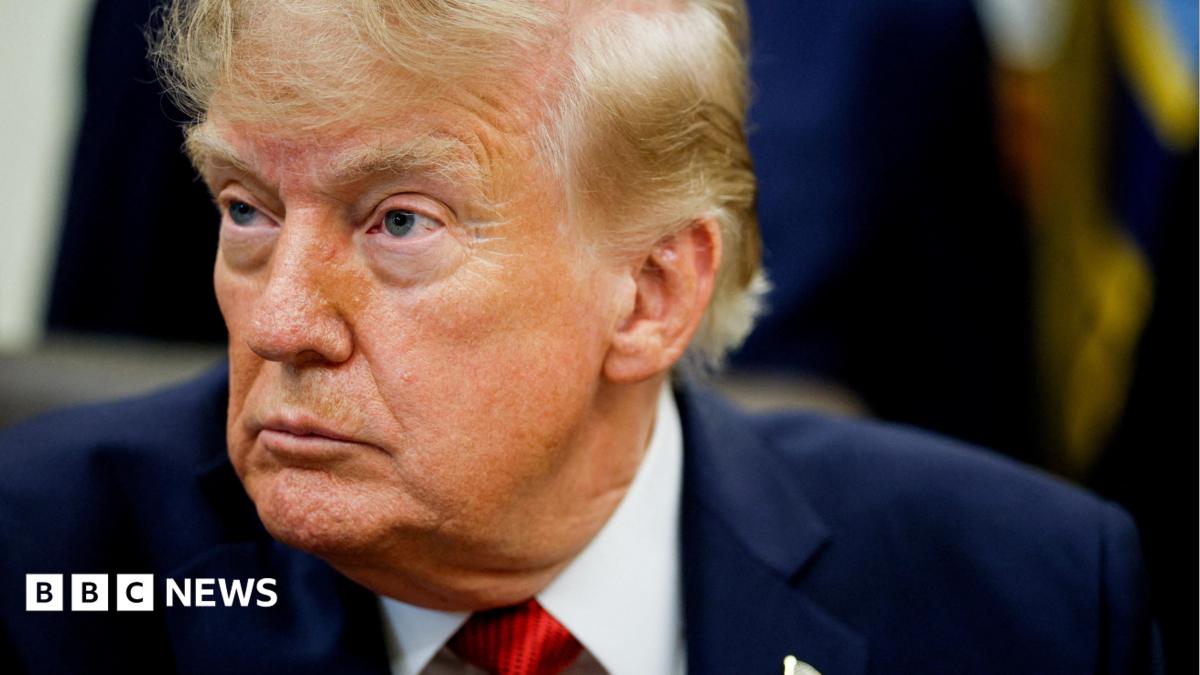
Investigators say Trump assassination suspect shot officer at press gala | Donald Trump News

Secret Service agent at White House correspondents’ dinner was ‘definitively’ hit by suspect’s bullet, prosecutor says.

Authorities in the United States have said that the suspect accused of attempting to kill President Donald Trump was the one who shot a Secret Service agent at the White House correspondents’ dinner last month.

Officials initially did not provide details on how the agent – who was wearing a bulletproof vest – was injured. On Sunday, US Attorney Jeanine Pirro told CNN that investigators have confirmed that the agent was shot by the alleged gunman, Cole Tomas Allen.

Recommended Stories

list of 3 itemsend of list

“It is definitively his bullet. He hit at that Secret Service agent. He had every intention to kill him and anyone who got in his way, on his way to killing the president of the United States,” Pirro said.

“This was a premeditated, violent act, calculated to take down the president, and anyone who was in the line of fire.”

She added that a pellet that came from the suspect’s shotgun was “intertwined with the fiber” of the agent’s protective vest.

The determination could lead to additional legal charges against the 31-year-old suspect. It also rules out speculation that the agent may have been struck by so-called “friendly fire”.

The Justice Department announced three charges against Allen last week – attempting to assassinate Trump, the transportation of a firearm across states with intent to commit a felony and the discharge of a firearm during a crime of violence.

A sentence of life in prison faces anyone convicted of attempted assassination.

Last week, Acting Attorney General Todd Blanche said Allen had travelled via train from his home near Los Angeles to Chicago and then to Washington, DC.

He arrived in the US capital on April 24, the day before the dinner at the Washington Hilton hotel, and checked in.

According to Blanche, during the dinner, Allen approached a security checkpoint on the terrace of the hotel, one level above the ballroom where Trump was.

“He ran through the magnetometer holding a long gun. As he did so, US Secret Service personnel assigned to the checkpoint heard a loud gunshot,” Blanche said.

“One Secret Service officer was shot in the chest, but was wearing a ballistic vest that worked. This heroic officer, who was hit, fired five times at Allen, who was not shot, but fell to the ground and was promptly arrested.”

Officials have said Allen was carrying a shotgun, a semiautomatic pistol and three knives.

The shooting, considered to be the third assassination attempt against Trump since 2024, has shaken US politics. The White House has accused the US president’s Democratic rivals of inspiring political violence with their verbal attacks on the administration.

But Trump himself is known for personal attacks against opponents, and critics have accused him of using the shooting to censor his rivals.

Source link

New Nuclear Bunker Buster Bomb Plans Revealed (Updated)

The Department of Energy is seeking millions of dollars for work in part on a new bunker-busting nuclear weapon called the Nuclear Deterrent System-Air-delivered (NDS-A) in its latest budget request. At present, there is only one specialized air-delivered deep-penetrating weapon known to be in America’s nuclear stockpile, the B61-11 gravity bomb, and there have been discussions about a potential successor for decades now.

The Fiscal Year 2027 budget request for the Department of Energy, which was released last month, includes a new line under Weapons Activities for Future Programs. The Department is asking for $99.794 million in the next fiscal cycle to support those efforts.

An example of the B61-11, or more likely an inert version thereof. This is the only specialized air-delivered deep-penetrating weapon known to be in the U.S. nuclear stockpile today. Public Domain

“The Increase represents the start of one new Phase 6.X program, currently known as Phase 1 Nuclear Deterrent System-Air-delivered (NDS-A), as well as supporting production assessments for two new Rapid Capability Team (RCT) projects,” according to a public summary of what the Future Program funding would support.

The Department of Energy, in cooperation with the U.S. military, develops, produces, and sustains nuclear weapons, and uses a multi-phase rubric to categorize where they are in their respective life cycles. The Phase 6.X process is itself broken into several stages, spanning all the way from the definition of the basic concept of a weapon and its requirements through to full-scale production.

A graphic offering a general overview of the Phase 6.X process. NNSA

Where the NDS-A may already be in the process is unknown, but the mention of “Phase 1” here could point to Phase 6.1, which is the basic concept assessment stage. Beyond that it will be air-delivered, there are also no details currently available publicly about the weapon’s design, including whether it will be based on something already in the stockpile. It is also not known if it will be an unpowered bomb or a missile/rocket-assisted weapon of some kind. We will come back to this point later on.

“The Nuclear Deterrent System-Air-delivered will provide the President with additional nuclear options to defeat Hard and Deeply Buried Targets, ensuring that adversaries cannot place their most valued assets beyond the reach of America’s nuclear forces,” a spokesperson for the National Nuclear Security Administration (NNSA) told TWZ when asked for more information. “The program is moving aggressively, and further information will become publicly available when it is strategically beneficial to the United States.”

Within the Department of Energy, NNSA is specifically responsible for nuclear weapons-related activities.

As noted, at present, the B61-11 is the only air-delivered nuclear weapon in the U.S. stockpile today that is specifically designed to address this target set. The B61-11 is based on the earlier B61-7, but is substantially different in form and function. It has a heavily reinforced outer shell, possibly with a depleted uranium penetrating nose section, and a rocket booster at the rear to help it penetrate down into underground facilities. Sources differ on the maximum yield of the B61-11, but it is said to either be between 340 and 360 kilotons (identical to that of the B61-7) or to be closer to 400 kilotons. There are also reportedly fewer than 100 of these bombs in the stockpile.

The yield of the B61-11 is classified, but it is a converted B61-7 bomb. The yield of the -7 and -11 are usually given as more than 300 kilotons. @nukestrat says the B61-11 was increased to 400 kt. Either way, this is a very powerful nuclear weapon. pic.twitter.com/2GZ3zB6m4K

— Dr. Jeffrey Lewis (@ArmsControlWonk) June 19, 2025

You can learn more about the entire B61 family, the first versions of which entered service in the 1960s, here.

For a time, the newer B61-12 variant, which has a precision guidance package in a new tail kit, was considered as a potential successor to the B61-11. The B61-12 is also a dial-a-yield design with multiple yield settings, but the highest one is reportedly 50 kilotons. The logic was that improved accuracy would allow for more precise placement of the bomb, and, by extension, of its explosive force. This, in turn, would make up for its lack of deep-penetrating capability and more limited yield. The plan to supplant the B61-11 with the B61-12 was subsequently abandoned.

B61-12 Flight Test with F35-A Lightning II thumbnail

B61-12 Flight Test with F35-A Lightning II


More recently, a more powerful B61-13 variant, which features the same precision guidance tail kit as the B61-12, was developed explicitly to provide “the President with additional options against certain harder and large-area military targets.” This version is understood to have a maximum yield in line with the B61-7. However, the U.S. government has also previously said that the B61-13 is not intended as a direct replacement for the B61-11, according to the Federation of American Scientists (FAS).

The first B61-13 production unit. NNSA

The U.S. military also has B83-1 nuclear gravity bombs in the stockpile, which are of a completely different design from the B61 series and have a far more powerful megaton-class maximum yield. By virtue of that high yield, the B83-1 is also intended to be used against certain deeply buried and otherwise hardened facilities, as well as large-area targets.

An inert example of a B83-series nuclear gravity bomb. US military An inert B83-series nuclear bomb. DOD

In the early 2000s, NNSA, in cooperation with the U.S. Air Force, did explore the possibility of developing a B61-11-like bomb on the basis of the B83-1, as well as a new deep-penetrating version of the B61 itself. In 2005, Congress brought a halt to work on what was dubbed the Robust Nuclear Earth Penetrator (RNEP).

A low-quality and now thoroughly dated briefing slide discussing the RNEP effort. USAF

There have been hints since then, however, about possible revivals of the RNEP concept and/or other plans for a true successor to the B61-11.

This weapon was not explicitly mentioned in the 2018 Nuclear Posture Review. But NNSA bases the new weapon on the NPR’s guidance to “enhance the flexibility and range of [US] tailored deterrence options.

Welcome back from the grave, RNEP!

— Hans Kristensen (also on Bluesky) (@nukestrat) August 1, 2019

What may be prompting the requirement for the NDS-A now is unknown. There are deeply-buried targets only a nuclear weapon can realistically destroy. The development of the B61-11 is understood to have been prompted heavily by one such facility in particular, Russia’s Kosvinsky Kamen bunker. Kosvinsky Kamen is a key node in the Russian nuclear command and control enterprise and was built under a mountain of the same name in the northern Urals. The nature of its location and design also means it could serve as a so-called “continuity of government” site for senior leadership to operate from before or after a nuclear strike or in response to some other major emergency.

However, the landscape of deeply-buried, hardened facilities that U.S. authorities would be interested in holding at risk has grown substantially in the past two decades since work, at least publicly, on RNEP came to an end.

The Russian and Chinese governments have been expanding on their already significant arrays of subterranean facilities. In China, this includes the construction of vast fields of new intercontinental ballistic missile (ICBM) silos, as well as work on a new underground command center outside of the capital, Beijing, just in recent years.

A graphic detailing a previous US military assessment about the state of new ICBM silo fields in northern China. US military

Other, smaller countries, like North Korea and Iran, have been investing in new underground and other hardened facilities, as well. This has been driven in many cases by concerns about the prospect of conventional strikes carried out by the U.S. military and others.

In the past year, the matter of Iran’s deeply buried nuclear facilities, and the limits of U.S. conventional options for prosecuting those targets, has been an especially hot-button issue. During Operation Midnight Hammer in June 2025, U.S. B-2 bombers struck Iranian nuclear sites at Fordow and Natanz with 30,000-pound-class GBU-57/B conventional bunker buster bombs. The outcome of that operation remains a subject of heated debate and is deeply intertwined with the justifications for U.S. and Israeli forces launching the latest campaign against Iran in February. U.S. officials are now at a crossroads with how to proceed with operations targeting Iran, which has now turned to a maritime blockade, at least for the time being, following the announcement of a ceasefire in April.

The video below is a montage of imagery from GBU-57/B MOP tests over the years.

GBU-57 MOP test thumbnail

GBU-57 MOP test


Broader concerns about just getting the B61-11 to its intended target in the future may also be a factor driving plans now for the new NDS-A nuclear bunker buster. Unpowered bunker buster bombs, nuclear or conventional, need to be released relatively close to their targets. The kinds of facilities that the B61-11 is intended to be employed against are deep inside hostile territory, behind layers of integrated air defenses. Major potential adversaries, as well as smaller nation states and even non-state actors, are only expected to expand the scale and scope of their defensive architectures in the coming years. With all this in mind, it is not surprising that the more survivable B-2 is currently the only platform certified to employ the B61-11, as well as the conventional MOP. It is more or less a given that both of those weapons will be integrated onto the forthcoming B-21 Raider for the same general reasons.

A B-2 bomber drops a GBU-57/B MOP during a test. USAF

That being said, as TWZ regularly highlights, stealth aircraft are not invisible or invulnerable. This reality is part of the argument for the planned integration of the new nuclear-tipped AGM-181 Long Range Stand Off (LRSO) air-launched cruise missile onto the B-21, as well as the venerable and non-stealthy B-52. LRSO will also just extend the B-21’s reach, with that aircraft already expected to be an extremely long-range platform. This all raises the possibility of the NDS-A being a powered design offering some degree of standoff capability.

A rendering of the still-in-development AGM-181 Long Range Stand-Off (LRSO) cruise missile. USAF

As an aside here, powered designs have also been part of the discussions about potential conventional successors to the MOP. A follow-on to the GBU-57/B, the Next Generation Penetrator (NGP), is now in development, but it is unclear whether or not that will be a powered weapon. Still, when it comes to the NDS-A, it seems more likely that it will be a traditional bomb that adapts elements of existing designs, including the B61-11, -12, and -13.

A 2010 briefing slide discussing plans for a Next Generation Penetrator, which could have a powered standoff capability, and other future bunker busters. USAF

Whether or not the NDS-A effort reaches fruition also remains to be seen. The previous RNEP effort prompted significant criticism, including from members of Congress, in part because of concerns about what steps it might prompt other countries to take in response. At the same time, there has been a change in tenor in U.S. nuclear policy in recent years, driven by other global developments, especially efforts by the Chinese to rapidly and substantially expand their stockpile.

There is also a question of affordability. The U.S. military is already in the midst of a major modernization push across all three legs of America’s nuclear deterrence triad that is set to cost hundreds of billions of dollars in the coming decades. This could impact support for funding another ‘new’ nuclear weapon, even if it is derived from an existing design.

More definitely remains to be learned about the NDS-A program and the design of that weapon. What is clear is that the Department of Energy is requesting funding to kick off at least the initial development of a new air-delivered nuclear bunker buster that could succeed the B61-11.

UPDATE: 5:27 PM EST

It has been brought to our attention that some additional details about the NDS-A effort have been tucked away in U.S. budget requests in recent years.

In its Fiscal Year 2025 budget, the Air Force asked for, and ultimately received just over $39 million for work on NDS-A, but under a budget line titled “Hard and Deeply Buried Target Defeat System (HDBTDS) Prototyping.”

“The Air-delivered Nuclear Delivery System (NDS-A) is a new start project to address a capability gap identified in the 2022 Nuclear Posture Review (NPR). A congressionally directed study based on the NPR led to endorsement of the Deputy’s Management Action Group (DMAG) and initiation of this project,” according to the 2025 Fiscal Year budget documents. “The Air Force will work with the Department of Energy’s (DOE) National Nuclear Security Administration (NNSA) and its National Laboratories to develop a prototype NDS-A system to demonstrate the capability to close this gap in the near term.”

“Early development will include Model and Simulation (M&S) analysis of several nuclear explosive package (NEP) options to refine the proposed NEP,” the budget documents add. “Ground tests may include wind tunnel, static ejection, vibration and thermal, cable pull-down, and sled tests. Flight tests will be performed by USAF F-15E developmental flight test aircraft, with final prototype demonstrations flown on B-2 aircraft.”

The video below shows flight testing of the B61-12 using a U.S. Air Force F-15E Strike Eagle.

B61-12 full-weapon system demonstration at Tonopah Test Range thumbnail

B61-12 full-weapon system demonstration at Tonopah Test Range


In the Air Force’s proposed 2026 Fiscal Year budget, the line item was renamed “Nuclear Delivery Systems Prototyping,” but references to NDS-A by name were also omitted. A nearly $18 million year-over-year increase in requested funding (from roughly $39 million to almost $57 million) was attributed “to greater emphasis on prototype design after completion of Modeling and Simulation of mission effectiveness of design space options; increased procurement and development of components; the initiation of subsystem and test unit assembly; and the initiation of ground tests of the Prototype Weapon Assemblies.”

The Fiscal Year 2025 and 2026 budget documents do not provide any details about the design of the weapon or say what aircraft it will be integrated onto operationally.

More details about the current state of the Air Force side of this program are likely contained in the service’s 2027 Fiscal Year budget request documents. However, at the time of writing this update, they are inaccessible online.

Contact the author: joe@twz.com

Joseph has been a member of The War Zone team since early 2017. Prior to that, he was an Associate Editor at War Is Boring, and his byline has appeared in other publications, including Small Arms Review, Small Arms Defense Journal, Reuters, We Are the Mighty, and Task & Purpose.


Source link

On World Press Freedom Day, Pope honours journalists killed in war zones | Freedom of the Press News

The pope urged the rememberance of journalists who lost their lives pursuing the truth, particularly in conflict areas.

Pope Leo has marked World Press Freedom Day ⁠by condemning ⁠violations of media freedom around the world and paying tribute to journalists killed while reporting in ⁠conflict zones.

At the end of his weekly Sunday prayer in a sunny Saint Peter’s Square at the Vatican, the pontiff ⁠said the day highlighted both the importance of independent journalism and the growing threats faced by reporters.

Recommended Stories

list of 4 itemsend of list

“Today we celebrate World Press Freedom Day … unfortunately, this right is often violated, sometimes in blatant ‌ways, sometimes in more hidden forms,” he said.

World Press Freedom Day, ⁠sponsored by the UN cultural agency UNESCO is intended to show support for media organisations that come under ⁠pressure or censorship. It is also an opportunity to commemorate journalists who have been killed at work.

The Roman Catholic leader urged the faithful to remember journalists and reporters who have lost their lives pursuing the truth, particularly in conflict areas.

“We remember the many journalists and reporters who have been victims of war and violence,” ⁠the pope said.

A report last month by the Watson Institute for International and Public Affairs’ Costs of War project found that Israel’s war on Gaza was the deadliest conflict for media workers ever recorded, with Israeli forces having killed 232 Palestinian journalists since October 2023.

More journalists have been killed in Gaza than in both world wars, the Vietnam War, the wars in Yugoslavia, and the United States war in Afghanistan combined, the report found.

In past speeches, the ⁠leader of the Catholic Church has described journalism as a pillar of society and democracy, and information as a public good that must be safeguarded ‌and defended.

The pontiff has often thanked reporters for sharing the truth, saying that doing their job could never be ‌considered ‌a crime, and frequently calling for the release of journalists who have been unfairly detained or prosecuted.

Last week, the leading Paris-based press freedom NGO, Reporters Sans Frontières (RSF), or Reporters Without Borders, found that freedom of the press around the world has fallen to its lowest level in a quarter of a century.

For the first time since RSF started producing the index in 2002, it said more than half of the world’s countries fall into the “difficult” or “very serious” categories for press freedom – “a clear sign that journalism is increasingly criminalised worldwide”.

Source link

USA vs Paraguay among World Cup games with unsold, exorbitant tickets | World Cup 2026 News

Tickets for the cohosts’ opening game in Los Angeles are available for prices ranging between $1,120 and $6,050.

With under 40 days to go until the World Cup, tournament organisers continue to struggle with ticket sales as seats remain available for most group-stage games, albeit at exorbitant prices.

Home fans can find tickets for tournament cohost United States’ (USA) opener against Paraguay, with prices starting at $1,120 and going as high as $4,105, with many tickets priced around $2,000 for the June 12 match in Los Angeles. Seats in the hospitality package groupings go as high as $6,050 per seat.

Recommended Stories

list of 4 itemsend of list

Tickets are still available on FIFA’s official website through its “last-minute sales” section.

Football fans are already outraged by exorbitant match prices — the most expensive ticket for the final costs nearly $11,000 — since the first phase of ticket sales in December. Late last month, FIFA announced yet another “last-minute ticket phase” with tickets for all 104 matches available on a first-come, first-served basis.

The stagnant sales contradict FIFA President Gianni Infantino’s assertion in January that demand for tickets for this year’s tournament in the US, Canada and Mexico would be the equivalent of “1,000 years of World Cups at once”.

Experts attribute dynamic pricing and greed as key factors, with fans saying they have been “priced out” by FIFA.

While many in the US are accustomed to the pricing model commonly adopted at the Super Bowl, fans from around the world are not used to dynamic pricing and legal profiting from ticket resales, sports executive Peter Moore told Al Jazeera in a recent interview.

“FIFA taking a 30 percent cut of dynamic pricing is outrageous,” the former Liverpool chief executive said.

“FIFA is taking advantage of the unique commercial opportunities in the US, dynamic pricing and the secondary market being legal here, to make money. Infantino has said [he expects] FIFA revenues from the World Cup to exceed] $11bn. Why not make it more reasonable and accessible and make, maybe, $8bn?”

Last month, four seats for the World Cup final were listed at just under $2m each on FIFA’s official resale site.

A total of seven group-stage games still have general sale tickets available for $380, including Austria vs Jordan, New Zealand vs Egypt, Jordan vs Algeria, Cape Verde vs Saudi Arabia, Algeria vs Austria, Congo DR vs Uzbekistan and Curacao vs Ivory Coast.

The USA vs Paraguay opener is the most expensive group game, followed by Argentina vs Austria ($2,925), Ecuador vs Germany ($2,550), Uruguay vs Spain ($2,520) and England vs Croatia ($2,505).

According to FIFA’s website, a total of 17 group-stage games are sold out, including the tournament opener between Mexico and South Africa in Mexico City on June 11.

Seven games staged in Mexico are sold out, including the cohosts’ two other matches against South Korea in Guadalajara and the Czech Republic in Mexico City.

Turkiye vs USA in Los Angeles, Brazil vs Morocco in New York/New Jersey and Scotland vs Brazil in Miami are among other sold-out games.

INTERACTIVE-Football FIFA World Cup 2026 group stage schedule-1776670775
(Al Jazeera)

Source link

Was the Iran war the final blow in the collapse of Spirit Airlines? | US-Israel war on Iran News

Spirit Airlines, a budget carrier in the United States, has begun winding down operations, cancelling all flights, after talks with the Trump administration to secure a $500m bailout failed. Experts say a spike in aviation fuel prices from the US-Israel war on Iran dealt the final blow to the struggling airline that pioneered the ultralow-cost carrier model.

The airline’s shutdown after 34 years has left some 17,000 staff members unemployed, many passengers stranded, and raised doubts about the future of budget air travel.

Recommended Stories

list of 3 itemsend of list

How did Spirit Airlines reach this point? Did the US-Israel war on Iran deliver the final blow?

Here’s what we know:

What has Spirit Airlines said?

On Saturday, Spirit Aviation Holdings, the airline’s parent company, said the company had started to wind down operations.

“Spirit Aviation Holdings, Inc … today regretfully announced that the Company has started an orderly wind-down of operations, effective immediately. All Spirit flights have been cancelled, and Spirit Guests should not go to the airport,” the company said in a statement on Saturday.

The statement added that, despite its efforts, “the recent material increase in oil prices and other pressures on the business have significantly impacted Spirit’s financial outlook”.

Spirit Airlines, whose airfares were lower compared with other US airlines, had 4,119 domestic flights scheduled between May 1 and May 15, offering 809,638 seats, according to the latest data from Cirium, an aviation analytics firm.

The carrier’s parent firm started as a long-haul trucking company in 1964. It shifted to aviation around 1983. The carrier rebranded from Charter One Airlines to Spirit in 1992.

How did Spirit Airlines reach this point?

The airline had been struggling financially for years and had filed for bankruptcy twice – in November 2024 and then in August 2025 – due to continued losses, high debt, and intense competition from other airlines.

According to a May 2 report by the Reuters news agency, Spirit had recently reached a deal with its lenders that would have helped it emerge from its second bankruptcy by late spring or early summer.

But the war on Iran, which led to a significant increase in aviation turbine fuel (ATF) prices, added to Spirit’s financial struggles and complicated its bankruptcy exit.

Spirit’s restructuring plan assumed ATF costs of about $2.24 a gallon in 2026 and $2.14 in 2027, but prices had climbed to about $4.51 a gallon by the end of April, leaving the carrier unable to survive without new financing.

A Spirit board meeting ended without an agreement to rescue the company, a person close to the discussions told Reuters late on Friday.

US Transportation Secretary Sean Duffy told Reuters he tried to get many airlines to buy Spirit but found no takers. “What would someone buy?” Duffy asked. “If no one else wants to buy them, why would we buy them?”

US President Donald Trump also said he had tried to bail out the airline with a $500m financing package.

“If we can help them, we will, but we have to come first,” Trump told reporters. “If we could do it, we’d do it, but only if it’s a good deal.”

However, a creditor close to the deal told Reuters, “The Trump administration made an extraordinary effort to try and save Spirit, but you can’t breathe life into a corpse. Given that, the company should make its intentions clear for the sake of its customers and employees.”

Anita Mendiratta, special adviser to the UN Tourism secretary-general, noted that while war and geopolitical instability may not have caused Spirit’s collapse, they likely delivered the final blow.

“Surging fuel costs exposed the vulnerability of airlines operating on thin margins with little room for shock absorption,” she told Al Jazeera.

“Spirit’s weaknesses were already there – it had already gone through two bankruptcy filings in the two years prior; global instability simply accelerated the inevitable. In today’s aviation market, volatility is no longer an exception; it is the operating environment,” Mendiratta said.

Are other airlines also under pressure due to the Iran war?

The war on Iran has disrupted global oil and gas prices, with Brent crude rising above $111 a barrel on Friday. The high crude oil prices have also caused ATF prices to rise, affecting budget airlines badly.

Across the globe, airlines have been increasing prices to reflect the high ATF prices, and some have also reduced their flight operations.

German airline Lufthansa said last month it cancelled 20,000 flights in a bid to protect itself from the soaring ATF costs.

On Friday, leading Indian carrier Air India said it has increased fuel surcharges on all flights, adding that it will reduce 100 flights a day across its domestic and international routes.

Mendiratta noted that the aviation industry is on alert as airlines carrying high debt, facing fuel cost volatility, labour cost pressures, fleet constraints, and sustained pricing pressure remain exposed [to the war], especially those operating through a low-cost carrier model.

“What happens next is a defining test of aviation leadership. The rapid response from rival airlines to protect stranded passengers reflects an industry that understands its most valuable asset is not aircraft or market share, it is customer trust [both traveller and cargo],” she said.

“Just as importantly, how airlines support displaced employees, reassure markets, and reinforce operational stability will shape confidence in the sector’s long-term recovery,” she added.

Source link