news

What to watch for (and where to watch it) in the World Cup, which starts today

Everything you need to know about the World Cup

From Kevin Baxter: After a break of more than three decades, the FIFA World Cup returns to North America where it will be shared by the continent’s three countries, the U.S., Mexico and Canada. It will be the largest and most complex tournament in history, with 48 teams playing 104 games in 16 cities over 39 days.

But it hasn’t been without its controversies. High ticket prices and exorbitant transportation and parking fees have angered fans and drawn the attention of politicians and state attorneys general. Visa restrictions have blocked residents from four qualifying nations from entering the U.S. and fear of immigration agents has discouraged fans of other countries from coming.

For the U.S. and Mexico the goal is to get beyond the quarterfinals, the high-water mark for both countries in the modern era. Canada, meanwhile, will play in its third World Cup looking for its first win.

Click here for complete TV schedule, groups and players to watch

With eyes of world on Mexico City, El Tri kicks off 2026 World Cup against South Africa

Emotional, creative protests rise up in Mexico City ahead of historic World Cup opener

FIFA President Gianni Infantino pleas for patience, urges people to relax amid backlash

U.S. defender Chris Richards says he’s ready for World Cup opener

World Cup referee, denied entry to U.S. because of suspected ties to terrorists, hailed in return to Somalia

Go beyond the scoreboard

Get the latest on L.A.’s teams in the daily Sports Report newsletter.

Dodgers lose to Pirates

From Maddie Lee: For the first time this season, Shohei Ohtani watched his manager walk out of the dugout to pull him mid-inning.

On a humid night at PNC Park, in a 9-8 loss, Ohtani pitched into the seventh inning against the Pirates. But Brandon Lowe’s two-out, two-run double cut the Dodgers’ lead to three.

And as manager Dave Roberts gathered the Dodgers infield around him, Ohtani made the long walk to the dugout, pushing up his cap to wipe the sweat from his brow on the way.

“Just the last couple at-bats, I wish I got some calls my way,” Ohtnai said through interpreter Wil Ireton, after giving up three runs in 6 ⅔ innings Wednesday. “But just didn’t turn out that way. And that’s the part that I wish I could have been able to change a little bit.”

Ohtani’s performance was enough to leave the mound with the lead, which the Dodgers bullpen surrendered. But in a near-flawless season on the mound, it was his worst start of the year.

Continue reading here

Dodgers box score

MLB standings

Angels defeat the Astros

Jose Siri hit a game-winning single in the 10th inning, Mike Trout and Logan O’Hoppe homered, and the Angels beat the Houston Astros 3-2 on Wednesday night.

Angels starter Reid Detmers retired his first 15 batters before Shay Whitcomb homered leading off the sixth. Chase Silseth replaced Detmers to begin the eighth and gave up a leadoff homer to Cam Smith that tied it 2-all.

Houston nearly took the lead in the ninth. Yordan Alvarez singled with two out and Christian Walker followed with a double that appeared to score Alvarez. But the Angels challenged the safe call at home plate and it was overturned following a replay review.

Continue reading here

Angels box score

MLB standings

Details on next Oly ticket drop

From Thuc Nhi Nguyen: LA28 reserved the first Olympic tickets for locals. To kick off the second round of ticket sales, it’s a sponsorship connection that could help fans get to the front of the line.

Before the second Olympic ticket drop officially begins Aug. 10, LA28 announced Wednesday there will be a presale for Visa cardholders that will run from July 29-31.

Visa has sponsored the Olympics for 40 years and is the only credit card accepted for payment in Olympic zones. For a chance to be selected for the presale, fans need to first confirm their status as a Visa cardholder. Fans who have already registered can log into their existing LA28 ticket account, check the “Visa presale box” and save changes. New registrants must select the Visa cardholder option during the registration process. All ticket sales during the presale must be completed with a Visa credit card.

Fans can register for the second ticket drop at tickets.la28.org until July 22. Those who already registered for Drop 1 but weren’t selected or didn’t purchase their full 12-ticket allotment do not have to sign up again and are automatically entered into the lottery for Drop 2, which will run from Aug. 10-20.

Continue reading here

New Kings coach discusses his philosophy

From Liana Handler: When Kings’ new head coach Peter Laviolette took a tour around the Los Angeles area, he thought he was only going to get a one-bedroom home with a view of the water. His children, though, piped in: “Make sure you get a four-bedroom,” Laviolette remembered his three children saying.

During Laviolette’s time away from the sport, the 61-year-old traveled to Scotland and watched his son play in the East Coast Hockey League. The time away has given Laviolette time to rethink his coaching, and after 30 years of coaching, including 23 as a head coach in the NHL, he’s bringing a trident approach to reshape culture and win games. Centering a hockey family is one part.

“For me, there’s three real important pieces,” Laviolette said. “First, build a family inside the locker room, inside the organization. Secondly, to really work to try and build the culture to get players and organizations to think about the choices they make and how that can affect the culture. And then the third part is the actual game on the ice, just making sure that every day from the start of training camp we work at the game.”

Continue reading here

Sparks defeat the Storm

Nneka Ogwumike scored a season-high 24 points against her former team, Kelsey Plum added 19 points and 11 assists, and the Sparks beat the Seattle Storm 88-83 on Wednesday night.

Ogwumike, who spent the last two seasons in Seattle, also grabbed nine rebounds to move into fourth on the WNBA career list, passing Rebekkah Brunson.

Cameron Brink added 15 points off the bench and Dearica Hamby grabbed 10 rebounds for the Sparks (6-6) in the Commissioner’s Cup game.

Continue reading here

Sparks box score

WNBA standings

NBA Finals Game 4

The New York Knicks made a record comeback from 29 points down and moved to the brink of their first championship since 1973 by beating the San Antonio Spurs 107-106 on Wednesday night.

OG Anunoby tipped in the miss of Jalen Brunson’s long three-point attempt with 1.2 seconds remaining to complete the rally, giving the Knicks a 3-1 lead in the NBA Finals and three chances to win the title.

It looked impossible early, when the Spurs rolled to a 27-point halftime lead. But Brunson helped bring the Knicks back with 36 points and Anunoby finished with 33.

Game 5 is Saturday night in San Antonio.

Continue reading here

Game 4 box score

This day in sports history

1898 — Willie Simms becomes the only Black jockey to win the Preakness Stakes when he rides Sly Fox to victory and the only one to have won all three Triple Crown races. Simms’ other Triple Crown wins: Kentucky Derby (1896, 1898), Belmont Stakes (1893, 1894).

1919 — Walter Hagen wins the U.S. Open with a one-stroke playoff victory over Michael Brady.

1919 — Sir Barton, ridden by Johnny Loftus, captures the Belmont Stakes to become thoroughbred racing’s first Triple Crown winner.

1921 — Grey Lag, ridden by Earl Sande, wins the first Belmont Stakes run counterclockwise. Previous Belmonts were run clockwise over a fish-hook course that included part of the training track and the main dirt oval.

1938 — Ralph Guldahl wins golf’s U.S. Open for the second straight year by beating Dick Metz.

1949 — Cary Middlecoff wins the U.S. Open by beating Sam Snead and Clayton Heafner.

1955 — Nashua wins the Belmont Stakes with Eddie Arcaro in the saddle. It’s the sixth Belmont victory for Arcaro, tying Jimmy McLaughlin’s record.

1977 — Seattle Slew, ridden by Jean Cruguet, runs wire to wire in the Belmont for a four-length victory over Run Dusty Run and the Triple Crown.

1978 — Nancy Lopez shoots a record 13-under par to win the LPGA Championship by six strokes over Amy Alcott.

1982 — Larry Holmes stops Gerry Cooney in the 13th round for the WBC heavyweight title at Las Vegas.

1984 — The Boston Celtics beat the Lakers 111-102 in Game 7 to win their 15th NBA title.

1992 — Tracy Austin, 29, is youngest inductee of International Tennis Hall of Fame.

1994 — For the first time in 11 years, the United States loses in the women’s world basketball championships. Guards Hortencia and Paula combine for 61 points, and Brazil stuns the defending champions 110-107 in the semifinals.

2006 — Se Ri Pak beats Karrie Webb on the first playoff hole to win the LPGA Championship. Pak atones for a three-putt bogey on the 18th hole in regulation that set up the playoff.

2006 — Rafael Nadal wins his second consecutive French Open, beating Roger Federer in four sets. Nadal spoils Federer’s bid for a fourth consecutive Grand Slam championship and extends his record clay-court winning streak to 60 matches.

2011 — Texas A&M sweeps the men’s and women’s titles at the NCAA outdoor championships, becoming the first school to post dual three-peat champions. Villanova’s Sheila Reid becomes the first woman to win the 1,500 and 5,000 meters at the same NCAA meet.

2012 — Rafael Nadal wins his record seventh French Open title, returning to Roland Garros to defeat Novak Djokovic 6-4, 6-3, 2-6, 7-5. It’s Nadal’s 11th Grand Slam title, tying him on the all-time list with Rod Laver and Bjorn Borg, who won six French Open titles.

2012 — The Kings win their first NHL championship, defeating the New Jersey Devils 6-1 in Game 6 of the Stanley Cup Final.

2017 — Rafael Nadal wins his record 10th French Open title by dominating 2015 champion Stan Wawrinka 6-2, 6-3, 6-1 in the final. No other man or woman has won 10 championships at the same major in the Open era, which began in 1968.

2017 — Stanley Cup Final: Pittsburgh Penguins defeat Nashville Predators, 2-0 for 4-2 series win; Penguins back-to-back champions.

2022 — Charl Schwartzel hangs on to beat fellow South African Hennie Du Plessis by a stroke to win the inaugural LIV Golf Invitational event at the Centurion GC, Hertfordshire; pockets massive $4.75 million for the victory.

2023 — French Open Men’s Tennis: Novak Djokovic beats Casper Ruud of Norway 7-6, 6-3, 7-5 for his men’s record 23rd Grand Slam singles title.

Compiled by the Associated Press

This day in baseball history

1904 — Bob Wicker of the Chicago Cubs pitched 9 1/3 hitless innings before Sam Mertes of the New York Giants singled. Wicker won a 1-0, 12-inning one-hitter.

1938 — Johnny Vander Meer hurled the first of two consecutive no-hitters, and the Cincinnati Reds beat the Boston Braves 3-0.

1967 — The Chicago Cubs hit seven homers and the New York Mets four in the second game of a doubleheader, tying the major league record set by the New York Yankees (6) and Detroit Tigers (5) in 1950. Adolfo Phillips hit four home runs in the doubleheader for Chicago.

1981 — Following Seattle’s 8-2 win over Baltimore, major league players went on strike.

1985 — Von Hayes became the first player in major league history to hit two home runs in the first inning. Hayes connected twice in a nine-run first, powering the Philadelphia Phillies to a 26-7 victory over the New York Mets.

1988 — Rick Rhoden of the New York Yankees became the first pitcher since the inception of the designated hitter (1973) to start a game as the DH. He was seventh in the lineup and grounded to third out in the third inning and drove in a run with a sacrifice fly. Jose Cruz pinch-hit for him in the fifth of the 8-6 win over Baltimore.

1990 — Nolan Ryan pitched the sixth no-hitter of his career to extend his major league record, and the Texas Rangers beat the Oakland Athletics 5-0. Ryan, 43, was the first to pitch no-hitters for three teams and the oldest to throw one.

1995 — Lee Smith set a major league record with a save in his 16th consecutive appearance, pitching a scoreless ninth inning to preserve the Angels’ 5-4 victory over Baltimore. Smith broke the mark of 15 straight set by Doug Jones in 1988.

2002 — Jared Sandberg became the 16th AL player to homer twice in an inning, and the third this season, when Tampa Bay beat the Dodgers 11-2.

2003 — Houston’s Roy Oswalt, Pete Munro, Kirk Saarloos, Brad Lidge, Octavio Dotel and Billy Wagner combined for the first no-hitter against the New York Yankees in 45 years, winning 8-0. The sextet set a record for the highest number of pitchers to throw a no-hitter in major league history — four accomplished the feat twice.

2010 — Andy Pettitte records his 200th win in pinstripes in the Yankees’ 4-3 win over Houston at Yankee Stadium. Whitey Ford (236) and Red Ruffing (231) are the only other members of this exclusive New York club.

2012 — The Cubs sign Cuban defector Jorge Soler to a nine-year contract worth $30 million. The 20-year-old outfielder was the subject of a bidding war among several teams.

2013 — The Dodgers and Diamondbacks engage in a beanball war. The hostilities start when D-Backs pitcher Ian Kennedy hits rookie Yasiel Puig in the head with a fastball in the 6th inning. The ball hits his nose, and he stays on the ground for a few minutes but stays in the game; Andre Ethier follows with a tying two-run homer. In the top of the 7th, Dodgers pitcher Zack Greinke hits the first batter, Miguel Montero, in the back, prompting both benches to empty, although only stares are exchanged. Then, in the bottom of the inning, Kennedy throws a pitch near Greinke’s head, and pandemonium breaks out, with both benches and bullpens emptying again, and players and even coaches going at each other. When order is restored, Puig and coach Mark McGwire are ejected for the Dodgers, and manager Kirk Gibson and coach Turner Ward for the D-Backs. Incidentally, the Dodgers win the game, 5-3. Major League Baseball will hand out eight suspensions and twelve fines as a result of the events, with Kennedy getting a ten-game suspension and Eric Hinske of the DiamondBacks getting five; both managers are suspended for one game, and two for the two coaches.

2017 — Max Scherzer of the Nationals records the 2,000th strikeout of his career, beating out Clayton Kershaw, who reached the milestone less than a week ago, as the third fastest pitcher to the mark.

2017 — Rookie sensation Aaron Judge hit two more home runs, including a drive that cleared the distant bleachers at Yankee Stadium and sent New York romping past Baltimore 14-3. The 6-foot-7 Judge led the majors with 21 homers and topped the AL with 47 RBIs and a .344 average.

2022 — Jared Walsh hits for the cycle and Mike Trout blasts a pair of homers as the Angels defeat the first-place Mets, 11-6. Walsh is the 9th player in team history to achieve the feat, almost exactly three years after teammate Shohei Ohtani was the last to do so, while Trout appears to be out of the deep slump that contributed to recent 14-game losing streak, costing manager Joe Maddon his job.

Compiled by the Associated Press

Until next time…

That concludes today’s newsletter. If you have any feedback, ideas for improvement or things you’d like to see, email me at houston.mitchell@latimes.com. To get this newsletter in your inbox, click here.


Source link

Bahrain releases footage of damage caused by intercepted Iranian drones | Newsfeed

NewsFeed

Bahrain released video of damage in Manama after debris from intercepted Iranian drones fell in populated areas, damaging homes, burning vehicles and scattering wreckage. Officials said an 11-year-old girl sustained minor injuries in the incident.

Source link

Palestine Action activists could face UK ‘terror’ sentences: What we know | Courts News

Four activists from the Palestine Action group face sentencing in the United Kingdom as “terrorists” on Friday, despite only being convicted by a jury of other criminal charges.

Palestine Action was formally proscribed as a “terrorist” organisation in the UK last July.

Last month, four of six activists on trial were convicted at Woolwich Crown Court in London of criminal damage during a 2024 raid on a factory in Filton, Bristol, operated by Israeli defence firm Elbit. One of the defendants was also found guilty of striking a police officer with a sledgehammer.

The possibility that the judge will rule that the offences have a “terrorist connection” for sentencing purposes has prompted protests.

What is Palestine Action?

The protest group Palestine Action, launched in July 2020, describes itself as a movement “committed to ending global participation in Israel’s genocidal and apartheid regime”.

It seeks to use “disruptive tactics” to target “corporate enablers” and companies involved in the manufacture of weapons for Israel, such as Israel-based Elbit Systems, Italian aerospace company Leonardo, French multinational Thales and Teledyne from the United States. The group has targeted British facilities linked to those companies.

The UK parliament voted in favour of proscribing the group on July 2, 2025, classifying it as a “terrorist” organisation, and bringing it into the same category as armed groups such as al-Qaeda and ISIL (ISIS). The proscription came days after its activists sneaked into an air force base in southern England.

Critics decried the move by MPs, arguing that while members of the group have caused damage to property, they have not committed violent acts that amount to terrorism.

What were they convicted of?

In August 2024, Palestine Action activists raided a factory in Filton near Bristol in southwest England, operated by Israeli arms manufacturer Elbit Systems. They entered the site and caused extensive damage in an attempt to disrupt the production of weapons and drone components they say would be used by Israel in Gaza.

The raid, which prosecutors said caused about one million pounds ($1.36m) of damage, happened 10 months into Israel’s genocidal war on Gaza that began in October 2023.

Last month, jurors at Woolwich Crown Court convicted Charlotte Head, 30, Samuel Corner, 23, Leona Kamio, 30, and Fatema Zainab Rajwani, 21, of criminal damage. The four activists have become known as “the Filton 4”.

Corner was also found guilty of striking a police officer with a sledgehammer and convicted of inflicting grievous bodily harm.

Two other Palestine Action activists, Zoe Rogers, 22, and Jordan Devlin, 31, were found not guilty.

The verdict followed an earlier trial, at which all six defendants were acquitted of aggravated burglary, while the jury was unable to reach verdicts for the criminal damage charges.

Each of the defendants gave evidence, admitting that they damaged Israeli military drones and equipment inside Elbit’s research and development facility in Filton – in order to “save lives in Palestine”, according to a statement by their lawyers.

What would a terrorism sentencing mean?

The jury was not told that, if they convicted, the four could be sentenced under terrorism laws. Criminal damage is not usually a terrorism offence, but in England and Wales judges can decide to treat an offence as having a “terrorist connection” at sentencing, even when the charge itself is not a terrorism offence.

If the court decides there was a terrorism connection, the activists would have to serve their entire sentences in prison, unless they have already completed at least two‑thirds of the sentence and a parole board decides they can be released.

Conversely, non-terrorist prisoners usually serve about 40 percent of their sentence in custody and are released early, but under conditions and supervision, sometimes called licence conditions. If they break those conditions, they can be sent back to prison to finish their sentence.

Additionally, if the activists are sentenced in this way, they can be recorded as “terrorists” for the rest of their lives, would be required to register new mobile devices, email addresses and bank accounts with the police for their lifetime, and face being returned to prison if they breach their licence conditions or reoffend.

What has the reaction to all this been?

On Wednesday, a group of more than 50 lawyers and law professors published an open letter denouncing plans to sentence the four Palestine Action members as terrorists.

The letter highlights that damage to property has been a recurring feature of protest campaigns from the Suffragettes who fought for women to have the right to vote, to environmental protest group Extinction Rebellion.

“It has never previously even been suggested that those taking such action should be treated as terrorists. Blurring the distinction between principled direct action and terrorism is the hallmark of authoritarian regimes,” the open letter stated.

The letter has been signed by law professors from universities in the UK, the Netherlands, Norway and Canada as well as by dozens of practising barristers and solicitors.

According to local news reports, a protest is expected at Woolwich Crown Court on Friday against the potential judgement.

Source link

Serena Williams’ Queen’s run over as injured Victoria Mboko withdraws

Serena Williams’ doubles campaign at Queen’s has been curtailed as her playing partner Victoria Mboko has withdrawn with a left knee injury.

The 23-time Grand Slam singles champion, 44, made her return to tennis on Tuesday after almost four years away from the sport.

The pair had been scheduled to play their quarter-final on Thursday but Mboko, 19, suffered a nasty fall in her singles match on Wednesday, which forced her to retire from the match.

Trailing 6-2 3-4 against Karolina Pliskova, the Canadian teenager cried out in pain as she went down clutching her knee and she limped off the court in tears.

It means her compatriot Leylah Fernandez and Germany’s Laura Siegemund, who they were scheduled to face in the doubles on Thursday, advance to the semi-finals.

“What a fun and memorable week at the HSBC Championships. Thank you to everyone who made it so special,” Williams posted on Instagram.

“Vicky Mboko, you’re an incredible talent and you’ll be back out there in no time.

“Wishing you a speedy recovery.”

Williams returned with a winning performance on Tuesday as she and Mboko won 7-6 (7-2) 6-2 to upset third seeds Erin Routliffe and Nicole Melichar-Martinez.

Playing 1,375 days after her last competitive match, Williams – one of the greatest players of all time – didn’t look a touch out of place as she rediscovered her powerful serve and groundstrokes.

The extent of Mboko’s injury has not yet been confirmed but there are concerns that the world number nine could miss Wimbledon, which starts on 29 June.

Source link

Embattled Palestinian president of Oxford Union: ‘I’m not resigning’ | Israel-Palestine conflict News

At a motion for a vote of no confidence against Arwa Elrayess, the first Palestinian president of the University of Oxford’s debating society, Oxford Union, she was accused by a 20-year-old student of contributing to “an atmosphere of hostility and harassment”.

In a video of the forum last week at the prestigious university, which was shared with Al Jazeera, Elrayess is seen replying to Ben Ashworth, “Not just in my career within the union but in my existence as a Palestinian, there seems to always be this post-mortem vilification of Palestinians.”

Recommended Stories

list of 4 itemsend of list

The room was full of onlookers as Elrayess, who became the head of the Oxford Union late last year, stood tall in a green sequinned dress.

“Palestinians, when they talk, are for some reason a danger. Our very existence is something that is scary,” she added.

The motion was filed after screenshots of text messages from Elrayess were quoted in outlets including The Telegraph and the BBC as saying that the Hamas-led incursion into southern Israel on October 7, 2023 was “proportional”.

The text also said groups branded as terrorists were often later “lauded as heroes”.

Ashworth cited the Sunday Telegraph directly in his accusation. The newspaper’s political editor, Camila Turner, whose father serves as chief executive of UK Lawyers for Israel, had carried the claim that Elrayess said Hamas would be “lauded as heroes”.

But Elrayess did not make any statement of support for Hamas.

Nine months ago – before Elrayess was president – she was in a group chat of students meant to discuss politics.

In the group chat, October 7 and Palestine – and broader conversations on resistance groups – were discussed.

“Analysing something is not giving it moral legitimacy,” she told Al Jazeera. “Even though I described explicitly in all the messages that I’m not describing this as legitimate or morally justified, I’m just providing analysis; all of this was stripped away when it was reported in The Telegraph or the Daily News.”

The full quote in question on the group chat read: “Any resistance group will inevitably be deemed a terrorist organisation by the West until they achieve their liberation, by which time they’ll be lauded as heroes as history has historically proven.”

‘Entirely misquoted’

The messages were not meant as commentary on Hamas specifically, she argued.

“It was entirely misquoted; I believe it was entirely intentional to frame as having said something that I simply did not say,” she told Al Jazeera.

To the Jewish Chronicle, though, Elrayess reiterated her position by saying, “I condemn Hamas’ targeting of innocent civilians, just as I condemn the targeting of innocent civilians by the [Israeli army] or any other actor.”

After refuting the allegation and misquotations, Ashworth is seen in the video yelling at Elrayess, asking whether she condemns Hamas again.

Ashworth, who is not Jewish, has faced criticism for recently visiting Israel with the Pinsker Centre, a think tank formerly known as the Pinsker Centre for Zionist Education.

The motion for a vote of no confidence overwhelmingly failed, receiving 126 votes, 116 of which were online signatures, far below the 150 needed to proceed to a poll.

This is not the first misinformation campaign against Elrayess.

In October 2025, just before her election as president of the debating society, falsified minutes were ratified by an unnamed member of the union, alleging that Elrayess “argues that alumni members shouldn’t be allowed to vote, reiterating her claims that they are incapable of making a rational judgement”.

Elrayess believes that the minutes were made up and spread to “paint me as someone who hates alumni of this institution”.

After an internal disciplinary process, the person who falsified the minutes was suspended from office and the minutes were de-ratified.

Shortly after her win, opposition within the Union brought forward a number of charges against Elrayess, ranging from misuse of social media to antisemitism. In January, it was found that the charges were un-evidenced. By this point, however, Elrayess had lost two months of her presidency.

Alongside this, an article was published in the Oxford Standard alleging that she was related to a leader of Hamas who happened to share the same surname as her, and that she had created and shared a cartoon of herself stepping on a lizard and a hook-nosed anti-Semitic caricature to celebrate her victory.

The claims, again, were false. The cartoon linked to an anonymous meme page that Elrayess had nothing to do with, and she had no family ties to Hamas. The article had no author attributed to it, and the Oxford Standard did not contact Elrayess or reply to her emails, fact-checking the article.

Within days, Elrayess had emails from journalists at The Jerusalem Post, Jewish Chronicle and The Telegraph, asking her to clarify her family affiliation with Hamas and her views of Jewish people, stemming from the stark untruths shared in the nameless Oxford Standard article.

Arwa Elrayess [Courtesy of Arwa Elrayess]
Arwa Elrayess said she is the victim of a smear campaign after media outlets selectively quoted and misinterpreted some of her text messages [Courtesy of Arwa Elrayess]

The only cause for the allegations, some have observed, appeared to be Elrayess’s Palestinian identity.

A colleague and friend of Elrayess, who wished to remain unnamed, described to Al Jazeera a sense of distress among Elrayess and her friends.

“The level of attacks that Arwa and her friends received was astounding,” he said.

The Oxford Standard, which no longer exists, deleted both the article and their website altogether. But the rumours they began, with no facts to back them up, have snowballed into national news headlines of Oxford Union’s first Palestinian president being a supporter of Hamas and a proud anti-Semite.

Tweets by prominent Zionist influencers like Eylon Levy, former spokesperson for Israel, sharing the lie that Elrayess is a Hamas heiress, with now-broken Oxford Standard links and no factual corrections.

‘I’m a very proud Palestinian’

Elrayess’s dedication to debate and free speech has brought controversy to her tenure. She invited prominent Israel supporter Tommy Robinson to a debate, triggering widespread protest in Oxford, and has engaged with conservatives and Zionists in her union and her own appointed committee.

Oliver Jones-Lyons, director of finance of the Oxford Union, works alongside Elrayess and describes himself as a “pretty public Zionist”.

Still, despite their diametric positions, Lyons-Jones does not endorse the growing smear campaign against Elrayess.

“I have never felt oppressed, abused or discouraged from sharing my views openly, quite the opposite in fact,” said Jones-Lyons in a statement to Al Jazeera. “Me and Arwa obviously vehemently disagree on a lot of issues; however, our conversations about issues that are deeply personal to both of us have never once been aggressive and have always been productive, in fact I can certainly say Arwa has changed my mind on issues I never thought I would.”

Oxford Union member Oliver Goldstein said, “Personally, I like Arwa. I don’t agree with many of her comments, but do I feel unsafe as a Jewish student at the Oxford Union? No … I don’t think she’s an anti-Semite.”

Despite the inundation of misinformation, Elrayess remains determined.

“My father is from Gaza,” she said. “He would always tell me, ‘It doesn’t really matter what you say or do not say; people will always find a way to spin it in such a way that you become a target, because you’re already a target.”

She said she lives by her father’s words.

“I’m not resigning from my position. They can throw 1,000 different letters in 1,000 different articles. I’m very vocal, and I’m a very proud Palestinian.”

Source link

Britain’s defence ⁠minister Healey quits over defence spending | News

BREAKING,

PM Starmer is ‘unable to ⁠commit resources ⁠the nation needs’, John Healey ⁠says in letter.

⁠Britain’s defence ⁠minister ⁠says he has resigned over ‌a disagreement with the prime minister about defence spending.

In a letter addressed to Keir Starmer and posted on X on Thursday, Defence Secretary John Healey accused the prime minister of failing to commit the government resources that ⁠are needed to defend the country.

Britain’s’s defence and finance ministries have been locked in talks for months over ‌how to meet rising demands to expand military spending, delaying Britain’s Defence Investment Plan since last year.

“You have been unable, and the Treasury has been unwilling, to ⁠commit the resources that ⁠the nation needs to defend the country at this time of rising threats,” Healey ⁠said in his letter to Starmer.

The delay has ⁠infuriated Britain’s defence ⁠industry which says it cannot invest in long-term programmes for the country’s security at a time ‌of huge geopolitical volatility and as the United States pivots away ‌from ‌protecting Europe.

This is a breaking story. More to come…

Source link

World Cup Day 1: Schedule, predictions, opening ceremony and what to watch | World Cup 2026 News

The World Cup 2026 starts on Thursday, kicking off the biggest tournament in football history across the United States, Canada and Mexico.

A record 48 teams will play 104 matches over the next six weeks, with millions of fans turning their attention to the opening ceremony, the first games and the storylines set to define the tournament.

Recommended Stories

list of 4 itemsend of list

Here’s what to watch on day one:

What’s the schedule on June 11?

The World Cup gets under way on Thursday, June 11, with two Group A matches taking place in Mexico.

The opening ceremony at Mexico City Stadium in Mexico City begins at 11am local time (17:00 GMT) and will feature a celebration of Mexican and Latin music.

Mexican singer Alejandro Fernandez will perform the national anthem, joined by artists including Mana, Los Angeles Azules, Lila Downs and Belinda. Colombia’s J Balvin and Venezuela’s Danny Ocean are also set to appear, while Shakira headlines the ceremony alongside Nigeria’s Burna Boy with the debut performance of “Dai Dai”, the tournament’s official song.

Hosts Mexico then face South Africa at the same venue at 1pm local time (19:00 GMT).

Later, South Korea take on Czechia at Estadio Guadalajara (Estadio Akron) in Guadalajara, with kickoff scheduled for 8pm local time (02:00 GMT on June 12).

What do the predictions say for Mexico vs South Africa match?

Mexico are the clear favourites to beat South Africa in the World Cup opener, with the Opta supercomputer giving the hosts a 66.3 percent chance of victory based on 10,000 pre-match simulations.

South Africa are assigned a 14.3 percent probability of winning, while a draw occurs in 19.4 percent of the simulations.

Looking beyond the opening fixture, Opta also projects Mexico to finish top of Group A, ahead of South Korea, Czechia and South Africa.

El Tri will be led by veteran striker Raul Jimenez and 17-year-old midfielder Gilberto Mora, while goalkeeper Guillermo Ochoa is set to make history by playing in a record sixth World Cup. South Africa, meanwhile, are appearing at the tournament for the fourth time and for the first time since hosting it in 2010.

Teams playing in Mexico will compete at some of the highest-altitude venues in the tournament. Mexico City Stadium is located about 7,300 feet (2,225 metres) above sea level, while Guadalajara sits at roughly 5,138 feet (1,566 metres).

Prediction Opta
Image source: Opta website

What do the predictions say for South Korea vs Czechia match?

South Korea are slight favourites against Czechia, with Opta assigning them a 42.9 percent chance of victory compared with Czechia’s 31.1 percent.

The likelihood of a draw stands at 26.0 percent, suggesting a closely contested match.

In the wider Group A outlook, South Korea have a 70 percent chance of reaching the knockout stages and a 21.3 percent probability of winning the group, while Czechia are given a 64.3 percent chance of advancing and a 17.9 percent chance of topping the standings.

South Korea vs Czechia prediction
Image source: Opta website

What else is shaping the World Cup?

While the opening ceremony and first matches take centre stage, they are far from the only stories defining this World Cup. From immigration controversies and soaring ticket prices to new technology and late injury setbacks, here’s what else is making headlines as the tournament gets under way.

Somali referee Omar Artan receives hero’s welcome after World Cup ban

Artan received a hero’s welcome in Mogadishu after being denied entry to the US ahead of the tournament. Hundreds of supporters waving Somali flags gathered to greet the referee, who had been set to become the first Somali official to officiate at a World Cup.

US authorities stopped him at Miami International Airport, citing unspecified “vetting concerns”, and FIFA later removed him from the referees’ roster. Artan told The New York Times he was questioned for 11 hours before being sent back.

Despite the setback, he remained hopeful. “I promise you, God willing, that I will attend the next one,” he told supporters.

Sky-high ticket prices anger fans

World Cup 2026 is shaping up to be the most expensive in the tournament’s history, with soaring ticket prices, costly transport and accommodation, and concerns over US immigration policies prompting some fans to reconsider attending.

FIFA introduced dynamic pricing for the first time, meaning ticket costs rise with demand. With more than 500 million ticket requests submitted during the initial sales phase, some seats have reached eye-watering prices.

“Already there’s so much inflation. I have to pay so much already for the gas to get here, and now even more for tickets, you know, that’s so awful,” a football fan told Al Jazeera.

“That definitely means I won’t be able to go and I think a lot of people are going to feel very jaded for that. So I really hope they can re-evaluate it or at least give some kind of a discount for people who are really huge fans,” she added.

When tickets first went on sale in December, prices ranged from $140 to $8,680 for the final. By April, FIFA had raised the top price to $10,990, nearly seven times the $1,550 maximum outlined in North America’s original bid.

New tech rules

FIFA and the International Football Association Board (IFAB) have introduced a series of changes aimed at speeding up play and improving decision-making.

These include upgraded semiautomated offside technology, a smart match ball fitted with sensors that send real-time data to VAR, visible five-second countdowns to discourage time-wasting on throw-ins and goal kicks, stricter substitution rules and expanded VAR powers to review clear errors involving second yellow cards, mistaken identity and incorrectly awarded corner kicks.

World Cup injury setbacks

The Netherlands have been dealt a blow with Arsenal defender Jurrien Timber ruled out after failing to recover from a groin injury. The Dutch FA said the 24-year-old was not fit enough to cope with the demands of the tournament.

Brazil have also lost a key defender, with AS Roma right back Wesley ruled out after suffering a left thigh injury in a friendly against Egypt. He has been replaced by Atalanta midfielder Ederson ahead of Brazil’s Group C opener against Morocco.

Why are drinks breaks controversial?

FIFA has introduced mandatory three-minute hydration breaks midway through each half of all 104 World Cup games, saying the measure is necessary to protect players from extreme heat following concerns raised during last year’s Club World Cup in the United States.

Critics, however, argue the rule applies too broadly, even in cooler venues, and have accused FIFA of commercialising the stoppages after allowing broadcasters to air advertisements during the breaks.

Trump might not attend United States World Cup opener

President Donald Trump has not said whether he will attend the United States’s opening World Cup match against Paraguay in Los Angeles on Friday. However, several people familiar with the tournament planning said they do not currently expect him to be there, according to a report by Politico, although his plans could still change.

The US government will still be represented at the match. The State Department said Secretary of State Marco Rubio will attend, along with Transportation Secretary Sean Duffy and Homeland Security Secretary Markwayne Mullin.

Mexico’s Claudia Sheinbaum won’t attend either

Mexican President Claudia Sheinbaum won’t be using the ticket FIFA gave her for the opening match. Instead, it went to Yolett Cervantes Cuaquehua, a 21-year-old from Veracruz who won a contest by showing off her football juggling skills.

The challenge invited young women to keep the ball up for one minute on camera, and Sheinbaum also awarded tickets to three other winners.

“They are the pride of Mexico. They will not represent the president, or the head of government, they will represent Mexico,” Sheinbaum said at a news conference to give away the ticket to Cervantes Cuaquehua.

World Cup celebrations begin amid protests in Mexico City

As Mexico gets ready to host the opening match, protests are taking place across the capital. Teachers from the CNTE union, along with transport workers, farmers and families of missing people, have taken to the streets to demand better pay, pension changes and action on longstanding issues.

Some demonstrations have affected World Cup preparations, with protesters blocking roads leading to the Estadio Azteca and removing some tournament installations.

Police block an avenue to prevent protesting teachers from marching to the stadium that will host the opening match of the FIFA World Cup
Police block an avenue to prevent protesting teachers from marching to the stadium that will host the opening match of the FIFA World Cup in Mexico City [Eduardo Verdugo/AP]

The 2026 World Cup arrives carrying more baggage than most.

Alongside the excitement of the opening matches are concerns about immigration crackdowns, travel restrictions, the wars in Gaza and Iran, and the close relationship between FIFA boss Gianni Infantino and US President Donald Trump.

Journalist Ashish Malhotra, speaking to Al Jazeera’s The Take, argued that Trump has placed himself at the centre of the tournament. “One reason, Donald Trump. He’s really put himself front and centre for this World Cup,” he said, adding that the US president is using the event as a distraction from other crises.

Malhotra was equally critical of football’s governing body. “FIFA is 100 percent a political actor and it has been for close to a century,” he said, pointing to the organisation’s history of aligning itself with leaders accused of human rights abuses.

And yet, despite the contradictions, billions are still expected to tune in. “Sports are a bit of a drug. It’s a bit of an addiction,” Malhotra said. “The way that a World Cup brings people together is why people get sucked in.” It is perhaps the tournament’s greatest paradox: even amid controversy, the pull of the beautiful game remains difficult to resist.

Source link

South Korea vs Czechia: World Cup group match – teams, start and lineups | World Cup 2026 News

Who: South Korea vs Czechia
WhatFIFA World Cup 2026 Group A match
Where: Estadio Guadalajara, Zapopan, Mexico
When: Thursday, 8pm local time (02:00 GMT Friday)
How to follow: Keep up with all updates on Al Jazeera Sport

South Korea, Asia’s most successful team at the World Cup, begin their 2026 campaign with a game against Czechia, who are back at the tournament after a 20-year absence.

Recommended Stories

list of 4 itemsend of list

With a talented squad featuring Son Heung-min, Lee Kang-in and Kim Min-jae, former semifinalists South Korea – who are ranked 25th in the world – are favourites in the Group A clash and will be keen for an early win in a tough group that also includes cohosts Mexico and South Africa.

But 40th-ranked Czechia are no pushovers. With players like Adam Hlozek, Patrik Schick and Pavel Sulc, they are more than capable of pulling off an upset.

FILE PHOTO: Soccer Football - AFC Asian Cup - Group E - South Korea v Malaysia - Al Janoub Stadium, Al Wakrah, Qatar - January 25, 2024 South Korea's Son Heung-Min celebrates scoring their third goal REUTERS/Thaier Al-Sudani/File Photo
Son Heung-min will be leading South Korea in his fourth World Cup appearance [File: Thaier Al-Sudani/Reuters]

Son leads South Korea’s charge

As always, all eyes will be on South Korea’s superstar Son Heung-min, who now plays his club football for Los Angeles FC.

Set for his fourth appearance at the finals, the 33-year-old former Tottenham winger could be appearing in his final tournament, though it’s not confirmed.

Fans will be hopeful of the captain featuring on the scoresheet after he scored twice in a recent friendly.

The Koreans reached the last 16 in 2022, with Hwang Hee-chan scoring a stoppage-time winner against Portugal to take his team ‌into the knockout rounds. The Wolverhampton Wanderers forward is now keen for a repeat performance at the upcoming tournament.

“If I can have another play like that, it will be great for myself and for our team,” said Hwang, who will be appearing at his third World Cup. “I am working hard for a moment like that.

“Every match is important, but the first match is especially so.”

Czechia: Two-time runners-up

As Czechoslovakia, the Czech team finished runners-up in 1934 and 1962. But since then, their record has been poor, with only four appearances, including just one past the group stage – a quarterfinal run in 1990.

The Czechs are now back at the World Cup after 20 long years, having navigated their way to the finals through dramatic penalty shootout wins in the UEFA qualifiers.

The appointment of coach Miroslav Koubek in December 2025 turned around their fortunes as they went from having a crisis-hit campaign to finishing the job with flying colours.

Soccer Football - FIFA World Cup - UEFA Qualifiers - Finals - Czech Republic v Denmark - epet ARENA, Prague, Czech Republic - March 31, 2026 Czech Republic's Tomas Chory celebrates scoring a penalty during the penalty shootout REUTERS/David W Cerny
Czechia’s Tomas Chory heads in a goal during the 3-1 tournament tune-up match against Guatemala on June ⁠6 [File: David W Cerny]

Now, after two decades, as they return to football’s grandest stage, the Czechs will hope to sneak into the knockouts.

With two-metre (6ft 7-inch) Slavia Prague striker Tomas Chory at their disposal, Koubek’s side will seek to impose their physicality on the ⁠South Koreans.

They are blessed with more attacking firepower in Bayer Leverkusen striker and Euro 2020 joint top scorer Schick, while Hoffenheim striker Hlozek offers another experienced option up front.

Koubek will also lean on West Ham midfielder Tomas Soucek ‌and ‌35-year-old Vladimir Darida to provide experience and stability.

How does the World Cup group stage work?

South Korea, Czechia, Mexico and South Africa are in Group A.

The top two teams from each of the 12 groups – along with the eight best third-placed teams – proceed to the next phase, the round of 32, which has been introduced at the World Cup for the first time.

INTERACTIVE-Football FIFA World Cup 2026 group stage schedule-1776670775

All square in head-to-head record

South Korea and Czechia have met three times, winning one match each, while the other game ended in a draw.

Their last meeting dates back to June 2016 – exactly a decade ago – when South Korea emerged 2-1 winners in a friendly in Prague.

Form guide:

(Last five games, latest first)

South Korea: W-W-L-L-W

Czechia: W-W-W-W-W

Czechia are in fine form heading into the opener, having beaten Kosovo and Guatemala in their pre-World Cup friendlies. Before that, they beat Denmark and Ireland on penalties in the UEFA qualifying playoffs, and also thrashed Gibraltar.

South Korea, on the other hand, are in mixed form. They beat El Salvador and thrashed Trinidad and Tobago in the pre-World Cup friendlies, but lost to Austria and the Ivory Coast.

Where to watch South Korea vs Czechia?

Fans in South Korea can watch the game on platforms Chzzk and JTBC, with kickoff scheduled at 11am local time on Friday.

In Czechia, CT Sport Plus, CT Sport and Nova Action will show the game, which is set to begin at 4am local time on Friday.

Viewers in the United Kingdom can watch it on ITV, while those in the United States can tune in to Fox.

South Korea and Czechia team news

Coach Koubek has a selection headache awaiting.

With Hlozek recently recovering from injury, and Sulc and Lukas Provod also in the mix, Koubek needs to make the tough call on which two attackers will support Schick.

Meanwhile, South Korea’s coach Hong Myung-bo has to contend with some concerns.

Winger Bae Jun-ho – one of the youngest players in the squad – is a major doubt due to an ankle injury, but left-back Lee Tae-seok has returned to team training after a sore calf.

South Korea’s predicted starting XI

Kim Seung-gyu (goalkeeper); Kim Min-jae, Lee Han-beom, Lee Gi-hyuk; Seol Young-woo, Lee Tae-seok, Hwang In-beom, Paik Seung-ho; Lee Kang-in, Lee Jae-sung; Son Heung-min

Czechia’s predicted starting XI

Matej Kovar (goalkeeper); Vladimir Coufal, David Doudera, Tomas Holes, Ladislav Krejci, Jaroslav Zeleny; Tomas Soucek, Michal Sadilek; Adam Hlozek, Pavel Sulc, Patrik Schick

FILE PHOTO: Soccer Football - FIFA World Cup - UEFA Qualifiers - Semi Final - Czech Republic v Republic of Ireland - Fortuna Arena, Prague, Czech Republic - March 26, 2026 Czech Republic's Patrik Schick scores their first goal from the penalty spot REUTERS/David W Cerny/File Photo
Watch out for Patrik Schick, Czechia’s main attacking threat [File: David W Cerny/Reuters]

You can follow the action on Al Jazeera’s dedicated FIFA World Cup 2026 page with all the latest news, match build-up and live text commentary, and keep up to date with group standings, real-time match results and schedules.

Source link

Thousands of Malawians flee homes in South Africa amid xenophobic threats | Migration News

Thousands of migrants shelter in a Durban park after being driven from their homes ahead of a June 30 expulsion ultimatum.

More than 3,000 Malawians, including hundreds of children, are staying in an open field in South Africa’s port city of Durban, after fleeing what they described as escalating anti-immigrant threats and attacks.

For weeks, groups armed with sticks, whips and shields have marched through parts of the country demanding that foreigners with no papers leave by June 30.

Recommended Stories

list of 3 itemsend of list

At the park, which transformed into a makeshift transit camp in Durban on Wednesday, many people said repatriation was their only safe option.

“It’s hard to stay here,” Falesi Chukuwumba, a Malawian national, told Al Jazeera. “You can see we are outside. How can we stay in this cold? Our children can get sick.”

Sayiba John, 33, a Malawian who fled Nazareth township with her husband and three children, told the AFP news agency her daughter, a Grade 2 pupil, was forced to abandon her exams.

“They said we must go. We have no choice in the matter,” John said. “It’s better our government take us away from here than to face the anger of the South Africans.”

Ellen Mwamulima, a 45-year-old widow, mother of three and former domestic worker in Mossel Bay in the Western Cape, fled a mob who nearly caught up with her and had to hide out in the bush for two weeks.

“It’s been very difficult because we lost everything, they burnt our houses and all our belongings,” the Malawian told Al Jazeera.

The anti-migrant marches have been backed by the MK Party, led by former President Jacob Zuma, which commands strong support across KwaZulu-Natal province.

When the party called on supporters to march against undocumented migrants, thousands responded. Demonstrators accuse foreign nationals of taking jobs and economic opportunities from South Africans.

“There are undocumented foreigners working everywhere in our business field,” Mythobisi Sabelo, one of the protesters, told Al Jazeera in Durban. “People here have been trying to find work for a long time and given up. It’s becoming an issue.”

Waves of xenophobic violence

But while demonstrators blame foreigners for South Africa’s economic and social issues, others argue that foreigners, particularly those from elsewhere in Africa, are being wrongly blamed.

The violence has spread well beyond KwaZulu-Natal. Five Mozambicans have been killed in Mossel Bay. More than 150 Malawians were bussed out of the Western Cape province over the weekend.

Ghana, Zimbabwe and Mozambique have repatriated hundreds of nationals this month, and a flight carrying the first group of Nigerians is due to depart Johannesburg.

About 150 additional migrants from Burundi, Ethiopia and Zimbabwe are sheltering at a government office not far from the Durban park.

South Africa has faced recurring waves of xenophobic violence since 2008, when dozens of migrants were killed and thousands displaced. Some three million foreigners – about 5 percent of the population, more than 63 percent of them from within the Southern African Development Community (SADC) bloc – live in the country.

The latest flare-up comes as political parties campaign ahead of local government elections in November.

Source link

Pope Leo Visiting the Canary Islands to Meet Migrants

Pope Leo has traveled to the Canary Islands as the final stop of his week long visit to Spain, placing migration and human dignity at the center of his international message. The Canary Islands have become one of Europe’s most important migration gateways, with thousands of people risking dangerous Atlantic crossings from Africa in search of safety, opportunity, or asylum.

The visit comes amid growing global debate over migration policies, border security, and humanitarian responsibilities. During his Spain tour, Leo has repeatedly argued that the treatment of migrants represents a moral test for governments and societies.

His stop in the Canary Islands includes meetings with migrants, humanitarian organizations, and local groups assisting new arrivals, as well as a memorial tribute to those who lost their lives attempting the journey.

Why the Canary Islands Have Become a Migration Flashpoint

Located off the northwest coast of Africa, the Canary Islands have emerged as a major entry point for migrants seeking access to Europe.

As Mediterranean routes have become increasingly difficult or heavily monitored, many migrants have turned to the Atlantic route despite its extreme dangers. The journey often involves overcrowded boats, harsh weather conditions, and long periods at sea.

The rising number of arrivals has transformed the islands into a focal point of European migration debates, exposing tensions between humanitarian obligations and border management concerns.

Pope Leo’s Broader Message on Migration

The pope’s visit is consistent with his broader emphasis on human rights, social justice, and international responsibility.

Throughout his papacy, Leo has framed migration not merely as a political issue but as a question of human dignity. His criticism of the international community’s response reflects concerns that many governments are prioritizing deterrence and border enforcement over humanitarian protection.

By meeting migrants directly, Leo is attempting to shift attention from statistics and policy disputes toward the personal experiences of those undertaking dangerous journeys.

Spain’s Different Approach

Spain has largely adopted a more welcoming position toward migrants compared with several European countries that have tightened immigration policies.

The government’s efforts to regularize the status of hundreds of thousands of undocumented migrants reflect a belief that legal integration can strengthen social cohesion and economic participation.

However, implementation challenges remain significant. Many migrants continue to face lengthy bureaucratic processes, uncertainty regarding legal status, and difficulties accessing employment and social services.

At the same time, migration has become an increasingly contentious political issue, with critics arguing that more permissive policies could encourage additional arrivals.

The Growing European Debate

Migration remains one of the most divisive issues across Europe.

Governments face competing pressures to maintain border security, address labor shortages, uphold humanitarian commitments, and respond to domestic political concerns. Rising support for nationalist and far right parties in several countries has further intensified the debate.

Against this backdrop, Pope Leo’s intervention highlights the widening gap between humanitarian advocates and political leaders who favor stricter migration controls.

His visit also underscores the role religious institutions continue to play in shaping discussions about ethics, responsibility, and international solidarity.

Analysis

The significance of Pope Leo’s Canary Islands visit extends beyond Spain’s migration challenges.

The trip represents an effort to place human rights concerns at the center of a debate increasingly dominated by security, border control, and political polarization. By choosing one of Europe’s most visible migration entry points, Leo is drawing attention to the human consequences of global inequality, conflict, and displacement.

The visit also reflects a growing tension between moral leadership and political realities. While many governments acknowledge humanitarian responsibilities, they face domestic pressures that often push policy in the opposite direction.

Leo’s message is therefore unlikely to change migration policy overnight. However, it may strengthen the position of humanitarian organizations and advocates who argue that migration should be addressed through a combination of legal pathways, international cooperation, and human rights protections rather than deterrence alone.

Future Outlook

Migration pressures on Europe are unlikely to diminish in the near future.

Conflict, economic instability, climate related challenges, and demographic trends will continue to drive movement across borders. As a result, countries will face increasing pressure to develop sustainable migration frameworks that balance security concerns with humanitarian obligations.

Pope Leo is expected to remain one of the most prominent global voices advocating for migrants and refugees. His Canary Islands visit may become a defining symbol of his broader effort to place human dignity at the center of international policymaking.

The larger challenge for Europe will be determining whether political leaders can translate humanitarian principles into workable migration policies amid growing public and political divisions.

With information from Reuters.

Source link

Iran And Israel Step Back From The Brink

Israel and Iran may be seeking an off-ramp to keep the latest flare-up of fighting from boiling over to an extended conflict in the wake of strikes between the two nations on Sunday and Monday. The attacks marked the most serious challenge to the shaky ceasefire that went into effect on April 8. They took place despite President Donald Trump urging both sides to stand down to let the sputtering peace process move forward.

Meanwhile, adding to the tensions, the Houthi rebels of Yemen, an Iranian proxy group, have threatened to attack Israeli shipping in the Red Sea region in support of Iran. As we reported yesterday, they fired missiles at Israel on Sunday.

Both Israel and Iran said on Monday evening local time that they were ready to stop fighting.

“Israel has decided to stop its attacks on Iran,” Reuters reporter Phil Stewart stated on X, citing a source.

The Islamic Revolutionary Guard Corps (IRGC) said it was halting attacks on Israel but maintained the right to resume them if Jerusalem continued “to target Hezbollah in Lebanon,” Fox News reporter Trey Yingst reported.

Israeli Prime Minister Benjamin Netanyahu claimed the decision to stop attacking Iran was made because “after we dealt a heavy blow to the terrorist regime in Tehran, it ceased its attacks on us. If the terrorist regime in Iran makes a mistake and attacks us again—we will respond with full force.”

In a post on his social media platform, President Donald Trump said both sides “are looking to do an immediate CEASEFIRE! Final negotiations on ‘Peace’ are proceeding, subject to ignorance or stupidity getting in its way.”

The ongoing U.S. blockade of Iranian ports, however, “will remain in place, and in full force and effect, until a ‘Final Deal’ is reached,” Trump added. “Things should move quickly.”

Earlier on Monday, Trump demanded that the two sides stop fighting.

“Israel and Iran must immediately stop ‘shooting,’” Trump insisted on Truth Social.

As we noted yesterday, the latest Israel-Iran fighting was sparked by Israeli bombing of Beirut on Sunday. Hours after that took place, Iran launched missiles at Israel and Israel fired back. Initially on Monday, Israeli leaders said they were expecting a conflict that would last for at least several days and that Iran has sufficient stocks of ballistic missiles to carry that out, according to the Israeli N12 News outlet.  

In addition, the IDF was preparing for more attacks from the Houthis and Hezbollah, N12 stated.

However, that analysis had apparently changed in recent hours.

Israel’s retaliatory strikes came despite Trump telling several reporters on Sunday that he was going to tell Netanyahu to hold his fire and that both sides had done enough to each other and should cease attacking. Those conversations pointed to either messaging to deceive Iran about a pending attack or further signs of strain between the two leaders.

Netanyahu’s push to attack Hezbollah in Lebanon had reportedly already earned a invective-laden rebuke from Trump.

“You’re fucking crazy,” Axios said Trump told the Israeli leader in a phone call last week. “You’d be in prison if it weren’t for me. I’m saving your ass. Everybody hates you now. Everybody hates Israel because of this.”

After Israel struck Beirut on Sunday, Trump told Financial Times that Netanyahu would have no choice but to accept any deal the U.S. negotiates with Iran, because he “calls the shots.”

“He won’t have any choice,” Trump told the outlet in a telephone interview. “I call the shots. I call all the shots. He [Netanyahu] doesn’t call the shots.”

Despite Trump putting his foot down, overnight, “dozens of Israeli Air Force fighter jets struck nine Iranian air defense systems in western and central Iran, and this morning, the IAF struck three factories at a petrochemical complex in southwest Iran,” the Times of Israel reported. “The military says the strikes are only being carried out by Israel, but there is ‘full coordination’ with CENTCOM. Meanwhile, IDF Chief of Staff Lt. Gen. Eyal Zamir has spoken with his counterpart, CENTCOM chief Adm. Brad Cooper, three times, according to the military.”

U.S. forces “are assisting in intercepting incoming missiles,” I24 News Diplomatic Correspondent Amichai Stein reported on X. “So far, Iran has launched approximately 22–24 missiles, while the Houthis have fired two.”

An IDF official confirmed that to us, saying that “the Israeli strikes were fully coordinated with CENTCOM across multiple dimensions, including intelligence, defensive preparedness, and operational planning.”

CENTCOM declined to comment.

However, a U.S. official told TWZ that American forces “did not defend Israel with air defense against missiles and drones.”

Earlier on Monday, Israel released video it says showed attacks on Iranian air defense systems.

That strike was part of a wave of attacks Israel carried out on Iranian air defenses across the country.

Israel also claimed that among its targets were “infrastructure sites at the petrochemical complex in Mahshahr, in southwestern Iran.”

“These facilities were used by the armed forces of the Iranian terror regime to produce and export raw materials for weapons production,” the IDF posited. “The targeted infrastructure produced unique materials that serve as critical components for the development of ballistic missiles.”

Video emerged online showing the Israeli airstrikes in Tehran.

The attacks sparked a warning from the U.S. Embassy in Jerusalem.

“As a result of the current security situation in Israel, including Home Front Command alerts for multiple regions,” the U.S. Embassy in Jerusalem is ordering “all U.S. government employees and their family members to shelter in place, and be prepared to move to a protected shelter in the event of a red alert, until further notice.”

Though both Israel and Iran say they are willing to stop fighting, tensions in the region remain high. We will continue to monitor the situation.

UPDATES

As we noted earlier in this story, the Houthi rebels of Yemen said they are banning Israeli ships from the Red Sea and took credit for missile attacks on Israel that took place on Sunday.

“We announce a complete ban on navigation for the enemy in the Red Sea, and any Zionist movements will be considered military targets for our forces,” said Brigadier General Yahya Sare’e, the Houthis’ spokesman. “We will confront escalation with escalation, and our operations will be escalating in line with the battle and our participation in the axis of jihad and resistance.”

“We affirm the right of our people and the free peoples of our nation to confront American-Israeli aggression,” he added. “We will not stand idly by in the face of the unjust siege on our people and the peoples of the axis of jihad and resistance.”

Sare’e also said the Houthis launched “a missile strike on sensitive targets of the Israeli enemy in occupied Jaffa, and achieving its objectives with precision, thanks to God.”

There were no reported injuries or damage from that attack.

As we have previously reported, there have been major and relevant concerns that the Houthis could effectively shut down the Bab el-Mandeb (BAM) strait, a narrow stretch of water between Yemen and Djibouti. Doing so would choke off a flow of oil exports from Saudi Arabia to the east, exacerbating a huge spike in oil prices after Iran closed off the Strait of Hormuz to most shipping. Having both straits closed at once is something of a ‘sum of all fears’ scenario for the global energy marketplace.

A new Houthi offensive would be a major cudgel for Iran, because it would open a new front in the war and draw in U.S. military resources at a time when they are already heavily involved in the region

During the previous Houthi Red Sea campaign that stretched into early 2025, the U.S. and its allies deployed many warships, including the Eisenhower and Truman Carrier Strike Groups (CSG) to both defend against Houthi attacks and strike targets in Yemen. These operations resulted in a large expenditure of air defense munitions already under strain as Iran rained down missiles and drones across the Middle East.

You can see video from some of those encounters below.

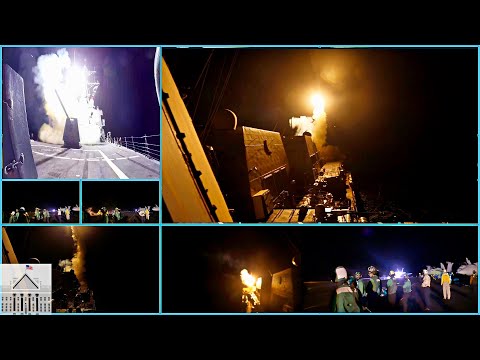
Strikes on Iranian-backed Houthi Targets by USS Gravely, USS Carney, and USS Dwight D. Eisenhower thumbnail

Strikes on Iranian-backed Houthi Targets by USS Gravely, USS Carney, and USS Dwight D. Eisenhower


Iran, meanwhile, insists it is maintaining its control over the Strait of Hormuz.

“No vessel without Iran’s permission has the right to pass through the Strait of Hormuz Command vessel of the IRGC Navy,” the official Iranian Fars News Agency stated on X. “It is announced to all vessels that entry of any vessel from hostile countries into the Strait of Hormuz is prohibited and, if observed, they will immediately be targeted.”

CENTCOM says its forces once again disabled a ship trying to run the blockade. This time, the effort involved an F/A-18E/F Super Hornet from the aircraft carrier USS Abraham Lincoln (CVN 72) firing “a precision munition into the ship’s engineering and steering spaces after the crew failed to comply with directions.”

The incident, involving the Palau-flagged M/T Marivex, took place as the unladen oil tanker transited international waters in the Gulf of Oman toward Iran, the command stated on X.

Marivex is no longer sailing to Iran,” CENTCOM added.

This was the seventh ship trying to run the blockade that CENTCOM forces disabled, the command noted. In addition, it said it  “redirected 134 ships that complied, and allowed 42 vessels supporting humanitarian aid to pass since initiating the blockade on April 13.”

You can read more about how the other six ships were disabled in our story here.

Given existing concerns that Iran has mined the Strait, “US allies will seek Trump’s approval for a Europe-led plan to demine the Strait of Hormuz at next week’s G7 summit in France,” Bloomberg News is reporting. “The UK and French-led mine-clearing mission is operationally ready and set to deploy in the days after any Iran deal. Securing a G7 endorsement of the mission is one of the main goals of the summit. European leaders see it as a way of showing the continent is stepping up to help the US after Trump’s fury it didn’t back his war.”

You can read more about what it takes to conduct demining operations in our exclusive interview with a former MH-53E pilot who carried out those operations, which you can read here.

Despite the renewed fighting, Iran’s president says his country has not abandoned diplomacy.

“Our priority is national security and the peace of our people. We will defend the rights of the nation with authority and will not retreat in the face of any threat,” Masoud Pezeshkian stated on X. “Diplomacy and defense are the two wings of national power; we have neither abandoned the field nor the negotiating table. God willing, with unity and rationality, Iran will emerge triumphant from this trial as well.”

In a post on X, the Islamic Revolutionary Guard Corps (IRGC)-connected Tasnim news agency claims Iran fired a new jet-powered drone at Israel during its waves of attacks yesterday. The outlet provided no details about the weapon or any imagery of it in flight. TWZ cannot independently verify the claim.

Contact the author: howard@twz.com

Howard is a Senior Staff Writer for The War Zone, and a former Senior Managing Editor for Military Times. Prior to this, he covered military affairs for the Tampa Bay Times as a Senior Writer. Howard’s work has appeared in various publications including Yahoo News, RealClearDefense, and Air Force Times.


Source link

Thousands rally in Albania in largest protest yet against Kushner resort | Donald Trump News

Protesters chant ‘Albania is not for sale’ as demonstrations swell against Kushner-backed luxury resort plan.

Thousands of Albanians have taken to the streets of the country’s capital, Tirana, in the ⁠largest protest yet against a luxury resort development backed by United States President Donald Trump’s son-in-law, Jared Kushner.

Protesters on Wednesday held signs that said “Albania is not for sale” and chanted “New Albania” outside Prime Minister Edi Rama’s office as the crowd stretched half a mile down one of the city’s main boulevards.

Recommended Stories

list of 3 itemsend of list

The project, expected to cost about 5 ⁠billion euros ($5.8bn), has provoked outrage in the Balkan country because of its location near a protected wetland home to flamingos, seals and sea turtle nesting sites.

Critics have also raised concerns about a lack of transparency surrounding the plans designed by foreign investors.

“This is the prime example of what has been happening in Albania for the last 35 years,” protester Leand Lakrori told the Reuters news agency. “So today, enough is enough.”

Protestors hold inflatable flamingos as they gather in front of the Albanian Prime Minister's Office to demonstrate against the construction on the southern coast of Albania of a luxury resort near a protected natural area, in Tirana, on June 10, 2026.
Protesters hold inflatable flamingos as part of a ‘Flamingo Revolution’ against Jared Kushner’s planned property in Albania, June 10, 2026 [AFP]

The protests, which erupted in the village of Zvernec on the southern coastline where the resort is planned, have been dubbed the Flamingo Revolution, in reference to the protected wetland at the development site that serves as a migratory stop for the birds.

Rama has sought to play down the ecological concerns, saying an environmental impact assessment would be completed and that the project would proceed responsibly.

“We are very proud of what we have done for the wildlife in Albania,” he said. “The ‌European Commission has no reason to doubt our firm will to protect whatever has to be protected when it comes to wildlife and nature.”

EU warning

The European Union, which has said it could admit Albania and other Balkan countries by 2030, warned that alignment with European environmental law would be a condition of accession.

“Albania should refrain from action that could undermine the fulfilment of the closing benchmark,” said EU spokesman Guillaume Mercier. “We expect the Albanian authorities to act without delay.”

The protests are the latest test for Rama, who has been in power since 2013 and who many now blame for not eradicating widespread corruption or doing enough to improve basic services like healthcare.

Rama said he has made strides to deal with corruption by creating a special prosecution office, which has opened a series of ⁠high-profile investigations.

Still, clashes also broke out earlier this year as protesters demanded the resignation of Rama’s deputy, ⁠Belinda Balluku, over alleged corruption. Rama fired Balluku, but ⁠the mistrust remains.

“I’m here to protest, to finish this saga of the Albanian government. It’s always the same two parties,” protester Fabio Bracaj told Reuters. “We want a new era. We want a better country.”

The resort development is the ‌brainchild of Kushner and his wife, Ivanka Trump, who described falling in love with Albania a few years ago while visiting on a yacht.

Opposition ignited last month when developers erected a fence around part of the Zvernec site. The fence was later removed following an outcry.

Rama has said the project will go ahead regardless.

Source link

Germany’s Cobra 600 Is A Jet Powered Interceptor Drone That Slings An IRIS-T Missile

A novel kind of drone-based air defense system has been shown for the first time by German weapon manufacturer Diehl Defence. The Cobra 600, which has not previously been seen in public, combines a jet-powered drone platform with a missile rail armed with one of the company’s IRIS-T missiles, a weapon already used in short-range air defense systems and air-to-air applications. The new system immediately recalls recent Russian developments, which add short-range air defense missiles to its versions of the Shahed-136 long-range one-way attack drone, known locally as the Geran.

A rendering of the Cobra 600 in four-engine configuration. Polaris Raumflugzeuge

Cobra 600 is being presented at the ILA Berlin airshow, taking place this week in the German capital. The Cobra 600 is also known as the Airborne Launching and Attack System (AirLAS), and the program was launched last year.

The concept behind the Cobra 600 is that of a ‘missile taxi,’ in which the drone platform carries the IRIS-T missile over a considerable distance. All the while, the drone is meshed with a ground-based air defense system. Typically, this would be one of Diehl’s IRIS-T SLM or IRIS-T SLS systems. Of these, the IRIS-T SLS employs the same missile as the air-to-air variant — and therefore the same missile as the Cobra 600. The physical interface between the drone and the missile is a standard pylon as used on the Eurofighter jet.

A ground-based IRIS-T SLS system. Diehl Defense
An IRIS-T air defense missile. Diehl Defense

As for the drone platform, this is provided by another German firm, the Polaris Raumflugzeuge aerospace start-up. It has a similar kind of efficient delta planform as the Shahed-136, with a modified flying-wing-like design. On the wingtips are mounted endplate vertical stabilizers. As displayed, the drone is powered by a pair of JetCat-P1000-PRO micro turbojet engines, each of which provides a maximum thrust of 20 pounds. However, the drone has intake ports for another two engines. It’s not clear if these are only intended to be fitted if heavier payloads are being carried, but it’s certainly a possibility. Concept artwork released by Polaris, as seen at the top of this story, shows a four-engine configuration, with the turbojets buried in the airframe and fed by much longer intakes, helping to shield them from detection.

The two JetCat-P1000-PRO micro turbojet engines on the Cobra 600. Thomas Newdick

Polaris Raumflugzeuge has already built a variety of drones in the same configuration, and the company eventually aims to scale this up to produce a spaceplane.

The MIRA II, an experimental drone powered by four turbojets and designed to test an aerospike rocket engine. The landing gear configuration may well point to that used on the Cobra 600. Polaris Raumflugzeuge

Drawing on its design heritage, the Cobra 600 drone has retractable wheeled tricycle landing gear, meaning that it can be reused in some scenarios. The drone therefore takes off and lands from runways, although it is also able to operate from suitable shorter airstrips, such as stretches of highway. It’s also intended to be cheap enough that commanders will also be willing to risk losing it in combat, or after it runs out of fuel.

The concept of operations has the Cobra 600 serving as an adjunct to a ground-based air defense system, extending its range considerably.

With the missile fitted, the Cobra 600 has a range of around 250 miles. This compares to around 25 miles for the ground-launched missile used in the IRIS-T SLM, or approximately eight miles for the missile used in the IRIS-T SLS.

An IRIS-T SLM system deployed. The radar vehicle is seen in the background. Diehl Defense

As such, the Cobra 600 has the potential to turn the ground-based IRIS-T into something a little closer to a long-range surface-to-air missile, in terms of the distance it can cover. Of course, this is only true in terms of absolute range, with the speed and maneuverability of the drone being far inferior to a long-range missile. Unless the target is nearby, or the Cobra 600 has been pre-positioned based on known target vectors, the reaction time it offers is strictly limited. The missile itself is also able to tackle a more limited range of potential targets than a dedicated long-range surface-to-air missile, some of which offer an anti-ballistic missile capability, for example.

On the other hand, the Cobra 600 offers the distinct advantage of being able to loiter in a given area, waiting for threats to emerge, or to perform combat air patrols to screen certain sectors. It is best viewed as a forward-positioned additional launcher for the ground-based IRIS-T, and is also entirely reliant upon that system (or a similar one) for its effectiveness. At the same time, leveraging existing ground-based air defense systems as a force multiplier is a clear advantage. Another possible operational scenario would involve setting the Cobra 600s up as interceptors on a runway, sitting ready for launch on a runway to defend against lower-end threats.

A close-up of the IRIS-T on the Cobra 600 drone. Thomas Newdick

In its current form, the Cobra 600 has no onboard sensors to detect targets other than the imaging infrared seeker head that’s integral to the standard IRIS-T missile.

In an operational scenario, a target for the Cobra 600 would be detected and identified by the ground-based air defense system to which it is ‘tethered.’ Connected via datalink, the ground-based system would vector the drone to the appropriate location. Using its own seeker, the IRIS-T would lock onto the target and be commanded to launch by the operator of the ground-based system. Of course, this presupposes that the datalink is not compromised by hostile interference or due to line-of-sight limitations, although SATCOM capability, like Starlink, would help keep redundant control over the drone beyond line-of-sight.

At this point, the mode of engagement is not dissimilar to the ground-based IRIS-T SLS, which features a lock-on-after-launch (LOAL) capability. This means it can fire missiles without first establishing the weapon’s lock on the target. After receiving target information in the form of three-dimensional coordinates, the missile uses inertial guidance during the initial stage of flight. Upon reaching the designated engagement altitude, its imaging infrared seeker activates and begins searching the predicted target area.

Diehl Experts | Ulrike Bartel | IRIS-T system | Diehl Defence thumbnail

Diehl Experts | Ulrike Bartel | IRIS-T system | Diehl Defence


Another conceivable option would be to add some kind of sensor, such as an infrared camera, to the Cobra 600 drone platform, meaning that a ‘person in the loop’ could establish that the missile had locked onto the correct target.

A further option could be to ‘uncage’ the missile seeker and let it search across its field of view only when the Cobra 600 is in a designated ‘kill box,’ within which it would have authority to engage any target it acquires, reactively, and autonomously. Issues such as this clearly need to be addressed, based on combat requirements and ethical concerns.

As well as operating the Cobra 600 in conjunction with the IRIS-T SLM/SLS, it could also be integrated with other ground-based air defenses. According to Polaris, it could also be embedded with aircraft or in a maritime environment.

A rendering of the Cobra 600 in a maritime environment. Polaris Raumflugzeuge

The Cobra 600 has already completed its first flight tests, with a dummy IRIS-T missile fitted. Currently, the development effort is mainly funded by the company, but there has also been investment from at least one interested nation.

With the IRIS-T SLM/SLS combat-proven in Ukraine, experiences from this conflict have almost certainly helped inform the development of the Cobra 600.

The war in Ukraine also provides an interesting parallel to the Cobra 600, in Russia’s missile-armed adaptations of its Shahed/Geran drones.

Russian developments have seen the fielding of these drones carrying either a single R-60 air-to-air missile, a much older and less capable equivalent to the IRIS-T, or man-portable air defense systems (MANPADS).

According to Ukrainian accounts, as well as the rail-mounted missile on the top, these drones are equipped with a camera and a radio-frequency modem.

However, the concept of operations for the missile-armed Russian drones is very different. While it gives the drones a means to engage Ukrainian fixed-wing aircraft and helicopters, it works more as a deterrent than as a genuinely useful tactical application. As we have noted in the past, the difficulty in obtaining a high degree of situational awareness and the limited agility of the drone raises questions about the effectiveness of these solutions. On the other hand, Russia has been working on a man-in-the-loop (MITL) control capability for the Shahed/Geran, which could potentially be used to operate the missile.

Considerably larger than the Shahed-136 design, the Cobra 600 will provide a higher performance delta overall. It is also jet-powered, and, with up to four engines, this would give more impressive response times and maneuverability than the Russian system.

It should be noted that there are other previous precedents for arming drones with air-to-air missiles. In at least one instance from 2002, a U.S. Air Force MQ-1 Predator drone fired a Stinger heat-seeking anti-air missile at an Iraqi MiG-25 Foxbat fighter that was trying to shoot it down, which can be seen in the video below.

Dogfight between MQ-1 Predator drone and Mig-25 Foxbat.mp4 thumbnail

Dogfight between MQ-1 Predator drone and Mig-25 Foxbat.mp4


The fast pace of development of the Cobra 600 reflects a growing need for ground-based air defenses more generally, after decades of neglect. There is also a need for less-expensive, less-exquisite solutions in this area, something that the Cobra 600 also addresses, with a price point that is significantly lower than a long-range surface-to-air missile (although with the various disadvantages outlined above). At the same time, the Cobra 600 may well end up being used against even lower-cost drones, for which the IRIS-T is still a very expensive solution.

The Cobra 600 reflects a broader shift in air defense thinking driven by the lessons of recent conflicts, particularly in Ukraine and the Middle East, where persistent drone threats, as well as cruise missiles, have exposed the limitations of traditional ground-based air defense architectures.

By combining the endurance and flexibility of a drone with the proven, off-the-shelf IRIS-T interceptor, the Cobra 600 offers a potentially cost-effective way to extend defensive coverage over greater distances and to put ‘shooters’ into contested areas that crewed systems would not be able to venture. While some questions remain about how the Cobra 600 would be integrated with existing operational doctrine, the concept highlights the growing demand for innovative, layered, and resilient air defenses as militaries seek to counter increasingly varied and numerous aerial threats.

Contact the author: thomas@thewarzone.com

Thomas is a defense writer and editor with over 20 years of experience covering military aerospace topics and conflicts. He’s written a number of books, edited many more, and has contributed to many of the world’s leading aviation publications. Before joining The War Zone in 2020, he was the editor of AirForces Monthly.


Source link

Is This Secretive Air Force 737 About To Become NASA’s Next ‘Vomit Comet’?

NASA is moving to hire a contractor to assess whether or not a Boeing 737-73W can meet its needs for a new reduced-gravity testbed aircraft. The use of planes modified for this role is now new, and they are often called “Vomit Comets” because of the extreme maneuvers they perform to simulate zero-G environments and the physical side effects this often induces. However, there’s an unusual twist here with the specific plane that NASA is now eyeing: it currently belongs to the U.S. Air Force and is part of a “classified military program.” There is a strong possibility that the aircraft in question is a mysterious 737 that the service acquired in 2020, and that has been the subject of much speculation as to its purpose ever since.

NASA’s Armstrong Flight Research Center posted a contracting notice yesterday justifying a planned sole-source contract to Denmar Technical Services, Inc. in relation to “Reduced Gravity Modification” of the 737-73W aircraft. Earlier this year, signs had already emerged that NASA might be in line to get a heavily modified and highly secretive 737 from the Air Force, designated the NT-43A and commonly referred to by the callsign RAT55. However, yesterday’s notice does not appear to refer to the NT-43A, long used as an airborne signature measurement platform and described in the past as the world’s most secretive 737, which is based on a much older 200-series airframe. We will come back to this later on.

A stock picture of the NT-43A Radar Test Bed aircraft, also commonly known by the callsign RAT55. Phodocu

What NASA wants now

“NASA requires Denmar Technical Services, Inc. to conduct a feasibility assessment to determine the Boeing 737-73W’s suitability to perform the NASA reduced gravity mission; modify the aircraft cabin, if required, to support reduced gravity operations; perform overdue maintenance and inspections, perform airworthiness restoration tasks, and paint the aircraft exterior with NASA identifiers,” the contracting notice NASA released yesterday explains.

The notice adds that the aircraft, if modified, would be used, at least most immediately, “for the Reduced Gravity Test Bed Project in support of the agency [sic] need for performing validation testing on Space Suits in support of the Artemis program.”

Artemis is NASA’s current effort to return U.S. astronauts to the lunar surface. The Artemis II mission, conducted in April, involved the first fly-by of the Moon by a crewed spacecraft since the end of the Apollo program in the early 1970s. However, the spacecraft did not touch down on the surface. The goal now is for a crewed lunar landing to come in 2028. RAT55 was notably used to support the launch of the Artemis II mission and the subsequent recovery of the capsule after its return to Earth.

Back in January, NASA had put out a separate contracting notice calling for information about new options to provide “parabolic flight services” to simulate “reduced gravity environments, including microgravity” for testing and scientific research purposes. The Florida-based Zero-G corporation is currently the primary provider of these services to NASA, using a retrofitted Boeing 727-200 dubbed ‘G-Force One.’ You can read more about NASA’s general use of Vomit Comets in the context of that notice here.

Total Weightless! What Happened on my Zero Gravity Flight? thumbnail

Total Weightless! What Happened on my Zero Gravity Flight?


The Boeing 737-73W under consideration to be turned into a Vomit Comet “is owned by the United States Air Force (USAF). Denmar Technical Services, Inc. has specialized knowledge of this Boeing 737-73W aircraft as they are currently contracted by the USAF to modify the aircraft under a classified military program,” the contracting notice NASA released yesterday adds. “NASA does not have a ‘need to know’ regarding the details of the current modifications being made under the USAF contract and therefore is unable to provide modification details to another contractor or provide another contractor with access to the aircraft. The USAF will transfer ownership of the aircraft to NASA upon completion of the closeout tasks.”

“Denmar Technical Services, Inc. is uniquely positioned to close out work under their existing obligations while performing the feasibility assessment, maintenance, and any modifications required under this action,” the notice continues. “Additionally, due to the constrained timeline for the NASA Extravehicular Activity and Human Surface Mobility Program’s space suit testing for Artemis, NASA requires the assessment and overdue maintenance to be performed immediately upon contract award and any subsequent aircraft modifications to be complete no later than October 1, 2026. The timeline can only be supported if this requirement is fulfilled concurrently with the USAF closeout tasks.”

Denmar is a small aviation firm headquartered in Reno, Nevada. At the time of writing, its website lists a wide array of specialized design, modification, flight testing, and other work among its portfolios. This includes “advanced customized mission system development” that “encompasses the design of unique airborne operator interfaces, specialized emitters and sensors, system integration, and post-mission analytics and processing.” The company also describes itself as the “Nation’s leading experts on IR [infrared] and RF [radiofrequency] survivability, signature modeling, [and] agile software development for analysis and real-world operational assessments.”

In line with all this, Denmar is understood to have been the prime contractor behind the extensive modifications to RAT55. In April, the Air Force confirmed to TWZ that the NT-43A was “being transitioned to start the next phase of its career,” as reflected by its involvement in the Artemis II mission, “after decades of flights supporting the Air Force in various roles.” The aircraft, which is understood to have long called the secretive and remote Tonopah Test Range Airport (TTR) in Nevada home, has been seen much more publicly since then.

However, as NASA’s recent contracting notice makes clear, the 737 it is now looking at as a potential Vomit Comet is a much newer 700-series model. TWZ has reached out to the Air Force and NASA for more information.

The curious case of N712JM

As mentioned, it is very possible, if not highly probable, that the 737 NASA is now considering turning into a Vomit Comet is one that the Air Force acquired in 2020, which TWZ explored in-depth at the time. That aircraft, which is a -73W model, is still officially on the U.S. civil register, with the registration code N712JM. Federal Aviation Administration (FAA) records show that the preceding owner of this aircraft was Denmar, which acquired it in 2019. The plane’s history before that is murky, with Boeing delivering it in 2013 to East West Bank via a trusteeship with Wells Fargo Bank, per the FAA’s records.

N712JM had drawn particular attention in 2020 not just because of its transfer to the Air Force, but also because it emerged at that time wearing a green protective coating and otherwise looking like it had just rolled off the production line. It also had some unusual external features that raised questions about its role, as we explored at the time.

N712JM as it was seen in 2020. Reader submission

In 2020, Jon Ostrower, long-time aviation journalist and editor-in-chief of The Air Current, told TWZ the following:

“This is definitely an airplane that never made it to a formal finish you’d expect from a commercial airplane. The green finish is a protective coating applied to fuselages during manufacturing to protect from scratches and other damage. It is dissolved during painting. You can also still see the manufacturing (line) number as well. That’s from its original trip down the assembly line. There’s also quite a bit of instrumentation visible with sensor wiring leading into the cabin through the passenger windows. This type of arrangement points to a flight test setup of some kind.”

In 2020, N712JM conducted many test flights in U.S. military ranges off the coast of Southern California, flying various flight profiles, some of them quite unusual. The aircraft flew those sorties from Santa Maria Airport in California, and used the callsign STING 38.

What the Air Force has been using N712JM for to date is unknown. Per FAA, the aircraft has been and continues to be registered to an address at Bolling Air Force Base (technically now part of Joint Base Anacostia-Bolling) in Washington, D.C., which looks to belong to the Air Force’s Rapid Capabilities Office (RCO). The RCO has headed up multiple cutting-edge, high-priority programs over the years, including the development of the B-21 Raider stealth bomber and the X-37B reusable spaceplane. A 737-based platform could be configured to support an array of different research and development and test evaluation activities that would fall under the purview of RCO, as well as other stakeholders that this office might engage with.

A screen capture of the entry for N712JM in the FAA’s online database at the time of writing. FAA capture

There has also been some speculation over the years that N712JM might have transformed into an Air Force 737 with the serial number 21-0024, but this appears to still be unconfirmed. The 21-0024 serial has more recently become associated with other shadowy 737s tied to the U.S. military, which have civilian-style paint schemes and may also be on the U.S. civil register. One of them was notably spotted in 2025 at a U.S. forward operating location in El Salvador, sitting directly alongside an Air Force AC-130J Ghostrider gunship and a U.S. Navy P-8A Poseidon maritime patrol plane. This, in turn, raised questions about its involvement in the ongoing U.S. campaign of strikes on alleged drug smuggling boats in the Caribbean and the Eastern Pacific Ocean, as TWZ previously explored in detail.

Sightings and flight tracking data have also pointed to N712JM being a resident at the Sierra Nevada Corporation’s (SNC) facility at Colorado Springs Airport, in the Colorado city of the same name, over the years. SNC is well known for highly specialized and unique aircraft modification work, especially for the U.S. military, but its exact connection to this 737 is unclear.

Interestingly, there have been several online flight tracking data ‘pings’ suggesting new activity related to N712JM at Colorado Springs Airport since at least February of this year. However, there do not appear to be any confirmed flights by the aircraft from there in that same timeframe. This airport notably sits adjacent to Peterson Space Force Base.

There is still a possibility that NASA could be looking at a different Air Force 737-73W for possible conversion into a Vomit Comet. As the contracting notice makes clear, the aircraft in question is currently in the classified realm. At the same time, this seems far less likely to be the case given everything that is known (and still unknown) about N712JM.

A separate question does exist now as to what effort the Air Force might be in the process of closing out that would allow it to transfer any classified 737 to NASA. TWZ has previously raised tangential questions about how the Air Force might fill the resulting gaps left by the highly-specialized RAT55 moving on to the next stage of its career. It is certainly interesting in its own right that NASA seems to be focused heavily at the moment on leveraging some of the most secretive 737s in existence today to support its much less sensitive needs.

More details may emerge if Denmar deems the “classified” Air Force 737 to be a suitable starting place to create a new Vomit Comet to support NASA’s reduced gravity training needs and the Artemis program.

Update: 3:45 PM EST –

In immediate response to our queries, NASA has directed us to an additional notice about the award of the sole-source contract, valued at $8.4 million, to Denmar Technical Services back on June 1.

“The contractor will modify a Boeing 737-700 aircraft to perform lunar-gravity parabolic flights to test NASA space equipment. Once modifications are complete, NASA Armstrong will own the aircraft and oversee aircraft operations out of NASA Johnson,” the notice says. “The aircraft will be used to validate astronaut lunar suits and associated crew systems required to support Artemis mission objectives. This can be done with the modified 737 aircraft in an operationally relevant, reduced-gravity environment prior to lunar mission execution.”

No mention is made here about the sourcing of the aircraft from the Air Force or its classified mission work, as outlined in the sole-source justification that was released yesterday.

Contact the author: joe@twz.com

Joseph has been a member of The War Zone team since early 2017. Prior to that, he was an Associate Editor at War Is Boring, and his byline has appeared in other publications, including Small Arms Review, Small Arms Defense Journal, Reuters, We Are the Mighty, and Task & Purpose.


Source link

Which World Cup teams, players and officials were denied US visas, entry? | World Cup 2026 News

The United States government has faced sharp criticism from immigration and human rights experts due to the ongoing visa-related complications and entry denials for athletes and officials participating in the FIFA World Cup.

The censure of US President Donald Trump’s administration grew after top Somali football referee Omar Artan, who was set to officiate in World Cup games, was denied entry into the country this week.

Recommended Stories

list of 4 itemsend of list

“Human rights organisations and advocacy groups have repeatedly raised concerns regarding immigration enforcement practices and treatment of migrant communities in the US,” international sports lawyer Khayran Noor told Al Jazeera last month.

Noor said that while these debates are “independent” of football, they inevitably become relevant when a country hosts one of the world’s largest international gatherings.

“The challenge is that major sporting events rely not only on logistics and security but also on atmosphere and perception.”


UN High Commissioner for Human Rights Volker Turk called for a “massive rethink” of US immigration policies, saying that he hoped issues around “racial profiling, around surveillance, around immigration enforcement are not going to affect this World Cup in the way that they have already done”.

Although Artan returned home on Wednesday to a hero’s welcome and sporting a positive attitude, the incident rehashed the conversation on geopolitics and racism being cloaked by US visa denials ahead of the 48-nation, 39-day tournament starting on Thursday.

Fans from several countries, including Morocco and Scotland, who spent thousands of dollars on flights, hotels and tickets for the most expensive World Cup in history, have also reported having their travel documents denied or revoked just days before they were due to travel.

Here’s a look at the athletes, officials and fans affected by US visa complications:

Omar Artan: Somalia

Artan, 34, was set to make history as the first Somali referee to officiate at a World Cup, but his dream debut ended at Miami airport where he was denied entry into the country and flown back to Istanbul, despite having a valid US visa and all required documents.

The US Department of Homeland Security (DHS) confirmed to Al Jazeera on Monday that Artan was “determined to be inadmissible” to the country “due to vetting concerns”, despite having been listed as one of FIFA’s 52 World Cup referees.

Trump has targeted both Somalia and the Somali-American community with inflammatory rhetoric, at one time calling the community “garbage”, and has put Somalia on the US travel ban list.

Iranian World Cup squad and officials

Until last week, there was uncertainty over whether Iran’s football team would be granted visas by the US due to the ongoing US-Israel war on Iran, which has brought geopolitical tensions into the sports sphere.

The US awarded visas to all the players on Friday, just ⁠10 days before their first match, but several members of the ⁠support squad were denied visas, including “key managerial and administrative members,” according to the Iranian football federation.

Iran’s team, whose base camp was to originally be in Arizona, will be based in Tijuana, in neighbouring Mexico, throughout the tournament, despite playing their entire group stage on the US West Coast.

The team will be able to enter the US the day before each of their three World Cup matches, the DHS said on Tuesday.

Media reports over the weekend quoted the Iranian ambassador to Mexico, Abolfazl Pasandideh, as saying that Iran’s team would have to enter and leave the US on the same day as they were playing, raising questions about logistics and whether it would affect team performance.

Aymen Hussein: Iraq

Iraq striker Aymen Hussein was detained for nearly seven hours and his phone inspected at Chicago’s O’Hare airport before he was eventually allowed into the country.

“Why is America hosting the World Cup if it is so hostile to foreign nationals?” the 30-year-old said after the incident.

Meanwhile, national team photographer Talal Salah was held for more than 10 hours, underwent similar phone checks, and was ultimately denied entry into the US.

Woodensky Pierre: Haiti

Woodensky Pierre, the only member of Haiti’s national football team who lives in the Caribbean country, was granted a late visa by the US government to play in the World Cup.

Pierre had been training with local players in an upscale area of Haiti’s capital, Port-au-Prince, as he awaited the visa, which was a “great moment for him, a moment of happiness”, an official of the Haitian Football Federation had said.

The midfielder from Cite Soleil was unable to play in a friendly against New Zealand because his visa was not approved by US authorities until it was too late. He landed at Miami airport around half-time with Haitian football officials and hoped to catch the last part of the game.

Breel Embolo: Switzerland

Swiss forward Breel Embolo was unable to travel with his team due to a flagged visa, but eventually caught up with them after being cleared to enter the US.

The snag was linked to a previous conviction over an altercation in Basel in 2018. Embolo had been convicted of making threats five years later, which he chose not to appeal, but it left his fate to be decided at a meeting at the US Embassy in Bern, where he made his case and was cleared for travel.

Is FIFA obligated to ensure visas?

FIFA’s bidding rules in 2017 for nations wanting to host this World Cup stated that visa processing “must be applied in a non-discriminatory manner”, with the caveat it must not “adversely affect the national immigration and security standards”.

Sports lawyer Noor explained that states understandably retain sovereign responsibilities regarding border control and national security, but global sporting events often require exceptional frameworks.

“This is not about requiring states to abandon immigration laws or surrender sovereignty.

“Rather, it is about asking whether hosting the world’s largest sporting events also carries responsibilities around meaningful inclusion and access,” Noor said.

FIFA president Gianni Infantino has fended off concerns and criticism, saying the global football body’s executives are not “kings of the world” and cannot override government decisions.

Infantino, facing questions from the media on the eve of the World Cup on Wednesday, said that FIFA ⁠is focused on being a “sports organisation” and will not intervene in helping the US determine approvals for entry into the country.

“We try always to find solutions – always,” Infantino said at a news ⁠conference in Mexico City. “But then we need to respect that we are not the kings of the world who can rule over governments and police forces and I don’t know what. We are a sports organisation; we try to do our best ⁠with the means that we have.”

Source link

Overnight Attacks Rattle U.S.-Iran Ceasefire (Updated)

U.S. President Donald Trump told reporters today that in the wake of overnight attacks between the U.S. and Iran, strikes on Iran will continue. Meanwhile, Iranian officials say they are “reviewing” whether to continue peace talks after one of the most serious exchanges of fire between the two nations since the April 8 ceasefire.

The latest round of attacks and counterattacks touched off after U.S. Central Command launched three waves of strikes on targets in southern Iran in retaliation for what Trump said was Iran’s downing of an AH-64 Apache helicopter, reportedly by an Iranian Shahed drone. Iran denied attacking the Apache. You can read more about that incident here.

Though damage assessments are still ongoing in the wake of Iranian missiles and drones launched across the Middle East overnight, a U.S. official told TWZ Wednesday morning that so far, there have been no injuries among U.S. personnel reported and no indication yet of any damage to American installations. That’s despite Iranian claims to the contrary.

“Iran launched multiple missiles and drones and just about all were intercepted according to initial reflections from assessments that are ongoing,” the official told us, speaking on condition of anonymity to discuss operational details. “No reports of harm to any U.S. personnel; not aware of any damage to our locations at this time.”

However, as we have noted in the past, similar U.S. assessments during the height of Epic Fury were later contradicted by reports of wide-spread damage from Iranian attacks.

Iranian officials said they again launched attacks on the U.S. Navy’s Fifth Fleet Headquarters in Manama, Bahrain, as well as Muwaffaq Salti Air Base in Jordan and targets in Kuwait.

Several videos emerging overnight claimed to show missile interceptions and explosions resulting from the latest Iranian kinetic actions.

Some showed missile interceptions over Muwaffaq Salti. As we have frequently noted, the base has been a major staging area for U.S. airpower in the region. It came under Iranian attack before the ceasefire, with an AN/TPY-2 missile defense radar there having been notably targeted.

Additional video shows what appears to be an explosion in the distance as viewed from a CCTV camera in Manama in the wake of a claimed Iranian missile launch at Fifth Fleet headquarters. The extent of the damage, if any, is unknown.

The Islamic Revolutionary Guard Corps (IRGC)-connected Tasnim News Agency also posted a video it claims shows an attack on the Fifth Fleet. The short video shows what appears to be an explosion in the distance and again, there is no way to tell what, if any damage, was caused.

The Kuwaiti Foreign Affairs Ministry condemned the latest Iranian strikes and said the nation “reserves its full right to take all necessary measures to preserve its security and defend its territories and vital facilities, in accordance with international law and the United Nations Charter.”

Iran said its latest volley of kinetic actions were in response to what U.S. officials say were strikes on 20 Iranian targets in response to the helicopter downing.

This latest flurry of strikes prompted comments about the future of diplomacy from both sides.

During a morning press conference, Trump said “we hit ’em hard yesterday, and we’re going to hit ’em again hard today, in case you miss it, in case you don’t turn on your television set, and we’ll see what happens with the deal.”

Earlier on Wednesday, Trump told Fox News that there may be additional U.S. attacks that focus on “Iranian power plants and bridges.”

The president’s comments to Fox follow statements he made on his social media outlet saying Iran has taken too long to agree to a peace deal.

“Iran’s Military is a complete and total mess,” Trump said on Truth Social. “Much of it, like their Navy and Air Force, doesn’t even exist anymore – They have been completely defeated. Iran is all talk and no action. The Bully of the Middle East is DEAD!!! They’ve taken too long to negotiate a deal that would have been great for them, now they will have to pay the price!!!”

Trump did not elaborate on what that price may be.

As we noted earlier in this story, Iran is reassessing the future of diplomatic negotiations aimed at ending the US-Israeli war against the country, according to the official Iranian IRNA news outlet.

“We have to review it,” Iranian Foreign Ministry spokesperson Esmaeil Baqaei told IRNA. “Diplomacy and the battlefield are not separate matters; rather, they run alongside and complement each other in safeguarding Iran’s interests and security.”

​Baqaei stressed that Iran’s military and diplomatic tracks operate in coordination.

“Wherever the Armed Forces deem it necessary, they respond to the enemy with authority and strength, and last night’s events showed that Iran’s brave Armed Forces do not hesitate in defending the country,” he posited.

Despite the flare-up in fighting and posturing by both sides, negotiations appear to be continuing.

“Following consultations with the United States, Qatari negotiators headed to Tehran this morning to meet with the Iranians in an attempt to bridge the remaining gaps,” CNN reported on its Arabic channel, citing a source. “The visit indicates that diplomacy remains active, despite an exchange of fire between Iran and the United States overnight—marking one of the most significant tests of the ceasefire to date. A US official told CNN that the United States believes these strikes will not derail the negotiations.”

At issue remains the future of Iran’s nuclear ambitions, the ongoing closure of the Strait of Hormuz, Tehran’s ballistic missile arsenal and support for proxies and the easing of U.S. sanctions. Whether the increased fighting between the two sides will derail these efforts remains an open question.

UPDATES

Iran claims it downed another U.S. MQ-9 Reaper drone overnight. While TWZ can’t verify that, we have noted that the loss of dozens of these drones to Iran and the Houthis have forced the U.S. Air Force to scramble for replacements.

A cargo ship came under small arms fire 88 nautical miles south of Balhaf, Yemen in the Gulf of Aden, according to the United Kingdom Maritime Trade Operations (UKMTO) monitoring organization.

“A cargo vessel has reported being approached by one craft with 6 armed persons onboard,” UKMTO explained. “There was an exchange of fire between the small craft and the cargo vessel’s Armed Security Team resulting in the small craft turning away. Authorities are investigating. Vessels are advised to transit with caution and report any suspicious activity to UKMTO.”

While details about who was involved are scant, this is the first attack in the region, near the Bab al-Mandeb Strait, since the Houthi rebels of Yemen threatened to shut the vital waterway down in support of Iran last week. You can read more about the implications of the Iranian proxy group closing the Strait on the U.S. military and the global economy in our prior reporting here.

In a post on X, CENTCOM on Wednesday announced it disabled an oil tanker trying to run the blockade of Iranian ports.

The incident took place at 11:14 p.m. on June 9, when a U.S. aircraft “fired precision munitions” into the engine room of the Palau-flagged M/T Settebello as it transited the Gulf of Oman.

The ship was attempting to transport oil from Iran, the command added.

In addition to the ships it disabled, CENTCOM said it has “redirected 134 ships that complied, and allowed 42 vessels supporting humanitarian aid to pass since initiating the blockade on April 13.”

You can read more about the other seven ships hit by CENTCOM here.

When it comes to the Strait of Hormuz and Gulf of Oman region, Trump took to social media to say the ongoing blockade of Iranian ports has devastated Tehran’s economy.

“The Fake News Media refuses to report how EFFECTIVE the U.S. Naval BLOCKADE is, the most successful Blockade in the history of Naval Warfare,” the president proclaimed on Truth Social. “NOTHING GETS THROUGH unless we want it to. IT IS A STEEL WALL! Iran is doing ZERO business, not paying their military, or any of their bills, and quickly becoming a FAILED NATION! Lots of oil is getting out. Praise be to Allah!”

However, in a post on X, the Windward trade intelligence group said that “five Iranian-trading [liquified petroleum gas] LPG carriers have broken the U.S. blockade on Iranian ports,” Windward stated. “Four discharged in India, one in Pakistan. All five used the same playbook, spoofing and AIS blackouts to mask loading and destination. Yet all signaled their exit and/or entry through Hormuz via AIS. Three were already U.S.-sanctioned. A fourth sanctioned June 6. Two operated under false flags, making them legally stateless.”

However, the crude oil blockade is holding, Windward added. 

“No Iran-trading VLCC tracked in Asia via Malacca, Sunda, or Lombok since May 4,” the organization noted.

U.S. Secretary of War Pete Hegseth is scheduled to visit CENTCOM headquarters in Tampa, Florida, today to discuss the ongoing situation with the head of that command, Adm. Brad Cooper, and engage with troops.

Despite efforts to quell the fighting between Israel and Hezbollah in southern Lebanon, the Israeli Air Force continues to strike targets in that country.

“Over the past day, the IDF struck Hezbollah infrastructure sites in the area of Tyre and in several areas in southern Lebanon,” the IDF stated on Telegram.

“In the area of Tyre, the IDF struck six infrastructure sites used by the Hezbollah terrorist organization to advance terror attacks against the State of Israel and IDF soldiers operating in southern Lebanon,” the IDF added. “Among the infrastructure struck was a site used by Hezbollah terrorists to launch explosive drones toward IDF soldiers.”

In southern Lebanon, “the IDF struck ready-to-use Launchers, terrorists who operated in the area in which IDF soldiers are operating, and additional terror infrastructure sites,” it claimed.

Hezbollah, meanwhile, attacked a gathering of Israeli troops with a missile, according to Tasnim.

The ongoing Israeli incursion into southern Lebanon and continuing presence in Syria has raised tensions with Turkey. Any direct conflict flaring up from the long-simmering animosity between two of the region’s most powerful militaries – though extremely unlikely – would be a far bigger deal than a dertailment of U.S.-Iran peace talks.

“We are fully aware of what the ultimate objective of the delusion of ‘Greater Israel’ is,” Turkish President Recep Tayyip Erdoğan said Wednesday, adding that Israel’s actions in Lebanon and Syria now threaten Turkey.

The Turkish leader’s statements sparked a harsh response from Netanyahu.

“The antisemitic tyrant Erdogan, who perpetrates genocide against the Kurds, supports the terrorist organization Hamas, oppresses his own people, and imprisons political rivals, is the last one who can preach morals to the State of Israel,” the Israeli leader retorted. “The State of Israel and the IDF, the most moral army in the world, will continue to act forcefully against Iran and its proxies that threaten the Middle East and the entire world.”

The latest events in the Mideast region show that there is no immediate end in sight to the hostilities and we will continue to monitor developments here given the ongoing impacts on the U.S. military and global economy.

UPDATE: 3:01 PM EDT –

Trump claimed the price of oil will fall because of how much has been secretly moved out of the region.

“We’re taking about millions of barrels of oil,” the president told reporters Wednesday afternoon.

On his Truth Social, Trump claimed that last month, he “directed our Great U.S. Military to execute a secret mission to support Oil Tankers and other Commercial Ships through the Strait of Hormuz.”

“Today, I am pleased to announce that this effort has resulted in more than 100 MILLION Barrels of Oil making its way through the Strait, and into the Open Market,” he added. “More than 200 Commercial Ships have safely traveled through the Strait. This wildly successful effort is because the UNITED STATES of AMERICA CONTROLS the Strait of Hormuz — NOT Iran. Their military is defeated, and their economy is lost. It’s over for Iran!”

However, TankerTrackers.com clarified that the president was referring not to Iranian oil, but Arab oil.

UPDATE: 3:39 PM EDT –

Hegseth thanked troops at CENTCOM headquarters in Tampa, Florida, for their efforts in the Middle East.

UPDATE: 4:12 PM EDT –

The Secretary-General of the International Maritime Organization (IMO) “has expressed deep concern and strong condemnation of the attack on the tanker MT Settebello,” according to the organization.

“I strongly condemn any act from any party that endangers the lives of seafarers and the safety of international shipping,” said Secretary-General Arsenio Dominguez. “This is simply unacceptable. My thoughts are with the families of the three missing seafarers and with all those awaiting news of the crew members.”

Two Indian seafarers died and one was reported missing after the attack, according to The Hindu.

Contact the author: howard@twz.com

Howard is a Senior Staff Writer for The War Zone, and a former Senior Managing Editor for Military Times. Prior to this, he covered military affairs for the Tampa Bay Times as a Senior Writer. Howard’s work has appeared in various publications including Yahoo News, RealClearDefense, and Air Force Times.


Source link

Maasai women turn drought into income through fodder farming in Tanzania | Agriculture News

Monduli, Tanzania – When drought wiped out most of her family’s livestock, 30-year-old Nesirkar Loongidong’i, a Maasai mother of four from Selela village in northern Tanzania, found herself with very few options. The dry season had already killed most of their animals.

Today, she makes a living growing and selling drought-resistant livestock fodder.

“Before I planted fodder, I lost most of our goats. Now, people come from other villages to buy grass, and I can support my children. I don’t fear drought anymore,” Loongidong’i told Al Jazeera.

With the income, she has built a house and bought five goats.

Loongidong’i’s story is part of a much larger and fast-growing shift. Across northern Tanzania, Maasai women, part of a community of about 430,000 people, are turning fodder production from a survival tactic into a climate-adaptation business. The work is coordinated by the Pastoral Women’s Council (PWC) and is spreading across pastoral districts.

The PWC is a women-led membership organisation working across three northeastern districts, covering more than 28,000 square kilometres (10,810 square miles) and serving about 456,000 people, most of them Maasai pastoralists. Founded in 1997, it now counts around 6,500 members in 90 villages, with years of work focused on land rights, economic empowerment, and girls’ education.

For Loongidong’i, it all comes down to growing pasture grass without irrigation. Because demand remains steady, so does her income, and with it, her household’s stability. Today, she lives in a home with a metal roof, and nearby, her goats graze in a fenced area as their numbers slowly grow again.

According to Tanzania’s Ministry of Livestock and Fisheries, at least 306,358 animals, including cattle, goats, sheep, and donkeys, died between September 2021 and January 2022 due to prolonged drought. In Simanjiro district alone, 92,047 livestock were lost, wiping out livelihoods across pastoral communities.

In response, the PWC established 10 major grass seed banks across eight villages in Monduli and Longido districts. Today, about 75 hectares (185 acres) are under fodder production, with another 37 hectares (90 acres) expected to be added in the 2025-2026 season. Around 250 women directly manage these farms, while thousands of herders now depend on them for feed during dry seasons.

The impact is already visible. In 2025, a single seed bank earned 6.6 million Tanzanian shillings (about $2,500) from seed sales, along with 1,111 hay bales sold at 6,000 shillings ($2.30) each. For many women, this has shifted their role from dependents to economic providers.

Backed by organisations such as the Global Fund for Women and Oxfam, the PWC is now seen as offering a replicable model for protecting a livestock economy worth millions of dollars.

This shift is no longer limited to survival. Across northern Tanzania, it is becoming a quiet but steady form of enterprise, reshaping daily life in pastoral communities.

From survival to business

In Longido and Monduli, deep in northern Tanzania, Maasai life has been slowly changing. As traditional grazing patterns weaken under worsening droughts, women are increasingly taking on roles once tied only to herding, now growing pasture for income on open communal land.

Loongidong’i explains that what began as a way to survive dry years has now become a reliable source of income for many women. In the past, planting hardy grasses such as Cenchrus ciliaris was simply about keeping livestock alive. Today, it is also a business.

To respond to declining rainfall, women grow resilient species such as Rhodes grass (Chloris gayana) and Masai love grass (Eragrostis superba) on designated community plots. These grasses stay green longer than natural pasture during dry periods. Once harvested, they are bundled and sold to local herders as animal feed.

A member of the Naisho women’s group carries a sheep purchased through income earned from harvesting and selling fodder grass in Selela village, Monduli District, northern Tanzania [Courtesy of Pastoral Women’s Council]
A member of the Naisho women’s group carries a sheep purchased through income earned from harvesting and selling fodder grass in Selela village, Monduli district, northern Tanzania [Courtesy of Pastoral Women’s Council]

“Seeds are also saved and traded later when demand rises,” Loongidong’i says, adding that this cycle now supports many households across arid areas.

Herding families also benefit during drought periods, when natural grazing disappears and these managed plots become a lifeline for livestock.

The seed bank project, managed by Naisho, the group Loongidong’i works with under the PWC, generated about 6.6 million Tanzanian shillings ($2,514) from seed sales, alongside more than 1,000 bales of grass. Small in scale, but steady in output, it has proven what organised local production can achieve.

For the Maasai, cattle are more than livestock; they are the centre of daily life, economy, and identity. When rains fail, the impact is immediate: animals weaken, and families struggle.

As in many pastoral communities, women carry much of the responsibility for daily survival, from food preparation to fetching water and caring for children. Now, alongside those roles, they are also becoming earners.

“Women who once depended entirely on their husbands now have their own income,” says Rachel Letiety, a founding member of the PWC. “Families are becoming more stable. Men are beginning to value women’s contributions, especially during droughts.”

Ongoing challenges

Still, the progress comes with challenges.

Loongidong’i says some farms are affected when weeds take over and when fences break, allowing livestock, and sometimes wild animals, to destroy carefully cultivated plots.

“I have seen invasive plants ruin large parts of our farms,” she says. “And sometimes animals enter and destroy what we have worked on for months. It is not easy to guard these fields every day.”

She also points to tensions within groups, where disagreements sometimes arise over responsibilities and how income is shared.

At present, with support from organisations such as Justdiggit, Trees for the Future, and Swissaid, around 200 women are directly involved in the project. Many more benefit indirectly, especially during drought periods when pasture becomes scarce.

Nesirkar Longidongi carries harvested fodder from her group’s grass field in Selela village. Income from fodder production has helped her improve her family's livelihood. [Courtesy of Pastoral Women’s Council]
Nesirkar Loongidong’i carries harvested fodder from the grass field maintained by her group in Selela village [Courtesy of Pastoral Women’s Council]

“This work prevents our cattle from dying and keeps them healthy,” says Nairiyamu Laizer, a mother of three and secretary of the Naisho group. “It also helps sustain the bulls we raise.”

“If all women take up this opportunity, these projects can lift our economy,” she adds.

“We harvest the grass and sell it; some buyers use it for cattle feed, others for thatching houses. We also grind some of it into animal feed,” she says.

For Loongidong’i and many Maasai women, growing fodder is no longer just about surviving difficult seasons. It has become a new beginning, reshaping livelihoods and the place of women in pastoral life.

“Now women help bring money into their homes,” she says, “and families are becoming more stable.”

This article is published in collaboration with Egab.

Source link