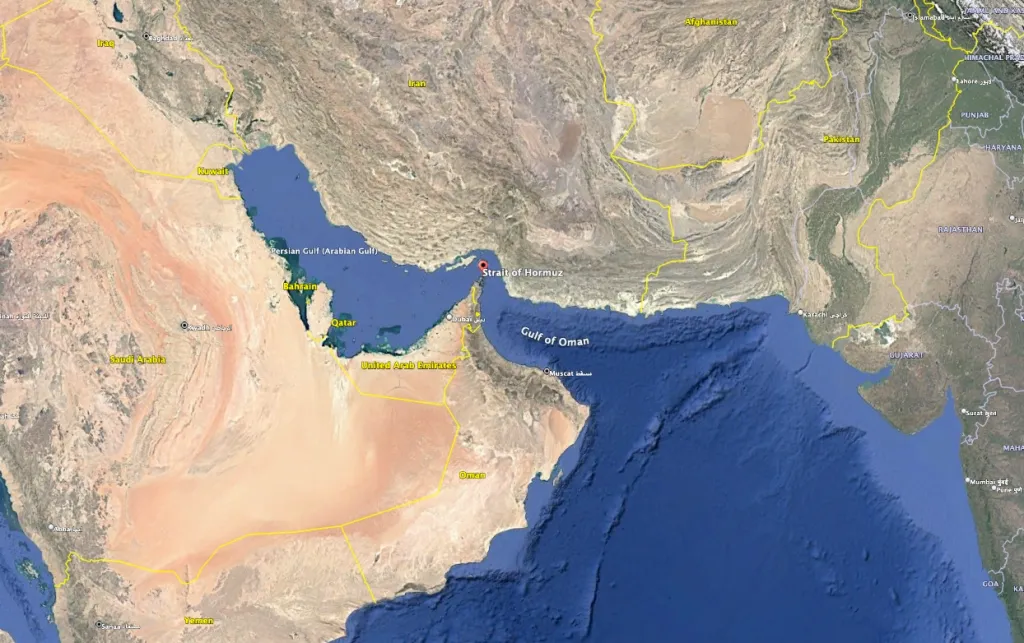
Syria is receiving hundreds of Iraqi oil trucks hauling crude overland to its Baniyas port as an alternative energy corridor to Europe, creating a costly but crucial workaround while the Strait of Hormuz is largely blocked by the US-Israeli war on Iran.
In August 2026, Kazakhstan will hold an unusual election. The newly established unicameral parliament—the “Kurultai”—will, for the first time, be formed entirely through party lists. Independent candidates and regional representatives will no longer enter the core of state power. As a representative institution of so-called “steppe democracy,” the Kurultai has undergone multiple transformations throughout history, both in its functions and in the composition of its participants. According to recent constitutional arrangements, this mechanism has been elevated to an unprecedented level. This raises a key question: what direction does this transformation reveal in the current round of political modernization?
Historically, the Kurultai functioned as an important mechanism of consultation in steppe society, not as a system of mass participation, but as a platform composed of multiple layers of elite actors. Its participants included khans and sultans who held political authority, biys who were responsible for adjudication and governance, military leaders who organized mobilization in times of war, as well as tribal elders and influential akyns and zhyrau who shaped public discourse. In addressing critical issues such as succession, warfare, and internal conflict, the Kurultai did not rely on formalized procedures or fixed institutional rules. Instead, decisions were reached through authority, negotiation, and consensus. Although ordinary people did not possess direct institutional channels of participation, their interests and attitudes indirectly constrained decision-making through tribal structures, public opinion, and their willingness to comply with and implement decisions.
During the Soviet period and the early years of Kazakhstan’s independence, the Kurultai gradually lost its function as an operative political institution and became a symbol of historical memory and cultural identity. It was not until 2022, amid a serious crisis of political trust, that this traditional symbol was revived and institutionalized as the “National Kurultai,” reintroduced as a new format of public dialogue within the framework of state governance. Its declared purpose is to strengthen interaction between the government and society. In terms of composition, the National Kurultai formally continues the tradition of “broad participation,” including regional representatives, members of parliament, professionals from various sectors, and leaders of social organizations with a degree of public influence. However, this diversity is largely structural rather than functional. It reflects broad inclusion, but does not necessarily translate into a substantive mechanism for reconciling competing interests. The institution lacks the capacity to independently coordinate diverse social demands.
Moreover, the agenda-setting process and operational logic of the National Kurultai remain distinctly top-down. Key issues are primarily defined by the state, while participants tend to act as interpreters and endorsers of pre-established policy directions. In this sense, “consultation” often takes the form of explaining and legitimizing the state agenda. Through the participation and symbolic endorsement of elite actors, the state is able to construct an image of “broad public dialogue,” thereby reinforcing the legitimacy of its reform agenda. In this respect, the National Kurultai should not be seen as a simple continuation of a traditional consultative institution, but rather as an institutionalized platform for political communication and discursive integration. Its core function lies not in generating genuinely competitive policy alternatives, but in organizing a process of “consensus production” aimed at shaping values, mobilizing society, and reproducing the legitimacy of ongoing reforms.
In 2026, President Kassym-Jomart Tokayev announced a major reform of Kazakhstan’s parliamentary system, proposing the transition to a unicameral “Kurultai Parliament.” Its members will be elected entirely through proportional representation based on party lists. The reform abolishes both the presidential quota and the special quota previously allocated to the Assembly of the People of Kazakhstan. At the same time, quota guarantees for women, youth, and persons with disabilities will be retained, but incorporated into party list mechanisms rather than being directly allocated by the state.
From the perspective of institutional design, this reform strengthens the role of political parties as key intermediaries within the political system, positioning them as the primary channel through which social demands are transmitted to the state. In the context of electoral competition, parties are expected to secure support by more effectively representing public interests, while also integrating fragmented social demands. Compared with the previous mixed model of representation, which included multiple categories of actors, a party-centered system enhances the coherence of political positions: social demands are systematically aggregated and restructured before entering the political arena, thereby improving, to some extent, the efficiency of policy articulation and decision-making.
Building on this, if meaningful and substantive competition among political parties can be established, this model has the potential not only to integrate social interests but also to more fully reflect the diversity of social groups. Political parties could function not merely as instruments of organization and coordination, but also as a crucial link between diverse societal demands and the process of state decision-making—balancing efficiency in representation with breadth and inclusiveness.Under such conditions, the consultative model of the Kurultai may gradually evolve from an elite-driven mechanism of integration into an institutionalized system of interest articulation grounded in party competition, thereby enhancing, to a certain extent, its capacity for bottom-up representation.
In Nigeria’s North East, the Boko Haram insurgent group once carved out territory and declared a caliphate. In the North West, terrorist groups operate as fluid, profit-driven networks, embedding themselves in local economies. In the Middle Belt, communal violence reflects deeper contests over land, identity, and survival. In the South East, separatist agitation by the Indigenous People of Biafra (IPOB) has fused with armed enforcement and criminal opportunism. Along the southern waterways, oil theft and piracy threaten economic lifelines.
Across all these theatres, one institution has remained consistently engaged: the Nigerian military, often as the default responder in the absence of effective civilian governance. Public perception often frames this engagement as a failure as attacks continue and civilians remain vulnerable. A closer, evidence-based reading tells a more complex story, however, though available data remains incomplete and, at times, contested.
The Nigerian military has recorded gains that have accumulated over the years. Infographics: Damilola Lawal/HumAngle.
The Nigerian military appears to have adapted under pressure and recalibrated aspects of its doctrine, and, in key moments, helped reverse trajectories that once pointed toward state collapse. It has delivered tangible gains, some strategic, others tactical, many costly. Still, those gains sit on unstable ground because governance gaps, political interference, corruption, and weak institutional follow-through have repeatedly blunted them. Communities liberated from one threat find themselves exposed to another.
The North East war: reversing a collapse
By early 2015, Nigeria was on the brink of losing control in the North East. Boko Haram had evolved from an insurgent group into a territorial force controlling large swathes of Borno State and parts of Yobe and Adamawa. It administered territory, collected taxes, and imposed its authority over local populations. Gwoza was declared the headquarters of a so-called caliphate. Entire communities were displaced, and military formations overrun.
The turning point came with a shift in military posture, in which command structures were reconfigured, and the operational headquarters was relocated to Maiduguri, the Borno State capital, bringing leadership closer to the frontline. Coordination with regional forces under the Multinational Joint Task Force (MJTF) also intensified as air and ground operations were synchronised.
The results were immediate and significant, though the durability of these gains has varied across locations. Key towns like Monguno, Bama, Dikwa, and even Gwoza, the symbolic heart of Boko Haram’s territorial claim, fell back under government control in rapid succession. Data from ACLED shows that between 2015 and 2025, the military recovered at least 259 territories.
With this territorial success, supply routes were disrupted, and fighters were killed in large numbers. Civilians began to return to these areas, in some cases under fragile security conditions.
It marked the collapse of Boko Haram’s experiment with territorial governance, and the battle for Sambisa Forest reinforced this shift.
Counter-insurgency early in the war featured the rapid reconquest of Boko Haram territory from 2015–16, followed by various clearance ops in 2017–20, which was wound down by 2022. Much of this reconquest was essentially complete by 2021. Data: ACLED. Infographics: Damilola Lawal/HumAngle.
For years, Sambisa had functioned as a strategic sanctuary where fighters trained, hostages were held, and leadership structures operated with relative security. It also carried psychological weight. As long as Sambisa remained intact, Boko Haram retained a sense of permanence.
The military’s assault on the forest required sustained effort involving navigating difficult terrain, dealing with improvised explosive devices, and confronting entrenched fighters. Airstrikes softened targets while ground troops advanced in phases, enabling special forces units to penetrate deeper into the forest.
The symbolic impact was significant, though not decisive in ending insurgent capacity. Boko Haram could no longer claim a fixed territorial base for as long as was once the case. Its command structure was disrupted, and its image of invincibility weakened.
And so Boko Haram fragmented into factions. The Islamic State West Africa Province (ISWAP) emerged as a more structured and strategic actor while the Shekau-led faction became more erratic, marked by extreme violence and unpredictability.
The military adjusted again.
Operations shifted from territory holding to mobility and disruption. Intelligence-led raids targeted leadership and logistics. Airpower became central to deep strikes in difficult terrain. Operation Lafiya Dole, the codename for the counter-insurgency operation, transitioned into Operation Hadin Kai, reflecting a recalibrated effort.
Today, the insurgency remains active, particularly in remote areas and along the Lake Chad basin. But the scale and nature of the threat have changed.
The air campaign is sustained and expanding in line with the trend. Over the years, the top regional targets have included the Northeast: 485 strikes (6,063 deaths), the Northwest: 309 strikes (3,629 deaths), and the South-South: 50 strikes (15 deaths). Data: ACLED. Infographics: Damilola Lawal/HumAngle.
The North West: fighting a war without frontlines
The North West posed a different challenge. Armed groups here are diffuse. It lacks a central command and is driven by economic incentives rather than ideology, so groups form, splinter, and realign quickly. Local grievances and criminal enterprise also intersect here.
Estimates suggest tens of thousands of terrorists operate across this region, covering multiple states including Zamfara, Katsina, Kebbi, Sokoto, and Kaduna. This fragmentation complicates the military response, as frontlines, headquarters, and leadership structures (the usual strategic targets) are not clear. The military has responded by leaning heavily on airpower and targeted ground operations. This has not gone without major problems, such as the repeated “accidental bombing” of civilian populations, which have drawn criticism from rights groups and affected communities.
Still, airstrikes have been used to hit camps deep within forested areas that are difficult for ground troops to access. Intelligence plays a critical role in identifying targets. Data shows that the sustained air campaign has yielded at least 909 strikes and 10,237 fatalities in 10 years. ACLED data shows that about 560 of these fatalities were civilians.
Ground forces usually conduct follow-up operations to recover weapons and temporarily secure areas.
The airstrikes targeted insurgent sects in the North East, and in the North West, the raids targeted various non-state actor groups with varying agendas. Oil thieves and pirates are mainly the targets in the South South. Data ACLED. Infographics: Damilola Lawal/HumAngle
Large numbers of kidnapped victims have been rescued during coordinated operations. Livestock, often a key economic asset for communities, has been retrieved. Such attacks have also killed some high-profile terrorist leaders, but they have also led to the loss of officers.
Get our in-depth, creative coverage of conflict and development delivered to you every weekend.
Subscribe now to our newsletter!
In some areas, these operations appear to have had a temporary stabilising effect, though violence frequently resurges. Communities report periods of reduced attacks, farming activities have resumed in limited corridors, and confidence in security presence has improved, though often temporarily.
Still, armed violence regenerates as the effects of weak governance in the North East are the same in the North West: new leaders emerge, and fighters disperse and regroup. Economic incentives remain strong.
The Middle Belt: stabilising a political conflict
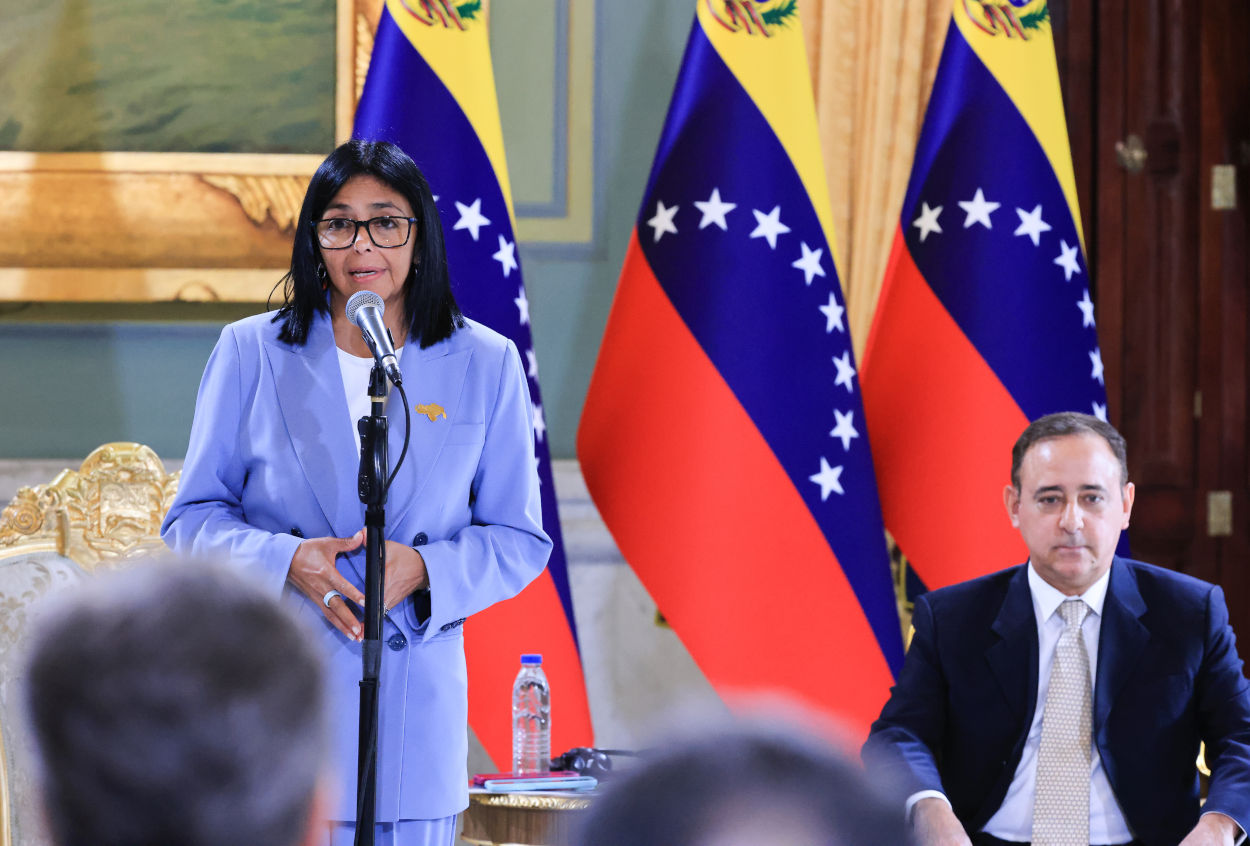
Violence in the Middle Belt is often described as a farmer-herder conflict, but the region’s violence reflects a complex mix of land disputes, ethnic tensions, and environmental stress. Armed militias operate alongside opportunistic criminal actors, while cycles of reprisal deepen mistrust between communities.
There are too many dynamics in play here to reduce the crisis to a “military versus any specific group” conflict. Most of the time, softer kinetic actions, such as arrest and deterrence, are used.
In certain corridors, the presence of military forces has reduced the frequency of mass casualty events. But the limits are clear. Several parts of the region still depend on self-help vigilante groups, who are often outgunned during terror attacks.
There is also a growing distrust between communities and security operatives, who are sometimes accused of slow response and complicity. In April, residents of Gashish, a rural community in Barkin Ladi Local Government Area of Plateau State, staged a protest over continued attacks in the community despite military presence. A checkpoint manned by troops of Operation Enduring Peace was destroyed during the demonstration.
The military has denied such accusations, but independent verification remains limited.
However, in other areas, the visibility of armed forces has also had a deterrent effect on opportunistic attacks.
At its core, the conflict in the region is driven by political and environmental factors. It revolves around identity and access to land and water. While military deployments can suppress violence temporarily, they cannot resolve competing claims or rebuild trust between communities. Without political solutions, stability remains provisional.
The military has also recorded arrests where softer kinetic actions and deterrence are required. This cuts across war theatres and international boundaries, notable examples include the 642 Nigerian refugees arrested in Cameroon (2017), the 72 suspects from Jos violence (2018), and 30 men arrested by MNJTF (2022)/ Infographics by Damilola Lawal/HumAngle.
The South East: managing a hybrid threat
The South East presents a hybrid security challenge. Separatist agitation, particularly linked to IPOB, has evolved into a mix of political mobilisation and armed enforcement. The group has enforced sit-at-home orders through violence and intimidation while the Eastern Security Network (ESN) operates in forested areas.
The military’s response has been presented as targeted and intelligence-driven. Operations focus on dismantling camps, intercepting arms, and arresting key figures. Urban centres are secured to prevent escalation into wider insurgency.
Yet the approach carries risks.
Heavy-handed operations have generated grievances. Allegations of abuses have eroded trust in some communities. This complicates intelligence gathering, which is critical in a conflict where fighters blend into civilian populations.
Targeted and intelligence-driven operations have led the military to dismantle camps, IEDs, and intercept arms across Nigeria, among other gains. This trend is growing in the Southeast. Infographics: Damilola Lawal/HumAngle
The Niger Delta and maritime domain: securing economic lifelines
In the South South and along Nigeria’s maritime corridors, the military, particularly the navy, has delivered some of its most visible successes. A decade ago, the Gulf of Guinea was a global hotspot for piracy. Sustained operations, including improved surveillance, increased naval patrols, and collaboration with international partners, have changed that landscape. These have led to the destruction of illegal refining sites and to arrests that disrupt networks involved in oil theft.
These gains have helped to protect revenue streams, stabilise energy production, and reinforce Nigeria’s position in regional maritime security, although illegal activities have not been fully eradicated.
“The Nigerian military is overstretched”
According to World Bank data collected from development indicators in 2020, Nigeria has roughly 223,000 active personnel across the army, navy, and air force. The army, which carries out most internal operations, has about 140,000 to 150,000 troops.
In the battlespace, there are simultaneous operations in at least six theatres. That constitutes multi-domain internal security warfare. Nigeria has about 0.1 per cent of its population under arms. When compared to countries facing sustained internal conflict, which often exceed 0.3 to 0.5 per cent, the country is operating below the threshold needed to dominate territory.
On the geography front, Nigeria is over 923,000 square kilometres, with vast forests, porous borders, and ungoverned rural space. It is impossible to hold ground everywhere with the limited available personnel. So troops are cycled, which then leads to fatigue because units stay deployed for long periods with limited rest.
Retired Lt. Gen. Tukur Buratai, the country’s former Chief of Army Staff, recently said, “The military is overstretched, defence budgets are diverted to routine policing duties, and the Armed Forces’ preparedness for conventional threats is reduced.”
However, there are also welfare issues and equipment gaps, especially at the tactical level in remote theatres. The result is predictable: Tactical wins, like killing terror commanders or rescuing hostages are visible, but strategic stagnation remains because you cannot sustain presence everywhere.
Military intervention is a subset of the over 8,259 total military-linked events reported in the past decade. Infographics: Damilola Lawal/HumAngle
The structural constraint: why gains do not hold
Despite these efforts, Nigeria’s security situation remains volatile.
In many areas, once the military has cleared armed actors, there is limited follow-through by civil authorities, as local administration is weak. So, communities do not experience the full return of the state, allowing armed groups to exploit this gap to re-enter or reorganise.
Economic conditions sustain conflict. Studies have shown that high levels of poverty and unemployment, particularly among young people, create a pool of potential recruits when armed groups offer income, however precarious.
Trust deficits also weaken intelligence because communities that distrust state actors are less likely to share information. This limits the effectiveness of intelligence-led operations and increases reliance on force.
Finally, strategy remains fragmented. Nigeria faces different types of violence that require tailored responses. Yet policy often treats them through a similar lens. Counterterrorism approaches are applied to terrorist attacks, while military solutions are prioritised in conflicts that require political negotiation.
The Nigerian military has played a significant role in preventing state collapse in multiple regions.
At the height of Boko Haram’s expansion, the possibility of sustained territorial loss was real. That threat has been largely reversed. In the North West, despite persistent violence, terrorist groups have not been allowed to consolidate into a territorial authority. In the South East, tensions have been contained below the threshold of full insurgency. In the maritime domain, economic lifelines have been secured.
However, good governance remains the only real pathway out of a cycle of violence.
Data from HumAngle Tracker
Yet the reality remains harsh. Lives are still lost daily. Families continue to sell everything they own to pay ransoms. The military has contributed to pushing back elements of the threat with measurable, though uneven, success, but it has not eliminated them.
Ruben Rocha Moya again denies allegations he shielded cartel, says taking ‘temporary leave’ to defend self.
The governor of Mexico’s Sinaloa state has temporarily resigned days after being charged by United States authorities in a sweeping drug trafficking indictment that has further strained relations between the two countries.
In a brief video statement posted late Friday, Ruben Rocha Moya again denied any wrongdoing, but said he was taking “temporary leave” to defend himself against the US allegations.
Recommended Stories
list of 3 itemsend of list
The indictment unsealed by US prosecutors earlier this week claimed that Rocha Moya and nine other officials directly aided the Sinaloa drug cartel in its smuggling operations in exchange for political support and bribes.
That support included members of the powerful cartel kidnapping and threatening opposition candidates in the 2021 election and stealing paper ballots cast for those running against Rocha Moya, the indictment charged.
Rocha Moya is a member of President Claudia Sheinbaum’s progressive Morena party.
“My conscience is clear,” Rocha Moya said in the video message. “To my people and to my family, I can look you in the eye because I have never betrayed you, and I never will.”
Juan de Dios Gamez Mendivil, the mayor of the Sinaloa state capital Culiacan who was among the other officials charged by the US, also announced he would step down on Saturday. He has denied the allegations.
Sheinbaum has also pushed back on charges, which come at a time when she has sought to navigate tense relations with the administration of US President Donald Trump.
On Thursday, she said her government had not been provided with any concrete evidence to back up the claims, suggesting the information laid out in the indictment was insufficient.
“My position on these events is as follows: truth, justice and the defence of sovereignty,” Sheinbaum said.
She added that if “clear and irrefutable evidence” is presented, the US still must proceed “in accordance with the law under our jurisdiction”.
Sheinbaum maintained her government will not “shield anyone who has committed a crime”.
“However, if there is no clear evidence,” she added, “it is evident that the aim of these charges by the [US] Department of Justice is political.”
Tense US-Mexico relations
Since taking office in January of last year, the Trump administration has heaped pressure on Mexico to do more to address migration and drug smuggling.
The approach has included Washington imposing a host of tariffs as leverage against Mexico’s government.
The US State Department has also labelled several Latin American drug cartels as “Foreign Terrorist Organisations”, an unorthodox move in line with the administration’s more militaristic approach to Latin America.
The administration has broadly argued that the criminal groups are driven, in part, by efforts to destabilise the US, a claim rejected by many longtime experts.
Sheinbaum has walked a careful line with Trump, increasing cooperation in countering cartels while pledging to protect Mexico’s sovereignty. Notably, she has staunchly opposed the prospect of any US military action on Mexican soil.
But experts have said charging elected officials in Mexico represents a major escalation in the Trump administration’s strategy.
Speaking to Al Jazeera this week, Vanda Felbab-Brown, an expert on non-state armed groups at the Brookings Institution think tank in Washington, DC, said the approach had “long been considered a very big step, almost a ‘nuclear option’”.
She predicted more US indictments were likely to come.
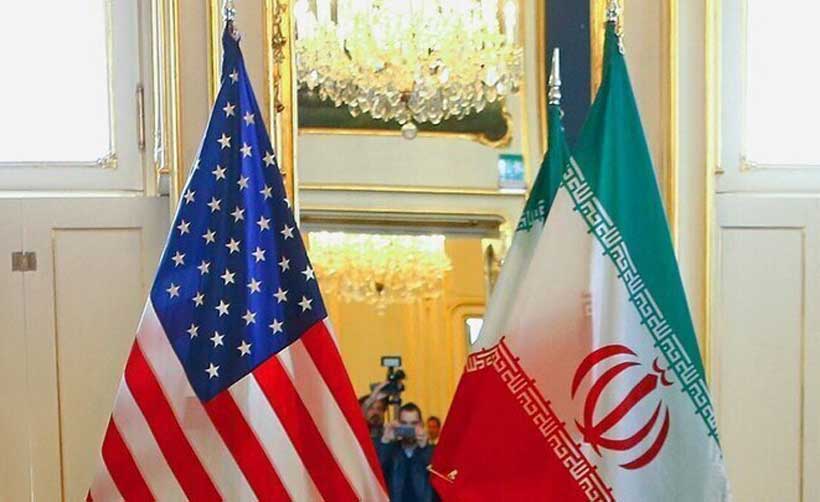
We can analyze China’s current stance on the escalating Iranian conflict by understanding its true position. China does not desire a full-scale war that would destroy its oil interests, but it is not averse to the continuation of the neither-peace-nor-war situation that drains its adversaries, such as Washington. This positions China as a player that pushes for calm during critical times, while simultaneously providing Iran with the economic lifeline it needs. Here, China plays a dual and complex role in the Iranian conflict (the Iranian-American/Israeli conflict), balancing its strategic support for Tehran to safeguard its energy interests and undermine American influence with its pursuit of a ceasefire to avoid widespread economic chaos.
Based on current developments up to early May 2026 and statements by Iranian officials that war is a possibility, the regional and international landscape reveals a divide between actual military escalation and cautious diplomacy. The Chinese position and the likelihood of war can be analyzed based on several factors. China views the current conflict with Iran as a proxy war, prioritizing stability over stability. China considers Iran a strategic partner, and its stance is characterized by a delicate balance. The Chinese Foreign Ministry has repeatedly called for de-escalation and a complete ceasefire to prevent further escalation in the Middle East, while simultaneously condemning American escalation. China has stated that American and Israeli military operations against Iran violate its sovereignty and has expressed grave concern about the potential imposition of a blockade on Iranian ports and the Strait of Hormuz. While Beijing seeks to protect its investments and economic interests, China is deeply concerned about any disruption to oil and energy supplies, especially since a direct war would lead to imported inflation, negatively impacting its economy. Therefore, China’s current stance is characterized by a cautious, mediating role. China is attempting to play the part of a peace broker but is also wary of the potential damage a war could inflict on its relations with the United States, especially given the ongoing diplomatic exchanges between the two countries.
Regarding the likelihood of war (and the expected scenarios), despite the tense rhetoric, a full-scale, direct war between the United States and Iran remains a risky prospect for all parties. Current indicators suggest that a war is already underway (indirectly), particularly since the start of direct military operations (US/Israeli strikes) against Iran and its allies in February 2026. This indicates that a direct war remains a strong possibility. The option of blockade and proxies also remains a possibility. Chinese intelligence and military assessments suggest that Iran might prefer to carry out its threats through proxies in the region or by disrupting oil shipments in the Strait of Hormuz, rather than engaging in a direct war, to avoid a conventional military defeat. Despite Chinese diplomatic efforts to contain the situation, and despite the escalation, attempts are still underway, such as Pakistani mediation, to reach a ceasefire. This indicates a desire among the parties to keep the door open for political solutions.
As for my perspective on the proxy war between China and Iran against the United States and Israel, the current conflict is likely to continue as a proxy war of attrition, with limited and precise strikes, rather than a full-scale ground invasion. China will likely exert further pressure, continuing to push for diplomatic solutions because any large-scale war would threaten the stability of global energy supplies, on which it depends. It’s worth noting that the region is going through a critical moment and a dangerous phase of mutual deterrence. Iranian officials’ statements are as much messages of deterrence as they are an acknowledgment of the potential for escalation.
Regarding China’s role in the continuation of the war or its support for Iran (strategic and economic support), China considers the Iranian Strait of Hormuz and its purchases of Iranian oil as a vital economic lifeline. China is the largest buyer of Iranian oil (approximately 80-90% of exports), providing Tehran with crucial funding to sustain its activities. China also seeks to help Iran circumvent US sanctions, assisting Iran in bypassing these sanctions through an unofficial oil fleet, thus keeping the Iranian economy afloat. Furthermore, there is a strategic Chinese-Iranian partnership opposed to the West and US sanctions against Tehran. China views Iran as a partner in undermining the US-led global order through organizations such as BRICS and the Shanghai Cooperation Organization. Moreover, China is exploiting the current situation to its advantage. Chinese intelligence, military, defense, and security analyses suggest that the continuation of the Iranian war drains US resources and provides China with an opportunity to enhance its influence, absorbing the shock of the war and potentially emerging with strategic gains.
At the same time that China is playing a role in halting the Iranian war through mediation diplomacy to de-escalate tensions, with China acting as a hidden mediator to urge Tehran to cooperate and reach a ceasefire with the United States to protect its economic interests, despite China’s support for Iran, the war harms China by closing the Strait of Hormuz and threatening its energy security. This prompts Beijing to urge an end to the war and the reopening of waterways. Therefore, China is pursuing a policy of diplomatic pressure, consistently calling for restraint and believing that the best solution is an immediate ceasefire, according to statements by its permanent representative to the United Nations.
Accordingly, we conclude that a full-scale war is theoretically possible but practically unlikely as a final option due to the exorbitant cost to all parties. However, the continuation of retaliatory strikes and economic sanctions remains the most probable scenario at present.
Weekly insights and analysis on the latest developments in military technology, strategy, and foreign policy.
The U.S. Air Force said its new interim Air Force One jet, dubbed the VC-25B Bridge aircraft, has officially completed modifications and flight testing and is being painted in the red, white and blue livery sought by President Donald Trump. The extremely lavish 747-8i Boeing Business Jet (BBJ) – donated by Qatar to the U.S. last year for use by Trump – is set to serve in the Air Force One role while the White House awaits the delayed delivery from Boeing of two fully-outfitted VC-25B Air Force One aircraft. There are no plans to retire the VC-25As that currently serve as Air Force One until both full-up VC-25Bs are operational.
The Air Force said the VC-25B Bridge aircraft is on schedule to roll out in its new paint scheme and be delivered to the Presidential Airlift Group this summer. It is not clear when it will start flying Trump. The White House referred us to the Air Force for additional information.
A VC-25B Bridge aircraft takes off for flight testing at Greenville, Texas. The aircraft recently completed modification and flight-testing phases, entering maintenance to be painted in red, white, gold and blue livery. The program remains on schedule to deliver the Bridge aircraft to the Presidential Airlift Group no later than summer 2026. (Courtesy photo)
The Qatari-donated 747-8i jet envisioned as a presidential airlifter, had a recent test flight. (TT-33 operator photo)(TT-33 operator)
The USAF now says that with the Boeing VC-25B deliveries delayed far past its initial 2024 target and VC-25A heavy maintenance cycles being extended, an interim capability became “an absolute imperative.” How accurate this claim actually is isn’t clear. Trump has been talking about an interim Air Force One aircraft for some time since deliveries of the new VC-25Bs were pushed back beyond his second term. We heard of no actual requirements originating for this capability from within the USAF prior to the new administration or far in advance of Trump’s deal with the Qataris to source the jet. Very early in the new administration, Elon Musk was even working to find out how to get Trump a new Air Force One as fast as possible, for instance.
The Air Force claimed that in February 2025, a dedicated task force launched a “full-court press” on the VC-25B Bridge program while simultaneously working to accelerate Boeing’s long-term VC-25B production.
A rendering of a future US Air Force VC-25B Air Force One jet in the red, white and blue livery desired by President Donald Trump. (Boeing) Boeing
Though questions were swirling about the legality and ethics of receiving the gifted plane, the Pentagon last May took delivery of the aircraft and said it would rapidly undertake the required modifications.
It’s one thing to have a donated ultra-luxury jet, but turning it into one safe and connected enough to carry a president is another story.
As TWZ has previously noted, converting any aircraft into one that is secure enough to transport the president is a complex undertaking. The aircraft needs to provide constant, secure communications, including what is needed to order a nuclear strike under extreme conditions. Historically, it also needs to be physically hardened both inside and out to withstand myriad threats, from the electromagnetic pulse of a nuclear weapon going off to incoming surface-to-air missiles to enemy intelligence-gathering efforts. To do this requires significant modifications right down to the aircraft’s outer structure. It is very unlikely, if not impossible, that this aircraft was hardened against EMPs in the timeframe required for fielding it.
In previous coverage, we noted that at the very least, “this aircraft will haveto feature somekind of DIRCM setup to repel shoulder-fired heat-seeking missiles, and modular units are available that can be attached in a canoe to the bottom of the aircraft. These systems, such as Elbit’s C-MUSIC or Northrop Grumman’s Guardian, are in service with foreign VVIP 747s, as well as commercial aircraft, including those flying for Israeli airline El Al. You can read all about these systems here. Still, while they offer far less defensive capacity compared to what is seen under the belly of a VC-25A, they would offer a significant layer of protection.” We still don’t see any evidence of the aircraft being modified with defensive countermeasures.
Northrop Grumman’s Guardian pod is a self-contained DIRCM (includes missile approach and warning sensors and laser pointer) solution for airliner-type aircraft. (Northrop Grumman)
L3Harris, known for its communications systems and aircraft alterations, was selected to undertake the “complex modification of the bridge aircraft,” the Air Force explained. The company already delivers “secure, reliable and resilient communications” for VC-25A and the executive airlift fleet “but has extensive experience with self-protection and customization of VIP aircraft,” the Air Force added. “The accelerated timeline was further made possible by a mission-focused partnership with Boeing, who provided the necessary engineering data to support the required structural modifications.”
In addition, “elite specialists from multiple government agencies developed advanced protocols to detect and – if necessary – neutralize potential technical hazards on previously owned aircraft,” according to the Air Force. “Their rigorous approach on the Bridge aircraft has literally ‘written the book’ and set the benchmark for integrating used airframes into the secure military inventory.”
In response to our question about what modifications the jet received, the Air Force told us the following:
“Safety and security were at the forefront of this program. We deliberately minimized interior aesthetic modifications to focus on modifications for safety, security and mission execution. We assessed which requirements were necessary for an interim capability. We had greater flexibility in developing our mission requirements.
After safety and security, we focused on the mission communications systems.
We have made deliberate decisions such as the reduction of the number of airstairs, less chiller space, and exclusion of the Golden Eagle mission [to fly the remains of former presidents] to minimize structural modifications, while prioritizing modifications focused on safety, security and secure communications.”
We also asked whether this jet will be able to fly overseas and into higher-risk areas, but have not gotten a response. At this point, based on the limited info we have at this time, that seems unlikely. But if this is the case, the question then can be raised why the USAF is spending billions on two full-up Air Force One aircraft if standards have been so relaxed that this simpler aircraft can do all their missions? We will update this story with any pertinent details the USAF provides.
A Qatari Boeing 747 sits on the tarmac of Palm Beach International airport after US President Donald Trump toured the aircraft on February 15, 2025. (Photo by ROBERTO SCHMIDT / AFP) ROBERTO SCHMIDT
To help speed up the delivery process of this interim Air Force One jet, the Air Force said it “constructed an at-scale mockup of the interior, complete with virtual reality views, to enable early commissioning activities for White House staff.”
“Our commitment to providing the president with a secure, resilient and reliable airborne command post is unwavering,” said Chief of Staff of the Air Force Gen. Ken Wilsbach. “The VC-25B Bridge program is a testament to the Air Force’s ability to innovate and rapidly evolve to ensure the continuity of our government under any conditions.”
The Air Force said the estimated delivery of Boeing’s VC-25Bs is now expected in 2028. If that holds up, then this ‘bridge’ aircraft will have served at most around two years until the first full-up VC-25B is delivered.
We will continue to follow developments in this program and provide updates when warranted.
Addressing the cameras following reports of spiralling youth violence, including the killing of the 21-year-old former Israeli soldier Yemanu Binyamin Zalka last week, Israel’s National Security Minister Itamar Ben-Gvir was clear.
“This will be a total war,” he said, announcing a national operation to target a surge in youth violence. “We will restore security to the streets and calm to parents. Anyone who harms Israeli civilians will face the strong hand of the Israel Police and pay a heavy price.”
Recommended Stories
list of 4 itemsend of list
The response was sharp, aligned itself with the victim, and promised a solution.
That, critics say, is a sharp contrast to Ben-Gvir’s response – or lack of one – to the ongoing epidemic of violence in Israeli towns and villages populated by Palestinians, which has so far led to the deaths of almost 100 people and, according to Israel’s own finance ministry, costs the country up to $6.7bn a year.
Allegations of two-tier policing, to the detriment of what Israelis refer to as the “Arab sector”, have dogged Israel’s police for decades. But the situation has gotten worse under the current administration of Prime Minister Benjamin Netanyahu, which has been in power since the end of 2022, and Ben-Gvir, a far-right politician who is in charge of the police.
The statistics since Ben-Gvir came into office back up the narrative that the crime wave in Palestinian communities has gotten significantly worse. The Israeli newspaper Haaretz reported that the murder rate in Israel’s Palestinian communities increased from 4.9 per 100,000 in 2020, to 11 per 100,000, on par with the murder rate in Sudan and Iraq.
In contrast, the murder rate in Israel’s Jewish society stood at approximately 0.6 per 100,000.
That increase can not totally be attributed to the current government – Netanyahu himself was prime minister in 2020, when the murder rate was lower. But critics argue that the introduction into government of figures like Ben-Gvir and Finance Minister Bezalel Smotrich, who they say are openly disdainful of Palestinians, has contributed to the sharp uptick in violence.
Analysts and experts who spoke to Al Jazeera had little doubt over the Netanyahu government’s culpability in the increased murder rate.
“They really don’t mind that Palestinians are killing each other, as they’ve been left to do for years,” lawmaker Aida Touma-Suleiman, a Palestinian member of the Hadash party and a longstanding critic of the lack of policing in Palestinian communities in Israel, said.
Israel’s far-right National Security Minister Itamar Ben-Gvir celebrates after Israel’s parliament passed a law making the death penalty a default sentence for Palestinians convicted in military courts of deadly attacks [Oren Ben Hakoon/Reuters]
“It would never occur to the police that they should provide a service to Arab neighbourhoods,” she said of the lack of physical police presence within Palestinian communities. “It’s about enforcement. It’s hostile.”
While police stations are standard in Israel’s Jewish-majority areas, there are only about 10 in Palestinian-majority areas.
Among the decisions that have most angered Palestinian advocacy groups in Israel was the government’s December approval of a $68.5m cut to an economic development programme for Palestinian communities in Israel, in order to fund more policing in the communities.
Critics agreed that more funding was needed for the police, but bemoaned that the money was coming from a fund designed to address the root causes of criminality by addressing housing and economic development, areas where Palestinian communities are notoriously underfunded in comparison to Jewish ones.
Hardwired poverty
Palestinian citizens of Israel make up around 21 percent of the country’s population. Disadvantaged economically, they are the descendants of Palestinians who did not flee after the 1948 establishment of Israel – an event they know as the Nakba, when an estimated 750,000 Palestinians were ethnically cleansed and forced out.
Often concentrated in separate towns and villages from Israeli Jews, Palestinians frequently describe a reality of chronic underinvestment, with the presence of the state either limited or non-existent.
Joblessness has long been woven into their daily lives, analysts say, but the unemployment rate has worsened since Israel choked off access to the occupied West Bank, where many worked, after the Hamas-led October 7 attack on Israel and the start of Israel’s genocidal war on Gaza in 2023.
The most recent official date, based on 2024 figures, shows that 37.6 percent of Palestinian households in Israel live below the poverty line.
Palestinian Israelis protest in January against the wave of crime and killings within Arab communities [Fie: Ammar Awad/Reuters]
Local criminal networks in Israel’s Palestinian towns and villages have grown in scale and influence in recent years, in some cases taking on the form of mafia-style organisations, untroubled, critics say, by the current government.
“There is a wide network of criminal gangs who exert control across Arab neighbourhoods,” said Daniel Bar-Tal, professor of social-political psychology at Tel Aviv University, adding that criminality and even murder were allowed to continue with the state’s own complicity.
“In part, the government just likes it. They get to say, ‘Look, this is Arab culture, this is Arab society. This is what they do.’ They also rely on the collaboration of the gangs to gather information on what’s going on in these communities,” he said, referring to numerous accounts of how friends who had reported criminal activity in their neighbourhoods were dismissed. “And lastly, it is because the police force is controlled by Ben-Gvir, a racist who actively enjoys dehumanising Arab society.”
Ben-Gvir has previously rejected accusations of racism and says he is only against those who harm Jews.
Policed by the enemy
From leveraging his position in government to urge on the genocide in Gaza, to defending officers under his charge filmed raping a Palestinian prisoner, Ben-Gvir’s actions have dismayed many of Israel’s self-styled liberals, just as they have shocked observers around the world.
However, following an uptick in crime in Israel, criticism of Ben-Gvir’s performance in his role as national security minister has begun to enter the domestic mainstream.
As well as more predictable opinion pieces in Israel’s liberal press, accusing the National Security Minister of being “busy on TikTok” while Zelka was killed, or concentrating his efforts on arresting professors wearing Palestinian flags on their kippahs while murder rates break records, there have also been criticisms from those closer to the establishment.
Earlier this month, Israel’s High Court intervened in a row between Ben-Gvir and Attorney General Gali Baharav-Miara, ordering the two to reach an accommodation after Baharav-Miara called for his ousting following what she claimed was his attempts to make political interventions in the police’s work.
“Nobody cares if Ben-Gvir’s good at his job,” political scientist Ori Goldberg said. “He’s there to punish Palestinians, even those in Israel. They’re punished through a lack of security, just as they’re punished through hostile planning, and a lack of healthcare punishes them. This is how the apartheid Israel always works.”
The United Arab Emirates’ announcement of its withdrawal from OPEC and the OPEC+ alliance, effective May 1, 2026, represents a major strategic shift in the global energy market, with direct and significant implications for China, the world’s largest oil importer. The primary impact of this UAE withdrawal on China is the enhancement of Chinese energy security, as it will increase available supplies. The UAE will now be able to raise its production towards its target of 5 million barrels per day by 2027, without being bound by OPEC quotas. This expansion will provide China with a substantial and stable source of oil outside the constraints of production alliances. Furthermore, the UAE’s withdrawal from OPEC will impact China’s diversification policy, as China relies on imports to cover approximately 70% of its oil needs. The UAE’s departure will grant Beijing greater flexibility in purchasing from the spot market at potentially more competitive prices.
This also has a significant impact on import costs (prices) through prolonged downward pressure. The UAE’s increased oil production (up to 680,000 barrels per day above previous levels) is expected to put downward pressure on global Brent crude prices in the medium term (12-24 months), thus reducing China’s energy import bill. This could lead to short-term volatility, as, despite the potential benefit, the closure of the Strait of Hormuz (due to current regional tensions in April 2026) limits the immediate ability to capitalize on the UAE’s withdrawal from OPEC, since most of the UAE’s exports to China pass through this waterway.
China could benefit from the UAE’s withdrawal from OPEC by enhancing its capacity for financial and trade cooperation and expanding trade in local currencies, particularly the Chinese yuan. The UAE’s departure from OPEC could (facilitate the expansion of oil trade agreements) in rubles, rupees, and yuan, moving away from OPEC’s traditional dollar pricing. This aligns with China’s drive to internationalize the yuan. Such a move could boost joint investments, given China’s existing stakes in UAE oil concessions. With Abu Dhabi freed from restrictions, these Chinese investments could generate higher returns through increased production. Furthermore, China might leverage the UAE’s withdrawal from OPEC to bolster the strategic and geopolitical value of weakening OPEC’s influence. This withdrawal diminishes OPEC’s ability to control global supply, which benefits major consuming nations like China by reducing the likelihood of price shocks resulting from collective production cuts.
In this context, Chinese discussions and analyses have intensified, examining the potential benefits for China from the UAE’s withdrawal from OPEC. Chinese experts are analyzing the likelihood and impact of such a move should it materialize, particularly given the UAE’s increasing production capacity and its desire for greater flexibility. If we assume the UAE’s withdrawal from OPEC is indeed the case, China stands to be the biggest beneficiary for the following reasons. First, it would break the dominance of the petrodollar. The departure of a player the size of the UAE from traditional OPEC constraints opens the door wide to bilateral agreements for pricing oil in digital yuan (or Chinese yuan), thus supporting Beijing’s strategy of internationalizing the yuan to reduce its dependence on the Western financial system (SWIFT). In addition to the increased Chinese-Emirati supply, since Chinese companies such as CNPC and CNOOC hold stakes in oil concessions in Abu Dhabi, the UAE’s release from OPEC production quotas means these companies can increase production and secure China’s growing energy needs at preferential prices and with favorable terms. This facilitates the revitalization of joint UAE-China investments, allowing for deeper Chinese capital flow into the UAE’s refining and petrochemical sector. The exchange of finished goods and crude oil within an economic cycle based on local currencies reduces conversion costs and the risks associated with dollar fluctuations. This supports China’s policy of moving towards BRICS+. As the UAE is a member of the BRICS group, any move away from traditional OPEC frameworks aligns with the group’s overall direction to create a parallel financial system that supports the ruble, rupee, and yuan. This scenario, if it were to occur, would transform the relationship from one of buyer and seller to a comprehensive strategic partnership, making energy the driving force behind the new financial system that China seeks to lead.
Accordingly, the UAE’s withdrawal represents a strategic gain for China in terms of increased supply and potential cost reductions, but maximizing the benefit remains contingent on the stability of shipping lanes in the Arabian Gulf.
The UNIFIL has faced a growing number of casualties as Israel continues air raids despite a ceasefire and Hezbollah has responded with rockets and drones.
Published On 2 May 20262 May 2026
China’s ambassador to the United Nations, Fu Cong, has said there is a need to re-examine the UN Security Council’s decision to terminate the mandate of the longstanding peacekeeping mission in Lebanon, which is due to end later this year.
Speaking to reporters on Friday at the UN headquarters in New York, Ambassador Fu expressed China’s deep concern about the situation in Lebanon as Beijing assumed the council’s rotating presidency for May.
Recommended Stories
list of 3 itemsend of list
He observed that a genuine ceasefire did not exist in Lebanon, describing the current state of conflict as merely a “lesser fire”.
“We do believe that we should revisit the decision, actually, to withdraw the UNIFIL,” Fu said, using the acronym for the UN Interim Force in Lebanon.
“I think at least the view of the overwhelming majority of the Security Council is that this is not the time to really, to withdraw the UNIFIL out of that part of the country,” Fu said.
China is waiting for a report from the UN secretariat, expected in June, “before we take our position”, he added.
Fu also said, “It is incumbent on Israel to stop this bombardment of Lebanon.”
China’s UN Ambassador Fu Cong addresses a UNSC meeting in 2025 [File: Richard Drew/AP]
Created to oversee the withdrawal of Israeli troops after the 1978 invasion, UNIFIL saw its mandate expanded after the 2006 war between Israel and the Lebanese group Hezbollah and was responsible for a demilitarised buffer between the opposing sides.
However, the UNSC unanimously resolved last year to begin withdrawing the UNIFIL mission’s 10,800 international peacekeepers by December 2026.
According to Lebanese authorities, Israeli attacks on Lebanon since March 2 have killed 2,618 people and forced more than one million to flee their homes.
The UNIFIL mission has also faced a growing number of casualties. According to UN officials, at least six peacekeepers have been killed and many others injured since Israel began its attack on March 2.
The deaths include soldiers from various contributing nations, including Indonesia and France, who have been caught in shelling incidents and roadside attacks.
UN Secretary-General Antonio Guterres has condemned these incidents, noting that the UN’s “blue helmets” have come under fire while performing essential duties, such as clearing explosive ordnance and escorting logistics convoys.
UNIFIL head Major-General Diodato Abagnara pays tribute to French soldier Florian Montorio, who was killed while clearing a road in south Lebanon [File: Handout/UNIFIL via Reuters]
Zanardi, who lost his legs in a racing crash, was credited with helping transform the perception of disability in Italy.
Published On 2 May 20262 May 2026
Alex Zanardi, the Italian Formula One driver who became a Paralympic cycling champion after losing both legs in an accident, has died aged 59, his family announced.
Zanardi, one of his country’s most loved and respected sportsmen, who was credited with helping transform the perception of disability in Italy, died on Friday evening.
Recommended Stories
list of 4 itemsend of list
In a statement issued on Saturday through the charity he founded, Obiettivo3, his family said he died “suddenly”, but also “peacefully, surrounded by the love of his family and friends”.
“The family would like to express their heartfelt thanks to all those who are showing their support at this time and asks that their grief and privacy be respected during this period of mourning.”
Zanardi’s death comes six years after the four-time Paralympic gold medal winner suffered a second horror crash in June 2020, when his handbike crashed into an oncoming truck during a race in Tuscany.
Italian Prime Minister Giorgia Meloni hailed Zanardi as “a great champion and an extraordinary man, capable of turning every trial of life into a lesson in courage, strength and dignity”.
Cordiano Dagnoni, head of the Italian Cycling Federation, said he “transformed the culture of our country, bringing joy and happiness to those fortunate enough to know him, and hope to so many in Italy and around the world”.
He said there would be a minute’s silence observed at this weekend’s races in tribute to the athlete.
Zanardi raced for Jordan, Minardi and Lotus in F1 in the early 1990s before switching to the CART championship in the United States where he was series champion in 1997 and 1998.
He returned to F1 with Williams in 1999 before heading back to CART.
Zanardi almost died in a horrific accident in 2001 at the Lausitzring track in Germany, after which he had both legs amputated.
His car had stalled in the middle of the track after a spin and was struck by another car at a speed of more than 300km/h (186mph).
Yet he went on to become one of the best-known figures in Paralympic sports, winning two gold medals at the 2012 London Games and two more in Rio de Janeiro, four years later.
In June 2020, he was involved in another terrible accident, this time in Tuscany. He suffered serious head injuries and only returned home 18 months later.
Zanardi, born in Bologna on October 23, 1966, leaves his wife Daniela and son Niccolo.
From Broderick Turner: LeBron James knew what was at stake in this first-round playoff series and that it was on his shoulders to meet the moment and have his teammates follow his lead.
James simply elevated his play like he has so many times over his illustrious 23-year NBA career, playing with a purpose and willing the Lakers to a 98-78 win over the Houston Rockets on Friday night at Toyota Center.
His 28 points, eight assists and seven rebounds is why the Lakers won the best-of-seven series, 4-2, over the Rockets and why L.A. will meet the defending NBA champion Thunder on Tuesday night in Oklahoma City in the second round of the Western Conference playoffs.
James and the Lakers had been on the verge of collapsing in these playoffs, their commanding 3-0 lead cut to 3-2.
But the Lakers and James let the Rockets know they were going to stay the course in Game 6 by building a 25-point lead in the third quarter.
Rui Hachimura let James and the Lakers know he had come to play, scoring 21 points on eight-for-15 shooting and a sizzling five for seven on three-pointers. Hachimura also had six rebounds.
James began to assert himself in the second quarter, scoring 14 points on five-for-eight shooting and two-for-three on three-pointers. He outscored the Rockets by himself in the second (14-13) and it was his effort that put the Lakers in front for good, helping them build a 19-point lead that was never in jeopardy.
James was being a leader by example for the Lakers, something that increased on April 2 once Luka Doncic (Grade 2 left hamstring strain) and Austin Reaves (Grade 2 left oblique muscle strain) got injured in Oklahoma City.
“I mean, I’ve done it throughout my career for the majority of my career, but they still have to accept it,” James said. “I would say we were a totally different team before April 2 and for them to accept the fact to allow me to lead them and kind of command them in a way that I think I saw fit, being an extension of our coaching staff on the floor, like I said, it means a lot to me. So, I’m happy I was able to do some things out there to make them understand that I guess I know what I’m doing at times and those guys, they were great in this series.”
Get the latest on L.A.’s teams in the daily Sports Report newsletter.
By continuing, you agree to our Terms of Service, which include arbitration and a class action waiver. You agree that we and our third-party vendors may collect and use your information, including through cookies, pixels and similar technologies, for the purposes set forth in our Privacy Policy such as personalizing your experience and ads.
Lakers playoff schedule
First round All times Pacific
at Lakers 107, Houston 98 (box score) at Lakers 101, Houston 94 (box score) Lakers 112, at Houston 108 (box score) at Houston 115, Lakers 96 (box score) Houston 99, at Lakers 93 (box score) Lakers 98, at Houston 78 (box score)
Dodgers lose again
From Maddie Lee: Andy Pages tapped the top of his helmet as plate umpire Chris Guccione wound up to punch him out, taking one final stab at extending the Dodgers’ scoring opportunity in the eighth inning.
The Busch Stadium scoreboard lit up with a graphic of the strike zone. The ball flew in, touching the top of the rectangle and turning it red. The call was confirmed. Strike three.
In a 7-2 loss to the Cardinals on Friday, that was one of six at-bats the Dodgers had with runners in scoring position. They didn’t record a hit in any of them.
Instead, the Dodgers (20-12) only scored on Max Muncy’s double with a runner on first in the second inning, and Kyle Tucker’s bases-loaded sacrifice fly in the sixth. It marked their third straight loss, scoring two or fewer runs in each.
Ronny Mauricio hit a go-ahead home run in the seventh inning and the New York Mets rallied for a 4-3 victory over the Angels on Friday night in the opener of a nine-game trip.
The win — just the Mets’ fourth in their last 21 games — came a few hours after president of baseball operations David Stearns gave manager Carlos Mendoza a vote of confidence. New York has the majors’ worst record at 11-21.
Marcus Semien hit a tying two-run single in the Mets’ three-run sixth inning, which also included an RBI single by Francisco Alvarez. New York retired the final 21 Angels hitters.
Here comes Bob Chesney’s rebuild. And Iamaleava’s redemption. An exceptional head coach and an exciting quarterback, with the wind at their backs, racing toward a relatively breezy schedule?
Sky’s the limit, man.
Watch them dip and dance and make defenders miss all the way to New York. Watch the cautionary tale about the perils of the transfer portal turn into a fairy-tale comeback.
And he’s never been afraid to come to work. Until now.
He’s not alone. With the World Cup kicking off at the Inglewood venue next month, Martinez says he and many of the people who work in food services and other jobs at the stadium won’t feel safe if federal immigration agents are present during the tournament.
“Most of the workers are afraid. They fear for their safety,” Martinez said in Spanish. “This is also about the fans. People come from everywhere, even from Iran. So we’re concerned about their safety.”
Interim head coach D.J. Smith will be among the candidates for the Kings’ full-time job when general manager Ken Holland conducts his coaching search this month.
Smith took over March 1 when Holland fired Jim Hiller with the Kings at 24-21-14 and out of the playoff picture. The former Ottawa head coach rallied the Kings to an 11-6-6 finish to claim the last wild-card spot in the Western Conference, but the Kings were swept by the powerhouse Colorado Avalanche in their fifth consecutive first-round postseason exit.
“D.J. did a great job,” Holland said Friday. “The team responded to him, so he’s a candidate. … I don’t want to talk to 20 people. I’d like to talk to probably five to eight people, and then make a decision. Some with experience, some maybe assistants, and some who haven’t been a head coach.”
1903 — 29th Kentucky Derby: Hal Booker riding Judge Himes wins in 2:09.
1904 — Laska Durnell becomes the first woman to own a Kentucky Derby starter and winner when longshot Elwood wins the 30th Run for the Roses. Elwood is also the first Derby winner whose breeder is a woman, Mrs. J.B. Prather.
1906 — 32nd Kentucky Derby: Roscoe Troxler aboard Sir Huon wins in 2:08.8.
1953 — Dark Star, a 25-1 longshot, wins the Kentucky Derby, beating 7-10 favorite Native Dancer by a head. It’s Native Dancer’s first defeat after 11 straight wins and the only defeat in 22 career starts.
1964 — Northern Dancer, ridden by Bill Hartack, wins the Kentucky Derby by a neck over Hill Rise in a race record 2:00.
1967 — The Toronto Maple Leafs beat the Montreal Canadiens 3-1 to win the Stanley Cup in six games.
1968 — 22nd NBA Championship: Boston Celtics beat Lakers, 4 games to 2.
1970 — Diane Crump becomes the first female jockey to ride in the Kentucky Derby. Her mount, Fathom, finishes 15th in a field of 17. Dust Commander, with Mike Manganello aboard, wins the race.
1978 — 1978 NFL Draft: Earl Campbell from University of Texas first pick by Houston Oilers.
1999 — John Elway announces his retirement from the NFL.
2001 — James Hylton, a construction worker from Keizer, Ore., bowls the fifth perfect 900 series in the 106-year history of the sport.
2002 — Patrick Lalime becomes the 14th goalie in NHL history to record four shutouts in one postseason with his 27-save performance in Ottawa’s 5-0 defeat of Toronto.
2009 — Mine That Bird, a 50-1 shot ridden by Calvin Borel, wins the Kentucky Derby with a dynamic stretch run through the mud. Borel finds room along the rail and pulls away in one of the biggest upsets in the 135-year history of the race.
2010 — Ryo Ishikawa shoots a 12-under 58 — the lowest score on a major tour — to win The Crowns in Togo, Japan. The 18-year-old Ishikawa has 12 birdies in his bogey-free round on the 6,545-yard Nagoya Golf Club course.
2010 — Cleveland’s LeBron James becomes the 10th player in NBA history to win consecutive MVP awards.
2012 — Barcelona football player Lionel Messi breaks the European goal-scoring record with 68 goals.
2015 — American Pharoah rallies in the stretch to beat Firing Line by a length for trainer Bob Baffert’s first Kentucky Derby victory since 2002. Sent off as the 5-2 favorite by the record crowd of 170,513, American Pharoah is ridden by Victor Espinoza.
2015 — Floyd Mayweather Jr. uses his reach and his jab to frustrate Manny Pacquiao for a unanimous decision in their welterweight title bout. Mayweather remains unbeaten in 48 fights, cementing his legacy as the best of his generation.
2016 — Leicester City win the English Premier League title after starting the season at 5,000-1 odds.
2017 — Isaiah Thomas scores 53 points — the second-highest total in Celtics playoff history — to help Boston beat the Washington Wizards 129-119 in overtime and take a 2-0 lead in the best-of-seven Eastern Conference semifinals.
Compiled by the Associated Press
This day in baseball history
1917 — Fred Toney of the Cincinnati Reds and Hippo Vaughn of the Chicago Cubs pitched a double no-hitter for nine innings, but the Reds won 1-0 on two hits in the 10th. Jim Thorpe drove in the winning run.
1923 — Walter Johnson recorded his first shutout of the season and the 100th of his major league record 113 career shutouts as the Washington Senators defeated the New York Yankees 3-0. Yankees shortstop Everett Scott received a medal from the American League for playing in his 1,000th consecutive game.
1927 — Babe Ruth becomes the highest-paid player in major league history when the Yankees announce he will earn $70,000 per season for the next three years.
1939 — Lou Gehrig of the New York Yankees did not play against the Detroit Tigers at Briggs Stadium, ending at 2,130 his streak of consecutive games. Gehrig never played again. Babe Dahlgren took his place at first base. The Yankees didn’t miss his bat, however, beating the Tigers 22-2.
1954 — Stan Musial hit five home runs in a doubleheader split with the New York Giants at St. Louis. The Cardinals won the first game 10-6 but lost the second 9-7. His fifth home run, off Hoyt Wilhelm, went over the roof in right center.
1959 — Frank Robinson of Cincinnati hit for the cycle and drove in five runs to lead the Reds to a 16-4 rout of the Dodgers.
1964 — The Minnesota Twins became the third team in major league history to hit four consecutive home runs in an inning. Tony Oliva, Bob Allison and Jimmie Hall connected off Dan Pfister and Harmon Killebrew went deep off Vern Handrahan in the top of the 11th inning for a 7-3 win at Kansas City’s Municipal Stadium.
1992 — The highest-paid player tag now belongs to Ryne Sandberg of the Chicago Cubs. The All-Star second baseman signs a four-year contract extension worth $7.1 million per season.
2000 — Atlanta became the first NL team in 49 years to win 15 straight games by defeating the Dodgers 5-3.
2002 — Mike Cameron hit four homers and came close to a record-setting fifth in leading the Seattle Mariners to a 15-4 victory over the Chicago White Sox. He became the 13th major leaguer to homer four times in a game. Cameron connected in his first four at-bats in just five innings. He joined Bret Boone as the first teammates to each hit two home runs in the same inning. They connected back-to-back twice in a 10-run first.
2005 — Thirty-two years after his death, Jackie Robinson receives the Congressional Gold Medal of Honor in the Capitol Rotunda in Washington, the highest honor Congress can bestow.
2005 — Jim Edmonds hit a three-run homer off closer Danny Graves, and John Mabry added a two-run shot that completed the greatest ninth-inning comeback in St. Louis Cardinals history. The Cardinals sent 12 batters to the plate and scored seven runs in the top of the ninth to beat Cincinnati 10-9.
2006 — Bret Boone retires at the New York Mets training camp, the culmination of a swift decline for a player who was one of baseball’s best second basemen only a few years ago.
2012 — Jered Weaver pitched the second no-hitter in the majors in less than two weeks, completely overmatching Minnesota and leading the Angels to a 9-0 win over the Twins. The Twins never came close to getting a hit against Weaver, who struck out nine and walked one.
2025 — Riley Greene becomes the first player ever to homer twice in the ninth inning when he does so for the Tigers against the Angels.
Compiled by the Associated Press
Until next time…
That concludes today’s newsletter. If you have any feedback, ideas for improvement or things you’d like to see, email me at houston.mitchell@latimes.com. To get this newsletter in your inbox, click here.
Takaichi signs six agreements with Vietnam, including on technology, agriculture and space, during a trip to Hanoi.
Published On 2 May 20262 May 2026
Japan’s Prime Minister Sanae Takaichi says the country will boost ties with Vietnam, with a focus on energy and critical minerals.
Takaichi met her Vietnamese counterpart, Le Minh Hung, on Saturday in Hanoi, where they signed six agreements on issues ranging from infrastructure to agriculture to space cooperation.
Recommended Stories
list of 4 itemsend of list
“The two sides identified economic security as a new priority area for bilateral cooperation,” Takaichi told reporters after the meeting.
“With regard to critical minerals … both sides agreed to strengthen close coordination to ensure stable supplies and reinforce supply chains,” she added.
Hung said the two leaders also “reaffirmed the importance of resolving disputes in the South China Sea through peaceful means based on international law”.
Japan and Vietnam share concerns about China’s territorial claims in the East and South China Seas, and both have sought to hedge against United States-driven trade disruptions by broadening economic and security ties.
Crude oil supplies
The push for deeper cooperation between the two states comes after new investment in Vietnam from Japan, one of its largest foreign investors, fell about 75 percent year-on-year to $233m in the first quarter, even as bilateral trade rose 12.3 percent to $13.7bn over the same period, according to Vietnamese government and customs data.
Vietnam has been seeking support from Japan and other countries for oil supplies as conflict in the Middle East drives prices higher and disrupts supply chains.
Under the $10bn Power Asia Initiative to support Asian countries’ energy self-reliance, Japan will assist in arranging crude oil supplies for Vietnam’s Nghi Son Refinery and Petrochemical Complex, Hung said.
Takaichi was also set to meet President To Lam, who is also the general secretary of the Communist Party of Vietnam, on Saturday afternoon and deliver a keynote speech at Vietnam National University, marking a decade since former Prime Minister Shinzo Abe introduced Japan’s “Free and Open Indo-Pacific” strategy.
PM Keir Starmer says the phrase ‘globalise the Intifada’ should be ‘completely off limits’.
Published On 2 May 20262 May 2026
British Prime Minister Keir Starmer says some pro-Palestine marches could be banned and people who use the phrase “globalise the Intifada” could be prosecuted.
In an interview broadcast by the BBC on Saturday, Starmer advocated for tighter language restrictions at pro-Palestine marches, adding that in some cases, rallies could be prohibited altogether.
Recommended Stories
list of 4 itemsend of list
“I’m a big defender of freedom of expression, peaceful protests,” he told the BBC. “But when there are chants like ‘globalise the Intifada’, that’s completely off limits.”
“Clearly, there should be tougher action in relation to that,” he added.
Discussions had been taking place with the police for some time about what further action could be taken, he added. Asked whether he sought to completely bar some rallies, Starmer said he thought that would be appropriate in some cases.
‘Likely to be arrested’
Starmer’s comments come after he earlier this week called the chant “globalise the Intifada” a case of “extreme racism” and said those who use it “should be prosecuted”.
Metropolitan Police Commissioner Sir Mark Rowley also told the BBC that people who use the phrase are “likely to be arrested”.
Supporters of the slogan say it reflects a call to expand the pro-Palestine movement into a global campaign.
Starmer has come under pressure after a spate of anti-Semitic incidents, including this week, when two men were stabbed in the north London suburb of Golders Green, which is home to a large Jewish community.
A 45-year-old British national who was born in Somalia was remanded in custody when he made his first appearance in court on Friday, accused of attempted murder.
Starmer visited the scene of the attacks and a Jewish volunteer ambulance service on Thursday and was booed by some locals, who accused him of not doing enough to protect them. They also denounced pro-Palestinian activists holding marches in British cities.
On Thursday, the UK increased its security alert level to “severe” – the second highest – in part because of the attack in Golders Green.
British authorities have repeatedly faced criticism for cracking down on pro-Palestine activism during Israel’s genocidal war on Gaza.
Last month, British police arrested more than 500 people during a mass vigil in central London to oppose the ban on campaign group Palestine Action.
“I think Britain has now descended into a non-democratic situation and I think that is very dangerous [for] free speech,” one demonstrator taking part in the vigil told Al Jazeera.
The collapse of the US-based budget carrier due to a doubling in jet fuel prices will cost thousands of jobs.
Published On 2 May 20262 May 2026
Low-cost US carrier Spirit Airlines has said that all of its flights have been cancelled as it started an “orderly wind-down of operations,” after a potential White House bailout fell through.
“Spirit Aviation Holdings, Inc., parent company of Spirit Airlines … today regretfully announced that the Company has started an orderly wind-down of operations, effective immediately. All Spirit flights have been cancelled, and Spirit Guests should not go to the airport,” the airline said in a statement in the early hours of Saturday.
Recommended Stories
list of 4 itemsend of list
Spirit had 4,119 domestic flights scheduled between May 1 and May 15, offering 809,638 seats, according to the latest data from Cirium.
The collapse of the carrier due to a doubling in jet fuel prices during the two-month-old Iran war will cost thousands of jobs. It is also a blow to US President Donald Trump, who had proposed $500m to save Spirit despite opposition from some of his closest advisers and many Republicans in Congress.
Spirit had reached a deal with its lenders that would have helped it emerge from its second bankruptcy by late spring or early summer. But those plans derailed after the US war on Iran triggered a spike in jet fuel prices, upending Spirit’s cost projections and complicating its bankruptcy exit.
A Spirit board meeting had ended without an agreement to rescue the company, a person close to the discussions told the Reuters news agency late on Friday.
“Unfortunately, despite the Company’s efforts, the recent material increase in oil prices and other pressures on the business have significantly impacted Spirit’s financial outlook,” Spirit said in a statement announcing its “orderly wind-down”.
Trump on Friday said the White House had given Spirit and its creditors a final rescue proposal, after talks hit an impasse over a $500m financing package that would have helped the airline keep operating through bankruptcy.
“If we can help them, we will, but we have to come first,” Trump told reporters. “If we could do it, we’d do it, but only if it’s a good deal.”
Spirit’s restructuring plan assumed jet fuel costs of about $2.24 a gallon in 2026 and $2.14 in 2027, but prices had climbed to about $4.51 a gallon by the end of April, leaving the carrier unable to survive without new financing.
Transportation Secretary Sean Duffy told Reuters he had tried to get many airlines to buy Spirit but found no takers. “What would someone buy?” Duffy asked. “If no one else wants to buy them, why would we buy them?”
A creditor close to the deal said, “The Trump administration made an extraordinary effort to try and save Spirit, but you can’t breathe life into a corpse. Given that, the company should make its intentions clear for the sake of its customers and employees.”
No US carrier of Spirit’s size – it accounted for 5 percent of US flights at one point – has liquidated in two decades. Spirit helped keep fares lower in markets where it competed against major carriers.
Its collapse shows how the Iran war’s fuel-price shock has exposed weaker airlines. Across the globe, airlines have been increasing prices to reflect the high cost of jet fuel and some airlines have also cut flights.
German airline Lufthansa last month said it cancelled 20,000 flights in a bid to protect itself from the soaring cost of oil.
On Friday, Indian carrier Air India also said it has increased fuel surcharges on all flights and said it will cut 100 flights a day across domestic and international routes.
Who: Manchester United vs Liverpool What: Premier League Where: Old Trafford, Manchester When: Sunday, May 3 at 3:30pm (14:30 GMT) How to follow: We’ll have all the build-up on Al Jazeera Sport from 11:30 GMT in advance of our live text commentary stream.
Manchester United host old rivals Liverpool for a game that could prove crucial in the battle for Champions League qualification.
Recommended Stories
list of 4 itemsend of list
United have improved considerably under caretaker boss Michael Carrick, who took charge following Ruben Amorim’s dismissal.
They sit third in the table, three points ahead of Liverpool, and need two more points to secure a top-five finish and a spot among Europe’s elite next season.
Liverpool come into the match on the back of three successive Premier League wins.
United boss Carrick relishes ‘special’ Liverpool rivalry
Carrick believes Manchester United against Liverpool is always a “standout” fixture even though neither of the clubs are challenging for the Premier League title this season.
“Certainly one of my favourite games, without doubt it’s a standout game,” the United boss said. “There’s big games and big rivalries that we have with other teams, but certainly this one is right up there.
“The history, the ups and downs the past has produced in these types of games and the excitement and entertainment, and the emotion, which is a huge part of it. It makes it a really special game.”
The former United midfielder said the club had made great strides since last season, when they finished a miserable 15th in the table, 42 points behind champions Liverpool.
“I just think this probably shows the improvements of the group, really, and getting stronger,” he said.
“And to be coming into this game in such a good position, on the back of good results, and trying to achieve and moving forward.
“So, fully aware of the situation in the league and how close it is between us. But that’s not something, really, we’ve focused on going into this game. I think it’s a one-off game.”
Fernandes and the art of the assist as record beckons
Manchester United captain Bruno Fernandes is one assist away from the single-season record of 20 shared by Thierry Henry and Kevin De Bruyne.
Carrick believes Fernandes should be rewarded with the league’s Player of the Year award for his performances this season.
“Hopefully he does [win it],” Carrick said after Monday’s 2-1 win over Brentford.
“He deserves it for the impact he has had and the moments he’s created, whether it’s creating or scoring or having other influence within the group. He’s had a big season.”
Fernandes in action with Brentford’s Sepp van den Berg [Jason Cairnduff/Action Images via Reuters]
Salah ruled out of United game but will return before end of season
Liverpool forward Mohamed Salah will miss Sunday’s game due to a muscle injury, but manager Arne Slot confirmed on Friday that he was expected to return before the end of the season.
Salah was forced off during Liverpool’s 3-1 win over Crystal Palace last week with a hamstring concern, prompting fears it could end his campaign and potentially his Anfield career, with the Egyptian set to leave at the end of the campaign.
Liverpool said on Wednesday the injury was not as serious as initially feared and that Salah should feature again before the campaign concludes.
“As we know from Mo [Salah], he is always working incredibly hard when he is fit but also when he is injured to be back as soon as possible,” Slot told reporters.
“We expect him to be back for the final part of the season but not for Sunday [against Man Utd].
“In all ways, it is a big relief that his injury is minor, so he is able to play for us and at the World Cup. If ever there was a player that deserves a big send-off, it is definitely Mo.”
Salah celebrates scoring against Everton on April 19 [Jason Cairnduff/Action Images via Reuters]
‘I have seen how good they are’
Slot praised Carrick for improving United and stressed the importance of the game.
“We are aware of the fact that it is a very big game, not only because we play United but also to qualify for Champions League and to get the highest possible position in the league table,” Slot said.
“We always know that they are really good but now they are showing it in the league table. It might be a bit of an advantage that they only play once a week.
“When we have played them every time, I have seen how good they are and now they have, especially under Michael Carrick, become more consistent in their results.”
Head-to-head
The two clubs have met on 243 occasions, with Manchester United winning 92 games to Liverpool’s 82, while 71 of the matches ended as draws.
Last five encounters:
October 19, 2025: Liverpool 1-2 Man Utd (Premier League)
January 05, 2025: Liverpool 2-2 Man Utd (Premier League)
September 01, 2024: Man Utd 0-3 Liverpool (Premier League)
April 07, 2024: Man Utd 2-2 Liverpool (Premier League)
March 17, 2024: Man Utd 4-3 Liverpool (FA Cup quarterfinal)
What happened in the last game between the two sides?
Harry Maguire scored a late winner as United beat Liverpool 2-1 at Anfield in October to inflict a then fourth straight defeat on the champions.
Bryan Mbeumo put United in front after two minutes and although Cody Gakpo equalised in the 78th minute, Maguire grabbed his club’s first win at Anfield since 2016 with an 84th-minute header.
Maguire scores the winner at Anfield on October 19, 2025 [Carl Recine/Getty Images]
United’s team news
Carrick said forward Matheus Cunha had returned to training after a recent injury setback and should feature and he also said he was hopeful that Luke Shaw would be fit enough to play.
Matthijs de Ligt is still working his way back to full fitness and will not be involved against Liverpool.
Goalkeeper Alisson Becker is still out with an injury, but Slot said he is “very close” to being able to train with the squad again.
Deputy keeper Giorgi Mamardashvili is also sidelined for several weeks after sustaining a knee wound in the Merseyside derby win over Everton in April, so third-choice stopper Freddie Woodman is set to continue in goal after impressing in the 3-1 win over Crystal Palace last weekend.
Along with Salah, Conor Bradley, Giovanni Leoni and Hugo Ekitike are also unavailable due to injury – with the latter set to miss the World Cup with a ruptured Achilles tendon.
Left-back Milos Kerkez is a doubt as he has been nursing a knock.
Predicted starting XI:
Woodman (goalkeeper); Jones, Konate, Van Dijk, Robertson; Gravenberch, Mac Allister; Szoboszlai, Wirtz, Gakpo; Isak
The Himalayan nation restores centuries-old statue, stolen in the 1980s, to its original temple in capital Kathmandu.
Published On 2 May 20262 May 2026
A centuries-old Buddha statue stolen from a Nepali temple has been reinstalled in its original location, one of several artefacts returned from foreign museums and collectors in recent years.
The statue, dating to the 13th century, was carried in a palanquin back to its pagoda-style temple in the capital, Kathmandu, to the sound of traditional music on Friday.
Recommended Stories
list of 4 itemsend of list
“I feel so happy, we all do. Our god is coming back,” temple-goer Sunkesari Shakya, 67, told the AFP news agency, recalling the day the statue was stolen, wreaking “havoc” in the community.
In a ceremony attended by a visiting United States envoy, the statue, which returned from New York in 2022, was placed back on its original stone plinth. The event coincided with the festival of Buddha Jayanti, marking the birth of the founder of Buddhism.
Devotees carry a sculpture of the Buddha to be reinstalled at a temple in Kathmandu [Prakash Mathema/AFP]
A replica that locals had been worshipping instead was moved to another area of the temple.
The statue was taken from the temple in the 1980s and later emerged at Tibet House US, a cultural centre in New York, where it was gifted by an unknown monk, according to Nepal’s Department of Archaeology.
Sergio Gor, Washington’s special envoy to South and Central Asia, told AFP, “One of the things we are focusing on is to be able to bring back some of these incredible artefacts that decades past got into the wrong hands.”
“We are trying to right a wrong from the past,” said Gor, who was on a three-day visit to Nepal.
Devotees carry a sculpture of the Buddha to be reinstalled at a temple in Kathmandu [Prakash Mathema/AFP]
Many in the Himalayan nation of 30 million people are deeply religious, and the country’s Hindu and Buddhist temples, as well as heritage sites, are an integral part of everyday life.
But many sites are bereft of centuries-old sculptures, paintings, ornamental windows and even doors, which were often stolen after the country opened up to the outside world in the 1950s.
Many pieces were taken with the help of corrupt officials to feed art markets in the US, Europe and elsewhere, although their export remains illegal.
About 200 artefacts have been returned to Nepal, according to the Archaeology Department, including wood and stone carvings, paintings, scriptures and idols of gods and goddesses. At least 41 artefacts have been placed back in their original locations.
“This is very important. Our statues are not just objects of art but part of a living heritage,” conservation expert Rabindra Puri told AFP.
Puri said there was growing momentum to return stolen artefacts. More than 400 are officially listed as missing, but experts estimate the actual number to be in the thousands.
Authorities are specifically seeking to return more artefacts from the US, France, Germany and the United Kingdom.
US President Donald Trump says the latest Iranian peace proposal includes demands he ‘can’t agree to’.
Published On 2 May 20262 May 2026
United States President Donald Trump has voiced frustration with Iran’s latest peace proposal, saying “they’re asking for things I can’t agree to”, and cautioning against ending the conflict too early, only for tensions to resurface “in three more years”.
At the same time, Washington has warned that ships paying tolls or fees to Iran to transit the Strait of Hormuz could face US sanctions, signalling a tougher stance on maritime activity linked to Tehran.
Meanwhile, a new Washington Post-ABC News-Ipsos poll shows 61 percent of Americans believe Trump’s use of military force against Iran was a mistake.
Here is what we know:
In Iran
Fourteen soldiers were killed on Friday during operations to defuse unexploded ordnance in the northwestern Zanjan province, local media reported.
Supreme Leader Mojtaba Khamenei urged his people to wage economic battle and “disappoint” its enemies, as the war with the US and Israel and years of sanctions take a toll.
The Islamic Revolutionary Guard Corps (IRGC) Navy said it would enforce “new rules” over waters near its coast, aiming to turn them into a “source of security and prosperity” for the region.
War diplomacy
The US Department of State imposed new measures on entities linked to Iranian petroleum exports, including China-based Qingdao Haiye Oil Terminal, accusing it of importing millions of barrels of sanctioned crude and enabling billions in revenue for Tehran. Beijing rejected the move as unlawful “unilateral sanctions”.
The State Department said it cleared more than $8.6bn in military sales to Israel, Qatar, Kuwait and the United Arab Emirates.
In the US
Trump said he was unhappy with Iran’s new proposal for peace talks, which Iran’s state news agency IRNA said was delivered via mediator Pakistan. “They’re asking for things that I can’t agree to,” he said.
Analyst Sultan Barakat said Iran and the US are “really desperate” to end the war in a way that allows them to “save face”.
Trump told top US lawmakers that hostilities in Iran had ended, after coming under pressure from Congress to seek authorisation for the conflict as it headed into its third month.
The US Treasury Department slapped new sanctions on three Iranian foreign currency exchange firms to try to stem the flow of Tehran’s “financial lifelines”.
The USS Gerald R Ford left the Middle East after taking part in operations against Iran, a US official said, according to reports. Two other aircraft carriers – the USS Abraham Lincoln and USS George HW Bush – are among 20 US ships still in the region.
Mark Cancian of the Center for Strategic and International Studies said US military capability “has not changed” as Washington returns to its typical posture of two carrier groups.
“The Ford carrier group had left the United States last June, and its deployment has been extended twice. The crew and the ship are tired, so the United States is sending the group home,” he added.
USS Gerald R Ford anchored in Split, Croatia, March 29, 2026 [EP]
In Lebanon
Lebanon’s Ministry of Public Health said 12 people were killed on Friday in Israeli strikes on the country’s south, including in a town where Israel’s army had issued a forced displacement order despite a ceasefire.
Lebanon’s parliament speaker, Nabih Berri, said Israel is using the ceasefire as cover to intensify attacks.
Donald Trump says US forces are ‘like pirates’ taking over Iranian ships and cargo near the Strait of Hormuz. The US is maintaining a blockade of Iran’s ports and has seized at least three Iranian flagged vessels.
Seoul – Shekinah Yawra had no other option but to spend the night at a South Korean jjimjilbang, a 24-hour bathhouse, after every hotel near central Seoul sold out in late March.
But sleep was secondary for the 32-year-old Filipino who had made her way to Seoul’s Gwanghwamun Square at 7am to secure a spot in a crowd that city officials estimated would grow to hundreds of thousands.
Recommended Stories
list of 4 itemsend of list
All this was for a glimpse at the seven-member K-pop supergroup BTS, who returned to the stage on March 21 after almost four years away from the limelight for their staggered, mandatory military service.
Though she failed to secure one of 22,000 free tickets for BTS’s first return concert in the square, Yawra was still ecstatic to stand on the sidelines and watch the concert live on a big screen set up for the occasion.
“We all came just for this,” she told Al Jazeera, recounting how friends had flown in from the Philippines for a single night to catch the concert.
Worldwide, more than 18.4 million viewers tuned in for the Netflix livestream of the concert.
Kpop group BTS perform during ‘BTS The Comeback Live Arirang’ concert in central Seoul, South Korea, March 21, 2026 [Kim Hong-ji/Pool/Reuters]
With an estimated 30 million fans worldwide – who refer to themselves as the BTS ARMY – the K-pop group is the most visible symbol of “Hallyu”, or the “Korean Wave”, and the global surge of interest in South Korean popular culture and the financial revenues being generated as a result.
In late March, BTS’s 10th studio album, Arirang, topped the charts in the United States, Japan and the United Kingdom, the world’s three largest music markets. The group’s upcoming world tour is expected to generate more than $1.4bn in revenue across more than 80 shows in 23 countries.
Domestically, inbound tourist numbers for the first 18 days of March rose 32.7 percent from the previous month, according to Ministry of Justice data, as the return concert approached and hotel prices surged across central Seoul amid the demand for rooms.
In the week leading up to the concert, sales of BTS merchandise – from BTS glow sticks to blankets – surged 430 percent at the Shinsegae Duty Free retail outlet in central Seoul, the company said.
Over the concert weekend, revenues also rose 30 percent at the city’s Lotte Department Store and 48 percent at Shinsegae overall, compared with the same March weekend a year earlier, in 2025.
Fans cheer before the BTS The Comeback Live Arirang concert as they wait near the concert venue, in central Seoul, South Korea, on March 21, 2026 [Kim Hong-ji/Reuters]
As far back as 2022, the Korea Culture and Tourism Institute (KCTI) – a government-sponsored think tank and research organisation – estimated that a single BTS concert in Seoul could generate up to 1.2 trillion won ($798m) in overall economic impact.
KCTI researcher Yang Ji-hoon told Al Jazeera that a sample study of the crowd at the BTS comeback event at Gwanghwamun Square highlighted the uniqueness of fandom-driven tourism. More than half of those at the concert were foreign visitors and many required long-haul travel to attend.
“In Europe and the United States, travel tends to be concentrated within its own regions,” Yang said.
“So, for people to overcome such travel barriers and come to South Korea, it usually requires more than just ordinary motivation or typical spending – it’s not something that happens easily,” he said.
K-pop’s transition to the global mainstream
The scale of BTS’s return to the entertainment world reflects a broader state-backed strategy.
When music promoter Hybe requested Seoul city support for the Gwanghwamun square comeback concert, authorities approved it on public-interest grounds, treating the event as a showcase of national cultural influence.
Almost befitting an official event, more than 10,000 state personnel were deployed for security, logistics and crowd control.
According to data retrieved by South Korean publication Sisain, through a public information disclosure request to the Seoul government, close to 130 million won ($87,400) of city funds were spent as part of logistics for the comeback concert.
South Korean government support for BTS has a precedent.
As members of the boyband approached South Korea’s mandatory military service age, policymakers debated special exemptions for members of BTS, which was estimated to have generated $4.65bn annually to the country’s economy.
After BTS’s forthcoming concerts in Mexico City sold out in just 37 minutes, Mexican President Claudia Sheinbaum urged South Korea’s President Lee Jae Myung to “bring the acclaimed K-pop artists more often”, noting nearly one million fans in Mexico had attempted to secure 150,000 tickets.
South Korea’s cultural influence is also extending beyond music.
South Korea’s cosmetics exports surpassed $11bn last year, according to global accountancy firm PricewaterhouseCoopers (PwC), overtaking France in cosmetics shipments to the US, while South Korean food and agricultural exports reached a record $13.6bn, according to data from the Ministry of Agriculture, Food and Rural Affairs.
KCTI researcher Yang described the growing interest as a phase of “transition to the global mainstream”, where South Korean products are internationally recognised and content output is measured against worldwide benchmarks such as the Billboard charts and the Academy Awards.
He also warned that structural reform is now essential to keep pace with the wave of interest in South Korea.
“As the industries expand in scale, they must also evolve in its underlying systems, infrastructure, and workforce,” he said.
“Rather than focusing solely on direct financial support, future governmental policies should move toward strengthening foundational conditions – such as improving labour environments, addressing unfair practices, building relevant infrastructure, and establishing more robust statistical and data systems,” he said.
Politicians appear to be paying attention.
During his election campaign last year, President Lee framed the next phase of cultural expansion as “Hallyu (Korean Wave) 4.0”, with promises to grow the sector into a 300 trillion won ($203bn) industry with 50 trillion won ($34bn) in exports.
In line with this vision, the government set the budget to bolster “K-content”, support the “pure” arts sector and strengthen the overall culture-related fields at a record 9.6 trillion won ($6.5bn) — reflecting the president’s view of the cultural sector as a strategic national industry rather than merely a consumer market.
South Korea’s strategy appears to be paying off.
South Korea now ranks 11th globally in “soft power”, according to Brand Finance’s Global Soft Power Index, placing the country as both “influential in arts and entertainment” and “products and brands the world loves”, just behind the US, France, the United Kingdom and Japan.
The darker side of K-pop: Pressure to become a perfect idol
Amid its global success, the darker side of the K-culture industry has received more scrutiny.
Mega-promoter Hybe has been embroiled in a prolonged dispute with K-pop’s New Jeans, a band considered to be a potential heir to BTS and their all-female colleagues Blackpink. The highly public legal dispute that started in 2024 highlights industry tensions over creative control and artist autonomy.
Since the early 2000s, K-pop has also grappled with the legacy of “slave contracts”, or highly restrictive agreements limiting artists’ freedom. Although reforms by the Fair Trade Commission have improved protections for performers, contractual obligations in the K-pop industry are exacting on new performers and their strict work routines have long been documented.
From their trainee years, aspiring idols endure gruelling schedules that involve long workdays and little sleep.
Many top stars often face contractual restrictions on socialising, using their phones or dating. They are also typically limited in what they can say publicly, relying on agency-managed messaging to communicate with fans and the media.
While the rise of social media and other online platforms has opened new avenues for more direct expression and interaction in recent years, concerns over burnout and depression have continued to shadow the industry, with several high-profile stars taking their own lives.
Beauty standards associated with the K-culture genre have also become another flashpoint for controversy.
A 2024 report by South Korean economy news site Uppity found 98 percent of 1,283 respondents born between 1980 and 2000 viewed physical appearance as among the most desirable “social capital” an individual can possess.
Nearly 40 percent of respondents in the survey had undergone cosmetic procedures, while more than 90 percent held neutral or positive attitudes regarding undergoing medical procedures to enhance beauty.
According to the International Society of Aesthetic Plastic Surgery, South Korea has the world’s highest rate of procedures, with 8.9 per 1,000 people compared with 5.91 per 1,000 people in the US and just 2.13 per 1,000 in neighbouring Japan.
Yoo Seung-chul, a professor of media studies at Ewha Womans University in Seoul, said that K-culture has reinforced the normalising of beauty as a significant metric of personal and social value.
“K-culture has reinforced systems and structures around self-expression,” Yoo told Al Jazeera.
“With the rise of webtoons that incorporate themes like plastic surgery, there has been a noticeable reduction in the stigma towards going under the knife among younger audiences in their teens and early twenties,” Yoo said, explaining that popular plastic surgery platforms such as Unni have further normalised the trend by connecting people to clinics and reviews of these clinics and their surgeons.
At the same time, globalisation has reshaped the K-culture industry itself. Many new K-pop acts now include international members to broaden appeal.
Hybe has expanded this strategy through its US subsidiary, Hybe America, producing globally oriented groups like Katseye, which only has one South Korean member in its six-member girl group.
The shift has prompted debate.
Even BTS’s latest album Arirang – a nod to South Korea’s most iconic folk song – has divided fans over its use of English lyrics and foreign producers.
“K-content is being designed with global audiences in mind from the outset. In film, there has been a noticeable rise in genres like horror and science fiction, which are easier to export internationally,” Yoo said.
“This global orientation is also reflected in K-pop agencies recruiting foreign members for idol groups,” he said.
But international audiences do not always prefer highly globalised versions of Korean content, Yoo said, adding, in fact, that many are drawn to K-pop’s “sense of locality”.
As audiences increasingly seek authenticity, Yoo argues the industry faces a defining challenge.
“Industries and companies need to figure out how to preserve a sense of local identity while effectively marketing to global audiences,” Yoo added.
“Striking that balance will be crucial in shaping the next phase of Korea’s cultural exports.”
Peru’s public prosecutor says many of their citizens are victims of deception, lured by the promise of jobs but ended up in Ukraine.
Published On 2 May 20262 May 2026
Peru has launched an investigation into an alleged human trafficking network that lured citizens with false promises of employment in Russia, only for them to end up fighting in Russia’s war against Ukraine, the public prosecutor’s office has said.
Individuals were “recruited through deceptive job offers to work as security agents and other roles” in Russia, “with the promise of financial compensation”, the prosecutor’s office said in a statement on Friday.
Recommended Stories
list of 4 itemsend of list
The investigation will focus on the alleged crimes of “human trafficking” and “aggravated human trafficking”, the office said.
Percy Salinas, a lawyer representing families of people who ended up on the front lines in Ukraine, told the local TV channel N that 13 Peruvians have died in the war in Ukraine so far, according to the AFP news agency.
Salinas said individuals were reportedly offered monthly salaries of between $2,000 and $3,000, and that an estimated 600 Peruvians have been lured since last October to fight for Russia.
In a statement released on Thursday, Moscow’s embassy in Lima acknowledged that Peruvians had signed contracts to join the Russian armed forces.
The Peruvian Ministry of Foreign Affairs said it had asked the Russian embassy to clarify the situation and obtain information about the location and wellbeing of citizens serving in the Russian military. The ministry noted that Peruvian citizens are required to seek permission from the Foreign Ministry before serving in a foreign military.
The families of some of the victims who claimed they were recruited under false pretences to fight in Ukraine protested outside the ministry in Lima on Thursday, demanding their loved ones be repatriated.
Peru is the latest country to raise complaints against Russia over the deceptive recruitment of foreign nationals to fight in Ukraine.
More than 1,780 citizens from 36 African countries are believed to be fighting alongside Russian forces, according to Ukrainian estimates from February.
Russia has also previously acknowledged enlisting soldiers from North Korea, thousands of whom are estimated to have been killed or wounded in battle, as part of a military pact agreed between Moscow and Pyongyang.
Relatives of Peruvians who claim they were recruited by Russia to the front lines of the war in Ukraine protest in Lima, Peru, on April 29, 2026 [Mikhail Huacan/EPA]
With the economy under wide-reaching sanctions, the Venezuelan government has favored non-wage bonuses in recent years despite criticism from trade unions. (AFP)
Caracas, May 1, 2026 (venezuelanalysis.com) – Venezuelan Acting President Delcy Rodríguez announced on Thursday an increase in the so-called “integral minimum income” to the equivalent of US $240 per month for public sector workers.
At a public rally in Caracas, Rodríguez stated that the private sector was also urged to establish employees’ incomes at $240 per month or more. The amounts are set in US dollars but paid in bolívares at the day’s official exchange rate set by the Central Bank.
The latest adjustment involved an increase of the “economic war bonus” from $150 to $200 a month, alongside a $40 monthly food bonus. Venezuela’s monthly minimum wage has remained frozen at 130 bolívares, roughly $0.27 at the present exchange rate, since the last increase in March 2022.
The economic war bonus for pensioners was raised from $58 to $70 a month, and for public sector retirees from $130 to $168. The acting president further introduced a new, one-time “professional and academic recognition” bonus, ranging between $60 and $120, aimed at strategic sectors such as security, education, and healthcare. She also urged labor inspectorates to address workers’ demands regarding employment conditions.
The acting president described the latest income hike as “the most significant increase in recent years,” while acknowledging that it remains insufficient in the face of rising living costs. The announcement also included a commitment to develop a special plan to improve conditions for elders in the medium term.
“When I see workers protesting, I tell them ‘you are right!’” Rodríguez stated. “We want to recover wages, and this is a first step to protect the workers’ purchasing power.” In the lead-up to May 1, the Venezuelan leader had argued that salary adjustments must be “responsible” in order not to trigger inflation.
Rodríguez emphasized that the latest bonus adjustments, while maintaining the minimum wage freeze, were agreed upon in discussions between government representatives, trade unions, and business sector associations.
The tripartite negotiations are also advancing in a proposal to reform Venezuela’s Labor Law. On Thursday night, Labor Minister Carlos Castillo confirmed that a labor reform is being evaluated.
“We are discussing it,” he said in an interview with state broadcaster VTV. “It has to come out of the negotiating table and generate consensus.”
The labor reform plans, as well as the continued bonus-over-wage policies, have drawn fierce criticism from trade unions. Center-right, right-wing, and left-wing labor organizations staged a number of rallies in multiple states on May 1st.
Organizations such as the Central University of Venezuela Professors Association (APUCV) rejected the bonus increase, arguing that it deepens the “de-waging” of salaries and undermines labor rights.
“Continuing the policy of replacing wages with income is another severe blow against the university. It disregards merit, experience, and hierarchy. It also destroys collective bargaining agreements and the institutions responsible for social security,” the group said in a statement.
In recent months, labor protests have intensified in sectors such as education, healthcare, and public services. Workers have demanded that any wage increase be fully incorporated into base salaries rather than delivered through discretionary bonuses, noting that Venezuela’s Constitution mandates at least one annual adjustment to the legal minimum wage. Unions have likewise demanded the repeal of statutes such as the 2792 Memorandum that suspended several collective bargaining rights.
These sectors have also voiced opposition to business-backed proposals to reform the Organic Labor Law (LOTTT) in ways that could reduce benefits and social security contributions. Fedecámaras and other private sector associations have demanded reforms that cheapen labor costs for employers and increase flexibility for dismissals.
Venezuela’s landmark 2012 Labor Law, one of the last major legislative projects of former President Hugo Chávez, prohibits unjustified dismissal and outsourcing, establishes one of the longest maternity leaves globally, guarantees the right to work for women and people with disabilities, and extends pension rights to all workers, including full-time homemakers and the self-employed.
The latest bonus adjustment was announced during the closing rally of the “Great Pilgrimage for a Free and Peaceful Venezuela,” a series of mobilizations across the country calling for an end to wide-reaching US sanctions imposed on the country.
The measures followed a string of recent oil agreements with transnational corporations and optimistic forecasts regarding the Venezuelan economy. However, since January, the Trump administration has imposed control over the Caribbean nation’s oil export revenues, with the disbursement amounts and timings left at US officials’ discretion.