news

Hypersonic Tracking and the Future of Strategic Stability

For decades, satellites have provided critical data for military activities in active and non-active combat zones. One of the most significant integration of space-based technologies emerged in missile defense systems during the Cold War. Satellite constellations provided critical data on the launch sites and trajectories of ballistic missiles. The US Defense Support Program (DSP) was the first program to launch satellite constellations to detect heat signatures of Soviet ICBMs with infrared sensors. The Soviet Union launched the first generation of early warning systems under OKO satellite constellations against US missile threats. These systems of satellite constellations allowed both the US and the USSR to maintain a close watch over each other’s strategic capabilities and allowed for much needed early warning that upheld mutual deterrence between the two powers.

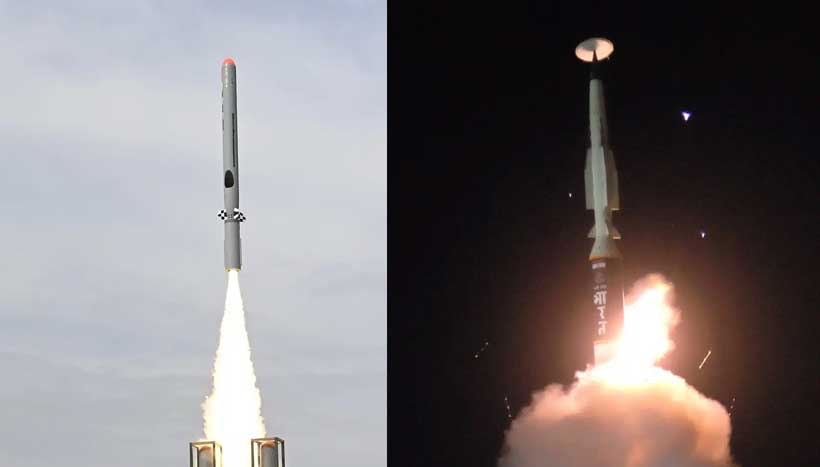
Fast forward to the current era, today’s missile defense systems have shown a very limited success rate against hypersonic missiles. The tracking and interception capabilities of current missile defense systems have remained effectively limited due to speed, maneuverability, and depressed flight of hypersonic missiles. Traditional missile defense systems have been outmaneuvered by hypersonic missiles, which increases the threat level due to their capability to reach and hit targets with a high success rate. Modern hypersonic missiles can still be detected with infrared sensing during their boost phase, but Hypersonic Glide Vehicles (HGVs) are extremely difficult to track and intercept primarily due to their maneuverability. The radar-evading capabilities of HGVs affect the strategic calculus by shrinking detection and reaction time duration during crises and conflicts.

As a remedy, the US has introduced the Hypersonic and Ballistic Tracking Space Sensors (HBTSS) to counter the threat of HGVs and Hypersonic Cruise Missiles (HCMs). The HBTSS will be a major component of the US Golden Dome missile defense project. It is a layered network of command-and-control systems, interceptors, and space-based sensors to build an advanced layer of missile defense system. What makes HBTSS different from traditional missile defense systems is the satellite constellation, which provides real-time tracking data of missiles. Traditional defense systems like Space Based Infrared System (SBIR) could detect the launch of missiles, but HBTSS can detect, track, and possibly predict the target of the missile.

Because HGVs present a unique challenge due to low flight path and maneuverability and often operate under the coverage of conventional radars, which make it difficult for traditional defense systems to detect. HBTSS relies on space-based sensors, which can detect and track continuously from space. Theoretically, it can be called a space-based missile defense system reflecting the growing strategic importance of space in the military domain. It relies on an interconnected satellite network that can work as a kill web across the globe against the threat of hypersonic missiles.

HBTSS is an emerging strategic shift as it starts a new era of space weaponization with a layer of satellites for enhanced detection and tracking. A reliable space-based tracking system bolsters a state’s capabilities to deal with the threat of hypersonic missiles with improved early warning and missile tracking systems, and reduces the threat of surprise attacks from an adversary. Although missile forces hold great impact on deterrence stability, the induction of HTBSS will question the effectiveness of missiles during crises and conflicts if a more advance missile defense system is introduced. This will provide a wider view from space with more accuracy and precision, and increase the vulnerability of missile forces of states.

Because ground-based nuclear forces are considered vulnerable, many countries have developed second-strike capabilities, particularly at sea, to preserve deterrence even after absorbing an initial attack. But the development of HBTSS undermines the survivability of a state’s missile forces with an enhanced detection and tracking system. Even though the United States and Russia continue to maintain certain crisis management and risk reduction mechanisms, including hotlines and military deconfliction channels, the suspension of New START has weakened the broader framework of strategic stability. While in conflict-prone regions like South Asia, India and Pakistan possess a more limited and less institutionalized set of confidence-building measures (CBMs), making crisis management in South Asia particularly challenging due to emerging technologies.

The peaceful use of outer space depends on the intent and actions of major powers. Sometimes measures taken for self-defense can also prompt a proportionate reaction in the form of countermeasures. The strategic impact of HBTSS on the missile forces may lead to more advance, fast, and lethal missiles for survivability. The development of HBTSS will not end the arms race, it will intensify the arms race with countermeasures.
Source link

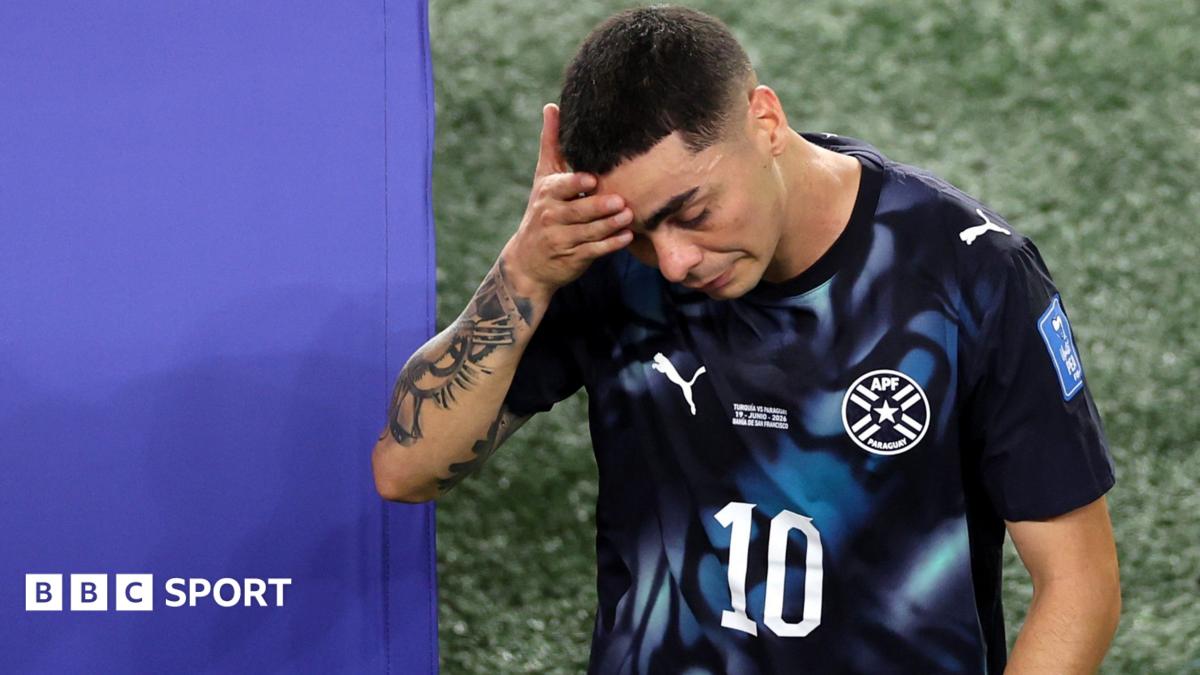
World Cup 2026: Paraguay’s Miguel Almiron sent off for covering mouth while speaking to opponent

Paraguay’s Miguel Almiron became the first player to be shown a red card for covering his mouth while speaking to an opponent during his side’s World Cup group match against Turkey in San Francisco.

Almiron, 32, obscured his mouth with his hand while speaking to Turkey’s Mert Muldur, who immediately informed an official standing next to him.

Following a check by the video assistant referee (VAR), referee Ivan Barton from El Salvador announced to the crowd that he was sending off the former Newcastle United winger.

The incident occurred just before half-time with Paraguay leading 1-0.

Commentating for BBC Radio 5 Live, former Republic of Ireland striker Clinton Morrison said: “If you know the rules, you shouldn’t do it. You’ve got to credit the referee and the VAR for making that decision.

“Not everyone would agree with it, but if those are the rules, you’ve got to stick by the rules.”

Source link

Mexico City looks to rein in street drinking after massive World Cup party | World Cup 2026

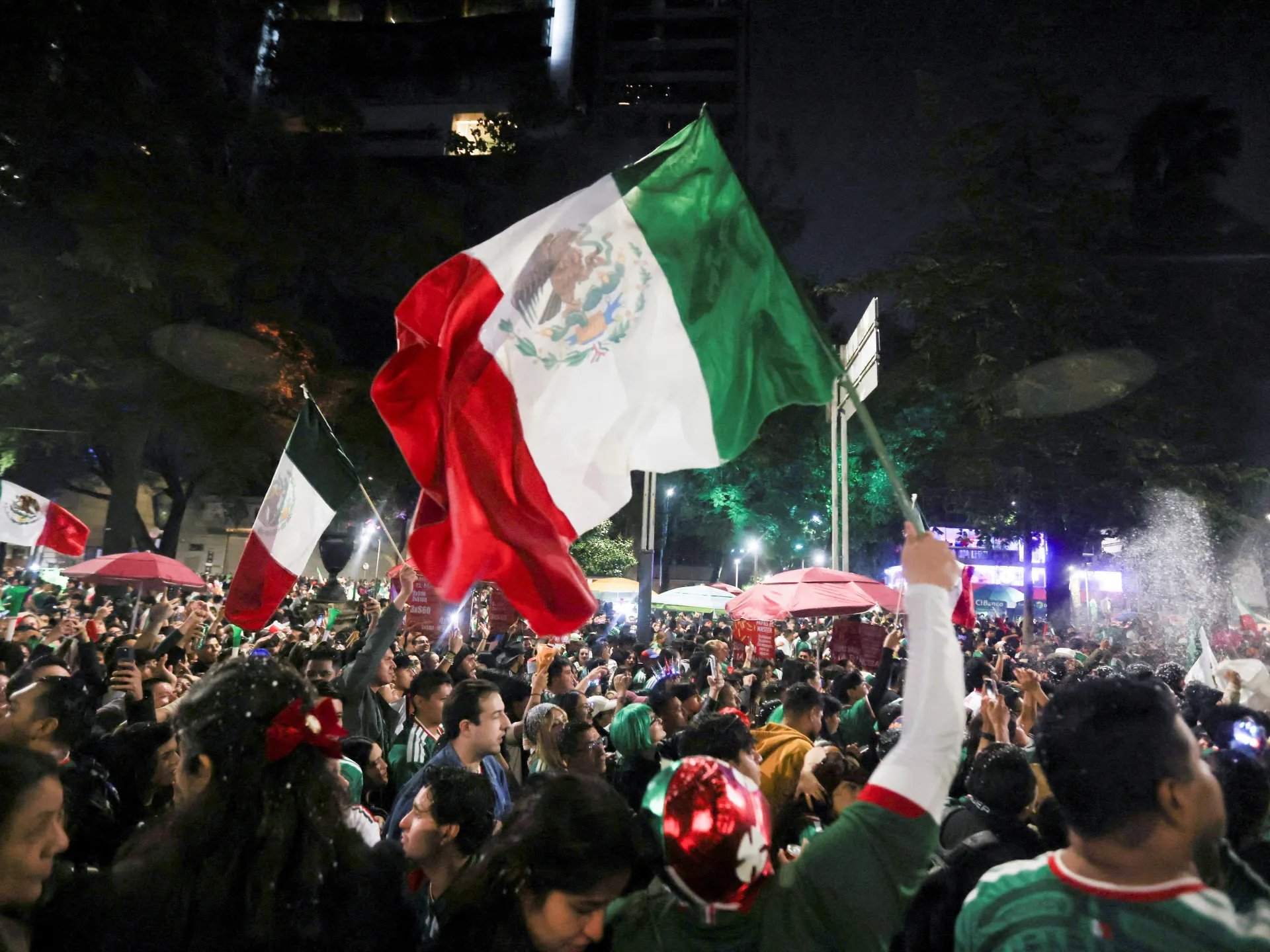
Mexico ‌City’s government said it is considering measures to limit ⁠the sale ⁠of alcohol in public spaces, after more than 700,000 people gathered downtown to celebrate Mexico’s football team advancing to the knockout stage ⁠of the World Cup.

Mexico’s victory against South Korea saw massive street celebrations, with fans dressed in green El Tri jerseys or wearing colourful Lucha ⁠Libre masks and dancing in the rain, waving flags, singing anthems and blowing on vuvuzelas.

Recommended Stories

list of 4 itemsend of list

The next morning, Reforma Avenue — one of the city’s main arteries — was littered with rubbish, and many of its yellow cempasuchil flowers had been ‌trampled over. Authorities collected some 40 tonnes of waste around the historic centre.

Mexico City’s government secretary Cesar Cravioto told a news conference on Friday that part of the government’s duty of care during the massive football event is prevention, and this involves controlling illegal sales of alcohol on the streets.

Cravioto said the government would ask restaurants and bars in ⁠the area to prevent customers from taking alcoholic ⁠drinks off premises and that convenience stores nearby could be asked to stop selling alcohol in the hours before a big game.

The government said it was planning on setting up ⁠seven more large screens around the centre-in addition to the current 12 — to help disperse crowds, ⁠and that it would deploy more personnel ⁠to limit the sale of beer by street vendors.

“We will keep insisting that fans have fun but without excessive alcohol consumption,” Cravioto said.

In Boston, another World Cup host city, Scottish fans, ‌known as the “Tartan Army”, drank such vast quantities of beer after Scotland’s team beat Haiti 1-0 at the city stadium that several bars reported ‌running dry.

Mexico is set to face the Czech Republic in the group stage on Wednesday.

Source link

Morocco beat Scotland 1–0 as Saibari scores fastest World Cup 2026 goal | World Cup 2026 News

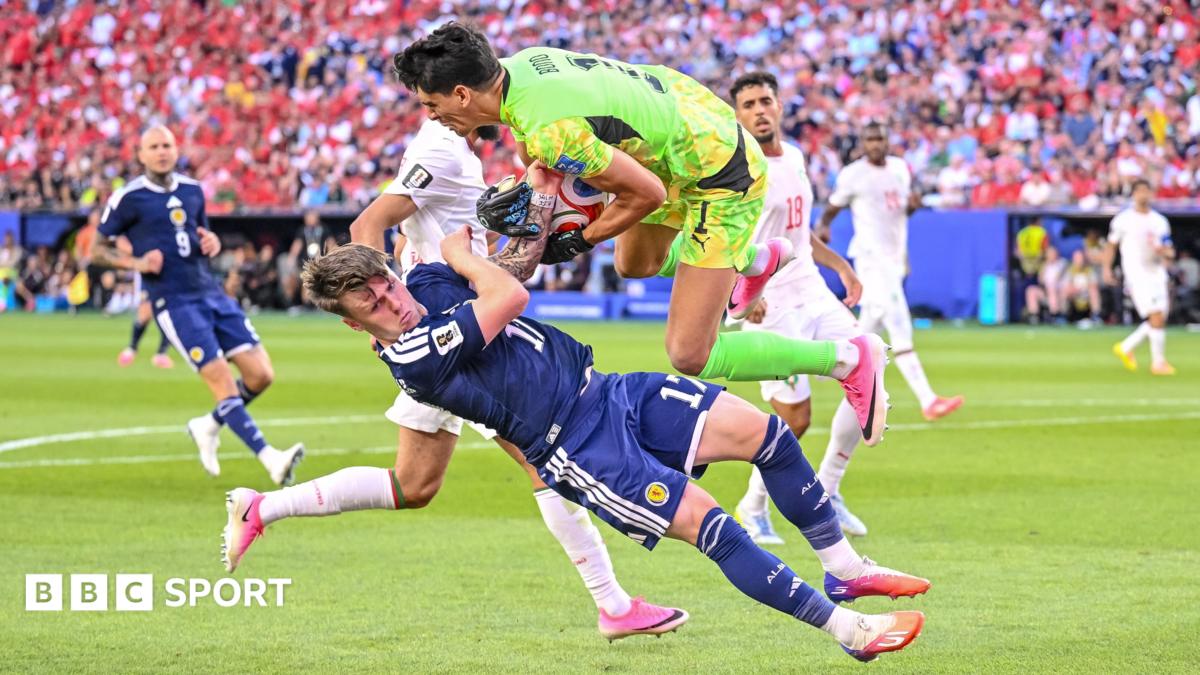
Ismael Saibari scored the fastest goal of the World Cup 2026 so far after just 71 seconds as Morocco beat Scotland 1-0 to close in on a place in the knockout rounds.

Saibari scored in Morocco’s opening 1-1 draw with Brazil last weekend, and his clinical finish with just over a minute gone settled a hard-fought, physical contest at Boston Stadium on Friday.

A crowd of 64,146 fans turned up at the venue in Massachusetts, United States.

The 25-year-old, who was born in Spain and raised in Belgium, is reportedly on the brink of a $63m transfer from Dutch champions PSV Eindhoven to Bayern Munich.

The quality of his strike past goalkeeper Angus Gunn showed why he is attracting such interest, and it was telling that Scotland lacked the same quality in the opposition box — that helps explain why Morocco are ranked fifth in the world, and Scotland 40th.

With four points from two games, Morocco are now primed to advance to the last 32 as they aim to at least match their historic run to the semifinals in Qatar in 2022.

However, it was a sobering evening for Scotland and their army of fans who have taken over Boston during this World Cup, as their team never really tested Morocco goalkeeper Yassine Bounou.

The laboured 1-0 win over Haiti in their opening game at the same stadium last weekend — which was their first victory at a World Cup since 1990 — gave them a platform to build on and reason to believe they can progress beyond the group stage at a World Cup for the very first time.

Another win here would have secured progress from Group C, but their chances of going further remain up in the air going into their next match against Brazil in Miami next Wednesday.

Moroccan coach Mohamed Ouahbi went with an unchanged starting lineup here following the Brazil clash, but opposite number Steve Clarke made three changes.

Clarke sought to reinforce his defence, meaning striker Lawrence Shankland dropped out as defender Kieran Tierney came into the side to make a back five.

But that was of little use as Morocco went ahead practically from kickoff.

The assist came from Real Madrid’s Brahim Diaz, and Grant Hanley played Saibari onside as the latter latched onto the ball over the top, controlled it and rifled high into the net.

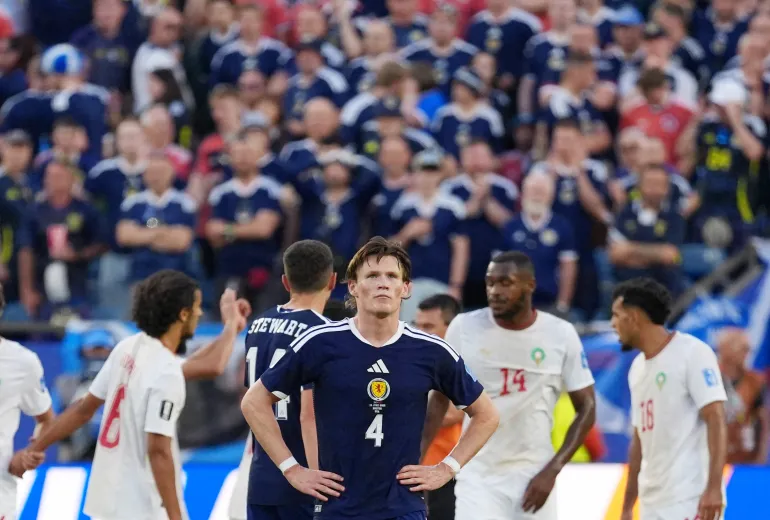
Soccer Football - FIFA World Cup 2026 - Group C - Scotland v Morocco - Boston Stadium, Foxborough, Massachusetts, U.S. - June 19, 2026 Scotland's Scott McTominay looks dejected after the match IMAGN IMAGES via Reuters/David Butler Ii
Scotland’s Scott McTominay looks dejected after the match [David Butler II/Reuters]

Morocco, who defeated Scotland 3-0 when the teams met at the 1998 World Cup, threatened to overrun their opponents every time they got forward but were wasteful, with Bilal El Khannouss squandering a good chance on 36 minutes.

Scotland were as stodgy in attack as they have been for a long time, and it took until first-half stoppage time for them to create anything dangerous.

That was a cross whipped in from the left by skipper Andy Robertson that John McGinn was unable to make anything of, and the opening period ended without Bounou needing to make a save.

Morocco hit the woodwork five minutes into the second half as Saibari met a cutback by El Khannouss, and his attempt was deflected onto the bar by Jack Hendry.

Moments later, Gunn made a fine stop to keep out an El Khannouss header from a corner taken by Hakimi, who was regularly booed by the crowd.

Morocco nevertheless seemed content to see the game out and soak up what Scotland could throw at them.

Ryan Christie fired over on 64 minutes after being teed up by Scott McTominay, who hit the side-netting late on, but a Scotland goal proved elusive.

Morocco face Haiti in Atlanta on Wednesday, while Scotland face Brazil in Miami.

Soccer Football - FIFA World Cup 2026 - Group C - Scotland v Morocco - Fans gather in New York City - New York City, New York, U.S. - June 19, 2026 Morocco fans celebrate after the match at the Brooklyn Bridge park watch party IMAGN IMAGES via Reuters/Caean Couto
Morocco fans celebrate their team’s win at a watch party in New York [Caean Couto/Reuters]

Why was Achraf Hakimi booed?

Morocco’s captain Achraf Hakimi was named in the starting lineup hours after it was confirmed he must stand trial in France on rape charges.

Loud boos rang out from the Scottish fans when Hakimi’s name was read out and every time he touched the ball during the game.

The Paris Saint-Germain (PSG) defender said in a statement earlier in the day that he faced trial on a rape charge and welcomed the opportunity to put across his point of view.

Hakimi had appealed his referral to a criminal court.

French media reported earlier that the Versailles appeals court had rejected the appeal, paving the way for his trial in a criminal court at some point in the future.

“Today, a story that isn’t mine is being told at the expense of my family, my life, and above all, ⁠⁠the truth. Sometimes I feel like ⁠⁠I’ve become an easy target,” Hakimi wrote in a post on the social media platform X.

“I’ve been waiting for this trial since day one. And now I’m looking forward to it. Finally, I’ll be able to speak out.”

Morocco's Achraf Hakimi celebrates at the end of the World Cup Group C soccer match between Scotland and Morocco in Foxborough, Mass., near Boston, Friday, June 19, 2026. (AP Photo/Martin Meissner)
Achraf Hakimi celebrates Morocco’s win [Martin Meissner/AP Photo]

Source link

Cunha hits Brazil double against Haiti to seal first World Cup 2026 win | World Cup 2026 News

Manchester United’s Matheus Cunha scores Brazil’s first two goals in 3-0 win against Haiti as FIFA event progress nears.

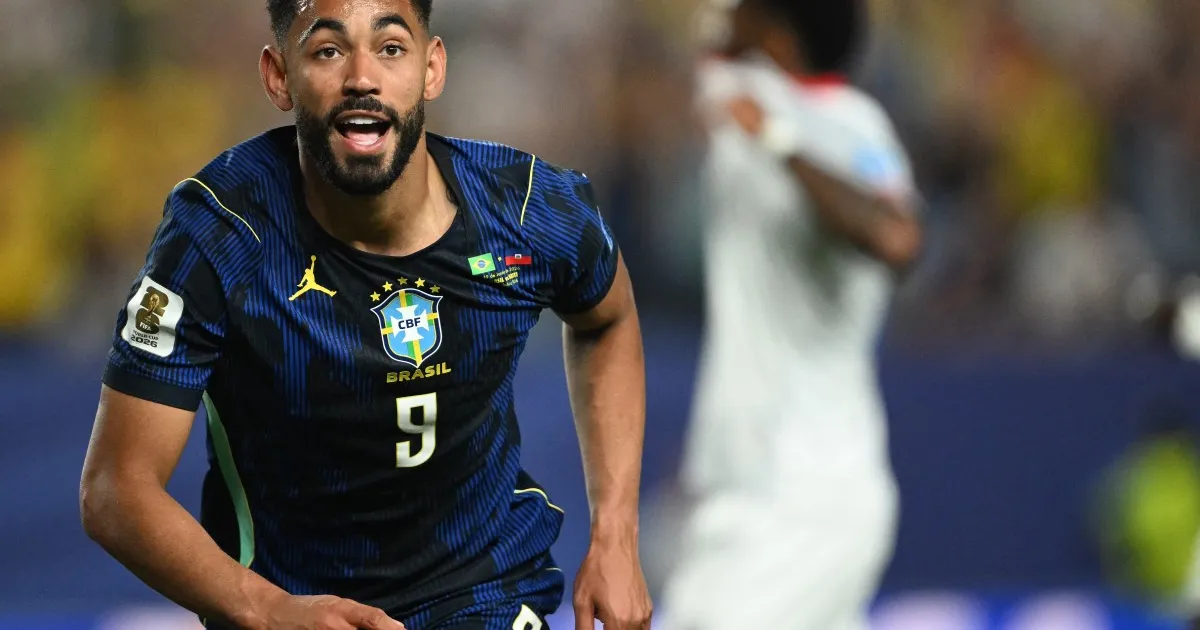
Vinícius Junior scored and assisted on one of Matheus Cunha’s two goals as five-time champion Brazil eliminated Haiti from the World Cup with a 3-0 victory.

Haiti, the Western Hemisphere’s poorest nation that qualified for the World Cup for the first time since 1974, became the first team guaranteed not to reach the knockout round. Meanwhile, the Selecao got the decisive performance they needed on Friday.

Recommended Stories

list of 4 itemsend of list

Cunha, the Manchester United standout, got the start and showed with every surf-and-slide goal celebration why he should have been in the starting lineup in Brazil’s listless 1-1 draw against Morocco. Brazil coach Carlo Ancelotti made the surprising decision in the opener to instead insert Cunha as a late substitute.

Cunha thrilled the Brazilian fans who made up the bulk of the 68,324 spectators at Philadelphia Stadium when he tapped in a rebound for his first career World Cup goal. He then sent a left-footed strike into the upper left corner for a 2-0 lead in the first half against the overmatched Haitians.

Brazil forward Raphinha, who was subbed out with an injury in the first half, had an early goal disallowed on an offside call that only temporarily muted the yellow-clad Seleção fans in an otherwise festive atmosphere at the home of the two-time Super Bowl champion Philadelphia Eagles — whose cheerleaders did their part to rally the crowd.

Haitian fans danced and sang “Grenadye Alaso” (“Grenadiers to the Attack”), the traditional battle cry of the national team. Brazilians chanted back, reminding them their country is the five-time World Cup champion and the home of the king of soccer: “A thousand goals, a thousand goals, a thousand goals, a thousand goals, a thousand goals! Only Pele, only Pele!”

Cunha added to the frivolity in Philadelphia, home to nearly 6,000 Brazilian immigrants, when he flashed his familiar surfing celebration.

Vinícius, whose 32nd-minute goal helped Brazil earn the tie against Morocco, helped Brazil get on the board when his shot was stopped by goalkeeper Johny Placide and Cunha was there to slam home the rebound to make it 1-0. Cunha extended both arms as if trying to catch some tasty waves and was mobbed his teammates.

Vinícius slid a pass through the defense to find Cunha and he powered one high into the net that Placide never had a chance to stop to make it 2-0. Cunha slid on his stomach and mimicked a swimming motion that all but put Haiti in the drink — and validate the Brazilians’ fans decision not to tempt fate and dress the Rocky statue in team gear for bad luck.

Vinícius closed the half with a goal and that was enough to keep Brazil — seeking its first World Cup title since 2002 — happy before it closes Group C play against Scotland on Wednesday in Miami Gardens, Florida.

Neymar was ruled out of Brazil’s second straight match because of a lingering calf injury.

Source link

Lebanese influencer organises World Cup event amid Israel’s attack on Leban | World Cup 2026 News

NewsFeed

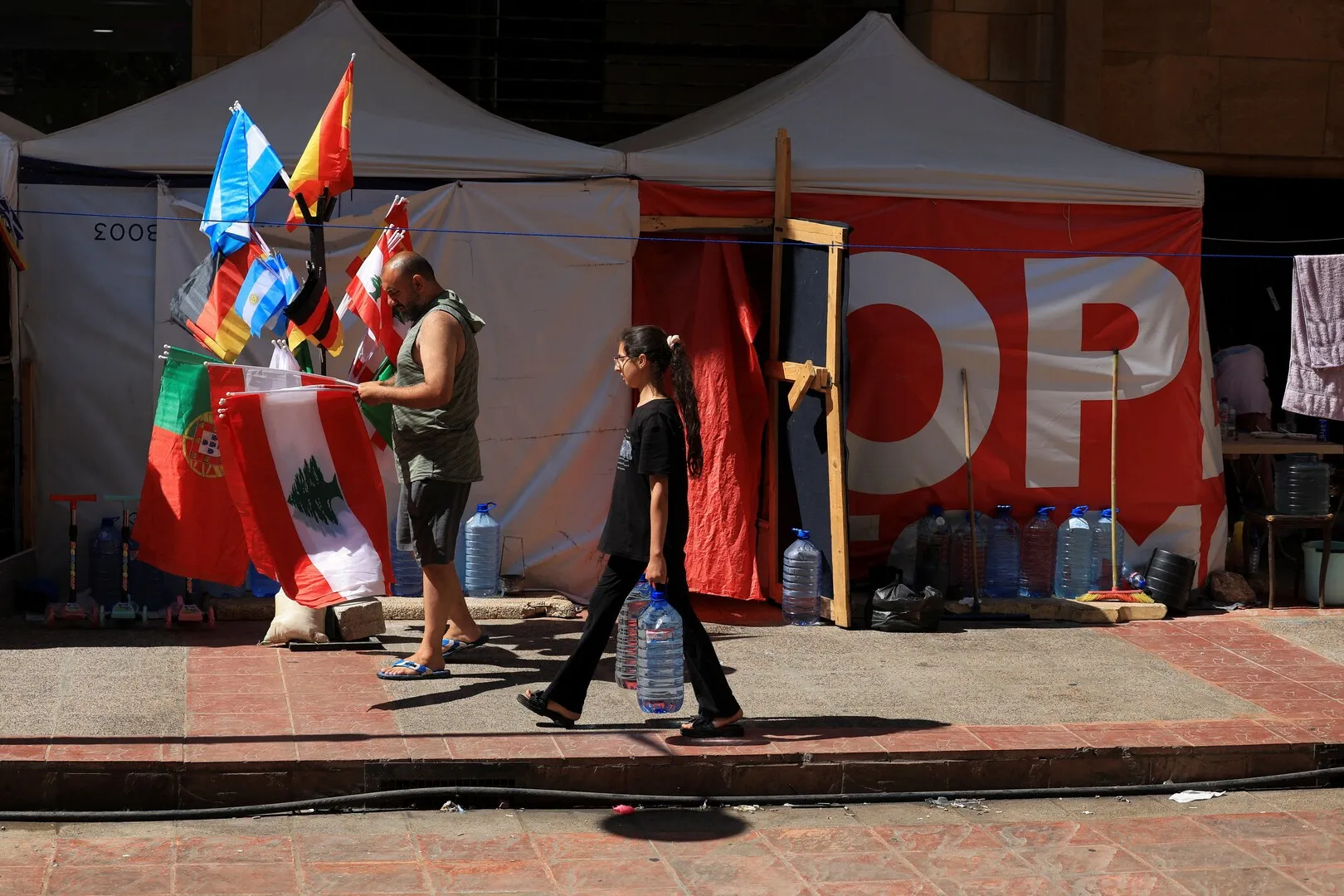
As Israel’s war on Lebanon rages, hundreds gather in Rmeileh by Sidon Gate to watch the 2026 World Cup. Organised by influencer Bilal Haddad, the fan zone offers food trucks, shisha and family activities, giving people a rare chance to relax. Al Jazeera’s Justin Salhani went to check it out.

Source link

Flawed but relentless Scotland show themselves as men of substance

Clarke’s masterplan, so to speak, was playing Kieran Tierney ahead of Robertson on the left, two vastly experienced operators to deal with the threat of Hakimi and Brahim Diaz.

A risk, for sure. And so much for the thinking behind it. Just over a minute gone – Diaz assist, Ismael Saibari goal, the nightmare scenario come true.

The traffic cone guys weren’t letting such trifling issues dampen their day.

Everybody else had a haunted look about them, their noise and passion reduced to soft groans, the lusty pride they all displayed with another thumping rendition of Flower of Scotland now replaced with shrieks as Morocco ran amok.

Or threatened to run amok. Seventy seconds it took them to score. For much of the opening half they were like a cultured fighter, boxing the ears off an over-matched rival, bamboozling their punchbag with their movement before what felt like an inevitable knockout.

Scotland were on the ropes, covering up and praying that the punishment would stop. And minute by minute, it did.

Morocco’s intensity was wonderful for half an hour and they could have been two or three ahead by then, but they weren’t. They’re terrific footballers, very easy on the eye, but they’re not ruthless, not killers. Scotland’s resilience kept them in it.

When Morocco’s energy started to dissipate, it became a contest.

Scotland finished the opening half strongly, their confidence rising, those worried stares on the faces of their supporters giving way to blessed hope.

Source link

US judge rejects Joe Biden’s lawsuit asking to withhold memoir recordings | Joe Biden News

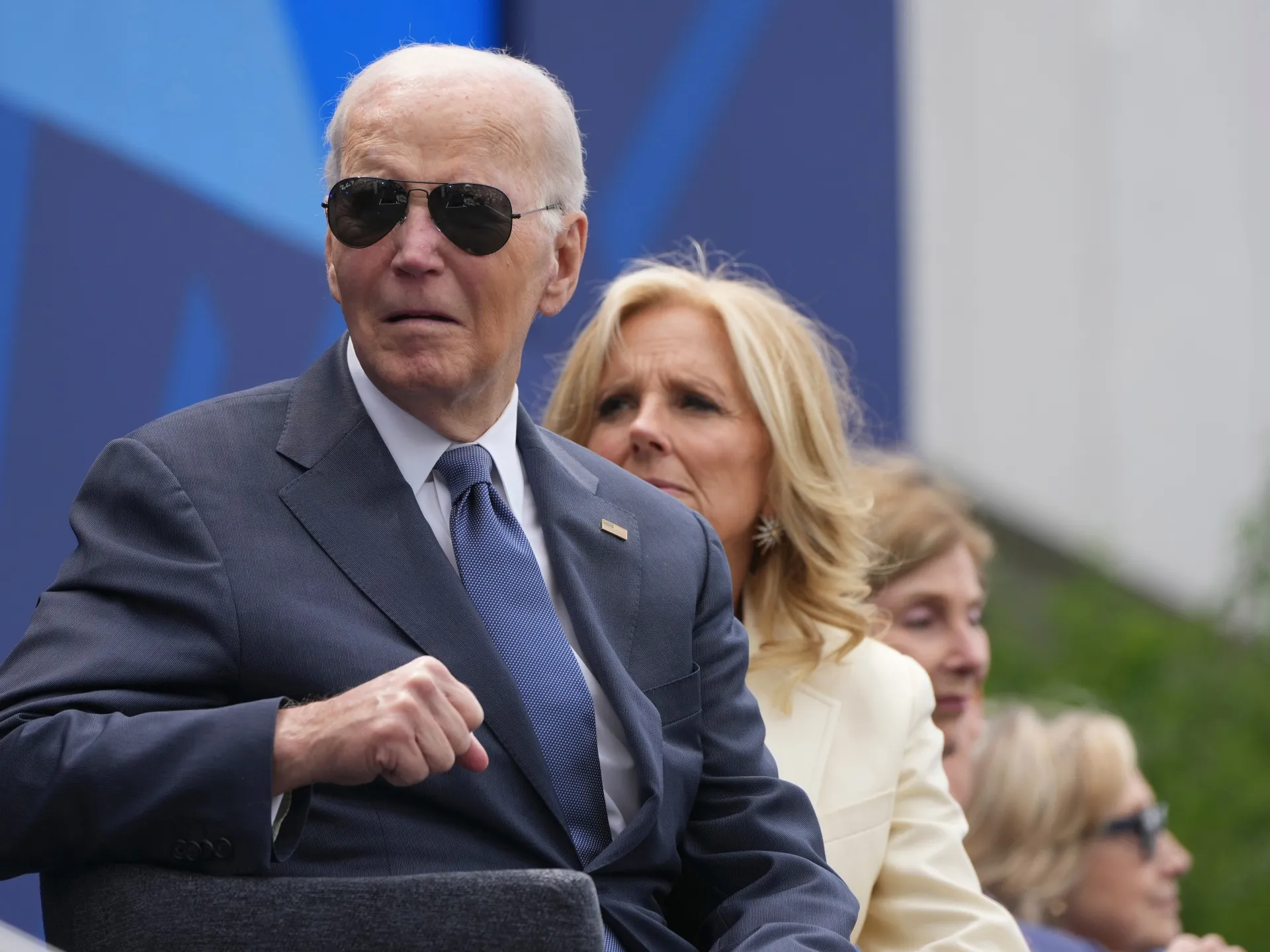
A United States judge has denied a petition from former Democratic President Joe Biden arguing his right to privacy would be violated should recordings he made for a memoir be made public.

On Friday, US District Judge Dabney Friedrich, an appointee of President Donald Trump, ruled that the recordings could be released to the Heritage Foundation, a right-wing think tank.

Recommended Stories

list of 3 itemsend of list

The Trump administration had already authorised the release of the recordings and transcripts, which Biden made while out of public office with his ghostwriter, Mark Zwonitzer.

Together, they released the 2017 memoir, Promise Me, Dad: A Year of Hope, Hardship, and Purpose.

In her 26-page ruling, Friedrich acknowledged that Biden was likely to suffer some reputational damage as a result of the recordings being released.

Biden has long been scrutinised about whether his advanced age impeded his ability to serve as president during his term from 2021 to 2025. Previously, he served as vice president from 2009 to 2017.

“The Court agrees that — on these facts involving the frank words of a public figure in his home — disclosure of the Zwonitzer materials risks irreparable harm to Biden’s privacy interests and his reputation,” Friedrich wrote.

But she concluded that such harms may not be irreparable, and they do not supersede the public interest in releasing the files.

“Biden has not identified any public harm that would arise absent an injunction in this case,” Friedrich said. “The harm to Biden’s diminished privacy interest is outweighed by the public’s interest in the Zwonitzer materials.”

Biden filed a lawsuit arguing that the Department of Justice had a duty to protect the private information it collects during criminal investigations.

He petitioned the court for an injunction to prevent the Heritage Foundation, which has supported Trump, from receiving the documents through a Freedom of Information Act (FOIA) request.

“Every American, including a sitting or former Vice President, has a right to privacy in the personal conversations he has within his own home,” Biden’s lawyers have said in his court filings.

The recordings and transcripts came to be in the Justice Department’s possession in 2023, during Biden’s own term.

The Justice Department at the time had appointed a special counsel, lawyer Robert Hur, to independently investigate Biden’s alleged mishandling of classified documents while out of office.

A similar investigation, helmed by a second special counsel, Jack Smith, resulted in a short-lived criminal indictment against Trump. Hur, however, concluded that no criminal charges were “warranted” against Biden.

Part of his rationale was “a shortage of evidence”. But another part of his reasoning was that, if any charges were brought to trial, jurors were likely to perceive Biden “as a sympathetic, well-meaning, elderly man with a poor memory”.

As part of his investigation, Hur had obtained Biden’s recordings and transcripts with Zwonitzer in order to evaluate whether the Democrat had misused information from his time as president for his memoir.

But he also cited them as evidence to conclude that Biden “appeared to have significant limitations” in his memory.

The scrutiny over Biden’s age increased substantially during his 2024 bid for re-election. At a June 2024 presidential debate against Trump, Biden appeared to drift off topic and make nonsensical statements.

At one point, he issued the non sequitur, “We finally beat Medicare,” referencing a government health insurance programme for the elderly and those with disabilities.

Biden subsequently dropped out of the race, and his replacement, then-Vice President Kamala Harris, lost to Trump after a curtailed campaign. The Democrat, however, has consistently denied that he was unable to perform his duties as president.

Trump, meanwhile, has cited Biden’s age and mental acuity as a reason to undo the Democrat’s actions while in office.

He has also called on the Justice Department to investigate whether any officials attempted to conceal any health conditions Biden may have had while president.

The Republican-led House Judiciary Committee has also sought to obtain the Zwonitzer files for a similar investigation.

Biden was 82 years old by the time he left office in January 2025, making him the oldest sitting president in US history. Trump will be slightly older by the end of his tenure, should he complete his second term.

The Democrat is expected to appeal Friday’s decision to release the recordings.

Source link

Does Trump have to submit the Iran memorandum of understanding to Congress? | US-Israel war on Iran News

Lawmakers and pro-Israel groups have issued calls for United States President Donald Trump to ask Congress to review a recent memorandum of understanding (MoU) designed to end the US-Israeli war with Iran.

They cite the Iran Nuclear Agreement Review Act (INARA) as a precedent. Passed in 2015, the law says any agreements with Iran related to its nuclear programme must be submitted to Congress for review and a possible vote of disapproval.

Recommended Stories

list of 3 itemsend of list

The act came into effect when former US President Barack Obama was negotiating the now-defunct Joint Comprehensive Plan of Action (JCPOA) with Iran, and it remains on the books today.

US Senator Lindsey Graham was among the first lawmakers to invoke the act after this week’s memo was announced.

“Under our law, any nuclear deal with Iran will be sent to Congress for review and a vote. I look forward to reviewing the final product,” Graham, a longtime Iran hawk, wrote in a social media post on Sunday.

Critics, including some Democrats and pro-peace groups, have questioned the newfound interest in Congress asserting its powers, after Republicans repeatedly flouted the legislature’s authority during the war itself.

Some see the push as an effort to give the memorandum greater legitimacy, as Trump comes under fire for its terms. Others question whether Iran hawks are invoking INARA to push for a return to war.

Here’s what to know about the debate:

What does the law say?

INARA creates requirements for any agreement between the US and Iran “related to the nuclear program of Iran”, no matter “the form it takes” or whether the agreement is legally binding.

Ahead of its passage in 2015, it was championed by bipartisan opponents of the JCPOA. That deal, which saw Tehran curtail its nuclear programme and submit to regular inspections in exchange for sanctions relief, was subsequently subject to provisions of the law.

The law requires the president to submit the text of any agreement he strikes with Iran to Congress within five days, along with any related materials. That triggers a 30-day approval period.

During that period, members of Congress can choose to pass a joint resolution of disapproval to scuttle the deal.

Still, such a resolution would be subject to the presidential veto. A successful disapproval resolution would therefore require a two-third majority from both chambers to override any vetoes, an extremely high bar.

During the congressional review period, the president “may not waive, suspend, reduce, provide relief from, or otherwise limit the application of statutory sanctions with respect to Iran under any provision of law or refrain from applying any such sanctions pursuant to [the] agreement”, the law states.

Those terms could limit this week’s memorandum, as it includes sanctions relief for Iran.

Does INARA apply to the memorandum of understanding?

Trump has suggested he was open to sending the US-Iran memorandum to Congress, telling reporters earlier this week: “I like the idea. I mean, who wouldn’t approve it?”

But his administration has not yet done so. Administration officials have also not articulated a stance on whether or not they believes the memo is subject to the law. Trump, after all, has frequently denied needing congressional approval for his actions against Iran.

This week’s memorandum opens the Strait of Hormuz, lifts the US blockade on Iran’s ports, and halts fighting on all fronts, including in Lebanon.

It also immediately lifts US sanctions on Iran’s fossil fuel industry, while launching negotiations on the future of Iran’s nuclear programme, among other issues.

As part of the deal, both countries agree to maintain their nuclear “status quo” during ongoing negotiations, and Iran commits to diluting its highly enriched uranium “on site”, with details to be determined during the negotiations.

While Trump has yet to acknowledge INARA’s authority, legal experts from across the ideological spectrum have argued that his memorandum is subject to the law.

Tess Bridgeman, a legal adviser for the Obama White House, wrote that the law applies to “this new MoU, and any future final agreement that might be negotiated in the coming months”.

But in an article published in the policy forum Just Security, she argues that INARA should be repealed, so as to not impede the ongoing diplomacy.

“INARA was never an appropriate way for Congress to engage on Iran’s nuclear program, and that is even more true today,” Bridgeman wrote.

Jack Goldsmith, a Harvard Law School professor and fellow at the conservative American Enterprise Institute, also believes that the memorandum should trigger an INARA review.

He also notes that Trump’s commitment to “immediately” lift sanctions on Iran’s oil industry appears to run afoul of INARA.

“I don’t think the president has the authority under domestic law to issue these waivers,” Goldsmith wrote on the Executive Functions website.

Still, he anticipates that neither Congress nor the judicial branch will confront Trump over the issue.

Will Trump comply with the law?

Trump’s second term has been defined by a broad interpretation of presidential power.

His administration has previously flouted the US Constitution’s provision that Congress alone has the power to declare war.

Trump has maintained that Iran represented an “imminent threat” to the US, which allowed him to launch defensive strikes without congressional approval.

Administration officials have also argued that the president is not beholden to the legal requirement that he gain congressional approval within 60 days of launching an attack. The war, which started on February 28, has lasted nearly three and a half months.

In an interview with the news outlet Axios on Thursday, Trump mused that the war taught him there are “no limits” to his power as president.

It remains unclear if Trump will change course and embrace the congressional collaboration required for diplomacy under INARA.

In her article, Bridgeman argued that Trump could flout the law in whole or in part, particularly when it comes to the immediate sanctions relief, because his party controls Congress.

Goldsmith, meanwhile, pointed out that the administration could also try to argue that the memorandum only sets out terms to reach an eventual agreement and is not an agreement itself.

While Goldsmith believes that argument is faulty, he noted that “it’s doubtful that any institution will make the president comply with INARA”.

A newfound interest in congressional oversight?

Several pro-Israel groups, including The Jewish Institute for National Security of America (JINSA) and the American Israel Public Affairs Committee (AIPAC), have been among the loudest voices calling for congressional involvement in the deal.

Since the outset of the war, JINSA defended Trump’s claims that Iran represented an “imminent threat” to the US, thereby granting him authority to attack without congressional approval.

However, the group also called on Congress to pass an Authorisation for the Use of Military Force (AUMF) to bolster his actions.

Congress, however, has repeatedly sought and failed to re-assert over its authority to send the US to war.

Since February, several war powers resolutions have been introduced to halt US action against Iran and force Trump to engage with Congress.

Initially, several Democrats backed by AIPAC, including Senator John Fetterman, Representative Jared Moskowitz and Representative Josh Gottheimer, broke from the party to oppose those efforts.

Moskowitz and Gottheimer eventually shifted their stances in March to vote in favour of one of the resolutions. But Congress has yet to pass a bill with enough votes to overcome an eventual Trump veto.

Meanwhile, Republicans in both the House and Senate chose to ignore a 60-day deadline in May that legally required Trump to get congressional approval for continued military operations — or stop fighting.

In a statement on Friday, Democratic Senator Chris Van Hollen characterised the Republican embrace of INARA as evidence of hypocrisy.

“Republican senators who were AWOL [absent without leave] regarding their constitutional duties around STARTING the war against Iran all of a sudden demand that Congress play a role in STOPPING the war,” he wrote.

“A whole lot of warmongering going on.”

Source link

Canada’s Kone undergoes major leg surgery; to miss rest of World Cup | World Cup 2026 News

Kone is expected to make full recovery after breaking his left leg, with multiple fractures, in the match against Qatar.

Canada midfielder Ismael Kone underwent surgery to repair severe fractures in his lower left leg that occurred in Thursday’s match against Qatar.

“Last night, Ismael Kone underwent successful surgery to repair a lower limb fracture,” Canada Soccer said in a statement on Friday. “He is expected to make a full recovery but will miss the remainder of FIFA World Cup 2026.”

Kone underwent surgery to repair the tibia and fibula bones in Vancouver, the site of Canada’s 6-0 victory.

Kone was injured in the 51st minute of the Group B match. Qatar midfielder Assim Madibo attempted a tackle, but his right foot brought Kone to the ground. Trainers were immediately called onto the pitch as Kone was in visible discomfort before being stretchered off moments later.

Sitting up on the stretcher, Kone gave a thumbs-up sign to the fans while taking oxygen.

After the match, Canada coach Jesse Marsch said he “could hear the bone snap.”

On Friday, Marsch described the scene at the hospital.

“By the time we got to him, he’d already had some drugs to help sedate him a little bit,” Marsch said at a news conference. “He was being prepared to go into the operating room. But he was in really good spirits and he was adamant that he’s going to be fine.

“[The surgery] took about an hour and a half and they had three surgeons. I think what happened is the surgeons watched it on TV and they saw what happened and they knew right away. And so they brought their top three surgeons to the hospital immediately to take care of him.

“So by the time he got there, the surgeons were there and they were ready. And then we just had to communicate with our medical team and make sure that the surgery was the best option that we thought. But I could see by meeting them and hearing what they had to say about the situation that they he was in really good hands. So the surgery they said went really well.”

A video review of the play resulted in Madibo being shown a red card, Qatar’s second of the game, leaving the team with nine players to finish the match. Madibo later apologised to Kone.

Canada meet Switzerland in Vancouver on Wednesday, with both teams having four points apiece after their first two fixtures. Their third match will determine the winner of Group B.

Nathan Saliba, who replaced the injured Kone and scored Canada’s fourth goal, celebrated by racing to the sideline to hold up a replica of the stricken Kone’s Canadian shirt and pointing to his shirt number, eight.

Soccer Football - FIFA World Cup 2026 - Group B - Canada v Qatar - BC Place, Vancouver, Canada - June 18, 2026 Canada's Nathan Saliba holds up the shirt of injured player Ismael Kone as he celebrates scoring their fourth goal IMAGN IMAGES via Reuters/Anne-Marie Sorvin
Saliba holds up Kone’s shirt [Anne-Marie Sorvin/Reuters]

Source link

Iran deputy FM says ‘ready to move forward’ in deal with US | Donald Trump News

Khatibzadeh tells Al Jazeera diplomacy is way forward, but US must ensure that Israel stops its attacks on Lebanon.

Iran’s deputy foreign minister says Tehran wants to continue the diplomatic process with Washington, if the United States is serious about respecting their agreement and ensures Israel abides by the terms of the memorandum of understanding (MoU).

“We are ready to move forward step by step, if the other party demonstrates the same seriousness,” Saeed Khatibzadeh told Al Jazeera Arabic in an interview on Friday.

Recommended Stories

list of 4 itemsend of list

His comments came after talks between the US and Iran that were due in Switzerland on Friday were called off, and US Vice President JD Vance cancelled his planned trip there.

Earlier, officials including mediators Pakistan and Qatar said the two sides would meet in Burgenstock to begin negotiations on a host of issues as outlined in the MoU signed between the US and Iran this week.

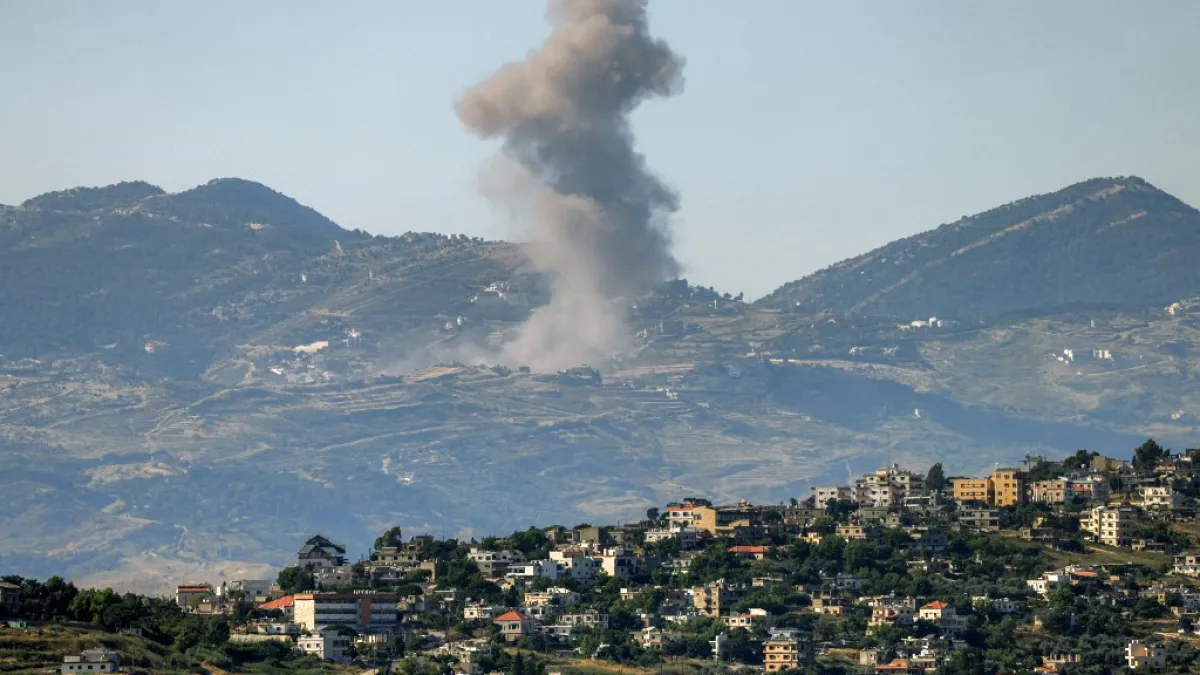
Reports said the talks may have been called off after intense fighting between Israel and Hezbollah in southern Lebanon on Friday. Lebanon’s health ministry said Israeli attacks killed at least 47 people since midnight.

Speaking to Al Jazeera, Khatibzadeh denounced the latest Israeli attacks in Lebanon, saying Israel’s “continued war-making” would have “serious and immediate consequences”.

He said Iran was seeking “peace on all fronts, including Gaza”, and explained that Lebanon had been included in the MoU because of its direct connection to the conflict.

Article 1 of the MoU explicitly states that ending the war in Lebanon is an integral part of the broader ceasefire arrangement across all fronts.

“There will be no peace or stability in Lebanon and the region without ending the occupation and Israel’s commitment to international law,” Khatibzadeh added.

On the Strait of Hormuz, he said Iran would continue to provide navigation services in coordination with Oman and in accordance with international law.

He added that Tehran would not impose passage fees during the 60-day period outlined by the agreement, but said a new mechanism for managing the waterway would be introduced afterwards and presented to regional countries.

Khatibzadeh also said that any future agreement must include the release of all frozen Iranian funds.

Esmaeil Baghaei, spokesperson for Iran’s ministry of foreign affairs, said on Friday that the necessary consultations involving the US deal are being carried out through mediators, and that if the conditions for starting negotiations are met an official announcement will be made.

Regarding the Lebanon ceasefire required for talks between the US and Iran to continue, a Hezbollah official told Al Jazeera that the ceasefire would hold if Israel abided by it.

Israel’s ambassador to the US Yechiel Leiter said on X: “Israel remains firmly committed to an immediate ceasefire. If Hezbollah honours the agreement and ceases its hostilities, they will be met with quiet”.

Source link

Venezuelan Gov’t Launches US-Backed Dialogue with Hardline Opposition

Rodríguez and Figuera met at the legislative Palace in Caracas on Thursday. (Asamblea Nacional)

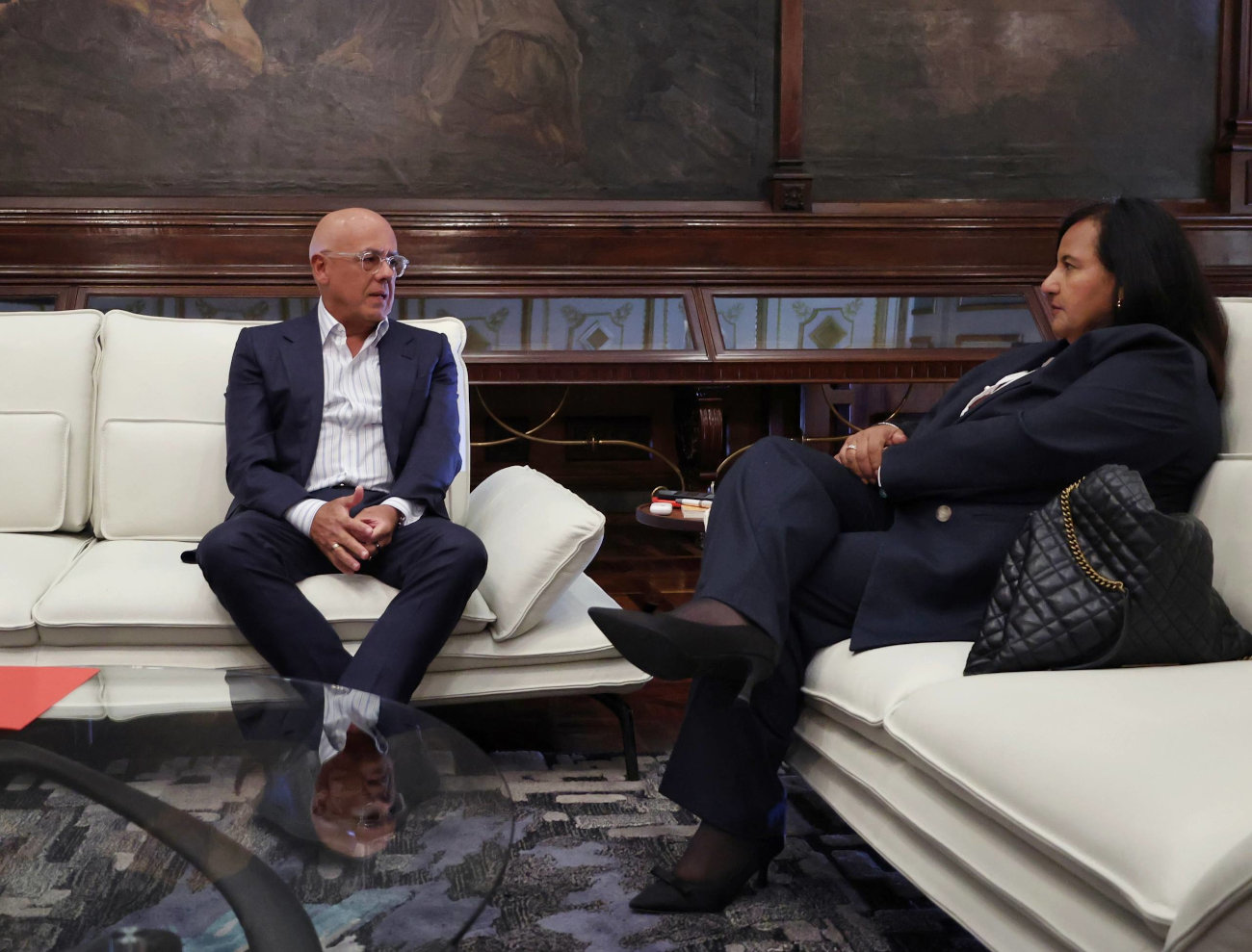
Caracas, June 19, 2026 (venezuelanalysis.com) – Venezuelan National Assembly President Jorge Rodríguez held a meeting on Thursday with a US-picked opposition figure to launch a new political dialogue process.

In a statement, Rodríguez, who is also the Venezuelan government’s lead negotiator, disclosed talks with “the representative of the opposition lawmakers from the 2015-2020 period,” Dinorah Figuera, to launch “a joint technical and political working group” with “an agenda containing concrete milestones and timelines” aimed at “strengthening democracy.”

In a separate statement, the expired opposition-controlled 2015 National Assembly explained that the central objective of the process is “the construction of a shared vision for the future.” The communiqué claimed that the dialogue aims to establish a “roadmap for the construction of a democratic scenario” in the country. 

Figuera also met with US Chargé d’Affaires John Barrett in Caracas on Thursday.

For its part, the US State Department welcomed the meeting, describing it as the “first step” toward “a free Venezuela.” The Trump administration has insisted on a “three-phase process” for the Caribbean nation which culminates with a political “transition.”

According to Washington, the proposed agenda includes priorities such as rebuilding democratic institutions, strengthening the National Electoral Council (CNE), restoring guarantees for political participation, and protecting the civil liberties necessary for an open political debate.

“The cornerstone of any transition is inclusive dialogue. We hope that conversations between Venezuelan political parties and the interim government in Caracas continue in the coming weeks so that this work can begin,” stated Thomas Pigott, spokesperson for US Secretary of State Marco Rubio.

Upon arriving at the airport on Thursday, Figuera told reporters that she had traveled to Venezuela at the invitation of the US State Department, with her tasks including the establishment of a “credible” electoral council. She added that her work intends to benefit all political forces while avoiding questions about whether the initiative had been coordinated with far-right leader María Corina Machado.

Figuera was among the lawmakers elected when the opposition won a parliamentary majority in December 2015. Anti-government parties attempted to use the National Assembly to overthrow the Nicolás Maduro government and pushed several laws that were struck down as unconstitutional. It was eventually sidelined after being declared in contempt by the Supreme Court, with the South American country’s legislation taken over by a government-supporting National Constituent Assembly. The ruling United Socialist Party (PSUV) retook control of the legislature in the 2020 and 2025 elections that were boycotted by many opposition sectors.

Though the 2015 National Assembly’s term expired in January 2021, it unilaterally renewed its own mandate for successive one-year periods. The defunct parliament retained US recognition as Venezuela’s legitimate authority, which allowed it to manage Venezuelan assets abroad. Washington’s backing ended in March when Trump recognized Acting President Delcy Rodríguez as Venezuela’s “sole leader.”

Figuera, who has lived in Spain since 2018, took over as president of the opposition-controlled body in January 2023 following the dissolution of the self-proclaimed “interim government” led by Juan Guaidó.

At the time, Venezuelan judicial authorities denounced Figuera’s role in an “illegitimate” parliament that aimed to “plunder Venezuelan assets abroad” and issued an arrest warrant and an Interpol red alert. While several opposition figures have benefited from an amnesty law approved by the present National Assembly in February, it is not known whether Figuera was among those whose legal cases were dropped.

Figuera’s return to Caracas also comes just weeks after the Unitary Platform—the coalition that groups the country’s main opposition parties—agreed during a meeting in Panama that far-right María Corina Machado would “lead negotiations with Chavismo to call elections” and eventually run as a presidential candidate.

Machado and the Unitary Platform have yet to comment on Figuera’s talks with the acting Delcy Rodríguez government, having previously demanded elections within a 40-week timeframe.

Since the January 3 strikes and kidnapping of Maduro, the Trump administration has wielded a strong influence over Venezuelan affairs. US officials have openly participated in legislative initiatives to open the Caribbean nation’s energy and mining sectors to Western companies while also accompanying corporate executives on trips to discuss business opportunities.

US forces likewise conducted an extrajudicial execution in Venezuelan territory earlier this month, with Caracas calling it a “joint operation” against organized crime.

Despite the diplomatic rapprochement and catering to US investment, Venezuelan authorities had previously brushed aside talk of early presidential elections. Maduro’s term, currently held by Delcy Rodríguez in an acting capacity, ends in January 2031. In a February interview with US conservative outlet Newsmax, parliamentary leader Jorge Rodríguez stated that no elections were expected in the short term because the priority was achieving economic stability.

Edited by Ricardo Vaz in Caracas.

Source link

Iran war: Success or disaster? Mehdi Hasan and David Des Roches | TV Shows

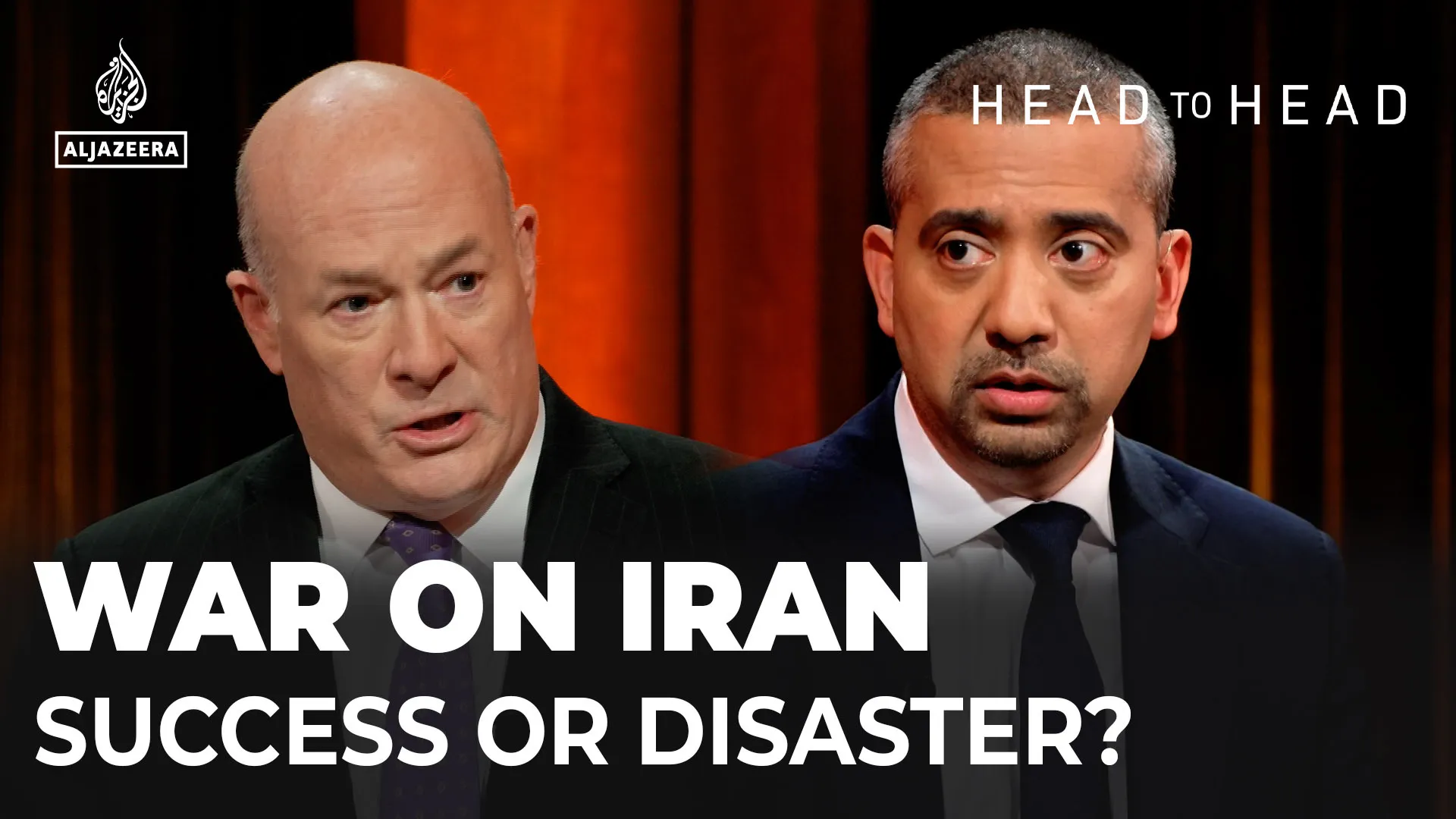
Following the US and Israeli airstrikes on Iran in February, reverberations were felt globally. But is the world really safer and Iranians freer or has the war unleashed disastrous consequences?

Mehdi Hasan goes head to head with David Des Roches, retired colonel, former Pentagon official and professor at the National Defense University on the justifications and costs of the war – and whether President Donald Trump sent U.S. troops to fight Israel’s war.

Joining the discussion are:
Sanam Naraghi-Anderlini – founder and CEO of the International Civil Society Action Network
Mohammad Ali Shabani – Middle East scholar and Editor of Amwaj.media, a London-based news outlet focused on Iran, Iraq and Arabian Peninsula countries
Barak Seener – Associate Research Fellow, Henry Jackson Society

Recorded shortly before the announcement of a deal between the US and Iran.

Source link

More than 70 medics infected with Ebola as DRC outbreak spreads ‘fast’ | Ebola News

Aid cuts and poor sanitation are deepening fears that Ebola is spreading through displacement camps.

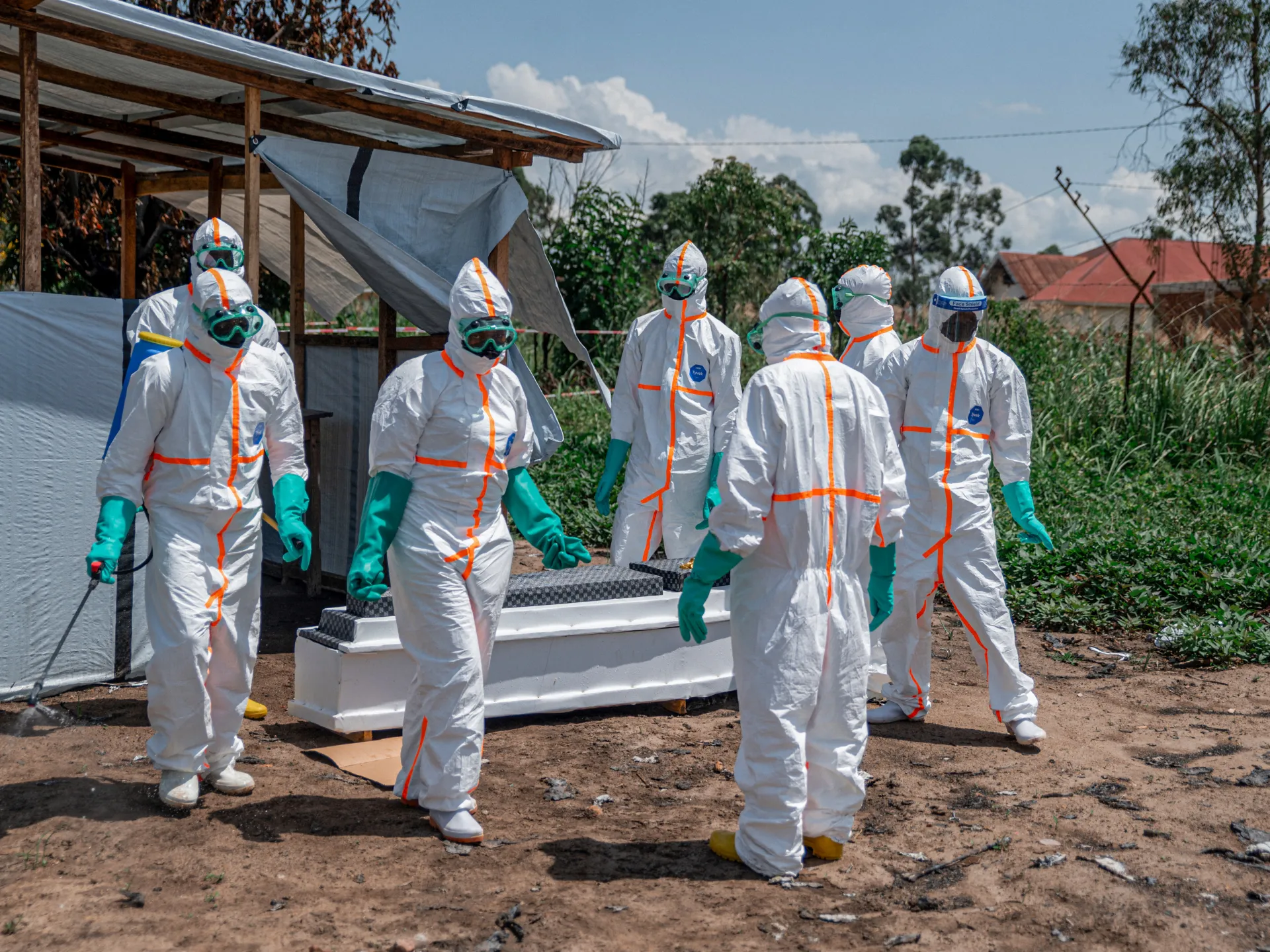
Seventeen medics have died from Ebola in the Democratic Republic of the Congo (DRC) as the death toll surpasses 200 in an outbreak tearing through a health system already weakened by years of conflict, displacement and chronic underfunding.

A senior World Health Organization (WHO) official confirmed the death toll on Friday and said that 75 healthcare workers had contracted the virus since Congolese authorities declared the outbreak on May 15 .

Recommended Stories

list of 3 itemsend of list

“The outbreak remains serious” and is “evolving so fast”, said WHO emergency director Marie Roseline Belizaire.

“It is a really high price that the system, the healthcare system, is paying, because we don’t have enough of healthcare workers in DRC,” she told reporters by video link from the outbreak epicentre in eastern DRC.

Health officials believe the rare Bundibugyo strain of Ebola had been spreading for months before the government formally announced the outbreak, leaving doctors, nurses and other medical staff exposed before they knew the virus was present.

Even now, basic protective equipment remains in short supply, with some facilities struggling to secure gloves, masks and other essentials needed to limit infection.

The DRC has one of the world’s lowest ratios of healthcare workers to population, with about 11 health workers for every 10,000 people, according to WHO data. Belizaire said China and Uganda were sending medical teams to support the response.

She added that the WHO was providing psychological support to medics who feared treating patients after seeing colleagues fall sick.

“When they are explaining to you how they live it, how they were infected … [it] can break your heart.”

Outbreak yet to reach its peak

Congolese authorities said on Thursday that the outbreak has killed 232 people and infected 896 others across 31 health zones in the country.

African Union member states have pledged nearly $1bn to respond to the emergency in eastern DRC and neighbouring Uganda, which has confirmed 19 cases and two deaths.

Health officials warn that the outbreak has not yet reached its peak.

The crisis is also raising alarm in camps for displaced people, where overcrowding, poor sanitation and resistance to testing could allow the virus to spread undetected.

At least 30 people have died since early May in Kigonze camp in Bunia in Ituri province, the epicentre of the outbreak. Camp officials described the death rate as unprecedented.

Authorities could not confirm the causes of death because patients and relatives had refused testing of both the living and the dead until Thursday, according to a camp spokesperson and aid organisation Caritas.

But witnesses and aid sources told Reuters that the dead had symptoms linked to Ebola, including headaches, fever and vomiting.

“People didn’t just die like this before,” camp spokesperson Desire Grodya Bapi told Reuters.

Kigonze is home to more than 15,000 people. The rising number of deaths there has increased fears that Ebola may be spreading among the more than five million displaced people in eastern DRC.

Aid workers say funding cuts have made the emergency more dangerous. Donors, including the United States under President Donald Trump, have reduced support for water, hygiene, and sanitation programmes, which are vital in fighting the disease spread through bodily fluids.

UN data shows funding for toilets and handwashing stations in DRC more than halved between 2024 and 2025, falling to about $38m. This year’s $80m appeal is only 21 percent funded.

DRC has hundreds of displacement camps, some housing up to 100,000 people. Ebola deaths have already been recorded in another camp in Ituri province, which accounts for more than 90 percent of nearly 900 confirmed cases.

Source link

Italy’s top diplomat nixes US trip after Meloni says Trump fabricated story | Donald Trump News

The Italian prime minister has accused Trump of making up a story that she ‘begged’ him for a photo at the G7 summit in France.

A diplomatic row between United States President Donald Trump and Italian Prime Minister Giorgia Meloni has escalated, with Italy’s top diplomat cancelling an upcoming visit to the US.

At issue is Trump’s claim that Meloni “begged” him for a photograph during the Group of Seven (G7) meeting in France earlier in the week.

Recommended Stories

list of 3 itemsend of list

“She’s probably happy I talked to her. I didn’t have to talk to her,” Trump reportedly told the Italian La7 network. The broadcaster only published a dubbed Italian version of the interview, not the original English version.

“She begged me to take a picture with her. She wanted a picture with me so badly. I wouldn’t have taken it, but I felt sorry for her.”

On Friday, Meloni posted a video answering Trump’s statement, saying that “certain things deserve an immediate response”.

“Donald Trump’s statements are completely fabricated. I am frankly stunned,” she said. “I don’t know why the president of the United States behaves this way toward his own allies. After all, this isn’t the first time this has happened.”

The head of a far-right party who campaigned on an anti-immigrant platform, Meloni had long been seen as one of Trump’s most supportive counterparts in Europe.

She had met with Trump at his Mar-a-Lago estate following his 2024 election victory and attended his inauguration in January 2025.

However, the pair have diverged during Trump’s second term over several issues, including support for Ukraine amid Russia’s invasion, the US-Israeli war with Iran, Trump’s threats to seize the Danish territory of Greenland and his criticism of Pope Leo.

In her video, Meloni said it was a “shame” Trump did not show “the same resolve toward the enemies of the West, toward the enemies of the United States” as he did in his statements against her.

She accused the US president of being “much more accommodating” to foes than allies.

“But there’s one thing he must remember: Italy and I do not beg,” she said.

Shortly after Meloni posted the video, Italian Foreign Minister Antonio Tajani said he was cancelling a weekend trip to the US, where he was scheduled to attend a business forum in Miami, Florida and meet with US Secretary of State Marco Rubio.

He called Trump’s reported statements “serious and offensive”. Several other government officials also weighed in.

Justice Minister Carlo Nordio suggested Trump’s remarks besmirched the legacy of the US soldiers who died during World War II.

“The thousands of crosses marking the graves of American soldiers who died to free us from Nazi-Fascist dictatorship did not deserve such a painful blow to our fraternal ties,” Nordio posted on X.

Defence Minister Guido Crosetto said he did not believe Meloni would ever beg for a photo, “not even under threat”.

“Jokes of this kind do no good to anyone: neither to the USA, nor to Italy, nor to the alliance,” he said.

The White House did not immediately respond to Meloni’s comments.

Source link

How is China using AI in the classroom? | Technology News

Artificial intelligence education now starts at the age of six in China. The Ministry of Education has rolled out new guidelines to teach AI at every grade level. For President Xi Jinping, AI is a priority. Will the toddlers of today be the tech titans of the future?

This is a story from the archives. This originally aired on September 18, 2025. None of the dates, titles or other references from that time have been changed. 

In this episode: 

  • Katrina Yu (@Katmyu), Al Jazeera Correspondent

Episode credits:
This episode was produced by Amy Walters, Sonia Bhagat, Sarí el-Khalili, and Tamara Khandaker, with Phillip Lanos, Spencer Cline, Melanie Marich, Kisaa Zehra, Farhan Rafid, and our host, Malika Bilal. It was edited by Kylene Kiang. 

Our sound designer is Alex Roldan. Our video editors are Hisham Abu Salah and Mohannad al-Melhem. Alexandra Locke is The Take’s executive producer. 

Connect with us:

@AJEPodcasts on X, Instagram, Facebook, and YouTube


Source link

Lebanon Ceasefire Agreed After US-Iran Talks Scrapped

Israel and Hezbollah agreed to a ceasefire in Lebanon after escalating violence threatened to derail potential peace talks regarding the ongoing war in Iran. This ceasefire was announced just before 4 p.m. Lebanon time, with a U. S. official confirming that negotiations, facilitated by the U. S. and Qatar with assistance from Iran, had led to this agreement. Both sides indicated they would uphold the ceasefire, with an Israeli official stating that Israel would remain in southern Lebanon but would not engage in conflict unless attacked.

The recent conflict included intense airstrikes that resulted in 18 deaths and injuries to 33 others in Lebanon. Four Israeli soldiers were also killed by Hezbollah. This violence could complicate U. S.-Iran negotiations, as establishing peace in Lebanon is key to a broader agreement. The recent memorandum signed by the presidents of the U. S. and Iran postponed discussions on critical issues like Iran’s nuclear program, granting parties 60 days to agree on a lasting solution or extend the current deal.

Technical talks were planned in Switzerland but were postponed, and officials from both the U. S. and Iran indicated that their respective negotiators would not be attending. Hezbollah lawmakers suggested that further discussions hinge on a complete ceasefire and urged the Lebanese government to reject any negotiations with Israel as long as hostilities continued.

The interim agreement seeks an end to military operations in various regions, including Lebanon, but Israel maintains that it is not a part of these deliberations. The fighting began when Hezbollah fired at Israel, prompting Israeli military responses, including strikes targeting Hezbollah’s positions.

Lebanon’s health ministry confirmed the heavy toll from recent airstrikes, and its President condemned Israel’s actions while emphasizing the commitment to achieve a comprehensive ceasefire. The broader conflict, which originated on February 28 with U. S. and Israeli attacks on Iran, has reportedly resulted in at least 7,000 deaths, primarily in Iran and Lebanon.

Despite the conflict’s impact on oil prices, which had risen due to concerns over regional stability, the signing of the interim deal resulted in a drop in prices as shipping through the Strait of Hormuz resumed. Under the terms of the agreement, Iran will receive economic relief and unfreezing of assets, with negotiators tasked with addressing the status of Iran’s nuclear program and establishing a reconstruction fund within the next 60 days.

In the face of criticism in the U. S., former President Trump defended the deal, arguing that the war had weakened Iran and affirming that the terms would lead to significant concessions from Iran without offering direct financial support.

With information from Reuters

Source link

Ben Kingsley’s angriest roles: 3 times ‘Wonder Man’ actor played rage

What is the angriest acting performance you’ve ever seen?

Maybe it’s Joe Pesci in “Goodfellas.” (“Funny how? Do I amuse you?”) Perhaps it’s James Caan kicking the stuffing out of his ne’er-do-well brother-in-law Carlo in “The Godfather.” John Goodman enforcing the rules of bowling in “The Big Lebowski”? It’s in the conversation.

Did Ben Kingsley in “Gandhi” cross your mind? Probably not.

The 82-year-old Oscar winner thinks it should.

I’m Glenn Whipp, columnist for the Los Angeles Times and host of The Envelope newsletter. Don Logan or Mahatma Gandhi? The answer isn’t as plain as you might think.

Sign up for The Envelope

Get exclusive awards season news, in-depth interviews and columnist Glenn Whipp’s must-read analysis straight to your inbox.

Not long ago, I spoke with Kingsley just before an Emmy FYC event for “Wonder Man,” the enjoyable new Marvel TV series that finds him revisiting Trevor Slattery, the washed-up, drug-addled actor he first played in 2013’s “Iron Man 3.”

“Wonder Man” follows struggling actor Simon Williams (Yahya Abdul-Mateen II), trying to land a big break in Hollywood while keeping his superpowers hidden. Trevor befriends Simon. Initially he has ulterior motives, but soon becomes Simon’s mentor, turning the series into a look at the indignities that actors face while pursuing their profession.

Taking notes while watching the show’s eight episodes, I wrote, “Ben Kingsley’s seething anger is everything.”

You may remember Kingsley’s bullying and badgering and swaggering menace playing the underworld sociopath in Jonathan Glazer’s 2000 crime-thriller “Sexy Beast,” still my favorite Kingsley performance, one that earned him a supporting actor Oscar nomination. (He lost to Jim Broadbent in “Iris.”)

Is that kind of boiling rage as fun to play as it is to watch?

“If the expression of rage or indignation is completely dramatically justified and that expression of indignation is of enormous benefit to the tribe, yes,” Kingsley answers.

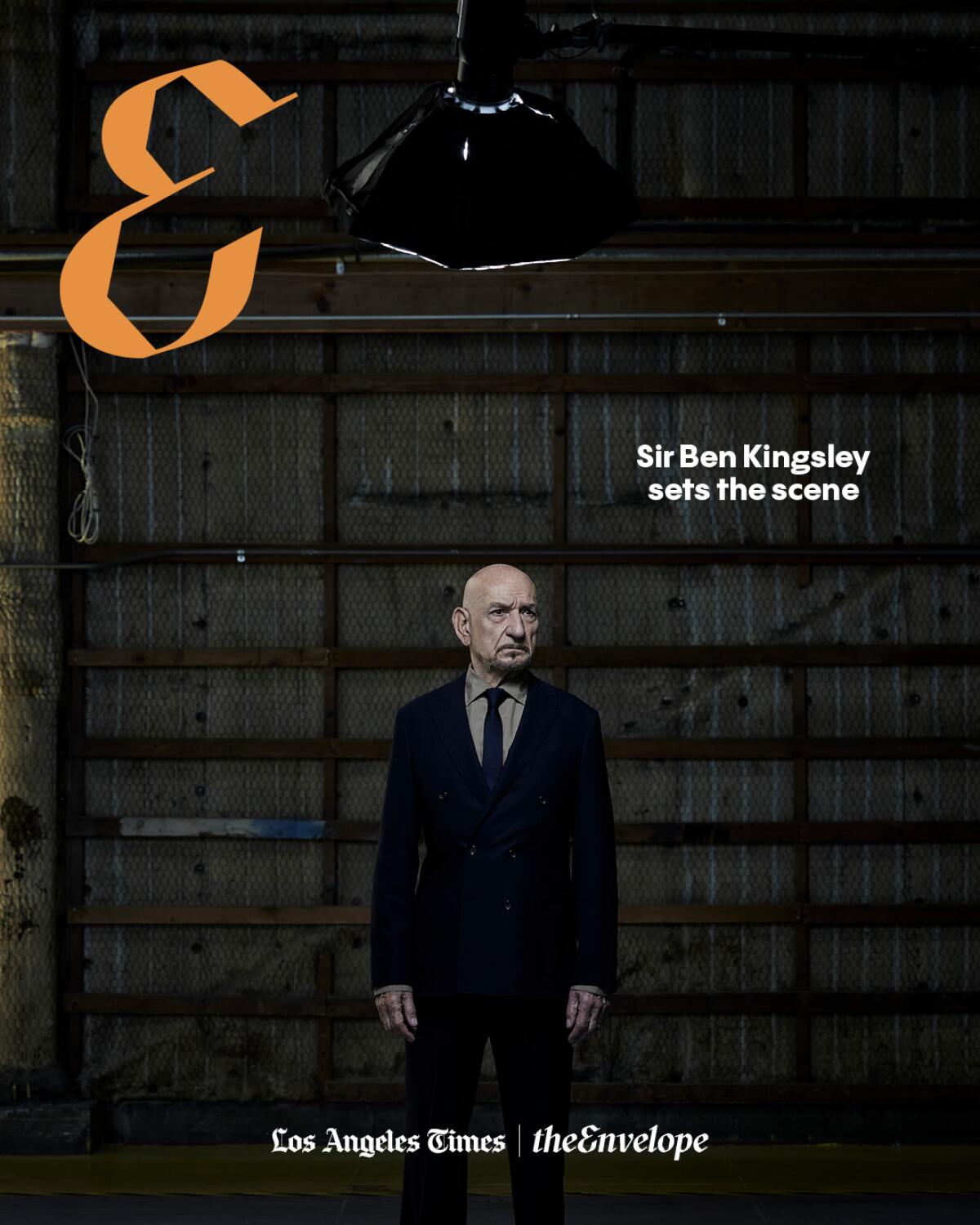
The Envelope digital cover featuring Ben Kingsley

(Larsen&Talbert / For The Times)

Kingsley says Itzhak Stern, Oskar Schindler’s loyal aide and factory manager in “Schindler’s List,” was, “bless him,” all about “contained rage.”

“And a colleague of mine who saw ‘Gandhi’ said, ‘That’s the angriest performance I’ve ever seen on screen,’” Kingsley continues. “That righteous indignation propelled him, and it can be expressed in many ways. Sometimes the safety valve is efficient enough to allow it to come through language and gesture, and sometimes the safety valve can’t hold it.

“That was Don Logan in ‘Sexy Beast.’ No safety valve.”

Let’s circle back to that thought of how rage can help the “tribe.” In “Wonder Man,” Trevor proclaims that “acting is not a job. It’s a calling, the single most consequential thing anyone could ever do with their life.”

“I would broaden the definition and refine it back to its origins,” Kingsley says when I ask if he shares Trevor’s view on acting. “There are images, thoughts and threads that I find nourishing and sustaining, and I treasure them. The tribal storyteller is a very consequential figure in the tribe, and if the mantle of the tribal storyteller falls upon that person’s shoulders, that is the single most consequential thing that person can do in their lives.”

“Trevor expresses it quite differently, and that’s fine,” Kingsley says. “That’s in the script. I honor the lines. But for me personally, as a rather convoluted answer, the tribal storyteller is the hand I hold and the baton I want passed on to me. Maybe it has. I hope I’m worthy, but it’s …” Kingsley widens his eyes and whispers, “Wow.”

“It is the single most consequential thing I can do with my life.”

Source link