Iran war live: US waives oil sanctions, to release $12bn in frozen funds | US-Israel war on Iran News
Live updatesLive updates,
US says the decisions follow Iran’s commitment to allow international nuclear inspections.
Published On 23 Jun 2026
US says the decisions follow Iran’s commitment to allow international nuclear inspections.


Published On 23 Jun 202623 Jun 2026
Share

The immunotherpay can give children and adults three extra years before they need to use insulin.
Source link


Egypt’s team will return to their training base in Spokane, about 450km east of Seattle, after rejected flight.
Published On 22 Jun 202622 Jun 2026
The Egyptian FIFA World Cup team’s plan to fly directly from Vancouver to Seattle ahead of their final group match against Iran was declined by local security officials, coach Hossam Hassan has said.
“The security authorities refused the team’s request to stay in the city of Seattle as planned after the New Zealand match in the World Cup, and therefore the team’s delegation will return to the city of Spokane,” Hossam said in a statement released by the Egyptian Football Association on Monday.
The Egyptian team had submitted a request to remain in Seattle this week, but will now return to their training base in Spokane, about 450km (280 miles) east of Seattle, according to a report by the Daily Mail.
Egypt posted their first-ever World Cup victory on Sunday over New Zealand in Vancouver. Mohamed Salah scored as Egypt rallied from a goal down to win 3-1.
The raft of proposed changes includes a new constitution and anti-corruption office, and the ousting of the president.

Published On 22 Jun 202622 Jun 2026
Hungary’s Prime Minister Peter Magyar has launched a wide-ranging reform drive aimed at pulling the state out of the captivity into which it was forced by former Prime Minister Viktor Orban.
In a fiery speech to parliament on Monday, Magyar announced a raft of economic, political and legal measures dubbed “Operation Cleansing Fire”. The plan will see the Tisza Party government install a new constitution, purge the country’s institutions, establish a new anti-corruption office, and unseat the president.
list of 4 itemsend of list
“We will free our country from the captivity of the political and economic mafia that has ruled for the past 16 years,” Magyar said.
Magyar took office in April, unseating the former prime minister after 16 years of rule. Orban’s Fidesz party had spent that time using its majority to seize control of virtually every lever of power in Hungary. It was also accused of organising systemic corruption, pushing Hungary closer to Russia, and sowing discord within the European Union.
Tisza now faces a daunting task to untangle that web, to rid Hungary of corruption and to remove key Orban allies throughout the power pyramid.
The proposed changes are part of a reform race for Magyar’s government. Using Tisza’s constitutional majority, he is pushing to fulfil a deal with the EU to implement reforms that would unlock a total of 16.4 billion euros ($19bn) in funds – frozen due to rule of law concerns during Orban’s reign – by the end of August.
Key to that drive is the removal of President Tamas Sulyok. Magyar has called on the head of state – appointed by Orban – to resign, and on Monday proposed a constitutional amendment for his removal.
The president of Hungary has few formal powers, but can slow the adoption of legislation by returning it to parliament or forwarding it to the Constitutional Court.
Sulyok has maintained he had no political agenda. Fidesz lawmaker Gergely Gulyas called Magyar’s speech on Monday “slanderous and appalling”.
Magyar’s plans would see the election of a new president, for a maximum of five years, if Sulyok is removed.
A constitutional review, complete with public discussions, would, meanwhile, kick off in September and be subject to a referendum.
Other changes would set an age limit of 70 for judges at the Constitutional Court, forcing Orban ally Peter Polt to retire as head judge, and limit lawmakers’ terms to 12 years.
Citing figures that corruption has cost Hungarians 8 to 10 percent of gross domestic product in recent years, Magyar vowed that Hungary’s top talent would field the new anti-corruption authority.
“The best police officers, the best investigators and the best experts will work for this agency,” Magyar said.
Earlier this month, the Hungarian parliament passed a constitutional amendment limiting prime ministerial terms to eight years, effectively preventing Orban from returning in the future.
MPs also voted to scrap a provision underlying the establishment of the so-called Sovereignty Protection Office, which was created in 2023 to protect Hungary from “foreign influence” and was used to investigate critics of Orban.
Closing the office was among the priorities that rights group Human Rights Watch recommended in April, alongside “moving quickly to meet the rule of law milestones” required for the EU funds, including judicial independence and anti-corruption safeguards.
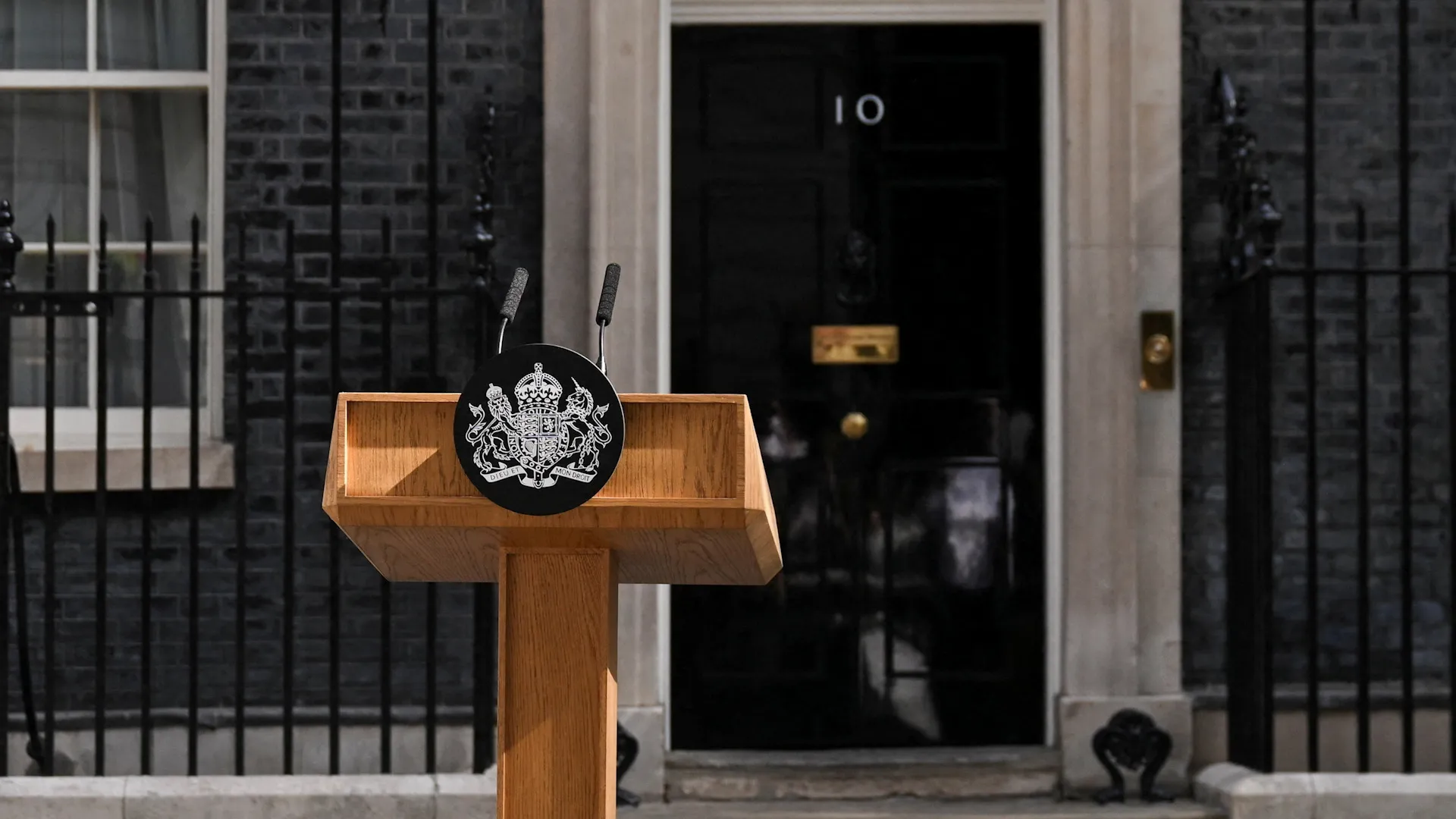
‘Too much change, but nothing really is changing for the better.’ Londoners shared mixed reactions to Keir Starmer’s resignation, voicing frustration over living costs, political turmoil and unfulfilled promises.
Published On 22 Jun 202622 Jun 2026
Share
Israel is pushing humanitarian groups and rights defenders to scale down operations in Palestinian territories.

Published On 22 Jun 202622 Jun 2026
Children are “increasingly unprotected” as humanitarian groups and rights defenders are forced to scale back their operations in the Palestinian territories, the United Nations has warned.
Many civil society and aid organisations in Gaza and the West Bank have been labelled “terrorists” by pro-Israel groups or politicians, the UN Committee on the Rights of the Child warned in a statement issued on Monday, noting that their absence leaves children vulnerable.
list of 4 itemsend of list
“For more than three decades, these organisations have played a vital role in defending Palestinian children, including in the Israeli military courts, and in documenting grave violations against Palestinian children at the hands of Israeli forces,” the committee said.
“Without them, Palestinian children will be even less protected, and violations of their rights risk continuing with impunity,” it added.
Issued by the Office of the United Nations High Commissioner for Human Rights (OHCHR), the statement noted that tactics used to delegitimise these human rights groups also include “military raids, travel bans, personal financial sanctions, threats of arrest, destruction of records, and even threats of secondary sanctions against partners who support their work”.
The committee said this made it “increasingly impossible for these organisations to operate safely or protect the children and families who turn to them for help”.
The committee urged the international community to hold Israeli authorities accountable for the attacks committed against Palestinian human rights defenders.
It urged the Israeli authorities to lift the restrictions faced by humanitarian individuals and groups.
“Despite grave risks and limited resources, child rights defenders have continued to stand with Palestinian children and families in extraordinarily dangerous conditions. They must be protected, not punished,” the committee said.
Israel has cracked down significantly on humanitarian operations in Gaza since the “ceasefire” that began on October 10, banning Doctors Without Borders, known by its French acronym MSF, after it failed to provide a list of its Palestinian staff, further depriving Palestinians in the besieged enclave of life-saving assistance.
In February this year, 17 international aid groups petitioned Israel’s Supreme Court to be allowed to keep working in the Gaza Strip and other areas in the occupied Palestinian territory. The Israeli government has planned to halt their life-saving work.
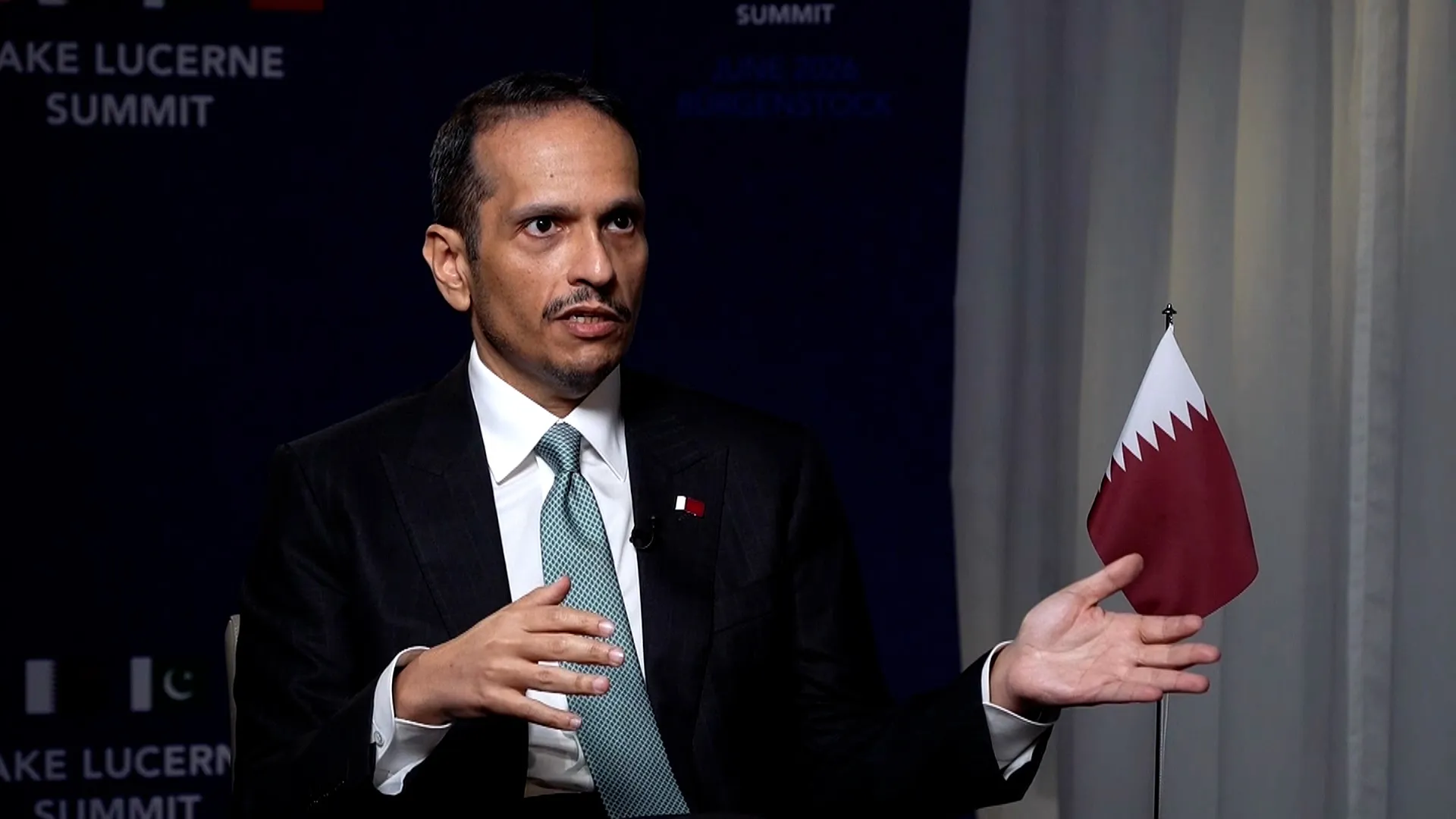
Qatar’s PM Sheikh Mohammed bin Abdulrahman Al Thani told Al Jazeera that safeguards have been put in place to prevent US-Iran negotiations from regional escalation, including tensions in Lebanon and the Strait of Hormuz, stressing diplomacy and respect for agreements.
Published On 22 Jun 202622 Jun 2026
Share
Messi scores twice to become all-time leading scorer in men’s World Cup history as Argentina reach knockout rounds.
Published On 22 Jun 202622 Jun 2026
Lionel Messi became the leading scorer in World Cup history as the captain struck twice to give Argentina a 2-0 win over Austria and send the champions into the last 32.
The player widely regarded as the greatest of all time pounced late in the first half in Texas on Monday with a trademark left-footed finish after neat build-up play.
list of 4 itemsend of list
The predatory goal added to his hat-trick in Argentina’s opening match to make it 17 in total at the World Cup.
The 38-year-old then sealed the match deep in injury time after a scramble in the box, as he outfoxed four defenders who lined up to keep the ball out.
It should have been even better for Messi, who missed a penalty early on, stunning a fiercely pro-Argentina 70,649 crowd at the air-conditioned home of the Dallas Cowboys.
With both sides knowing a win would put them into the knockout rounds with a game to spare, Lautaro Martinez was brought down in the box, sandwiched by two Austrian players.
Referee Amin Mohamed gave a penalty after a VAR intervention, and a wall of noise went up as Messi stepped forward on nine minutes.
But his run-up was slow and his weak effort off target, dragging it wide.
For all his brilliance, Messi – who turns 39 on Wednesday – is surprisingly poor from the penalty spot by his standards.
He also saw his spot-kick saved by Wojciech Szczesny in a 2-0 win over Poland at the 2022 World Cup, where Argentina went on to be champions, and missed at the 2018 tournament.
In the 19th minute Messi had a clear sniff at goal, only for Austria captain David Alaba to steal the ball off his toes at the last moment as he danced through on goal.
Alaba denied Messi again just after the half-hour mark, blocking his goalbound shot with goalkeeper Alexander Schlager stranded.
Ralf Rangnick’s Austria, who beat debutants Jordan 3-1 in their opener, were content to sit back. They did not have a shot on target in the first half.

And then the came the big moment, Messi sweeping in on 38 minutes after being set up by Facundo Medina, with Thiago Almada cleverly letting the ball run through his legs to leave Argentina’s talisman all on his own and the goal gaping.
The Argentina fans, who greatly outnumbered their Austrian counterparts, rose to acclaim their hero.
Messi had equalled Miroslav Klose’s all-time mark of 16 World Cup goals when hitting a hat-trick in a 3-0 win over Algeria in the holders’ opening game.
Lionel Scaloni’s side failed to build on their lead, and the second half drifted, neither side creating much.
If anything, Austria threatened slightly more, but Argentina goalkeeper Emiliano Martinez was only once seriously troubled.
And then up popped Messi to have the last word at the death.
Julian Alvarez’s initial attempt was saved by Schlager but the rebound was worked to Messi who, after seeing his first shot blocked, pounced to drive in a low strike from six yards out that confirmed the points.

Protesters urged the Venezuelan government to bring rice imports under control. (Archive)
Caracas, June 22, 2026 (venezuelanalysis.com) – Hundreds of rice producers took to the streets on Sunday in Calabozo, Guárico state, to urge the Venezuelan government to take action against agribusiness imports and price fixing.
The “tractorazo” saw local campesinos block one of the state’s major highways with tractors, trucks, and other heavy machinery carrying Venezuelan flags and signs with some of the main demands. Local sources estimated turnout at over 300.
“We are here on behalf of the producing states in Venezuela with a struggle that is just and urgent,” local spokesman José de la Cueva stated. “We urge the Venezuelan government to review its public policies so that national production is not destroyed.”
De la Cueva and other speakers emphasized the need for authorities to control imports, establish fair prices, and implement subsidies for the production of rice and other crops. Protesters contended that they have no conditions to compete with imports from countries where rice is subsidized, including Brazil and the US.
Rice growers, particularly in agricultural states Barinas, Cojedes, Guárico, and Portuguesa, have warned for months that agroindustry conglomerates have been importing massively since February.
According to agribusiness lobby FEDEAGRO, Venezuela has received more than 300,000 tons of imported rice in recent months. The amount is nearly half the 683,000 reportedly produced in the Caribbean country in 2025.
FEDEAGRO has complained that the exoneration of tariffs and import taxes is benefiting imported rice against national competitors. Imports of other crops such as corn have also skyrocketed, with purchases from the US more than tripling in the first five months of 2026 when compared to the previous year.
Meanwhile, campesinos have repeatedly denounced that local agribusiness corporations outright refuse to receive rice crops or attempt to impose prices as low as US $0.30 per kilo. Venezuela’s Agriculture Ministry established $0.40 per kilo following meetings with agroindustry and campesino representatives. Producers complained that the price did not take into account rising production costs and risked driving them bankrupt.
Alongside the latest street mobilization, rural organizations have likewise called for a boycott of Venezuela’s main agrifood conglomerates, including Polar and Iancarina.
The Small Farmers Movement (MPA), one of the organizations that took part in Sunday’s protest, issued a statement stressing that the defense of Venezuelan production and food sovereignty should become a “national unity cause.”
“This protest is about the survival of thousands of campesino families,” the text read. “It denounces the cruelty of agroindustry bosses whose voracious appetite for profit is fueling imports during harvest seasons to drive prices down.”
The MPA added that the growth of agricultural output in recent years has been based on “the exploitation of the work of thousands of campesinos” and urged social movements not to stay silent when it comes to the reality of small-scale producers in the countryside.
The campesino organization urged the government to adopt a series of measures, including implementing fair prices for rice and corn, reviewing import policies during harvest seasons, and investigating the “cartelization of prices” by agroindustry oligopolies. The MPA also called attention to the lack of credit for small-scale producers, which leaves them vulnerable to predatory lending agreements, including ones where they are offered seeds and inputs in exchange for a significant percentage of the harvest.
In a recent meeting with campesinos in Guárico state, National Assembly President Jorge Rodríguez vowed to investigate the issue of rice imports, claiming he was not previously aware of it. He urged agribusinesses to respect the previously agreed $0.40 price and called on public banks to reactivate credit for rural producers.
In recent years, with the economy heavily constrained by US sanctions, the Nicolás Maduro government moved to liberalize agricultural policies, transferring state competencies to the private sector, including provisioning of seed and fertilizer inputs and access to tractors. Fuel subsidies have also been phased out, with small-scale producers highlighting it as a major factor driving up production costs.
Edited by Lucas Koerner in Caracas.
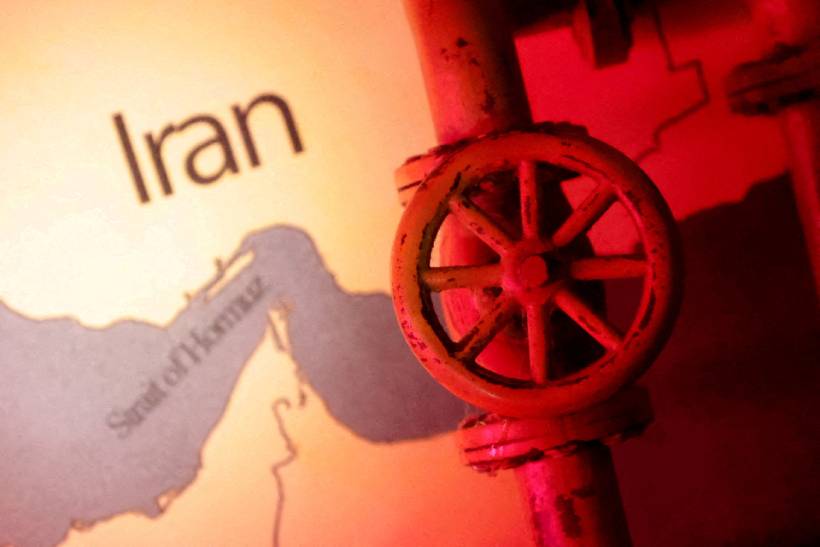
The disruption caused by the Iran war and the temporary closure of the Strait of Hormuz has prompted countries around the world to reconsider their energy security strategies. Governments that suffered economic damage from supply shortages and soaring prices are now looking to build larger strategic oil and gas reserves, potentially creating demand for hundreds of millions of additional barrels over the coming years.
The near-total closure of the Strait of Hormuz disrupted around one-fifth of global oil and liquefied natural gas supplies for more than three months, sending shockwaves through energy markets.
Brent crude prices surged to nearly $120 a barrel as import-dependent economies faced rising fuel costs, supply uncertainty and growing inflationary pressures.
One of the key factors preventing a deeper energy crisis was the release of strategic petroleum reserves.
All 32 members of the International Energy Agency agreed to a record release of 400 million barrels from emergency stockpiles, helping offset supply disruptions and ease pressure on global markets.
The coordinated action highlighted the importance of maintaining large emergency reserves during major geopolitical crises.
China emerged from the crisis in a stronger position than many other major importers due to its massive strategic petroleum reserve.
The country has spent years building what is believed to be the world’s largest emergency oil stockpile, estimated at more than one billion barrels.
During the conflict, China significantly reduced crude imports, allowing it to avoid buying large volumes of oil at elevated prices and limiting the economic impact of the disruption.
Countries with limited strategic reserves faced much greater challenges.
Several Asian economies relied on emergency measures such as:
The experience exposed vulnerabilities among countries heavily dependent on Middle Eastern energy supplies without substantial emergency stockpiles.
India is among the countries most likely to expand its emergency storage capacity.
As the world’s third-largest oil importer and one of the fastest-growing energy consumers, India currently holds reserves covering only a small fraction of its import needs.
Meeting International Energy Agency standards would require hundreds of millions of additional barrels of storage capacity.
Recent plans under consideration suggest New Delhi is moving toward expanding its strategic petroleum reserve network.
Pakistan, which relied heavily on Middle Eastern oil and LNG imports before the conflict, is also examining ways to increase domestic storage capacity.
The Hormuz disruption underscored the risks facing countries that lack sufficient reserves to absorb prolonged supply interruptions.
Australia, long criticized for failing to meet International Energy Agency stockpile requirements, has announced plans to significantly increase fuel reserves.
The move reflects a broader recognition that energy security has become a national security issue amid growing geopolitical uncertainty.
Europe already maintains extensive gas storage infrastructure to manage winter demand.
However, the war has renewed concerns about dependence on imported LNG, particularly as the region increasingly relies on overseas suppliers.
Additional government-controlled gas storage facilities may become part of future energy security planning.
The lessons of the Hormuz disruption are also influencing major energy exporters.
National oil companies in the Gulf are exploring opportunities to expand storage capacity outside the region to maintain export flexibility during future crises.
Additional overseas storage could help producers continue serving customers even if regional shipping routes face disruptions.
The expansion of strategic reserves worldwide could create substantial new demand for crude oil and refined products.
At the same time, emergency reserves that were depleted during the conflict will need to be replenished.
Together, reserve rebuilding and new storage programs could generate demand for roughly one billion barrels over the coming years, providing support for global oil prices even if overall supply growth remains strong.
The Hormuz crisis has reinforced a lesson many governments learned during previous energy shocks: supply security can be just as important as supply availability.
Countries are increasingly viewing strategic reserves not as emergency assets to be used rarely, but as a core component of economic and national security planning. The crisis has also demonstrated how large stockpiles can provide governments with flexibility to reduce imports during periods of market stress and extreme prices.
The most significant consequence of the Iran war may not be the temporary spike in oil prices but the long-term shift in how countries manage energy security. The conflict exposed a clear divide between nations with large strategic reserves and those forced to absorb the full impact of supply disruptions. China emerged as a model for energy resilience, while countries such as India and Pakistan were reminded of their vulnerability to geopolitical shocks.
If governments follow through on plans to expand storage capacity, the global oil market could gain a major new source of structural demand. Reserve construction and replenishment may help absorb future supply surpluses and provide a floor for prices, particularly during periods of weak economic growth.
At the same time, larger strategic stockpiles could make future oil shocks less severe. Countries with substantial reserves are better positioned to reduce imports during crises, dampening demand spikes and limiting extreme price volatility. In the longer term, the world could emerge from the Hormuz crisis with a more resilient energy system, but one in which strategic stockpiles play a much larger role in shaping oil demand, trade flows and government policy.
With information from Reuters.
The move, expected under the MoU, comes as Vice President JD Vance says there’s a ‘good foundation’ for a final deal.
Published On 22 Jun 202622 Jun 2026
The United States has partially lifted sanctions on Iranian oil exports following “encouraging” talks over ending their conflict.
The US Treasury issued a 60-day sanctions waiver on Monday, paving the way for the production, delivery and sale of Iranian oil to the US. The move came amid positive reports from mediators and the US vice president regarding talks in Switzerland between Washington and Tehran aimed at establishing a full peace deal.
list of 4 itemsend of list
The waiver is a condition included in the 60-day memorandum of understanding (MoU) signed by Tehran and Washington on June 17.
US Treasury Secretary Scott Bessent said that the US-Iran talks have been “productive” and that several of the MoU’s stipulations are moving ahead.
“Iran has committed to free and open transit in the Strait of Hormuz and to permit International Atomic Energy Agency (IAEA) inspectors into their country,” he wrote on social media. “As part of the framework, Treasury has issued a temporary 60-day general licence authorising the production, delivery and sale of Iranian oil.”
The licence lasts through August 21 and covers crude oil, petrochemical products, or petroleum products of Iranian origin. It permits Iranian oil to be imported into the US but does not authorise transactions involving US-sanctioned North Korea or Cuba, or Russian-occupied Ukraine.
There was no immediate response from Iranian government officials.
Oil prices continued their recent decline upon news of the waiver, with Brent crude dropping over 3.5 percent to $77.7 per barrel.
Bessent’s announcement came as US Vice President JD Vance voiced optimism over the Tehran-Washington discussions in the Swiss resort of Burgenstock.
“We laid a very good foundation for a successful final deal,” he told reporters and shrugged off yesterday’s online tit-for-tat between President Donald Trump and top negotiator Mohammad Bagher Ghalibaf.
“Social media threats that they would walk out” did not come to fruition,” Vance noted. “There was a little bit of threatening, there was a little bit of whining, but at the end of the day the talks continued and we made great progress.”
Mediators at the talks said that Washington and Tehran had made “encouraging progress” at the first round, according to Reuters.
The vice president did not give a firm timeline for when nuclear inspections may start, but said conversations with the IAEA could happen as soon as Monday.
The US has said that the need to prevent Iran from developing a nuclear weapon was a key driver of its attacks, and demands that Tehran reopen its nuclear facilities to international oversight.
Iran has persistently rejected accusations that it seeks to develop a nuclear arsenal, insisting that its nuclear programme is purely for civilian purposes.
Shortly before the waiver announcement, the Strait of Hormuz was reported to be seeing an increase in oil and gas tanker traffic, just two days after Iran said it would close the waterway again because of Israeli attacks on Lebanon.
Four Qatari-operated LNG tankers headed into the Gulf and through the strait on Monday, while two supertankers – which can carry up to four million barrels of crude oil – entered. One indicated its destination as the Iraqi port of Basra, according to ship tracking data.
Two smaller crude oil tankers, laden with just under two million barrels, sailed out of the waterway and into the Gulf of Oman on Monday, according to MarineTraffic.
“While daily transits remain below the 125 crossings prior to the Iran hostilities, the trend is positive,” said the shipping firm Clarksons.
The US has maintained that the strait was never closed for the second time and tracked 55 merchant ships loaded with more than 17 million barrels of oil on Saturday.
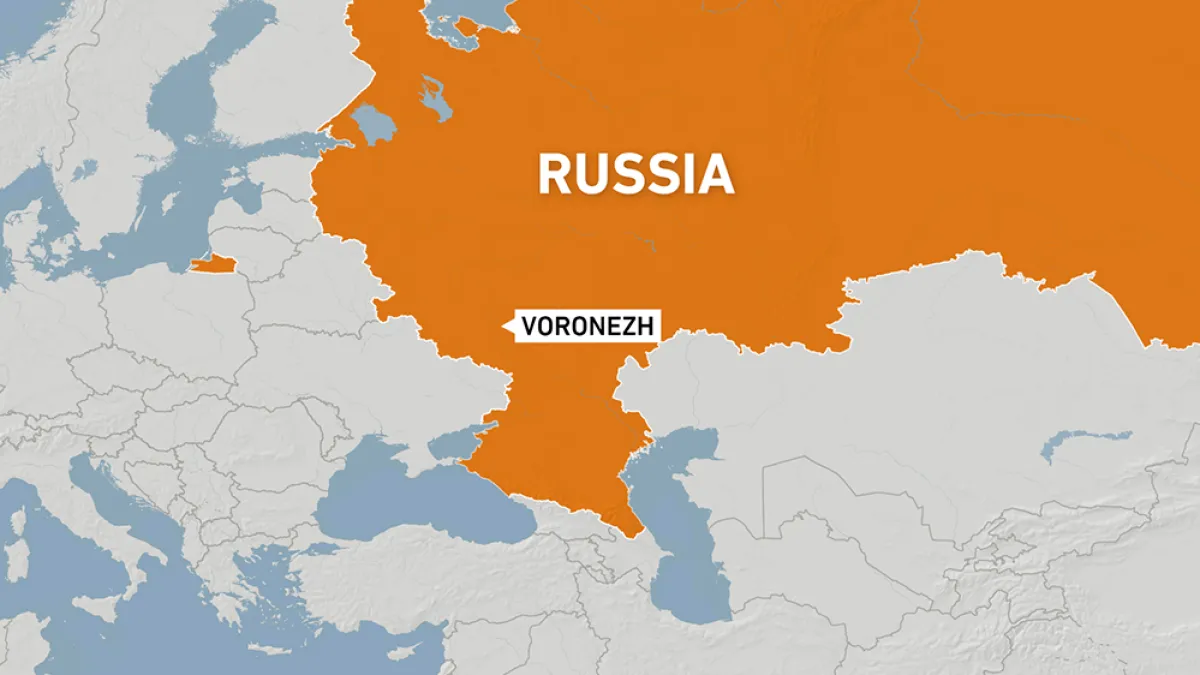
Ukraine says facility a ‘critical component’ in defence production as local Russian authorities confirm attack.
Published On 22 Jun 202622 Jun 2026
Ukraine’s military has said it struck a plant producing electronics for missiles in Russia’s Voronezh region, as well as the Dubna satellite communications centre in the Moscow region.
In a statement on Telegram on Monday, the Ukrainian General Staff said it had used air-launched cruise missiles to hit the plant in Voronezh, which it described as a “critical component” in Russia’s defence production.
list of 4 itemsend of list
Alexander Gusev, the Voronezh governor, said a production plant was damaged and three people were injured in the attack, without specifying the nature of the facilities.
Gusev said in a post on Telegram that air defence forces had destroyed several high-speed targets in the skies over Voronezh and warned residents of the danger of missile attacks.
The Ukrainian military also said it struck Russia’s Dubna satellite communications centre in the Moscow region, adding that heavy smoke was observed at the site and the extent of the damage was being assessed.
Eighty-four drones headed for Moscow were downed in the past 24 hours, the city’s Mayor Sergei Sobyanin said on Telegram.
He said emergency services had been dispatched to the areas where drones were downed, but gave no further information.
The airports of Sheremetyevo, Domodedovo and Vnukovo, as well as Zhukovskiy near the Russian capital, had temporarily suspended flights, the aviation watchdog said separately.
In total, Russian defence systems downed 301 drones overnight, local news agencies said, citing the Ministry of Defence. That tally included Russian-occupied areas of Ukraine.
The latest raids follow a drone attack that hit Moscow’s sole oil refinery last week, in one of the biggest air attacks on the city since Russia’s full-scale invasion of Ukraine in 2022.
In Ukraine, authorities said a Russian drone attack early on Monday in the Sumy region killed a 13-year-old boy, his 36-year-old father, and his 73-year-old grandmother.
Regional governor Oleh Hryhorov said the 73-year-old was the mother of the man’s roommate.
Russian drone attacks in the southeastern Ukrainian city of Zaporizhzhia overnight and early on Monday killed two people and injured a further seven, Ukraine’s emergency services said.
Russia also hit the southern Odesa region with an Iskander ballistic missile on Sunday evening, killing one and injuring three people, regional governor Oleh Kiper said on Telegram. Vehicles and fuel storage tanks caught fire after the strike hit an agricultural facility, he said.
Elsewhere, the city of Sevastopol in Russian-annexed Crimea cancelled all open-air public events on Monday and will keep streetlights switched off, its governor, Mikhail Razvozhayev said, as he called on people to curb electricity usage.
Russian drones hit a Turkish dry cargo vessel, the Victress, which was sailing under the Panamanian flag, Ukraine’s navy said.
Deputy Prime Minister Oleksii Kuleba said a 58-year-old Egyptian cook was killed and eight other crew members, including Turkish and Indian nationals, had to evacuate on a lifeboat.
The leaders of Europe’s top military powers will meet on Wednesday in Berlin to discuss the Ukraine conflict and an upcoming NATO summit.
Chancellor Friedrich Merz plans to host the leaders of France, Britain, Italy and Poland, a spokesman said Monday, adding that the resignation announcement of British Prime Minister Keir Starmer had not changed those plans.

The occupied West Bank has seen sustained and rising violence amid ongoing conflict between Israelis and Palestinians. Israeli forces conduct frequent raids in Palestinian areas, saying they are targeting militants and preventing attacks, while Palestinians and rights groups accuse the military of using excessive force and say settlement expansion is a major driver of instability. Israeli settlements in the territory are widely considered illegal under international law by the United Nations and most countries, though Israel disputes this and views the West Bank as disputed land with historical and security significance. In recent months, tensions have further escalated with increased restrictions on Palestinian movement near settlements, alongside a rise in attacks by both Palestinians against Israelis and by settlers against Palestinians, contributing to a cycle of violence that continues to claim lives on both sides.
The incident took place near the town of Beit Ummar in the southern West Bank.
Palestinian news agency WAFA identified the victims as teenagers aged 15 and 19. A relative confirmed their ages to Reuters.
The Israeli military said its forces confronted three individuals who were throwing fire bombs and burning tyres near the settlement of Karmei Tzur.
According to the military, soldiers opened fire, killing two of the individuals and wounding a third.
Reuters could not independently verify the military’s account.
WAFA reported that the third person involved in the incident was hospitalized in stable condition.
The Palestinian Red Crescent Society said the wounded individual is 15 years old.
Israeli forces regularly conduct raids across the occupied West Bank and have tightened movement restrictions around Palestinian communities located near Israeli settlements in recent months.
The territory has experienced heightened tensions amid ongoing violence involving Israeli security forces, settlers and Palestinians.
The international community, including the United Nations and most countries, considers Israeli settlements in the West Bank illegal under international law and a major obstacle to the creation of a Palestinian state.
Israel rejects that position, describing the territory as disputed and citing historical Jewish ties to the area.
According to United Nations data, at least 57 Palestinians have been killed this year in incidents involving Israeli settlers and security forces.
At the same time, Palestinians have carried out attacks against Israeli soldiers and settlers in the West Bank, including at least one fatal attack in 2026, according to Israel’s Shin Bet domestic security service.
The Israeli military is expected to continue reviewing the circumstances of the shooting, including whether the individuals posed an immediate threat and how the confrontation unfolded near the settlement.
Palestinian officials are likely to pursue diplomatic and legal avenues, as similar incidents in the West Bank are often raised with international bodies, including the United Nations, amid ongoing disputes over the use of force by Israeli troops.
On the ground, the incident is likely to add to already high tensions in the West Bank, where Israeli raids, settlement activity, and Palestinian attacks have contributed to a cycle of violence in recent months.
Further clashes cannot be ruled out, particularly in areas close to settlements where movement restrictions and security operations have intensified.
International attention on West Bank violence is also likely to continue, especially as reported fatalities involving Palestinians and Israelis have remained elevated this year, keeping pressure on both sides amid an already fragile security situation.
With information from Reuters.
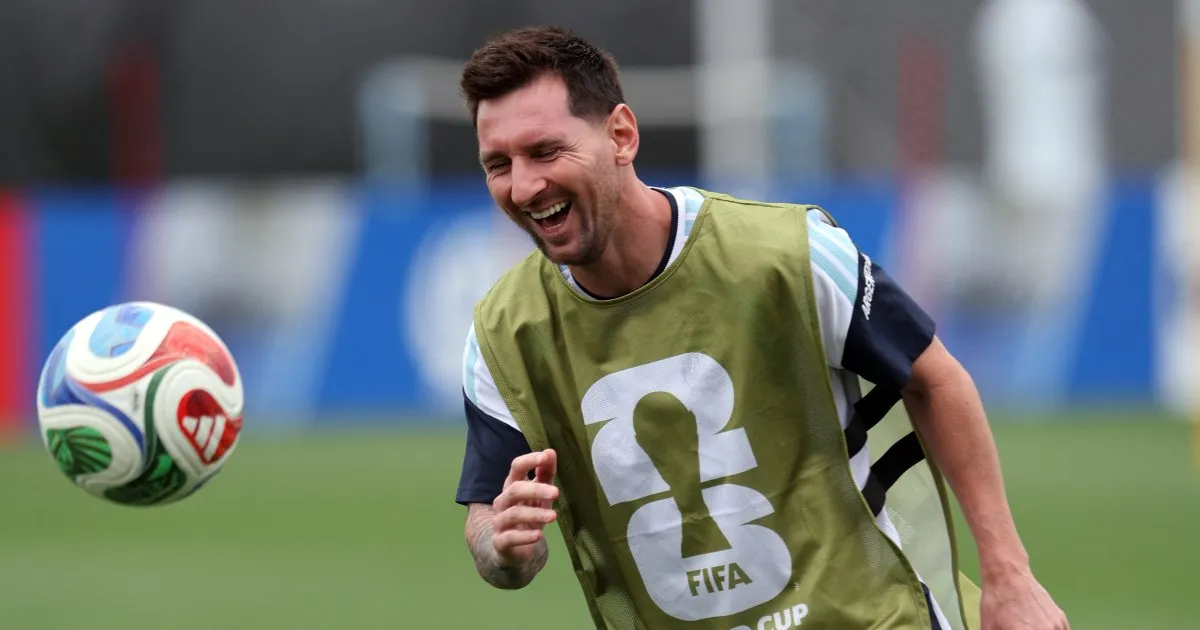
Follow updates as Messi's Argentina play Austria in Group J, including the build-up, analysis and live text commentary.
Source link
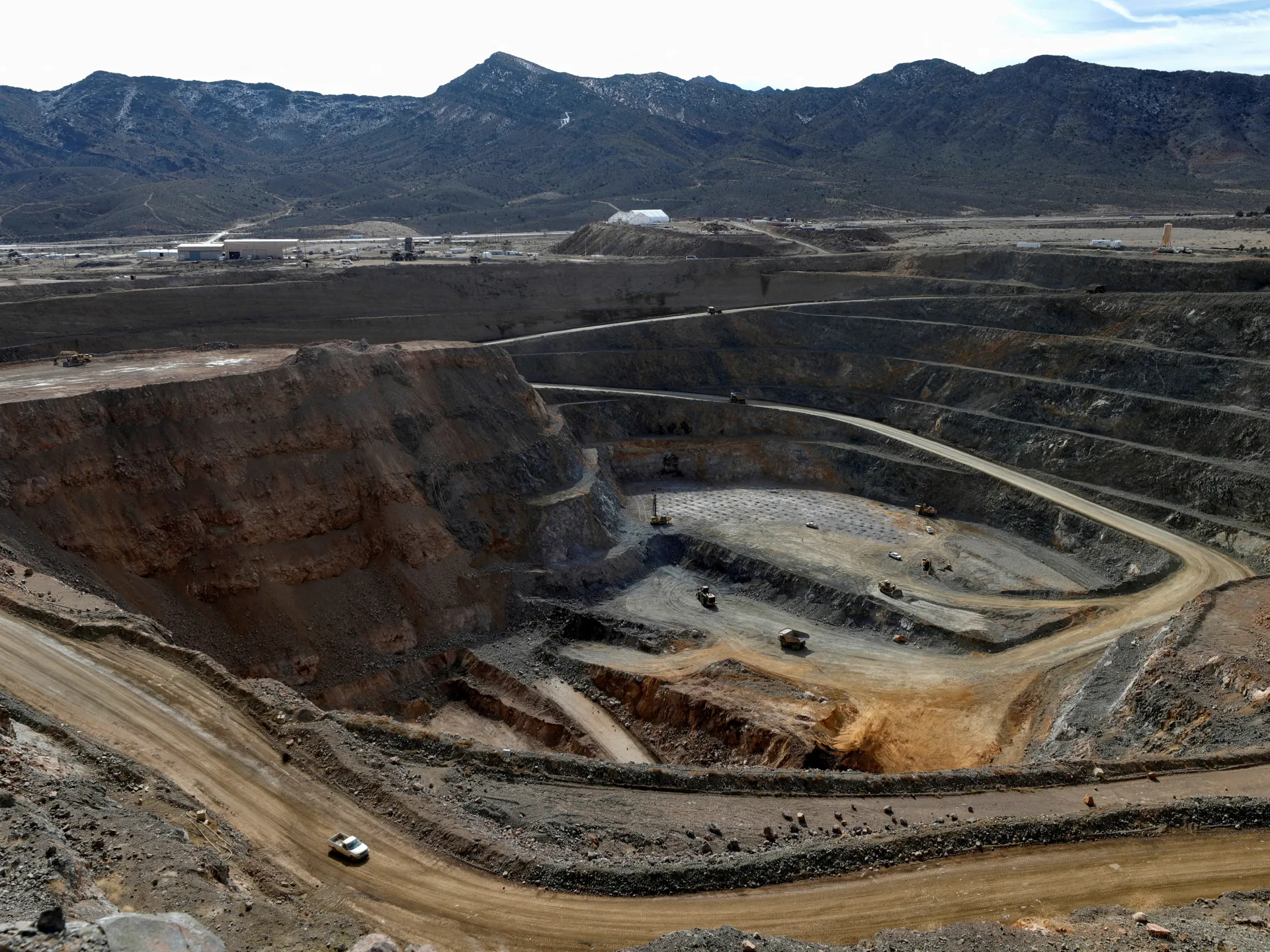
China has added 10 United States-based companies to its export control list and barred government procurement from nearly 50 US companies two weeks after the Pentagon blacklisted some of China’s best-known companies for their alleged ties to the Chinese military.
China’s Ministry of Commerce announced the export order on Monday, barring Chinese companies from exporting “dual-use” items that can be used for civilian or military purposes to the US firms.
list of 4 itemsend of list
The list of companies includes rare-earth mine operator MP Materials Corp, rare-earth magnet maker USA Rare Earths, and US defence contractors specialising in fields such as aerospace, drones, synthetic-aperture radar, and shipbuilding and repairs.
Under the order, “foreign institutions and individuals worldwide are also prohibited from transferring or providing Chinese dual-use goods to them” while ongoing export transactions must be suspended immediately.
The Commerce Ministry said the export ban had been issued to “safeguard national security and interests and fulfil international obligations such as non-proliferation”.
China’s Ministry of Finance on Monday separately barred Chinese government procurement from 46 companies, including subsidiaries of major US defence contractors like Lockheed Martin, Boeing, General Atomics and General Dynamics. US-funded, locally registered companies, however, have been given an exemption by the ministry.
Experts described Beijing’s orders as a retaliation, albeit a largely symbolic one, against the US after the Pentagon in early June added about 80 Chinese companies and their subsidiaries to its list of “Entities Identified as Chinese Military Companies Operating in the United States”.
The designation means the Pentagon either believes the companies are owned or controlled by the Chinese military or they are “military-civil fusion contributors”, a term for commercial companies that contribute to China’s military development despite their civilian status.
The updated list includes Chinese e-commerce giant Alibaba Holdings, search engine giant Baidu and electric automaker BYD, some of China’s largest and best-known companies.
While the order does not bar US companies from doing business with them, it does impact US defence contractors and their future supply chains.
“We can interpret this as a tit-for-tat response, and that fits into China’s playbook any time we’ve seen escalation from the US side in terms of trade and investment tools,” said Nick Marro, global trade lead analyst at the Economist Intelligence Unit.
China-based supply chain consultant Cameron Johnson said the Commerce Ministry’s order mirrors US semiconductor export controls designed to keep the most advanced chips out of Chinese hands.
“They basically say it doesn’t matter where or who you are, you are bound by this regardless of circumstance,” said Johnson, who is also a senior partner at the Shanghai consultancy Tidal Wave Solutions. “Organisations or individuals in any country or region are prohibited from transferring dual-use materials that originated in China.”
He said Beijing’s orders in practice may be hard to enforce and many of the companies named in those orders have already moved their supply chains out of China or begun to “de-risk” their operations there.
Johnson said the wide scope of companies included in Washington’s and Beijing’s directives could be a sign of more to come and may signal a new front in the US-China trade war.
“This is probably just the beginning of the back and forth,” he said. Last year, after returning to the White House for a second term, US President Donald Trump reignited the US-China trade war, leading Washington and Beijing to impose escalating rounds of tariffs on each other.
Trump and Chinese President Xi Jinping agreed to a trade truce in October, which was extended during a summit between the two leaders in Beijing in May.
Despite promises to “enhance economic cooperation” during the meeting, observers like Singapore-based geopolitical analyst Steve Okun predicted the goodwill may be short-lived.
“The US’s recent closure of chip export loopholes and China’s continuing addition to its export bans show the national security lane remains active in both capitals regardless of the diplomatic niceties at the recent Trump-Xi summit,” Okun told Al Jazeera.
“There is no ‘truce’ in the US-China trade war. Expect further actions from both sides as well on export controls and investment restrictions,” he said.
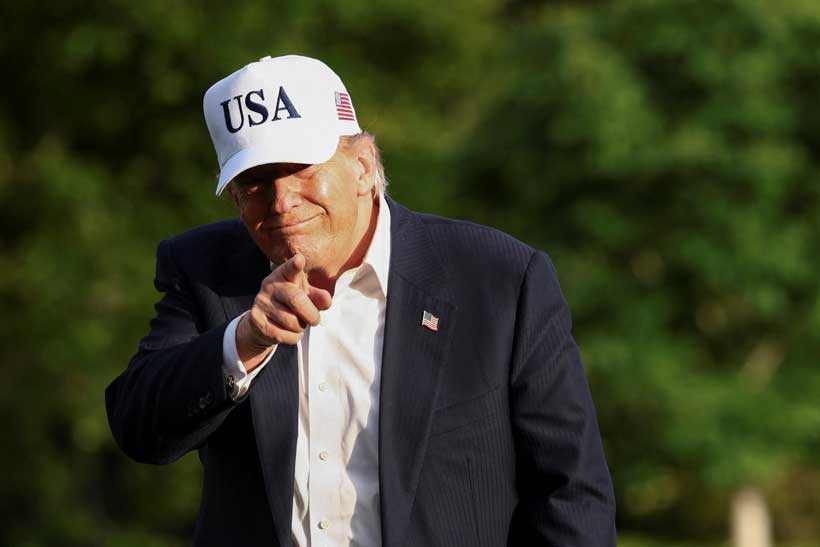
U.S. President Donald Trump has said he is exploring ways to ensure Americans benefit directly from the rapid growth of artificial intelligence, raising the possibility of the government acquiring stakes in leading AI companies. The idea comes as firms such as OpenAI and Anthropic pursue valuations that could make them among the most valuable companies in the world, fueling debate over whether the public should share in the wealth generated by AI technologies.
The AI boom is expected to create enormous wealth for technology companies, investors and founders. Policymakers and advocates argue that because AI development relies heavily on public infrastructure, government research and vast amounts of publicly generated data, ordinary citizens should receive some of the financial benefits.
The debate has intensified as major AI developers seek billions of dollars to build data centers, chip infrastructure and advanced computing systems.
One proposal would require AI companies to pay part of their taxes in shares rather than cash.
Under this approach, the government would gradually accumulate ownership stakes in AI firms without directly investing taxpayer money. Supporters argue that it would allow the public to benefit from future growth while avoiding large government expenditures.
Some advocates have gone further, proposing substantial government ownership stakes and board representation to give the public a direct voice in how AI companies operate.
Another model would involve the government receiving equity stakes in return for financial assistance or incentives.
This approach mirrors previous arrangements in strategic industries where federal funding was provided in exchange for ownership interests. Given the enormous capital requirements of AI infrastructure, government funding could potentially become a source of financing for companies building advanced computing facilities, semiconductor plants and other critical projects.
Supporters argue this would allow taxpayers to benefit if publicly supported companies become highly profitable.
Critics contend that such arrangements could blur the line between regulation and investment, potentially creating conflicts between public policy goals and financial interests.
A third proposal focuses less on government ownership and more on distributing AI-generated wealth directly to citizens.
Under this model, revenue generated through AI-related taxes or investments would flow into a public wealth fund, which would then distribute dividends to Americans.
The concept resembles Alaska’s Permanent Fund, which uses energy revenues to provide annual payments to residents. Advocates argue a similar system could ensure that AI-driven economic gains are shared more broadly across society rather than concentrated among a small number of technology firms and investors.
Some AI companies have expressed interest in versions of this idea, including proposals for digital dividends funded by taxes on the sector.
The debate carries major financial implications because leading AI developers are becoming increasingly valuable.
OpenAI and Anthropic have both reportedly taken steps toward potential public listings, while companies across the sector are raising unprecedented sums to fund AI expansion. Some analysts believe the industry could generate trillions of dollars in economic value over the coming decade.
As a result, even relatively small government stakes could potentially produce significant long-term returns.
Any effort to give the government ownership in AI companies would face significant legal, political and economic hurdles.
Questions remain over:
There is also likely to be strong opposition from free-market advocates who argue that government ownership could discourage innovation and distort competition.
Trump has not outlined a specific mechanism for acquiring stakes in AI companies, and no formal proposal has been introduced.
However, the discussion highlights a growing debate over who should benefit from the AI revolution and whether existing economic structures are sufficient to distribute the gains from one of the most transformative technologies in modern history.
The significance of Trump’s proposal lies less in whether the government ultimately acquires stakes in AI firms and more in what it signals about the future political debate surrounding artificial intelligence. As AI companies approach trillion-dollar valuations, pressure is likely to grow for policymakers to ensure that the economic gains extend beyond investors and technology executives.
The discussion mirrors earlier debates over natural resources, where governments sought ways to ensure that public assets generated public benefits. In this case, supporters argue that AI is built on public research, public infrastructure and publicly generated data, creating a rationale for broader wealth sharing.
At the same time, the proposal raises fundamental questions about the relationship between government and the private sector. Direct ownership stakes could provide taxpayers with financial upside, but they could also create tensions between the government’s role as regulator and its role as investor.
The debate is likely to become more prominent as AI companies grow larger, seek additional funding and exert greater influence over economic growth, employment and national competitiveness. Whether through equity ownership, taxation or public wealth funds, the central political question is increasingly becoming not whether AI will generate enormous wealth, but who will ultimately receive it.
With information from Reuters.

From Mirjam Swanson: How it started: A dream. A French machine-gun officer in the trenches during the First World War. A man named Jules Rimet, who believed an international soccer tournament would bring the nations together with the goal of peace.
How it’s going: The world’s biggest party. A 48-nation celebration of the world’s most beloved sport. Expected to generate about $8.9 billion, it’s become such a big deal that it’s being hosted by three countries — one of which, yes, launched a war on a competing nation in the months before the tournament.
The United States’ war with Iran, costly in all the profound ways that war is, also laid the groundwork for an uneven — and possibly precedent-setting — playing field.
At this World Cup, Team Melli has been subjected to shifting travel restrictions and uncertainty unlike the other 47 teams, spending the tournament commuting between Southern California and its base in Tijuana.
And still, after Sunday’s 0-0 draw against Belgium, the world’s No. 10-ranked team, Team Melli is in position to not only get out of its group at the World Cup for the first time, but to win Group G.
Iran’s treatment only makes its performance more impressive — while bringing into question the future of a tournament that purports to be apolitical. And conjuring up concerns about how the Olympics will operate when L.A. is supposed to open its arms to the world two years from now.
Iran’s beleaguered World Cup team finds hope with draw against Belgium
Guadalajara protesters accuse Hyundai of using World Cup to hide ‘dirty supply chain’
Click here for complete TV schedule, groups and players to watch
Get the latest on L.A.’s teams in the daily Sports Report newsletter.
By continuing, you agree to our Terms of Service, which include arbitration and a class action waiver. You agree that we and our third-party vendors may collect and use your information, including through cookies, pixels and similar technologies, for the purposes set forth in our Privacy Policy such as personalizing your experience and ads.
Group G
Belgium 0, Iran 0
Egypt 3, New Zealand 1
Group H
Spain 4, Saudi Arabia 0
Cape Verde 2, Uruguay 2
All times Pacific
10 a.m., Argentina vs. Austria, Fox, Telemundo
2 p.m., France vs. Iraq, Fox, Telemundo
5 p.m., Norway vs. Senegal, Fox, Telemundo
8 p.m., Jordan vs. Algeria, FS1, Telemundo
Group A
Country, W-D-L, Goal Differential, Points
x-Mexico, 2-0-0, +3, 6
South Korea, 1-0-1, 0, 3
Czechia, 0-1-1, -1, 1
South Africa, 0-1-1, -2, 1
Group B
Canada, 1-1-0, +6, 4
Switzerland, 1-1-0, +3, 4
Bosnia-Herzegovina, 0-1-1, -3, 1
Qatar, 0-1-1, -6, 1
Group C
Brazil, 1-1-0, +3, 4
Morocco, 1-1-0, +1, 4
Scotland, 1-0-1, 0, 3
Haiti, 0-0-2, -4, 0
Group D
x-United States, 2-0-0, +5, 6
Australia, 1-0-1, 0, 3
Paraguay, 1-0-1, -2, 3
Turkiye, 0-0-2, -3, 0
Group E
x-Germany, 2-0-0, +7, 6
Ivory Coast, 1-0-1, 0, 3
Ecuador, 0-1-1, -1, 1
Curacao, 0-1-1, -6, 1
Group F
Netherlands, 1-1-0, +4, 4
Japan, 1-1-0, +4, 4
Sweden, 1-0-1, 0, 3
Tunisia, 0-0-2, -8, 0
Group G
Egypt, 1-1-0, +2, 4
Iran, 0-2-0, 0, 2
Belgium, 0-2-0, 0, 2
New Zealand, 0-1-1, -2, 1
Group H
Spain, 1-1-0, +4, 4
Uruguay, 0-2-0, 0, 2
Cape Verde, 0-2-0, 0, 2
Saudi Arabia, 0-1-1, -4, 1
Group I
Norway, 1-0-0, +3, 3
France, 1-0-0, +2, 3
Senegal, 0-0-1, -2, 0
Iraq, 0-0-1, -3, 0
Group J
Argentina, 1-0-0, +3, 3
Austria, 1-0-0, +2, 3
Jordan, 0-0-1, -2, 0
Algeria, 0-0-1, -3, 0
Group K
Colombia, 1-0-0, +2, 3
Portugal, 0-1-0, 0, 1
Congo DR, 0-1-0, 0, 1
Uzbekistan, 0-0-1, -2, 0
Group L
England, 1-0-0, +2, 3
Ghana, 1-0-0, +1, 3
Panama, 0-0-1, -1, 0
Croatia, 0-0-1, -2, 0
x-clinched round of 32
The top two teams in each group plus the next eight best third-place teams advance to the next round.
From Liana Handler: An eye-watering, cough-inducing thick stench of burning plastic permeated Dodger Stadium on Sunday morning. The smoke from a Boyle Heights warehouse fire had spread into every crevice and corner of the facility, inescapable despite the masks handed out to staff.
“It’s a little dark out there, little Gotham City when I was driving up,” Dodgers manager Dave Roberts said.
Major League Baseball approved the Father’s Day game to be played, according to Roberts. Still, the ominous atmosphere was hard to miss. When rolling up Vin Scully Avenue, a white smoke hung like a curtain behind the small hills on the other side of outfield walls, obscuring the normally scenic view of the San Gabriel Mountains.
Perhaps that should’ve been the first sign things wouldn’t go as planned for the Dodgers, who lost 12-1 to the Orioles. The loss marked the first time the Dodgers (49-29) have lost consecutive games since May 12.
“It just wasn’t a great start for our team, and offensively we weren’t very good,” Roberts said. “Feel fortunate we won a game this series.”
Zach Neto hit a two-run homer in the ninth inning that gave them their first lead, Denzer Guzman tied the score with a three-run home run in the eighth, and the Angels beat the Athletics 9-7 on Sunday.
Donovan Walton also homered and had three RBIs, while Nolan Schanuel and Jose Siri each added two hits to help the Angels (32-47) split the series after losing the first two games, including blowing an 11-4 lead Friday night.
Nick Kurtz hit his 19th home run, and Zac Gelof had a single and a double to extend his hit streak to 24 games for the A’s (38-40). Kurtz has 55 career homers, tied with Bob Johnson (1933-34) for the most in franchise history through the first two seasons of a career.
From Bill Plaschke: For more than four decades his voice was embraced by millions, a calming baritone in a sea of Lakers bedlam.
Yet in the most unfair of twists, on the night his career ended he was silent and alone.
Three months ago, Lawrence Tanter was walking through his bedroom when he suddenly collapsed while losing all strength in his arms and legs.
He fell and couldn’t get up. He lives alone, so he couldn’t cry out for help. He was able to secure his phone, but he says he was too stubborn to call 911.
“I wanted to get up by myself,” he said. “I knew I would eventually get up by myself.”
But this 6-foot-7 bear of a man was too weak to get up by himself. Listening to a Lakers road game on a bedside radio, he remained on the floor and eventually fell asleep until finally summoning his oldest friend the next morning.
From Broderick Turner: The Lakers will seek to use their 25th pick in Tuesday’s first round of the NBA draft on a player who fills a need on a roster that could have up to nine free agents this summer. Yet the Lakers also are aware that picking that late in the round could leave them selecting the best player available.
They probably will be in search of a center who can be a lob threat or an athletic wing who can play defense and knock down three-pointers, two positions the Lakers crave as they try to build a team around star Luka Doncic that fits best with his style of play.
Names that NBA executives and mock drafts attached to the Lakers are Kentucky center Jayden Quaintance, Texas forward Dailyn Swain and Duke wing Isaiah Evans.
From Thuc Nhi Nguyen: Even during an early start to their offseason, the Clippers got one major win in May.
The Clippers were the quiet winners of the NBA draft lottery, where, with coin-flip odds, they swiped the Indiana Pacers’ first-round pick in a loaded draft class. The No. 5 pick can add an immediate rotation player for the Clippers while also being a potential fulcrum for what experts consider one of the deepest draft classes ever.
The top four prospects are locked. The only question is in what order Brigham Young forward AJ Dybantsa, Kansas guard Darryn Peterson, Duke forward Cameron Boozer and North Carolina forward Caleb Wilson will hear their names called Tuesday night at Brooklyn’s Barclays Center. Washington, which picks first, Utah, Memphis and Chicago have the first shots at those potential franchise-defining players.
The first round then could turn with the Clippers’ pick.
“It puts the Clippers in an interesting spot at five,” ESPN draft analyst Jeremy Woo said on a conference call with reporters. “They’ve got options, including trades.”
From Joaquin Ruiz: Nneka Ogwumike called game.
The 10-time WNBA All-Star and Sparks forward hit a buzzer-beating three-point shot to give the Sparks an electric 98-97 come-from-behind win over the New York Liberty on Sunday at Crypto.com Arena.
In a rematch of the WNBA’s first-ever game from June 21, 1997, the Sparks overcame a 17-point Liberty lead, all while celebrating the inaugural matchup — and iconic alumni — that changed women’s sports forever.
Ogwumike led the way with a game-high 24 points on 11 of 18 shooting while the rest of the starting lineup — Dearica Hamby, Erica Wheeler, Kelsey Plum and Ariel Atkins — all finished in double figures. Guard Rae Burrell also scored 19 off the bench.
On the edge of the greatest collapse in U.S. Open history, Wyndham Clark held his nerve against a charge by Sam Burns and a Shinnecock Hills gallery that never gave him much love Sunday until he captured his second Open title in four years.
Six shots ahead at the start of the final round, Clark’s final act was two putts from just outside 50 feet for par that gave him a three-over 73 and a one-shot victory over Burns.
Clark, who won the 2023 U.S. Open at Los Angeles Country Club, became the first wire-to-wire winner of the U.S. Open since Martin Kaymer at Pinehurst No. 2 in 2014.
This sure didn’t feel like that. His lead was down to a single shot after just five holes, and the stress followed him the rest of the way.
1918 — Molla Bjurstedt wins the women’s U.S. Lawn Tennis Assn. title for the fourth straight year, beating Eleanor Goss 6-4, 6-3.
1937 — Joe Louis knocks out Jim Braddock in the eighth round at Chicago’s Comiskey Park to win the world heavyweight title, which he would hold for 11 years.
1938 — In a rematch portrayed in both countries as good vs. evil, Joe Louis of the U.S. knocks out Germany’s Max Schmeling at 2:04 of the first round at Yankee Stadium to retain the world heavyweight title.
1949 — Ezzard Charles scores a 15-round unanimous decision over Jersey Joe Walcott at Comiskey Park in Chicago to win the vacant world heavyweight title.
1977 — John Ziegler is named the fourth president in NHL history, succeeding Clarence Campbell.
1979 — Larry Holmes stops Mike Weaver in the 12th round to retain the WBC heavyweight title at Madison Square Garden in New York.
1980 — UEFA European Championship Final, Stadio Olimpico, Rome, Italy: Horst Hrubesch scores a double as Germany beats Belgium, 2-1.
1981 — John McEnroe throws a tantrum in his 7-6 (5), 7-5, 6-3 first-round win over Tom Gullikson on the opening day at Wimbledon. McEnroe’s return of Gullikson’s serve is ruled out by chair umpire Edward James. McEnroe shouts his famous line, “You cannot be serious.” He then calls James the “the pits of the world” and an “incompetent fool.” Tournament referee Fred Hoyles is called to the court after James hits McEnroe with a point penalty. After McEnroe’s arguments with Hoyle go unsatisfied, Gullikson holds serve and McEnroe curses Hoyle on the changeover, prompting another point penalty. He is later fined $1,500.
1991 — NHL Draft: Oshawa Generals center Eric Lindros first pick by Quebec Nordiques.
1994 — The Houston Rockets, led by Hakeem Olajuwon, win their first NBA title, beating New York 90-84 in Game 7 of the finals. Olajuwon gets 25 points, 10 rebounds, seven assists and three blocks.
1994 — FIFA World Cup: USA beats Colombia 2-1 in round match at the Rose Bowl. First WC win since 1950.
1996 — Michael Moorer beats Axel Shultz in 11 for IBF heavyweight boxing title.
1999 — In one of the greatest upsets in Wimbledon’s 113-year history, top-ranked Martina Hingis loses 6-2, 6-0 in the opening round to Jelena Dokic, a 16-year-old qualifier ranked 129th.
2001 — Karrie Webb sets two scoring records in the LPGA Championship in shooting a 7-under 64 for a three-stroke lead. Webb, at 11-under 131, breaks the 36-hole scoring record by two strokes. Webb shoots a 29 on the front nine for the lowest nine-hole score in the 47-year history of the championship.
2006 — The U.S. soccer team is eliminated from World Cup play with a 2-1 loss to Ghana.
2007 — For the first time, Americans are taken with the top two picks in the NHL draft. Chicago selects Patrick Kane with the first pick. Philadelphia then selects left wing James vanRiemsdyk with the second pick.
2012 — NHL Draft: Sarnia Sting (OHL) right wing Nail Yakupov first pick by Edmonton Oilers.
2014 — Michelle Wie wins the U.S. Women’s Open for her first major championship. She beats top-ranked Stacy Lewis by two shots.
2017 — Washington point guard Markelle Fultz is the first pick of the NBA Draft by the Philadelphia 76ers.
2018 — NHL Draft: Frolunda HC (SHL) defenceman Rasmus Dahlin first pick by Buffalo Sabres.
Compiled by the Associated Press
1925 — The Pittsburgh Pirates beat the St. Louis Cardinals 24-6 with Kiki Cuyler and Pie Traynor each hitting a grand slam and Max Carey getting two hits in the first and eighth innings.
1930 — Lou Gehrig hit three home runs to lead the New York Yankees to a 20-13 victory over the Philadelphia Athletics in the second game of a doubleheader. Babe Ruth, who hit three homers in the nightcap the previous day, hit two homers in the opener and one in the nightcap for the Yankees. Ruth tied major league records for five homers in two games and six homers in three games.
1944 — Jim Tobin of the Boston Braves threw a five-inning 7-0 no-hitter in the second game of a doubleheader against the Philadelphia Phillies.
1947 — Cincinnati’s Ewell Blackwell almost duplicated Johnny Vander Meer’s double no-hit record by following up his June 18 gem over Boston. Brooklyn’s Eddie Stanky singled with one out in the ninth to end Blackwell’s bid. Blackwell ended up with a 4-0 two-hitter.
1962 — Baltimore Orioles first baseman Boog Powell became the first batter to hit a home run over the center-field hedge at Memorial Stadium. The 469-foot clout came off Don Schwall of the Boston Red Sox.
1982 — Philadelphia’s Pete Rose doubled off St. Louis pitcher John Stuper in the third inning to move into second place on the career hit list. Rose moved ahead of Hank Aaron with hit No. 3,772.
1994 — Ken Griffey Jr. hit his 31st home run of the season in Seattle’s 12-3 victory at the Angels, breaking Babe Ruth’s record for most homers before the end of June. Ruth needed 63 games to reach 30 homers in 1928 and 68 games in 1930. Griffey did it in the Mariners’ 70th game.
1997 — The Atlanta Braves, behind a four-homer, nine-run third, beat the Philadelphia Phillies 12-5. Chipper Jones, Fred McGriff, Michael Tucker and Jeff Blauser homered in the inning.
2002 — The Detroit Tigers ended Luis Castillo’s 35-game hitting streak. Castillo went 0-for-4 and was left on deck when the Florida Marlins finished off a four-run, ninth-inning rally to beat the Tigers 5-4.
2007 — Miguel Tejada goes on the disabled list with a wrist injury, ending a run of 1,152 consecutive games played, the fifth-longest run in major league history.
2010 — Jamie Moyer serves up the 505th home run of his major league career, to Russell Branyan, in a 2-1 win over the Indians. Moyer ties Robin Roberts for the most homers surrendered in the majors.
2013 — Francisco Rodriguez earned his 300th career save, finishing off Milwaukee’s second straight 2-0 victory over slumping Atlanta.
2015 — ESPN reveals it has obtained a copy of a notebook belonging to Pete Rose which contains evidence of regular betting on baseball games during the 1986 season. The notebook was seized during a police raid on one of Rose’s associates in 1989, after Rose was banned from baseball by Commissioner Bart Giamatti, and had been under court-ordered seal since. Its content corroborate the contents of the Dowd Report, which led to Rose’s suspension, and make it even less likely that current Commissioner Rob Manfred will reverse it, as Rose has pleaded for him to do.
2020 — MLB owners agree unanimously on a plan for a 60-game season beginning around July 24th, if everyone signs off on health and safety protocols.
2021 — The Arizona Diamondbacks snap their franchise record 17-game losing streak with a 5-1 win over the Milwaukee Brewers.
2022 — One day after setting a personal best as a hitter with eight RBIs, Shohei Ohtani of the Angels sets another one on the mound as he racks up 13 strikeouts in eight scoreless innings in a 5-0 win over Kansas City.
Compiled by the Associated Press
That concludes today’s newsletter. If you have any feedback, ideas for improvement or things you’d like to see, email me at houston.mitchell@latimes.com. To get this newsletter in your inbox, click here.

Coca-Cola and the Internal Revenue Service (IRS) of the United States will face off in a Florida court this week in the latest episode of a decades-long legal battle over the beverage giant’s tax liability on overseas profits.
The Atlanta, Georgia-based company and the US tax service will begin oral arguments on Thursday in a dispute that centres on transfer pricing – the practice of setting prices for transactions carried out between a company’s own affiliates – and could result in Coca-Cola facing a tax bill of about $20bn.
list of 4 itemsend of list
The case is being closely watched in corporate circles because the outcome will have implications for the amount of tax US-based multinational corporations must pay on income generated through their foreign subsidiaries.
Coca-Cola is appealing a 2020 US Tax Court ruling that upheld the IRS’s finding that the soft drink giant underreported profits from transactions between its foreign subsidiaries.
In 2015, the IRS notified Coca-Cola that it owed billions in back taxes after concluding that the company had undercharged its units in Ireland, Brazil, Chile, Mexico, Costa Rica, Egypt and Eswatini, formerly known as Swaziland.
US multinationals often charge low licensing fees for their overseas units to minimise their reportable income in the US, which has a higher corporate tax rate than many of its peers.
“The IRS audited Coca-Cola because the company was earning astronomical profits in Ireland and a few other countries,” Alex Martin, an expert in transfer pricing at the tax consulting firm KBKG, told Al Jazeera.
The IRS first took Coca-Cola to court in 2015, but the origins of the dispute date back to 1996 when the two sides settled a tax audit for liabilities from 1987 to 1995.
Under the pricing formula agreed in that settlement, Coca-Cola’s foreign affiliates were allowed to retain a profit equal to 10 percent of their gross sales with the remaining income split evenly between the US headquarters and the overseas unit.
Coca-Cola argues that it should be able to continue to use this formula from 1996 while the IRS contends the terms of that settlement should have no bearing on the soft drink giant’s tax liabilities arising from audits in 2007, 2008 and 2009.
“The amount of potential exposure is about $20bn, so it is significant,” Reuven Avi-Yonah, an expert in taxation law at the University of Michigan Law School, told Al Jazeera.
Coca-Cola agreed to pay the IRS $6bn in back taxes and interest in 2024 while preparing its appeal but could be liable to pay up to $14bn more if the US Court of Appeals for the Eleventh Circuit sides with the government.
Coca-Cola argues that the IRS “misinterpreted and misapplied the applicable regulations” and has expressed its confidence that it will be successful in its appeal.
The case is important because it could serve as a template for the US government to raise more tax revenue from large multinational companies that generate huge profits overseas.
“The IRS designated this case for litigation because this litigation can provide a template for the IRS to audit other US companies with highly profitable subsidiaries,” Martin said.
Under the administration of former US President Joe Biden, the IRS ramped up its tax collection efforts against companies benefitting from transfer pricing arrangements.
In one of the most high-profile transfer pricing cases in recent years, the IRS announced in 2023 that Microsoft owed $28.9bn in back taxes, plus penalties and interest, on income derived from the distribution of software through its subsidiaries in Puerto Rico, Ireland and Singapore.
Microsoft said it disagreed with the IRS’s reasoning and would appeal to the tax service and, if that failed, go to court.
In 2024, the IRS announced that the short-term rental platform Airbnb and Newell Brands, a consumer products manufacturer, had underpaid their taxes to the tune of $1.33bn and $90m, respectively.
Airbnb and Newell Brands have both challenged the IRS’s determinations in the US Tax Court.
The Coca-Cola case is particularly significant because the IRS has historically fared poorly in litigating transfer pricing complaints, losing a string of cases against major corporations through the decades, including Bausch & Lomb, US Steel Corp and Hospital Corp of America.
“It is important because it is the first clear victory of the IRS in this kind of case involving profit shifting out of the US in many decades, so if it is upheld on appeal, more companies may be inclined to settle rather than litigate,” Avi-Yonah said.
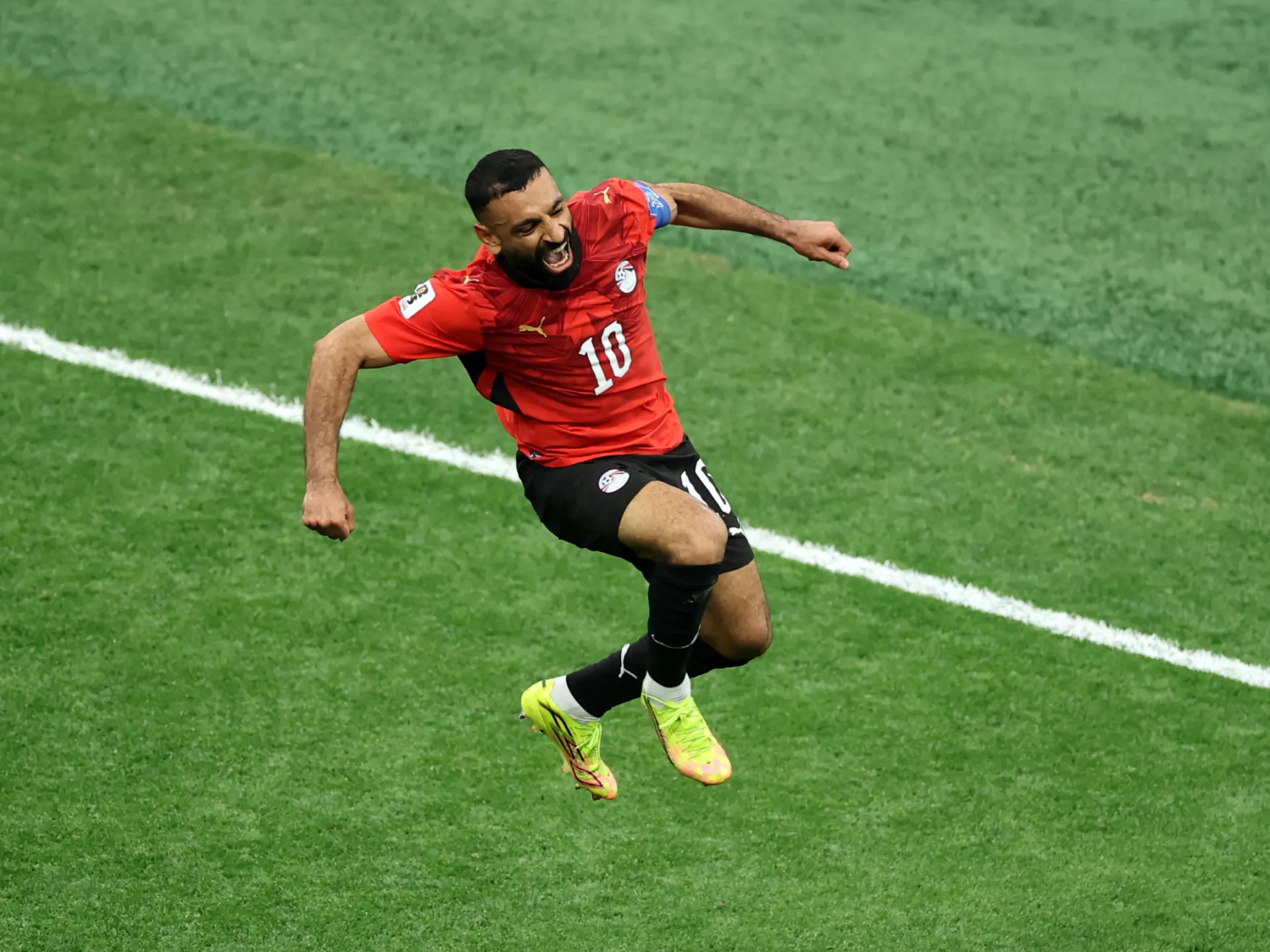
Latest match highlights, reaction and previews from the FIFA World Cup 2026 in North America.
Source link


Nigeria’s security crisis is not only unfolding in forests, highways, villages and cities. It is unfolding inside the institutions responsible for confronting it.
The Nigeria Police Force faces a threat that receives far less attention than inadequate funding, obsolete equipment or personnel shortages: the gradual erosion of merit as the basis for advancement.
Every institution reveals its values through what it rewards. When competence, courage, and sacrifice are rewarded, then professionalism grows. But when proximity to power is rewarded, a different culture emerges.
Across Nigeria, police officers are risking their lives daily against insurgents, terrorists, organised armed groups, kidnappers, and violent criminals. Yet many are watching a different reality unfold. They see colleagues whose careers were built around powerful politicians, governors, ministers, and other influential figures rise rapidly through the ranks, often ahead of officers who spent years in dangerous operational theatres.
Some officers remain Superintendents of Police (SPs) while coursemates have risen to Assistant Commissioners of Police (ACPs). Similarly, some officers are Deputy Superintendents of Police (DSPs) while their contemporaries have become Chief Superintendents of Police (CSPs), largely as a result of special promotions granted at different times. Due to these irregularities, an Assistant Commissioner of Police who has spent years on the frontlines can find themselves taking orders from a coursemate who has advanced higher than them, largely because of political connections and privileged appointments rather than demonstrated operational excellence.
Promotions signal to young officers and the outside world what behaviour the institution values. If political visibility matters more than operational excellence, ambitious officers will pursue access instead of experience. Dangerous assignments become career risks rather than opportunities for leadership. No security institution can survive such incentives.
This is not the time for a leadership pipeline shaped by patronage, but a time for leaders tested under pressure and promoted because they have demonstrated competence.
The Police Service Commission exists to protect the integrity of promotions and shield them from political influence. That responsibility has never been more important. The Commission has tried to tie promotion to examination, but has not been able to completely resist the pressure to award “special promotions”. Consequently, officers have questioned promotion outcomes that appear disconnected from performance, operational achievements and professional record. Whether every complaint is justified is not the point. Confidence in the system is eroding.
As thousands of police officers converge in Abuja for promotion examinations, this conversation must be a wake-up call for the institution. The credibility of the process matters as much as the process itself.
The consequences extend beyond morale. A police force that ceases to reward merit eventually ceases to attract and retain its best leaders. When this happens, strategic thinking suffers, professional standards decline, operational effectiveness weakens, and public trust erodes.
These concerns are compounded by longstanding allegations of corruption, extortion, abuse of authority and weak accountability. The EndSARS protests reflected years of public anger over police brutality and impunity. Although reforms were promised, many Nigerians remain unconvinced that accountability has become deeply embedded within the institution.
Merit is not only about promoting the best. It is about ensuring that leadership positions are occupied by individuals whose conduct strengthens public trust. Officers who demonstrate integrity, discipline, and excellence must see those qualities rewarded. Officers whose records are tainted by corruption, abuse, or chronic underperformance should not continue advancing without scrutiny.
Citizens are also noticing a troubling pattern. Some officers attached to powerful political figures are increasingly perceived as beneficiaries of privileges unavailable to most of their colleagues.
The reforms required are straightforward. Promotion criteria should be transparent and publicly accessible. Exceptional promotions should remain exceptional and be clearly justified. Service in high-risk operational environments should carry significant weight. Promotion records should face greater scrutiny. The Police Service Commission must demonstrate visible independence from political pressure.
Nigeria is moving steadily toward state police. If we do not fix the obvious gaps in the federal police before 36 states establish their own police services, the consequences could be chaotic. State policing requires a strong, disciplined, and professional federal police capable of setting standards, enforcing accountability and preventing abuse. A weak federal police cannot effectively keep state police in check.
The future leadership of the Nigeria Police Force is being determined today. Every promotion creates tomorrow’s commanders, investigators, and strategists.
A system built on merit produces leaders. A system built on influence produces loyalists. Nigeria cannot afford a police force where political proximity outranks professional excellence. The country is already paying too high a price for failure.
The editorial highlights a critical issue within the Nigeria Police Force: the diminishing role of merit in promotions, overshadowed by political connections.
It contends that rewarding political proximity over operational excellence weakens the institution’s integrity and deters talented officers, ultimately endangering public trust and operational effectiveness.
To restore credibility, the editorial advocates for transparent and merit-based promotion criteria, emphasizing the importance of recognizing officers who demonstrate integrity and competence. It warns of the dire consequences if the federal police fail to address these issues before state police services are established, as current leadership decisions shape future command and strategic capabilities.
Get our in-depth, creative coverage of conflict and development delivered to you every weekend.
Subscribe now to our newsletter!
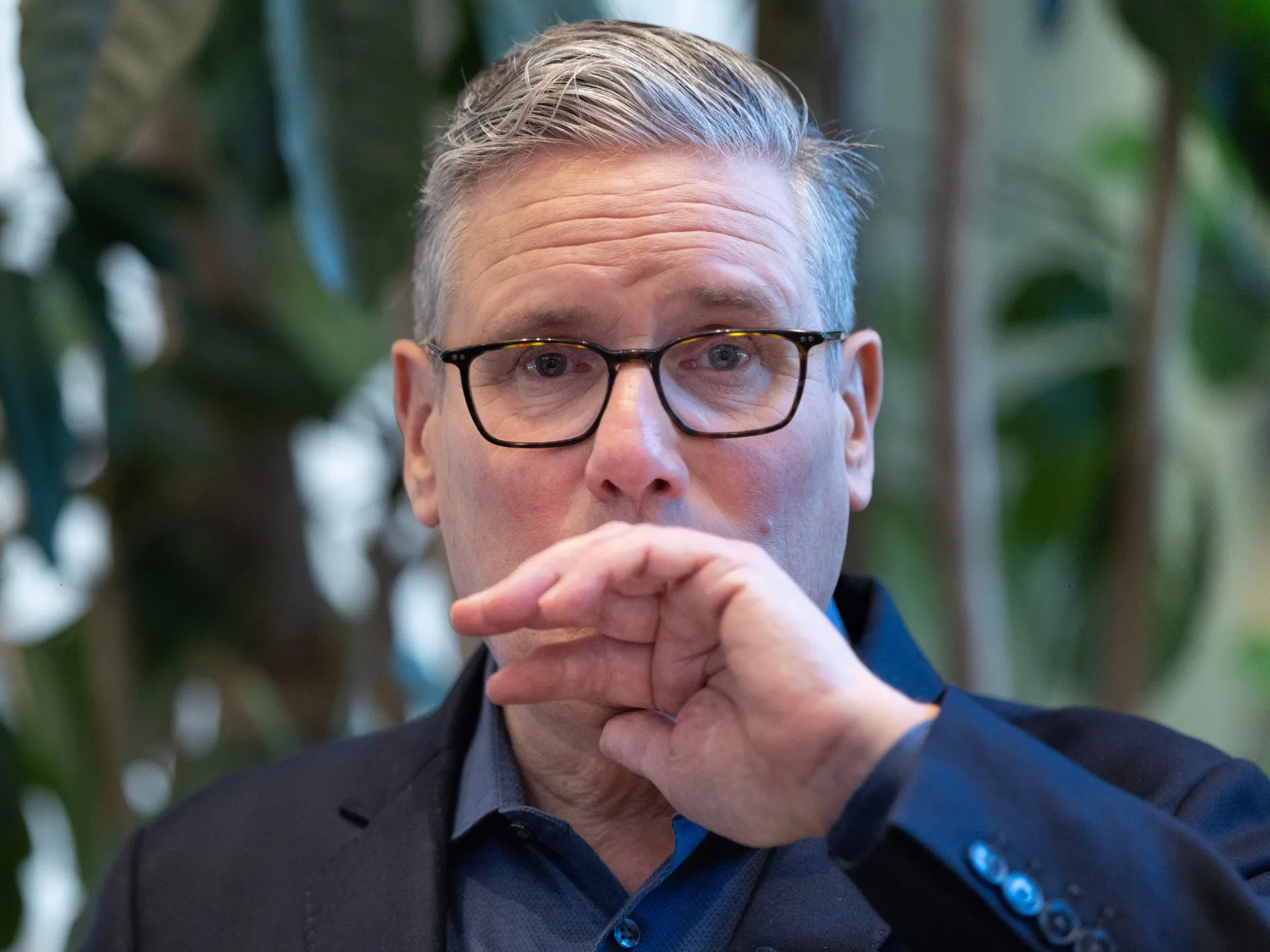
Keir Starmer is under intense pressure from his own Labour party to announce plans to step down as Prime Minister.
By AFP, Reuters and The Associated Press
Published On 22 Jun 202622 Jun 2026
Prime Minister Keir Starmer could shortly announce a plan to step down, according to UK media reports, as his likely successor Andy Burnham is expected to be sworn in as a member of parliament.
Government ministers said the Labour leader was reflecting on his political future over the weekend.
list of 4 itemsend of list
Starmer could set out an exit timetable on Monday, conceding to pressure from his Labour Party to hand over the reins of power.
The threat to the British leader, which has been building for months, increased sharply on Friday when Burnham, the Greater Manchester mayor, decisively won a parliamentary election to return to Westminster, beating a candidate from Nigel Farage’s Reform UK party, which has led national opinion polls for more than a year.
That victory gave hope to Labour lawmakers that Burnham, a career politician known for his communication skills, could transform the fortunes of a party that has lost support under Starmer, whose popularity ratings have sunk.
If Starmer does announce his exit, he will be the sixth prime minister in a decade to stand outside 10 Downing Street and announce a premature departure.
The beleaguered leader “is expected to announce on Monday that he will step down as prime minister after overwhelming pressure from Labour MPs to make way for Andy Burnham”, The Guardian said.
The BBC said “signs are growing” that Starmer could set out a plan to resign on Monday, while newspapers splashed with headlines like “Game Over”.
But the widely expected change of leader is not without risk.
Beyond saying that the country needs fundamental change and to bring down the cost of living, Burnham has yet to make clear his approach to foreign affairs, the economy and defence.
Like Starmer, he could find he has little room to manoeuvre, hemmed in by bond market investors opposed to any additional government borrowing, and confronted by an angry electorate who believe the country is not working properly.
Starmer had said on Friday he would stand in any formal Labour leadership contest that sought to replace him.
While Starmer’s team believes his landslide national election win in 2024 gives him the mandate to stay in post until 2029, business minister Peter Kyle said on Sunday the prime minister was reflecting on “the political challenges that he faces in this moment”.
If Starmer does step aside, it is unclear whether Burnham would face a coronation or a challenge. Wes Streeting, who resigned as health secretary last month to protest against Starmer’s leadership, has said that he will run in a contest if there is one.
Burnham, if he succeeds, would become Britain’s seventh prime minister since the Brexit vote to leave the European Union, which took place 10 years ago this week.
That level of turnover – the highest in Britain in nearly two centuries – underlines the struggle of maintaining the support of voters angry at successive failures to improve living standards, public services and tackle undocumented immigration.
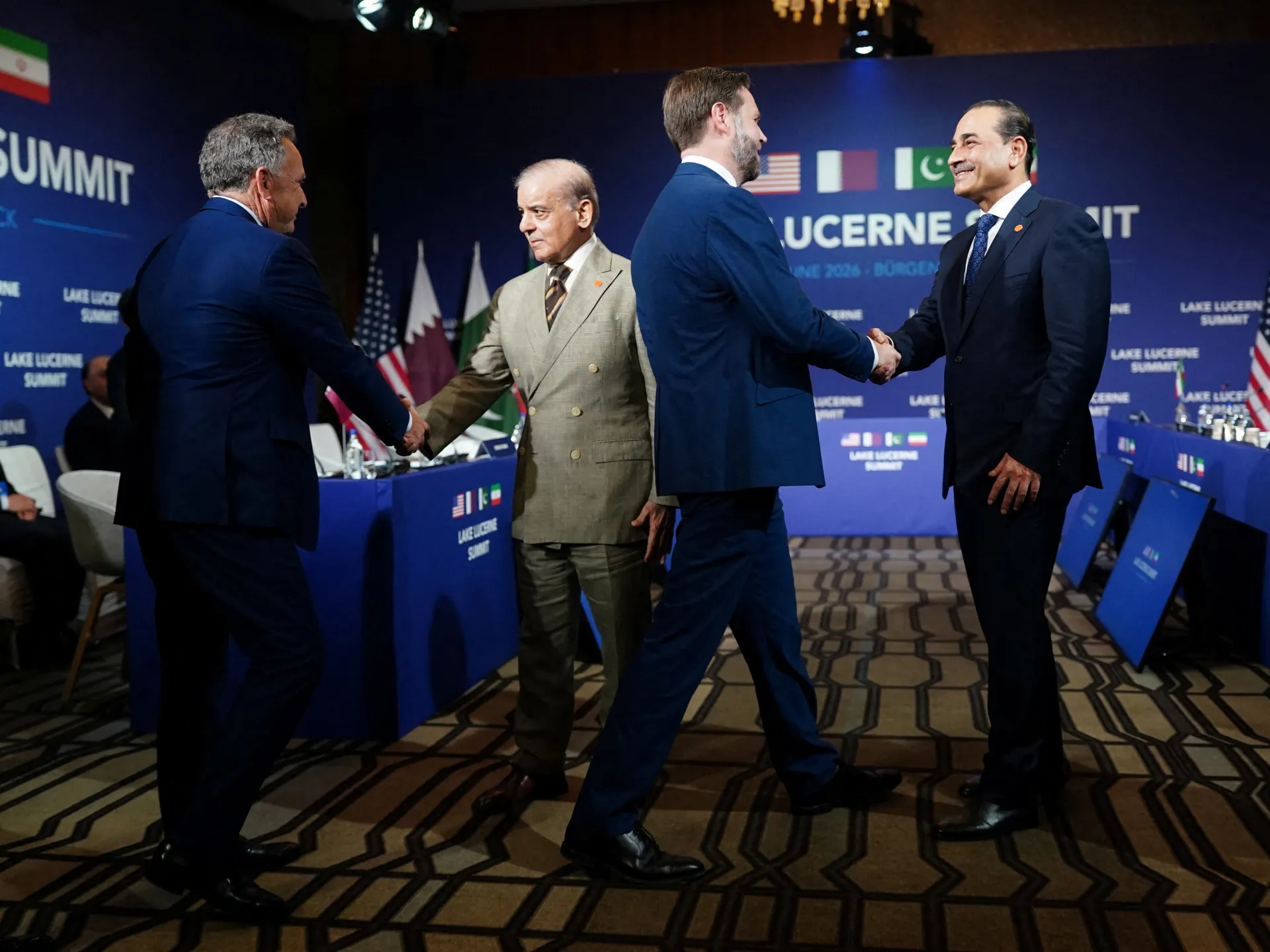
The first round of talks between high-level officials from Iran and the United States in Switzerland has ended, mediators say, with the two sides agreeing on a roadmap towards a final deal to end their more than 100-day war.
Iran and the US agreed to set up communication lines to keep the vital Strait of Hormuz open and end fighting in Lebanon at the marathon talks that ended on Monday, according to mediators.
list of 4 itemsend of list
The teams, led by US Vice President JD Vance and Iranian parliament Speaker Mohammad Bagher Ghalibaf, opened talks on Sunday as part of a two-month negotiating period set out under a preliminary deal agreed last week.
Mediators Pakistan and Qatar said the negotiators reached agreement on a “roadmap towards reaching a final deal within 60 days” with technical talks to continue for the rest of the week at the Swiss resort of Burgenstock.
“Encouraging progress has been made, including the creation of a mechanism for further technical talks,” they said, detailing a contact channel set up to “avoid incidents and miscommunication” over the Strait of Hormuz.
A “deconfliction cell” between the parties and authorities in Lebanon has also been agreed to prevent fighting from erupting there again, they said.
Al Jazeera’s Osama Bin Javaid, reporting from Lucerne, Switzerland, said mediators hailed the constructive engagement, adding that the working groups formed by the negotiators are to begin work immediately.
“A lot of work still remains to be done, and it is not yet clear how these groups will be formulated, in which capacity they will work or what format any future meeting will take,” he said.
Tehran essentially had blocked the Strait of Hormuz in retaliation against the joint attacks by Israel and the US on February 28 that touched off the war.
Lebanon was pitched into the conflict as Iran-aligned Hezbollah attacked Israel in response to the US-Israeli attacks on Iran, prompting Israel to launch a wide-scale bombing campaign and ground invasion of southern Lebanon.
After a series of false starts, Washington and Tehran last week finally signed a memorandum of understanding aimed at ending the war, which included a provision to end fighting in Lebanon between Israel and Hezbollah.
But there have been repeated clashes and Israeli attacks in Lebanon since, which prompted Iran to say days after it had reopened the Strait of Hormuz that it would again close the waterway, through which about a fifth of global oil and liquefied natural gas supplies transited before the war.
“Tireless Pakistani and Qatari mediation has delivered major progress to end Lebanon War,” Iranian Foreign Minister Abbas Araghchi wrote on X after the talks in Switzerland.
“Oil and petrochem exports are waived, blockade lifted, some frozen assets released, and major reconstruction & development plan launched for Iran. 1st real test: Lebanon deconfliction cell,” he wrote.
Al Jazeera’s Resul Serdar Atas, reporting from Tehran, said Iran achieved most of what it wanted in the talks in Switzerland because it had conditions for starting the technical talks.
“They were saying that the memorandum of understanding – particularly Articles 1, 10 and 11 – had to be initiated and implemented for the technical talks to move forward,” he said, referring to the sections on ending fighting on all fronts, including Lebanon; waiving US sanctions on Iranian energy exports; and releasing frozen Iranian assets.
“So now that they have decided that technical talks in Switzerland are going to continue throughout the whole week, we see that there is progress,” he added.
The roadmap was agreed after a shaky start to the negotiations. Iran’s delegation walked out in response to US President Donald Trump’s threats on Sunday to attack Iran over its support for Hezbollah.
“Iran must immediately stop their highly paid PROXIES in Lebanon from causing trouble,” Trump wrote on social media, apparently referring to Hezbollah. “If they don’t, we’ll hit Iran very hard again, just like we did last week, only harder!!!”
Iran hit back with a warning of its own.
“They would do better to be careful with their statements; our armed forces are ready to respond to them in a different manner. No matter what they say, we are the ones who act,” Iran’s chief negotiator, Ghalibaf, said.
Israeli Prime Minister Benjamin Netanyahu, meanwhile, said Israeli troops would remain in southern Lebanon “as long as necessary” and promised that he would “not allow Iran to acquire nuclear weapons”.
By Sunday evening, there had been no reports of Israeli attacks or continued fighting as some residents of southern Lebanon cautiously returned to their homes.
The fighting between Israel and Hezbollah has repeatedly threatened to derail peace efforts.
On Friday, planned US-Iranian talks were postponed after Israel launched deadly attacks in Lebanon following the deaths of four of its soldiers in combat.
Israel’s military chief visited troops on Sunday in southern Lebanon, where he said Hezbollah was in a “very difficult position”.
“Hezbollah has suffered a severe and significant blow, and we are committed to remaining prepared to continue operating and prevent its rebuilding,” Lieutenant General Eyal Zamir said.
The overall death toll from the fighting in Lebanon has surpassed 4,100 since it escalated on March 2, the Ministry of Public Health said.
Vance had earlier hailed “a historic meeting” in Switzerland.
Even as Trump was threatening Iran, Vance told reporters the US president had “asked us to turn over a new leaf to transform our relationship with the people of Iran”.
Flanked by US negotiators Jared Kushner and Steve Witkoff, Vance added: “The question before us now is how much more can we accomplish together?
“Can we turn over a new leaf? Can we change relations in the Middle East permanently?
“Or do we go back to doing things the old way, which is not our preference, but it’s certainly very much something that can happen.”
Lebanon aside, there has been no indication that Iran’s support for armed groups across the region, which has long drawn the ire of the US and Israel, would be addressed in the negotiations.
Speaking on Sunday, Iranian President Masoud Pezeshkian stressed that Tehran would not relinquish its right to enrich uranium although he repeated Iran’s denial that it seeks nuclear weapons.
“We can also state in writing that we have no intention of building a bomb,” he said.