New York

New York, San Francisco and other cities cap Pride month with party, protest

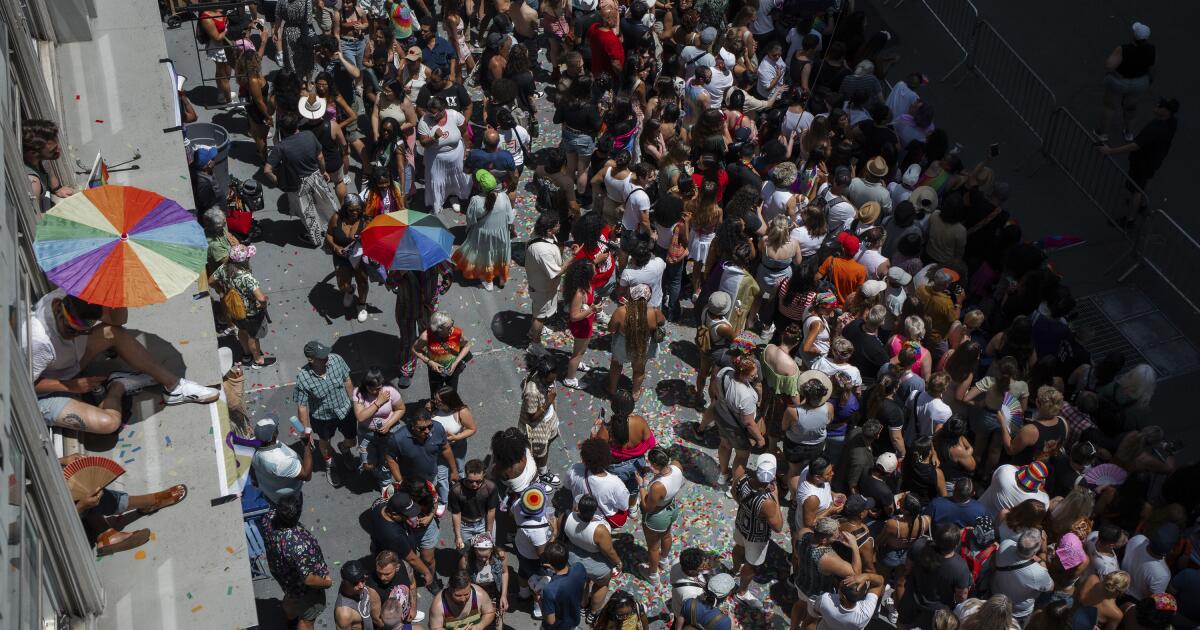
The monthlong celebration of LGBTQ+ Pride reached its crescendo as New York and other major cities in the U.S. and around the world hosted parades and marches Sunday.

Pride celebrations are typically a daylong mix of jubilant street parties and political protest, but this year’s iterations took a more defiant stance as Republicans, led by President Trump, have sought to roll back LGBTQ+ rights.

The theme of the festivities in Manhattan was “Rise Up: Pride in Protest.” San Francisco’s Pride theme was “Queer Joy Is Resistance,” while Seattle’s was simply “Louder.”

Lance Brammer, a 56-year-old teacher from Ohio attending his first Pride parade in New York, said he felt “validated” as he marveled at the size of the city’s celebration, the nation’s oldest and largest.

“With the climate that we have politically, it just seems like they’re trying to do away with the whole LGBTQ community, especially the trans community,” he said, wearing a vivid, multicolored shirt. “And it just shows that they’ve got a fight ahead of them if they think that they’re going to do that with all of these people here and all of the support.”

Doriana Feliciano, who described herself as an LGBTQ+ ally, held up a sign saying, “Please don’t lose hope,” in support of friends she said couldn’t attend Sunday.

“We’re in a very progressive time, but there’s still hate out there, and I feel like this is a great way to raise awareness,” she said.

Manhattan’s parade wound its way down Fifth Avenue with more than 700 participating groups greeted by huge crowds. The rolling celebration will pass the Stonewall Inn, the famed Greenwich Village gay bar where a 1969 police raid triggered protests and energized the LGBTQ+ rights movement.

The site is now a national monument. The first Pride march was held in New York City in 1970 to commemorate the one-year anniversary of the Stonewall uprising.

Later Sunday, marchers in San Francisco, host to another of the world’s largest Pride events, planned to head down Market Street to concert stages set up at the Civic Center Plaza. San Francisco’s mammoth City Hall is among the venues hosting a post-march party.

Denver, Chicago, Seattle, Minneapolis and Toronto were among the other major North American cities hosting Pride parades on Sunday.

Several global cities including Tokyo, Paris and São Paulo held their events earlier this month, and others come later in the year, including London in July and Rio de Janeiro in November.

Since taking office in January, Trump has issued orders and implemented policies targeting transgender people, removing them from the military, preventing federal insurance programs from paying for gender-affirmation surgeries for young people and attempting to keep transgender athletes out of girls’ and women’s sports.

Peter McLaughlin said he’s lived in New York for years but had never attended the Pride parade. The 34-year-old Brooklyn resident said he felt compelled this year as a transgender man.

“A lot of people just don’t understand that letting people live doesn’t take away from their own experience, and right now it’s just important to show that we’re just people,” McLaughlin said.

Gabrielle Meighan, 23, of New Jersey, said she felt it was important to come out to this year’s celebrations because they come days after the 10th anniversary of the Supreme Court’s landmark June 26, 2015, ruling in Obergefell vs. Hodges that recognized same-sex marriage nationwide.

“It’s really important to vocalize our rights and state why it’s important for us to be included,” she said.

Manhattan on Sunday also hosted the Queer Liberation March, an activism-centered event launched in recent years amid criticism that the more mainstream parade had become too corporate.

Marchers holding signs that included “Gender affirming care saves lives” and “No Pride in apartheid” headed north from the city’s AIDS Memorial to Columbus Circle near Central Park.

Among the other headwinds faced by gay rights groups this year is the loss of corporate sponsorship. American companies have pulled back support of Pride events, reflecting a broader walking back of diversity and inclusion efforts amid shifting public sentiment.

NYC Pride said this month that about 20% of its corporate sponsors dropped or reduced support, including PepsiCo and Nissan. Organizers of San Francisco Pride said they lost the support of five major corporate donors, including Comcast and Anheuser-Busch.

Marcelo and Shaffrey write for the Associated Press.

Source link

Trump’s tax and spending cuts bill clears key test vote in Senate

Senate Republicans voting in a dramatic late Saturday session narrowly cleared a key procedural step as they race to advance President Trump’s package of tax breaks, spending cuts and bolstered deportation funds by his Fourth of July deadline.

The 51-49 vote came after a tumultuous session with Vice President JD Vance on hand if needed to break a tie. Tense scenes played out in the chamber as voting came to a standstill, dragging on for hours as holdout senators huddled for negotiations. In the end, two Republicans opposed the motion to proceed to debate, joining all Democrats and independents.

It’s still a long weekend of work to come.

Republicans are using their majorities in Congress to push aside Democratic opposition, but they have run into a series of political and policy setbacks. Not all GOP lawmakers are on board with proposals to reduce spending on Medicaid, food stamps and other programs as a way to help cover the cost of extending some $3.8 trillion in Trump tax breaks.

Ahead of the expected roll call, the White House released a statement of administrative policy saying it “strongly supports passage” of the bill that “implements critical aspects” of the president’s agenda. Trump was at his golf course in Virginia on Saturday with GOP senators posting about it on social media.

“It’s time to get this legislation across the finish line,” said Senate Majority Leader John Thune (R-S.D.).

But as the day wore on, billionaire Elon Musk, a key Trump advisor for the first months of the administration, lashed out against the package — as he has in the past — calling it “utterly insane and destructive.”

“The latest Senate draft bill will destroy millions of jobs in America and cause immense strategic harm to our country!” he said in a post on X.

The 940-page bill was released shortly before midnight Friday, and senators are expected to grind through the hours of all-night debate and amendments in the days ahead. If the Senate is able to pass it, the bill would go back to the House for a final round of votes before it could reach the White House.

With narrow Republican majorities in the House and Senate, leaders need almost every lawmaker on board in the face of essentially unified opposition from Democrats. GOP Sens. Thom Tillis of North Carolina and Rand Paul of Kentucky voted against.

Senate Democratic leader Chuck Schumer of New York said Republicans unveiled the bill “in the dead of night” and are rushing to finish the vote before the public fully knows what’s in it. He was expected to call for a full reading of the text in the Senate overnight, which would take hours.

The weekend session could be a make-or-break moment for Trump’s party, which has invested much of its political capital on his signature domestic policy plan. The president is pushing Congress to wrap it up and has admonished the “grandstanders” among GOP holdouts to fall in line.

The legislation is an ambitious but complicated series of GOP priorities. At its core, it would make permanent many of the tax breaks from Trump’s first term that would otherwise expire by year’s end if Congress fails to act, resulting in a potential tax increase on Americans. The bill would add new breaks, including no taxes on tips, and commit $350 billion to national security, including for Trump’s mass deportation agenda.

But the cutbacks to Medicaid, food stamps and green energy investments, which a top Democrat, Sen. Ron Wyden of Oregon, said would be a “death sentence” for America’s wind and solar industries, are also causing dissent within GOP ranks.

The Republicans are relying on the reductions to offset the lost tax revenues, but some lawmakers say the cuts go too far, particularly for people receiving healthcare through Medicaid. Meanwhile, conservatives, worried about the nation’s debt, are pushing for steeper cuts.

Tillis, who said he spoke with Trump late Friday explaining his concerns, announced Saturday he cannot support the package as is, largely because he said the healthcare changes would force his state to “make painful decisions like eliminating Medicaid coverage for hundreds of thousands.”

The release of that draft had been delayed as the Senate parliamentarian reviewed the bill to ensure it complied with the chamber’s strict “Byrd rule,” named for the late Sen. Robert C. Byrd (D-W.Va.). It largely bars policy matters from inclusion in budget bills unless a provision can get 60 votes to overcome objections. That would be a tall order in a Senate with a 53-47 Republican edge and Democrats unified against Trump’s bill.

Republicans suffered a series of setbacks after several proposals, including shifting food stamp costs from the federal government to the states or gutting the funding structure of the Consumer Financial Protection Bureau, were deemed out of compliance with the rules.

But over the past few days, Republicans have quickly revised those proposals and reinstated them.

The final text includes a proposal for cuts to the Medicaid provider tax that had run into parliamentary hurdles and objections from several senators worried about the fate of rural hospitals. The new version extends the start date for those cuts and establishes a $25-billion fund to aid rural hospitals and providers. Sen. Josh Hawley (R-Mo.), who had opposed the cuts, vowed “to do everything I can” to make sure the reductions never go into effect.

The nonpartisan Congressional Budget Office has said that under the House-passed version of the bill, some 10.9 million people would lose their healthcare coverage and at least 3 million fewer would qualify for food aid. The CBO has not yet publicly assessed the Senate draft, which proposes steeper reductions.

Top income earners would see about a $12,000 tax cut under the House bill, while the package would cost the poorest Americans an additional $1,600, the CBO said.

The Senate included a compromise over the so-called SALT provision, a deduction for state and local taxes that has been a top priority of lawmakers from California, New York and other high-tax states, but the issue remains unsettled.

The current SALT cap is $10,000 a year, and a few Republicans wanted to boost it to $40,000 a year. The final draft includes a $40,000 cap but limits it to five years.

Many Republican senators say that is still too generous. At least one House GOP holdout, Rep. Nick LaLota of New York, has said that would be insufficient.

House Speaker Mike Johnson (R-La.) sent his colleagues home for the weekend with plans to be on call to return to Washington. But as the Senate draft was revealed, House GOP support was uncertain. One Republican, Rep. David Valadao of Hanford, said he was opposed.

Mascaro, Freking and Cappelletti write for the Associated Press. AP writers Ali Swenson and Matthew Daly contributed to this report.

Source link

South Asians and Muslims hopeful after Mamdani win in New York

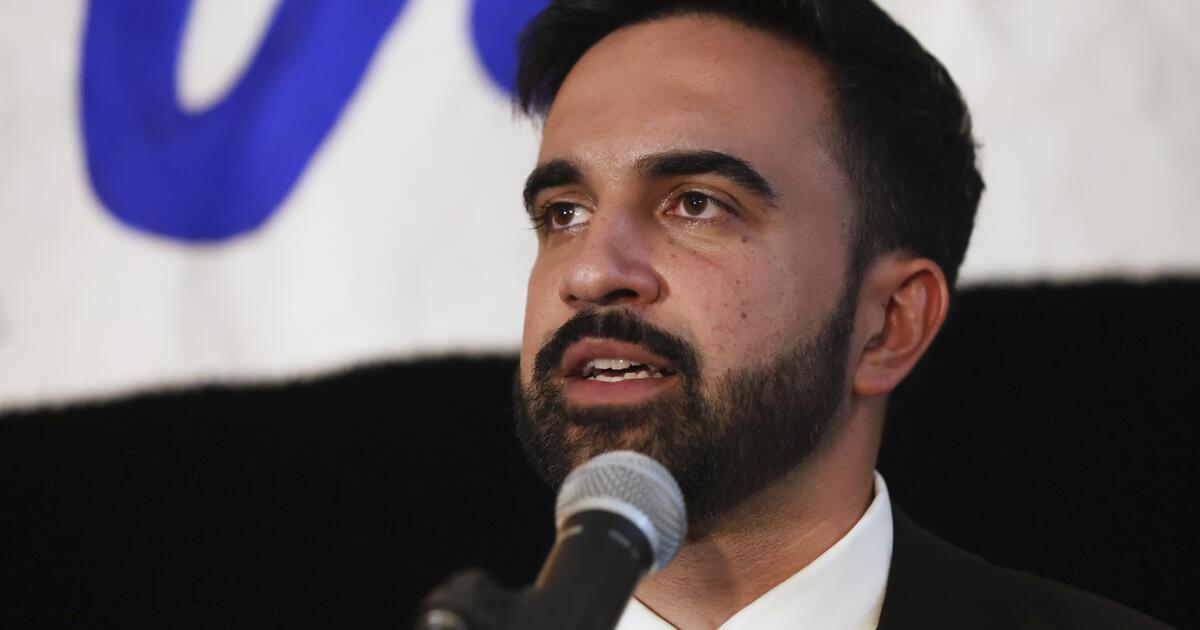
The success of Zohran Mamdani in New York City’s Democratic primary for mayor is thrilling for Hari Kondabolu, a stand-up comedian who’s been friends with him for 15 years.

Mamdani stunned the political establishment when he declared victory in the primary on Tuesday, a ranked-choice election in which his strongest competition, former New York Gov. Andrew Cuomo, conceded defeat.

When he launched his campaign, the democratic socialist ranked near the bottom of the pack. Now, the 33-year-old state assemblyman has a chance to be New York City’s first Asian American and Muslim mayor.

Mamdani’s family came to the United States when he was 7, and he became a citizen in 2018. He was born to Indian parents in Kampala, Uganda.

For Kondabolu, this moment is not just exciting, but emotional.

“I think so many of us have had those experiences in New York of being brown and in a city that has always been really diverse and feels like ours. But after 9/11, like you start to question it like, is this our city too?” Kondabolu said. “And 25 years later … it’s surreal, like this is the same city but it’s not because we’ve elected this person.”

Mamdani’s campaign has piqued the interest of many Indian, Pakistani and other South Asian Americans, as well as Muslims — even those who may not agree with Mamdani on many issues. Some see his rise as a sign of hope in a city where racism and xenophobia erupted following the Sept. 11, 2001, terrorist attacks.

Riveted by the primary election

Many of New York City’s more than 300,000 South Asian residents have been inspired by Mamdani’s extraordinary trajectory.

“My mom was texting her friends to vote for him. I’ve never seen my mother do that before,” Kondabolu said. “So the idea that it’s gotten our whole family activated in this way — this is, like, personal.”

Snigdha Sur, founder and chief executive of the Juggernaut, an online publication reporting on South Asians, has been fascinated by the response from some people in India and the diaspora.

“So many global South Asians … they’re like, ‘Oh, this guy is my mayor and I don’t live in New York City,’” Sur said.

At the same time, some are also concerned or angered by Mamdani’s past remarks about Indian Prime Minister Narendra Modi, whom he called a “war criminal.”

In 2005, Washington revoked Modi’s visa to the U.S., citing concerns that, as chief minister of the state of Gujarat, he did not act to stop communal violence during 2002 anti-Muslim riots that left more than 1,000 people dead. An investigation approved by the Indian Supreme Court later absolved Modi. Rights groups have accused Modi’s government of widespread attacks and discrimination against India’s Muslims and other minorities.

In Michigan, Thasin Sardar has been following Mamdani’s ascent online. When he first heard him, the candidate struck him as “genuine” and he felt “an instant connection,” he said.

“As a Muslim American, this victory puts my trust back in the people,” said Sardar, who was born and raised in India. “I am happy that there are people who value the candidate and his policies more than his personal religious beliefs and didn’t vote him down because of the color of his skin, or the fact that he was an immigrant with an uncommon name.”

New York voter Zainab Shabbir said family members in California and elsewhere have also excitedly taken note.

“My family in California, they were very much like, ‘Oh, it’s so nice to see a South Asian Muslim candidate be a mayor of a major city,’” she said. A brother told her Mamdani’s rise is a great example for his kids, she said.

But the 34-year-old — who donated, voted and canvassed for Mamdani — said it was his vision for New York City that was the draw for her. She and her husband briefly chatted with Mamdani at a fundraiser and she found him to be “very friendly and genuine.”

She suspects that for some who aren’t very politically active, Mamdani’s political ascent could make a difference.

“There’s a lot of Muslim communities like my parents’ generation who are focused a lot more on the politics back home and less on the politics here in America,” said Shabbir. “Seeing people like Zohran Mamdani be in office, it’ll really change that perspective in a lot of people.”

Embracing Indian and Muslim roots

Supporters and pundits agree that Mamdani’s campaign has demonstrated social media savvy and authenticity. He visited multiple mosques. In videos, he speaks in Hindi or gives a touch of Bollywood. Other South Asian American politicians such as Democratic Bay Area congressman Ro Khanna praised that.

“I love that he didn’t run away from his heritage. I mean, he did video clips with Amitabh Bachchan and Hindi movies,” said Khanna, referencing the Indian actor. “He shows that one can embrace their roots and their heritage and yet succeed in American politics.”

But his triumph also reflects “the urgency of the economic message, the challenge that people are facing in terms of rent, in terms of the cost of living, and how speaking to that is so powerful,” Khanna said.

Tanzeela Rahman, a daughter of Muslim immigrants from Bangladesh, said she grew up “very low income” in New York.

“I felt seen by him in a way politicians have not seen me ever,” the 29-year-old financial systems analyst said. “I think very few people in government understand … how hard it is to survive in New York City.”

She found Mamdani to be “unabashedly Muslim” and also “a voice, who, literally, to me sounds like a New Yorker who’s stepping in and saying, ‘Hey, let’s reclaim our power,’” she said.

While Mamdani has been speaking to the working class, he had a somewhat privileged upbringing. His mother is filmmaker Mira Nair and his father, Mahmood Mamdani, is a professor at Columbia University.

He lived in Queens but attended the Bronx High School of Science. Even as a teen, he cared about social justice, recalled Kondabolu, his comedian friend.

His campaign messaging on issues such as affordable housing and free bus rides might not resonate with South Asian households in New York City who have income levels above the median. But his campaign and “great kind of sound bites” earned support from that demographic too, according to Sur.

“It was, I think, a surprise that he did so well among the wealthiest, including his own community,” Sur said.

Mamdani’s outspoken support for Palestinian causes and criticism of Israel and its military campaign in Gaza resonated with pro-Palestinian residents, including Muslims, but caused tension in the mayor’s race. Some of his positions and remarks on the charged issue have drawn recriminations from opponents and some Jewish groups, though he’s also been endorsed by some Jewish politicians and activists.

Racism and xenophobia

Mamdani’s success immediately elicited strong anti-Muslim and anti-immigrant rhetoric from some high-profile conservatives on social media, including pro-Trump media personality Charlie Kirk, who posted that “legal immigration can ruin your country.” In response, Rep. Maxwell Frost (D-Fla.), the youngest member of Congress, wrote on X: “For years they sold people the lie of ‘we have no problem if you come the right way!’”

Mamdani’s supporters aren’t concerned that racism and Islamophobia will distract from his campaign. Those feelings clearly weren’t “enough for him to lose” the primary, Kondabolu said.

“There’s a new generation that wants their voice heard, and that generation came out in full force, not just by voting, but by, like, getting all these other people to be emotionally invested in this candidate,” he said. “That’s extraordinary.”

Tang and Fam write for the Associated Press. AP writer Matt Brown in Washington contributed to this report.
Source link

Kanye West ‘paid’ Bianca Censori $100k to wear candy bra and thong in NYC after she ‘first told him no’

KANYE West has resorted to paying wife Bianca Censori to wear her head-turning outfits, a source close to the couple has told The U.S. Sun. 

Bianca, 30, is never shy and has continually shocked onlookers with her barely-there outfits.

Kanye West and Bianca Censori walking hand-in-hand; she's wearing a candy-like bikini.

5

Bianca Censori and Kanye West appeared together in New York City last weekend and turned heads once againCredit: BackGrid
Kanye West and Bianca Censori walking, she in a candy bikini.

5

Two sources close to the couple have told The U.S. Sun that Bianca is allegedly being paid to wear some of her more extravagant outfitsCredit: BackGrid
Kanye West and Bianca Censori at the Grammy Awards.

5

Onlookers at the Grammys earlier this year were left stunned by Bianca’s lookCredit: Mega

BUSINESS PROPOSITION

But when she stepped out in New York City at the weekend in a scarcely believable candy bra and thong set paired with silver stilettos, Bianca took her wild wardrobe to the next level.

An insider, however, has told The U.S. Sun said that the controversial rapper’s “obsession” with outfit ideas for his wife has forced him to fork out up to $400,000 to make it all happen. 

The sugary set ended up costing Kanye $100,000, per the source. 

The source claimed the idea was pitched earlier in the week and Bianca refused point-blank unless her husband paid up.

Ye, added the insider, is dressing her up in the most extravagant outfits to not only keep his “edgy persona” firmly in the public eye, but to make sure everyone thinks “she’s the sexiest woman alive.”

It’s not the first time Bianca’s body has doubled as a billboard.

Last week in Los Angeles, she strutted through the streets in a sheer nude bodysuit with no bra and furry white boots. 

The outfit left little to the imagination—and jaws on the floor.

“Bianca has figured out how to turn all this into her advantage,” the source told The U.S. Sun. “A lot of the outfits aren’t to her taste. But she tells him she will wear them – if she’s paid.”

Magaluf tourists stunned as they spot controversial A-list rapper browsing crisps in souvenir shop_1

PAY TO PLAY

Kanye was reportedly upset initially but is now happy to oblige.

He allegedly wanted to offer his wife of two years a yearly salary. 

But the Australian born beauty prefers to be paid on a “per look or event” basis.

“She’s essentially monetizing her image,” added the source who believes she has made almost $3 million since the arrangement started and was paid $120,000 to join her husband in a naked dress at the Grammys in February.

Bianca allegedly draws the line at anything political and some ideas have been turned down.

She doesn’t want to be tied to some of the distasteful social media posts which have effectively seen Kanye cancelled in most parts of the world.

There was an alleged attempt to wear something with a political message tied to his disgraced friend Sean “Diddy” Combs – but it was shut down immediately.

But the 30 year-old knows just how valuable she is to keeping him relevant and in the spotlight. 

“She knows she’s essential to his image,” the source continued. “She wants her slice of the cake. She’s being smart about it.”

The U.S. Sun revealed in April that Bianca was being approached by numerous fashion houses to work in ambassadorial roles, only for the advances to be knocked back by Kanye. 

And we also disclosed earlier this month that she officially launched her first U.S. company, Bianca Censori Inc.

The paperwork was filed in California, but Bianca registered her full name as a business entity in her hometown of Alphington, one of Melbourne’s wealthiest suburbs.

“She knows exactly what she’s doing,” a second insider says. “She’s turning every outfit into a paycheck. Kanye’s obsessed with styling her, but she’s the one calling the shots. 

“Bianca is a celebrity in her own right now. The truth is he needs her. Without her bold looks and presence, people wouldn’t pay nearly as much attention to him. 

“She is in control and making serious money doing it.”

The U.S. Sun contacted a representative for Kanye and Bianca.

Woman in lingerie roller skating.

5

Bianca is no stranger to wearing bizarre outfits in publicCredit: @gadirrajab
Kanye West and Bianca Censori walking in Santanyí, Majorca.

5

The Australian shocked passers by in the quaint town of Santanyí, Majorca earlier this yearCredit: SL Martinez

Source link

‘Burning Down the House’ review: Talking Heads bio is short on insight

Book Review

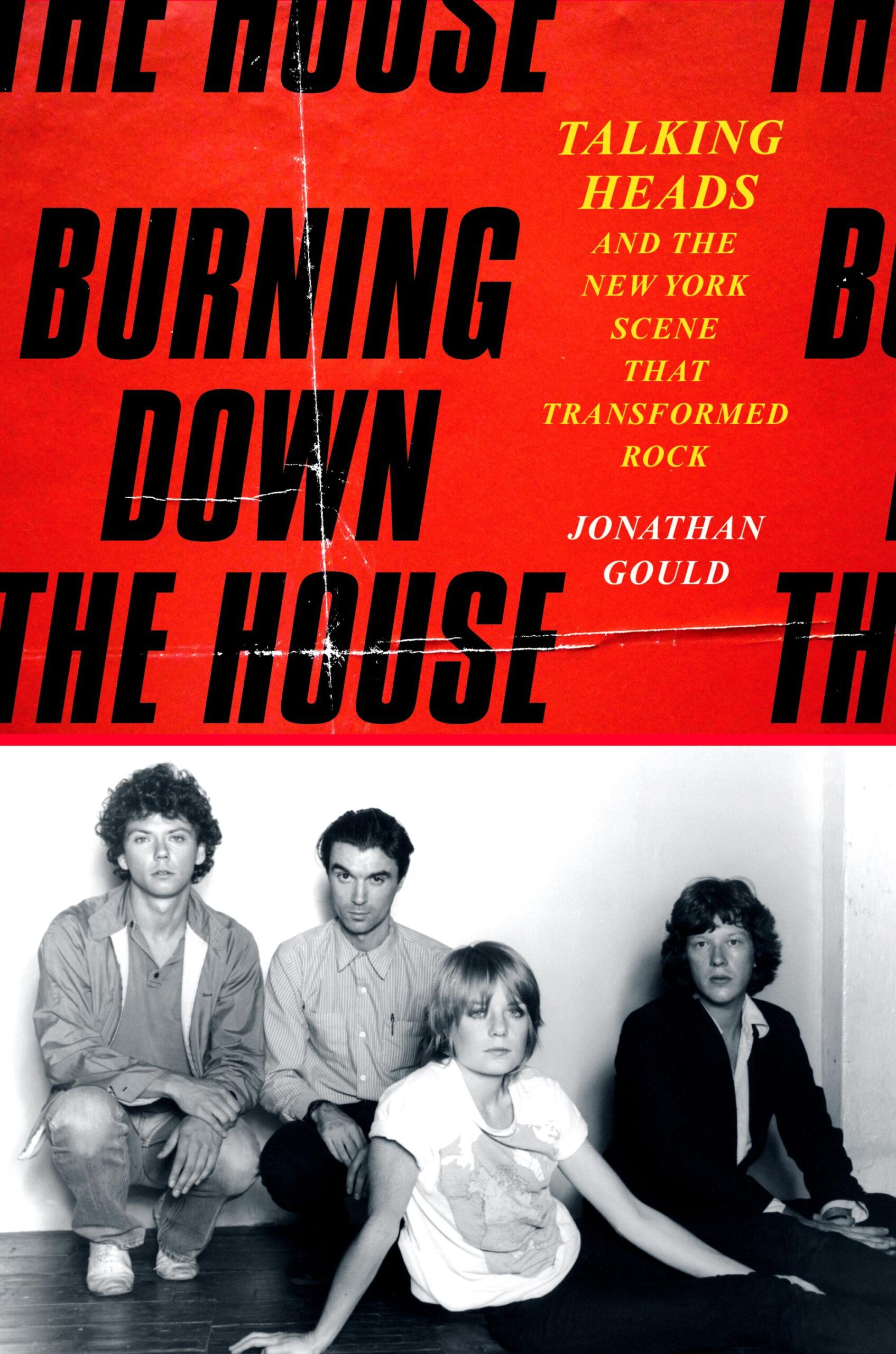
Burning Down the House: Talking Heads and the New York Scene That Transformed Rock

By Jonathan Gould
Mariner Books: 512 pages, $35
If you buy books linked on our site, The Times may earn a commission from Bookshop.org, whose fees support independent bookstores.

When an author decides to tackle the story of a popular and important band like Talking Heads, the contours of which are familiar to many of its fans, the remit should be to illuminate the unexplored corners, the hidden details and anecdotes that provide a more full-bodied narrative and ultimately bring the band into sharper relief than ever before. Unfortunately, Jonathan Gould has almost completely ignored this directive in “Burning Down the House,” his new Talking Heads biography. This lumpy book, full of redundant stories and unnecessary detours that provide little illumination but plenty of needless bulk, lacks participation by the group’s members and is not the biography that this great and important band deserves.

As fans of the Heads already know, three of the four members met as students at the Rhode Island School of Design in the mid-’70s, children of privilege with artsy aspirations and not much direction. David Byrne came from Baltimore by way of Scotland, a socially awkward dabbler in conceptualist experiments with photography and a veteran of various mediocre cover bands. It was drummer Chris Frantz who enlisted Byrne to join one such band; bassist Tina Weymouth, Frantz’s girlfriend and the daughter of a decorated Navy vice admiral, played bass. They were an anti-jam band and pro-avant; the first decent song they came up with was a shambolic version of what became “Psycho Killer,” with Weymouth contributing the French recitatif in the song’s bridge.

"Burning Down the House: Talking Heads and the New York Scene That Transformed Rock" by Jonathan Gould

For the emergent Heads, timing was everything. When Frantz signed the lease on a spacious loft on Chrystie Street in East Village in October 1974, he had unwittingly found the practice space where the three musicians would hone their craft. The loft was also a short walk to CBGB, soon to become the proving ground of New York’s punk revolution and the Heads’ primary live performance venue at the start of their career.

In March 1975, Byrne, Weymouth and Frantz attended a gig by Boston’s Jonathan Richman and the Modern Lovers at the Kitchen, an arts collective space in Soho, and it showed them a new way to approach their music. Richman, “who dressed like a kid that everyone laughed at in high school,” influenced the band’s preppy visual template and Byrne’s clenched singing voice. Within a year of moving to the city, Talking Heads had found its look, sound and favored club. When Frantz bumped into Modern Lovers bassist Ernie Brooks in a West Village Cafe, Frantz inquired about keyboardist Jerry Harrison; Brooks gave him Harrison’s number, Harrison joined the band and the classic Talking Heads lineup was complete.

What followed was a contract with Seymour Stein’s label Sire and the band’s collaboration with producer Brian Eno, beginning with its second album, “More Songs About Buildings and Food.” By the time the band released 1980’s groundbreaking “Remain in Light,” Eno’s role had expanded beyond his production duties. He was now writing songs with Byrne, which created friction within the band. When Byrne allegedly reneged on songwriting credits (the album listed “David Byrne, Brian Eno and Talking Heads,” rather than the individual band members), it created a rift that never healed, even as the band was selling millions of copies of its follow-up “Speaking in Tongues” and the soundtrack to the Jonathan Demme concert film “Stop Making Sense.” The final act was recriminatory, as Byrne commanded an ever greater share of the spotlight while the other members quietly seethed. The band’s final album, “Naked,” was its weakest, and Talking Heads dissolved in 1991, after Byrne removed himself from the lineup to explore outside projects.

Author Jonathan Gould

Author Jonathan Gould

(Richard Edelman)

Gould does a serviceable job of telling the Heads’ story in a book that arrives 50 years after the band’s first gig at CBGB. Curiously, for someone who has tasked himself with explaining Manhattan’s late ‘70s downtown renaissance, Gould regards many of the key players in that scene with derision bordering on contempt. Gould refers to Richard Hell, a prime architect of New York punk, as a mediocrity whose “singing, songwriting and bass playing remained as pedestrian as his poetry.” Patti Smith’s music “verged on a parody of beat poetry,” while the vastly influential Velvet Underground, a band that made New York punk possible, is hobbled by its “pretensions to hipness, irony and amorality.” Even Chris Frantz’s drumming is “exceptionally unimaginative.” Gould is also careless with his descriptors. Jonathan Richman’s band displays a “willful lack” of commercial instinct, the Heads assert a “willful conventionality” to their stage appearance, Johnny Ramone is a “willfully obnoxious” guitarist and so on.

It’s hard to fathom how a biographer intent on cracking the code of one of rock’s seminal bands can do so with so much contempt for the culture that spawned it. An inquiring fan might want to go to Will Hermes’ 2011 book “Love Goes to Buildings on Fire” for a more nuanced and knowledgeable portrait of the creative ferment that made the Heads possible. As for a biography of Talking Heads, we are still left with a lacuna that Gould has unfortunately not filled.

Weingarten is the author of “Thirsty: William Mulholland, California Water, and the Real Chinatown.”


Source link

NBA Game 7 preview: Breaking it down by the numbers

For the 20th time, there will be a Game 7 in the NBA Finals.

Indiana will play at Oklahoma City on Sunday night in the final game of the season, with the winner getting the Larry O’Brien Trophy.

Home teams are 15-4 in Game 7 of the finals, but a road team — Cleveland, over Golden State — won the most recent of those games in 2016.

A look inside some numbers surrounding this matchup:

Odds are, nobody’s scoring 40

There have been only two 40-point scoring performances in Game 7 of the NBA Finals — and both came in losing efforts.

Jerry West scored 42 points in Game 7 of the 1969 series, but the Los Angeles Lakers lost to the Boston Celtics in Bill Russell’s final game. And Elgin Baylor scored 41 points in Game 7 in 1962 — another Lakers-Celtics matchup — but Boston prevailed in that one as well.

Bob Pettit had the third-highest scoring total in a Game 7. He had 39 for the St. Louis Hawks against the Celtics in 1957 … and Boston won that game as well.

The highest-scoring Game 7s in a winning effort? Those would be by Boston’s Tom Heinsohn in that 1957 game against St. Louis and Miami’s LeBron James in the 2013 series against San Antonio. Both had 37; Heinsohn’s was a double-overtime game, James got his in regulation.

And no team might break 100, either

Yes, these are high-scoring teams. Oklahoma City was No. 4 in points per game in the regular season (120.5 per game) and Indiana was No. 7 (117.4). The Thunder are second in that category in the playoffs (115.2), just ahead of No. 3 Indiana (115.1).

In Game 7, that might not matter much.

No team has reached 100 points in Game 7 of the NBA Finals since 1988. Or even topped 95 points, for that matter.

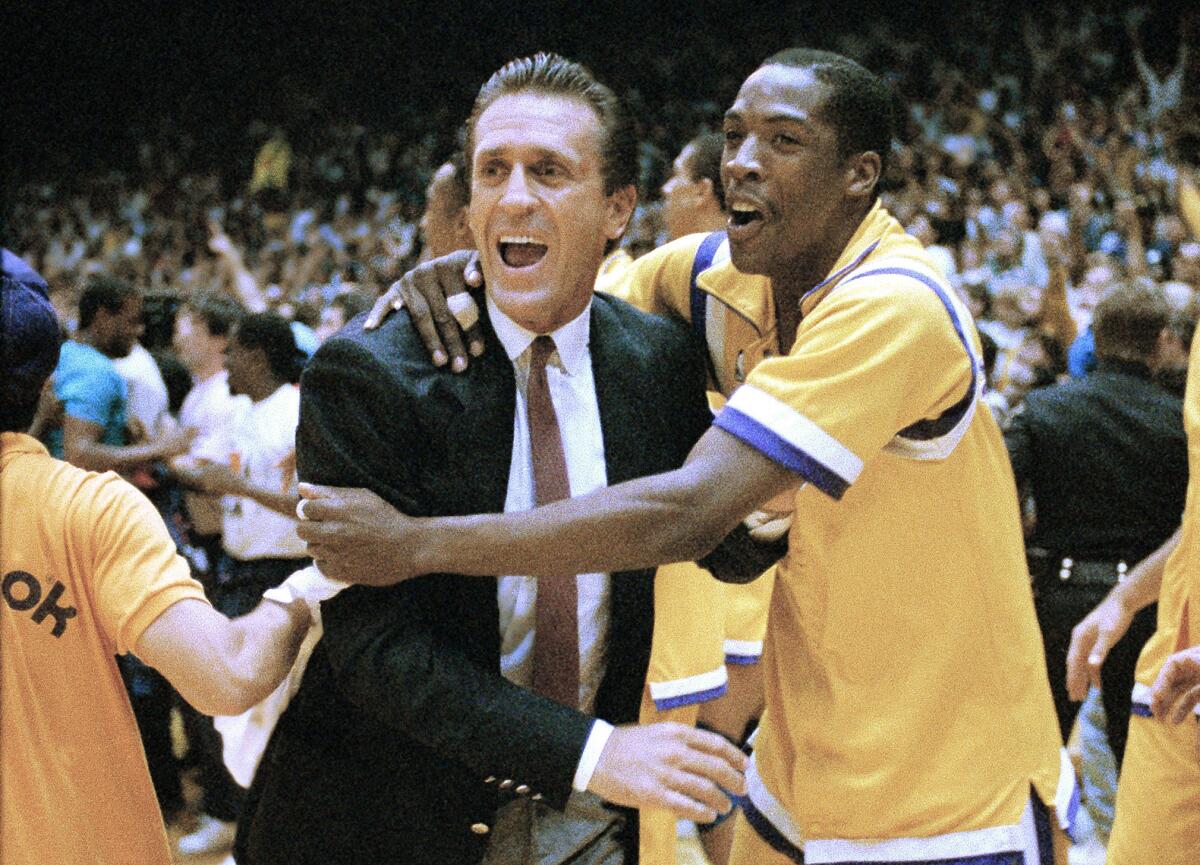
Coach Pat Riley, left, gets a hug from Wes Matthews after the Lakers defeated the Pistons in Game 7 of the 1988 NBA Finals.

Coach Pat Riley, left, gets a hug from Wes Matthews after the Lakers defeated the Pistons in Game 7 of the 1988 NBA Finals.

(Bob Galbraith / Associated Press)

The last five Game 7s:

— 2016, Cleveland 93, Golden State 89

— 2013, Miami 95, San Antonio 88

— 2010, Los Angeles Lakers 83, Boston 79

— 2005, San Antonio 81, Detroit 74

— 1994, Houston 90, New York 84

The last finals Game 7 to see someone hit the century mark was when the Lakers beat the Pistons 108-105 in 1988.

Expect a close one

The average margin of victory in Game 7 of an NBA Finals: 6.9 points.

Each of the last eight such games have been decided by single digits. Only four have been double-digit wins: Boston over St. Louis by 19 in 1960, Minneapolis over New York by 17 in 1952, Boston over Milwaukee by 15 in 1974 and New York over the Lakers by 14 in 1970.

The closest Game 7 in the finals was Syracuse beating Fort Wayne 92-91 in 1955. That was one of six Game 7s decided by three points or less.

By seed

The Thunder are the 22nd No. 1 seed to play in Game 7 of an NBA Finals. Their 21 predecessors on that list are 12-9 in the ultimate game; seven of those games have been ones where both teams entered the playoffs as No. 1 seeds.

The Pacers are the fourth No. 4 seed to make Game 7 of the title round. Their three predecessors went 1-2 (Boston beat the Lakers in 1969, Seattle lost to Washington in 1978 and the Celtics lost to the Lakers in 2010).

Game 7 experience

It’ll be the fourth Game 7 for Indiana forwards Pascal Siakam and Myles Turner. Siakam’s teams have gone 2-1 in Game 7s, Turner’s have gone 1-2.

Indiana’s Aaron Nesmith is 2-0 in the pair of Game 7s in which he has played, with Indiana winning at New York last year and Boston beating Milwaukee in 2022. Both of those wins were in the Eastern Conference semifinals.

Pacers forward Aaron Nesmith, right, tries to drive past Thunder forward Chet Holmgren in Game 6.

Pacers forward Aaron Nesmith, driving agianst Thunder forward Chet Holmgren in a Game 6 win, has twice been on teams that won Game 7s.

(Michael Conroy / Associated Press)

Thunder star Shai Gilgeous-Alexander, the league’s reigning MVP, has averaged 27 points in two previous Game 7s. Pacers star Tyrese Haliburton scored 26 points in his lone Game 7 to this point.

No player on either side has previously been part of a Game 7 in the NBA Finals.

New for some refs, too

The NBA doesn’t announce referee assignments until game day, so it won’t be known until Sunday morning who the three-person crew is for Game 7.

This much is certain: for at least two of the referees, it’ll be the first time on the NBA Finals Game 7 stage.

Scott Foster — who would seem a likely pick this year — worked Game 7 in 2013 alongside Dan Crawford and Monty McCutchen, and Game 7 of the title series in 2010 with Dan Crawford and Joe Crawford.

The most recent Game 7 was in 2016 and the crew for that game was Dan Crawford, McCutchen and Mike Callahan.

Outside of Foster, no referee in this year’s pool has been on the court for a Game 7 in the NBA Finals.

Source link

Angels extend their winning streak and take series against Yankees

Jazz Chisholm Jr. homered in the second inning to end New York’s 30-inning scoreless streak, but an error in the eighth inning gave the Angels a 3-2 win, sending the Yankees to their sixth straight loss Wednesday.

Mike Trout and Taylor Ward opened the eighth by drawing walks off Fernando Cruz (1-3), and Luis Rengifo walked on four pitches to load the bases. Jo Adell hit a 105.9-mph grounder to New York shortstop Anthony Volpe, who bobbled the ball and threw wide of second, allowing Trout to score.

The Yankees lost for the eighth time in 18 games, and their losing streak is the longest since they lost nine straight from Aug. 12-23, 2023.

Chisholm ended New York’s longest run-scoring drought since a 33-inning skid Sept. 22-25, 2016, when his drive down the right field line stayed inside the foul pole and tied the game at 1.

Cody Bellinger homered to give the Yankees a 2-1 lead in the fourth before Adell hit a tying homer on the first pitch of the fifth off Ryan Yarbrough. Bellinger made the final out of the eighth by fouling out with two on.

Aaron Judge went 0 for 4 with two strikeouts as his average dipped to .366.

Nolan Schanuel homered three pitches into the game for the Angels, who won a fifth straight game at Yankee Stadium — the old or new version — for the first time in team history.

Jack Kochanowicz gave up two runs and two hits in 5⅔ innings. The right-hander finished with a career-high eight strikeouts and walked three.

Kenley Jansen struck out Volpe to secure his 15th save.

Key moments: Giancarlo Stanton batted for Ben Rice in the seventh and flew out to left field against Hector Neris (3-1). In the sixth, Bellinger hit an infield single, but Trent Grisham was called out at second when his leg touched the ball. Paul Goldschmidt lined out on the next pitch.

Key stat: Stanton is five for 47 in his career as a pinch-hitter.

Up next: Yankees LHP Carlos Rodón (8-5, 3.01 ERA) opposes Angels LHP Tyler Anderson (2-4, 3.44) on Thursday.

Source link

Edmund White, a groundbreaking gay author, dies at 85

Edmund White, the groundbreaking man of letters who documented and imagined the gay revolution through journalism, essays, plays and such novels as “A Boy’s Own Story” and “The Beautiful Room Is Empty,” has died. He was 85.

White’s death was confirmed Wednesday by his agent, Bill Clegg.

Along with Larry Kramer, Armistead Maupin and others, White was among a generation of gay writers who in the 1970s became bards for a community no longer afraid to declare its existence. He was present at the Stonewall raids of 1969, when arrests at a club in New York’s Greenwich Village led to the birth of the modern gay movement and for decades was a participant and observer through the tragedy of AIDS, the advance of gay rights and culture and the recent backlash.

A resident of New York and Paris for much of his adult life, he was a novelist, journalist, biographer, playwright, activist, teacher and memoirist. “A Boy’s Own Story” was a bestseller and classic coming-of-age novel that demonstrated gay literature’s commercial appeal. He wrote a prizewinning biography of playwright Jean Genet, along with books on Marcel Proust and Arthur Rimbaud. He was a professor of creative writing at Princeton University, where colleagues included Toni Morrison and his close friend, Joyce Carol Oates.

“Among gay writers of his generation, Edmund White has emerged as the most versatile man of letters,” cultural critic Morris Dickstein wrote in the New York Times in 1995. “A cosmopolitan writer with a deep sense of tradition, he has bridged the gap between gay subcultures and a broader literary audience.”

White was born in Cincinnati in 1940, but at age 7 moved with his mother to the Chicago area after his parents divorced. His father was a civil engineer and his mother was a psychologist. Feeling trapped and at times suicidal, White sought escape through the stories of others, including Thomas Mann’s “Death in Venice” and a biography of dancer Vaslav Nijinsky.

“As a young teenager I looked desperately for things to read that might excite me or assure me I wasn’t the only one, that might confirm my identity I was unhappily piecing together,” he wrote in the 1991 essay “Out of the Closet, on to the Bookshelf.”

As he wrote in “A Boy’s Own Story,” he knew as a child that he was attracted to boys but for years was convinced he must change — out of a desire to please his father (whom he otherwise despised) and a wish to be “normal.” Even as he secretly wrote a “coming out” novel while a teenager, he insisted on seeing a therapist and begged to be sent to boarding school. One of the funniest and saddest episodes from “A Boy’s Own Story” told of a brief crush he had on a teenage girl, ended by a polite and devastating note of rejection.

“For the next few months I grieved,” White writes. “I would stay up all night crying and playing records and writing sonnets to Helen. What was I crying for?”

Through much of the 1960s, he was writing novels that were rejected or never finished. Late at night, he would head out to bars. A favorite stop was the Stonewall, where he would down vodka tonics and try to find the nerve to ask a man he had a crush on to dance. He was in the neighborhood on the night of June 28, 1969, when police raided the Stonewall and “all hell broke loose.”

“Up until that moment we had all thought homosexuality was a medical term,” wrote White, who soon joined the protests. “Suddenly we saw that we could be a minority group — with rights, a culture, an agenda.”

White’s debut novel, the surreal and suggestive “Forgetting Elena,” was published in 1973. He collaborated with Charles Silverstein on “The Joy of Gay Sex,” a follow-up to the bestselling “The Joy of Sex” that was updated after the emergence of AIDS. In 1978, his first openly gay novel, “Nocturnes for the King of Naples,” was released and he followed with the nonfiction “States of Desire,” his attempt to show “the varieties of gay experience and also to suggest the enormous range of gay life to straight and gay people — to show that gays aren’t just hairdressers, they’re also petroleum engineers and ranchers and short-order cooks.”

His other works included “Skinned Alive: Stories” and the novel “A Previous Life,” in which he turns himself into a fictional character and imagines himself long forgotten after his death. In 2009, he published “City Boy,” a memoir of New York in the 1960s and ’70s in which he told of his friendships and rivalries and gave the real names of fictional characters from his earlier novels. Other recent books included the novels “Jack Holmes & His Friend” and the memoir “Inside a Pearl: My Years in Paris.”

“From an early age I had the idea that writing was truth-telling,” he told the Guardian around the time “Jack Holmes” was released. “It’s on the record. Everybody can see it. Maybe it goes back to the sacred origins of literature — the holy book. There’s nothing holy about it for me, but it should be serious and it should be totally transparent.”

Italie writes for the Associated Press.

Source link

Major bank to make big change to 47 accounts in weeks impacting thousands – do you need to act?

A MAJOR building society will make a big change to 47 savings accounts in weeks.

Nationwide is slashing the rates on several of its savings accounts.

Nationwide Building Society ATM.

1

Nationwide is lowering interest on some of its saving accountsCredit: PA

The moves comes after rate-setters on the BoE’s Monetary Policy Committee cut the base rate from 4.5% to 4.25%.

This was the fourth interest rate cut since 2020.

The base rate is used by lenders to determine the interest rates offered to customers on savings and borrowing costs.

A base rate cut can mean that mortgage rates are lowered, which is good news for homeowners.

But it can mean that savers lose out as the interest they earn on savings will drop.

As the base rate falls some lenders, including Nationwide, have chosen to lower the interest rates on some savings accounts.

That includes its Triple Access Saver account which will see interest lowered from 1.95% AER to 1.80% come July 1.

AER, or Annual Equivalent Rate, is used to show you what you could earn from a savings account over a year. 

Its Cash Child Trust Fund will also have its interest lowered.

The rate will be lowered from 3.55% AER to 3.30% next month.

NatWest to close 53 bank branches in fresh blow to UK high street – see if your local is affected

Meanwhile, the interest on its Help To Buy ISA will be lowered from 2.90% to 2.70%

You can take a look at the full list of account changes below

  • Branch Limited Access
    • Previous rate: 1.90% AER/gross (variable)
    • New rate: 1.75% AER/gross (variable)
  • Limited Access Online Saver
    • Previous rate: 1.90% AER/gross (variable)
    • New rate: 1.75% AER/gross (variable)
  • Limited Access Saver
    • Previous rate: 1.90% AER/gross (variable)
    • New rate: 1.75% AER/gross (variable)
  • Branch Reward Single Access ISA
    • Previous rate: 3.35% AER/tax-free (variable)
    • New rate: 3.25% AER/tax-free (variable)
  • Branch Single Access ISA
    • Previous rate: 3.35% AER/tax-free (variable)
    • New rate: 3.25% AER/tax-free (variable)
  • Reward Single Access ISA
    • Previous rate: 3.35% AER/tax-free (variable)
    • New rate: 3.25% AER/tax-free (variable)
  • Branch Single Access
    • Previous rate: 3.35% AER/gross (variable)
    • New rate: 3.25% AER/gross (variable)
  • Single Access Saver
    • Previous rate: 3.35% AER/gross (variable)
    • New rate: 3.25% AER/gross (variable)
  • Triple Access Online ISA
    • Previous rate: 1.80% AER/tax-free (variable)
    • New rate: 1.60% AER/tax-free (variable)
  • Branch Triple Access ISA
    • Previous rate: 1.95% AER/tax-free (variable)
    • New rate: 1.80% AER/tax-free (variable)
  • Triple Access ISA
    • Previous rate: 1.95% AER/tax-free (variable)
    • New rate: 1.80% AER/tax-free (variable)
  • Branch Easy Access ISA
    • Previous rate: 1.55% AER/tax-free (variable)
    • New rate: 1.30% AER/tax-free (variable)
  • Easy Access ISA
    • Previous rate: 1.55% AER/tax-free (variable)
    • New rate: 1.30% AER/tax-free (variable)
  • Easy Access ISA 2
    • Previous rate: 1.55% AER/tax-free (variable)
    • New rate: 1.30% AER/tax-free (variable)
  • e-ISA
    • Previous rate: 1.55% AER/tax-free (variable)
    • New rate: 1.30% AER/tax-free (variable)
  • Fixed Term ISA Maturity
    • Previous rate: 1.55% AER/tax-free (variable)
    • New rate: 1.30% AER/tax-free (variable)
  • Fixed Term Cash ISA Maturity
    • Previous rate: 1.55% AER/tax-free (variable)
    • New rate: 1.30% AER/tax-free (variable)
  • Inheritance ISA
    • Previous rate: 1.55% AER/tax-free (variable)
    • New rate: 1.30% AER/tax-free (variable)
  • Branch Reward Saver
    • Previous rate: 3.30% AER/gross (variable)
    • New rate: 3.20% AER/gross (variable)
  • Reward Saver
    • Previous rate: 3.30% AER/gross (variable)
    • New rate: 3.20% AER/gross (variable)
  • Help to Buy: ISA
    • Previous rate: 2.90% AER/tax-free (variable)
    • New rate: 2.70% AER/tax-free (variable)
  • e-Savings Plus
    • Previous rate: 1.90% AER/gross (variable)
    • New rate: 1.75% AER/gross (variable)
  • Branch Smart Limited Adult
    • Previous rate: 2.85% AER/gross (variable)
    • New rate: 2.75% AER/gross (variable)
  • Branch Smart Limited Child
    • Previous rate: 2.85% AER/gross (variable)
    • New rate: 2.75% AER/gross (variable)
  • Smart Limited Access Adult
    • Previous rate: 2.85% AER/gross (variable)
    • New rate: 2.75% AER/gross (variable)
  • Smart Limited Access Child
    • Previous rate: 2.85% AER/gross (variable)
    • New rate: 2.75% AER/gross (variable)
  • Future Saver
    • Previous rate: 3.55% AER/gross (variable)
    • New rate: 3.30% AER/gross (variable)
  • Children’s Future Saver Issue 1
    • Previous rate: 3.55% AER/gross (variable)
    • New rate: 3.30% AER/gross (variable)
  • Branch Future Saver
    • Previous rate: 3.55% AER/gross (variable)
    • New rate: 3.30% AER/gross (variable)
  • Cash Child Trust Fund
    • Previous rate: 3.55% AER/gross (variable)
    • New rate: 3.30% AER/gross (variable)
  • Child Trust Fund Maturity ISA
    • Previous rate: 3.55% AER/gross (variable)
    • New rate: 3.30% AER/gross (variable)
  • Junior ISA Maturity
    • Previous rate: 3.55% AER/gross (variable)
    • New rate: 3.30% AER/gross (variable)
  • Smart Junior ISA
    • Previous rate: 3.55% AER/gross (variable)
    • New rate: 3.30% AER/gross (variable)
  • Branch Flex Saver
    • Previous rate: 1.65% AER/gross (variable)
    • New rate: 1.50% AER/gross (variable)
  • Flex Online Saver Issues 1 and 2
    • Previous rate: 1.65% AER/gross (variable)
    • New rate: 1.50% AER/gross (variable)
  • Flexclusive Saver
    • Previous rate: 1.65% AER/gross (variable)
    • New rate: 1.50% AER/gross (variable)
  • Flex Saver
    • Previous rate: 1.65% AER/gross (variable)
    • New rate: 1.50% AER/gross (variable)
  • Corporate Savings
    • Previous rate: 1.56% AER/1.55% gross (variable)
    • New rate: 1.30% AER/1.30% gross (variable)
  • Branch Flex ISA
    • Previous rate: 1.60% AER/tax-free (variable)
    • New rate: 1.50% AER/tax-free (variable)
  • Flex ISA
    • Previous rate: 1.60% AER/tax-free (variable)
    • New rate: 1.50% AER/tax-free (variable)
  • Instant Access Saver Issue 10
    • Previous rate: 1.85% AER/gross (variable)
    • New rate: 1.70% AER/gross (variable)
  • Single Access ISA
    • Previous rate: 3.35% AER/tax-free (variable)
    • New rate: 3.25% AER/tax-free (variable)
  • 1 Year Triple Access Online ISA
    • Previous rate: 4.00% AER/tax-free (variable)
    • New rate: 3.75% AER/tax-free (variable)
  • 1 Year Triple Access Online ISA Issues 16 and 17
    • Previous rate: 4.00% AER/tax-free (variable)
    • New rate: 3.75% AER/tax-free (variable)
  • 1 Year Triple Access Online ISA Issue 18
    • Previous rate: 4.00% AER/tax-free (variable)
    • New rate: 3.75% AER/tax-free (variable)
  • 1 Year Triple Access Online Saver Issues 3, 5, 9, 12, 15, 16, 17
    • Previous rate: 4.00% AER/gross (variable)
    • New rate: 3.75% AER/gross (variable)
  • 1 Year Triple Access Online Saver Issue 18
    • Previous rate: 4.00% AER/gross (variable)
    • New rate: 3.75% AER/gross (variable)

If you are not happy with the change, it is always worth looking at other providers to see if you can get a better deal.

Websites such as MoneyFacts share the best offers on the market for savings and other types of bank accounts.

OTHER BANKING CHANGES

Nationwide is not the only bank lowering the interest on some of its deals.

Leeds Building Society is slashing the rates on 58 of its savings accounts.

That includes its Five Access Saver which will have its interest rates lowered from 3.77% AER to 3.55% come June 27.

Meanwhile, Vault customers will see interest rates on their account from 3.80% AER to 3.65% come June 26.

The change will take place from June 23, but dates can vary from offer to offer.

Online bank Monzo also lowerd the intertest on its Personal Instant Access Savings Pots from from 3.50% AER to 3.25% AER.

SAVING ACCOUNT TYPES

THERE are four types of savings accounts fixed, notice, easy access, and regular savers.

Separately, there are ISAs or individual savings accounts which allow individuals to save up to £20,000 a year tax-free.

But we’ve rounded up the main types of conventional savings accounts below.

FIXED-RATE

A fixed-rate savings account or fixed-rate bond offers some of the highest interest rates but comes at the cost of being unable to withdraw your cash within the agreed term.

This means that your money is locked in, so even if interest rates increase you are unable to move your money and switch to a better account.

Some providers give the option to withdraw, but it comes with a hefty fee.

NOTICE

Notice accounts offer slightly lower rates in exchange for more flexibility when accessing your cash.

These accounts don’t lock your cash away for as long as a typical fixed bond account.

You’ll need to give advance notice to your bank – up to 180 days in some cases – before you can make a withdrawal or you’ll lose the interest.

EASY-ACCESS

An easy-access account does what it says on the tin and usually allows unlimited cash withdrawals.

These accounts tend to offer lower returns, but they are a good option if you want the freedom to move your money without being charged a penalty fee.

REGULAR SAVER

These accounts pay some of the best returns as long as you pay in a set amount each month.

You’ll usually need to hold a current account with providers to access the best rates.

However, if you have a lot of money to save, these accounts often come with monthly deposit limits.

Source link

Loretta Swit dead: ‘Hot Lips’ Houlihan on ‘M*A*S*H’ was 87

Loretta Swit, the Emmy-winning actor best known for her time as Maj. Margaret “Hot Lips” Houlihan on the TV version of “M*A*S*H,” died Friday in her New York City apartment, her representative confirmed to The Times. She was 87.

Swit was found by her housekeeper around 10 a.m., according to publicist Harlan Boll, who said he had been on the phone with her at 11 p.m. local time Thursday night — 2 a.m. Friday in New York. Her doorman saw her drop something in the mail at 4 a.m. Friday, New York time, Boll said, and six hours later, she was gone.

The actor — born Loretta Jane Szwed on Nov. 4, 1937, in Passaic, N.J. — loved playing Hot Lips so much that she was the only performer other than Alan Alda who stayed on the series from its pilot in 1972 through its much-watched finale in 1983. “M*A*S*H,” set during the Korean War, was a sitcom but also more than that to Swit.

“There is, I think, an intelligence behind the humor,” she told The Times in 1977. “The audience is huge, and they deserve to be entertained on the highest level we can achieve.”

Though her portrayal of the libido-driven blond in fatigues and Army boots catapulted Swit to household-name status, she had been in acting since before her 8th birthday in stage productions and musicals in New York. She left home at 17 to work in the theater, temping at secretarial jobs while studying at the American Academy of Dramatic Arts.

A confessed workaholic, Swit moved easily from comedy to drama, acting in “Same Time, Next Year,” “Mame” and “The Odd Couple” before moving to Los Angeles to star in “M*A*S*H.” She appeared in iconic series such as “Hawaii Five-O,” “Mission: Impossible” and “Mannix,” and had a productive television career until very recently.

Her most recent TV appearance was as herself in the 2024 Fox tribute special “M*A*S*H: The Comedy That Changed Television.”

Her theater work was plentiful, and in addition to Broadway, off-Broadway, regional and national work, included shows in Southern California. She joined Harry Hamlin in “One November Yankee” at the NoHo Arts Center in 2012, three years after doing a reading of the play with a different actor at the Pasadena Playhouse.

“M*A*S*H” filmed its outdoor scenes at Malibu Creek State Park, where the set was re-created for fans’ enjoyment in 2008.

“It’s thrilling to be honored in this way,” Swit told The Times that year. “I think if I had to sum it up, what we’re most proud of is that we made everybody come together. And I think this will also bring people together.”

Swit was nominated for 10 Emmys for her Hot Lips role and won for supporting actress in a comedy, variety or music series in 1980 and 1982. She garnered four Golden Globe nominations for her work on “M*A*S*H,” in the lead and supporting actress categories, but did not win.

She was given a star on Hollywood’s Walk of Fame in 1989, near what is now the home of Amoeba Music.

An animal lover, Swit set up the SwitHeart Animal Alliance to prevent cruelty and end animal suffering. The alliance worked with numerous nonprofit organizations and programs to protect, rescue, train and care for animals and preserve their habitat, while raising public awareness about issues that concern domestic, farm, exotic, wild and native animals.

She created an art book, “SwitHeart: The Watercolour Artistry & Animal Activism of Loretta Swit,” which includes 65 of her full-color paintings and drawings and 22 of her photographs. Proceeds went to animal causes, and the 2016 Betty White Award from the group Actors and Others for Animals was but one of the many honors she received for her philanthropic work.

Former freelance writer T.L. Stanley contributed to this report.

Source link

ICE agents wait in hallways of immigration court as Trump seeks to deliver on mass arrest pledge

Juan Serrano, a 28-year-old Colombian migrant with no criminal record, attended a hearing in immigration court in Miami on Wednesday for what he thought would be a quick check-in.

The musty, glass-paneled courthouse sees hundreds of such hearings every day. Most last less than five minutes and end with a judge ordering those who appear to return in two years’ time to plead their case against deportation.

So it came as a surprise when, rather than set a future court date, government attorneys asked to drop the case. “You’re free to go,” Judge Monica Neumann told Serrano.

Except he really wasn’t.

Waiting for him as he exited the small courtroom were five federal agents who cuffed him against the wall, escorted him to the garage and whisked him away in a van along with a dozen other immigrants detained the same day.

They weren’t the only ones. Across the United States in immigration courts from New York to Seattle this week, Homeland Security officials are ramping up enforcement actions in what appears to be a coordinated dragnet testing out new legal levers deployed by President Trump’s administration to carry out mass arrests.

While Trump campaigned on a pledge of mass removals of what he calls “illegals,” he’s struggled to carry out his plans amid a series of lawsuits, the refusal of some foreign governments to take back their nationals and a lack of detention facilities to house migrants.

Arrests are extremely rare in or immediately near immigration courts, which are run by the Justice Department. When they have occurred, it was usually because the individual was charged with a criminal offense or their asylum claim had been denied.

“All this is to accelerate detentions and expedite removals,” said immigration attorney Wilfredo Allen, who has represented migrants at the Miami court for decades.

Dismissal orders came down this week, officials say

Three U.S. immigration officials said government attorneys were given the order to start dismissing cases when they showed up for work Monday, knowing full well that federal agents would then have a free hand to arrest those same individuals as soon as they stepped out of the courtroom. All spoke on condition of anonymity because they feared losing their jobs.

AP reporters on Wednesday witnessed detentions and arrests or spoke to attorneys whose clients were picked up at immigration courthouses in Los Angeles, Phoenix, New York, Seattle, Chicago and Texas.

The latest effort includes people who have no criminal records, migrants with no legal representation and people who are seeking asylum, according to reports received by the American Immigration Lawyers Assn. While detentions have been happening over the past few months, on Tuesday the number of reports skyrocketed, said Vanessa Dojaquez-Torres, practice and policy counsel at the association.

In the case of Serrano in Miami, the request for dismissal was delivered by a government attorney who spoke without identifying herself on the record. When the AP asked for the woman’s name, she refused and hastily exited the courtroom past one of the groups of plainclothes federal agents stationed throughout the building.

The Justice Department’s Executive Office for Immigration Review, which oversees immigration courts, referred questions to the Department of Homeland Security. U.S. Immigration and Customs Enforcement, which is part of Homeland Security, said in a statement that it was detaining people who are subject to fast-track deportation authority.

Outside the Miami courthouse on Wednesday, a Cuban man was waiting for one last glimpse of his 22-year-old son. Initially, when his son’s case was dismissed, his father assumed it was a first, positive step toward legal residency. But the hoped-for reprieve quickly turned into a nightmare.

“My whole world came crashing down,” said the father, breaking down in tears. The man, who asked not to be identified for fear of arrest, described his son as a good kid who rarely left his Miami home except to go to work.

“We thought coming here was a good thing,” he said of his son’s court appearance.

Antonio Ramos, an immigration attorney with an office next to the Miami courthouse, said the government’s new tactics are likely to have a chilling effect in Miami’s large migrant community, discouraging otherwise law-abiding individuals from showing up for their court appearances for fear of arrest.

“People are going to freak out like never before,” he said.

‘He didn’t even have a speeding ticket’

Serrano entered the U.S. in September 2022 after fleeing his homeland due to threats associated with his work as an advisor to a politician in the Colombian capital, Bogota, according to his girlfriend, who spoke on condition of anonymity for fear of being arrested and deported. Last year, he submitted a request for asylum, she said.

She said the couple met working on a cleanup crew to remove debris near Tampa following Hurricane Ian in September 2022.

“He was shy and I’m extroverted,” said the woman, who is from Venezuela.

The couple slept on the streets when they relocated to Miami but eventually scrounged together enough money — she cleaning houses, he working construction — to buy a used car and rent a one-bedroom apartment for $1,400 a month.

The apartment is decorated with photos of the two in better times, standing in front of the Statue of Liberty in New York, visiting a theme park and lounging at the beach. She said the two worked hard, socialized little and lived a law-abiding life.

“He didn’t even have a speeding ticket. We both drive like grandparents,” she said.

The woman was waiting outside the courthouse when she received a call from her boyfriend. “He told me to go, that he had been arrested and there was nothing more to do,” she said.

She was still processing the news and deciding how she would break it to his elderly parents. Meanwhile, she called an attorney recommended by a friend to see if anything could be done to reverse the arrest.

“I’m grateful for any help,” she said as she shuffled through her boyfriend’s passport, migration papers and IRS tax receipts. “Unfortunately, not a lot of Americans want to help us.”

Goodman and Salomon write for the Associated Press. AP reporters Martha Bellisle in Seattle, Sophia Tareen in Chicago, Valerie Gonzalez in McAllen, Texas, and Amy Taxin in Santa Ana, Calif., contributed to this report.
Source link

Why Dodgers need to resist urge to rush Shohei Ohtani back to pitch

Slow down.

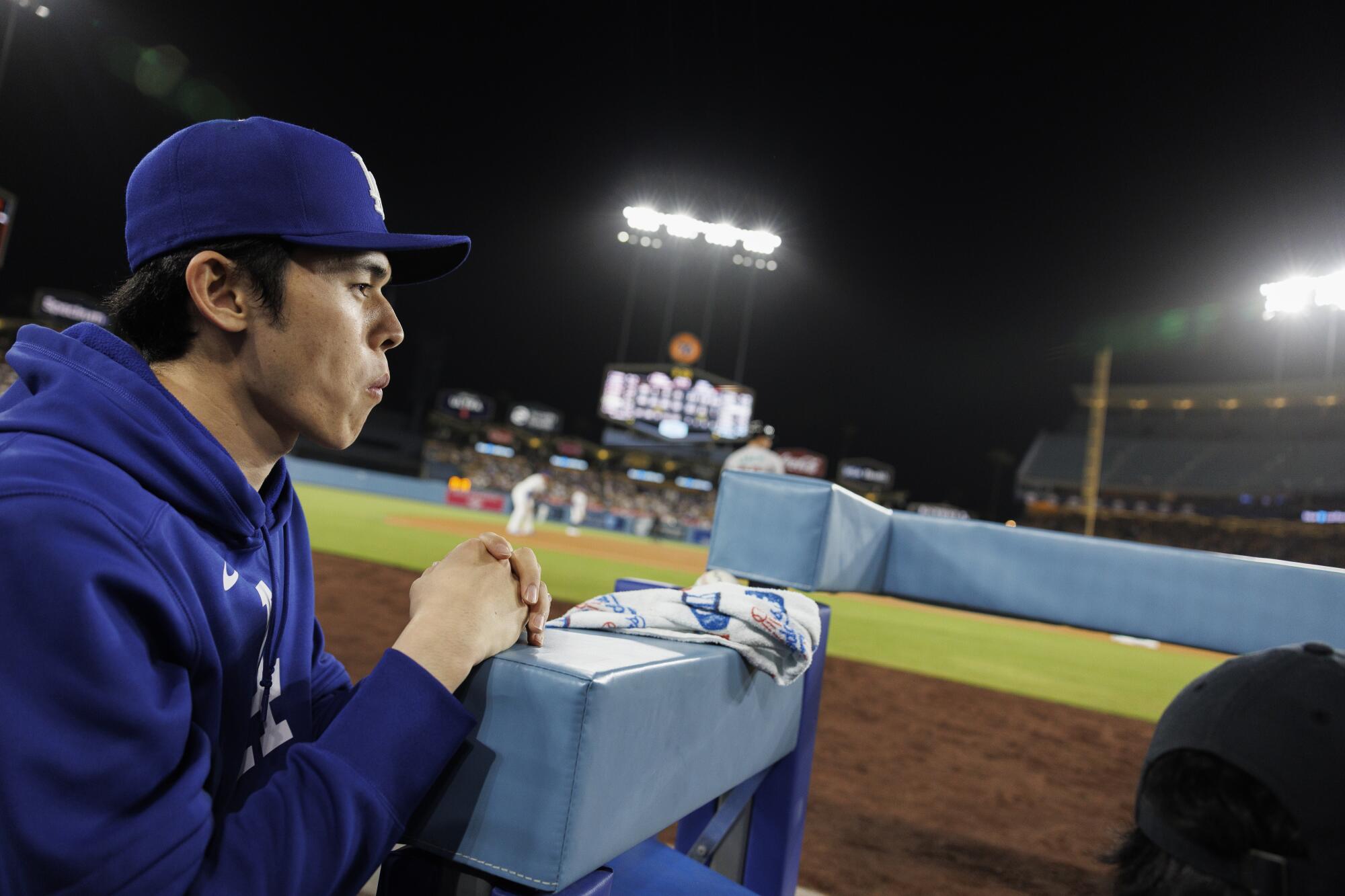
Previously limited to fastballs and splitters, Shohei Ohtani threw a handful of sliders and curveballs in his mid-week bullpen session, but that doesn’t mean he will be a two-way player again before the All-Star break.

Ohtani is lined up to potentially face hitters in a simulated game on Saturday in New York, but that doesn’t mean he will pitch in the upcoming four-week stretch that could determine the course of the Dodgers’ season.

As encouraged as the team is with his progress and as desperate as the Dodgers are for one of their sidelined frontline starters to return, they will continue to slow play Ohtani’s return to the mound, according to a person familiar with the team’s thinking but not authorized to speak publicly.

The Dodgers could use Ohtani’s arm, but they absolutely need his bat, and they don’t plan on jeopardizing his offense by exposing him to any unnecessary risks on the mound.

Which is a major gamble in itself.

Every one of their next 26 games will be against teams with winning records. Of them, 23 will be against teams that would have qualified for the playoffs if the regular season ended on Wednesday, the exception being the St. Louis Cardinals, who have won 13 of their last 17 games.

Starting on Friday at Citi Field with the opening game of a three-game series against the New York Mets, the stretch of games will include seven meetings with the San Diego Padres and three with the San Francisco Giants.

The Padres were 2 ½ games behind the Dodgers in the National League West entering Thursday. The Giants were just two back.

Considering the state of their pitching staff, the Dodgers could very easily emerge from this stretch of games in second, third, or maybe even fourth place in their division.

Tyler Glasnow and Blake Snell will be sidelined for another month, leaving Yoshinobu Yamamoto as the team’s only reliable starter.

Roki Sasaki is targeting a return in late June from what the team described as a shoulder impingement, but the rookie never looked entirely comfortable before he went down, so who knows what he will offer them when he comes back.

Dodgers pitcher Roki Sasaki, who is on the 15-day IL, watches the game against the Diamondbacks from the dugout on Wednesday.

Roki Sasaki is one of several Dodgers starting pitchers on the injured list.

(Gina Ferazzi/Los Angeles Times)

“Not sure I’ve ever seen their pitching so decimated,” an executive from a rival team said.

The loss of frontline starters is nothing new for the Dodgers, whose injury problems last year practically forced them to acquire Jack Flaherty at the trade deadline. What’s new is their lack of depth.

The returns of Tony Gonsolin and Clayton Kershaw have mitigated the problem but only so much. Along with the inconsistent Dustin May and the consistently mediocre Landon Knack, Gonsolin and Kershaw represent the rotation’s final line of defense.

In previous seasons, the Dodgers always seemed to have 10 pitchers in their organization who could beat a mid- or low-level opponent on any given day. However, the inability to keep their young pitchers healthy has cost them much of that depth. Emmet Sheehan, River Ryan and Gavin Stone underwent major surgeries last year. Michael Grove had a shoulder operation this year. Injuries have turned Bobby Miller into a pedestrian minor leaguer, but if another starter is injured, the Dodgers could be forced to call him up again.

Dave Roberts expertly managed a depleted rotation and exhausted bullpen in the playoffs last year, and he’ll have to do it again less than two months into the regular season. He could have to punt on certain games. When his team is behind, he could have to ask his starter to pitch an extra inning or two so that he could save his high-leverage relievers for games in which they are ahead.

This isn’t to say Ohtani’s pitching comeback should be expedited. Whomever they have pitching, the Dodgers will have to score runs to win another World Series, and that starts with Othani. Before they unleash Ohtani the pitcher, they have to protect Ohtani the hitter.

Because of that, they have gambled on May pitching more games like the one he pitched on Wednesday night in a 3-1 victory over Diamondbacks. They have gambled on Kershaw figuring out how to pitch as a 37-year-old returning from multiple operations. And they have gambled on Roberts managing an injury-ravaged pitching staff.

The wagers will decide what kind of season this will be, whether this is a year in which the Dodgers will run away with the NL West or one in which they will have to fight until the final days of the regular season to determine which team is granted a first-round bye in the playoffs.

Source link

Family of ‘friendly’ chef killed in Bayesian superyacht tragedy ‘want justice for his death and will seek a payout’

THE family of a chef who was killed in the Bayesian superyacht tragedy want justice for his death, a report claims.

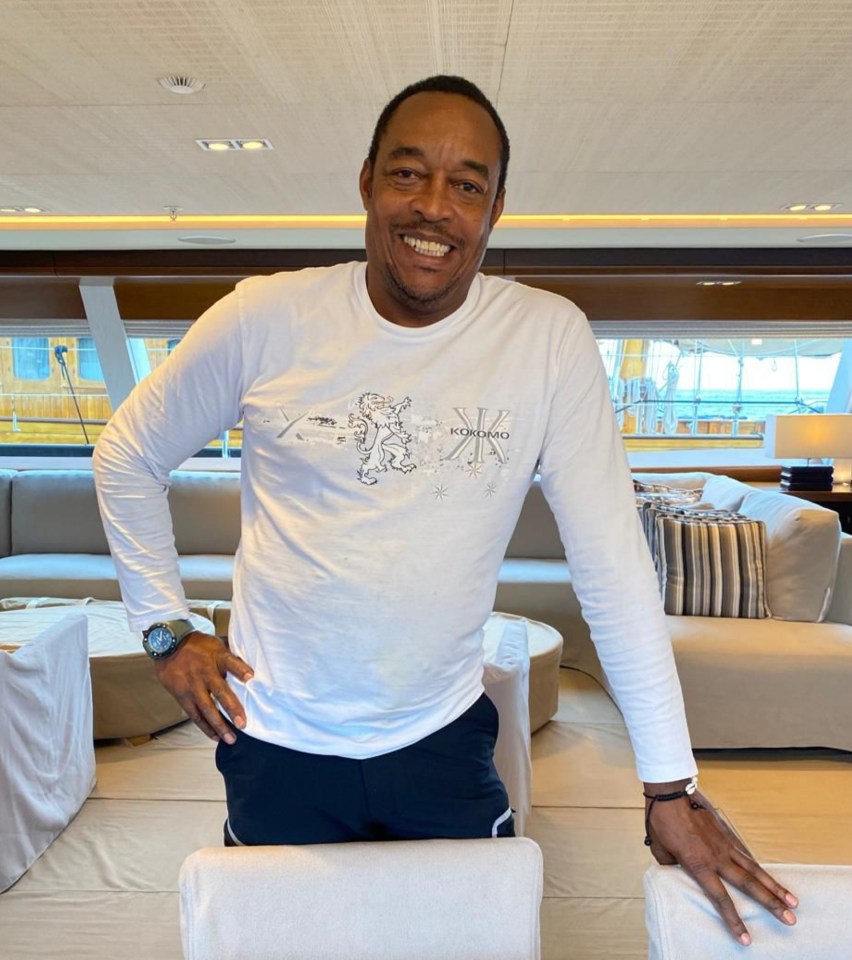
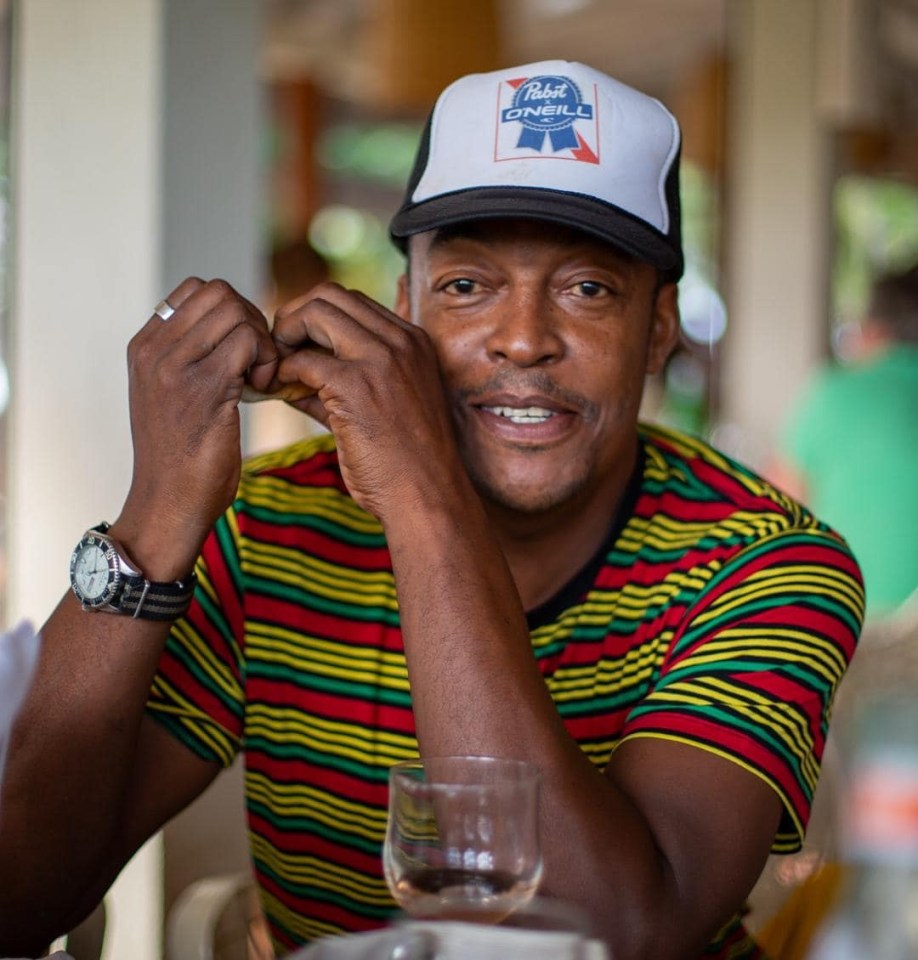
Recaldo Thomas, 59, was among the seven people who died after Brit billionaire Mike Lynch’s yacht sank off the coast of Sicily during a storm last year.

Family handout photo of Recaldo Thomas on a yacht.

9

Recaldo Thomas who died in the Bayesian yacht tragedy last yearCredit: PA
Selfie of a smiling chef in a galley.

9

Recaldo was a chef aboard the yacht when it sunkCredit: Facebook
Aerial view of the sailing yacht Bayesian.

9

The Bayesian superyacht sunk off the coast of Sicily during a storm last yearCredit: EPA
Illustration of a yacht's final journey, including a timeline of events and map.

Recaldo’s family are now seeking compensation for his tragic death – and they could be in line for a $40 million payout.

The chef’s sister-in-law Joycelyn Palmer told MailOnline: “We just want justice and yes, we will be looking at compensation, someone must pay for what happened.”

Last week a report detailing the “vulnerability” of the yacht revealed how the tragedy unfolded.

A thorough investigation has shown that the ship was likely knocked over by “extreme wind” and was not able to recover.

But Palmer believes the yacht’s 236ft mast may have also played a part in the tragic sinking.

Recaldo’s sister-in-law said: “I looked up the yacht and when I saw the mast I just thought that must have something to do with what happened.

“You can even see it in one of the last pictures he sent us.”

She also claimed the crew were at fault as they had taken the weather for granted and didn’t alert the captain until it was “too late”.

Palmer recalled the emotional turmoil the family experienced in the aftermath of the tragedy.

She said it took six long weeks to get Recaldo’s body, meaning they were unable to have an open-casket funeral and say their goodbyes properly.

Influencers left stranded after $4m Lamborghini yacht sinks off Miami Beach

Palmer described her brother-in-law as a lovely man who had a heart of gold and an infectious smile.

The family’s lawyer said they were looking at a US lawsuit against “various entities”.

They added that a $40million pay-out would not be out of the question for the “emotional loss”.

Recaldo was among seven passengers who died when the 184ft yacht capsized and sank on August 19.

The 184ft £14million superyacht named the 'Bayesian' before it sank

9

The 184ft £14million superyacht
A man and a young woman smiling for a photo.

9

Mike Lynch and his daughter were among the seven people who died in the deadly sinkingCredit: EPA

Anchored off the coast of Porticello Harbour in Palermo, a downburst of stormy winds hit the boat causing it to topple.

It sunk to the sea floor in minutes and prompted a huge five-day search operation with specialist divers, underwater drones and helicopters.

Recaldo was found dead near the wreck site on August 19, but it took several more days to recover six missing guests including the Brit billionaire and his daughter.

New York lawyer Chris Morvillo and wife Neda also died, as did Morgan Stanley international chairman Jonathan Bloomer and his wife Judy.

Just two months before the disaster, Lynch had been cleared of carrying out a massive fraud over the sale of his software firm Autonomy to Hewlett-Packard in 2011.

The boat trip was a celebration of his acquittal in the case in the US.

Recaldo Thomas wearing a Pabst Blue Ribbon trucker hat.

9

Recaldo’s family has raised concerns about the reason the yacht sunk
A yellow crane barge lifting a section of an offshore oil platform.

9

The yacht sunk on August 19Credit: EPA
a diagram of the inside of a 14 million superyacht

An interim report by the Marine Accident Investigation Branch revealed last week that the yacht had a “vulnerability” to lighter winds which the owner and crew may not have known about.

Andrew Moll, chief inspector of marine accidents, said: “The findings indicate that the extreme wind experienced by Bayesian was sufficient to knock the yacht over.

“Further, once the yacht had heeled beyond an angle of 70° the situation was irrecoverable.

“The results will be refined as the investigation proceeds, and more information becomes available.”

The salvage operation for the superyacht is officially underway.

Floating cranes, remote-controlled robots, and specialist divers amongst other marine experts are all helping to recovery the vessel.

But the operation had to be put on pause just days after it started when a diver died.

The diver, who is thought to be a Dutch national, reportedly died when working 160ft below the ocean alongside other recovery workers to cut the boom of the yacht.

Floating crane ship HEBO LIFT 2 in a port.

9

The mission to life the yacht from the seabed is underwayCredit: Reuters
Italian fire service dive team returning to port after a search and recovery operation.

9

Emergency services after the tragedyCredit: PA

After an unsuccessful attempt trying to cut the section, the divers are believed to have used a blow torch.

Local media speculated that the man was hit by part of the cut boom as it came off whilst he was underwater.

But police said they have launched a probe to understand what exactly caused the man’s death.

According to other local media reports, an underwater explosion was heard by at least one person before the man was found dead.

Inside the Bayesian’s final 16 minutes

By Ellie Doughty, Foreign News Reporter

Data recovered from the Bayesian’s Automatic Identification System (AIS) breaks down exactly how it sank in a painful minute-by-minute timeline.

At 3.50am on Monday August 19 the Bayesian began to shake “dangerously” during a fierce storm, Italian outlet Corriere revealed.

Just minutes later at 3.59am the boat’s anchor gave way, with a source saying the data showed there was “no anchor left to hold”.

After the ferocious weather ripped away the boat’s mooring it was dragged some 358 metres through the water.

By 4am it had began to take on water and was plunged into a blackout, indicating that the waves had reached its generator or even engine room.

At 4.05am the Bayesian fully disappeared underneath the waves.

An emergency GPS signal was finally emitted at 4.06am to the coastguard station in Bari, a city nearby, alerting them that the vessel had sunk.

Early reports suggested the disaster struck around 5am local time off the coast of Porticello Harbour in Palermo, Sicily.

The new data pulled from the boat’s AIS appears to suggest it happened an hour earlier at around 4am.

Some 15 of the 22 onboard were rescued, 11 of them scrambling onto an inflatable life raft that sprung up on the deck.

A smaller nearby boat – named Sir Robert Baden Powell – then helped take those people to shore.

Source link

Team Bieber says Diddy didn’t do anything — to Justin

Amid all of Casandra Ventura’s troubling testimony this week about life with Sean “Diddy” Combs and his “freak-off” fetish, don’t be troubled thinking about what might have happened between Combs and Justin Bieber, who was launched into the mogul’s circle when he was a teen.

Despite persistent speculation as footage of the two together has surfaced, Team Bieber said Thursday that nothing happened. Move along, nothing to see here.

The speculation comes at a time when Bieber has been worrying fans with photos showing him smoking — a shot posted Thursday had the self-declared former substance abuser sitting with a bong quite obviously in his lap — and “It’s a cult” rumors about the church he has been attending, Churchome in Beverly Hills. (Churchome pastor Judah Smith denies those rumors, by the way.) Bieber’s decision in recent years to sell his catalog for $200 million is said to have been motivated by the pop star allegedly finding himself completely broke despite generating many millions for himself and others while touring.

The new dad’s marriage is rumored to be in trouble as well, though on Friday the Biebs tagged wife Hailey in an Instagram story showing a male lion lovingly caressing a female lion with its nose and teeth.

Combs, of course, is on trial on charges of sex trafficking, racketeering and more. This week in court has seen dramatic testimony from Combs’ former girlfriend Cassie.

But back to Bieber, who was discovered by Scooter Braun in 2008 and quickly signed to a label run by Braun and Usher. Usher was a Combs protégé who was sent by record executive and producer L.A. Reid to live with the mogul in the ’90s and maybe learn a few things. The “Yeah” singer was 15 when he moved to New York. Combs became Usher’s legal guardian.

Reid wrote in his 2016 tell-all memoir “Sing to Me,” via Rolling Stone, “‘Will you take this kid and teach him your swagger?’ I said. ‘Can you just give him some of your flavor?’ And so I sent Usher to New York for what I called the ‘Puffy Flavor Camp.’”

He added, “I was turning him over to the wildest party guy in the country at an age when I still needed to get his mother’s permission, but he went to New York for almost a year. I didn’t know whether I was being irresponsible or having an epiphany.”

Usher would tell Howard Stern in 2016 that he “got a chance to see some things” while living with Combs.

“I went there to see the lifestyle, and I saw it. I don’t know if I could indulge and understand what I was even looking at,” he said on Stern’s show. “I had curiosity of my own. I just didn’t understand it. It was pretty wild. It was crazy.”

Usher said he was mostly focused on making music at the time, no matter what “curious” things might have gone on around him.

So when Bieber and Usher connected, could a Combs meet be far behind?

Sean Combs hollers with his arm around a shirtless Justin Bieber next to Rick Ross

Sean “Diddy” Combs, from left, Justin Bieber and Rick Ross at a Ciroc vodka party in Atlanta in early 2014, when Bieber was 19.

(Prince Williams / FilmMagic via Getty Images)

Combs and the “Baby” singer made news with an interview on Jimmy Kimmel’s show after the “Justin Bieber’s 48 Hrs with Diddy” video was posted on YouTube in November 2009.

In the video, Combs showed Bieber a silver Lamborghini and told him, “The keys is yours, you know, when you hit 16.” That was after Bieber pitched driving it right away with Combs in the passenger seat, because he had his permit. After staring at the kid for a moment, Combs simply said, “No.” Then he promised him the mansion when he turned 18. Combs didn’t have legal guardianship of Bieber like he did with Usher, he said, but they would be together for the next 48 hours.

“He knows better than to talk about the things that he’s done with big brother Puff on national television,” Combs said later in the Kimmel interview, adding, “Everything ain’t for everybody.” That was after he described Bieber as “a little brother” and “one of the greatest kids you could ever know” who could always call up and ask him for industry advice.

The two would continue to cross paths, including at parties for Combs’ vodka Ciroc, a brand the embattled mogul cut ties with in January 2024.

Bieber’s camp released a statement Thursday asserting that nothing untoward ever happened between the two.

“Although Justin is not among Sean Combs’ victims, there are individuals who were genuinely harmed by him,” a spokesperson for Bieber told TMZ. “Shifting focus away from this reality detracts from the justice these victims rightfully deserve.”

The Times was unable to reach a Bieber representative Friday.


Source link

Jon Voight, Sylvester Stallone and entertainment groups lobby Trump for tax provisions

So-called Hollywood ambassadors Jon Voight and Sylvester Stallone joined with a coalition of entertainment industry groups for a letter delivered this week to President Trump urging him to support tax measures and a federal tax incentive that would help bring film and TV production back to the U.S.

The letter is signed by Voight, Stallone, all the major Hollywood unions and trade groups such as the Motion Picture Assn., the Producers Guild of America and the Independent Film & Television Alliance, indicating widespread support from the entertainment industry.

“Returning more production to the United States will require a national approach and broad-based policy solutions … as well as longer term initiatives such as implementing a federal film and television tax incentive,” the letter states.

In the letter, which was obtained by The Times, the groups say they support Trump’s proposal to create a new 15% corporate tax rate for domestic manufacturing activities that would use a provision from the old Section 199 of the federal tax code as a model.

Under the previous Section 199, which expired in 2017, film and TV productions that were made in the U.S. qualified as domestic manufacturing and were eligible for that tax deduction, the letter states.

The letter also asks Trump to extend Section 181 of the federal tax code and increase the caps on tax-deductible qualified film and TV production expenditures, as well as reinstating the ability to carry back losses, which the groups say would give production companies more financial stability.

The tax measures — particularly Sections 199 and 181 — are issues the entertainment industry has long advocated for, according to two people familiar with the matter who were not authorized to comment publicly. The letter itself came together over the weekend, they said. It was intended to present different measures that shared the same goal of increasing domestic production, one person said.

For the record:

3:09 p.m. May 12, 2025A previous version of this story stated Susan Sprung’s title as executive director. She is chief executive of the Producers Guild of America.

“Everything we can do to help producers mange their budgets is important,” said Susan Sprung, chief executive of the Producers Guild of America. “In an ideal world, we’d want a federal tax incentive, in addition to these tax provisions, but we want to advocate to make it as easy as possible to produce in the United States and make it as cost-effective as possible.”

Last week, Trump threw the entertainment industry into chaos after initially suggesting a 100% tariff on films made in other countries. Then, California Gov. Gavin Newsom jumped into the mix, calling for a $7.5-billion federal tax incentive to keep more productions in the U.S.

The proposals on the federal level come as states are upping their own film and TV tax credits to better compete against each other and other countries. Late last week, New York Gov. Kathy Hochul signed the state’s budget, which increased the cap for its film tax credit to $800 million a year, up from $700 million.

The expanded tax incentive program allocates $100 million for independent studios and gives additional incentives to companies that produce two or more projects in New York and commit to at least $100 million in qualified spending.

The program was also extended through 2036, which could help attract TV producers, who often want to know that their filming location is committed if they’re embarking on a series.

Production in New York has been slow, and the state needed this boost, said Michael Hackman, chief executive of Hackman Capital Partners, which owns two film and TV studio properties in the state, as well as several facilities in California. The increase from New York could also push California to increase its own film and TV tax credit program.

Last year, Newsom called to increase the annual amount allocated to California‘s film and TV tax credit program from $330 million to $750 million.

Two bills are currently going through the state legislature that would expand California’s incentive, including increasing the tax credit to cover up to 35% of qualified expenditures (or 40% in areas outside the Greater Los Angeles region), as well as expanding the types of productions that would be eligible for an incentive.

“We have the best infrastructure, the best talent, we have everything going for us,” Hackman said. “So if our state legislature can get more competitive with our tax credits, I think more productions will stay. But if they don’t, this will result in more productions continuing to leave the state and going to New York and to other locations.”

Source link