As a radio professional who grew up aspiring to work at CBS News Radio, anchor Steve Kathan understood the weight of the words he wrote and recorded Friday on the final broadcast of “World News Roundup.”
“America’s longest running newscast signs off for the last time,” Kathan said in the small dimly lighted studio in the CBS Broadcast Center on Manhattan’s West Side. “It all began on March 13, 1938,” he said, referring to the iconic news program.
Kathan played a recording of Edward R. Morrow, the legendary CBS News journalist who delivered his first report on the debut of the program, saying “the best in radio reporting is yet to be — good night and good luck.”
“And goodbye,” Kathan added, ending the run of around 23,000 editions of the 10-minute signature broadcast, delivered from CBS’ radio network . A final news update was scheduled to run later Friday night.
CBS News Radio and its 26 employees became a victim of budget cuts across parent-company Paramount’s news division announced in March.
“A shift in radio station programming strategies, coupled with challenging economic realities, has made it impossible to continue the service,” the company said.
Privately, longtime insiders at CBS News say the division has struggled for years to find ways to financially turn around its radio business.
The unit was operating at a loss with monthly revenues recently falling as low as $67,000, according to a network executive not authorized to discuss the matter publicly. The service held on because it still had value in promoting CBS News and its journalism, reaching 20 million listeners a week.
Leadership over the years have put off the messy task of winding the radio business down due to its iconic status at the company. CBS News editor-in-chief Bari Weiss was reluctant to make the cuts as well, according to people inside the company familiar with her thinking. But with Paramount taking on substantial debt to acquire Warner Bros. Discovery, considerations of the division’s legacy are likely to matter less in ongoing efforts to reduce costs.
Kathan had heard rumblings about CBS getting out of radio going all the way back to its first ownership change in the 1980s when Larry Tisch acquired the company.
“Even though I’ve been here 39 years, the thought was someone’s going to decide to do it,” he said.
As television dominated the media landscape, CBS News Radio retained its role as what Kathan called “the background track of American history.”
As a child growing up in Connecticut, Kathan recalls watching Douglas Edwards, the “World News Roundup” evening anchor for two decades, doing TV news updates in between the soap operas his mother watched on CBS. After Kathan joined the network in 1987 as a writer and producer, he would see Edwards and other famous names from the division walking through the hallways of the broadcast center before doing his afternoon newscasts.
“Just the fact that you were working with them made you think and realize you had to up your game,” Kathan said. “You wanted the audience to trust you as much as it trusted them.”
“World News Roundup” rose to prominence during World War II, when Murrow and other CBS News correspondents delivered live reports from Europe.
Once TV supplanted radio as a source for scripted entertainment, news and information became the primary mission of CBS’ radio division that began in 1927. In 1967, the company converted its owned AM radio stations — including its Los Angeles outlet KNX — to an all-news format.
While the stations focused on local news, traffic, weather and sports, they also prominently featured CBS News Radio reports at the top of the hour and other features throughout the day.
Longtime listeners became familiar with Edwards, Dallas Townsend, Reid Collins, Richard C. Hottelet, Christopher Glenn and other CBS News veterans who brought national and world stories to listeners throughout the day, introduced by a five-note sounder that simulated a telegraph. Dan Rather and Walter Cronkite were heard daily with analysis.
The radio network developed a major star in Charles Osgood, who joined WCBS in New York as anchor. He went national in 1971 with a twice-daily segment called “The Osgood File.”
Osgood wrote two-minute reports in succinct prose delivered in his mellifluous tones. He occasionally offered commentary in verse, which earned him the title of poet-in-residence at CBS News.
Osgood’s popularity was rivaled only by ABC Radio personality Paul Harvey. CBS News even allowed him to read commercial copy to satisfy eager advertisers who wanted their product messages presented in his comforting voice. When Osgood became a host on the TV side in the 1990s on “CBS News Sunday Morning,” his sign-off remained “I’ll see you on the radio.” He filed his final “Osgood File” report in 2017.
Charles Osgood in the WCBS radio studio in New York on July 25, 1967.
(CBS Photo Archive/CBS)
CBS sold off its radio stations in 2017, but continued to produce and distribute its network programs as the business faced competition from digital media.
Dustin Gervais, technical operations manager for the network, said CBS News Radio struggled as more audio advertisers prefer digital content because of its effectiveness at targeting specific demographic groups. The shift is reflected in radio ad revenue, which dipped about 2% to $14.37 billion, according to media research firm Kagan. But the digital ad revenue portion of that pie continued to grow, topping $1.75 billion.
Charles Forelle, managing editor for CBS News, said the company plans to remain in the audio journalism business through podcasting and not straight newscasts.
“We have a whole bunch of different things in development that are less news reading and more other things,” he told The Times.
Not all of radio’s problems are related to digital.
Michael Socolow, a professor of communication and journalism at the University of Maine, notes that the industry troubles began in 1996 when deregulation loosened the limit on the number of stations a single entity can own. Buying sprees of outlets led to owners who became highly leveraged and less able to invest in programming, which put the squeeze on suppliers such as CBS News Radio.
“Radio was hollowed out by the corporations, before its utility to the American citizen ended,” Socolow said. “You can trace it to the Telecom Act of 1996.”
Some of the 26 employees at CBS News Radio who were severed from the company have found work at Worldwide News Network, a service launched by John Catsimatidis, the owner of New York’s top-rated talk station WABC. The company said the service, which begins Saturday, will deliver “hard news, breaking headlines, and fact-driven reporting to affiliates across the country.”
SAN DIEGO — The good people of New York like to consider themselves tough. If you can make it there, as Frank Sinatra crooned, you’ll make it anywhere.
Do not confuse hot takes with sounding tough. Two New York sports talk hosts this week took daft shots at Joe Davis and came off — in the last adjective with which any true New Yorker would want to be described — as soft.
Let’s rewind: Davis is the lead voice of the Dodgers on SportsNet LA. He is also the lead voice of the national baseball broadcasts on Fox. In the latter role, he called last Saturday’s game between the New York Yankees and the New York Mets.
At one point, Mets outfielder Carson Benge dropped an easy fly ball. Without missing a beat, Davis said: “Oh, no! Oh, no, the Mets!”
It was the perfect call. The foibles of the Mets are so many and so weird that Mets fans themselves have embraced a term for them: LOLMets. You can learn all about it in a 23-minute YouTube video narrated by a former Mets pitcher.
Commentator Stephen Nelson, Dodger Shohei Ohtani, interpreter Will Ireton, Dodger Roki Sasaki and broadcaster Joe Davis address fans during Dodger Fest at Dodger Stadium on Jan. 31.
(Jae C. Hong / Associated Press)
Firing one manager (Willie Randolph) at midnight in Anaheim? Dumping another manager (Carlos Beltran) before he could manage a game because he was the only player cited in the commissioner’s report on the Houston Astros’ cheating scandal? Opening this season with baseball’s highest payroll and spending some time with baseball’s worst record?
“This year, and in recent years, there have been so many moments where it looks like the Mets are right there, ready to make a run or win the division or win a championship, and then something just tends to go wrong,” Davis said in San Diego Tuesday.
“They were in a stretch right there where every single day, they were getting a stud hurt. They put together a winning streak against the Tigers, then Clay Holmes has the comebacker break his ankle.”
The next day, Benge totally clanked it, and Davis totally nailed it — in the moment, not with some scripted phrase waiting in his pocket.
“You hope that your reactions in those moments — in any moment in this job — are authentic,” Davis said. “You don’t have much time for it to be anything else.”
On Monday, Evan Roberts — a host on WFAN, New York’s top-rated sports station — unloaded on Davis for “mocking” the Mets.
“Joe Davis has become a clown for the Los Angeles Dodgers and we all hear it,” Roberts said, in remarks posted by the Awful Announcing website.
Got anything else?
“I think he’s a Dodger fanboy,” Roberts said. “I think he wants to just make love to Shohei Ohtani every time he talks about him … He’s a great broadcaster, and I’ll admit it. But, for now, I think Joe Davis is a Dodgers shill and it’s obnoxious.
“And I’d give him this advice, not that he cares, he doesn’t care: Don’t go to the Dodger parade and be the emcee. It’s a bad look. It just is. You’re sitting there as the national voice and now you’re pom-pom waving at the Dodger parade. Come on, man.”
Davis works for the Dodgers. When the boss wants you to emcee the World Series championship rally, you do. Would the Mets’ broadcasters do the same? When the Mets win their first World Series championship since 1986, we’ll find out.
Let’s hear from Sal Licata, formerly at WFAN and now working independently: “What’s up with Joe Davis, by the way? You Dodger homer. ‘Oh no, the Mets,’ that’s a national unbiased broadcast? You biased Dodger blue fool.”
There always will be people who claim Davis is biased toward the Dodgers, just as people claimed his predecessor, Joe Buck, was biased toward the St. Louis Cardinals. Buck worked for Fox on weekends and called Cardinals games during the week.
And, for the people who see only what they want to see, Davis is the voice of baseball’s evil empire. Maybe that aggravates New Yorkers, but consider how aggravated we are that we have to fight through hellish traffic to get to Dodger Stadium or a television set by 5 p.m. so we can see our team play in the World Series because the East Coast needs to see the game in prime time.
Or how annoyed we are that we get televised Yankees-Red Sox games shoved down our throats when Red Sox management has opted for irrelevance and the best rivalry in baseball is here, between the Dodgers and Padres.
Better yet, how about we all chill? It’s just a game. We could break bread with New York’s famous bagels, except the New York Times told us we have the better bagels.
On the second weekend of May, Gustavo Dudamel gave the New York Philharmonic a salsa shock. He gleefully brought the startled players together with the Spanish Harlem Orchestra, an uptown salsa and jazz band, for concerts at Lincoln Center and Washington Heights. The city‘s classical music fans treated it as a cultural breakthrough; Dudamel is expected to transform the orchestra as a cultural institution when he returns in the fall as its music and artistic director.
A day later he was back in Los Angeles to begin rehearsals at a Walt Disney Concert Hall that had been fantastically transformed by Frank Gehry for the Los Angeles Philharmonic’s staging of “Die Walküre.” Transformation — be it cultural, orchestral, personal — has marked Dudamel’s 17 years as music (and more recently artistic) director of the L.A. Phil, which is now coming to an end with his three weeks of concerts in Disney to close the season June 7, followed by a celebratory weekend at the Hollywood Bowl in late August.
But meeting with Dudamel in his dressing room after a “Walküre” rehearsal (the opera begins Tuesday night at Disney and runs for six nights, an act a night, the full opera performed twice) , he says as he has said before, he does not think of this as a culmination, merely the beginning of a new adventure. He’s apartment shopping in New York. But he is keeping his house in Los Angeles.
He’s also departing with two very long new titles as “Die Walküre” premieres: the Diane and M. David Paul Artistic Cultural Laureate of the L.A. Phil and Jane and Michael Eisner Founding Director and Conductor Laureate of Youth Orchestra Los Angeles (YOLA).
Gustavo Dudamel conducts the Los Angeles Philharmonic in a performance of Beethoven’s Missa Solemnis at the Walt Disney Concert Hall on Feb. 22.
(David Butow / For The Times)
“We are talking about projects,” he says. “Look, I’m coming back for two weeks in December,” when he will lead Beethoven programs. He returns in the spring. The Bowl will always be a second home.
“I’m living here and I’m not living here,” he explains. “The connection will always be here.”
The energy in New York is, he continues, “super exciting.” And what excites him the most is how comfortable he feels with the very real differences between L.A. and New York.
“As a Latino from Venezuela,” he says, “I have an immediate connection with the New York that is home of salsa. When I was in the womb I was hearing salsa.” His father, Oscar Dudamel, is a trombonist and salsa musician.
But he adds that mariachi, ubiquitous in Mexico and L.A., is also an integral part of Venezuelan culture. “What I have to say is that I am blessed. I’m blessed that both cities are now part of my life.”
Bringing ‘crazy’ ideas to Los Angeles
L.A., of course, has been the major part of his adult life. At 24, an unknown, he made his dazzling U.S. debut in 2005 leading the L.A. Phil at the Hollywood Bowl. Four years later, he became the orchestra’s music director and caught the world’s attention.
There is no doubt that Dudamel’s extraordinary talents would have meant a major career wherever he landed. But, here, he inherited the world’s most culturally open major orchestra, where fresh thinking and new music thrive. Disney Hall allowed him the extraordinary freedom to dream. Being back at Disney, Dudamel admits, is very emotional, especially conducting “Walküre” with Gehry’s sets of billowy, sumptuous clouds and fanciful white papery horses.
“Frank is here with us,” Dudamel exclaims about the architect, who died in December and with whom he had become close. Conducting Wagner’s opera, in many ways, sums up Dudamel’s ambitions, the way he has connected with more sides of L.A.’s cultural landscape than possibly any other artist.
In L.A., Dudamel grew as an artist and a person, he says, through his relationship with an orchestra that is uniquely flexible and a welcoming community. This allowed Dudamel to be what he likes to call “crazy.”
“I remember the first time I came here. I didn’t have a chance to do or see anything,” he says of his Bowl debut. “So, I remember driving from the airport to Sunset Boulevard, where my hotel was, and I didn’t understand anything. But immediately it was the connection with the orchestra.”
Frank Gehry designed the sets for a Jan. 18, 2024, performance of Wagner’s opera, “Das Rheingold,” with Gustavo Dudamel leading the Los Angeles Philharmonic at Walt Disney Concert Hall.
(Allen J. Schaben / Los Angeles Times)
Flash forward 20 years from 2005 to 2025. In what seemed like a truly crazy idea, he brought the L.A. Phil to the Coachella Valley Music and Arts Festival, where he led a varied set of classical favorites and appearances with pop stars, for 150,000 people shouting “L.A. Phil! L.A Phil.” Among the highlights was “Ride of the Valkyries,” the English title of “Walküre.”
The symbolism of doing “Walküre” is, for Dudamel, unmistakable. Wagner’s four-part “Ring” cycle, of which “Die Walküre” is the second opera, strongly influenced the “Star Wars” films Dudamel grew up with. The saga’s composer John Williams is another L.A. legend who became for Dudamel like family. Williams has, in fact, written a fanfare, “Bravo Gustavo!” that Dudamel will premiere on June 4 in a concert in which he celebrates the musicians of the L.A. Phil.
The “Walküre” production, moreover, further expresses his desire to remain connected with L.A. When asked whether he still plans to complete the “Ring” cycle with the L.A. Phil, which he began two seasons ago with “Das Rheingold,” he says, “completely.”
It’s a radical notion, to say nothing of an extraordinarily expensive and time-consuming challenge for any orchestra given to a former music director, but Dudamel has never been one to take no for an answer. “At my last conversation with Frank,” he recalls, “I said I was coming to talk about ‘Siegfried’ [the next opera in the cycle], and he said, ‘You are crazy.’”
“That was Frank. He freaked out about the operas every time I talked to him about them. And then he came up with fabulous ideas.
“You know I never dreamed about coming to the L.A. Phil. I was happy in Venezuela and guest conducting elsewhere. But when I met Frank and John [Williams], I knew I had come to the right place.”
One reason Dudamel was happy in Venezuela was his position as music director of the Simón Bolívar Youth Orchestra, part of El Sistema, the country’s famed music education program. He brought a version of that to Los Angeles with YOLA, which offers free musical education to students. Bringing young people together to learn — and not just to play music but to listen to each other — has grown increasingly essential to him.
Gustavo Dudamel has fun with John Williams at the Hollywood Bowl as he conducts the L.A. Phil during “Maestro of the Movies: John Williams with the LA Phil” on July 9, 2023.
(Emil Ravelo / For The Times)
On Thursday evening, USC awarded Dudamel an honorary doctorate during its graduation ceremonies at the Coliseum, where Dudamel also gave the commencement speech.
“I will never tire of repeating this: music, art and beauty are universal rights,” he told the graduates, urging them to go out into the world listening to others, seeing others, paying attention to everything. These are the practices he has long championed as the essential need for youth orchestras.
This was, in fact, almost precisely what he said when he first arrived in L.A. “I was very young, but I grew up with these ideas,” he told me.
“You have to say to the students, ‘Stop! Let’s pause. Just listen.’”
“It’s a way to really connect with what surrounds you, but also connect with yourself. That’s the beauty of all the layers of listening we do as musicians. I now think that is our main tool. In the end it’s not listening only to sounds. It’s listening as connecting with others.”
Practicing what he preaches
As Dudamel plans for his next chapter, he indicates that the advice he gives students is what he is also saying to himself.
YOLA students perform on stage during a “Gracias Gustavo Community Block Party” at the Judith and Thomas L. Beckmen YOLA Center in Inglewood on Oct. 11, 2025.
(Etienne Laurent / For The Times)
What L.A. gave him, he concludes, is a greater depth of his own listening. There was the guidance of Deborah Borda, who, as the orchestra’s president and CEO, hired and mentored him. There were the opera productions with Peter Sellars, who made him look deeply inside himself. There were the communities to discover and with which to collaborate.
New York, he insists, will be a further continuation of this process. “There are a lot of things to do. As I did here, that will be not only conducting but spending a big amount of time doing other things. I will have to listen to the community. Every place is different.”
And every place needs to be, for Dudamel, connected. He began his last season in Disney in the fall with the world premiere of Ellen Reid’s “Earth Between Oceans,” a bicoastal co-commission between the L.A. Phil and the New York Philharmonic, sonically evoking the environmental difference between L.A. and New York. He recently repeated it with his new orchestra in David Geffen Hall in New York.
In L.A., Reid’s score felt like a vast, moving, spiritual soundscape of our fires’ fury as well as our coastal fancy. At Geffen, it became a gripping showpiece, like attempting to zoom in a Ferrari through Manhattan streets, were they ever empty — the thrill of taking it all in.
Dudamel says his favorite place in New York so far is the orchestra’s archives. Becoming absorbed in the history of America’s oldest orchestra gives him new ideas. He wants simultaneously the old, the new and the many.
He also insists on ever more connections. ”We are making, many, many projects together,” he says of the L.A. Phil and the New York Philharmonic. That includes bringing the two orchestras together in a further experiment in listening.
“That‘s very important to me, one of my dreams. And it’s not difficult,” he says. “We have plans and it’s beautiful. We have to do that.”
CANNES, France — Cannes is technically half over and the hunt for a masterpiece continues. Critics on the Croisette are starting to resemble that classic comic-strip panel in which an explorer crawls desperately across the sand toward an oasis that’s only a mirage.
This far into an underwhelming festival, good films have a way of looking like great ones, such as James Gray’s “Paper Tiger,” a grimy thriller with Adam Driver and Miles Teller playing brothers in 1980s New York who get mired in a scheme to sanitize the Gowanus Canal. Driver’s ex-cop knows the codes of cutting deals with the Russian mob; Teller’s engineer is the square who can’t grasp how doing things the right way just makes the situation worse. As the normies, Teller and his naive wife, portrayed by Scarlett Johansson, feel like kids playing dress-up. (Johansson’s perm is a bit much.) Still, the script is tense and tight — and at this point, I’m happy to see anything with a plot.
Rodrigo Sorogoyen’s “The Beloved” has two of them: It’s a film within a film about a famous director (Javier Bardem) who casts his estranged actor daughter (Victoria Luengo) in his latest project. The fictional movie he’s making looks stiff, a period epic about Spain’s colonialist withdrawal from the Sahara in the 1930s, which doubles as a metaphor for the father’s destructive absence from his now-adult child’s life. A boozer, she’s not stable enough to stand up to the scrutiny of his sudden attention. Luengo herself holds the camera splendidly even in her character’s weaker moments, turning her charisma off whenever her father needs her to turn it on.
Consider it a shot and chaser to “Garance,” which stars a vibrantly sloppy Adèle Exarchopoulos as another alcoholic actress. Sharp, smartly paced and entertaining, it’s fantastic until the last stretch, which peters out and then abruptly stops.
One of the festival’s big themes seems to be connection: that we’re all stuck on this rock together and, ultimately, the difference between human and android, man and woman, is moot. At least three movies have someone saying, “That’s life,” with a shrug. The films themselves, however, are lifeless. Worse, they’re long. I can roll with movies that are mostly vibes, but only to a limit — say, 85 minutes.
Sophie Thatcher in the movie “Her Private Hell.”
(Neon)
Nicolas Winding Refn’s “Her Private Hell” is longer than that and the inertia is excruciating. The Danish director of “Drive” hasn’t made a feature film since “Neon Demon” premiered at Cannes in 2016 and this grim fairy tale feels more like a feint than a comeback. A sulky daughter (Sophie Thatcher) skulks around a misty skyscraper with her hot young stepmother (Havana Rose Liu) idly fretting about a murderer named the Leather Man. Down below, an Army private (Charles Melton) hunts the killer. Little happens other than chain-smoking, costume changes and interminable shots of color-shifting strobe lighting splaying across the cast’s cheekbones. Thankfully, Kristine Froseth adds pep as a bimbo who hasn’t yet learned how to talk as leadenly as everyone else.
Too much of the program is made up of tedious movies by beloved Cannes veterans — essentially affirmative action for auteurs. Eight years ago, Hirokazu Kore-eda won the Palme d’Or for “Shoplifters,” a chaotically enchanting portrait of a family of fraudsters. Now, he’s returned with “Sheep in the Box,” a slick and dull story about two grieving parents who adopt a clone of their dead son. “Sheep” aspires for Spielbergian catharsis — one scene seems to consider itself an art-house take on “A.I. Artificial Intelligence” — but the human characters come off as mechanical as the little robot boy. Between the musty setup and saccharine score, it’s the film equivalent of a bowl of stale candies.
Arthur Harari, who co-wrote 2023’s Palme- and Oscar-winning “Anatomy of a Fall,” is here as the director of “The Unknown,” a stilted drama about a sulky male photographer who wakes up in the body of Léa Seydoux after a nameless, wordless one-night stand. You can imagine Brian De Palma running with the sex-contagion idea (or “It Follows” director David Robert Mitchell grumbling that he deserved an inspired-by writing credit). But “The Unknown’s” shape-shifting intrigue stalls out once you realize that none of the characters have a personality to begin with. Who cares what soul is inside each shell if they’re all monotonously slack-faced? “Face/Off” it isn’t.
Léa Seydoux in the movie “The Unknown.”
(Festival de Cannes)
On that note, one emotional highlight to date was the presentation of an unannounced honorary Palme to John Travolta. (Yes, his face-swapping 1997 thriller with Nicolas Cage was in the celebratory montage.) Already bursting with passion to be world-premiering his directorial debut, “Propeller One-Way Night Coach,” Travolta was moved to tears. “Surprise complète!” Travolta gasped, kissing his trophy and blurting, “I was just happy to be here.” Indeed he was, as evident by the jaunty white beret he’d worn for the occasion, which quickly went viral on social media.
Travolta’s infectious enthusiasm carried over into the movie itself, a semi-autobiographical trifle about his childhood love of air travel. Set in 1962, a boy roughly Travolta’s age voyages from New York to Los Angeles on a series of hopping flights with his mother, who is hoping to land a rich husband or a good Hollywood role in that order. The kid’s joy is as stratospheric as the plane; he adores everything but the airline’s chicken cordon bleu. As a nostalgia piece, it’s “A Christmas Story” with a third of the jokes, none of the cynicism and not quite the length to justify itself as a movie. At barely an hour, it skedaddles in time to leave you with a sheepish smile.
Given the choice, I’d prefer to see a truly terrible movie over one that’s merely bland and mediocre. With that context, I’ve been literally raving over “Butterfly Jam,” a film so fundamentally misguided it could almost be the cineaste version of “The Room.”
Set in New Jersey, “Butterfly Jam” is a tale of toxic masculinity among braggadocious Circassian immigrants played by Barry Keoghan, Harry Melling and Riley Keough — actors who, despite their talent and effort here, are too notoriously Irish, English and Graceland-ian to be convincingly a part of a subculture this specific. It’s filmmaker Kantemir Balagov’s fault more than theirs. Despite supposedly arriving to the States as teenagers, the cast don’t even have accents, just dyed jet-black hair. While adamantly miserabilist, it does have a plot or at least one shocking plot point that’s so ghastly it made me giddy. A few scenes later, a pelican switches on a cotton candy machine with its bill, sending hot sugar whirring through the air — seriously — and I nearly applauded in delight.
Woody Harrelson and Kristen Stewart in the movie “Full Phil.”
(Festival de Cannes)
Likewise, a friend warned me against staying up through 2 a.m. for the premiere of Quentin Dupieux’s “Full Phil,” cautioning that it was the worst film they’d ever seen at Cannes in over a decade. But there was no way I’d miss watching Woody Harrelson and Kristen Stewart play a miserable father and daughter on a Parisian vacation, directed by a French oddball who rarely fails to entertain — although this time, he comes close.
The story is simple: The dad flusters, fidgets and whines; the girl gobbles room service as though aspiring to become human foie gras. “Full Phil” took about an hour to reveal its point — that parenthood makes you a glutton for punishment — and the jokes are more gestures at where a joke should be. Still, I support Harrelson and Stewart signing on to a project this cuckoo. Better still, it boasted something in short supply: a satisfying ending. Here’s hoping the festival itself ends stronger too.
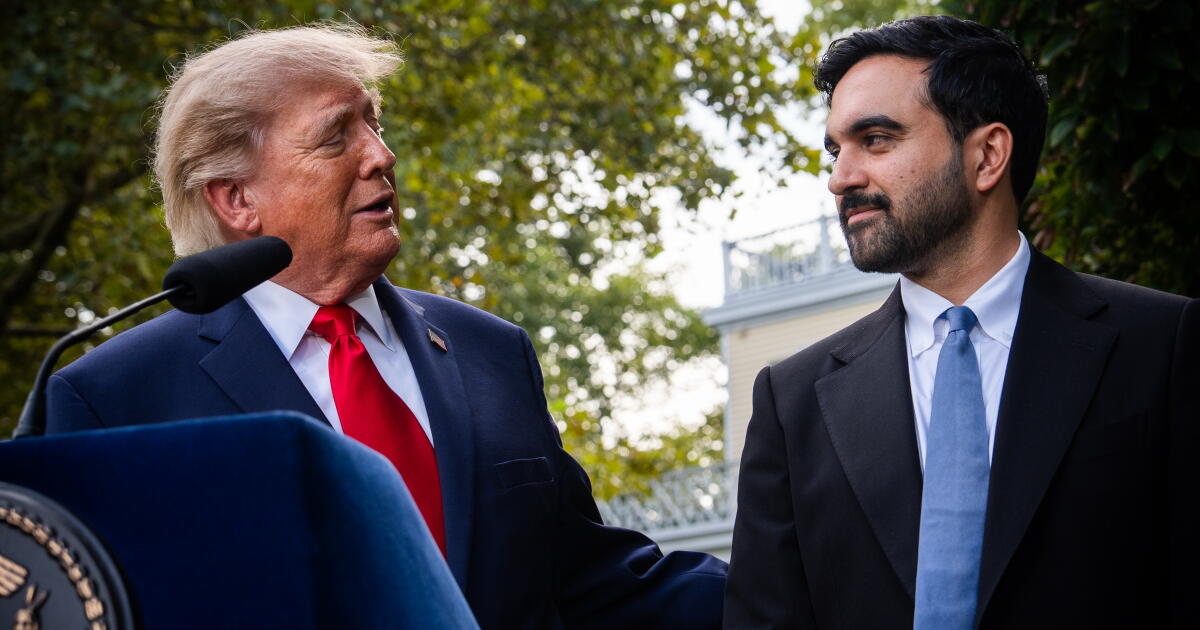
Vice President JD Vance said Wednesday that the Trump administration is deferring $1.3 billion in Medicaid reimbursements to California over concerns the state is allowing “fraudsters” to drive up costs to taxpayers, including by pushing unnecessary medications on unsuspecting patients.
“There are California taxpayers and American taxpayers who are being defrauded because California isn’t taking its program seriously. But also, you have people who’ve been prescribed medications that they don’t even need,” Vance said. “Sometimes they’ve had drugs put into their bodies that they don’t need because fraudsters have actually encouraged false prescriptions and false administration and medications.”
Vance, standing alongside Dr. Mehmet Oz, the administrator for the Centers for Medicare and Medicaid Services, said the administration is also sending letters to all 50 states informing them that if they do not “effectively and aggressively prosecute Medicaid fraud in their states,” they will see federal funding cut off as well.
“We want California to get serious about this fraud,” said Vance, who President Trump named his “fraud czar” last month.
Oz called out what he said was widespread fraud in hospice services and similar in-home care programs nationally — and particularly in the Los Angeles region — and announced a six-month moratorium on new Medicare enrollment for hospices and home health agencies.
“A third of all these programs in the entire country are in Los Angeles. Ask yourself, how is that possible? It’s not,” Oz said. “They’re not that many people dying in Los Angeles. We’re not talking about California, just Los Angeles.”
He said he and others in the administration determined that “at least half of the hospices, in the entire area around Los Angeles, are fraudulent,” and had shut down 800 of them that last year had “charged the federal taxpayer $1.4 billion,” which “will no longer be paid.” That is a major increase from the 450 providers the administration said it had suspended as of last month.
The announcement was the latest attempt by the Trump administration to highlight and rein in fraud in federal healthcare benefits programs, particularly in blue states. The actions were met with immediate push back from California officials.
“We hate fraud. But that’s NOT what this is,” Gov. Gavin Newsom’s office posted on the social media site X. “Vance and Oz are attacking programs that keep seniors and people with disabilities OUT of nursing homes. Pretty sick.”
Newsom’s office said that the growth of In-Home Supportive Services placements in California was “simple,” and due to California “keeping more people OUT of far more expensive nursing homes!”
Such services cover assistants who help people with daily tasks such as bathing, laundry or cooking; provide needed care such as injections under the direction of a medical professional; and accompany them to and from doctor’s appointments. A 2020 report by the California state auditor found that nearly three-quarters of IHSS caregivers assist a family member.
Newsom’s office wrote IHSS care costs $30,000 a year, while nursing home care costs $137,000 a year. “SAVING TAXPAYERS: $107K per person,” it wrote.
California Atty. Gen. Rob Bonta also criticized the administration’s moves.
“Once again, California appears to be targeted solely for political reasons,” Bonta said. “The Trump administration is planning to defer over $1 billion in Medicaid funding for vital programs that helps seniors and people with disabilities remain safely in their homes.
“My team is carefully reviewing all available information. We have not hesitated to challenge unlawful actions by the Trump administration, and we will continue to act whenever Californians’ rights or access to critical services are threatened,” he said.
Democratic Sen. Alex Padilla also lashed out at the Trump administration.
“The Trump Administration is attacking California over claims that they can’t back up,” Padilla wrote on social media. “Let’s be real, this isn’t about fraud — it’s about punishing a state that didn’t vote for him. Political retribution plain and simple.”
Fraud in California’s hospice industry has been a problem for years.
Authorities in the state promised to crack down on the issue after a Times investigation in late 2020 revealed that unscrupulous providers were billing Medicare for hospice services and equipment for patients who were not actually dying — with the hospice industry in the state exploding in size.
California’s Medicaid program, known as Medi-Cal, is expected to cost about $222 billion for the budget year starting July 1, including both state and federal funding. Roughly 15 million Californians, more than a third of the state, are on Medi-Cal.
Vance, a potential 2028 presidential hopeful, has taken up his work as “fraud czar” with vigor, traveling around the country to drive home the idea that the Trump administration is working diligently to bring down healthcare costs by addressing waste, fraud and abuse that is rampant across the system.
He has said that waste and abuse is particularly prevalent in Democratic-led states such as California, New York and Minnesota.
“We have red states and blue states that go after fraud aggressively, but we also, unfortunately, have some states, mostly blue states, unfortunately, that do not take Medicaid fraud very seriously,” he said Wednesday.
Vance specifically threatened to cut off what he said is billions in federal funding for state-run fraud control units that are meant to prosecute people who abuse the system, but which he said aren’t doing the work. “This is a tool that we want the states to use, but unfortunately, a lot of states aren’t using these tools at all,” he said.
The focus on fraud comes against a backdrop of criticisms that other policy measures pushed by the administration have driven healthcare costs up or made it harder for people to access healthcare — including cuts to Obamacare subsidies and new work requirements in Medicaid, which are expected to strain hospitals around the country and led to millions of people losing healthcare coverage.
Democrats and Republicans have argued over who is to blame for rising healthcare costs, and Vance and Oz have clashed with California leaders before.
In January, Newsom filed a civil rights complaint against Oz after he posted a video accusing Armenian crime groups of carrying out widespread healthcare fraud in Los Angeles. In the video, Oz was shown driving around Van Nuys, saying about $3.5 billion worth of Medicare fraud had been perpetrated by hospice and home care businesses — and “run, quite a bit of it, by the Russian Armenian mafia.”
Newsom called Oz’s claims “baseless and racist.”
The administration previously launched investigations into potential healthcare fraud in at least five states — California, Florida, Maine, Minnesota and New York — and halted some $243 million in Medicaid payments to Minnesota over fraud concerns.
The Centers for Medicare & Medicaid Services has also acknowledged using errant figures to justify a fraud probe in New York, deepening concerns in the administration’s methods for identifying problematic activity.
Vance said the deferral of funds to California and the letters warning other states to get serious is not about political retribution, but a wake up call. He said the Trump administration wants to help states root out fraud and abuse, including with new technologies — but can’t do so if they are not “willing to help themselves” first.
“We don’t want to turn off any money. What we want to do is ensure that people are taking fraud seriously. We want to protect Medicaid, we want to protect Medicare,” Vance said. “But we can’t do that if the states that are administering those programs are allowing those programs to be fleeced by fraudsters.”
WASHINGTON — A federal judge in New York unsealed a suicide note Wednesday purportedly written by Jeffrey Epstein in July, 2019, before a failed suicide attempt soon after he had been taken into federal custody on sex trafficking charges.
The disgraced financier would ultimately die weeks later in the same New York facility in what was ruled a suicide.
While the note’s authenticity has not been established, it contains an apparent reference to a line from a 1931 Little Rascals film that Epstein had used in at least two email messages, according to the trove of Epstein documents released by the U.S. Department of Justice this year in response to the bipartisan Epstein Files Transparency Act.
In the short handwritten note released Wednesday, Epstein allegedly wrote, “They investigated me for month — Found nuthing!!!”
The note concludes, “Whatcha want me to do — Burst out cryin!! No Fun – Not Worth It!!”
It was a phrase Epstein had used before.
In a September, 2016, email to his brother, Mark, he wrote, “whtchoo want me toodo — bust out crying” in response to news that their cousin had become a grandfather.
And in another message the following year to his childhood friend Terry Kafka, Epstein wrote, “Whatcha want me todo/bust out cryin,” in response to a message from Kafka about being nostalgic
Epstein’s brother and Kafka did not immediately responded to requests for comment.
The line is an apparent reference to a 1931 Little Rascals short film “Little Daddy,” in which the character Stymie says, “Well, what do you want me to do, bust out crying?” when another character says that it will be their last breakfast together.
The note emerged from the court records of Epstein’s onetime cellmate Nicholas Tartaglione, a former police officer who is serving four consecutive life sentences for a 2016 quadruple murder.
The note itself was not included in the millions of pages released by the Justice Department.
In 2020, “60 Minutes” disclosed a note Epstein reportedly wrote days before his August, 2019, death that included complaints about his conditions and similarly concluded with the phrase “No fun!!!”
Journalist Katie Phang sued acting Atty. Gen. Todd Blanche for allegedly failing to comply with the requirements of the Epstein files law passed last year, which required that the documents be released in their entirety within 30 days, with reasoning provided for any documents not released.
The department released the files after the deadline passed and has faced criticism for removing or not releasing some documents and simultaneously failing to redact the names of numerous Epstein victims while redacting the names of some of Epstein’s friends and associates.
This story includes spoilers for Episode 8 of “Daredevil: Born Again” Season 2.
By the end of “Daredevil: Born Again’s” first season, showrunner Dario Scardapane knew they were heading toward Matt Murdock’s big reveal in Season 2.
The second season finale of the Marvel series, out now on Disney+, sees Murdock (played by Charlie Cox) declare to the world that he’s the vigilante Daredevil.
“Coming in with Season 1, I wish I could say I knew exactly where we were going,” says Scardapane during a recent video call. “But I knew that moment in the courtroom where Daredevil outs himself, we were definitely heading towards that.”
Iain B. MacDonald, who directed Episodes 7 and 8, said that everybody involved understood that it “was going to be a super significant moment” while they were filming the scene.
“When that’s out, that’s out,” MacDonald says. “That moment clearly has a domino effect for the rest of the episode. … I’m super excited to just to see how that’s received by the fans … because as a director, you want to deal with big moments in what you direct, and that is, for me, one of them.”
A continuation of Netflix’s “Daredevil,” which initially concluded in 2018, “Born Again” has followed Wilson Fisk’s (Vincent D’Onofrio) rise from criminal kingpin to the supposedly reformed mayor of New York. Fisk’s authoritarian tactics and campaign targeting vigilantes pushes Daredevil underground to try to assemble allies in order to bring the Kingpin down.
Matt Murdock (Charlie Cox) returned to the courtroom to make his case.
(JoJo Whilden / Marvel)
Their much anticipated showdown occurs in a courtroom in the season finale during the trial of Karen Page (Deborah Ann Woll).
“Myself and my DP [director of photography], Jeffrey Waldron, looked at a lot of courtroom dramas, just to really think about how we can tell those courtroom stories really well, and do it creatively and imaginatively … and in the language of ‘Daredevil,’ ” said MacDonald. “It was a challenge, for sure, [but] I really, really enjoyed shooting them.”
While Murdock may have triumphed in the courtroom, his revelation has consequences as teased in the episode. Scardapane says those consequences will be explored in Season 3.
“That last scene in Season 2 tells you where we’re going,” says Scardapane. “If the question is, are we doing a specific comic book run that is beloved by all, including me, I think that it’s pretty obvious what we’re doing in that last scene.”
The fallout for Murdock, as seen in the episode, is his arrest and imprisonment. In the final moments of the finale, the Man Without Fear is shown getting locked up at Rikers Island. Murdock appears to have accepted his fate, but a glimmer of smile hints that this is not the end of his story.
“Charlie and I talked about [the scene], and we knew that we wanted to end on that close-up of his face,” MacDonald says. “He said we can do two things here, one which is like acceptance of circumstances, like he’s resigned. He has made the sacrifice of outing himself to the world about who he really is [and] he has put himself away in service of the greater good … as well as have that little moment of a hint of a smile to say, this is a beginning. This is a new adventure. This is a new challenge.”
In a conversation edited for clarity and length, Scardapane discussed Murdock and Fisk’s arcs in Season 2, “Daredevil: Born Again’s” timely political themes and what to expect in Season 3.
Karen Page (Deborah Ann Woll) and Matt Murdock (Charlie Cox) get a chance to celebrate in the “Daredevil: Born Again” Season 2 finale.
(JoJo Whilden / Marvel)
At what point did you know that what you were building toward in Season 2 would end with Matt Murdock in jail?
It’s kind of a process that snowballs. They had started before me. They were doing the Mayor Fisk run. It was much more procedural, much different tone. They did six episodes, and I came in, and we moved it more in line as a continuation of the Netflix series. When Fisk becomes the mayor of New York, you put the villain at a really, really elevated place. So, Season 1 was the rise of Fisk. Season 2 has got to be the rise of that which takes him down — the resistance.
That moment that Matt stands up in court and says, “I am Daredevil,” that’s like the record scratch. Everything has changed from this moment on. At the end of Season 1, beginning of Season 2, we knew we were heading toward that moment. That moment’s consequences, for Matt and for Fisk, are kind of the fodder for Season 3.
There are comic book runs that I shall not name — although they’ve been named — that take that dilemma that Matt put himself in and go to really great places with it. Coming in with Season 1, I wish I could say I knew exactly where we were going. But I knew at the very beginning, that moment in the courtroom where Daredevil outs himself, we were definitely heading toward that.
It felt significant that Matt and Fisk’s big showdown this season happened in a courtroom.
The fun of Daredevil since the comics started is here you have a lawyer who really believes in the justice system who goes out and breaks bones at night. He’s a vigilante lawyer. That’s such a dichotomy. When the villain takes power, when the villain is the police — this situation, the villain is the Anti-Vigilante Task Force — the villain has now become the power structure of New York and has become the justice system. How does Matt fight back? He fights back as a vigilante until it gets to a crucial moment where Karen is pulled into this flawed justice system. Now there’s nowhere he could go. He’s put in this place where both his personas have to integrate, have to kind of collide, for him to beat Fisk. I think that Charlie’s performance in that courtroom scene is his best courtroom performance in any episode of “Daredevil” ever. Building to that moment of Fisk and Matt facing off in court, it was pretty important because all four of them are in court there: Wilson Fisk, Kingpin, Matt Murdock and Daredevil are all there in that scene.
Wilson Fisk’s (Vincent D’Onofrio) ambitions are thwarted in “Daredevil: Born Again” Season 2.
(JoJo Whilden / Marvel)
Fisk, the villain, ultimately loses this battle. Can you speak a bit about his arc this season?
One of the joys of this job is working with Vincent D’Onofrio, full stop. He’s done such a good job of humanizing a monster. I don’t write Fisk as a villain. I don’t think Vincent plays him as a villain. And that’s where the fun comes in.
Building up a man whose appetite, whose isolation, whose just general hunger to dominate, making that character and then giving him this one lifeline to humanity in Vanessa — that’s all calculated. We knew in Season 1 when Foggy was killed that Vanessa was going to be the cost for Fisk. The idea that Vanessa set up Foggy to die using Bullseye, and Bullseye ended up inadvertently killing Vanessa, that was 100% in the DNA from jump. Vanessa passed away in the comic books in two different ways, but that takes Fisk now into a place where, for me, all bets are off. I think that the Fisk that Vincent is playing in Episode 6, 7 and 8 and beyond are a different animal entirely. We just finished a very special episode that is pretty much all Fisk in this new incarnation and it was pretty exciting. Vincent’s in rare form in Season 3.
I understand that the Anti-Vigilante Task Force stuff was shot before the the story and imagery became extremely timely.
It’s really strange because there’s footage in the finale that’s intentionally supposed to reflect certain events. One of the things that I really wanted to do with this story, when you’re dealing with politics and everything, is we’re living in a time where these values of mutual respect, mutual listening, mutual live and let live … what I would say, democratic values are being thrown out the window when you’re dealing with the other side. If somebody doesn’t share your beliefs, it’s free game. And I’ve never really seen a time like that. So we took that story, where the mayor’s side has no quarter for the vigilante side and the vigilante side has no quarter for the mayor’s side. When they storm the rotunda, it looks very familiar. That is intentional. I’m not going to dodge that. Because it’s the idea that everybody sees themselves as a hero of this story, where they’re treating the people on the other side horribly. There’s no lesson there. It’s just the idea that when mobs get involved, when large groups of people get involved, the higher morals and higher sense of humanity falls apart.
You’ve mentioned that in writing and filming this show, you were looking at history. But what was it like when the present started mirroring what you already made based on the past?
The sequence in Episode 2, when the bodega is raided and people are dragged away by the Anti-Vigilante Task Force, that was filmed before Los Angeles, before Minnesota — before all of it. The whole thing got really strange in that the real world started to feel cartoony, and I don’t mean that in a positive way.
I think we were, as writers and directors, tapping into an unease and a malaise that’s just out there. Having it look exactly like things that then happened on the news, that was chilling. It was really hard to get my head around it. It was hard for the people involved, the directors, the fact that some of those sequences in our show, of people being dragged away and thrown into vans, looked exactly like what we were seeing on the news.
There have been other touch points, like the affinity some Task Force officers have for the Punisher logo, that crosses from the fictional into reality.
I’ve been wrestling with this since working on “The Punisher.” The map of what you do when you want to be an autocrat: You form a militia, you empower them beyond, you target a group that you want to make scapegoats, you round them up. When Charles Soule was doing the Mayor Fisk run in the comic books, that’s what he was thinking about. S—, Tony Gilroy did it in “Andor.” When you build any kind of story about an autocrat, it follows the same script. Weirdly, the script’s now playing out outside our door, and that’s become really hard to deal with. The funny thing about this show in these times is, no matter what I say, somebody’s gonna get all like, “Oh, they put politics in our comics” and “they’re trying to teach us a lesson.” Nobody’s trying to teach you a lesson. We’re just laying out a story about a guy who’s a criminal who becomes a mayor and a guy who’s a lawyer who tries to take him down. But does that have echoes in what’s going on outside our window? Yes, it does.
There is a sect of the audience that gets very vocal about the MCU getting ”too woke” or comic books and superheroes ”becoming political.”
One thing that just broke me when we started Season 3, I posted a picture of our writers room, and it’s just some of the best genre writers in the television business. I posted it [on Instagram] and I said “so stoked to get into it with these guys.” The first comment was, “Looks like a pretty woke room. Don’t ruin the show.” How does a room look woke? Oh, so you’re looking at the makeup of the people in that room, and you’re saying that that is something you don’t like? I can’t help you [with that]. I’ve just got to go into that room and write stories.
It’s also not like superhero comic books haven’t had storylines about marginalized communities or interrogating people in power.
Guys, comic books are political. They’ve always been political. The first graphic novel that ever won a Pulitzer Prize was “Maus.”
Jessica Jones (Krysten Ritter) gets in on the action.
(JoJo Whilden / Marvel)
I think I’ve waited long enough to ask about Luke Cage, played by Mike Colter, showing up in the finale. How did all of that come together?
One of the things that I’ve said a bunch about this show is we lean into the idea that these characters have grown up. The time that has passed between the end of the Netflix shows and the beginning of this show, we acknowledge and we lean into. Their lives have matured. As anybody knows, in the comics, Luke and Jessica had a child, Danielle. Now for me, as a writer, that’s just great story. We have a family of two very interesting people who were made iconic by the performances of Krysten Ritter and Mike Colter. What does that little family look like moving forward? So that tease at the end has seeds for acres and acres of stories. There’s a world that I’m super interested in, that a lot of the characters from the Netflix shows live in, that I’d love to see go forward. A lot of that’s out of my hands. But Mike and Jessica and that family are important to these stories.
Can you say anything more about what Luke has been up to since audiences last saw him?
Luke went to do some work for Mr. Charles. That’s a little bit of an Easter egg, a storyline that will play out in the future. Mr. Charles’s interest in alternatively abled people, or people who can do special things, that interest has long tentacles. It touched Luke and Jessica. It touches Bullseye at the end of the season, and that moves forward.
I think everybody’s been curious since Charlie Cox’s return. Matt’s back. Now Jessica and Luke are back. Are we going to see all of the Netflix era heroes assembled?
The best way I can answer that question is that we take comic book runs, fan desires and unfinished business. On “Punisher,” we were planning for a Season 3. I know [“Daredevil” showrunner] Erik Oleson was getting ready to work on a Season 4. That all ended very abruptly. None of the shows really got an ending that brought it all together. I wouldn’t say that “Defenders” was an ending that brought it all together. There’s so much unfinished business in those Netflix shows. We definitely, definitely knew from way back, how the ending of the Mayor Fisk rise and fall, where that was going to go next. And it’s funny because I’m talking to you as we’re trying to end where it goes next, and we’re thinking about, “OK, now what happens after that?”
I’m just going to throw it out there that I’d like to see Misty Knight and Colleen Wing back also.
[Jessica Henwick, who plays] Colleen has already said that she is not in Season 3, and that’s a real sad thing for us. It was not for lack of trying. I want to do Daughters of the Dragon, come on! That was teed up in “The Defenders.”
I wish I could be more forthright, but I have to save some some secrets for Season 3. But I do believe that we set a launching pad at the end of Season 2 that takes us into some pretty fun places that we’re in right now, and I gotta go finish that.
Beanie Feldstein and Bonnie-Chance Roberts are expecting a baby, the “Booksmart” actor and her wife announced Monday on social media.
“Limited Edition Scouse Beanie Baby coming soon!!” the couple said in a joint Instagram post, captioning a carousel of pictures showing Feldstein with and without her wife, both dressed in shades of pink and white, plus a white-frosted cake ringed with the pink inscription “B+B are having a baby.”
Anyone want to place a bet on whether it’s a girl?
The “Beanie” in the baby caption is self-explanatory, while “Scouse” is a reference to the accent in Roberts’ Liverpool home town.
Feldstein and film producer Roberts, who met in 2018 during preproduction on the 2019 movie “How to Build a Girl,” made their red-carpet debut at the movie’s premiere and then got married in June 2023. The wedding festivities spanned two days in New York’s Hudson Valley and incorporated a summer camp theme.
Feldstein told Vogue at the time that the ceremony’s outdoor and rustic nature was inspired by “our happy place together.” The “Lady Bird” actor grew up going to summer camp and said her family has a history of finding love in those childhood spaces.
“To get married at a camp was a truly beautiful emotional homecoming,” she said.
Friends including Whitney Cummings, Kaitlyn Dever, Ben Platt, Olivia Wilde, Uzo Aduba, Joey King and Monica Lewinsky chimed in with glee in comments on the joint post.
“Luckiest baby,” wrote Wilde, who directed “Booksmart.” “And I’m finally a grandma!!!!”
Times staff writer Alexandra Del Rosario contributed to this report.
The singer is accused of grooming, sexually assaulting and impregnating 16-year-old Julia Misley in the 1970s. The suit, first filed in 2022 in Torrance, claims he “used his role, status, and power as a well-known musician and rock star” to exploit Misley. The complaint also argues Tyler admitted to the alleged crimes in his own memoir, “Does the Noise in My Head Bother You?,” where he refers to her as his “teen bride.”
Earlier this week, a judge dismissed most of the case, citing the statute of limitations in Massachusetts, where the pair lived during their three-year relationship. But they allegedly crossed state lines while Tyler toured the country with his band, including to California, according to the complaint. Because of California’s Child Victims Act — a 2020 statute that allowed a “lookback window” where alleged victims can file lawsuits regardless of a statute of limitations — a portion of the case will still be tried.
“This is a massive win for Steven Tyler. Today, the Court has dismissed with prejudice 99.9% of the claims against Mr. Tyler in this case,” Tyler’s lawyer, David Long-Daniels, said in a statement to The Times. “The court has decided that only one night, 50-plus years ago, out of a three-year relationship is allowed to remain.”
New York has a similar statute that was recently employed by singer Casandra “Cassie” Ventura in her case against Sean Combs. She filed a sex-trafficking and sexual assault lawsuit against the music mogul in 2023, in the U.S. District Court for the Southern District of New York, just days before the expiration of a lookback window.
The lawsuit against Tyler, who previously appeared as a judge on “American Idol,” claims he and Misley first met at an Aerosmith concert in 1973. According to the document, he “performed various acts of criminal sexual conduct upon Plaintiff that night.” At the time, Tyler was in his mid-20s and Julia was 16.
The alleged encounter was the first of many, the lawsuit claims. In 1974, Tyler was named Misley’s legal guardian and took her on tour with the band.
According to the complaint, he described the nature of the relationship in his 2011 memoir, writing, “She was 16, she knew how to nasty … with my bad self being twenty-six and she barely old enough to drive and sexy as hell, I just fell madly in love with her. … She was my heart’s desire, my partner in crimes of passion. … I was so in love I almost took a teen bride. I went and slept at her parent’s house for a couple of nights and her parent’s fell in love with me, signed paper over for me to have custody, so I wouldn’t get arrested if I took her out of state. I took her on tour with me.”
The lawsuit also describes Misley’s alleged pregnancy with Tyler’s child, which ended in a “pressured” abortion.
“This reflects years of resilience and courage by Ms. Misley, driven by an unwavering pursuit of truth and justice. It is time for justice and for Tyler to be held accountable by a jury,” Misley’s attorney, Jeff Anderson, said in a statement.
Michael Tilson Thomas came onto the scene as a great hope for classical music, American music, Los Angeles music, modern music, multifaceted pop music, maverick music, Russian music, Broadway music and just plain music, whatever it might be and from wherever it might be found. He lived his 81 years as conductor, pianist, composer, educator and media personality promoting that hope, and died Wednesday having shown how hope is done. He looked ahead. He looked back. Yet he lived for the now.
It wasn’t always easy. He wasn’t, to say the least, always easy. But MTT made music matter by making hope matter. He was, moreover, one of us. He achieved greatness though an epic amplification of a uniquely L.A. positivity in which grumpy became wistful.
I first encountered MTT as a kid clarinetist and he, Michael Thomas back then, a student conductor at USC and already, at 19, music director of the Young Musicians Foundation Debut Orchestra. He was soon everywhere. A piano prodigy, he regularly performed (and hobnobbed) with the likes of Stravinsky, Copland, Boulez and Cage at Monday Evening Concerts programs when the Los Angeles County Museum of Art opened in 1965. That summer, he appeared at the Ojai Music Festival, which he would go on to lead as music director seven times.
MTT liked to describe his L.A. youth as driving from Jascha Heifetz’s house in the Hollywood Hills (where he accompanied the famed Russian violinist in classes) to LACMA to rehearse Ives and Renaissance music, to composition and conducting classes at USC. Then it was home to the San Fernando Valley to practice Beethoven.
All the while, he listened to the hip L.A. 1960s pop music stations on his car radio. He was particularly keen on, and became friends with, Chuck Berry. Home was where he would also encounter screen legends. Tilson Thomas’ father worked in films and television as a screenwriter, producer and dialogue coach. Theodor Thomas was, as well, a painter with a visionary sensibility and a pianist, self-taught other than a handful of lessons from Gershwin.
But it was Tilson Thomas’ mother and grandmother who may have had the biggest influence. His mother was a public school teacher. She instilled what became a key trait in her only child, who treated conducting as an exercise in learning both for the musicians and the audience (if not for him, because he basically knew it all). His grandmother, Bessie Thomashefsky and her husband, Boris, were stars of Yiddish theater on New York’s Lower East Side.
Boris died in 1939, five years before MTT was born. But Bessie and young Michael were close. She recognized that, like her, he was born for the stage, and regaled him with stage lore that put the stardust in his eyes. As a young kid, MTT played Beethoven piano sonatas so impressively that he wowed his babysitter, an architecture student at USC named Frank Owen Goldberg, who needed extra cash.
Frank Gehry, as he became, told me that MTT was already an entrancing showman. The two remained lifelong friends.
While MTT did not actually reside in L.A. for most of his life, he never really left it. It prepared him for all that was to follow. In high school, he met Joshua Robison, who became his lifelong partner and ultimately husband. Whether in New York, Miami, London or San Francisco, wherever they lived, they always talked about L.A. His father’s paintings were on the walls, as were Boris’ Yiddish theater posters, one proclaiming “King Lear,” translated and improved.
The Tilson Thomas package that emerged from L.A. was unlike any conductor the world had seen. He doted on the music of Rachmaninoff when Rachmaninoff was unfashionable and on Steve Reich when Reich was found unfathomable. He adopted classical music’s neglected outsiders and especially such key West Coast “mavericks” as Lou Harrison and Henry Cowell. He convinced Meredith Monk to write for orchestra and enticed everyone from Sarah Vaughan to the Mahavishnu Orchestra onto the symphony stage.
Studying at Tanglewood, the Boston Symphony’s summer home, MTT won the Koussevitzky Prize in 1969 and, with the encouragement of Leonard Bernstein, was appointed assistant conductor to music director William Steinberg. Before long, MTT became principal guest conductor, filling in frequently for Steinberg, who was in poor health.
MTT in his early 20s was vibrant, arrogant, fearless, full of ideas, a chance taker. Ever the Angeleno, he tooled around town in a Porsche. He talked to staid symphony musicians and audiences who didn’t want to be talked to and often played music they didn’t want to play or hear. And he dazzled them. He got a contract with the distinguished German record label Deutsche Grammophon and made exciting records with the orchestra of Tchaikovsky, Stravinsky, Ives and modern Americans. They remain a thrill to hear.
By 1974, it was Tchaikovsky one moment and a wonderfully crazy avant-garde opera the next. Stanley Silverman’s “Elephant Steps,” which MTT recorded in 1974, was for pop singers, opera singers, orchestra, rock band, electronic tape, raga group, gypsy ensemble and, of course, elephants. Richard Foreman wrote the libretto. There had been nothing like it then or since. A revival could prove a sensation. The Olympic arts festival, anyone?
At the same time, Tilson Thomas, who proved a born educator, succeeded Bernstein in delivering the New York Philharmonic’s Young People’s Concerts. When Steinberg left, the Boston Symphony Orchestra passed over MTT as too young (24) and not ready (he wasn’t, nor was Boston). He was just right, though, for the Buffalo Philharmonic, which he led from 1971 to 1979. It was a wild ride, with lots of exciting new music and no small amount of controversy — arresting performances of arresting new works (Morton Feldman in particular) and an actual arrest at Kennedy International Airport when small quantities of cocaine, marijuana and amphetamines were found in his luggage.
He may have seemed ready for a homecoming in 1981, but MTT’s appointment as principal guest conductor of the Los Angeles Philharmonic did not prove to be the return of the prodigal son. These were the years of Carlo Maria Giulini’s music directorship, and MTT brought currency — new music, Gershwin, flashy showstoppers. Much of it was a breath of freshest air, but he was also remembered for his brash youth, which was now a brash 30s. He ran afoul of some in the orchestra and of its imperious head, Ernest Fleischmann.
Having been branded the next Bernstein, MTT floundered. What he needed was not L.A., but a far distant remove to find himself. That happened in two parts.
In 1987, the educator in him led to his greatest project, the creation of the New World Symphony in Miami Beach, Florida. The training orchestra guides young musicians with conservatory backgrounds into the world of professional orchestras.
Around the same time, Bernstein talked the London Symphony Orchestra into hiring Tilson Thomas as music director. Far from L.A., Boston and New York, a newly mature MTT found his bearings, no longer the next Leonard Bernstein but the first and only Michael Tilson Thomas.
Miami gave MTT meaning, and he commissioned Frank Gehry to design a revolutionary concert hall and teaching facility. In London, his conducting took on depth without losing its surface glamour. What MTT still lacked, however, was a creative outlook. He had always thought himself a composer and could, at a party, make up a clever song at the piano on the spot. He had drawers full of sketches but little finished work.
It took a return to the West Coast for MTT, having turned 50, to put all of his musical, emotional, personal and spiritual parts together and achieve greatness. For 25 years as music director of the San Francisco Symphony, MTT conducted Mahler and Tchaikovsky with a depth of soul that integrated his Russian roots and Bernsteinian character. He advocated for mavericks in summer festivals. He found his voice as a composer. He and Robison were embraced as a beloved San Francisco couple. He alchemized the San Francisco Symphony into a Bay Area beacon.
In the challenging last chapter of his life, MTT turned tragedy into triumph to became a universal inspiration. The lockdown in June 2020 meant cancellation of his farewell concerts as music director, including a production of Wagner’s “The Flying Dutchman” with a set by Gehry. The following summer, MTT fell on stage while conducting the London Symphony in Santa Barbara. He was diagnosed with late-stage glioblastoma. He likely had less than a year to live.
Remarkably, MTT continued to conduct until last April. His appearances with the L.A. Phil and the San Francisco Symphony were transformative. He guest conducted in New York, London, Prague and elsewhere. In L.A., a dying MTT led a profound performance of Mahler’s death-obsessed Ninth Symphony, not as a farewell but as a shamanistic savoring of every moment of life. He asked not for sympathy but for joy.
For MTT, the music never stopped. In his later years, he advanced the theory that what you took away from hearing a performance mattered as much, if not more, than what you experienced. That may explain why this creature of the theater who was so graceful leading an orchestra and so enjoyed talking to the audience turned stiff and awkward when bowing to acknowledged applause. Was it his reluctance to leave? Insecurity? Attempt to remove his ego from the experience, as if he was now handing the music over to you?
It was probably all of those things. During his illness, when his movement became more difficult, he let go. He was simply happy to be there, happy to share music, happy to be alive, very happy to be loved. His final bows were a celebration of life.
Sadly, Robison died Feb. 22, exactly two months before MTT, who died four days short of a year since his final concert with the San Francisco Symphony. But he lives on through about 150 recordings and his website.
He and Robison worked as tirelessly throughout his illness to archive his life. His website provides a treasure trove of compelling radio and television programs, his copious Thomashefsky Yiddish theater archive, a vast legacy of searching and believing. And hope.
Long-haul flights are always an endurance test, but one airline aims to make it easier with comfy sleep pods that you can book for a few hours to sleep or just stretch out your legs
The sleep pods can be booked for four-hour slots(Image: Air New Zealand )
Long-haul holidays allow you to go on exotic adventures, but the trade off is that you spend hours cramped into a plane seat, desperately trying to adjust to the time zone at your destination.
If you’re feeling flush, you might consider an upgrade to business or first-class for access to lie flat beds, although that usually costs several times the price of an economy ticket, so for most of us it’s an option that’s out of reach.
But one airline has launched an option that costs far less than a cabin upgrade and can be enjoyed by economy and premium economy passengers as an add-on.
Air New Zealand passengers flying on ultra long-haul flights between New York and Auckland will be able to book a slot in Economy Skynest™ from May 18, and the service will be available on flights from November this year. Billed as “the world’s first sleep pods in the sky”, Skynest will feature six individual lie-flat nests which can be booked for four-hour slots during the journey.
Given that the flight time on this route is up to 18 hours, making it one of the world’s longest flights, spending some time in the pods could give passengers some much needed respite from their economy class seat. The pods will be in a separate area of the cabin with a privacy curtain, and each pod is around six foot six inches in height, so even tall passengers can stretch out.
Each passenger who books the a pod gets a free amenity kit including an eye mask and ear plugs, and the bed linens are refreshed between passengers to ensure a clean space. Each pod has a seatbelt, so you won’t be woken up if the seatbelt sign comes on, and there’s a USB charging outlet and small light if you want to read or scroll through your phone.
A session in Skynest will cost from $495 New Zealand Dollars, around £215, making it a pricey upgrade but still cheaper than flying in a premium cabin.
Skynest isn’t the first upgrade Air New Zealand has offered to its economy passengers. In 2011, it launched Skycouch, an option for economy class passengers to reserve an entire row that converts into a lie-flat bed, allowing for extra comfort on long trips. These seats have a pull out footrest so the bed is wider than a standard airplane seat.
The Skycouch option is available to passengers on selected routes who fly onboard its Boeing 777-300ER or 787-9 aircraft. The cost depends on the route and availability, although reportedly the upgrade ranges from NZ$525 to $1,500 per row (about £228 to £652). United Airlines is set to launch a similar product in 2027 with Relax Rows, while Lufthansa already offers the option of a Sleeper Row on flights over 11 hours.
Have a story you want to share? Email us at webtravel@reachplc.com