From transmission lines to pipelines: What the Senate’s permitting reform bill could mean for California
The U.S. Senate has advanced a major permitting reform bill that could fundamentally change how the federal government approves and builds energy and infrastructure projects, opening the door for new transmission lines, pipelines and renewables in California and across the nation.
The Bipartisan American Affordability and Jobs Act, or BAAJA, would be the most sweeping overhaul of federal energy and infrastructure permitting in decades, and the most consequential energy law since President Biden’s Inflation Reduction Act of 2022. It is expected to move to the House for consideration in early December.
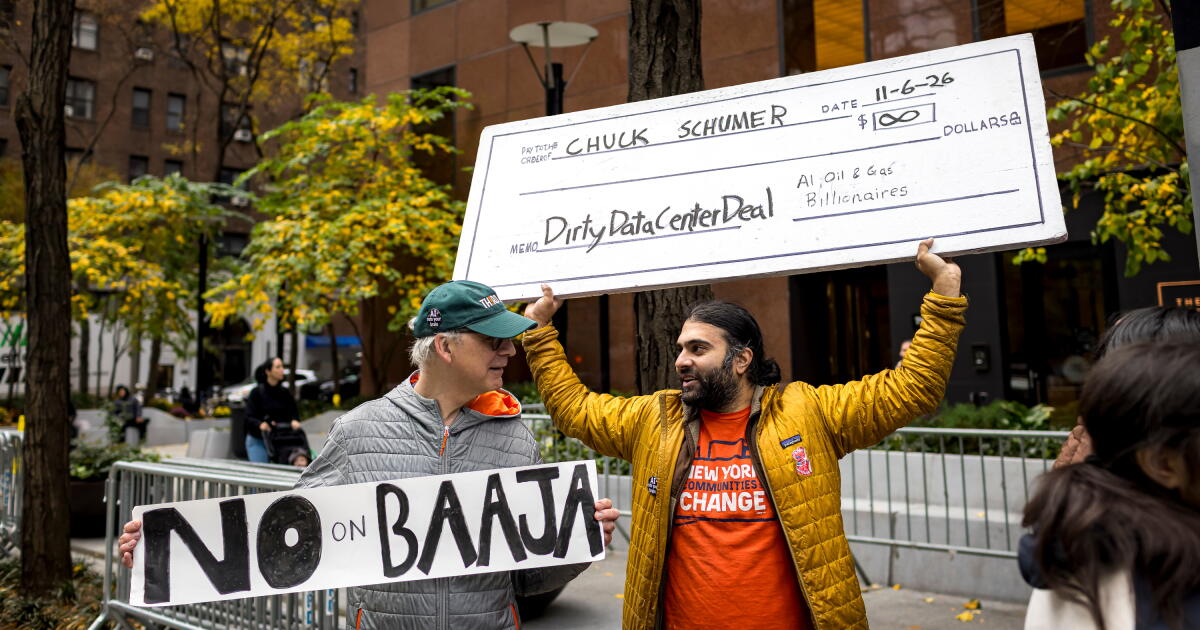
Experts say it has become an important test of where lawmakers are willing to draw the line when it comes to weakening environmental protections in favor of faster infrastructure development. The bill would make it significantly easier to address the bottlenecks slowing the clean energy transition, but would also make it easier to build fossil fuel infrastructure and data centers.
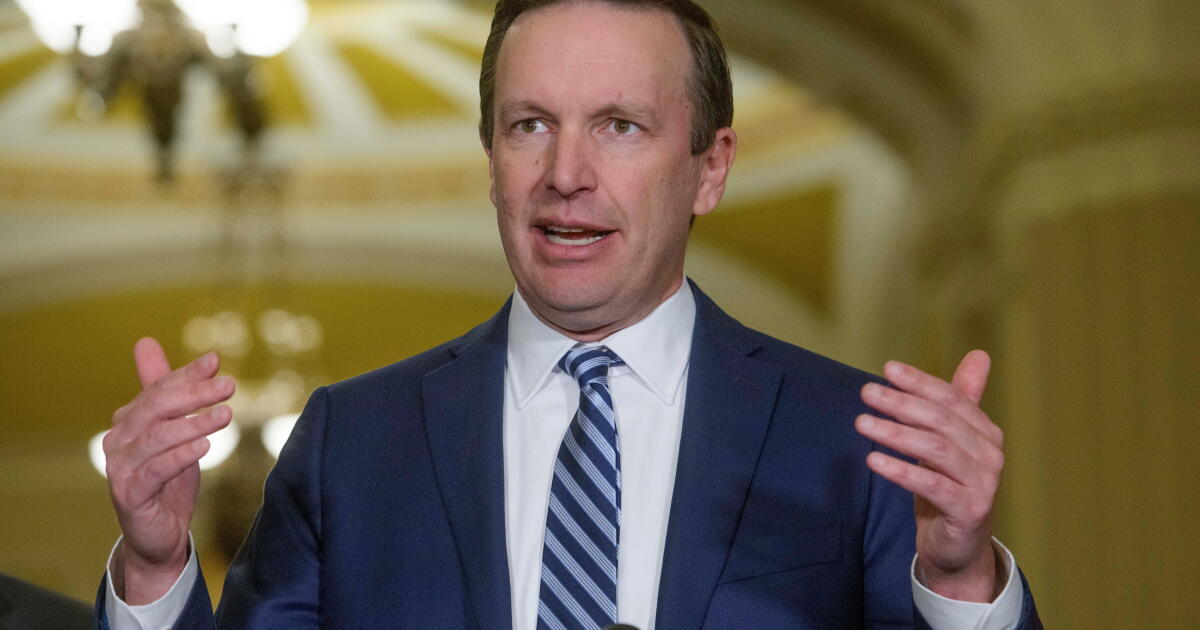
The Senate on Thursday voted 62 to 33 to pass the bill, with 15 Democrats in favor, including Minority Leader Chuck Schumer of New York. Both California senators, Adam Schiff and Alex Padilla, voted against it, saying it achieves some critically important priorities but falls short on others.
The bill is notably broad and includes provisions that would overhaul the National Environmental Policy Act, the Endangered Species Act, the Clean Water Act and the Historic Preservation Act in an effort to narrow the scope of some environmental reviews, shorten permitting timelines, limit opportunities for litigation and change how certain projects are treated.
It would also make it easier to permit new transmission lines, require utilities to participate in regional planning, make energy project permits harder to revoke, and establish new rules for artificial intelligence data centers to bear a greater share of the costs for their power demands.
“It is reasonable to feel both ways about this bill,” said Michael Wara, director of the Climate and Energy Policy Program at Stanford. “It does some concerning things to environmental law. On the other hand, it clears a pathway for permitting of infrastructure we need to build.”
One California project that might be fast-tracked by BAAJA is the proposed Western Gateway Pipeline from Phillips 66 and Kinder Morgan, Wara said. The pipeline would be the first ever to bring refined products directly to the West Coast, delivering gasoline, diesel and jet fuel to Arizona and California from as far east as Missouri.
While some Californians might not love the idea of new fossil fuel infrastructure, Wara said the project would end California’s status as a “fuel island,” which has made residents too dependent on in-state refineries and driven up gasoline prices.
The American Petroleum Institute, of which Phillips 66 is a member, supported the bill, describing the Senate’s vote Thursday as “a major breakthrough on historic permitting reforms that would deliver more affordable energy for consumers, cut costly delays, and build much-needed critical infrastructure.”
BAAJA would also open the door for new longer-distance transmission projects that could deliver more clean electricity to California. That might include connecting California to wind farms in Wyoming or New Mexico, or to solar fields in Nevada.
“We are not building that kind of regional Western grid at the pace that is required … and getting access to those resources at scale is how we keep the energy transition affordable for Californians,” Wara said.
That’s why many clean energy groups have supported the legislation, saying it will not only modernize the nation’s energy system and bring down soaring energy costs, but also help bring down the greenhouse gas emissions that are driving climate change.
Democratic Sen. Martin Heinrich of New Mexico, a coauthor of the bill, said in a statement it would avoid as much as 1.5 gigatons of cumulative carbon emissions and $54 billion in public health damages. He noted that the SunZia wind project in New Mexico — which recently began delivering electricity to California — took more than two decades to complete, and that BAAJA would help speed similar projects in the future.
“This was a hard-fought bipartisan agreement, and it wasn’t easy,” Heinrich said. “But we proved that Democrats and Republicans can put politics aside and deliver meaningful results for the American people.”
However, a number of prominent environmental and tribal groups oppose the legislation, saying it rolls back far too many protections for wildlife, public lands, clean water and tribes, and gives too many concessions to oil and gas companies and data center developers.
Schiff and Padilla pushed for an amendment that would have struck the legislation’s changes to the National Historic Preservation Act, which they said threaten tribal sovereignty.
“I strongly believe we need permitting reform and to build new infrastructure quickly and efficiently,” Schiff said in a statement. “But I also believe that this can be done in a way that does not needlessly degrade clean water, endanger wildlife, or disrespect tribal nations. And for those fundamental reasons, I opposed the bill.”
The bill is expected to face more resistance in the House, with Minority Leader Hakeem Jeffries (D-N.Y.) expressing concern about several of its provisions. California Rep. Jared Huffman, the top Democrat on the House Natural Resources Committee, told The Times recently that he would want to advance a Democratic permitting reform bill after the party takes control of the House and Senate next year.
But other California lawmakers say they’re ready to see it across the finish line, including Rep. Scott Peters (D-San Diego), who wrote some of the central components of the legislation.
“At the end of the day, I think we have a really good bill, and we should get this passed so that we can not be burdened in our new majority with the same issues,” Peters said in a phone call this week. “Because if we don’t, we start from zero.”
He said BAAJA will not only facilitate new clean energy projects in California, but also make it harder for the federal government to revoke approvals for projects underway — something President Trump did with offshore wind projects earlier this year.
And while the bill is technology-neutral — meaning it could support fossil fuel projects as much as renewable ones — Peters said it would effectively “change the mix toward clean energy because that’s what’s being held back now.” There are about 22 gigawatts of renewable energy projects in California that have been delayed because of transmission problems, he said.
Wara, of Stanford, said there’s another, less-discussed provision of the bill that would be “a big deal” for California. It would change how smoke pollution is treated under the Clean Air Act, and ultimately make it easier for the state to conduct prescribed burns — something many say will help reduce the spread and severity of wildfires.
As for opponents who say it would be better to wait until Democrats retake control of Congress, Wara said that would be a gamble.
“I think confidence that you would get a different and better deal is misplaced,” he said. “You might be able to — we can’t rule out that world — but you also might well end up with nothing.”