new law

State attorney general to oversee Kaiser’s medical arbitration system under new law

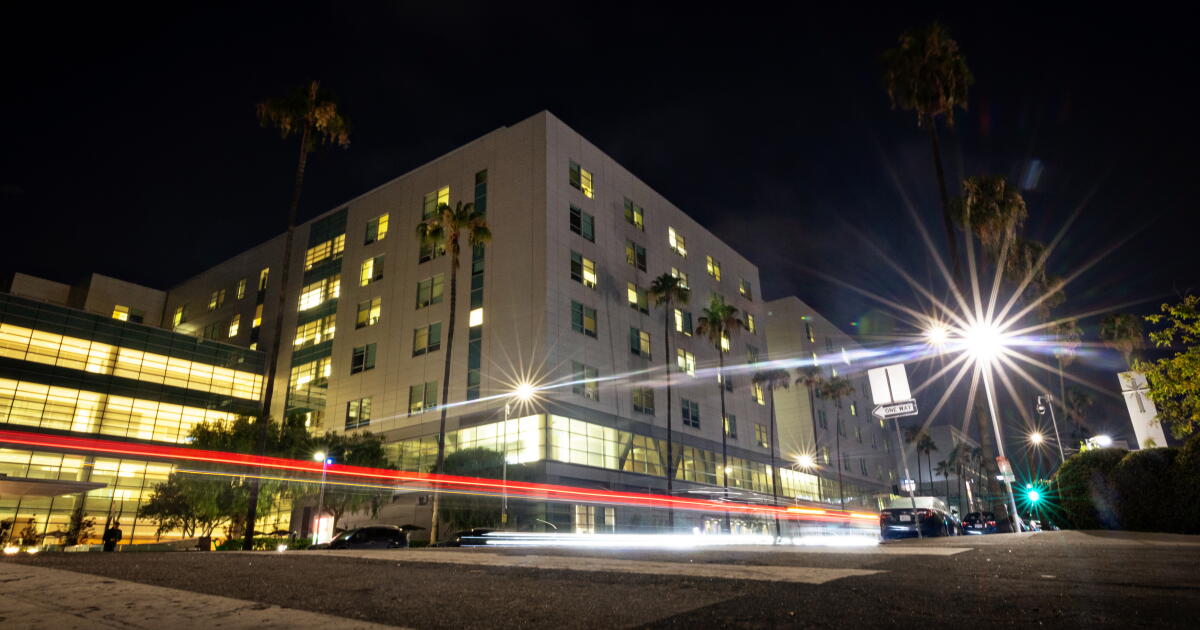
The California attorney general will help oversee healthcare giant Kaiser Permanente’s medical arbitration system to ensure it operates fairly under legislation Gov. Gavin Newsom signed late Sunday.

Patients, their families and lawyers have complained that Kaiser’s private and confidential system of handling medical malpractice complaints is designed to favor the health plan over those bringing the claims.

Under legislation known as Assembly Bill 1770, the attorney general will decide what actions justice officials should take to ensure private arbitrations required by any health plan are handled fairly and in line with state law.

To do that work, the state plans to add as many as four deputy attorneys general, a legal analyst and three legal secretaries, according to a legislative analyst’s report.

“We look forward to continuing to resolve claims through an independently administered system that provides a fair and efficient process for members and patients,” Kaiser Permanente said in a statement Monday.

Roughly 1 of every 4 Californians get healthcare from Kaiser. To join the plan, each one had to check a box, agreeing to use arbitration to settle any dispute.

Many companies and other organizations, including some hospitals and physician groups, require customers or patients to take their complaints to private arbitration rather than to court.

But unlike most other companies, which send claims to large arbitration firms, Kaiser created its own system.

Under Kaiser’s system, once a neutral arbitrator is selected, either party can opt to disqualify that person without cause. There is no limit on the number of disqualifications.

While the health plan designed the system to be fair, patients and their lawyers have alleged that Kaiser’s greater knowledge of arbitrators’ past rulings and its ability to veto arbitrators gives it an advantage to pick favorable judges.

Critics also say the hourly fees paid to arbitrators provide them with a financial incentive to rule in Kaiser’s favor so they will be selected for future cases. Most of the arbitrators are retired judges.

Kaiser has previously defended its arbitration system, saying it was fair for both patients and for the nonprofit.

The bill was authored by Assemblyman Robert Garcia (D-Rancho Cucamonga), a longtime Kaiser member.

Support for it was led by Stephen Martinez, a retired aerospace engineer from Bellflower, who with his wife, Lindalee Iverson, spent $350,000 to bring two arbitration cases against Kaiser. The arbitrator ruled against the couple in both cases.

Iverson died of cancer in 2023.

Martinez told legislators at a hearing this year how his wife had found a lump in her breast and asked for an appointment with her longtime caregiver at Kaiser to examine it. Instead she was sent to a physician assistant, who dismissed it, he said. Later, it was found to be cancer that had spread.

A chief breast surgeon at Kaiser and another surgeon who had retired from that job both testified that the Kaiser physician assistant failed to follow the health system’s guidelines.

Kaiser’s expert argued that the physician assistant did an appropriate exam and that his low suspicion of breast cancer was reasonable. The neutral arbitrator sided with the health plan’s expert.

Martinez has spent years trying to get legislation to make the system more fair.

“I’m elated,” Martinez said of Newsom’s signing of the bill, which was named Lindalee’s Law. “It’s been a long road.”

According to the annual report prepared by the independent administrator of Kaiser’s system, the “most common” complaint the office heard last year was about the neutral arbitrator.

“Most complained that the arbitrator was biased, partisan, unjust, and in Kaiser’s favor,” the report said.

Source link

Newsom signs bills to regulate data center industry, criticizes Trump for inaction

California’s growing data center industry will have more oversight after Gov. Gavin Newsom signed seven bills to regulate the industry’s electricity costs and track water consumption.

The new laws come amid growing public concerns about environmental and economic impacts of the massive facilities, and are aimed at protecting consumers from growing electricity costs and tracking the centers’ immense energy and water consumption.

Newsom on Monday criticized President Trump for dismissing calls to curtail or regulate the facilities and heralding them as “money machines,” even as states and communities across the nation take action to ban or regulate the centers.

“While the Trump administration moves toward deregulation, communities are left to deal with the consequences — higher electricity demand, grid constraints, water use, and pollution,” Newsom said in a written statement Monday. “With these laws, we are ensuring that Californians remain in the driver’s seat — and that those profiting from data centers aren’t doing so at our expense.”

Senate Bill 886 by Sen. Steve Padilla (D-Chula Vista) and Assembly Bill 2383 by Assemblymember Rick Chavez Zbur (D-Los Angeles) establish special rules for data centers’ electrical use. The law orders California Public Utilities Commission to create special requirements and rates for data centers’ use of electricity, including the costs for new power and for infrastructure upgrades.

Scores of other states have already passed similar legislation, according to utility groups.

Two bills by Assemblymember Diane Papan (D-San Mateo) will require oversight of data center water consumption. One measure will require data center operators, when applying for a business license or permit, to disclose an estimate of their water use and the expected source of water. Another will bar cities and counties from approving a new or expanded data center unless the developer submits a water assessment and a water scarcity plan, and will require developers to cover the cost of any water system upgrade that is necessary.

Newsom vetoed a similar Papan bill last year that would have required new data centers to disclose their expected water use. The governor said he was “reluctant to impose rigid reporting requirements” on “this critically important digital infrastructure” without understanding the full impact on the businesses.

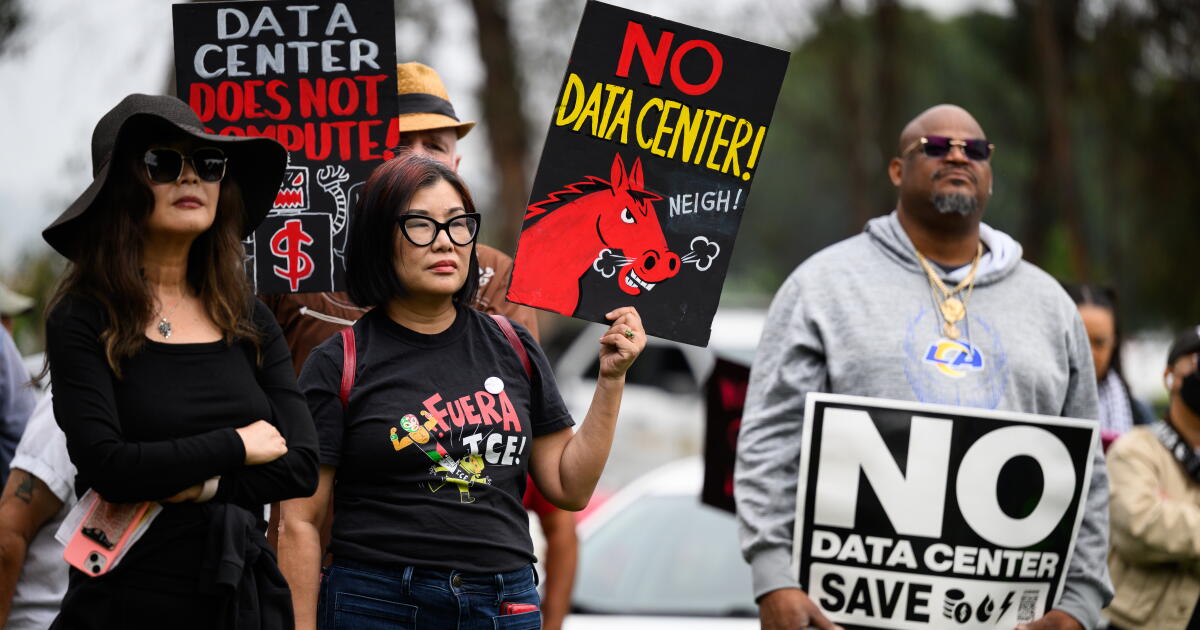
But over the past year, a wave of data center pushback has swept the nation, including California, where dozens of cities and counties have proposed or adopted moratoriums on the facilities. While California lawmakers have hesitated to pursue outright moratoriums and bans that the public is calling for, the political tide has nevertheless turned against the facilities.

Data centers have existed for decades but are rapidly expanding because of the rise of artificial intelligence, or AI. The centers help power everything from streaming services to videoconferencing calls.

Data centers in California are typically smaller than the mammoth, 500+-megawatt AI facilities making headlines in other parts of the country. Electricity costs and state regulations on gas-powered generators limit the vast majority of them to under 100 megawatts.

But as proposals increase in number, opposition has been fierce and growing. A Public Policy Institute of California poll from July showed that 73% of residents oppose the construction of data centers in their communities.

Source link

Prompted by new California and U.S. laws, two new lawsuits demand return of Nazi-looted art

For the first time since California and Congress passed a pair of laws bolstering U.S.-based claims to Nazi-looted artwork around the world, two lawsuits have been filed in California demanding prominent museums relinquish pieces seized during World War II.

In one case, filed in federal court in Los Angeles on Monday, the daughters of Auschwitz survivor Dina Gottliebova Babbitt sued the Auschwitz-Birkenau Memorial and Museum in Poland for the return of watercolors Babbitt was forced to paint of fellow prisoners for the Nazi physician and war criminal Josef Mengele.

In the other, filed in Los Angeles Superior Court on Monday, the Jewish Federation of Greater Los Angeles and Daniel Gryczman, the federation’s board chair, sued the Norton Simon Museum in Pasadena for the return of the diptych “Adam and Eve,” a pair of 16th century masterpieces by Lucas Cranach the Elder.

The lawsuits revive legal battles waged unsuccessfully for the watercolors and the diptych for years, on the premise that their claims are newly viable under the new laws — one passed by California lawmakers in 2024 and the other signed into law by President Trump earlier this year.

Both laws were inspired in part by another legal battle over looted art between a California family and a prominent museum, which is still ongoing.

Lilly Cassirer Neubauer escaped Germany at the dawn of World War II by relinquishing to a Nazi art broker the exquisite impressionist masterpiece “Rue Saint-Honoré in the Afternoon. Effect of Rain,” by Camille Pissarro. The painting is now worth millions. Her grandson Claude Cassirer, who moved to California, and great-grandson David Cassirer have been fighting for the painting’s return from the Thyssen-Bornemisza Collection in Madrid for the last two decades.

Amid that battle, California lawmakers rewrote state law to make clear that in situations where it and another jurisdiction’s law on looted artwork are in conflict, California law applies and requires the return of the art to its original owners regardless of the passage of time. In an unusual moment of bipartisanship, Congress followed up by passing its own measure — the Holocaust Expropriated Art Recovery Act of 2025 — to further bolster such family claims.

The two new lawsuits — neither of which provide a valuation for the artwork in question — were filed just ahead of a deadline under the California law for claims to artwork with long-known locations.

David Cassirer said his father would be “extremely proud” to know a California law passed in part in response to his family’s fight has also given other families another chance “to vindicate their ancestors’ artistic legacies.”

Auschwitz watercolors

Michele Babbitt Kane, of Ben Lomond, Calif., and Karin Wendy Babbitt, of Las Vegas, say in their lawsuit that Mengele demanded their mother produce the seven watercolors in question — each depicting a Roma prisoner later murdered — to support his “pseudo-scientific” and racist work studying the Roma people. Known as the “Angel of Death,” Mengele conducted gruesome medical experiments on Auschwitz prisoners.

They said their mother obliged “with deep sympathy for her subjects,” on the condition Mengele “spare her and her mother from the gas chambers.”

After liberation, the lawsuit says, their mother moved to California and worked for nearly 20 years as an animation assistant for Hollywood studios such as MGM and Warner Bros., where she contributed to familiar cartoon characters such as Wile E. Coyote, Tweety, Daffy Duck and Speedy Gonzales.

They say theirs is exactly the sort of case California’s new law was enacted to allow — involving “a California family seeking the return of watercolors created by their Jewish mother under Nazi coercion at Auschwitz and withheld by a Polish state museum for decades despite the Museum’s own repeated acknowledgments of the family’s rights.”

Paweł Sawicki, a spokesperson for the Auschwitz Memorial, said in a statement to The Times that the Babbitt paintings “must remain in the Memorial as part of the documentation of the crimes of Mengele,” and that many in the Roma community agree.

“We fully understand the emotional approach of Dina Gottliebova’s family to the works she made on the orders of Josef Mengele in circumstances that certainly affected her life, but in carrying out our statutory responsibility, we express the deep conviction that the watercolors should remain at the Memorial,” Sawicki said. “The portraits of Roma victims are the few remaining fragments of the documentation made by Mengele as part of his criminal experiments. Therefore, they should be treated as unique documents related to the history of Auschwitz.”

‘Adam and Eve’ diptych

According to the Jewish Federation’s lawsuit, the “Adam and Eve” paintings were part of a vast collection seized from prominent Dutch Jewish art dealer Jacques Goudstikker by Hermann Göring, Hitler’s second-in-command. The collection was later recovered by Allied forces and given to the Dutch government, with the diptych being sold to the Norton Simon in 1971.

The lawsuit says Marei von Saher, Goudstikker’s surviving heir, has long sought the return of the Goudstikker collection, and years ago was successful in forcing the Dutch government to return 200 pieces still in its possession. She first demanded the “Adam and Eve” paintings from the Norton Simon in 2000, without success.

The new lawsuit says Von Saher on Monday signed her claimed rights to the paintings over to Gryczman and the Jewish Federation, which said in a statement that they will use a majority of any proceeds from the return of the paintings to “care for Los Angeles-area Holocaust survivors living in poverty.”

Von Saher’s daughter, Charlène von Saher, said in an interview that her family gave the painting rights to the Jewish Federation because of that shared mission. She said she wishes California and Congress had acted sooner but hopes a win now will help other Jewish families reclaim what is rightfully theirs in the future.

“My grandfather lost his life fleeing the Nazi invasion, and many of his family members were sent to Auschwitz and did not survive,” she said. “Victory would be justice, and a piece of the puzzle to restoring my grandfather’s legacy and his collection.”

The Norton Simon Art Foundation said in a statement to The Times that it was reviewing the new lawsuit, but that various courts, including the U.S. Supreme Court, have over decades of litigation confirmed that the foundation “has proper title” to the diptych paintings, and the foundation “will continue to make these important artworks accessible to the public.”

The Pissarro

The Thyssen-Bornemisza Collection and the Kingdom of Spain, which owns it, have fought the Cassirer family’s claims to the Pissarro painting since Claude Cassirer, now deceased, first sued for its return in 2005. Spain has argued the painting was legally obtained by the collection prior to its 1993 sale to the country by Baron Hans Heinrich von Thyssen-Bornemisza, a prolific art collector whose wealthy industrialist family helped finance Adolf Hitler’s rise.

The matter has repeatedly wound its way through the U.S. courts, including to the Supreme Court, which remanded the case to the lower courts for additional review in light of California’s new law. A hearing is set for next month.

The museum has contended California’s new law is unconstitutional, which California is contesting. David Cassirer has argued the law clearly requires the museum to return the painting — and has pledged to support other looting victims with any proceeds.

He said both California and Congress “acted decisively to guarantee that stolen art victims, and victims of political persecution in particular, can have a fair shot to recover family legacies the Nazis ruthlessly tried to destroy,” and that “the momentum at all levels of government in favor of restitution is very encouraging.”

Source link