new deal

U.S. has sent deportees to many African countries, the latest one being Liberia. Here’s why

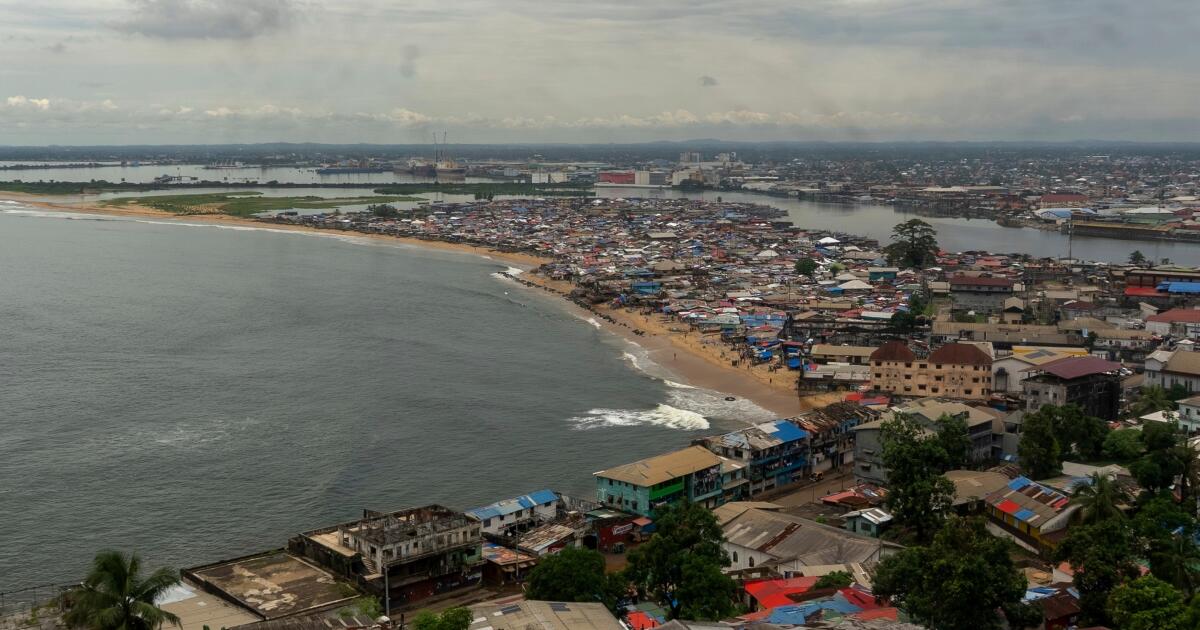
Twenty migrants deported from the United States arrived in Liberia on Thursday, the first group of an eventual 1,200 deportees that the West African country says it will receive from the U.S. under a new deal.

Under a series of often-secret agreements, the Trump administration has deported thousands of people to two dozen countries that aren’t their own, as it pushes ahead with its immigration crackdown, advocates say.

An estimated 11 of those agreements, nearly half the total, are with African countries and the Liberia-U.S. agreement involves one of the largest numbers of such third-country deportations

Immigration lawyers say the practice is being used as a legal loophole to indirectly return some asylum-seekers to countries they fled. Authorities in Liberia have said the deportees being welcomed in their country can seek asylum there or leave if they choose.

Here’s what to know about the deportations:

Why some African countries accept deportees

Other African countries that have received third-country deportees from the U.S. include South Sudan, Eswatini, Rwanda, Ghana, Equatorial Guinea, Cameroon, Congo, Uganda, Sierra Leone and the Central African Republic.

Some, like Ghana and Sierra Leone, are accepting deportees from their regions — in this case West Africa.

Many of the African countries approving the deals are among the worst hit by the Trump administration’s policies, including on trade, aid and migration. A good number of them also have authoritarian governments, raising questions about the lack of accountability and due process to ensure the protection of the deportees’ rights.

Details of most of the deals are never made public and some of the African nations, like Ghana’s government, have defended their actions as having been taken on humanitarian grounds.

The Trump administration had spent at least $40 million to deport about 300 migrants to countries other than their own, according to a February report by the Democratic staff of the U.S. Senate Foreign Relations Committee. More countries have entered the deal since then.

Congolese President Félix Tshisekedi has described his country’s agreement as an “act of goodwill between partners,” without financial compensation. The deal came as Washington increased pressure on neighboring Rwanda over its support for M23 rebels, a dynamic analysts say may help explain Congo’s willingness to cooperate.

Many are asylum-seekers

Early flights to Africa included people that the U.S. said had convictions for serious crimes. But later transfers have included asylum-seekers with U.S. court orders protecting them from being returned to their home countries because they could face persecution or torture.

Many say they’ve been sent to countries with which they have no ties and where they were not told about until hours into the deportation journey.

For instance, a gay Moroccan woman deported to Cameroon, where homosexuality is illegal, and an Iranian woman with U.S. court protection from returning to Iran who was sent to the Central African Republic.

Immigration lawyer Alma David called that an effective legal “loophole,” saying deportees can be left with “impossible choices” — remain in an unfamiliar country with little support or return to a country a U.S. judge found unsafe.

U.S. policy says that when a receiving government gives blanket diplomatic assurances that deportees won’t face persecution there, they can be removed without additional procedures, David told The Associated Press.

Conditions vary in different countries

Some of the deportees have recounted being shackled while some were held in full-body restraint straitjackets called the WRAP during flights that can sometimes last more than 16 hours.

Their conditions in the different countries vary. In Sierra Leone, the government hired private contractor Kenvah Solutions to provide housing, food and healthcare.

In Congo, the International Organization for Migration said it has provided “humanitarian assistance” and offered assisted voluntary return to the migrants’ home countries. But deportees told the AP their movements were tightly controlled. They were housed behind locked gates, could not leave alone and were allowed out roughly once a week accompanied by IOM staff.

In Equatorial Guinea, the AP found deportees confined in a hotel owned by the family of President Teodoro Obiang Nguema Mbasogo. Migrants said they were barred from leaving, had uneven access to medical care and faced repeated pressure to return home. Twenty-five of at least 32 people held there had been sent to their home countries by May.

Deportations have led to lawsuits and human rights concerns

Rights advocates say the third-country deportation program risks violating non-refoulement, the principle barring governments from sending people to places where they face persecution or torture.

An international coalition sued Ghana in June on behalf of 27 deportees, alleging most were quickly sent to their home countries, despite U.S. protection orders, and that some were held under armed guard in military camps, hotels and airport cells.

Rights lawyers have also brought a case against Equatorial Guinea before the African Commission on Human and Peoples’ Rights, alleging deportees were returned to countries where they faced persecution despite U.S. court protections.

Banchereau writes for the Associated Press.

Source link

Bradley Beal returns to Clippers after season derailed by injury

Bradley Beal is returning to the Clippers after missing most of last season because of a left hip injury.

The 33-year-old guard signed a new deal, the team said Thursday. No terms were announced. ESPN’s Shams Charania reported it’s two years for $13.2 million.

In his first season with the Clippers, Beal averaged 8.2 points, 1.7 assists and 20.2 minutes in six starts before sustaining the season-ending injury on Nov. 8.

The three-time All-Star has averaged 21.4 points, 4.3 assists and 4.0 rebounds during his 14-year NBA career, including stints with Washington and Phoenix.

Source link

War escalates, oil prices surge as Iran-backed Houthis strike Saudi tankers in Red Sea

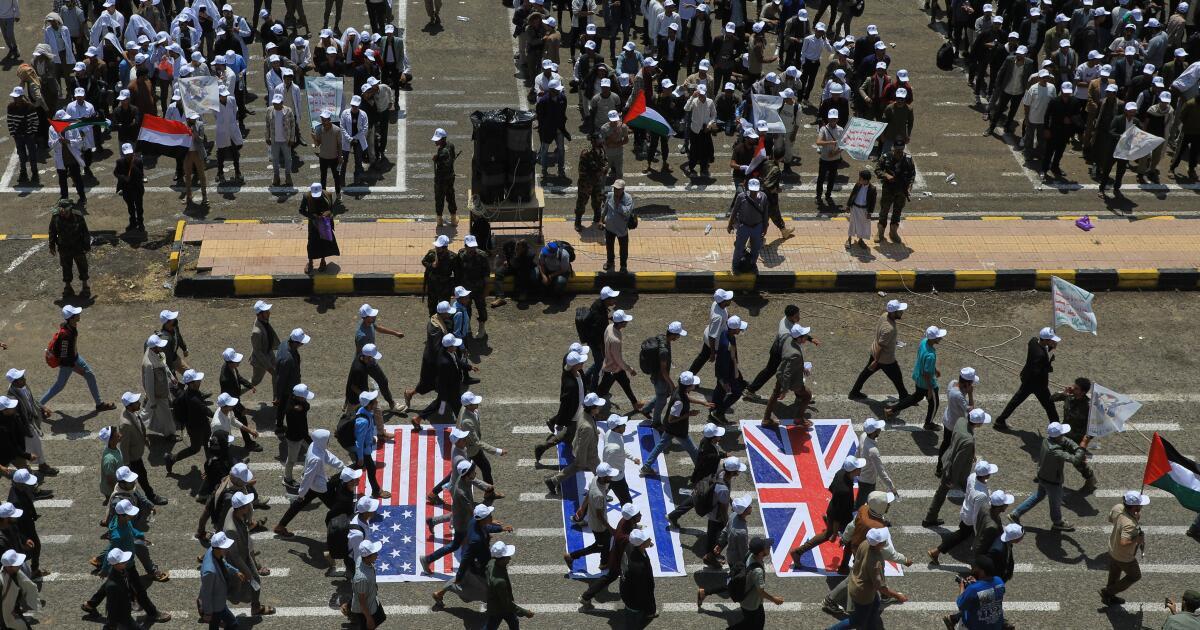
The U.S. war with Iran escalated again Thursday as Iran-backed Houthis in Yemen attacked two Saudi Araian oil tankers in the Red Sea, causing global oil prices to surge amid fears of yet another vital energy corridor being choked off by the conflict.

The attacks came after the Trump administration threatened additional strikes on Iran’s nuclear infrastructure while pushing a new deal to help Saudi Arabia develop a nuclear energy program of its own. Also Thursday, four Republicans in the U.S. House joined Democrats in a vote to halt the American military campaign absent congressional approval. Senate Republicans blocked a similar measure.

The price of oil hit $100 a barrel for the first time since May, increasing the financial pressure on Americans at the gas pump and the political pressure on President Trump to end a war he promised would last weeks but has persisted for months. At least 18 U.S. service members have died in the war.

The Houthis, who control the populous northwest of Yemen, receive arms and training from Tehran but had remained largely on the sidelines since the U.S. and Israel launched the war. Their latest strikes complicate already fraught negotiations between the U.S. and Iran after the collapse of a ceasefire this month amid renewed hostilities in the Strait of Hormuz, the other major energy passageway choked by the conflict.

The Houthis had this week announced a naval blockade of Saudi ships in the Red Sea, which stretches along Saudi Arabia’s western flank. That blockade centered on the Bab al Mandeb strait, the only southbound route for Saudi tankers headed to Asian markets.

Tanker traffic has already been heavily diminished in the Persian Gulf along Saudi Arabia’s northeast flank and between it and Iran, because of Iran’s threats to vessels traveling through the Strait of Hormuz. Saudi Arabia had diverted its oil exports to its Red Sea ports and out the Bab al Mandeb, dispatching some 4.5 million barrels via that route per day.

In a social media post Thursday, Trump said that if the Houthis continue attacking ships in the Red Sea, the U.S. “will hold Iran responsible” because the Houthis are an Iranian proxy, and inflict “major military punishment” on the Houthis and Iran.

He said he was “very disappointed” in the Houthis, “in that they have, until now, acted very professionally and smart” amid the Iran war.

At a later event Thursday, Trump said the U.S. is “doing extremely well” against Iran, which he accused of having “evil intentions.”

Democrats in the House and Senate cited the war’s spread to the Red Sea as yet another reason that Congress should act to pass a war powers measure to halt the president’s military campaign. Sen. Chris Van Hollen (D-Md.), who led the unsuccessful effort in the Senate, cited the expansion while recalling how Trump had claimed victory in Iran as far back as March.

“If we won back in March, why are more Americans getting killed in July? If we won back in March, why is the Strait of Hormuz closed? If we won back in March, why is the war expanding as Houthis attack ships transiting the Bab al Mandeb strait in the Red Sea? If we won back in March, why are oil and gas prices and diesel prices shooting through the roof again, imposing costs on every American family?” Van Hollen said. “Is that their definition of winning?”

The Houthis’ military spokesman, Yahya al-Sarea, said the group’s forces conducted “a qualitative military operation” targeting two Saudi oil tankers with missiles and drones for what he said were violations of the Houthis’ blockade on the Red Sea.

The Houthis have accused Saudi Arabia of imposing a blockade on airports and seaports in northwestern Yemen, where most of the country’s population lives and which the Houthis otherwise control. They also blamed Saudi Arabia for an attack this month on Sanaa’s airport to prevent the landing of a plane carrying a Houthi delegation returning from the funeral of Iranian Supreme Leader Ali Khamenei, who was killed at the start of the war.

Al-Sarea said that in addition to striking the two tankers, the Houthis forced 10 other ships to turn back from their passage, will “continue their naval operations against the Saudi enemy” and will “continue imposing the equation of blockade against blockade.”

The escalation of the war — and the shock wave it sent through global energy markets — added to regional uncertainty already being stoked by the Trump administration’s announcement Wednesday that it had agreed to work with Saudi Arabia to develop a civilian nuclear program.

That announcement, after years of U.S. attempts to block nuclear proliferation in the Middle East, sparked widespread concern in Washington, where lawmakers will vote on the deal, and in Israel, which has long feared a nuclear arms race in the region.

Trump administration officials said the deal would “uphold the highest standards of nuclear safety and nonproliferation,” with American firms developing the program. But they provided few details, and questions immediately arose about the absence of clear inspection protocols or any requirement that Saudi Arabia first normalize diplomatic relations with Israel.

On Thursday, Trump said the deal would be conditioned on Saudi Arabia joining the Abraham Accords and establishing diplomatic ties with Israel. White House Press Secretary Karoline Leavitt later said that Trump had not talked to Saudi leaders since making that condition public, but that they would have to agree to it or “the deal is off.”

Leavitt said that Trump had raised the matter with Saudi leaders in the past, and that it is something Trump “feels very strongly about.”

Asked whether Israel pressured the president to impose the condition, Leavitt said, “Not to my knowledge.”

Earlier this week, Defense Secretary Pete Hegseth told Congress that the Iran war has already cost the U.S. $37.5 billion. House Republicans on Wednesday pushed through a $1.15-trillion defense policy bill to fund the war moving forward. Most Democrats voted against the measure in protest of the war, and it faces stiff opposition in the Senate.

Trump in recent days has tried to deny polls showing plummeting support for the war among Americans. On Wednesday, before attending the dignified transfer of the bodies of U.S. service members killed in the war to Dover Air Force Base in Delaware, Trump claimed Americans don’t want high gas prices but “aren’t against the war.”

On Tuesday, Trump posted statistics showing that more U.S. service members died in past wars, which Democrats denounced as disrespectful to those killed in the current conflict.

The Houthis seized control of the Yemeni capital in 2014, along with much of Yemen’s populous northwest. Their advance triggered a devastating Saudi-led campaign to dislodge them. Since 2022, the two sides have been in a stalemate, though tensions have been rising again in recent months.

Mohammed al-Basha, founder of the Basha Report, a U.S. risk advisory firm focused on the Middle East and Africa, said the Houthis’ latest escalation comes as their influence is growing because of the increased importance of Bab al Mandeb while the Strait of Hormuz is choked off by Iran.

“This is their moment, because with everything happening in the Strait of Hormuz, Bab al Mandeb quadrupled in importance. By exerting maximum pressure in this period, they can maximize the effect of any kinetic action they’re trying to do,” Al-Basha said.

“Their narrative is very aggressive. They want war. And they feel that because they want war and sense that the U.S. and Saudi Arabia don’t, that they will submit to their demands.”

Source link

USC and Nike agree to extend apparel deal for 10 years

The Swoosh is staying at USC for the foreseeable future.

USC and Nike agreed this week to a 10-year extension of their all-sports apparel deal through 2036, the school announced on Tuesday.

Their partnership was already among the longest-running apparel deals in college athletics. Now it’s ensured to carry into its fifth decade.

“USC and Nike have grown together for more than 30 years,” athletic director Jennifer Cohen said in a statement, “and we are thrilled to continue one of the great partnerships in college athletics.”

At the time that USC first signed exclusively with Nike, such corporate sponsorships were a relatively new revenue stream for the school. Now, in the revenue-sharing era, they’ve become a ubiquitous — and essential — part of operating an athletic department.

This new deal should look a bit different than the last few times that USC extended their apparel deal with Nike. For one, it includes an NIL component, with select top-tier Trojan athletes slated to score their own NIL deals with Nike.

As part of the extension, USC’s new Bloom Football Performance Center will become the first facility in the nation fully outfitted with Nike strength equipment. Nike also agreed to design “custom uniform collections” for the USC men’s and women’s basketball programs and to renovate the USC Bookstore.

The financial terms of the deal were not disclosed. Other Big Ten schools signed with Nike signed during a stretch between 2015 and 2016 that became an apparel arms race around college football. Ohio State signed a 15-year, $252-million deal with Nike in 2016, while Michigan inked an 11-year, $174-million deal with Nike and Jordan Brand.

Source link