DreamWorks is betting on originality with ‘Forgotten Island’
Several years ago, DreamWorks Animation veterans Joel Crawford and Januel Mercado pitched the studio an original story centered on friendship and steeped in Filipino culture.
That draft became the animated film “Forgotten Island,” which opened in late September and counts singer H.E.R., Liza Soberano and Dave Franco among its voice cast. The movie focuses on best friends Raissa and Jo, who will soon be separated when Raissa goes to college in the U.S., and the final adventure they take to the fantastical island of Nakali.
The movie opened to a softer $13 million in the U.S. and Canada and has so far made $23.6 million at the domestic box office over two weekends. Globally, “Forgotten Island” has brought in $38.5 million on an $80-million production budget.
That opening haul is lower than the average for original animated films from a major studio, which is about $14.6 million, according to the FranchiseRe movie industry newsletter. But the studio is hoping the movie — which has garnered a strong 95% rating on Rotten Tomatoes — will pick up steam and benefit from the relative lack of animated competition at the box office until the early November debut of “The Cat in the Hat,” developed by Warner Bros. Pictures Animation.
“Forgotten Island” is a big bet for Glendale-based DreamWorks Animation, which like many studios, has largely depended on sequels to drive box office success.
Original animated stories — or original movies at all — have become rarer gambles in Hollywood these days, when sequels and reboots feel like safer options. But Crawford and Mercado knew they wanted to develop a new story together.
The pair, who wrote and directed the film, have been friends for nearly two decades after they met at DreamWorks Animation as storyboard artists. Together, they’ve worked on 2011’s “Kung Fu Panda 2,” 2013’s “The Croods” and 2022’s “Puss in Boots: The Final Wish.” The two bonded over their similar sense of humor and their love for movies, and their longtime friendship was apparent in their easy banter during a joint interview shortly after the “Forgotten Island” premiere last month.
Early on, Crawford and Mercado knew they wanted to tell a story set in the Philippines that celebrated Filipino culture. Mercado is Filipino American and Crawford’s wife is Filipino, so a movie that authentically represented Filipino culture was important to them. In the film, the island of Nakali has many creatures inspired by Filipino folklore, and the characters casually use Tagalog words alongside English.
“There’s a sophistication in terms of respecting that the audience is smart, and doing our part as filmmakers to make sure that the visual storytelling and the context gives everything the audience needs to know,” Mercado told me.
Audiences, too, are more comfortable with content in other languages these days, as I wrote last week about Neon’s Korean-language thriller “Hope.” After all, kids will sing Korean lyrics in K-pop songs, and even “Puss in Boots: The Final Wish” interspersed Spanglish into the story.
“It feels timely to update the way we tell stories, to not treat the audience like, ‘They won’t understand this,’ but really treat them with respect,” Crawford said. “It just felt right to chase authenticity and let go of expectations, especially of what an animated movie should be and has been, and really do something fresh because it’s just coming from who we are.”
In the last few years, animation has been a powerhouse at the box office. Disney and Pixar’s “Toy Story 5” and Universal Pictures, Nintendo and Illumination’s “The Super Mario Galaxy Movie” have each crossed $1 billion at the global box office, two of only five movies to do so this year. In 2024, Disney and Pixar’s “Inside Out 2” was the highest grossing movie in the U.S. and Canadian markets.
Original stories have been tougher. Pixar has recently struggled to match the theatrical success of its prior original films and the slower start for “Forgotten Island” may be a sign of similar hurdles for new stories. But culturally accurate storytelling has paid recent dividends — just look at the success of Netflix’s “KPop Demon Hunters,” which won two Oscars, broke streaming records and sold out theatrical singalongs.
“We believe that there is a platform and space for everyone’s story, for people to feel seen and to know they matter,” Mercado said. “Even when they see a story that is specifically Filipino, if we’ve done our job right, we’ve shown you that you could connect to the story, whether or not you have this experience with the Filipino community or the culture.”
With “Forgotten Island,” Mercado and Crawford also want to push the boundaries of animation beyond its perception as films just for kids. Later this year, films such as Laika’s PG-13 rated “Wildwood” and Brad Bird’s noir film “Ray Gunn” will test the audience appetite for more adult animated and original fare.
“We’re in a time of massive sequels,” Crawford said of stories today. “When you expand where you’re telling them and who is telling them, you naturally get originality. This year has been really exciting for original stories in both animation and live action. You are taking a chance on originality, but it pays off.”
Stuff We Wrote
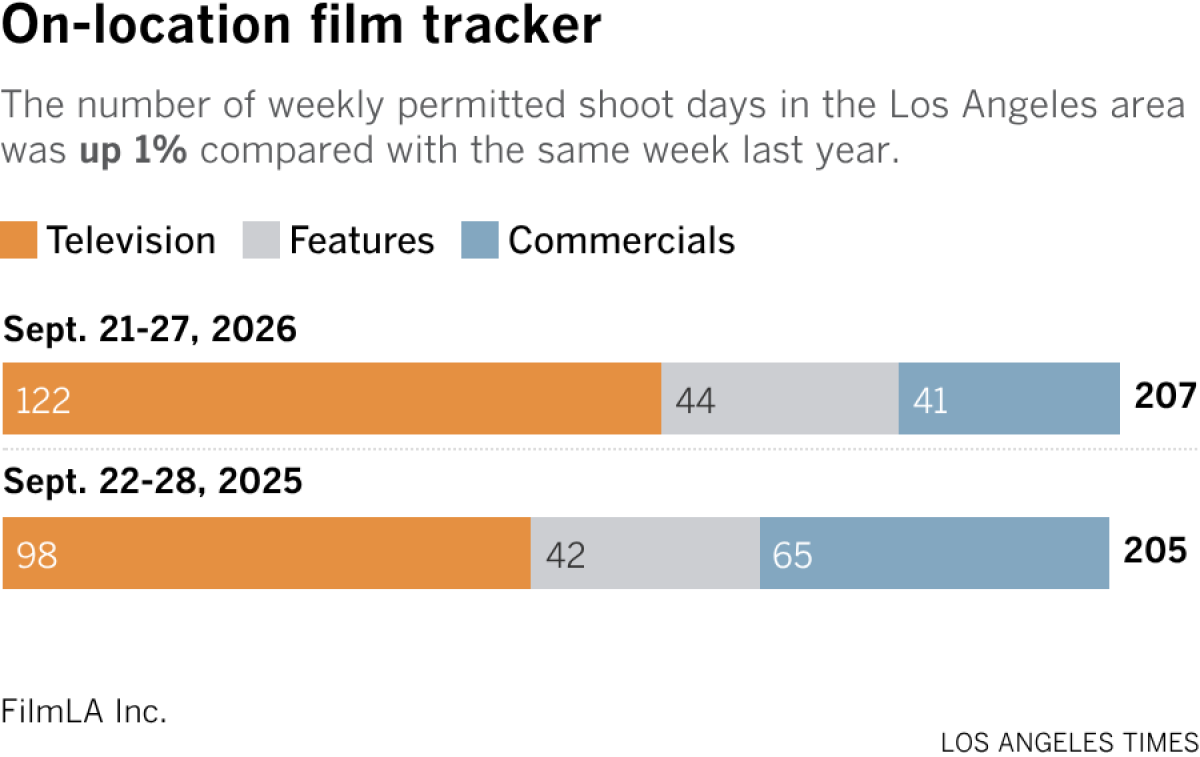
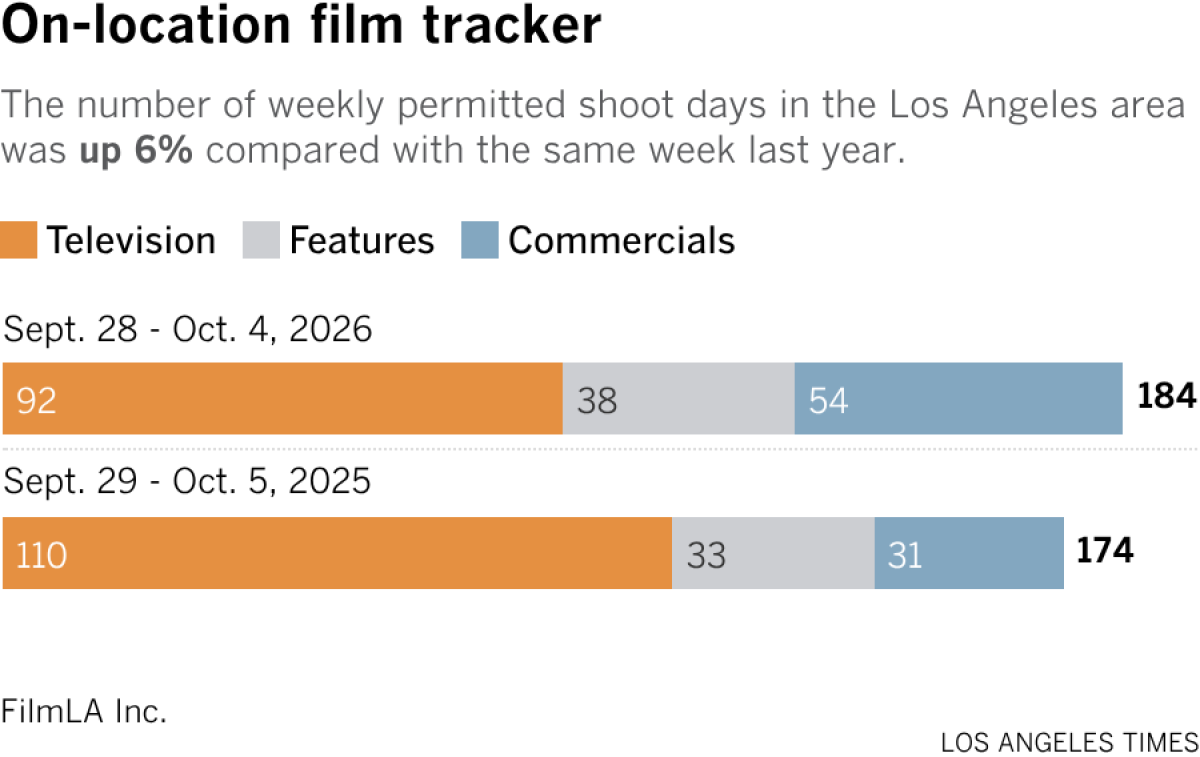
Film shoots

Number of the week

The Tom Cruise-led “Digger” tanked at the box office last weekend with a domestic debut of $8 million, good enough for fifth place.
The Warner Bros. film was plagued by very mixed reviews from critics, as well as a challenging marketing campaign. The film stars Cruise as an aging oil tycoon whose drilling operations trigger a catastrophic climate change disaster. Worldwide, the film brought in $20 million on a production budget of $125 million.
It’s been a tough theatrical year for Warner Bros., which has seen a string of disappointments before “Digger.” Beyond the cinema, the company is now in the process of being absorbed by Paramount Skydance, with the merger set to finalize Tuesday.
What I’m watching
It’s been yet another busy week, so about the only thing I was able to watch was a few WNBA playoff games. Since the Sparks were left out of the playoff picture again, I’ve sort of adopted the Golden State Valkyries as the next best California team to root for, and what a wild game that was over the weekend against the Las Vegas Aces.