new congress

Medicare for All was once a long shot. Now, steps toward it are part of the Democratic agenda

What were once long-shot ideas around universal healthcare — championed by Sen. Bernie Sanders’ Medicare for All — have suddenly been catapulted to the forefront of the Democratic agenda for the new Congress in January.

The party in its first 100 days is planning swift action on legislation to reverse recent Medicaid cuts that threaten to leave millions of people without care and to revive tax breaks that help people who buy insurance through the Affordable Care Act.

But it’s also becoming clear that the Democrats have far more ambitious healthcare goals as they prepare to take charge on Jan. 3, 2027.

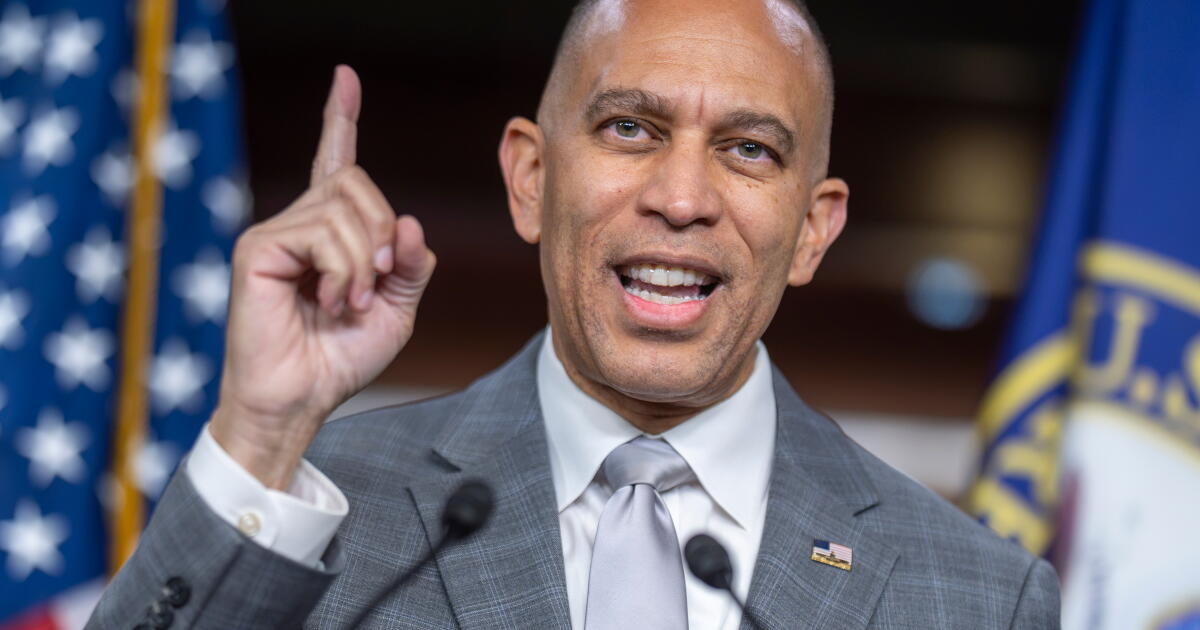
Democratic leader Hakeem Jeffries of New York, on track to become House speaker, announced his intentions to take steps toward Medicare for All in a post-midterm election speech that stunned health advocates. He listed proposals to lower the Medicare eligibility age below 65, add dental, vision and hearing aid benefits, and open up healthcare to children as part of the incoming majority’s plans — all aspects of Medicare for All.

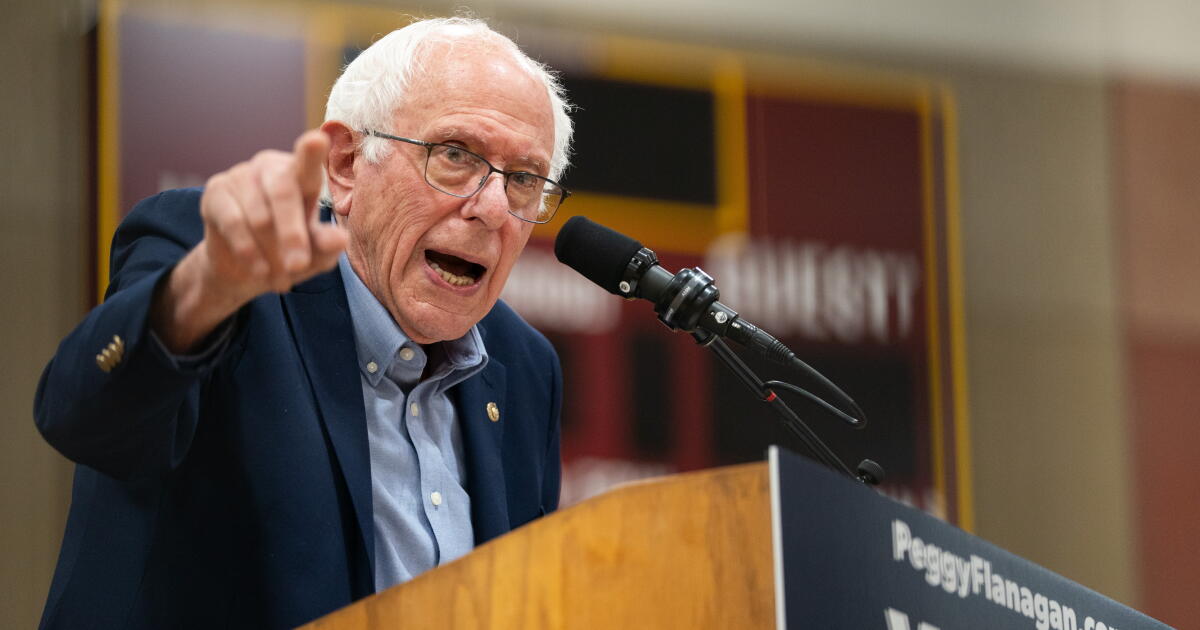
Sanders, a Vermont independent who caucuses with Democrats, unveiled his push for portions of Medicare for All as he takes over the chairmanship of the Senate health committee.

And even former President Obama encouraged newly elected Democrats to go beyond the ACA, also known as Obamacare, which was among his signature accomplishments in office.

“We got the ACA done, which was wonderful,” Obama said, according to a transcript of his remarks to the incoming Democrats at the Capitol.

“But I was very explicit at the time. This is a starter home. It is not the answer,” he said. “You should push further and get more.”

After a change election that ousted Republicans in a rebuke of President Trump’s party, Democratic leaders are eager to use their incoming wide majorities in the House and the Senate to deliver on their campaign promises, particularly healthcare affordability.

The details are still taking shape, and there almost certainly will be pushback from moderate and centrist Democrats who helped win the majorities, especially regarding the costs of any healthcare expansion. But Democratic leaders appear increasingly confident that proposals to expand healthcare are no longer far-flung liberal ideas but are basics that voters who sent them to Washington expect from their government.

“It’s been an ongoing conversation over the last several months, about how we acknowledge the urgency of the moment on healthcare and that it can’t just be going back to restoring what was,” said Rep. Pramila Jayapal, D-Wash., who has been in talks with Jeffries about moving the legislation forward.

Voters want more government action on healthcare

About 6 in 10 voters nationally said the federal government should play a bigger role in helping Americans get healthcare than it does now, according to The AP Voter Poll, a survey of more than 100,000 midterm voters.

The same number said they are “very concerned” about the cost of healthcare, according to the survey.

Sanders, who has advocated for healthcare essentially since he arrived in Congress more than 30 years ago, is now seen as an elder statesman on the issue for a new generation of lawmakers, including Rep. Alexandria Ocasio-Cortez, D-N.Y.

Jeffries, who had been an early co-sponsor of Medicare for All but backed away once he became House Democratic leader after the 2022 election, recently namechecked Sanders as the “O.G.” whose committee will be among those tackling the issue.

“We’re going to begin very early on in the new Congress by working to reverse the Medicaid cuts and working to extend the Affordable Care Act tax credits,” Jeffries said at a post-election conference of Democrats in Denver.

“And then we’ve got to go further to make sure that we don’t just fix what’s broken but that we build upon what we need to do,” he said, as a heckler tried to shout him down.

Jeffries went on, “I think we’ve got to lower the age of eligibility as it relates to Medicare. I think we’ve got to make sure that we cover hearing, vision and dental, and we got to make sure that every child in America can be able to see a doctor with high-quality, affordable healthcare.”

Progressives were thrilled. Jeffries had essentially outlined the first year of Medicare for All’s multiyear phase-in plan.

“We had a sense that he was positively inclined,” said Jayapal, who is also a past chair of the Congressional Progressive Caucus, “but he just went ahead and did it.”

Trump has the power of veto but also a penchant for deals

Trump has promised to use the power of the presidential veto to swat back the Democratic agenda.

But as Trump takes stock of his final two years in office with Democrats in charge of Congress, he has also indicated the potential for dealmaking with Jeffries and Senate Democratic leader Chuck Schumer.

“They’re all smart,” Trump said about the fellow New Yorkers at a news conference on Friday, his first since the midterm election blowout.

“They’re going to send things my way, and I’m going to veto them,” he said. “But I think after a month or so they’re going to send things and I’m going to say, ‘I’m going to veto — unless you want to do this and this and this.’”

Trump suggested that after years of his own Republican Party’s efforts on healthcare — largely attempts to repeal and replace Obamacare — perhaps he could find something better with the Democrats.

“There’s a real possibility that we’ll get a lot of great things done, especially on healthcare,” he said. “Now, can it be what they want? No, but it can be a combination of what we all want. And we could end up with great healthcare in our country.”

Democratic Sen.-elect Abdul El-Sayed of Michigan, who aligns with Sanders on this and other issues, recently posted imagery of “TrumpCare,” a golden insurance card, enticing the president to consider a universal healthcare system.

Senate could prove an obstacle to their plans

With their large House majority, Democrats should be able to quickly pass their initial bills to reverse the Medicaid cuts and restore the ACA tax credits, but the outcome in the Senate is less certain.

Democrats will have a 56-seat majority in the 100-member Senate, but most bills in the Senate require a 60-vote threshold to advance over a filibuster, if Republicans try to block the legislation. And Trump’s veto threats loom.

But healthcare advocates are pushing Democrats to try anyway and see what happens.

“Why bother? That’s what members of Congress are elected to do — to try and try hard,” said Brad Woodhouse, a seasoned strategist and executive director of the advocacy group Protect Our Care, “and if they fail, to try again.”

Mascaro writes for the Associated Press.
Source link

Hakeem Jeffries could become the first Black House speaker after Democratic nomination

Democrats overwhelmingly nominated Hakeem Jeffries on Wednesday to be speaker of the House, as he brushed past most skeptics and was on track to make history as the nation’s first Black lawmaker with the gavel.

Jeffries secured the nod during closed-door voting, 251-11, ahead of a full House vote when the new Congress convenes in January. Among those opposing him were a group of progressive newcomers, who said in a statement there is “still work to be done” to ensure their priorities.

Afterward, Jeffries vowed to work hard, through every corner of the Democratic caucus, in a country that gives each generation the opportunity to “show up, speak up, stand up, and help the country march toward a more perfect union.”

“Our job is to fight MAGA extremism, not each other,” he said, “and to get big things done for the American people.”

Jeffries, of New York, ran unopposed but faces a restive party eager for a change in Congress after voters ousted Republicans in a rebuke of President Trump and the party in power. Phone calls and social media campaigns have been flooding the offices of Democrats in both the House and the Senate, demanding a fresh start. Protesters heckled Jeffries last week during a Democratic conference in Denver.

Ahead of Wednesday’s vote, Jeffries said he was taking nothing for granted. He met with the caucuses that make up the House Democrats and talked to almost all members. Yet having led the Democrats to one of the biggest incoming House majorities in decades, he has room to spare as he works to shore up support and tamp down dissent.

Those opposing Jeffries, including some backed by the Democratic Socialists of America, signaled that talks are underway as they work to deliver Medicare for All, stop harsh Immigration and Customs Enforcement actions, get money out of politics and end Israel’s war in Gaza.

“We have worked to secure commitments from Leader Jeffries in good-faith conversations,” they said in a joint statement. “Those conversations are ongoing.”

Signing on were members-elect Darializa Avila Chevalier of New York, Adam Hamawy of New Jersey, Frederick Haynes of Texas, Melat Kiros of Colorado, Donavan McKinney of Michigan, Chris Rabb of Pennsylvania and Claire Valdez of New York.

Jeffries is part of a leadership trio with Rep. Katherine Clark of Massachusetts and Rep. Pete Aguilar of California, who would all be historic firsts — Clark as the first female majority leader and Aguilar as the first Latino to serve as the majority whip. They also ran unopposed and were elected, as was Rep. Ted Lieu of California, as chairman of the House Democratic caucus.

Jeffries will face a separate roll call of the whole House to become speaker when the new Congress convenes on Jan. 3, 2027 — which would be a milestone for a nation that has struggled to create a representative democracy, since the first Black lawmaker was elected to the House more than 150 years ago.

At that time, he will need 218 votes, a majority, to secure the gavel.

Skeptics question whether leaders are up to the job

Wednesday’s vote was the first of their careers for dozens of members-elect, before they’re even sworn into office in January.

Jeffries was nominated for House speaker by five Democrats essentially representing all aspects of the caucus, including freshman Rep.-elect Rebecca Bennett of New Jersey.

Among those delivering nominating speeches was Rep. James Clyburn, the legendary lawmaker from South Carolina.

“This is a historic moment for our nation,” Clyburn told the room, according to his private remarks that invoked leaders past and voters’ outpouring for a change in the country.

Rep. Rosa DeLauro, D-Conn., discounting the naysayers and said, “It is a day in the history of this nation that cannot be diminished in any way. I could never be more proud to be a Democrat than I am today.”

Rep. Kweisi Mfume of Maryland, who first came to Congress in 1987 with the late Rep. John Lewis of Georgia, said: “It just means so much in terms of moving the ball forward. Somebody’s got to break the glass, and in this instance that’s exactly what has happened.”

The tally, with 262 votes cast, included those elected to the new Congress and the House delegates.

Returning Rep. Emily Randall of Washington said earlier she heard questions about House leadership during town halls in her district and had been watching direct messages stream into her Instagram feed about the leadership election. So she decided to start dialing them back.

“People have messaged me asking if Bernie Sanders could be the speaker of the House,” she said, referring to the Vermont independent senator who caucuses with Democrats. “Technically yes, and it would be probably difficult.”

(It’s true that the House can elect anyone speaker, but it’s unlikely to be Sanders because he already has his day job in the Senate.)

She said she was voting for Jeffries. Lawmakers pointed to the livestream that Rep. Alexandria Ocasio-Cortez of New York did trying to explain the role of the speaker and her support.

“There is one candidate in this race: Hakeem Jeffries,” Ocasio-Cortez said earlier at the Capitol.

First leaders of a post-Pelosi era

Jeffries, Clark and Aguilar have risen together, as a team, as the first new generation of leaders of the post-Pelosi era and will soon serve as leaders in the majority for the first time.

When Rep. Nancy Pelosi of California decided to step aside from leadership in 2022 after the party’s electoral defeat that handed Republicans the majority, it set the stage for this era.

A similar upheaval with Democrats angling for change is happening in the Senate, where Senate leader Chuck Schumer of New York faces a challenge from Sen. Chris Van Hollen of Maryland in elections next month.

Schumer insisted Wednesday he had the votes: “I will be reelected as majority leader.”

Returning Rep. Yassamin Ansari of Arizona said the situations in the Senate and the House “are quite different.”

She said Jeffries has been a collaborative leader who is listening to ideas from progressive caucus members like her and others. “His job is to reflect all of us, not just a faction,” Ansari said.

Rep. Shomari Figures of Alabama, who pulled off a stunning victory in a redrawn district favoring the Republican candidate, said before the vote that he’d be supporting Jeffries.

“It’s not even like a complex question,” he said about Jeffries, who he said “led us through what is likely the most tumultuous two-year tenure of any presidency in the history of this nation.”

“I’m not going to not stand by him right here on the precipice of history,” he said.

Mascaro writes for the Associated Press. AP writers Kevin Freking and Mary Clare Jalonick contributed to this report.

Source link

Trump says his deportation policy ‘might have been too tough’ for voters

President Trump in his first major interview since his party lost control of the House and Senate in the midterm elections said he thinks his administration was too aggressive on deportations and that he believes he can work with Democrats in the new Congress on some kind of immigration deal.

Trump said his deportation policy was part of the reason Republicans lost, telling CBS’ “60 Minutes” in an interview that aired Sunday: “I think it might be too tough, yeah.”

He added that he thinks he could reach an agreement with the new Democratic majority. “The deal would be we would work something out. And I think it’s something — I think that’s something that’s actually doable,” he said in the interview.

Trump did not give specifics about what that deal would look like — and shortly after taping the interview Friday, Trump named the key architect of his hard-line immigration agenda, Stephen Miller, as his new chief of staff.

“Trump says his immigration crackdown went too far,” Senate Democratic leader Chuck Schumer scoffed on social media Sunday after the interview aired. “Apparently, his solution was to put the man responsible for it in charge of the White House. That’s not a course correction. That’s a promotion.”

The president’s immigration crackdown has been a prominent feature of his second term with major operations in Los Angeles and other cities sending arrests soaring. Two U.S. citizens — Renee Good and Alex Pretti — were killed by federal officers during protests against the operations.

Democrats have said oversight of Immigration and Customs Enforcement and the Department of Homeland Security is a priority for the new Congress.

Trump said he believes that “killers” and “drug dealers” in the country illegally should be deported, but suggested he was open to the idea of a deal that would let others stay “if they’re good people working in a landscaping company, or working in a hotel, or doing something, right? And in some cases, paying taxes.”

Catalini writes for the Associated Press.

Source link