In 1936, there were no video games keeping children inside. Most households didn’t have televisions.
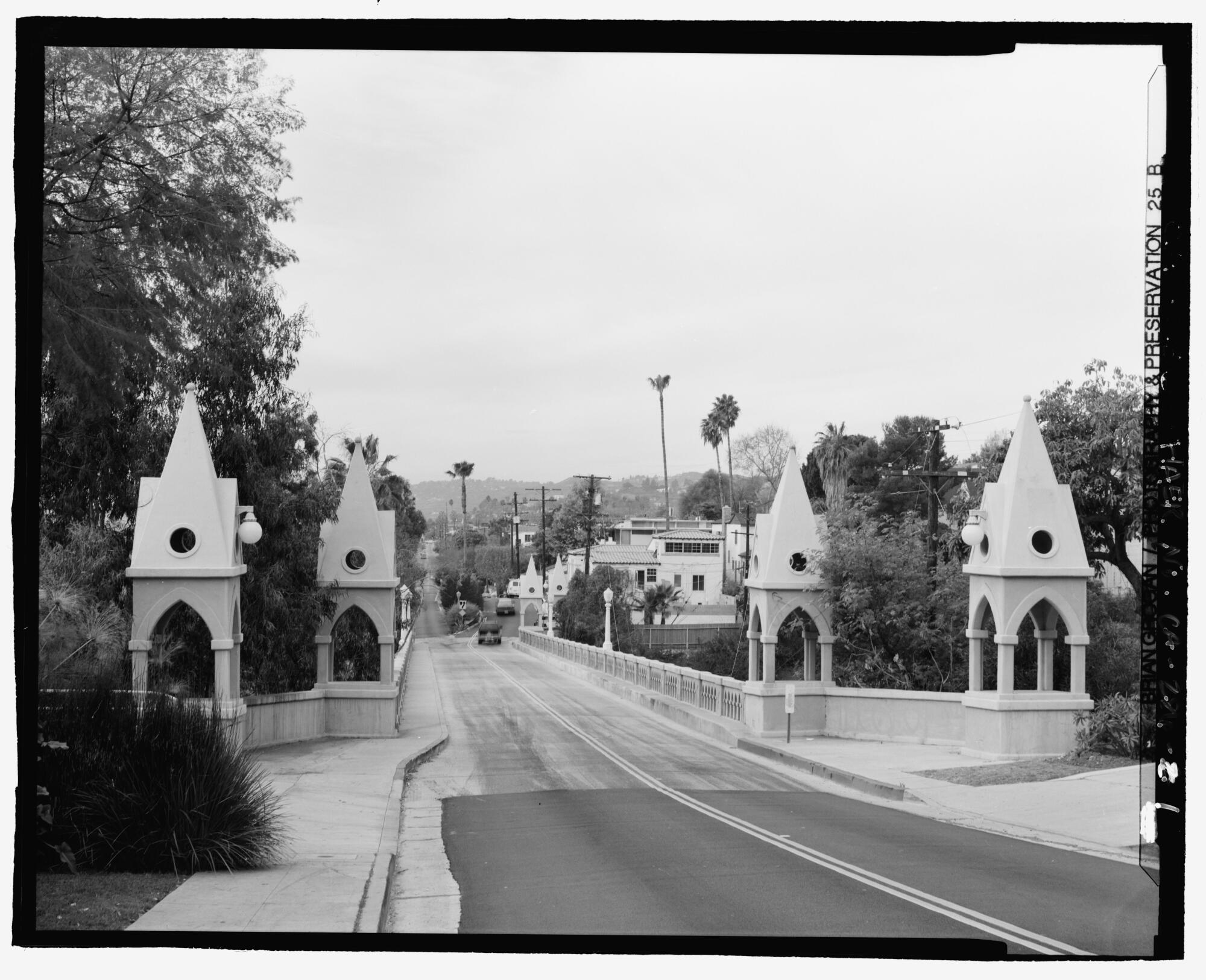
Amid concern that kids playing in the streets would get hit by cars, Los Angeles made it a misdemeanor to play baseball, basketball, soccer or any other ball game on a street or sidewalk.
Nearly a century later, when kids spend half as much time outside as their parents did, City Councilmember Bob Blumenfield wants to cut the obscure law from the books.
Blumenfield, who authored a motion to start the process, called the law, along with its punishments of a $1,000 fine and up to six months in jail, “uncommonly silly.”
It’s illegal for a parent to play catch on the sidewalk with a child in front of their home, said Blumenfield, who represents the southwest San Fernando Valley. Nor can a group of children kick a soccer ball on a quiet residential street without violating the law.
The law also prohibits throwing a “stone, pellet, bullet, arrow or any other missile, in, over, across, along or upon any street or sidewalk or in any public park.” It prohibits playing ball games in public parks, except on designated courts or fields.
“Let kids play,” said Olsen Ebright, who is on the Los Feliz Neighborhood Council. “Why in God’s name would we be having the city try to curb playing soccer or throwing a football? “
The benefits of exercising on public land, when done safely and under supervision, outweigh the risks of injury or property damage, such as a baseball going through a neighbor’s window, Ebright said.
Blumenfield’s motion, introduced last August, was supported unanimously by the City Council in a January vote, for which only Blumenfield was absent, as well as by the Los Feliz Neighborhood Council. For it to move forward, the city attorney’s office needs to draft language codifying the change.
Blumenfield’s staff unearthed the 1936 law while researching public rights of way, said Kristine Cajulis, a communications deputy for the council member. Cajulis said she is unaware of anyone who has been penalized under the law.
One instance of enforcement occurred in 2006, when a former city council field deputy reported her Sherman Oaks neighbors for having basketball hoops near their curbs, according to the Los Angeles Daily News.
In addition to the anti-ball playing ordinance, the neighbors were accused of violating an ordinance prohibiting structures on sidewalks or grassy strips next to curbs.
Nate Brogin had set up a basketball hoop that drew neighborhood kids for pickup games and helped his then-18-year-old son lose 30 pounds.
Brogin, who said at the time that the law was akin to fascism, fought the city, unsuccessfully. He said he never paid his fine — he doesn’t remember how much it was — but he eventually pulled the hoop down.
“That’s a long time to let something so backwards go on,” Brogin, now 77, said of the law.
In newspaper stories from the 1930s, local officials warned parents to keep their children from playing in the streets to avoid being struck by cars.
Children should be allowed play in vacant yards or empty spaces but should not be permitted “to risk injury by playing their games in the path of moving vehicles,” said George Hjelte, then-superintendent of Los Angeles playgrounds, in a Feb. 3, 1936 Daily Breeze article.
In today’s L.A., the road safety groups Streets For All and Streets Are For Everyone see Blumenfield’s proposal as a positive step. Safety starts with drivers paying attention to people in the streets, whether biking, walking or playing, they said.
Some drivers in Los Angeles believe the road belongs to them, said Michael Schneider, founder and chief executive of Streets For All.
“Changing that takes a lot more than repealing a law,” he said.
Kids still play in the streets in Brogin’s Sherman Oaks neighborhood. He said that fewer than 10 cars pass through in a typical hour, and drivers stop for children to pause their games and move out of the way — just as he did when he was a boy.
“It’s a great social exercise,” Brogin said. “I don’t see any negative to it.”
The state has rescinded a $73.4-million grant for a new mental health and drug treatment facility in San Pedro, putting the future of the controversial project in jeopardy.
Neighbors had picketed outside the property at 2100 S. Western Avenue and packed a town hall in April to oppose the project, with some expressing fears about drug users coming to the area.
The nonprofit Fred Brown Recovery Services was seeking to acquire the five-acre property and turn it into a 106-bed inpatient recovery center for “veterans, the justice-involved, the unhoused, and those with co-occurring conditions.” The facility also would serve about 200 outpatients a day.
About 70 elderly residents who live in a nursing home on the property would have had to move, some opponents of the project said. Others said they supported mental health treatment in general but argued that the proposed center would be too close to nearby schools, day cares and churches.
The grant, which would have covered most of the project’s cost, was funded partially by Proposition 1, a $6.4-billion bond measure approved by California voters in 2024 to improve mental health and addiction treatment.
In a letter dated July 15, the California Department of Health Care Services said it rescinded the grant because Fred Brown Recovery Services failed to meet a cash match requirement and did not address discrepancies in an appraisal document.
The matching funds cannot come from the seller of the property, and the match documentation was signed by Brian Dror, a manager for the current property owner, 9 Gem Capital Group, said the letter, which was addressed to Fred Brown Recovery Services. The letter also noted that there is no process to appeal the decision.
Dror, a partial owner of the property, said that state bond guidelines do not prohibit an owner from providing matching funds.
In a statement Thursday, Fred Brown Recovery Services said it is “reviewing the Department’s decision and evaluating next steps. Regardless of the future of this particular project, our commitment to serving individuals and families struggling with substance use disorders remains unchanged, and we will continue looking for opportunities to expand access to treatment for those who need it most.”
Los Angeles City Councilmember McOsker, who represents the coastal neighborhood, opposed the project and rallied community members to send letters to elected officials and state decision makers, urging them to review the grant application.
In a Facebook post, McOsker said he had raised concerns to the Department of Health Care Services for months over the project’s financial structure and lack of transparency.
Previously, McOsker had applauded Fred Brown for its work on recovery group homes elsewhere in San Pedro. But he said he was doubtful that the nonprofit could scale up from 20-person homes to the larger one proposed for the South Western site.
“I am grateful to the many residents, neighborhood organizations, and community leaders who remained engaged throughout this process,” McOsker wrote in the Facebook post. “Today’s action demonstrates why thorough review, public scrutiny, and accountability matter.”
L.A. County Supervisor Janice Hahn, who lives in the neighborhood and was booed at the April town hall for saying that rehab facilities like the proposed one are sorely needed, said Thursday that halting the project “might be for the best.”
“There was so much opposition in San Pedro, I don’t think this proposal was ever going to work,” she said.
Richard Scandaliato, president of San Pedro’s South Shores Community Assn., said the reversal was “unbelievable” after months of near-weekly picketing and hundreds of letters that neighbors wrote to state officials.
The most important thing, he said, is that the senior citizens living on the property can stay there. He said he’s gotten at least a hundred phone calls from neighbors since the grant was rescinded.
“It really shows what a community can do,” he said.
Worst Neighbor Ever is now available to stream on Netflix
Worst Neighbor Ever is available to stream on Netflix(Image: Netflix)
The chilling calls to emergency services after a huge insurance scam explosion have been revealed in a brutal true crime documentary series.
This week, Netflix dropped anthology series Worst Neighbor Ever, which follows on from Worst Ex Ever and Worst Roommate Ever.
This time, it explores real life neighbour disputes that take a fatal turn. Plunging viewers into a series of events including intimidation and violence, it uses real life bodycam footage and CCTV to highlight what occurred.
As well as hearing heartbreaking accounts from victims, the true crime series also stands out with its use of animated re-enactments to tell the stories.
An official synopsis reads: “You think you know your neighbors? Think again. This new series features firsthand accounts of violence, intimidation, and harassment that are more shocking than ever.
“Through compelling testimonials, startling body cam footage, and animated reenactments, Worst Neighbor Ever proves the people next door aren’t just a nuisance – they’re lethal.”
The second episode plunges viewers back to 2012 when a huge explosion wreaked devastation on one tight knit community in Indiana. On November 10, 2012, Monserrate ‘Moncy’ Shirley’s home exploded, leaving two people in the vicinity dead and many others injured, destroying dozens of homes.
But when investigators find the real cause, lives were changed forever. The episode hears from the neighbours who were at home that evening as well as revealing what Moncy was really like, as well as her new boyfriend at the time Mark Leonard.
Following the huge explosion, one neighbour can be heard saying: “At first, we thought we were being bombed. Our whole house lifted up off the foundation.”
Another said: “It was like one of those mortar fireworks going off right next to your house.”
Showing chilling video footage of the explosion and the flames, the documentary also showcased some of the heartbreaking calls made to the emergency services.
In one phone call, a neighbour said: “Something literally just exploded”, as another asked: “What just happened?” A third said: “We had a large boom, I don’t know if it was a bomb, a gun went off or what.”
Detailing the aftermath, one resident said: “The flames were just massive. The street looked like it had snowed, but this bright light of fire is in the distance.”
A call between emergency services continued: “We’ve had an explosion at a house, we’re going to need medics, IFD, it’s going to be a major incident control.”
The episode explores how Moncy, her boyfriend Mark and his brother had plotted to start a fire that would result in an insurance payout, however, their plan resulted in a huge explosion that wreaked devastation for years afterwards.
A brother of veteran NFL star Calais Campbell has been charged with the murder of their mother in her Atlanta home on Tuesday.
Ciarre Campbell, one of the Baltimore Ravens defensive end’s seven siblings, faces two counts of murder as well as aggravated assault, and possession of a knife during the commission of a felony in connection with the death of his 71-year-old mother Nateal Campbell, according to the affidavits for his arrest issued by the magistrate court of Fulton County, Ga.
“We are devastated to share that the Campbell Family has lost its matriarch, Mrs. Nateal Campbell,” the family said in a statement. “While the details of her passing are still being investigated, we take comfort in knowing she is reunited with our father, her beloved Chuck, and in the arms of our Lord and Savior, Jesus Christ. We ask for privacy at this time so that we may honor her and share in our overwhelming grief privately and as a family.”
According to the Atlanta Police Department, officers responded Tuesday at around 12:36 p.m. to a welfare check at Nateal Campbell’s address. They found a male, later identified as Ciarre Campbell, 41, who “appeared to have barricaded himself inside the home.”
Nateal Campbell was found unresponsive inside the home and was pronounced dead at the scene by EMS services. Ciarre Campbell was detained by the officers and transported to the Fulton County Jail, where he was held without bond. He waived his initial court hearing Wednesday.
A booking photo of Ciarre Campbell provided by the Fulton County Sheriff’s Office on Wednesday.
(Fulton County Sheriff’s Office Via Associated Press)
WSB-TV in Atlanta reports that Ciarre Campbell is being represented by defense attorney Jay Abt, who told the station that his client is innocent.
“We look forward to his day in court,” Abt said. “I’m honored to defend him and, most importantly, the Campbell family.”
In a 911 call released by police, a man said he was calling for authorities to check on his mother at her house. He said he was there with his sister and brother-in-law but they couldn’t get inside. According to the caller, his brother — whom the caller says is “mentally ill” — had been staying at the house and was seen driving their mother’s car, “which is very unusual [because] he doesn’t drive at all.”
The caller said his brother was inside the house and told them their mother had left, even though video footage from a neighbor showed that wasn’t the case.
The affidavit for arrest stated that Ciarre Campbell created “incisions upon the victim’s neck causing her to be nearly decapitated.”
Atlanta police say they have received at least 10 calls for service at that address since September, including one in April reporting arson. According to a police report from that incident, Kimba Blaylock had called 911 because her brother, identified in the report as Ciarrie Campbell, had started a fire to rid the house of demons.”
Firefighters found no one inside the house.
Another police report from May 26 states that police were dispatched to the address on a dispute call. The responding officer wrote that a neighbor told him that her neighbor’s son, identified in the report as Ciarri Campbell, “was acting crazy and putting stuff in her trash and yelling at her.” She told the officer that the neighbor’s son had just been released from a hospital “for mental issues” a couple of days earlier.
The neighbor also said that Nateal Campbell had told her that her son “was a good kid.”
Calais Campbell is a five-time Pro Bowl selection who has played 18 seasons in the NFL for the Arizona Cardinals, Jacksonville Jaguars, Miami Dolphins, Atlanta Falcons and Ravens. He was named the Walter Payton NFL Man of the Year in 2019.
“We are incredibly saddened to learn about the passing of Calais Campbell’s mother,” the Ravens said Wednesday in a statement. “We extend our deepest condolences and full support to Calais and his family during this difficult time.”
One more day and it’ll all be over. I’m referring to the primary election, of course, and the unremitting campaign ads that have infiltrated every aspect of our being as Californians.
Authentic or paid influencers promoting candidates on TikTok and Instagram. Facebook ads vilifying or praising various measures. Incessant, repetitive TV campaigns that get nastier with every election, yet still manage to feel like an analogue remnant from 1982. The worst? Those sponsored leaflets and postcard mailers that end up as makeshift coasters, mosquito swatters or unread refuse that goes straight from the mailbox into the blue recycle bin.
The king of ad spending is Democratic gubernatorial candidate Tom Steyer. He’s behind the most expensive political advertising campaign in the country this year. A former hedge fund manager, Steyer has reportedly spent more than $200 million on his campaign, with a major chunk of that for broadcast TV, cable and radio — 20 times the amount spent by fellow Democrat, former U.S. Secretary of Health and Human Services and California Atty. Gen. Xavier Becerra. And Steyer is still polling behind Becerra.
I never thought I’d write this but it’s not always about the money.
Xavier Becerra, front-runner in the race for California governor, speaks before a crowd at UFCW Local 1167 Union Hall.
(Genaro Molina/Los Angeles Times)
Voters have more resources than ever should they choose to actually research and learn about who and what is poised to shape the future of their city, county and state.
There’s no shortage of broadcast, cable, digital and print reporting about former reality TV personality turned mayoral candidate Spencer Pratt. He uses AI!
The battle between incumbent Karen Bass and her closest Democratic competition, Los Angeles city council member Nithya Raman, dominates local newscasts. And there’s pundits from both sides arguing for and against these choices on every available platform.
Given the amount of information now at voter’s fingertips, we should be the most informed voting populace in the history of ballot casting. But are we?
A new poll by UC Berkeley’s Institute of Governmental Studies that was co-sponsored by the Los Angeles Times asked 8,578 registered voters across California what sources they rely on to get news and information about election-related issues. The poll, which was conducted online May 19-24 in English and Spanish, found that nearly half of the state’s electorate (47%) said they refer to the official voter information guide that is mailed to voters in advance of each election.
Discovering that a nonpartisan, non-sponsored source of data topped the list is a welcome surprise. Today’s media-verse is so fractured and bifurcated along political lines, I just assumed that confirmation bias would drive most folks toward friendly sources, i.e. what they want to hear.
Not as surprising is that 44% of those polled said they use Google or other search engines to seek out election-related information, and greater than 3 in 10 obtain election-related information from social media (39%). Traditional means of information weren’t far behind search engines. Those polled said they still rely on national or cable TV news (39%), newspapers, online or in print (37%), and local TV news (35%). One in three (33%) get information word-of-mouth from family, friends, neighbors or co-workers.
Gubernatorial candidate and billionaire Tom Steyer, right, meets with supporters at a campaign stop.
(Sara Nevis/For The Times)
“The substantial differences in news sources across generation, education and partisanship suggest that we are a considerable distance from the information environment that dominated most of the 20th century, where local newspapers, network news and local television stations dominated,” said Professor Eric Schickler, co-director of the Institute of Governmental Studies. “This fragmentation means that voters may no longer share a common frame of reference when evaluating candidates and election issues.”
The increasingly splintered ways in which voters seek information, fueled by the rapid changes in technology and media, has kept political campaign strategists on their toes.
“Getting attention is the first barrier, and then once you have that attention, how do you convert that into support?” says Democratic campaign consultant and strategist Brian Brokaw. “You have to create a surround-sound effect in order to persuade the voter to go for your candidate or your issue, and they have to hear from multiple avenues. Voters are innately skeptical of advertising, especially when it’s a very direct sale from a candidate. That’s why you’re seeing the use of more influencers in campaigns, particularly paid influencers, who may or may not be disclosing that they are being paid. That’s been a prominent issue in the governor’s race.”
Age, or generational differences, are another deciding factor in where voters look for more intelligence on issues and candidates. The poll found that two-thirds of voters under the age of 30 (67%) and a majority of those ages 30-39 (52%) use social media such as Facebook, X, Instagram, or TikTok to get their information.
Getting to know a candidate, particularly via social media, isn’t necessarily part of a rigorous, fact finding mission. Laughing at Pratt’s Batman-themed video or Gov. Gavin Newsom’s satirical X posts are more about bonding with the person than unpacking their policies. Real or perceived, discovering a candidate via one’s Instagram feels more organic than seeing them on billboard or TV ad.
“One way that politics has changed is that people are craving authenticity. Someone like [Zohran] Mamdani, was very successful and promoted himself from the back of the pack to mayor of New York City. But what people are seeing doesn’t mean that’s the truth,” warns Republican consultant and campaign strategist Kevin Spillane. “I’ve been involved in politics for 40 years. A lot of people are not how they present themselves. But we still crave authenticity, we want to believe [in someone], we want that connection.”
We’ll soon see who Californians choose to represent them and their concerns — or which candidate waged the best campaign warfare, substantive political arguments be damned. But it may take a minute to count all the votes. California reached a record number of registered voters ahead of Tuesday’s primary election, according to the Secretary of State’s office. Officials say more than 23.1 million Californians are now registered to vote statewide.
West Coasters who want to understand what they’re voting for have infinite resources to turn to, some more useful than others. Sponsored mailers (the aforementioned mosquito swatters) only appealed to 9% of those polled as a useful source of information. But did you really need a poll to tell you that?
When my husband and I bought our home, my dad recommended that I avoid sharing the name of our new city.
“Don’t tell people you’re in Goleta,” he said with a smirk.
I grew up in Santa Barbara, and despite my proximity to the little ag town of Goleta just 10 miles north, I knew little about it. But after enjoying its relaxed vibe, wide-open spaces and tight-knit community, I realized what I’d been missing.
Goleta might not have the glitz of its more famous neighbor, the one Angelenos frequently visit for its picturesque palm tree skyline, Spanish architecture and coastal resort vibes, but it deserves its own spotlight. And it’s been getting one lately: Goleta’s Monique Limon is making waves in the California Senate, the Austrian national soccer team will call the city home for the FIFA World Cup 2026, a renovation of the Ritz-Carlton Bacara welcomed chef Danny Grant’s new restaurant Marisella, and the debut of a full-scale train station is expected by summer.
Still, it can feel like there are more acres of walnut and lemon groves in Goleta than people — that’s part of the charm. Called the Good Land, a nickname pulled from obscurity by the late historian Walker A. Tompkins, Goleta largely remained dedicated to farming well into the 1900s. The city itself didn’t incorporate until 2002, though UC Santa Barbara had made Goleta its home 50 years earlier and the Santa Barbara Airport technically sat on Goleta land.
“We are a very young town and the longtime locals still have a very rural mindset,” says small business owner and lifetime Goleta resident Tom Modugno.
I’ve come to appreciate the blend of agricultural history and buzzy new developments in Goleta, but more than that, I love the small-town feel and running into friends wherever I go. That might be on the trails alongside the beach at Ellwood Mesa Open Space, at the new beachfront restaurant the Ellwood, at Lake Los Carneros while freshwater fishing or at the outdoor dining hall featuring local restaurants like On the Alley and Los Agaves. This list of great things to do is nowhere as comprehensive as it gets, but I hope it shows you a bit of why I’m proud to call Goleta home.