It’s early morning in Erfurt, the capital of Germany’s Thuringia region, and Domplatz is abuzz with local growers setting out crates of vegetables and flowers beneath the soaring medieval cathedral towers. This 14th- and 15th-century engineering wonder holds the Gloriosa,the world’s largest medieval free-swinging bell, cast in 1497 and weighing 12 tonnes. Though the city and surrounding landscape are notably flat, its skyline is pierced by soaring church towers and steeples, the atmospheric old town hardly changed over the centuries.
Thuringia – often called the “green heart of Germany” – lies in the centre of the country, between Hesse, Saxony and Bavaria. It’s famous for its dense forests, intellectual heritage and hearty cuisine, and I’m here for four days to explore using public transport.
Leaving Frankfurt behind, my three-hour coach journey rolls through rising forested highlands before descending into the wide, agricultural basin that cradles Erfurt. After checking out Domplatz’s morning market, it’s just a short walk to one of the town’s other famous sights, the 120-metre-long Krämerbrücke – a 14th-century bridge lined with colourful half-timbered houses.
The Krämerbrucke in Erfurt. Photograph: Sergey Dzyuba/Alamy
Erfurt was once at the crossroads of two major trade routes, and the wealth that built its impressive churches and merchants’ houses came partly from waid, or woad, a plant cultivated in the surrounding fields and processed for its blue dye. I stroll past the craft shops (some still sell the dye) to Petersberg Citadel, one of the largest and best-preserved fortresses in Europe, with a maze of underground tunnels. This is also the city where the Protestant Reformation took root – Martin Luther studied here and was a monk in the Augustinian monastery (you can join a guided tour or even stay overnight).
Dinner is in a suitably historic setting; Wirtshaus Christoffel, in the Haus zur weißen Lilie (House of the White Lily), dates back to the 12th century (the house-brewed beer and beef roulade with Thuringian dumplings are delicious).
Next morning, I head to Egapark (a seven-minute bus ride or a 30-minute walk from town). Spread across 36 hectares (89 acres), it was created for the 1961 international horticultural exhibition. The old Cyriaksburg fortress houses the German Horticultural Museum, which traces the history of gardening, while displays range from landscapes of cacti and succulents to tropical planting.
The Bauhaus Museum in Weimar. Photograph: Imago/Alamy
The city of Weimar, a 30-minute bus journey away, is next on my list. The birthplace of the artistic Bauhaus movement, and where Germany’s first democratic constitution was adopted, it’s full of interesting historic sites and design gems. I visit the Bauhaus museum, with its ceramics, textiles, metalwork and painting, and wander around town, passing the former art school buildings that now house the Bauhaus-Universität.
The next morning, I swap culture for chilling and take another bus to Bad Langensalza, a spa town of 10 parks and themed gardens, 40 miles (64km) away. My guide, Markus Fromm, explains that people come here to “cure, to relax, to refresh”.
Sulphur springs were discovered here in 1811, and today, the Friederiken Therme is the town’s main thermal spa, offering natural sulphur, brine and drinking mineral waters, alongside indoor and outdoor pools, saunas and treatments. Traces of the older spa history remain around the town: at Friederikenschlösschen, an 18th-century summer residence, a fountain still runs with sulphur water that has been used for healing since 1812.
The thermal baths at Friederiken Therme in Bad Langensalza. Photograph: Imago/Alamy
But it’s the town’s gardens that really win me over. I wander Friederikenschlösschen’s restored baroque garden and visit the Klagetor, a gate tower dating from about 1365, where the old town gives way to the Japanese garden, Kofuku no Niwa (Garden of Happiness), with its koi ponds, clipped azaleas and sculpted pines.
For nature on an even grander scale, I take a bus to Hainich national park, 10 minutes away (you can easily rent a bike/e-bike and follow cycling paths to get there too). Spanning 7,500 hectares, Hainich offers more than 75 miles of signposted walking trails through its beech forests, part of a Unesco world heritage site. The wider Hainich is Germany’s largest unbroken deciduous woodland area. “Parts of this landscape have been left entirely untouched for decades, abandoned to their own devices without a shred of human meddling,” says park director Rüdiger Biehl.
Before hitting the trail, I stop at the park’s restaurant, Forsthaus Thiemsburg, for a regional lunch – roast pork in black beer and Thuringian dumplings, washed down with a cold Köstritzer pilsner. Then, into the trees. Deep in the beeches, the sun sporadically breaks through the branches and the leaves crunch loudly under my boots. Up in the canopy, it’s mostly just the birds making noise – chaffinches and wood warblers chatter, interrupted by the occasional sharp rattle of a middle spotted woodpecker drilling into a trunk.
Hainich national park. Photograph: Robert Harding/Alamy
The Baumkronenpfad, a wooden walkway through the treetops, rises to a 44-metre observation tower. Here, the canopy of an oak that is estimated to be 350 years old is almost at eye level. It’s a spectacular view, but the forest’s real engine is down below. Deadwood is left to decay where it falls, providing habitat for rare wood-boring insects and endangered Bechstein’s bats. Back in Erfurt that evening, I catch the final symphony concert of the season at Theaterplatz. It’s a reminder of the winning combination of culture and nature that I’ve enjoyed over my four days in Thuringia. I had come looking for a less familiar corner of Germany and found a region that offers plenty of variety – and all accessible with a few short bus rides.
The trip was provided by the German National Tourist Board. Dorint Hotel am Dom in Erfurt has doubles from £85. For journey planning, VMT has information on buses, trains and trams across central Thuringia, as well as a free app with live departure updates
I miss the ease with which I used to hop into my car, gear and dog loaded, and head to the Mt. Waterman trailhead deep in Angeles National Forest for a day of serenity and adventure. It was one of my go-to happy places.
But the segment of Angeles Crest Highway to reach the trailhead has been closed since last December when heavy rain destroyed several sections of the roadway. I could technically reach the trail by taking the closed highway 3.8 miles on foot from the closure’s start to the trailhead, or the Pacific Crest Trail for part of the way. But as I said, I miss the ease of it all.
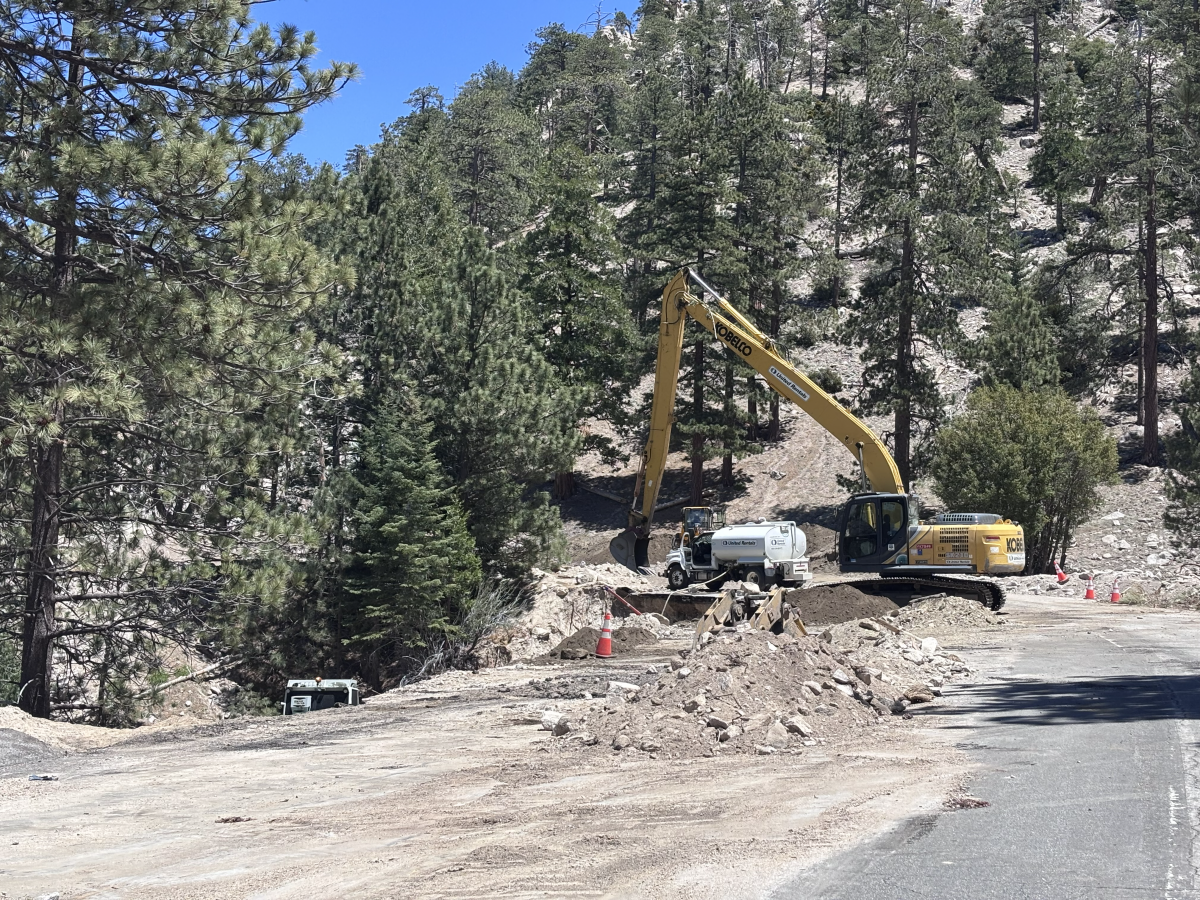
This winter, Southern California is expected to be pummeled by a “super” El Niño that could bring record-breaking amounts of rain — and maybe snow — to the region. I have been worried about whether storms will blast away the progress that construction crews have made repairing Angeles Crest Highway, a 66-mile stretch of California 2 through the San Gabriel Mountains, along with causing more damage.
In anticipation of further closures of California 2 in the San Gabriel Mountains, I have compiled a list of trails that would be most inaccessible should the roadway close. I hope you can use the list below to either hike trails you’ve never tried or haven’t visited in a while.
You are reading The Wild newsletter
Sign up to get expert tips on the best of Southern California’s beaches, trails, parks, deserts, forests and mountains in your inbox every Thursday.
By continuing, you agree to our Terms of Service, which include arbitration and a class action waiver. You agree that we and our third-party vendors may collect and use your information, including through cookies, pixels and similar technologies, for the purposes set forth in our Privacy Policy such as personalizing your experience and ads.
First, let’s talk about the current state of California 2.
Over the last four years, the route has seen multiple months-long closures after storms blasted out massive chunks of roadway, leading to lengthy repairs.
Since January, the California Department of Transportation and its contractors have worked on three emergency projects on Angeles Crest Highway. The work stretches over nearly 30 miles and includes about 40 places identified as needing to be repaired. The projects are noted below by postmile value, a numerical identifier used by state and federal officials to identify precise locations on a specific route:
From Postmile 79.2 in L.A. County to Postmile 1 in San Bernardino County; construction completed: 80%; anticipated completion date: Winter 2026/27
From Postmile 55 to 66.39; construction completed: 40%; anticipated completion date: Summer 2027
From Postmile 64 to 74.3; construction completed: 20%; anticipated completion date: Winter 2027/28
Crews have and will continue installing K-rail barriers around washed-out shoulders and road; repairing eroded slopes and embankments under the road; reconstructing shoulders and slopes to their “original design grades,” which is a feat of engineering I’m personally impressed by; and installing erosion control measures to better ensure a future storm does not cause the exact same issues that prompted previous repairs, according to a Caltrans fact sheet of the project.
Caltrans spokesperson Eric Menjivar said in an email Tuesday that at least some of the repairs are on hold as the agency obtains supplemental funding through an internal review process to finish the repairs.
Contractors have continued work to prep the roadway for El Niño, he said, including slope erosion control work.
An excavator works to repair a segment of Angeles Crest Highway.
(Jaclyn Cosgrove / Los Angeles Times)
In terms of the timing of when we will start to see rainfall, it could be as early as this month.
“Forecasters say there’s a 75% chance this latest El Niño — a climate pattern characterized by warmer ocean waters in the central and eastern tropical Pacific — will be stronger than any other since 1950,” Times staff writer Iris Kwok wrote. “There is a 98% chance that El Niño will be ‘very strong’ for the three-month period ending in December, according to the National Oceanic and Atmospheric Administration’s Climate Prediction Center.”
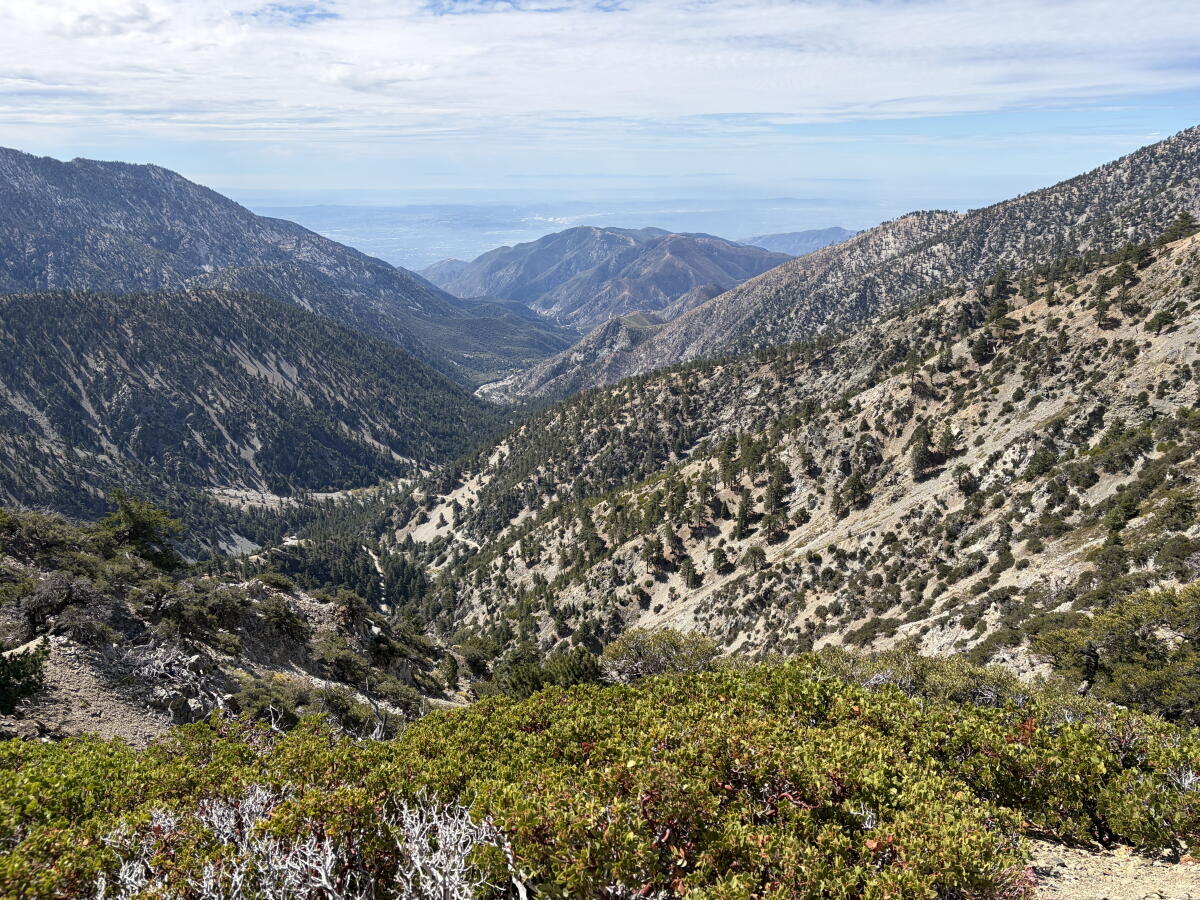
That’s why I wanted to dig into which trails would be most affected by a California 2 closure. Below, I’ve listed trails that are primarily accessed using a trailhead off the route, while also noting how hikers might still reach a peak or vantage point using another option.
I am not suggesting where damage will or won’t occur, but rather encouraging you to get out on these trails soon — especially if they’ve been on your list for a while — while it remains easy enough to drive to their trailheads. Additionally, we cannot predict how our trails will fare during a significant El Niño winter.
A sweeping view of Angeles Crest Highway and the San Gabriel Mountains from the Hoyt Mountain trail.
(Jaclyn Cosgrove / Los Angeles Times)
Here are trails primarily accessed off California 2:
The Gabrielino Trail is a multiuse trail frequented by hikers, bikers and horseback riders.
(Jaclyn Cosgrove / Los Angeles Times)
Grizzly Flat Trail: A challenging 7.4-mile out-and-back route where you climb up and then down the mountainside, reaching the Stonyvale picnic area where you can have a lunch break before clambering back up the mountain.
Hoyt Mountain via Grizzly Flat: A 4.6-mile steep jaunt up to Hoyt Mountain, a 4,415(ish)-foot peak in the front range of the San Gabriel Mountains in Angeles National Forest. There are multiple routes to reach it (see map), which you can read about in a previous Wild.
Switzer Falls and picnic area: The 4.6-mile Switzer Falls hike, one of the most popular in the forest, is primarily reached via the Switzer picnic area off California 2; note that my distance includes walking down from the parking area adjacent to the road, as the gate has been closed recently because of bear activity; if that trailhead became inaccessible, Switzer Falls could be reached off the Gabrielino Trail, but it’s a much longer hike (about 20 miles one way from Azusa, or about 8.8 miles one way from near Pasadena).
One cascade of Switzer Falls.
(Brian van der Brug / Los Angeles Times)
Colby Canyon Trail: This difficult 9.2-mile out-and-back trail takes hikers to Strawberry Meadow, a flat area in the San Gabriels with nice views. Note: Do not attempt to use the mountaineering route to reach Strawberry Peak. There is an option, as noted on the map, to also hike to Josephine Peak during the same excursion.
Strawberry Peak Trail: This 7-mile out-and-back route takes hikers to the highest peak in the front range of Angeles National Forest. Said to resemble an upside-down strawberry, the summit is reached through a moderately strenuous hike that offers great views of the surrounding mountains. The route is exposed and should not be attempted on warm weather days.
Mt. Wilson area: If California 2 shuts down before Mt. Wilson Red Box Road, which leads to the Mt. Wilson Observatory, several trails will be either inaccessible or much more challenging to reach. That includes reaching Mt. Disappointment, Mt. Deception or Mt. Markham. Hikers would technically be able to access those peaks by first summiting Mt. Wilson, but that requires a 7-mile journey up Little Santa Anita Canyon where you gain about 4,800 feet. There’s a limited number of people who want to hike more after that.
Redbox to Valley Forge: A beautiful 4.8-mile out-and-back trek to Valley Forge Trail Camp via the Gabrielino Trail, where hikers can go farther in multiple directions should they choose.
The Vetter Mountain lookout tower in Angeles National Forest.
(Jaclyn Cosgrove / Los Angeles Times)
Vetter Mountain Lookout: A 5(ish)-mile round trip that includes a stop at a fire lookout where you will get sweeping views of the surrounding peaks and valleys.
Devils Canyon Trail: A 5.8-mile out-and-back stretch down 1,400 feet into a shaded canyon where a seasonal stream runs.
Mt. Hillyer from Chilao via Silver Moccasin Trail: A 6(ish)-mile journey in a corner of the San Gabriel Mountains that has both high desert vibes and pine trees — and boulders! (One of my favorites.)
Three Points to Sulphur Springs: This is a 7.4-mile out-and-back hike along the Pacific Crest Trail where you reach Sulphur Springs Trail Camp. The camp sits at 5,300 feet and features about six tent-camping sites. Its campsites are shaded by tall pine trees, ideal for hanging a hammock. It has vault toilets but no potable water or bear boxes.
And more!
There are obviously others, including some I’m not listing because I know they’re not in great condition. Additionally, several hikes remain accessible under the current closures only by hiking or biking to them. That includes the Burkhart Trail, Cloudburst Summit to Cooper Canyon Trail Camp, Throop Peak, and, as mentioned, the Mt. Waterman Trail.
I found a few hikes I’ve never done thanks to this week’s Wild. I hope it serves a similar purpose for you. Let me know if you get out there and where you go! If you received this newsletter as an email, you can simply reply, and your messages come right to me. See you out there!
3 things to do
Skaters meander through Little Tokyo during a previous CicLAvia event.
(CicLAvia Los Angeles)
1. Dilly-dally through downtown L.A. CicLAvia will host a 6.5-mile open streets event from 9 a.m. to 4 p.m. Sunday via a route that connects Echo Park, downtown L.A., Chinatown, Little Tokyo, the Arts District and Boyle Heights. Guests are welcome to walk, bike or use other people-powered mobility devices to traverse the route. See rules for e-bikes. Learn more at ciclavia.org.
2. Craft local clay in L.A. Clay artist Evelyn Hernández will host from 10 a.m. to 1 p.m. Sunday a hike through Griffith Park and teach participants along the way to identify clay and earthen pigments in their natural habitat. Attendees will also create a ceramic piece using locally processed clay. Tickets are $48.05 to $63.63 based on your economic ability to pay. Register at events.humanitix.com.
3. Haunt the hillsides near Atwater Village Dance Quest will host a Halloween-themed silent disco from 9:30 to 10:30 a.m. Saturday through Griffith Park. Attendees will dance along a 1.5-mile loop trail while wearing headphones with a curated playlist. Halloween costumes and flair welcomed and encouraged. Suggested donation of $15 to $25. Register at eventbrite.com.
The must-read
George Jensen records audio of geese and ducks during a Los Angeles Field Recording meetup at the Sepulveda Basin Wildlife Reserve.
(Kayla Bartkowski / Los Angeles Times)
One of the best parts of hiking is the unexpected sounds that nature provides, from the crunch of your boots on the sandy soil to the surprisingly thunderous sounds a covey of quail makes as it leaves a shrub (which has maybe scared a certain outdoors journalist more than once). And because L.A. has a club for truly everyone, there’s now a place nature sound lovers can go to really appreciate what they find outdoors, the Los Angeles Field Recording Club. “I feel like now everything’s so … doctored. But when you’re recording, this is what’s really happening. You’re hearing real sound. You’re engaged with the world in a real way,” said George Jensen, founder of the Los Angeles Field Recording Club.
Happy adventuring,
P.S.
Everyone is looking for a way to escape this heat wave, including the black bears of the San Gabriel Mountains. Wildlife photographer Robert Martinez shared a video this week of one of our ursine neighbors taking a dip into cool water deep in Angeles National Forest. The bear even takes time to exfoliate, using what appears to be a concrete barrier to scratch its back. Now that’s self-care!
For more insider tips on Southern California’s beaches, trails and parks, check out past editions of The Wild. And to view this newsletter in your browser, click here.
This summer, Southern California hiker Mark Orr spotted a hazard he struggled to stop thinking about: a crumbling, narrowing section of the Devil’s Backbone Trail near Mt. Baldy.
Orr wanted to help.
In early August, he trekked about 5.6 miles from the trailhead near Manker Flat campground to the site, hauling 85 pounds of gear with him over two trips. Orr first spent two hours digging out a wider route and then built what he dubbed an “anti-erosion fence” by installing 30-inch rebar stakes, stainless steel wire, clamps, aluminum flashing and zip ties. A few weeks later, Orr posted a video documenting his work to his YouTube channel, where he’d previously shared about hiking and other DIY projects. In the video, which Orr has since made private, he said he’d never performed trail work.
A view from Baldy Road leading up the Mt. Baldy Notch in the San Gabriel Mountains.
(Jaclyn Cosgrove / Los Angeles Times)
The people of the internet were initially grateful. “I can’t imagine doing this in my backyard let alone at 9,350 ft. You are THE MAN,” one YouTube user wrote. “I’ve hiked the backbone dozens of times and will remember you with gratitude every time I come across this section,” another person said. One person said his son was one of the three people who died while hiking the Backbone Trail in late December, and he wanted to connect with Orr.
But, as the video’s view count ticked up, concern over Orr’s work mounted into rage.
Two camps developed: Those who lauded Orr’s efforts and those who felt he should be held accountable for what they argued was damage to the trail. “I give this guy an A+ on his intentions and effort,” a Reddit user wrote on a post about Orr’s video. “If a section is dangerous, it should ‘look’ dangerous. To make it look safe, creates a bigger hazard as people will come to rely/trust in what is actually a DIY retaining wall. What happens when that eventually gives way? What if someone is hurt/killed as a direct result of this DIY project?”
You are reading The Wild newsletter
Sign up to get expert tips on the best of Southern California’s beaches, trails, parks, deserts, forests and mountains in your inbox every Thursday.
By continuing, you agree to our Terms of Service, which include arbitration and a class action waiver. You agree that we and our third-party vendors may collect and use your information, including through cookies, pixels and similar technologies, for the purposes set forth in our Privacy Policy such as personalizing your experience and ads.
In this edition of The Wild, our weekly outdoors newsletter, I will report out the current status of the trail where Orr completed his work. I will discuss how we got here — where an individual, not the U.S. Forest Service, tackled a trail repair — and where we go from here, including how you can do your part without upsetting half the outdoors corner of the internet and violating federal policy.
First, let’s talk about Mt. Baldy and how people usually get there.
A segment of the Devil’s Backbone Trail that hikers take to the Mt. Baldy summit.
(Jaclyn Cosgrove / Los Angeles Times)
Mt. San Antonio, commonly referred to as Mt. Baldy for its appearance, is a 10,064-foot peak in the San Gabriel Mountains and is the highest point in Los Angeles County.
Outside of winter, when much of the trail can become covered in snow and ice, most hikers reach Mt. Baldy via two routes. They start near the Manker Flat campground and walk Falls and Baldy roads until they either turn north-ish onto the Baldy Bowl Trail, often referred to as the “Ski Hut” route because hikers pass the Sierra Club’s green building, or hikers continue on Baldy Road until they reach the Mt. Baldy Notch. From here, hikers start the Devil’s Backbone Trail first by trekking up a fire road and then taking on a grueling, narrow 1.9(ish)-mile jaunt that gains about 1,500 feet and always makes me question my life choices about halfway through.
The Devil’s Backbone is named as such because of its shape, including segments where hikers walk a narrow stretch with steep drop-offs on both sides. This steepness is part of what makes it susceptible to erosion — and why only serious, well-equipped mountaineers should traverse it during the winter.
The Devil’s Backbone Trail, per the U.S. Forest Service, is 3.24 miles long, starting at Baldy Notch and ends at Mt. Baldy Summit.
(Jaclyn Cosgrove / Los Angeles Times)
On Sunday, I headed up Baldy Road to see how Orr’s repairs were holding. I am active in the r/socalhiking Reddit community, where I first learned of the story, and had already seen images showing a hole developing at the start of Orr’s repairs.
But no one had pinpointed exactly where they were.
Once I reached the Devil’s Backbone, a hiker warned me about a particularly steep and narrow section he’d just traversed.
“Is this the part with the repairs?” I asked.
“No, that part is way up, and it is already breaking down,” he told me.
I then chatted with two high schoolers coming back from summiting Baldy, one of whom hopes to attend a University of California school to study environmental science. “A little bit of rain,” and it’s gone, he said of Orr’s repairs.
A segment of a repair performed by a local hiker that has started to fail.
(Jaclyn Cosgrove / Los Angeles Times)
Just over a mile into the Devil’s Backbone, I spotted the shiny aluminum of Orr’s anti-erosion fence. And I spotted the hole where fill dirt has fallen through. Before Orr started his work, the trail was narrow — his work did widen the route, but how long will it hold?
Alan Coles, a trail crew leader with the San Gabriel Mountains Trailbuilders, which maintains routes in the backcountry and Baldy area, told me the answer is probably not long, especially given the rain and snow we could get this winter from El Niño.
A segment of the Devil’s Backbone Trail where a hiker attempted to widen and repair the crumbly trail.
(Jaclyn Cosgrove / Los Angeles Times)
“Taking another look at the video, the problem with the trail may be due to a buildup of material washing down from above,” said Coles, who has 35 years of trail maintenance experience. “Often the best solution is to dig it out and lower the trail to the original alignment, which will also widen it. The problem with the repair is that the hardware he installed would make that difficult. In time, the material he used will come apart, and those stakes will get more exposed, leading to problems with people tripping on them, especially if there is snow.”
Coles said to begin work in Angeles National Forest, he must submit a list of trails that his organization wants to work on to the U.S. Forest Service. The agency’s archaeologist, biologist and other technical experts will review his list. If there are any issues with a particular trail that Coles has identified needs repairs — like if an endangered species is known to live in a creek next to the trail — the Forest Service could deny his request, thus leaving the trail unmaintained.
A hiker walks near the hole created by unauthorized repairs performed in early August.
(Jaclyn Cosgrove / Los Angeles Times)
Coles said the Devil’s Backbone Trail is a “very difficult repair” for a lot of reasons, including its high altitude and the need for a crew to get permission to use the fire roads to shorten the distance they have to haul their gear. Coles said hikers often ask him when his crew will work on the Three T’s Trail, as the route has several downed trees and other issues, and his crew faces similar access issues.
Coles said he sympathizes with Orr’s reasoning for repairing the trail: People died in that area.
“His heart’s in the right place, but it really needs to be done with someone who says, ‘OK, here’s how you properly do a repair like that,’” Coles said.
It’s impossible when thinking about Orr’s repairs not to think about the old adage of, “The road to hell is paved with good intentions,” and the brutal irony is that, once you reach the Devil’s Backbone, you’re going to need more than that.
Two hikers navigate down the Devil’s Backbone Trail after summiting Mt. Baldy, the highest point in L.A. County.
(Jaclyn Cosgrove / Los Angeles Times)
When I spoke to Orr after my hike, he said he hopes that he can join the trail crew to remove what he did and repair the trail properly.
“The first thing is, it was nothing but well intentions by somebody who loves the mountain and wants it to be safer for everybody,” Orr said. “I totally get that my first crack at this, I didn’t do everything right, and I’m actively working with the San Gabriel Mountains Trailbuilders to get it right before this winter.”
The final challenge, though, will be getting officials at the U.S. Forest Service to approve the work plan. A spokesperson at Angeles National Forest did not respond to my request for a comment or an interview for this story.
Orr’s trail repairs come at a time when outdoors lovers are feeling particularly protective of public lands. The Trump administration has continued its efforts to peel back layers of environmental protections, like the Roadless Rule, raising the alarm of park advocates who fear not even Yosemite is safe from development.
The sunset as viewed Sunday on a trail often referred to as the “Ski Hut” route.
(Jaclyn Cosgrove / Los Angeles Times)
At the same time, the U.S. Forest Service and National Park Service have both seen massive staffing cuts during Trump’s second term, and this comes after decades of underfunded trail construction and repair.
In the early 1980s, “each of the five Angeles Forest districts had a full-time, paid trail crew of eight to 10 members. Now there are only summertime crews with three to four members. Forest Service officials and the agency’s critics agree that if it were not for the volunteer corps of 700 trail builders, the mountain paths would not be repaired for years,” according to a 1993 Times story.
Those crews, Coles said, were one of the casualties from a swath of federal budget cuts in the 1980s. A 1986 Times story noted that, in just four years, “the amount of federal money allocated for trail maintenance nationwide and in Southern California … dropped about 50%.”
“For the most part, without the volunteers, you wouldn’t have a trail system today,” Angeles National Forest official Don Gilliland told The Times in 1993.
The sun goes down, casting orange and pink hues through the clouds above the San Gabriel Mountains near Mt. Baldy Village.
(Jaclyn Cosgrove / Los Angeles Times)
The agency continues to rely heavily on volunteers. The U.S. Forest Service estimates that it has about $10.8 billion in deferred maintenance, including $241 million in deferred trail maintenance and almost $70 million in trail-bridge deferred maintenance, according to a recent budget document.
In an analysis of that backlog of work, officials with the U.S. Government Accountability Office heard from one regional official who told them that the trail maintenance program “is held together by Band-Aids and baling wire.”
If you’d like to be part of that baling wire, you can join Orr in joining a local trail crew. There are several who service the San Gabriel Mountains and their foothills.
It is easy to read about Orr’s efforts and point out the obvious mistakes he made. It’s another thing to take action, whether that’s donating to local trail crews or volunteering on their work days. I’ll see you out there, focusing on the latter.
3 things to do
A coyote drinks water puddling near the golf course at Griffith Park.
(Mel Melcon / Los Angeles Times)
1. Document dicots and deer in L.A. The Los Angeles Public Library, along with other city agencies, will launch this year’s L.A. Nature Quest at 9 a.m. Saturday at the Griffith Park Visitor Center. The L.A. Nature Quest is an annual monthlong effort to document as much of L.A.’s flora and fauna as possible using iNaturalist, a citizen science app. Attendees will be guided by rangers and other experts in a morning of outdoor exploration and nature journaling. Downloading iNaturalist beforehand is recommended. Register at eventbrite.com.
2. Sit down and spy birds in Pasadena The Pasadena Audubon Society will host a seated birding experience at 8 a.m. Saturday on the Gamble House lawn (4 Westmoreland Place in Pasadena). Guests should bring water, sunscreen, a lawn chair or blanket, and a hat. Participants can bring their own binoculars, but there will be some to loan out for those without. Register at eventbrite.com.
3. Marvel at mushrooms in Monrovia Monrovia’s Canyon Park Nature Center will host the opening reception for the Mushrooms of the San Gabriel Mountains at 10 a.m. Sunday. Mycologist Aaron Tupac will share with guests about how and why they photographed the specimens shown in the exhibit, along with sharing information about our local fungi populations. Learn more at Tupac’s Instagram page.
The must-read
Biologists collect olive ridley sea turtle eggs from nests on Southern California beaches.
(Huntington Beach Police Dept.)
In mid-September, two heart-shaped olive ridley sea turtles made history when they dug nests on Seal and Huntington beaches, marking the first documented natural sea turtle nests on the U.S. West Coast. Times staff writer Corinne Purtill wrote that biologists and cheloniophiles barely had time to celebrate before realizing that these nests were at risk of being destroyed by incoming storm surges and high tides. Biologists recovered just over 200 eggs. “We had to make some quick decisions,” said biologist Jonathan Snyder of the U.S. Fish and Wildlife Service at the Aquarium of the Pacific in Long Beach on Friday. “This is the decision that we made, and I think it’s the best one for species recovery.”
Happy adventuring,
P.S.
Montrose Search and Rescue recently highlighted the perils of taking the wrong route to hike Strawberry Peak. Strawberry Peak, visible from several L.A. hikes, is the highest point in the front range of the San Gabriel Mountains. Montrose Search and Rescue recently rescued hikers, though, who’ve ended up on the mountaineering route. Their video highlights how crucial it is to know your route before you go — and to ensure you have a physical map with you in case you get lost. Stay safe out there, folks! (And don’t hike Strawberry Peak right now — it’s too hot.)
For more insider tips on Southern California’s beaches, trails and parks, check out past editions of The Wild. And to view this newsletter in your browser, click here.
Academy Award-winning filmmaker Alejandro González Iñárritu and Pop artist Ed Ruscha have a long history of admiring each other’s work. Twenty-four years ago, a nervous Iñárritu visited Ruscha’s Venice studio to offer him the role of the gynecologist in “21 Grams.” They needed a doctor with noble features and blue, believable eyes. That plan didn’t pan out, schedule-wise, but the filmmaker and the artist finally found a way to collaborate.
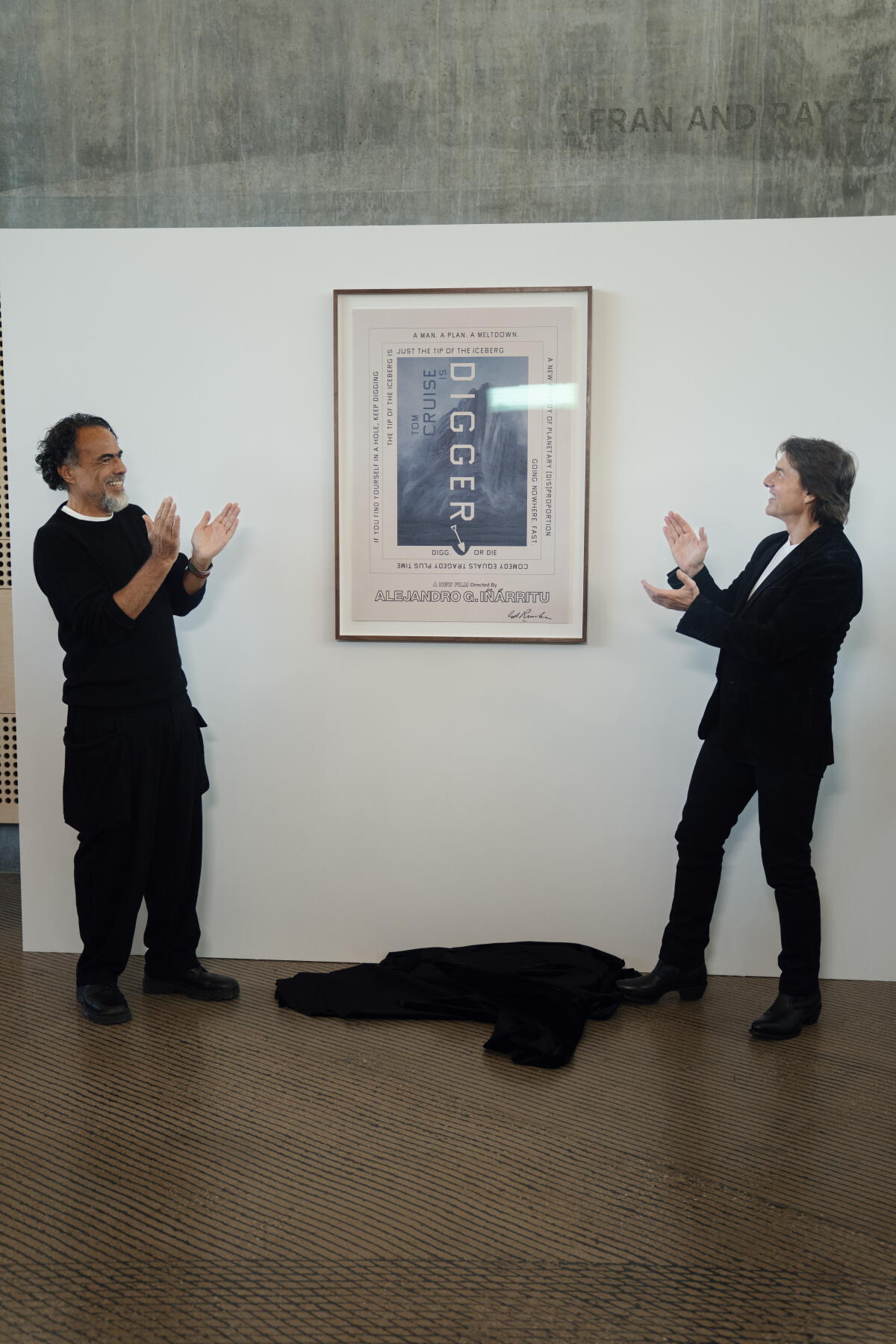
The result — a Ruscha-designed poster for Iñárritu’s new film “Digger,” starring Tom Cruise — was unveiled Sunday at an intimate brunch at the Los Angeles County Museum of Art, attended by Iñárritu, Ruscha and Cruise, as well as “Digger” actors John Goodman, Jesse Plemons, Michael Stuhlbarg and Ross Hatt.
Iñárritu and Cruise laughed as they made a clumsy attempt at a countdown before whipping aside a black velvet curtain to reveal the poster for the first time: a very Ruscha, text-heavy work on a slate gray background with a beige border. A looming ice shelf in the background is surrounded by phrases including, “A Man. A Plan. A Meltdown,” and “Comedy equals tragedy plus time.”
Filmmaker Alejandro Iñárritu and “Digger” star Tom Cruise unveil Ed Ruscha’s new poster for the film. (They just pulled off the black velvet curtain on the floor below.)
(Kevin Garrison)
“Well, the movie blew my hair back,” Ruscha said at the unveiling brunch inside LACMA’s new (still unopened) restaurant, with LACMA Director and Chief Executive Michael Govan by his side. “And not only that, it parted it down the middle. It has since grown back.”
The crowd laughed knowingly. “Digger,” which opens Friday, is a satirical black comedy that follows oil tycoon Digger Rockwell as one of his drilling rigs in Greenland explodes, dislodging an ice shelf that floats away to cause a global disaster. As a dark parable for the dangers of climate change, the film has already proved polarizing, with early reviews coming in mixed.
Ruscha noted that he first saw “Digger” at a screening about six months ago, alongside Govan. “I knew I had seen an epic production, an epic product from an epic producer,” Ruscha said. “So I jumped at the idea of doing the poster. And I thought about it, and I think about this movie, and it reminded me of a kaleidoscope. It’s got so many running-around ideas. It was kaleidoscopic in its message, and its content and its humor.”
Ruscha turned his attention to Iñárritu, “It’s got something to offer to the world, and I thank you for that.”
The filmmaker loved the poster, and the fact that the ice shelf sat front and center.
From left to right — “Digger” actors John Goodman and Jesse Plemons, filmmaker Alejandro G. Iñárritu, artist Ed Ruscha, actor Tom Cruise, LACMA director Michael Govan and actors Ross Hatt and Michael Stuhlbarg — pose with Ruscha’s new poster for the film.
(David Jon)
“The billing is nature: We are human beings, we are in a war against nature,” Iñárritu said — describing what he feels the poster relays — in a phone interview from Mexico City a day before the event. “We think that we are different from nature. So nature, in a way, becomes our enemy. We are fighting a fight against nature, and the enemy is an ice shelf going to Europe. And he just put [that] in the center of it, [like] a disaster movie, which is very clever, as he always is.”
“Those decisions that he made with a very prominent element in a simple way, with one or two words, it just says so much with so little,” Iñárritu continued. “And then he [put] some lines around [it], very Ruscha, that in a way convey the spine or the character itself.”
The director had the same feelings two years ago, at LACMA’s Ruscha retrospective. He said so much with so little, Iñárritu thought, and that “less is more” thinking could hold so much power in a film poster.
Iñárritu, too, has been exhibited at LACMA: earlier this year, with the film installation “Sueño Perro,” a resurrection of lost footage from “Amores Perros;” and in 2017-2018, with the virtual reality installation “CARNE y ARENA,” which explored the human condition of immigrants and refugees.
The director’s collaboration with Ruscha is proof of concept for LACMA’s annual Art + Film gala, entering its 15th year, which seeks to highlight and strengthen the connections between film and visual art by bringing the two communities together at a splashy party — often creating lasting connections between the two groups.
Both Ruscha and Iñárritu have been honored at the gala, the former in 2012 (with Stanley Kubrick) and the latter in 2015 (with James Turrell). “This is a beautiful encounter of art and film,” Govan said at the unveiling.
“Digger” has evolved over nine years, Iñárritu said. It’s been a long journey of taking note of current events, including where the world is going, as well as people’s obsessions and fears.
“The film is a love letter for the young generation,” Iñárritu said. “I think it’s kind of a warning, or a wake-up call. But you can have fun about it, because it’s the only way to — humor allows us to have space and recognize ourselves in that absurdity. So I feel that it’s a human, urgent, now film.”
Los Angeles County officials aim to break ground on the new Eaton Canyon Nature Center before 2028, with plans to construct a facility that can withstand the region’s changing climate and future disasters.
The previous nature center, which replaced the original Robert M. McCurdy Nature Center that burned down in 1993, was destroyed in the Eaton fire last January. The fire not only destroyed the structure but also a large library and several decades’ worth of archives, and it also killed the reptiles that lived inside the center.
It took about five years to rebuild and open the last nature center. L.A. County Parks Director Norma Edith García-Gonzalez said after the design phase is completed, which could be soon, the county and the architect firm hired for the project will plan out the construction phase.
“We modeled 100-year patterns of wind, fire and flood so that when we build back, we are building back with resistance, and that is able to guide how we plant [and] what type of plants, and how we build, [including] how we build back trails,” García-Gonzalez said.
Norma Edith García-Gonzalez, director of L.A. County Department of Parks and Recreation, speaks during an Eaton Canyon design meeting in mid-September.
(Kayla Bartkowski / Los Angeles Times)
The biggest impediment to rebuilding, though, is funding. The county has about $16.2 million in state money, about half of what county officials think is needed to build a new nature center, she said. García-Gonzalez said she hopes the philanthropic community will step up to fill the gaps, but county leaders have noticed that “philanthropy goes from one hot issue to another,” and interest to donate to fire recovery is cooling.
In this week’s edition of The Wild, our weekly outdoors newsletter, I will provide an update on the design plans for the new nature center and when we can expect to hike again in Eaton Canyon — and how you can help with the canyon’s restoration too.
You are reading The Wild newsletter
Sign up to get expert tips on the best of Southern California’s beaches, trails, parks, deserts, forests and mountains in your inbox every Thursday.
By continuing, you agree to our Terms of Service, which include arbitration and a class action waiver. You agree that we and our third-party vendors may collect and use your information, including through cookies, pixels and similar technologies, for the purposes set forth in our Privacy Policy such as personalizing your experience and ads.
First, let’s discuss a little bit of the history of the area.
The Eaton Canyon Natural Area, managed by L.A. County Parks and Recreation, is a 190(ish)-acre swath of land at the foothills of the San Gabriel Mountains near Altadena.
“Originally called ‘El Precipicio’ by the Spanish settlers because of its steep gorges, it is now named after Judge Benjamin Eaton, who built the first Fair Oaks Ranch House in 1865 not far from Eaton Creek,” according to the Eaton Canyon Nature Center Associates, a volunteer-run education and stewardship group. “Judge Eaton was the first to use irrigation from the creek to grow grapes on the slopes.”
The canyon has long been a fascination of adventuresome L.A. residents.
The hike to Eaton Canyon Falls in the San Gabriel Mountains before the Eaton fire last January.
(Myung J. Chun / Los Angeles Times)
In 1921, writer Frances Mathilda Purdy wrote for The Times that few people knew of the “hidden, but very easily accessible waterfall” in Eaton Canyon. Purdy outlined a few ways to access the canyon and reach the falls, including a shorter route where visitors “after alighting from motor, or stage,” could take a small flight of stone steps near the Mt. Wilson Toll Road bridge.
I chuckled when I read Purdy’s suggestion that this particular route was “perfectly comfortable for those who have arrived on the scene in city garb.” Apparently, underprepared hikers have been coming to Eaton Canyon for more than 100 years. What do you think was the 1920s version of hiking in flip-flops?
For the more rugged adventurer, Purdy laid out a “serpentine trail” that leads to “such lovely possibilities for the pleasure-seeking jaded worker, who, from only one afternoon spent in this quietly entrancing corner of the great outdoors, will return, refreshed and invigorated to meet the daily grind with a mind stored full of the charm of Lower Eaton Canyon.”
Architect Anne Mooney of Sparano + Mooney Architecture speaks about a site plan for the next Eaton Canyon Nature Center.
(Kayla Bartkowski / Los Angeles Times)
It wasn’t until 1930 that Pasadena set aside property that the city owned for a bird and game sanctuary in Eaton Canyon and Eaton Wash, preserving the land from development, according to a historical record compiled by the nature center associates.
There was interest in doing more.
Pasadena Park Superintendent Gilbert Skutt, who served from 1923 to 1936, wanted to see a large scenic public park in Eaton Canyon similar to what the city had built along the Arroyo Seco, according to city records. “He sought to correct the imbalance in the distribution of park space in Pasadena, which favored the west side of town,” according to a historical document. “During the Depression, however, the city could not afford to purchase the land.”
Over time, the city started working with county officials on Eaton Canyon Regional Park, eventually giving the entire project to the county.
In 1931, the L.A. County Board of Supervisors considered financing a 1,000-acre “gigantic regional park system” for the area, according to The Times’ archives, but that idea apparently never fully came to fruition.
Thankfully, in 1950, landowner Mary Beatrice Fox sold the canyon portion of her property to L.A. County to use for a park, “with a provision that mammals are not to be kept in cages,” according to a park history compiled by the Eaton Canyon Nature Center Associates.
A hiker slips in a creek in Eaton Canyon after a 2023 storm.
(Wally Skalij / Los Angeles Times)
Then, in 1958, naturalist Louise A. Luckan moved her “nature appreciation operation from the Eaton Canyon Golf Course to Eaton Canyon Park,” according to the organization’s history.
Soon, L.A. County officials set aside $154,797 — about $1.7 million in today’s dollars — for the Robert M. McCurdy Nature Center. They had big plans for the facility, which was to include two classrooms, an office, museum, library, display area, gift shop, laboratory and an auditorium that could seat 200.
“This park will be an outstanding facility — the only one of its kind in magnitude this side of Chicago,” Supervisor Warren Dorn said in a 1962 Times story.
The nature center opened in 1963, and became popular among scouting and school groups, to whom naturalists taught about the local flora and fauna. By the early 1970s, more than 2,000 school children were regularly attending lectures at the nature center, according to Times archives. The students wrote thank-you notes to the park staff, including one that read, “I think it was nice of you to buy this park instead of someone buying it for houses and factories. Because if they did, it would ruin this beautiful land.”
L.A. County sustainability policy director Rebecca Ferdman talks with community stewards about how to educate and engage the public about the goldspotted oak borer, a pernicious invasive beetle that destroys oak trees, during a meeting at Eaton Canyon Nature Center in 2024.
(Brian van der Brug / Los Angeles Times)
But, in 1993, the canyon’s first nature center was destroyed by the Kinneloa fire. The next nature center didn’t reopen until 1998.
Karen Mateer, vice president of the Eaton Canyon Nature Center Associates, said for more than 25 years, that nature center served as a meeting place and an educational hub for the millions who visited the canyon over the years.
Mateer, who started volunteering in 1998, said many local schoolchildren first experienced the concept of “nature” at Eaton Canyon on field trips. Volunteers would regularly hear from adults, who pursued recreation- or nature-focused careers, that the first place they ever hiked or learned about their natural habitat was at Eaton Canyon.
“Eaton Canyon also, for the community, for those of us up here who lost so much, it is familiar and is a place you often go for recreation, for solace,” Mateer said. “It means a lot.”
At a presentation last week, architect Anne Mooney said her firm analyzed where to best place the new nature center, and not wanting to destroy any existing habitat or take down any of the area’s oaks or other trees, recommended the new building be placed east of the previous site.
It was easy for visitors to miss the previous nature center, because it was situated in a thick stand of oaks, and the new location will allow the nature center to serve as a gateway to the park, as it will be near the canyon’s trailhead.
“The nature center has always been more than just a building,” Mooney said. “It’s really been a gateway to an experience of learning about nature, experiencing a connection to the wildlands and developing stewardship of the canyon. We want to continue that tradition.”
A diagram of the wind analysis conducted by architects as they assessed where to place Eaton Canyon’s new nature center.
(Kayla Bartkowski / Los Angeles Times)
The new nature center, as shown in the current design plan, is horseshoe-shaped with a covered entryway. It will be constructed using durable, fire-resistant materials, including stone and steel. Builders would also construct curved walls to serve as windbreaks, which would not only slow gusts but also divert airborne embers during a fire.
The proposed designs also include roof and eave sprinklers that could pre-wet the building and nearby surrounding area with a specialized firefighting foam during a wildfire.
“We recognize that the fire is a recurring part of the ecology, and we will have another fire,” Mooney said. “We’re working to design something that allows us to be more prepared in the future.”
The Eaton Canyon Nature Center, a 7,600-square-foot building, was destroyed in the Eaton fire. It housed live animals, exhibits, classrooms, a gift shop and more.
(Jaclyn Cosgrove / Los Angeles Times)
The design also includes a research lab, a learning lab or classroom, a large multipurpose space that can fit an estimated 150 people when seated (or 300 people when standing), an exhibit space, a gift shop and a large courtyard in the center with shade, seating and live animal enclosures.
Officials stressed that the design is preliminary and dependent on funding. Anyone who wants to see the design for themselves and provide their feedback can attend the next public meeting, From Ashes to Action: Reimagining Eaton Canyon, from 5 to 7 p.m. Oct. 7 at the L.A. County Arboretum.
Kevin Singleton, center, points to the Eaton Canyon Nature Center design during a recent county event where officials discussed the future of Eaton Canyon.
(Kayla Bartkowski / Los Angeles Times)
In terms of when hikers will return to the canyon’s trails, García-Gonzalez said the county needs an estimated $8 million to reestablish the trail system. The county has fundraised and received only $900,000 of that.
“We already put that money to work,” García-Gonzalez said, partnering with L.A. Conservation Corps to start rebuilding trails. “But there are some [trails] that really need significant and heavy engineering.”
The county also has to plan its work around the strong winter storms forecasted as a result of El Niño, she said. “We are bracing ourselves for even more damage,” García-Gonzalez said.
A map of the proposed courtyard of the new Eaton Canyon Nature Center.
(Kayla Bartkowski / Los Angeles Times)
Since the fire, volunteers have donated hundreds of hours to work on restoring the canyon’s habitat.
You can join them. Volunteers meet from 8 to 11:30 a.m. every Friday and the second and fourth Saturday of every month. Participants remove invasive plants that zap up resources for native plants trying to reestablish themselves. Training and tools are provided. You can sign up by visiting signupgenius.com.
“The love, the care, the stewardship, the commitment, the hope, the inspiration of the volunteers is unparalleled,” García-Gonzalez said. “They’re driving us to build back because they’re so committed. They’re all in.”
3 things to do
“MASH,” a military dramedy that aired on CBS from 1972 to 1983, is one of several Hollywood productions filmed at Malibu Creek State Park.
(Courtesy of California State Parks, 2026.)
1. Celebrate 50 years of public land in Calabasas Malibu Creek State Park will celebrate its past 50 years from 4:30 p.m. to 10 p.m. Saturday at 1925 Las Virgenes Road in Calabasas. Attendees can touch fossils, explore the park‘s trees and make art, all while listening to music and eating from local food trucks. At Stories Under the Stars at 6:30 p.m., a diverse cast of storytellers will teach visitors about the park’s history, culture and science. The L.A. Astronomical Society will host a star party at 8 p.m. Guests are encouraged to carpool or use the free shuttle from Juan Bautista de Anza Park to the park. The event is free, but parking is not. Register at eventbrite.com.
2. Repair the river near Azusa Volunteers are needed from 8 a.m. to noon Saturday, which is National Public Lands Day, at the Oaks Picnic Area near the San Gabriel River for a cleanup effort. Organized by five community conservation corps groups, including San Gabriel Valley Conservation Corps, volunteers will pick up trash and help clean the river. Register at docs.google.com.
3. Cast a line under a full moon in Castaic Friends of Castaic Lake will host the organization’s final Moonlight Madness event of the year from 6 p.m. to 12:30 a.m. Saturday at Castaic Lake. Guests can fish from the shore, from a boat or not fish at all as they enjoy an evening in the outdoors. Tickets start at $23. Glow sticks required for each participant. Register at givebutter.com.
The must-read
Jim Crouch stands in a field with Englemann oaks at the Santa Ysabel Open Space Preserve.
(Sandy Huffaker / For The Times)
Jim Crouch, a retired science teacher near San Diego, noticed how the oak trees around him were disappearing, succumbing to disease, drought and development. Times contributor Jessie Schiewe wrote that Crouch, moved to action, collected acorns and gave away the resulting potted seedlings to others. Now, after planting 10,000 acorns, he dreams of the day he completes his 20,000th seedling. “I’ve never been so ambitious,” he says, “and I’ve never done a project with as much love in it and as little ego.”
Happy adventuring,
P.S.
Torrey Pines State Natural Reserve will be closed until March as construction workers upgrade gas, water, wastewater and communication lines. They also will install new accessible parking stalls and an accessible pedestrian path from the upper parking lot to the restroom and park’s lodge. Times staff writer Christopher Reynolds wrote that the park’s 1,750-acre Torrey Pines reserve attracts about 4 million visitors each year (about the same number as visit Yosemite National Park). Torrey Pines State Beach will remain open through the closure. If you’d hoped to visit this particular park in the fall, consider instead one of 13 places in California that Reynolds recently wrote are ideal to check out in autumn. Warning: As I read the piece, I felt the immediate urge to book campsites at several spots around our state! I am so ready for cozy season.
For more insider tips on Southern California’s beaches, trails and parks, check out past editions of The Wild. And to view this newsletter in your browser, click here.
Hikers trekking along trails around Los Angeles know that, by late summer, most creeks and rivers have dried up for the season.
However, recent rainfall across Southern California has replenished our waterways just enough to bring back a little of their spring and early summer glamour.
In this week’s edition of The Wild, our weekly outdoors newsletter, I will highlight three L.A. trails where you can still find water flowing, offering a cool relief in a year when L.A. residents are sick of humidity, heat and high electric bills.
You are reading The Wild newsletter
Sign up to get expert tips on the best of Southern California’s beaches, trails, parks, deserts, forests and mountains in your inbox every Thursday.
By continuing, you agree to our Terms of Service, which include arbitration and a class action waiver. You agree that we and our third-party vendors may collect and use your information, including through cookies, pixels and similar technologies, for the purposes set forth in our Privacy Policy such as personalizing your experience and ads.
Before heading out, here are a few things to remember:
Familiarize yourself with what poison oak looks like, as it will be prominent on all of these trails. Its leaves this time of year range from glossy green to red, orange and yellow.
Practice seven Leave No Trace principles, including never leaving anything behind such as toilet paper or orange peels.
Rocks and boulders in and along creeks will often be slippery from years of erosion. Take good care when climbing them or using them for leverage as you traverse an area.
Riparian habitats, like creeks flowing through canyons, are home to sensitive creatures including California newts, frogs and toads. Take good care to watch where you’re stepping, ensuring you aren’t crushing one of these little sweeties as you tromp along.
Now that we’ve all agreed to recreate responsibly, let’s talk about those hikes!
The Santa Ynez waterfall is an 18-foot cascade through a canyon carved by water for thousands of years.
(Jaclyn Cosgrove / Los Angeles Times)
1. Santa Ynez Waterfall Trail
Distance: 2.2 miles out and back Elevation gained: About 200 feet Difficulty: Easy in the beginning with technical aspects near the falls Dogs allowed: No Nearest to: Pacific Palisades Accessible alternative: Inspiration Loop Trail at Will Rogers State Historic Park
The Santa Ynez waterfall trail is a 2.2-mile journey along Santa Ynez Creek in Topanga State Park, shaded by large sycamores, oak trees and the canyon’s walls. You’ll notice a small cave-like structure in the canyon wall shortly upon starting the hike. Unfortunately, other visitors have carved into its sides. Don’t be one of them.
To begin your hike, you will park along Vereda de la Montura. Note that parking isn’t allowed daily between 8 p.m. and 6 a.m.
A small cave-like structure in Santa Ynez Canyon in Topanga State Park.
(Jaclyn Cosgrove / Los Angeles Times)
I thought I was in the wrong place when I first pulled up, given the trailhead sits in the middle of a neighborhood. I walked northwest along the street and found an open gate with stairs leading down. This is where you’ll start the trail.
I was immediately reminded of Sullivan Canyon (which is about 3 miles away, as the crow flies), as the two canyons feature rocky canyon walls and tall old trees. There are a few times when the trail splits off and returns to itself. Just over half a mile in, though, the trail splits in two, with Santa Ynez Canyon Trail to the west (or left) and the waterfall trail, which you will take to the north or northwest-ish.
A lush tree canopy provides shade in Santa Ynez Canyon as hikers head to the waterfall.
(Jaclyn Cosgrove / Los Angeles Times)
The first mile of this trail is primarily a nice stroll northward along a creek, the ground covered in green and brown leaves. However, just over a mile in, if you want to see the waterfall and small cave next to it, you will need to scramble up a large boulder and then rock hop through the creek. As of last week, there was a rope to aid hikers upward. (On my way down, I unintentionally slid quickly down the rock, feeling every peddle in the tuchus until I landed feet first in the creek — so take your time here.)
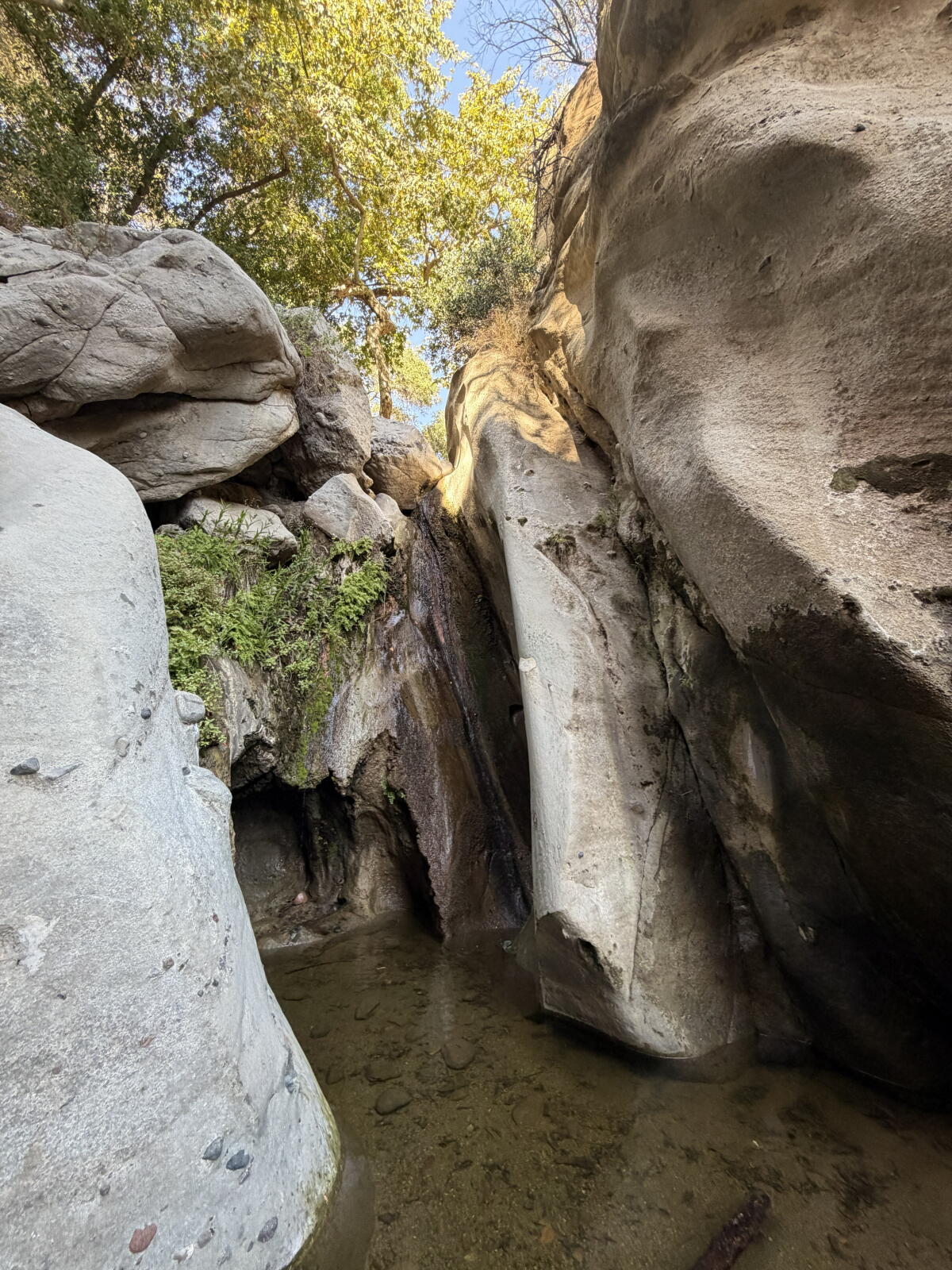
The waterfall isn’t roaring at the moment, but I found the trickling sound of water soothing. It’s also a geologically interesting area to look around, as the water has carved out the canyon walls into interesting shapes (and created a small cave near the waterfall).
The walls of Santa Ynez Canyon were carved by water, wind and time over centuries.
(Jaclyn Cosgrove / Los Angeles Times)
As I was heading back from the falls, I noticed several bees circling an area high in the canyon wall where it appeared they’d built a nest. Pack accordingly if you are allergic to bee stings.
Slow down and look up as you hike through Santa Ynez Canyon, taking the opportunity to observe rock formations, plants and reptiles.
(Jaclyn Cosgrove / Los Angeles Times)
I only saw three other people along the trail while there on a weekday. I was mostly alone, though, listening to the wrentits and spotted towhees as blue dragonflies darted to and fro.
Cold Creek in the Cold Creek Valley Preserve near Calabasas.
(Jaclyn Cosgrove / Los Angeles Times)
2. Cold Creek Trail
Distance: 2.2 miles out and back (with option to extend) Elevation gained: About 300 feet Difficulty: Easier end of moderate Dogs allowed: Yes Nearest to: South of Calabasas Accessible alternative: Nicholas Flat ADA Trail
The Cold Creek Valley Preserve, cared for by the TreePeople Land Trust, is a shady riparian habitat near Calabasas with a gently flowing creek that features multiple short cascades. The land was saved from development by several local residents and nonprofits, including Timothy B. Schmit, bass player for the Eagles.
The preserve features multiple public hiking routes, including the Cold Creek Trail.
“Located on an ancient trade route, the [I]ndigenous people of Southern California have used the area for hunting and settlement for generations, leaving a lasting influence visible on the land,” according to TreePeople. “The perennial Cold Creek is the keystone feature of the area, one of the cleanest free-flowing streams in the Santa Monica Mountains.”
The tree canopy along the Cold Creek Trail in the Cold Creek Valley Preserve provides a shady cool environment for hikers.
(Jaclyn Cosgrove / Los Angeles Times)
To begin your hike, you’ll park in a bumpy dirt lot just off Stunt Road. Be mindful as you near the trailhead, as there will likely be construction crew members in the area. They’re working to install rumble strips and other infrastructure to slow down drivers and hopefully improve traffic safety.
At the start of the trail, you’ll find a portable toilet near the gate. You’ll walk southeast for a short bit before rounding the curve of the trail. You’ll officially be transported into this sylvan sanctuary (although I could admittedly still hear the construction workers communicating on their walkie-talkies).
The trail mostly runs parallel to Cold Creek, which you will hear flowing and have the opportunity to sit near at multiple points along the route, including on a few wooden benches. The trail crosses the creek about four times, but it isn’t overly technical to maneuver.
The Cold Creek Valley Preserve is open from sunrise to sunset.
(Jaclyn Cosgrove / Los Angeles Times)
About half a mile in, the trail intersects with Lower Stunt High Trail. You can continue northwest along the creek. You will find another option, the Yucca Trail, just under a mile into your hike, a nice .68-mile loop through the preserve.
The park, open from sunrise to sunset, offers a sweet reprieve from the sun and is a great spot to take a deep breath and meditate in the woods.
The Gabrielino Trail is a multi-use trail frequented by hikers, bikers and horseback riders.
(Jaclyn Cosgrove / Los Angeles Times)
3. The Gabrielino National Recreation Trail (multiple segments)
Distance: 28.8 miles Elevation gained: About 6,000 feet Difficulty: Challenging when done in its entirety Dogs allowed: Yes Nearest to: Arcadia and Pasadena, depending on the trailhead Accessible alternative: Gabrielino Trail starting near North Windsor Avenue near Altadena
The Gabrielino National Recreation Trail is a 28.8-mile journey through the San Gabriel Mountains. Most thru-hikers start the trail at Chantry Flat and take the trail on a squiggly N-shaped journey all the way to its western trailhead near NASA’s Jet Propulsion Laboratory near Pasadena.
However, it isn’t necessary to take the entire Gabrielino Trail to enjoy its beauty. The trail has several entry points, offering short day trips, including the following, which run parallel to at least one local creek or river:
Regardless of where you go, I hope you enjoy our last weekend of summer. That’s right: Summer ends Tuesday! Hopefully that means it soon feels like autumn in L.A.
3 things to do
Volunteers walk down the beach at a Heal the Bay coastal cleanup event in 2024 with Water for L.A.
(Heal the Bay)
1. Clean up public lands around L.A. Heal the Bay will host L.A. County’s annual coastal cleanup day from 9 a.m. to noon Saturday in more than 60 sites. Participants should consider wearing closed-toe shoes and sun protection. Cleanup supplies will be available at sites but will run out at popular sites. Volunteers can pick a beach, river, park or trail near them by visiting support.healthebay.org.
2. Portray a bird of prey in San Dimas The San Dimas Canyon Nature Center will host a guided sketch experience from 6 to 7 p.m. Friday at 1628 Sycamore Canyon Road in San Dimas. Participants will learn how to draw a red-tailed hawk. Learn more at the center’s Instagram page.
3. Learn dangers from rangers in Newbury Park Hikers can bring their four-legged besties to Rancho Sierra Vista/Satwiwa from 9 a.m. to noon Saturday for a B.A.R.K. Rangers event where rangers will educate dog owners on how to safely and responsibly enjoy public lands. Rangers will also conduct a special swearing-in ceremony, complete with a Santa Monica Mountains National Recreation Area B.A.R.K. Ranger badge, for pups who complete certain challenges. Learn more at eventbrite.com.
The must-read
A juvenile great white shark in Hermosa Beach in April, seen via drone.
(CSULB Shark Lab)
Yes, El Niño morphed our city’s usually pleasant Mediterranean climate into the largest hot yoga class in L.A. But did you know it has also resulted in our ocean water being warm enough to attract animals not usually seen along our coastline? Those fishing off the Malibu Pier were surprised in mid-August by a hammerhead shark swimming nearby. A giant whale shark was recently documented by a fish spotter between Malibu and one of the Channel Islands, a species that prefers warmer waters (and is the largest known fish on the planet). And in line with our predicted “sharky summer,” a juvenile great white shark was spotted a bit close to a swimmer off the coast of Santa Barbara. The best news is: Nothing bad has happened to any humans or animals during these visits, underscoring how well we can co-exist with these beings, despite our fears of them.
Happy adventuring,
P.S.
More and more wildlife lovers are heading into public lands for “recreational herping,” the practice of looking for amphibians and reptiles. Conservation photographer Mario Ramos recently raised concerns via his Instagram page about how the increase is leading some folks to unintentionally harm the animals they seek to observe. “A harsh truth about field herping is that our interactions with wild herps are often stressful and potentially detrimental to the animals, no matter how you frame it,” Ramos wrote. Ramos then outlined how to ethically look for animals that slither and slide in the wild. Always respect the locals, folks!
For more insider tips on Southern California’s beaches, trails and parks, check out past editions of The Wild. And to view this newsletter in your browser, click here.