Often compared to Hawaii and dubbed the ‘new Canaries’, a paradise island with azure waters and unspoilt beaches has been named as one of Europe’s most beautiful places to visit

This European destination offers a stunning island escape(Image: Getty Images)
A tropical island retreat with crystal-clear azure waters and pristine beaches has been crowned as Europe’s most breathtaking destination to visit this year. Conveniently, its stunning scenes are just a four-hour flight away.
Nestled in the middle of the Atlantic Ocean, to the west of mainland Portugal, lies the spectacular archipelago of nine islands known as the Azores. Long compared to Hawaii, they’re frequently referred to as the new Canary Islands, thanks to their unspoilt beaches, shimmering crater lakes and cascading waterfalls, set against dramatic green cliffs and lush forests that remain wonderfully untouched.
With nine volcanic islands comprising the Azores, there’s a wealth of discoveries to be made, with each island boasting its own jaw-dropping coastline and diverse landscape that is sure to leave you speechless. So much so that Lonely Planet has named the Azores as one of the ‘most beautiful places to visit in Europe’ and the best for a ‘remote island escape’.
The publication noted that the Azores have been “long overlooked” and are like “stepping stones to another world”, with their collection of subtropical gardens, forests, and “brilliantly blue caldera lakes” that draw in nature lovers. For those keen to visit, Lonely Planet recommended spending time “floating in the dazzlingly turquoise thermal waters of Caldeira Velha on São Miguel island, hiking through botanical gardens brimming with azaleas, camellias and hydrangeas on Flores, gasping out loud as sperm whales and humpbacks emerge from the deep blue on Faial, or climbing up to Mt Pico’s cloud-shredding, 2351m cone for sensational views across the archipelago.”
For those wanting to experience these breathtaking landscapes firsthand, direct flights are available from London Heathrow Airport (LHR) to the Azores’ main gateway, Ponta Delgada Airport (PDL), with a journey time of just over four hours. Prices start from £118 per person, according to Skyscanner, with limited availability, but it’s well worth securing a trip to savour this slice of paradise, reports the Express.
What’s more, set against the Azores’ spectacular scenery and dramatic coastlines, visitors can also take advantage of remarkably affordable prices. A pint will typically cost around €1.50 (£1.28), while a meal at a local restaurant comes in at between €10 to €15 (£8.57 and £12.85) per person, or €30 (£25.70) at a popular establishment.
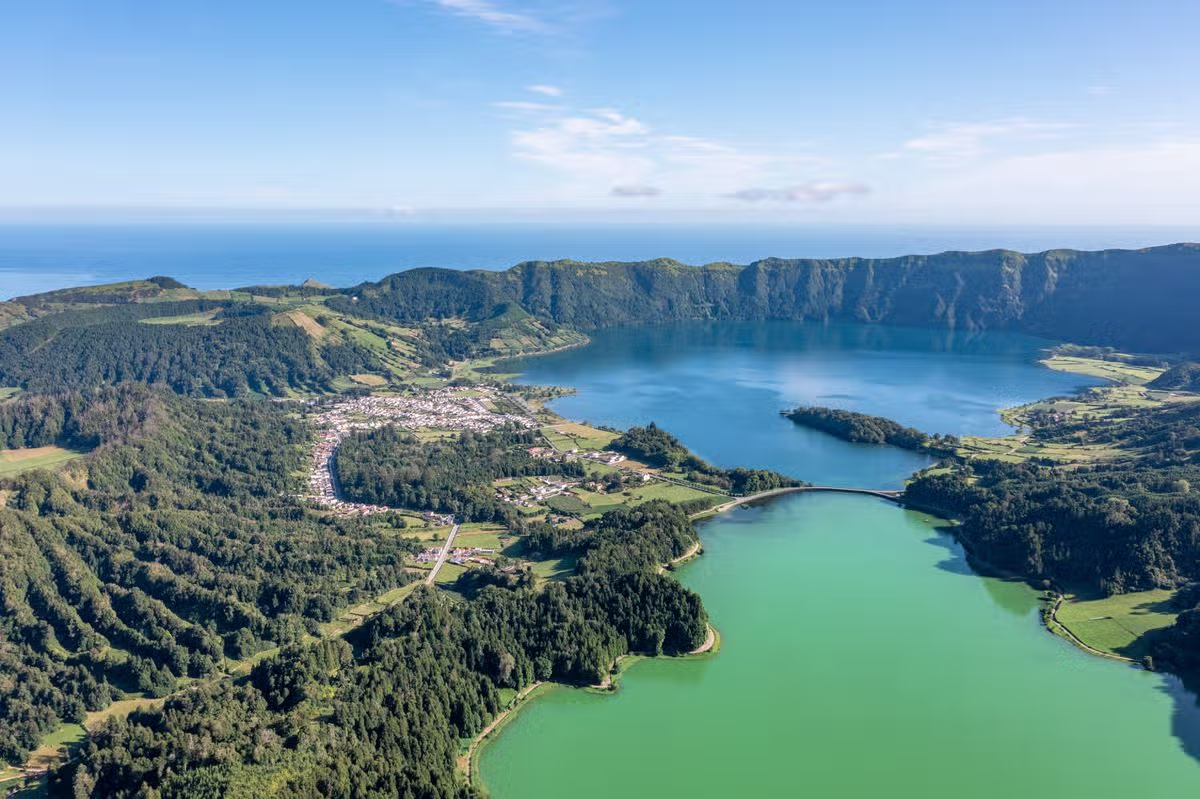
One of the most coveted destinations to visit is São Miguel Island, also known as the ‘Green Island’. It’s the largest island in the archipelago and is famed for its striking twin-crater lake, Sete Cidades, which boasts contrasting blue and green-tinted waters. Recognised as one of Portugal’s seven natural wonders, it’s undeniably breathtaking with its magical surroundings.
Elsewhere, São Miguel Island offers a wealth of dramatic volcanic beaches with black sand and crystal-clear waters, ideal for soaking up the September sunshine. These include Praia de Santa Bárbara, a well-known surfing hotspot, and Praia dos Mosteiro, complete with heated rock pools for a dip away from the ocean waves.
Yet the offshore islet at Vila Franca do Campo is arguably the most stunning stretch of coastline of them all, with its curved sunken volcanic crater forming an extraordinary natural swimming pool. What’s more, dotted throughout the Azores are secluded coves, beaches and volcanic thermal springs just waiting to be uncovered, meaning you’ll never be stuck for options on where to spend your island escape.
Direct flights from the UK to the Azores depart from London Heathrow via British Airways, typically operating during the summer months.
You can fly from many other UK airports, such as London Gatwick and Manchester, with one stop via major carriers including TAP Air Portugal, which connects through Lisbon or Porto, or SATA Azores Airlines, which connects via mainland Portugal or North America connections.
Do you have a travel story to share? Email webtravel@reachplc.com