NATO

Putin confirms he wants all of Ukraine, as Europe steps up military aid | Russia-Ukraine war News

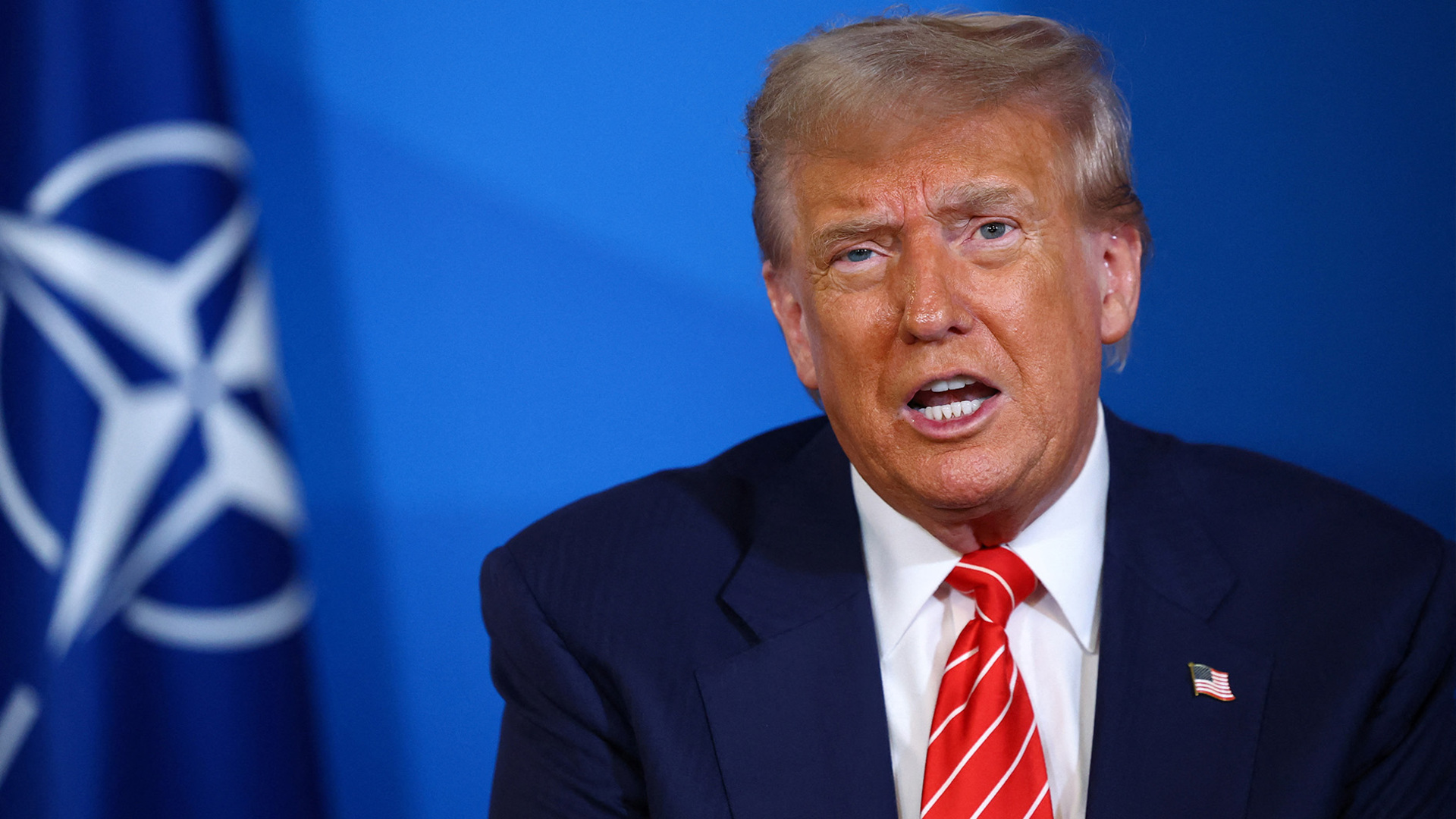
Ukraine’s European allies pledged increased levels of military aid to Ukraine this year, making up for a United States aid freeze, as Russian President Vladimir Putin reaffirmed his ambition to absorb all of Ukraine into the Russian Federation.

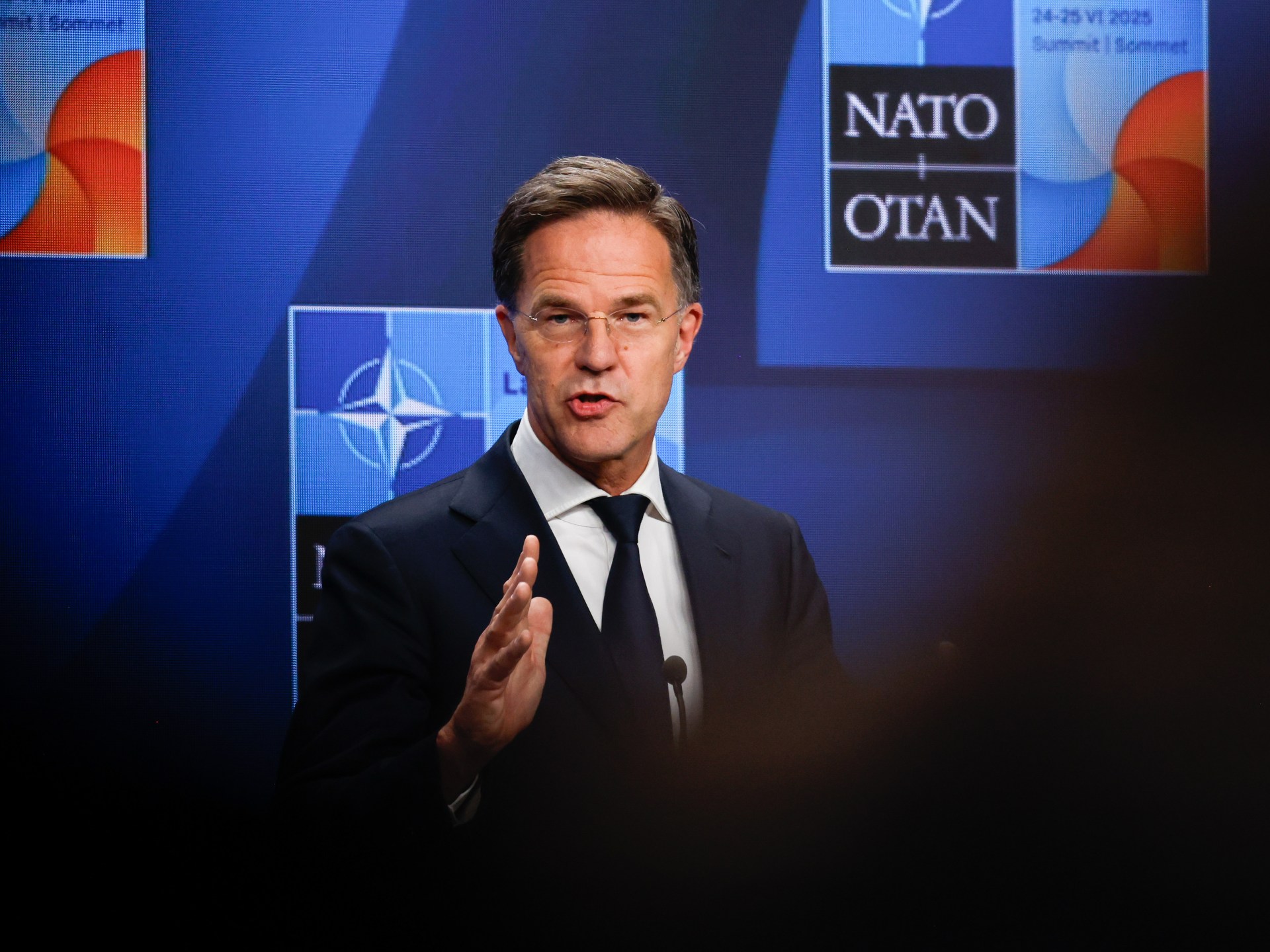
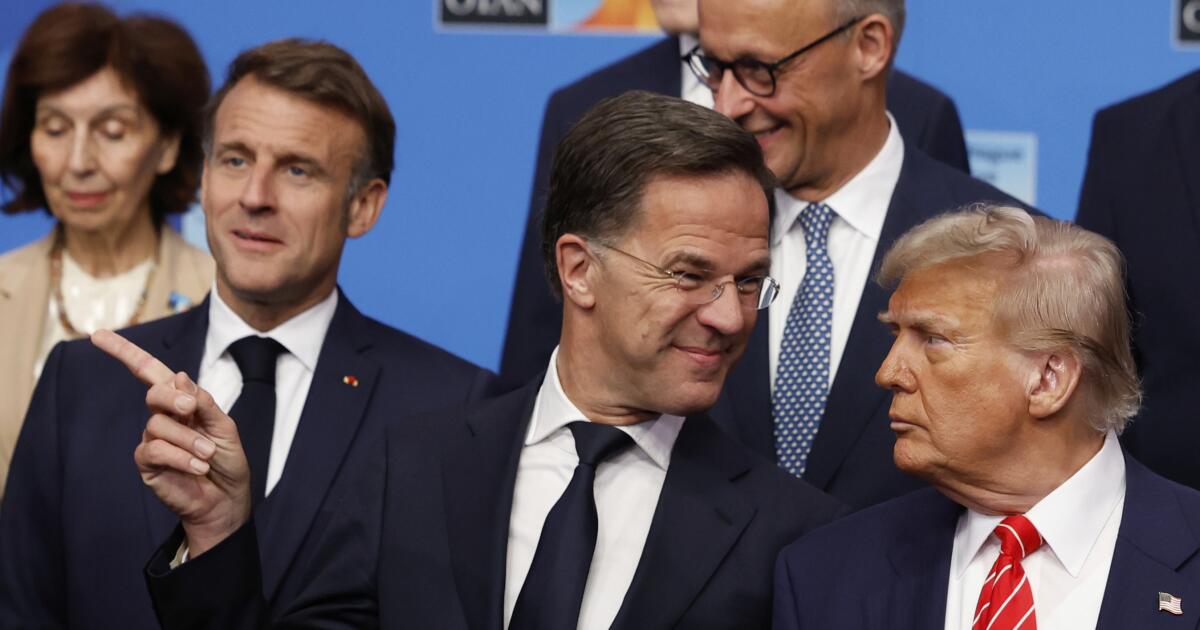
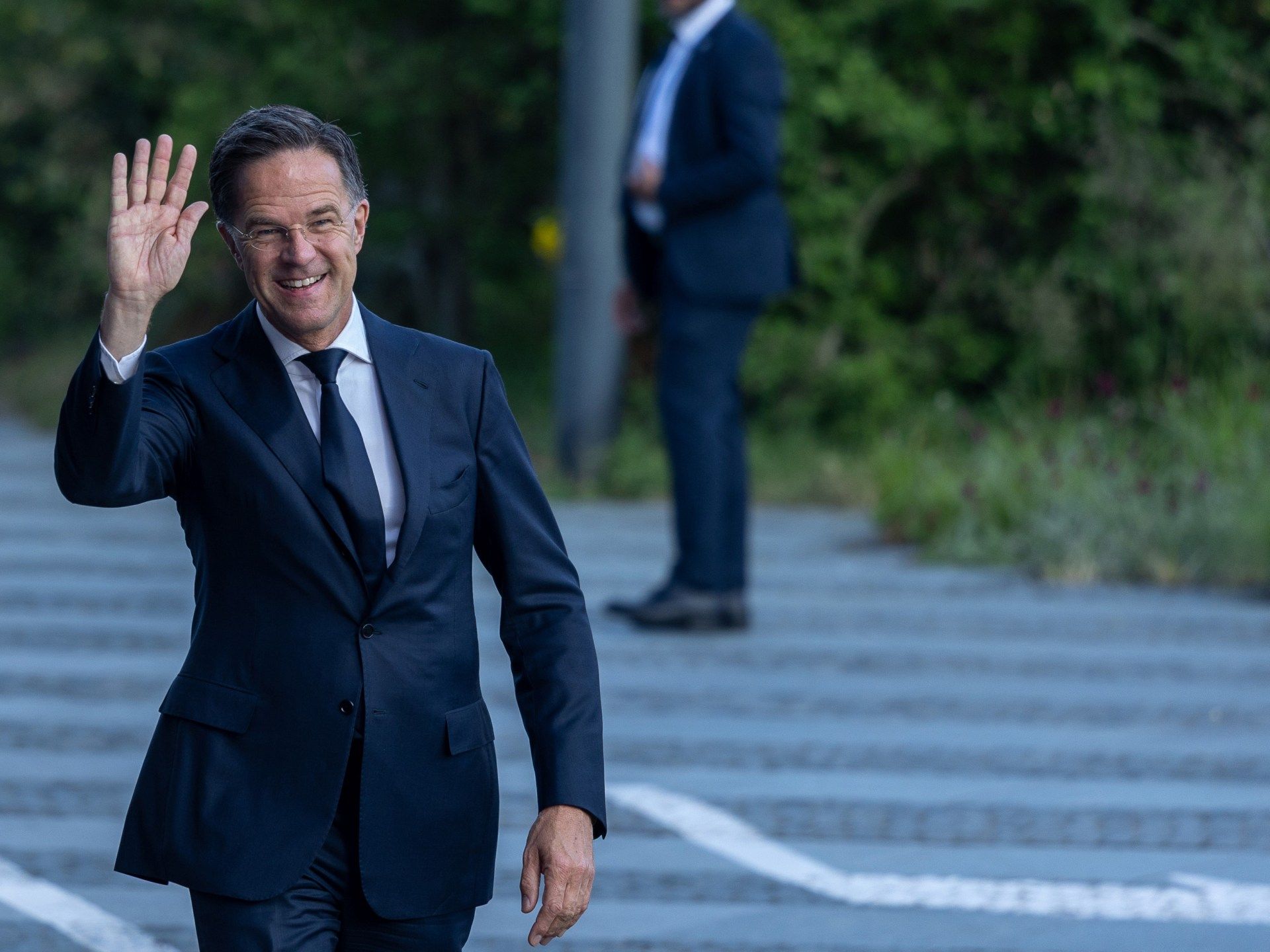
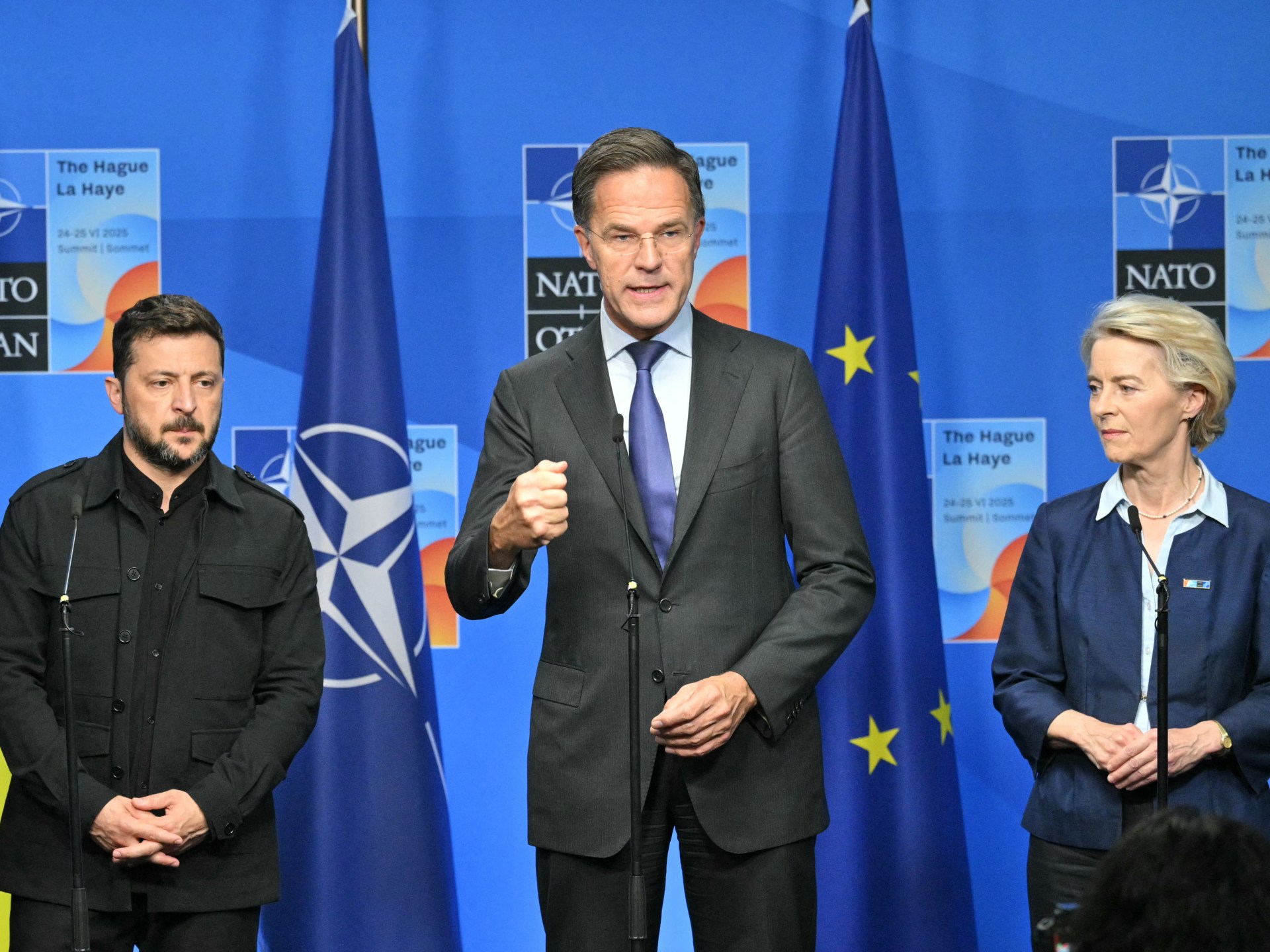
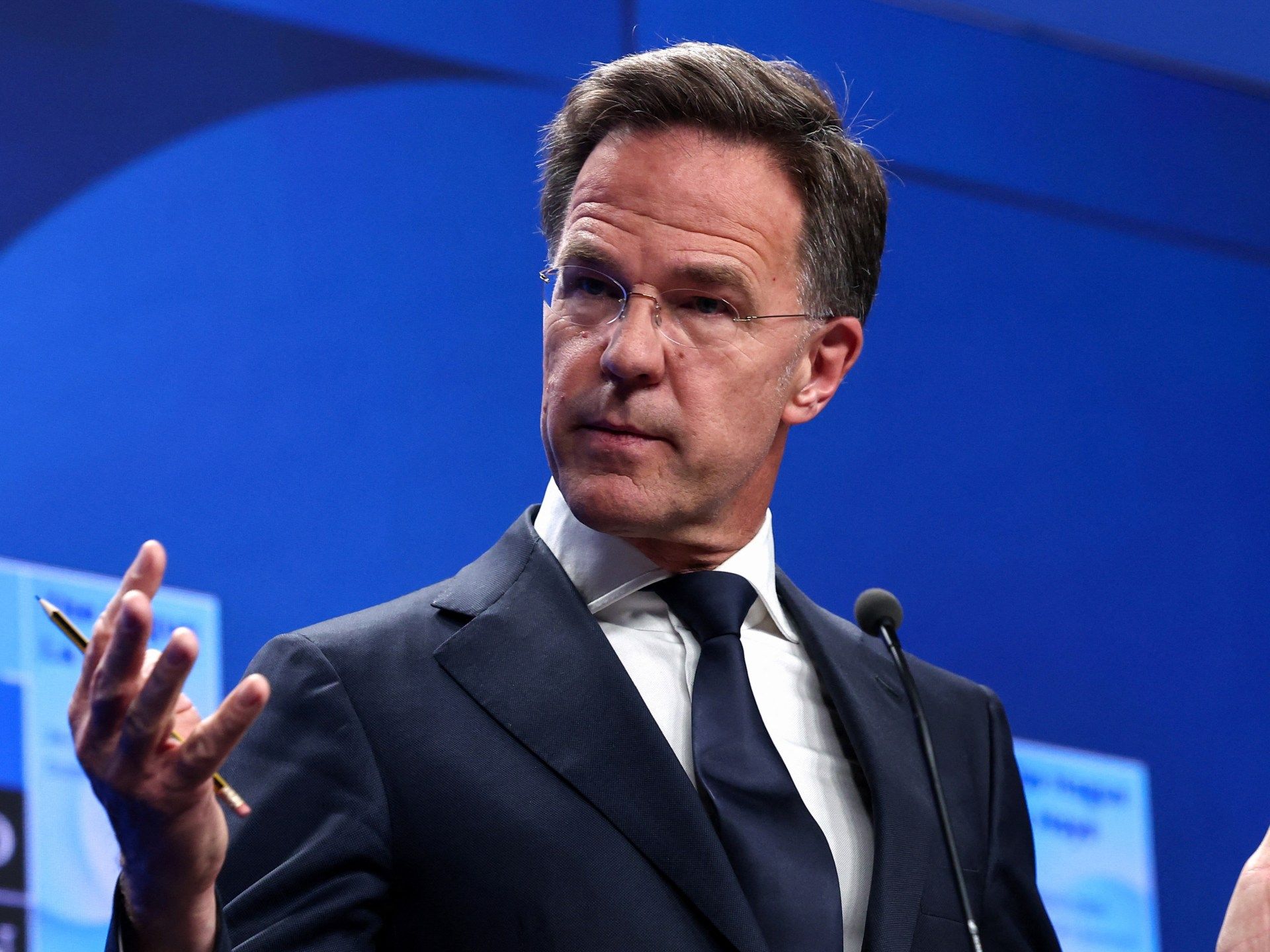
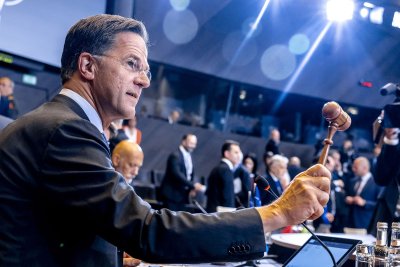
“At this moment, the Europeans and the Canadians have pledged, for this year, $35bn in military support to Ukraine,” said NATO Secretary-General Mark Rutte ahead of the alliance’s annual summit, which took place in The Hague on Tuesday and Wednesday, June 24-25.

“Last year, it was just over $50bn for the full year. Now, before we reach half year, it is already at $35bn. And there are even others saying it’s already close to $40bn,” he added.

The increase in European aid partly made up for the absence of any military aid offers so far from the Trump administration.

In April, Ukrainian President Volodymyr Zelenskyy offered to buy the US Patriot air defence systems Ukraine needs to fend off daily missile and drone attacks.

The Trump administration made its first sale of weapons to Ukraine the following month, but only of F-16 aircraft parts.

At The Hague this week, Zelenskyy said he discussed those Patriot systems with Trump. At a news conference on Wednesday, Trump said: “We’re going to see if we can make some available,” referring to interceptors for existing Patriot systems in Ukraine. “They’re very hard to get. We need them too, and we’ve been supplying them to Israel,” he said.

Russia has made a ceasefire conditional on Ukraine’s allies stopping the flow of weapons to it and Kremlin spokesman Dmitry Peskov repeated that condition on Saturday.

On June 20, Vladimir Putin revealed that his ambition to annex all of Ukraine had not abated.

“I have said many times that the Russian and Ukrainian people are one nation, in fact. In this sense, all of Ukraine is ours,” he declared at a media conference to mark the opening of the Saint Petersburg Economic Forum on Friday, June 20.

“But you know we have an old parable, an old rule: wherever a Russian soldier steps, it is ours.”

“Wherever a Russian soldier steps, he brings only death, destruction, and devastation,” Ukrainian Foreign Minister Andrii Sybiha said the next day.

In a post on the Telegram messaging platform on June 21, Zelenskyy wrote that Putin had “spoken completely openly”.

“Yes, he wants all of Ukraine,” he said. “He is also speaking about Belarus, the Baltic states, Moldova, the Caucasus, countries like Kazakhstan.”

German army planners agreed about Putin’s expansionism, deeming Russia an “existential threat” in a new strategy paper 18 months in the making, leaked to Der Spiegel news magazine last week.

Moscow was preparing its military leadership and defence industries “specifically to meet the requirements for a large-scale conflict against NATO by the end of this decade”, the paper said.

“We in Germany ignored the warnings of our Baltic neighbours about Russia for too long. We have recognised this mistake,” said German chancellor Friedrich Merz on Tuesday, highlighting the reason for an about-turn from his two predecessors’ refusal to spend more on defence.

“There is no going back from this realisation. We cannot expect the world around us to return to calmer times in the near future,” he added.

INTERACTIVE-NATO-DEFENCE-SPENDING-GDP-1750784626

Germany, along with other European NATO allies, agreed on Wednesday to raise defence spending to 5 percent of gross domestic product by 2035.

It was a sign of the increasingly common threat perception from Russia, but also a big win for Trump, who had demanded that level of spending shortly after winning re-election as US president last year.

Of that, 1.5 percent is for military-related spending like dual-purpose infrastructure, emergency healthcare, cybersecurity and civic resilience.

Even Trump, who has previously expressed admiration for Putin, seemed to be souring on him.

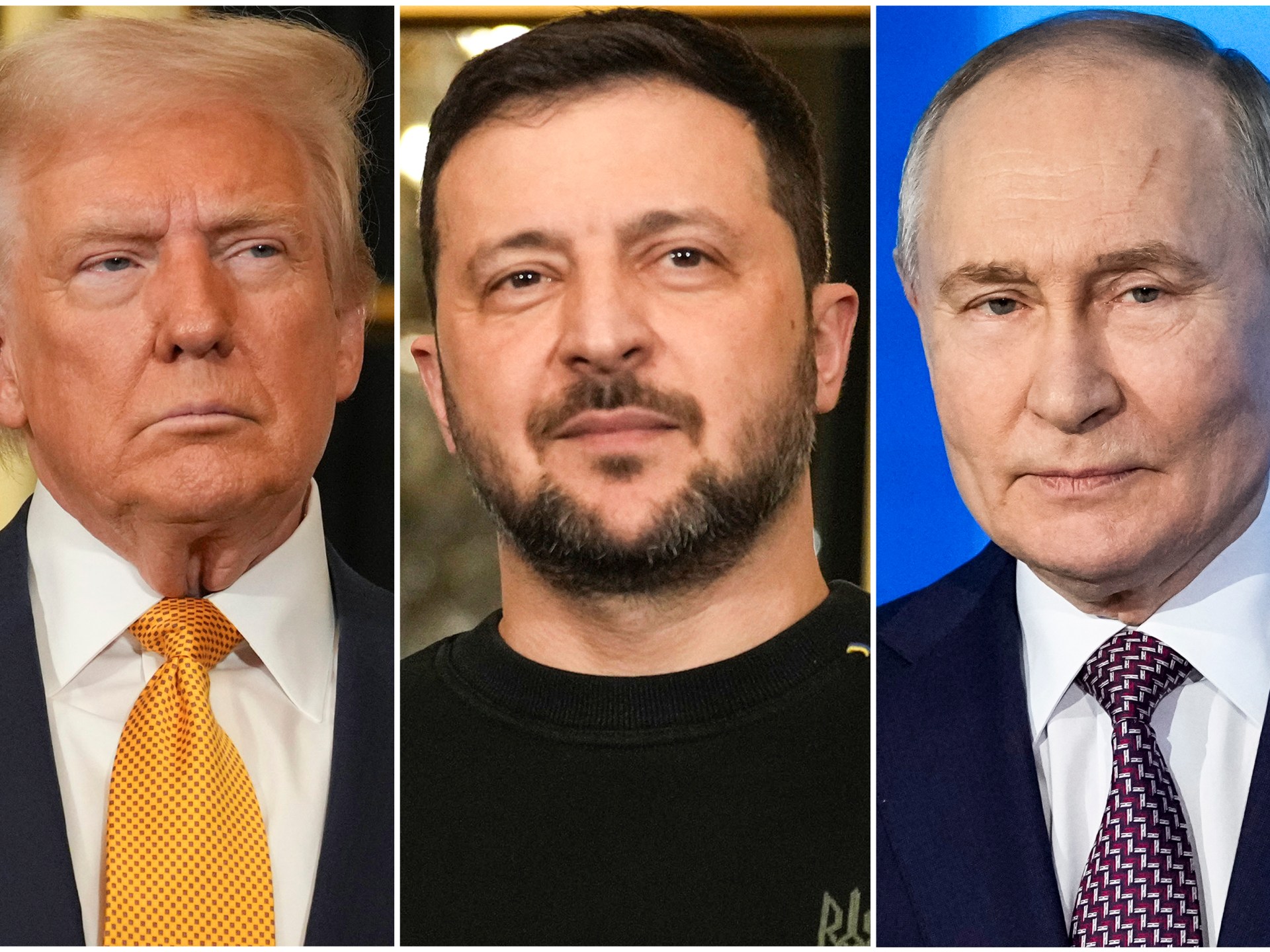
“I consider him a person that’s, I think, been misguided,” he said after a moment’s thought at his NATO news conference. “I’m very surprised actually. I thought we would have had that settled easy,” referring to the conflict in Ukraine. “Vladimir Putin really has to end that war,” he said.

In the early weeks of his administration, Trump appeared to think it was up to Ukraine to end the war.

Putin continued his ground war during the week of the NATO summit, launching approximately 200 assaults each day, according to Ukraine’s General Staff – a high average.

Ukraine, itself, was fighting 695,000 Russian troops on its territory, said Zelenskyy on Saturday, with another 52,000 attempting to create a new front in Sumy, northeast Ukraine.

“This week they advanced 200 metres towards Sumy, and we pushed them back 200–400 metres,” he said, a battle description typical of the stagnation Russian troops face along the thousand-kilometre front.

INTERACTIVE-WHO CONTROLS WHAT IN UKRAINE-1750846443
(Al Jazeera)

Terror from the air

Russia continued its campaign of demoralisation among Ukrainian civilians, sending drones and missiles into Ukraine’s cities.

Russian drones and missiles killed 30 civilians and injured 172 in Kyiv on June 19.

“This morning I was at the scene of a Russian missile hitting a house in Kyiv,” said Zelenskyy. “An ordinary apartment building. The missile went through all the floors to the basement. Twenty-three people were killed by just one Russian strike.”

“There was no military sense in this strike, it added absolutely nothing to Russia militarily,” he said.

Overnight, Russia attacked Odesa, Kharkiv and their suburbs with more than 20 strike drones. At least 10 of the drones struck Odesa. A four-storey building engulfed in flames partly collapsed on top of rescue workers, injuring three firefighters.

A drone attack on Kyiv killed at least seven people on Monday this week. “There were 352 drones in total, and 16 missiles,” said Zelenskyy, including “ballistics from North Korea”.

A Russian drone strike on the Dnipropetrovsk region on Tuesday killed 20 people and injured nearly 300, according to the regional military administration.

INTERACTIVE-WHO CONTROLS WHAT IN EASTERN UKRAINE copy-1750846422
(Al Jazeera)
INTERACTIVE-WHO CONTROLS WHAT IN SOUTHERN UKRAINE-1750846432
(Al Jazeera)

Ukraine focused on drone production

Ukraine, too, is focused on long-range weapons production. Five of its drones attacked the Shipunov Instrument Design Bureau in Tula on June 18 and 20. Shipunov is a key developer of high-precision weapons for the Russian armed forces, said Ukraine, and the strikes damaged the plant’s warehouses and administration building, causing it to halt production.

“Thousands of drones have been launched toward Moscow in recent months,” revealed Moscow Mayor Sergei Sobyanin last week, adding that air defences had shot almost all of them down.

But Ukraine is constantly improving designs and increasing production.

On Monday, the United Kingdom announced that Ukraine would be providing its drone manufacturers with “technology datasets from Ukraine’s front line” to improve the design of British-made drones that would be shipped to Ukraine.

“Ukraine is the world leader in drone design and execution, with drone technology evolving, on average, every six weeks,” the announcement from Downing Street said.

On the same day, Norway said it would invert that relationship, to produce surface drones in Ukraine using Norwegian technology.

Zelenskyy said this Build with Ukraine programme, in which Ukraine and its allies share financing, technology and production capacity, would ultimately work for missile production in Ukraine as well.

His goal is ambitious. “We want 0.25 percent of the GDP of a particular partner state to be allocated for our defence industry for domestic production next year,” he said.

Among Ukraine’s projects is a domestically produced ballistic missile, the Sapsan, which can carry a 480kg warhead for a distance of 500km – enough to reach halfway to Moscow from Ukraine’s front line.

Asked whether the Sapsan could reach Moscow, Zelenskyy’s office director, Andriy Yermak, told the UK’s Times newspaper: “Things are moving very well. I think we will be able to surprise our enemies on many occasions.”

Trouble with club membership

Ukraine’s ambition to join NATO and the European Union, leaving Russian orbit, is what triggered this war, and Russia has said that giving up both those clubs is a condition of peace.

NATO first invited Ukraine to its 2008 Summit in Bucharest. But in February, US Secretary of Defense Pete Hegseth said NATO membership for Ukraine was not a “realistic outcome of a negotiated settlement”, and a “final” ceasefire offer from the White House on April 17 included a ban on NATO membership for Ukraine.

Despite this, on Wednesday, Rutte told Reuters: “The whole of NATO, including the United States, is totally committed to keep Ukraine in the fight.”

Earlier this month, Rutte told a discussion at the Chatham House think tank in London that a political commitment to Ukraine’s future membership of NATO remained unchanged, even if it was not explicitly mentioned in the final communique of the NATO summit.

“The irreversible path of Ukraine into NATO is there, and it is my assumption that it is still there after the summit,” Rutte said.

If that gave Ukrainians renewed hope, this was perhaps dashed by the European Union’s inability last week to open new chapters in its own membership negotiations.

That was because Slovakia decided to veto the move to do so in the European Council, the EU’s governing body. Slovakia also blocked an 18th sanctions package the EU was set to approve this week, because it would completely cut the EU off from Russian oil and gas imports.

Slovakia and Hungary have argued they need Russian energy because they are landlocked. Their leaders, Robert Fico and Viktor Orban, have been the only EU leaders to visit Moscow during the war in Ukraine. Zelenskyy has openly accused Fico of benefiting personally from energy imports from Russia.

In a week of disruptive politics from Bratislava, Slovakia also intimated it could leave NATO.

“In these nonsensical times of arms buildup, when arms companies are rubbing their hands … neutrality would benefit Slovakia very much,” Fico told a media conference shown online on June 17. He pointed out that this would require parliamentary approval.

Three days later, the independent Slovak newspaper Dennik N published an interview with Austria’s former defence minister, Werner Fasslabend, in which he said Slovakia’s departure from NATO might trigger Austria’s entry into the alliance.

“If Slovakia were to withdraw from NATO, it would worsen the security situation for Austria as well. It would certainly spark a major debate about Austria’s NATO membership and possible NATO accession,” Fasslabend said.
Source link

What’s next for Iran’s nuclear programme? | Israel-Iran conflict News

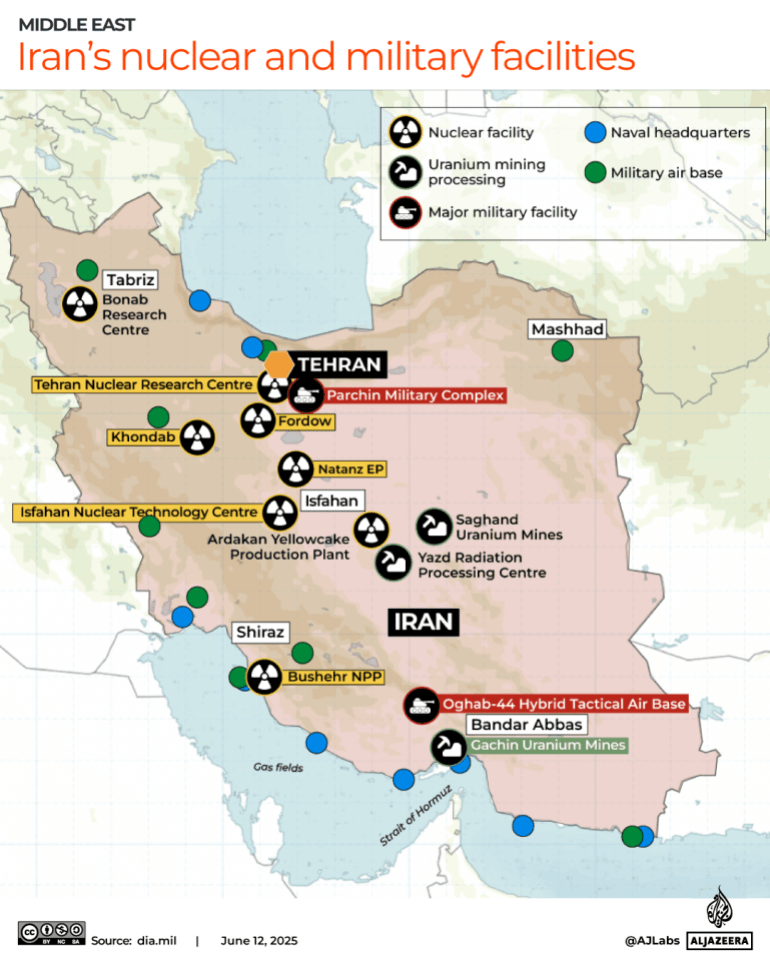
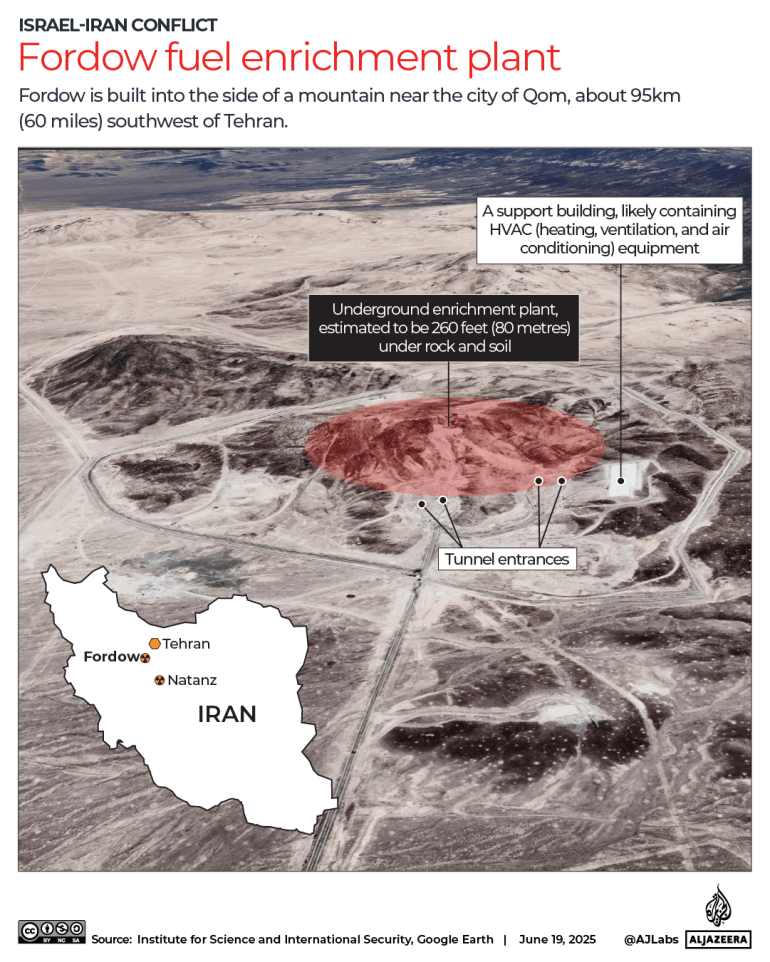
Barely 72 hours after United States President Donald Trump’s air strikes against Iran, a controversy erupted over the extent of the damage they had done to the country’s uranium enrichment facilities in Fordow and Natanz.

The New York Times and CNN leaked a preliminary Defense Intelligence Agency (DIA) assessment that the damage may have been “from moderate to severe”, noting it had “low confidence” in the findings because they were an early assessment.

Trump had claimed the sites were “obliterated”.

The difference in opinion mattered because it goes to the heart of whether the US and Israel had eliminated Iran’s ability to enrich uranium to levels that would allow it to make nuclear weapons, at least for years.

Israel has long claimed – without evidence – that Iran plans to build nuclear bombs. Iran has consistently insisted that its nuclear programme is purely of a civilian nature. And the US has been divided on the question – its intelligence community concluding as recently as March that Tehran was not building a nuclear bomb, but Trump claiming earlier in June that Iran was close to building such a weapon.

Yet amid the conflicting claims and assessments on the damage from the US strikes to Iranian nuclear facilities and whether the country wants atomic weapons, one thing is clear: Tehran says it has no intentions of giving up on its nuclear programme.

So what is the future of that programme? How much damage has it suffered? Will the US and Israel allow Iran to revive its nuclear programme? And can a 2015 diplomatic deal with Iran – that was working well until Trump walked out of it – be brought back to life?

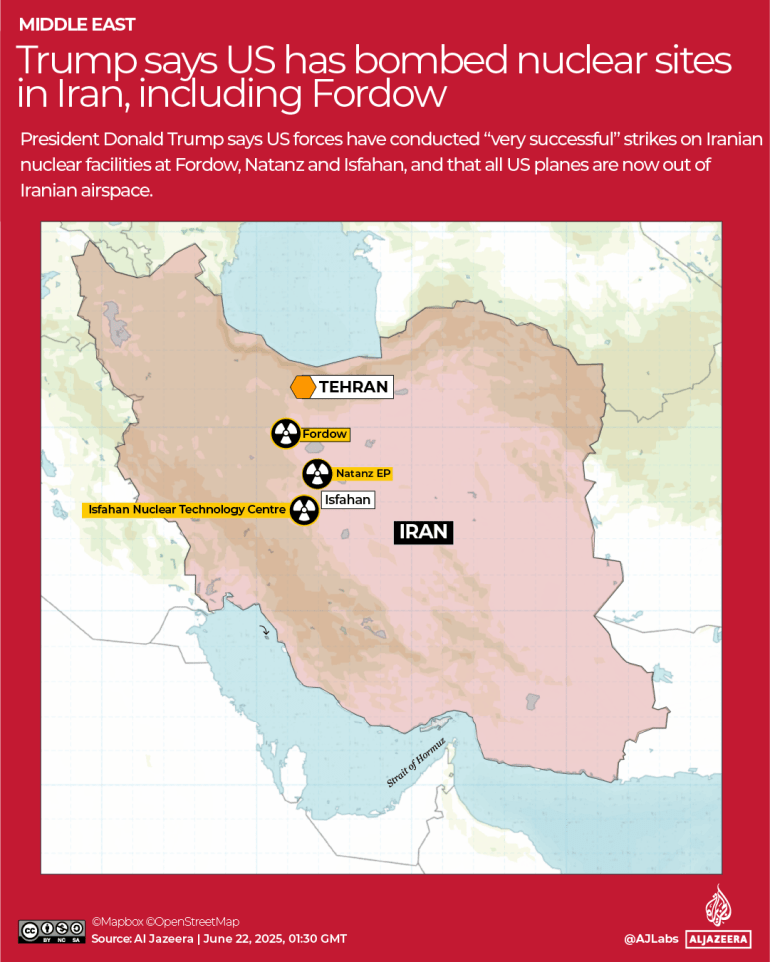
A graphic shows the sites struck by US attacks in Iran

What Iran wants

In his first public comments since the US bombing, Iran’s Supreme Leader Ayatollah Ali Khamenei said that the attack “did nothing significant” to Iran’s nuclear facilities.

Reporting from Tehran, Al Jazeera’s Resul Serdar said Khamenei spoke of how “most of the [nuclear] sites are still in place and that Iran is going to continue its nuclear programme”.

Mohammad Eslami, the head of the Atomic Energy Organization of Iran, on Tuesday said that “preparations for recovery had already been anticipated, and our plan is to prevent any interruption in production or services”.

To be sure, even if they haven’t been destroyed, Natanz and Fordow – Iran’s only known enrichment sites – have suffered significant damage, according to satellite images. Israel has also assassinated several of Iran’s top nuclear scientists in its wave of strikes that began on June 13.

However, the DIA said in the initial assessment that the Trump administration has tried to dismiss, that the attacks had only set Iran’s nuclear programme back by months. It also said that Iran had moved uranium enriched at these facilities away from these sites prior to the strikes. Iranian officials have also made the same claim.

The UN’s nuclear watchdog, the International Atomic Energy Agency (IAEA), had accused Iran of enriching up to 400kg of uranium to 60 percent – not far below the 90 percent enrichment that is needed to make weapons.

Asked on Wednesday whether he thought the enriched uranium had been smuggled out from the nuclear facilities before the strikes, Trump said, “We think everything nuclear is down there, they didn’t take it out.” Asked again later, he said, “We think we hit them so hard and so fast they didn’t get to move.”

INTERACTIVE-Iran-nuclear-and-military-facilities-1749739103
(Al Jazeera)

What was the extent of damage to Iran’s nuclear facilities?

Without on-site inspections, nobody can be sure.

Central Intelligence Agency director John Ratcliffe on Wednesday posted a statement saying, “several key Iranian nuclear facilities were destroyed and would have to be rebuilt over the course of years”. That’s a very different timeline from what the DIA suggested in its early assessment.

But it’s important to remember that the DIA and CIA also disagreed on whether Iraqi leader Saddam Hussein had weapons of mass destruction in 2003.

The DIA sided with the UN’s view that inspections had proven Hussein didn’t have such weapons. The CIA, on the other hand, provided intelligence that backed the position of then-president George W Bush in favour of an invasion – intelligence that was later debunked. In that instance, the CIA proved politically more malleable than the DIA.

Amid the current debate over whether Iranian nuclear sites were destroyed, Trump’s Director of National Intelligence, Tulsi Gabbard, has also weighed in favour of the president’s view.

“Iran’s nuclear facilities have been destroyed. If the Iranians chose to rebuild, they would have to rebuild all three facilities (Natanz, Fordow, Esfahan) entirely, which would likely take years to do,” she posted on Twitter/X.

But Gabbard has already demonstrably changed her public statements to suit Trump.

In March, she testified before a House Permanent Select Committee on Intelligence that “Iran is not building a nuclear weapon, and Supreme Leader Khamenei has not authorised the nuclear weapons programme that he suspended in 2003”.

On June 20, Trump was asked for his reaction to that assessment. “She’s wrong,” he said.

Gabbard later that day posted that her testimony had been misquoted by “the dishonest media” and that “America has intelligence that Iran is at the point that it can produce a nuclear weapon within weeks to months, if they decide to finalise the assembly”.

Gabbard’s clarification did not contradict her earlier view, that Iran was not actively trying to build a weapon.

Asked in an interview with a French radio network whether Iran’s nuclear programme had been destroyed, IAEA chief Rafael Grossi replied, “I think ‘destroyed’ is too much. But it suffered enormous damage.”

On Wednesday, Israel’s Atomic Energy Commission concurred with the CIA, saying Iran’s nuclear facilities had been rendered “totally inoperable” and had “set back Iran’s efforts to develop nuclear weapons for many years to come”.

Also on Wednesday, US Secretary of State Marco Rubio said the destruction of Iran’s surface facilities at Isfahan was proof enough of Iran’s inability to make a bomb.

“The conversion facility, which you can’t do a nuclear weapon without a conversion facility, we can’t even find where it is, where it used to be on the map,” he told reporters.

INTERACTIVE-Fordow fuel enrichment plant IRAN nuclear Israel-JUNE16-2025-1750307364
(Al Jazeera)

Can a 2015 diplomatic deal be resuscitated?

The Joint Comprehensive Plan of Action (JCPOA), negotiated with Iran by France, Germany, the United Kingdom, the US, China, Russia and the European Union in 2015, was the only agreement ever reached governing Iran’s nuclear programme.

The JCPOA allowed Iran to enrich its own uranium, but limited it to the 3.7 percent enrichment levels required for a nuclear reactor to generate electricity. At Israel’s behest, Trump abandoned the agreement in 2018 and Iran walked away from it a year later – but before that, it was working.

Even though Trump has said he will never return to the JCPOA, which was negotiated by his predecessor, Barack Obama, he could return to an agreement of his own making that strongly resembles it. The crucial question is, whether Israel will this time back it, and whether Iran will be allowed to have even a peaceful nuclear programme, which it is legally entitled to.

On Wednesday, Trump didn’t sound as though he was moving in this direction. “We may sign an agreement. I don’t know. I don’t think it’s that necessary,” he told reporters at The Hague.

Any JCPOA-like agreement would also require Iran to allow IAEA inspectors to get back to ensuring that Tehran meets its nuclear safeguard commitments.

“IAEA inspectors have remained in Iran throughout the conflict and are ready to start working as soon as possible, going back to the country’s nuclear sites and verifying the inventories of nuclear material,” the IAEA said on Tuesday.

But Iran’s powerful Guardian Council on Thursday approved a parliamentary bill to suspend cooperation with the IAEA, suggesting that Tehran is at the moment not in the mood to entertain any UN oversight of its nuclear facilities.

What happens if Iran returns to enriching uranium?

“If Iran wants a civil nuclear programme, they can have one, just like many other countries in the world have one, and [the way for] that is, they import enriched material,” Rubio told journalist Bari Weiss on the Podcast, Honestly, in April.

“But if they insist on enriching [themselves], then they will be the only country in the world that doesn’t have a weapons programme, quote unquote, but is enriching. And so I think that’s problematic,” he said.

Ali Ansari, an Iran historian at St. Andrews University in the UK, told Al Jazeera that “there have already been calls to cease uranium enrichment from activists within the country”.

But the defiant statements from Iranian officials since the US strikes – including from Khamenei on Thursday – suggest that Tehran is not ready to give up on enrichment.

Trump has, in recent days, suggested that he wants Iran to give up its nuclear programme altogether.

On Tuesday, Trump posted on TruthSocial, “IRAN WILL NEVER REBUILD THEIR NUCLEAR FACILITIES!”

He doubled down on that view on Wednesday.

“Iran has a huge advantage. They have great oil, and they can do things. I don’t see them getting back involved in the nuclear business any more, I think they’ve had it,” he told reporters at the end of the NATO summit in The Hague.

And then he suggested the US would again strike Iran’s facilities, even if it weren’t building a bomb. “If [Iran] does [get involved], we’re always there, we’ll have to do something about it.” If he didn’t, “someone else” would hit Iran’s nuclear facilities, he suggested.

That “someone” would be Israel – which has long tried to kill any diplomatic effort over Iran’s nuclear programme.

At the NATO summit, Trump was asked whether Israel and Iran might start a war again soon.

“I guess some day it can. It could maybe start soon,” he said.

Source link

NATO’s 5 percent spending pledge is a threat to people and the planet | NATO

NATO’s leaders agreed this week to invest 5 percent of their countries’ gross domestic product (GDP) on “core defence requirements as well as defence and security-related spending by 2035”. NATO Secretary-General Mark Rutte called it a “quantum leap” in spending that would guarantee “freedom and security” for the military alliance’s one billion people. It certainly is historic in terms of military escalation, but will it deliver security – and if so, for whom?

The headline demand for 5 percent GDP spending has been so loud, it’s easy to forget that for a long time, many NATO members considered the previous 2 percent goal either unachievable or unimportant. NATO first committed to its 2 percent GDP goal in 2002, but by 2021, only six of its members had achieved it. Yet three years later, 23 members had met the goal and all 32 are expected to comply by the end of 2025.

This week, NATO has committed to more than doubling its spending to 5 percent of GDP. This will be partly met through creative accounting and reflects a desire to trumpet a big number to satisfy a petulant President Trump. The 5 percent headline includes 1.5 percent spent on military-related infrastructure, which could be broadly defined to include civilian expenditure. Even so, it reflects a huge escalation of military expenditure over the next decade from an already very high level.

Last year, NATO spent $1.5 trillion on the military – more than half of global military spending. If members comply with the core 3.5 percent target by 2030, that would mean a total of $13.4 trillion in military expenditure. It’s an impossible figure to grasp, but if you stacked it in one-dollar bills, you could make almost four piles that reach the moon. It could also be distributed as a one-off cash bonus of $1,674 to every person on the planet.

In reality, the money will be diverted – most of all from social and environmental spending – even though 30 percent of Europeans report difficulty in making ends meet and climate scientists warn that we have two years left to keep temperature increases below the international target of 1.5 degrees Celsius (34.7 degrees Fahrenheit).

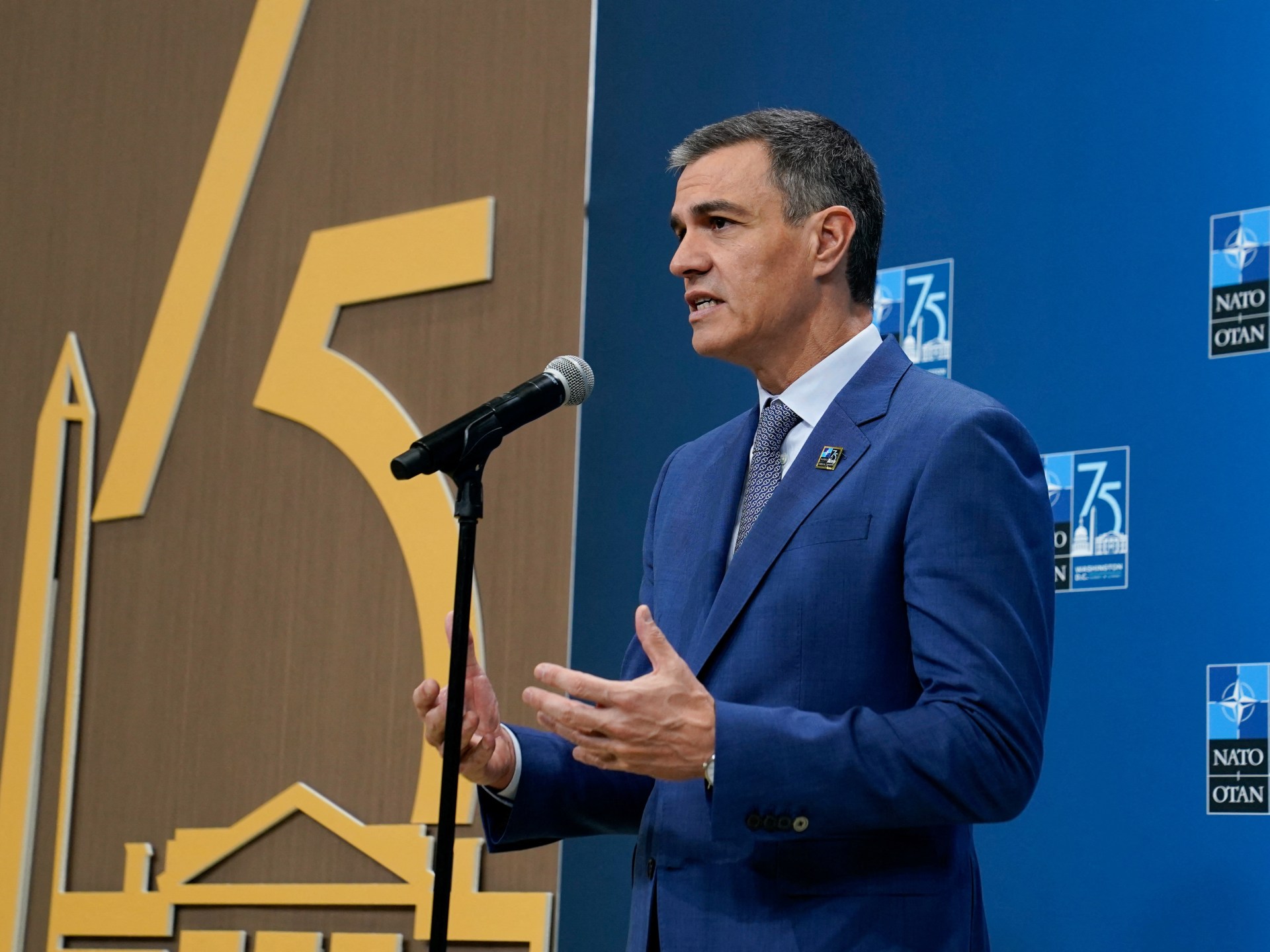
Spanish Prime Minister Pedro Sanchez, who fought for a partial exemption from the 5 percent goal, was the most honest about this costly trade-off: “If we had accepted 5 percent, Spain would have to spend by 2035 an extra 300 billion euros on defence. Where would it come from? From cuts in health and education.”

Social and environmental spending is already on the chopping block. In February, the United Kingdom announced it would reduce its aid budget to 0.3 percent of GDP to pay for military spending increases – a year after it won an election committing to increase foreign aid. Belgium, the Netherlands and France followed suit, announcing aid cuts of 25 to 37 percent. The United States, under Trump, has decimated its overseas aid and climate programmes and reduced healthcare funding while proposing a record $1 trillion expenditure on the Pentagon.

Europe is falling far behind on its own environmental and social goals, with its primary funding vehicle, the Recovery and Resilience Facility (RRF), expiring in 2026. The European Trade Union Confederation (ETUC) concludes that most European NATO members will be unable to meet the 3.5 percent NATO target without cutting budgets, raising taxes or changing fiscal rules.

NATO’s spending spree will not only divert money – it will worsen the climate crisis. As one of the world’s biggest carbon polluters, it is investing in more gas-guzzling jets, tanks and missiles. Military emissions are notoriously hard to track due to limited data, but one report estimates that 3.5 percent of GDP spending would lead to 2,330 million metric tonnes of greenhouse gases by 2030 – roughly the same as the combined annual emissions of Brazil and Japan.

NATO’s justification is that increased investment is needed to confront the threats of “Russia” and “terrorism”. Yet there is no rationale behind the 5 percent target or details on why threats to NATO have so drastically increased. Nor is there self-examination on how NATO’s actions partly set the stage for Russia’s invasion of Ukraine. Russia has increased military spending, but it still spends 10 times less than NATO. Nor could it catch up militarily with NATO’s 32-strong alliance, given its economy: $2 trillion in 2024 (nominal GDP), compared with $26 trillion for non-US NATO countries and $29 trillion for the US alone. As for “terrorism”, the idea that NATO’s increased spending could deter it ignores the failures of the “War on Terror”, where NATO interventions in Afghanistan and Libya prompted instability and fighter recruitment.

The security NATO seems most concerned with is that of its arms firms. Long before Trump’s pressure, arms firms have pushed for higher European military spending through lobbying groups like the AeroSpace and Defence Industries Association of Europe (ASD). They have successfully made military security an overriding European Union objective, winning ever more public money for research and industry support. Now they are reaping the rewards with booming revenues and profits. Before the NATO summit, BlackRock released an investment report celebrating the arms industry as a “dynamic growth industry” and a “mega force” that will drive investment trends in the coming years.

NATO’s idea of security diverts money from social needs, worsens the climate crisis, rewards arms firms profiting from global conflict, and chooses war over diplomacy. Its bellicose stance in The Hague this week makes it one of the greatest threats to global security – even to life on this planet. It is up to the peoples of NATO countries to reject this deadly path and reclaim security based on cooperation, justice and peace.

The views expressed in this article are the author’s own and do not necessarily reflect Al Jazeera’s editorial stance.

Source link

EU leaders meet to discuss sanctions, tariffs, and Middle East policy | Energy News

EU leaders gather in Brussels to address sanctions on Russia, US tariffs, and Middle East conflicts.

The heads of the European Union’s 27 member nations will meet in Brussels to discuss tougher sanctions on Russia, ways to prevent painful new United States tariffs, and how to make their voices heard in the Middle East conflicts.

Most of the leaders will arrive at the event taking place on Thursday from a brief but intense NATO summit, where they pledged a big boost in defence spending and papered over some of their differences with US President Donald Trump.

Ukrainian President Volodymyr Zelenskyy will join the EU summit by videoconference, after having met Trump on Wednesday.

US-led NATO downgraded Ukraine from a top priority to a side player this week, but Russia’s war in Ukraine remains of paramount concern for the EU.

Members will be discussing a potential 18th round of sanctions against Russia and whether to maintain a price cap on Russian oil, measures that some nations oppose because it could raise energy prices.

Meanwhile, Trump’s threatened tariffs are weighing on the EU, which negotiates trade deals on behalf of all 27 member countries. He lashed out at Spain on Wednesday for not spending more on defence and suggested yet more tariffs. France’s president criticised Trump for starting a trade war with longtime allies.

European leaders are also concerned about fallout from the wars in the Middle East, and the EU is pushing to revive diplomatic negotiations with Iran over its nuclear program.

EU members have internal disagreements to overcome. They are divided over what to do about European policy towards Israel because of its conduct in its war on Gaza. And left-leaning parties are attacking European Commissioner Ursula von Der Leyen’s pivot away from the EU’s climate leadership in favour of military investment.

Defence and security are likely to top the agenda. The summit will end with a statement of conclusions that will set the agenda for the bloc for the next four months, and can be seen as a bellwether for political sentiment in Europe on key regional and global issues.

Source link

Trump offers relief to NATO allies: ‘We’re with them all the way’

President Trump offered robust support for Europe and a rebuke of Russian President Vladimir Putin at the NATO Summit in the Hague on Wednesday, capping a visit that came as a relief to anxious allies across the continent.

The gathering was designed by NATO leadership to appease the president, and it delivered, with nearly all members of the transatlantic alliance agreeing to spend 5% of their gross domestic product on defense — an historic increase that had been a priority to Trump for several years.

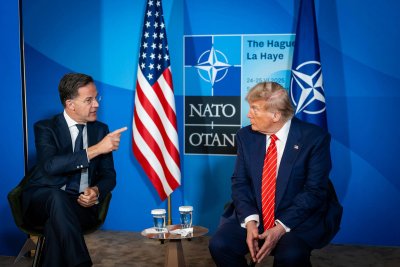
“We’re with them all the way,” Trump said of NATO, sitting alongside its secretary general, Mark Rutte. He later added to reporters, “if I didn’t stand with it, why would I be here?”

Rutte was obsequious throughout the visit, at one point referring to Trump as “daddy” disciplining child-like nations at war with one another. But addressing reporters, he defended his praise of the president as well-earned.

“When it comes to making more investments, I mean, would you ever think this would be the result of this summit, if he would not have been reelected president?” Rutte said. “Do you really think that seven or eight countries who said, ‘somewhere in the 2030s, we might make the 2%,’ would have all decided in the last four or five months to get to 2%? So doesn’t he deserve some praise?”

While at the summit, the president faced repeated questioning over the success of U.S. strikes on Iranian nuclear facilities over the weekend, which were designed to supplement an Israeli campaign to effectively end Iran’s uranium enrichment program. But Trump expressed confidence in the mission, stating that intelligence continues to come in supporting the conclusion that its facilities were “obliterated.”

“It’s been obliterated, totally obliterated,” he said. “We’ve collected additional intelligence.
We’ve also spoken to people that have seen the site, and the site is obliterated.”

An initial Defense Intelligence Agency report, first reported by CNN, cast doubt on that conclusion. But an Israeli official speaking with The Times said that its preliminary findings from an on-the-ground assessment gives them confidence that the program has been set back by several years.

“You can see that the intelligence was very high quality in the execution of this operation – that gives us confidence in the information we have on the different facilities,” the Israeli official said.

Addressing reporters at a news conference, Trump seemed to commit to enforce Article 5 of the NATO charter, a critical provision of the alliance that states that an attack on one member is an attack on all. In the past, Trump has cast doubt on his commitment to the pledge.

“As far as Article 5, look — when I came here, I came here because it was something I’m supposed to be doing,” Trump said. “I watched the heads of these countries get up, and the love and the passion that they showed for their country was unbelievable. I’ve never seen quite anything like it. They want to protect their country, and they need the United States, and without the United States, it’s not going to be the same.”

The visual was moving, the president said.

“I left here saying that these people really love their countries,” he added. “It’s not a rip-off. And we’re here to help them protect their countries.”

Trump also gave himself praise for helping to broker ceasefires around the world — most recently between Israel and Iran, but also between Pakistan and India, as well as Rwanda and the Democratic Republic of the Congo — while expressing frustration with Russia’s president for what he described as “misguided” views that have perpetuated Moscow’s war against Ukraine.

He described a bilateral meeting with Ukraine’s president, Volodymyr Zelensky, as “very nice” — “he couldn’t have been nicer,” Trump said — while offering choice words for Putin, an uncharacteristic position for a president who has repeatedly referred to the Russian leader as a potential friend and partner.

“Vladimir Putin has been more difficult,” Trump said, telling one Ukrainian reporter that he is looking to provide Kyiv with Patriot missile defense batteries – long a request of the Ukrainian government.

Trump also said he was open to sending additional defense funds to Kyiv if Putin fails to make progress toward a ceasefire. “As far as money going, we’ll see what happens – there’s a lot of spirit,” he said.

“Look, Vladimir Putin really has to end that war,” he added.

Source link

NATO agrees to 5% GDP for defense after Trump reaffirms commitment

June 25 (UPI) — Following a summit of the North Atlantic Treaty Organization in The Hague Wednesday, the alliance announced its member nations have agreed to each invest 5% of their Gross Domestic Product toward defense.

“This is a significant commitment in response to significant threats to our security,” NATO Secretary General Mark Rutte said in a press conference.

Rutte said the 5% breaks down to 3.5% of each country’s GDP invested in “core defense requirements” such as tanks, drones, ammunition and troops, among other items. The 1.5% remainder is to go into investments that will strengthen defense.

“All to ensure we can effectively deter aggression and defend ourselves, and each other, should anyone make the mistake of attacking,” Rutte added.

The previous financial benchmark for NATO was 2%, which has either been met or is expected to be met this year by all members.

“It means that no matter the challenges we face — whether from Russia or terrorism, cyberattacks, sabotage or strategic competition — this Alliance is and will remain ready, willing and able to defend every inch of Allied territory, said Rutte. “And ensure that our one billion people can continue to live in freedom and security.”

Rutte’s statements followed the meeting Wednesday, during which U.S. President Donald Trump reassured NATO allies Wednesday that the United States was fully committed to the defense alliance’s so-called Article 5 under which members pledge to come to the military defense of any NATO country that is attacked.

“We’re with them all the way,” Trump told a joint briefing with Secretary General Mark Rutte at a NATO summit in The Hague, responding to a question on his commitment to NATO and the mutual defense pact at its heart.

Trump added that he was happy to commit because other members of the 32-country alliance had heeded his long-standing call to ramp up their defense budgets and would now meet his demand that they spend 5% of GDP on defense.

“If you look at the numbers, I’ve been asking them to go up to 5% for a number of years and they’re going up to 5%. That’s a big jump from 2% and a lot of people didn’t even pay the 2%, so I think it’s going to be very big news. NATO is going to become very strong with us and I appreciate doing it,” he said.

Earlier, Trump sparked consternation after comments made mid-Atlantic aboard Air Force One on Tuesday that his commitment to Article 5 “depends on your definition.”

The situation in the Middle East dominated most of the rest of the briefing, setting the tone for a gathering that alternated between shows of NATO unity and discussion of the U.S. strikes on Iran and how the situation would play out, despite not being on the agenda.

That left little room for the issue of Ukraine, which was relegated well down the agenda.

In his opening remarks to the leaders’ session Rutte did set out the challenges facing NATO, from Russia’s war on Ukraine and China’s “massive” military build-up to conflict in the Middle East, but hailed what he said were the historic, transformative decisions that would be made at the meeting to “make our people safer through a stronger, fairer and more lethal NATO.”

He said the additional funds from the 5% spending commitment would go toward bolstering “core” hard defense expenditure, as well as defense and security-related investments, and ensure every country contributed their fair share to the security umbrella NATO provided.

“For too long, one Ally, the United States, carried too much of the burden of that commitment. And that changes today,” Rutte said.

“President Trump, dear Donald, you made this change possible. Your leadership on this has already produced $1 trillion in extra spending from European Allies since 2016. And the decisions today will produce trillions more for our common defenses, to make us stronger and fairer by equalising spending between America and America’s allies.”

Shortly after the meeting ended, the NATO heads of state and government issued a joint communique reaffirming their commitment to NATO, the transatlantic bond and “ironclad commitment to collective defense as enshrined in Article 5” of the 1947 Washington Treaty.

“An attack on one is an attack on all.”

It said the leaders were united in the face of “profound security threats and challenges”, in particular the long-term threat posed by Russia to Euro-Atlantic security and the persistent threat of terrorism allies had therefore committed to invest 5% of GDP in defense annually by 2035.

“Our investments will ensure we have the forces, capabilities, resources, infrastructure, warfighting readiness, and resilience needed to deter and defend in line with our three core tasks of deterrence and defence, crisis prevention and management, and cooperative security,” the declaration stated.

Members also reaffirmed a joint pledge to accelerate efforts to ramp up transatlantic defense-industrial cooperation, harness new technology and embrace out-of-the-box thinking on defense, as well as working to remove defense trade barriers between allies.

Source link

Wary of Washington, Europe frets it will be left behind on an AI battlefield

Days before NATO was set to convene in the Netherlands, one of its top commanders, Pierre Vandier, tasked with transforming the alliance for the next fight, put out a call: Britain will need to step up its intelligence contributions to the alliance going forward.

“The UK has this in its DNA,” Vandier said.

It was an acknowledgment that the United States, pivoting toward a far greater intelligence threat from China, may leave its European allies behind in their own existential fight with Russia. A lack of reliability on the world’s leading AI superpower, European officials say, will render the continent vulnerable in a race for intelligence superiority set to revolutionize global battlefields.

The rush toward artificial intelligence has been a strong undercurrent at the NATO Summit in the Hague this week, serving not only as a gathering for leaders of the alliance, but also as a defense industry forum for emerging power players in Silicon Valley, treated in Holland’s gilded halls as a new kind of royalty.

“AI is going to be an important part of warfare going forward, but it’s still very new, and NATO tends not to be at the tip of the spear of innovation — and there is some division within the alliance on how to develop AI, when it comes to AI regulation and safety,” said Max Bergmann, director of the Europe, Russia, and Eurasia Program at the Center for Strategic and International Studies.

“Tech companies don’t hold the same pride of place in the European economic system, and they’re not consumed with the need to compete with China militarily — they are much more focused on Russia,” Bergmann added. “While the U.S. is about winning the AI race, Europeans are watching what’s happening in Ukraine and saying, ‘we just need to deter Russia.’”

So far, for European capitals, that has meant incorporating powerful data collection and processing systems into defense departments and improving the performance of automated surveillance systems and drones — skills well within Europe’s capabilities. Several German and French companies, such as Helsing, Azur and Quantum Systems, are already developing products based on what they are seeing in Ukraine.

But the next fight will require technologies that dwarf existing drone capabilities, experts said.

“We’ve been predicting for a while that there would be integration of AI into military research and development and defense systems, and I expect, for example, that advanced cyber capabilities will play an important role in the coming years,” said Jonas Vollmer, chief operating officer of the AI Futures Project. “Europe has influence, but it is grappling with the difficult reality that they don’t have access or strong domestic development of frontier AI systems, and they are pretty far behind.”

Last year, NATO allies agreed to speed up the adoption of artificial intelligence in its operations. There are signs the bloc senses urgency to do so, signing an agreement with Palantir, a U.S.-based technology company, to incorporate AI into its warfighting systems after just six months of negotiations.

The United States and China are far ahead of competitors in the race for AI superiority, measured in raw computing power and proximity to general artificial intelligence — AI that has human-level cognitive capabilities to learn and develop on its own – and ultimately to superintelligence, surpassing the human mind.

Still, the United Kingdom is a serious player in the field. The kingdom ranks third in government investment in AI research anywhere in the world and maintains strong partnerships with some of the most powerful U.S. players.

In its most recent defense strategy, also published shortly before the NATO summit, Britain committed to integrate artificial intelligence into its “NATO-first” national security approach. “Forecasts of when Artificial General Intelligence will occur are uncertain but shortening, with profound implications for Defence,” the document reads.

Europe’s race for intelligence capabilities is driven, in part, by lessons learned on the battlefields of Ukraine. But Russia is not seen as an AI powerhouse in and of itself. Moscow instead uses low-cost tests of drone incursions and cyberattacks to keep pressure on the alliance, Vandier told the Times of London in an interview. “The aim, I think, is to consume all our energy in purely defensive actions, which are very costly,” he said.

Whether Russia can enhance its own AI capabilities is an open question.

“The key ingredients of being at the frontier with AI are talent and data centers,” said Vollmer, of the AI Futures Project.

“Russia lags far behind on both,” he added, “but they can collaborate with China, of course.”

Source link

Zelenskyy meets Trump on NATO sidelines; Putin will skip BRICS in Brazil | NATO News

Ukrainian leader steps up diplomatic push, while his Russian counterpart will skip a summit due to ICC arrest warrant.

Ukrainian President Volodymyr Zelenskyy and United States President Donald Trump have held talks on the sidelines of the NATO summit in The Hague, with sanctions on Russia over its war in Ukraine, now in its fourth year, and arms procurement for Kyiv on the agenda.

Zelenskyy said he discussed how to achieve a “real peace” and “protect our people” with Trump on Wednesday.

The meeting, which reportedly lasted 50 minutes, was a second attempt after Zelenskyy failed to meet Trump earlier this month in Canada when the US president abruptly left a G7 summit as the Israel-Iran conflict raged, just days before the US militarily intervened with strikes on Iran’s nuclear sites.

Speaking at news conference ending his participation at the NATO summit, Trump said it is possible that Russian President Vladimir Putin has territorial ambitions beyond Ukraine, adding that he plans to speak to Putin soon about ending the war.

Zelenskyy noted earlier that Moscow and Kyiv have not moved any closer to a ceasefire, saying, “The Russians once again openly and absolutely cynically declared they are ‘not in the mood’ for a ceasefire. Russia wants to wage war. This means the pressure the world is applying isn’t hurting them enough yet, or they are trying very hard to keep up appearances.”

NATO Secretary-General Mark Rutte said the security bloc’s “military edge is being aggressively challenged by a rapidly rearming Russia, backed by Chinese technology and armed with Iranian and North Korean weapons” before the summit.

On Putin, Rutte was blunt, “I don’t trust the guy,” he said, adding that the Russian leader wouldn’t be happy with the outcome of the NATO summit.

NATO endorsed a higher defence spending goal of five percent of gross domestic product (GDP) by 2035 – a response to a demand by  Trump and to Europeans’ fears that Russia poses a growing threat to their security.

Putin to stay at home

In the meantime, Putin will not travel to next week’s BRICS summit in Brazil as an arrest warrant issued against him by the International Criminal Court (ICC) still hangs over him, Kremlin foreign policy aide Yuri Ushakov said on Wednesday.

The ICC issued the warrant in 2023, just over a year after Russia launched its full-scale invasion and war against Ukraine. Putin is accused of deporting hundreds of children from Ukraine to Russia, a war crime.

Moscow vehemently denies allegations of war crimes, and the Kremlin, which did not sign the ICC’s founding treaty, has dismissed the warrant as null and void. But weighing the risk that he might be arrested if he travels to another country that is a signatory to the ICC treaty, Putin has always erred on the side of caution, only travelling where he is safe from being apprehended.

Putin concluded an official visit to Mongolia last September undisturbed as his hosts ignored the arrest warrant, despite Mongolia being an  ICC member.

The Kremlin on Wednesday also said the US was not yet ready to dismantle obstacles to the work of their respective embassies, as efforts to normalise relations between the two have stalled after initial signs that Trump’s second term as US president would lead to a major thaw after tensions during the administration of former US President Joe Biden.

The war grinds on

In the latest developments on the ground in the war, Russian missile strikes on southeastern Ukraine killed 17 people in the city of Dnipro and injured more than 200, damaging dozens of buildings and infrastructure facilities on Tuesday.

Two people were killed in a Russian attack on the city of Samara.

Russia says it intercepted dozens of drones overnight across its territory, including the Voronezh region on the border of eastern Ukraine.

Russian forces say they captured the village of Dyliivka in Ukraine’s eastern Donetsk region,  a key battleground dating back to the first eruption of conflict in 2014.

Source link

Why is NATO boosting defence spending and can Europe afford it? | Business and Economy

In a political win for US President Donald Trump, NATO member states have endorsed a big new defence spending target.

In what marks a major shift for NATO, the bloc’s member states have agreed to raise defence spending to five percent of gross domestic product (GDP).

The move will inject billions more dollars into armies and weapons, raising questions over how governments will foot the bill.

With public budgets under strain, many European politicians dismissed the target as unachievable earlier this year, when US President Donald Trump demanded it.

Europe’s priorities now appear to be shifting to security, citing growing threats from Russia.

And Chinese goods are flooding markets from Southeast Asia to Europe.

Plus, top economists call for debt relief in developing nations.

Source link

US ‘totally committed’ to Article 5, NATO chief insists on day 2 of summit | News

NATO chief Mark Rutte has said he is “optimistic” that members will agree to a major boost in defence spending and stressed that Washington is “totally committed to the alliance”, on the second day of the organisation’s annual summit.

Leaders of the transatlantic alliance’s 32 members are meeting in the Dutch city of The Hague on Wednesday under pressure from the Trump administration to approve new targets of spending 5 percent of gross domestic product (GDP) on defence, amid swirling questions over United States President Donald Trump’s commitment to the alliance.

But, speaking before a leaders’ meeting on the second and final day of the annual summit, NATO Secretary-General Rutte insisted there was no question of Washington, NATO’s most powerful member, backing away from the alliance or its underlying principle of mutual defence.

“There is absolute clarity that the United States is totally committed to NATO, totally committed to Article 5,” he said, referring to the cornerstone collective defence principle enshrined in NATO’s founding treaty, which holds that an attack on one member is treated as an attack on all.

“And yes, there is also an expectation, which will be fulfilled today, that the Canadians and the Europeans will speed up their spending, making sure that we are able to defend ourselves against the Russians and others,” he said.

He expected the summit to be “transformational” for the alliance, he added.

Trump sows doubt

Trump has repeatedly complained that Washington carries too much of the military burden, and questioned whether the alliance should defend members who failed to meet its defence spending targets.

His administration has demanded that NATO allies agree to increase their defence spending to 5 percent of their gross domestic product (GDP), up from the current target of 2 percent.

Nine NATO members currently spend less than the existing 2 percent target on defence, according to NATO estimates.

En route to The Hague on Tuesday, Trump further stoked doubts over his commitment to the alliance when asked whether Washington would abide by NATO’s mutual defence guarantees.

“Depends on your definition,” Trump told reporters. “There’s numerous definitions of Article 5. You know that, right? But I’m committed to being their friends.”

But speaking to journalists before the summit opened, Trump sought to reassure allies over the US committment to mutual defence, saying: “We’re with them all the way.”

Washington’s ‘problem with Spain’

In response to the US demands to boost defence spending , some NATO countries like Germany and the United Kingdom have already announced major new investments in their militaries, acknowledging the need to respond to the threat posed by Russia, in particular.

German Chancellor Friedrich Merz said Tuesday that Germany would increase spending to become “Europe’s strongest conventional army”, while the UK, which has already said it will meet the new spending targets, has announced the purchase of a fleet of fighter jets capable of carrying tactical nuclear missiles.

But other countries signalled their resistance to the proposed targets, which are to be met by a 2035 deadline. Spain, NATO’s lowest defence spender last year, according to NATO estimates, has said it will not be able to meet the target by 2035, calling the figure “unreasonable”.

Belgium has also indicated that it will not make the 5 percent target, while Slovakia said it reserves the right to determine its own defence expenditure, The Associated Press news agency reported.

On Tuesday, Trump singled out Spain’s stance, saying: “There’s a problem with Spain. Spain is not agreeing, which is very unfair to the rest of them, frankly.”

‘A more balanced NATO’

Other NATO leaders, however, expressed their full support for the alliance and the increased defence spending targets on Wednesday.

Polish President Andrzej Duda said “Article 5 is clear … and means collective defence and there is no discussion about this article,” as he arrived at a meeting.

Danish Prime Minister Mette Frederiksen told reporters that the boost to military spending was important and necessary.

“The disarmament was allowed to go on for too long,” she said.

Finnish President Alexander Stubb, whose country borders Russia, told reporters that he believed the alliance was evolving.

“I think we’re witnessing the birth of a new NATO, which means a more balanced NATO, and a NATO which has more European responsibility,” he said, according to the Reuters news agency.

Source link

Royal upgrade: Trump will stay at the Dutch king’s palace during his NATO visit

President Trump has a sleepover this week in the Netherlands that is, quite literally, fit for a king.

Trump is visiting The Hague for a summit of the 32 leaders of NATO on Wednesday, and his sleeping arrangements have received a significant upgrade.

He is scheduled to arrive Tuesday night and be whisked by motorcade along closed-off highways to the Huis Ten Bosch palace, nestled in a forest on the edge of The Hague, for a dinner with other alliance leaders hosted by Dutch King Willem-Alexander.

Trump had been expected to stay at a swanky hotel in the town of Noordwijk on the Dutch North Sea coast, but not anymore.

A spokesperson for the Dutch government information service, Anna Sophia Posthumus, told the Associated Press that the president will be sleeping at the palace that is home to Willem-Alexander, his Argentine-born wife, Queen Maxima, and their three daughters, though the princesses have mostly flown the royal nest to pursue studies.

Parts of Huis Ten Bosch palace date back to the 17th century. It has a Wassenaar Wing, where the royal family live, and a Hague Wing that is used by guests. The centerpiece of the palace is the ornate Orange Hall, named for the Dutch Royal House of Orange.

The palace is also close to the new U.S. Embassy in the Netherlands.

Trump is no stranger to royal visits. In 2019, he dropped in to Windsor Castle for tea with Queen Elizabeth II during a tumultuous visit to the United Kingdom.

Corder writes for the Associated Press. AP writers Molly Quell in The Hague and Danica Kirka in London contributed to this report.

Source link

Trump shares texts from NATO chief praising ‘decisive action’ on Iran | Donald Trump News

NATO Chief Mark Rutte also said Europe would increase defence spending in a ‘BIG way’ thanks to US pressure.

United States President Donald Trump has shared a series of texts from NATO Secretary-General Mark Rutte praising his attacks on Iran and the pressure he placed on allies to increase their military spending.

Trump shared Rutte’s texts in a screenshot posted to his social media website, Truth Social, on Tuesday, as he travels to a NATO summit in the Netherlands.

“Mr President, dear Donald, Congratulations and thank you for your decisive action in Iran, that was truly extraordinary, and something no one else dared to do. It makes us all safer,” the message reads.

Afterwards, Rutte defended Trump’s decision to share what appeared to be private messages. The NATO chief added that his tone in the messages – which some said seemed to mimic Trump’s own style of writing – was “appropriate”.

The messages highlight European efforts to form a productive relationship with Trump, who has frequently said the continent must spend more on its military capabilities. He has also questioned the value of the US’s economic and security partnerships with NATO allies in Europe and Canada.

The texts also underscore the widespread praise Trump has received from European leaders for his bombing of Iranian nuclear facilities, even though those strikes are considered by many to be illegal under international law.

In his messages, Rutte commends Trump for pushing European nations to increase their military spending, stating that NATO members have agreed to boost such spending to 5 percent of their gross domestic product (GDP).

“Europe is going to pay in a BIG way, as they should, and it will be your win,” said Rutte, adding that Trump had achieved what “NO American president in decades could get done”.

Trump had been pushing for increases to NATO defence spending since his first term, from 2017 to 2021. He has long accused NATO allies of taking advantage of the US by relying on its military might.

Previously, NATO members had agreed to a spending goal that represented 2 percent of their GDP. Trump had pushed for that to be raised to 5 percent, with 3.5 percent of that sum dedicated to “hard defence” investments like weaponry.

Some countries, however, including Spain, have pushed back against the calls to increase military spending, calling the demand “unreasonable”.

“There’s a problem with Spain. Spain is not agreeing, which is very unfair to the rest of them, frankly,” Trump told reporters on Air Force One on his way to the two-day meeting.

Trump, meanwhile, has continued to send mixed signals about his commitment to NATO, a mutual defence alliance created during the Cold War. It has been a cornerstone of US and European cooperation ever since.

Trump has long signalled ambivalence towards Article 5 of the North Atlantic Treaty, NATO’s founding document. That article includes a mutual defence clause that requires NATO members to consider an attack on one country to be an attack on the group as a whole.

When pressed about his commitment to Article 5 on Tuesday, Trump told reporters that there could be “numerous definitions” of the clause. Rutte, asked about the comment, said he had “no doubt” that the US was committed to mutual defence.

Criticisms of NATO are not new or unique to Trump. Sceptics have pointed out that the threat it was created to balance against, the USSR, had long ceased to exist. Proponents, meanwhile, have argued the alliance serves as an important bulwark against modern-day military aggression.

But Russia’s full-scale invasion of Ukraine in 2022 breathed new life into the organisation, expanding its ranks with the addition of countries like Finland and Sweden and prompting increased calls for greater defence spending.

Source link

NATO allies set to approve major defence spending hike at Hague summit | NATO News

The US has been pressuring its allies to adopt new targets for defence spending in response to the Russian threat.

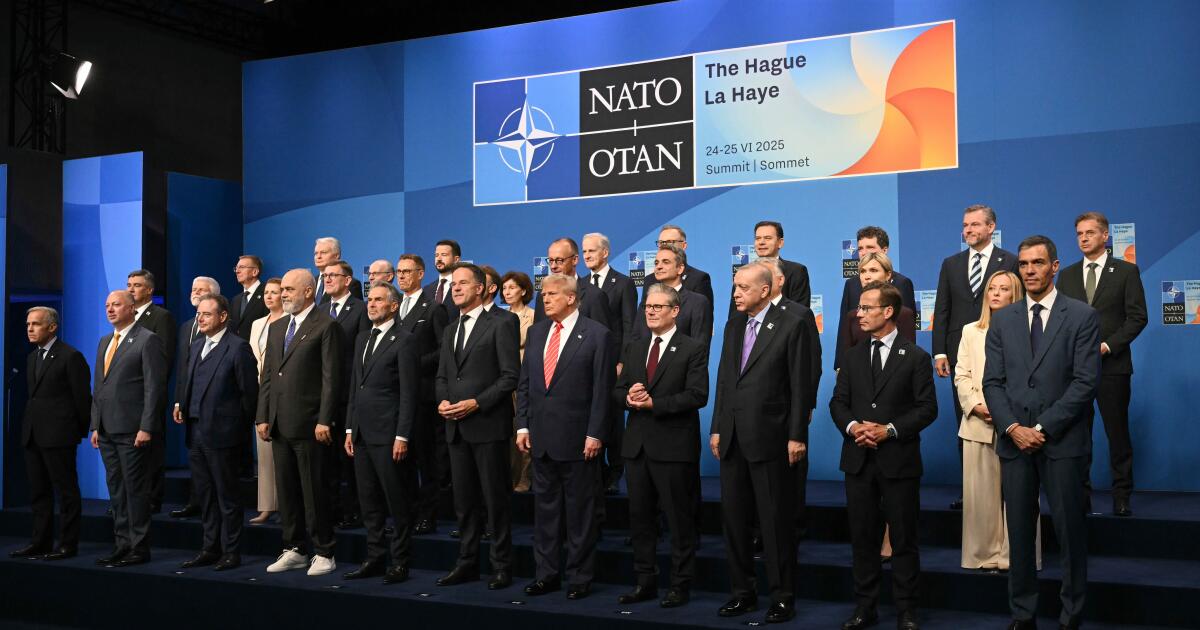
A who’s who of world leaders has been converging on the Netherlands for the annual North Atlantic Treaty Organization (NATO) summit, where members are expected to sign off on major boosts to defence spending in response to pressure from the United States.

The two-day NATO meeting kicks off in The Hague on Tuesday against a backdrop of increasing global instability, with ongoing conflicts in Ukraine, Gaza and the Middle East. High on the agenda is an agreement to significantly increase defence expenditure across the 32 member states. This follows pointed criticism from the administration of US President Donald Trump, who says the US carries too much of the military burden.

Trump has demanded that NATO allies increase their defence spending to 5 percent of their gross domestic product (GDP), up from the current target of 2 percent. He has questioned whether the alliance should defend countries that fail to meet the spending targets, and has even threatened to leave the bloc.

Speaking to reporters in The Hague ahead of the summit on Tuesday, European Commission President Ursula von der Leyen said that NATO members were set to approve “historic new spending targets” at the summit.

“The security architecture that we relied on for decades can no longer be taken for granted,” she said, describing it as a “once-in-a-generation tectonic shift”.

“In recent months, Europe has taken action, action that seemed unthinkable just a year ago,” she said. “The Europe of defence has finally awakened.”

Speaking ahead of the summit, NATO Secretary General Mark Rutte stressed that there was “total commitment” from the US to the alliance, but he noted that it came with the expectation of a boost in defence spending.

US pressure

Earlier this month, US Secretary of Defense Pete Hegseth delivered an ultimatum to NATO defence ministers at a meeting in Brussels, saying that the commitment to 5 percent spending “​​has to happen by the summit at The Hague”.

In response to the pressure, Rutte will ask member states at the summit to approve new targets of 5 percent of GDP for their defence budgets by 2032, with 3.5 percent to be spent on core defence spending and the remainder allocated to “soft spending” on infrastructure and cybersecurity.

In 2023, in response to Russia’s war on Ukraine, NATO leaders agreed to raise defence spending targets from 1.5 percent to 2 percent of GDP. However, only 22 of the alliance’s 32 members met the revised targets.

While some countries like Spain have pushed back against the latest proposed hike as unrealistic, other members have already announced plans to significantly ramp up military spending in response to a changed security environment.

Delivering a major foreign policy address in Berlin on Tuesday, German Chancellor Friedrich Merz said that Germany would ramp up its spending to become “Europe’s strongest conventional army” — not as a “favour” to Washington, but in response to the threat from Russia.

“We must fear that Russia wants to continue its war beyond Ukraine,” he said.

“We must together be so strong that no one dares to attack us.”

Kremlin: NATO ‘created for confrontation’

The summit will be attended by the leaders of all 32 members of the transatlantic alliance, along with the leaders of allied countries, including Japan, New Zealand and Ukraine.

While Kyiv is not a member of the alliance, its desire to join NATO was cited by the Kremlin as one of the reasons it attacked Ukraine in 2022.

On Tuesday, Kremlin spokesperson Dmitry Peskov said Moscow had no plans to attack NATO, but that it was “a wasted effort” to assure the alliance of this because it was determined to demonise Russia as a “fiend of hell”.

“It is an alliance created for confrontation … It is not an instrument of peace and stability,” Peskov said, the Reuters news agency reported.

Source link

Risk of wider war with Iran raises stakes for Trump in NATO summit

Whether the United States launches a broader war against Iran after bombing its nuclear facilities may come down to President Trump’s meetings with NATO partners this week at a summit of the alliance, a gathering long scheduled in the Netherlands now carrying far higher stakes.

So far, Washington’s transatlantic partners have praised the U.S. operation, which supplemented an ongoing Israeli campaign targeting Iran’s nuclear infrastructure, air defenses and military leadership. But European officials told The Times their hope is to pull Trump back from any flirtation with regime change in Iran, a prospect that Trump and Israel’s prime minister, Benjamin Netanyahu, have openly discussed in recent days.

Trump is scheduled to arrive in The Hague on Tuesday morning for two days of meetings, now expected to focus on the nascent crisis, as U.S. intelligence and military officials continue to assess the outcome of U.S. strikes over the weekend against Iran’s main nuclear sites at Fordo, Natanz and Isfahan.

NATO was directly involved in the last two U.S. wars in the Middle East, taking part in a U.S.-led coalition in Afghanistan after the Sept. 11 attacks and helping to train and advise security forces in Iraq. And while not a member of NATO, Israel coordinates with the security bloc through a process called the Mediterranean Dialogue, which includes work against the proliferation of weapons of mass destruction.

At the Mauritshuis on Monday evening, overlooking The Hague’s historic court pond and under the gaze of Vermeer’s “Girl with a Pearl Earring,” NATO officials, European military leaders and U.S. senators discussed the obvious: A summit that had been seen as an opportunity to show Trump that Europe is willing to pay more for its defense — with NATO members now committing to spend 5% of their GDP on military essentials and expenditures — will now be consumed instead with the possibility of a new war.

As the event was ending, Iran struck the U.S. military base in Qatar, its largest in the Middle East. But the Iranians gave Doha advance notice of the strike in an effort to avert casualties, the New York Times reported, indicating Tehran might be looking for an off-ramp from continuing escalation with Washington.

While the Pentagon said the U.S. bombing run, dubbed Operation Midnight Hammer, “severely damaged” Iran’s nuclear infrastructure, American and Israeli officials acknowledged to The Times that it is not entirely clear how much equipment and fissile material Tehran was able to salvage before the attacks began.

And as concerns emerge that Iran may have been able to preserve a breakout capability, Israel’s target list across Iran seemed to broaden on Monday to reflect military ambitions beyond Iran’s nuclear program, including the headquarters of the Basij militia and a clock in downtown Tehran counting down to Israel’s destruction.

“Trump spoke too soon,” said Michael Rubin, a former Pentagon official and Iran expert at the American Enterprise Institute, of the president’s declaration that the United States had “obliterated” Iran’s nuclear capacity with its weekend strikes.

“We may have simply waited too long with our hand-wringing, and given the Iranians time to evacuate their enriched stockpiles. If so, that represents a failure of leadership,” he added, noting reports that trucks could be seen at the Fordo site leading up to the U.S. attack. “If they then scattered and the U.S. intelligence community lost track of where they went, then that is an intelligence failure that could potentially be as costly as the one that preceded the Iraq war.”

European powers, particularly France, Germany and the United Kingdom, have been careful to praise Trump for ordering the strikes. But they have also urged an immediate return to negotiations, and expressed concern that Israel has begun targeting sites tangential and unrelated to Iran’s nuclear program.

British Prime Minister Keir Starmer, warning of “volatility” in the region, encouraged Iran “to return to the negotiating table and reach a diplomatic solution to end this crisis.” And Germany’s foreign minister, Johann Wadephul, questioned whether Tehran’s nuclear knowledge could be bombed away. “No one thinks it’s a good thing to keep fighting,” he told local media.

“I called for deescalation and for Iran to exercise the utmost restraint in this dangerous context, to allow a return to diplomacy,” said French President Emmanuel Macron. “Engaging in dialogue and securing a clear commitment from Iran to renounce nuclear weapons are essential to avoid the worst for the entire region. There is no alternative.”

Later Monday, after Israel had struck Iran’s notorious Evin prison, where foreign nationals are held, France’s foreign minister, Jean-Noël Barrot, issued a more scathing rebuke. “All strikes must now stop,” he said.

One European official said that efforts would be made once Trump arrives to underscore his military successes, noting the example he has made — using military force to deter an authoritarian foe — could still be applied to Russia in its war against Ukraine. Now that Trump has demonstrated peace through strength, the official said, it is time to give diplomacy another chance.

But it’s unclear if Iran would be receptive to pleas for a diplomatic breakthrough.

In a post on X on Sunday, Iran’s foreign minister, Abbas Araghchi, noted that Israel’s attacks last week and the U.S. strikes this week coincided with negotiations, torpedoing any chance for talks to succeed.

“Last week, we were in negotiations with the U.S. when Israel decided to blow up that diplomacy. This week, we held talks with the E3/E.U. when the U.S. decided to blow up that diplomacy,” he wrote, adding that European calls to bring Iran to negotiations were misplaced. The E3 represents France, Germany and Italy.

“How can Iran return to something it never left, let alone blew up?” he added.

On Monday, before its strikes against the U.S. base in Qatar, Iranian military leaders vowed vengeance against the United States for the strikes.

The retaliation “will impose severe, regret-inducing, and unpredictable consequences on you,” said Lt. Col. Ebrahim Zolfaqari, head of the Iranian military’s central command headquarters, in a video statement on Iranian broadcaster Press TV. He added that the U.S. attack “will expand the range of legitimate and diverse targets for Iran’s armed forces.”

Times staff writer Nabih Bulos in Beirut contributed to this report.

Source link

Trump’s budget demands, Iran to split NATO summit focus | NATO News

As NATO leaders prepare to gather in The Hague on Tuesday, efforts to satisfy United States President Donald Trump’s call for a big new defence spending goal may be overshadowed by the repercussions of US military strikes on Iran.

Trump has demanded that NATO allies commit to spending 5 percent of their gross domestic product (GDP) on defence at their two-day gathering, starting on Tuesday.

The summit is also intended to signal to Russian President Vladimir Putin that NATO is united, despite Trump’s previous criticism of the alliance, and determined to expand and upgrade its defences to deter any attack from Moscow.

On Monday, NATO chief Mark Rutte said the new defence spending pledge to be announced at the summit is fundamental for ensuring that the alliance can deter Russia.

“The defence investment plan that allies will agree in The Hague introduces a new baseline, 5 percent of GDP to be invested in defence,” Rutte said.

 “This is a quantum leap that is ambitious, historic and fundamental to securing our future.”

The US bombing of Iranian nuclear sites at the weekend, however, makes the summit much less predictable than Rutte – a former prime minister of the Netherlands hosting the gathering in his home city – and other NATO member countries would like.

In 2003, the US-led war on Iraq deeply divided NATO, as France and Germany led opposition to the attack, while Britain and Spain joined the coalition.

European allies and Canada also want Ukraine to be at the top of the summit agenda, but they are wary that Trump might not want President Volodymyr Zelenskyy to steal the limelight.

Iran adds uncertainty

Much will depend on the precise situation in the Middle East when the summit takes place – such as whether Iran has retaliated against the US – and whether other NATO leaders address the strikes with Trump or in comments to reporters.

On Monday, Rutte told reporters the strikes on Iran over the weekend did not violate international law.

Al Jazeera’s Kimberly Halkett said that currently, European leaders are focused on diplomacy as the path towards de-escalation and limiting Iran from having nuclear weapons. However, an escalation in fighting, including Iran’s targeting of a US military base in Qatar on Monday, makes diplomacy more difficult.

“Given the escalation that has taken place in recent days, that is a task that has become much more challenging to accomplish, which is why this meeting [at the NATO summit] has become so much more critical,” Halkett reported from Washington, DC.

Speaking from The Hague, Al Jazeera’s Hashem Ahelbarra said Rutte’s view is that consensus among NATO allies is almost universal: “Blaming the Iranians for failing to come forward in the past and negotiate a way out with the international community and with the IAEA.”

A dangerous moment for NATO

If the meeting does not go to plan, NATO risks appearing weak and divided, just as its European members see Russia as at its most dangerous since the end of the Cold War and are bracing for possible US troop cuts on the continent.

On Monday, Putin dismissed NATO claims that Russia could one day attack a member of the alliance as lies that Western powers use to justify vast military spending.

Under the new NATO defence spending plan, countries would spend 3.5 percent of GDP on “core defence” – such as weapons, troops – and a further 1.5 percent on security-related investments such as adapting roads, ports and bridges for use by military vehicles, protecting pipelines and deterring cyberattacks.

Such an increase – to be phased in over 10 years – would mean hundreds of billions of dollars more spending on defence.

“The reason they’re doing this is so when Trump comes to the Hague, they’ll tell him: Listen, we’ve been listening to your concerns, therefore, we’re from now onwards committed to the 5 percent benchmark you have been talking about in the past,” said Ahelberra.

Trump has long insisted it is time for Europeans to take on more of the financial and military burden of defending their continent.

Rutte said Monday that Spain had not been granted an “opt-out” from the pledge, despite Madrid claiming it had agreed it would not have to reach the headline figure of 5 percent.

Last year, alliance members collectively spent about 2.6 percent of NATO GDP on core defence, amounting to about $1.3 trillion, according to NATO estimates. The lion’s share came from the US, which spent almost $818bn.

European Union leaders, said Ahelberra, “want to convince Trump that NATO is taking into account his demands, but they’re looking forward to being able to convince Trump to continue to team up with the military allies for the sake of tackling many issues … particularly Ukraine.”

“They don’t want the Americans to abandon the Ukrainians. They don’t want to see the Americans negotiate a settlement with Putin without taking into account the real concerns of Ukraine,” he added.

Source link

NATO to increase defense spending to Cold War levels

June 22 (UPI) — Britain and its NATO allies will increase defense spending by at much as 5% of GDP in the next decade, officials have announced.

The alliance’s 32 member states agreed to the plan in advance of a heads of nations summit this week in The Hague. The meeting is scheduled to take place Tuesday and Wednesday, where the new spending increase is expected to be approved.

This is a boost from 2% of defense spending, and seen as a play to appease the Trump administration in addition to addressing a growing military threat from Russia and China.

The hike to 5% of GDP spending would bring NATO back to defense spending not seen since the Cold War. By comparison, Britain has said it has plans to increase that nation’s defense spending by closer to 3% by 2034, which would be a boost of .7%.

Britain was hesitant about the 5% agreed to be NATO and pushed for the timeline to 2035, which would move the increase beyond the next Parliament.

Spain was the last country to sign on to the NATO deal.

NATO secretary Mark Rutte was largely seen as the driving force behind the spending hike, and said the actual defense spending would amount to 3.5% of GDP and that the other 1.5% could be used for cyber security and other infrastructure.

Source link

Hundreds protest against NATO summit, Israel-Iran conflict in The Hague | NATO News

NATO meeting will be held on Tuesday to discuss increased military spending in the shadow of Middle East conflict.

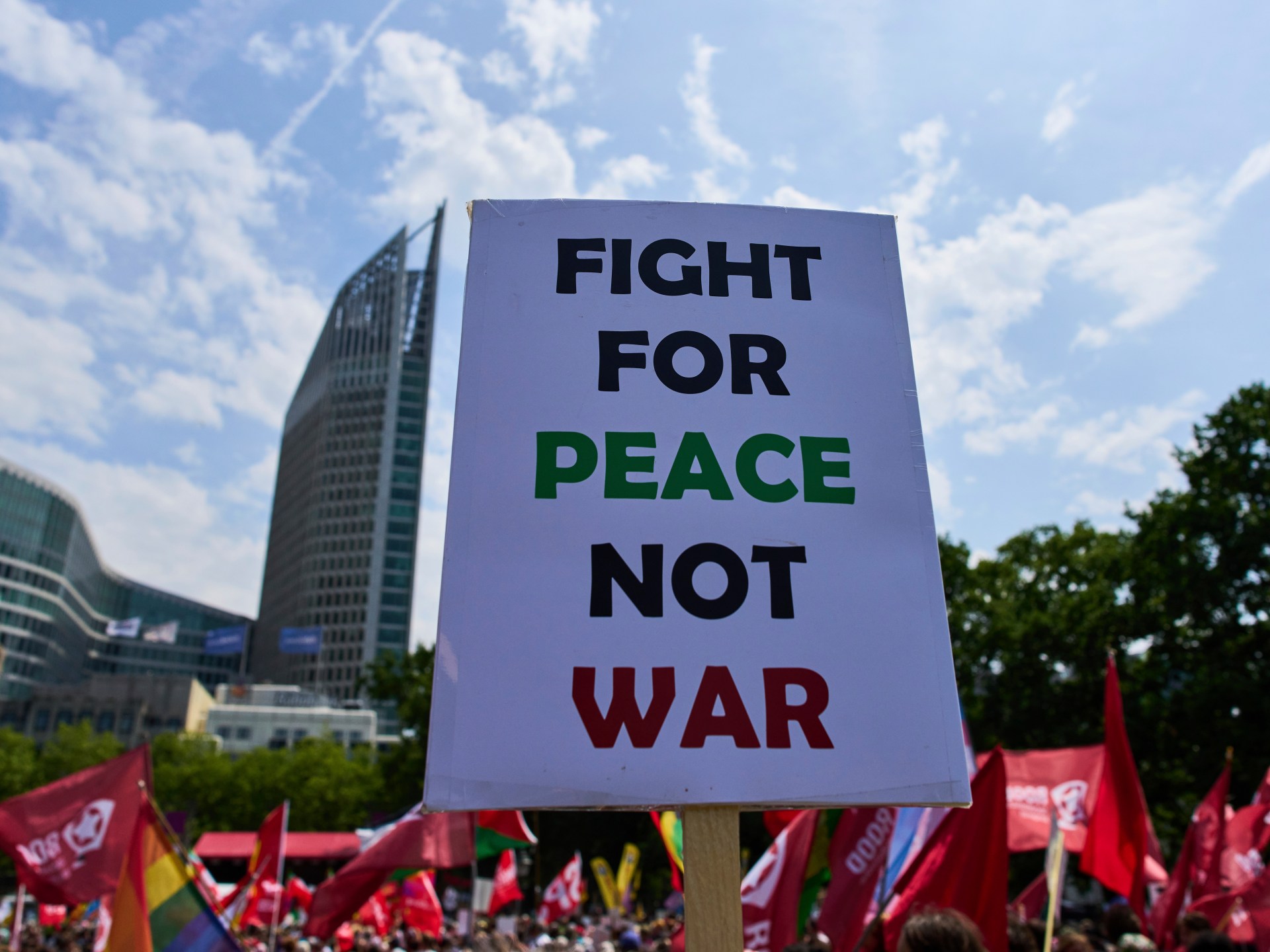
Hundreds of people have protested in The Hague, in the Netherlands, against NATO and increased military spending in advance of a summit, as Iran’s conflict with Israel and the United States intensifies by the day.

People demonstrated on Sunday against the military alliance, Israel’s punishing war in Gaza and the Israel-Iran conflict, hours after the US targeted three nuclear sites in Iran in a sudden escalatory move in support of its biggest ally in the Middle East.

Hossein Hamadani, 74, an Iranian who lives in the Netherlands, told The Associated Press news agency that they are “opposed to war”. “People want to live a peaceful life … Things are not good. So why do we spend money on war?” he added.

Following the US’s attack on Iran, an unnamed NATO official told the Reuters news agency that the alliance was watching the situation “closely”.

The summit is expected to kick off on Tuesday, with leaders of the 32 NATO-allied countries to meet a day later on Wednesday.

During the meeting, the heads of state will discuss an increase in defence spending, which has been repeatedly demanded by US President Donald Trump, along with thinly veiled threats to leave the military alliance.

On Thursday, Spanish Prime Minister Pedro Sanchez spoke out against the agreement to increase defence spending to 5 percent of national Gross Domestic Product (GDP) as not only “unreasonable but also counterproductive”.

In a letter to NATO Secretary-General Mark Rutte, Sanchez asked for a “more flexible formula” that either makes the spending target optional or excludes Spain from its application.

But Trump said a day later that Madrid was “notorious” for underspending on defence and said it needed to pay what other NATO members were paying.

The allied countries have ramped up defence spending since Russia invaded Ukraine more than three years ago; however, almost a third of the members still do not meet the bloc’s current target of at least 2 percent defence spending.

Source link

Spain rejects NATO’s 5% defence spending hike as ‘counterproductive’ | European Union News

Spanish PM Pedro Sanchez warns the spending hike would undermine EU efforts to build its own security and defence base.

Spain has reportedly asked to opt out of NATO’s proposed defence spending target of 5 percent of GDP, risking disruption to a key agreement expected at next week’s alliance summit.

In a letter addressed to NATO Secretary-General Mark Rutte on Thursday, Prime Minister Pedro Sanchez urged the alliance to adopt a more flexible framework, according to media reports.

The letter, seen by the Reuters and Associated Press news agencies, called for either the target to remain optional or for Spain to be exempt entirely.

“Committing to a 5% target would not only be unreasonable, but also counterproductive,” Sanchez wrote, warning that it would undermine efforts by the European Union to build its own security and defence base. “As a sovereign Ally, we choose not to.”

Sanchez insisted Madrid does not intend to block the outcome of the upcoming summit. But any agreement on increased defence spending must be approved unanimously by all 32 NATO members, giving Spain leverage to delay or water down the deal.

Spain currently spends approximately 1.28 percent of its GDP on defence, the lowest among NATO members, according to alliance estimates. While Sanchez has pledged to accelerate the country’s path to NATO’s current 2 percent goal, he argues that going beyond that risks harming the welfare state and compromising Spain’s broader policy vision.

NATO’s push for higher spending follows calls by US President Donald Trump and others to share the burden more fairly across the alliance. Rutte has suggested a new formula that allocates 3.5 percent of GDP to core military spending and an additional 1.5 percent to broader security needs.

Pressure to increase defence spending

The United States, NATO’s largest military contributor and Ukraine’s main backer since Russia’s 2022 invasion, is estimated to have spent 3.38 percent of its GDP on defence in 2024. Trump has repeatedly claimed European allies are not pulling their weight, and has threatened to withhold support for those who fall short.

Sanchez, however, said rushing to meet a 5 percent target would force EU states to buy military equipment from outside the bloc, damaging the continent’s attempts to bolster self-sufficiency in defence.

The proposal also faces resistance from Spain’s political left. The left-leaning Sumar party, part of Sanchez’s coalition, opposes the move, while Podemos, not in government but often a key parliamentary ally, has also rejected it.

“If the government needs parliamentary support to approve spending, it will have a very difficult time in the current situation,” said Josa Miguel Calvillo, a professor of international relations at the Complutense University of Madrid, speaking to Reuters.

Italy has also raised concerns, reportedly seeking to shift the proposed deadline for the new target from 2032 to 2035 and drop the requirement to increase spending by 0.2 percent annually.

One senior European official told Reuters that Spain’s rejection complicates talks but said discussions are ongoing. “It doesn’t look good, indeed, but we are not over yet. Spain has demonstrated to be a steadfast ally so far.”

Source link