June 4 (UPI) — Acting Director of National Intelligence Bill Pulte, whose new assignment has drawn bipartisan criticism, won’t be the “permanent” choice for the job, President Donald Trump said Thursday.
Trump, speaking to reporters Thursday the White House, said Pulte’s role as acting director of DNI to replace Tulsi Gabbard, which began Tuesday, would not be “permanent.”
Rather, the president said Pulte will be “very good” as he takes the job on for a “little while,” while also asserting he will be able to “figure it out quickly.”
Gabbard announced her resignation in May, saying she will step down June 30, and Trump’s pick of Pulte to replace her two days ago ignited a backlash among lawmakers of both parties.
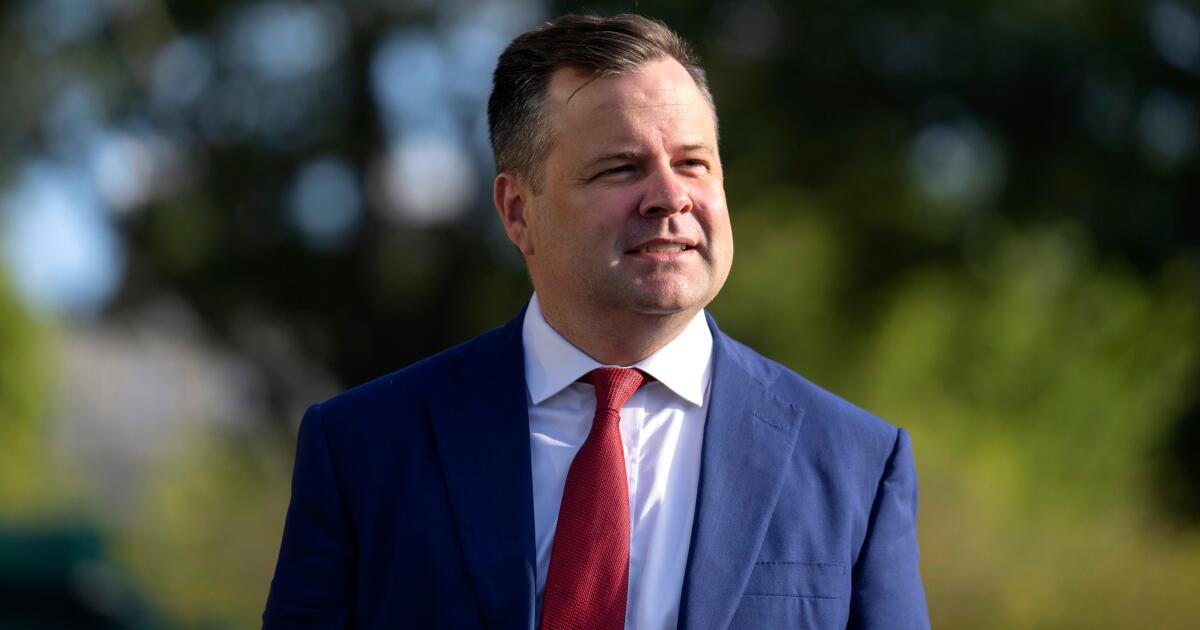
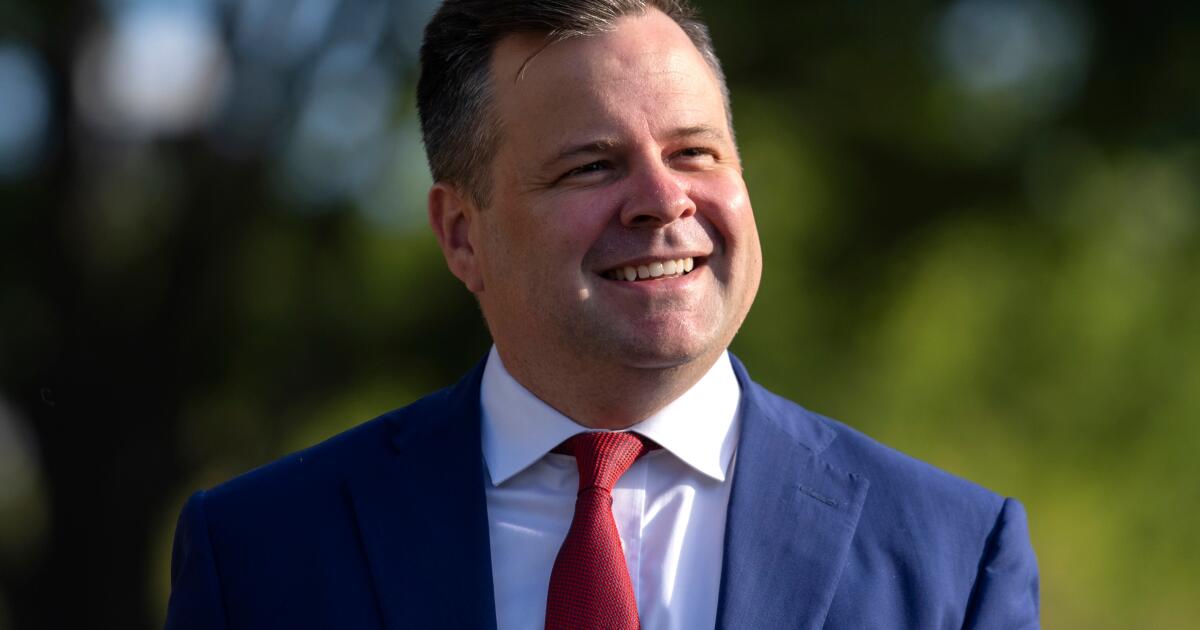
A former housing developer and currently director of the Federal Housing Finance Agency, Pulte — a staunch Trump loyalist — has no experience in foreign intelligence work, a fact that has sparked criticism from both sides of the political aisle.
Sen. Thom Tillis., R-N.C., on Wednesday blasted Pulte as an “incendiary attack dog” for Trump who likely wouldn’t pass Senate muster for confirmation.
“I don’t think he has a prayer” of becoming the permanent DNI, Tillis told CNBC, adding that Pulte’s presence could hurt the GOP congressional majority’s efforts to reauthorize the part of the Foreign Intelligence Surveillance Act governing warrantless surveillance.
Similarly, Sen. Ron Wyden, D-Ore., a long-serving member of the Senate Intelligence Committee, decried the choice of Pulte for DNI director, saying Trump is “appointing his top political henchman to one of the most important positions for protecting the safety of Americans and preventing terrorist attacks like September 11th.”
Pulte, he said, “appears to be unscathed by intelligence or any semblance of ethics,” noting he has already used his post at a housing agency “to persecute Trump’s political opponents, including Senator Adam Schiff, New York Attorney General Leticia James and Federal Reserve Board member Lisa Cook.”
Pulte has alleged fraud against several of Trump’s foes in their mortgage applications, including Cook for claiming two different homes as her primary residence. She has appealed her firing by Trump to the U.S. Supreme Court.
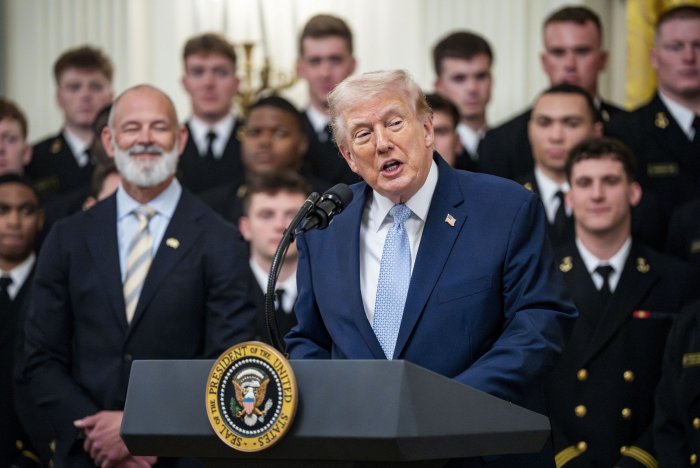
President Donald Trump presents the Commander in Chief’s Trophy to the Navy Midshipmen football team during a ceremony in the East Room of the White House on Friday. The award is presented annually to the winner of the football competition between the Navy, Air Force and Army. Navy has won the trophy back to back years and 13 times over the last 23 years. Photo by Bonnie Cash/UPI | License Photo
WASHINGTON — President Trump said Thursday that federal housing finance regulator Bill Pulte, his pick for acting director of national intelligence, would not be his “permanent” choice for the critical security post.
The Republican president’s disclosure that he was ruling out installing Pulte in the position full time came after bipartisan pushback on Capitol Hill in recent days over Pulte’s lack of national security experience. The position requires Senate confirmation, something that lawmakers indicated was unlikely if Pulte were the nominee.
“He’s not going to be permanent because, you know, I don’t think he’d want to be permanent,” Trump said while taking questions in the Oval Office after an event on coal. He called Pulte a “very smart guy” and said he may look at past elections that Trump claims, without credible evidence, were “rigged” against him.
Trump said other candidates were under consideration for nomination to the post. “We’re interviewing people right now,” he said.
Pulte, a grandson of the founder of PulteGroup, has been a source of controversy within the administration for his work as director of the Federal Housing Finance Agency and his oversight of the mortgage companies Fannie Mae and Freddie Mac.
Pulte has used his position to pursue Trump’s perceived political rivals for alleged mortgage fraud and has verbally attacked Jerome H. Powell, whose term as the Federal Reserve chairman recently ended after months of Trump and Pulte attacking him for not slashing the central bank’s benchmark rates. The federal housing finance regulator has also pitched a 50-year mortgage, an idea that backfired as it meant that the process of building wealth through homeownership would be slowed.
Both Republican and Democratic senators expressed concerns about Pulte and his lack of national security credentials in occupying a role coordinating 18 federal agencies involved in domestic and foreign security issues. Trump’s initial director of national intelligence, Tulsi Gabbard, resigned last month, citing her husband’s recent cancer diagnosis.
Senate Majority Leader John Thune, a Republican from South Dakota, said the national intelligence director job shouldn’t be “weaponized” and should be led by “professionals.”
Republican Sens. Thom Tillis of North Carolina, Bill Cassidy of Louisiana and John Cornyn of Texas, who are each leaving the chamber after this year’s elections, also expressed concerns about Pulte.
Democratic senators view Pulte as a risk even if he is serving only temporarily as the director of national intelligence while keeping his position at the FHFA.
Sen. Elizabeth Warren (D-Mass.) sent Trump a letter on Thursday calling on him to rescind Pulte’s national security appointment.
“Americans cannot trust him to protect our nation and refrain from misusing the sensitive information he will have access to,” Warren wrote, saying that giving Pulte the job on an acting basis was a risk because Trump’s own words suggested the federal agency could be used “to promote election denial theories.”
At a hearing on Wednesday, Treasury Secretary Scott Bessent confirmed reports that he had threatened to fight Pulte in September, a sign of the friction that the federal housing finance director had generated inside the administration.
But as a frequent traveler on Air Force One, Pulte has a close relationship with Trump.
“He’s a person who’s got high integrity,” Trump said Thursday about Pulte.
President Trump signed an executive order on artificial intelligence Tuesday, less than two weeks after postponing a White House ceremony over his concerns that a similar policy could dull America’s edge on AI technology.
The order establishes a framework for the federal government to vet the national security risks of the most advanced AI systems for up to a month before their public release. The government will be able to work with trusted partners “that will have early access to covered frontier models to promote secure innovation and strengthen the cybersecurity of critical infrastructure,” the order says.
It was not immediately clear to what extent the order differed from the one he declined to sign on May 21.
Trump canceled an Oval Office event with tech industry executives last month because he did not like what he saw in the earlier version of the order’s text. “We’re leading China, we’re leading everybody, and I don’t want to do anything that’s going to get in the way of that lead,” Trump told reporters at the time.
That directive was characterized as a voluntary collaboration with participating U.S.-based tech companies, including Anthropic, OpenAI and Google.
WASHINGTON — President Trump has tapped Bill Pulte, head of the Federal Housing Finance Agency, to be the acting director of national intelligence — putting a real estate scion and fierce Trump loyalist in a key national security post as the U.S. remains at war with Iran.
Trump made the surprise announcement Tuesday on social media that Pulte would be replacing Tulsi Gabbard, the former Hawaii congresswoman who served as the director of national intelligence.
The Republican president cited Pulte’s work at the FHFA and his role as chair of the mortgage giants Fannie Mae and Freddie Mac, saying that the 38 year-old “has deep experience managing the most sensitive matters in America, the safety and soundness of the Markets, and over 10 Trillion Dollars at Fannie Mae/Freddie Mac, a substantial increase from where it was just 12 months ago.”
Pulte’s sudden elevation to a role coordinating sensitive national security matters is a sign of how Trump is putting a priority on loyalty over a traditional resume full of previous military and intelligence assignments. It’s unclear what national security expertise Pulte has, but he has been a frequent guest on Air Force One as Trump has traveled to Mar-a-Lago, his home and club in Palm Beach, Florida.
As the grandson of the founder of PulteGroup, one of the country’s largest homebuilders, Pulte has cut a combative streak on social media and used his post at the FHFA to attack perceived opponents of the Trump administration.
His time overseeing mortgage finance has been linked with criminal referrals for mortgage fraud by public officials Trump sought to punish, including New York Attorney General Letitia James, a Democrat; Sen. Adam Schiff, D-Calif.; and Lisa Cook, a member of the Federal Reserve, who was nominated by a Democratic president, Joe Biden.
Pulte has famously gone after then-Federal Reserve Chair Jerome Powell for not cutting the central bank’s benchmark interest rates as aggressively as the president wanted. He has also been linked to ideas such as the 50-year mortgage and efforts to lower mortgage rates through the purchase of home loan debt that have not paid off as promised.
Trump said Pulte will keep his other positions even as he fills in for Gabbard, who resigned last month after revealing her husband’s cancer diagnosis.
If formally nominated, Pulte would need to be confirmed by the Senate to hold the position full time.
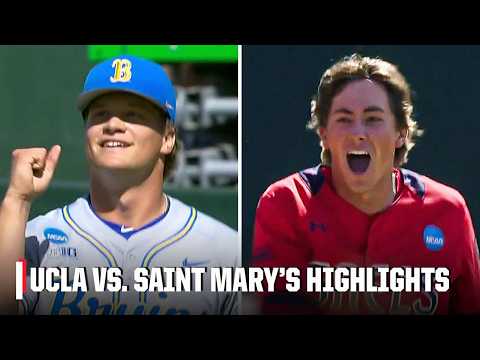
Saint Mary’s has achieved the seemingly unthinkable — the Gaels have eliminated UCLA, the nation’s top-ranked team, from the NCAA tournament.
With two outs in the 10th inning, Makoa Sniffen drove in Cody Kashimoto on a walk-off single off UCLA reliever Easton Hawk to lift Saint Mary’s to a 6-5 comeback win Sunday in a Los Angeles Regional elimination game at Jackie Robinson Stadium.
The Gaels (36-26), who also stunned the Bruins (52-8) in the regional opener on Friday, made the Big Ten champions just the second NCAA No. 1 overall seed — after Vanderbilt in 2025 — to be eliminated from the regional round since the current format was established in 1999.
“Obviously, this weekend, we just did not play up to our standards,” UCLA coach John Savage said. “I really felt it was a struggle, for whatever reason — all three games, really. But it’s nothing to take away from this team. You win 52 games [and are] preseason [No.1], and you never leave that spot; it’s really remarkable and a lot of credit to our captains, to our seniors, to the entire program … I just can’t say enough about the people that I’m around and that I’ve coached.”
Against all odds, Saint Mary’s is still alive and playing Cal Poly in the regional final on Sunday night.
“Felt like 12 rounds with the heavyweight champ,” Saint Mary’s coach Eric Valenzuela said of the Gaels’ wins over UCLA. “So proud of our group, the fight.”
Favored to win their first national title since 2013, the Bruins led the Gaels 5-4 entering the ninth and needed just three outs to continue what had been the program’s best season ever.
But Tanner Griffith led with a base hit off UCLA reliever Cal Randall and — after being moved to second following a sacrifice bunt from Diego Castellanos — catcher Ian Armstrong brought Griffith home with an RBI single to right field off Hawk.
Saint Mary’s reliever David Roberts retired the Bruins in order in the 10th. Hawk then struck out Brayden Gutierrez before Kashimoto hit an infield single. Griffith advanced Kashimoto to second on a groundout to first. Two batters later, Sniffen’s hit to left field gave Kashimoto just enough time to beat a throw to the plate, sealing the Gaels’ win.
Randall and Hawk pitched in all three of UCLA’s regional games. Savage saluted the entire pitching staff — highlighting Angel Cervantes’ development as a freshman — but added that Logan Reddemann’s absence had a “major effect” on the staff. The ace right-hander hadn’t pitched since April 17 because of arm soreness.
“It had a ripple effect on the starters, had a ripple effect on the bullpen,” Savage said of Reddemann’s absence. “The effect it had on roles, the effect it had on usage [was a] major deal. No excuses, because [we] still won. But at the same time, it looked a little different and it felt a little different, and at the end, I think it really hurt losing a potential first-rounder the last six weeks.”
The Big Ten coach of the year took the time to acknowledge the Bruins’ junior class for sticking with the program throughout its ascent, admiring the “all kinds of players” he expects to be selected in July’s MLB draft.
Savage, though, was particularly emotional when discussing the eventual departure of shortstop and back-to-back Big Ten player of the year Roch Cholowsky, who is widely expected to be a first-round pick.
“Cholowsky just meant so much to the program,” Savage said. “He just had such an impact on the program. He had such an impact on people. Had impact on a fan base. Had impact on the community. Just such a winning, winning player. It’s hard to watch a guy like that leave … but it’s what he’s all about. He’s all about the right things.
“He’s a Bruin through and through. And at the end of the day, you couldn’t ask for a better player or a better person than Roch.”
Led by Cholowsky and eight other All-Big Ten selections, with the best team ERA (3.27) throughout the regular season, the Bruins had lost merely six times before the regional and had won every series.
But after losing two games to Saint Mary’s, as regional hosts for a second consecutive year, UCLA has no choice but to go back to the drawing board in preparation for 2027.
“I feel for them,” Savage said of his clubhouse. “It’s the college game … anything can happen. We didn’t play well enough this weekend.”
President Trump plans to celebrate the nation’s 250th anniversary — and his own 80th birthday — next month by watching bare-chested and bloody UFC fighters kick, punch and choke each other on the storied South Lawn of the White House.
Later, during the administration’s summer-long festival to commemorate the signing of the Declaration of Independence, IndyCars will race in a fossil fuel-burning extravaganza around and around the National Mall — home to the U.S. Capitol and the Washington and Lincoln monuments.
Both venues are National Park Service land and are administered by the agency.
The planned spectacles — UFC Freedom 250 and the Freedom 250 Grand Prix — stray so far from the park service’s traditional mission and ethos that advocates and career employees are crying foul.
“These events are inappropriate and disrespectful to the history and importance of the White House and the National Mall,” said Jonathan Jarvis, who began his career as a park ranger on the Mall in 1976 and was named director of the National Park Service by President Obama in 2009.
White House officials insist that IndyCar and the UFC are extremely popular with everyday Americans: the race and the fights will be exuberant celebrations of patriotism and pride, they say.
The UFC event, in particular, “will be one of the greatest and most historic sports events in history, and President Trump hosting it at the White House is a testament to his vision to celebrate America’s monumental 250th anniversary,” said White House spokesperson Davis Ingle.
President Trump is hosting a UFC match on the White House grounds in honor of the 250th anniversary of the United States.
(Alex Wong / Getty Images)
To organize this summer’s events, the Trump administration asked the National Park Foundation — a congressionally chartered nonprofit that works closely with the park service and collects private donations to help maintain hiking trails and fund programs to get kids outdoors — to lend a hand.
Because of the scale of the planned celebrations, the foundation created a limited liability company, “Freedom 250,” to “execute events, activities, and celebrations in or around national parks,” according to the Freedom 250 website.
Freedom 250 has its own employees, but the foundation provides funds and the park service approves the events and reviews their budgets, according to the website.
Which is why advocates are appalled.
“Essentially, this is a hijacking of one of America’s oldest and most well-respected conservation organizations,” said Aaron Weiss, director of the Center for Western Priorities, an environmental nonprofit based in Denver. “There are so many very good people at the foundation, with so many years doing real work on behalf of America’s national parks, it’s heartbreaking to watch.”
When Jarvis was director of the park service — and therefore an ex-officio board member of the foundation — the two organizations worked hand in hand to ensure that the foundation’s work complemented that of the park service. They organized the annual Easter Egg Roll on the White House South Lawn and lit the Christmas tree on the Ellipse, Jarvis said.
Workers continue to paint the bottom of the Lincoln Memorial Reflecting Pool on the National Mall.
(Alex Wong / Getty Images)
Occasionally, the president made special requests, which were reviewed carefully to ensure they were consistent with park service principles. Michelle Obama’s famous “Kitchen Garden” passed the test, Jarvis said with a chuckle, providing fruits and vegetables for family meals — and the occasional state dinner — for years.
It’s hard to imagine any career parks employee, or the foundation board members he served with, coming up with the current agenda, Jarvis said.
In addition to the IndyCar race and cage fights, the National Park Foundation is sponsoring“Freedom Trucks” — six red, white and blue tractor trailers traveling the country as rolling museums — andRededicate 250, a large Christian revival meeting held on the Mall earlier this month that raised objections about the mixing of church and state.
“I think the foundation is being told what to do,” Jarvis said. “And I think it’s hard to say no to the White House these days.”
Josh deBerge, a spokesperson for the National Park Foundation, insisted that no money from Freedom 250 is being spent on the IndyCar race or the UFC fights.
But the IndyCar race is listed as a “signature” event on the Freedom 250 website, and both IndyCar and the UFC are listed as Freedom 250 sponsors.
Danielle Alvarez, a former Trump campaign senior advisor, is a spokesperson for Freedom 250. She acknowledged that the race and the cage fights are happening on national park land and under the banner of Freedom 250, but said neither is receiving funds or logistical support from her organization.
“Many groups have adopted ‘Freedom 250’ branding as part of their festivities, even though it does not mean it is backed by Freedom 250 funding,” Alvarez said in a text message. “The shared terminology is a natural expression of collective pride in 250 years of American independence.”
Neither IndyCar nor the UFC responded to requests for comment.
All of this comes as the Trump administration has taken an ax to the National Park Service, cutting its staff by 25% through buyouts and layoffs since 2025, and proposing another 25% staff reduction this year.
A worker applies hot wax during the restoration process of the Gen. Nathanael Greene statue in Stanton Park on Capitol Hill.
(Tom Williams / CQ-Roll Call / Getty Images)
Trump has also proposed slashing nearly $800 million from the park system’s roughly $3-billion operating budget — potentially diminishing the ability to keep facilities clean and control crowds. Already this year, Yosemite National Park has ditched a reservation system, leading to enormous crowds in the valley and on nearby trails.
Parks advocates fear it’s part of a broader and deliberate strategy to marginalize an agency that has long been a sanctuary for environmentalists and progressives — most of whom presumably did not vote for Trump.
In addition to the staff and budget cuts, Trump last year instructed the National Park Service toscrub any language he would deem negative, unpatriotic or smacking of “improper partisan ideology” from signs and presentations visitors encounter at parks and historic sites.
Instead, he ordered the agency to ensure that its signs remind Americans of our “extraordinary heritage, consistent progress toward becoming a more perfect Union, and unmatched record of advancing liberty, prosperity and human flourishing.”
Those marching orders left opponents and free speech advocates in disbelief, wondering how park employees were supposed to put a sunny spin on monuments acknowledging slavery, Jim Crow laws and the incarceration of Japanese Americans during World War II.
Trump opponents also question the political wisdom of picking on an agency that’s routinely ranked among the most admired branches of the large and sprawling federal government. Even Americans who pay little attention to politics will probably never forget standing in Yosemite Valley and admiring a towering waterfall.
There were more than 323 million visits to America’s national parks in 2025, dwarfing attendance — 135 million — at professional football, baseball, basketball and hockey games combined.
That has not stopped the assault by the current administration.
Black granite was installed last month as the new walkway for the West Wing Colonnade at the White House.
(Andrew Harnik / Getty Images)
“The ideologues in power now take a very dim view of the federal government in general, and the last thing they want is a highly popular and successful federal agency,” Jarvis said. “So if they can kill it, or diminish it through neglect, they win. They don’t really care about the public’s opinion.”
Chuck Sams, the last director of the National Park Service, stepped down the day Trump was inaugurated. Since then, the agency has not had a Senate-confirmed director.
Sams agreed that the Trump administration seems to have it in for the Park Service and worried that the guardrails that used to prevent the executive branch from doing whatever it wants with park land are disappearing.
Destroying the East Wing of the White House for Trump’s proposed ballroom and paving over portions of the White House Rose Garden lawn are prime examples, Sams said.
During his tenure, any proposed change to the White House or its grounds was approached in a “very concerted and deliberate manner with a lot of educated professionals weighing in,” Sams said. “Was it slow? Absolutely, but that was because everyone understood these places belong to the people.”
Asked what he thought of the IndyCar race and the cage fights, Sams said, “We are in uncharted territory, on uncharted ground.”
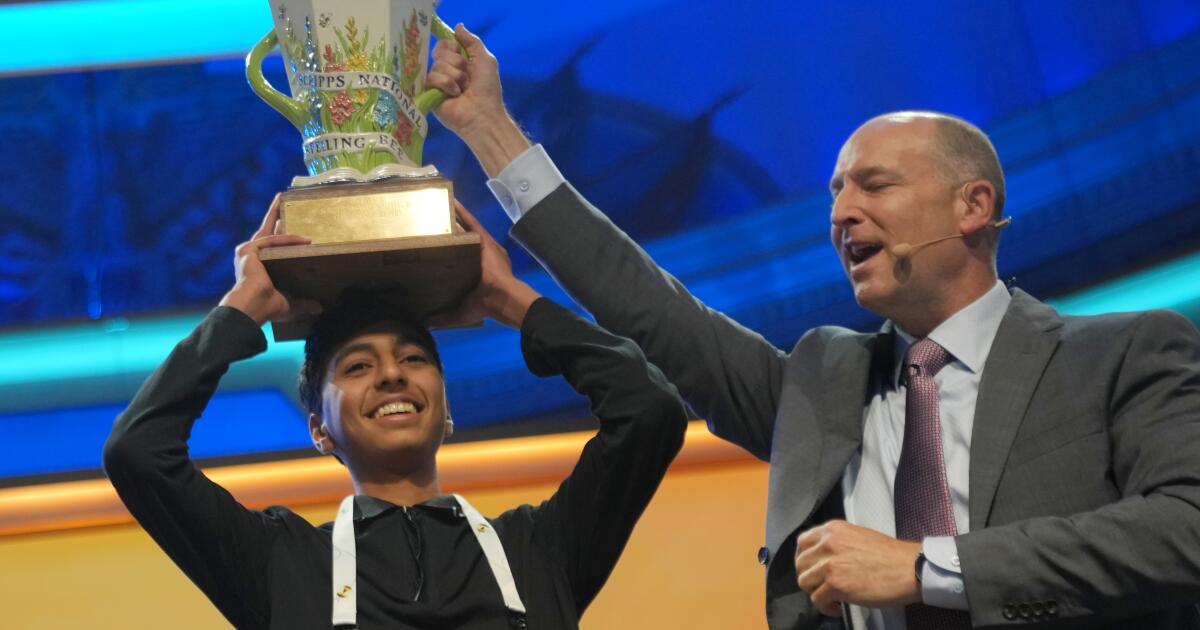
WASHINGTON — Shrey Parikh felt the pressure of arriving at the Scripps National Spelling Bee as a favorite, but his confidence showed every time he got a word he knew. And when the bee came down to a lightning-round tiebreaker against Ishaan Gupta, Shrey left no doubt.
Shrey turned a tense, high-quality final into a blowout Thursday night, racing through the 90-second “spell-off” and getting 32 words right to be crowned the best young speller in the English language. Ishaan spelled 25 words correctly in the tiebreaker.
A 14-year-old from Rancho Cucamonga, Shrey finished third in 2024 but lost his school bee last year when he was battling a fever. He has dominated the bee circuit since, winning several highly competitive online competitions against many of the same kids he outlasted this week in the nation’s capital.
Ishaan, a 12-year-old seventh-grader from Jersey City, N.J., was a semifinalist this year, outperformed some veteran spellers in the finals, and has another year of eligibility left.
Sarv Dharavane, a 12-year-old sixth-grader from Dunwoody, Ga., finished third for the second consecutive year and has two more years to improve that placement.
For the first time in the bee’s history, second- and third-place finishers from the same year have gone on to win. Faizan Zaki won last year, and two years ago he was the runner-up, just ahead of Shrey.
Sporting a business-casual look with a dark, long-sleeve collared shirt, khakis and sneakers, the lanky Shrey strode to the microphone with a dour, apprehensive expression that instantly vanished when he heard his word from pronouncer Jacques Bailly and nodded vigorously — his tell that, yes, he knew it.
Upon hearing the announcement confirming his victory in the spell-off, Shrey turned and shook his competitor’s hand.
He can credit his victory to intense preparation. Shrey’s coaching team included Sam Evans, who has tutored each of the past three champions, and Sohum Sukhatankar, a co-champion himself in 2019. He competed nonstop against other top spellers, pored through advanced study guides and tried to eliminate the variables that had led to the few unexpected exits of his long spelling career.
Former spellers, coaches and other observers described this group of finalists as unusually strong, and they showed off their skills early by going 18 for 18 to start, breezing through the first spelling and vocabulary rounds. Aiden Meng of Orinda, Calif., ended that streak when he was tripped up by “catometope” to start the second spelling round.
Then the crowd gasped when the bell rung on two thought to be capable of winning it all: Oliver Halkett for “Faesulae” and Zwe Spacetime for “vaesite,” words with tricky combinations of origins and vowel sounds.
The bee’s move to Constitution Hall, a point of contention for spellers and their families because of the inconveniences it caused, helped imbue the event with a lively atmosphere, with more intimate seating and better sight lines bringing the crowd closer to the action.
New television host Mina Kimes of ESPN narrated the action smoothly alongside longtime bee analyst Paul Loeffler.