national intelligence

House vote to extend FISA spy tool fails and it could lapse as Friday deadline looms

A rare lapse in a law that allows the United States to gather intelligence abroad appears likely after the House failed on Thursday to temporarily extend the program, in a protest of President Trump ‘s refusal to name a permanent head of the nation’s intelligence agencies.

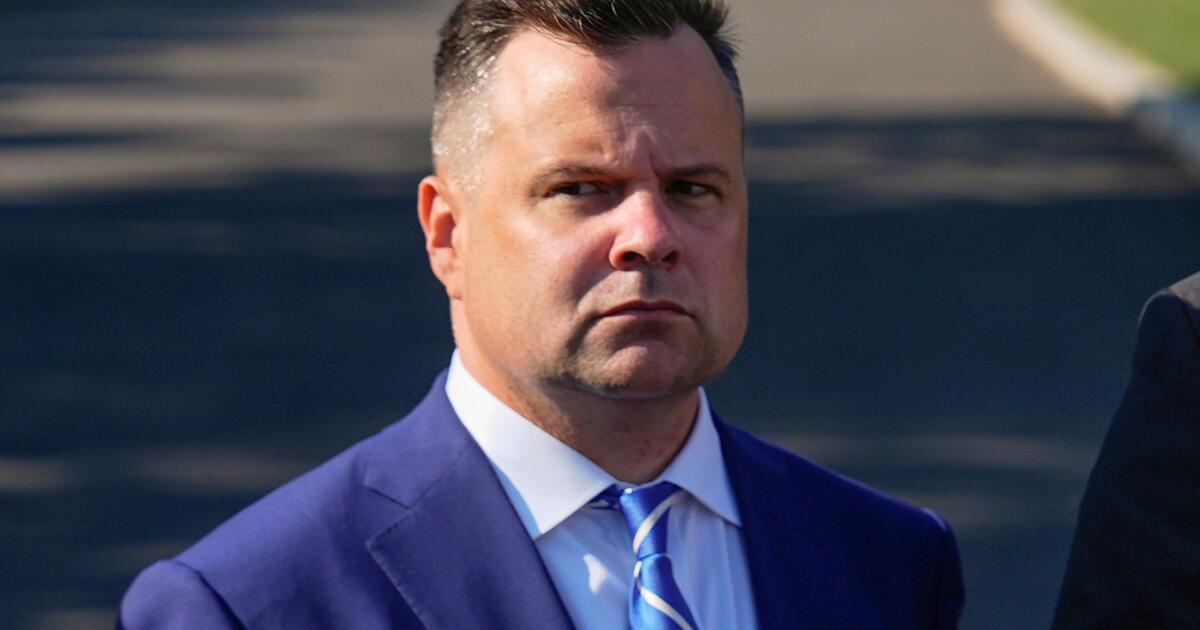
Trump has doubled down on his temporary pick for director of national intelligence, federal housing finance regulator Bill Pulte, even though Pulte has little experience for the job. Democrats say they won’t support the renewal of Section 702 of the Foreign Intelligence Surveillance Act, known as FISA, unless the Republican president withdraws Pulte’s appointment and nominates a permanent replacement.

The House vote collapsed in bipartisan fashion, with some Republicans and nearly all Democrats rejecting the temporary measure, 198-218. The Senate may try its own vote later Thursday, but hopes are dimming to prevent what could be an unprecedented lapse in the surveillance tool. The law expires on Friday at midnight.

The impasse could soon result in limitations on what intelligence the U.S. government can collect abroad just as World Cup games begin in cities around the country and ahead of celebrations for the nation’s 250th anniversary.

“We can’t let them extort us,” Trump said of Democrats.

Trump has stuck with Pulte as the acting head, rebuffing demands from lawmakers for a more qualified nominee. Trump asked Congress for a short-term extension of the law to “provide time for the selection and confirmation” of a permanent director. He said he wants Pulte to begin downsizing intelligence agencies.

The parties leveled blame for the potential interruption in what has been seen as an essential, if long-debated, surveillance program for keeping the country safe.

“We’re going to ask every member here to do the right thing,” said House Speaker Mike Johnson, R-La. “We cannot allow that to go dark.”

The House Democratic leadership announced its opposition, saying Pulte has no relevant intelligence background, in defiance of the law’s requirement for “extensive” national security experience.

“The apparent motivation for his elevation is the demonstrated willingness of Bill Pulte to search government databases for alleged dirt on President Trump’s chosen political enemies,” Democratic leader Hakeem Jeffries of New York and the leadership team said in a joint statement. They said there is a path to reauthorizing FISA, “but it will require enacting meaningful reforms.”

GOP leaders lobby the White House, to no avail

Congressional Republicans have lobbied Trump all week to quickly nominate a permanent replacement. But he said he needs more time to do so.

Senate Majority Leader John Thune, R-S.D., said Republican leaders have “made our views known” to the White House.

Trump has said that he is interviewing five candidates for his pick to lead the agency permanently, after the resignation of Tulsi Gabbard.

Johnson said the president has made it very clear that Pulte will serve a “very short term — a sort of renovation role” to help the Office of the Director of National Intelligence be “renovated and downsized.”

But Democrats on the House Intelligence Committee led by Rep. Jim Himes of Connecticut said in a letter to the president that Pulte is a “uniquely poor choice” to serve even in the acting capacity.

Both Republican and Democratic lawmakers skeptical of Pulte have pointed to his lack of intelligence experience and also his record at the Federal Housing Finance Agency. In the position, he has been linked with criminal referrals over allegations of mortgage fraud by public officials Trump sought to punish, including New York Attorney General Letitia James, a Democrat; Sen. Adam Schiff, D-Calif.; and Lisa Cook, a board member of the Federal Reserve.

“He has distinguished himself only as someone who will do or say anything to stay in your good graces,” Himes and the other lawmakers wrote, “qualities that are precisely the opposite of what our nation needs.”

FISA will lapse at midnight Friday

Section 702 of FISA allows agencies such as the CIA, National Security Agency and FBI to collect communications from foreign targets overseas without a warrant.

While members of both parties who cite privacy issues have long wanted to limit the authority, there was broad bipartisan support to renew it, especially after Republicans and Democrats recently worked out a compromise bill.

Virginia Sen. Mark Warner, the top Democrat on the Senate Intelligence Committee, has worked with Republicans on the compromise legislation to renew the authority. But he called Pulte’s appointment to replace Gabbard “a live hand grenade” disrupting the process.

Warner said the only way he’ll support a short-term extension of the surveillance law is if the principal deputy director of national intelligence, Aaron Lukas, is the acting leader during the duration of that extension.

Arkansas Sen. Tom Cotton, the chairman of the Senate Intelligence Committee, and Iowa Sen. Chuck Grassley, chairman of the Senate Judiciary Committee, have warned the administration that the spy tool is likely to lapse.

The administration should prepare “for a potential significant gap in foreign intelligence collection,” they wrote in a letter.

Trump doesn’t back down on Pulte

After bipartisan pushback to Pulte’s temporary appointment, Trump said last week that he would not permanently nominate him to the position. But Democrats, and some Republicans, want his appointment pulled immediately and for Trump to nominate a replacement that can be confirmed by the Senate.

On Tuesday, though, Trump announced that Pulte would not only take over as acting director — he’d also start earlier than expected, on June 19.

One of several possible replacements could be Pete Hoekstra, Trump’s ambassador to Canada and a former chairman of the House Intelligence Committee. The White House has reached out to Hoekstra about the job and conversations are ongoing, according to a person familiar with the outreach who requested anonymity to discuss the private conversations.

Jalonick, Mascaro and Kim write for the Associated Press. AP reporters Joey Cappelletti, Kevin Freking and Eric Tucker contributed to this report.
Source link

Republican senators warn surveillance program may lapse after Trump intel pick backlash

Republicans are warning the White House that a critical surveillance authority is likely to lapse this week amid bipartisan backlash over President Trump’s pick to lead the nation’s intelligence community.

Sen. Tom Cotton, the chairman of the Senate Intelligence Committee, and Sen. Chuck Grassley, chairman of the Senate Judiciary Committee, sounded the alarm over the weekend after a failed procedural vote to extend the program.

The senators in a letter urged Secretary of State Marco Rubio to prepare “for a potential significant gap in foreign intelligence collection” if the authority expires. Section 702 of the Foreign Intelligence Surveillance Act, set to lapse June 12, allows agencies including the CIA, National Security Agency and FBI to collect communications from foreign targets overseas without a warrant.

Efforts to secure a long-term extension of the program already faced hurdles because of bipartisan concerns that the program can incidentally collect Americans’ communications. Privacy advocates and some lawmakers have been pushing to create a new warrant requirement before those communications can be searched.

Senate leaders from both parties appeared to be nearing agreement on a long-term extension. But the effort collapsed after Trump selected federal housing finance regulator Bill Pulte to serve as acting director of national intelligence.

“I know how important this tool is. Why the president would throw this live hand grenade of Bill Pulte in 10 days before this is due to expire, I’m not sure,” Sen. Mark Warner, the top Democrat on the Senate Intelligence Committee, said on ABC’s “This Week.”

Pulte pick upends bipartisan deal

Early Friday morning, after senators spent the night debating separate immigration legislation, seven Republicans joined nearly all Democrats in blocking a long-term extension of the surveillance authority.

Democrats and several Republicans registered their opposition to Trump’s selection of Pulte, arguing the federal housing finance regulator lacks the experience needed to oversee the nation’s 18 intelligence agencies.

“The naming of Pulte to that position, although the timing arguably wasn’t the best, I still don’t think it ought to derail something that’s this important,” Senate Majority Leader John Thune said.

Thune has expressed concern over Pulte’s pick, saying the nation’s top intelligence post should not be “weaponized” and that the job should be filled by “professionals.” Cotton, who rarely strays from supporting Trump and a leading advocate for the surveillance authority, declined to endorse Pulte, saying only that he had “no observations on the matter.”

“He’s not qualified for the long-term position,” Republican Sen. James Lankford, another member of the Intelligence Committee, told “Fox News Sunday.” “That’s been clear on this. He has no national security background.

Both Republican and Democratic senators skeptical of Pulte pointed to his record at the Federal Housing Finance Agency. In the role, he’s been linked with criminal referrals over allegations of mortgage fraud by public officials Trump sought to punish, including New York Attorney General Letitia James, a Democrat; Sen. Adam Schiff, D-Calif.; and Lisa Cook, a board member of the Federal Reserve.

Republicans will need to garner some Democratic support to pass any extension of the surveillance authority in the Senate. But a breakthrough appears difficult so long as Pulte remains in the position, which Trump said last week would only be temporary.

“I don’t see any path to convincing enough Democrats,” Warner said on CNN’s “State of the Union” when asked if renewal was possible with Pulte in the position.

The current reauthorization debate is hardly the first time that lawmakers have grappled with the fate of the surveillance program, particularly after a flurry of revelations about government misuse of the vast trove of intelligence it collects.

The topic in recent years has scrambled predictable partisan alliances, with Democratic critics of the Trump administration uniting with skeptics of government power on the right in voicing concerns about Section 702’s renewal.

In 2024, for instance, those divisions nearly caused the program to lapse. The Senate barely missed its midnight deadline that year before approving by a 60-34 margin legislation to reauthorize Section 702 that was subsequently signed by then-President Joe Biden.

A spokesperson at the Justice Department did not immediately return messages seeking comment Monday about the national security concerns that would be created if the program lapses. The Office of the Director of National Intelligence referred inquiries to the White House, which did not immediately respond to a request for comment.

“America faces real threats from foreign adversaries, terrorists, cyber actors, and hostile intelligence services,” Defense Secretary Pete Hegseth said on social media Sunday. “Section 702 remains one of our nation’s most effective tools for identifying and disrupting those threats before they reach our shores.”

Cotton and Grassley said they believed Democratic leaders would not support another short-term extension of the surveillance authority and urged Rubio to prepare contingency plans. They said Trump should consider an executive order to prevent a disruption in intelligence collection.

Cotton and Warner had said they were close on a bipartisan deal on a long-term extension and could still move quickly should a change occur before Friday. Still, the bill would likely need to go through the House — and the two chambers so far have disagreed on a separate issue regarding central banking digital currency.

“If we go dark next week, right before the World Cup FIFA games, and the 250th anniversary, that would be the most grossly irresponsible thing I’ve seen Congress do in my 22 years in office,” Texas Republican Rep. Michael McCaul said on ABC’s “This Week.”

Cappelletti, Jalonick and Tucker write for the Associated Press.

Source link

Trump says he wants his new acting director of national intelligence to cut the office

President Trump said Friday that he wants Bill Pulte, his new acting director of national intelligence, to cut the office, which has already been significantly scaled back during his second term.

Trump noted that the size of the office has been “way too high for way too long” and that “if he cut, I wouldn’t mind.”

“Bill Pulte is very good, he’s very talented,” Trump told reporters on Air Force One as he traveled to Wisconsin. The Republican president said in an earlier interview with the Wall Street Journal that he has asked Pulte to start the process of firing employees.

In the interview with the Journal, the president says he has already conveyed his view to Pulte, the incoming acting director of national intelligence, who has served as head of the Federal Housing Finance Agency but apparently has no national security expertise.

“I’d like to see it smaller. I think there are a lot of people in there that shouldn’t be there,” Trump said, which the Journal said was in reference to intelligence community officials who had served in the Democratic administrations of Presidents Biden and Obama.

Trump told the Journal that he wants Pulte to “start the process” of firing personnel and that the eventual permanent director of national intelligence should continue it. The president has indicated that he would not formally nominate Pulte for the position.

“Frankly, it might be good for him to shake it up before people come,” Trump said. “Because, if he [Pulte] reduced the size, in conjunction with me … and in conjunction with possibly the person coming in … he can do a lot of the hard work and we wouldn’t have to saddle somebody that goes in.”

Pulte was tapped by the president earlier this week in a surprising move that has been met with bipartisan resistance in the Senate, which confirms presidential nominations. The temporary appointment has now snarled the renewal of a critical national security surveillance program on Capitol Hill, with Democrats key to the vote pointing out that they did not trust Pulte — whose office oversees 18 intelligence agencies — to help administer the surveillance program.

Under Pulte’s successor, Tulsi Gabbard, the director of national intelligence’s office had already taken steps to scale back its size. In August, the Trump administration said that the office’s budget would be cut by more than $700 million per year, while slashing the size of its workforce.

At the time, Gabbard said the office had become “bloated and inefficient” while she announced the roughly 40% workforce reduction.

Gabbard resigned last month after revealing her husband’s cancer diagnosis.

Price and Kim write for the Associated Press. Kim reported from Washington.

Source link

Trump says Pulte won’t be his nominee for director of national intelligence

President Trump said Thursday that federal housing finance regulator Bill Pulte, his pick for acting director of national intelligence, would not be his “permanent” choice for the critical security post.

The Republican president’s disclosure that he was ruling out installing Pulte in the position full time came after bipartisan pushback on Capitol Hill in recent days over Pulte’s lack of national security experience. The position requires Senate confirmation, something that lawmakers indicated was unlikely if Pulte were the nominee.

“He’s not going to be permanent because, you know, I don’t think he’d want to be permanent,” Trump said while taking questions in the Oval Office after an event on coal. He called Pulte a “very smart guy” and said he may look at past elections that Trump claims, without credible evidence, were “rigged” against him.

Trump said other candidates were under consideration for nomination to the post. “We’re interviewing people right now,” he said.

Pulte, a grandson of the founder of PulteGroup, has been a source of controversy within the administration for his work as director of the Federal Housing Finance Agency and his oversight of the mortgage companies Fannie Mae and Freddie Mac.

Pulte has used his position to pursue Trump’s perceived political rivals for alleged mortgage fraud and has verbally attacked Jerome H. Powell, whose term as the Federal Reserve chairman recently ended after months of Trump and Pulte attacking him for not slashing the central bank’s benchmark rates. The federal housing finance regulator has also pitched a 50-year mortgage, an idea that backfired as it meant that the process of building wealth through homeownership would be slowed.

Both Republican and Democratic senators expressed concerns about Pulte and his lack of national security credentials in occupying a role coordinating 18 federal agencies involved in domestic and foreign security issues. Trump’s initial director of national intelligence, Tulsi Gabbard, resigned last month, citing her husband’s recent cancer diagnosis.

Senate Majority Leader John Thune, a Republican from South Dakota, said the national intelligence director job shouldn’t be “weaponized” and should be led by “professionals.”

Republican Sens. Thom Tillis of North Carolina, Bill Cassidy of Louisiana and John Cornyn of Texas, who are each leaving the chamber after this year’s elections, also expressed concerns about Pulte.

Democratic senators view Pulte as a risk even if he is serving only temporarily as the director of national intelligence while keeping his position at the FHFA.

Sen. Elizabeth Warren (D-Mass.) sent Trump a letter on Thursday calling on him to rescind Pulte’s national security appointment.

“Americans cannot trust him to protect our nation and refrain from misusing the sensitive information he will have access to,” Warren wrote, saying that giving Pulte the job on an acting basis was a risk because Trump’s own words suggested the federal agency could be used “to promote election denial theories.”

At a hearing on Wednesday, Treasury Secretary Scott Bessent confirmed reports that he had threatened to fight Pulte in September, a sign of the friction that the federal housing finance director had generated inside the administration.

But as a frequent traveler on Air Force One, Pulte has a close relationship with Trump.

“He’s a person who’s got high integrity,” Trump said Thursday about Pulte.

Boak writes for the Associated Press.

Source link

Trump taps housing finance director Pulte as acting director of national intelligence

President Trump has tapped Bill Pulte, head of the Federal Housing Finance Agency, to be the acting director of national intelligence — putting a real estate scion and fierce Trump loyalist in a key national security post as the U.S. remains at war with Iran.

Trump made the surprise announcement Tuesday on social media that Pulte would be replacing Tulsi Gabbard, the former Hawaii congresswoman who served as the director of national intelligence.

The Republican president cited Pulte’s work at the FHFA and his role as chair of the mortgage giants Fannie Mae and Freddie Mac, saying that the 38 year-old “has deep experience managing the most sensitive matters in America, the safety and soundness of the Markets, and over 10 Trillion Dollars at Fannie Mae/Freddie Mac, a substantial increase from where it was just 12 months ago.”

Pulte’s sudden elevation to a role coordinating sensitive national security matters is a sign of how Trump is putting a priority on loyalty over a traditional resume full of previous military and intelligence assignments. It’s unclear what national security expertise Pulte has, but he has been a frequent guest on Air Force One as Trump has traveled to Mar-a-Lago, his home and club in Palm Beach, Florida.

As the grandson of the founder of PulteGroup, one of the country’s largest homebuilders, Pulte has cut a combative streak on social media and used his post at the FHFA to attack perceived opponents of the Trump administration.

His time overseeing mortgage finance has been linked with criminal referrals for mortgage fraud by public officials Trump sought to punish, including New York Attorney General Letitia James, a Democrat; Sen. Adam Schiff, D-Calif.; and Lisa Cook, a member of the Federal Reserve, who was nominated by a Democratic president, Joe Biden.

Pulte has famously gone after then-Federal Reserve Chair Jerome Powell for not cutting the central bank’s benchmark interest rates as aggressively as the president wanted. He has also been linked to ideas such as the 50-year mortgage and efforts to lower mortgage rates through the purchase of home loan debt that have not paid off as promised.

Trump said Pulte will keep his other positions even as he fills in for Gabbard, who resigned last month after revealing her husband’s cancer diagnosis.

If formally nominated, Pulte would need to be confirmed by the Senate to hold the position full time.

Boak writes for the Associated Press.

Source link

Tulsi Gabbard resigns as director of national intelligence, citing her husband’s health

Tulsi Gabbard resigned as President Trump’s director of national intelligence on Friday, saying she needed to step away as her husband battles cancer. She is the fourth Cabinet official to depart during Trump’s second term.

“Unfortunately, I must submit my resignation, effective June 30, 2026,” Gabbard wrote in her resignation letter, which she posted on X. “My husband, Abraham, has recently been diagnosed with an extremely rare form of bone cancer.”

There had been rumblings that Gabbard would split with Trump after the president’s decision to strike Iran, which caused some division within his administration. Joe Kent, the director of the National Counterterrorism Center, announced his resignation in March, saying he “cannot in good conscience” back the war.

Gabbard, a veteran and former Democratic congresswoman from Hawaii, built her political name on her opposition to foreign wars. This put her in an awkward position when the U.S. joined Israel in launching attacks on Iran on Feb. 28.

During a congressional hearing in March, her measured comments were notable for their careful non-endorsement of Trump’s decision to strike Iran. She repeatedly dodged questions about whether the White House had been warned of potential fallout from the conflict, including Iran’s effective closure of the Strait of Hormuz.

Gabbard said in written remarks to the Senate Intelligence Committee that there had been no effort by Iran to rebuild its nuclear capability after U.S. attacks last year “obliterated” its nuclear program. That statement contradicted Trump, who has repeatedly asserted that the war was necessary to head off an imminent threat from the Islamic Republic.

This created several awkward exchanges with lawmakers who asked Gabbard for her opinion on the threat posed by Iran as the nation’s top intelligence official. She repeatedly said it was Trump’s decision to strike, not hers.

“It is not the intelligence community’s responsibility to determine what is and is not an imminent threat,” she said.

Gabbard’s departure follows Trump having ousted Homeland Security Secretary Kristi Noem in late March, in the midst of mounting criticism over her leadership of the department — including the handling of the administration’s immigration crackdown and disaster response.

The second Cabinet member to leave was Attorney General Pam Bondi, in response to growing frustration over the Justice Department’s handling of files related to Jeffrey Epstein. And Labor Secretary Lori Chavez-DeRemer resigned in April, after being the target of various misconduct investigations.

A surprising choice for the job

A veteran but without any intelligence experience, Gabbard was a surprising choice to head the Office of the Director of National Intelligence, which oversees the nation’s 18 intelligence agencies. She ran for president in 2020 on a progressive platform and her opposition to U.S. involvement in foreign military conflicts.

Citing her military experience, she argued that U.S. wars in the Middle East had destabilized the region, made the U.S. less safe and cost thousands of American lives. Gabbard later dropped out of the race and endorsed the ultimate winner, President Joe Biden.

Two years later she left the Democratic Party to become an independent, saying her old party was dominated by an “elitist cabal of warmongers” and “woke” ideologues. She subsequently campaigned for several high-profile Republicans and became a contributor to Fox News.

She later endorsed Trump, who also was a strong critic of past U.S. wars in the Middle East and campaigned on a pledge to avoid unnecessary wars and nation-building overseas.

Iran caused early tensions

But friction with the president started soon after he began his second term and tapped Gabbard to lead ODNI, which was set up after the Sept. 11, 2001, attacks to improve coordination between the nation’s intelligence agencies.

Shortly after taking on the job, Gabbard testified before lawmakers that there was no intelligence suggesting Iran was seeking to develop nuclear weapons. After Trump launched attacks on Iranian nuclear sites in June he said Gabbard was wrong and that he didn’t care what she said.

She appeared to be back in Trump’s good graces when she took a lead role in Trump’s effort to relitigate his 2020 election loss to Biden, whom Gabbard had endorsed. She appeared at an FBI search of election offices in Fulton County, Georgia, even though her office was created to focus on foreign espionage, not state elections.

Earlier this week, however, she testified to lawmakers during an annual threats hearing that last year’s strikes on Iran’s nuclear sites had “obliterated” their nuclear program and that there had been no subsequent effort to rebuild.

The statement seemed to complicate Trump’s repeated assertions that Iran posed an imminent threat and created several awkward exchanges with lawmakers who asked Gabbard for her opinion on Iran’s threat as the nation’s top intelligence official. She repeatedly said that it was Trump’s decision to strike, not hers.

“It is not the intelligence community’s responsibility to determine what is and is not an imminent threat,” she said at one of this week’s hearings.

Gabbard wrought big changes in one year

Gabbard vowed to eliminate what she said was the politicization of intelligence by government insiders. But she quickly used her office to support some of Trump’s most partisan of arguments — that he won the 2020 election.

She also worked to undermine the results of earlier investigations into Trump’s ties to Russia.

In her year on the job, Gabbard oversaw a sharp reduction in the intelligence workforce, as well as the creation of a new task force that she charged with considering big changes to the intelligence service.

Earlier this year an intelligence sector whistleblower filed a complaint that Gabbard was withholding intelligence for political reasons, a complaint that prompted calls from Democrats for Gabbard’s resignation.

Gabbard, 44, was born in the U.S. territory of American Samoa, raised in Hawaii and spent a year of her childhood in the Philippines. She was first elected as a 21-year-old to Hawaii’s House of Representatives but had to leave after one term when her National Guard unit deployed to Iraq.

As the first Hindu member of the House, Gabbard was sworn into office with her hand on the Bhagavad Gita, the Hindu devotional work. She was also the first American Samoan elected to Congress.

During her four House terms she became known for speaking out against her party’s leadership. Her early support for Sen. Bernie Sanders ’ 2016 Democratic presidential primary run made her a popular figure in progressive politics nationally.

Kinnard, Weissert and Klepper write for the Associated Press.

Source link