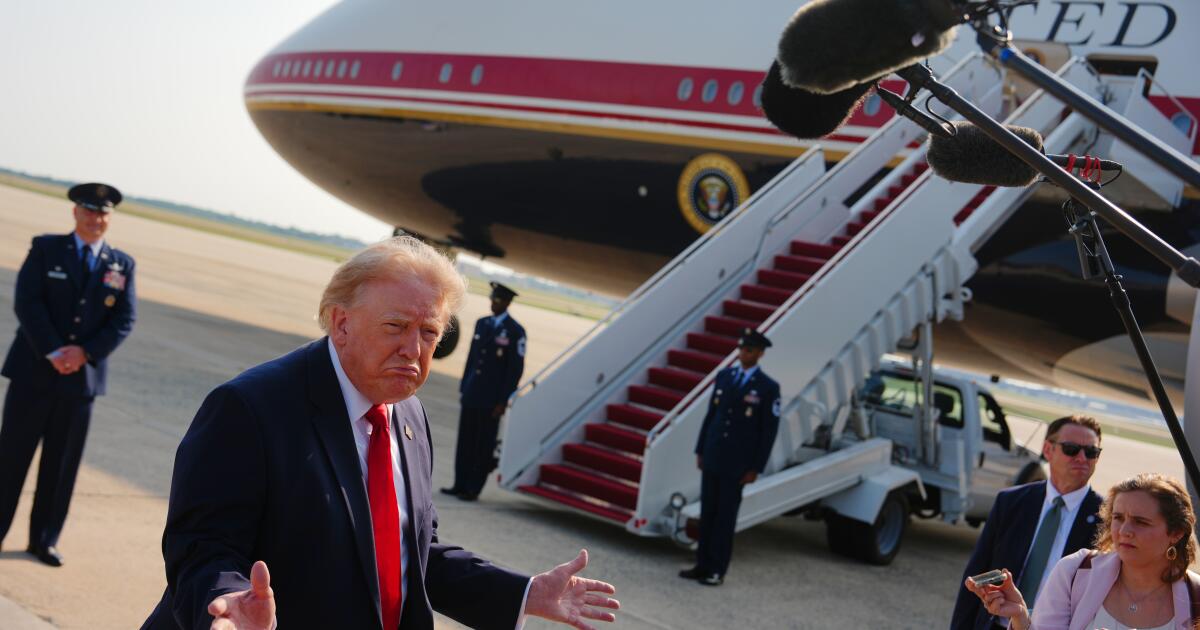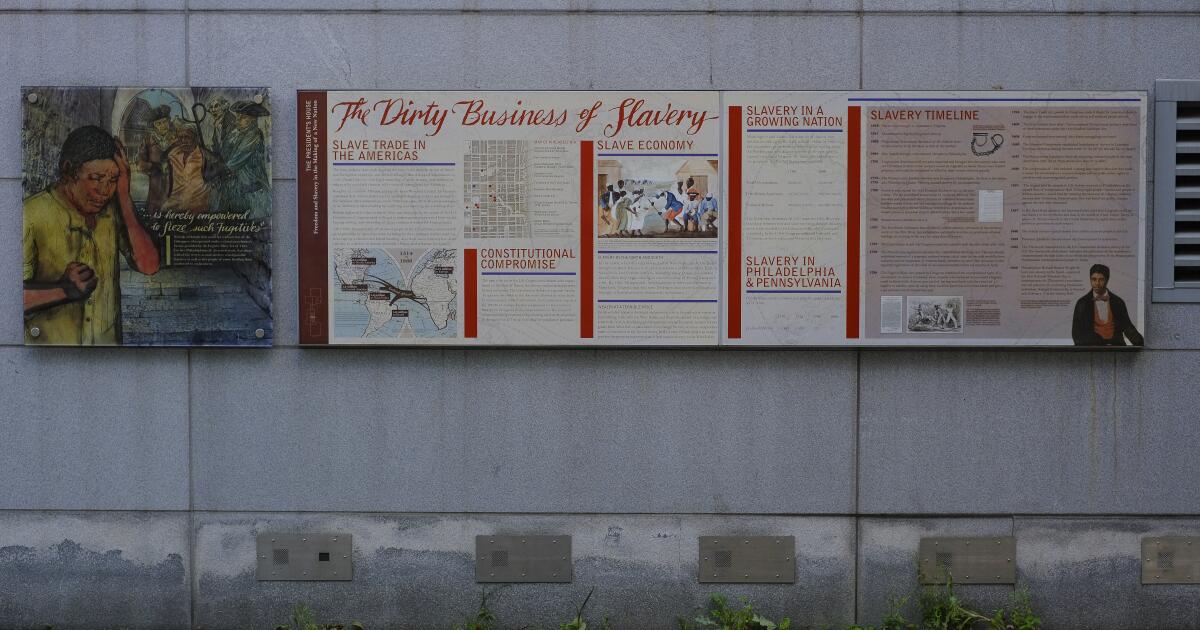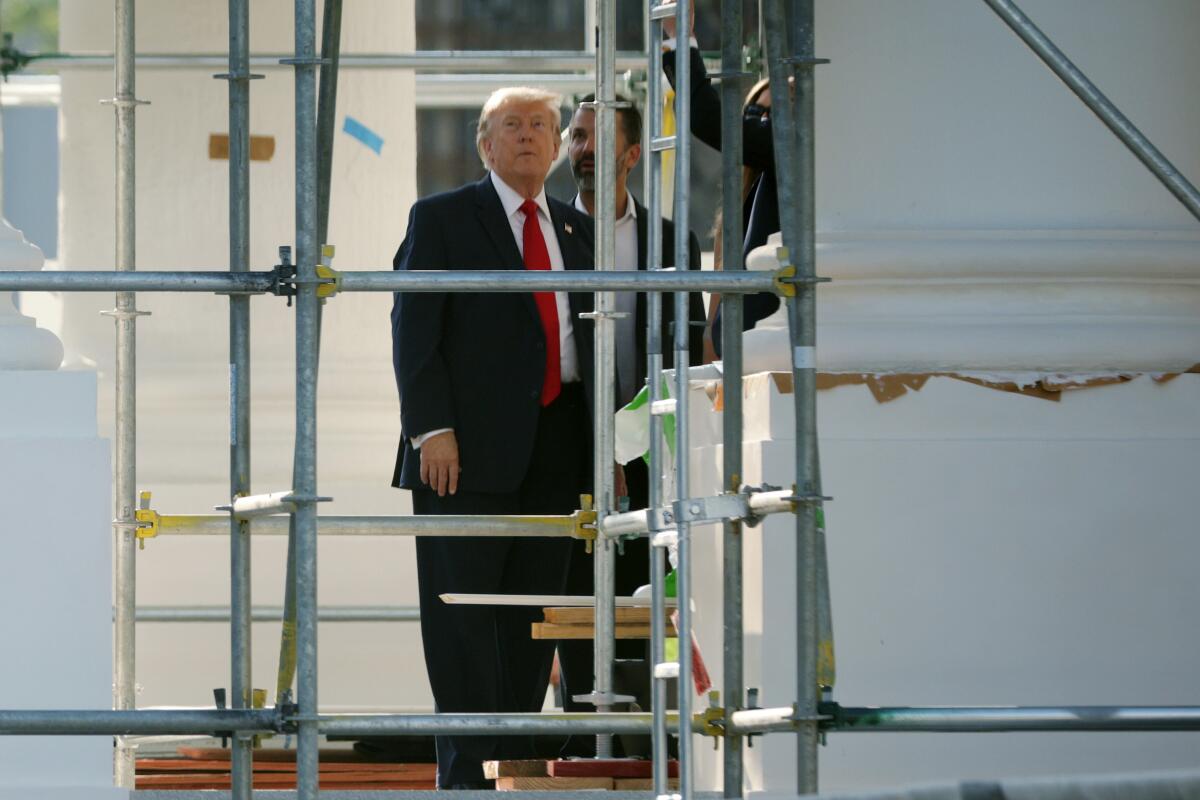
US President Donald Trump has called Cuba ‘a failed nation’, as his administration expands its pressure campaign. Cuba has announced it’s getting rid of its fixed prices at the petrol pump as fuel shortages and power cuts worsen.
WASHINGTON — FBI Director Kash Patel angrily lashed out at a Democratic lawmaker at a budget hearing Tuesday, calling allegations that he drinks excessively on the job and has been unreachable at times to his staff “unequivocally, categorically false.”
“I will not be tarnished by baseless allegations,” Patel told Sen. Chris Van Hollen when the Maryland Democrat confronted him about a recent article in the Atlantic magazine that painted an unflattering portrait of his leadership of the nation’s premier federal law enforcement agency. Patel has sued over the story. The Atlantic has said it stands by its reporting and will vigorously defend against the “meritless lawsuit.”
Patel shouted over Van Hollen and sought to turn the tables by accusing him of “slinging margaritas” in El Salvador, a reference to a visit the Democrat paid last year to Kilmar Abrego Garcia while he was jailed there following his arrest in Maryland.
The testy exchange occurred at an annual Senate committee budget hearing featuring Patel and other senior law enforcement leaders.
WASHINGTON — The first baby boomer on the Supreme Court hit a milestone on Thursday, becoming the second-longest-serving justice in history at a time when his influence has never seemed greater.
Once an outlier on the nation’s highest court, Justice Clarence Thomas has become a towering figure in the conservative legal movement over the last decade as he helped secure landmark rulings on abortion, voting and Second Amendment rights.
The only justice with a longer tenure is liberal William O. Douglas. Thomas would overtake Douglas in 2028 if he remains on the court — and there’s no sign he plans to retire anytime soon.
“I think he’s more energized and excited now than when I first met him,” said John Yoo, a law professor at the University of California, Berkeley, who served in Republican President George W. Bush’s administration after his time as a Thomas clerk three decades ago.
Thomas was confirmed in 1991 after contentious hearings that included sexual harassment allegations. More recently, his acceptance of luxury trips has raised a storm of ethics questions. He’s nevertheless gone from near-silence at oral arguments to asking the first questions and penning a landmark ruling expanding Second Amendment rights.
Following the appointment of three conservative justices by Republican President Trump, Thomas is now the most senior member of a supermajority that’s also overturned abortion as a constitutional right, ended affirmative action in college admissions and sharply limited the Voting Rights Act.
“The court has radically moved in his direction over the course of his time on the court,” said Stanford University law professor Pamela Karlan. Thomas’ seniority means he can decide who writes an opinion if he’s part of a majority that doesn’t include Chief Justice John Roberts, a factor that can nudge other votes behind closed doors, Karlan said.
Off the bench, Thomas’ sphere of influence also includes his large, close-knit network of former clerks, who have served in the Trump administration and are increasingly filling out the ranks of federal judges.
“That is an important legacy that he will leave,” said Sarah Konsky, director of the Supreme Court and Appellate Clinic at the University of Chicago Law School. “Even as justices’ own time on the court winds down, significant influence lives on through their clerks.”
That’s not to say Thomas’ time on the court is up. In a recent speech, Thomas tied the nation’s highest ideals to a conservative vision of limited government — and launched a broadside on progressivism seen by critics as unfair and inappropriate. In the room at the University of Texas, though, it earned a standing ovation.
Thomas, who became the second Black member of the court, now has a tenure that tops 34 years, putting him ahead of Justice Stephen J. Field, who was appointed by Lincoln before the end of the Civil War and served as the only 10th justice until 1897.
For Thomas, 77, it’s a long way from the hearings at which his nomination by Republican President George H.W. Bush was nearly derailed by allegations that he had sexually harassed Anita Hill, a charge he forcefully denied.
Thomas has more recently come under scrutiny for lavish, undisclosed trips from a GOP megadonor and the conservative political activism of his wife, who backed false claims that the 2020 election was stolen from Trump. The justice has said he wasn’t required to disclose the trips he took with friends and ignored calls to recuse himself from cases related to the election.
On the court, though, recent years have also brought perhaps the most significant work of his career, especially a 2022 opinion he wrote that found people generally have the right to carry a gun in public. The justice did not respond to a request for comment on his tenure.
His own jurisprudence has changed little over the years, said Scott Gerber, author of “First Principles: The Jurisprudence of Clarence Thomas.” Even as the majority moves his way, he’s continued to write dissents that get noticed.
“He’s incredibly consistent,” Gerber said. Once known for solo dissents, “now he writes majority opinions.”
Earnings Call Insights: Live Nation Entertainment (LYV) Q1 2026
Management View
Michael Rapino said demand and cancellations were tracking normally, stating, “We always have a few cancellations” and “We tend to have 1% to 2% cancellation rate historically” (President, CEO & Director Michael Rapino).
Seeking Alpha’s Disclaimer:This article was automatically generated by an AI tool based on content available on the Seeking Alpha website, and has not been curated or reviewed by humans. Due to inherent limitations in using AI-based tools, the accuracy, completeness, or timeliness of such articles cannot be guaranteed. This article is intended for informational purposes only. Seeking Alpha does not take account of your objectives or your financial situation and does not offer any personalized investment advice. Seeking Alpha is not a licensed securities dealer, broker or US investment adviser or investment bank.
WASHINGTON — King Charles III will address a joint session of Congress on Tuesday, becoming the second British monarch in history to do so as the United States commemorates the 250th anniversary of its independence from England.
The king’s address, the centerpiece of a four-day state visit, comes at a moment of unusual strain between Washington and London. President Trump has repeatedly clashed with British Prime Minister Keir Starmer over the United States’ war with Iran, derided the British government’s refusal to commit forces to the conflict and even mocked the Royal Navy’s battleships as “toys.”
At a welcome ceremony for the king and Queen Camilla at the White House, Trump struck a more appreciative tone, describing the relationship between the two nations as a centuries-old “cherished bond.”
“Long before Americans had a nation or a Constitution, we first had a culture, a character and a creed,” the president said. “Before we ever proclaimed our independence, Americans carried within us the rarest of gifts — moral courage — and it came from a small but mighty kingdom from across the sea.”
Trump said that some may think it is “ironic” to honor the British king during celebrations of America’s independence, but argued the tribute “could not be more appropriate.”
“Americans have had no closer friends than the British,” Trump said. “We share the same root. We speak the same language. We hold the same values. And together, our warriors have defended the same extraordinary civilization under twin banners of red, white and blue.”
Trump said he will not be attending the king’s remarks at the Capitol due to security protocols, but said he planned to watch from afar. He did not elaborate on any security concerns, but the decision comes in the aftermath of a shooting at the White House correspondents’ dinner in which authorities said Trump was a likely target.
Following the welcome ceremony, the king joined Trump in the Oval Office for a closed-door bilateral meeting.
The president appeared to be enjoying the visit. He told the crowd at the White House that his late mother “loved” the royal family and watched their events on television. The president even joked his mother had a “crush” on the king when he was younger.
“I wonder what’s she’s thinking right now,” he said.
Earlier in the day, Trump posted on Truth Social that he planned to raise with the king and queen a media report suggesting his family roots may be tied to the royal family, a prospect he appeared to find amusing.
“I’ve always wanted to live in Buckingham Palace!!!” the president said in the post.
The king is scheduled to address Congress at 3 p.m. EDT. He is expected to delivered prepared remarks about the two nations’ shared history and their enduring diplomatic ties, while offering measured acknowledgment to the tensions defining the current moment.
The only precedent for an address by a British monarch was 35 years ago, when Queen Elizabeth II addressed a joint session of Congress in 1991. The timing of her address came after the end of the Gulf War.
How the king will address the current geopolitical tensions, including the Iran war and Trump’s threats to leave the North Atlantic Treaty Organization, remains to be seen.
But hanging over the king’s visit is the shadow of the Jeffrey Epstein scandal.
Rep. Ro Khanna (D-Fremont), one of the most vocal lawmakers pushing for the release of the Epstein files, last month requested that the king privately meet with some of the women who were sexually abused by the late financier.
The request was made in a letter to Buckingham Palace. In it, Khanna noted that the Epstein scandal extended to Britain, where the king’s brother, Andrew Mountbatten-Windsor, was tied to the alleged misconduct.
But the king declined to meet directly with the survivors, Khanna said in an MS NOW interview on Tuesday morning. The California Democrat said he expects the king to address the issue during his remarks to Congress.
A former executive at Live Nation, the world’s largest live entertainment company, is suing the company, alleging that he was wrongfully terminated after he raised concerns about alleged financial misconduct and improper accounting practices.
Nicholas Rumanes alleges he was “fraudulently induced” in 2022 to leave a lucrative position as head of strategic development at a real estate investment trust to create a new role as executive vice president of development and business practice at Beverly Hills-based Live Nation.
In his new position, Rumanes said, he raised “serious and legitimate alarm” over the the company’s business practices.
As a result, he says, he was “unlawfully terminated,” according to the lawsuit filed Thursday in Los Angeles County Superior Court.
“Rumanes was, simply put, promised one job and forced to accept another. And then he was cut loose for insisting on doing that lesser job with integrity and honesty,” according to the lawsuit.
He is seeking $35 million in damages.
Representatives for Live Nation were not immediately available for comment.
Rumanes’ lawsuit describes a “culture of deception” at Live Nation, saying its “basic business model was to misstate and exaggerate financial figures in efforts to solicit and secure business.”
Such practices “spanned a wide spectrum of projects in what appeared to be a company-wide pattern of financial misrepresentation and misleading disclosures,” the lawsuit states.
Rumanes says he received materials and documents that showed that the company inflated projected revenues across multiple venue development projects.
Additionally, Rumanes contends that the company violated a federal law that requires independent financial auditing and transparency and instead ran Live Nation “through a centralized, opaque structure” that enables it to “bypass oversight and internal checks and balances.”
In 2010, as a condition of the Live Nation-Ticketmaster merger, the newly formed company agreed to a consent decree with the government that prohibited the firm from threatening venues to use Ticketmaster. In 2019 the Justice Department found that the company had repeatedly breached the agreement, and it extended the decree.
Rumanes contends that he brought his concerns to the attention of the company’s management, but his warnings were “repeatedly ignored.”
Several Iranian officials have stressed that their country is united, rejecting United States President Donald Trump’s claims of a rift in the leadership in Tehran.
Iran’s President Masoud Pezeshkian, Foreign Minister Abbas Araghchi and Parliament Speaker Mohammad Bagher Ghalibaf all issued statements rejecting the United States president’s assertion.
Recommended Stories
list of 3 itemsend of list
Pezeshkian and Ghalibaf joined the Supreme National Security Council in posting the same message on X.
“In Iran, there are no radicals or moderates,” it said.
“We are all ‘Iranian’ and ‘revolutionary’, and with the iron unity of the nation and government, with complete obedience to the Supreme Leader of the Revolution, we will make the aggressor criminal regret his actions.”
Mohammad Reza Aref, Iran’s first vice president, also shared the statement, adding another note in English.
“Iran is not a land of rifts, but a stronghold of unity,” Aref said. “Our political diversity is our democracy, yet in times of peril, we are a ‘Single Hand’ under one flag. To protect our soil and dignity, we transcend all labels. We are one soul, one nation.”
Iranian Supreme Leader Mojtaba Khamenei has not made a public appearance since replacing his father, Ali Khamenei, who was killed by US-Israeli strikes on February 28.
US officials have said that the younger Khamenei was wounded and “disfigured” in the strike that killed his father.
The New York Times reported on Thursday, citing unidentified Iranian officials, that Khamenei is gravely wounded but remains “mentally sharp”.
Trump and his aides have been reiterating daily over the past week that there are major disagreements among Iranian leaders.
The US president claimed that Iranians are “having a very hard time figuring out who their leader is”, alleging that there is “crazy” infighting between “moderates” and “hardliners” in Tehran.
Citing the supposed rift by Trump could serve to justify the extension of the ceasefire while also putting the blame on Iran for the stalled diplomacy.
Tehran, however, has stressed over the past days that the talks – previously scheduled to take place in Pakistan – are not happening due to the US blockade on its country’s ports.
On Thursday, Araghchi dismissed allegations that the Iranian military is at odds with the political leadership.
“The failure of Israel’s terrorist killings is reflected in how Iran’s state institutions continue to act with unity, purpose, and discipline,” he wrote on X.
“The battlefield and diplomacy are fully coordinated fronts in the same war. Iranians are all united, more than ever before.”
diplomatic impasse with the US, with Trump suggesting that he is comfortable with the status quo of blockading Iran’s ports to inflict economic pain on the country without resuming the war or rushing towards a conclusive deal.
“Iran’s Navy is lying at the bottom of the Sea, their Air Force is demolished, their Anti-Aircraft and Radar Weaponry is gone, their leaders are no longer with us, the Blockade is airtight and strong and, from there, it only gets worse — Time is not on their side!” Trump said on social media on Thursday.
“A Deal will only be made when it’s appropriate and good for the United States of America, our Allies and, in fact, the rest of the World.”
But the truce under the status quo remains tenuous. Air defences were activated over Tehran earlier on Thursday, but there has been no official confirmation of an attack against the country.
Earlier on Thursday, Trump said the US military will “shoot and kill” Iranian laying mines in the Strait of Hormuz, which could spark a response
And oil prices are once again rising due to the uncertainty and the double blockade in the Gulf – Iran closing down Hormuz and the US naval siege on Iranian ports.
Israel also appears ready to rejoin the war. Defence Minister Israel Katz said on Thursday his country is awaiting the green light from Trump to return Iran to the “age of darkness”.
“Israel is prepared to renew the war against Iran. The [Israeli military] is ready in defence and offence, and the targets are marked,” Katz said, according to the Times of Israel newspaper.
Bruno Mars tickets running for $2,000 and ones for SZA costing $600 caught California lawmakers’ attention. They’re advancing two bills targeting the resale market.
Earlier this year, tickets to see SZA perform at the Crypto Arena in Los Angeles were selling for $600 the day before they officially went on sale at $35 a piece.
In San Francisco, tickets to see Sam Smith at the newly renovated Castro Theater went on sale for $120, only to be quickly snatched up by scalpers and resold for upwards of $600.
Those are some of the stories that California lawmakers are citing as they advance two plans to change the ticketing landscape. One caps the extent to which resellers can mark up the original ticket price while the other prohibits resellers from selling tickets they don’t yet own.
Democratic Assemblymembers Issac Bryan of Culver City and Matt Haney of San Francisco are each carrying bills that they say would protect consumers from fraudulent and deceptive ticket sales.
Both measures are backed by the ticket market’s dominant seller, Beverly Hills-based Live Nation, which owns Ticketmaster. Its support has some worried that the bills will help the company crush its competitors and jack up prices.
A federal jury in New York this week found that the company illegally acted as a monopoly in a victory for, among others, California Attorney General Rob Bonta, who with colleagues in other states sued the company two years ago and kept going after federal prosecutors settled. Live Nation is now awaiting penalties.
Despite these headwinds, the ticket bills are sailing through the Legislature.
Supporters say the legislation has nothing to do with the antitrust case against Live Nation and helps consumers. Opponents disagree.
“The state Legislature should really be standing up for consumers instead of advancing bills that are there to help a monopoly that has been caught on record calling its fans stupid and has bragged about robbing them blind,” said Jose Barrera, national vice president for the far west region at the League of United Latin American Citizens, a civil rights advocacy group.
Ticketmaster’s competitors in the online resale market are lobbying against the measures, a sign that they view the proposals as a threat to their business.
Jack Sterne, StubHub’s head of policy communications, wrote to CalMatters, stating, “Passing laws that hand the Ticketmaster monopoly more power and don’t actually make tickets more affordable is the last thing California’s leaders should do.”
But Stephen Parker, executive director of the National Independent Venue Association, which is co-sponsoring the bills, argues that they will regulate the marketplace to better protect fans by limiting price gouging and encouraging the face value — or below face value — exchange of tickets.
“Ultimately, that is what these bills will do, in addition to making sure that the tickets are actually real,” he said. “That is a good thing for California consumers. It’s a good thing for artists and it’s a good thing for these small businesses and nonprofits that make up the independent stages across the state.”
A Live Nation spokesperson said in a statement to CalMatters, “The resale lobby constantly tries to change the subject by pointing fingers at Ticketmaster, even though it has less than 25% of the resale market. This has nothing to do with anyone’s monopoly, but rather is about protecting fans from scalpers and the resale sites that cater to them.”
The company has spent roughly $165,000 on lobbying efforts this legislative session, including to support Bryan’s bill.
‘Unlikely allies’
Bryan’s Assembly Bill 1349 would ban the sale of speculative tickets — or tickets that are not in the possession or ownership of the people who list them online. In an April hearing, Bryan said the bill protects consumers from predatory mark ups.
“This bill is so important that, after our introduction, it brought unlikely allies together,” Bryan said, according to the CalMatters Digital Democracy database. “In fact, this bill brought the Giants and the Dodgers together, brought the National Independent Venue Association and Live Nation together. It brought Kendrick Lamar and Kid Rock together. It brought Isaac Bryan and Donald Trump together.”
Several secondary ticket sellers are fighting the measure, including StubHub, SeatGeek and Vivid Seats. The three companies have spent roughly $1.1 million dollars on lobbying efforts this legislative session, which included opposition to Bryan’s bill.
People watch fireworks during Bad Bunny’s halftime show from a parking garage outside Super Bowl LX at Levi’s Stadium in Santa Clara on Feb. 8, 2026. Photo by Jungho Kim for CalMatters
Opponents including Robert Herrell, executive director for the Consumer Federation of California, argue that the bill strengthens Live Nation Ticketmaster’s grip on the ticketing and live entertainment industry. According to them, the measure would give Live Nation complete control over the ticket even after it has been purchased — meaning, for example, that consumers could lose the ability to sell it or give it away.
“There’s no consumer choice in the matter,” said Herrell. “They can keep people out of shows if they want to. There have been situations where, if you bought a ticket on the secondary market, you’ve been denied entry into a show.” Proponents say Herrell and other opponents are mistaken. They say they are not trying to prevent transferability but rather, they want to protect fans from speculative costs.
“We want those rooms full,” said Ron Gubitz, executive director of Music Artists Coalition, which is co-sponsoring both bills. “So you have to be able to transfer a ticket. We just want it to be in a way that’s safe, trustworthy and not creating this run on the market that exists now.”
Gubitz pointed to a recent Bruno Mars concert, where tickets were on StubHub for $400 to $2,000 before they were on sale through Ticketmaster.
“That’s crazy,” he said. “That’s a speculative ticket that Bryan’s bill is trying to stop. That shouldn’t happen. It’s not fair to anybody, except for the secondary (market). It seems great for them.”
Price caps in a free market
Haney’s Assembly Bill 1720, also known as the California Fans First Act, would put a 10% cap on resale event ticket markups, inclusive of the ticket fees. In other words, a reseller could not charge more than 10% higher than the original ticket price.
In an interview with CalMatters, Haney said artists, independent venues and downtowns are currently being “screwed over and exploited” by scalpers and brokers.
“We can’t allow the status quo to continue if we want to ensure Californians have access to affordable tickets to see their favorite artists or if we want independent venues or the broader landscape of musicians and artists to thrive in our state,” he said.
Haney rejected the idea that his bill would strengthen the Live Nation Ticketmaster monopoly, saying that the company is one of the biggest operators and profiteers of the secondary ticket market and would therefore be subject to the same restrictions as any other platform or broker.
“I don’t think it’s a free market to allow folks to come in and buy up all these tickets and then create scarcity and then you’re now required to buy your ticket at a much higher price from someone who had nothing to do with the event,” he said. “This is not something we would ever allow for airplane tickets or even dinner reservations.”
The bill has been criticized by opponents like Diana Moss, vice president and director of competition policy at Progressive Policy Institute, who said price caps notoriously distort the market, describing them as “anti-consumer, anti-competitive and anti-artist.”
“If you shut down the resale market with price caps then guess what? Ticket buyers have no place to go but right back to Ticketmaster,” said Moss. “If (Live Nation) succeed(s) in decimating the resale market, then they steer millions and millions of fans back to their own ticketing platform where they charge monopoly ticket fees and where fans are hostage to their glitchy online platform and all of their data, privacy and security concerns that we always hear about in the news.”
Those concerns didn’t stop the bill from passing out of the Assembly Committee on Arts, Entertainment, Sports and Tourism last week with a 6-1 vote. The bill also passed out of the Assembly Committee on Privacy & Consumer Protection on Thursday with a 9-4 vote.
Mihalovich is a California Local News fellow for CalMatters.
Americans could be forgiven if they’re unaware that President Trump recently performed one of his most essential tasks and sent his annual budget request to Congress, though months late and stunningly incomplete.
After all, so much else has been dominating the news lately: the Mideast war that Trump promised not to start. Price rises he’d vowed to end. His repeatedinsults of Pope Leo XIV. His portraying himself as Jesus Christ, then lying about having done so. An incompetent attorney general to fire. And the president’s actual priorities — plans for a $400-million White House ballroomand a massive “Triumphal Arch” nearby!
It’s a lot.
Once again, as in Trump’s first term, the public and press are inattentive to the nation’s fiscal health relative to past years. But that reflects the president’s own disengagement with reconciling spending and revenue — this from a president many Americans voted for based on his purported prowess as a businessman. For decades back to Ronald Reagan’s time, so-called deficit wars in Washington were a big story. Now, even Republicans in Congress complain of Trump’s absence from the fiscal fray as they struggle to belatedly finish this year’s budget work that was due last fall, and to end a weeks-old partial government shutdown, before turning to the budget for the fiscal year starting Oct. 1.
Yet it’s worth paying attention to U.S. budgets even if Trump won’t, for the sake of our children and grandchildren who’ll inherit the bills. In one document, a federal budget reflects the nation’s priorities. And these days, in the perennial guns-versus-butter debate, Trump has made his feelings all too plain.
“We’re fighting wars,” he told a group at the White House on April Fools’ Day. “We can’t take care of day care … Medicaid, Medicare, all these individual things.”
Forget that Trump swore to end wars. Or that last year, long before he went to war against Iran, he cut $1 trillion over 10 years from Medicaid and other healthcare programs in his misnamed “One Big Beautiful Bill.”
Yes, budgets can be boring, especially to a president with a famously short attention span. Trump and many of us Americans are distracted constantly by all the shiny objects he throws at the national consciousness by his words, acts and social media postings at all hours.
Yet the budgetary trend is clear to anyone bothering to look: As president, Trump is once again exacerbating the nation’s unsustainable course of piling up debt. According to the nonpartisan Congressional Budget Office, among other credible sources, debt is now approaching the highest level in U.S. history, which was reached during World War II. It already surpasses the size of the entire economy and threatens higher borrowing costs and reduced investments.
For all the achievements Trump likes to claim — ending eight wars in a year! — here’s one that’s real: He is on a path to break his own record for the most debt in a single presidential term, $8.4 trillion in Trump 1.0, which was nearly double the increase under President Biden.
Need further proof of Trump’s brazen mendacity? Of course you don’t, but here it is: In the face of the well-documented budget record, Trump declared both this year and last year to a joint session of Congress, on national television, that he would balance the federal budget —“overnight,” he said in February.
The inequitable tax cuts and big spending increases for the military and immigration crackdowns that Trump and the Republican-controlled Congress enacted last year are significantly greater than in his first term, and are driving up the debt despite Republicans’ deep healthcare cuts. Just months after Trump took office, the ratings firm Moody’s downgraded the nation’s sterling credit rating for the first time in more than a century.
And now, in his new budget request, Trump seeks to inflate military spending from under $1 trillion when he regained office to $1.5 trillion, for the biggest year-to-year increase in military budgets since World War II.
This fiscal irresponsibility is happening at the worst possible time. For the last quarter of the 20th century, presidents and Congresses of both parties annually debated how to reduce deficits and several times reached consequential multi-year deals, culminating during the second Clinton term in four straight years of surpluses. (Those surpluses ended — wait for it — with Republicans’ tax cuts and war spending during the George W. Bush administration.)
Politicians back then were moved not just by the deficits of their time — deficits that, as a share of the economy, were less than half what they are now. They also were responding to experts’ warnings of a demographic tsunami by the 2020s: With the aging of the huge baby-boomer population, spending for Social Security, Medicare and Medicaid would greatly increase even as the workforce whose payroll taxes support those programs shrank. Today the number of people 65 or older is almost three times what it was 50 years ago, and rising.
This reckoning is upon us, though you wouldn’t know it as Trump keeps calling for cutting revenue and spending more for lawless wars, immigration raids and monuments to himself. Barring bipartisan action, in 2033 Social Security’s retirement fund and Medicare’s hospital fund will no longer be able to cover beneficiaries’ full claims, according to their trustees’ annual report, necessitating reduced benefits or shifts of money from other worthy programs.
Trump did put Vice President JD Vance in charge of a “war on fraud.” But that holds about as much promise as Elon Musk’s fiscal fiasco — remember DOGE? — that cost money instead of cutting $2 trillion as promised.
Like other problems, Trump likely will leave the fiscal follies to his successor, who, should he or she win two terms, would preside as Social Security and Medicare become insolvent. I’ve yet to hear any of the early 2028 presidential aspirants — or Trump — address or be asked about that.
NEW YORK — Beverly Hills-based Live Nation and its Ticketmaster subsidiary faced a bruising courtroom loss Wednesday after a federal jury found that the company operated a monopoly over concert venues.
The verdict by a Manhattan, N.Y., jury came after a five-week trial and caps a closely watched case that could have far reaching effects across the music industry, potentially leading to the breakup of the companies.
Ticketmaster is the world’s largest ticket seller for live events, while Live Nation is a dominant force in the concert business.
The civil case began when the federal government alleged that Live Nation used its clout to engage in a variety of anticompetitive practices, including preventing venues from using multiple ticket sellers.
“It is time to hold them accountable,” Jeffrey Kessler, an attorney for the states, said in a closing argument. He called Live Nation a “monopolistic bully” that drove up prices for ticket buyers.
Jurors agreed. They found that Ticketmaster had overcharged consumers by $1.72 for each ticket. The judge will assess damages later.
Live Nation, which owns and operates hundreds of venues, countered that it did not violate U.S. antitrust laws, arguing that artists, sports teams and venues decide prices and ticketing practices.
“Success is not against the antitrust laws in the United States,” Live Nation attorney David Marriott said in his summation.
Live Nation said in a statement that the “jury’s verdict is not the last word on this matter,” noting the court had yet to rule on a motion it had filed to challenge its liability in the case.
The trial revealed some embarrassing internal communications, including emails from a Live Nation executive who called customers “so stupid” and said the company was “robbing them blind, baby.” The executive, Benjamin Baker, testified that the messages were “very immature and unacceptable.”
The original lawsuit, led by a cadre of interested parties including the federal government, 39 states and the District of Columbia, dates to 2024. It alleged that Live Nation and Ticketmaster monopolized various aspects of the live music industry, such as concert promotion, venue operations, artist management and ticketing services.
Live Nation manages more than 400 artists and controls more than 265 venues in North America, while Ticketmaster simultaneously controls around 80% of the primary ticket marketplace and also is increasing its involvement in the resale market, according to the lawsuit.
Last month, Live Nation secured an unexpected tentative settlement with the Department of Justice in which the company agreed to several structural changes to its business, including adjustments to ticketing deals with venues, capping service fees and paying a $280-million fine.
However, more than 30 states, including California, decided to proceed with the trial. California Atty. Gen. Rob Bonta praised these state-led efforts to protect consumers, even amid dwindling antitrust enforcement from the Trump administration, he said in a statement.
“This is a historic and resounding victory for artists, fans, and the venues that support them,” Bonta said. “We are incredibly proud of today’s outcome … this verdict shows just how far states can go to protect our residents from big corporations that are using their power to illegally raise prices and rip-off Americans.”
Though a verdict has been reached, remedies for how Live Nation will be held accountable for its actions are still being decided by the judge.
One possibility is that the companies could be split up, an outcome favored by critics.
National Independent Venue Assn. Executive Director Stephen Parker said Ticketmaster and Live Nation need to be separate for the industry to see change.
“Live Nation and Ticketmaster must be broken up now. Ticketmaster should not be permitted to participate in the ticket resale market. Live Nation should not be able to promote more than 50% of artists’ tours,” Parker said in a statement. “And the damages paid to the states should be remitted to the independent venues, promoters, festivals, and fans that have suffered under Live Nation’s monopolistic reign over the last 15 years.”
Serona Elton, attorney and interim vice dean at the University of Miami’s Frost School of Music, said that the separation of Live Nation and Ticket master seems to be “on the table,” but she said it’s too early to assess the verdict’s fallout on the music industry.
Elton said fans might notice small changes in pricing, but there are factors other than Live Nation that are contributing to high ticket prices, such as the secondary ticket market as well as supply and demand challenges.
The verdict, Elton said, “sends a message of support to music companies and professionals working in the live space who have felt like they have suffered financial consequences because of Live Nation’s behavior.”
The ruling is a small but necessary step toward achieving a balanced and competitive ticketing industry, said Hal Singer, a managing director of economic consulting firm Econ One, who specializes in antitrust and consumer protection issues.
Forcing a Ticketmaster sale probably is the only remedy that will bring real change, Singer said.
“We’re not out of the woods quite yet,” Singer said. “We’ve kind of tilted the probability.… It could change the competitive balance. But that requires that a meaningful remedy follows the liability. You need both.”
Fans and some artists have long groused about Ticketmaster, which was founded in 1976 and merged with Live Nation in 2010.
Dustin Brighton, director of government relations for the Coalition for Ticket Fairness, agreed that although the verdict is a landmark moment for fans, “it’s not the end of the road.”
“As the court considers remedies, the focus must be on restoring competition, increasing transparency, and ensuring fans have real choice,” Brighton said in a statement.
Times staff writer August Brown and the Associated Press contributed to this report.
Ticketmaster and its parent company Live Nation were found to be an illegal monopoly by a Manhattan, N.Y., jury Wednesday. File Photo by Andrew Gombert/EPA
April 15 (UPI) — A jury found Wednesday that Live Nation and its subsidiary Ticketmaster maintained an illegal monopoly in ticketing.
The case was heard in a Manhattan federal court over five weeks and saw testimony from dozens of witnesses. The jury began deliberations Friday.
The complaint was brought by the Department of Justice and several state attorneys general in 2024. It said that the company engaged in “anticompetitive conduct” and controlled all ticketing, concert booking, venues and promotions.
Because of this, fans paid higher fees, and artists had fewer options for touring and venues.
Live Nation denies acting as a monopoly.
California Attorney General Rob Bonta called the verdict “a historic and resounding victory for artists, fans and the venues that support them.”
“In the face of dwindling antitrust enforcement by the Trump Administration, this verdict shows just how far states can go to protect our residents from big corporations that are using their power to illegally raise prices and rip-off Americans,” Bonta said in a statement.
The Justice Department struck a settlement deal in March, but states decided to continue with the lawsuit instead.
The Justice Department settlement with Live Nation required Ticketmaster to divest up to 13 amphitheaters, reserve 50% of tickets for nonexclusive venues and cap ticketing service fees at 15%. A senior Justice Department official said it would lower prices by expanding choices.
“This settlement will resolve all remaining matters with the DOJ, without any admission of wrongdoing,” Live Nation said in a statement.
The verdict does not mean prices will drop soon, CNN reported.
Judge Arun Subramanian now must have a second trial to decide on remedies. The states requested a breakup of the company, or he could order a sale of the business.
“It will be an earthquake in the industry in terms of people’s perception in feeling validated,” Scott Grzenczyk, a lawyer with law firm Girard Sharp, told CNN.
“There’s a big difference between people complaining about Goliath and getting a jury verdict that Goliath was a monopolist and doing something wrong,” he said.
Jeffrey Kessler, an attorney for the states, pleaded with jurors during closing arguments to “apply your common sense,” NBC News reported.
“You’re New Yorkers,” he said. “I trust that you know when someone is blowing smoke or being straight with you.”
“It’s time to hold them accountable,” Kessler said.
Shakira performs onstage during Global Citizen Live at Central Park in New York City on September 27, 2025. Photo by Derek French/UPI | License Photo