Nasdaq

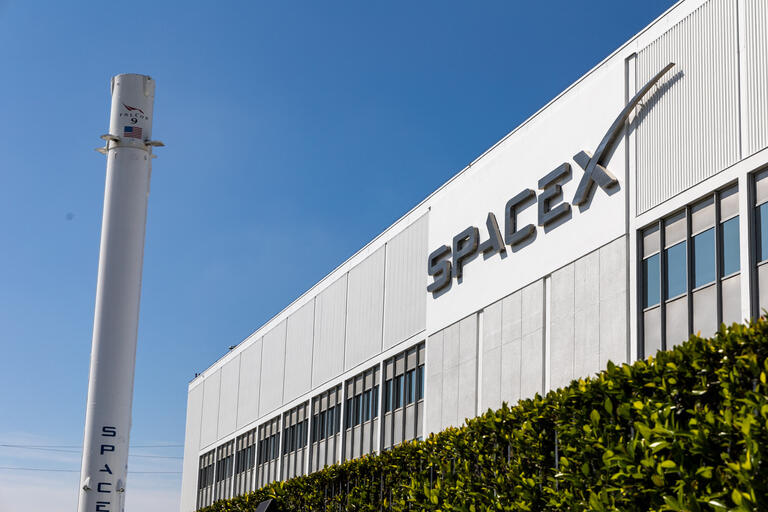
SpaceX IPO ready for launch as countdown begins for what could be the biggest ever listing

SpaceX founder Elon Musk announced plans on Wednesday for one of the biggest stock sales ever, by taking a space company public that is currently losing billions of dollars a year.


ADVERTISEMENT


ADVERTISEMENT

A filing shows that SpaceX lost $2.6 billion (€2.24bn) from operations last year on $18.7 billion in revenue, and the losses continued at the start of this year.

The prospectus did not put a dollar figure on the amount Musk hopes to raise, but various reports have estimated it at around $75bn (€64.5bn). An offering of that size would easily surpass the current title holder, Saudi Aramco, the oil giant that went public seven years ago and raised $26bn (€22.4bn).

SpaceX, formally known as Space Exploration Technologies Corp., said the money will help finance projects to put people on the Moon and Mars, as part of its goal to make humans an interplanetary species in the face of existential threats that could wipe out civilisation.

“We do not want humans to have the same fate as dinosaurs,” the filing states.

The prospectus reads, in part, like a Hollywood-style vision of the future, detailing in one section that part of Musk’s compensation will be granted only if he maintains “a permanent human colony on Mars with at least one million inhabitants.”

Short of that, the stock sale alone could make Musk — the founder and a major shareholder of SpaceX — the world’s first trillionaire. Forbes currently estimates his net worth at $839bn (€722bn), roughly equivalent to Poland’s annual GDP.

Losses mount despite strong revenue and Starlink growth

In addition to making reusable rockets to send astronauts into orbit, SpaceX has other businesses, some successful and others struggling, with plenty of question marks.

The document shows that Starlink, the world’s largest satellite communications company, is a major source of cash, generating $4.4bn (€3.8bn) in operating income last year. The business uses 10,000 satellites in low orbit to provide internet service to 10 million people in 150 countries and territories.

Among the struggling businesses are two Musk ventures recently acquired by SpaceX — his social media platform X, formerly Twitter, and his artificial intelligence firm xAI. Those purchases were criticised by some SpaceX investors as bailouts, as both are significant loss-makers.

The prospectus said its AI business lost $6.4bn (€5.5bn) from operations last year.

The original SpaceX business — building rockets and conducting launches — has benefited from major government contracts, raising questions that could come back to affect the company. Given Musk’s close ties to the Trump administration, government ethics lawyers and watchdogs have questioned whether he received preferential treatment in securing taxpayer-funded contracts, and whether that support will continue once Donald Trump leaves office.

SpaceX has won contracts worth $6bn (€5.2bn) from NASA, the Defence Department and other government agencies over the past five years, according to USAspending.gov. The company noted in its filing that one-fifth of its revenue last year came from the federal government.

Musk was the biggest donor to Trump’s presidential campaign and remains a major backer, despite a sometimes rocky relationship following his role in the government cost-cutting effort known as DOGE early last year.

Musk’s pay tied to ambitious targets as he retains firm control

Like many corporate CEOs, Musk’s compensation goes far beyond his annual salary, which was $54,080 (€46,538.5)in 2025 and has remained unchanged since 2019, according to the filing.

The prospectus says stock grants for him will be divided into 15 nearly equal tranches — 67 million shares each — and will vest only as the company reaches preset market capitalisation targets. In addition to the Mars colony milestone, SpaceX’s market value would need to reach $7.5 trillion (€6.45tr) for him to receive the full award.

He would receive additional stock awards if SpaceX succeeds in deploying giant data centres the size of football fields in space.

The document shows Musk will retain significant control over the business.

It states that he and certain other shareholders will receive shares in a special class of stock that gives them 10 votes per share. These shareholders will be able, among other things, to elect a majority of the company’s board of directors.

“This will limit or preclude your ability to influence corporate matters and the election of our directors,” SpaceX said in a warning to prospective investors.

SpaceX will be able to market the offering to investors — in what is known on Wall Street as a “roadshow” — 15 days after making its prospectus public. In this case, that would be 4 June.

Source link

Greek stocks vs. Nasdaq 100: Which market won in the last 5 years?

On the morning of 29 June 2015, Greeks woke up to find their banks closed.


ADVERTISEMENT


ADVERTISEMENT

ATMs were limited to €60 a day. The Athens Stock Exchange did not open for trading.

Capital controls, the kind associated with crisis-era emerging markets rather than members of a developed-economy currency union, had arrived.

Five years earlier, in April and June 2010, Standard & Poor’s and Moody’s had cut Greek sovereign debt to junk, the first eurozone member to lose investment grade.

By February 2016 the Athex Composite had bottomed at 516.7 points, a fall of more than 90% from its October 2007 high of 5,334.5. The FTSE Athex Banks index, the country’s lenders, had collapsed by 99.6%.

Greek equities had ceased to function as an asset class.

They had become an obituary.

A decade on, the obituary needs rewriting. The Athens Composite Index has returned roughly 146% over the past five years on a total-return basis.

The Nasdaq 100, riding the artificial intelligence supercycle that has dominated global equity narratives, returned 116% over the same window. The S&P 500 delivered only about half of Greece’s gains, while European large-cap equities – tracked by the Euro STOXX 50 – achieved barely one-third.

This is the story of how Europe’s cautionary tale became one of the best turnaround trades of the modern era.

Greek stocks beat Nasdaq 100 over 5 years: Here is why

To understand the rally, start with the lenders. National Bank of Greece, Eurobank, Piraeus Bank and Alpha Bank carried the heaviest load through the crisis decade.

By late 2016 their combined non-performing loan ratio peaked near 47%, the worst in the European Union. For perspective, most other troubled European banking systems peaked at between 5% and 8%.

Greek lenders were not facing a credit problem. They were carrying a depression on their balance sheets.

The clean-up unfolded in two stages.

The Hellenic Asset Protection Scheme, known as Hercules, allowed the banks to securitise and offload roughly €57bn of bad loans through state-backed guarantees on the senior tranches.

The second leg was the slower work of organic profitability: stabilising deposits, restructuring cost bases, restoring net interest margins.

From bailout to bull market: The Athens turnaround

Combined net profits of the four largest Greek banks reached close to €5bn in 2025.

Shareholder payouts followed suit. Piraeus, Eurobank and Alpha Bank distributed around 55% of earnings, while National Bank of Greece pushed its total payout ratio to 86%, supported by aggressive buybacks.

Konstantinos Hatzidakis, then Greece’s minister of economy and finance, captured the moment in the IMF’s Finance & Development journal in June 2025.

“We have cleaned up bank balance sheets and curbed nonperforming loans. This major milestone has enabled lenders to regain their essential role in financing the real economy,” he wrote.

Hatzidakis pointed to rising deposits, stronger capital buffers and what he described as “a tangible vote of confidence” in the system: the successful sale of the Hellenic Financial Stability Fund’s bank stakes to long-term foreign investors.

“The Greek economy,” he added, “has consistently outperformed expectations, often by a significant margin.”

The quiet engine behind Greece’s economic miracle

The fiscal side of the recovery has received far less attention, but it has been equally important.

In a paper published by the IMF last week, economists Andrew Okello, Stoyan Markov and Chenghong Wang described the transformation of Greece’s tax administration as “one of the quiet engines behind Greece’s broader economic recovery”.

They divided the reform process into three overlapping stages.

The first, between 2010 and 2012, focused on stabilising government revenues under Troika supervision. One of the earliest breakthroughs came via VAT digitalisation: only 65% of registered taxpayers filed VAT returns on time in 2010, compared with 96% by 2014.

The second stage, between 2013 and 2017, centred on institution-building. Greece consolidated 288 local tax offices into 119 and established the Independent Authority for Public Revenue under a landmark 2016 law.

By 2017, the authority had become operational with its own budget and independently selected management board. During that period, the tax-to-GDP ratio rose from 25.8% to 27.6%.

The third stage, from 2018 onwards, introduced real-time electronic invoicing, point-of-sale connectivity and digital analytics systems. VAT revenues climbed from 7.1% of GDP in 2010 to around 9.5% in 2025.

Overall, Greece’s tax-to-GDP ratio rose from 20.5% in 2009 to roughly 28% in 2025.

The result has been a dramatic fiscal turnaround.

Greece recorded a primary surplus close to 5% of GDP in both 2024 and 2025, making it one of only a handful of EU countries running a fiscal surplus at all.

Meanwhile, sovereign spreads over German bunds — which once exceeded 30 percentage points during the peak of the crisis — have returned to levels last seen before the 2008 financial crisis.

According to the IMF’s March 2026 Article IV statement, Greece’s public debt-to-GDP ratio fell by around 10 percentage points in 2025 alone, reaching roughly 145%, down from a peak near 210% in 2020.

The IMF estimates the cumulative decline at roughly 65 percentage points from the pandemic-era peak.

Credit-rating agencies eventually followed. Scope Ratings restored Greece to investment grade in August 2023, followed by DBRS later that year, S&P in October 2023 and Fitch in December 2023.

Moody’s — the final holdout among the major agencies — upgraded Greece to Baa3 in March 2025 and reaffirmed the rating in April 2026.

For the first time in more than a decade, every major ratings agency now classifies Greek sovereign debt as investment grade.

Cheap when nobody wanted to look

The third pillar of the rally was valuation.

Greek equities entered the recovery period trading at discounts that became increasingly difficult to justify once balance sheets stabilised.

Even after the surge, Eurobank Equities estimates Greek banks are trading at roughly 9 times expected 2026 earnings and 1.4 times tangible book value — still more than 20% below European peers.

UBS estimates the sector’s average 2027 price-to-earnings ratio – a key measure of how cheaply or expensively stocks trade relative to expected profits – at 8.4x, compared with 9.5x for European banks overall. For comparison, US equities currently trade at more than 20 times forward 12-month earnings.

Over the past five years, shares of National Bank of Greece and Piraeus Bank have each surged by roughly 500%. Yet despite the extraordinary rally, both lenders still trade at single-digit earnings multiples.

The most structural financial change arrived last.

On 24 November 2025, Euronext completed its acquisition of the Athens Stock Exchange after roughly 74% shareholder acceptance of the all-share offer.

Greek stocks now sits inside Europe’s largest equity listing venue, alongside more than 1,800 listed companies.

The mechanical consequence is a broader pool of natural buyers. International index funds tracking pan-European benchmarks now hold Greek names automatically.

MSCI – the world’s largest index provider – is reviewing Greece for a potential upgrade to Developed Market status, effective September 2026 if approved, which would shift the country out of the small bucket of emerging-market money still chasing it and into the much larger pool of developed-market index allocations.

JP Morgan has forecast a 16% return for the MSCI Greece index in 2026.

Inside the sector, the maturing is showing up in mergers and acquisitions. In May 2026 Eurobank agreed to acquire 80% of Eurolife FFH Life Insurance for around €813m, a deal expected to lift group fee income by roughly 12%.

National Bank of Greece signed a Memorandum of Understanding with Allianz on a 30% stake in Allianz Hellas, with the partnership projected to add 4% to earnings per share.

The Optima offer for Euroxx underscores the same dynamic.

Greek financials are no longer just rebuilding. They are consolidating.

A decade later, Greece looks different

None of this means Greece is insulated from external shocks.

The IMF warned in March 2026 that the outlook remains “clouded by the conflict in the Middle East”. Tourism still accounts for roughly 21% of Greek GDP, leaving the economy vulnerable to geopolitical disruptions.

The Recovery and Resilience Facility — which has underpinned much of the country’s recent investment boom — is also due to wind down in August 2026.

Inflation remains elevated, running at 3.1% year-on-year in February 2026.

Hatzidakis himself acknowledged the remaining weaknesses in his June 2025 essay: investment still trails the EU average, productivity remains below European peers, and female labour-force participation is still among the lowest in the bloc.

Piraeus chief executive Christos Megalou told analysts during the bank’s first-quarter earnings call that a prolonged period of elevated energy prices could slow Greek GDP growth to between 1.5% and 1.6%, albeit still above the EU average.

Still, Greece stands as one of the clearest examples in modern financial history of how a country pushed to the edge of sovereign default managed to engineer a broad-based recovery through fiscal repair, banking-sector restructuring and institutional reform.

Ten years ago, Greek debt was rated junk, banks were shut and the stock market had lost more than 90% of its value.

Today, the sovereign carries investment-grade ratings across the board and the Athens Composite Index has achieved something few thought possible five years ago: it has outperformed the Nasdaq 100.

Whether the next five years will deliver the same kind of returns remains uncertain.

But for the first time in a generation, Greece is no longer a symbol of financial collapse. It is increasingly becoming a case study in recovery.

Source link

S&P 500 and Nasdaq hit new all-time highs despite Iran war effects

The benchmark US equity indices surged to new territory entering price discovery, reflecting a market that appears to be looking past immediate geopolitical risks in favour of potential de-escalation and corporate strength.


ADVERTISEMENT


ADVERTISEMENT

On Wednesday the S&P 500 closed 0.8% higher at 7,022 points, up on the day and surpassing its previous peak from January of this year.

The S&P 500 is now 11% higher since it bottomed on 30 March and after it first dropped 9% during last month.

The Nasdaq Composite also posted a record, rising 1.6% to over 24,000 points while the Dow Jones Industrial Average edged 0.15% lower and continues significantly below its all-time high.

The advance comes despite persistent headwinds.

Shipping through the Strait of Hormuz, a critical chokepoint for roughly one-fifth of the global oil supply, has been severely disrupted since late February following Iranian actions and a subsequent US naval blockade.

Traffic has dropped sharply, with Iran declaring the strait closed to vessels linked to the US, Israel and their allies.

The US Central Command also confirmed its blockade of Iranian ports took full effect earlier this week, stating that “ten vessels have now been turned around and ZERO ships have broken through since the start of the US blockade on Monday”.

Oil prices, while easing in the last two weeks, remain elevated.

At the time of writing, Brent crude stands at around $96.5 per barrel and WTI at $92.5, still well above pre-war levels and contributing to inflationary concerns.

The International Monetary Fund has responded by lowering its global growth outlook. In its latest World Economic Outlook, released on Monday, the IMF cut the 2026 forecast to 3.1% from 3.3% previously projected, citing energy price spikes and supply disruptions.

Headline inflation is now seen at 4.4% for the year, under a reference scenario assuming a short-lived conflict, with risks of even weaker growth and higher prices if tensions escalate and prolong.

The modest decline in energy prices followed reports that the two-week ceasefire is holding and that fresh talks between the US and Iran could resume soon.

US President Donald Trump also indicated that negotiations for lasting peace might restart by the end of the week.

Investors appear to be pricing in an eventual reopening of the Strait of Hormuz and a contained negative impact of the war in general.

Speaking to Euronews, Alan McIntosh, chief investment officer of Quilter Cheviot Europe, explained that “although the first round of talks led to no agreement, a likely extension of the ceasefire gives optimism that an early resolution can be reached”.

“Assuming a fairly swift end to hostilities and a resumption of oil shipments, the economic damage to global inflation and growth should be fairly limited,” he added.

Why US indices defy the odds

Analysts point to several factors behind the market resilience.

Hopes of a swift end to hostilities have encouraged risk-taking, while corporate America is showing strength. Bank executives highlighted a strong US consumer and a healthy pipeline for deals and initial public offerings.

Earnings expectations for the first quarter have been revised higher, with S&P 500 companies now forecast to report combined profits of over $605 billion (€513bn), up from earlier estimates.

Tech shares, particularly those linked to AI, provided additional support. The Nasdaq’s outsized gain reflected renewed enthusiasm for growth-oriented stocks even as broader economic projections softened.

McIntosh told Euronews that “the capital spending boost relating to AI shows no sign of slowing down so this continues to support US economic growth. We have just started the US quarterly results season and so far there is limited evidence of a negative impact from the current Middle East conflict”.

The indices also include defence companies that have all performed well with the war in the backdrop pushing governments, in particular the US, to increase military budgets.

History also offers context for the current rebound. In past US-involved wars, equity markets have frequently experienced short-term volatility followed by recovery and gains.

During the 2003 Iraq War, for example, the S&P 500 rose over 25% in the first full year after the invasion began.

The Gulf War of 1990-1991 saw an initial 11% decline in the index, but a strong relief rally followed the swift coalition victory, delivering positive returns in the subsequent year.

Similar patterns emerged in the Korean War and Vietnam War eras, where stocks posted solid long-term advances despite prolonged uncertainty.

Data compiled by the Royal Bank of Canada and other sources indicate that, across multiple conflicts, equities rose in the first year of hostilities around 60% of the time.

Markets have tended to focus on eventual outcomes rather than immediate shocks, rewarding resolution and economic adaptability. The latest record for the S&P 500 and the Nasdaq underscore this enduring pattern.

While risks remain if the Iran conflict worsens, investors are currently betting that diplomacy and corporate fundamentals will prevail.

Source link