Modi’s India takes on Trump more openly, from ‘terrorism’ to tariffs | Narendra Modi News
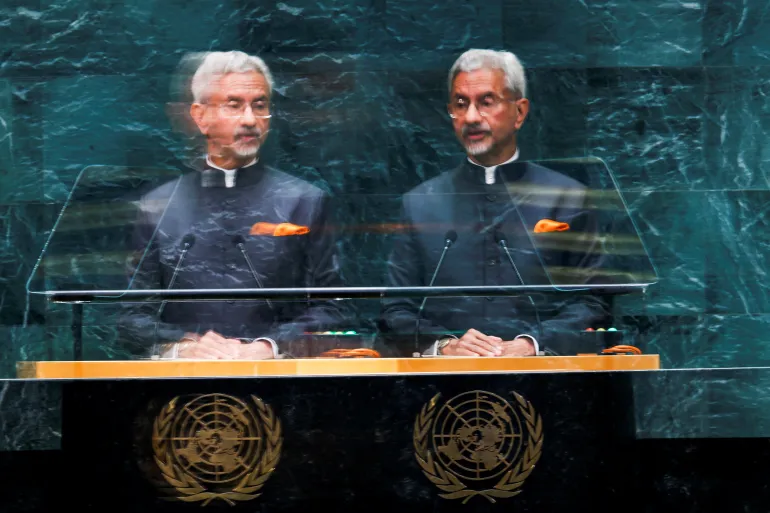
New Delhi, India — Speaking at an event in New York this week, India’s Foreign Affairs Minister S Jaishankar offered a blunt assessment of Washington: It has been an insensitive partner to India’s concerns over “terrorism”; has warmed to its arch-rival Pakistan; and has pursued “self-centered” trade policies that have disproportionately hurt the Global South.
That tone marks a new edge in how New Delhi is dealing with US President Donald Trump’s administration in Washington, analysts say, on the back of rising bilateral tensions between the capitals.
For decades, India has dealt with divisive issues with otherwise friendly nations quietly behind the scenes, away from spectacle. That has especially been New Delhi’s approach with Washington, where the relationship has broadly enjoyed wide bipartisan support.
However, after months of tensions, New Delhi is adopting a more openly critical tone towards Washington to address the volatility and uncertainty that Trump brings to the White House.
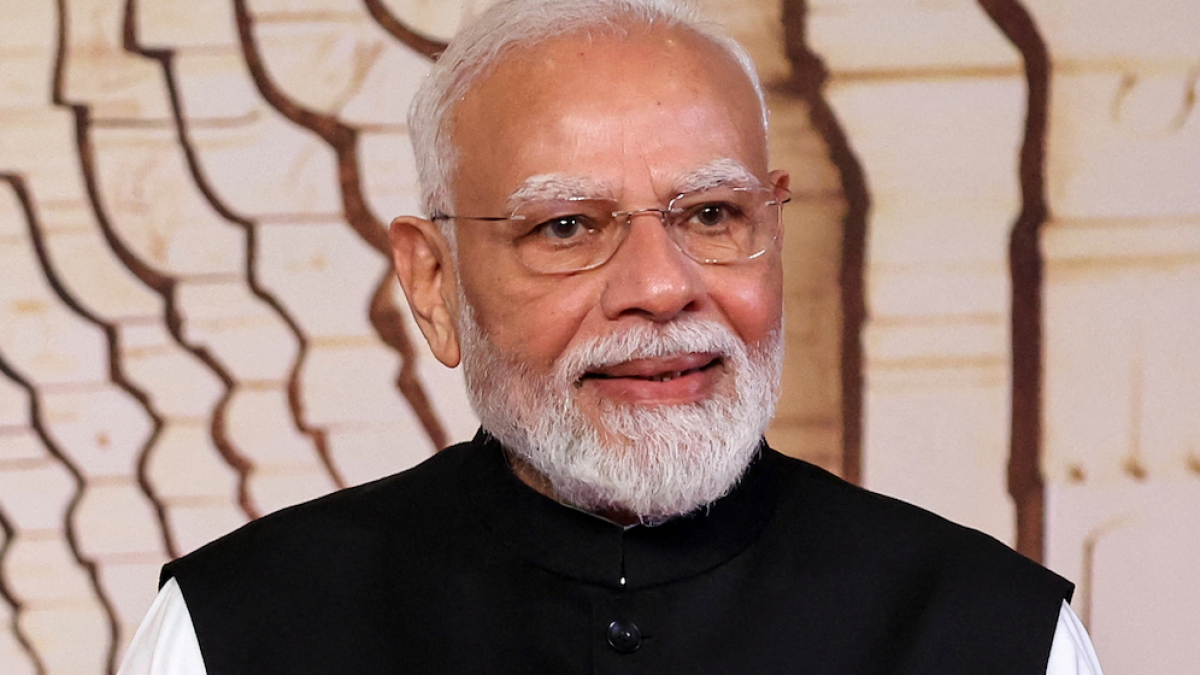
The changing tune in New Delhi also comes at a critical time for Prime Minister Narendra Modi, who faces mounting domestic pressure and criticism from the opposition for allegedly bowing down to US pressure, time and again. On Wednesday, Modi held a telephone call with Trump, which the Indian PM called “productive” — a cold and formal depiction far removed from his description of the US president as a “good friend” in previous years.
Chietigj Bajpaee, a senior research fellow for South Asia at the Chatham House think tank, said that Jaishankar’s remarks “offer a frank assessment” on the current state of the India-US relationship. “Clearly, the shine has come off the bilateral relationship after India was initially among the most optimistic about a second Trump term,” he said.

India’s pain points
Jaishankar addressed frictions between India and the US while speaking at an Asia Society event after the UN General Assembly in New York ended on Monday.
“If I stand back and look at the [India-US] relationship, I note that much of the world has had a more difficult relationship with the US,” he said. “I mean that may not be a consolation, but that’s a reality.”
Trade
Trade has been one of the flashpoints. Washington is India’s largest trading partner, with bilateral goods trade reaching $149.1 billion in 2025; but the relationship remains tilted towards India with a $58.4 billion goods surplus.
Jaishankar started by noting: “Countries should not be so self-centred that you’re in your own world and take your decision and say, ‘Well, it was not my intention to make your life difficult’.”
The minister was partly referring to the economic spillover of the wars in Iran and Ukraine, urging that “sound common sense” should ensure that the basic needs of countries were not neglected.
But then, he referred to the trade negotiations between India and the US, that have so far yielded a roadmap to a deal — but not a deal itself. “Apart from the per capita gap between India and the United States, the nature of production and the nature of society is very different,” he noted.
The agricultural sector has been among the most contested points between the two, where India has kept its market largely closed for decades to safeguard its farmers. “The expectation that it could rapidly move forward was tested against the ground reality, which was much more complex,” he said, adding that “there is more or less an understanding on the trade agreement.”
At one point, India was among the countries facing the worst tariff rates imposed by Trump. After the US Supreme Court struck down Trump’s sweeping tariffs in February, his administration swiftly turned to other tools, including a new 10 percent global tariff. Earlier this month, Trump signed a law under which the US can impose up to 100 percent tariffs on countries like India that purchase Russian oil.
Jaishankar pointed to these changes, noting that the negotiations created “bumps last year for the relationship,” and added that once the deal is closed, it “would contribute to a better relationship.”
Ajay Bisaria, a retired diplomat who served as high commissioner to Canada and Pakistan, and as ambassador to Poland, told Al Jazeera that with Washington, in particular, “India has decided to be more public because there has been a lot of public criticism and a sentiment that the US is bullying India and India has been silent.”
The new 100 percent tariff on India, due to come into effect in less than a month, “is sort of a deal breaker in the relationship right now,” said Bisaria. “If that becomes reality, then all Indian efforts [to reach out to the US] would come under scrutiny.”
‘Terrorism’
But trade isn’t the only challenge in the relationship. A major rupture emerged in May last year, when New Delhi engaged in a four-day war with its bitter neighbour, Pakistan, after an attack by armed fighters in Indian-administered Kashmir killed 26 civilians.
New Delhi was upstaged as President Trump announced a ceasefire, claiming that he threatened both countries with economic damage if they didn’t stop fighting. For India, any question on Kashmir is strictly bilateral with Pakistan, with no room for so-called third-party intervention.
Nevertheless, Trump has gone on to claim dozens of times that he brokered the crucial ceasefire — as recently as at the UNGA in New York — that halted the war between two nuclear-armed neighbours. India took offence to these claims.
On the other hand, Pakistan’s leaders cozied up to Trump, showered high praise, and nominated him for a Nobel Peace Prize. Since then, the relationship between Islamabad and Washington has bloomed, to New Delhi’s obvious irk.
For India, Jaishankar said, “particularly important is the issue of terrorism.”
“As a country, perhaps there are very few countries which have been subjected to the kind of terrorism that we have from a neighbour as part of a deliberate, conscious policy over many, many decades,” Jaishankar said, referring to Pakistan.
“Now, if something which matters so deeply to us, there isn’t enough understanding or appreciation or empathy of that, I think that creates a problem too,” he said, adding that India’s primary concerns are “not fully appreciated” by its partner, the US.
New Delhi’s changing tone while addressing Washington “is a lesson learnt from its experiences,” said Bisaria, the former diplomat. “After the ceasefire issue, the moods changed — and it all became worse.”
Harsh Pant, vice president of the Observer Research Foundation, a New Delhi-based think tank, said that “the obsession with Pakistan in the Trump administration without taking India’s sensitivities into account contributed to the sense that, look, we need to start articulating it.”
“When at the top level, you don’t see reciprocity, then calculations change and decisions are taken to bring differences out in the open,” Pant told Al Jazeera, referring to Jaishankar’s comments.

Domestic Pressure
Indians have been the biggest beneficiaries of the US’s H1B programme which allows hiring of foreign workers with training in specialty fields. But that has come under fire from Trump, under whose watch Washington has raised barriers and fees for applicants, amid growing criticism of the scheme from supporters of his MAGA movement.
“For many years, mobility was seen as an economic gain. Today the economics of mobility and the politics of mobility are at odds with each other, at least in some quarters,” Jaishankar said, referring to Trump’s anti-immigration politics.
“That certainly in public perception is an issue,” the minister said.
Domestic pressure appears to be finally catching up in New Delhi. “Modi is feeling domestic pressure, with key state elections coming up next year, especially amid some anti-incumbency,” said Bisaria. “It dictates that the government’s posture should not be one of taking bullying from the US.”
Pant said issues like migration impact the general public in India, with the world’s largest population. For years, such connections made the US “an attractive partner for a large mass of Indians.” But today, he said, ”the same issues are becoming a negative drag on the relationship.”
“The public mood in India is also changing perceptibly towards the US. And I think the government is articulating that negative sentiment now publicly,” Pant said.

‘Waiting out Trump’
When Trump returned to the White House for his second presidential run, many in New Delhi’s strategic community were optimistic about bilateral relations, because of the US president’s warm personal relations with PM Modi during his first term.
But things unravelled in the coming months.
Still, Chatham House’s Bajpaee said that despite widening divisions between the US and India, “both have not given up on reviving their relationship”.
He pointed to Jaishankar’s remarks that India isn’t singled out in having a difficult relationship with the US. “Rather, the downturn in India-US relations is a reflection of the Trump administration’s transactional and often unpredictable or erratic foreign policy,” he told Al Jazeera.
“This offers a potential off-ramp for an eventual reset in relations. The conclusion of a bilateral trade agreement is a key watchpoint for this,” Bajpaee added.
For New Delhi, Pant said, “it is now just the question of waiting Mr. Trump out.” Though he added, with a laugh, that India is not alone in that queue.
“Everyone is waiting him out. President Trump has little respect for conventions and norms of inter-state behaviour. How do you just deal with that individual?” Pant said.