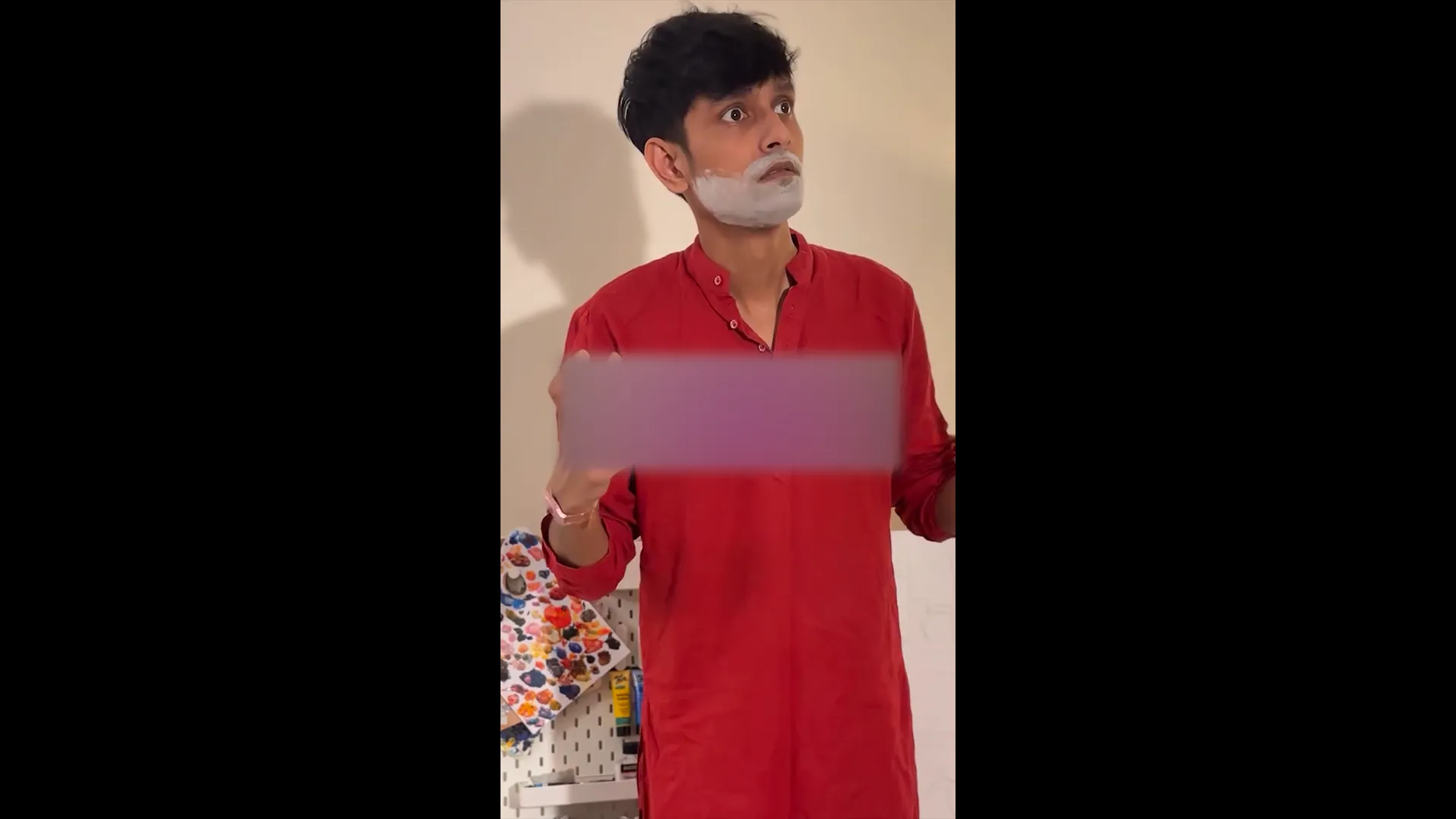
New Delhi, India – Stand-up comic Brijesh Jha posted a parody video on Instagram last week to protest the removal of his name, along with his father’s and sister’s, from a voter list in the eastern Indian state of West Bengal.
The video, which alleged that India’s Chief Election Commissioner Gyanesh Kumar had disenfranchised millions of voters at the behest of Prime Minister Narendra Modi’s Bharatiya Janata Party (BJP), garnered 1.7 million views after it was posted on September 29.
Recommended Stories
list of 4 itemsend of list
Two days later, Meta, the United States-based company that owns Instagram, took the video down, citing “local laws” without giving further explanation.
“I felt very helpless that day. I have only one thing in this country – that I can vote. If you take that away from me, then I have nothing left. So I didn’t know what to do. As an artist, I can just make art, or I can protest,” the Mumbai-based artist told Al Jazeera.
Jha said his parody song was removed because the Modi government is “scared” after an investigation by the Indian Express newspaper last month revealed that two of the election commission’s three members had raised serious concerns over a controversial revision of voter rolls being conducted by the poll panel across the country.
The exercise, known as the Special Intensive Revision (SIR), was launched in June last year to identify deceased, duplicate or dubious voters and remove them from the rolls. So far, the process has deleted more than 130 million voters – nearly 14 percent of India’s total voters, an overwhelming number of them Muslims who do not usually vote for Modi’s Hindu nationalist party.
The Indian Express investigation found that two of Kumar’s fellow election commissioners had formally objected at least 14 times to key decisions linked to the SIR exercise taken by their chief.
Opposition politicians and critics accused Kumar, a Modi government appointee, of acting at the behest of the BJP and demanded an independent inquiry into the decisions taken by the election commission during his tenure.
The revelations have led to street protests across India, demanding Kumar’s resignation.
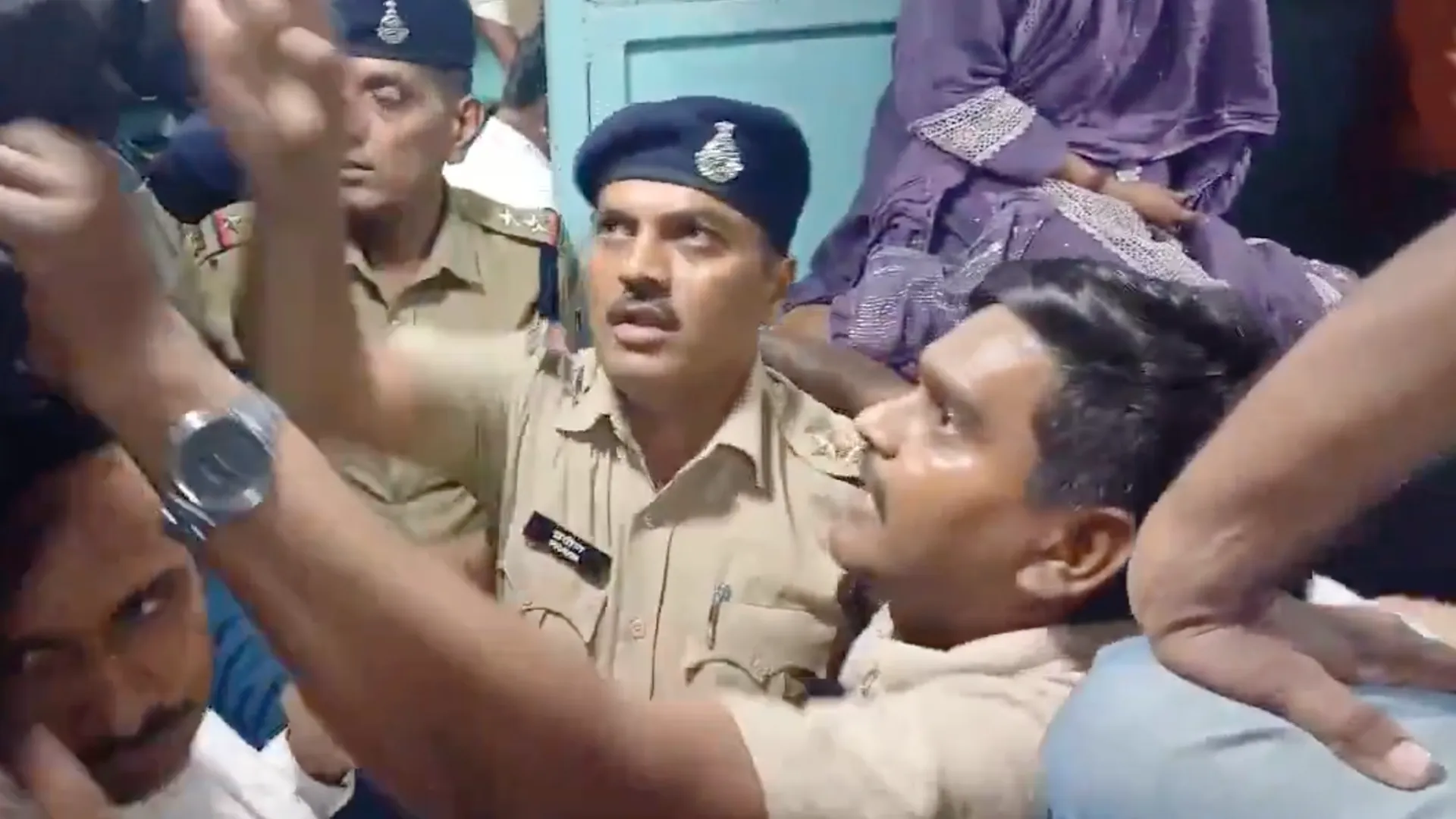
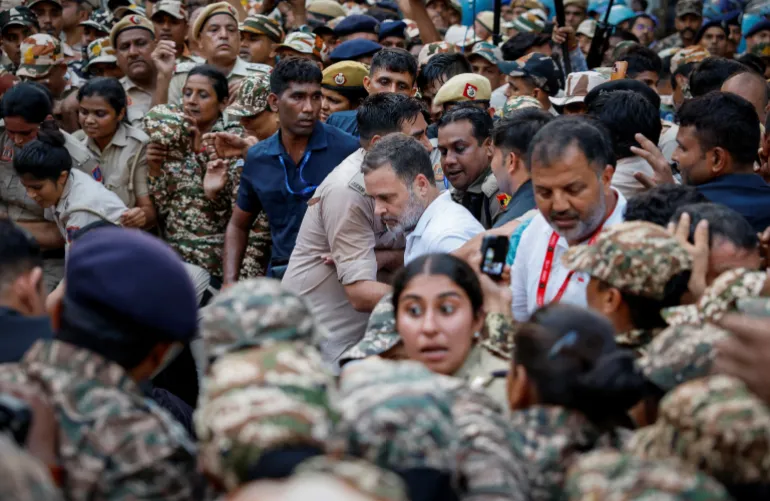
On Tuesday, police in the capital New Delhi briefly detained the main opposition leader, Rahul Gandhi, and other leaders of his Congress party as they tried to march to the election commission office.
“The country has been hijacked by Narendra Modi through vote theft,” Gandhi told reporters. “What has been done to our country is called treason. Nobody is going to escape.”
In response, the BJP accused the opposition parties of “making a concerted effort to change the government”.
“They are deliberately attacking India’s democracy and constitutional institutions,” a BJP spokesman told reporters on Tuesday.
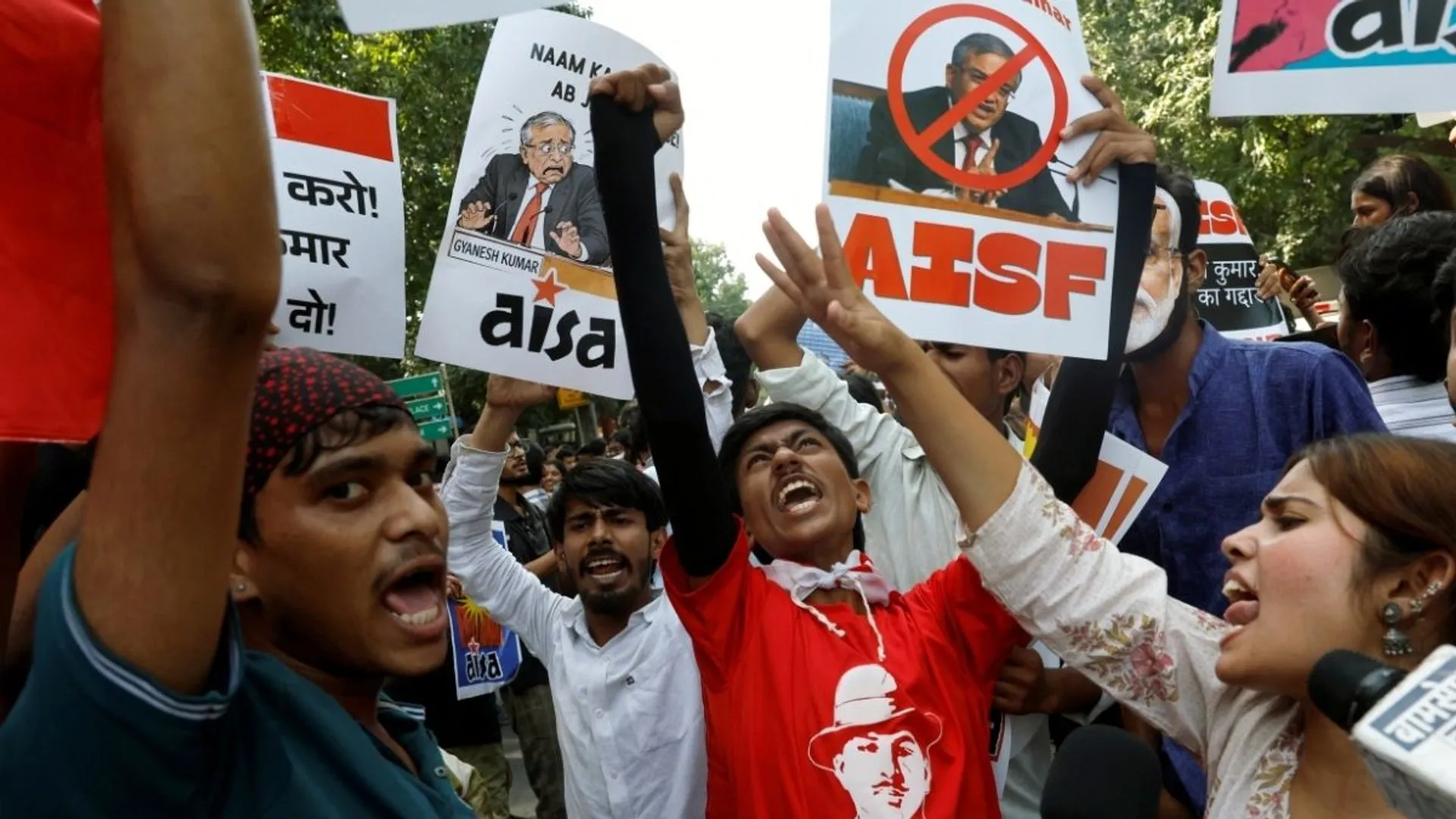
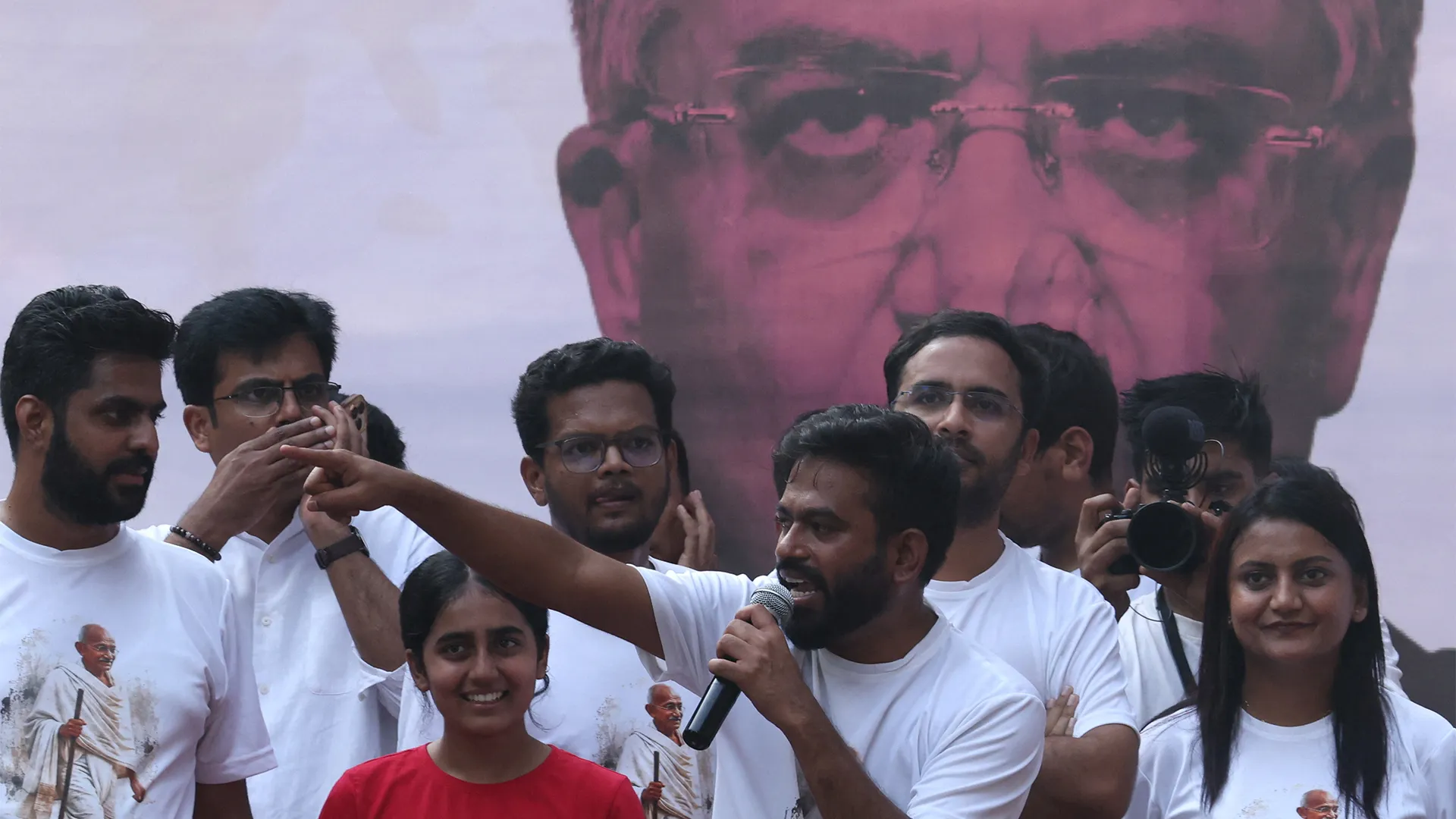
The Congress protesters and their political allies were back on the streets on Wednesday. Their demonstrations followed a series of protests by the satirical Cockroach Janta Party (CJP) and a group of left-wing students in Mumbai and New Delhi since October 2. The CJP has planned another demonstration in New Delhi on October 10 if Kumar does not resign by then.
‘Question the people in power’
What stood out in these protests was an increasingly inventive language of dissent, driven by humour, art and music, with much of it existing online alongside the demonstrations on the streets.
But a crackdown on such memes and jokes has also been simultaneous.
According to the Indian Express newspaper, the government issued nearly 195,000 content-blocking orders to Instagram, Facebook and YouTube between March and July this year – an average of one blocking order every 68 seconds.
Rejecting the newspaper report, the government said in a statement, “With 600 million users in India posting up to 78,703 items every 68 seconds, it is reasonable to expect that on average, one of these items may not be lawful.”
The crackdown came after the Modi government tightened rules governing online content in February. According to the new rules, social media platforms must remove content that a government authority or court has declared “unlawful” within three hours of receiving the order, down from 36 hours previously.
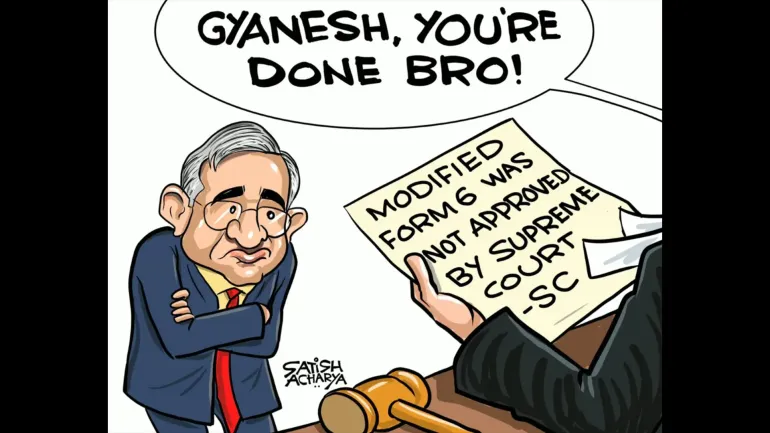
Among those whose works were taken down was political cartoonist Satish Acharya.
One of Satish Acharya’s cartoons taken down by the social media companies [File: Al Jazeera]
Several of Acharya’s cartoons, some up to three years old, were removed and his Instagram account was blocked in India from September 28 until late on October 5, he told Al Jazeera.
“At different phases of history, people used cartoons as a tool to express their protest and question the people in power. With the advanced use of social media, cartoons appear in different forms now, sometimes memes and reels,” the 55-year-old said.
“I have a lot of hope in Gen Z. They are fearless, they are creative and they care for the country. Our politicians can learn a lot from them.”
Stand-up comic Jha, who attended the CJP’s protest in Mumbai, agrees. “The more cruel the power is, the softer, more humorous and more artistic the protest becomes,” he told Al Jazeera.
But Jha has refused to apply for a reinstatement of his name in the voters’ list.
“I think they will see this interview and probably I will be in some detention centre. I just want to see what will happen. I’ll not register my name again,” he said.
However, he had a satirical message for Modi as he urged the Indian leader to stop the crackdown on online content.
“Please give back my right to vote. You are a great leader with a 56-inch chest. You shouldn’t be scared of one video,” he said, invoking a long-held right-wing boast about Modi’s famous bust.
India’s Cockroach Janta Party says its members have been subjected to mass arrests across India ahead of Saturday’s protest in New Delhi. Protesters are demanding the election panel chief’s resignation over alleged irregularities in voter-list revisions that critics say benefited Modi’s BJP.
Rahul Gandhi has been arrested several times at protests demanding the resignation of poll body chief.
Published On 7 Oct 20267 Oct 2026
Indian opposition leader Rahul Gandhi has been detained for the third time in two days during a protest demanding the resignation of the election chief over a controversial revision of voter lists.
Gandhi and other opposition lawmakers were apprehended by police on Wednesday as they marched towards Jantar Mantar, a designated protest site in India’s capital, New Delhi.
Recommended Stories
list of 3 itemsend of list
A live feed on the YouTube channel of Gandhi’s Congress Party showed police taking him into a vehicle and driving away. Authorities also detained several other opposition lawmakers and protesters.
Opposition parties, their student units and the “Cockroach” youth movement have been demanding the resignation of Chief Election Commissioner Gyanesh Kumar, accusing the poll body he heads of benefiting Prime Minister Narendra Modi’s ruling Bharatiya Janata Party.
India’s Election Commission has so far removed more than 130 million names from the voter lists, with millions appealing the removals. About 969 million people were eligible to vote in the 2024 election.
Protesters allege the changes disproportionately removed voters who support opposition parties while preserving or adding voters more likely to back Modi’s party.
Police detain Indian opposition leader Rahul Gandhi during a protest organised by opposition parties in New Delhi [Adnan Abidi/Reuters]
The commission and government deny the allegations. They say the revision has no political motive but is aimed at removing duplicate and ineligible entries while ensuring eligible voters remain registered.
Opposition lawmakers led by Gandhi protested on Tuesday as well, before police broke up their gathering and briefly detained them.
Speaking before his detention on Wednesday, Gandhi said protesters showed up unannounced after Delhi police “stopped” their gathering the day before.
“We will go to the designated protest site, sit there, and tell the country that, for us, Gyanesh Kumar is not the legitimate commissioner,” he told reporters, referring to Jantar Mantar.
“The people who have done this [vote theft] are traitors … Gyanesh Kumar will have to resign,” he added.
There was no immediate comment from the police on the detentions.
The demonstrations present a new political challenge to Modi midway into his third term, just months after similar protests led by the Cockroach Janta Party youth movement forced the resignation of his education minister over exam paper leaks.
The “Cockroach” protests, one of the most visible signs of public dissent against Modi’s government in recent years, reflected growing anger over job scarcity, corruption and a lack of government accountability.
India’s Cockroach Janta Party has launched a new protest demanding change after millions of voters were allegedly improperly removed from electoral rolls. Other protest movements joined the rallies, which led to scuffles and arrests in the capital.
Smit Machchhar recalls mid-air disaster after co-pilot’s attack on flydubai flight to Tel Aviv.
Published On 2 Oct 20262 Oct 2026
Indian pilot Smit Machchhar, who was stabbed by his co-pilot in an alleged attempt to crash a Flydubai flight to Tel Aviv, has shared a public account of how he managed to open the cockpit door and let passengers take control of the plane despite his injuries.
Speaking on Friday from a hospital bed in Abu Dhabi via video call with Indian Prime Minister Narendra Modi, Machchhar said that he knew the aircraft was going down as he lay bleeding on the floor.
Recommended Stories
list of 3 itemsend of list
“I had suffered so many injuries that I had collapsed. At that time, I could feel that the aircraft was going down. I knew this was the last push, that the door was right there,” he said in a nearly 10-minute video released on the prime minister’s social media channels.
He added: “I was being hit even then, but I just opened the door and everyone came in.”
Machchhar, who has 17 years of aviation experience, including 11 as a captain, said that experience helped him grasp what was happening even while wounded.
He told Modi he had recited a Hindu devotional prayer during the ordeal.
“I know God himself saved me,” he said, in an emotional exchange with Modi, who is from the same home state of Gujarat.
Modi praised Machchhar’s bravery, saying his presence of mind had saved lives and the reputation of Indian pilots.
Machchhar said he allowed passengers and crew to overpower the co-pilot and let a second pair of Flydubai pilots take control and land the plane in Tabuk, Saudi Arabia.
The Flydubai flight was carrying 174 people as it briefly plunged around 17,000 feet (5,180 metres) before it was brought back under control.
UAE presidential adviser Anwar Gargash has called the incident a “terrorist act”, while Israeli Prime Minister Benjamin Netanyahu said the co-pilot had undergone “Islamist radical indoctrination” and appeared “suicidal”.
US President Donald Trump has warned that Iran would be “hit very hard” if found to be linked to the attack.
India is facing growing discontent among its youth and they are taking to the streets. One Indian artist tells Al Jazeera the Modi government changed his voting status and had his Instagram post taken down. Now he’ll join thousands expected at a Cockroach Janta Party-led protest demanding change.
New Delhi, India — Speaking at an event in New York this week, India’s Foreign Affairs Minister S Jaishankar offered a blunt assessment of Washington: It has been an insensitive partner to India’s concerns over “terrorism”; has warmed to its arch-rival Pakistan; and has pursued “self-centered” trade policies that have disproportionately hurt the Global South.
That tone marks a new edge in how New Delhi is dealing with US President Donald Trump’s administration in Washington, analysts say, on the back of rising bilateral tensions between the capitals.
For decades, India has dealt with divisive issues with otherwise friendly nations quietly behind the scenes, away from spectacle. That has especially been New Delhi’s approach with Washington, where the relationship has broadly enjoyed wide bipartisan support.
However, after months of tensions, New Delhi is adopting a more openly critical tone towards Washington to address the volatility and uncertainty that Trump brings to the White House.
The changing tune in New Delhi also comes at a critical time for Prime Minister Narendra Modi, who faces mounting domestic pressure and criticism from the opposition for allegedly bowing down to US pressure, time and again. On Wednesday, Modi held a telephone call with Trump, which the Indian PM called “productive” — a cold and formal depiction far removed from his description of the US president as a “good friend” in previous years.
Chietigj Bajpaee, a senior research fellow for South Asia at the Chatham House think tank, said that Jaishankar’s remarks “offer a frank assessment” on the current state of the India-US relationship. “Clearly, the shine has come off the bilateral relationship after India was initially among the most optimistic about a second Trump term,” he said.
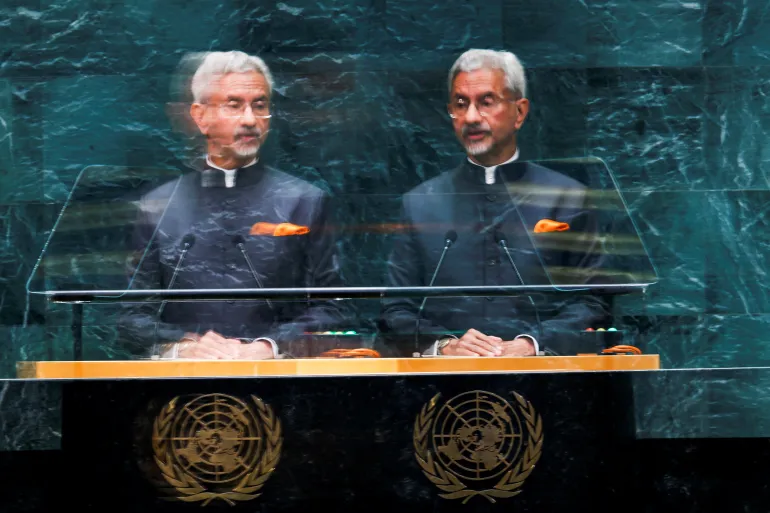
Indian Minister of External Affairs Subrahmanyam Jaishankar addresses the 81st United Nations General Assembly at UN headquarters in New York City, US, September 26, 2026 [Eduardo Munoz/Reuters]
India’s pain points
Jaishankar addressed frictions between India and the US while speaking at an Asia Society event after the UN General Assembly in New York ended on Monday.
“If I stand back and look at the [India-US] relationship, I note that much of the world has had a more difficult relationship with the US,” he said. “I mean that may not be a consolation, but that’s a reality.”
Trade
Trade has been one of the flashpoints. Washington is India’s largest trading partner, with bilateral goods trade reaching $149.1 billion in 2025; but the relationship remains tilted towards India with a $58.4 billion goods surplus.
Jaishankar started by noting: “Countries should not be so self-centred that you’re in your own world and take your decision and say, ‘Well, it was not my intention to make your life difficult’.”
The minister was partly referring to the economic spillover of the wars in Iran and Ukraine, urging that “sound common sense” should ensure that the basic needs of countries were not neglected.
But then, he referred to the trade negotiations between India and the US, that have so far yielded a roadmap to a deal — but not a deal itself. “Apart from the per capita gap between India and the United States, the nature of production and the nature of society is very different,” he noted.
The agricultural sector has been among the most contested points between the two, where India has kept its market largely closed for decades to safeguard its farmers. “The expectation that it could rapidly move forward was tested against the ground reality, which was much more complex,” he said, adding that “there is more or less an understanding on the trade agreement.”
At one point, India was among the countries facing the worst tariff rates imposed by Trump. After the US Supreme Court struck down Trump’s sweeping tariffs in February, his administration swiftly turned to other tools, including a new 10 percent global tariff. Earlier this month, Trump signed a law under which the US can impose up to 100 percent tariffs on countries like India that purchase Russian oil.
Jaishankar pointed to these changes, noting that the negotiations created “bumps last year for the relationship,” and added that once the deal is closed, it “would contribute to a better relationship.”
Ajay Bisaria, a retired diplomat who served as high commissioner to Canada and Pakistan, and as ambassador to Poland, told Al Jazeera that with Washington, in particular, “India has decided to be more public because there has been a lot of public criticism and a sentiment that the US is bullying India and India has been silent.”
The new 100 percent tariff on India, due to come into effect in less than a month, “is sort of a deal breaker in the relationship right now,” said Bisaria. “If that becomes reality, then all Indian efforts [to reach out to the US] would come under scrutiny.”
‘Terrorism’
But trade isn’t the only challenge in the relationship. A major rupture emerged in May last year, when New Delhi engaged in a four-day war with its bitter neighbour, Pakistan, after an attack by armed fighters in Indian-administered Kashmir killed 26 civilians.
New Delhi was upstaged as President Trump announced a ceasefire, claiming that he threatened both countries with economic damage if they didn’t stop fighting. For India, any question on Kashmir is strictly bilateral with Pakistan, with no room for so-called third-party intervention.
Nevertheless, Trump has gone on to claim dozens of times that he brokered the crucial ceasefire — as recently as at the UNGA in New York — that halted the war between two nuclear-armed neighbours. India took offence to these claims.
On the other hand, Pakistan’s leaders cozied up to Trump, showered high praise, and nominated him for a Nobel Peace Prize. Since then, the relationship between Islamabad and Washington has bloomed, to New Delhi’s obvious irk.
For India, Jaishankar said, “particularly important is the issue of terrorism.”
“As a country, perhaps there are very few countries which have been subjected to the kind of terrorism that we have from a neighbour as part of a deliberate, conscious policy over many, many decades,” Jaishankar said, referring to Pakistan.
“Now, if something which matters so deeply to us, there isn’t enough understanding or appreciation or empathy of that, I think that creates a problem too,” he said, adding that India’s primary concerns are “not fully appreciated” by its partner, the US.
New Delhi’s changing tone while addressing Washington “is a lesson learnt from its experiences,” said Bisaria, the former diplomat. “After the ceasefire issue, the moods changed — and it all became worse.”
Harsh Pant, vice president of the Observer Research Foundation, a New Delhi-based think tank, said that “the obsession with Pakistan in the Trump administration without taking India’s sensitivities into account contributed to the sense that, look, we need to start articulating it.”
“When at the top level, you don’t see reciprocity, then calculations change and decisions are taken to bring differences out in the open,” Pant told Al Jazeera, referring to Jaishankar’s comments.
India’s Prime Minister Narendra Modi offers a hand to US President Donald Trump during a family photo before a cultural performance and concert during the G7 summit, in Evian-les-Bains, France, June 16, 2026 [Evelyn Hockstein/Reuters]
Domestic Pressure
Indians have been the biggest beneficiaries of the US’s H1B programme which allows hiring of foreign workers with training in specialty fields. But that has come under fire from Trump, under whose watch Washington has raised barriers and fees for applicants, amid growing criticism of the scheme from supporters of his MAGA movement.
“For many years, mobility was seen as an economic gain. Today the economics of mobility and the politics of mobility are at odds with each other, at least in some quarters,” Jaishankar said, referring to Trump’s anti-immigration politics.
“That certainly in public perception is an issue,” the minister said.
Domestic pressure appears to be finally catching up in New Delhi. “Modi is feeling domestic pressure, with key state elections coming up next year, especially amid some anti-incumbency,” said Bisaria. “It dictates that the government’s posture should not be one of taking bullying from the US.”
Pant said issues like migration impact the general public in India, with the world’s largest population. For years, such connections made the US “an attractive partner for a large mass of Indians.” But today, he said, ”the same issues are becoming a negative drag on the relationship.”
“The public mood in India is also changing perceptibly towards the US. And I think the government is articulating that negative sentiment now publicly,” Pant said.
President Donald Trump and India’s Prime Minister Narendra Modi shake hands during a news conference in the East Room of the White House, Thursday, February 13, 2025, in Washington. (Alex Brandon/AP Photo)
‘Waiting out Trump’
When Trump returned to the White House for his second presidential run, many in New Delhi’s strategic community were optimistic about bilateral relations, because of the US president’s warm personal relations with PM Modi during his first term.
But things unravelled in the coming months.
Still, Chatham House’s Bajpaee said that despite widening divisions between the US and India, “both have not given up on reviving their relationship”.
He pointed to Jaishankar’s remarks that India isn’t singled out in having a difficult relationship with the US. “Rather, the downturn in India-US relations is a reflection of the Trump administration’s transactional and often unpredictable or erratic foreign policy,” he told Al Jazeera.
“This offers a potential off-ramp for an eventual reset in relations. The conclusion of a bilateral trade agreement is a key watchpoint for this,” Bajpaee added.
For New Delhi, Pant said, “it is now just the question of waiting Mr. Trump out.” Though he added, with a laugh, that India is not alone in that queue.
“Everyone is waiting him out. President Trump has little respect for conventions and norms of inter-state behaviour. How do you just deal with that individual?” Pant said.
Women in India’s capital New Delhi have taken to the streets after a string of rape cases, using bold slogans to demand safer public spaces and challenge restrictions placed on their movement in the name of safety. The slogans have sparked a wider social media campaign.
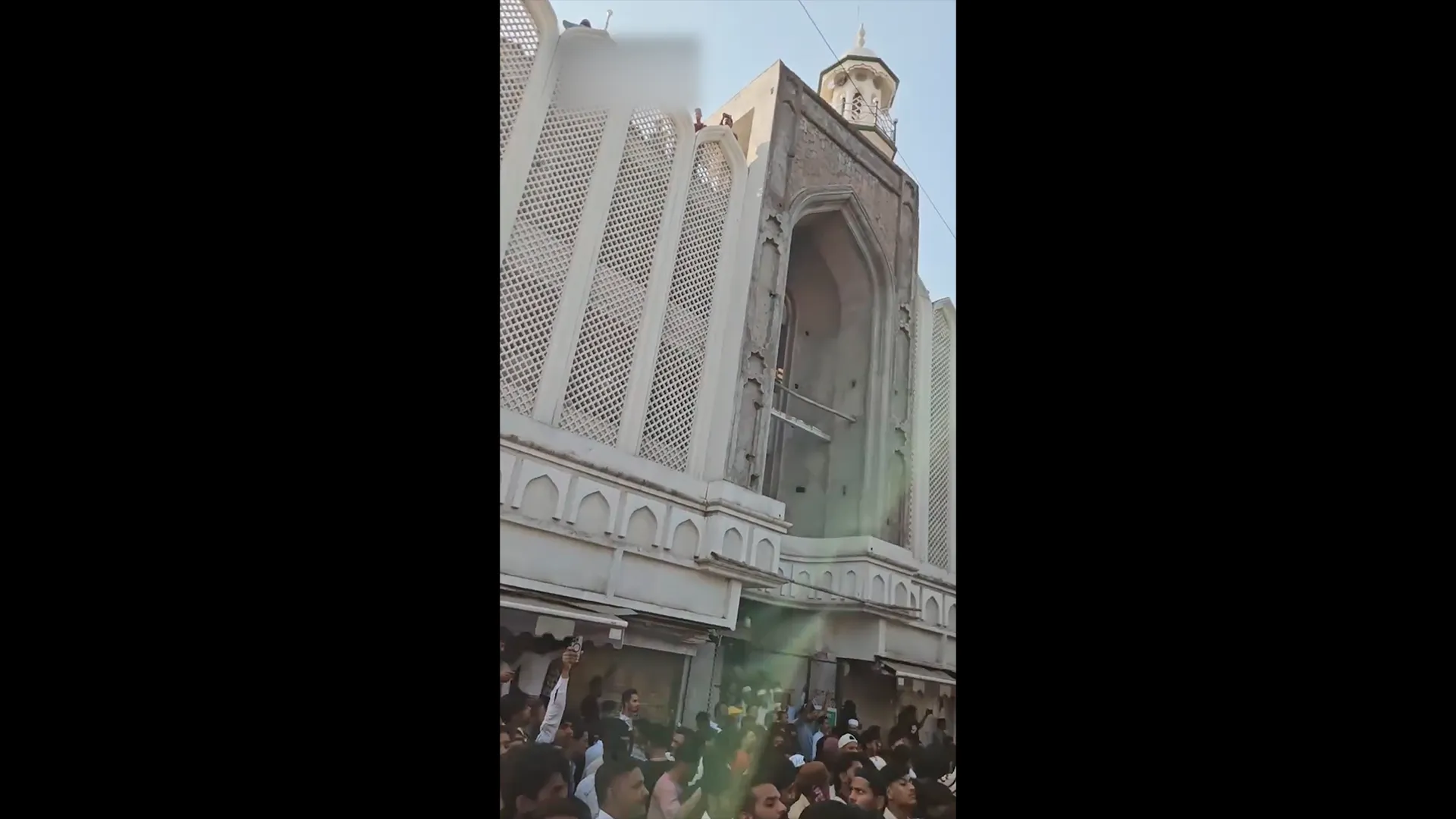
Hundreds of Muslims have gathered in the Indian city of Ujjain to protest the partial demolition of a mosque they say is more than 600 years old. The BJP-led state government says the action is needed to widen roads ahead of the 2028 Hindu pilgrimage, which is expected to draw large crowds.
New Delhi, India – Indian democracy has been shaken by new revelations showing divisions within the body that is in charge of conducting its elections over controversial policies that critics say have disenfranchised tens of millions of people.
India’s Election Commission, a supposedly autonomous constitutional body, is tasked with administering elections in the world’s largest democracy, and in recent decades, had won admirers across the globe for its success in conducting a voting process unmatched in scale and complexity.
But an investigation by The Indian Express newspaper reported that the current chief of the commission frequently overruled concerns raised by his two other equally ranked commissioners about the integrity of ongoing changes in the voter database.
These revelations come after a months-long struggle by India’s opposition parties to bring what they have described as the “sabotaging” conduct of the election commission to the fore, which they say is dictated by Prime Minister Narendra Modi’s party for its electoral benefit.
For decades, India has grappled with deep inequality; divisions along caste, religious and ethnic lines; and the growing role of money in its elections. Yet through it all, the actual conduct of its elections was largely viewed as “free” domestically and by global monitors.
But leading opposition leaders have, in recent months and years, for the first time, questioned whether elections can be trusted and whether votes are counted accurately, as well as whether rights decide who gets to be a voter or if those in authority take the decision arbitrarily. Those concerns, say analysts, are likely to only be amplified by the latest revelations.
“Today, that faith [in the election process] has shaken. It is very shocking for the nation,” SY Quraishi, who headed India’s election commission between 2010 and 2012, told Al Jazeera. “The Election Commission used to be a very reputed institution. Now, it is totally dysfunctional – and that’s an understatement.”
So, what does this mean for India and its democracy?
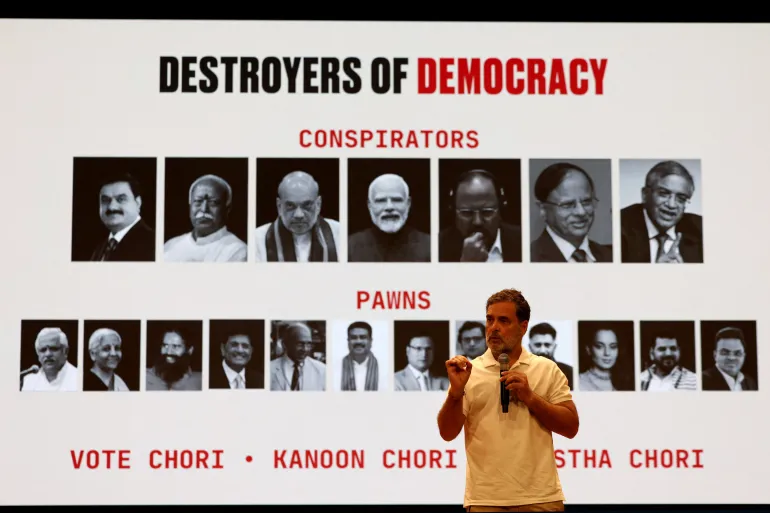
Indian opposition leader Rahul Gandhi speaks during a news conference to demand resignation of India’s Chief Election Commissioner Gyanesh Kumar, in New Delhi, India, September 24, 2026 [Bhawika Chhabra/Reuters]
What are the latest revelations about India’s Election Commission?
Earlier this week, the Indian Express newspaper published a series of stories, based on internal documents and interviews, laying bare divisions within the poll panel – consisting of three commissioners, Gyanesh Kumar, Sukhbir Singh Sandhu, and Vivek Joshi. Kumar is the commission’s chief.
Indian law requires the commission to decide by a majority. Reports revealed that Sandhu and Joshi resisted and questioned the legality of measures Kumar took unilaterally.
Since June last year, the commission has been revising and updating the voters list state-wise. It has struck off more than 13 million names during the exercise since then, which the critics say targeted economically weaker sections, minorities, and other vulnerable groups of Indian society disproportionately.
Opposition parties took the matter to the country’s top court, which largely signed off on the process to decide on who gets to vote in India. For India’s more than 1.4 billion population, a voting right does not end merely on ballots – rather, several government welfare schemes are tied to voting rights.
Now, reports reveal that some of the strongest resistance to the three-member commission’s decisions was coming from within. In fact, Sandhu and Joshi formally objected on record at least 14 times over the last 10 months to measures issued by circumventing them. Sandhu called it “unauthorised and illegal”.
Those objections related to the new voter registration mandate; deletion and restoration of voters in the rolls; appeals by people against deletions; and the security of the list. In short, everything the commission undertook.
The opposition has alleged that the additions and deletions of the voters are undertaken as an exercise to disenfranchise a section of voters to benefit Modi’s Bharatiya Janata Party (BJP).
The commission maintained that access to the voters’ list is highly secured and decentralised, meaning that even in the remotest parts of the country, a local officer made the judgement and decision.
But the latest revelations show that the commission relied on ECINet, a digital platform that logs nearly a billion voters, which was increasingly centralised, giving more control to New Delhi over editing calls.
In one instance, the newspaper reported that officials in the coastal state of Goa flagged nearly a hundred voters who were mistakenly taken out. Editing access was limited to New Delhi.
So, Goa’s chief electoral officer wrote eight emails to officials in New Delhi in a week before the deadline passed, but got no response and voters were knocked off the list.
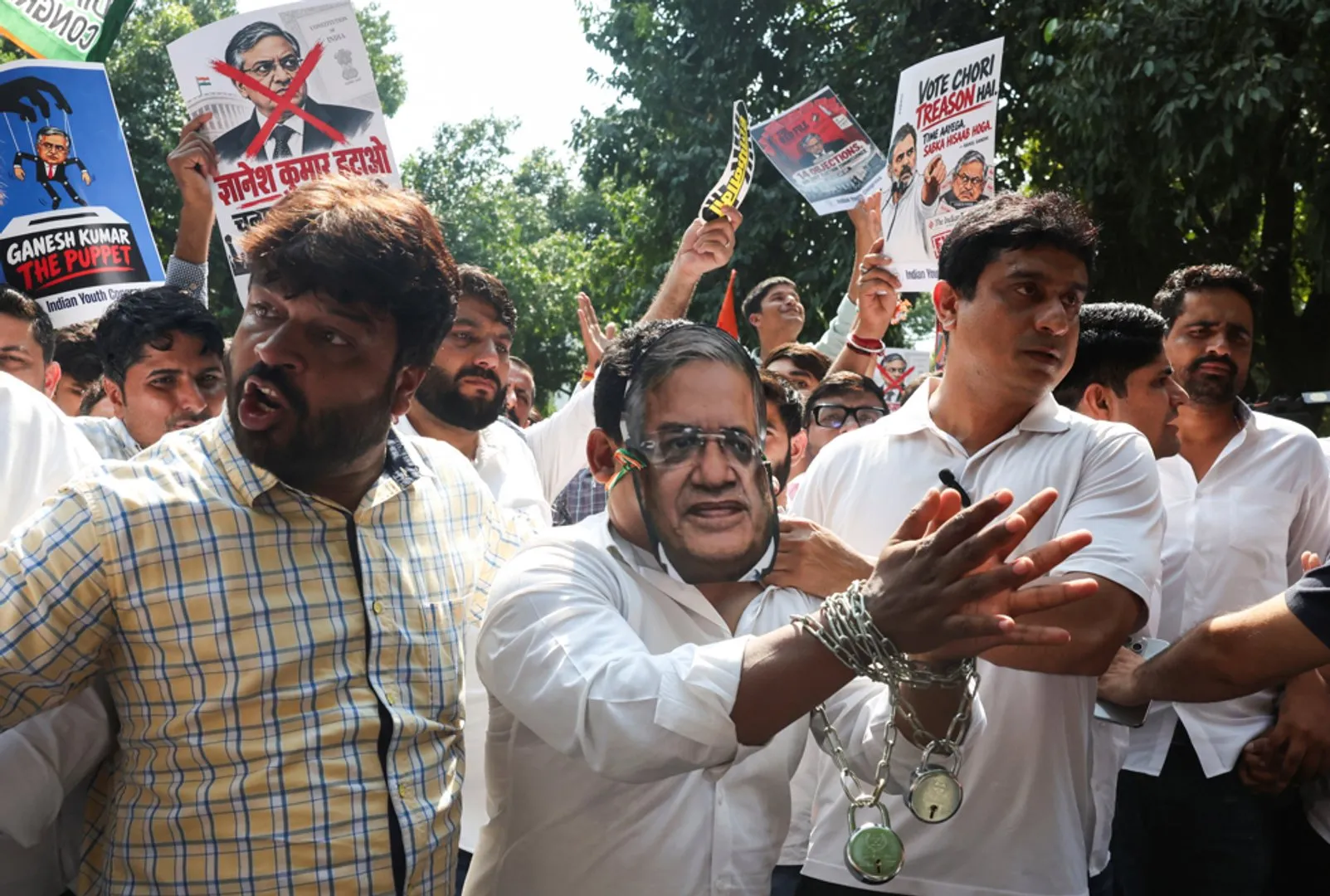
An Indian Youth Congress activist, wearing a mask depicting Chief Election Commissioner Gyanesh Kumar and handcuffed, takes part in a protest in New Delhi, India, September 25, 2026 [Rajat Gupta/EPA]
Why is revision of voters’ list controversial?
The Special Intensive Revision (SIR), as the process of revising the list is called, has become controversial mainly because it places an unusually heavy burden on existing voters to prove their eligibility.
Such a drive requires people to produce old records, like birth, land, and education certificates – and puts poorer, migrant, and marginalised Indians at a disadvantage, essentially drawing lines on who gets to vote in India. A minor mismatch, such as a spelling, in decades-old records could result in being struck from the voters list in India.
Opposition parties and civil society groups have argued that mass deletions could significantly alter the electorate before elections.
In some places, the exercise has been reported to disenfranchise minorities, including Muslims. In the eastern state of West Bengal, Al Jazeera earlier reported that the exercise removed 9 million residents from the electoral rolls just days before the state elections that were held in April and May.
Nearly 34 percent of the deleted voters were Muslims in the state, where they only make up 27 percent of the population. Then, Prime Minister Modi’s Hindu majoritarian BJP came to power for the first time in the politically critical state.
The BJP and supporters of the SIR process have argued that it is fundamentally aimed at removing illegal migrants, the deceased or fraudulent voters from the rolls – and have tried to portray many Muslims eliminated from the lists in border states as “illegal Bangladeshi migrants,” despite hard evidence that Indian nationals have been victims of the process.
But as the exercise has been expanded to other parts of the country, those claims have increasingly returned to embarrass even proponents of the exercise: In New Delhi, notices were served to India’s Foreign Minister S Jaishankar and his wife, alongside other high-profile politicians, judges and senior bureaucrats. Several former Indian ambassadors to countries across the world have received notices to prove that they are Indian – even though they have served as India’s sovereign representatives abroad for years.
All of this has turned what was political opposition to the SIR process into much more broad-based, nationwide scepticism about the lack of transparency in the Election Commission’s software, the process of matching voters against decades-old electoral rolls, and the criteria being used to flag voters as having “logical discrepancies”.
“The [revision of voters’ list] fundamentally inverts India’s model of electoral democracy,” said Milan Vaishnav, a senior fellow and director of the South Asia programme at the Washington, DC-based nonpartisan think tank The Carnegie Endowment for International Peace.
“Since the adoption of the Constitution, India has assumed the burden of ensuring that the last man or woman is registered to vote,” he said. Vaishnav added that unlike other democracies, notably the United States, which has repeatedly thrown up barriers to the franchise, “India historically adopted an unusually activist approach to voter registration.”
“Specifically, the way in which [the revision] has been carried out threatens to turn that principle on its head,” he told Al Jazeera. “It is now the voter who must prove his or her entitlement to remain on the electoral rolls.”
Quraishi, the former election commissioner of India, told Al Jazeera that he has been against the policies taken up under the revision.
“I hope [these revelations] are a wake-up call and serious action will be undertaken, including at the Supreme Court, the central government, and the Parliament,” Quraishi told Al Jazeera.
“Because the reputation of the Election Commission has gone into the dumps. And it is very difficult to restore it now,” he said. “We need efforts to rebuild faith in the system.”
Abhijeet Dipke, head of the Cockroach Janta Party (CJP) speaks as the party’s conveners Ashutosh Ranka and Saurav Das look on during a news conference to demand the resignation of India’s Chief Election Commissioner Gyanesh Kumar, in New Delhi, India, September 24, 2026 [Bhawika Chhabra/Reuters]
What is the opposition demanding?
Leader of the opposition Rahul Gandhi has accused the Election Commission of “treason” against the nation, and promised that its leaders will be tried for it, if his Congress Party returns to power.
India’s popular Gen-Z pressure group, the Cockroach Janta Party, whose protest movement led to the ouster of India’s education minister in July, has threatened to hit the streets again if Kumar, the commission’s sitting chief, does not resign by Saturday.
The Cockroach group has also called for an overhaul in the selection process of the next election commissioner.
For its part, the election commission has said in a statement that the investigation report drew on “differing views and deliberations” between the three commissioners rather than official statements of protest. Sambit Patra, a spokesman for Modi’s party, told reporters that any deliberation or divisions in the commission were rather “a sign of a healthy democracy”.
But none of that appears to be cutting ice in a nation where far too many people have now faced the threat of losing their vote through an opaque process.
“Our elections are fundamentally broken,” said Gandhi at a news conference in New Delhi on Thursday. “The sacred belief in elections,” he added, was evaporating.
Aiming at Modi, Gandhi argued that the popularity of a leader could be understood, but not “how anti-incumbency disappears”.
“It doesn’t exist in North Korea. There is no democracy where anti-incumbency doesn’t work. We are looking for answers to where it went here,” Gandhi said, in effect questioning Modi’s re-election first in 2019 and then again in 2024, with a much-reduced mandate – even though there is no firm evidence of widespread voter manipulation helping Modi win those elections. “And we have found answers.”
Women voters stand in queues to cast their ballots at a polling station during the first phase of voting for assembly elections on November 6, 2025, at the Raghopur constituency in the Vaishali district of the Indian state of Bihar [Sachin Kumar/AFP]
What does it mean for Indian polity?
Asim Ali, a political analyst in New Delhi, said that the Indian republic is standing at a “dangerous moment, where we could see a breakdown of the republic.”
“We have reached a situation where every opposition party feels that the democratic guardrails have been destroyed,” Ali told Al Jazeera, adding that the allegations are about the worry that “independent institutions like the Election Commission and Supreme Court have become co-opted.”
The political cleavage has created an extreme polarisation of politics in India. “Politics has assumed a kind of existential stakes, where we have unrestrained politics of friend vs enemy,” he added.
Rasheed Kidwai, a political analyst and senior journalist who has covered the Indian government for several decades, told Al Jazeera that “impartiality is paramount” for the Election Commission.
“The fact is that Caesar’s wife should be above suspicion,” he said. “In India, we have seen difficult times, including a state emergency, but never was the role of the Election Commission compromised at this level.”
Kidwai noted that Modi’s party has ridiculed opposition parties’ concerns about free-and-fair elections, calling them sore losers. “The outcomes of a match are inconsequential, but at least the umpire should play fair,” he told Al Jazeera.
The major criticisms of Indian democracy in recent years have principally related to what happens in between elections, said Vaishnav of the Carnegie Endowment think tank.
While critics “pointed to the erosion of basic freedoms, an uneven rule of law, and the concentration of power in the hands of the executive,” Vaishnav said, “most observers have argued that when the electoral spotlight is on, India’s democracy remains remarkably robust and competitive.”
The conduct of the Election Commission is “now calling this distinction into question”, he added.
India’s youth-led Cockroach Janta Party has joined opposition calls for election chief Gyanesh Kumar to resign, giving him 48 hours before it launches nationwide protests. The pressure follows reports of internal objections over changes to voter lists.
New Delhi says it has ‘made clear’ its determination to ‘protect its trade and economic interests’.
Published On 17 Sep 202617 Sep 2026
India has warned the United States that new measures to levy tariffs over the purchase of Russian oil could impact bilateral ties, hours after the US Congress approved a bill that would give President Donald Trump new abilities to punish buyers of Russian oil.
The US House of Representatives on Wednesday passed a sweeping sanctions and tariff bill intended to increase economic pressure on Russia over its invasion of Ukraine.
Recommended Stories
list of 3 itemsend of list
The bill targets Russia’s energy and defence sectors, President Vladimir Putin and other senior officials, as well as Moscow’s so-called shadow fleet of tankers used to circumvent Western sanctions.
It also authorises President Donald Trump to impose stiff tariffs of up to 100 percent on countries, including India, to reduce their dependence on Russian oil and gas, and extend sanctions on Iran.
The bill has been sent to Trump to sign into law.
India’s foreign ministry said on Thursday that it “remains firmly committed to ensuring energy security for its 1.4 billion people”.
The Indian foreign ministry said that it had noted the bill’s passage, adding that New Delhi had raised the issue with various US interlocutors in recent months, and had “very clearly articulated” the potential implications for the bilateral relationship and the international energy market.
“The Indian side has also made clear its determination to take all necessary measures to protect its trade and economic interests,” it said in a statement.
The government would work closely with trade and industry bodies to deal with the legislation’s implications, it added.
India, the world’s third-biggest oil importer, is among the biggest buyers of Russian oil, which is seen as helping Moscow replenish its budget since it launched its full-scale invasion of Ukraine in February 2022 and was hit with sweeping Western sanctions.
New Delhi has repeatedly sought to resist pressure to reduce its oil trade with Russia, saying its large population and economy need secure, affordable and reliable energy supplies.
India’s Prime Minister Narendra Modi has called for an overhaul of global governance, saying Global South countries are impacted by decisions they are unable to shape. Opening the BRICS summit in New Delhi, he urged leaders to replace the ‘pyramid of privilege’ with a more equal system.