Mystery

Retired KC-10 Extender Tankers Could Get A Second Life With North African Mystery Operator

Just over two years after the U.S. Air Force retired the last of its KC-10A Extender aerial refueling tankers, four of those aircraft may be bound for a new career in North Africa for a mysterious end user.

The Air Force Life Cycle Management Center (AFLCMC) put out a contracting notice yesterday “solely for information and planning purposes” with the express intent “to identify potential industry sources that possess the capability, expertise, and facilities to execute the regeneration, one-time flight clearance, depot-level return to service, worldwide ferry delivery, in-country Contractor Logistics Support (CLS), and operational/maintenance training for up to four (4) KC-10 Extender aircraft.”

The KC-10s could be “transferred via Excess Defense Articles (EDA) to a partner nation in North Africa,” the notice adds, without naming the country in question.

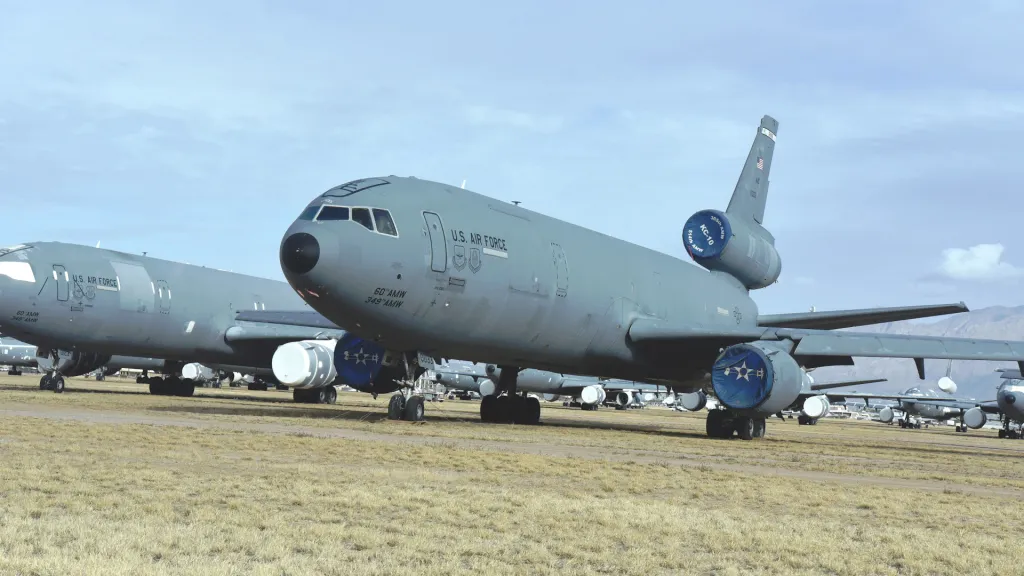
Retired KC-10 tankers seen at the boneyard at Davis-Monthan Air Force Base in Arizona in 2025. US Military

The Air Force operated KC-10s between 1981 and 2024. TWZ has reached out to the U.S. Air Force, as well as the U.S. State Department, for more information. The State Department directed us to contact the Pentagon.

The EDA program allows for materiel deemed extraneous to U.S. military needs to be transferred to allies and partners either at a reduced cost or as a grant. The foreign nation in question has to pay for those assets to be delivered, as well as refurbishment, if applicable.

It is important to note here that the Extender, as designed, is capable of refueling receivers using either the boom or the probe-and-drogue method. Tankers equipped for the probe-and-drogue method are, by far, more common internationally. We will come back to this later on.

A KC-10 seen refueling F-16 fighters via the boom. USAF
A KC-10 refuels a US Navy F/A-18 Hornet via the probe-and-drogue method. USN

While we don’t know what the North African country might be in line now to receive the quartet of KC-10s, Egypt and Morocco would seem to be the most likely candidates based on their current and planned aircraft inventories. They are also both major U.S. allies.

The Egyptian Air Force currently does not operate any dedicated aerial refueling tankers. The country is in the process of acquiring two new C-130J-30 Hercules aircraft for use as airlifters, as well as tankers, using the probe-and-drogue method. It does already fly C-130s, but none explicitly configured for aerial refueling duties. Egypt also has a very diverse array of fighters that includes U.S.-made F-16 Vipers that can only be refueled in mid-air via boom.

A US Air Force KC-10 refuels an Egyptian F-16 during an exercise in 2023. USAF/Staff Sgt. Emily Farnsworth

Morocco’s Air Force also flies F-16s and is in the process of acquiring more. The first new-production Block 72 F-16D for the Moroccan Air Force just flew for the first time earlier this week. Morocco does have an organic aerial refueling capability now, but in the form of C-130s equipped to dispense fuel via probe-and-drogue.

A Moroccan F-16 seen linking up with a US Air Force KC-135 tanker during an exercise. USAF

As mentioned, the KC-10 was designed to connect with receivers via probe-and-drogue, as well as boom, and could be used to refuel other tactical jets in Egyptian or Moroccan service. As an aside, fighters belonging to both regularly receive foreign tanker support during exercises, as already seen earlier in this story. Just last month, Chinese YY-20 tankers (also sometimes referred to as Y-20Us) notably did just this in an exercise in Egypt.

Whichever country may be in line to receive the four KC-10s, there is a question about the current state of those aircraft. Earlier in this story, we talked about the Extender’s capabilities as designed.

McDonnell Douglas (since absorbed into Boeing) delivered a total of 60 KC-10s to the U.S. Air Force between 1979 and 1987. The Extender was derived from the three-engine DC-10 airliner, the last of which was produced in 1989. The Air Force lost one of its KC-10s in an accident in 1987.

Of the remaining 59 KC-10s, 10 were put up for auction in a non-flyable state last year. For reasons that remain unclear, a single engine had been removed from under one of the wings of each of those aircraft. These Extenders were also among the first to be retired, and their booms had been stripped to be used as spares for the examples that remained in service until 2024. Private aerial refueling contractor Omega Air looks to have subsequently won those auctions. Omega also operates two ex-Dutch KDC-10 tankers, which are broadly similar to the KC-10, as well as another DC-10 converted into a probe-and-drogue-only tanker. The company has several Boeing 707-based tankers, as well.

One of Omega Air’s KDC-10s refuels US Air Force F-16s. USAF

The condition of the remaining 49 Extenders is unclear. Congress included a provision in the annual defense policy bill, or National Defense Authorization Act (NDAA), for the 2026 Fiscal Year that required the Air Force to preserve remaining retired KC-10s, but only stipulated they be maintained “in the same storage condition” they were in as of September 30, 2025. The bill, which was signed into law in December 2025, also made clear that the Air Force could still “dispose” of the aircraft in accordance with existing property management statutes.

Regenerating military aircraft, especially larger ones, back to service can be costly, complex, and time-consuming, even when they are kept in storage in a highly maintained state. In this particular case, acquiring KC-10s via the EDA program, with a very low up-front purchase price, could still be attractive to the right buyer, especially compared to the cost of acquiring new-production tankers.

Personnel at the boneyard at Davis-Monthan Air Force Base apply a protective coating to a KC-10. USAF

For a country like Egypt or Morocco that has never operated a boom-equipped tanker, second-hand Extenders could be a valuable entry point to future aerial refueling capabilities, as well. In general, organic aerial refueling capability is an important force multiplier for any air arm.

There is a possibility that KC-10s could be regenerated not as tankers, but as cargo aircraft, though this seems less likely to be the case. Cargo carrying was also an important duty for the Extenders while in U.S. Air Force service, and they still could operate in this role even when returned to service as tankers.

Though the aging KC-10s were getting increasingly more difficult to operate and maintain, the Air Force’s decision to retire them was still controversial. The Extender was a highly flexible tanker that could carry more fuel than the KC-46s that supplanted them. Clearly, there are others still interested in operating them.

It should be stressed that the AFLCMC contracting notice does not present the transfer of the four KC-10s as a done deal. At the same time, it has revealed that one of America’s partners in North Africa could breathe new life into four of these retired tankers.

Contact the author: joe@twz.com
Joseph is TWZ’s Deputy Editor, helping to oversee the site’s highly experienced and dedicated team, while also writing informative and impactful defense and national security content. He lives right in the thick of it in the Washington, D.C. area.


Source link

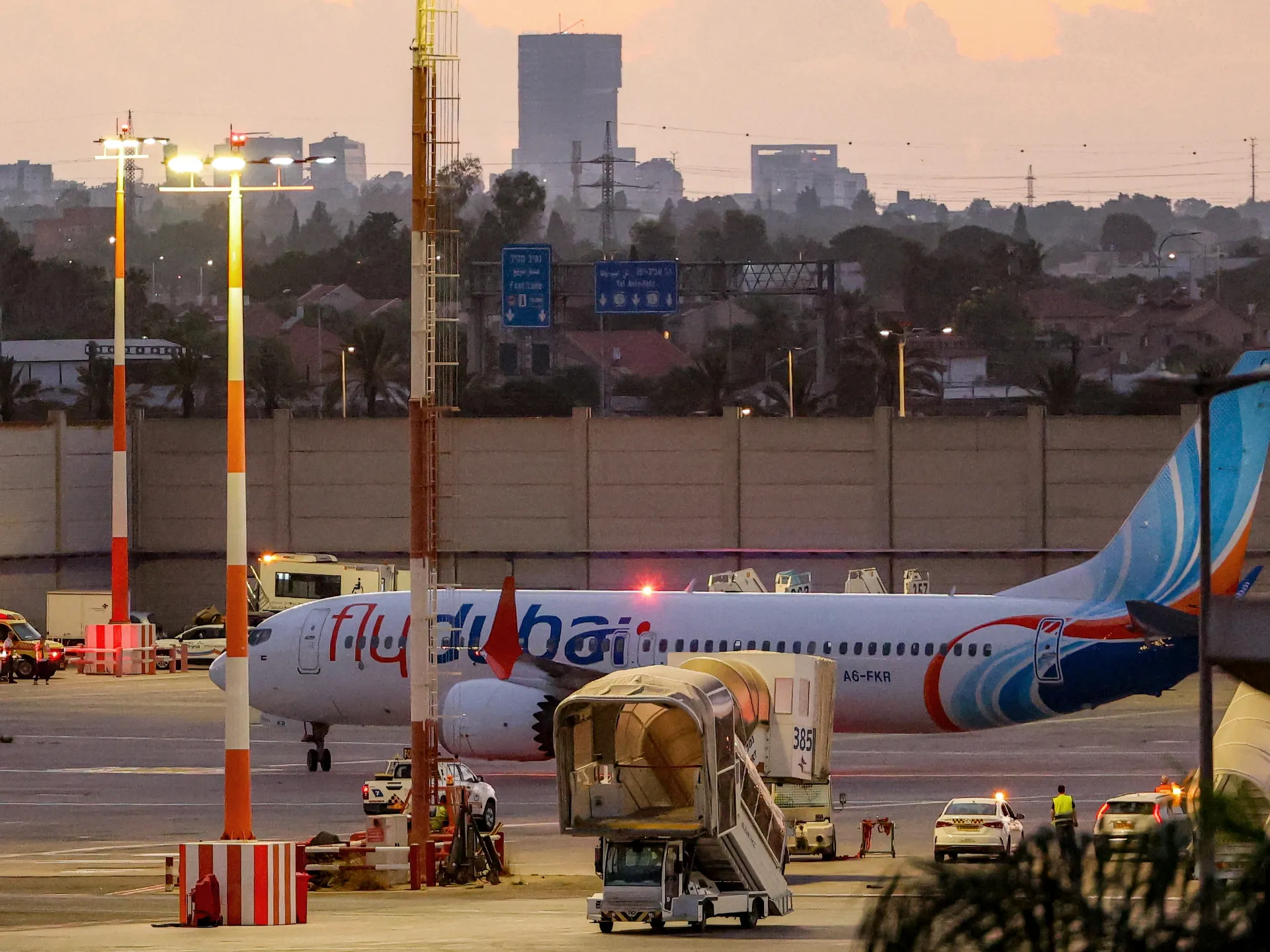
Who is the mystery co-pilot behind the Flydubai attack? | Explainer News

A Flydubai co-pilot accused of attacking the captain of a flight bound for Israel has been identified as an Omani national previously barred from flying in his home country over concerns about alleged extremist views, according to media reports.

There has been no official confirmation of the pilot’s identity or his beliefs.

Recommended Stories

list of 3 itemsend of list

The United Arab Emirates on Saturday described Wednesday’s incident on board Flight FZ1073 as an attempted “terrorist operation”, saying the co-pilot attacked Captain Smit Machchhar, an Indian national, with an emergency axe and attempted to take control of the aircraft.

But investigators are still working to establish the motive and whether anyone else was connected to the attack, which has raised concerns about pilot vetting and aviation security.

Here is what we know:

What do we know about the accused pilot?

The co-pilot suspected of attacking the captain of the Dubai-Tel Aviv flight carrying 174 people has been identified as Hamam al-Hammami, an Omani national, three people with knowledge of the situation, including a Gulf diplomat and a Western diplomat, told AP news agency.

All spoke on condition of anonymity because they were not authorised to speak to the media. The Gulf diplomat said investigations are under way to establish whether he acted as a “lone wolf or had any connection with any extremist groups”.

US media outlet CNN, quoting a source and an Israeli official, reported that al-Hammami is an Omani citizen who was born in the UAE to a Syrian mother and spent several years in the Emirates.

Questions have emerged about his previous aviation career and whether warning signs had been raised before he joined the Dubai-based low-cost carrier.

The Wall Street Journal, quoting unnamed sources, reported on Friday that Omani authorities had previously barred the accused co-pilot from flying in the country because of concerns that he had held extremist views.

Nevertheless, it remains unclear what those alleged views were or whether Oman informed other countries or airlines about its concerns.

CNN separately quoted a regional diplomatic source as saying that al-Hammami had been removed from flight training over similar concerns and was subsequently reassigned to another position.

The US-based network also reported that a LinkedIn profile bearing al-Hammami’s name said he had spent seven years at Oman Air before leaving in February 2025. The profile said he joined Royal Air Maroc in June 2025 and left in January 2026.

What happened on flight FZ1073?

At 7:05am (03:05 GMT) on Wednesday, Flight FZ1073 departed Dubai for Tel Aviv, climbing to 34,000ft (more than 10,000 metres), according to Flightradar24. A little more than two hours later, it suddenly began to descend, plunging before rising and then descending again.

Flight-tracking data showed the plane plunging more than 17,000 feet in about two minutes, before climbing and descending again.

Meanwhile, a fight had begun in the cockpit between the two pilots. The co-pilot had attacked the Indian captain of the plane, Smit Machchhar, by stabbing him.

Machchhar later described finding himself seriously wounded on the cockpit floor as the aircraft descended.

“When I was down, I could feel that the aircraft was plummeting, and I knew this is the last chance to do something,” he told Indian Prime Minister Narendra Modi from a hospital in Abu Dhabi.

“I knew that the aircraft was going down … I had fallen to the ground. I told myself that the door is right there, just open it. I managed to do it and people entered,” he said.

Passengers and crew members entered the cabin and overpowered the co-pilot. The aircraft eventually levelled out at about 15,000 feet. Its transponder was subsequently switched to code 7500, signalling unlawful interference.

Two reserve pilots who were on board took control of the jet and landed it in Tabuk, northwestern Saudi Arabia. The plane landed safely at 9:45am (06:45 GMT) local time. Saudi authorities said both pilots were taken to hospital. They were later transferred to Abu Dhabi after being medically cleared.

What has the UAE said about the attack?

UAE Attorney General Hamad Saif al-Shamsi said on Saturday that investigators had determined that the co-pilot had begun carrying out what he described as a “terrorist act”.

According to al-Shamsi, the co-pilot attacked the captain inside the cockpit using the aircraft’s emergency crash axe and “attempted to take control of the aircraft’s controls”.

A crash axe is a tool kept in a cockpit to help pilots cut through the plane in emergencies.

On Thursday, al-Shamsi had ordered investigators to determine whether the incident was connected to “terrorist activity or intent” or involved prior planning or direction.

The UAE has not yet publicly established a motive or announced whether investigators believe al-Hammami acted alone.

UAE presidential adviser Anwar Gargash on Saturday said that the latest ‘terrorist’ attack is new warning that region’s fight against extremism is not over.

“This underscores the importance of the UAE’s early and firm stance: no tolerance for extremism and no leniency towards its rhetoric. Security begins with confronting hatred and drying up the sources of extremism,” he posted on X

What is the latest in the investigation?

Abu Dhabi is now leading the investigation, with prosecutors examining the circumstances of the attack, its motive and any possible connections to others.

Previously, al-Shamsi said UAE judicial authorities have jurisdiction over the incident because the aircraft is registered in the UAE and flies under its flag, adding that UAE law applies to crimes committed on board “even if they occur outside the country’s territory”.

On Saturday, al-Shamsi said investigators are working “to uncover all the circumstances of the incident, its motives, and related connections, in addition to completing technical examinations and examining physical and digital evidence”.

The final results will be announced as soon as the necessary procedures are completed, he said.

Meanwhile, Flydubai flights to Israel remain ⁠suspended amid the investigations.

Source link

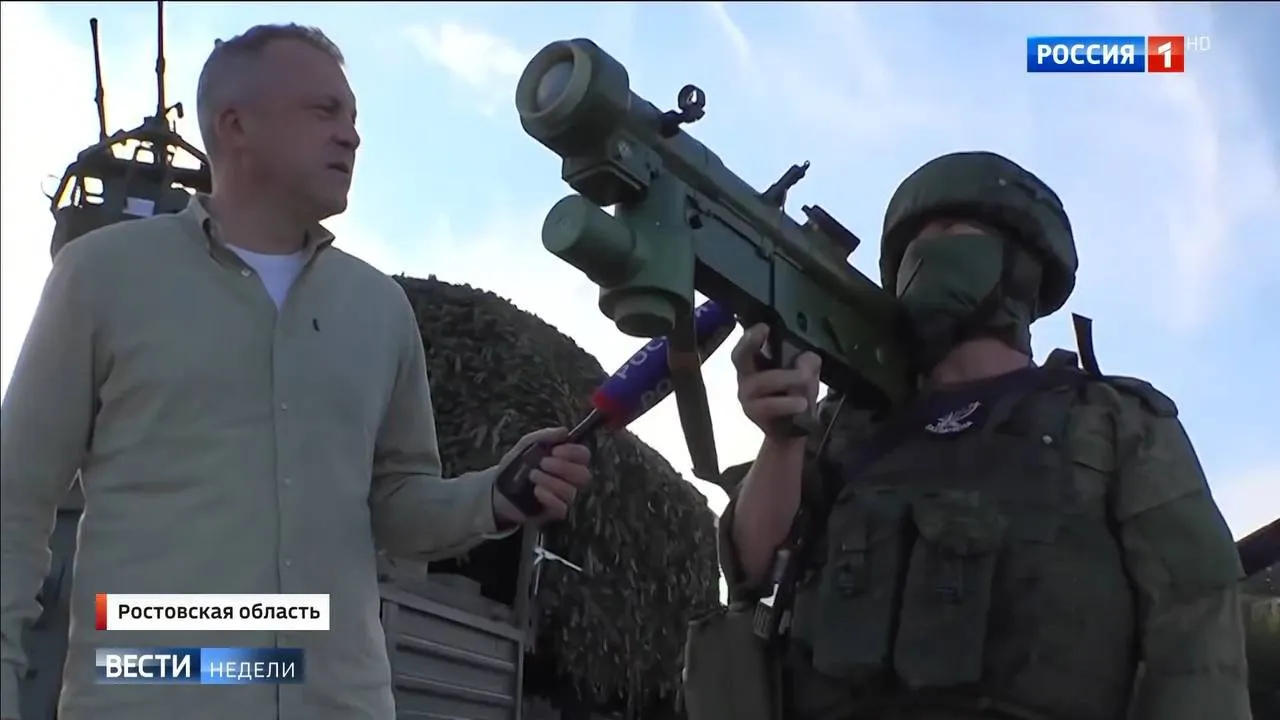
Mystery Shoulder-Fired Surface-To-Air Missile Appears In Russian Service

An unusual shoulder-fired air defense missile seen in Russian use may be of Chinese or Iranian origin, raising questions about the movement of foreign weapons through the increasingly interconnected military supply networks linking Moscow, Beijing, and Tehran.

The man-portable air defense system (MANPADS) appeared in Russian television footage showing a mobile air defense group operating in the Rostov region, which borders Ukraine. The weapon was shown during an exercise said to have involved one of the elements of Russia’s 51st Air Defense Division. The footage was subsequently highlighted by the X account TheDeadDistrict.

The system does not closely resemble any of the Russian-made MANPADS families otherwise used by the country’s armed forces. Russian personnel seen with the weapon reportedly referred to it as “Iva,” although that designation by itself does not establish the weapon’s origin or model. The word Iva is Russian for willow (a type of tree), of which one particular species is named Verba — also the name of the Russian-made 9K333 MANPADS. This weapon looks very different to the example shown, but the connection is unlikely to be a coincidence.

An operator of the mystery MANPADS is interviewed by the Russia-1 TV channel. Russian State Media

A visual analysis of the newly observed launcher reveals comparisons with both the Iranian Misagh-3 and Chinese QW-series systems, particularly the QW-18/QW-18A and QW-19. In particular, a closer examination of the imagery highlights an additional box-like component toward the front of the launcher. That feature appears more consistent with photographs of Chinese QW-series systems rather than the Misagh.

The front part of the MANPADS launcher, with the distinctive box-like component below the tub. Russian State Media

There is also a scarcity of publicly available imagery of later Iranian variants to completely exclude an Iranian system. At the same time, the Misagh series itself is understood to be derived, or at least heavily influenced by Chinese designs.

An Iranian Misagh-3 MANPADS with its missile. Tasnim News Agency

Another possibility is that the weapon is a Russian-produced version or derivative of a Chinese or Iranian design, rather than an imported system.

The possibility of foreign-made or foreign-designed equipment appearing in Russian service has to be viewed against the much broader transformation of Moscow’s military relationships since the full-scale invasion of Ukraine in February 2022.

Russia’s relationship with China has deepened substantially since the invasion, with Beijing becoming a critical source of machinery, electronics, and other components that Russia’s defense industry can no longer obtain as readily from Western suppliers. Moscow and Beijing had already declared a “no limits” partnership shortly before the invasion, and their military relationship has subsequently included exercises and expanding military-technical cooperation. U.S. officials have accused China of supplying Russia with components used in weapons production, including microelectronics. Beijing has rejected accusations that it is providing lethal military assistance to Russia.

A close-up of the front end of the MANPADS. Russian State Media

Iran has also become an important military partner. Russia has used Iranian-designed Shahed-series attack drones extensively in Ukraine and has worked with Tehran on local production and adaptation of those systems. Moscow and Tehran formalized their relationship further with a comprehensive strategic partnership treaty in January 2025, which includes provisions for military-technical cooperation and joint exercises.

In return, Russia has supplied Iran with military technology and has cooperated with Tehran on sensitive weapons programs.

The possible Chinese connection takes on additional significance in light of a major reported procurement deal between China and Iran.

In July, Reuters reported that Iran was expected to receive the first shipment of a deal covering 300 to 400 Chinese-made MANPADS, with a reported value of $60 million to $70 million. The weapons identified by sources included the Chinese QW-12 and FN-16 systems.

The reported contract was signed with a Hong Kong-based company that sources described as an intermediary between the Iranian side and the Chinese supplier. Reuters said the initial deliveries were planned from Urumqi in western China, with the weapons then transiting through Pakistan before reaching Iran. Pakistan’s military publicly denied any involvement in such transfers, while China’s Foreign Ministry called the report “groundless.”

Reuters also reported that delivery schedules and quantities could still change.

More significantly for the Russian sighting, a European security source told Reuters that authorities were aware of several contracts under discussion involving the potential sale of QW-12, QW-18, and QW-19 MANPADS to Iran. A Middle Eastern security source separately claimed that Iran had been seeking QW-18 systems.

There is currently no evidence tying the launcher seen in Russian hands to the Iranian procurement from China.

At the same time, the possibility of an Iranian connection should not be ruled out, especially since Chinese-designed MANPADS have a documented history of appearing outside conventional state inventories.

Earlier TWZ reporting, drawing on research by the Small Arms Survey monitoring group, examined the illicit proliferation of Chinese-designed MANPADS and identified dozens of cases involving armed groups in multiple countries. That research included QW-series weapons and documented cases in which investigators linked Chinese-designed MANPADS to Iranian supply networks.

Countries with reports of illicit possession of advanced MANPADS by armed groups, 2011-21. Small Arms Survey

One particularly notable case involved the Jihan, a vessel intercepted in 2013 carrying weapons that investigators identified as including QW-18-pattern MANPADS. UN investigators, the U.S. government, and  Conflict Armament Research assessed Iran as the likely source of those weapons.

It is also worth noting that Chinese MANPADS have already appeared on the Ukrainian side of the war. In late 2025 and 2026, Ukrainian units were photographed with Chinese-made FN-6 and FN-16 systems, including an FN-6 associated with an air defense team reportedly engaging a Russian cruise missile. Exactly how the weapons reached Ukraine remains unclear, with possible third-party transfers or diverted shipments among the possible explanations.

Incidents like these demonstrate that Chinese MANPADS can move through indirect supply networks, including networks associated with Tehran.

Regardless of how it arrived in Russia, the appearance of a foreign or foreign-derived MANPADS there is notable.

Mobile fire groups have become an increasingly visible component of Russia’s layered air defense effort, particularly as the war in Ukraine has placed enormous emphasis on countering low-altitude drones and other threats, including deep inside Russia.

MANPADS are well suited to this mission because they can be dispersed among small teams, rapidly repositioned, and deployed without the larger radar and vehicle infrastructure associated with conventional surface-to-air missile batteries. In particular, they can be deployed around military installations and other sensitive infrastructure.

A foreign system appearing in a Russian mobile fire group might be an imported weapon, an Iranian-produced derivative, a Chinese system acquired for evaluation, a captured weapon, or even a previously unidentified Russian configuration.

Another possibility is that the MANPADS is North Korean in origin. Russia’s military relationship with Pyongyang has expanded significantly, including the provision of increasingly advanced military equipment and technology. There is no known North Korean MANPADS matching the configuration seen here, however, and the possibility remains speculative. North Korean weapons have also frequently incorporated or closely followed Chinese designs, meaning a Chinese-looking configuration would not necessarily rule out a North Korean origin.

Russia has dramatically expanded defense production since 2022, but its industry remains under heavy wartime demand and sanctions-related constraints. Western restrictions have complicated access to advanced electronics, machine tools and other components, while Russia has increasingly relied on domestic substitutes and foreign suppliers.

The mystery MANPADS launchers disassembled and in a container for transport. Russian State Media

At the same time, Russia must replenish weapons consumed in Ukraine, meaning foreign supplies could supplement domestic production, fill specific gaps, or allow scarce industrial capacity to be directed elsewhere.

For Russia, even a limited number of additional shoulder-fired systems could therefore have practical value as Ukrainian long-range strike capabilities continue to expand.

For now, the exact model and provenance of the MANPADS in question remain unconfirmed, but the apparent Chinese or Iranian design characteristics are highly noteworthy. Further appearances of the system could provide the clues needed to determine what it is, where it came from, and whether this represents an isolated example or a more significant acquisition effort.

Contact the author: thomas@thewarzone.com

Thomas Newdick is a staff writer at TWZ, where he covers military aviation, defense technology, weapons systems, and international security. Based in Berlin, Germany, he reports on conflicts, military modernization efforts, and emerging aerospace technologies around the world, with a particular interest in airpower and its role in contemporary warfare. His reporting is informed by deep expertise in modern and historical airpower, particularly in Europe, with a focus on military aviation, air campaigns, and aerospace developments across the continent and beyond.


Source link

Mystery as Jake Humphrey claims Holly Willoughby robbed him of ‘big moment’ on TV is edited out of new podcast

JAKE Humphrey candidly revealed how fellow kids TV presenter Holly Willoughby robbed him of his “big moment” in a new interview with Davina McCall — only for the clip to mysteriously disappear.

During an emotional chat with Davina’s Begin Again podcast, Jake, 47, opened up about his childhood bullying trauma, his relationship with his grandfather and a brutal rejection from BBC Sport earlier in his career.

Jake Humphrey talked openly about difficult moments from his life that shaped the man he’s became Credit: Begin Again
Holly Willoughby decided to defect to ITV instead of signing up for a CBBC kids’ TV show with Jake Credit: CBBC

He also spoke about his friendship and working partnership on CBBC with Holly. The pair were popular with young viewers in the early 2000s and presented CBBC’s coverage of talent show Fame Academy.

Jake revealed the pair’s chemistry was so good that channel bosses proposed they have their own show which they would have complete creative control over.

A delighted Jake saw it as his “big moment” and couldn’t wait to get planning, but his dreams disappeared the following day when Holly tentatively called him and said she wanted to pursue a presenting career with ITV.

Jake said the blow taught him a valuable lesson about the industry and not relying on others to share your vision.

READ MORE ON JAKE HUMPHREY

‘LOVE YOU, BROTHER’

Jake Humphrey breaks down in tears on BBC in emotional Jordan tribute


OL OVER

Ex-BT Sport host Jake Humphrey ‘completely mugged off’ on radio by Jamie Oliver

Jake thought the kids’ show was going to be his ‘big moment’ Credit: Begin Again
The pair remain good friends, and Holly now has her own YouTube channel Credit: Shutterstock Editorial

The clip was published on the Begin Again TikTok and Instagram accounts before seemingly being pulled and edited out of the podcast.

The Sun has contacted a representative for Begin Again for comment.

BT Sport presenter Jake recently shared a series of Fame Academy throwback images referencing the pair’s time on-screen.

He previously revealed the pair were so close they even shared a bed together.

In an unearthed interview from 2012, Jake told The Mirror that while he and Holly were working on Celebrity Fame Academy, she would stay at his flat in London as she was based in Brighton.

Jake recalled: “Eventually, it got to the point where we couldn’t be bothered to get the blow-up bed out so for about six months we slept in the same bed.”

Jake stressed that “nothing ever happened” romantically between him and Holly, but joked that may have been a different story if he hadn’t been dating.

Jake teased: “I wouldn’t want to say I met my wife too early but I would just say Holly’s worst habit is she sleeps naked – joking, of course.

“Holly’s a good mate but I look back on my time with her and wonder what might have been but I was going out with Harriet at the time and she lived in Leeds.”

Holly’s career in the spotlight began when she was scouted by a model agency at the Clothes Show Live aged just 14.

She then broke into television presenting, hosting shows on CBBC, before landing a job with its telly rival CITV.

That springboarded her career towards This Morning, which she signed for in 2009, and she worked on the ITV daytime show up until last year.

Holly has now swapped terrestrial TV for her own YouTube show, Together, which is produced by husband Dan’s Hungry Bear Media and currently has over 26,000 subscribers.

Source link

Claims Swirl Around U.S. Marines Injured Aboard Mystery Vessel Attacked In The Strait Of Hormuz

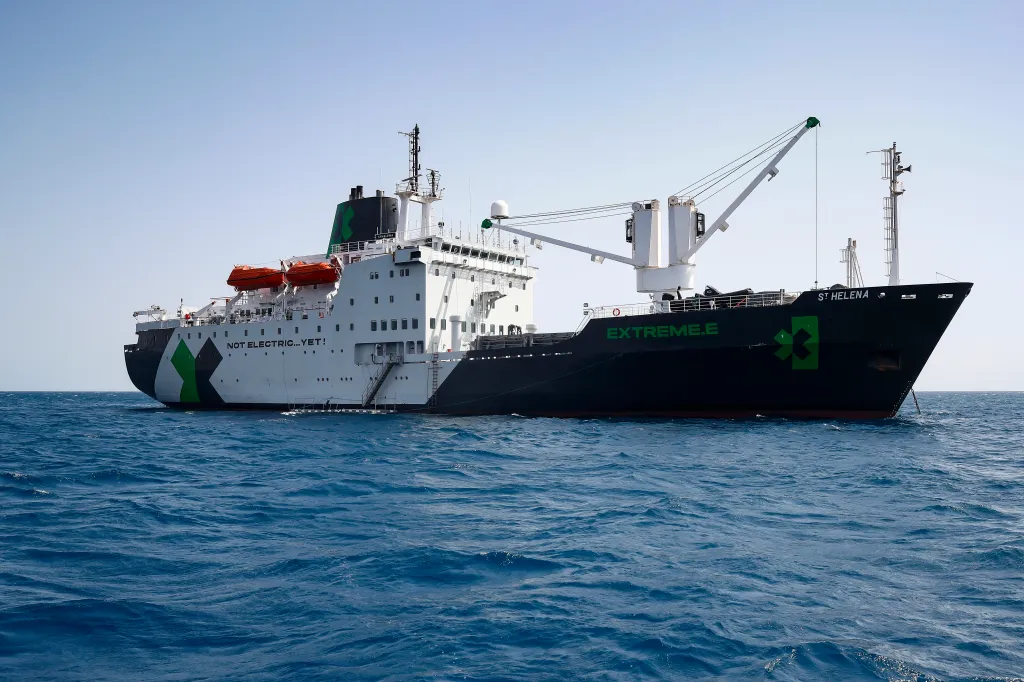
On Sunday, NBC News reported that Marines were injured during an Iranian cruise missile attack while transiting the Strait of Hormuz on Sept. 14. The network’s sources said the Marines were not on a U.S. Navy ship, but they did not identify which vessel they were on. However, a former Royal Mail vessel that at one point was being converted into a floating armory stands out as a strong possibility.

While much remains unclear about the Sept. 14 incident, there was only one vessel known to have been struck that day, according to the United Kingdom Maritime Trade Operations (UKMTO) and a maritime security official we spoke with. The ship was eventually identified by several maritime media outlets as the M/V St. Helena. Again, the St. Helena’s involvement remains unconfirmed, but the ship’s interesting background is of particular note.

MARCH 30: The St Helena logistics ship during the Saudi Arabia on March 30, 2021. (Photo by Colin McMaster/LAT Images for Extreme E)
The St Helena logistics ship during the Saudi Arabia on March 30, 2021. Photo by Colin McMaster

“Eight U.S. Marines were injured two weeks ago when an Iranian cruise missile attacked the ship they were operating on in the Strait of Hormuz,” NBC reported, citing three U.S. officials. “The Marines were not seriously injured, but they sustained smoke inhalation and possibly traumatic brain injuries, as they had symptoms of concussions, such as headaches, the officials said.”

“The Marines, seven of them enlisted and one officer, all returned to duty soon after the Sept. 14 attack, the U.S. officials said,” according to the network. “The officials said the Marines were operating as part of a battalion landing team during the Iranian anti-ship cruise missile attack.”

TWZ cannot independently confirm that Marines were on board the St. Helena or that they were injured. We reached out to the Pentagon and U.S. Central Command (CENTCOM) for more information. The Pentagon referred us to CENTCOM, and CENTCOM declined comment.

The incident took place amid an uneasy truce between Iran and the U.S. broken up by sporadic Iranian attacks on ships transiting the Strait of Hormuz. At the same time, the U.S. military is enforcing a blockade on Iranian ships, during which it has struck several for trying to bypass that effort as well as in retaliation for Iranian attacks on shipping. Negotiations between Washington and Iran have ebbed and flowed, and U.S. President Donald Trump is once again mulling a choice between continuing talks or renewing large-scale attacks.

As we noted earlier in this piece, after the vessel was struck, several maritime industry trade publications identified it as the St. Helena.

“Iran has attacked a historic former British Royal Mail passenger ship in the Strait of Hormuz,” TradeWinds News reported on Sept. 15, a day after the incident. “Maritime security sources identify the 6,800-gt St Helena (built 1989) as the latest vessel to be hit by an ‘unknown projectile’ in the war-torn waterway. The attack was reported late on Monday, according to UK Maritime Trade Operations, which cited a ‘verified source’ for the incident without identifying the vessel.”

JULY 04: Aerial view of the St Helena transport ship in the sea off Porto Pino during the Sardinia on July 04, 2022. (Photo by Sam Bagnall/LAT Images for Extreme E)
Aerial view of the St Helena transport ship in the sea off Porto Pino during the Sardinia on July 4, 2022. Photo by Sam Bagnall

“UKMTO has received a time late report of an incident within the Strait of Hormuz,” the organization reported on Sept. 15, citing an incident that took place a day earlier. “A verified source has reported that a vessel has been struck by an unknown projectile.”

“There is no reported damage or environmental impact,” UKMTO added. “Authorities are investigating.”

According to Lloyd’s List, the ship was being operated by the Ambrey maritime security firm at the time it was struck. Ambrey declined to comment. 

Shipping expert Sal Mercogliano and open-source investigator Tom Bike were among those suggesting the St. Helena could have been the vessel at the heart of the NBC report.

Exactly what the St. Helena was doing at the time it was struck is unclear; however, the ship has had a very unusual past.

The vessel entered into service in 1990 and “sailed between Cape Town, South Africa and Saint Helena and Ascension Islands, carrying both passengers and cargo, some of which was Royal Mail, earning her the rare RMS designation,” according to Cruise Arabia and Africa.

The St. Helena was Britain’s last working postal ship, according to Maritime Executive. After it was retired in 2018 because it was no longer needed for that function, things got really interesting.

Two different organizations took over the vessel, including, as we noted earlier in this story, a company that was planning to use it as a floating armory in the Middle East.

“Renamed MNG Tahiti, the 103-meter (340-foot) ship is being readied by her new owner MNG Maritime to become a floating armory working in the Gulf of Oman,” Maritime Executive wrote on April 22, 2018. “She will deliver security guards and weapons to vessels sailing through the region and is expected to be operational in her new role in the next few months.”

It is unclear what happened to that plan. However, two years later, an off-road racing series called Extreme E said that it “secured exclusive use of the former Royal Mail ship in 2018.” After that, the ship underwent “an extensive refurbishment process, which has included total overhaul of steelwork, engines, generators, propellers, interior and cabin space, and more, making it not only fit for purpose, but also as efficient as possible ahead of its new mission.” 

JULY 04: Aerial view of the St Helena transport ship in the sea off Porto Pino during the Sardinia on July 04, 2022. (Photo by Sam Bagnall/LAT Images for Extreme E)
Aerial view of the St Helena transport ship in the sea off Porto Pino during the Sardinia on July 4, 2022. Photo by Sam Bagnall

The ship was “specifically designed to transport all the infrastructure and equipment the Extreme E needs for their race weekends,” the organization stated. The plan was to have the ship serve “as its freight and logistics hub due to her versatility and ability to carry and unload a mixture of cargo, like all 10 of the championship’s ODYSSEY 21’s [electric off-road racecar], as well as team members and guests. This was also fit with a Science Laboratory so research can be conducted enroute to the race locations.”

Both the St. Helena and MNG Tahiti have the same international shipping identification number of IMO 8716306, according to the MarineTraffic website.

On Sept. 17, 2024, the St. Helena was put up for sale, according to Horizon Ship Brokers. The current ownership is unclear. We reached out to Horizon Ship Brokers for more details.

Horizon Ship Brokers

Last year, the saga of the St. Helena took a new turn. A company called Terra Nova Expeditions chartered the vessel for Antarctic cruises, but those plans were scrubbed last month because the vessel was stuck in the Persian Gulf and was no longer available for the Antarctic sailing season.

It was last tracked via its transponder near Dubai nearly two months ago, according to MarineTraffic.

While we can’t confirm that Marines were onboard when St. Helena was hit, Marines have been training for this exact mission set. USNI News reported in 2023 that a “force of 100 Marines, newly trained by Navy personnel,” stood ready “to respond, if ordered, to provide armed security aboard foreign commercial ships transiting the Strait of Hormuz.”

Those Marines were members of the 26th Marine Expeditionary Unit (MEU) embarked on the three-ship Bataan Amphibious Ready Group (ARG), USNI added at the time.

It is unclear if those plans are still in place and if Marines in the region have actually been ordered to provide armed security for foreign vessels sailing through or near the strait. Regardless, Marines could be quickly trained to take on this mission set and have drilled for ship boarding and searches for years, especially special operations and specially-tasked units. CENTCOM declined to comment when we asked if there are U.S. personnel embarking on commercial ships transiting the Strait of Hormuz.

At the same time, it is possible that the unique attributes of St. Helena made it a convenient host ship for sea base operations for U.S. forces in the region specifically for this crisis. Adapting commercial vessels for exactly this purpose has a long history around the Strait of Hormuz, as it was a central facet of the Tanker Wars during the 1980s, that saw U.S. forces operate from barges in the region. Today, commercial vessels remarkably similar to St. Helena operate in similar roles, especially in support of special operations and interdiction operations.

211024-N-KY668-1208
 CARIBBEAN SEA - (Oct. 24, 2021) – The special mission ship U.S. Motor Vessel Kellie Chouest steams in the Caribbean Sea while participating in a passing exercise (PASSEX), with the Dominican Republic Navy and USS Billings (LCS 15) Oct. 24, 2021. Kellie Chouest is deployed to the U.S. 4th Fleet area of operations to support Joint Interagency Task Force South’s mission, which includes counter-illicit drug trafficking missions in the Caribbean and Eastern Pacific. (U.S. Navy photo b
The special mission ship U.S. Motor Vessel Kellie Chouest steams in the Caribbean Sea while participating in a passing exercise (PASSEX), with the Dominican Republic Navy and USS Billings (LCS 15) Oct. 24, 2021. Kellie Chouest is deployed to the U.S. 4th Fleet area of operations to support Joint Interagency Task Force South’s mission, which includes counter-illicit drug trafficking missions in the Caribbean and Eastern Pacific. Photo by Petty Officer 2nd Class Austin C

Once again, we have no idea what the ship’s mission was at the time of the incident and if Marines were simply helping it transit safely out of the Persian Gulf or something more, but the attack did expose the fact that individual Marines are more involved with activities in this tumultuous body of water than it may seem.

Contact the author: howard@twz.com.

Howard is a Senior Staff Writer for TWZ. He writes frequently about conflict, focusing heavily on the Middle East and Ukraine, and interviews with military and intelligence officials and industry leaders from around the globe. He lives near Tampa, Florida, home of U.S. Central Command, U.S. Special Operations Command.


Source link

Mystery rift between GK Barry and Joe Baggs revealed as former best pals quietly grow apart

THEY’RE two of the nation’s biggest content creators with over 700,000 YouTube subscribers between them.

But Joe Baggs, 29, and GK Barry, 27, are no longer flying the flag for each other’s media careers and their once close friendship appears to be in tatters.

GK Barry and her former bestie Joe Baggs have drifted apart Credit: Getty
Insiders claim Joe might have been jealous of GK landing a place on I’m A Celeb Credit: Getty

A source told The Sun: “GK and Joe used to be joined at the hip but they have quietly grown apart. They haven’t been seen together publicly since GK left the jungle, and never like each other’s posts on social media.

“Even when GK released her book, which was a big deal for her, there was radio silence from Joe.

“There’s lots of whispers about what went down, some have speculated that Joe was jealous when Grace got her spot in the jungle as he’s always wanted to do that show, while others have rubbished that suggestion and said they just drifted as she got busier.

“What’s really sad is that she always used to be round his family’s house for dinner, went on holiday together and they always posted it on the ‘gram, and now she’s never seen with the Baggs lot. It’s like they just disappeared from each other’s lives.

“Tellingly, Joe’s boyfriend Kane used to seem pretty pally with Grace too, but even he doesn’t comment on her posts anymore, so something sad has definitely gone down.”

BIG SNOOZE

Big Brother fans slam ‘boring’ new vodcast and beg ‘bring back Late and Live’


POD PEEVE

GK Barry hints at secret showbiz feud with Mark Wright after podcast clue

Another source close to Joe insisted, however, that there is no bad blood.

They said: “Joe couldn’t be prouder of everything Grace has achieved since leaving the jungle. The reality is that both of their careers have taken off in different directions and, with increasingly busy work schedules, they simply don’t get to spend as much time together as they once did.

“There’s absolutely no bad blood, they remain friends and continue to champion one another from the sidelines.”

GK and Joe were once regulars on each other’s shows Credit: Supplied
Joe appears to be closer to Chloe Burrows, centre, these days Credit: Getty

Just this week, however, Joe appeared to give away the lack of closeness between him and Grace, where he revealed fellow podcaster Chloe Burrows is his best pal at the Fellas Studio, where they both record their podcasts.

Interestingly GK also records her hit podcast, Saving Grace, at Fellas, as they are all part of the same podcast company, so the fact that he named Chloe as his work bestie and not Grace has caused a flurry of gossip in their inner circle.

“Joe and GK have lots of mutual friends, and they are all talking about this,” a pal spilled.

“The fact that Joe said this about Chloe on his pod was basically admitting that he and Grace aren’t close anymore, but few fans will have clocked it because they don’t understand they all work out of the same studio.

“Strangely, both GK and Joe are being very tight-lipped, even with their friends, about what went down, which has only made the rumour mill even more frenzied.

“It’s a shame as they were so close and they are very similar, but sadly, right now it’s looking like they aren’t going to be BFFs again anytime soon.”

The Sun has contacted representatives for Joe and GK for comment.

Both YouTubers have been chasing mainstream fame and have had successful years.

GK – real name Grace Keeling – was one of the standout stars on I’m A Celebrity last year and has gone on to establish herself as a Loose Woman. She’s also landed her own weekly show on Radio 1 as the station underwent a major reshuffle to appeal to a young more online-driven audience.

However, listeners of the BBC station criticised her first show and questioned if it was recorded live like her predecessors Matt Edmonson and Mollie King after she failed to interact with the audience.

Meanwhile, Joe is now a panellist on Love Island: Aftersun and hosted an official Britain’s Got Talent spin-off.

Source link

Mystery son and disputed heir: Uganda’s king buried amid succession dispute | Obituaries News

Fort Portal, Uganda – When King Oyo Nyimba Kabamba Iguru Rukidi IV of Tooro was buried on September 12, the ceremony unfolded under the shadow of a bitter dispute over who should succeed him.

Prince Edward Rukidi Kijanangoma, a 56-year-old news anchor and editor at Uganda Broadcasting Corporation, had been selected by the royal clan to succeed Oyo. During the burial at the Karambi Royal Tombs in Fort Portal, he formally assumed power by casting nine coffee berries into the king’s grave, part of the traditional handover ritual.

But the succession remains contested.

Oyo’s mother, Queen Mother Best Kemigisa, and his sister, Princess Ruth Komuntale, have opposed Kijanangoma’s selection, saying the late king’s will named a son as his heir.

Oyo never married and was not publicly known to have children. After his death, Tooro’s Prime Minister Calvin Armstrong Rwomiire Akiiki announced that the king had left a son whose identity would be revealed at an appropriate time. The child has not been publicly identified.

Oyo’s family says a 2022 will named a son whom he described as his lawfully recognised biological son as heir to the throne. But Babiito clan elders, who are responsible for guarding the Tooro royal lineage, determining succession and safeguarding the kingdom’s traditions, say Oyo had not introduced the child through the customary process and instead backed Kijanangoma as his successor.

“The will is not a determinant of who is supposed to be a king; it is a document that expresses one’s wish,” said Reverend Father Charles Oyo, a Babiito clan elder. “The Musuuga [Babiito clan leader] is above the will.”

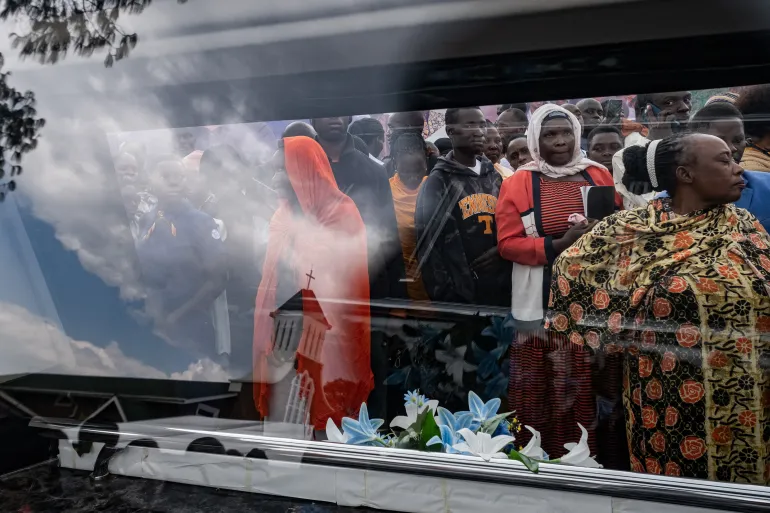
TOPSHOT - Members of the public react as the body of the late King Oyo Nyimba Kabamba Iguru Rukidi IV makes its way to Karambi Royal Tombs for burial in Fort Portal, Uganda, on September 12, 2026 [AFP]
Members of the public react as the body of the late King Oyo Nyimba Kabamba Iguru Rukidi IV makes its way to Karambi Royal Tombs for burial in Fort Portal, Uganda, on September 12, 2026 [AFP]

Princess Komuntale has accused the elders of trying to take over the throne.

“King Oyo was a very peaceful man, a very humble man,” she said. “I just don’t want these evil vultures to come and steal what he worked so hard for. I continue to stand with my brother.”

The dispute has divided opinion over who should be regarded as Oyo’s legitimate successor. The Ugandan government also became involved in talks aimed at resolving the dispute before the burial.

The child king

Oyo’s own path to the throne began when he was just three years old.

He became king in 1995 after the death of his father, Patrick David Matthew Kaboyo Olimi III, and was recognised as the world’s youngest reigning monarch.

FORT PORTAL, UGANDA - SEPTEMBER 12: A casket containing the body of the Late Oyo Nyimba Kabamba Iguru Rukidi IV is loaded on a cortege after leaving the Karuziika Royal Palace ahead of the burial at the Karambi Royal Tombs on September 12, 2026 in Fort Portal, Uganda. An official burial is taking place for Oyo Nyimba Kabamba Iguru Rukidi IV, a traditional Ugandan ruler of the Tooro kingdom, who died aged 34 on August 27, 2026, while being treated for a critical illness in the United States. In the wake of the king's death, a dispute has broken out between the monarch's family and the succession committee over who should succeed him. (Photo by Hajarah Nalwadda/Getty Images)
A coffin containing the body of the Late Oyo Nyimba Kabamba Iguru Rukidi IV is loaded onto a cortege after leaving the Karuziika Royal Palace before the burial at the Karambi Royal Tombs on September 12, 2026, in Fort Portal, Uganda [Hajarah Nalwadda/Getty Images]

As a child, Oyo was homeschooled, with the palace serving as his classroom. When he later joined primary school, childhood friends remember him as a kind and warm person.

During school holidays, he sometimes sneaked out of the family’s private residence in Buziga, Kampala, to play football in the neighbourhood.

Martin Odong, a radio journalist and childhood friend, remembers him as “friendly, social and compassionate”.

Oyo would stop football games to check on an injured player, regardless of which side they were playing for, Odong said.

His love of football continued into adulthood. He promoted local tournaments, including the Tooro Kingdom MTN Masaza Cup, which was suspended as his health deteriorated.

Oyo died on August 27, aged 34, in the United States while receiving cancer treatment. His body was returned to Uganda for nine days of mourning before his burial at the Karambi Royal Tombs, which coincided with Empango, the anniversary of his coronation.

At St John’s Cathedral, Queen Mother Best Kemigisa remembered her son as someone who had always protected her.

“He was my shield who always stood for me,” she said.

Mourners escort the cortege with the body of the late Omukama of Tooro, King Oyo Nyimba Kabamba Iguru Rukidi IV, for his burial at the Karambi Royal Tombs, in Fort Portal, Kabarole district, Uganda September 12, 2026. REUTERS/Abubaker Lubowa
Mourners escort the cortege with the body of the late Omukama of Tooro, King Oyo Nyimba Kabamba Iguru Rukidi IV, for his burial at the Karambi Royal Tombs, in Fort Portal, Kabarole district, Uganda, September 12, 2026 [Abubaker Lubowa/Reuters]

She recalled praying for his life when she was in hospital.

“When I was in the hospital, I said, ‘God, please leave my son alone; take me first,’” she said. “He [God] decided to take him [King Oyo] first. I said, ‘Why? Because he was closer to You than me.’”

Princess Komuntale described her brother as a “funny person” who “always brightened my day”.

Although he was younger than her, she said, he often behaved like the older sibling and protected her and their mother after their father “left to be with the Lord”.

Father Charles Oyo remembered him as a “handsome king who loved his kingdom so much”.

He said Oyo died just as he was “beginning to demonstrate his abilities and capacity as a king”.

A king without political power

Uganda is a constitutional republic, and its traditional kings have no formal political authority. But the kingdoms retain cultural influence and command loyalty among many of their communities.

FORT PORTAL, UGANDA - SEPTEMBER 12: Queen Mother, Best Kemigisa (R) and her daughter (L) Princess Ruth Komuntale, attend a requiem mass for the late King Oyo Nyimba Kabamba Iguru Rukidi IV of Tooro, at the St. John's Cathedral ahead of the king's burial at the Karambi Royal Tombs, on September 12, 2026 in Fort Portal, Uganda. An official burial is taking place for Oyo Nyimba Kabamba Iguru Rukidi IV, a traditional Ugandan ruler of the Tooro kingdom, who died aged 34 on August 27, 2026, while being treated for a critical illness in the United States. In the wake of the king's death, a dispute has broken out between the monarch's family and the succession committee over who should succeed him. (Photo by Hajarah Nalwadda/Getty Images)
Queen Mother, Best Kemigisa (R), and her daughter (L), Princess Ruth Komuntale, attend a requiem mass for the late King Oyo Nyimba Kabamba Iguru Rukidi IV of Tooro, at the St John’s Cathedral before the king’s burial at the Karambi Royal Tombs, on September 12, 2026, in Fort Portal, Uganda [Hajarah Nalwadda/Getty Images]

Uganda abolished its traditional kingdoms in 1967. They were restored in 1993 under President Yoweri Museveni.

Oyo was guided by regents while he was a child and took on the full responsibilities of the monarchy as an adult.

His unusual position meant he met presidents, royalty and other world leaders from a young age. Among them was former South African President Nelson Mandela, who reportedly wanted to meet the young king during a visit to Uganda. Oyo, however, was more interested in playing with his toys behind the VIP tent.

As an adult, he used the platform of the throne to promote issues beyond the kingdom.

In 2020, he climbed the Rwenzori Mountains to draw attention to climate change and the retreat of the glaciers there.

He also supported a campaign to plant 10 million trees across Tooro over five years.

He promoted healthy living and took part in cancer awareness runs. Komuntale called him her “best workout partner”.

Before his death, Oyo had allocated land and begun fundraising for a paediatric hospital in Kyenjojo district. Clan elders have since appealed to the government to complete the project and establish a specialised cancer facility and an international stadium in his memory.

His final months

Oyo’s illness was kept largely private.

According to his sister, he began experiencing pain in his back and rib cage last year. The family initially thought it might be linked to strenuous exercise or ulcers.

He later travelled to Kenya, where he was diagnosed with angiosarcoma, an aggressive form of cancer, before travelling to Germany for treatment and eventually to the US.

TOPSHOT - Members of the public react as the body of the late King Oyo Nyimba Kabamba Iguru Rukidi IV makes its way to Karambi Royal Tombs for burial in Fort Portal, Uganda, on September 12, 2026.
Members of the public react as the body of the late King Oyo Nyimba Kabamba Iguru Rukidi IV makes its way to Karambi Royal Tombs for burial in Fort Portal, Uganda, on September 12, 2026 [AFP]

“He told us to keep it private, and we respected that,” Komuntale said.

She said that shortly before his death, Oyo spoke to key workers in Uganda about returning home. He wanted to celebrate Empango, the anniversary of his coronation, with his people.

He never made it home.

For Komuntale, the king remained her younger brother even after he became one of Africa’s most recognisable traditional rulers.

She remembered playing dodgeball with him and his love for his three dogs.

“Even though you were crowned a king, you were still a kid who loved to play,” she said.

“I will keep your legacy, what you loved, and we will talk about you every day.”

Source link