Malaysia’s welcome for Min Aung Hlaing undermines its stand on justice | ICC
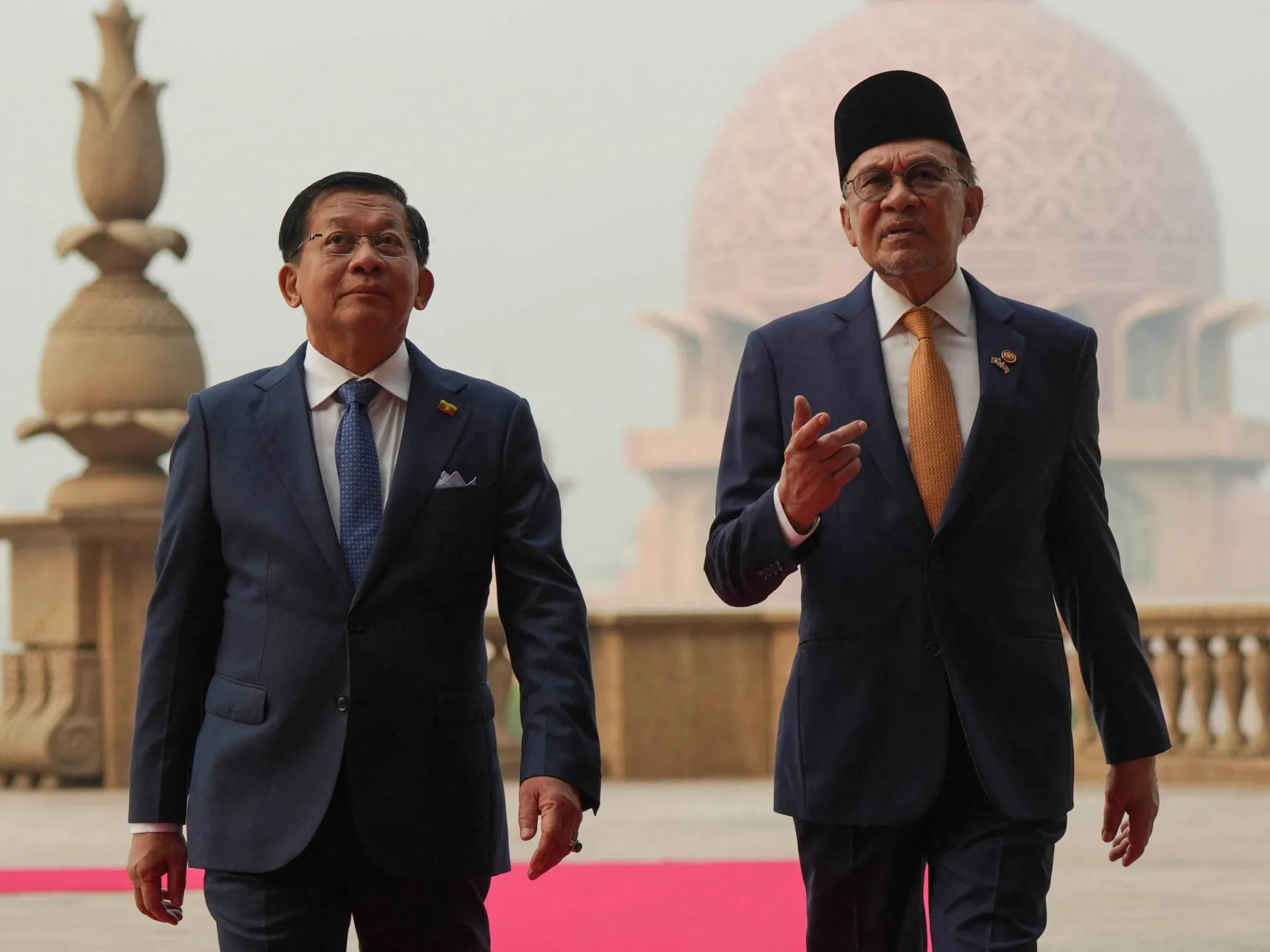
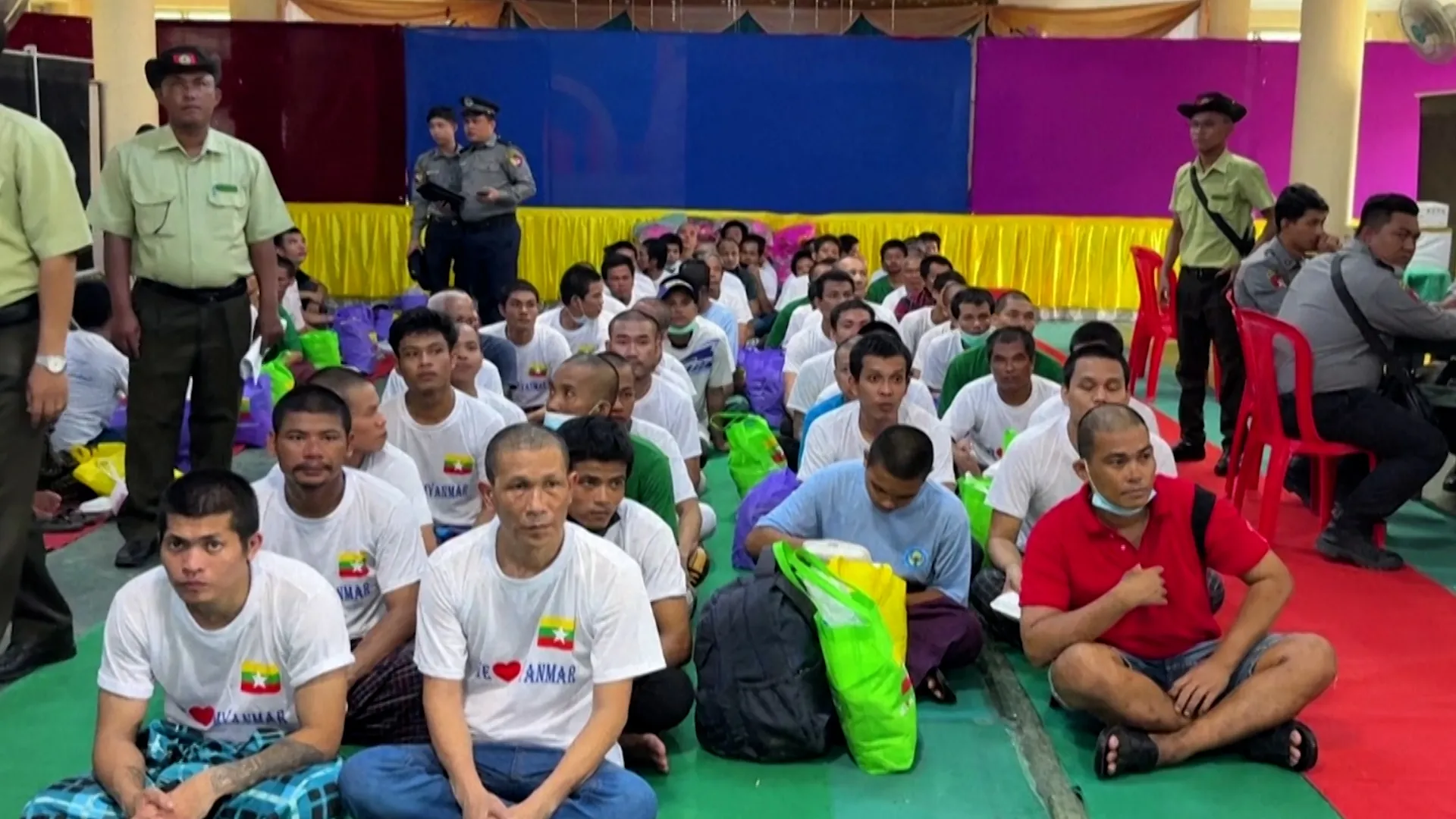
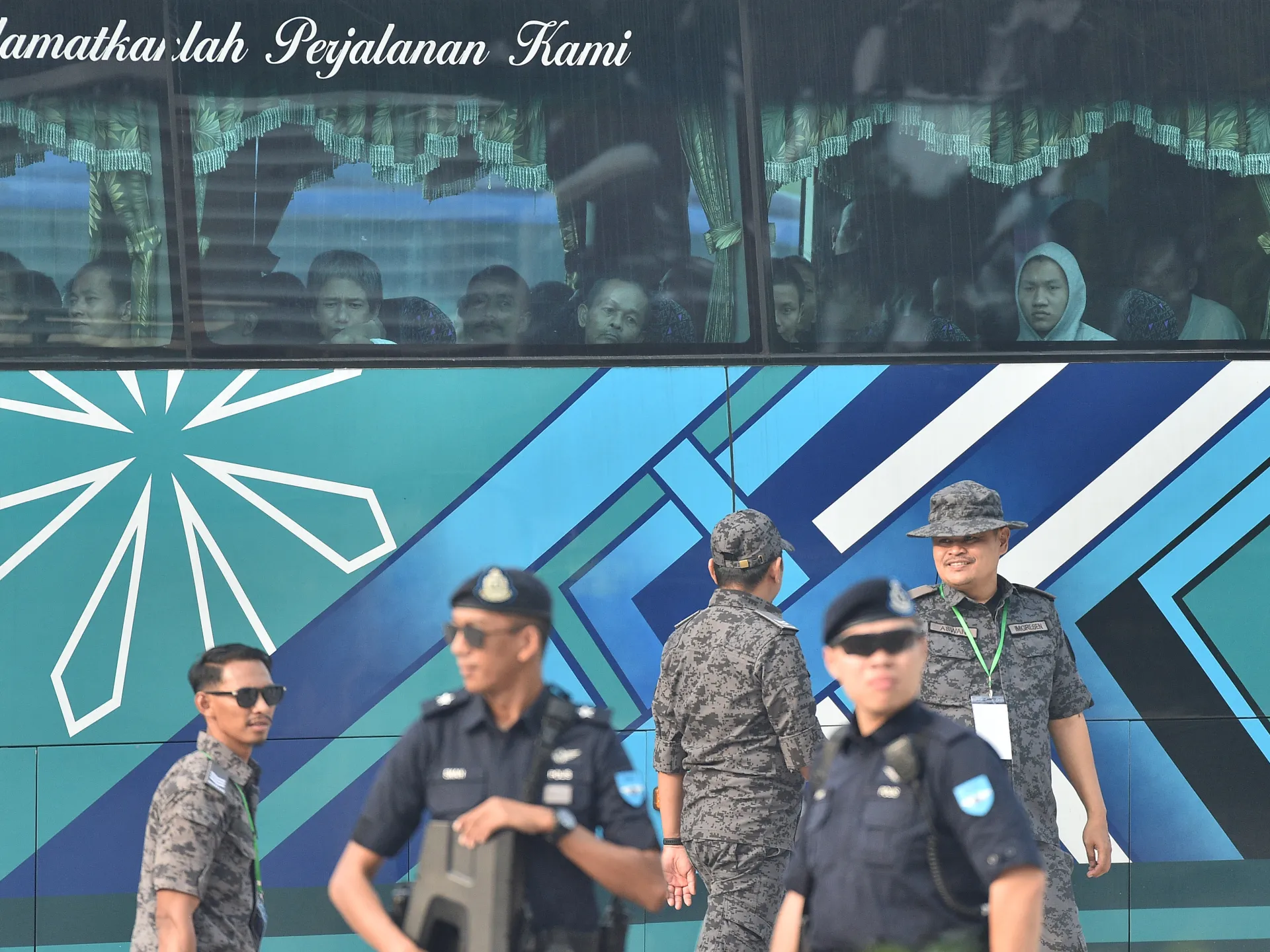
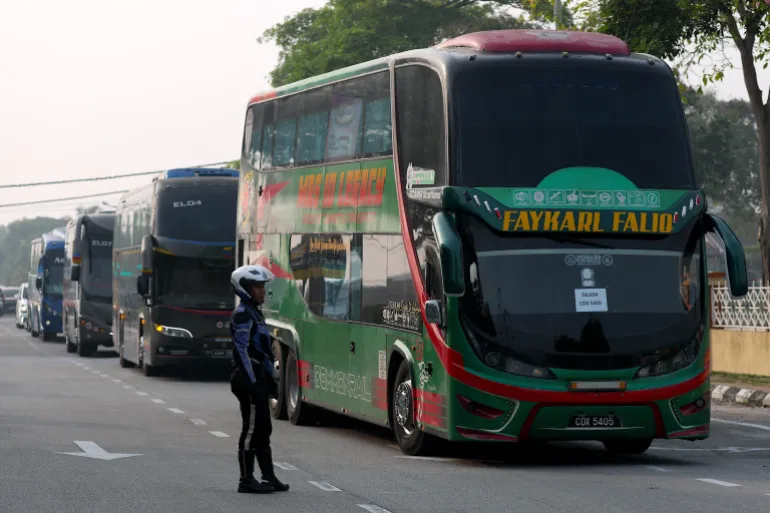
On October 8, Malaysian Prime Minister Anwar Ibrahim received Myanmar’s President Min Aung Hlaing in Putrajaya with a guard of honour and an official luncheon, in the military chief’s first visit since the 2021 coup. Nine days earlier, Malaysia sent 1,476 Myanmar nationals back by sea in the first phase of a plan to return 5,000 people.
Kuala Lumpur calls this pragmatic diplomacy. In reality, it lends a middle power’s credibility to the Trump administration’s retreat from international accountability, weakening the laws and institutions smaller states rely on most.
Domestic pressures
Since May, a surge of online hate speech and misinformation has targeted the Rohingya, Malaysia’s largest refugee community. By late July, at least nine Rohingya community schools had closed or faced closure orders, and more than 100 Rohingya told UNHCR that residents of their Penang village had driven them out.
The hostility ignores the facts: Malaysia’s police chief says Rohingya account for 0.02 percent of crime. Yet research by INITIATE.MY and the Center for the Study of Organized Hate found AI-generated content amplifying anti-Rohingya disinformation across Malaysia, Indonesia, India and Bangladesh, casting refugees as a threat and legitimising vigilante violence.
Electoral politics plays a part. After heavy losses in three state elections, and with a general election due by February 2028, Anwar’s coalition may see a hard line on Rohingya returns as a show of control, though voter disillusionment and right-wing rivals make any electoral gains uncertain.
Impunity goes mainstream
Malaysia is not acting alone. Mongolia hosted Vladimir Putin in 2024 despite an ICC arrest warrant, and Hungary welcomed Benjamin Netanyahu in 2025 despite another. Kuala Lumpur denies this is recognition, yet Anwar says Malaysia will work towards Myanmar’s full reintegration into ASEAN, and Min Aung Hlaing wants a seat at the bloc’s November summit in Manila. Each welcome makes the next easier and tells leaders accused of atrocities, from Netanyahu to Min Aung Hlaing, that diplomatic rehabilitation is possible without accountability.
ASEAN has tried this before. In April 2021, Min Aung Hlaing agreed to the Five-Point Consensus, then ignored it: The violence continued, the ASEAN special envoy never met Aung San Suu Kyi, and inclusive dialogue never began. The bloc’s one real lever was excluding military leaders from its summits. Myanmar Specialist, Arkar Hein, said “Welcoming him back with nothing asked in return rewards that defiance and tells Naypyidaw that time and a staged election can achieve what
compromise would otherwise require. Each handshake abroad also makes the regime less willing to offer its opponents real concessions, and convinces them that only the battlefield will decide Myanmar’s future.”
A question of consistency
Malaysia has spent decades building its credibility as a regional peacemaker, a hard-won reputation it now puts at risk. It has facilitated the Bangsamoro peace process since 2001, helping negotiate a landmark peace agreement in the southern Philippines, and has facilitated talks in southern Thailand since 2013. In November 2024, Anwar welcomed the ICC’s arrest warrants for Netanyahu and his former defence minister, saying they “should be arrested even if they are visiting other countries”. That same month, the ICC prosecutor sought an arrest warrant for Min Aung Hlaing for alleged crimes against humanity targeting the Rohingya, and an Argentinian court has since issued its own.
The Gambia’s genocide case against Myanmar at the International Court of Justice centres on the 2016-17 operations Min Aung Hlaing commanded, which killed thousands of Rohingya, included mass rapes and burned hundreds of villages, driving more than 700,000 people into Bangladesh. UN investigators called for him to face genocide charges. Malaysia is not a party to the Rome Statute and has no legal duty to arrest him. But its credibility as a peacemaker and on Palestine rests on applying one standard to everyone.
Returns without safeguards
The returns rest on assurances no independent body can verify. UNHCR says it was not involved in the returns and had no access to verify that they were voluntary, and that safe conditions do not exist. Those returned reportedly included 27 children. Though not a party to the Refugee Convention, Malaysia is bound by the customary principle of non-refoulement, and the UN Special Rapporteur on Myanmar has warned of substantial risks.
Naypyidaw says no Rohingya are involved because it does not recognise them as citizens, but other returnees also risk arbitrary detention, prosecution and forced recruitment. The military does not even control Rakhine State, where the Arakan Army holds more than 90 percent of the territory. On September 28, a day before returns began, a military air attack reportedly killed at least 50 civilians there, following more than a dozen other mass killings by the military earlier this year.
Nor can the military-backed government deliver the peace that safe return requires. Its election saw no voting in 67 of 330 townships, and when Min Aung Hlaing offered peace talks in April, the National Unity Government (NUG) and major ethnic armed groups refused. Without a ceasefire and an inclusive political process, assurances of safe return ring hollow.
Malaysia’s frustration is nonetheless legitimate. It has hosted refugees for decades with little international support, and resettlement has shrunk since the Trump administration suspended United States refugee admissions in January 2025. But failed burden-sharing cannot justify returns without safeguards.
Pressure on the court
The ICC exists so that victims of genocide, war crimes and crimes against humanity can find justice when their own states fail them. That mission now faces unprecedented pressure. On October 9, hours after former ICC judge Navi Pillay won the Nobel Peace Prize, the Trump administration sanctioned the court itself. Burkina Faso, Mali, Niger, Chad and Venezuela have announced their withdrawal.
Yet middle powers can push back. Seventy-nine ICC members, including Canada, Brazil, Mexico and South Africa, backed the court after the first US sanctions in February 2025, and in May Hungary’s new government reversed its predecessor’s withdrawal. In Southeast Asia, the Philippines surrendered former President Rodrigo Duterte to The Hague, and on October 8 judges found him fit to stand trial for crimes against humanity, with proceedings due to begin on November 30.
Middle powers should say no
Middle powers like Malaysia, and blocs such as ASEAN and the European Union, cannot stop US sanctions, but they need not follow the Trump administration’s lead. As Canadian Prime Minister Mark Carney told the World Economic Forum in January, middle powers “must act together, because if we’re not at the table, we’re on the menu”.
Malaysia and its neighbours should lead by saying no: No to efforts to weaken the court, no to treating Min Aung Hlaing’s presidency as a clean slate, and no to Rohingya returns into an active conflict. Malaysia should back efforts to hold him accountable if ICC judges issue a warrant, and reconsider acceding to the Rome Statute, a move it abandoned in 2019.
Saying no does not mean disengaging. Kuala Lumpur should tie Myanmar’s reintegration into ASEAN to real progress on the Five-Point Consensus, starting with an end to violence and inclusive dialogue involving the NUG and ethnic armed organisations. At home, it should pause returns until an independent body confirms they are safe and voluntary, and hold accountable those who evict, threaten or attack refugees.
Malaysia should not carry this burden alone. ASEAN partners, members of the Organisation of Islamic Cooperation and donors should fund refugee registration, education and integration, and resettlement countries should restore their commitments. Governments should also hold tech platforms accountable for amplifying anti-refugee disinformation and require swift action against incitement.
For years, Malaysia has offered refuge to the Rohingya and others fleeing Myanmar when few countries would. That record gives it the standing, and the responsibility, to defend the system of international justice it has long championed.
The views expressed in this article are the author’s own and do not necessarily reflect Al Jazeera’s editorial stance.



![Rohingya refugees facing evicted from their homes amid rising local tensions and online misinformation, Kuala Lumpur, Malaysia, July 27, 2026 [Hasnoor Hussain/Reuters]](https://i0.wp.com/occasionaldigest.com/wp-content/uploads/2026/10/2026-07-27T123715Z_206813602_RC2BMMA6AR5R_RTRMADP_3_MALAYSIA-REFUGEE-1787872480.jpg?w=640&ssl=1)

![Smoke billows from fires in a residential area following a Myanmar military air attack on a market and adjacent bridge in Kyauktaw, Rakhine state, September 28, 2026 [AFP]](https://i0.wp.com/www.aljazeera.com/wp-content/uploads/2026/09/afp_6abaab2c736e-1790618412.jpg?w=640&ssl=1)