Musk

Musk vs Altman: What to know about the OpenAI verdict | Technology News

On Monday morning, a jury in Oakland, California, announced its verdict in one of the most-watched tech feuds between billionaire Elon Musk and OpenAI CEO Sam Altman. The nine-member jury handed a decisive victory to Altman, saying Musk had waited too long to bring his claims against the artificial intelligence company and its top executives.

Musk, who cofounded OpenAI as a nonprofit, had filed a $150bn lawsuit against the organisation, Altman and its president, Greg Brockman, accusing them of turning it into a for-profit entity for personal enrichment.

Recommended Stories

list of 4 itemsend of list

The verdict, however, stopped short of resolving the central question at the heart of the case, whether OpenAI betrayed the nonprofit mission on which it was founded in 2015 as it transformed from a research lab focused on benefitting humanity into one of the world’s most powerful AI companies.

Instead, the case became focused on a procedural issue. After deliberating for less than two hours, the jury unanimously found that the statute of limitations had expired before Musk filed the lawsuit in 2024, meaning jurors concluded he had waited too long to bring his claims under the applicable legal deadline. US District Judge Yvonne Gonzalez Rogers accepted the finding and dismissed the case.

The ruling removes a major legal threat for OpenAI at a pivotal moment for the company, which is deepening its commercial partnerships, expanding its relationship with Microsoft and moving towards what could become one of the largest public offerings in Silicon Valley history; while for Musk, the ruling leaves room to argue that the case was lost on timing rather than substance.

Shortly after the verdict, Musk repeated his accusations on X. “Altman & Brockman did in fact enrich themselves by stealing a charity. The only question is WHEN they did it!” Musk wrote on X. “Creating a precedent to loot charities is incredibly destructive to charitable giving in America.”

Musk has decided to appeal, ensuring that the increasingly bitter feud between two of Silicon Valley’s most powerful figures is unlikely to end any time soon.

How did Musk and Altman fall out?

Musk and Altman cofounded OpenAI in 2015 alongside Brockman and other researchers at a time when concerns were growing over how AI could reshape society.

The idea, according to testimony and internal discussions presented during the trial, was that the company could focus on building safe AI systems that benefitted humanity rather than prioritising shareholder returns.

Musk and Altman also believed the nonprofit structure would help OpenAI compete with technology giants such as Google by attracting top researchers and positioning the organisation as a mission-driven alternative.

Musk claims he contributed roughly $38m to OpenAI during its early years, but relations between the founders later deteriorated sharply. He resigned from OpenAI’s board in February 2018, officially citing potential conflicts of interest as Tesla became more focused on AI.

But the split deepened after OpenAI created a for-profit subsidiary and Microsoft invested heavily in the company. Microsoft has since committed tens of billions of dollars to its partnership with OpenAI, helping transform ChatGPT into one of the defining products of the global AI boom.

Musk became increasingly critical of the company, arguing that OpenAI had moved far beyond the nonprofit vision on which it was founded. In 2023, he launched a rival AI company, xAI, the maker of the Grok chatbot, before filing his lawsuit against OpenAI the following year.

Why did the case collapse?

At the centre of the trial was a relatively technical legal question about when Musk became aware that OpenAI was moving towards a profit-driven structure.

Because the lawsuit was filed in 2024, Musk needed to convince jurors that the alleged wrongdoing occurred within the legal time limit for bringing his claims.

Musk argued that his concerns fully crystallised only in 2023, particularly after Microsoft’s big investments into OpenAI’s for-profit arm.

But OpenAI’s lawyers argued that Musk had known for years that the company planned to pursue a commercial structure and raise huge amounts of outside funding.

Evidence presented during the trial showed that discussions about creating a for-profit arm dated back to at least 2017. Jurors also heard testimony that Altman had sent Musk documents in 2018 outlining plans for OpenAI to raise billions of dollars through a for-profit structure.

Ultimately, the jury sided with OpenAI’s argument that Musk could have filed his lawsuit much earlier – and therefore waited too long.

That meant jurors never had to answer the more explosive question at the centre of the case about whether OpenAI had actually betrayed its founding mission.

What did OpenAI argue?

OpenAI maintained throughout the trial that there was never an agreement to remain a nonprofit indefinitely. Its lawyers argued that Musk understood from the beginning that developing cutting-edge artificial intelligence would require extraordinary levels of funding and computing power.

OpenAI also portrayed Musk’s lawsuit as partly motivated by rivalry. By the time the case reached court, Musk’s xAI had emerged as a direct competitor to OpenAI in the race to develop advanced AI systems.

Meanwhile, OpenAI had become one of the most powerful companies in the technology industry, reportedly valued at more than $800bn and moving towards what could eventually become one of the largest public offerings in history.

Lawyers for OpenAI argued that Musk became hostile only after losing influence within the company and watching Altman turn OpenAI into the dominant force in generative AI.

What questions did the trial leave unanswered?

Although the verdict was a clear legal victory for OpenAI, the trial never became the sweeping test case about the future of artificial intelligence that many had expected.

Because the case was resolved on procedural grounds, the court did not answer some of the biggest questions raised by the AI boom: how these systems should be governed, who should benefit economically from them, and whether companies developing increasingly powerful AI tools can still claim to act in the public interest while pursuing enormous commercial growth.

The trial also touched only briefly on broader concerns surrounding AI development, including transparency, labour and the extraction of data used to train AI systems.

Nicole Turner Lee, director of the Centre for Technology Innovation, told Al Jazeera that one of the central problems surrounding AI is that the technology is deeply “extractive”.

“It does undergo theft where people do not consent as to whether or not their information, their image, their voice, their text are actually being extracted,” she said, raising concerns about compensation and consent in AI training systems.

Those issues remained largely outside the scope of the trial due to it ultimately centring on procedural issues.

The ruling, therefore, also removed the possibility of a far more disruptive outcome that could have threatened OpenAI’s corporate structure, its partnership with Microsoft and the wider wave of investment pouring into the AI industry.

But the broader debate over AI’s future is far from settled. With Musk preparing an appeal, the courtroom battle between the two former allies looks set to continue alongside wider questions about how AI should be governed.

Source link

China’s Complex Relationship With Elon Musk: Hero or Villain?

In China, Elon Musk has gained both admiration and criticism. While he is seen as a visionary, he has faced scrutiny from regulators and the public due to issues with customer complaints. The success of Musk’s SpaceX and its Starlink satellite service has also led to concerns from the People’s Liberation Army, especially as Tesla faces growing competition from Chinese electric vehicle (EV) manufacturers, which threatens Musk’s standing in the market.

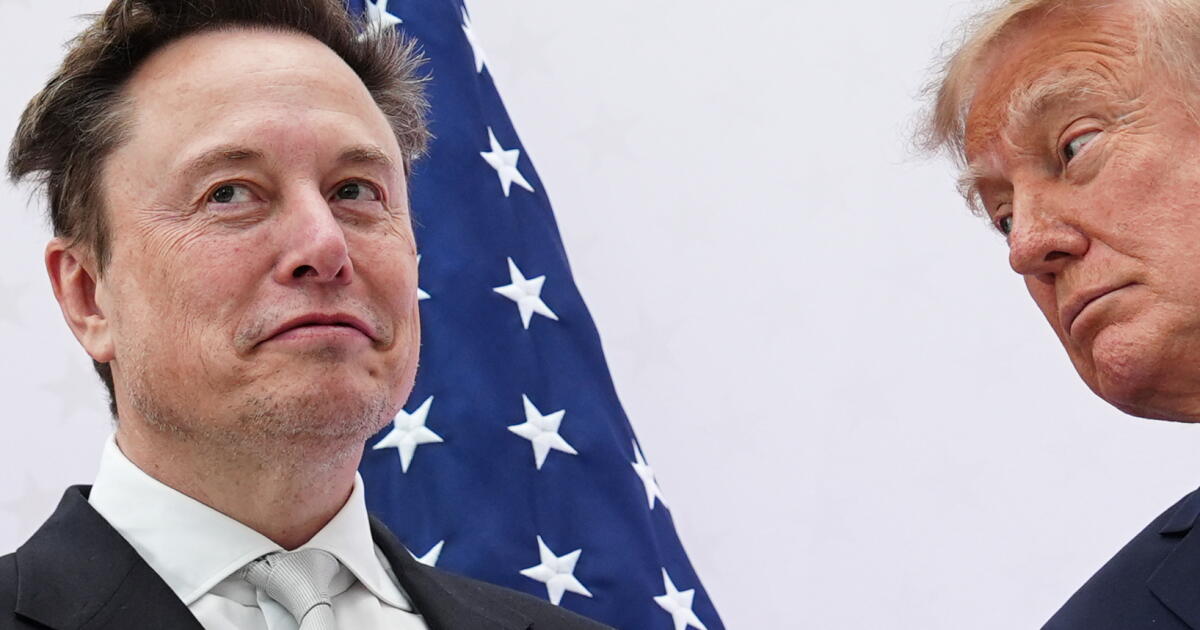
Musk recently attended a summit in Beijing with U. S. President Donald Trump, alongside other CEOs like Tim Cook and Jensen Huang, focusing on resolving business issues with China. After a formal welcome, Musk expressed his desire to achieve “many good things” in the country. At the same event, Xiaomi’s CEO Lei Jun, an admirer of Musk, took a selfie with him, which became popular on social media, showcasing the public’s interest in Musk.

Despite facing competition on technology and pricing from local companies, Musk and Tesla remain influential in China. Experts note that Musk’s business goals align with China’s technological priorities, including electric vehicles, AI, and advanced robotics, making Tesla’s self-driving technology the standard in the industry. In 2018, Tesla became the first foreign automaker permitted to operate in China without a local partner, and its sales in the country reached about 626,000 vehicles last year, contributing significantly to its revenue.

Other Chinese carmakers, like Chery, draw inspiration from Tesla’s focus on innovation, blending it with Toyota’s emphasis on quality. However, Musk’s other ventures, particularly SpaceX, provoke concern among Chinese military and government officials due to its dominance in satellite communications, especially in light of geopolitical tensions, hinting at efforts to develop domestic alternatives.

Though Musk’s social media platform, X, is banned in China, he has a significant following on Weibo and has been celebrated as a global icon in the country. His recent visit pertains to an attempt to purchase $2.9 billion in solar manufacturing equipment from Chinese suppliers, although this may be affected by China’s potential export restrictions on advanced technologies to the U. S.

Musk’s company is also seeking regulatory approval for more advanced self-driving technology. However, his relationship with China has been delicate, particularly when Tesla faced backlash in 2021 over its handling of customer complaints, highlighted by a public protest at an auto show. Additionally, Teslas were previously banned from military areas due to security concerns.

Looking ahead, organizations believe that Tesla’s standing might challenge Musk’s popularity in China as local companies continue to progress. However, he is likely to remain an influential figure in China’s tech scene for his achievements in the automotive and technology industries.

With information from Reuters

Source link

Sam Altman says Elon Musk wanted 90 percent of OpenAI in high-stakes trial | Courts News

In a United States court, OpenAI chief executive Sam Altman has rejected claims from fellow tech mogul Elon Musk that he betrayed the artificial intelligence company’s original vision.

Tuesday marked the start of Altman’s testimony in a contentious trial unfolding in Oakland, California, between some of tech’s richest and most powerful titans.

Recommended Stories

list of 3 itemsend of list

Musk, the wealthiest man in the world, has sued Altman and OpenAI president Greg Brockman on the basis that they “stole a charity” by shifting its purpose.

He alleged that OpenAI’s leader persuaded him to invest $38bn, based on a goal of improving humanity, only to see the company pivot to a for-profit venture in 2019.

On the witness stand on Tuesday, Altman instead framed Musk as a competitor obsessed with exercising control over OpenAI.

“It does not fit with my conception of the words ‘stealing a charity’ to look at what has actually happened here,” Altman told the court.

The two men have long had an acrimonious relationship, driven in part by differing views about artificial intelligence.

Musk — a self-described free speech “absolutist” — currently runs his own AI chatbot, Grok, which has been accused of perpetuating right-wing conspiracy theories and offensive materials.

He is seeking $150bn in damages from OpenAI and Microsoft, one of its principal investors.

Altman’s testimony comes more than two weeks into the trial, which has seen him and Musk square off against each other.

In his testimony, Altman argued that Musk knew of the plans to develop OpenAI into a for-profit enterprise when he invested, and he asserted that Musk even petitioned to have a majority stake in the company.

“An early number that Mr Musk threw out was that he should have 90 percent of the equity to start,” Altman told the jury. “It then softened, but it always was a majority.”

The outcome of the trial could determine the future of OpenAI, its leadership, and products like ChatGPT. As part of his lawsuit, Musk is pushing for the removal of Altman and Brockman.

The trial comes as OpenAI prepares for a potential initial public offering that could see it valued at $1 trillion, a historically large sum.

During earlier testimony, Musk portrayed Altman as a liar who could not be trusted with the development of the technology.

“If you have someone who is not trustworthy in charge of AI, I think that’s a very big danger for the whole world,” Musk said.

Musk’s lawyer, Steven Molo, also sought to undermine Altman’s reliability during questioning on Tuesday.

“Have you misled people when you do business?” Molo asked Altman.

“I do not think so,” Altman replied.

Altman, meanwhile, sought to cast doubt on Musk’s leadership; Musk ultimately left OpenAI’s board in 2018 to pursue his own AI development.

“I don’t think Mr Musk understood how to run a good research lab,” Altman said. “He had demotivated some of our most key researchers.”

The US public, for its part, has been largely unconvinced by high-minded rhetoric about the transformative potential of AI.

A March 2026 poll by the Pew Research Center suggested that a majority of respondents in the US believe AI will worsen, rather than improve, the ability to think creatively, form meaningful relationships, make difficult decisions, and solve problems.

Just 10 percent of respondents said they were more excited than concerned about the increased use of AI in daily life.

But the industry has been quick to translate its substantial economic power into political influence as lawmakers consider how best to regulate the technology.

The use of AI has emerged as an election-season issue as the US midterms approach in November, and the administration of President Donald Trump has proposed a “national policy framework” for the technology to avoid a patchwork of state regulations.

The AI industry has become a driver of eye-watering investment in recent years, with the United Nations estimating that the global market could be worth $4.8 trillion by 2033.

Source link

Musk reaches $1.5M settlement with SEC over 2022 Twitter buyout

Elon Musk, pictured in the Oval Office at the White House in May 2025, on Monday settled a lawsuit filed by the SEC over his purchase of Twitter in 2022, which will see him pay a $1.5 million fine while admitting no wrongdoing. File photo by Francis Chung/UPI | License Photo

May 4 (UPI) — Elon Musk on Monday settled a lawsuit filed against him by the Securities and Exchange Commission for $1.5 million after the agency accused him of breaking securities laws.

The SEC alleged in January 2025 that Musk cost Twitter shareholders $150 million because he delayed disclosing his purchase of more than 5% of shares in the company within the 10 days required by law.

Musk’s purchase of Twitter led to a series of lawsuits because of how he purchased the company, which has since been renamed to X, which saw him become its biggest shareholder before he launched a successful hostile takeover, The Washington Post reported.

In the settlement, which still needs to be approved by a judge, would see Musk pay a $1.5 million penalty while allowing him to admit no wrongdoing, CNBC reported.

“A trust vehicle has agreed to a small fine for being late on one filing,” Musk attorney Alex Spiro said of the agreement, which will see one of his client’s revocable trusts paying the fine.

Musk made a play to buy Twitter in 2022, first buy purchasing more than 5% of the company, which he did not disclose and was the reason the SEC filed suit, which allowed him to put other investors in a poor position before he launched his takeover.

President Donald Trump signs a series of executive orders in the Oval Office of the White House on Thursday. Trump signed an order to expand workers’ access to retirement accounts. Trump also signed legislation ending a 75-day partial shutdown of the Department of Homeland Security after the House voted in favor of funding. Photo by Aaron Schwartz/UPI | License Photo

Source link

Elon Musk trial against Sam Altman to reveal OpenAI power struggle | Business and Economy News

The trial’s outcome could sway the balance of power in AI, and jury selection starts on Monday.

Technology tycoons Elon Musk and Sam Altman are poised to face off in a high-stakes trial revolving around the alleged betrayal, deceit and unbridled ambition that blurred the bickering billionaires’ once-shared vision for the development of artificial intelligence.

The trial, which is scheduled to begin on Monday with jury selection, centres on the 2015 birth of ChatGPT maker OpenAI as a nonprofit start-up primarily funded by Musk before evolving into a capitalistic venture now valued at $852bn.

Recommended Stories

list of 4 itemsend of list

The trial’s outcome could sway the balance of power in AI, breakthrough technology that is increasingly being feared as a potential job killer and an existential threat to humanity’s survival.

Those perceived risks are among the reasons that Musk, the world’s richest person, has cited for filing a lawsuit in August 2024 that will now be decided by a jury and US District Judge Yvonne Gonzalez Rogers in Oakland, California.

The civil lawsuit accuses Altman, OpenAI’s CEO, and his top lieutenant and a cofounder, Greg Brockman, of double-crossing Musk by straying from the San Francisco company’s founding mission to be an altruistic steward of a revolutionary technology. The lawsuit alleges they shifted OpenAI into moneymaking mode behind his back.

The bitter legal fight may come down to a few pages in one executive’s personal diary.

“This is the only chance we have to get out from Elon,” wrote Brockman in the autumn of 2017. “Is he the ‘glorious leader’ that I would pick?”

Brockman’s diary entry is part of the thousands of pages of internal documents revealed in court.

Musk said the defendants kept him in the dark about their plans, exploited his name and financial support to create a “wealth machine” for themselves, and owe damages for having conned him and the public.

He also wants OpenAI to revert to a nonprofit, for Altman and Brockman to be removed as officers and for Altman to be removed from its board.

OpenAI has brushed off Musk’s allegations as an unfounded case of sour grapes that’s aimed at undercutting its rapid growth and bolstering Musk’s own xAI, which he launched in 2023 as a competitor.

The trial also carries risks for Musk, who last month was held liable by another jury for defrauding investors during his $44bn takeover of Twitter in 2022. Any damaging details about Musk and his business tactics could be particularly hurtful now because his rocket ship maker, SpaceX, plans to go public this summer in an initial public offering that could make him the world’s first trillionaire.

Source link