MAYA Jama oozed glam in a gothic purple gown with a matching choker as she stepped out at the British Museum Ball.
The Celebrity Traitors star – who is one of BBC host Claudia Winkleman‘s chosen Traitors – flashed a sultry look in her floor length purple frock.
Maya Jama looked sensational in a gothic gown with ruffle detail and a matching chokerCredit: PAMaya flashed a sultry pout as she stepped out at The British Museum Ball 2026Credit: Getty
Ruched detail across her torso drew attention to the Love Island anchor’s toned figure while stitched pattern on the skirt added extra style.
Maya stayed her hair into curls and a half-up style, with sections at the front framing her face.
Sign up for the Showbiz newsletter
Thank you!
The presenter kept her make-up fresh, with a slick of black eyeliner and pink lipgloss.
According to britishmuseum.org, the swanky evening was “the defining highlight of London’s cultural and social calendar this autumn”.
She styled her hair into curls and a half-up doCredit: PAMaya has been hailed a style icon on Celeb Traitors due to her ‘Honey Monster’ coatCredit: BBCFans have also suspected a show romance with a co-starCredit: BBCShe is known for her racy Love Island wardrobeCredit: ITV
It stated: “Conceived as a night where art, history, performance and fashion converge, the Ball will offer a truly unforgettable moment at one of the world’s most iconic institutions”.
The theme of this year’s event was Red and also saw the likes of Mick Jagger and Lesley Manville in attendance.
We told how she packed 10 designer jackets, worth a total £15,000, for the iconic show.
She donned a £2,570 Saint Laurent trench coat for the launch show and wore the £600 mustard Mongolian sheepskin bolero coat designed by London-based fashion house Agro Studio.
The recovered Renoir paintings, valued at millions, were stolen in a daring heist at Cagnes-sur-Mer last month.
Published On 10 Oct 202610 Oct 2026
Two paintings by the French Impressionist artist Pierre-Auguste Renoir that were stolen from a museum in southern France a month ago have been recovered, the town’s mayor said.
“These two paintings are not simply works of art. They are part of our city’s history,” Bryan Masson, the mayor of Cagnes-sur-Mer, near Nice, said on Friday. “Knowing they have been recovered is an immense relief.”
Recommended Stories
list of 3 itemsend of list
Six people have been arrested in connection with the theft, local authorities said. Masson did not say where the paintings were found or in what condition.
How the theft unfolded
Two thieves broke into the Renoir Museum a little before 6am on September 8, cutting through a fence to enter the grounds, smashing a window and using an electric saw to cut the clips securing the frames, Masson said at the time.
He described them as “well equipped” and “well informed”.
The museum alarm sounded at 5:48am, and municipal police arrived five minutes later, forcing the thieves to flee.
They had taken four paintings, valued by the mayor at about nine million euros ($10.5m).
Two of the stolen works – Renoir’s “Portrait of Madame Pichon” and “Coco Reading” – were later found dropped in the museum garden, the prosecutor’s office said at the time.
The two works that remained missing were “Portrait of Madame Colonna Romano” and “Young Woman at the Well”, the office said.
Police said last month that the thieves were not first-time offenders and had scoped out the premises.
The Marseille prosecutor opened a theft investigation into an organised gang, and the national office for trafficking in cultural goods joined the probe.
A string of museum heists
The museum, opened in 1960, is in the painter’s last home, where he died in 1919.
“This incident should serve as a warning about the protection of our museums,” Masson said after the robbery.
The theft came less than a year after jewels worth about $100m were stolen from the Louvre in Paris in a daylight robbery.
The four suspected robbers have been arrested, but the jewels have not been found.
In August, Italian police said they had recovered paintings by Renoir, Cezanne and Matisse worth more than $10.4m that were stolen from a museum in March.
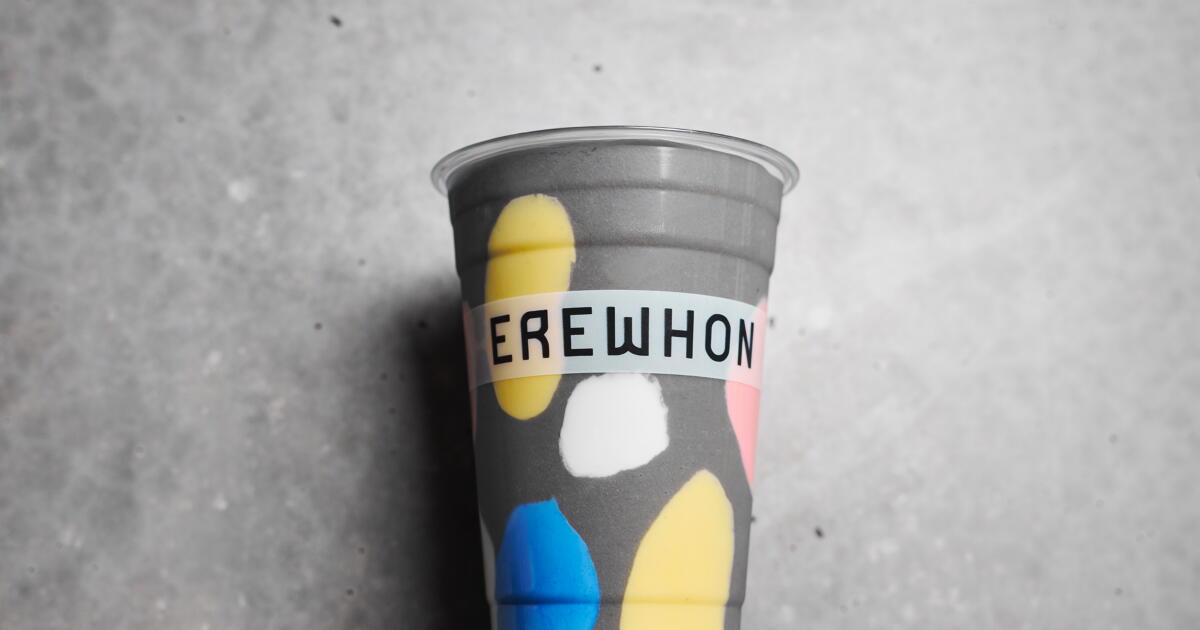
Erewhon opened as a pop-up cafe at LACMA’s new David Geffen Galleries in April, and has now announced it will remain as the museum’s permanent cafe.
Erewhon, the trendy L.A. health food chain and retailer, announced Monday that it will become a permanent fixture at Los Angeles County Museum of Art’s David Geffen Galleries after operating there as a pop-up since April. The cafe will join the new building’s yet-to-be announced restaurant, which is already holding private events including a recent unveiling of an Ed Ruscha-designed poster for Alejandro G. Iñárritu’s new film, “Digger.”
To celebrate its new status, Erewhon announced a LACMA smoothie created to resemble Alexander Calder’s fountain sculpture, “Three Quintains (Hello Girls),” which sits directly next to the cafe on the museum’s ground floor. The drink is made from pineapple, mango, strawberry, mandarin and lion’s mane (of course). It will be joined by limited edition merch, including a sweatshirt and a tote.
LACMA’s new Peter Zumthor-designed building opened to the public in April and was greeted with equal parts praise and controversy. Erewhon, which launched as a pop-up about a week later also elicited excitement and some griping, with critics saying the space would be better served by a less expensive option. (Erewhon is known for its high prices, with a typical smoothie costing $13 to $22.)
“We’re absolutely thrilled that Erewhon at LACMA is becoming a permanent fixture of the museum experience,” Michael Govan, LACMA’s president and chief executive, said in a news release. “Erewhon stands as a true family-owned local icon — one that champions creativity and well being while fiercely dedicating itself to its communities.”
The cafe will be open to non-ticketed guests, and is surrounded by a number of pieces of outdoor public art.
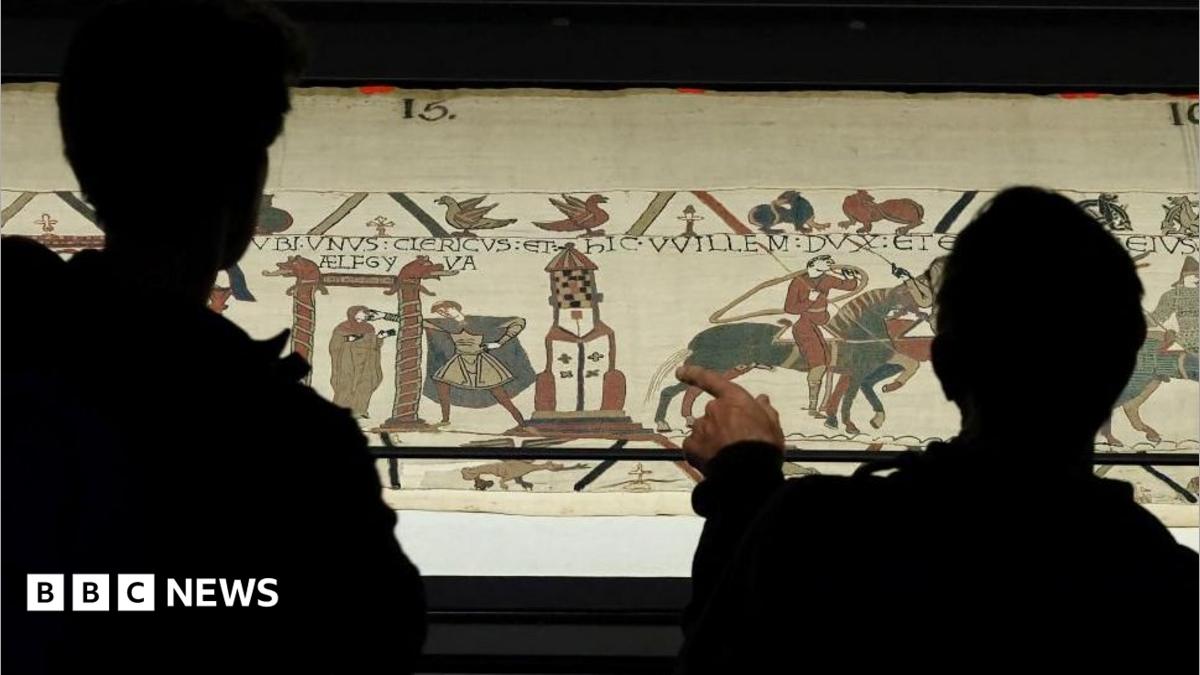
The British Museum has announced changes to how visitors see the Bayeux Tapestry exhibition after concerns over long queues and overcrowding.
The measures include plans for longer opening hours, as well as an audio guide, additional seating and clearer signage.
A museum spokesperson said the public response to the 11th Century embroidery had been “extraordinary”, but acknowledged that some visitors had waited longer than they would have wanted.
Some people reported waits of up to two hours, while hundreds of ticket holders were reportedly turned away due to backlogs when the museum closed early last week due to a private event.
Some ticket holders took to social media to complain about the disruption.
One disappointed visitor said the trip had been a “big event” they had looked forward to, while another wrote she had been waiting since she was seven to see the Bayeux Tapestry, and bought tickets only to be turned away after queuing.
The museum later apologised to those who had been unable to enter and said they would be issued refunds and priority booking slots for a rearranged time.
From Monday, visitors will be offered an audio guide with more information about the embroidery, while additional signage and seating will be provided for those queuing to reach the main exhibition.
The museum said it planned to introduce longer opening hours to prevent queues building during the day and allow people with later bookings more time to view the exhibition.
Details of the extended hours have not yet been disclosed.
The Lucas Museum of Narrative Art’s central plaza, which spreads out beneath the building’s curved, hovering form, was always meant to be a generous civic space. Ma Yansong, the museum’s architect, has called it the “Gateway” between the museum and Los Angeles, opening to both Expo Park and the surrounding South L.A. neighborhood.
But that gateway, it turns out, is more like a gate.
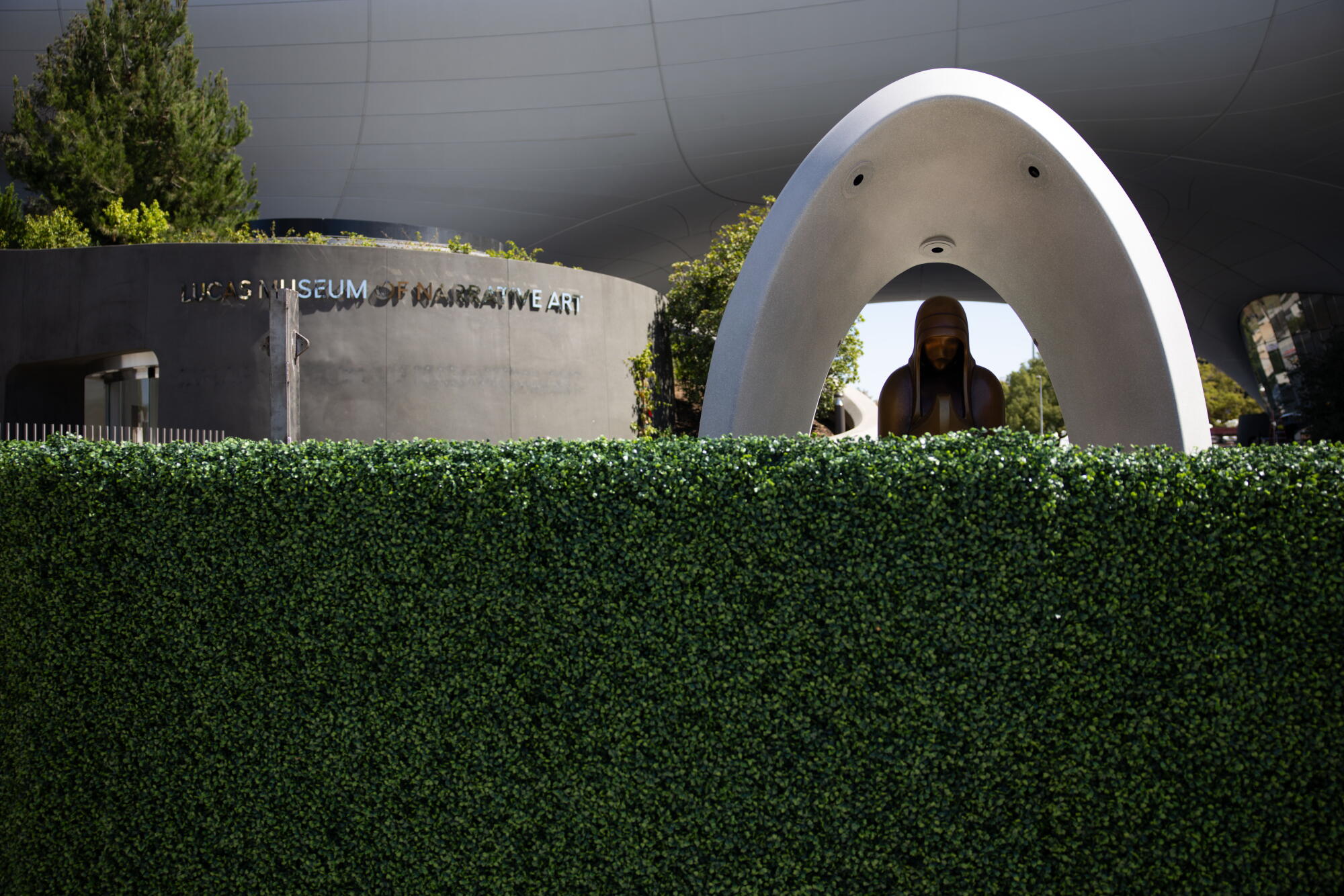
This weekend — the first that the museum was open to the public — fences covered in plastic greenery blocked entry to the plaza from both sides. Standing sentry, bizarrely, were tall, cartoonish statues — half storm troopers, half USC Trojans. Visitors were directed to enter through the museum’s two enclosed security booths off the plaza.
In the coming weeks, permanent plaza fences will be erected here — curvy stainless-steel structures that MAD Architects principal Dixon Junliang Lu compared to the lacy filigree of Art Nouveau architecture. Lu added that they would eventually be draped in real greenery, not the plastic version.
While certainly an improvement on the current barriers (which are a shockingly makeshift solution for a museum that cost over $1 billion), the plaza’s main entryways will remain gated off, confirmed both Lu and Lucas Museum spokesperson Seth Fowler.
Gates have been erected around the main courtyard of the Lucas Museum of Narrative Art.
(Kayla Bartkowski / Los Angeles Times)
“It’s about creating the best possible visitor experience when you’re there, with an eye on safety,” said Fowler, who cited a need to protect the plaza from car traffic on both sides and the ability to control visitor flow among the reasons for the enclosure.
Visitors without tickets, Fowler added, are still able to enter the plaza, as well as the museum’s cafe and gift shop, after passing through security, “pending capacity limits.” They can enter the museum’s adjacent park without security screening.
Museums of course have legitimate security concerns, especially in and around such a high-traffic location. A growing list of threats, from violence to vandalism, has changed the calculus for what’s acceptable in public life. But surely the building’s talented design team could have developed a security plan that better preserved the plaza’s open arms? Lu acknowledged that the fence design had “evolved as the project developed and the operational and security requirements became more defined.”
The plaza is one of the museum’s most powerful gestures, creating much-needed civic room for Expo Park, and the city. The gates blocking it, and the security checkpoints along its flanks, will dramatically limit the public’s desire to enter, and change the tenor and experience of a space that should feel porous and inclusive. What could have been a grand welcome has become a gated off, highly controlled space that now feels separate from the park and the neighborhood. Sure, anyone can come, but they are no longer invited.
Art Nouveau style fencing will eventually replace the temporary green fencing, but guests will still be directed through security in order to enter the museum’s main courtyard.
(Kayla Bartkowski / Los Angeles Times)
Just a few miles away at LACMA’s new David Geffen Galleries, visitors can enter the plazas beneath that building without first passing through security. In fact, I don’t know of a single civic plaza (and there are not enough!) in Los Angeles that requires passing through security checkpoints to enter. Think about this scenario in other cities. In New York, can you imagine having to go through metal detectors to sit at the Met steps? Or to enter Central Park?
Speaking of parks, it’s inconsistent and puzzling that the museum’s beautiful park, which edges right up to the building, can be entered without having to also pass through security. I, for one, am thankful. Access to this area is already being limited to some degree. Its long fences, with relatively small openings, are not exactly screaming “come in.” The green space, as it was this Saturday, will be closed to nonticket holders on USC game days. And if locals who live to the west of the museum want to reach Expo Park outside of the Lucas park’s hours — 8 a.m. to sunset — they need to make their way around the entire complex; which a few are already grumbling about.
It’s hard not to wonder whether these barriers represent something more than security: the extension into public space of the gated, closely guarded world inhabited by co-founders George Lucas, Mellody Hobson and those in their orbit. Is this truly what museum security requires, or has the logic of a private compound shaped an institution that was supposed to welcome the city? That is the uneasy promise of privately controlled public space: It looks open to everyone, but access ultimately depends on the owner’s discretion.
It is an especially peculiar contradiction for a museum whose site is being leased from the state at just $30 a year and was founded to celebrate the “people’s art” — comics, illustrations, movie imagery — and to bring that art to the broadest possible public. Renderings introducing the project never showed the walls and fences that now cover the plaza’s perimeter. (A model produced later, now in the museum, does.)
Temporary fencing around the Lucas Museum, alongside the Art Nouveau style fencing that will eventually replace it.
(Kayla Bartkowski / Los Angeles Times)
I last encountered this type of scenario when visiting the Eiffel Tower, whose base has been closed since Paris’s 2015 terrorist attacks. (The attacks did not occur at the tower itself.) Its sealed perimeter, only accessible via lines and screening, now makes one of the world’s wonders feel less like a wondrous part of the city than an attraction held behind glass.
I’m not suggesting we leave major public spaces vulnerable. But security can be built into buildings’ plazas in myriad ways without sealing them off: reinforced planters and seating can stop vehicles; grade changes, landscapes and water features can establish protective distance; clear sight lines, lighting, cameras and visible staff can improve oversight; and retractable barriers can be deployed during large events or credible threats. Screening can remain at the museum doors, leaving outdoor space free.
At the end of the day, civic space depends on a willingness to share some level of uncertainty. A public plaza brings all kinds of people together, including those we don’t know and can’t entirely predict. If every risk leads us to add another checkpoint, fence or barrier, we may gain a sense of control but lose the ability to create the kind of public togetherness that forms a bonded city.
If this plaza, and this museum, are truly meant to serve the public it should be clear that all are welcome once they arrive. Openness is more than an architectural effect: It depends on having the freedom to enter without having to justify our presence.
The leader of the world’s biggest band is nervous.
“I think I revised this speech about 10 times, but somehow the more I worked on it, the more confused I became, like always,” said K-pop star and BTS rapper RM on Tuesday at a preview of a show he has co-curated at San Francisco Museum of Modern Art called “RM x SFMOMA: Between You and Me”
Three years ago, RM held an anonymous show in South Korea, but this is the first proper exhibition he has staged. For many of his fans — some of whom wait outside the museum trying to get a glimpse of him — his favorite activities, including museum-hopping, bicycling and being out in nature, come as no surprise. There is even a word for it: “namjooning,” a play on the singer’s first name, Namjoon. But still, the exhibition is the rare chance to view RM as a serious art collector; someone who values Korean identity in art but also loves works from many genres, eras and countries.
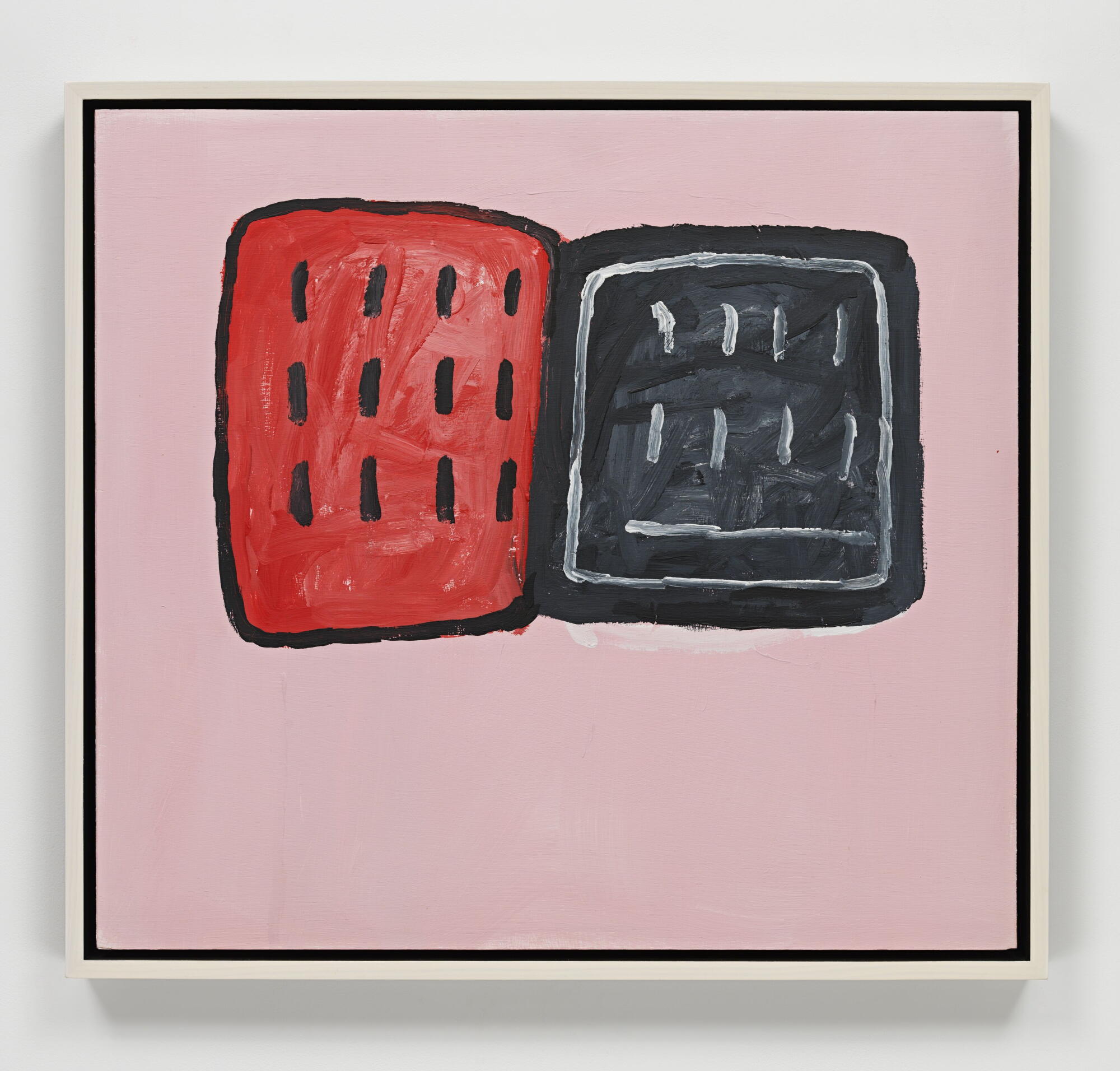
Philip Guston, Untitled (Red and Black Book), 1969; from the collection of RM.
(The Estate of Philip Guston / Hauser & Wirth)
Dressed in a gray T-shirt, dark collared shirt and leather pants, RM’s hair is a light burnt sienna color matching the fur of the stylized tiger on the screen behind him. From a 17th century painting by Lee Won-chan, it’s from his personal collection of more than 400 artworks. For this exhibition, 142 pieces owned by RM will be shown alongside 36 works from SFMOMA for a total of 178 works on display.
RM sees “Between You and Me” as an introduction to his inner life and reflection of contrasting aspects of his personality, whether as a public figure interacting with his adoring fans or an erudite intellectual and avid reader with a reputation as a clumsy and lovable goofball.
RM was on a hiatus from BTS and on the cusp of beginning his mandatory military service in South Korea when SFMOMA first approached him for the project two years ago. As it came to fruition, he sought to answer two main questions when contemplating which works of his collection to share with the public.
Does the artwork move him deeply? And, if the work is from a noncontemporary artist, does the piece have something to communicate in 2026?
“In an age where everything is consumed so fast,” RM explained, “I believe the attitudes of some of the past artists can resonate even more deeply today.
“I’ve always dreamed of seeing different places, times, boundaries and backgrounds all mixed together in harmony,” he continued. “It could be a mess because I’ve never formally studied, and I’m not a ‘curator, curator,’ but in any field sometimes an outsider can bring in a new breeze.”
Wonwoo Lee, “Candy,” 2023; from the collection of RM
(Wonwoo Lee / PKM Gallery)
It’s not RM’s first time working with a museum. In 2023, he partnered with Los Angeles County Museum of Modern Art to provide guided audio narration for “The Space Between: The Modern in Korean Art”.
At SFMOMA, RM was joined in his effort by two co-curators: SFMOMA project manager América Castillo and assistant curator of painting and sculpture Hyoeun Kim.
Kim, who has long championed Korean artists internationally, was particularly impressed with the diversity of Korean art that RM has amassed, including its “remarkable range.”
“His collection began with 6th century works, moved through the Joseon Dynasty, and continued to major Korean modern and contemporary art. It spans nearly 1,500 years,” Kim said during the preview.
The show is arranged in eight parts and begins with a large white wall at the entrance with the title of the show scrawled in RM’s handwriting. Handwritten touches are found everywhere — “Plz take it in with your eyes and heart” is scribbled on the floor in both English and Korean. The wall text for each piece, which also includes a QR code for audio narration, is composed by RM in both languages.
An inscription on the floor of an SFMOMA exhibit curated by RM of BTS features RM’s writing as part of the wall (and floor) text.
(Christine Terrisse.)
Guests will also receive a zine-style pamphlet with the same homespun appeal explaining each of the eight sections in RM’s words alongside a diagram of the room.
“Blue Water” centers the work of Kim Whanki, the late globe-trotting abstract artist and the first RM says he “fell for.” In addition to Whanki and works by Vija Celmins and Tony Feher, some RM fans might recognize one of Roni Horn’s glass cylinder sculptures from a now-archived Instagram post where it was casually displayed in RM’s apartment.
There’s even a room filled with especially eclectic pieces called “i don’t know..but i like it.” By way of explanation, RM said, “Sometimes I don’t really know why I collected all these things.”
The last room, “Umber” or “Dasaek” (referring to the color of Korean rice fields) might be the most meaningful to the singer. It features works by the late artist Yun Hyong-keun, for whom RM has a particular personal affinity. The cover for his debut solo studio album, “Indigo,” depicts Hyong-keun’s 1972 painting “Blue,” and the album’s lead track, “Yun,” a collaboration with Erykah Badu, kicks off with recorded dialogue from the artist.
Back in 2018, around the same time RM began his art journey with not much formal training in art history, co-curator Castillo began her career with SFMOMA.
At the time, she was in awe of the power of art to connect with people, but frustrated that more people from unconventional backgrounds weren’t being given opportunities to curate major shows, thereby shaping the stories told. Her work on this exhibition is part of a continuing mission to bridge the art world and the ordinary person.
Chang Ucchin, “Road,” 1986, from RM’s collection.
(Chang Ucchin Foundation / Seoul Auction)
This mission guided her through the process of selecting works by famous artists from SFMOMA’s collection to contextualize RM’s pieces from lesser-known but equally important names.
“The first time we pulled a list on the SFMOMA side, we had like 500 options we then dwindled down,” she said in an interview while standing in the “Umber” room. “There were some artworks and specific artists that we knew from the get-go we wanted to be in the show. We wanted them to have a moment. Mark Rothko was definitely one of them.”
The sole Rothko piece in SFMOMA’s collection, “No. 14,” (1960) is featured in one of the final rooms in the exhibition. Adjacent to it is “untitled” (1986-90) by Hyong-keun. In the exhibit pamphlet, RM notes that Hyong-keun’s paintings are often compared to Rothko’s, but “their darkness is not the same.” “To my eyes, if Rothko’s darkness is one that ‘opens’ then Yun’s is the darkness that remains after he endured everything he possibly could,” he writes.
As RM steps into the spotlight of the art world, he is learning to become comfortable with the uncomfortable in-between spaces he occupies. “I started this with an innocent heart. As I’m standing here talking to you, I still feel like I’m always drifting and floating somewhere, ” he said, adding that the feeling comes when he’s in the U.S. but also when he’s in his hometown of Seoul. “It’s not a very pleasant feeling. I think I’ve leaned on art a lot because of that feeling.”
Before the preview, BTS fans, called the ARMY, passed out small gifts to the press, and afterward donors lined up for a special reception. RM’s mother, father and sister even arrived to celebrate, but he didn’t have much time to hang around. He was scheduled to depart for Bogotá, Colombia, to join his bandmates on the Latin American leg of their ARIRANG stadium world tour.
It is time to leave the quiet of the museum for the roar of the crowd.
“RM SFMOMA: Between You and Me” opens to the public on Oct 3, and runs through Feb.7, 2027. For more information visit sfmoma.org
Actor D’Arcy Carden stopped by early, beating the cadre of guests crowding the main plaza beneath the now-famous oculus of the 300,000-square-foot Ma Yansong-designed building. A Stormtrooper drove by on a flatbed truck, shortly before R2-D2 greeted visitors in the courtyard, wearing an official staff badge. (The line for a selfie with the droll droid stretched as far as the eye could see.) Museum leaders have long said that “Star Wars” artifacts account for about 7% of the 100,000 square feet of gallery space, but one worker quipped 90% of opening-day attendees likely had a vested interest in the franchise.
This proved true, for the most part: Many visitors clearly knew and loved “Star Wars,” and Princess Leia buns and Yoda ears abounded. (Two Padmé Amidalas ran into each other, and according to a restaurant worker, one brave soul showed up in “Star Trek” gear.)
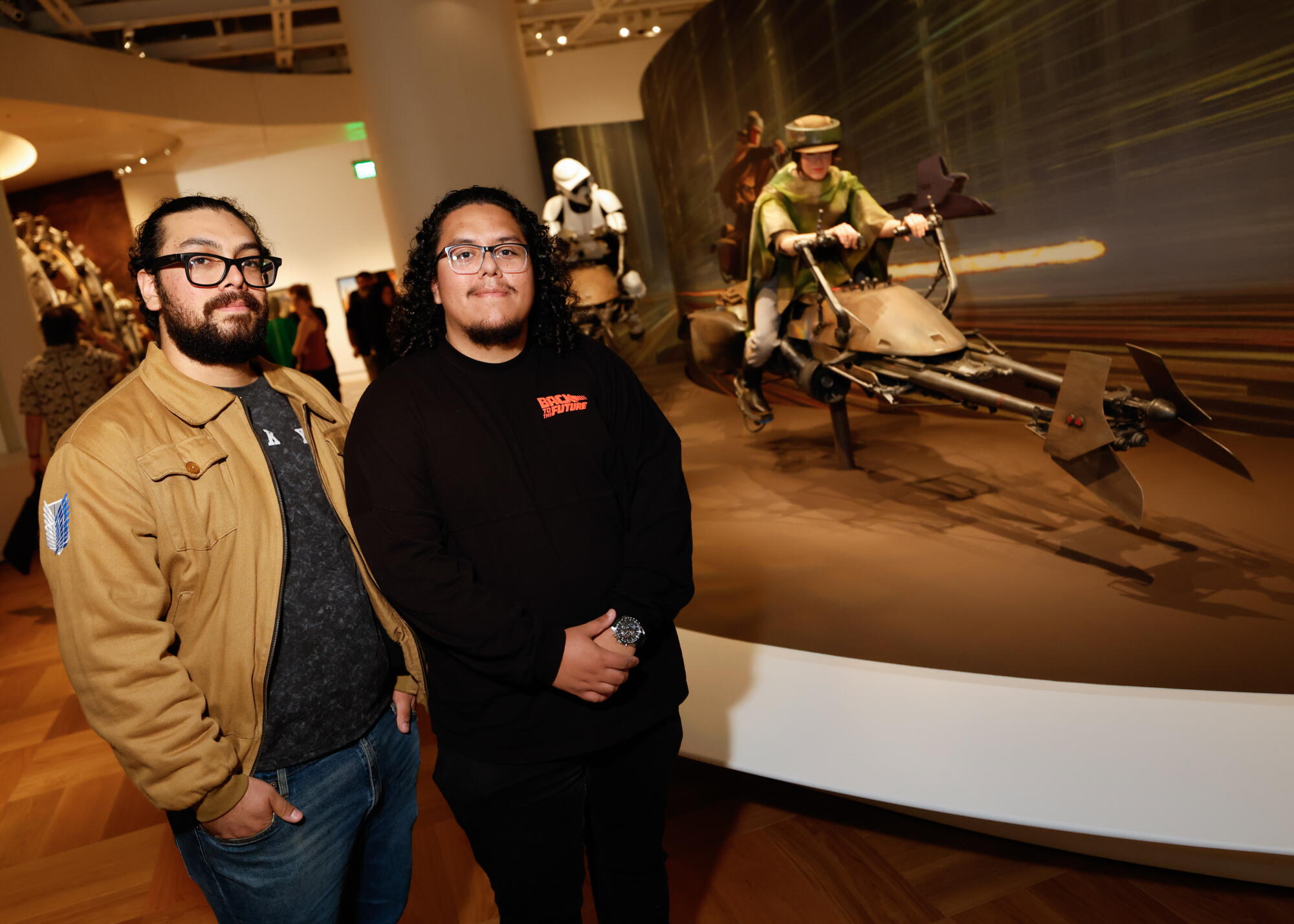
David Perez, 27, (right) donned his “Back to the Future” gear, hoping to see art from the movie. But he and his brother Carlos Perez, 28, (left) were quite pleased with the “Star Wars” artifacts in the Cinema section.
(Carlin Stiehl / For The Times)
Still, the museum, as its famous co-founder George Lucas has repeatedly said, is about more than just one story, however beloved. That sentiment cropped up repeatedly in interviews, too: Early guests seemed to believe the museum’s brochure, which notes that the galleries are about the “narrative art” of illustrating stories.
Co-founders Lucas and businesswoman Mellody Hobson (also Lucas’ wife) gave remarks early Tuesday to the first 100 visitors, consisting of students from USC, Los Angeles Technology Center, Otis College of Art and Design and Los Angeles City College, who were all handed free tickets.
A yellow Naboo N-1 Starfighter hangs above the education lobby, across from the main plaza, guarding the research library.
(Carlin Stiehl / For The Times)
“I’ve spent more than 50 years collecting the work of artists who don’t always get their due — illustrators, cartoonists, muralists, painters — because I believe their images are as vital as any other art form,” Lucas said. “They deserve to be in a museum.”
“This is a museum of the ‘people’s art’ — the images are illustrations of the beliefs we live with every day,” said Hobson, “and for that reason, this art belongs to everyone.”
Later that day, The Times asked visitors to share their impressions of a museum that, until now, has lived largely in the imaginations of fans and in abundant social media posts online. The museum has drawn loads of applause but also plenty of criticism, mostly for its lack of context via wall text, and for displaying art that not everyone agrees should be elevated.
Do the people love the “people’s art”?
Responses have been edited for length and clarity.
Alden Chang and his wife flew 6,800 miles from Taiwan to thank George Lucas for creating the “Star Wars” films and franchise. Chang told The Times that he also wrote an academic paper examining “Star Wars” fan culture in Taiwan.
(Carlin Stiehl / For The Times)
Alden Chang, 32, green product engineer from Taiwan
You flew all the way from Taiwan, just for this?
Chang: Yeah, halfway across the world to meet George Lucas and Miss [Mellody] Hobson.
Did you get to meet them?
Chang: Yeah, I just shook hands with them this morning. It’s like a dream come true.
How long ago did you and your wife get here,and how long are you staying?
Chang: For eight days. We came here on Sept. 18.
Is this the highlight of the trip?
Chang: Sure. [Laughs.] It’s my main mission and my main goal.
(Later, in an email, Chang told The Times that he also wrote an academic paper examining “Star Wars” fan culture in Taiwan.)
Friends Robert Meier, left, and Marc Downing used to work as ushers at the Music Center together. Growing up, Marc rode his bike where the Lucas Museum now stands.
(Carlin Stiehl / For The Times)
Marc Downing, 71, retired, from Exposition Park and Robert Meier, 70, educator, from Highland Park
Downing: I go to all the museums. This was the newest museum, so I had to come and see this.
How does this compare to the other L.A. museums?
Downing: This is ultra modern, ultra space-future. I’m glad the museum is here; highly recommend it. And I’m proud that it’s in my city, and I’m glad that it’s in the neighborhood that I grew up with.
What made you want to be a member of the museum, Robert?
Meier: It’s giving to the neighborhood. I’ve admired George Lucas — I used to have a relative in Marin County, and growing up, we’d go to lunch, and I’d see George Lucas and his family. We’d be at the same restaurant together.
Downing: Well, speaking of this neighborhood: This used to be a parking lot. I remember it very well. And I used to come here and ride my bike in this neighborhood as a kid.
C.S. Lee sits on a bench at the south viewpoint of the museum, gazing out onto the sculpture garden below. “This is why you live in Southern California. This is why you live in L.A.: for days like these.”
(Carlin Stiehl / For The Times)
C.S. Lee, 54, actor, from Koreatown
Lee: “Star Wars” was the very first movie I ever saw in my life as a 4-year-old when I immigrated here from Korea. We landed in Hawaii, in Waikiki Beach. Our family friends took us to a drive-in movie cinema place, and they said, “You want to come see a movie?” And it was “Star Wars” and “King Kong,” double billing. And my mom said when I saw the screen, my eyes popped out of my head because I’d never seen a movie before.
How do you think “Star Wars” impacted how you saw narrative and story?
Lee: I think I carried that all through my life: the story of “Star Wars.” I was like, “Oh, the good guys won!” And it was such an uplifting thing for me to hold on [to] all these years.
What did you think about the rest of the museum?
Lee: It’s so beautifully done: all the curves, all the light. You got the wind coming through the trees that they planted. I mean, honestly, I was just looking out, thinking to myself, “Wow, this is why you live in Southern California. This is why you live in L.A.: for days like these.”
The view of the sculpture garden and grounds beyond that C.S. Lee was contemplating from the south viewpoint.
(Carlin Stiehl / For The Times)
What about the building itself?
Lee: We rarely get to see architecture like this. But I think it’s good for people to see the artistry and the imagination of what people can build.
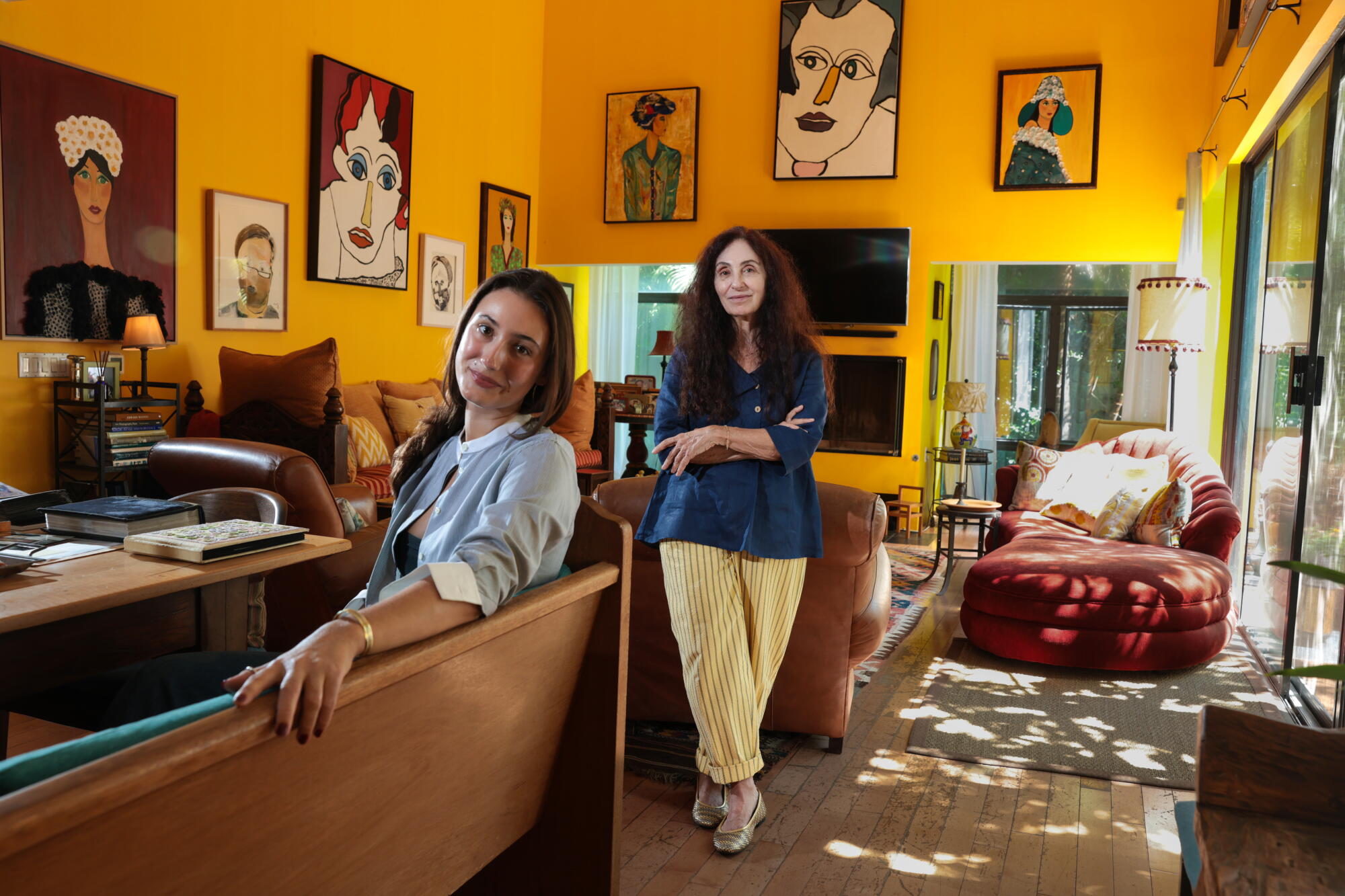
Janet Jacobs, 62, architect and Hanjin Jacobs, 25, audio equipment manufacturer technician, mother and son on a family trip from Portland (pictured at the top of the story)
I see you’re wearing a “Star Wars” T-shirt.
Janet: Yes, I am — actually from 1977.
Wow, really?
Janet: Yeah, I’ve had it for that long [laughs].
What was your overall takeaway from the museum?
Janet: I know George Lucas wanted to create this museum in a different way, like he didn’t have a sequence of events or a roadmap, he just wanted people to experience it the way they wanted to, so that’s all great. We do wish some of the things were explained a little more. Like, I know who Ralph McQuarrie is; [my kids] do not. So that would’ve been nice. Like in a typical museum, you do have a little blurb.
[My son] brought up a really good point: how ironic it is that it’s about storytelling, but yet there seems to be no storyline.
Andrew Liu, left, and Matthew Haak hang loose in front of a KAWS sculpture. They actually didn’t know it was opening day, but were happy to be there anyway.
(Carlin Stiehl / For The Times)
Matthew Haak, 26, architectural designer, and Andrew Liu, 26, behavioral therapy assistant, both from University Park
Haak: We are not “Star Wars” fans. I haven’t watched a single “Star Wars” movie. I’ve somehow evaded them my entire life.
So, if not for “Star Wars,” why did you come out today?
Haak: I’ve been watching this building being constructed for the past two years. I’m just geeking out over the organic curvilinear forms. Not a single hallway has been straight. And they even have real expensive details, like light coves on the base [of the wall]. All of these things really stand out to me. Also, curved walls like this are so expensive; architects never get a budget to do stuff like that.
I was just surprised: It’s not just “Star Wars” stuff. There’s so much art; it’s so cool.
Nicole Garcia — dressed as Padmé Amidala in her lakeside gown — poses in front of a statue of Princess Leia.
(Carlin Stiehl / For The Times)
Nicole Garcia, 24, cosplayer/costumer from Corona and Veronica Antonucci, 40, administrative assistant from Orange County
So, this might be an obvious question [given their fun outfits], but what brought you guys out today?
Antonucci: This little thing called “Star Wars”!
Garcia: Growing up with “Star Wars,” I always loved all the pieces, knowing that, for example, there’s miniature pieces that look just huge on-screen, and seeing them in-person is just, like, I want to shrink myself down and just be there.
Antonucci: It’s also amazing that it’s not just “Star Wars,” and it’s also so much more that everyone should come out and see.
Is there anything else you were particularly excited to see?
Antonucci: I was really excited to see the Frida [Kahlo]. I didn’t know she was gonna be here, so I think when I saw her, I gasped.
Is there anything else you’d like to add?
Garcia: I just hope the future generations of kids come back to see this, growing up with museums more often, and just learning how to make art — like, physically make art — and be inspired.
Antonucci: Actually, we talked about feeling jealous of all the kids who are going to be here on their school field trips, because we didn’t get to experience this.
Nikki Foster, left, loves a good field trip. She texted her group chat to visit the museum, and her bestie, Shalonda Dean, responded, so they both cleared their calendars for the visit.
(Carlin Stiehl/For The Times)
Shalonda Dean, 47, consulting business founder and president, and Nikki Foster, 45, live event production executive, both from Beverly Hills
Dean: Being a Black woman, I can identify with this little Black girl. Even in 2026, I think this painting depicts a lot of what Black women are going through today, whether it be in the workplace, navigating motherhood, navigating life. And I think this is an example of the barriers that we’re constantly breaking through every day, even today.
Foster: I’ve never seen it in person until now. So when we saw it, we were like, “It’s here, it’s here!” Just to be able to lay our eyes on it, and not have to go to another country, another state — here in Los Angeles. This is divine. It’s a divine day.
“I love meeting people,” Vincent Zabierowski said. “People are my main inspiration. I’m very lucky I get to be in a place where people want to be, and people want to soak up all that creative energy and just experience art.”
(Carlin Stiehl / For The Times)
Vincent Zabierowski, 23, host at the Skywalker Grill and freelance illustrator, lives near Downtown L.A.
As an artist yourself, what are your favorite pieces in the museum?
Zabierowski: I love a lot of the things that are in the graphic novel collection, like the Jack Kirby, the Garfields. My favorite is the Art Nouveau artist Alphonse Mucha. The Diego Rivera mural, that one was really amazing — and just the history here, having it be in L.A.
How does your work as an illustrator inform how you see these pieces?
Zabierowski: When I was going through it with some of my co-workers, I would [ask] “Do you know why they use a blue pencil?” And it’s because, when you take a photograph or a scan, that blue pencil disappears. So it was just really cool to see the behind-the-scenes and understand.
So seeing those blue pencil marks tells you that a piece is real?
Zabierowski: A person made it! I feel like a lot of people see artwork in textbooks, or they see artwork on their phones, or they see artworks on posters, and it takes a lot of skill and intelligence and training to be able to do those pieces of artwork.
In Philippe Caland’s semi-autobiographical 2003 film “Hollywood Buddha,” his mother, Huguette Caland, plays herself. Wearing her signature white smock, inscribed with a flurry of painted swirls, circles, letters and cross-stitches, the Lebanese artist makes precise gray-blue lines on a canvas spread across her dining room table as her son laments a fickle movie industry.
Filmed in her Venice home, the scene, her three children agree, was true to life. Caland worked constantly: on stretched canvas, on fabric folded in her lap, on a children’s menu, on the wall of her kitchen, or the sleeve of her smock. Whatever was at hand.
“Of course it could be frustrating,” said her daughter Brigitte, an elegant, soft-spoken scholar of Semitic languages who has managed Caland’s estate since her death in 2019.
Brigitte Caland, right, and Charley Caland — the daughter and granddaughter of the Lebanese-born painter, sculptor and fashion designer Huguette Caland — stand in Caland’s former L.A. home and studio.
(Robert Gauthier / Los Angeles Times)
Sitting in that very home, which Caland had built in 1997, Brigitte recalled the many times her mother invited her over only to continue working as they talked. “I’d go to leave, and she’d put the canvas away, beg me to come back, and as soon as I did, she’d start painting again.” Still, from early on, Brigitte understood the compulsion as evidence of her mother’s resolve. “She had this incredible drive to create.”
“Huguette Caland: A Life in a Few Lines,” opening Sunday at the Hammer Museum, traces that relentless drive across nearly 150 paintings, drawings, sculptures, garments and tapestries. Organized by the Museo Nacional Centro de Arte Reina Sofía in Madrid in collaboration with the Deichtorhallen Hamburg, the show comes to Los Angeles as the largest Caland survey in the country to date. Spanning five decades and installed chronologically, it features work from the 26 years she spent immersed in Venice’s creative community even as her practice was largely ignored.
It was Caland’s generous hospitality and boisterous wit that made her custom château a gathering place for a vibrant Westside art circle. Ed Moses, who lived around the corner, visited several times a week; Larry Bell, Frank Gehry, Robert Wilhite and others joined her for long meals and even longer parties. Her work surrounded them, and her studio, the grandest space in the house, stood open just beyond the living room. Yet her guests remained uninterested. “No one,” Brigitte said, “would walk the 10 steps.”
Huguette Caland in Stone Doorway, France, 1970.
(Huguette Caland Estate)
Curator Hannah Feldman sees that tension as central to Caland’s California years. “Instead of supporting and bolstering her as a creative in their midst, she became their salon host,” she said. The lack of recognition, Feldman argues, reverberates through Caland’s heavily impastoed portraits of Moses and her enigmatic late abstractions such as the rectilinear paintings in the “Silent Letter Series.”
“To draw a line is a way to contain one’s emotion, one’s anger, one’s anguish,” wrote Caland of her challenging relations with fellow artists in “Sketchbook 2” (1990-91). “My lines tell the story of my life, of people encountered along the path, people I loved, and found and even lost.”
Caland is perhaps best known for her cheeky, erotic paintings of fulsome body parts and for a biography too often reduced to cliché: the libertine daughter of Lebanon’s first post-independence president who left her husband and children in Beirut to pursue an art career in a less repressed Paris.
Huguette Caland, “Self-Portrait in Smock,” 1992
(Huguette Caland Estate)
Feldman hopes the exhibition, which spans fine-line drawings of entangled lovers and radiant topographical tapestries, will complicate that familiar account. “There’s joy, and there’s sex,” she said, “but there’s also pathos, vulnerability. The search for autonomy is not an easy one; it comes with conflict, strife.”
Caland’s freedom was no doubt hard-won. She first picked up a brush as a married mother of three in her thirties, and only after her father’s death. In her first painting, alternately titled “Soleil rouge” and “Cancer” (Red Sun/Cancer) (1964), hazy concentric circles gather in a crimson orb at the center of the monochromatic plane. Simultaneously a tumor and a light source, the refulgent motif holds grief and release.
Soon after, Caland enrolled in art classes at the American University of Beirut, relinquished much of her constricting couture wardrobe, and adopted a uniform of loose, flowing kaftans, which she would later turn into works of art in their own right. Archival photographs show a glamorous Caland arriving at an event in a floor-length garment bearing painted breasts, a belly button and a triangle of curly pubic hair.
Huguette Caland, “Bribes de corps,” 1973
(Huguette Caland Estate)
Caland moved to France in 1970, leaving her children (then 15, 13 and 12) in Beirut with their father, a French-Lebanese lawyer named Paul Caland. In paintings from that decade, Caland’s imagery of bodies swell, split, meld and dissolve. In “Enleve ton doigt” (Remove Your Finger) (1971), lipstick-red lips receive a pale finger reaching out from a crush of fantastical profiles; two years later, in “Self-Portrait” (Bribes de corps), Caland dispersed a sensual body across a pale pink field interrupted at the lower edge by a slight, shadowed cleft — either buxom cleavage or buttocks.
The distance from her children produced another kind of line: text. Philippe recalled receiving illustrated letters almost every week, filled with drawings, doodles and notes of affection. Most of these were later destroyed when the family house was bombed during the Lebanese Civil War of 1975. “I always knew my mother loved me,” Philippe said. “The family was not torn apart. She took a break, and in the end made a home for us in Paris, where we all landed when the war was raging.”
After the death of her lover, Romanian sculptor George Apostu, whose rough-hewn wood sculptures still populate the house’s patio, Caland’s children encouraged yet another departure. Her eldest son, Pierre, a businessman and former Olympic swimmer, paid for a stay at a friend’s Venice bed-and-breakfast, all but forcing his grieving mother out of Paris and to sunny L.A. Her initial reluctance gave way to affection. The light, arid climate and mountains sloping into the sea reminded her of Lebanon. “She liked that California land sounded like Caland,” Brigitte said.
Huguette Caland works at her home and studio in Venice, date unknown.
(Huguette Caland Estate)
After making Venice her primary residence, Caland collaborated with architect Neil Kaufman on the design for her enclosed château. Its towering, mostly unbroken face and narrow swimming pool suggested a rampart and a moat, but behind the concrete exterior, Caland eliminated every door save the guest bathroom. Long vertical windows opened onto a courtyard shaded by a sprawling olive tree. Art crowded the steep stairwell; it accumulated on scattered plywood and Formica tables and unraveled across the kitchen in an intricate mural composed of tessellated marks that recall Byzantine mosaics and tatreez, a form of traditional Palestinian embroidery.
“There was no distinction for her,” Brigitte said, between the home and the studio, art and life. Caland once described her “very, very mixed media” as including “every single exchange, a look, a smile, a brief encounter.”
That original interior survives in “Hollywood Buddha” and archival photographs. Philippe now lives in the house with his family, and although the concrete exterior remains intact, the rooms and the courtyard have been remodeled around their own aesthetics and routines. Along with the technicolor mural, Caland’s singular sensibility persists in scattered drawings, a bouquet of her preferred 30-inch paintbrushes and a pair of stiff-backed pews. Her presence, too, is felt in the people who now inhabit the space, like her granddaughter Charley, 25, whose easy warmth recalls qualities long ascribed to the matriarch.
The former Venice home and studio of the Lebanese-born painter, sculptor and fashion designer Huguette Caland. The home is still occupied by Caland’s family and no longer looks how it did when she was alive, but her spirit lives on in small details.
(Robert Gauthier / Los Angeles Times)
When the Hammer selected Caland for “Made in L.A. 2016,” the honor brought some measure of the local attention that had long eluded her. “If you had to pick one critical turning point for her career,” Pierre said, “it was the inclusion of her work in that show.” For the family, the coming survey fulfills one of her long-held ambitions.
“She told me, ‘Live your life day by day and plan it on a thousand years,’” Philippe said. Only later did he understand that the advice described her own life. “Today, her work is here,” he added. “She continues with it.”
Huguette Caland, “Le grand bleu,” 2012.
(Huguette Caland Estate)
The final painting in the exhibition, an oceanic large-format canvas titled “Le Grand Bleu” (The Great Blue) (2012), once hung high above the central hearth in the Venice house. Surrounded by undulating circles, spots and stripes, red-roofed Lebanese abodes and white-masted schooners traverse an unsettled horizon line. From the dining table below, where a young Charley often helped her grandmother fill blank planes with delicate dots, Caland could look up and see how far her line had taken her.
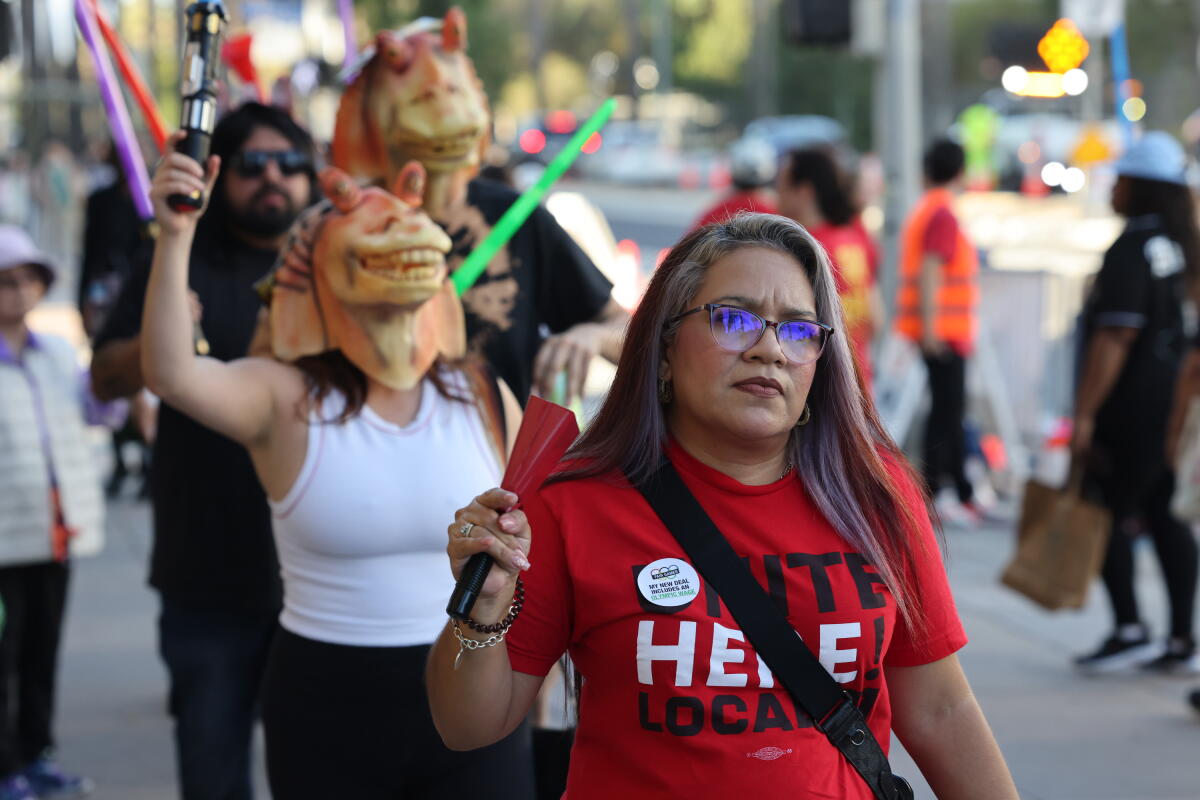
Days before the Lucas Museum of Narrative Art officially opens, protesters from the Fair Games Coalition — wearing Jedi robes and Jar Jar Binks masks and carrying lightsabers — rallied together outside the new museum.
Dozens of people from the group fighting for better worker protections during major sporting events were loudly blowing horns, banging drums and chanting, “Sí se puede,” directly across from Exposition Park’s newest museum. The group was at the museum’s private opening party Saturday night to take a stance against museum co-founder Mellody Hobson‘s recent resignation from the Los Angeles Olympics organizing committee, LA28.
“We launched the campaign with some real, reasonable demands,” said Jessica Durrum, the director of the Fair Games Coalition, for the Los Angeles Alliance for a New Economy. “If the Olympics are coming to town, we want to make sure there are lasting benefits for our communities.”
The Fair Games Coalition, which is made up of over 80 organizations, formed to fight for better labor deals during major events like the Super Bowl and the Olympic and Paralympic Games. Some of the unions in the coalition include United Teachers Los Angeles, National Union of Healthcare Workers, United Food and Commercial Workers Local 770, United Farm Workers and various community groups.
Ahead of these events, the group is asking that employers provide union and living wage jobs, funding for 50,000 units of housing for working families, a moratorium on short-term rentals and protections for immigrant workers.
Gladys Avyla marches in a Fair Games Coalition protest outside the Lucas Museum of Narrative Art.
(Jonathan Alcorn / For The Times)
Gladys Avyla, a member of Unite Here Local 11, has worked as a cleaner at the W Hotel in Hollywood for the last 14 years. Several years ago she had to move to Victorville when her rent in L.A. got too high. Avyla said that with these major sporting events coming through town she’s worried the cost of living will continue to rise as her work gets busier and busier.
“Rent is very high, and everything is expensive. It’s hard living here. We need a wage increase for the Olympics because everything costs so much,” Avyla said in Spanish. “We need help for all workers. We’re human beings, but, honestly, we aren’t treated like human beings.”
Hobson, who co-founded the billion-dollar museum alongside her husband, George Lucas, resigned from LA28 earlier this week. She reportedly stepped down from the position due to the demands of running the Lucas Museum.
But the Fair Games Coalition claims she responded to their requests to meet and discuss their concerns by resigning. The 35-person board led by Casey Wasserman, who was recently under heat for his ties to Jeffrey Epstein and Ghislaine Maxwell, is meant to help plan and execute the upcoming Olympic Games.
“That’s how you hide your head in the sand. But we’re not giving up. She still has clout and still has a lot of power in the city of Los Angeles with the Olympic Committee,” said the Rev. Gary Bernard Williams from St. Mark United Methodist Church, a member of the coalition. “There’s going to be a lot of money flowing at the top. Very little money will be trickling down to the workers who need it the most.”
Demonstrators at a Fair Games Coalition protest at the Lucas Museum of Narrative Art.
(Jonathan Alcorn / For The Times)
LA28 and the Lucas Museum did not immediately respond to a request for comment.
During this year’s World Cup, where several games were hosted in L.A., Unite Here Local 11, the union which represents workers including dishwashers, concession workers, bartenders and servers and SoFi Stadium’s food-service operator Legends Global, came to a tentative agreement days before the first match. Pastor Bridie Roberts, who works as the community organizing director at Unite Here Local 11, said having the Fair Games Coalition’s support was helpful during the negotiations.
“Our members face serious, critical decisions every single day about how to make ends meet and they work with some of the biggest tourism companies in the world that will profit in the billions of these games,” said Roberts. “We feel that the games have potential to bring real outcomes for working people, but only if we fight for them.”