ms

Trump says he’s banning CNN, MS NOW and Politico from the White House

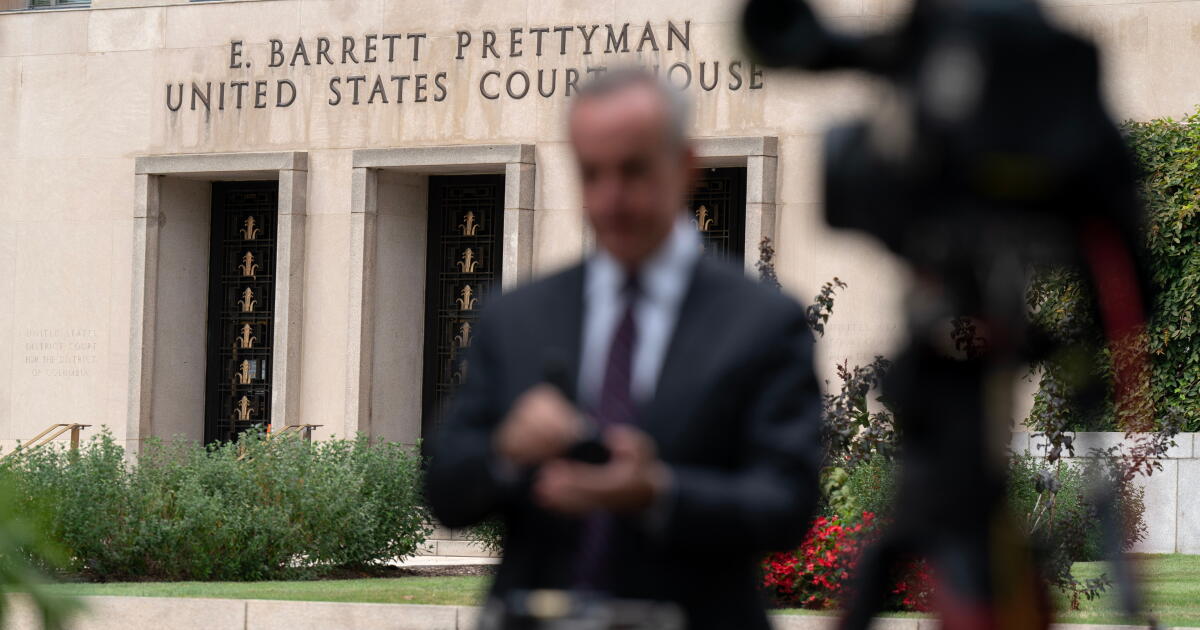
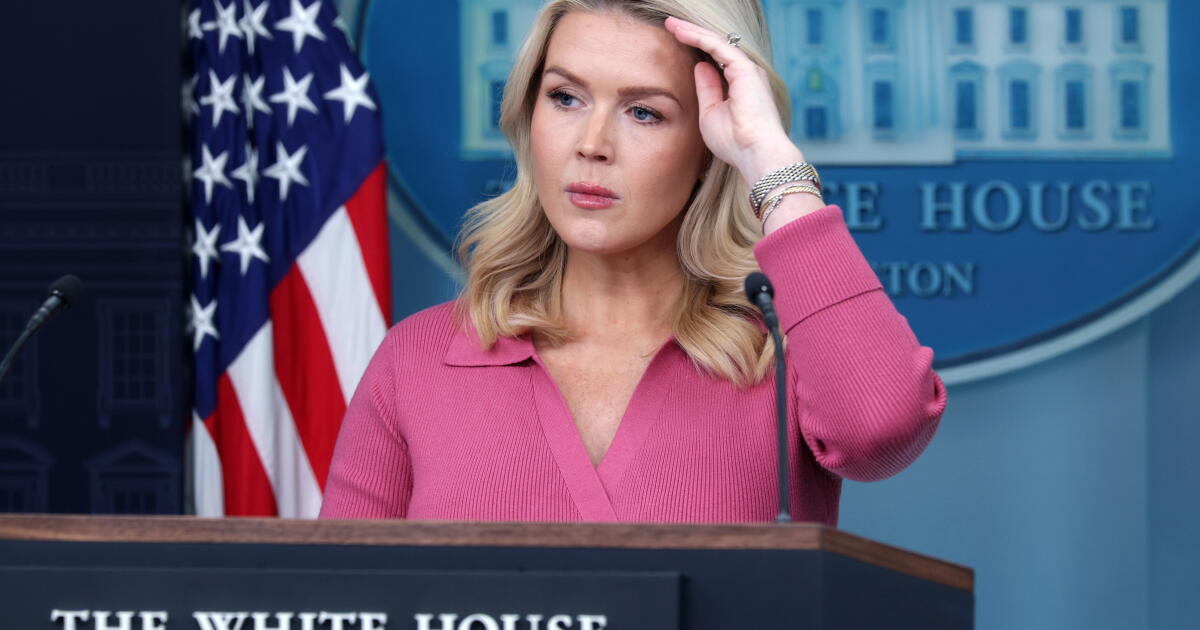
President Trump announced Friday he intends to ban CNN, MS NOW, Politico and other news outlets from covering the White House, his strongest threat yet against a free press.

In a statement on Truth Social, Trump attacked the the reporting of the three outlets which he described as “FAKE NEWS!”

“Media Outlets shouldn’t be able to constantly write or report FICTION and LIES when they’re covering the President of the United States of America,” Trump said.

How a ban would be enacted remains to be seen. In 2018, the White House tried to ban journalist Jim Acosta, then working for CNN, but a court ordered that his press credential be restored.

Trump has stepped up his attacks on the press during his second term. Federal Communications Commissioner Brendan Carr has threatened the broadcast licenses of outlets Trump dislikes. Carr has called for a review of ABC’s TV licenses, which the Walt Disney Co.-owned network is challenging in court.

After the post circulated, Trump held a press briefing from the Oval Office to discuss drug pricing. According to the pool reporter, no journalist was removed from the press room.

Trump was asked about the Truth Social post. He responded by further attacking the three outlets. He did not cite any specific report that led to his call for a ban.

“I dislike dishonest press,” he said.

Trump’s remarks generated an an immediate outcry from press freedom groups.

“It’s difficult to imagine a more blatant violation of the First Amendment than Trump banning news outlets from the People’s House for criticizing the government,” Seth Stern, chief of advocacy at Freedom of the Press Foundation, said in a statement.

“It’s also hard to imagine a dumber move. The historically unpopular president has been retaliating against the press for years, but it hasn’t helped him.”

Source link

Is the news stressing you out? MS NOW partners with Calm

MS NOW wants to offer news viewers a break when they feel overwhelmed.

The Versant-owned progressive-leaning news outlet announced Tuesday that it has entered a partnership with Calm, the San Francisco company that develops apps that help with sleep and relaxation.

Calm will be a part of MS NOW’s new direct-to-consumer product that launches Wednesday.

The digital platform, called MS NOW Membership, will make the cable channel available without a pay TV subscription for the first time, along with other offerings for those who sign up to pay $7.99 a month.

Among those features will be meditation exercises created by Calm to help users process the day’s events.

“They are designed not as an invitation to tune out, but as a way to reset, regain perspective, and return to the news with renewed focus and intention,” according to a staff memo from Marcus Mabry, senior vice president for content strategy at MS NOW.

MS NOW has also enlisted a group of mental health experts who will front programs only available on the MS NOW Membership platform, including former ABC News correspondent and “Nightline” co-anchor Dan Harris. Harris is the author of “10% Happier,” and host of the podcast of the same name. He will host two weekly streaming programs to help viewers absorb the news while managing their anxiety about it.

Harris had a panic attack while delivering a newscast on ABC’s “Good Morning America” in 2004. The experience led him to become a wellness guru. Therapist Nedra Glover Tawwab, pediatric psychologist Dr. Ann-Louise Lockhart, and Dr. Joel Bervell, a physician, will also have regular programs on the site, along with MS NOW breaking news anchor Richard Lui.

The Calm partnership is part of MS NOW’s overall plan to have MS NOW Membership offer more than just streaming programming. The channel’s executives are touting the venture as a gathering place for like-minded individuals who are engaged in politics.

MS NOW Membership is also giving subscribers a chance to join live discussions with the network’s anchors and reporters. There will be a midday online forumwhere they can ask questions of Rachel Maddow, Joe Scarborough, Jen Psaki, Stephanie Ruhle and other on-air talent. MS NOW correspondents will take questions in the evenings.

“We have always understood that MS NOW audiences want more than just headlines,” said MS NOW President Rebecca Kutler in a statement. “They have follow-up questions. They want to understand not only what’s happening, but why it matters. These daily conversations are designed to deepen that relationship and make our journalism even more accessible.”

The initiatives come after research by MS NOW, which broke off from NBCUniversal last year. MS NOW is now part of Versant, a new company made up of former NBCUniversal cable channels that were spun off by former owner Comcast.

Kutler has said the company is committed to providing more experiences for its audience of “super fans.” On average, MS NOW viewers watch the channel nine hours per week, second only to Fox News.

Source link

Gloria Steinem dead: Charismatic feminist dies at 92

Eating breakfast in a South Dakota coffee shop, Gloria Steinem was all too aware of the couple eyeballing her from the next booth. He was sporting chains. She wore leather pants and what Steinem later recalled as “an improbable hairdo.” The place was packed with tough-looking, mostly male bikers pumped about a huge rally they were attending. Steinem, returning from a Sioux powwow honoring ancient tribal women, knew she wasn’t in her element.

Finally, the leather-clad woman came over and spoke up. “I just want to tell you how much Ms. magazine has meant to me over the years — and my husband too,” she told an astonished Steinem.

There was a time, the woman said, when rolling down the road meant perching on her husband’s back seat. But now she had her own sweet ride: “I even put ‘Ms.’ on my license plate, and you should see my grandkids’ faces when Grandma rides up on her purple Harley!”

The image of that breezy, boisterous grandma stayed with Steinem for years. “I’ve come to believe that inside, each of us has a purple motorcycle,” she wrote in her 2015 memoir. “We have only to discover it — and ride.”

Steinem, the co-founder of Ms. Magazine and for six decades a charismatic leader who urged women to pursue self-affirmation, political power and equality both in the workplace and at home, died Wednesday at her home in New York City, according to her foundation’s social media pages. She was 92.

“Gloria lived true to her independent spirit, always with curiosity and a great sense of humor,” the posts said.

An activist, journalist, and relentless traveler who said she went for 20 years without spending more than eight consecutive days in her New York apartment, Steinem described herself as “an entrepreneur of social change.”

“I raise money. I talk. I write. I tell stories. I want to do justice to the women I meet,” she told The New Yorker in 2015.

Steinem, who struggled with stage fright most of her life, talked with women at gigantic conferences and in intimate kaffeeklatsches. At book signings and on barstools, she sought their stories, sometimes re-telling them in her essays and on her countless speaking tours. Her portfolio of issues was vast, from sexual violence, female genital mutilation and racism to the more mundane injustices that helped fuel a movement for sweeping social change.

At one campus visit, the discussion turned to men who expect women to pick up after them. A young Japanese woman, silent for most of the increasingly raucous session, stood up, turned around to address 500 other audience members and said: “When my husband leaves his underwear on the floor, I find it quite useful to nail it to the floor.”

She had never before said a word in public, she told the cheering crowd.

Steinem had a “gift for empathy,” New York Times columnist Gail Collins wrote when the feminist icon turned 80 in 2014.

“Women who read about her or saw her on TV felt that if they ran into her on the street, they would really get along with her. And women who actually did run into her on the street felt the same way. More than a half-century into her life as an international celebrity, she remains stupendously approachable, patient with questions, interested in revelations.”

Gloria Steinem, left, and Pat Carbine, two of Ms. magazine's founding editors, in 1980.

Gloria Steinem, left, and Pat Carbine, two of Ms. magazine’s founding editors, in 1980.

(Dave Pickoff / Associated Press )

Famously attractive, Steinem over the years gave hope to young women who wanted to “stand up for their rights without being called man-haters,” Collins wrote. “She was evidence that it was possible to be true to your sisters while also being really, really attractive to the opposite sex.”

At the same time, she alienated the religious right with her fervent pro-choice advocacy. When Lands’ End featured an interview with Steinem in its 2016 catalog, outraged readers threatened a boycott. Company officials then cut their ties with the woman they had headlined as a “legend.”

Steinem first drew public notice when she was in her 20s and struggling to establish herself as a freelance writer. Her breakthrough story was a funny, scathing account of her two weeks as a Playboy “bunny” — a scantily clad cocktail waitress at Hugh Hefner’s Manhattan nightclub.

In some ways, the story backfired. Steinem became known not as a crusader for women but as a former bunny. For several years, her magazine assignments continued to veer toward “women’s page” topics — in 1964, she wrote about textured stockings for the New York Times — and even after she delved into serious political issues for New York magazine, she wasn’t taken as seriously as she would have liked.

In 1968, a Washington Post columnist described her as “the mini-skirted pinup girl of the intelligentsia.” Two years later, a headline in the Los Angeles Times read, “Gloria: Beautiful Brain in Ditto Body.”

Meanwhile, the women’s liberation movement had propelled itself into the mainstream, ignited by writers like Betty Friedan. For Steinem, though, it became a passion only after she covered a meeting during which women opened up about their illegal abortions. The event was held to protest a legislative hearing on abortion where the only witnesses were 14 men and a nun.

“Suddenly I was no longer learning intellectually what was wrong. I knew,” Steinem recalled in 1983. “I had had an abortion when I was newly out of college, and I told no one. If one in three or four adult women shares this experience, why should we be made to feel criminal and alone?”

Nearly 60 years after her unwanted pregnancy, Steinem dedicated her memoir to the British physician who arranged her abortion after she agreed to two conditions.

The first was that she never reveal his name. (She did, long after his death.)

The second: “You will do what you want to do with your life.”

Born on March 25, 1934, in Toledo, Ohio, Steinem didn’t attend school regularly until seventh grade. Most winters, her father Leo, an ebullient, 300-pound dreamer who was often in debt, would drive the family down back roads in a trailer, stopping here and there to sell antiques he’d picked up along the way.

Ruth Steinem, Gloria’s mother, was a former journalist who was hospitalized for long periods with severe mental health problems. From the age of 11, after her parents divorced and her older sister Susanne left home, Gloria often cared for her mom.

In an essay, “Ruth’s Song (Because She Could Not Sing It),” Steinem recalled her mother cutting her arm when she smashed a window to escape the Nazi invaders that only she could see. “I remember a long Thanksgiving weekend holding on to her with one hand and holding my eighth-grade assignment of ‘Tale of Two Cities’ with the other,” Steinem wrote.

Despite her patchy schooling, Steinem received a scholarship to Smith College, where she graduated Phi Beta Kappa after majoring in government. After spending two years in India on a fellowship, she worked briefly for an international youth organization funded by the CIA.

Basing herself in New York in 1960, she quickly became known for her stylish prose, sharp wit, and striking appearance. Within a decade she was “Gloria-Steinem-the-antiwar-gorgeous- bachelor girl who was pictured with Henry Kissinger in Time and Life…,” according to a breathless 1970 account in the Los Angeles Times.

But she was also the Gloria Steinem who helped start New York magazine, who wrote insightfully about the intersection between racism and sexism, and who in 1971 became the first woman chosen to address an annual banquet of the Harvard Law Review.

She zeroed in on the school’s failings.

“There is a course on international whaling law but none on women’s rights internationally,” she told the black-tie gathering. “An eminent professor of administrative law said as late as last night that he didn’t know what the Equal Employment Opportunity Commission was. The same man replied to a request that at least one full-time female professor be hired by answering that women faculty brought problems because of ‘sexual vibrations’…”

The following year, Steinem, with several other feminist journalists, founded Ms. Its first, tentative edition, a 40-page insert into New York magazine, sold out in eight days.

The debut issue of Ms. included pieces on gender stereotypes, lesbian relationships, and job discrimination. It also featured an open letter from 53 prominent women — including tennis great Billie Jean King, singer Judy Collins and Steinem — who revealed that they had undergone abortions.

While the magazine’s monthly circulation eventually topped 500,000, it also fueled skeptics. “I’ll give it six months before they run out of things to say,” newscaster Harry Reasoner predicted on national TV.

Ms. also took flak from some of Steinem’s sister feminists, who contended that it cast women as victims. As new waves of feminists confronted different issues, some became exasperated by Steinem’s seemingly perennial role as the face of the women’s movement.

“Guys in the media chose Gloria as our leader,” said feminist writer Susan Brownmiller in 2016. “A lot of us, our hope is that eventually, history will straighten this all out and say, no, Gloria came in a little later, and her very loyal supporters have backtracked that history.”

Steinem remained a contributing editor to Ms. for 15 years.

Gloria Steinem at home in New York City, 2010.

Gloria Steinem at home in New York City, 2010.

(Annie Leibovitz / Penguin Random House)

Meanwhile, she was crisscrossing the country, campaigning for liberal Democratic candidates, fighting laws restricting abortion, and urging legislators to adopt the Equal Rights Amendment.

“Like Sky Masterson, the wandering gambler in Damon Runyon stories, I’ve been in more hotel rooms than the Gideon Bible,” she wrote, “and he didn’t wash his hair with hotel soap, eat from vending machines, or sit up late organizing with the hotel maids.”

In 2013, President Barack Obama gave Steinem the Presidential Medal of Freedom, the nation’s highest civilian honor.

Her books include a 1983 essay collection, “Outrageous Acts and Everyday Rebellions”; a 1986 portrait of Marilyn Monroe; her 2015 memoir, “My Life on The Road”; and works on aging and self-esteem.

Over the years, Steinem had longstanding romantic relationships with a number of men but vowed never to marry or have children.

However, at 66, she broke her vow and married David Bale, a British businessman and animal rights advocate. By then, the institution of marriage had changed for the better, she later explained.

“We spent 30 years in the United States changing the marriage laws,” she said. “If I had married when I was supposed to get married, I would have lost my name, my legal residence, my credit rating, many of my civil rights.”

Three years after their marriage, Bale died of brain cancer. Steinem’s stepchildren include the actor Christian Bale.

At 80, Steinem celebrated her birthday by riding an elephant in Botswana.

In the following years, she campaigned for Hillary Clinton, spoke at the Women’s March on Washington, helped save her hometown’s last abortion clinic and gave numerous interviews denouncing President Trump’s views on women. She was the subject of an off-Broadway play and was honored by Rutgers University with the Gloria Steinem Endowed Chair in Media, Culture, and Feminist Studies.

For fun, she danced. When asked by TV hosts, she occasionally demonstrated a well-worn soft shoe routine, though her heart was with the tango.

“It’s a sick, authoritarian dance,” she told a reporter, “but I loved it.”

Chawkins is a former Times staff writer.


Source link