Who doesn’t love a Hollywood ending — or a beginning?
The only guide you need for fall entertainment.
As summer gives way to the inevitable grunts of awards-season jockeying, how wonderful it is to crawl back into the head of our favorite portal John Malkovich, returning with his most complex work in years in “Wild Horse Nine” (hitting theaters Nov. 6). Meanwhile, Jordan Firstman made his name with viciously funny online “Impressions” and a spotlight-stealing turn on HBO’s “I Love LA,” but did you know he was Trojan-horsing in a triple threat? “Club Kid” (out Nov. 6) marks the arrival of a serious screenwriter, director and star making a feature debut of rare wisdom.
Read on for features about those two movies, and if you’d like more options, here are 17 fall titles worth getting excited about in the coming months.
‘Resident Evil’ (Sept. 18)
Austin Abrams in “Resident Evil,” directed by Zach Cregger.
(Sony Pictures Releasing)
Milla Jovovich brought stony-faced supermodel moxie to 2002’s underrated first film and her subsequent franchise was a mixed bag. But there’s a whole global fandom of obsessives who feel that none of these movies truly got the crux of what made Capcom’s original games such an all-night fixation. One of those people turns out to be filmmaker Zach Cregger, who, between “Barbarian” and his Oscar-winning “Weapons,” can now write his own ticket. As unlikely as it seems, this reboot is a project he has spent a considerable amount of his newfound Hollywood capital pursuing and you have to love him for it. Apocalyptic Raccoon City and a viral zombie outbreak are sure to figure, but also, given the Cregger of it all, spooky subterranean passages and confident performances, this time from Austin Abrams and Paul Walter Hauser. — Joshua Rothkopf
‘Digger’ (Oct. 2)
Tom Cruise in the movie “Digger.”
(Warner Bros. Pictures)
Tom Cruise has been busy these last 15 years, starring in five “Mission Impossible” movies, reboots of “The Mummy” and “Top Gun” and a handful of other would-be blockbusters best forgotten. In nearly all of them, he plays a version of the unstoppable Cruise persona. And that’s a performance for sure. But we haven’t seen him play a real character in a long time, which makes his new movie my most-anticipated of the fall, even if the trailer makes it look like it could be a tonal train wreck. Billed as a “comedy of catastrophic proportions,” “Digger” has Cruise playing a Texas oil man charged with saving the world from an environmental disaster that he appears to have caused. The writer-director, Alejandro González Iñárritu, is a five-time Oscar winner, but not a filmmaker known for his humor. That makes the trailer’s absurdist tone and visual style intriguing (and also concerning). Iñárritu clearly loves “Dr. Strangelove,” as do we all. Fingers crossed. — Glenn Whipp
‘Fjord’ (Oct. 9)
Sebastian Stan and Renate Reinsve in the movie “Fjord.”
(Neon)
Winner of the Palme d’Or at this year’s Cannes Film Festival — the second for writer-director Cristian Mungiu and an astonishing seventh in a row for distributor Neon — this is a gripping morality tale specifically designed to make viewers question their instinctive reactions no matter where they sit on the political spectrum. A conservative religious couple (Sebastian Stan and Renate Reinsve, both giving quietly riveting performances) relocate from Romania to a small village in Norway and soon find that the outwardly progressive locals are less than welcoming. The Gheorghius’ five children are taken into protective custody amid allegations of abuse and soon enough, it seems that their beliefs and values are being put on trial. Fans of “Anatomy of a Fall” (another Neon title) will appreciate the detailed glimpse inside another international legal system, as the courtroom scenes are full of tension, emotion and surprise. — Mark Olsen
‘The Social Reckoning’ (Oct. 9)
Jeremy Strong as Mark Zuckerberg in the movie “The Social Reckoning.”
(Leah Gallo / Columbia Pictures)
It’s been 16 years — an eon in internet time — since David Fincher made gripping drama out of coding, depositions and bruised male egos in “The Social Network.” Facebook’s story has since then taken a far darker turn: Russian troll farms, growing concerns about worsening teenage mental health and election misinformation. Aaron Sorkin, who scripted the first film, both writes and directs the follow-up, drawing on internal Facebook documents that whistleblower Frances Haugen (Mikey Madison) leaked to Wall Street Journal reporter Jeff Horwitz (Jeremy Allen White) for the paper’s “Facebook Files” investigation. In a particularly inspired bit of casting, Jeremy Strong succeeds Jesse Eisenberg as Mark Zuckerberg. After playing Kendall Roy, a would-be mogul desperate to seize power in HBO’s “Succession,” and Roy Cohn, a fixer who wielded it ruthlessly in the Trump biopic “The Apprentice,” Strong may have been preparing for Zuck all along. That alone might be reason enough to log back onto Facebook. — Josh Rottenberg
‘Sense and Sensibility’ (Oct. 16)
Daisy Edgar-Jones, left, and Esmé Creed-Miles in the movie “Sense and Sensibility.”
(Focus Features)
You come to “Sense and Sensibility” for sisterly love, for Edward and Elinor, for wit and cleverness, for nosy neighbors, for passionate longing, brooding, Byronic suitors and happily-ever-afters. The 1995 film adaptation of the Jane Austen classic, directed by Ang Lee with Emma Thompson starring and writing the screenplay, was damn near perfect, setting a high bar for any and all comers. So it’s with pleasure (and relief) that I can report that the latest version, directed by talented British filmmaker Georgia Oakley, will delight Janeites and anyone else who appreciates a smart, charming costume drama. The film faithfully adheres to the text, foregrounding the relationship between the Dashwood sisters, the passionate Marianne (Esmé Creed-Miles) and the pragmatic Elinor (Daisy Edgar-Jones). It’s fresh without needing to lunge for all the compulsively shocking aesthetics that undid Emerald Fennell’s “Wuthering Heights” earlier this year. Oakley crisply delivers everything you want, everything you need. — G.W.
‘Whalefall’ (Oct. 16)
Austin Abrams in the movie “Whalefall.”
(20th Century Studios)
If you’re a sucker for that “Pinocchio” sequence in which Geppetto gets swallowed by a whale, you’ll dig Pulitzer Prize-winning novelist Daniel Kraus’ “Whalefall,” a drama about a Californian scuba diver stuck in the stomach of a 60-ton behemoth. That’s bad enough. Worse, the kid’s oxygen tank is running low. One part survival quest, one part ghost story, the narrative centers on the young man hallucinating his abusive dead father, who advises him on how to escape. I devoured the book in one weekend, but couldn’t imagine how this claustrophobic nightmare could possibly translate to film. Director Brian Duffield (“Spontaneous,” “No One Will Save You”) has braved the challenge. Austin Abrams plays the trapped swimmer; Josh Brolin is his seafaring dad. It’s a reunion for two of the leads in last year’s “Weapons.” Steel yourself for slimy bile, sticky emotions and wet tears. — Amy Nicholson
‘Clayface’ (Oct. 23)
Tom Rhys Harries in the movie “Clayface.”
(Warner Bros. Pictures)
Even comic-book obsessives will mention a dozen other DC villains before digging out Clayface, the nom de gloop of a disfigured actor transformed into human Play-Doh. But after the animated series “Harley Quinn” stretched the character into a squishy, vulnerable showboat, I’m curious to see what he looks like in the hands of James Watkins, director of the mischievous 2024 thriller “Speak No Evil.” Watkins has a vicious sense of humor and the casting of Welsh theater actor Tom Rhys Harries in the title role is a signal that the film might be a performance showcase in the vein of Tom Hardy’s roiling split-personality turn in “Venom.” Early glimpses of footage at CinemaCon hint that the script by Mike Flanagan and Hossein Amini is most hyped to mix the superhero genre with icky body horror. Apparently, there are images in which Clayface doesn’t even have a face. — A.N.
‘Fatherland’ (Oct. 23)
Sandra Hüller and Hanns Zischler in the movie “Fatherland.”
(Agata Grzybowska / Mubi)
Paweł Pawlikowski has made a specialty of looking at European history from close range: the aftermath of the Holocaust in the Oscar-winning “Ida” and the Iron Curtain era in “Cold War.” Eight years after the latter, Pawlikowski returns with this spare black-and-white drama, for which he left Cannes with a directing honor. Hanns Zischler plays author Thomas Mann, the Nobelist and critic of Hitler, returning to Germany in 1949 after 16 years in exile, with his daughter Erika (Sandra Hüller) behind the wheel. Their journey takes them through a ruined country eager to reclaim one of its greatest writers without dwelling too much on why he fled. After the moral minefields of “Anatomy of a Fall” and “The Zone of Interest,” Hüller seems ideally cast as Erika, a writer and committed anti-Nazi unlikely to let her father, or the country around him, off the hook. — J. Rottenberg
‘Klara and the Sun’ (Oct. 23)
Jenna Ortega in the movie “Klara and the Sun.”
(Sony Pictures)
When novelist Kazuo Ishiguro published “Klara and the Sun” in 2021, a book narrated by an artificial intelligence still felt safely like science fiction. Five years and one AI boom later, the future has arrived early. Jenna Ortega plays Klara, a solar-powered “artificial friend” purchased as a companion for an ailing teenager (Mia Tharia) whose mother is played by Amy Adams. Klara observes the humans around her with extraordinary attentiveness but only a partial understanding of their behavior, gradually forming her own ideas about love, loneliness and what makes one person irreplaceable to another. Taika Waititi, whose movies have ranged from the antic Nazi satire “Jojo Rabbit” to the candy-colored superhero spectacle of the “Thor” films, is an unexpected match for Ishiguro’s quiet, melancholy story. But with people already turning to chatbots for companionship, the film’s central question no longer feels quite so theoretical: What happens when the machine stops feeling like a machine? — J. Rottenberg
‘Wicker’ (Oct. 23)
Alexander Skarsgård and Olivia Colman in the movie “Wicker.”
(Kristof Galgoczi Nemeth / Black Bear Pictures)
Most of the questions you have following the recent trailer that sent the internet into a tizzy are in fact answered by seeing the movie itself. Set in an indistinct Mitteleuropean village of an uncertain era, the story follows an unmarried fisherwoman (Olivia Colman) who asks her friend, a master basketweaver (Peter Dinklage), to make her a husband. And does he ever, sending over a mass of reeds fashioned into Alexander Skarsgård. Their little community goes berserk, full of curiosity and more than a hint of jealousy at their loving and compatible albeit unconventional union. Adapted from an Ursula Wills-Jones short story by the husband-and-wife writer-director team of Alex Huston Fischer and Eleanor Wilson, the film never overlooks how absurd its premise is, but also finds tender emotional notes within it as well. “Wicker” is a wise, warm allegory examining community and relationships — and why we need the things we do. — M.O.
‘Godzilla Minus Zero’ (Nov. 6)
A scene from the movie “Godzilla Minus Zero.”
(2026 TOHO)
Three years ago, the post-World War II period thriller “Godzilla Minus One” was a monster smash, earning the 72-year-old franchise its first Oscar win and biggest box office haul to date. (What, you thought the radioactive lizard wouldn’t come back?) Takashi Yamazaki’s sequel — the 39th Godzilla movie, if you’re counting — takes place in 1949 Tokyo after disgraced kamikaze pilot Kōichi (Ryunosuke Kamiki) has begun to rebuild his life with new wife Noriko (Minami Hamabe). In still-traumatized Japan, simply having hope for tomorrow is brave and foolhardy with an angry kaiju sulking in the Pacific. Yes, Godzilla exploded in the last film. Since when has that mattered? “Godzilla Minus Zero” has giant shoes to fill, but personally, I couldn’t care less if the green guy wins another Academy Award as long as the multiplex enjoys a shivery blast of his atomic breath. — A.N.
‘Paper Tiger’ (Nov. 13)
Adam Driver in the movie “Paper Tiger.”
(Neon)
A favorite of international festival programmers and film critics for decades now, James Gray has never quite had his breakthrough with mainstream audiences. That may finally change with his latest, which finds him again exploring the rich, complicated bonds of family amid the betrayals and uncertainties of New York’s outer-borough criminal underworld in a way that feels totally fresh and new. Miles Teller is a family man drawn into a business scheme by his ex-cop brother (Adam Driver) that puts them both afoul of the Russian mob in a story set in Queens in the 1980s. Scarlett Johansson plays Teller’s wife. All three give what are easily among their career-best performances as Gray steadily ratchets up the tension with a master’s hand, melding the crime thriller with domestic drama in a distinctive way. With a tremendous payoff in its devastating climactic sequence, this feels like the film Gray has been building toward his entire career. — M.O.
‘Elsinore’ (Nov. 20)
Andrew Scott as Ian Charleson in the movie “Elsinore.”
(Anthony Dickenson / Focus Features)
The Scottish actor Ian Charleson would forever be an Olympic runner on the beaches of “Chariots of Fire,” head tipped back in a kind of spiritual ecstasy. The role brought him international acclaim, but there weren’t enough of them, and a secret battle with HIV and AIDS took its toll. But what Charleson didn’t know was that, near the end, he would embark on the run of his life, performing a legendary Hamlet onstage in a race with death. Andrew Scott carries the whole of this exhilarating biopic on his knitted brow, diving deeply into the metaphysical darkness of Shakespeare’s text, into the rituals and camaraderie of actors and, ultimately, into the defiance of an artist who only wants to disappear once more into his art. Inexplicably overlooked for “All of Us Strangers” and “Blue Moon,” Scott is just now arriving at a kind of effortless humility, dazzling yet approachable, that puts him in the company of the all-time greats. — J. Rothkopf
‘Josephine’ (Nov. 20)
Mason Reeves in the movie “Josephine.”
(Sumerian)
If we are to have things like a “Sundance Film Festival” or “independent cinema,” it should be to support and nourish movies like Beth de Araújo’s powerful San Francisco-set thriller, about a violent sex crime witnessed by an 8-year-old, who is altered by the experience but then called upon to be a courtroom voice in the world of adults. Everyone who has come together to make this tricky but meaningful project seems to be operating on a higher plane: For Channing Tatum, playing a dad increasingly out of his depths, it’s an opening door to the kind of complex roles he has earned from being a dependable goof. For Gemma Chan, as a parent dealing with the unthinkable, the film is a promise fulfilled. But for young Mason Reeves, imbuing the title character with an evolving mystery that suggests a prodigy, “Josephine” is a revelation. — J. Rothkopf
‘Minotaur’ (Nov. 20)
A scene from the movie “Minotaur.”
(Mubi)
The whispers were fierce at a recent Academy Museum screening of Adrian Lyne’s windy erotic thriller “Unfaithful” as plugged-in attendees looked for points of similarity with Andrey Zvyagintsev’s sleek domestic drama, one that dominated this year’s Cannes conversation. Both movies are remakes of Claude Chabrol’s 1969 “The Unfaithful Wife,” but Zvyagintsev kicks the concept up to expert level, turning an affair and its brutal repercussions into a referendum on Russia’s new-money detachment: eating, lying and screwing with the Ukraine war out of mind. Was Zvyagintsev able to shoot in Russia itself? Of course not — he needed to film in look-alike Latvia. That’s how dependably infuriating he is to the authorities. But it’s a miracle he’s shooting anywhere at all: A case of long COVID, a coma and a yearlong hospital stay almost snuffed out one of the boldest filmmakers on the planet. His return to action is a grand piece of fortune. — J. Rothkopf
‘The Further Mis-Adventures of Cliff Booth’ (in Imax Nov. 25; on Netflix Dec. 23)
Brad Pitt and Leonardo DiCaprio in a scene from 2019’s “Once Upon a Time … in Hollywood.”
(Andrew Cooper / Sony Pictures Releasing)
Three years ago, Quentin Tarantino teased that his 10th and final film would be “The Movie Critic,” centered on a film reviewer for a 1970s porno rag, but he scrapped it and pivoted to a sequel featuring Brad Pitt’s stuntman from “Once Upon a Time … in Hollywood.” Tarantino didn’t want to direct it, though, preferring to challenge himself with something more ambitious for his sign-off. So he handed the screenplay — an “unwieldy thing,” he calls it — to David Fincher, tasking him to shrink it down. And that’s how we’ve arrived at a collaboration between two defining American filmmakers who came to prominence in the ’90s and share an interest in dark impulses that often turn violent. How Fincher will meld his clinical precision to Tarantino’s yo-gabba-gabba gonzo spirit is the movie question of the season. — G.W.
‘All of a Sudden’ (Nov. 25)
Tao Okamoto, left, and Virginie Efira in the movie “All of a Sudden.”
(Neon)
It still feels like a magic trick, the way Japan’s Ryusuke Hamaguchi turned “Drive My Car,” a three-hour movie about grief and chauffeuring (among other subjects), into a 2022 Oscar juggernaut. The director is back to remind you of everything you loved about that one, plus he’s got even more in the trunk. Many filmmakers are indulged with long running times; few of them make them as worthy and unnoticeable as Hamaguchi. He’s also in a class with Richard Linklater and virtually no one else when it comes to the lingering, evolving conversation, the kind that drifts into flirtation, debate and something soul-revising. Here it’s between two women (Tao Okamoto and the emotionally reverberant Virginie Efira) who, over the course of a walk along the Seine as dusk turns to night, find themselves bonded by something unexpected. “All of a Sudden” has death on its mind, but also how we live and care for each other en route to that destination. It’s a conversation we all need to have. — J. Rothkopf
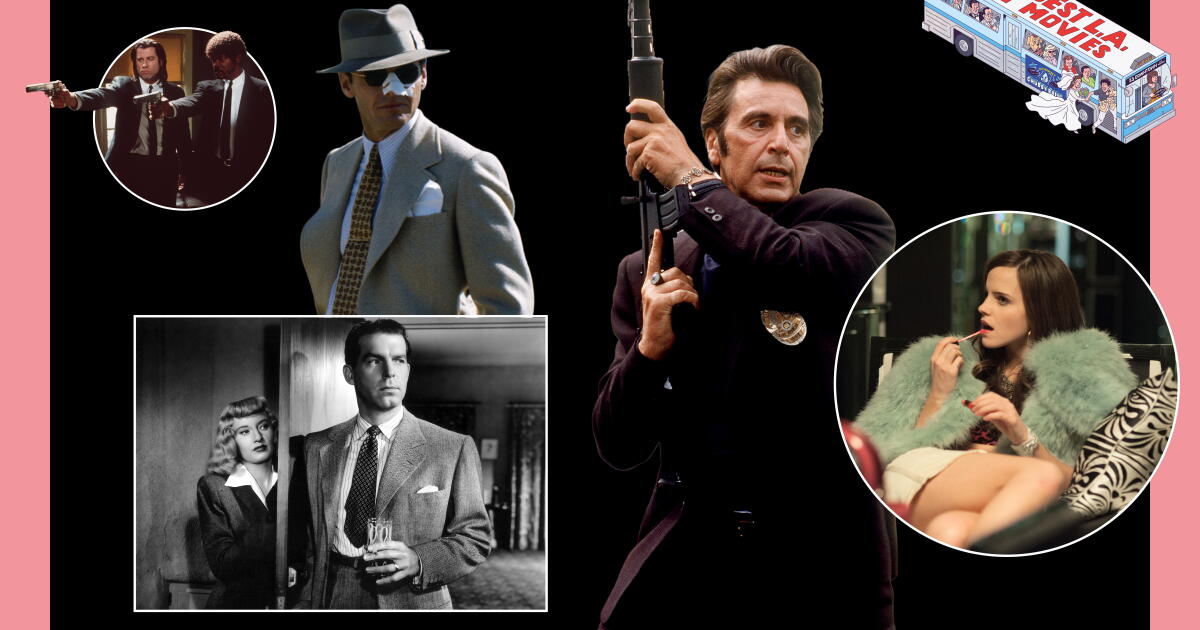
“I wanna rob.” Hip cocked, midriff bared, cigarette pressed between her lips, Emma Watson’s indelible plea to “visit” Paris (as in Hilton) encapsulates the perfect inside-baseball deadpan of Sofia Coppola’s crime saga — not least because Hilton opened up her Mulholland Estates home for scenes of the Bling Ring burglarizing it. No film crystallizes the shallow, amoral bluff of Hollywood’s high-tabloid era with such icy precision, from the flat affect of the teenage protagonists to the late Harris Savides’ minimalist digital photography. Largely misunderstood upon its release, “The Bling Ring” now registers as an incisive comedy of manners for a society of influencers just then being born.
The acclaimed actor stars as the sweet-natured Adam Trask in Netflix’s East of Eden
East of Eden is now streaming on Netflix(Image: Netflix)
East of Eden viewers are wondering where they’ve seen one of the show’s stars before.
The Netflix series is an adaptation of John Steinbeck’s novel of the same name and stars a glittering cast including Florence Pugh as literary legend Cathy Ames, while Mike Faist and Christopher Abbott portray the brothers who fall for her, Charles and Adam Trask.
Netflix’s synopsis reads: “This fresh interpretation of Steinbeck’s masterpiece will explore the multigenerational saga of the Trask family, focusing new attention on its indelible antihero, Cathy Ames.”
The seven-part series arrived on the streaming platform just last week and it is currently at the top of Netflix’s most-watched TV series in the UK list. As fans dive in to the episodes, many have wondered about one particular cast member.
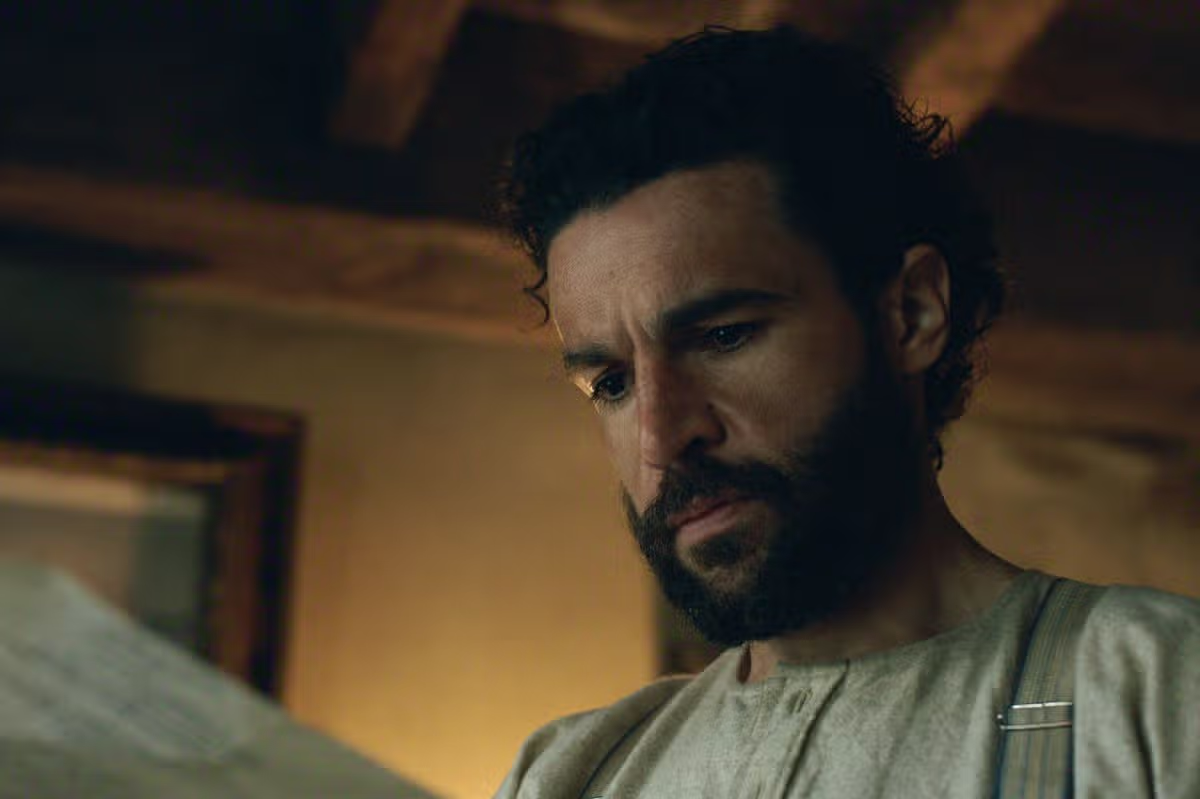
Christopher Abbott plays the sweet-natured Adam Trask who shows kindness to Cathy Ames when she appears bloodied and beaten at the door of his home, shared with his brother, who at first is much more sceptical of their new arrival. Adam nurses her back to health and they go on to marry.
Even before he whisks her away to California however, cracks have started to show. While it is a place he has always dreamed of, Cathy does not share that dream and she makes no secret of it.
Google searches for Christopher Abbott’s past movies and TV shows have soared since East of Eden’s debut, so where might viewers know the star from?
What films and TV shows has Christopher Abbott been in?
His breakout role was as Charlie Dattolo in the HBO series Girls. He was a recurring cast member, portraying the kind boyfriend of Marnie Michaels (Allison Williams). More recently he has had leading roles in Poor Things alongside Emma Stone, 2025 horror film Wolf Man and 2022 comedy-thriller, Sanctuary.
He is no stranger to literary adaptations and previously took the lead role of Yossarian in Catch-22, a TV series based on the Joseph Heller novel of the same name.
Discussing his role as Adam, Christopher told Netflix’s Tudum: “He’s a character that has lived a lot of different lives, and he’s sort of changed his personality throughout it.
“He starts off, like, hopping trains and living like a vagabond and stealing stuff and then becomes a different human when he has son. It’s a big epic arc to track.”
Hallmark films have mastered the art of escalating low-stakes situations into high-stakes emotional emergency plotlines. They have made a lucrative business out of absurdities.
It’s a proven formula that leans into the ridiculousness of mundane situations but earns its audience every holiday season. Whether it’s watching the movies for comfort or to turn a viewing party into a drinking game, millions of people tune in to laugh or cry watching them.
The Hallmark situations can be predictable, comfortable and wholesome, which can come off as absurd for a film plotline. Their sincerity and humor come from the cast’s commitment to the mundane, said Ron Oliver, writer and director of many Hallmark films.
A scene from “The History of Concrete.”
(Magnolia Pictures)
“Funny is only funny if you don’t think it’s funny,” he said. “We know that’s ridiculous. But at the same time, if the actor commits to it, it makes it seem real, then the audience gets it.”
He likes to think they’re laughing along with the idiosyncratic elements of the movies, and as long as it is creating a communal atmosphere, Oliver is all for it.
“If there’s anything we need these days, it’s a sense that people belong somewhere,” he added.
The formula isn’t what makes a movie a Hallmark movie. The structure has existed since God wore shorts, said Oliver. The channel’s achievement has been its ability to turn the structure into a recognizable brand through its stories.
When filmmaker John Wilson was in between jobs after finishing his HBO show “How To With John Wilson” during the writers’ strike, he attended a seminar on how to write and sell a Hallmark film.
After seeing what makes the Hallmark brand recognizable, Wilson decided to adapt the style into his own genre of making a documentary about concrete titled “The History of Concrete,” hoping the structure would help him finance the film.
John Wilson in “The History of Concrete.”
(Magnolia Pictures)
“But it’s very loose and almost impossible to even identify at points,” he said.
Instead of mocking the genre, Wilson subverts the Hallmark elements into his style of documenting, which finds the filmmaker recording trivial life moments — a person sitting on a pole, for example, or someone ruining a perfectly good jar of peanut butter by dipping their fingers into it — alongside his contextualizing narration.
“I both embrace but betray certain rules,” he said.
The seminar told him to avoid mentioning Christianity in the context of Christmas, so he pivoted to a Buddhist community with an annual tradition of running around a school in New York. The formula prefers to stay away from trauma. Instead, he made the death of one of his subject’s fiancées one of the main plotlines of the film.
“The actual Hallmark of it all fits in a way because that’s the kind of living proof that this rhythmic cyclical way of storytelling is actually soothing and attractive to people over long periods of time, to be able to return to this thing that they can trust and understand,” he added.
A scene from “The History of Concrete.”
(Magnolia Pictures)
In Wilson’s film, the entrance point is concrete, but what begins to unravel is a romance story involving a boy who has a movie idea, needs money to make a movie and tries everything he can to sell it — a signature love trope for most Hallmark movies.
Throughout the film, Wilson goes from pitch meeting to pitch meeting trying to finance his art. In the process, Wilson meets other eccentric characters that share his passion of filmmaking but have their own interests, like clearing gum from a sidewalk, immortalizing a person’s tattoo after they’re dead, and music.
“I’m just finding different ways to court this industry that doesn’t seem ready for this relationship,” Wilson said. “I’m trying to find some consensual way into it, but I eventually just need to perform the romantic gesture of doing what feels right and what comes naturally to me.”
The love story is the kind of theme that sometimes it’s OK to lean into, even though he’s constantly battling whether he should explore it in his films, Wilson added.
A scene from “The History of Concrete.”
(Magnolia Pictures)
Oliver believes that battle is a product of the cynicism that exists in society. Pledging love and respecting someone or a relationship can make people feel so uncomfortable that leaning into these tropes of life can feel humorous, and that’s where the laughs from a Hallmark film come from.
“They’re realizing that they’re being emotional about somebody who can’t find the right Christmas sweater,” he said.
The people in “The History of Concrete” aren’t funny because Wilson makes them out to be ridiculous. He doesn’t emphasize their eccentricities or tell the audience what makes them funny. He simply lets them be themselves. He captures their personality through a curiosity lens.
The humor comes from their passions not seeming worthy of the level of seriousness with which they pursue them. These people love something so much that their devotion mirrors the kind of energy normally reserved for higher stakes.
“There’s no definition of normal that sticks,” Wilson said.
A Christmas celebration isn’t objectively a life-or-death situation, and neither is concrete. But when people care deeply about them, those seemingly mundane things can take on an emotional significance the audience understands.
“Even if it’s something absurd … [the casts] are also committed to the idea of making it real,” Oliver said.