The Scream movie series is one of horror’s most successful franchises and has seven films under its belt
17:36, 17 Jun 2026Updated 17:37, 17 Jun 2026
Horror movie star reveals surprising amount they still make from hit 1990s Scream film(Image: Gh0st/YouTube)
A star from the horror film franchise Scream has revealed the surprising amount he still earns from one of the movies.
Back in 1996, the Scream series kicked off with its first instalment. Directed by Wes Craven, the film followed Sidney Prescott and her friends being targeted by a sadistic killer who donned a black cloak and white mask: Ghostface.
Due to the first film’s success, several more movies followed including a sequel in 1997, and a third instalment in 2000. Then, after 11 years Scream 4 was released in 2011.
And more recently, the slasher franchise was brought back in 2022 for a fifth movie and 2023 for a sixth. This year, a seventh film was released which became the highest-grossing film of the series so far.
The satirical whodunnit was a huge hit thanks to a clever script penned by Kevin Williamson and Wes Craven’s direction, while the characters’ awareness and acknowledgement of horror film clichés was uncommon at the time. Scream helped to revive interest in the teen slasher genre.
And this week, a star from Scream 2 revealed his residual pay from the film 29 years after its release. Actor and comedian Craig Shoemaker appeared in the sequel, Scream 2 – which made $172 million at the box office.
Craig played the role of ‘Artsy Teacher’ in the instalment. Taking to his Instagram, he shared a photo of his residuals cheque which revealed he made a total of $34.09.
He captioned the post: “In 1999 | was cast in the role of the film professor in the sequel of the original Scream movie, Scream 2, where I lead a conversation in class about film sequels. The residuals keep rolling in, baby! What should I buy with my 34 bucks?”
Content cannot be displayed without consent
The latest Scream movie, Scream 7, was released earlier this year. The film shifted the focus back to the original final girl, Sidney Prescott – played by Neve Campbell and her teenage daughter Tatum, played by Isabel May.
Neve didn’t appear in the sixth Scream film in 2024, which starred Jenna Ortega and Melissa Barrera as sisters who discover a serious connection to one of the original Ghostface killers, Billy Loomis.
Neve announced she would be stepping away from the 2024 Scream film after a dispute over pay. She said in a statement: “Sadly, I won’t be making the next Scream film. As a woman I have had to work extremely hard in my career to establish my value, especially when it comes to Scream.
“I felt the offer that was presented to me did not equate to the value I have brought to the franchise. It’s been a very difficult decision to move on,” Neve added.
She continued: “To all my Scream fans, I love you. You’ve always been so incredibly supportive to me. I’m forever grateful to you and to what this franchise has given me over the past 25 years.”
There are more than 100 Emmy categories, and if you scroll through each and every one of them on the Television Academy’s website, you’re probably one of those people who read the terms and conditions on a document before signing your name.
This hasn’t been the greatest year for television, which has had the converse effect of prompting me to sample more shows than ever in a quest to unearth that one hidden gem that merits a place on my mock Emmy ballot. Truth be told, I’m still looking. I’m sure I’ve missed something. And I’m sure you’ll let me know.
In the meantime, here are my picks for the top 15 categories — five each for comedy, drama and limited series — along with a brief line of reasoning for each. And if it’s predictions you’re after, you can find our full BuzzMeter panel’s choices here. Emmy nominations will be announced July 8.
Sign up for The Envelope
Get exclusive awards season news, in-depth interviews and columnist Glenn Whipp’s must-read analysis straight to your inbox.
By continuing, you agree to our Terms of Service, which include arbitration and a class action waiver. You agree that we and our third-party vendors may collect and use your information, including through cookies, pixels and similar technologies, for the purposes set forth in our Privacy Policy such as personalizing your experience and ads.
Comedy series
“Abbott Elementary” “The Bear” “The Comeback” “Hacks” “The Lowdown” “Margo’s Got Money Troubles” “The Fall and Rise of Reggie Dinkins” “Shrinking”
Sterlin Harjo’s “The Lowdown” feels like it’s on the same trajectory as his last series, “Reservation Dogs,” an under-the-radar charmer that grows in estimation as its audience builds. Noir crime stories don’t come more delightful.
Comedy actress
Quinta Brunson, “Abbott Elementary” Rose Byrne, “Platonic” Ayo Edebiri, “The Bear” Elle Fanning, “Margo’s Got Money Troubles” Lisa Kudrow, “The Comeback” Jean Smart, “Hacks”
“Platonic” heightened the chaos and conflict in its second season, affording the gifted Byrne additional room to flex her comic chops. How do you sleep on a show starring a newly minted Oscar nominee?
Comedy actor
Yahya Abdul-Mateen II, “Wonder Man” Ethan Hawke, “The Lowdown” Tracy Morgan, “The Fall and Rise of Reggie Dinkins” Jason Segel, “Shrinking” Martin Short, “Only Murders in the Building” Jeremy Allen White, “The Bear”
Morgan acting oblivious is one of the funniest things ever.
Comedy supporting actress
Hannah Einbinder, “Hacks” Janelle James, “Abbott Elementary” Ashley Padilla, “Saturday Night Live” Michelle Pfeiffer, “Margo’s Got Money Troubles” Sheryl Lee Ralph, “Abbott Elementary” Jeanne Tripplehorn, “The Lowdown” Jessica Williams, “Shrinking”
The Padilla Pause is one reason I’m watching “Saturday Night Live” again.
Comedy supporting actor
Harrison Ford, “Shrinking” Marcello Hernández, “Saturday Night Live” Ben Kingsley, “Wonder Man” Ebon Moss-Bachrach, “The Bear” Nick Offerman, “Margo’s Got Money Troubles” Stephen Root, “Widow’s Bay” Tyler James Williams, “Abbott Elementary”
Hernández’s charisma and physical comedy is another.
Drama series
“Industry” “A Knight of the Seven Kingdoms” “The Night Manager” “Paradise” “The Pitt” “Pluribus” “Slow Horses” “Task”
How many Emmy voters finally caught up on “Industry,” the fast-paced drama about a group of cutthroat Gen Zers? Four seasons in, it’s more addictive than ever.
Drama actress
Caitriona Balfe, “Outlander” Myha’la, “Industry” Chase Infiniti, “The Testaments” Michelle Pfeiffer, “The Madison” Rhea Seehorn, “Pluribus” Zendaya, “Euphoria”
Now that “Outlander” is over, it’s time to pour one out for Balfe. Over the course of eight seasons, she hopscotched through time, enduring and overcoming numerous assaults and kidnappings, dealing with grief and trauma and enjoying lots of emotionally grounded sex. Balfe has earned a final reward.
Drama actor
Sterling K. Brown, “Paradise” Peter Claffey, “A Knight of the Seven Kingdoms” Tom Hiddleston, “The Night Manager” Gary Oldman, “Slow Horses” Mark Ruffalo, “Task” Noah Wyle, “The Pitt”
Claffey turned bumbling into art.
Drama supporting actress
Isa Briones, “The Pitt” Taylor Dearden, “The Pitt” Fiona Dourif, “The Pitt” Supriya Ganesh, “The Pitt” Katherine LaNasa, “The Pitt” Sepideh Moafi, “The Pitt” Karolina Wydra, “Pluribus”
LaNasa should have bumped herself up to lead. As Whitaker explains to Langdon in Season 2’s penultimate episode, Robby’s the Professor of the ER and LaNasa’s Dana is the Skipper. And the Skipper should be lead.
Drama supporting actor
Patrick Ball, “The Pitt” Diego Calva, “The Night Manager” Shawn Hatosy, “The Pitt” Gerran Howell, “The Pitt” Ken Leung, “Industry” Tom Pelphrey, “Task” Carlos-Manuel Vesga, “Pluribus”
Pelphrey has called his desperate single dad on “Task” the role of a lifetime. No argument here.
Limited series
“Bait” “Beef” “DTF St. Louis” “Death by Lightning” “Half Man”
I put off watching the finale of the punishing “Half Man” for weeks. Does that mean the show worked?
Limited series/TV movie actress
Sally Field, “Remarkably Bright Creatures” Camila Morrone, “Something Very Bad Is Going to Happen” Carey Mulligan, “Beef” Sarah Pidgeon, “Love Story” Robin Wright, “The Girlfriend”
Riz Ahmed, “Bait” Charlie Hunnam, “Monster: The Ed Gein Story” Matthew Macfadyen, “Death by Lightning” Mitchell Robertson, “Half Man” Michael Shannon, “Death by Lightning”
The young actors on “Half Man” — Robertson and Stuart Campbell — outshone their well-known counterparts.
Limited series/TV movie supporting actress
Linda Cardellini, “DTF St. Louis” Grace Gummer, “Love Story” Laurie Metcalf, “Monster: The Ed Gein Story” Cailee Spaeny, “Beef” Joy Sunday, “DTF St. Louis” Constance Zimmer, “Love Story”
Both Cardellini and Sunday for “DTF St. Louis”? No way, José, you say? Yes way, I say. All the way!
Limited series/TV movie supporting actor
(Larry Horricks / Netflix)
Jason Bateman, “DTF St. Louis” Stuart Campbell, “Half Man” Richard Gadd, “Half Man” David Harbour, “DTF St. Louis” Charles Melton, “Beef” Nick Offerman, “Death by Lightning”
The mutton-chopped Chester A. Arthur joins Ron Swanson’s ’stache in television’s facial hair hall of fame.
Get exclusive awards season news, in-depth interviews and columnist Glenn Whipp’s must-read analysis straight to your inbox.
By continuing, you agree to our Terms of Service, which include arbitration and a class action waiver. You agree that we and our third-party vendors may collect and use your information, including through cookies, pixels and similar technologies, for the purposes set forth in our Privacy Policy such as personalizing your experience and ads.
That Super Bowl in question was Super Bowl LIX, pitting the Philadelphia Eagles against the Kansas City Chiefs. Melton hosted a watch party, and since he considers Kansas home and played football for Kansas State University, you might think he’d be rooting for the Chiefs.
Nope.
“When I was living in Germany, I fell in love with Donovan McNabb,” Melton, an army brat, tells me, name-checking the longtime Eagles quarterback.
Spaeny, it turns out, was the only Chiefs fan at the party. To enter Melton’s home, she had to step on a doormat that was fitted with a red-and-white Chiefs jersey. (“It got real dirty,” Melton says with pride.)
Melton and Spaeny enjoy a relaxed and playful give-and-take, borne from the months they spent preparing to play Austin and Ashley, a Gen-Z couple working at a Montecito country club, dreaming and scheming toward upward mobility in “Beef.”
(Erik Carter / For The Times)
The most memorable episode they shared found the couple in an overcrowded, ninth-circle-of-hell emergency room with Ashley, uninsured, experiencing severe ovarian torsion. Her concerns are dismissed and she begs for someone to save her.
“Unfortunately, it’s an all-too-common experience,” Spaeny says. “I probably have a conversation once a month with female friends who go to the doctor’s office and are gaslit by the system, just being made to feel like what they’re experiencing isn’t really happening or they’re making it up. It’s scary.”
Still, being “Beef,” the episode has its share of mordant humor, like the scene where a nurse asks Ashley to rate her pain, zero being pain-free and 10 being excruciating.
“Oh, I thought it was like Letterboxd,” Ashley replies, referring to the movie review social platform. “Two-and-a-half stars out of five is average.”
“My whole life I’ve been a six or seven,” Melton says, noting his own personal pain scale. “I’ll have a cold and I’ll be like, ‘Six or seven.’”
“That sounds like you,” Spaeny says.
“I can get pretty dramatic,” Melton says. “It’s really like the end of the world when I’m sick.”
Spaeny deleted her Letterboxd account because she gets anxious about anything online containing reviews.
“It takes two buttons to click on a movie that I’ve been in and see what people say about me,” Spaeny says. “So I forgot my password and left it that way.”
Melton is an enthusiastic adopter and says he has twice shared his four favorite films, a feature where actors, usually on the red carpet, list a quartet of beloved movies. (Here’s one at the “May December” premiere where Melton enthuses over “The Matrix,” “In the Mood for Love,” “Brokeback Mountain” and “Persona.”)
“I saw them at another event and they were like, ‘Charles, so good to see you.’ And I was like, ‘Do you want my four favorite films?’ And they said, ‘No, you’ve already done it enough,’” Melton laughs. “What can I say? I love movies!”
Anticipation. Rumors. Anxiously scanning the horizon, hoping that a brilliant force will leave the masses forever changed. Yes, a new Steven Spielberg movie about close encounters with extraterrestrials is landing — and misses the mark.
“Disclosure Day” is a story of truth and feared consequences. A personality-free cybersecurity expert, Daniel (Josh O’Connor), is on the run with evidence of little gray men arriving on our planet to a rude reception. The aliens are kind. Our species is barbaric. Wittily bruising us with that fact, Spielberg opens with a POV of a wrestler kicking the audience in the face. Welcome to Earth.
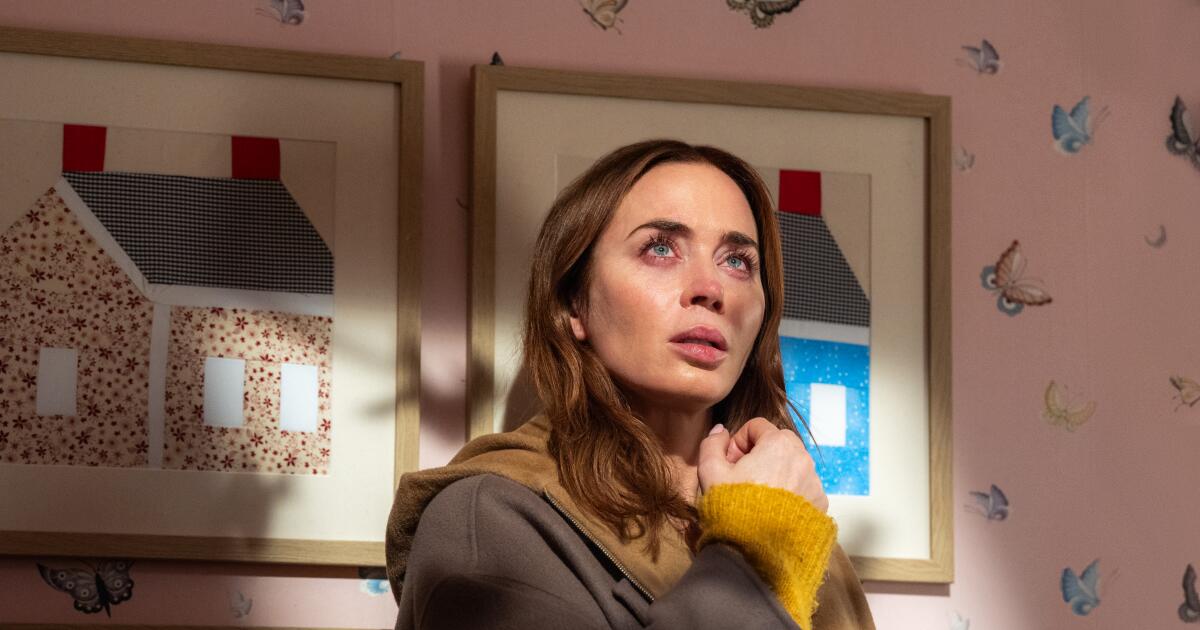
Elsewhere in America, a weathergirl named Margaret (Emily Blunt) breezes into her Kansas City studio, babbling up until the minute the news camera turns on, a bravura sequence that channels her restlessness, the station’s tempo and the film’s alarm that this ditz has just this morning been stricken with preternatural powers. (The cinematography and editing are by Janusz Kaminski and Sarah Broshar.) Locally, Margaret is known for announcing hailstorms with a sexy shimmy. Suddenly, she’s fluent in Russian, Korean and telepathy. Although she and her boyfriend, Jackson (Wyatt Russell), are a bad match, she’s giving everyone else life advice like an intergalactic Dear Abby.
When Margaret starts spouting alien-ese — spasms of gutteral clicks — on live TV, she and Jackson rush to the hospital for a brain scan followed by several suspicious men who claim to be with the FBI. Russell’s befuddled Jackson is as useless as a traffic cone but Blunt’s Margaret is a gas before the movie makes her go all glassy-eyed and solemn. Yet, the movie is less inspired by why she was chosen or how she feels about it than in dragging us back in time to the moment when it happened, which isn’t that interesting except for its resemblance to a Disney princess having a psychotic break. The CG animals and aliens look stiff, other than a nifty close-up of an eyeball. (Later, I did like how one alien appears to be wearing sportswear.)
Chasing both Daniel and Margaret around the Midwest is a deep-state company called Wardex that wants to steal back the proof in Daniel’s backpack, a heap of hard drives with footage of 70-plus years of extraterrestrial visitations. It’s a treat to see Spielberg enjoying staging this conspiratorial gossip in different film stocks, from the black-and-white noir of 1947 Roswell to the clinical security-camera look of today. Whatever Wardex does on a day-to-day basis is unclear (we just see video screens and lab equipment). But it acts all-powerful, seeming to know more about outer-space tech than its overseers at the Department of Defense.
The script is by David Koepp of the paranoid thriller “Black Bag” and Spielberg’s 2005 version of “War of the Worlds,” yet, this plot strand about private enterprise isn’t science fiction. Last year, in the unrelated UFO documentary “The Age of Disclosure,” current Secretary of State Marco Rubio admitted that companies have a stronger institutional memory of “exotic materials” than any presidential administration: “The people in government who know where it came from originally — they’re long gone and their successors have no idea that it was there at all.” To add nationalistic insult to injury, the head of Wardex isn’t even American. He’s a Brit played by Colin Firth.
If anything, “Disclosure Day” isn’t paranoid enough. Clutching a mysterious tool the shape of a mouse coffin, Firth’s villain tracks Daniel’s location by mentally transplanting himself into another person’s body, changing the color of their pupils to his own icy blue. His gadget also makes his targets super sweaty. This laborious alien tactic leads to a few fun scenes but frankly feels old-fashioned when the omnipresent surveillance that Spielberg himself warned about nearly 25 years ago in “Minority Report” is now here with recording devices constantly tracking our faces, voices and movements just so we don’t have to dial phones, fetch sandwiches or talk to human drivers. Although his movie urged us against this 24/7 spyware future, we have since embraced the convenience.
I bring this up because “Disclosure Day’s” driving question is how humanity will react to life-altering information. (Not that the plot has much momentum — too many scenes end with the belief that ducking 10 feet out of view makes you invisible, with an antagonist simply giving up.) Daniel insists on total honesty: “People have a right to know the truth,” he says. His girlfriend Jane (Eve Hewson) doubts 8 billion people can handle his alien revelations. A Catholic, she’s alarmed that extraterrestrial intelligence could replace the concept of God, naively claiming that “religion holds society together.” Since when?
There’s some wan comedy in an early scene where these new-ish lovers debate the ethics of secrecy while revealing the skeletons they’ve been hiding from each other. Both have pasts you wouldn’t put on a Tinder profile. The script is glancingly empathetic to Jane’s moral turmoil but like Daniel, the film has made up its mind before the movie started. Narratively and logistically, Daniel’s whistleblowing escape limps along with a lack of suspense. Wardex doesn’t even bother to preemptively discredit Daniel in the public’s eye, which, given the two sentences of backstory we know about his character, would be easy.
Nattering in the background are broadcasts about the impending threat of global war at the hands of the United States, Russia and North Korea. Given that scary possibility, the risk that Daniel’s reveal could tip over the world order doesn’t seem that bad. Honestly, I’m dubious of the film’s certainty that folks even have the bandwidth to care about such news, let alone agree on what they’re seeing. The serious journalism Margaret aspires to do is splintering under our distrust of who controls the megaphones. Last month’s infodump of an Armed Forces report listing 209 sightings of unidentified objects was announced with a presidential tweet that “the people can decide for themselves.” I didn’t bother to click. Did you?
Getting information about these space invaders out leaves no time for taking the marvel of their existence in. Decades after Spielberg unveiled his signature shot — a face amazed at wonders we can’t see — he seems wearied by his awareness that today’s moment of revelation would look like a person staring down at their phone. When lens flares continually beam right at the screen, the whole movie feels like enlightenment under duress.
Where are the aliens from and why are they here? Who knows. “Disclosure Day” speeds around frantically, talking constantly and explaining little. Back in 1977, Spielberg’s “Close Encounters of the Third Kind” was a popcorn masterpiece of withheld information. Its quiet assurance that experts had a handle on flying saucers and a plan to meet them felt comforting. Here, Colman Domingo’s renegade intelligence operative also refuses to tell anyone anything, but all the unspoken beats just feel like plot holes. Mostly, his character builds what looks like a Hollywood set to reveal a truth he already suspects. That’s what Spielberg is doing too, but a film needs a sense of curiosity.
Instead, the wows come from good stagings of ordinary action: a car crash, a gripped crucifix, a hideout crowded with jostling, thrumming musical instruments. There’s a great train-track crossing sequence that’s also a vicious callback to Richard Dreyfuss’ epiphany in “Close Encounters.” Yet, I wanted to see more of the old Spielberg, the one who expressed awe in moments of silence rather than relentless motion.
That Spielberg has come full circle to his lifelong obsession with the sky had me convinced that this might be a secret sequel to “Close Encounters” beyond the droll joke that both Dreyfuss’ Roy and Blunt’s Margaret are shacked up with unsupportive blonds. They do share a universe; you’ll see a glimpse of what could pass for an outtake from Devils Tower, a.k.a. Mashed Potato Mountain, on one of Daniel’s hard drives. Still, I left underwhelmed. I didn’t need Dreyfuss to step off a spaceship gangplank and say, “I’m back.” I just needed “Disclosure Day” to have the same spark of intelligent life.
‘Disclosure Day’
Rated: PG-13, for action/violence, some bloody images and strong language
Former EastEnders star Ben Hardy is returning to screens in an Agatha Christie film that also includes a Game of Thrones actor
21:09, 09 Jun 2026Updated 21:09, 09 Jun 2026
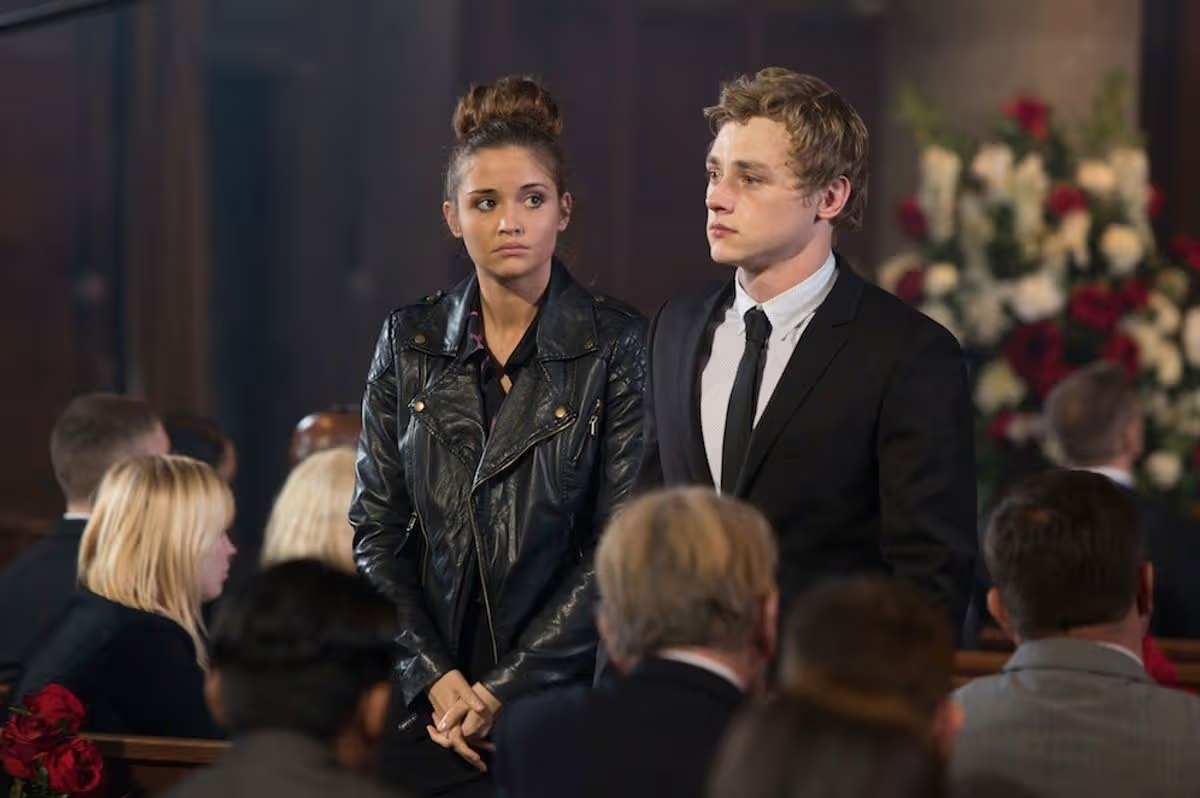
Ben Hardy played Peter Beale in EastEnders more than 10 years ago (Image: BBC)
Former Peter Beale actor Ben Hardy is set to start filming an exciting new ‘whounnit’ based on real-life events.
The new film Eleven Missing Days will also star Vincent Cassel and Felicity Jones and tell the story of Agatha Christie’s real-life disappearance.
The novelist’s disappearance made national and international headlines during the 1920s, with famous names joining the search to find her, including leading politicians and fellow writers such as Arthur Conan Doyle, according to Deadline.
The synopsis reads for the film: “In December 1926, at the height of her fame, Agatha Christie became front-page news when she vanished in bizarre circumstances from her home.
“In a case of life imitating art, this whodunnit explores the investigation behind her disappearance, strangely resembling an Agatha Christie novel itself, where everyone in her life became a suspect.”
A stellar cast joins Ben Hardy in the forthcoming movie, including Say Nothing star Ryan McParland, Game of Thrones’s Alfie Allen, The Brutalist’s Stacy Martin, Nicole Elizabeth Berger from He’s Watching You, and The Gorge actor Oliver Trevena.
Currently in pre-production, the picture is on course to shoot this summer in the UK.
Who did Ben Hardy play in EastEnders?
The 35-year-old found fame on the BBC soap in 2013 when he arrived in Walford as legendary character Peter Beale. He had taken over the role from Thomas Law, who had played the part between 2006 and 2010 before returning in 2023.
Ben’s version of Peter was most memorable for being caught up in the ‘Who Killed Lucy Beale?’ saga and for dating Lola Peace (Danielle Harold) before rekindling his romance with Lauren Branning (Jacqueline Jossa).
After finding out his own brother Bobby (Eliot Carrington) had killed Lucy, Peter struggled with life in Walford and moved to New Zealand to start a new life in 2015.
In an interview with The Independent, Ben said that he had “been battling it for a year, how to make things work” before ultimately deciding to leave the show.
“I have so much respect for everyone who works on that show, I felt myself getting lazy as an actor,” he explained. “I felt myself constantly going, ‘This scene doesn’t work’.”
Ben went on to say: “That laziness scared me. I said, ‘I have to get out of here’.”
He has since traded in his fruit-and-veg market stall for the bright lights of Hollywood and landed a role in the 2016 film X-Men: Apocalypse.
He also played Roger Taylor in the biopic Bohemian Rhapsody and portrayed the role of Four in the Netflix movie ‘6 Underground’ alongside Ryan Reynolds.
Ben also played Frank McCulled in the film Pixie, Seb in The Voyeurs, Simon in The Girl Before, and Tre in Tagged.
Most recently, he starred as Oliver Jones in the Netflix movie Love at First Sight (2023) and the 2025 horror movie The Conjuring: Last Rites.
EastEnders airs Monday to Thursday on BBC One and iPlayer
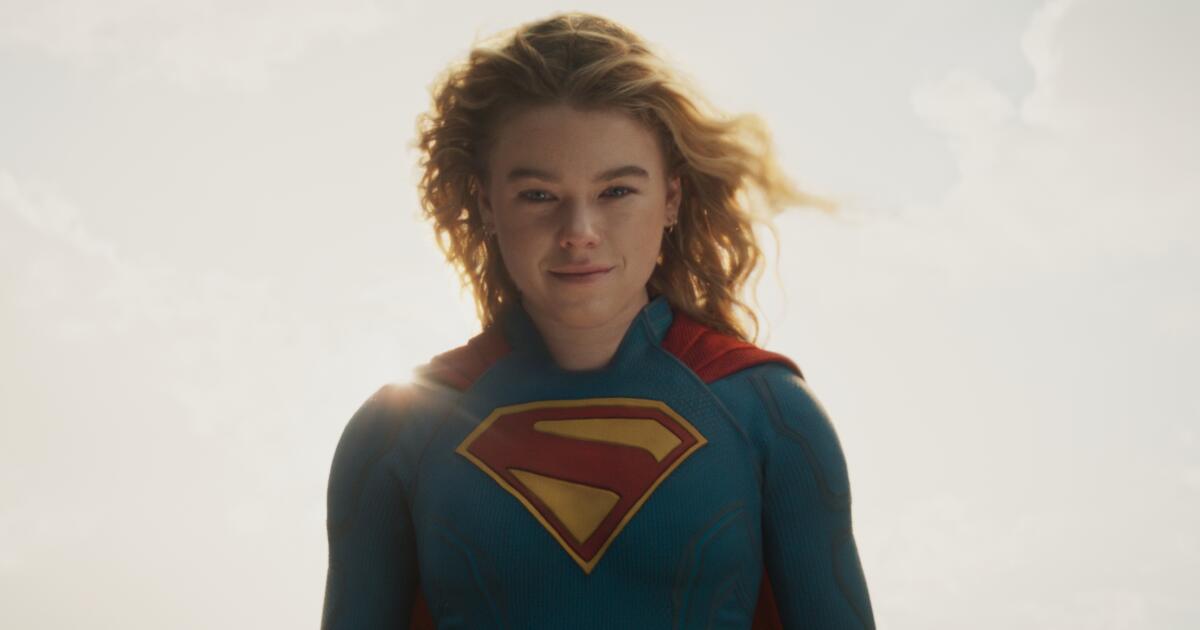
DC Studios co-chief James Gunn took to social media Monday to settle a debate once and for all: Of course, Supergirl can have pierced ears.
“Supergirl,” the upcoming superhero film starring Milly Alcock as the last daughter of Krypton, Kara Zor-El, has been the target of questioning from online detractors. One overblown gripe that some have mentioned on social media after zeroing in on Supergirl’s earlobes in promotional images is how a superpowered alien refugee known for her invulnerability and unbreakable skin could have any body jewelry.
“As explained in Superman, the same way she gets drunk — she goes to a planet with a red sun,” Gunn wrote on Threads. “Not to mention she was raised on a chunk of Krypton so didn’t even experience super powers until her teens.”
As the filmmaker mentions, Alcock’s iteration of Kara made her DC Universe debut in his 2025 movie, “Superman.” After the clearly inebriated Girl of Steel crashes into her cousin’s Fortress of Solitude to pick up her dog, Krypto, Superman notes that Kara “likes to go and party on other planets … with red suns.” This is because, as Superman explains, Kryptonians have enhanced power on Earth because of its yellow sun. This is also Kryptonian lore that has been established in comic books.
A recently released “Supergirl” clip also shows Superman first meeting his cousin after her pod lands on Earth. The footage shows Kara’s superpowers kicking in for the first time.
Directed by Craig Gillespie, “Supergirl” will follow the eponymous Kryptonian as she is celebrating her 23rd birthday. According to the film’s logline, Kara’s encounter with “an unexpected and ruthless adversary” leads her to “reluctantly join forces with an unlikely companion on an epic, interstellar journey of vengeance and justice.”
The movie’s cast also includes Matthias Schoenaerts, Eve Ridley, David Krumholtz, Emily Beecham, David Corenswet and Jason Momoa. “Supergirl” will hit theaters June 26.
The first film by Canadian filmmaker David Cronenberg to be shot partly in the U.S. is, perhaps not surprisingly, a freaky satire of Hollywood. Its take on fame has only grown more accurate in the years since its premiere in 2014. Julianne Moore, Mia Wasikowska and Robert Pattinson star in a demented tale of family, celebrity, ambition, ego and limousines. Funny and perverse, the film captures the uncanny cocktail of mean-spirited malignancy, self-obsessed delusion and just plain obliviousness that runs rampant around town. Presented by the screening series Mezzanine and the local literary magazine the Big One, the evening will be introduced by the film’s screenwriter, Bruce Wagner, a longtime chronicler of Los Angeles.
“Maps to the Stars” is playing June 14 at Brain Dead Studios. Tickets here.
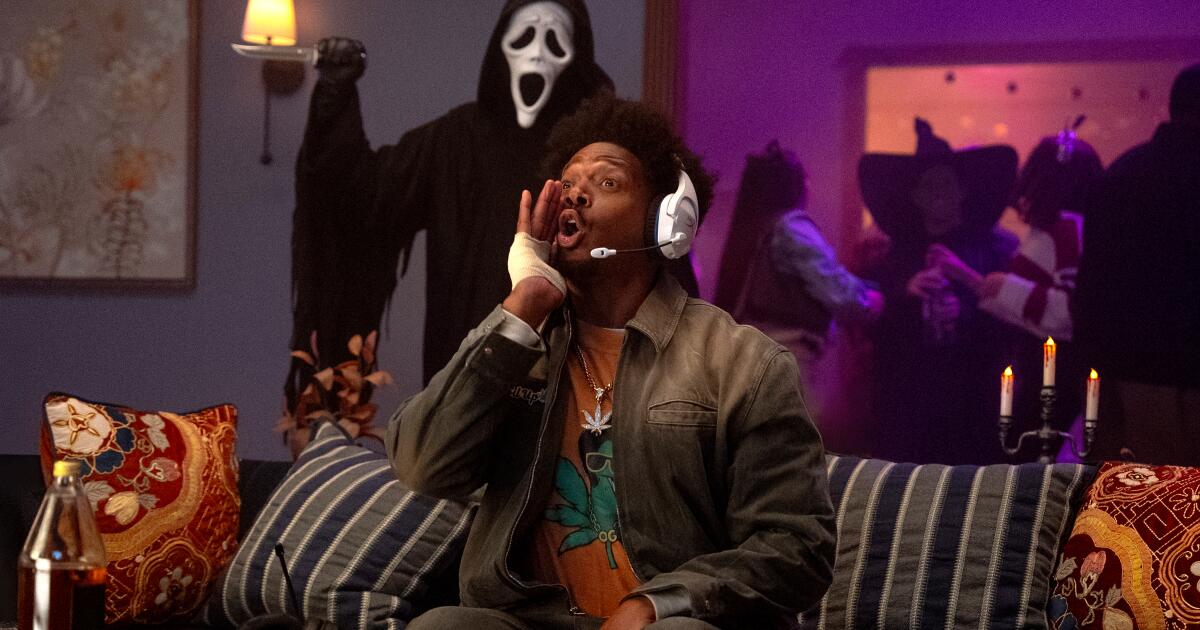
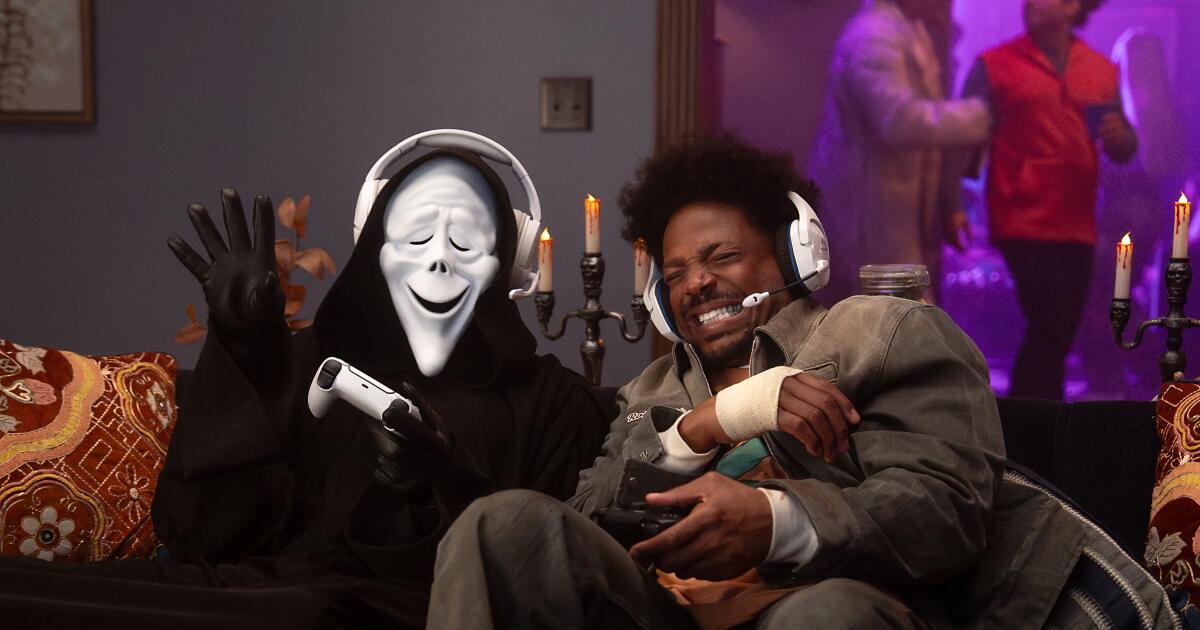
With the Wayans brothers firmly back in the driver’s seat, horror parody “Scary Movie” muscled its way past He-Man for the top spot at the box office this weekend.
The reboot of the 2000s-era franchise — or “rebootiquel,” as the movie calls itself — brought in $55 million in the U.S. and Canada for a worldwide total of $105.5 million, according to studio estimates. The movie, which had a production budget of $30 million, beat studio expectations and marks the return of the Wayans brothers to “Scary Movie.”
The franchise was developed by Marlon Wayans, Shawn Wayans and Keenen Ivory Wayans. But after 2001’s “Scary Movie 2,” the Wayans got in a pay dispute with former Miramax executives Bob and Harvey Weinstein. The Wayans have said the Weinsteins did not tell them that 2003’s “Scary Movie 3” would be made without them. The franchise then continued with fourth and fifth installments.
After former MGM film executive Jonathan Glickman was named chief executive of Miramax in 2024, he reached out to Marlon Wayans to see if he’d be interested in reviving “Scary Movie.”
“Always dreamt of having this moment again,” Wayans said, while thanking Glickman and executive producer Marc Weinstock during a short speech at the movie’s premiere. “I thank you guys for having the vision to go, there’s only one way to do the next ‘Scary Movie,’ and that’s to bring the Wayans family back.”
Miramax led the production and financing of the film, while Paramount Pictures was the distributor.
Amazon MGM Studios’ “Masters of the Universe” came in second at the domestic box office with $29.3 million, in Mattel Studios’ first film in theaters since the 2023 smash hit “Barbie.” Globally, the movie made $54 million.
The action adventure movie had a production budget of about $170 million and aimed to reintroduce the ‘80s-era action hero “He-Man” to a new audience, while also driving the nostalgia of adults who played with the franchise toys or watched the original film and series. The movie is part of Mattel Inc.’s strategy to continue extending its toy brands into the entertainment arena.
Mattel Chief Executive Ynon Kreiz said last week that “Masters of the Universe” didn’t need to match the success of “Barbie” “to have a meaningful economic impact on the company.”
A24’s runaway hit “Backrooms” came in third at the box office this weekend, continuing its strong performance with a haul of $25.9 million. Focus Features’ “Obsession” ($25.6 million) and another YouTube-native property, “The Amazing Digital Circus: The Last Act,” ($12.7 million) rounded out the top five at the box office, according to Comscore data.
What was the moment from the season finale of “The Pitt” that finally broke you?
Was it the shot of the day-shift staff watching the Fourth of July fireworks from the hospital roof, the sound of “America the Beautiful” playing in the distance? Maybe it was Dr. Al-Hashimi (Sepideh Moafi) crying in her car, realizing she can’t work around the seizure disorder that makes her a liability in the ER. Or perhaps it came when Noah Wyle’s Dr. Robinavitch (a.k.a. Dr. Robby) swaddled Baby Jane Doe, telling her that “everything’s gonna be just fine,” because she has “so many wonderful things to see and so many people to love.”
But what opened the floodgates for me, after the last half-hour of the episode left me completely dazed and dumbfounded, was Drs. Santos (Isa Briones) and King (Taylor Dearden) exorcising the day’s demons by belting out Alanis Morissette’s “You Oughta Know” at a karaoke bar and demonstrating that primal scream therapy is alive and well three decades into the 21st century.
Sign up for The Envelope
Get exclusive awards season news, in-depth interviews and columnist Glenn Whipp’s must-read analysis straight to your inbox.
By continuing, you agree to our Terms of Service, which include arbitration and a class action waiver. You agree that we and our third-party vendors may collect and use your information, including through cookies, pixels and similar technologies, for the purposes set forth in our Privacy Policy such as personalizing your experience and ads.
Which is all to say: “The Pitt” is the only television show I’ve watched that gives me the same feeling I have when I read a great, immersive novel. When the end is near, I’m bereft. I’m Al-Hashimi in her car, wanting to pound the dashboard. I do not want to let these characters go. They’ve given me 15 hours and I still crave more. I would devour a series of short films about odd couple Santos and Whitaker (Gerran Howell) sharing an apartment or a summer spinoff showing Dr. Abbot (Shawn Hatosy) working off-hours as a SWAT medic. Anything to fill the long, “Pitt”-less weeks between seasons.
“The Pitt” won five Emmys from 13 nominations, including best drama series, for its celebrated first season, a 15-episode run that began with Dr. Robby up on the hospital roof talking down Dr. Abbot after an intense shift. The season ended with Dr. Abbot returning the favor after Robby and his staff ground their way through a day that included a mass shooting, a child drowning and a patient assaulting LaNasa’s no-nonsense charge nurse.
How do you follow that?
For a few episodes this new season, it looked like “The Pitt” wasn’t up to the task. We watched the ER staff dealing with a series of bloody, messy (the disimpaction!) medical maladies, an avert-your-eyes spectacle that felt like the writers were trying to one-up themselves and find the worst possible affliction to make viewers double over. Worse, the thrill of discovery that kept us invested throughout the first season, the slow drip of information about the characters, wasn’t quite there. Something was missing, and it wasn’t just Dr. Robby’s motorcycle helmet.
But the luxury of having 15 episodes is that the writers can take their time laying the groundwork for the story they want to tell.
And what a story it was.
Over the course of the season, we watched Dr. Robby disintegrate, his mental health more precarious than ever because he has done nothing to address his apparent PTSD. “You need help,” Dr. Langdon (Patrick Ball) tells Robby, confronting him in the finale. “Be honest with yourself.”
Robby isn’t the only one struggling, as Dr. Abbot puts it, to “dance through the darkness.” Langdon is back, managing his sobriety. Dr. Mohan (Supriya Ganesh) is having panic attacks. Santos is still dealing with self-harm. Dana remains haunted by that Season 1 patient assault and now carries a syringe containing a heavy sedative just in case somebody emerging from that overcrowded waiting room crosses the line again.
“I’ve seen so many people die that I feel like it’s leaching something from my soul,” Robby says. “I’m tired of feeling like I’m drowning every day.”
And there you have it, the subject of Season 2 of “The Pitt.” Medical professionals are gasping for air, and the American healthcare system, with its focus on profit above all else, is failing them and the patients they treat.
Remember Orlando, the patient with severe diabetic ketoacidosis who arrives at the ER after fainting? Orlando had to ration his insulin because he lacked insurance and felt he had to cut corners. He ends up leaving the hospital early, fearing the cost of treatment. Later he returns, having fallen (jumped) from a catwalk at his construction job, fracturing his skull. But good news: He now qualifies for Medicare and Medicaid due to long-term disability.
It’s a tragedy, one of many reasons the season finale shot of the ER staff holding back tears as they watched the Fourth of July fireworks felt like a body blow. “America the Beautiful”? How can that be true when the current administration is seeking $1.5 trillion for defense spending — nearly 50% more than this year — while cutting healthcare and social safety nets? How can that be true when an act known as the “Big, Beautiful Bill” removed funding from an already frayed healthcare system and exacerbated the shortage of care in rural areas of the country?
That one scene, the culmination of hours of careful, patient storytelling, said more about the disconnect between American ideals and America’s reality than anything else I’ve read or watched this year.
Give “The Pitt” all the Emmys. It has more than earned them.
Call “Scary Movie” lazy, dumb and offensive. It would enthusiastically agree. The lowbrow horror parody thrives on shtick about weed, race and genitalia. The only thing that scares it is high expectations.
But amid the rampant stupidity of the first “Scary Movie,” released in 2000, original director Keenen Ivory Wayans discovered two major talents: Regina Hall and Anna Faris. As heroines Brenda and Cindy, respectively, Hall and Faris were daffy, dopey and committed. Alongside a cast of Playmates (Carmen Electra, Shannon Elizabeth) and family members (Wayans brothers Marlon and Shawn), they played stupid like Shakespeare. In two decades since, both gave up the Ghostface to do better things: Hall in “Girls Trip” and “One Battle After Another,” and Faris in “Smiley Face” and “The House Bunny.” (Frankly, Faris deserves to be doing more.) If a sixth “Scary Movie” is going to lure them back for what the ensemble openly frets is a rebooquel — as in a reboot-sequel, here pronounced “re-booty call” — it better be good.
Fine, good is a stretch. The latest “Scary Movie,” which simply recycles the title “Scary Movie,” is as lazy, dumb and offensive as the others. But Hall and Faris, now playing the dotty mothers of the next generation of victims, are hilarious, romping about like their Brenda and Cindy have clearly been knocked on the head too often. (Brenda, fans of the franchise know, has technically already died twice.) I laughed 10 times, which makes this “Scary Movie” the best of the bunch — a pallid compliment.
Directing duties have shuffled to Michael Tiddes, a longtime Wayans collaborator, who gets gutsy performances from three of this entry’s newbies: Olivia Rose Keegan and Savannah Lee Nassif as Cindy’s estranged daughters, a pill-popper and a Wednesday Addams clone, and Ruby Snowber, maximizing every second of her feature debut as a high school tramp.
The Wayans clan left the series early on due to a contract dispute with Harvey and Bob Weinstein. Now seven have returned. Four Wayans (Craig, Keenan Ivory, Marlon and Shawn) co-wrote the script with Rick Alvarez; three more (Kim, Damon Jr., and Gregg) act in the film alongside Marlon and Shawn, who revive their characters Shorty, a stoner with a shrill cackle, and Ray, whose only personality trait is being gay. In one of many homages to “Sinners,” Ray promises a church he’ll act straight. Then he mimes tucking his manhood between his legs and dancing like Buffalo Bill in “The Silence of the Lambs.”
Yes, Shorty and Ray were also murdered in the first movie. No, it doesn’t matter. “Scary Movie’s” one genuinely ingenious move is to resurrect actors without shame. Jon Abrahams’ bad boyfriend (stabbed), Lochlyn Munro’s lout (slit throat), and Electra’s eye candy (pierced through the breast implant) are back, too, as are a pair of erotically linked survivors, Cheri Oteri’s news anchor and Dave Sheridan’s moronic cop, whose spittle-flecked chin is the grossest thing in a film that has a mall Santa costumed like “Terrifier’s” Art the Clown gifting a child a set of severed testicles.
“The Silence of the Lambs” remains the only horror film to win best picture at the Academy Awards. This “Scary Movie” has no delusions of that. Yet in the years since the last installment, 2013’s “Scary Movie 5” — a sequel so awful that even its own director, Malcolm D. Lee, later admitted, “It’s not worth your time” — the horror genre at-large has become ambitious, with “Sinners,” “The Substance,” and “Get Out” earning Oscar nominations and “Weapons’” witchy Amy Madigan seizing the supporting actress prize.
This “Scary Movie” makes fun of all four of those newer hits, as well as the recent rebooquels of “Halloween,” which was earnest, and “Scream,” which couldn’t decide what tone to hit. Each send-up is funny for at least an entire minute, a lifetime when you’re watching Marlon’s Shorty mug for the camera. Either Shorty has the most screen time or he’s just so excruciating that it feels like it.
I cannot make the straight-faced argument that the worst “Scary Movies” were held back by their source material. Still, it’s true that when the series was at its nadir, so few vibrant horror films were being made that it was stuck lampooning the now-forgotten Jessica Chastain chiller “Mama.” Likewise, when this “Scary Movie” takes a jab at Nicolas Cage’s more-kooky-than-tedious “Longlegs,” the limp gag of the creepy Shorthand (Chris Elliot), underscores that the movie itself just isn’t that interesting.
“Scary Movie” inserts two political jokes that earn a solid gasp-giggle-groan. Yet, the most grating new addition is a self-righteous student named Dei Meeks (Sydney Park), who polices the humor. The movie relishes killing the killjoy. A whole mob does her in; it’s the one death that feels angry. I’d have been happy to see her die in her first scene. Not that I empathize with canceled comics who posture as if they’re victims under attack, but it would do this country good if it could occasionally share a laugh.
Don’t waste one brain cell trying to deduce the assassin. The answer is surprising and satisfying. While the script’s hasty nods to “KPop Demon Hunters” and the biopic “Michael” make it feel like it was written on yesterday’s Kleenex, the immediacy allows “One Battle After Another’s” Teyana Taylor to acknowledge that Madigan’s Aunt Gladys stole her Oscar. Swilling tequila shots and hollering “Viva la revolución!,” she’s hysterical in the cleverest opening slasher scene since Drew Barrymore answered the phone in the 1996 “Scream.” I’d watch six more “Scary Movies” if Taylor starred in them. But like Hall and Faris, she deserves better.
‘Scary Movie’
Rated: R, for crude sexual content, graphic nudity, strong violence, and drug content and language throughout
Hello! I’m Mark Olsen. Welcome to another edition of your regular field guide to a world of Only Good Movies.
It seems odd that the biggest news of the week was the fact that tickets for a movie went on sale, but apparently Christopher Nolan’s upcoming “The Odyssey” is no typical movie. Having already made tickets available for some shows a full year in advance, Universal put more of them on sale for the July 17 opening weekend of the Oscar-winning filmmaker’s ancient epic. There were reports of long online wait times, crashing ticketing systems and the kind of problems more often associated with pop stars than movie nerds.
“The Odyssey” will be playing in a variety of formats, with the Imax 70mm screenings among the most coveted. More venues than usual have also been announced as playing the film in 70mm, including the Village Theatre in Westwood. (A handy visual guide to the different fomats is on the film’s website.) While there is a hint of the ridiculous to some of this mania — popcorn buckets in the shape of Imax cameras and movie tickets going on the resale market for hundreds of dollars — there is no denying how exciting it is to see this kind of anticipation building around any movie.
Back to a ’90s phenomenon
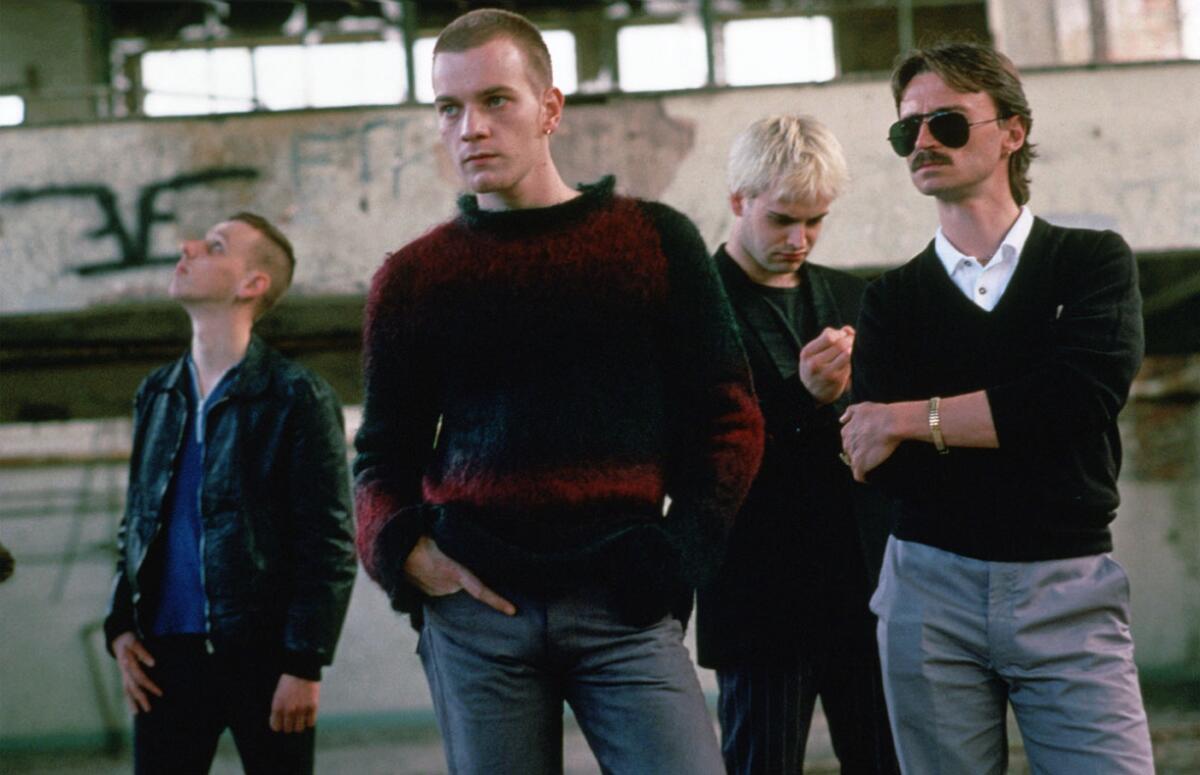
Ewen Bremner, left, Ewan McGregor, Johnny Lee Miller and Robert Carlyle in the movie “Trainspotting.”
(Liam Longman / Sony Pictures Classics)
When it first came out in 1996, “Trainspotting” was an instant cultural phenomenon, capturing the vibes of the “Cool Britannia” moment with its sparkling soundtrack, inventive, high-energy style and cast that included up-and-coming talents such as Ewan McGregor and Kelly Macdonald. It was only the second feature directed by Danny Boyle, who would go on to be an Oscar winner, mount an Olympics opening ceremony and remain a reliably exciting filmmaker all the way to his recent “28 Years Later.”
“Trainspotting” is now back in theaters in a 4K restoration for its 30th anniversary, having lost none of its brash vigor. In his original review, Kenneth Turan said of the film, “Exuberant and pitiless, profane yet eloquent, flush with the ability to create laughter out of unspeakable situations, ‘Trainspotting’ is a drop-dead look at a dead-end lifestyle that has all the strength of its considerable contradictions.”
Appearing like magic
Kathy Najimy, left, Bette Midler and Sarah Jessica Parker in the 1993 comedy “Hocus Pocus.”
(Disney)
Directed by Kenny Ortega, “Hocus Pocus” is one of those movies that has seen its fanbase grow steadily over the years — it is now much more beloved than it ever was on initial release. (It even inspired a 2022 sequel.) Bette Midler, Sarah Jessica Parker and Kathy Najimi play the Sanderson sisters, 17th century witches who find themselves inadvertently brought to modern day by a group of teenagers messing around with casting spells.
The film will play Saturday at the Gardena Cinema, featuring a live commentary from cast members Omri Katz, Thora Birch, Larry Bagby, Tobias Jelinek and Vinessa Shaw followed by a Q&A. This is a rare appearance by Katz in particular, who has retired from acting. Fans of the movie should make the effort to attend.
The Gardena, the last family-owned single-screen theater in Los Angeles, suffered a blow last weekend when a burst pipe flooded the venue. Though they are operational, a campaign has been started to help them recoup repair costs.
Examining the life of the mind
John Turturro in the 1991 movie “Barton Fink.”
(20th Century Fox)
Ranking the films of Joel and Ethan Coen has become a cottage industry of its own. Personally, I go back-and-forth on where to place 1991’s “Barton Fink,” which won the Palme d’Or at Cannes, as well as prizes for director and actor. The movie is by turns funny, disturbing and inscrutable (all good things), with John Turturro in the title role as an intellectual New York playwright who goes to Hollywood to write screenplays — and slowly goes insane.
The movie will play Friday in 35mm at Vidiots with an introduction from Noah Segan, who directed Turturro in one of the breakout titles from this year’s Sundance, “The Only Living Pickpocket in New York.” Hopefully, this will turn into a year in which Turturro gets some long-deserved accolades.
Christmas in June
Elliott Gould on the set of 1978’s “The Silent Partner.”
(Anwar Hussein / Getty Images)
There is something particularly charged about watching a Christmas movie at other times of year — an odd sense of dislocation and maybe even something a little naughty, a circuit-scrambling frisson. So it is particularly notable that as part of their salute to the independent studio Carolco Pictures (behind such films as “Basic Instinct,” “Terminator 2: Judgment Day” and “Reservoir Dogs”), the Vista will be showing 1978’s “The Silent Partner.”
Just the kind of tight and gripping thriller that people pine for all year round, “The Silent Partner” has a screenplay by Curtis Hanson, who would go on to make “L.A. Confidential.” Elliott Gould plays a Toronto bank teller who tries to rip off the thief (Christopher Plummer) who robs his branch wearing a Santa costume as a disguise. Soon they are both scheming against each other.
In his original review of the film, Kevin Thomas called it “tense and ingenious.” In a reconsideration of the film some months later, Charles Champlin called it “a stylish crime-suspense story, a cat-and-mouse game between Christopher Plummer as a clever, sadistic bank robber and Elliott Gould as a bored bank teller who sees a way out of his boredom and into riches.”
So much beauty
Brooke Adams and Sam Shepard in the 1978 movie “Days of Heaven.”
(Criterion Collection)
Terrence Malick’s 1978 “Days of Heaven” is still strikingly singular: a love story told with a stirring visual style. The film’s beauty — aside from its impossibly good-looking lead actors, Richard Gere and Brooke Adams — in part comes from gifted Spanish cinematographer Néstor Almendros, who made his American debut after a career in Europe that saw him working with filmmakers such as Eric Rohmer and François Truffaut. Almendros would win an Academy Award for the film.
The New Beverly will show “Days of Heaven” in 35mm Tuesday through Thursday as a double bill with Truffaut’s 1970 “The Wild Child,” shot by Almendros in black-and-white. Writing about “Days” in 1978, The Times’ Charles Champlin called it “an extraordinary and original visual experience and a movie which is thrilling in its uncompromised purity.”
Perverse fun
Ha Jung-woo, left, and Kim Min-hee in the 2016 movie “The Handmaiden.”
(TIFF)
Korean filmmaker Park Chan-wook was just president of the Cannes jury and has become a much-beloved figure on the international circuit for his wicked sense of humor and sharp sense of style. Nowhere is that on better display than his 2016 film “The Handmaiden,” which is somehow at once a period drama, a con-man thriller and an erotic lesbian romance. Vidiots will be showing the movie Sunday.
As Justin Chang wrote when the film was released, “Without sacrificing his taste for psychosexual perversity or his flair for violent grace notes, Park has given us a teasingly witty and elegant puzzle-box of a thriller whose pleasures are rooted not in visceral shock but in narrative surprise, and which wisely opts to seduce rather than pulverize its audience.”
In an interview at the time, Park said the film’s unpredictability was part of the project’s appeal. “That’s the exact kind of fun to be had with this film and the reason why I chose to make this film. Everything becomes a game of perception. Rather than to say it’s a difficult thing to navigate, it is fun to deal with. Not only for me as a filmmaker but for the audience to see that and engage in that game.”
New this week
Amy Nicholson reviews the latest attempt to make a movie out of a popular Mattel toy with the lightly-tongue-in-cheek “Masters of the Universe.”
Amy also reviewed the revival of the satirical “Scary Movie” franchise, with original stars Anna Faris and Regina Hall returning to make fun of such recent hits as “Sinners,” “Weapons” and “The Substance.”
The documentary “Time and Water” looks at climate change through the life and work of Icelandic writer Andri Snaer Magnason as directed by Sara Dosa, who had a hit with her last film “Fire of Love.” Robert Abele reviews.
One last thing…
This week, our colleagues at De Los launched a podcast hosted by Fidel Martínez and Suzy Exposito. The interview-style video podcast will feature conversations with the people shaping Latino culture in the United States.
The first episode features singer and actor Leslie Grace, who talks about her experiences working on the film “In the Heights” as well as being the star of the canceled “Batgirl.”
A BOND Girl has been spotted on rare outing 50 years after her sizzling scenes aired in one of the most iconic 007 movies.
Former Bond Girl Gloria Hendry, who played CIA agent Rosie Carver, was seen out and about looking amazing this week while running some errands.
Sign up for the Showbiz newsletter
Thank you!
Former Bond Girl Gloria Hendry, who appeared opposite Roger Moore in the James Bond movie Live and Let Die, was recently seen out and about in Las VegasCredit: BackGridShe wore a casual outfit for a lowkey outing to run some errandsCredit: BackGrid
50 years after starring opposite Roger Moore in the iconic flick Live and Let Die, Gloria, now 77, was spotted in Las Vegas.
The model and actress wore a casual brown and black top with some black leggings and slip on shoes for the low-key trip.
Looking youthful and content, Gloria wore her hair in a short light brunette bob, which was very different to the afro she sported in the movie.
Florida-born Gloria shot to fame in her 20s when she became 007‘s first African-American woman to become romantically involved with James Bond.
Gloria, seen above in her heyday, shot to fame in the Live or Let Die James Bond flickCredit: Rex FeaturesShe starred alongside Roger as she became the first African-American woman to become romantically involved with 007Credit: InstagramIn one photo from her recent outing, Gloria was seen beaming as she went about her dayCredit: BackGridShe chatted on the phone at one point as she walked along the sidewalkCredit: BackGrid
In the 1973 movie, she was fresh-faced and vibrant, showcasing a voluminous afro that framed her face.
The model-turned-actress played the part of Rosie Carver, who famously gets shot and killed in Bond’s arms.
Her steamy scenes with Roger Moore catapulted her into the spotlight in the Ian Fleming classic.
Gloria began her career as a Playboy bunnyCredit: BackGridRoger Moore wrote about Gloria in his memoir and noted how their on-screen chemistry caused issues in his marriageCredit: BackGrid
The movie theme of Live and Let Die was famously written by Paul McCartney.
In his memoir, 007 star Roger described how the passion between himself and Gloria impacted his marriage.
“As Bond, I make love to Rosie Carver, played by the beautiful black actress Gloria Hendry, and my wife Luisa has learned from certain Louisiana ladies that if there is a scene like that they won’t go to see the picture,” he penned.
He added: “I personally don’t give a damn, and it makes me all the more determined to play the scene.”
Before her Bond Girl fame, she was a model and spent time at the Playboy Club.
She worked as a Playboy Bunny at the New York Playboy Club from 1965 until 1972.
Her model past led to her acting debut in Sidney Poitier’s For Love of Ivy, which then led to her bagging the James Bond role.
Following her Bond Girl fame, she has maintained a relatively low profile in Hollywood.
However, she did enjoy a moment in the spotlight as the writer and director of Glamour Girls, which was showcased at the Barbara Morrison Performing Arts Center in Los Angeles in October 2011.
Away from the screen, Gloria was married to Phillip W. Wright from 1995 until his passing in 2022.
Three years ago, Mattel Inc. struck box-office gold — or rather, pink — with the billion-dollar success of “Barbie.”
In its first return to theaters since the female-forward phenomenon, the El Segundo toymaker is turning to the brawny He-Man for another box-office lift.
Its latest film, “Masters of the Universe,” opens this weekend, as Mattel looks to build on that previous success and continue extending its signature toy brands into the entertainment arena.
“The movie is very much in tune with culture,” said Mattel Chief Executive Ynon Kreiz. “Everything is much more contemporary relative to what was created more than 40 years ago, but it’s still very true to the origin story and to the DNA of the brand.”
The new film arrives at a pivotal time for Mattel, which is facing pressure from investors to grow its business. The maker of Hot Wheels, American Girl and Uno has recently confronted a challenging market for toys, beset by tariffs on goods produced overseas and weaker-than-expected demand for Barbie dolls and Fisher-Price preschool products.
Amid uncertainty in the toy market and the fallout from tariffs, Mattel’s net income dropped 25% to $398 million in 2025. And since the company announced disappointing holiday sales totals in February, its stock has dropped more than 30%, closing at $14.34 on Wednesday.
“Masters of the Universe” toys at Mattel headquarters in El Segundo.
(Myung J. Chun / Los Angeles Times)
The share price slide prompted investor Southeastern Asset Management to send a letter last month to Mattel leadership suggesting the toy maker should sell itself and go private. Southeastern manages about 4% of the company’s stock on behalf of its clients.
“The frustration among investors has been the fact that if you look at the business from 2021 through 2025 and even this year … the business really hasn’t grown,” said Eric Handler, a Roth Capital senior media and entertainment analyst, referring to Mattel. “This is a company that needed something fresh in the portfolio, and there’s a wide range of investments being made, of which ‘Masters of the Universe’ is one part.”
Kreiz pushed back on the idea that the company is not growing. In the fourth quarter of 2025, net sales were up 7% to $1.8 billion, though the result was not as strong as the company expected.
Mattel has spent $1.2 billion in the last three years to buy back shares, with an additional $1.5-billion share repurchase planned for the next three years.
“We’re investing in our own stock because we believe it is undervalued,” he told The Times in an interview at his office, which has floor-to-ceiling windows that give an expansive view of El Segundo. “We absolutely agree that the share price doesn’t reflect the progress that we’ve achieved over the last few years financially, operationally, our place in culture, the strength of our brands, and the continued expansion of the business. And more importantly, the potential that we have down the road.”
“Masters of the Universe” is a key variable in that equation.
Ynon Kreiz, chief executive of Mattel.
(Myung J. Chun / Los Angeles Times)
The movie, which had a budget of roughly $170 million, is expected to bring in $25 million to $35 million in the U.S. and Canada during its debut weekend. That’s a far cry from the $162-million opening haul of “Barbie,” but box-office analysts say that film captured the cultural zeitgeist in a way that’s hard to replicate.
The ‘80s-era “Masters of the Universe” is “a property that was famous with a certain group of fans, but it hasn’t had much of a pop culture presence,” said Shawn Robbins, who directs movie analytics at Fandango and founded the forecasting site Box Office Theory. The movie has notched a respectable 74% approval rating from critics on aggregator Rotten Tomatoes.
“There’s been so many callbacks to nostalgic franchises,” he said. “Some people are always on board for them, and maybe the positive reviews bring people in who were on the fence. But people are also ready for something fresh and new and exciting.”
Kreiz said he’s often asked how the company will match the success of “Barbie.”
“The answer is, we don’t need to match ‘Barbie’s’ success for movies to have a meaningful economic impact on the company,” he said. “Not every movie will be ‘Barbie.’ If we create quality content that people want to watch and create quality experiences that people are engaged with, good things happen, and these brands will resonate and will be here for years to come.”
While theatrical revenue is important, the measure of success for “Masters of the Universe” could also include its eventual reception on streaming platforms and, of course, toy sales, analysts said.
There are hundreds of products tied to the movie, from collectible action figures of Nicholas Galitzine’s He-Man and Camila Mendes’ Teela, to branded Uno decks, Legos, clothing and skateboards.
Skeletor from “Masters of the Universe.”
(Myung J. Chun / Los Angeles Times)
“For us, it’s a huge win already,” said Robbie Brenner, president of Mattel Studios and chief content officer, who also served as a producer on the film. “We have reinvigorated and relaunched this brand that has been around for decades … and done it in a way with just the best-in-class toys. Obviously that’s our bread and butter. And then to have made an epic, incredible movie … is a huge win.”
While Mattel does not yet have sales totals for its “Masters of the Universe” toys, executives said during an earnings call in late April that product sales were “growing double digits” amid strong customer demand, particularly from adults.
When Kreiz was named CEO in 2018, he saw the potential for Mattel to expand beyond toys. In an entertainment landscape dominated by known franchises and intellectual property, the former TV and media executive wanted to leverage the company’s IP in new ways to attract consumers.
Hence, Mattel has expanded into real-world experiences such as a Barbie pop-up at Coachella or a traveling Hot Wheels monster truck show. In February, the company fully acquired Mattel163 mobile game studio after buying out a stake held by Chinese tech firm NetEase. The studio has released games based on Uno, Skip-Bo and other Mattel intellectual property.
And on the film and television front, the Mattel Studios division now has 51 people — most of whom are based in El Segundo — focused on projects across platforms.
After “Masters of the Universe,” Mattel Studios plans to release a “Matchbox” streaming movie in October. The division has more than a dozen films in development that have been announced, including an American Girl movie with Paramount, Polly Pocket with Amazon MGM Studios, as well as a live-action Magic 8 Ball series from M. Night Shyamalan.
“The journey for the company was to evolve from being a toy manufacturer that was making items to become an IP company that is managing franchises,” Kreiz said. “It’s not that we’re not creating toys — it’s obviously a big part of our business — but the opportunity is to expand so much more than the physical product.”
“Masters of the Universe” was in development for years at several different studios before it was picked up by Amazon MGM.
That partnership stemmed from Mattel’s work on the “Barbie” movie with Courtenay Valenti, then president of production and development at Warner Bros. Pictures who is now head of film at Amazon MGM.
“Masters of the Universe” felt like a good property for Mattel to bet on because of its nostalgia factor and deep bench of colorful characters, from the green tiger Battle Cat to the heavily armored Ram Man and ever meme-able Skeletor, which the company hopes will attract new audiences, Brenner said.
The movie is directed by Travis Knight — chief executive of stop-motion studio Laika who also led the 2018 “Transformers” spin-off “Bumblebee” — who Brenner said “nailed” the narrative’s tone. (It didn’t hurt that Knight was already a fan of the franchise and had sported the He-Man haircut as a child.)
“It’s a property that’s kind of out there,” said Brenner, who grew up watching He-Man and his twin sister She-Ra. “It’s got all these crazy characters. But just riding that line between what is funny and kind of irreverent and then kind of heartfelt, that is a very hard thing to put in a blender and to get right.”
In the debut episode of “The De Los Podcast,” hosts Fidel Martinez and Suzy Exposito spoke with the Latin Grammy-nominated singer and actor Leslie Grace about her long-awaited new music — plus some of the highlights and pain points throughout her film career.
Released in May, Grace’s bilingual record “Amor, ¿Quién Eres?” is the first album she’s released in over a decade. Suffused with what Exposito described as “tropical eleganza,” the album is a far cry from the Christian music Grace recorded in her teen years — and a marked shift from the Latin Grammy-nominated self-titled project she released in 2013. She touched on some of the personal developments required to reach the more sensual sonic landscape she explored in her latest release.
“The biggest learning has been how to protect my creative space, while I grow it and discover at the same time,” she told De Los.
The 31-year-old also discussed her work in the 2021 movie musical “In the Heights” — and the online backlash the film received due to the lack of other Afro-Latinos in the cast.
“The lack of representation within film [and] diversity within the Latin community is a conversation we haven’t touched on as much,” she said. “Only so many films [are] given a shot. There [are] certain ways that Latinos are portrayed that are very narrowed down in film. I think it’s a worthwhile conversation at any time. I’m glad that people started to talk about that, so [we] can get more stories.”
Reflecting further on her filmography, Grace talked about the canceled release of “Batgirl,” in which she played the titular role. The film, which was originally for a late 2022 debut on the HBO Max streaming service, was axed by its studio Warner Bros. for financial reasons.
“It was disappointing because we knew the film that we were making,” Grace said of the movie, which was in postproduction when it was scrapped. “I knew that it wasn’t a reflection of our work, because this is something that happens. But I think because of the context of the conversation around representation, and the way that films can be discarded, after a lot of work and time and money has gone into something … the creative community really felt for me.”
During that period, Grace said the support from other creatives helped her move forward. She has since starred in more independent films in recent years — including “In the Summers,” which won a grand jury prize at the Sundance Film Festival in 2024 — and the 2026 features “Stages” and “Campeón Gabacho,” which premiered at this year’s edition of South By Southwest.
“I really am grateful for every person that reached out to me and was like: ‘Hey, I’ve got you, whatever you need,’ or ‘This is wrong,’” Grace said. “When something happens to me, I focus on my experience and what I gained from it, that no one could really take away.”
Brooke McCree, a 22-year-old recent UCLA graduate, is the first to admit she’s been going to the movies a lot less.
Back when Regency operated the local Village and Bruin theaters in Westwood Village, she would often take advantage of the student discount and see as many movies as possible. But in the two years since the theaters closed, she said moviegoing for many UCLA students has become inaccessible.
“At UCLA, it’s been rough because I’ll have to walk really far or take the bus [to the movies]. There’s nothing really nearby,” said McCree, who recalled fond memories of seeing movies like “Madame Web” and a “Hunger Games” prequel in a dense crowd of excited college students. “I was pretty devastated when it initially closed.”
There is still hope for the Village Theatre, which recently received a breath of new life thanks to some of Hollywood’s biggest names.
The event was reportedly the first of a limited number of premieres and screenings planned for this summer to support a 12-month renovation set to begin this fall.
A representative for Reitman declined to comment on the plans.
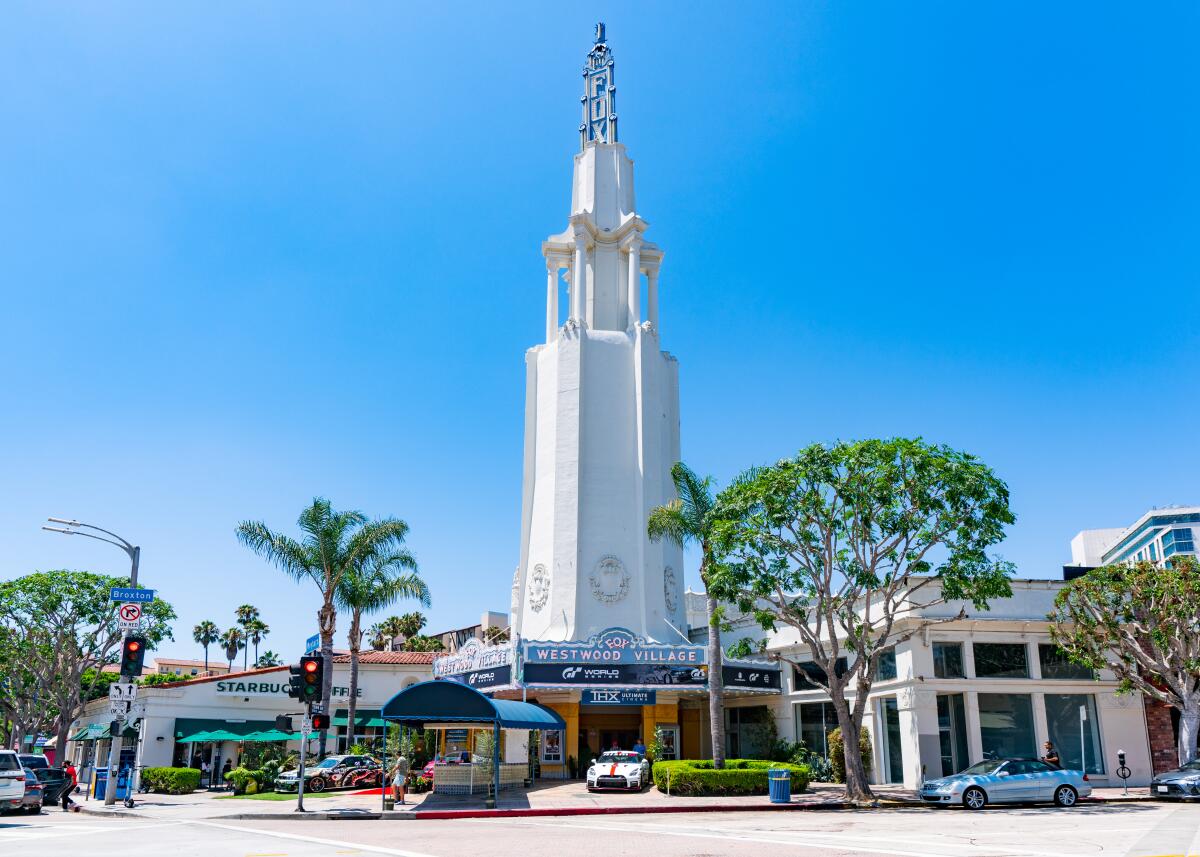
Nissan GT-R NISMO sports cars are seen outside the Fox Westwood Village Theatre, promoting the “Gran Turismo” movie in 2023.
(AaronP / Bauer-Griffin / GC Images )
The $25-million restoration, which organizers previously told The Times would be completed next year, includes plans for a restaurant, bar, gallery and a multipurpose space in the lobby for filmmakers and hosting premiere-related events.
Last year, the coalition of directors announced that American Cinematheque would operate the theater, hosting special screenings of new releases and repertory titles and conversations with filmmakers. The film non-profit already runs Santa Monica’s Aero Theatre and co-programs both the Egyptian Theatre in Hollywood and the Los Feliz 3.
Historically, the neighborhood has been a tricky market for businesses, said Jonathan Kuntz, a former lecturer at the UCLA School of Theater, Film and Television. He worked in the area for nearly 40 years and saw much turnover among local businesses due to high rents and inadequate parking.
“We’ve had some great things, like bookstores and eateries that have flourished sometimes for a decade or two, but it faded out,” Kuntz said. “[The theater] will certainly help Westwood if it is a success.”
For that to happen, Kuntz said, 1400-seat theater will need to screen a regular supply of films to a diverse customer base, including nearby students that have long been among its most frequent customers.
Many current UCLA students are already eagerly anticipating the theater’s reopening, said Ingrid Fan, a senior at the university majoring in public affairs.
“It’s been a bummer to have it closed for so long,” said Fan. “My friends and I always talk about how we just wish it opened sooner.”
While the theater’s renovation timeline won’t be complete before she graduates, she’s certain that other students will make good use of it when it reopens.
“Westwood is a college town, and we are always looking for a new source of community. It’s a space a lot of students would definitely flock to,” Fan said.
Broxton Avenue in Westwood Village during one of UCLA’s First Thursdays community events.
(Myung J. Chun / Los Angeles Times)
A historic movie hub
The university and its surrounding village, including the theater, were developed simultaneously throughout the 1920s and 1930s. Designed by Percy P. Lewis, the Westwood Village Theatre originally opened as a part of the Fox Theatres chain in 1931.
Despite launching during the Great Depression, the Westwood Village Theatre had a prime location working in its favor.
Westwood was imagined as a satellite town in West L.A. that would eventually support the growing UCLA campus. The neighborhood became known as the third major movie theater hub, behind downtown and Hollywood. In the 1920s, when the Chinese and the Egyptian theaters opened on Hollywood Boulevard, Westwood was next in line as a booming premiere destination.
“It was much more convenient to those folks than going to downtown Los Angeles, or even to Hollywood,” Kuntz said.
This was an era of moviegoing when premieres were essential to a movie’s box office success, drawing substantial marketing opportunities. The volume of films being produced at the time made it necessary to have multiple premiere-ready theaters around L.A., Kuntz said.
A “Terminator” poster is unveiled at the world premiere of “Terminator 3: Rise of the Machines” in 2003.
(Robert Mora / Getty Images)
Over its 95-year history, the venue has been remodeled a handful of times, including in the 1950s when television became a mainstream medium. Soon, multiplexes emerged, which put the Westwood Village location at a disadvantage. To this day, the theater can only show one film at a time.
In the 1970s, the venue joined the Mann Theatres chain, and in 1988, it was designated a historic cultural monument.
The ticket booth at the Regency Bruin theater in Westwood Village all boarded up, as seen on the afternoon of Nov. 3, 2020.
(Carolina A. Miranda / Los Angeles Times)
Regency continued to operate the two locations until its lease ended in 2024. Although the group of Hollywood directors was quick to bid on the Village (the Bruin was not included in the deal), the theater has remained closed since then, with the exception of the recent Billie Eilish premiere.
“A lot of people in Hollywood want to preserve at least some of what made classic Hollywood successful, like the big screen experience,” Kuntz said. “These folks are the ones who could afford to buy a movie house or two, program it and keep that tradition alive.”
L.A. Times staff writers Josh Rottenberg and Meg James contributed to this report.
90s movie actress Ashley Judd looks worlds away from her Hollywood days as she rings in her birthday and sings into a hairbush.
The iconic star celebrated her 58th birthday in May and took to Instagram to share a note with her fans.
Sign up for the Showbiz newsletter
Thank you!
90s movie star Ashley Judd looks worlds away from Hollywood as she sang into a hairbrushCredit: InstagramThe actress turned 58 last monthCredit: Instagram
She was one of the most popular actresses in the 90s and has a strong filmography of work to prove it.
Ashley shared a video of herself singing into a hairbrush as she danced away in her garden with loved ones on her special day.
She popped her grey locks into ponytails as wore a navy plaid dress and went make-up free.
The actress also posted snaps of herself sat in front of a birthday cake as well as being serenaded by a group of musicians who played their instruments for her.
These days Ashley spends her time working as an activist and humanitarian and is an ambassador for UNFPA (United Nations Population Fund), which is a sexual and reproductive health agency.
She isn’t the only famous person in her family as she’s the daughter of country music singer Naomi Judd.
Her half sister Wynonna also forayed into the country music world.
Maybe you can use a laugh this morning. Maybe you’re still deep in your feelings, thinking about the “Hacks” series finale and that shot of Hannah Einbinder looking at Jean Smart on the dance floor, grief seeping into her eyes. Maybe you’re lamenting the chaos at our treasured national parks. Hell … maybe you took out a loan to buy a tomato over the weekend.
If you’re feeling down, Gary Oldman would like a word. And that word is: Hufflepuff.
I’m Glenn Whipp, columnist for the Los Angeles Times and host of The Envelope newsletter, back in your inbox for the next few weeks as we navigate our way through Emmy season.
Sign up for The Envelope
Get exclusive awards season news, in-depth interviews and columnist Glenn Whipp’s must-read analysis straight to your inbox.
By continuing, you agree to our Terms of Service, which include arbitration and a class action waiver. You agree that we and our third-party vendors may collect and use your information, including through cookies, pixels and similar technologies, for the purposes set forth in our Privacy Policy such as personalizing your experience and ads.
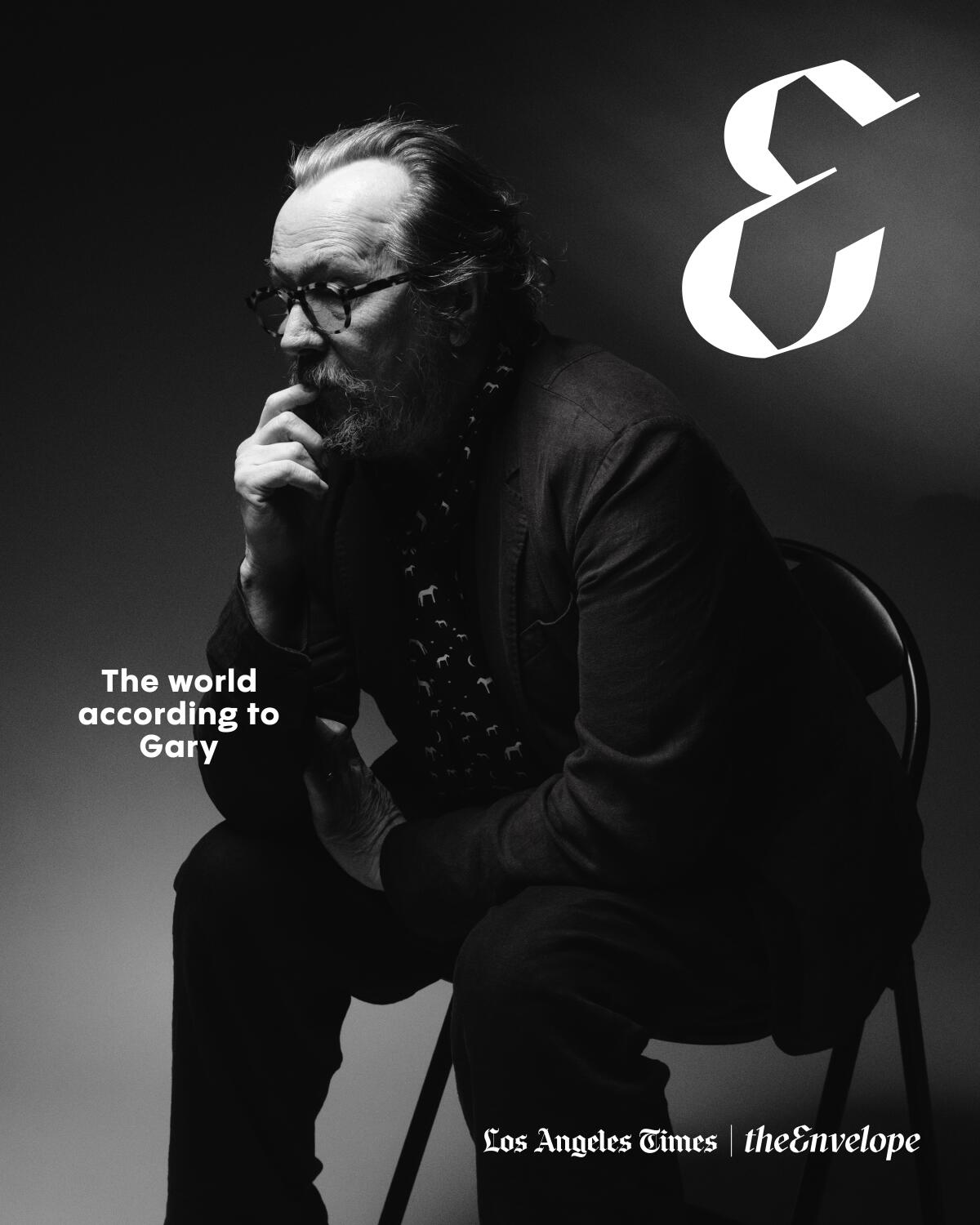
Digital cover story: The world according to Gary
(Jennifer McCord / For The Times)
Gary Oldman is a Hufflepuff.
Never mind that the 68-year-old actor, who played the rebellious, impulsive wizard Sirius Black in the Harry Potter film franchise, couldn’t tell you the difference between a Hufflepuff and, say, a Gryffindor.
When journalist Josh Horowitz reads a list of core personality qualities — loyalty, hard work, patience, fairness, dedication — and asks Oldman if that describes him, he nods his head.
You’re a Hufflepuff.
“I’m a Hufflepuff?” Oldman says, trying the word on for size. He likes it. “I’m a Hufflepuff!”
This video clip is a favorite of mine, one I could watch on a loop for the sheer delight Oldman takes in pronouncing the word Hufflepuff.
It’s easy to see why Oldman takes such pleasure in being a granddad these days, one of the things we talked about at length not long ago for an Envelope digital cover story. He can access his silly side with ease.
I asked Oldman about the upcoming HBO “Harry Potter” television series, a decade-spanning endeavor that will spend a season adapting each of J.K. Rowling’s seven fantasy books.
“I’ve seen a trailer for it, and I think it’s a great idea,” Oldman says. “They’re doing the whole book, which I love, because there were a lot of wonderful things, fabric and character detail, we had to lose for the sake of telling the story in two hours.”
Would Oldman be keen to don a distressed velvet overcoat again and participate in the reboot?
“I don’t think they want any of us from the movies contaminating or muddying the waters,” Oldman says, pleasantly. “Besides, I’m too old.”
But with AI, is anyone too old now? Oldman could drop into “Harry Potter and the Prisoner of Azkaban” and look like he hasn’t aged a day since the movie was released 22 years ago.
“I don’t know where we’re going with it because it seems to advance every week,” Oldman says. He ponders the advances made since Martin Scorsese used digital deaging in his 2019 film “The Irishman.”
“I think that was the least successful thing about it,” Oldman says of the technology, “and I’ve been a huge Martin Scorsese fan forever. Ultimately, I don’t know why they wanted to make [Robert] De Niro’s eyes blue.” He pauses, considering the change and why it bothered him. “I guess it’s a blue-eyed Irishman. If I had one negative takeaway, it would be that.”
Oldman prefers directors like Christopher Nolan, whom he worked with on the “Dark Knight” movies and “Oppenheimer,” who think technology should be used sparingly to enhance the storytelling.
“Otherwise it leaves me a bit cold,” he says. “You’re just looking at ones and zeroes.”
“I don’t want to be replaced entirely,” Oldman continues, shaking his head. “I don’t think anyone does.”
Not every summer movie needs to be a mystery that unfolds hallway after hallway, with a creature hiding around every corner ready to pop out. But maybe the best one is: “Backrooms,” opening May 29 and directed by 20-year-old phenom Kane Parsons. We chatted with him about how he got to make his big debut for A24. Apart from that inspiring story, what can we hope for at the multiplex? We asked our staffers for their dreamiest expectations and they didn’t hold back: space epics, Matt Damon in a helmet and, yes, a “Jackass” movie. Read on and let this be your guide.
‘The Mandalorian and Grogu’
(May 22)
Pedro Pascal, left, and Sigourney Weaver in the movie “The Mandalorian and Grogu.”
(Lucasfilm)
TV’s “The Mandalorian” premiered in 2019 and was the first live-action series in “Star Wars” history. Now, the next adventure of the fierce bounty hunter and his adorable young charge will be the franchise’s first big-screen installment since the sequel trilogy wrapped with “Episode IX — The Rise of Skywalker.” I, for one, am excited that Grogu, with all his snackish charm, has been promoted to title-character status along with Pedro Pascal’s more stoic Din Djarin. The movie will also introduce Sigourney Weaver as Col. Ward, a former Rebellion pilot turned New Republic leader, and Jeremy Allen White as grown-up Rotta the Hutt, Jabba’s son, who debuted as an infant in the animated “Star Wars: The Clone Wars.” — Tracy Brown
‘Masters of the Universe’
(June 5)
Nicholas Galitzine in the movie “Masters of the Universe.”
(Giles Keyte / Amazon MGM Studios)
Our opinions of Hollywood’s dip into the nostalgia well may vary, but it’s easy to want to feel the kind of joy that a game or toy brought us when the world felt less complicated. He-Man’s best stories so far may have been on animated TV, but I have enough childhood memories of smashing the character’s action figure against others that I’m curious about how he’ll play in the big-screen sandbox. Starring Nicholas Galitzine as a wayward Prince Adam trapped on Earth, “Masters of the Universe” adds a contemporary twist and some modern sensibilities to the lore. With Laika Studios vet and “Bumblebee” director Travis Knight at the helm, I’m expecting a sweet balance of humor and heart. — Tracy Brown
‘Disclosure Day’
(June 12)
Emily Blunt in the movie “Disclosure Day.”
(Niko Tavernise / Universal)
Nearly half a century after “Close Encounters of the Third Kind” and decades on from “E.T.” and “War of the Worlds,” Steven Spielberg is still looking to the skies — and we still want to know whether to be excited or terrified by what he sees. His latest brings extraterrestrial life into the realm of ’70s conspiracy thrillers. (Screenwriter David Koepp has compared it to paranoia pieces like “Three Days of the Condor.”) Emily Blunt plays a Kansas City meteorologist who begins receiving a signal from beyond Earth, while Josh O’Connor is a government employee on the run with information that powerful people are trying to keep hidden. If Spielberg’s earlier UFO movies gave us awe, comfort and catastrophe, this one feels like an encounter of a fourth kind: What happens when the cover story breaks? — Josh Rottenberg
‘The Death of Robin Hood’
(June 19)
Hugh Jackman in the movie “The Death of Robin Hood.”
(A24)
Go to the beginnings of Hollywood and there are Robin Hood movies: Douglas Fairbanks, Errol Flynn, some shorts from even earlier. And it’s a safe bet that, as long as there’s pull to the idea of stealing from the rich and giving to the poor, there will be more to come. Quietly, writer-director Michael Sarnoski has made a niche for himself as a storyteller of regrets, of roads not taken. His 2021 restaurant memory drama “Pig” gave Nicolas Cage his subtlest dialogue in years, while “A Quiet Place: Day One” had no business being as believably haunted as it was. Sarnoski is the perfect person to do a retelling tilted toward the end of a rampager’s life. Hugh Jackman embodies the role with a rough dignity. — Joshua Rothkopf
‘Leviticus’
(June 19)
Stacy Clausen, left, and Joe Bird in the move “Leviticus.”
(Neon)
Unlike many tales of demonic possession, Adrian Chiarella’s feature debut lingers in the mind for being so recognizably close to home; it doesn’t need to crab-walk into the room, spin its head 360 degrees and announce itself as evil. In a small, backwards Australian community, coming of age and coming out evince fear in the Christian townsfolk. Two teenage boys (Stacy Clausen and “Talk to Me’s” writhing standout Joe Bird) keep their attraction to themselves. Even so, a violent curse bedevils them, a sophisticated feat of careful writing and directorial sensitivity that sets Chiarella apart from the gorehounds. Let’s also cheer the return of Mia Wasikowska, stepping back confidently. — Joshua Rothkopf
‘Maddie’s Secret’
(June 19)
John Early in the movie “Maddie’s Secret.”
(Magnolia Pictures)
An affectionate throwback to overly earnest TV movies (and a knowing send-up of over-the-top bad-girl flicks), this film marks the feature debut as writer-director for comedian John Early, who also stars. With a cast drawn from comedy-scene friends such as Kate Berlant and Conner O’Malley all tuned into a very specific wavelength, the movie somehow surpasses conventional notions of camp and irony to exist in a genuinely unique space all its own. As Maddie, an aspiring L.A. food influencer battling a secret eating disorder, Early’s performance will undoubtedly remain one of the most distinctive and original of the year, by equal turns outrageously funny and tenderly vulnerable, often in the same moment. — Mark Olsen
‘The Invite’
June 26
Olivia Wilde, Seth Rogen, Penélope Cruz and Edward Norton in the movie “The Invite.”
(A24)
Olivia Wilde’s dinner-party dramedy made good on its considerable promise when it premiered at Sundance in January, earning a standing ovation and tears (of relief? joy?) from Wilde as she took the stage. Wilde and Seth Rogen play longtime marrieds harboring a laundry list of resentments who host their upstairs neighbors (Penélope Cruz, Edward Norton) for an evening of fun. At least it starts off that way, but of course, the gathering quickly sours, leaving us rubbernecking the damage. Wilde navigates the tonal shifts with authority, delivering surprises along the way, including an ending that somehow delivers hope for the institution of wedlock. Am I overselling it? Would I cry Woolf to you? — Glenn Whipp
‘Jackass: Best and Last’
(June 26)
Johnny Knoxville, right, in the movie “Jackass: Best and Last.”
(Paramount Pictures)
Johnny Knoxville and his band of professional bad decision-makers are calling this one their final hurrah and, really, can you blame them? The original “Jackass” crew are now in their 50s, long past the point when being shot out of cannons and zapped with tasers seems like a sensible career plan. Knoxville himself was hospitalized with a brain injury after being flipped by a bull during the filming of 2022’s “Jackass Forever” and has said he can’t risk another concussion. This send-off mixes new stunts with archival footage, promising the usual outlandish pranks and blunt-force impacts to sensitive bodily regions. If this really is the end for the franchise, it’s hard to argue they didn’t push it as far as it would go. — Josh Rottenberg
‘Supergirl’
(June 26)
Milly Alcock in the movie “Supergirl.”
(Warner Bros.)
No diss to last summer’s charmingly square “Superman,” but the funniest scene in the movie was Milly Alcock’s 45-second cameo as Kal-El’s cousin Kara, who stumbled into his Fortress of Solitude to collect her dog Krypto still hungover from an outer-space bender. (“This is why he has behavioral issues,” Superman said with a sigh.) Now, she and the mutt have their own movie and zero pressure to represent truth, justice and a better tomorrow. Ana Nogueira’s script appears to be a riff on the 2021 comic-book miniseries “Supergirl: Woman of Tomorrow,” in which the blond‘s birthday bacchanal takes a U-turn after Kara aligns with an alien child (young Eve Ridley from “3 Body Problem”). It’s basically an intergalactic “True Grit.” My one concern is that director Craig Gillespie made the too-squishy “Cruella.” Here’s hoping “Supergirl’s” tone is more sour than sweet. — Amy Nicholson
‘The Odyssey’
(July 17)
Matt Damon in the movie “The Odyssey.”
(Melinda Sue Gordon / Universal Pictures)
As the follow-up to his “Oppenheimer” — which won Oscars and made nearly $1 billion — Christopher Nolan has gone from an ambitious story about the creation of the nuclear bomb to an even more ambitious story rooted in the origins of literature. Adapting Homer’s ancient Greek saga, Nolan has created an epic to end all epics: the tale of a king struggling to return home after years away at war. With an absolutely stacked cast and told at a massive scale, “The Odyssey” indicates that Nolan seems to trust that modern audiences will respond to a 3,000-year-old tale, and that some aspects of the human experience truly are eternal. — Mark Olsen
‘I Want Your Sex’
(July 31)
Cooper Hoffman and Olivia Wilde in the movie “I Want Your Sex.”
(Lacey Terrell / Magnolia Pictures)
A new Gregg Araki movie loaded with sex and bad choices? What a rare and wonderful summer treat. (It’s the indie provocateur’s first feature in more than a decade.) An unhinged Olivia Wilde as the ultimate bad boss — an art star hoping to recapture some edge — gets you in the door. But Araki has shaded in the margins masterfully, with vivid supporting turns by Chase Sui Wonders, Daveed Diggs and the now-ubiquitous Charli XCX. And it’s Cooper Hoffman, in a performance as flustered as his impresario in “Licorice Pizza” was confident, who commands the movie, topping from the bottom. Araki’s sensibility is, if anything, wiser now, though he’d probably flinch at the word. Brace for inappropriateness. — Joshua Rothkopf
‘Spider-Man: Brand New Day’
(July 31)
An image from the movie “Spider-Man: Brand New Day.”
(Sony Pictures)
It’s been five years since our friendly neighborhood webslinger’s last big-screen adventure and a lot has changed in the Marvel Cinematic Universe. But it appears things have pretty much stayed the same for Peter Parker (Tom Holland). His last adventure involved him staving off a multiversal crisis by making everyone in the world forget him, including his best friends MJ (Zendaya) and Ned (Jacob Batalon). “Spider-Man: Brand New Day” picks up a few years later, with Peter still protecting the streets of New York as a masked superhero while his friends continue to live their lives unaware of what he once meant to them. Can some mutating DNA be the catalyst for a happy reunion? I hope so. — Tracy Brown
‘One Night Only’
(Aug. 7)
Monica Barbaro and Callum Turner in the movie “One Night Only.”
(Nicole Rivelli / Universal Pictures)
“The Purge”… but hot? That’s the pitch behind Will Gluck’s high-concept romantic comedy in which singles are eager to hook up on the one night a year when premarital sex is legal. The original story by Travis Braun was ranked No. 1 on the 2024 Black List of the best unproduced screenplays. While “that Gluck magic” doesn’t have quite the flow of the “Lubitsch touch,” he’s already directed one of the best modern rom-coms (“Easy A”) and one of the most lucrative (“Anyone but You”). Those films crowned Emma Stone and Sydney Sweeney as official movie stars. I’d love to see this film’s ingenue, Monica Barbaro, ascend to their ranks. Barbaro excelled in the Bob Dylan biopic “A Complete Unknown,” where her hard-to-impress Joan Baez earned her an Oscar nod for supporting actress. This is her chance to seduce the audience as well as her onscreen co-star Callum Turner. I’m eager to commit. — Amy Nicholson
‘Teenage Sex and Death at Camp Miasma’
(Aug. 7)
Hannah Einbinder, left, and Gillian Anderson in the movie “Teenage Sex and Death at Camp Miasma.”
(Ryan Plummer / Mubi)
Jane Schoenbrun has become one of the freshest new voices in American independent filmmaking with 2021’s “We’re All Going to the World’s Fair” and 2024’s “I Saw the TV Glow,” transforming pop-culture obsessions into emotional explorations of identity and self-discovery. Promising to turn the summer camp slasher movie inside-out, their latest effort is about an up-and-coming director (“Hacks” star Hannah Einbinder) who entreats a faded scream queen (Gillian Anderson) to return to the horror franchise that once made her a star. Einbinder and Anderson locked into a psychosexual transference story already feels plenty potent. Put that setup in the anything-goes hands of Schoenbrun and it should make for a combustible combination of genre, persona, desire and fun. — Mark Olsen
‘The End of Oak Street’
(Aug. 14)
From left, Ewan McGregor, Christian Convery, Maisy Stella and Anne Hathaway in the movie “The End of Oak Street.”
(Warner Bros. Pictures)
Do you ever look out your window and, tired of the same old view, long that you could just pick up and live somewhere else? I don’t know if Anne Hathaway’s character in David Robert Mitchell’s “The End of Oak Street” has ached for that kind of change, but it sure seems to have found her and her family in this tale of a suburbia transported to … prehistoric times? To another dimension, a dimension of sound, a dimension of sight, a dimension of mind? I do not know. I do not want to know. I do know that there is a dinosaur giving chase. And Ewan McGregor looks alarmed. And Mitchell is the weirdo writer-director behind “It Follows” and “Under the Silver Lake.” That’s all I need. — Glenn Whipp
‘The Dog Stars’
(Aug. 28)
Jacob Elordi in the movie “The Dog Stars.”
(Fabio Lovino / 20th Century Studios)
Director Ridley Scott long ago secured his place in film history with “Alien,” “Blade Runner” and “Gladiator.” The fact that he’s still at it at 88 makes each new film feel like an event. His latest adapts Peter Heller’s 2012 novel set in the aftermath of a pandemic that’s nearly wiped out humanity. Jacob Elordi, hot off “Frankenstein,” plays Hig, one of the few immune survivors, a pilot living at an abandoned airfield with his dog and a heavily armed survivalist (Josh Brolin). Hig’s days are spent flying perimeter patrols, scanning for signs of life — or trouble — until he encounters Margaret Qualley’s Cima, a medic guarding her own small foothold in the ruined world. Scott has called the film hopeful, which may be the most intriguing part: a post-apocalyptic story about why anyone bothers to keep going. — Josh Rottenberg
“Pressure,” the new World War II movie from director Anthony Maras and writer David Haig, is a hyperfocused look at the days leading up to D-day with a special focus on the weather. It’s a one-setting thriller that unspools in the pressure-cooker environment of General Dwight D. Eisenhower’s war room at an English country estate. The movie works backward from a famous 1961 Eisenhower quip to JFK that attributed his success in Normandy, France, to the Allies having “better meteorologists than the Germans.”
If you’re skeptical about how exciting a movie about the weather on D-day might be, “Pressure” takes that as a creative challenge, an argumentative stance from which to start. For the next hour and 40 minutes, Maras and co-writer Haig, who also wrote the 2014 play from which the film is adapted, explain to us exactly how important the meteorologists of D-day were, beginning with the disastrous D-day rehearsal Exercise Tiger.
With the weather app at our fingertips these days, it can be hard to imagine just how difficult it was to forecast the weather in the 1940s, especially in Northern Europe. That was the predicament facing Eisenhower (Brendan Fraser) just 72 hours before the planned D-day launch of June 5, 1944. But we know that D-day happened on June 6, so the arrival at that date is part of the film’s narrative intrigue.
After a devastating glimpse of Exercise Tiger, red blood mixing with blue ocean waves and white sandy beaches, we’re quickly introduced to our protagonist, Group Capt. Chief Meteorologist James Stagg (Andrew Scott), in his cozy home with his pregnant wife before he’s swept into critical war planning.
He’s stern, terse and no-nonsense. Stagg is the kind of person who wants to be correct more than he wants to be liked and he insists on a careful collection of live data, using weather balloons, phone calls and mathematical charting. His foil is Col. Irving Krick (Chris Messina), a charming American meteorologist and Eisenhower’s chosen weather guru, a yes man who relies on selective historical data and a persuasive speaker whose approach rankles the fastidious Stagg. Eisenhower instructs the two men to come to an agreement and “Pressure” follows the ups and downs of their working relationship over the course of several days.
The movie becomes a two-hander between Scott’s Stagg and Fraser’s Eisenhower, the former convinced that a storm on June 5 will make conditions less than ideal, the latter raging at the uncertainty while simultaneously attempting to placate a phalanx of military personnel. The troops are requisitioned, the destroyers in place, the full moon just right, the secrecy of the invasion delicate. Fraser’s explosive performance underlines the immensity of the stakes, balancing every precarious element of this enormous mission.
Maras, who is known for another terrific one-setting thriller based on a true story, 2018’s “Hotel Mumbai,” both directs and edits and his films are put together like precision clockwork: propulsive and relentless, the pace italicized by Volker Bertelmann’s scores. “Pressure” is skillfully directed, sweeping us into this world with a kind of addictive immediacy, and is also beautifully lensed by cinematographer Jamie Ramsay. Maras and Ramsay make the wise choice to shoot the film with richly saturated color instead of the usual grayish, desaturated look often assigned to period pieces set in this era. It’s not gritty and harsh, but rather stunning and lovely — an eerie contrast to the terror and bloodshed of the day itself.
While Fraser delivers an external performance as the tough American general, Scott offers a restrained, mostly tamped-down depiction of the repressed and methodical Stagg. But when he finally bursts with a cathartic eleventh-hour speech about the inaccuracy of Krick’s historical forecast, Eisenhower listens. Scott, as seen in “All of Us Strangers” and “Blue Moon,” is so good at this kind of acting, processing every emotion internally but allowing just enough to show to let the audience into his character’s emotional state. It’s wildly compelling to watch.
In a quiet conversation with Eisenhower’s close confidant and aide, Kay Summersby (Kerry Condon), she jokes that weathermen are boring. Stagg reminds her that the weather itself isn’t. Weather feeds us, it can destroy us — it rules our existence, he says. “People ask, ‘When will the wind stop blowing?’ No one ever asks, ‘Why does the wind blow? What is the wind?,’ ” revealing himself as a sort of philosophical poet of the weather. His forecast was the crucial edge in D-day and the volatility of the weather is increasingly relevant in our lives, especially with our changing climate.
Boring? Never. Thrilling and history-making? Indeed.
Katie Walsh is a Tribune News Service film critic.
‘Pressure’
Rated: PG-13, for war violence, bloody images, some strong language, and smoking
Hello! I’m Mark Olsen. Welcome to another edition of your regular field guide to a world of Only Good Movies.
Both made by 20-something directors who emerged from the world of YouTube, the horror movies “Obsession” and “Backrooms” are dominating the conversation. They could come to represent a pivotal moment for how Hollywood engages with young talent and audiences alike.
I saw Curry Barker’s “Obsession” this week at a packed holiday matinee and Kane Parsons’ “Backrooms” is on track for a huge opening weekend — maybe the largest in A24’s history. The fact that audiences are responding to these films is exciting and one has to hope that Hollywood takes the right message from their successes: to give young filmmakers the space to create the projects they want to make, rather than shoehorn them into preconceived notions of what people want. Audiences right now seem to be proving themselves to be adventuresome when given the opportunity to try something new.
Marilyn at 100
Marilyn Monroe in the 1953 classic “Gentlemen Prefer Blondes.”
(Academy Museum)
When Marilyn Monroe’s death was first reported in The Times on Aug. 6, 1962, the news read, “Marilyn Monroe, a troubled beauty who failed to find happiness as Hollywood’s brightest star, was discovered dead in her Brentwood home of an apparent overdose of sleeping pills.”
That intertwining of the glamour and sex appeal of her public persona with an air of doomed tragedy would permanently attach itself to her image, making her one of the most unforgettable stars Hollywood has ever created.
Monday marks the 100th anniversary of Monroe’s birth in L.A.’s Boyle Heights, where she was born Norma Jeane Mortenson. In celebration of Monroe’s centennial, the Academy Museum will open a new exhibition on Sunday, “Marilyn Monroe: Hollywood Icon,” featuring hundreds of objects including personal materials never before displayed and a number of her most memorable costumes.
The museum will also launch a 17-film series spotlighting Monroe’s remarkable career, including her versatile talent as both a comedian and a more dramatic performer. Highlights include the 1953 thriller “Niagara,” 1950’s backstage drama “All About Eve” in a new 35mm print with an introduction from journalist Lorraine Nicholson and 1955’s “The Seven Year Itch” with writer Kim Morgan introducing. Elsewhere, “Some Like It Hot” from 1959 and Monroe’s final completed film, “The Misfits,” will both show in 4K.
On Sunday, “Gentlemen Prefer Blondes” will play in the Academy’s David Geffen Theater in 4K. There are also other Monroe screenings and events around the city, including multiple shows of “Gentlemen” at the Gardena Cinema on Saturday.
Marilyn Monroe and photographer Bruno Bernard backstage at the Hollywood Bowl in 1953.
(Bernard of Hollywood Foundation Archive)
Authors Mark A. Fortin and Joshua John Miller have collaborated on a new book, “The Marilyn Monroe Century: From Norma Jeane to Icon — A Story in Photographs.” The culmination of a seven-year-long research process, the book unearths original negatives of pictures of Monroe taken by Miller’s grandfather, acclaimed photographer Bruno Bernard. Bernard, who died in 1987, shot with her before she had even adopted the name Marilyn Monroe and took the best-known images of her, standing on a subway grate with her white dress billowing up while in production on “The Seven Year Itch.”
“One of the stories I’m trying to tell with a lot of these pictures is to counter the narrative that Marilyn didn’t have agency in the creation of her persona,” says Miller in a recent Zoom call from a room at the Chateau Marmont. “The truth is she was very much instrumental in constructing her image. And Bruno was a big part of that. Photographers at that time were not only the photographer — they were the best friend, the therapist, the agent, the stylist. I think it’s really important to have context for these pictures because this kind of history gets lost.”
The book does a remarkable job of providing additional atmosphere around images that might already be familiar, giving a fuller sense of what was going on both inside and outside of the frame. The notorious subway-grate scene was actually shot twice, first in New York and again in Los Angeles.
“I think what I’ve been trying to do is not rewrite the narrative, but thread [Bruno] correctly back into the stitching of Marilyn’s mythology,” Miller says. “He is one of the only photographers who deeply knew both Norma Jeane and Marilyn. I know everyone says they know the ‘real Marilyn,’ but he was part of the construction with her to create that.”
The joy of sadness with ‘Bleak Week’
Joseph Gordon-Levitt and Brady Corbet in the movie “Mysterious Skin.”
(Tartan Films)
“Bleak Week: Cinema of Despair” has become the signature program of the American Cinematheque, expanding beyond its L.A. footprint for editions at other theaters not just around the country but around the world. Turning sadness, depression and defeat into group activities to be enjoyed together has been an ingenious masterstroke of programming.
Now in its fifth edition, this year’s highlight will be a series with Isabelle Huppert, who will be present for screenings of such downbeat fare as “The Piano Teacher,” “Le Cérémonie,” Violètte Noziere,” “Elle,” “Time of the Wolf” and “Heaven’s Gate.”
Filmmaker Ari Aster will also be present for a complete retrospective of his four features. Other guests include Denis Villeneuve with “Incendies,” Allen Hughes with “Dead Presidents,” Al Pacino with “The Godfather Part II,” Gregg Araki with “Mysterious Skin,” Robert Englund with “Buster and Billie,” Werner Herzog with “Heart of Glass” and Theresa Russell with “Bad Timing.”
I will be introducing the U.S. theatrical premiere of a 4K restoration of Carlos Saura’s 1966 “The Hunt” and moderating Q&As with filmmaker Richard Kelly for the 20th anniversary of the Cannes cut of “Southland Tales” and actor Haley Joel Osment for a 25th anniversary 35mm screening of “A.I. Artificial Intelligence.” And The Times’ Joshua Rothkopf will moderate a Q&A with Aster for “Eddington,” while Amy Nicholson will talk to Aster for “Midsommar.”
UCLA’s Festival of Preservation
Leslie Uggams in 1972’s “Black Girl.”
(UCLA Film & Television Archive)
The UCLA Festival of Preservation is one of the city’s most-longstanding and venerated events for film lovers, celebrating revered classics and rediscovered obscurities alike. This year’s edition, the 22nd, opens with the West Coast premiere of a new restoration of Ossie Davis’ 1972 “Black Girl,” an adaptation of J.E. Franklin’s successful play about thee generations of Black women.
Jose Luis Ruiz’s groundbreaking 1975 documentary on Latino immigrants, “The Unwanted,” will have a restoration world premiere. The restoration of Budd Boetticher’s 1955 melodrama “The Magnificent Matador,” starring Anthony Quinn and Maureen O’Hara, brings back the film’s stunning look in Cinemascope and Eastmancolor.
Andre de Toth’s 1948 thriller “Pitfall,” starring Dick Powell and Lisbeth Scott, will have a world premiere restoration. The series concludes with De Toth’s stylish romantic drama “The Other Love” from 1947 starring Barbara Stanwyck. The restoration reinstitutes the original ending of the film unseen by audiences since the 1940s.
Vincent Spano and Rosanna Arquette in the movie “Baby, It’s You.”
(Paramount Pictures)
Produced by Amy Robinson and Griffin Dunne between their work on Joan Micklin Silver’s “Chilly Scenes of Winter” and Martin Scorsese’s “After Hours,” the 1983 movie “Baby It’s You” captures a number of rising talents at just the right moment. Only the third feature written and directed by John Sayles (and still his only movie made at a Hollywood studio), the film is a particularly smart take on the coming-of-age romance, with a sharp sense of time and place. It’s even shot by cinematographer Michael Ballhaus, fresh off his collaborations with Rainer Werner Fassbinder but before his long collaboration with Scorsese.
Set in late-1960s New Jersey, the story involves a good-girl high schooler preparing for college (Rosanna Arquette, who lights up the screen) who falls for a bad boy with few future prospects (Vincent Spano). The film will show on Wednesday in a 4K restoration at the Academy Museum with Arquette and Spano both scheduled to attend.
In a 1983 Times review, Shelia Benson said the film “explores questions of class and unequal opportunity with humor and tender insight,” adding that Spano and Arquette “together conjure up every improbable, love-struck couple who ever dazzled us ordinary mortals in the halls or at the senior prom.”
New this week
Kane Parson’s horror film “Backrooms” stars Renate Reinsve and Chiwetel Ejiofor in an adaptation of Parson’s own popular YouTube videos. As Amy Nicholson wrote, “Given that backdrop, ‘Backrooms’ would be one of the year’s most significant releases even if the movie itself was merely fine. But it’s better than fine — it’s a work of honest-to-goodness art.”
Katie Walsh reviews the crime thriller “Tuner,” starring Leo Woodall as a piano tuner who gets in over his head with the wrong people. The film is the fiction feature debut from Oscar-winning documentary filmmaker Daniel Roher.
The latest music-themed film from Irish writer-director John Carney, “Power Ballad” is about a failed-to-launch songwriter (Paul Rudd) trying to get credit for the tune he co-wrote with a boy band star (Nick Jonas). Amy Nicholson reviews.
Cary Elwes may not have been born in Los Angeles, but it’s probably fair to consider the native Brit an honorary Angeleno. The “Princess Bride” star was born in and spent his formative years kicking around London; he moved to L.A. in 1990, on his brother’s recommendation. He met his wife, photographer Lisa Marie Kurbikoff, at a cookoff in Malibu about a year later and the two married in 2000. A daughter, Dominique, arrived in 2007.
In Sunday Funday, L.A. people give us a play-by-play of their ideal Sunday around town. Find ideas and inspiration on where to go, what to eat and how to enjoy life on the weekends.
Elwes has spent his years in California not just establishing his family life, but also further enmeshing himself in Hollywood. He’s appeared in everything from “Saw” to “Ella Enchanted,” and played a corrupt government agent in a couple of “Mission Impossible” movies. His latest role is as a former cop turned private detective in Peacock’s new crime thriller, “M.I.A.,” streaming now.
“I’ve been out here for quite a bit now and while [2025’s] fires were pretty devastating — changing a lot of the landscape and people’s lives in ways that none of us could have imagined — I’m hopeful,” Elwes says. “I feel like we’re going to build back stronger and better. Things can seem dark sometimes, but I still have a spark of hope in my heart.”
Here’s how Elwes would spend his perfect, hopeful Sunday in Los Angeles.
This interview has been edited for length and clarity.
10 a.m.: Coffee and a chat
We wake up around 10 a.m., which is kind of late for me. Then we’ll have our coffee. I tend to lean toward Gelson’s beans, which I find have a particular flavor I tend to like. I do like my coffee. It’s probably the only addiction I really have.
Anyway, after I finish up my coffee, I’ll typically ask my wife and daughter what they’d like to do for the day. My daughter is 19, and she’s terrific. I always tell my wife she’s the best production we’ll ever do together.
Noon: Leisurely lunch
My wife is very fond of this Italian restaurant in Woodland Hills called Casaléna. It’s right off Ventura Boulevard and it’s terrific. Even their salads are extraordinary. It’s fairly new, too, but it’s always booked out solid so you really have to make a reservation in advance. Luckily, my wife and daughter are organized, so if they want to go there, they’ll have planned ahead.
2 p.m.: Head to the movies
We like to go see movies at the Imax at Universal CityWalk. The quality of that theater is very, very good and seeing films on the biggest screen possible is important to us.
My wife and I went on a date to see “Michael” in Imax, which was sold out and it was phenomenal. Antoine Fuqua did a great job and our friend Colman [Domingo] was honestly transformative as Joe Jackson. And Jaafar Jackson, who’s Michael’s nephew, is remarkable. It’s an extraordinary film, but sold out with people cheering and dancing? That made it a phenomenon. People were interacting with the movie as it played and it was remarkable.
If we’re not interested in whatever’s playing at the time, we might go for a hike in Tapia Park. I grew up watching “MASH” as a kid and when I realized they filmed there, I thought “How blessed am I to be living just a few miles from where such an iconic series was made?”
It’s a really beautiful park too. If you take a long hike, you’ll see waterfalls and lots of wildlife. On a nice afternoon, taking the dog out there for a walk? You can’t beat it.
There’s so much rich history here. I remember going on the Universal Studio Tour for the first time when I visited L.A. as a kid. They had a thing where they’d pick a couple of tour guests and the guide would put you on camera in front of a blue screen and you’d reenact a scene from a movie. The tour also took you by the “Jaws” shark coming out of the water and through an old western town, and I found out years later that a director friend of mine had been making westerns there when I was a kid and I didn’t even know it.
That tour was fantastic. With parting the sea for “The Ten Commandments” and then the boulders coming down the hill during the rockslide? Absolutely magnificent.
5 p.m.: Pick a Getty, any Getty
Depending on what time our movie ends or if we just end up going for a walk instead, we might go over to the Getty Center. We love it there. Usually we’ll go in the afternoon — maybe we’ll have a late lunch up there — and sometimes we’ll go to the Getty Villa instead, which luckily survived the Palisades fire.
We just love being around art. We’ll walk through the entire collection, plus whatever exhibit they have on at the time. We’ll go to LACMA sometimes, too, or even the Academy Museum to see whatever new exhibits they have.
Culturally, we really try to keep busy. Sometimes we’ll want to sit at home and play Spite and Malice or watch a show on TV, but mostly I try to go out and encourage my family to do the same, especially because we live in such a wonderfully diverse, cultural city.
7 p.m.: Taco time
I always leave meal decisions up to the girls, and sometimes they like to go out and get tacos. We like the fish tacos at Escuela. It’s pretty close to Quentin Tarantino’s movie theater, the New Beverly Cinema, which we like to go to as well. I took my daughter to see “Jaws” there, in fact, which she loved.
9 p.m.: More movies
I’m trying to educate my daughter in the films and TV shows that I watched growing up. She’s taking a film history class in school. She wants to be an actor as well, so I want her to have an understanding of the history of film and history of performance, so I show her the great performances that inspired me as a kid and encourage her in that way.
When I grew up in England, we literally had two channels, both in black and white. Young people can’t quite wrap their heads around that now, but it really did make you pay attention because you had to be sitting in front of the television to catch a show or movie you wanted to watch.
I remember that the BBC, particularly on weekends, would have matinee screenings of movies. We actually had pretty good quality TV in England growing up, but they’d also heavily focus on British films from the ‘40s all the way through to the ‘60s so I got my education from that particular style of films, like the postwar films, ‘50s films, and the Ealing comedies. David Lean and Laurence Olivier, Ralph Richardson … a lot of the films they were in or directed really helped shape who I am today.
Alec Guinness and Peter Sellers had a very strong influence on me as a kid, too, so I really want to try to share with my daughter why these films meant so much to me.
10:30 p.m.: Books in bed
I’m not really a late-night person anymore. I used to be when I was a kid, but now, unless we’re out on a date, my wife and I are homebodies.
After a nearly seven-year absence from theaters, Star Wars proved it still has the Force, as the latest installment, “The Mandalorian and Grogu,” is on track to earn an estimated $102 million in the U.S. and Canada for the Memorial Day weekend.
Globally, the film was on track to pull in $165 million for the four-day holiday weekend.
Director Jon Favreau’s “The Mandalorian and Grogu” now ranks as the year’s third-highest grossing domestic opening, based on its Friday-Sunday ticket sales of $82 million, according to ticket tracker Comscore.
The results are likely a relief to Walt Disney Co.-owned Lucasfilm, which had not released a theatrical Star Wars film since 2019’s “Star Wars: Episode IX — The Rise of Skywalker.”
Since then, the San Francisco-based studio has largely focused on its Star Wars streaming shows, which have included both live-action and animated series. Some of those shows received mixed reviews, though “The Mandalorian” and “Rogue One” spin-off “Andor” were breakout hits, praised by critics and largely revered by fans.
The movie — starring Pedro Pascal, Sigourney Weaver and Jeremy Allen White — benefited from positive reviews from moviegoers, but it stopped short of shattering expectations. Its initial financial performance was on par with the disappointing 2018 opening weekend for “Solo: A Star Wars Story.” That film notched $103 million in its opening weekend.
Box office revenue for “The Mandalorian and Grogu,” which played in 4,300 theaters, will be just one indicator of the movie’s success.
The Burbank entertainment giant is counting on the film to boost other parts of its business, including views of Star Wars shows on the Disney+ streaming service, its gaming collaboration with Fortnite and its all-important theme parks sector. The main characters are present in the Star Wars: Galaxy’s Edge-themed land, and the Millennium Falcon: Smugglers Run ride has been overlaid with a new “Mandalorian and Grogu” storyline at Disney parks in Anaheim and Orlando.
The weekend ticket sales underscore the enduring appeal of Star Wars, which remains among Disney’s top five franchises, producing more than $1 billion in annual retail sales.
Reception for the film was seen as critical to keeping the franchise fresh in moviegoers’ minds, particularly as Disney prepares for the upcoming 50th anniversary of Star Wars and a new movie starring Ryan Gosling set for next year.
Locally, “The Mandalorian and Grogu” is the first Star Wars movie to be made entirely in Los Angeles.
The film received a state tax credit to film in the Golden State, Favreau said at the premiere last week.
“The Mandalorian and Grogu” faced little new competition at the box office this Memorial Day weekend. Rival studios largely stayed on the sidelines, with no other potential blockbuster debuting at the same time.
Focus Films’ horror hit “Obsession” came in second at the box office with $22.4 million for its three-day total, according to Comscore.
Lionsgate’s blockbuster Michael Jackson documentary, “Michael,” snared $20 million, bringing its total to $314 million. “The Devil Wears Prada 2” came in fourth with $12.6 million, bringing its purse to $196 million since it opened earlier this month.
Amazon’s MGM studio’s “The Sheep Detectives” rounded out the top five with nearly $9 million.