movie

Inside the enchanting English village where one Christmas classic movie was filmed

The famous Christmas film stars Kate Winslet, Cameron Diaz, Jack Black and Jude Law

A chocolate box village in England is the setting of a Christmas movie that has become a modern classic. The Holiday is a cherished Christmas story that many enjoy annually during the festive season.

The 2006 movie tells the tale of two women who switch homes for two weeks during winter, allowing them to recover from heartbreak and discover new love. Iris, portrayed by Kate Winslet, escapes her life in England to enjoy a stay in a luxurious California house, while Cameron Diaz’s character moves from Hollywood to a charming, traditionally British cottage.

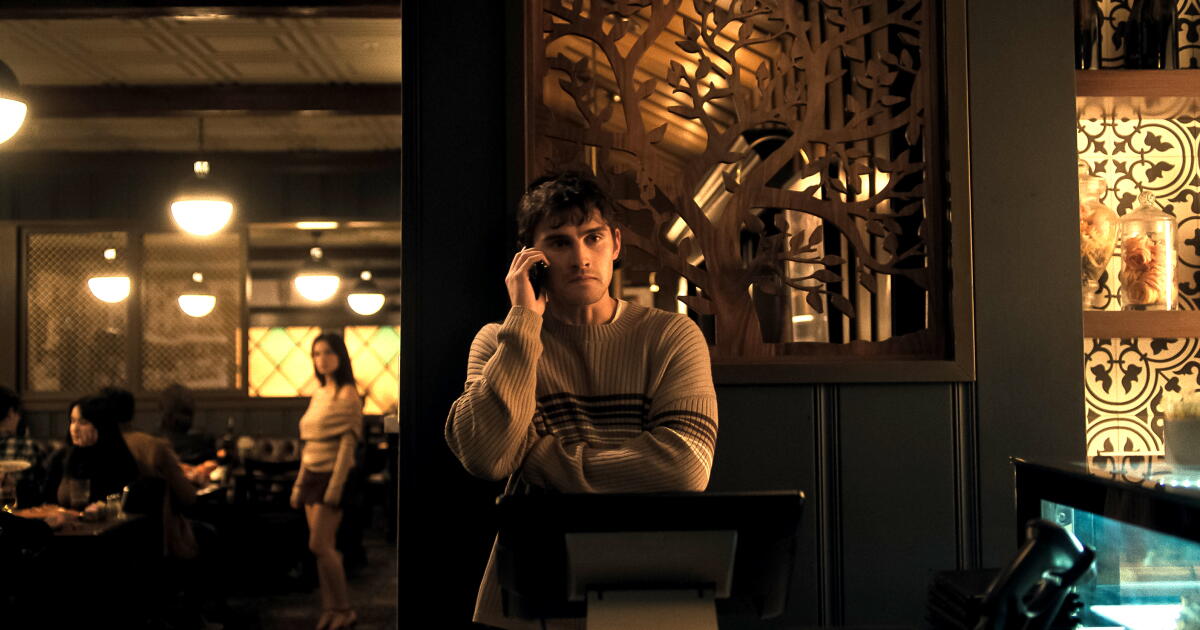
Although ‘Rosehill Cottage’ was specially constructed for the film and isn’t a real location, its picturesque countryside setting makes it worth visiting around Christmas. Remarkably, you can even visit the same pub where Cameron Diaz’s character had her first real date with Graham, played by Jude Law.

The enchanting village of Shere in Surrey is situated halfway between Guildford and Dorking. Its river filled with ducks, and its historic ambience attracts both tourists and filmmakers, and it was also a filming location for Bridget Jones: The Edge of Reason.

Yet, it’s at the corner of Shere Lane that you’ll find the historic 15th-century, Grade II-listed pub where parts of the Christmas movie were shot. The White Horse offers a variety of traditional dishes, such as hearty British steak and ale pies and Sunday roasts, all enjoyed by guests beside cosy fireplaces.

According to a previous Mirror article, a description from the Chef & Brewer Collection read: “Built in 1475, this stunning pub displays traditional features of solid wooden beams and natural stone fireplaces, creating the quintessential cosy pub atmosphere.

“Settle down and enjoy some hearty comfort food. From soul-warming Sunday roasts to perfectly seasoned steaks cooked just the way you like; each dish is crafted with the utmost care and passion. Connect to the free Wi-Fi and browse the well-stocked bar for your favourite local cask ale or quality wine, and don’t forget – we’re dog-friendly, so bring your four-legged pals.”

After visiting The White Horse, tourists might also want to explore the village’s charming tearooms or stop by the 12th-century St James’ Church. It is believed to be the place where Bridget Jones’ parents, played by Jim Broadbent and Gemma Jones, renew their wedding vows in The Edge of Reason.

The wedding celebration spills out of the church into the snowy yard. Bridget and Mark Darcy, portrayed by Colin Firth, follow the parents as they leave through the church’s Lych Gate.

Information from Visit Surrey also adds: “The Church of St James appeared in the Domesday Book. It contains a tiny enclosed cell in which Christine Carpenter, an anchoress (religious recluse) lived. Her only contact with the outside world was through a grid and an aperture through which food was passed.”

To visit Shere, the nearest station is Gomshall, about a five-minute drive away. It typically takes around 20 minutes to walk from Gomshall to Shere, and bus services are also accessible in the vicinity.

Get all the hottest shopping deals, cash saving tips and money news straight to your phone by joining our new WhatsApp Community – The Money Saving Club. Just click this link to join https://crnch.it/eutplxS1

We also treat our community members to special offers, promotions, and adverts from us and our partners. If you don’t like our community, you can check out any time you like. If you’re curious, you can read our Privacy Notice here https://crnch.it/jeQqC872

Source link

2026 Oscars power rankings: best director

Alfred Hitchcock never won an Oscar for directing. Neither did Stanley Kubrick nor Robert Altman nor Sidney Lumet nor Federico Fellini nor Orson Welles.

It’s a group almost as distinguished as the list of winners.

But we’re likely going to cross one name off that ignominious list this year — Paul Thomas Anderson.

I’m Glenn Whipp, columnist for the Los Angeles Times and host of The Envelope newsletter. I already gave away who’s on top of our Oscar power rankings for director. How does the rest of the list shake out? Let’s take a look.

Sign up for The Envelope

Get exclusive awards season news, in-depth interviews and columnist Glenn Whipp’s must-read analysis straight to your inbox.

By continuing, you agree to our Terms of Service and our Privacy Policy.

1. Paul Thomas Anderson, ‘One Battle After Another’

PAUL THOMAS ANDERSON, LEONARDO DI CAPRIO and BENICIO DEL TORO on the set of "One Battle After Another."

Anderson has three Oscar nominations for directing — “There Will Be Blood,” “Phantom Thread” and “Licorice Pizza.” That feels light. He has 11 Oscar nominations in all, including five as a writer and three as a producer. He has never won. That feels wrong. So with “One Battle After Another,” he checks off both of the main boxes that Oscar winners often possess — he directed the year’s best movie and he’s well overdue for an honor. Like Sean Baker for “Anora” last year, Anderson likely will come home with an armful of Oscars, as he also produced and wrote the movie.

2. Jafar Panahi, ‘It Was Just an Accident’

Jafar Panahi directs a scene from "It Was Just an Accident."

Panahi has never been nominated for an Oscar, though his films have won the top prizes at the Venice Film Festival (“The Circle”), the Berlin Film Festival (“Taxi”) and, this year, the Cannes Film Festival (“It Was Just an Accident”). That movie’s withering takedown of the cruelty and corruption of authoritarianism packs a punch; it’s also unexpectedly funny in its clear-eyed social critique. Panahi has been imprisoned by the Iranian government many times for speaking out and was recently again sentenced, in absentia, to a year in prison on charges of “propaganda activities against the system.” Like we needed another reason to celebrate the man and his work.

3. Ryan Coogler, ‘Sinners’

RYAN COOGLER and AUTUMN DURALD ARKAPAW COOGLER on the set of "SINNERS."

(Eli Ade / Warner Bros. Pictures)

Coogler has two Oscar nominations, but they aren’t what you might expect. He was nominated for producing “Judas and the Black Messiah,” the thrilling 2021 historical drama looking at the politics of race. And he earned a songwriting nod for the Rihanna ballad “Lift Me Up” from “Black Panther: Wakanda Forever.” Coogler should have landed an adapted screenplay nomination for the first “Black Panther” movie, a more inventive, world-building work than the umpteenth remake of “A Star Is Born.” But that’s the past. Coogler, like Anderson, figures to be feted in multiple categories at the upcoming Oscars and may well bring home the prize for original screenplay.

4. Chloé Zhao, ‘Hamnet’

Director Chloe Zhao with actors Paul Mescal and Jessie Buckley with on the set of their film HAMNET.

(Agata Grzybowska / Focus Features)

Zhao owns two Oscars for directing and producing “Nomadland,” the empathetic and searching portrait of America that felt like a balm when it premiered during the pandemic. After an ill-fitting detour into the Marvel Cinematic Universe with “Eternals,” Zhao came all the way back with “Hamnet,” a deeply felt look at love, loss and the cathartic power of art. Even those who find it overwrought laud the movie’s climactic sequence, a performance of “Hamlet” at the Globe Theatre. I’d argue the ending works so well because of the care Zhao took earlier in establishing the wonder and joy of the family’s life. “Hamnet,” to my damp eyes, is her best film.

5. Joachim Trier, ‘Sentimental Value’

Director Joachim Trier at the premiere of the film 'Sentimental Value' at the 78th international film festival, Cannes.

(Lewis Joly / Invision / AP)

From here, you could shuffle the five through eight slots and make a good case for any of these directors landing the fifth slot in the field. Trier has much to recommend his subtle interweaving of past and present, hope and hurt in “Sentimental Value.” He received a screenplay nomination for his last movie, “The Worst Person in the World,” also starring Renate Reinsve. The directors branch boasts a strong contingent of voters from all over the world, a group that could easily nominate the filmmakers behind two of the year’s most celebrated international feature contenders. Plus, “Sentimental Value’s” salty view of Hollywood is bound to appeal to this bunch.

6. Guillermo del Toro, ‘Frankenstein’

 Writer/Director Guillermo del Toro and Cinematographer Dan Laustsen on the set of Frankenstein.

The affable, movie-loving Del Toro has won many fans inside and outside the industry over the years, along with Oscars for directing and producing the 2017 best picture winner “The Shape of Water” and for “Pinocchio,” the enchanting 2022 movie that snagged animated feature. “Frankenstein” is far from his best work, but it probably has enough admirers to land a best picture nomination and mentions in several other categories. Director, though? If Del Toro didn’t make the cut for “Nightmare Alley,” he’s probably a near-miss for this one too.

7. Josh Safdie, ‘Marty Supreme’

Timothee Chalamet, left, and Josh Safdie BTS on "Marty Supreme."

(Atsushi Nishijima / A24)

It’s “Marty Supreme” week! The movie finally arrives on Christmas and, over the holidays, we’ll begin to have the sorts of conversations that will shed some light on the movie and its Oscar chances beyond the certain nominations for best picture and lead actor Timothée Chalamet. Is the title character, a single-minded ping-pong player oblivious to anything but his own advancement, a jerk? Or is he just like any other man in his 20s? Is the film’s last shot a sign of growth or a man contemplating his own death sentence? We’ll have time to discuss and, yes, revel in the unhinged chaos Safdie unleashes here.

8. Clint Bentley, ‘Train Dreams’

Director Clint Bentley and Joel Edgerton as Robert Grainier in Train Dreams.

(Daniel Schaefer / BBP Train Dreams)

And finally, we arrive at the man behind “Train Dreams,” a contemplative film about an ordinary man puzzling through loss, guilt, the mundane and the magnificent. It’s the anti-”Marty Supreme” — quiet, painterly, a tad slow, sure, but hypnotic in the way it evokes a bygone America. Just the second movie Bentley has directed, following the little-seen 2021 drama “Jockey,” it has built a devoted following since landing on Netflix last month.

Source link

Can movie stardom survive the age of AI?

Kevin Hart is almost impossible to avoid.

The stand-up comic turned actor has spent the past decade as one of Hollywood’s most bankable and visible stars, headlining megahits like the “Jumanji” films alongside a steady output of comedies and animated features, while still selling out arena tours and releasing hit Netflix comedy specials. Off-screen, his face turns up everywhere: pitching banking apps, tequila and energy drinks.

For a long time, that kind of omnipresence carried real security in Hollywood.

In the era of artificial intelligence, though, that guarantee has begun to erode. A quick Google search for “Kevin Hart AI” turns up unofficial versions of his voice, available with a few clicks.

A series on how the AI revolution is reshaping the creative foundations of Hollywood — from storytelling and performance to production, labor and power.

That helps explain why, one evening last month on the Fox lot, the head of Hart’s entertainment company, Hartbeat, was on an industry panel talking not about box office or release strategies but AI. Jeff Clanagan painted a picture of a landscape in which movie stardom is no longer protected by traditional channels, as attention splinters across platforms and audiences fragment. In that environment, AI can be both a risk and a lever.

“The most valuable resource right now is attention,” Clanagan told the audience of 150 studio executives, filmmakers, investors and technologists gathered at Hollywood X, an invitation-only event focused on responsible adoption of AI. “You’re competing for it everywhere — everybody is always on a second screen. That fragmentation is where the disruption is.”

Hollywood was built on the idea that a small number of stars could reliably command attention and turn it into leverage. As AI and algorithm-driven platforms reshape how attention is created and distributed, even the most recognizable names are newly exposed — not only to dilution but to the prospect of being replaced altogether.

People speak on a panel

Jeff Clanagan, right, president and chief distribution officer of Kevin Hart’s entertainment company, Hartbeat, speaking on a panel at last month’s Hollywood X event.

(Randall Michelson)

In parts of Asia, synthetic performers are no longer hypothetical. In Japan, the anime-style virtual pop star Hatsune Miku has sold out concerts and headlined festivals. In China, AI hosts run shopping streams on the video platform Douyin. And in the U.S., Lil Miquela, a computer-generated influencer created by the Los Angeles startup Brud, has amassed millions of followers and appeared in major fashion campaigns, including a Calvin Klein ad with Bella Hadid.

For studios, brands and producers, the appeal isn’t hard to see. A virtual performer doesn’t call in sick, miss a shoot or carry off-screen baggage. There’s no aging out of roles, no scheduling crunch. They don’t need trailers, negotiate contracts or arrive with riders, entourages and expense accounts in tow.

The old mythology was that a star might be discovered at Schwab’s lunch counter or in an audition room. Hollywood has always chased the “it factor.” What happens when the performer is, quite literally, an it?

That question came into sharp focus this fall with the appearance of Tilly Norwood, a photorealistic, AI-generated character that took the guise of a rising British actor, styled to read mid-20s and approachable — exactly the kind of star Hollywood is always looking for.

It landed in an industry already on edge. Hollywood was still reeling from strikes, layoffs and a prolonged contraction, with anxiety about AI simmering just below the surface. The response was immediate and visceral.

SAG-AFTRA warned that projects like Tilly risked relying on what the union called “stolen performances,” arguing that AI-generated actors draw on the work of real performers without consent or compensation, concerns that were central to the union’s 2023 strike. On a Variety podcast, Emily Blunt was shown an image of Tilly and paused. “No — are you serious? That’s an AI?” she said. “Good Lord, we’re screwed.”

SAG-AFTRA members march in one "Unity Picket" on strike day 111 at Walt Disney Studios in Burbank on Nov. 1, 2023.

SAG-AFTRA members march in one “Unity Picket” on strike day 111 at Walt Disney Studios in Burbank on Nov. 1, 2023.

(Myung J. Chun / Los Angeles Times)

Even some of Hollywood’s most tech-forward figures have drawn a line. On the press tour for his latest film, “Avatar: Fire and Ash,” James Cameron — the director who once warned of Skynet in “The Terminator” — called the idea of AI replacing actors “horrifying,” arguing that human performance would become increasingly “sacred.”

Yves Bergquist, an AI researcher who directs the AI in Media Project at the USC Entertainment Technology Center — a think tank supported by major studios and technology companies — expects AI to continue to encroach on territory once reserved solely for humans.

“Will we see AI movie stars?” Bergquist asks. “Probably.” But he draws a line between what the technology can generate and what audiences are willing to invest in emotionally.

“Prince writing his songs is a great story,” he says. “Pushing a button and making music is not. Very soon — it’s already starting — we’re going to have this us-versus-them mentality. These are the machines and we’re the humans. And we’re not the same.”

The actor that didn’t exist

“Are you allowed to speak to me from L.A.?” Eline van der Velden, the creator of Tilly Norwood, asks with a quick, nervous laugh on a video call from London — a nod to how radioactive the subject of synthetic performers has become.

The question isn’t entirely a joke. Three months ago, when Van der Velden presented her latest project at an industry conference in Zurich, it touched off one of Hollywood’s most heated debates yet over AI and performance, one that still hasn’t fully cooled.

Van der Velden, 39, came up as an actor before pivoting into production, eventually landing in London, where she founded Particle6, a digital production company known for short-form video work for broadcasters and major platforms. She was in Zurich to introduce its newest offshoot, Xicoia, an AI studio designed to build and manage original synthetic characters for entertainment, advertising and social media. “It’s not a talent agency — we’re making characters,” she says. “So it’s really like a Marvel universe studio in a way.”

a woman sits on a couch gesturing

Eline van der Velden, creator of the AI-constructed Tilly Norwood, at Web Summit 2025 in Lisbon, Portugal.

(Florencia Tan Jun/Sportsfile via Getty Images)

Tilly Norwood was meant to be the first and most visible example of that approach. Conceived as a recurring character with an unfolding story arc, Tilly was built to exist across short-form videos and scripted scenarios. As part of the Zurich presentation, Van der Velden screened a short satirical video titled “AI Commissioner,” introducing Tilly as a “100% AI-generated” actor — smiling on a red carpet and breaking down on a talk-show couch.

Other short videos featuring Tilly had already circulated online, including a montage placing her in familiar movie genres and a parody riffing on Sydney Sweeney’s controversial American Eagle jeans ad (“My genes are binary”). The “AI Commissioner” video itself had been posted on YouTube months earlier. By then, photorealistic synthetic characters were no longer novel and similar experiments were spreading online.

In Hollywood, it triggered an immediate backlash. Press accounts out of Zurich, amplified by Van der Velden’s remark that Tilly might soon be signed to an agent, collided with an industry already on edge about AI. Van der Velden was stunned at the intensity of the outcry: “Tilly was meant to be for entertainment,” she says. “It’s not to be taken too seriously. I think people have taken her way too seriously.”

Across the industry, working actors, already facing shrinking opportunities, recoiled at the idea of a fabricated performer potentially taking real jobs. Some called for a boycott of any agents who might take on Norwood. Speaking to The Times, SAG-AFTRA President Sean Astin demanded that the real-life actors used for AI modeling be compensated. “They need to know that it’s happening,” he said. “They need to give permission for it and they need to be bargained with.”

As the coverage ricocheted far beyond the trades and went global, the reaction escalated just as quickly. Asked when she knew Tilly had struck a nerve, Van der Velden answers matter-of-factly: “When I got the death threats. That’s when I was like, oh — this has taken a very different turn.”

Van der Velden understands why the idea of a synthetic performer unsettled people, especially in a business already raw from layoffs, strikes and contraction. “Tilly is showing what we can do with the tech at this moment in time, and that is frightening,” she says. But she argues that much of the backlash rests on fears that, in her view, haven’t yet materialized — at least not in the way people imagine them.

Tilly Norwood, an AI construct, smiles serenely at the camera.

Tilly Norwood, an AI construct created by Particle6.

(Particle6)

“There’s a bad reputation around AI,” she says. “People try to swing all sorts of things at it, like, ‘Oh, it’s taking my job.’ Well, I don’t know of anyone whose acting job has actually been taken by AI. And Tilly certainly hasn’t taken anyone’s job.”

Union representatives argue that displacement is already occurring through subtler mechanisms: background roles increasingly filled by digital doubles, commercials replacing actors with synthetic performers and projects that never get greenlighted because AI offers a cheaper alternative. The impact shows up not in pink slips but in opportunities that vanish before auditions are ever held.

Even as the controversy grew, Van der Velden says she began hearing something else privately. Producers and executives reached out, curious about what Tilly could do, with several asking about placing the character in traditional film or television projects — offers she says she declined. “That’s not what Tilly was made for,” she says.

Van der Velden insists the character was never intended to replace actors, framing Tilly instead as part of a different creative lineage, closer to animation. “I was an actor myself — I absolutely love actors,” she says. “I love pointing a camera at a real actress. Please don’t stop casting actors. That’s not the aim of the game.”

With a background in musical theater and physics, Van der Velden spent her early career in Los Angeles acting, improvising at Upright Citizens Brigade and making YouTube sketches. An alter ego she created, Miss Holland — designed to make fun of rigid beauty standards — won an online comedy award and helped launch her career in the U.K., where she founded Particle6.

Tilly began as an exercise: Could Van der Velden design a virtual character who felt instantly familiar, the kind of approachable young woman audiences would naturally be drawn to? “It’s like building a Barbie doll,” she says, noting at one point she considered making Tilly half robot. “I had fun making her. It was a creative itch.”

She pushes back on the idea that synthetic characters are simply stitched together from parts of real people. “People think you take this actress’ eyes and nose and that actress’ mouth,” she says. “That’s not how it works at all.”

Over six months, a team of about 15 people at Particle6 worked on developing Tilly, generating more than 2,000 visual versions and testing nearly 200 names before selecting Tilly Norwood, one that fit what Van der Velden calls the “English rose” aesthetic they were looking for and wasn’t already taken. “It’s very human-led,” Van der Velden says, likening AI tools to a calculator for creatives. “You need taste. You need judgment. You still have to call the shots.”

Even as the technology advances, the uncanny valley remains a stubborn barrier. Van der Velden says Tilly has improved over the last six months, but only through sustained human steering. “It takes a lot of work to get it right,” she says.

That labor, she says, is what separates an emerging form of storytelling worth taking seriously from AI slop. “I’ve seen some genuinely amazing work coming out of AI filmmaking,” she says. “It’s a different art form but a real one.”

She sees Tilly less as a provocation than as a reflection. “She represents this moment of fear in our industry as a piece of art. But I would say to people: Don’t be fearful. We can’t wish AI away. It’s here. The question is, how do we use it positively?”

Her focus now is on what she calls Tilly’s “inside” — the personality, memory and backstory that give the character continuity over time. That interior life is being built with Particle6’s proprietary system, DeepFame, software designed to give the character memory and behavioral consistency from one appearance to the next.

“People ask me things like what her favorite food is,” Van der Velden says. “I’m not going to answer for Tilly. She has a voice of her own. I’d rather you ask her yourself — very soon.”

Hollywood fights back

While Van der Velden wishes the industry were less afraid of what AI might become, Alexandra Shannon is helping Hollywood arm itself for what’s already here.

As head of strategic development at Creative Artists Agency, one of the industry’s most powerful agencies, Shannon works with actors, filmmakers and estates trying to navigate what generative technology means for their work — and their identities.

The questions she hears tend to fall into two camps. “First is, how do I protect myself — my likeness, my voice, my work?” she says. “And then there’s the flip side: How do I engage with this, but do it safely?”

Those concerns led to the creation of the CAA Vault, a secure repository for approved digital scans of a client’s face and voice. Shannon describes it as a way to capture a likeness once, then allow performers to decide when and where it can be used — for example, in one shot created for one film. It doesn’t eliminate uncertainty, she says, but it gives talent something they’ve rarely had since AI companies entered the picture: control.

“There’s a legitimate way to work with them,” she adds. “Anything outside that isn’t authorized.”

A large gray, glassy building stands in Los Angeles.

Creative Artists Agency’s headquarters in Century City, where talent representatives are grappling with how to protect clients’ likenesses.

(Robert Gauthier / Los Angeles Times)

Those risks are no longer abstract. Unauthorized AI-generated images and videos resembling Scarlett Johansson have circulated online. Deepfake ads have falsely enlisted Tom Hanks to promote medical products. AI-generated images have placed Taylor Swift in fabricated scenarios she never endorsed. Once a likeness becomes live and responsive, Shannon says, control can erode quickly.

For all the panic around AI, Shannon rejects the idea that digital likeness will undercut human stars overnight. “It’s not about all of a sudden you can work with Brad Pitt and you can do it for a fraction of the cost,” Shannon says. “That is not where we see the market going.”

What CAA is intent on preserving, she says, isn’t just a face or a voice but the accumulated meaning of a career.

“For an individual artist, their body of work is built over years of creative decisions — what roles to take, what brands or companies to work with, and just as importantly, what roles not to do, what companies not to support,” she adds. “That body of work is a fundamental expression of who they are.”

Shannon doesn’t dispute that the tools are improving or that some AI-native personas will find an audience. But she believes their growth will sharpen, not weaken, what distinguishes human performance in the first place. “In a world where there’s this vast proliferation of AI-generated content, people will continue to crave live, shared, human-centered experiences,” she contends. “I think it’s only going to make those things more valuable.”

Not everyone is convinced the balance will tilt so neatly.

“The genie’s out of the bottle,” Christopher Travers says by phone from Atlanta, where he runs Travers Tech, advising companies and individual creators on generative video and digital-identity strategy. “There are now more than a million characters across all sorts of media, from VTubers to AI-generated performers.”

Travers got his start in generative AI with the backing of Mark Cuban, founding Virtual Humans in 2019, a startup focused on computer-generated performers and digital identities. These days, his journey would have been much easier. “It costs nearly nothing now,” he says. “And when cost drops, volume increases. There’s pressure on celebrities to keep up.”

Having watched countless virtual characters come and go, Travers wasn’t particularly impressed with Tilly Norwood herself. What mattered to him was the reaction.

“Tilly is maybe 1% of the story,” he says. “The other 99% is the worry and the fear. What it did was strike a chord. We all needed to have this conversation.”

What stardom looks like now

Few people have spent more time inside Hollywood’s old star-making system than mega-producer Jerry Bruckheimer, whose films like “Beverly Hills Cop,” “Top Gun” and “Pirates of the Caribbean” helped turn actors into global commodities.

Even amid the disruption reshaping Hollywood, he believes the industry still knows how to discover and elevate stars. “It’ll happen,” he told The Times earlier this year. “Timothée Chalamet is a star and Zendaya is a star. Glen Powell is becoming a star — we’re going to bring him up. Damson Idris is going to be a star. Now they have to be smart and make good choices on what they do. That’s up to them.”

A man stands in a sci-fi hallway.

Stellan Skarsgård as Luthen Rael in the series “Andor.”

(Des Willie / Lucasfilm Ltd.)

The industry may still know how to make stars, but keeping them there has become harder. Chalamet’s biggest box office successes, like “Wonka” and the “Dune” films, have arrived as part of franchises rather than as standalone vehicles. Powell’s latest film, last month’s remake of “The Running Man,” fell short of expectations.

Bruckheimer himself has been pragmatic about AI. During postproduction on his recent Brad Pitt–led Formula One drama, an AI-based voice-matching tool was briefly used to replicate Pitt’s voice when the actor was unavailable for looping, a demonstration of how AI can extend a star’s reach rather than replace them. “AI is only going to get more useful for people in our business,” he says.

If Hollywood has been having more difficulty launching fresh faces, it has become adept at keeping familiar ones on the screen. AI tools can smooth a face, rebuild a voice or extend a performance long after an actor might otherwise have aged out. Stardom no longer has to end with retirement — or even death.

Stellan Skarsgård, for one, is uneasy with the idea. In recent years, the veteran actor — a current Oscar front-runner for “Sentimental Value” — has been part of two of Hollywood’s most valuable franchises, playing Luthen Rael in the “Star Wars” series “Andor” and Baron Harkonnen in the “Dune” films, roles built to carry on through sequels and spinoffs.

Asked about the prospect of an AI version of himself playing those characters after he’s gone, the 75-year-old Skarsgård bristles. The question carries particular weight. Three years ago he suffered a stroke, an experience that forced a reckoning with his craft and sense of mortality.

“SAG has been very adamant — there was a strike about it,” Skarsgård says. “And I do hope it won’t be like that in the future, that it will be controlled and that money won’t have all the rights.” He pauses. “You should have rights as a person, to your own voice, your own personality.”

Those questions — about control, consent and what survives a person — moved from the abstract to the practical last month at Hollywood X on the Fox lot.

Onstage, Jeff Clanagan mentioned a documentary that Hartbeat, Kevin Hart’s entertainment company, is producing with the estate of comedian Bernie Mac, who died in 2008. Built around Mac’s own audiobook narration, the documentary will rely on authorized existing recordings, not newly generated performances, pairing traditional animation with AI-assisted imagery to visualize moments Mac had already described. Clanagan said the technology offered a faster, less expensive way to bring those scenes to life.

But that took some convincing. An Oscar-winning director attached to the project initially wanted to tell the story entirely through traditional animated reenactments. Clanagan said it took months of persuasion — including creating sample scenes to demonstrate the approach — before that resistance eased. “Once he saw it, he was converted, and now we’re doing a little bit of a hybrid,” he said.

That work, Clanagan added, has become part of the job, not just externally but inside Hartbeat as well. “Part of it is educating the talent community on what you can do and still be aligned,” he said, noting that much of the hesitation comes from fear stoked by headlines and unfamiliarity with the tools. “It’s about helping people understand the process. People are starting to believe.”

As the Hollywood X panel ended, attendees filed out of a theater named for Darryl F. Zanuck, one of the architects of the studio-era star system, then crossed the Fox lot toward a reception. Along the way, they passed by cavernous soundstages, some painted with towering murals: Marilyn Monroe in “The Seven Year Itch,” Julie Andrews in “The Sound of Music,” Bruce Willis in “Die Hard.” Faces from another era, still watching as the industry weighs what will endure.


Source link

‘Avatar: Fire and Ash’ heats up the box office

The Na’vi won the battle of the box office this weekend, as “Avatar: Fire and Ash” hauled in a hefty $88 million in the U.S. and Canada during its opening weekend.

The third installment of the Disney-owned 20th Century Studios’ “Avatar” franchise brought in an estimated total of $345 million globally, with about $257 million of that coming from international audiences. The movie reportedly has a budget of at least $350 million.

Box office analysts had expected a big international response to the most recent film, particularly since its predecessor “Avatar: The Way of Water” had strong showings in markets like Germany, France and China.

In China, the film opened to an estimated $57.6 million, marking the second highest 2025 opening for a U.S. film in the country since Disney’s “Zootopia 2” a few weeks ago. (That film went on to gross more than $271.7 million in China on its way to a global box office total of $1.1 billion.)

The strong response in China is another sign that certain movies can still do well in the country, which was once seen as a key force multiplier for big blockbusters and animated family films but has in recent years cooled to American movies due to geopolitics and the rise of its domestic film industry.

Angel Studio’s animated biblical tale “David” came in second at the box office this weekend, with an estimated domestic gross of $22 million. Lionsgate thriller “The Housemaid,” Paramount Animation and Nickelodeon Movies’ “The Spongebob Movie: Search for Squarepants” and “Zootopia 2” rounded out the top five.

The weekend’s haul likely comes as a relief to theater owners, who have weathered a roller coaster year.

After a difficult first three months, the spring brought hits like “A Minecraft Movie” and “Sinners” before the summer ended mostly flat. A sleepy fall brought panic to the exhibition business until closer to the Thanksgiving holiday, when “Wicked: For Good” and “Zootopia 2” drew in audiences.

Source link

5 shortlisted Oscar contenders to watch this holiday season

It’s odd the moments you remember after someone’s gone.

Scrolling through a seemingly infinite number of clips featuring Rob Reiner being compassionate and kind, scenes from his movies that feature a bone-deep empathy for the ways human beings struggle and strive to be better, I kept thinking back to a little wink in “This Is Spinal Tap,” the 1984 mockumentary Reiner directed and co-starred in, playing filmmaker Marty DiBergi.

I’ve seen this movie so many times that I could probably act out the whole thing upon request. It provided a soundtrack to a family trip to Stonehenge several years ago. But thinking about Reiner in the wake of the horrible news that he and his wife, Michele Singer Reiner, were found dead in their home on Sunday night, their son Nick subsequently charged with their murders, I randomly landed on the scene where DiBergi talks with Spinal Tap lead singer David St. Hubbins (Michael McKean) after guitarist Nigel Tufnel (Christopher Guest) leaves the band.

St. Hubbins blithely insists he won’t miss Nigel any more than insignificant band members who played briefly in the group. DiBergi is stunned. He loves Spinal Tap and fears for its future. Reiner plays the moment with such sincere heartbreak, partly in character, but mostly I think because that’s who he was. Reiner couldn’t help it. He felt things deeply and spent much of his life working to make things better for those on society’s margins. He will be missed in so many ways.

I’m Glenn Whipp, columnist for the Los Angeles Times and host of The Envelope newsletter. How to describe this week? None more black will do. But Christmas is coming, and that Vince Guaraldi song never fails to make me smile. Let’s look at some good news for those who made the Oscar shortlists this week.

Sign up for The Envelope

Get exclusive awards season news, in-depth interviews and columnist Glenn Whipp’s must-read analysis straight to your inbox.

By continuing, you agree to our Terms of Service and our Privacy Policy.

Voters, consider these

The film academy announced shortlists for 12 categories at the 98th Oscars, whittling down the list of contenders and offering a few indications about what films are scoring early points with voters.

Ryan Coogler’s critically acclaimed, genre-defying blockbuster “Sinners” picked up eight mentions, as did “Wicked: For Good.” Both movies placed two songs on the original song shortlist and both were cited in the newly created casting category.

Guillermo del Toro’s “Frankenstein” followed with six mentions, and “One Battle After Another,” “F1” and “Sirât” each scored five.

The bounty for “Sirât,” the Oliver Laxe thriller that is unquestionably one of the most memorable movies of the year, offered an indication that the word of mouth on this movie is strong enough to land it a spot among the nominees for international feature.

Can it do better than that? It should. Here are five suggestions for voters, including “Sirât,” as the lists are narrowed ahead of Oscar nominations on Jan. 22.

Cinematography: ‘Sirât’

The filmmakers behind “Sirât” relied on organizations that put on raves to help create the crowd scenes.

“Sirât” contains so many surprising twists and turns that when asked to describe the plot, I simply tell people that it’s about a father who shows up at a rave in southern Morocco with his young son looking for his missing daughter. The long desert journey they end up taking is astonishing, and cinematographer Mauro Herce, shooting on 16mm film, captures every treacherous mile in dramatic detail.

Original score: ‘Marty Supreme’

Gwyneth Paltrow, left, and Timothee Chalamet in "Marty Supreme."

Voting with the Los Angeles Film Critics Assn., I cast my ballot for Kangding Ray’s hypnotic score for (you guessed it) “Sirât.” But that was just one of many soundtracks that found its way into my life this year. Hans Zimmer’s synth-heavy “F1” score makes for propulsive listening while pedaling on an exercise bike and ranks among the celebrated composer’s best work. And I share Times film editor Josh Rothkopf’s enthusiasm for Daniel Lopatin’s throwback electronic beats in “Marty Supreme,” a delight for anyone who grew up listening to the ethereal soundscapes created by Tangerine Dream.

Casting: ‘Weapons’

JULIA GARNER as Justine in New Line Cinema's "Weapons," a Warner Bros. Pictures release.

I’m highlighting Zach Cregger’s horror-mystery “Weapons” here partially because of its inexplicable absence in the makeup and hairstyling category. I guess voters knew it was Amy Madigan in that bright red wig all along. That omission aside, “Weapons” is a prime example of what a great casting director can do, making use of familiar faces (Josh Brolin, Julia Garner, Madigan) in unexpected ways, finding the right child actor (Cary Christopher) to deliver big emotional moments and elevating emerging talent (Austin Abrams) to unexpected heights. Allison Jones, one of the greats, belongs among the casting category’s inaugural set of nominees.

Original song: ‘I Lied to You’

Miles Caton, center, in the movie "Sinners."

I mean, you saw that scene in “Sinners,” right?

Documentary: ‘My Undesirable Friends: Part 1 — Last Air in Moscow’

A woman stares up at television screens breaking the news.

Julia Loktev’s five-hour chronicle of the chilling Russian crackdown on independent journalists has won documentary honors from both the Los Angeles and New York film critics. The doc begins in 2021, when the journalists, mostly women, are forced to label themselves as “foreign agents” simply for doing their jobs, covering Putin’s regime in a factual manner. Things intensify after Russia’s invasion of Ukraine, turning “My Undesirable Friends” into a cautionary tale about the perils of bending to an autocrat. It goes without saying, but this is essential viewing.

Source link

Phil Wickham and ‘David’ face the Goliath of ‘Avatar’

Phil Wickham has released 14 Christian worship albums, has been Platinum certified and nominated for American Music Awards, Dove Awards, Billboard Music Awards and Grammys — but all of his vocal training and performances couldn’t prepare him to step into the shoes of one of his Biblical heroes with the upcoming animated musical film “David.”

Directed by Phil Cunningham and Brent Dawes, “David” marks the second animated film this year for Angel Studios. April’s “The King of Kings” made $60 million and is the second-highest-grossing film from the studio following “Sound of Freedom,” which made $184 million. The film hits theaters on Friday. If the release date sounds familiar, it could be because the third installment in the multibillion-dollar “Avatar” franchise, “Avatar: Fire and Ash,” is released on the same day. Presale numbers for “David” are at $15 million on 3,100 screens, but with “Avatar” tracking to open between $135 million and $165 million, and “The SpongeBob Movie: Search for SquarePants” also tracking between $13 million and $20 million, it would seem to be a true David vs. Goliaths for ticket sales.

That in itself could be daunting, but for Wickham, the biggest obstacles came long before release dates were decided. Despite playing in arenas with thousands of fans, he had a “secret dream” of voicing a character in an animated film. A character “that carried courage and faith and had some grand adventure.” But because he’d never chased that dream, he realistically put a limit on that particular goal. Even when the opportunity arose, he was hesitant when going into a casting meeting.

“I’m unoffendable. [I said to producers], if I suck, then just tell me because I don’t want to waste anybody’s time. And also, I don’t want to be bad in a movie as much as you don’t want to make a bad movie,” says Wickham.

The contemporary Christian artist, who recently finished sold-out concerts at Downey Calvary Chapel and the Wiltern, had never tried his hand at voice acting. Not only did he get the role, but he also had to help bring to (animated) life one of the most well-known stories in the Bible. The tale of David — the boy who was anointed to become the king and along the way felled the giant Philistine warrior Goliath with a rock and a slingshot — has become synonymous as the most famous of underdog representations and tests of faith in the Bible. The character and story is also one of Wickham’s favorites.

Phil Wickham always wanted to voice an animated character, especially after seeing "The Lion King."

Phil Wickham always wanted to voice an animated character, especially after seeing “The Lion King.”

(Colton Dall)

“When this came across my desk, so to speak, I was just like, man, I could tell you that story, but I didn’t know if I had it in me. I didn’t know if I was a good actor. I didn’t know if I could voice a character, but I knew I wanted a shot,” said Wickham.

A curious revelation for Wickham was discovering that the singing that he’d been doing most of his life would not work on-screen, at least not for this project. He was asked to tone down things, to sometimes “talk through” lyrics and to generally make the music more dramatic for the screen.

“I thought, OK, I got this. This is why they hired me, because I’m a singer. But that ended up being the hardest part because they didn’t want me to sound like me,” Wickham said.

“Singing became a background to just being the character, which honestly, in some ways, was the hardest thing. Maybe even for my ego as as an artist.”

It was definitely a process that required lots of fine-tuning and looking at David as not just the king and hero that Wickham had grown up reading about at home and in Southern California churches. Sitting in the pews in Downey, the singer reflected on why he got into music and why Christian entertainment is on the rise.

“I found out really quick that I loved being a part of moments where people were encountering the same hope and faith that I encountered in my room alone,” Wickham said of songwriting and performing. He grew up with Christianity all around him, but has seen a spike in popularity for music and movies dealing with faith-based fandom.

“For this movie ‘David’ to come out at this time … I think that the world is looking for stuff to hope in. I think people are just searching and finding out more and more the truth that if we look around us at the world of man, we’re not going to find real solutions. So that maybe if we look up, we will.”

Source link

Remembering Rob Reiner, plus the best movies this week in L.A.

Hello! I’m Mark Olsen. Welcome to another edition of your regular field guide to a world of Only Good Movies.

The shocking deaths this week of Rob Reiner and Michele Singer Reiner reached far beyond Hollywood. Their legacy will go far beyond show business thanks to their committed political activism for causes they believed in.

Mary McNamara pulled together the different strands of Rob Reiner’s life and career, noting, “As an artist and a public figure, he put his money where his mouth was and remained invariably sincere, a powerful and compelling trait that has become increasingly rare in a time of the sound-bite inanities, muddy thinking, obvious contradictions and outright falsehoods that threaten our public and political discourse.

“Reiner mastered many mediums and wielded a broad palette but his signature artistic trait was empathy. No story was too small, or too brutal, to be examined with kindness and an understanding that the most grave injustice we can commit is to choose apathy or revenge when connection and transcendence are always possible.”

A couple eats sandwiches in a New York deli.

Meg Ryan and Billy Crystal in the movie “When Harry Met Sally…”

(MGM / Library of Congress via AP)

Amy Nicholson took a deeper look at his film career, while Robert Llloyd surveyed his work on television.

Josh Rothkopf and I rolled out a list of his 10 best movies as a director, which includes his astonishing early run, titles like “This Is Spinal Tap,” “The Princess Bride,” “Misery,” “A Few Good Men” and “The American President.” All of those come in little over a decade.

Tribute screenings have already been announced around Los Angeles, including “When Harry Met Sally…” at the New Beverly on Dec. 30–Jan. 1 and then again on Jan. 3 at Vidiots, which will also be showing “A Few Good Men” on Jan. 6 and “The Princess Bride” on Jan. 18. More screenings are sure to follow.

‘Love & Basketball’ 25th anniversary

Two athletes romantically connect.

Sanaa Lathan and Omar Epps in the movie “Love & Basketball.”

(New Line Cinema)

On Saturday, the Academy Museum will host a 25th anniversary screening of “Love & Basketball” with writer-director Gina Prince-Bythewood in attendance. Starring Sanaa Lathan and Omar Epps, it is one of the great romantic films of recent decades, the story of two young athletes struggling to reconcile their feelings for each other with their individual careers and ambitions.

In his original review of the movie, Eric Harrison wrote, “The movie is smarter than it has to be, but it’s the sort of low-key smart that can be easily overlooked. Writer-director Gina Prince-Bythewood doesn’t care if you recognize how hard it is to juggle two distinctly different types of movies (make that three, since the romance and sports elements here don’t obscure the feminist fable that is the film’s heart). … This is Prince-Bythewood’s first feature film as both a writer and director, and she shows admirable command of her craft.”

In an interview from 1990, Prince-Bythewood talked about the difficulty of casting the two leads, worrying whether she should find basketball players who could learn to act or actors who could persuasively play basketball.

“There were a lot of sleepless nights,” Prince-Bythewood said. “Is this a love story or a basketball story? I finally realized it’s a love story first. It doesn’t matter how great the basketball is if you don’t care about the character or the love story.

In 2020, Sonaiya Kelley spoke to Prince-Bythewood, Lathan, Epps, producer Spike Lee, actors Gabrielle Union, Alfre Woodard, Tyra Banks and Regina Hall for a definitive oral history of the film.

“When I first started out writing it, my goal was to do a Black ‘When Harry Met Sally…,’” said Prince-Bythewood. “I love that movie, but I wasn’t seeing myself in movies like that.”

‘Metropolitan’ 35th anniversary

Well-dressed young people smile for a photo.

The cast of Whit Stillman’s 1990 movie “Metropolitan.”

(Rialto Pictures)

On Sunday afternoon, the American Cinematheque at the Aero Theatre will have a 35th anniversary screening of “Metropolitan” with writer-director Whit Stillman and actor Taylor Nichols there for a Q&A. Set during the week between Christmas and New Year’s among a very specific social set of young New Yorkers — labeled in the film as the Urban Haute Bourgeoisie — the film is a delicately detailed comedy of manners. It would earn Stillman an Oscar nomination for original screenplay.

In her original review, Sheila Benson wrote, “Filmmaker Stillman is a pointillist, working in the tiniest, most meticulous degrees. If he seems at times as controlled and distanced as his own UHBs, his impulsive, romantic ending betrays him. Stillman understands caste, class and deportment as perfectly as Audrey’s idol, Jane Austen, and by the time he’s through, so do we.”

In a 1990 interview, Stillman spoke about making a movie about such a specific social set, one that many viewers of the film will not have been a part of. “I think people will enjoy the fact that the film has texture,” he said. “They will sense that there is a joke there, even if they don’t get it.”

Points of interest

Nancy Meyers with ‘Father of the Bride’

A family meets with a wedding planner.

Kimberly Williams, left, Martin Short, Steve Martin and Diane Keaton in the 1991 version of “Father of the Bride.”

(Disney / Touchstone Pictures)

Director Nancy Meyers had to pull out of a recent Q&A scheduled for a screening of “Something’s Gotta Give,” which starred her frequent collaborator Diane Keaton. Meyers is now set to appear at the American Cinematheque at the Aero Theatre on Saturday for a Q&A after 1991’s remake of “Father of the Bride,” directed by Charles Shyer and co-written by Shyer and Meyers. As far as we can tell, this will be Meyers’ first public appearance since Keaton’s death in October.

The film stars Keaton alongside Steve Martin, as a couple who are arranging the wedding of their daughter, with Martin Short showing up as an overbearing wedding planner.

In his original review, Michael Wilmington wrote, “Midway through ‘Father of the Bride’ … Martin Short shows up, as the effete, snobbish wedding coordinator that Leo G. Carroll played in the original, and steals the movie from Martin, steals it from everybody. Short’s handling of this silly little role — an outrageous poseur named ‘Franck Eggelhoffer’ who insists on calling himself Frawwnk and acts like a post-disco Mischa Auer — has perfect pitch and real wigged-out comic genius.”

David Lowery and ‘The Green Knight’

A bearded man stands in front of a horse.

Dev Patel in the 2021 movie “The Green Knight.”

(A24)

On Saturday, Vidiots will host a screening of 2021’s “The Green Knight” with writer-director David Lowery in person. Based on the 14th century poem “Sir Gawain and the Green Knight,” the film stars Dev Patel as Gawain, nephew of King Arthur, who, after winning a mystical challenge on Christmas, is told he has one year to complete another adventure.

In his review, Justin Chang wrote, “What does it mean to be a knight, or even just to be human? It isn’t an easy question, and ‘The Green Knight,’ in taking it seriously, isn’t always an easy film. But by the time Gawain reaches his journey’s end, in as moving and majestically sustained a passage of pure cinema as I’ve seen this year, the moral arc of his journey has snapped into undeniable focus. He plays the game; he accepts the challenge. His example is worth following.”

Oliver Stone’s ‘Nixon’

A president and first lady waltz in a ballroom.

Joan Allen and Anthony Hopkins in the movie “Nixon.”

(Sidney Baldwin / Cinergi Pictures Entertainment)

On Sunday, the Laemmle Royal will have a 30th anniversary screening of Oliver Stone’s “Nixon” with the filmmaker in person for a Q&A to be moderated by Times contributing writer Tim Greiving.

Starring Anthony Hopkins as Richard Nixon and Joan Allen as his wife, Pat (both were nominated for Oscars for their performances), the film covers the political life of the politician who rose to being president only to leave the office in disgrace.

In his original review, Kenneth Turan wrote, “Mostly (though not completely) gone is the disturbing, lunatic Oliver Stone, the bad-boy writer-director who infuriated the political establishment with ‘JFK’ and outraged sensibilities nationwide with ‘Natural Born Killers.’ He’s been replaced by a filmmaker very much on his best behavior, a thorough researcher who consulted 80 books and published a heavily footnoted screenplay. If Quentin Tarantino made a film in the style of Sir Richard Attenborough, the surprise could not be greater. And ‘Nixon’ is in many ways an impressive, well-crafted piece of work.”

Source link

Oscars: Guillermo del Toro, Rian Johnson, more on Directors Roundtable

It is often said that film directors are siloed off from one another, that they don’t get to watch how others work. So when you put a group of them together, as with the six participants in The Envelope’s 2025 Oscar Directors Roundtable, they are quick to share all sorts of ideas. Like where they prefer to sit in a movie theater — centered in a row or on an aisle? How far back is the best for sound, or so the screen runs up to the edges of your peripheral vision? Should you even take the worst seats in the house, since somebody will eventually be asked to pay money to sit there?

Guillermo del Toro, there with his adaptation of Mary Shelley’s classic novel “Frankenstein,” likes the top of the first quarter of the theater. Rian Johnson, who finds new twists for Benoit Blanc in his third “Knives Out” detective story, “Wake Up Dead Man,” says, “I look for wherever Guillermo’s sitting.” Nia DaCosta, who made the bold, adventurous Ibsen adaptation “Hedda,” likes the top of the first third. Mona Fastvold, who explores the life of the founder of the religious movement known as the Shakers in “The Testament of Ann Lee,” likes the center a little farther back. Jon M. Chu, who made the second part of a musical adaptation with “Wicked: For Good,” sits dead center — and has been known to talk to the theater manager if the sound isn’t loud enough. And Benny Safdie, who explores the rise and fall of mixed martial arts fighter Mark Kerr in “The Smashing Machine,” tries to find a spot where he can fidget in his seat and not bother anyone.

Read on for more excerpts of their conversation about the art of adaptation, navigating budget constraints at any scale and much more.

Director Jon M. Chu at the 2025 Oscars (directors) Roundtable at the Los Angeles Times

Jon, I’ve heard you say that with “Wicked: For Good,” you wanted the film to be deeper but not darker. And it doesn’t pull any punches as far as dealing with themes of antiauthoritarianism. What was it like to have those very serious ideas and yet still have this be a buoyant, crowd-pleasing musical?

Chu: The reason we made it was because it had that meat to it, and it was always a two-movie, yearlong experience that set up the fairy tale first. And Movie 2 is kind of where we all are, this moment of this fairy tale shattered in front of us.

I have five children now, so I’m thinking about how to present stories to my kids. Do I still believe in the possibility of dreams and the American Dream? “For Good” really gets to delve into that stuff. And because it was shorter than the first half, we get more room to do it. We added new songs to explore that idea. So it all felt really fitting. Movie 1 could be an answer. Movie 2 is much more of a challenge: Who are we gonna be now that we know the truth?

All of your films in their own way are speaking to right now. Rian, “Wake Up Dead Man” is specifically set in the year 2025 and all the “Knives Out” pictures have been dealing with our contemporary reality. What makes you want to do that?

Johnson: That kind of started for me with the first movie. This is a genre, the murder mystery genre, that I love and that I’m just seeing so much of growing up. But it’s also a genre where most of what I had seen throughout my whole life, murder mysteries are period pieces set usually in a cozy little bubble of a little “Queensfordshire” place in England.

And I guess my realization was, that’s not what Agatha Christie did. She was not writing period pieces. She wasn’t an incredibly political writer, but she was always writing to her time. It’s not trying to do anything radical in terms of making it new or updating it, but let’s set it very much unapologetically in the modern moment. … You have a group of suspects that have a hierarchy of power amongst them and the person at the top they all wanna bump off — it’s such a potent vehicle for building a little microcosm of society.

Benny Safdie.

Benny, one of my favorite things in “The Smashing Machine” is that it’s funny to realize setting a story at the turn of millennium is a period piece now. What was it like crafting this very specific, recent time period?

Safdie: It’s a time period that I think everybody thinks is just yesterday. But when you actually get into the nitty-gritty, it’s a long time ago. And things were very different and everybody knows exactly what those things are too. Because it was heavily documented, there was so much footage of it, it’s so top of mind. And I think a large amount of people also want to go back there a little bit, to this time where the internet was just kind of happening. People want to go back to this simpler moment. But trying to re-create what that feels like is what I was really going after — just thinking about how you would live in that time, and then represent that in the movie. Because I did want it to kind of feel like time travel.

Guillermo, you’ve spoken so much about how “Frankenstein” has been a lifelong dream project for you. Now that it’s done, where does that leave you?

Del Toro: There’s a massive postpartum depression, No. 1, and it’s real. And it affected me more than I thought it would, to be candid. But fortunately, I’ve been very interested in two new themes that are going to be sure to produce blockbusters, which is memory and regret. The dynamic duo of past 60. And I always thought about that in the abstract, but now I try to make the movies not only about the moment I’m in, but about me.

And I’m seriously trying to express what makes me uneasy, what makes me believe in the possibilities of grace even in the most horrible circumstances. And I’m not talking only social, but personal or philosophical. Something happens when the six clicks in on the counter. And all you can do is [ask], “Do I feel I have something to say, genuinely?” And then you go to that. Cronenberg, I had dinner with him when he was turning 74, and he said you have to scare yourself into being young again.

Nia DaCosta.

Nia, “Hedda” is such a bold adaptation of the play “Hedda Gabler.” You switched the gender of one of the main characters. You aren’t afraid to inject issues of race and class and sexual identity into the story. Were you ever concerned that you were asking too much of this classic text?

DaCosta: I wrote it on spec, so I wasn’t thinking about anything besides letting my freak flag fly, basically. I just thought, “This character makes more sense as a woman.” OK, what does that mean now? How does that affect the rest of the story? And then I just go from there. And then it ended up being really bountiful and generative.

And then when I met Tessa [Thompson] three years later, I thought, “Oh, when I write this, eventually Tessa will play Hedda.” So now she’s Black. OK, what does that mean? And Tessa’s also mixed-race. So then you get that element of it as well. And then I chose the 1950s, and then I chose England and the country house. You just treat these things as truths, and the story has to go in a certain direction. So I never worry about those things. Maybe because I’m a Black woman, so my presence or my identity for some people will complicate the story. But for me, it just is life.

Guillermo, in adapting “Frankenstein,” did you feel like you were dealing with the Mary Shelley text and also all the Frankenstein movies that we know?

Del Toro: I put all the cinematic stuff on the side. I didn’t want to make an erudite cinematic movie or a referential movie. I have lived with the three iterations of the text for my entire life. And there’s a lot of the interstitial stuff that I took from her biography, fusing with my biography, because even if you sing a song everybody knows, you’re doing it with your lungs. And your passion and your pain and your throat. … It’s the difference between seeing a living animal and taxidermy. If you just want the text, then buy the text. You cannot be more faithful to that text than reading the text. But if you want to see how we interact and resuscitate something into being emotional again, then that’s what we try to do.

Mona Fastvold.

Mona, “The Testament of Ann Lee” is a story told with music, but is it a musical? Is that a question you asked yourself as you were making it?

Fastvold: I consider it a musical. I do. But it’s just a different kind of musical. No one’s singing dialogue. It’s not magic when they start to sing. I think, as I was writing the script with Brady [Corbet], we realized early on it had to be a musical because the Shakers worship through ecstatic song and dance. They would be moved by the divine spirit and then receive a song or a piece of movement, and then they would start to sing and dance. Their life was a musical, so that’s what it had to be. And that was exciting to me, to create the whole structure of that.

But it couldn’t be, “OK, here’s a story and then here’s an amazing musical number.” It had to come from this place of worship. So all the musical bits and pieces of the film, our moments of feeling moved by the spirit and having this sort of religious experience, it had to be grounded in that and it had to be really organic-sounding and -looking. So we had to ground it in live recordings and create the soundscape and the music in dialogue with my choreographers. Every body slap and stomp is part of the rhythm and the music of it, because it couldn’t just be where diegetic audio fades out and then there’s this great, wonderful piece.

Chu: In a weird way, we all make musicals. All the movies, everybody has a take on how music integrates with it.

Del Toro: I was aiming for opera.

Guillermo del Toro.

Guillermo, Jon, both of your films have a sense of scale to them. What kind of challenges does that present? Is it wrangling all the extras? Is it having the sets built on time? Jon, just the number of florists credited at the end of “Wicked: For Good” is wild.

Chu: It’s like building Disneyland, essentially. We had the warehouses going — there’s first a recording studio, so we’re recording music while their dance rehearsals are going on. You have hundreds and hundreds of people. Then you go to the costumes department and then you have the hair, just the wigs alone. People are getting there at 2:30 in the morning. And that’s before you even start the day.

We were planning two movies at the same time. So we had 20-something musical numbers rehearsed and worked with our cinematographer and our team to understand everything and build sets around these pieces. And then you get there on the day and how do I say, “Hey, all that stuff we did, this is actually happening over here. Let’s move everything over here”? I felt the hardest thing was being OK with wasting money if it was the right thing to do at that moment. I needed to feel free and had everybody aware that if I’m moving all of a sudden, we’ve got to go and we’ve got to figure it out. And I think that’s where the magic is.

Del Toro: To me, it’s three things. The first one is tonal, meaning everything that you do, you’re not doing eye candy, you’re doing eye protein. You’re telling a story. So it’s not about looking good or looking big. It’s about, does the gesture happen at the right moment? Because you can make gestures on the wrong moment of the film, and they don’t have a dramatic impact. I say we designed the movie for the Creature to feel real, of a piece with the world. So that’s the first one.

The second one: Is it expressing something different every time we go to a bigger thing? It’s not about the scale. And the final one to me is, does it feel real in the world? So the way I go at it is, there’s no typeface, no paint, no photograph, nothing, that cannot be investigated and designed to within an inch of its life. Even great movies, I’m very fidgety. I go, “That’s not a painting from the 1930s. Somebody painted it much later.” Or a typeface or a carnival banner or something like that. So at the end of the day, if you do your job right, you have a world and people just get into it almost like a vibe. Nobody should notice, but if you do it right, they want to experience it over and over again.

Rian Johnson.

Rian, you make a really bold decision in “Wake Up Dead Man,” where the signature character of the series, Daniel Craig’s Benoit Blanc, is offscreen for much of the first 45 minutes or so of the movie. Did you have to convince people that’s the way things should go?

Johnson: Not really. For this one, first of all, it is a little closer to actually a traditional detective structure. That’s kind of how most Agatha Christie books work, is you meet the suspects in the first act. You get a very good idea of who’s gonna get bumped off. And then, end of the first act, the murder happens, and then the detective shows up and starts to solve it. So there was a precedent for it. But the real reason I had done backflips in the previous two movies to get around that was so we could get Blanc in there earlier. The reason it made sense for this [is] because Father Jud, who’s played by Josh O’Connor, [is] kind of the protagonist of it because of the themes of religion, and so the whole lay of the land was more complicated and delicate in this one to set up. I felt like the audience would be best served by having that runway and getting the time before this powerhouse that is Daniel playing Benoit Blanc comes in and brings this whole new energy to it.

The other thing that I’ve landed on with them is you have to constantly resist the candy of the mystery. You have to always remind yourself [that] the mystery elements are not a load-bearing wall, that those are never going to keep an audience entertained or engaged. You need to do the same thing you do in any movie where you have an emotional, bold line going that’s thrown at the beginning, that lands at the end. And the mystery then has to support that.

Mona, with “Ann Lee,” but also with “The Brutalist,” it seems like the movies that you and Brady Corbet are collaborating on together, you’re doing so much with relatively limited resources. What is it that the two of you are doing in these films that you’re able to make them seem so grand?

Fastvold: I mean, there’s no trick. I had to prep for almost a year for this one, because I knew that no one was going to give me a lot of money to make a musical about the founders of the Shakers. It was not gonna be this sexy pitch. It was a hard pitch. So I knew that it was going to be a limited budget. But at the same time, I just desperately wanted “Ann Lee” to have a really grand story. And I wanted there to be a believable, lush world. And I wanted to tell a story about her whole life, not just a day in her life.

So I had to make it work somehow. It was so much about saying, “OK, I’m working with my [director of photography], my production designer, my costume designer every weekend and night for months and months before we started official prep. And same with my choreographer and composer and with all of the cast as well, just rehearsing. Amanda [Seyfried] was rehearsing at night while she was shooting something else. She would go and have dance rehearsals at night, on the weekends, so we could keep on adjusting.

So the only way that I could, to quote David Lynch, get dreamy on set, which was something I really wanted, was by having so much prep time, and then just really knowing what my Plan A and B was, and to sort of experiment in advance more. And because I knew there’s no way that you can try and build a world and then have the same flexibility on this budget, it’s all about knowing every line item in my budget, what everything costs in Hungary, what everything costs in Sweden. “OK, this is how much a cherry picker in Hungary costs, and therefore I’m gonna take out two shots and only build half the roof.”

Rian Johnson, Benny Safdie, and Mona Fastvold, Nia DaCosta, Jon M. Chu and Guillermo del Toro.

The 2025 Envelope Directors Roundtable. Top row, left to right: Rian Johnson, Benny Safdie, and Mona Fastvold. Bottom row, left to right: Nia DaCosta, Jon M. Chu and Guillermo del Toro.

Chu: I think that’s one of the biggest lessons I learned being a director. You don’t have a right to make your movie, because it costs so much and you need so much help. You do have to earn the right to make your movie. That is a part of our job.

Nia, you come to “Hedda” having just made a Marvel movie. You’ve just also finished a sequel to “28 Years Later.” Is there a secret through line for you that connects all these projects?

DaCosta: Being a nerd, Marvel, horror, comic books, for me, those things that I’ve done that I haven’t written are worlds that I loved as a kid. So “Candyman” was hugely important to me when I was younger. I used to love Marvel comics as a kid. “28 Days Later” is one of my formative films that I watched. And so when the opportunities came up to be a part of those worlds, it was really exciting for me. And then “Hedda,” I’m a theater nerd too, so I just really go by my passion, and I’m really compelled by just interesting characters.

“Hedda” and “28 Years Later” are very different films, but for me, they were so similar because I learned from my experience jumping into the studio system after making a sub-million-dollar movie [“Little Woods”] what works for me and what doesn’t work for me. And what works for me is really being given authorship. And so I’m setting the tone early. We’re not here to battle. We’re here to make the vision that I have. And if you’re into it, cool and great, let’s work together. If you’re not into it, then it doesn’t have to exist or I’ll find another way for it to exist.

Del Toro: The ambition should always be beyond the budget. If they give you $130 [million], you want to make a movie that is $260 [million]. But the way to that I found by doing “Devil’s Backbone,” which is $3 million, or “Shape of Water,” which is $19.3. “Shape of Water” opened with all the different sets in the first 15 minutes. And then it’s two sets. Lab, apartment, lab, apartment, lab, apartment. I always tell the departments, let’s choose meatballs and gravy. Where do we put the real resources? You reach a plateau no matter what the budget. Never spend money on a plateau. It always needs to mean something.

Safdie: You pick and choose the moments when you’re gonna get big. We were doing the hospital scene and then we built the plane in the hallway of the hospital. Because that was the most affordable. But there was a column in the middle of the plane, and I would always joke that we should go through the column. I find those limitations exciting. Because you really have to figure it out.

Rian, “Glass Onion” had a more robust theatrical release than “Dead Man” has gotten. Do you feel like as filmmakers that all of you are being put in this position of fighting for the future of theaters and moviegoing?

Johnson: I actually feel incredibly optimistic at this moment about the future of moviemaking. I don’t feel that way because we’re all picking up signs and marching down the street and preaching to people that they need to keep this sacred. I feel optimistic about it because I go to movie theaters and I see them packed with young people who want to go to movie theaters and have that experience.

And I see them coming out for new movies. I see them at revival cinemas. I see theaters at 2 p.m. on a Tuesday showing a Melville film that are just full of young people who are excited. And then you see it with movies that have come out this year. You see it with something like Ryan [Coogler]’s movie, “Sinners,” or with so many films that have struck chords with audiences and created cultural events. You can’t wag your finger at people and say, “You should be going to the theater and having this theatrical experience,” but you feel it rising right now. And so for me, it’s less that I want to advocate for it. It’s more that I want to ride that wave of it coming up.

December 23, 2025 cover of The Envelope featuring the director's rountable

Source link

‘Is This Thing On?’ review: Arnett, Dern in a dramedy about self-reinvention

Therapy often gets mined for comedy but we don’t often see comedy treated as sincere therapy. “Is This Thing On?” from director and co-writer Bradley Cooper, makes the case that glum dad Alex (Will Arnett), new to Splitsville after he and his wife of 20 years, Tess (Laura Dern), mutually agree to separate, may have figured out an ideal coping mechanism by signing up for open mic night.

Not that we see this by-day finance guy reject professional help in favor of some untapped passion. (Vamping for five minutes in front of strangers negates the cover charge.) But in bringing his marital woes to the stage and getting some chuckles, Alex believes he’s hit upon something: a talking cure that comes with a fresh identity, new friends, an acceptable level of risk and a way out of unhappiness.

It’s such a frisky, alluring idea for a character study — meeting failure with the potential for more failure (and night after night to boot) — that when the movie proves to actually be about whether the marriage can be saved, instead of the granular, temperamental world of stand-up newbies, it almost feels like a bait and switch. Fortunately, the divorce saga is interesting too, featuring Dern at her best, and is plenty intelligent about the nuances of couples who have built something solid (stable lives, nice 10-year-old twin boys, etc.) at the same time they’ve grown apart. “Is This Thing On?” is that rarity: a perfectly worthy dramedy that sometimes feels off because it’s trying to cram two good movies into one.

The confidence comes from Cooper, who, after only two films in the director’s chair (“A Star Is Born,” “Maestro”), has shown himself to be not only a powerful chronicler of artistic lives but especially couples in the showbiz sphere. This time, he tantalizes us with the milieu of nightclub self-expression and a group of regular amateurs Alex gets comfortable hanging with. But over two hours Cooper makes it clear he’s simply followed his protagonist into a safe space of encouragement (featuring Amy Sedaris as a helpful veteran comic), not necessarily a complex world of personality types to be navigated. It’s codified by Cooper’s visual approach, a handheld intimacy reminiscent of European movies, in which Matthew Libatique’s camera rarely strays from tight shots of Arnett’s face, looking for change — circling it, centering it, trailing it when Alex is on the move.

Though Alex is earnest if a tad hacky with his relationship jokes, Arnett (credited as a co-screenwriter with Mark Chappell, from a story they created with John Bishop) captures a fizzy, awkward energy of midlife discovery. Invariably, the movie is unconcerned with whether Alex might be any good as a stand-up because soon it’s about how this new pep in his step registers with Tess, who’s struggling with her own sense of personal fulfillment as a former volleyball legend turned mom and how it affects their on-the-brink married friends, Christine (Andra Day) and Balls (Cooper, hilarious as a spacy actor). Christine Ebersole and Ciarán Hinds, as Alex’s parents, humorously weigh in too on what long-term togetherness entails.

After a narrative coincidence that’s entertainingly handled, “Is This Thing On?” aims to be a more serious-minded, less rom-com-ish “It’s Complicated,” with Tess and Alex seeing if there’s a new way for them to acknowledge where they went astray. The actors sell it, especially when Dern is unafraid to mix revitalized pleasure with pushing for answers. But the stand-up storyline, so promising, is dropped and it feels like a missed opportunity. Still, the highs and lows of marriage aren’t merely a punch line in “Is This Thing On?” — and that’s good.

‘Is This Thing On?’

Rated: R, for language throughout, sexual references and some drug use

Running time: 2 hours, 4 minutes

Playing: In limited release Friday, Dec. 19

Source link

Gil Gerard dead: ‘Buck Rogers in the 25th Century’ actor was 82

Gil Gerard, the actor who became a childhood hero to many for his lead performances in the 1979 movie “Buck Rogers in the 25th Century” and its subsequent TV incarnation, died early Tuesday, his wife announced on social media. He was 82.

“Early this morning Gil — my soulmate — lost his fight with a rare and viciously aggressive form of cancer,” Janet Gerard wrote Tuesday evening on Facebook. “From the moment when we knew something was wrong to his death this morning was only days.”

She was by Gerard’s side when he died in hospice care, she added as she placed another post — a pre-written message from the actor to his family, friends and fans — on her husband’s Facebook page.

“If you are reading this, then Janet has posted it as I asked her to,” the actor wrote. “My life has been an amazing journey. The opportunities I’ve had, the people I’ve met and the love I have given and received have made my 82 years on the planet deeply satisfying.”

The post was followed by myriad comments in which fans spontaneously recalled Gerard’s work as Buck Rogers and shared the influence he had on their lives.

“Your time as Buck Rogers was way too short but it has stayed with me in my childhood memories for 45+ years,” one man wrote. “Your hero was brave, macho, but also kind, compassionate, and fair. I feel as if that was representative of the man you truly were. Thank you for being the kind of ‘make believe’ hero that we should all want to be in real life.”

Another fan replied, “[H]aving met him, I can say he was all that. On and off the screen.”

Wrote another, “Like many here, I grew up watching Gil as Buck Rogers. He was cool… and he was funny… and he was nice. I was happy to find him here after all these years… still cool… still funny… still nice. It was a highlight when he ‘liked’ one of my comments. We’ll keep an eye out for you… 500 years into the future!”

Gerard discussed the allure of “Buck Rogers” with The Times in 2010.

“With our show, the reason people liked it was the humor and the fact that it was colorful and upbeat and it had heroes in it,” he said, chatting at a comic convention in Anaheim. “It was family entertainment. I think it’s great to deal with more serious issues, but you can do it with humor — look at what ‘All in the Family’ dealt with. You can be serious without being relentlessly dark and heavy.”

He also had wishes for the future direction of sci-fi projects, which at the time he observed were “very dark, almost hopeless.” And, he said, “wet.”

“Have you noticed how much rain they get in the future now? Everything is rainy and muddy. I don’t understand, either, how come everybody is so dirty when there’s so much water around everywhere,” Gerard observed with what seemed to be a healthy sense of humor. “Look at ‘Waterworld’ — they live in a place with no land and everyone’s covered in dirt. I don’t get it. You think they’d fall overboard and get clean once in a while.”

Gilbert Cyril Gerard was born Jan. 23, 1943, in Little Rock, Ark., and trekked to New York City in 1969 to give acting a shot, studying at the American Musical and Dramatic Academy.

He drove a taxi to pay the bills and, according to his website, one day a fare told him to show up on the set of the movie “Love Story.” Ten weeks of work on the film followed and his career took off. At first Gerard appeared primarily in commercials, representing companies including Ford, Coca-Cola and Proctor & Gamble until he landed the role of former POW Dr. Alan Stewart on NBC’s “The Doctors.” He put on the white coat and stethoscope for more than 300 episodes of that daytime drama from 1973 to 1976.

Then an agent lured him to the West Coast, where auditions got him noticed by NBC. NBC’s interest led to his casting in the title role in Universal Pictures’ “Buck Rogers in the 25th Century,” starring alongside Erin Gray as Col. Wilma Deering and Pamela Hensley as Princess Ardala.

As William “Buck” Rogers, Gerard played a 20th century astronaut who had come out of suspended animation 500 years in the future, only to discover a planet in ruins. In 1979 dollars, the film earned more than $21 million worldwide, or about $100 million when adjusted for inflation.

His career outside of “Buck Rogers” included appearances on mainstream shows abundant in that era — “Baretta,” “Hawaii 5-0,” “CHiPs” and “Little House on the Prairie” among them — as well as more obscure TV movies with delightful titles: “Reptisaurus,” “Nuclear Hurricane” and “Bone Eater.” “Sidekicks” in the mid-1980s, a couple of years after the release of the Oscar-nominated 1984 movie “The Karate Kid,” saw him playing a cop who becomes the guardian of a pre-teen martial-arts expert. A stint on the short-lived 1990 series “E.A.R.T.H Force” earned him some light snark from The Times’ then-critic Howard Rosenberg.

But Gerard also appeared in successful mainstream films including “The Nice Guys” starring Russell Crowe and Ryan Gosling and “The Big Easy” with Dennis Quaid and Ellen Barkin.

Gerard was married and divorced four times before exchanging vows with Janet Gerard in the 2010s. Among his wives was model and actor Connie Sellecca, whom he was married to from 1979 until their divorce was finalized in 1987. They had one child, a son.

In addition to addictions to alcohol and drugs, the actor battled his weight starting in the 1980s, with the once-trim leading man eventually seeing his health suffer as he topped 300 pounds, according to a 1990 interview with People. He later chronicled his 2005 mini gastric-bypass surgery in the 2007 Discovery Health special “Action Hero Makeover.”

“Gil likely saved my life. I was badly in need of weightloss surgery. I was resistant…then i saw a documentary on Gils weight loss journey. It was the impetus I needed as Gil was a hero of mine growing up,” a fan wrote Tuesday on Gerard’s posthumous Facebook post. “I thanked him via email several years ago and he was gracious and kind. I will miss him.”

Gerard appeared to be quite grateful and gracious at the end of his life.

“It’s been a great ride, but inevitably one that comes to a close as mine has,” he wrote in that final prepared post. “Don’t waste your time on anything that doesn’t thrill you or bring you love. See you out somewhere in the cosmos.”

“No matter how many years I got to spend with him it would have never been enough,” Janet Gerard said in closing in her own message on Facebook. “Hold the ones you have tightly and love them fiercely.”

In addition to his wife, Gerard is survived by actor Gilbert Vincent “Gib” Gerard, 44, his son with Sellecca.

Source link

Oscars: Sydney Sweeney, Jennifer Lopez, more join Actresses Roundtable

Even the most accomplished actors sometimes feel out of their depth on a movie.

Gwyneth Paltrow, who returns to the big screen this fall as an Old Hollywood star trying to make a new start in “Marty Supreme,” was “way out over her skis” in her early 20s when she played a Park Avenue wife opposite older co-star Michael Douglas in “A Perfect Murder.” Jennifer Lopez, who showcases her triple-threat skill set in the musical “Kiss of the Spider Woman,” felt a “huge” responsibility to get it right when portraying Tejana icon Selena Quintanilla in the 1997 biopic about the late singer. And Emily Blunt, who goes toe-to-toe with Dwayne Johnson in the mixed martial arts saga “The Smashing Machine,” had to avoid being typecast as the go-to “acerbic British bitch” after the success of 2006’s “The Devil Wears Prada.”

These and many more tales from inside the maelstrom of megawatt stardom were the subject of The Envelope’s 2025 Oscar Actresses Roundtable, where Paltrow, Lopez and Blunt were joined by Sydney Sweeney, who transformed physically and emotionally to play boxing legend Christy Martin in “Christy”; Tessa Thompson, who tries to keep up appearances as the title character in “Hedda,” Nia DaCosta’s acclaimed new adaptation of “Hedda Gabler”; and Elle Fanning, who plays an American star struggling to find her way into a Norwegian art film in “Sentimental Value.”

In conversation with Times critic Lorraine Ali, the six performers discussed how they deal with bad press, resist being put in career boxes and inhabited some of the most-talked-about film roles of the year.

Jennifer Lopez.

Jennifer, you play the title role in “Kiss of the Spider Woman,” a story set in Argentina during a military dictatorship. It takes place in a political prison where the men imagine themselves in a glamorous, sweeping musical. As producer on the film, why was it important for you to tell this story now?

Lopez: It’s never been more relevant, which is really scary. Manuel Puig wrote the novel in the 1970s about these two prisoners during the uprising in Argentina. It really is a love story about seeing the humanity in another person, like two very different people with different political views. One is queer, and the other is a political revolutionary. The two of them were like oil and water. But they escaped into the [fantasy of] a movie, which is “Kiss of the Spider Woman.” They slowly come together and see each other’s souls instead of who they were on the outside. I think with everything that’s happening in the world right now, especially in this country, with Latinos and queer communities being targeted, demonized — there’s never been a more important time to say, “Look at me on the inside. Stop with all of this divisiveness. See people for who they are.”

Gwyneth, “Marty Supreme” is set in the 1950s. You play Kay Stone, a faded starlet. Who did you base her on?

Paltrow: She’s an amalgam of a few ideas, but principally Grace Kelly, who also had this amazing movie career and was this incredible star, and then walked away from it for marriage. My character does the same. When I was looking at photographs [of Kelly during] her films, and then photographs after she got married, it was like the light dimmed. She lost something. My character had a very rough road to get to stardom, so she walks away from this big career to marry an unsuitable but very wealthy man. And then her son dies, so she has a lot of tragedy.

Gwyneth Paltrow.

Sydney, “Christy” is the story of Christy Martin, a pioneer in popularizing women’s boxing in the 1980s and 1990s. You really transformed for the role. Can you talk about that transformation?

Sweeney: Her story is probably one of the most important stories I’ll ever get to tell, so I felt that immense importance. I needed to fully transform myself. I trained every day for three months leading up to shooting. I put on 35 pounds. And I got to spend time with her, and now she’s like one of my best friends. I just kinda lived and breathed Christy for the entirety of the whole thing.

There’s so much violence in her world, particularly outside the ring. Was the real-life Christy there when you shot the domestic abuse scenes between her and her husband, Jim Martin (played by Ben Foster)?

Sweeney: To protect her, we didn’t have her on set when we were shooting the last part of the movie where the domestic violence came into play. The following Monday, we had her come to set, and the entire crew stood up and just started applauding. It was so beautiful. Then after that, she was on set all the time. We would be in the ring, and she’d be sitting [outside the ring], and I’d hear her say, “Hit her with the left hook, Sydney!”

Lopez: She was coaching from the sidelines?

Sweeney: Oh, yeah. We were having a blast. And in the fights, we actually fought. My No. 1 thing with all the girls was that I don’t want this to be fake because so much of Christy comes to life in the ring. I didn’t want to have [the camera] at the back of my head or have to cut to fake the punches. Every single one of those girls, they’re badasses. They punched me, and I punched them. We had bloody, broken noses. I had a concussion.

Blunt: Sydney broke someone’s nose.

Sweeney: I got a concussion. I’m not going to confirm [what else happened]. But I definitely caused some, uh, bruises and blood.

Sydney Sweeney.

Emily, with “The Smashing Machine,” you play Dawn Staples, girlfriend to Mark Kerr, who was a pioneer in the field of MMA fighting. How much did you know about that world before taking on the role?

Blunt: I knew very little, and I was moved that Mark Kerr was my first window into [MMA] because he is such a juxtaposition to the violence of the world. This is a man who headbutted people to oblivion, and when you meet him, he’s like [subdued tone], “Hi, how are you?” He’s so nice. And I said to Mark one day, “How did you do that?” And he goes, “I know, it was nasty.” He’s just so sweet and dear and eloquent. But I think he was sort of filled with this uncontrollable rage that he hardly knew what to do with, and he struggled so much with his own demons. The movie is more about struggle and fragility than it is about fighting.

Tessa, “Hedda” is an adaptation of Henrik Ibsen’s play “Hedda Gabler” and you play the title role. Your castmate, Nina Hoss, said the role of Hedda Gabler is for women actors what Hamlet is for men. Do you agree?

Thompson: I like to say that Hamlet is the male Hedda, just because I think it’s a nice reversal. But people say that because the truth is that we don’t have that many [roles] that are canonical in the same way that Hedda Gabler is, so it feels like this behemoth. It’s one of the parts in theater that feels like a mountain to climb. There’s a kind of complexity to the character that has compelled audiences and actors for centuries … which is the case with both [Hedda and Hamlet]. But I think the comparison is kind of boring, frankly. I remember an actor saying to me, “Oh, I learned in drama school you have to have your Hedda ready.” And I did not have my Hedda ready, but I got it ready.

Tessa Thompson.

The wardrobe and sets in “Spider Woman,” “Hedda” and “Marty Supreme” are beautiful. Did you swipe mementos when the films wrapped?

Paltrow: No, you can’t.

Lopez: I mean, you can.

Paltrow: I tried the Birkin bag from “The Royal Tenenbaums” [but I could not], so I took the loafers instead.

Blunt: Not the same. Not quite.

Thompson: [To Gwyneth]: I was almost you [in “Tenenbaums”] for Halloween, but I couldn’t get it together in time and I wanted do you justice. But one day …

Paltrow: Next year. I’ll lend you the loafers.

Elle Fanning.

Elle, in “Sentimental Value,” you play a Hollywood star who’s cast in an arthouse European production. In reality, you were shooting the massive production “Predator: Badlands” when you joined “Sentimental Value,” a smaller European film. Were the parallels with your character, Rachel, apparent at the time?

Fanning: I got a call that “Joachim Trier has a part for you and would like to talk over Zoom, and here’s the script.” I was like, “Oh, my gosh, Joachim Trier [who made] ‘The Worst Person in the World.’” I would’ve said yes to one line. But I was already doing “Predator.” I was about to go off to New Zealand, but it’s very important for Joachim to rehearse, so he [wanted me] to come to Oslo. I wasn’t sure which movie I could do, and I wanted to do both. So, of course, there were parts to the character that I could relate to. I kept thinking, “There’s a lot of meta-ness going on in this film,” particularly for my character, being the Hollywood actress coming to Oslo for the first time, working with a Norwegian director. And coming off of this action-packed film to go to this very intimate, emotional foreign film, they fed into each other in ways that I didn’t expect them to.

How do you all deal with rough reviews?

Paltrow: I try to never read anything about myself, full stop, ever. Period.

Lopez: Wait, not anything about yourself? Ever? Period? Because I don’t read reviews of my films either, but people will bring it to you it when it’s good and you’re like, “Oh, nice.” But there’s other things they’ll bring you …

Paltrow: Sometimes I’ll come upon it.

Lopez: And you want to die.

Paltrow: Want to die. Like when someone forwards you a link to something really horrible about yourself, and they’re like, “Oh, this is bull—.” I do try to avoid [that kind of stuff]. I deleted Instagram.

Blunt: Me too.

Lopez: You need to cleanse every once in a while.

Sweeney: Sounds nice. I can’t do that.

How do you push the negative stuff about you or your personal life aside and focus on your work?

Sweeney: It helps when you love what you do. Like, if you’re loving the characters that you get to play, you’re loving the people you get to work with, and you’re proud of what you’re doing, then it’s just outside noise. When we walk on set, the world kind of disappears and we get come to life in a different kind of way. Those are the moments and the relationships that matter. Everything else is just people we don’t know.

Paltrow: [To Lopez] I want to hear your answer to this question.

Lopez: From the very beginning, for whatever reason, I’ve been a lightning rod for nice things and a lot of negativity. And it’s hard because you say to yourself, “These people don’t get me. They don’t see me. They don’t understand me.” Then all of a sudden they do. And then they don’t again. Even from when I was very young, I would always say, “I know who I am. I’m a good person. I know what I’m doing. People wouldn’t hire me if I wasn’t good at what I do.” I was always affirming myself and keeping my feet on the ground. Luckily, I had a great mom and dad who really instilled in me a sense of self. And what Sydney was saying, I’d have to block out the noise so I can put my head on the pillow at night and go, “I did good today. I was a good person. I was kind to people. I worked really hard. I’m a good mom.” That has always helped me through.

Thompson: Not having your sense of self or identity entangled in this other self that belongs to the public seems like such a healthy thing. I’m still trying to figure out my balance with that. When I was acting in some projects, I felt like I was delivering a lump of clay that got sculpted by somebody else. So if someone was harsh on the final [product], I was like, “Well, I didn’t sculpt it. I’m just the material.” But now that I produce, it’s a completely different thing. It’s building it from the ground up and feeling so much responsibility to the people that you’ve made it with. You made a baby and sent it into the world, and you just hope it doesn’t get misunderstood.

Gwyneth, you’re stepping back into the film world with “Marty Supreme” after seven years doing other things, such as Goop. Were you nervous coming back into the fold?

Paltrow: I [had been] doing things like “Iron Man” and “The Avengers,” which are totally fun, but it’s like doing a TV show where you go back in and you know the character. It’s not that difficult. So it had been a really long time, and I was like, “How did I used to do this? How are you, like, natural?” And then I did the camera test and I was really nervous. I felt like a fish out of water. And then luckily the first scene that I shot for real was a scene in the movie where she’s rehearsing a play. And I started in the theater, and I did a million plays before I ever did a film. The camera was far away, and I had my mom’s voice in my head. She’s like, “You’re on the boards, you know, just let the energy come through your body.”

Emily Blunt.

Can wardrobe and styling help you embody the emotional core of a role?

Blunt: Dawn’s got a vibe for sure. It was that very overt ’90s, overglamorized thing, and everything was so revealing. I feel like my t— looked like two heads by the time they were done with the Wonderbra. They were just up under my chin. That helps you stand different, walk different. And the nails helped me. She had this incredibly long, square, chunky French tip manicure, and she’d talk with her hands. And the spray tan and the wig. It’s all fabulous. It’s such an amazing thing to look at yourself and go, “Who’s that?”

Thompson: [In “Hedda”], the construction of those dresses in the ’50s, there’s so much boning. We had Lindsay Pugh, who’s a brilliant costume designer. I also started looking up the starlets of the time and what their waist sizes were. It was like 20 or 21 inches. They were extreme. In the beginning, when we were constructing the dress, I was like, “I’m going to try to get down to that Dior-like silhouette,” which is impossible. Then we [fell in] love with the idea that the dress doesn’t actually fit her, because she’s inside of a life that doesn’t fit her. But the sheer sort of circumference of the dress makes her a woman who comes into a room and takes up space. A big part of [a woman’s] currency was their beauty and their body. That felt very foreign to me to inhabit. I didn’t recognize or had maybe suppressed the idea of using that part of me to gain power in the world.

Tessa Thompson, Gwyneth Paltrow, Elle Fanning, actresses Sydney Sweeney, Jennifer Lopez and Emily Blunt.

The 2025 Envelope Oscar Actresses Roundtable: Top row, left to right, Tessa Thompson, Gwyneth Paltrow and Elle Fanning. Bottom row, left to right, Sydney Sweeney, Jennifer Lopez and Emily Blunt.

Hollywood likes to put people in boxes, particularly women. What boxes has it tried to stuff you in?

Fanning: I was in “Maleficent” and I played Sleeping Beauty, so like Disney princess in pink. Blond.

Blunt: But look at that face. Come on!

Fanning: But I can be mean too! In “The Great,” [I played] Catherine the Great, she was a queen, but she was raunchy. It was such a delicious show in that way. People were like, “Whoa.” They were surprised [seeing me like] that.

Blunt: If there’s a movie that takes off, you will have to carve out space away from that. I remember after “The Devil Wears Prada,” I got offered every acerbic British bitch. I’m like, “I should not do that for a while.”

Paltrow: When I stepped back to be an entrepreneur around 2008, I really confused and upset people. Nobody understood what I was doing, and I faced a lot of criticism and confusion over the course of the 17 years since I sent out my first Goop newsletter. I really do think that women, we are so incredibly multifaceted. We are all the archetypes. We’re not just a mother, or an artist, or an intellectual. We’re all the things. So I’ve always kind of tried to make it my mission to say, like, “No, don’t put us in boxes. We get to define who we are.”

Blunt: Was it hard for you to keep going and ignore it?

Paltrow: It was really hard. Some days I was like, “Why did I do this? The headwinds are so extreme and I’m so misunderstood. I had a perfectly good job. People did my hair. Why on earth did I do this to myself?”

Thompson: And you also did it before there was a cultural appreciation for people doing multihyphenates and starting businesses.

Lopez: I think our generation started thinking, like, “We need and want to do other things.” Even when I started acting and I had done my early films, “Out of Sight” and “Selena,” and then decided I wanted to record music, and it was such a big deal. People were like, “They’re never going take you seriously as an actor ever again.”

Paltrow: And you had the No. 1 movie and the No. 1 album in the same time, right?

Lopez: It was in the Guinness Book of Records. But that’s the thing, everybody’s always trying to tell you: “You can only do this,” or “You can only do that.” I had my perfume line. I had my clothing lines. I have my J Lo beauty now. You have to just do what feels good for you. It doesn’t mean it’s for everybody. Somebody wants to just act their whole life, that’s beautiful too. That’s fantastic. I still want to direct. I still want to write more books. And I don’t ever feel like there’s somebody who can say to me, “No, you can’t.”

Blunt: Say that to Sydney and she’ll break their nose.

The Envelope December 16, 2025 Women in Film Issue

Source link

Rob Reiner’s best films: ‘This Is Spinal Tap,’ ‘A Few Good Men’ & more

Rob Reiner was born into the lineage of comedy thanks to his father, television pioneer Carl Reiner, and he first gained recognition as an actor, including his Emmy-winning role on “All in the Family.” And while there is certainly a streak of humor through almost all of his films, what marks Reiner’s work as a director is his astonishing versatility, able to switch styles from one project to the next with remarkable ease. The run of films that begins with his feature directing debut, 1984’s “This Is Spinal Tap,” on through 1986’s “Stand by Me,” 1987’s “The Princess Bride,” 1989’s “When Harry Met Sally…,” 1990’s “Misery,” 1992’s “A Few Good Men” and 1995’s “The American President” is simply breathtaking for its mastery across the specrum of popular Hollywood moviemaking.

‘This Is Spinal Tap’ (1984)

Rockers appear on television in the late 1960s.

Harry Shearer, left, Christopher Guest and Michael McKean in the movie “This Is Spinal Tap.”

(Archive Photos / Getty Images)

Though not strictly the first to explore the form, Reiner’s first feature as director more or less cemented the concept of the “mockumentary,” presenting itself as a documentary on the (fictional) rock band Spinal Tap. Reiner appeared onscreen as Marty DiBergi, director of the faux film-within-the-film, forming a neat transition from his career as an actor to director. And while this year’s sequel “Spinal Tap II: The End Continues” was not particularly well received, the legacy of the original, still among the most quotable comedies ever made, remains untouchable. — Mark Olsen

‘The Sure Thing’ (1985)

Made amid the teen sex comedy craze of the 1980s, Reiner’s second film, about two college students sharing a cross-country car trip together, had something special and different about it — namely the performances of John Cusack and Daphne Zuniga, who both brought an openhearted tenderness to a story that might have toppled into cynicism. The emotional earnestness that would often come through in Reiner’s work first emerged here, making what could have been a run-of-the-mill exercise into something more. — M.O.

‘Stand by Me’ (1986)

Four boys stand in the woods, noticing something.

Wil Wheaton, left, River Phoenix, Jerry O’Connell and Corey Feldman in the movie “Stand by Me.”

(Columbia Pictures)

Based on a novella by Stephen King, “Stand by Me” is about four boys — played by Wil Wheaton, Corey Feldman, Jerry O’Connell and River Phoenix — who find their friendship tested during a particularly eventful Labor Day weekend of 1959. Approaching the story with a mix of dewy nostalgia and incisive clarity, the film earned Reiner the first of three nominations from the Directors Guild of America. — M.O.

‘The Princess Bride’ (1987)

A man passionately embraces a woman in red on the grass.

Robin Wright and Cary Elwes in the movie “The Princess Bride.”

(20th Century Fox / Kobal / REX / Shutterstock)

It would be inconceivable to not include “The Princess Bride” in any consideration of Reiner’s best, as the swashbuckling fantasy romance embodies a sense of playful inventiveness and anything-can-happen ethos. An elderly man reads a story to his grandson as the action comes to life in the tale of a farm boy and a princess who are fated to be together, if only they can overcome all manner of trials and challenges. The movie has now enchanted multiple generations of children and adults alike. — M.O.

‘When Harry Met Sally…’ (1989)

A woman in a hat and a man have a conversation in a New York City park.

Meg Ryan and Billy Crystal in the movie “When Harry Met Sally…”

(Castle Rock Entertainment)

As much as any other movie, “When Harry Met Sally…” (scripted by Nora Ephron) has come to embody the modern romantic comedy with its will they-won’t-they tale of two good friends who come to realize they may also work as something more. Grounded by the charming performances of Meg Ryan and Billy Crystal, as well as a strong supporting cast including Carrie Fisher and Bruno Kirby, the film has a rare warmth. It was Reiner’s mother Estelle who delivered the unforgettable punchline, “I’ll have what she’s having.” — M.O.

‘Misery’ (1990)

Kathy Bates and James Caan in "Misery."

Kathy Bates and James Caan in “Misery.”

(Archive Photos / Getty Images)

Reiner named his production company Castle Rock Entertainment in honor of his deep love for Stephen King’s fiction and after making a splash with “Stand by Me,” there was no way he wasn’t going do something scarier as a follow up. (You get a hint in “When Harry Met Sally” — look at the hardcover Crystal is skimming.) King’s captive-author nightmare gets classed up by two knockout performances calibrated in perfect harmony: Kathy Bates’ psycho fan, a turn that earned her an Oscar, and James Caan as the bedbound writer. At the time, Caan was an actor in need of a second chance. Reiner was it. — Joshua Rothkopf

‘A Few Good Men’ (1992)

Two Navy officer have a showdown in a courtroom.

Jack Nicholson, left, and Tom Cruise in the movie “A Few Good Men.”

(Mondadori Portfolio / Mondadori via Getty Images)

Reiner seemingly conquered yet another movie genre with this tightly wound military courtroom thriller and received his only Academy Award nomination, for best picture. Reiner was also recognized with nominations from the Directors Guild, Producers Guild and Golden Globes for the film. Written by Aaron Sorkin and featuring a cast that includes Tom Cruise and Demi Moore, this has Jack Nicholson’s volcanic delivery of the now-legendary line, “You can’t handle the truth!” — M.O.

‘The American President’ (1995)

Michael Douglas and director Rob Reiner on the set of "The American President."

Michael Douglas and director Rob Reiner on the set of “The American President.”

(Archive Photos / Getty Images)

A president as a romantic lead? Such things actually happened during the Clinton era. Reiner injects warmth and realism to Sorkin’s swaggering original script, loaded with wonky dialogue and walk-and-talks. But it’s the careful steering of Michael Douglas as a widowed U.S. leader and rising star Annette Bening as an extra-persuasive eco-lobbyist that distinguish this gentle comedy, one that seems positively alien to our current climate. Widely known for his vigilant activism in later years, Reiner’s on-screen politics were no less optimistic. — J.R.

‘Rumor Has It’ (2005)

A woman and a man share a pitcher of beer.

Jennifer Aniston and Kevin Costner in the movie “Rumor Has It.”

(Melissa Moseley / Warner Bros. Pictures)

Not many would dare to take on a sort-of sequel to a movie as beloved as “The Graduate,” but Reiner brought a casual ease to the tale of a woman, played by Jennifer Aniston, who believes her mother and grandmother were the inspiration for Charles Webb’s original source novel. Though reviews at the time largely savaged the movie, it now seems just the kind of self-assured studio comedy audiences yearn for, buoyed by Shirley MacLaine’s outrageous performance as a woman who may be the real Mrs. Robinson. — M.O.

‘Albert Brooks: Defending My Life’ (2023)

Two men sit across a restaurant table.

Albert Brooks, left, and Rob Reiner in the documentary “Albert Brooks: Defending My Life.”

(HBO)

Reiner received two Emmy nominations for this documentary tribute to comedian, actor and filmmaker Albert Brooks, a friend of Reiner’s since the two met as teenagers at Beverly Hills High. It’s captured as an expansive conversation with the two sharing a meal in a restaurant. As much as the film is a portrait of Brooks, it also reflects Reiner’s own unique position as someone who knew show business and its ups and downs with a rare intimacy. — M.O.

Source link

‘One Battle After Another’: Perfidia and Deandra friendship, explained

’Tis the season of Top 10 lists. On occasion, being at the bottom of the list is a plus.

I’m Glenn Whipp, columnist for the Los Angeles Times and host of The Envelope newsletter, wondering if you’ve felt that 1% decrease in traffic congestion this year. I had plenty of time to contemplate its veracity the other day while inching my way down the 405 Freeway on my drive home. Let’s just say I’m unconvinced.

Let’s think happier thoughts — the continued, sweeping success of the year’s best movie, “One Battle After Another.”

Sign up for The Envelope

Get exclusive awards season news, in-depth interviews and columnist Glenn Whipp’s must-read analysis straight to your inbox.

By continuing, you agree to our Terms of Service and our Privacy Policy.

This week’s digital cover story

The Envelope digital cover featuring the women of "One Batter After Another"

(Bexx Francois / For The Times)

I spoke with the women of Paul Thomas Anderson’s acclaimed epic, “One Battle After Another,” on a rainy day last month in the midst of that atmospheric river that washed through the city. You want to talk traffic congestion? Try going down San Vicente during rush hour on the way to a premiere at the Academy Museum.

The only movie worth that effort this year might be … “One Battle After Another.”

For our Envelope digital cover story, we gathered stars Regina Hall, Chase Infiniti and Teyana Taylor for a stunning photo shoot with Times contributor Bexx Francois, followed by a conversation accompanied by a slate of appetizers that evoked memories of the night before when Taylor’s French fries went missing at their Governors Awards table.

“I went to the bar during the dinner and came back,” Taylor says. “And Regina’s like, ‘Somebody took my plate.’ And I look down and say, ‘Somebody ate my fries.’” She motions at Hall. “Goldilocks over here.”

There were no beefs over the apps that day, just the kind of camaraderie evident by the care Infiniti showed her co-stars, helping them keep their immaculate outfits pristine. “One Battle After Another” feels like a lock for a Screen Actors Guild Award (now known as the Actors) ensemble nomination, in no small part due to the exemplary work of these three women, along with co-stars Leonardo DiCaprio, Sean Penn and Benicio Del Toro.

Taylor won a supporting actor prize Sunday from the Los Angeles Film Critics Assn. for her portrayal of Perfidia Beverly Hills, the revolutionary leader of the French 75. The character dominates the movie’s 35-minute opening section, an extended prologue that ends with Perfidia betraying members of her group to avoid prison and abandoning her daughter in the haze of postpartum depression.

“Perfidia anchors this movie,” Taylor says. “We got a boat ride to the middle of the ocean and we gonna anchor this boat, and when we anchor this boat, I’m done.” She turns to Hall. “Then I need you to get on your jet ski and go.”

Taylor loves Perfidia, as do Infiniti and Hall. She’s protective of the character, admitting that, yes, Perfidia is selfish. But also: She has her reasons.

We talked about a scene that Anderson cut from the film featuring Perfidia and Hall’s steadfast Deandra, another member of the French 75. Perfidia calls Deandra from custody, Sean Penn’s Lockjaw lurking in the background, and tells Deandra, “Remember those baby socks I was telling you about? I need you to go out and get them.”

It’s code: Perfidia wants Deandra to make sure that she takes care of her baby, Willa, and get out of town.

“When people have certain opinions of Perfidia, that’s the part of her that they didn’t see,” Taylor says. “People write her off, but she made that phone call.”

“Perfidia and Deandra are best friends,” Hall says. “Watching the movie, you can feel that. But that scene made it clear.”

“But in hindsight,” Taylor says, “artistically that scene would not have made sense. We needed Perfidia to be selfish.”

“She’s not selfish,” Infniti, who plays Willa, interjects. “She was doing the only thing she felt she could do.”

“That’s true,” Taylor replies. “But she’s also selfish. That’s why I think Paul is a f— genius. He is a mad scientist. He really knew what to do with this movie to create a healthy dialogue. He got people talking.”

More coverage of ‘One Battle After Another’

Source link

‘Hot blonde’ from legendary noughties movie has barely aged a day 21 years on as hit flick returns to streaming

AN iconic film has just returned to Netflix, and fans are realising that its ‘hot blonde’ bombshell hasn’t aged a day.

It’s been over two decades since the legendary comedy first graced screens across the globe, with this ‘hot blonde’ character only being in her 20s at the time of filming.

20 years on the actress showed fans she hasn’t aged a day in a recent Instagram glam shotCredit: instagram
Counting down to Christmas, another recent photo showed her glammed up and youthful as ever in a festive red lookCredit: instagram
Darcy Anderson starred as ‘hot blonde’ in hit film AnchormanCredit: Refer to source

American film and TV actress Darcy Donavan, is best known for her feature in Anchorman: The Legend of Ron Burgundy (2004), where she shared the screen with Hollywood heavyweights Will Ferrell, Steve Carrell and Paul Rudd.

Anchorman became considered as a “cultural phenomenon” in the world of comedy, loved for its absurd humour, witty characters and highly-quotable lines – and it’s returned to streaming service Netflix this week.

Following a hotshot television anchorman (Ron Burgundy), viewers are taken along on a journey of life in the newsroom, from breaking stories to feuds, new hires, and jealousy.

Anchorman, which also starred a stunning Christina Applegate, was nominated for countless awards in the year following its debut.

WICKED: FOR BAD

Wicked: For Good in Golden Globes snub as DiCaprio movie gets 9 nominations


FLASH FORWARD

Eighties movie bombshell has barely aged at all 45 years after hit film

Though Darcy didn’t have a huge role in the movie, being officially listed under the role of ‘hot blonde’ in such a big show made her character all the more iconic.

20 years on, it’s hard not to notice from recent snaps of the hot blonde – who is now in her forties – that she’s barely aged over the decades.

Darcy has maintained her svelte figure over the years, stunning in a bodycon sparkly dress on her Instagram recently.

The same signature blonde hair that also landed her the part of ‘hot blonde’ remains as beautiful as ever, now falling down past her chest.

Fans also got a glimpse of her age-defying beauty in a recent appearance on the Rollin’ Olan podcast with host Jeff Olan.

During their chat, the film and TV star recollected her filming experience on the set of Anchorman.

She told Jeff that the whole movie “was pretty much improv” and praised her famous scene partners for their wit and acting talents.

“Will Ferrell is definitely, you know, a comic genius.

“And Paul Rudd, I mean, he’s such a sweetheart. I really became good friends, too, with the director [Adam McKay].

“He is so talented, but he’s just really down to earth, you know, and, uh, he’s a phenomenal director.

“He understands, you know, how to get the best out of an actor and not feel pressure. And that’s the one thing I just think is phenomenal about him.”

Darcy shared the screen with Paul Rudd in AnchormanCredit: Instagram
The blonde beauty recently opened up on filming the hit movie on the Rollin Olan podcastCredit: Instagram

Following the success of the first film, the lead stars returned for Anchorman 2: The Legend Continues in 2013, though Darcy did not reprise her role.

The ‘hot blonde’ has however starred in lots of other films and TV shows since, including popular series Modern Family, dystopian sci-fi Westworld, and even CSI.

But she still performs the occasional more anonymous role, such as ‘hot housewife’ in My Name Is Earl.

Darcy’s most recent work is on 2025 movie Hollywood Grit.

Starring alongside others including Max Martini and Tyrese Gibson, the production follows the story of a detective who’s looking for somebody’s daughter who vanished from a Hollywood jazz club.

Darcy has maintained her trim figure and good looks which landed her the role in the hit filmCredit: Instagram
Darcy was only in her 20s when anchorman was being filmedCredit: Instagram

Source link

‘Ella McCay’ review: The directorial return of James L. Brooks is too timid

Film fans like to lament: They don’t make them like they used to, specifically the kind of wry, life-affirming dramedies that director James L. Brooks perfected back in the 1980s and ’90s like “Terms of Endearment,” “Broadcast News” and “As Good as It Gets.” Movies of that tone and character are rare these days, so it’s worth noting when a new one comes along. But with Brooks’ latest, the deeply strange “Ella McCay,” he doesn’t make them like he used to either.

“Ella McCay” is a portrait of a lady on fire, from stress. The quirky, twitchy Ella (Emma Mackey, horrifically bewigged) is the youngest lieutenant governor in her unnamed state, an awkward policy wonk serving under her mentor, Gov. Bill Moore (Albert Brooks). When he’s tapped for the Cabinet, Ella gets the promotion that she craves, sworn in as the youngest female governor of her state, even as her family life descends into chaos. But Ella’s family life has always been chaotic, as we see in flashbacks to her teenage years, wherein our narrator describes how Ella experiences seeing other happy families — as a stab in the heart.

Our narrator is Estelle (Julie Kavner, best known as the voice of Marge Simpson), Ella’s secretary, who explains that she’s biased, claiming “I’m nuts about her.” The year, by the way, is 2008, “when we could still talk to each other.” So Brooks sets this political film in the recent past, giving a wide berth to the third rail that is MAGA. But by shrinking away from political hot buttons, he renders the whole gambit frustratingly vague and meaningless. Ella lives in the “state,” she runs afoul of the “party,” but skirting these details feels too timid. It’s clear that Ella’s politics are liberal, as she champions a bill designed to support parents and kids in early childhood (she tears up over “tooth tutors”). But why play coy with the specifics?

All Ella wants to do is run her policy meetings, but the men in her life keep getting in the way. First there’s her dad (Woody Harrelson), an inveterate philanderer who would like to make amends — in order to please his new girlfriend. Then there’s Ella’s agoraphobic brother (Spike Fearn), over whom she frets (the less said about his bizarrely tacked-on romantic entanglement with an ex-girlfriend played by Ayo Edebiri, the better). Then there’s her husband (Jack Lowden), a seemingly nice if cocky guy who suddenly starts to love the warmth of the spotlight as Ella ascends.

Again and again, Ella runs in circles trying to put out fires with these men without ever getting to her meetings or doing the job she claims she loves so much (and when she finally does get to her meeting, it’s a flop). The entire movie is about how men are always getting in the way of women’s work, but it’s not entirely clear that Brooks knows this is what his film is about, as Ella happily embarks on pointless side quests with her dad and brother and becomes embroiled in the tamest political sex scandal of all time. The real scandal here is why she entertains any of these losers at all.

It never feels like Brooks has a grasp on the material, which careens aimlessly through Ella’s harried day-to-day in a handsomely bland, serviceable style. The thread about Ella’s childhood trauma resulting from her parents’ messy relationship is lost — and was never that convincing to begin with. She has an unconventional family but her aunt Helen (Jamie Lee Curtis), who helped raise her, is a fierce protector and confidant. Their relationship is fun to watch, so why bother with all these men and their inane storylines? The only worthy one in Ella’s life is her designated security detail (Kumail Nanjiani). In another movie, they’d have a romance, some sexual tension or at least a heartfelt and wise conversation. Here, his character is denied any chance of that.

As we move from broken home to political scandal to another broken home, Ella finally realizes that a woman’s place is not in the capital, but rather in the nonprofit sector (not that she has much choice in the matter). What, exactly, is Brooks trying to say? We spend two hours watching men mess things up for Ella and then she just accepts it and moves on? Even if that message weren’t profoundly weird, dramatically it falls flat, despite Estelle trying to tie it up with a positive final message: “The opposite of trauma is hope.” Whatever that means. It’s apt that this closing phrase makes as much sense as the rest of the movie, which is to say, very little.

Katie Walsh is a Tribune News Service film critic.

‘Ella McCay’

Rated: PG-13, for strong language, some sexual material and drug content

Running time: 1 hour, 55 minutes

Playing: In wide release Friday, Dec. 12

Source link

‘Rosemead’ review: Lucy Liu’s dramatic, ruinous turn demands your attention

The true story behind the family drama “Rosemead” may not be the saddest tale ever brought to the screen. But boy, it’s up there.

Inspired by a shattering 2017 Times article by then-staff writer Frank Shyong (and now the first narrative feature film from LA Times Studios), “Rosemead” has long been a passion project for its star, Lucy Liu, also a producer. It’s not hard to see why.

This powerful account of humble, terminally ill Taiwanese American widow Irene Chao (based on real-life Rosemead resident Lai Hang), who takes the fate of her schizophrenic teen son into her own hands, offers the transformational role of a lifetime for Liu. Best known for stylish, commanding turns in the “Charlie’s Angels” and “Kill Bill” movies and in TV series such as “Ally McBeal” and “Elementary,” she’s a revelation here.

But the narrative also shines a crucial spotlight on L.A.’s Asian American community and its sometimes insular approach to handling emotional trauma, particularly mental illness. Shame over the condition’s perceived stigma, language barriers and a general fear of expressing oneself add to this cultural dilemma, one that hasn’t been widely explored on the big screen.

Liu is tender and heartbreaking as Irene, who runs the local print shop that her husband (Orion Lee, seen in flashbacks) left behind several years ago. She also helps out in the herbal pharmacy run by childhood best friend Kai-Li (Jennifer Lim). Given that Irene displays a troubling cough from the start, it’s no surprise where her health is heading.

Of more immediate worry to Irene, though, is her only child, Joe (an excellent Lawrence Shou), a high school senior diagnosed with schizophrenia after his beloved dad’s untimely death — and it’s gotten worse. This downturn has impacted his grades, competitive swimming status and overall focus; he obsessively doodles eerie clusters of spiders and draws a disturbing map of his school’s floor plan.

Joe maintains a supportive circle of friends, but they, like Irene and other observers, are ever more alarmed by his bouts of extreme behavior. The boy’s abrupt, inexplicable disappearances are increasingly commonplace, as is a destructive streak.

If that wasn’t enough, Joe has secretly stopped taking his meds. He’s also seemingly become fixated on guns and the endless string of school shootings that make the news.

His deeply concerned therapist, Dr. Hsu (James Chen), assures Irene, who has kept herself at arm’s length, “Most people with schizophrenia don’t engage in violence.” But it’s cold comfort to a mother whose days are numbered by a dire diagnosis. She’s convinced that when she is no longer there to monitor and protect her son, he will hurt himself and others.

Something must be done. The result is an act so unthinkable that, if it hadn’t happened in real life, Marilyn Fu’s otherwise sensitively constructed screenplay might seem beyond repair. But, as they say, truth is stranger than fiction and viewers won’t soon forget the film’s devastating conclusion.

Eric Lin, who has served as cinematographer on such disparate indie films as “The Exploding Girl,” “My Blind Brother” and “Hearts Beat Loud,” makes a worthy feature directing debut here, even if the picture tends to unfold a bit more prosaically than its singular story might demand. Yet when Lin attempts to break out using strobe effects to reflect Joe’s schizophrenic episodes, it comes off more jarring than immersive.

Still, with an able assist from cinematographer Lyle Vincent (“A Girl Walks Home Alone at Night”), Lin vividly captures the look and feel of life in and around Rosemead. This is a special achievement since only about a quarter of the movie was shot in L.A. The rest was filmed in Queens, Brooklyn and Long Island to take advantage of New York’s tax incentives. No matter: The final product, featuring an effective array of SoCal exteriors to tie things together, looks seamless.

Enough can’t be said about Liu’s astonishing, naturalistic turn. She’s a physical marvel here, making herself as small and inconspicuous — yet also as quietly resolute — as her complex character requires. Liu, who was raised in a Chinese-speaking New York household, proves a verbal wonder as well, impeccably toggling between Irene’s halting English and her fluent native Mandarin. Prizes may elude Liu this awards season, but she should be in the conversation.

Despite the film’s downbeat subject matter and its grim finale, watching “Rosemead” isn’t as wholly depressing as it may sound. Like many films and TV shows that have dealt with life’s most unimaginable trials, there are profound human and societal lessons to be gleaned. Moreover, at this moment in time, any truthful, heartfelt story about America’s immigrant experience deserves our attention. That the film contains one of the year’s finest performances may seal the deal for more serious viewers.

‘Rosemead’

In English and Mandarin, with subtitles

Rated: R, for some language

Running time: 1 hour, 37 minutes

Playing: In limited release Friday, Dec. 12

Source link

‘Home Alone’ celebrates 35 years as a holiday classic, plus the best in L.A.

Hello! I’m Mark Olsen. Welcome to another edition of your regular field guide to a world of Only Good Movies.

Even in a year like this one, during which there are numerous truly remarkable movies in the awards-season conversation worthy of ongoing consideration, it is easy to grow tired of talking about a tightening circle of titles.

Which is part of the reason why the announcement of the program for the 2026 Sundance Film Festival came right on time this week. New movies! This will be Sundance’s last edition in its longtime home in Park City, Utah, before moving on to Boulder, Colo., starting in 2027. Adding to the import and emotion of the event is that it will be the first festival since the recent death of Sundance figurehead Robert Redford.

A number of films from the 2025 festival are still part of the ongoing awards conversation. Just this week, both “Train Dreams” and “Sorry, Baby” received Golden Globe nominations — which I am relatively certain was not on the minds of those filmmakers when they had their world premieres at Sundance this past January.

Natalie Portman and Jenna Ortega in "The Gallerist" by Cathy Yan, an official selection of the 2026 Sundance Film Festival.

Natalie Portman and Jenna Ortega in “The Gallerist” by Cathy Yan, an official selection of the 2026 Sundance Film Festival.

(Sundance Institute / MRC II Distribution Company L.P.)

Among the titles to look forward to for Sundance 2026 are Gregg Araki’s provocative “I Want Your Sex,” Cathy Yan’s satirical “The Gallerist,” Jay Duplass’ family story “See You When I See You,” Tamra Davis’ ’90s music doc “The Best Summer” and a profile on Courtney Love called “Antiheroine.”

Of course, there will also be many titles from relatively unknown filmmakers, and it is that promise of discovery that keeps us coming back to Sundance year after year.

As festival director Eugene Hernandez put it, “As much as we can talk about the legacy and history and the old timers — which I think will add an incredible aspect to the festival this year — we’re creating a festival that is also focused on the celebration of new voices. … For so many people, it will be brand new, no matter what.”

‘Home Alone’ 35th anniversary

A boy stands at a Christmas tree while a burglar looks in through the window.

Macaulay Culkin and Joe Pesci in the movie “Home Alone.”

(20th Century Fox)

On Saturday, the Academy Museum will have a 35th anniversary screening of “Home Alone” with star Macaulay Culkin and director Chris Columbus in-person. Written by John Hughes, the film is about a young boy (Culkin) accidentally left behind by his family at the holidays and how he comes to defend himself against two bumbling thieves (Joe Pesci and Daniel Stern).

The movie has become a beloved all-ages holiday classic and seeing it with an enthusiastic audience should be a treat. The event is already sold out, but standby tickets are available.

In his original review of the movie, Peter Rainer noted, “Macaulay Culkin has the kind of crack comic timing that’s missing in many an adult star and even when the script gets soppy, he doesn’t turn himself into a cutesy ball of gloppy goo. He is refreshingly abrasive throughout.”

‘Mustang’ 10th anniversary

Several women stand together.

An image from Deniz Gamze Ergüven’s Oscar-nominated 2015 film “Mustang.”

(Cohen Media Group)

On Sunday, the American Cinematheque at the Los Feliz 3 will host a 10th anniversary screening of French-Turkish filmmaker Deniz Gamze Ergüven’s feature debut “Mustang,” which was nominated for the Academy Award for international feature. Ergüven is scheduled to be there in person.

The film is the story of five teenage sisters living in an isolated village and yearning for a life of freedom. In her review, Katie Walsh wrote, “‘Mustang’ beautifully expresses the girls’ unbridled energy, a force that refuses to be locked up, controlled or repressed. It’s a moving portrait of sisterhood, a celebration of a fierce femininity and a damning indictment of patriarchal systems that seek to destroy and control this spirit.”

In an interview with me at the time of the film’s release, Ergüven described the performances by the five actresses — Elit Iscan, Günes Sensoy, Ilayda Akdogan, Doga Zeynep Doguslu and Tugba Sunguroglu — as “one character with five heads.”

Ergüven added, “From very early on I always said it’s a monster of femininity, with 10 arms and 10 legs. They are intertwined, they are extremely familiar with one another. Sometimes, I said, they react to one another’s bodies as if they are extensions of their own body.”

Points of interest

‘Danger: Diabolik’ and ‘Barbarella’ in 35mm

A shirtless man with wings attends to a space warrior in thigh-high boots.

Jane Fonda and John Phillip Law in the 1968 movie “Barbarella,” directed by Roger Vadim.

(Silver Screen Collection / Getty Images)

The Secret Movie Club is going to have a groovy Euro holiday party on Saturday with 35mm screenings of both Roger Vadim’s 1968 “Barbarella” and Mario Bava’s 1968 “Danger: Diabolik” at the Million Dollar Theater. Attendees are encouraged to dress in their best psychedelic finery.

“Barbarella” is one of those movies that’s difficult to describe and best to just experience for yourself: a sci-fi sex satire starring Jane Fonda directed by her then-husband Roger Vadim and co-written by counterculture maverick Terry Southern. Based on a French comic, the film was shot in Italy and produced by Dino De Laurentiis.

In a 1967 profile of Fonda and Vadim in Rome, which includes Fonda driving a Ferrari through the streets of the city to get from the historic villa where they are staying to Cinecittà studio, Fonda said, “The main thing about this role is to keep her innocent. You see, Barbarella is not a vamp and her sexuality is not measured by the rules of our society. She is not being promiscuous but she follows the natural reaction of another type of upbringing. She isn’t a so-called ‘sexually liberated woman’ either. That would mean rebellion against something. She is different. She was born free.”

“Danger: Diabolik” stars John Philip Law (also in “Barbarella”) as a master thief. With a score by Ennio Morricone and directed with high style by Bava, best known for more lurid genre excursions, the film is the ’60s Euro-heist jaunt of your wildest imagination.

Elaine May’s ‘A New Leaf’

A woman in glasses smiles at a man who shows her his medallion.

Elaine May and Walter Matthau in the movie “A New Leaf.”

(United Archives via Getty Images)

On Wednesday, the Academy Museum will show Elaine May’s 1971 debut feature as writer-director, “A New Leaf,” in the big David Geffen Theater. Selected by the writer’s branch of the Academy, the screening will feature screenwriter Karen McCullah, writer-producer Kirsten “Kiwi” Smith and writer-producer Katie Silberman in person to talk about the film and May’s ongoing influence.

Even though the film as we know it was taken away from May and isn’t her complete vision, “A New Leaf” is nevertheless a film of bold, confident energy. Walter Matthau plays a trust fund playboy who is fast running out of money. He hatches a scheme to find, marry and then murder a woman of means to continue to fund his lifestyle. Enter May as a botanist who is equal parts awkward and rich. Dark, funny and insightful, the film is a true gem.

Here’s hoping the recently renewed interest in May’s slim body of directorial work — she has so far made only four films — spurs a long-gestating new project rumored to be shooting soon into a reality.

Eric Rohmer’s ‘My Night at Maud’s’ and ‘A Tale of Winter’

Two people slumber in bed.

Françoise Fabian and Jean-Louis Trintignant in Eric Rohmer’s “My Night at Maud’s.”

(Janus Films)

On Wednesday at the Aero, the American Cinematheque will have a double-bill from French filmmaker Eric Rohmer: 1969’s “My Night at Maud’s” and 1992’s “A Tale of Winter.”

“My Night at Maud’s,” a breakout international hit for Rohmer, was nominated for two Oscars, for foreign language film and original screenplay. A series of conversations among an interlocking cast of characters, the film helped set the template for dialogue-driven adult dramas that still hold sway.

In his April 1970 review, Charles Champlin wrote, “‘My Night at Maud’s’ argues that thee attractive and intelligent people sitting around arguing about the philosophy of Pascal constitutes a movie. I agree. Standing on my chair and waving noisemakers in the air I agree. … But whether or not one cares about the substance of the arguments, ‘My Night at Maud’s’ is a hugely pleasurable evening out because of the excellence of its performances and the convincing and captivatingly credibility of its three principals. It is an adult film which makes clear once and for all what randy juvenilia all other ‘adult’ films are. This one is, of course, in impeccable taste.”

“A Tale of Winter” is the second of what became Rohmer’s “Tales of the Four Seasons.” In reviewing the film, Kevin Thomas wrote, “The French respect the quirky workings of the human heart more than any other people and among the French filmmakers, the keenest observer may be Eric Rohmer, whose ‘A Tale of Winter’ finds him at his scintillating best, never wiser or funnier.”

Source link

Oscars: Jacob Elordi, Jesse Plemons and more join Actors Roundtable

Have you ever wondered what movie might draw praise from Jacob Elordi and Benicio Del Toro for its cinematic reverie?

When you gather six actors from some of this year’s most acclaimed films, a thoughtful discussion about their roles and the craft is to be expected. But in kicking off The Envelope’s 2025 Oscar Actors Roundtable, the talent reminded us that they’re movie fans like the rest of us, picking the films they wish they could experience again for the first time.

“I’d like to watch ‘The Dark Knight’ again in the exact same circumstance that I watched it,” Elordi said, referring to Christopher Nolan’s dark retelling of Batman’s battle with the Joker. “I was 11 and I was with my dad. I’d been told by my mother that I wasn’t allowed to see it because there’s a horrific sequence with a pencil and a magic trick. My dad — when my mum was away — took me to the cinema to see it. I remember the first time I saw Heath [Ledger, as the Joker] onscreen and really feeling just totally moved by something.”

Then Del Toro chimed in with his pick, “Papillon,” Franklin Schaffner’s 1973 prison film starring Dustin Hoffman and Steve McQueen: “I saw it when I was a kid. We got in late in the movie, and it was a scene where they’re trying to get a gator. And they’re running around the crocodile. I’ve always really enjoyed that film.”

“And you really see Steve McQueen do more in that movie than ever before,” Elordi says. “When he starts going mad in that cell.”

Jesse Plemons is more sheepish when coughing up his selection.

“Everyone’s listing serious movies. The movie that popped into my head was ‘Nacho Libre.’ In life, some things just give you simple pleasures that aren’t necessarily elevated or high art. But that movie makes me very happy, guys.”

There was no judgment. An atmosphere of friendly sharing and mutual understanding was felt throughout the conversation, which brought together Elordi, who portrays the misunderstood and abused Creature in Guillermo del Toro’s “Frankenstein”; Plemons, in his turn as Teddy, a conspiracy theorist who is convinced that aliens live among us in “Bugonia”; Benicio Del Toro, who plays Sergio St. Carlos, a karate sensei and revolutionary immigration activist in “One Battle After Another”; Will Arnett, who stars as Alex Novak, a middle-age suburbanite whose crumbling marriage inspires him to try stand-up comedy in “Is This Thing On?”; Wagner Moura, who portrays Marcelo Alves, a teacher trying to escape the Brazilian dictatorship in “The Secret Agent”; and Stellan Skarsgård, who plays Gustav Borg, a veteran film director and absentee father who decides to make a movie about his family in “Sentimental Value.” Read on for excerpts from our discussion.

Stellan Skarsgård.

These roles take you to intense places — emotionally, physically, mentally. But what’s the furthest you’ve gone to book a role because you really felt like it was something you were meant to play?

Moura: “Narcos” was a crazy adventure for me because I was cast to play that part that had nothing to do with me. I was a skinny Brazilian guy who didn’t speak Spanish at all. So I had to go through a very intense thing. I had to learn a language in order to play a character. That was crazy. That was the the furthest I’ve [gone] to play a part.

Plemons: Those early weeks are a lot of fun, right? The beginning. It’s like Christmas every day.

Moura: The beginning is always like, “What am I doing?” And you go to bed and go like, “Jesus Christ, this is … There’s no way I can pull this off.” At the same time, I remember going to bed and thinking, “Have I done everything I could?” And then I was like, “Yeah, go to bed. Sleep.”

Arnett: Did you ever think about quitting, about not doing it?

Moura: No. I had to go ahead and do it. That director trusted me, and he was like, “You can do it.” I didn’t want to disappoint him.

Have you gotten to that point, Will? Wanting to quit something because it felt like too much?

Arnett: All the time. Doing [“Is This Thing On?”], I felt like I was at the bottom of a mountain. Every day, I thought, “There’s no way I can do it.” I would come home and just think, “That was probably the worst day that anybody’s ever filmed a scene,” then just have to let it go.

Will Arnett.

With “Is This Thing On?,” you did a stand-up act in front of people, and they were tourists. Some of them didn’t know who you were. And you bombed a few times, right? Place me in that moment, and what does that do for your performance.

Arnett: I had them introduce me by my character name. So the people who did know who I was, we were saying that [they] thought I was probably having a midlife crisis or something, which I was, but for different reasons. I’d never done stand-up before, so going up and doing this in front of people and bombing was super vulnerable. There’s nowhere to hide, and you can’t just walk off. There was one time where I’d done a set at the Comedy Cellar, in the main room, and it was great. And went around the corner, like five minutes later, onto a different stage, with the same material, and it was dead silent. And the only person laughing was Bradley. I could see him laughing, and [I was] thinking, “Can I just walk off stage right now?” That was ego-stripping. It becomes kind of absurd. You end up kind of laughing at yourself, at the absurdity of it. It’s not out-of-body, but you separate yourself from the words as they’re coming out.

Stellan, “Sentimental Value” is, in some ways, about how the choices a parent makes in the service of their job or their art shape the lives of your children. How did it make you reflect on the choices you’ve made in your career and the impact it had on your family?

Skarsgård: I thought it had nothing to do with me. This was a good escape. But my second son, he called me and said, “You recognize yourself?” And I went, “Uh, no.” And of course I don’t recognize myself because he’s a different kind of man. He’s an old-fashioned man in a sense, a 20th century man. And I’m a 21st. [Laughs.] But it reminded me — since I stopped at the Royal Dramatic Theatre [in] 1989, I spent four months a year in front of the camera and eight months a year changing diapers and wiping asses. I don’t think I’ve been away a lot, but it made me think about, “Have you been present?” Not really. I have eight kids, which means there are eight different personalities, and some kids need a lot of attention and some don’t. You’re imperfect, but I’m sort of settled with that. My kids have to settle with it too. They’re not perfect either.

Wagner Moura.

We often hear from the women who are mothers, how they balance their work with their careers. Many of you are fathers. How have you learned to navigate it?

Moura: For me, it’s the most difficult thing ever. I was thinking the other day, “What are the things that really define me as a human being?” Being a father is the strongest one, but being an artist is almost there. It’s hard because with our job, we have to travel a lot, and you’re not always able to bring your kids with you. They have school, and they have their own lives and their own things. I kind of think this is sort of an impossible perfect balance. But like Stellan said, it is what it is. And when I’m with them, I try to be with them. But being aware that, of course, there will be parts of their lives that I won’t be able to be there for them and sort of accept that.

Arnett: It’s funny, I’ve been traveling a lot doing this stuff. I’ve been back for a couple of days, but I’ve been busy. I’ve been going out all day, doing work and doing these things, and my 15-year-old said to me — I checked in on him. He’s doing his homework. I said, “How are you doing?” He said, “Good,” and he said, “I miss you.” And I was in the same place with him. I don’t even know if this is appropriate for this forum, but it really struck me. Him saying that stayed with me all day. And I woke up thinking about [that] this morning, and even this [round table], and saying, “Hey, we’re gonna have dinner tonight.” I had those moments of thinking, “Am I that guy?” Now I’m saying, “Let’s have dinner after … I gotta go do this thing.” It weighs on you. It is the most difficult balance.

Del Toro: I’ve tried to include my daughter in the process sometimes, you know? Sit her down, bounce lines with her, go see the movie when I’m done with the movie. Make her part of it too.

Jacob Elordi.

Jacob, so often when you’re talking to an actor, at least on my end, there’s curiosity about the research process and what you’ve had to learn to prepare for a role. But in playing the Creature in “Frankenstein,” this amalgamation of parts, your character’s really in a process of discovery. Did you have to unlearn things? How did you approach that?

Elordi: The nature of the character actually gives you an excuse to be absolutely free because he’s sort of the first man, in a lot of ways. You can really draw from everything and anything, like a smell or light, because he hasn’t felt the sun on his face. But there’s so many things that you can go back on and reconsider. A lot of the process was just closing the world off for the time of filming — not eating a cheeseburger when I wanted to eat a cheeseburger or just little stuff that made me feel Other. But strangely enough, because he’s made of so many different parts, and you get to go from being born to finding consciousness to the death of consciousness at the end, it’s like shooting fish in a barrel. You can’t really miss because everything is happening to him all the time. It’s interesting because you say you want to ask someone about the process, but the process is so f— boring.

Plemons: You studied some form of Japanese dance or movement?

Elordi: Guillermo had this idea to study Butoh. It’s a movement thing, like you’re in drama school again where [the instructor]’s like, “Imagine fire in your fingertips and a hurricane in your lungs, and your foot is a steam train.” And then you walk around the room for 40 minutes … I remember being in drama school, and I had to carry a stick that was called my Intellikey for two hours. It was a piece of bamboo. And move around the room as if that stick was a part of my soul or something. Something completely f— absurd. It was a similar process to that, but it was actually helpful because I had something to apply it to that was sort of physically not so human.

Do any of you have a thing that really helped you find your way into a character? Jesse, I feel like you have gone to some dark places.

Plemons: I guess the most curious is I do dream work. There are symbols and whatnot that you are gifted with that may not make sense on a conscious level, or they may. That’s something that’s hard to talk about. Anything that makes me feel like I’m just following my curiosity and I’m not working; I’m just following some trail that I don’t necessarily know where it’s leading — it’s hard to describe because the way I like to work is where anything goes.

Elordi: You kind of know when you get onto that thing too. When a dot does connect. Something happens, then, all of a sudden, you’re six hours down this little road on this sound that you heard in a song or something like that. You also know when it’s not working. But to be conscious about it can mess it up as well, if you’re like, “I’m gonna do this kind of thing and this. And this is gonna go to this voice.”

Jesse Plemons.

Does the work need to feel hard in order for you to feel like you’re challenging yourself?

Skarsgård: No. [I need] to not be afraid and not to be blocked; I need to feel safe. And I need [for] everybody on the set, they want me to be good, and I feel it. Then I can be free. I’m with you [Jesse], you have to be in a state where anything is possible. I don’t do backstories for my characters, ever, because it reduces the possibilities. Then you have to follow the backstory — so he couldn’t do that. You, as an actor, say to the director, “No, my character wouldn’t do that.” “How do you know?” Your character might be more interesting than you are.

Plemons: And this thing doesn’t exist yet, this moment —

Moura: There’s no better thing than being in a scene with another actor, and you look at the other guy or the other actors, and you go, like, “This can go anywhere.” Because these other guys, or this other actor, she’s ready to do whatever, to take this wherever. This is the thing that really moves me in a scene. It’s really hard when you work with an actor or with a director that sticks with the thing that they want the scene to be, that thing they thought at home, that they prepared for, and you can’t really move into that space.

Benicio Del Toro.

Benicio, you really know how to make a character memorable and leave a lasting impression. With Sensei Sergio and what we see onscreen, what were you working with on the page and how much came from you in collaboration with Paul [Thomas Anderson, the film’s director]?

Del Toro: I just asked questions. Paul wants to hear what the actors have to say. I just bombard him with questions. Paul was very flexible … He’s very quick, and if he likes something, he would jump on it. My character was introduced by killing someone in my dojo. So, I asked him, “OK, so I killed this guy in the dojo … I’m not gonna drive Leo anywhere. I have to get rid of the body. And we’re gonna have to clean the dojo or set it on fire. And why am I doing that?” So, from there, it evolved into, like, “We’re not killing anybody.” I approach it a little bit like that — common sense. Logic. But every character is different and every story is different, and every director is different. I’ve been in movies where you just have to find yourself in there. And those are challenging, and they make you better.

“The Secret Agent” really explores how brutal a dictatorship can be on regular people. Wagner, your character Marcelo is not trying to overthrow the government. He’s just a man who’s trying to stick with his values. Tell me about portraying a person in that situation.

Moura: The dictatorship in Brazil was from ’64 to ’85. I was born in ’76, so the echoes of the dictatorship were still there. I remember my parents speaking like [mimics whispering] because they didn’t want people to hear what were they talking about. It’s important that Brazilian cinema is going back there to look at that big scar in our country. I directed a film [2019’s “Marighella”] about a freedom fighter, a guy who wanted to overthrow the government. But this one is different. Like you said, it’s just someone who’s trying to stick with the values that he has. And I think that this is a reality in many different parts of the world, where just the fact that you are who you are makes your life difficult or puts your life in danger, just by the color of your skin or your sexual orientation. You see the dictatorship and and what a dictatorship can do, but not in a obvious way.

Do any of you read reviews?

Skarsgård: Yes, sometimes. I prefer to read the good ones.

Has there been a bad review that propelled you or motivated you or helped you?

Skarsgård: Once I read a theater review that was really bad and that pointed out a grave mistake I made in the show, so I corrected it afterwards. But otherwise —

Elordi: You took the advice?

Skarsgård: Yeah.

Arnett: I did this show for Netflix like 10 years ago, and this guy wrote this review, and I’m embarrassed to say I wrote a point-for-point rebuttal email. I sent it as a draft to Mark Chappell, my partner, and he said, “Oh, hold on. Don’t send it. I’m gonna come over. Let’s talk for a minute.” And I didn’t send it.

Plemons: I’ve got one journalist — I am not gonna say their name — but …

Arnett: Who’s got it out for you?

Plemons: In a way that wasn’t even that intense, but said it [a performance of mine] was “misguided” — which, is just like, “What?” And then I started reading more of his reviews, and everything’s “misguided” to this guy. It’s like, “What do you mean?” So, I’m trying to be less misguided.

Can I jump in with a question for anyone? Talking about that balance between preparation — in certain cases, it’s necessary — then your experience where you rethink all of that. Given the fact that we’re not machines, that on any given day there are a number of variables that influence your mood and influence your mind and influence your ability to relax and do the scene, I’ve thought a lot about that ideal baseline place of being fully relaxed and in your [element]. I wish acting teachers had told me that when I was younger, that that’s like over half of the battle. I’m curious if you have any —

Benicio del Toro, Will Arnett and Wagner Moura, Jacob Elordi, Stellan Skarsgard and Jesse Plemons.

Top row, from left to right: Will Arnett, Wagner Moura and Jesse Plemons. Bottom row, from left to right: Benicio Del Toro, Jacob Elordi and Stellan Skarsgård.

Skarsgård: Tips?

Plemons: No, routines or [an] approach, anything you do to get yourself into a place where you feel like you can leave the preparation and [just be].

Skarsgård: The preparation can serve that purpose. You feel that you’re doing something because it’s a f— strange business, what we’re doing. You don’t know what it is, really, but you feel that, “OK, I’ve done this preparation. I’ve done three months of baking because I’m [playing] a baker.” You feel that you’re prepared, so you feel safer. But, personally, I make sure that the set is safe. I’m first on set. I come in early and, while they’re setting up, I’m gonna see what they’re doing. I’m making sure that I know what all the sound guys, the prop guys, what they’re doing at the same time. So, I feel a part of the unit. That’s my way of feeling safe.

Plemons: Yeah, I find that too. Any time you try and block anything out, you’re missing it. I know that’s sort of a cliche, but the times when I’ve felt maybe the best, I wasn’t blacked out. I was aware of everything.

Elordi: Key to the whole thing is you practice.

Plemons: Yeah, I was looking at the DP I had.

Elordi: That’s when I feel, like, the most comfortable, is when you feel like you are in a dialogue with the operator and the lighting guard and your director, and you’re all in the scene working towards [the same thing]. It’s not like, “Everyone, shut the f— up now. I need complete silence.” Complete silences are unnerving to me on a set. It’s like you’re all trying to reach this point for cut, and then you’ve got that piece of the thing. That makes me feel comfortable when it’s technical and not actually getting lost in this thing of like, “I need complete silence. My body needs to be supple and ready.”

December 11, 2025 cover of The Envelope featuring the Oscar actors roundtable

Source link