After U.S. strikes on Iran’s largest nuclear facilities last year, both President Trump and the White House were adamant that the Middle East nation’s nuclear program had been destroyed.
“Monumental Damage was done to all Nuclear sites in Iran, as shown by satellite images. Obliteration is an accurate term!” Trump wrote on social media.
“Iran’s Nuclear Facilities Have Been Obliterated — and Suggestions Otherwise are Fake News,” the White House wrote in a press release.
A year later, the U.S. and Iran are five months into a war Trump said would be over in weeks. Iran has gained leverage by seizing control of the Strait of Hormuz, a vital energy corridor, and the U.S. has been forced to the negotiating table as global gas prices have spiked — including again this week after a ceasefire agreement collapsed.
And Trump — facing mounting criticism that he has pushed the U.S. into another “forever war” despite campaigning on doing exactly the opposite — is leaning back into the notion that Iran presents an unacceptable nuclear threat and strikes are needed, namely at another Iranian nuclear facility known as Pickaxe Mountain.
“Pickaxe is a possible target for a nice big fat shot right near the front door,” the president recently said on “The Hugh Hewitt Show.” “We’re going to take out Pickaxe Mountain. Tell the Iranians to be ready.”
Pickaxe, a heavily fortified facility deep underground that would be difficult to penetrate even with powerful “bunker buster” bombs, was not targeted during last year’s 12 Day War between Iran and the U.S. and Israel, nor in the full-scale war of the last five months.
However, it is less than two miles from Natanz, one of Iran’s primary nuclear enrichment facilities, which was struck both last year and this year. On Monday, the Wall Street Journal reported that Israeli intelligence believes Iran moved thousands of uranium-enrichment centrifuges into Pickaxe last fall — bolstering its ability to reconstitute a nuclear program that threatens the U.S. and regional allies.
Trump’s sudden focus on Pickaxe as a suspected hub of Iranian nuclear activity, which comes as his administration is trying to justify its continued entanglement in its unpopular war there, is an acknowledgment that two prior military campaigns and years of attempted diplomacy by his administration have failed to curb Iran’s nuclear ambitions.
Few experts ever bought into the Trump administration’s claims that Iran’s nuclear program had been completely destroyed, and even Trump and his closest allies have walked some of those comments back — including in discussions about Iran’s ability to retrieve and repurpose enriched material buried at Natanz and other targeted sites.
Some experts have cited construction activity around Pickaxe as evidence Iran is continuing to develop the facility in violation of recent agreements with the U.S., but have said the exact nature of the work isn’t known. They’ve also wondered if the Trump administration intends to use the work there to lay the groundwork for a broader, boots-on-the-ground war effort that would be unpopular in the U.S. but necessary to truly accomplish Trump’s stated goal of ending Iran’s nuclear program for good.
The Institute for Science and International Security, a Washington-based think tank, said last week that it wasn’t clear “if Iran still plans on installing a large-scale assembly facility” at Pickaxe Mountain “given the destruction of Iran’s centrifuge program,” but “if Iran starts to rebuild its centrifuge manufacturing capability, it could plan to install a smaller centrifuge assembly facility in Pickaxe Mountain able to serve a nuclear weapons program.”
The space under the mountain, the institute said, may be “large enough to also hold a centrifuge enrichment plant capable of producing weapon-grade uranium” and is “likely large enough to also hold certain nuclear weaponization activities such as making weapon-grade uranium metal and shaping it into nuclear weapon components.”
Retired Army Gen. Joseph Votel, the former head of U.S. Central Command, told The Times that Iran has had a substantial amount of time to relocate equipment since the bombings of last year and has “demonstrated that they are savvy on these kinds of things,” and the U.S. “should be serious about it and try to confirm the intelligence.”
And “if there have been centrifuges that have been moved there and are underground and spinning and developing nuclear bomb grade materials,” he said, “we should be very, very concerned about that.”
Benjamin Radd, a political scientist and senior fellow at the UCLA Burkle Center for International Relations, said it is true that Iran is continuing its enrichment program in clandestine ways that present an ongoing threat and that “the war is not going the way the president wanted.” He also said Iran’s activity around Pickaxe helps Trump justify the war — and its possible expansion.
Radd said Iran has used the war to block independent inspections of its nuclear facilities by the International Atomic Energy Agency and reconstituted some of its nuclear capabilities in the process, including as talks with the U.S. shifted from its nuclear program to the Strait of Hormuz.
Trump and the U.S., meanwhile, have “vacillated” between trying to “manage” the Iranian nuclear program by reining in enrichment, to trying to “neutralize” the program with targeted attacks on its nuclear infrastructure. Radd said that “even though his rhetoric is there,” Trump hasn’t had “the resolve or the ability or the mandate” to move to fully eliminate Iran’s nuclear program, because that would require “much more forceful intervention” than the American public is willing to accept, such as U.S. troops on the ground in Iran.
He said he wonders now if the president’s talk about Pickaxe is part of a shift in that direction — or at least threatening it — after Trump and his advisors realized that the current cycle of war, negotiations and then more war is giving Iran the time it needs to reconstitute its nuclear program.
“I’m wondering if that is just a threat, or if it’s a genuine option that the president is actually considering,” Radd said.
Under Senate questioning Tuesday, Defense Secretary Pete Hegseth declined to say whether American bombs were capable of destroying whatever is under Pickaxe Mountain.
Weekly insights and analysis on the latest developments in military technology, strategy, and foreign policy.
U.S. President Donald Trump has threatened a strike on a very hardened Iranian facility known as Pickaxe Mountain, saying it is ripe for a “nice big fat shot right in the front door.” Trump’s comments underscore the challenges involved in holding this extremely deeply-buried site, which is tied to Iran’s nuclear program, at risk. The installation notably went untouched during the Operation Midnight Hammer strikes on Iran in June 2025, and was not struck in the course of Operation Epic Fury this year, either. So, here is what Pickaxe Mountain is, why it matters, and why it would be so hard to destroy.
Trump spoke about Pickaxe Mountain, also known as Kuh-e Kolang Gaz La, during a phone interview yesterday with Hugh Hewitt on the Salem News Channel network. This came amid renewed fighting between the United States and Iran, which broke out last week and has continued to escalate. The regime in Tehran has now declared the highly strategic Strait of Hormuz closed again to all maritime traffic, while the U.S. military is moving to reimpose a blockade of Iranian ports. This is all despite the signing of a 14-point Memorandum of Understanding (MOU) last month that included the extension of an already fragile ceasefire. Readers can get caught up on the broader situation in the Middle East with our recent reporting here.
“You’ve obliterated 3 of their nuclear sites, but they got a 4th site, maybe, at Pickaxe Mountain. Before you enter into another deal, will you insist that IAEA inspectors get down into that deep, deep, deep tunnel…?”@POTUS: “Absolutely. They don’t have it because we have… pic.twitter.com/ywaTZEB2Tm
— Rapid Response 47 (@RapidResponse47) July 13, 2026
“Before you enter into another deal, will you insist that IAEA [International Atomic Energy Agency] inspectors get down into that deep, deep, deep tunnel and find out if they got a doomsday machine down there?” Hewitt asked Trump during their conversation yesterday.
“They don’t have it because we have eyes with Space Force, and everything else. We have a lot of eyes on it [Pickaxe Mountain],” Trump said in response. “But Pickaxe is a possible target for a nice big fat shot right near the front door, and I think that maybe you’ll see that.”
“We see no activity there. They’re not doing well with their nuclear situation. Every time we hear about it, we blow it up. So they don’t like talking about it,” Trump added. “But we’ll probably give Pickaxe a shot relatively soon.”
What is Pickaxe Mountain?
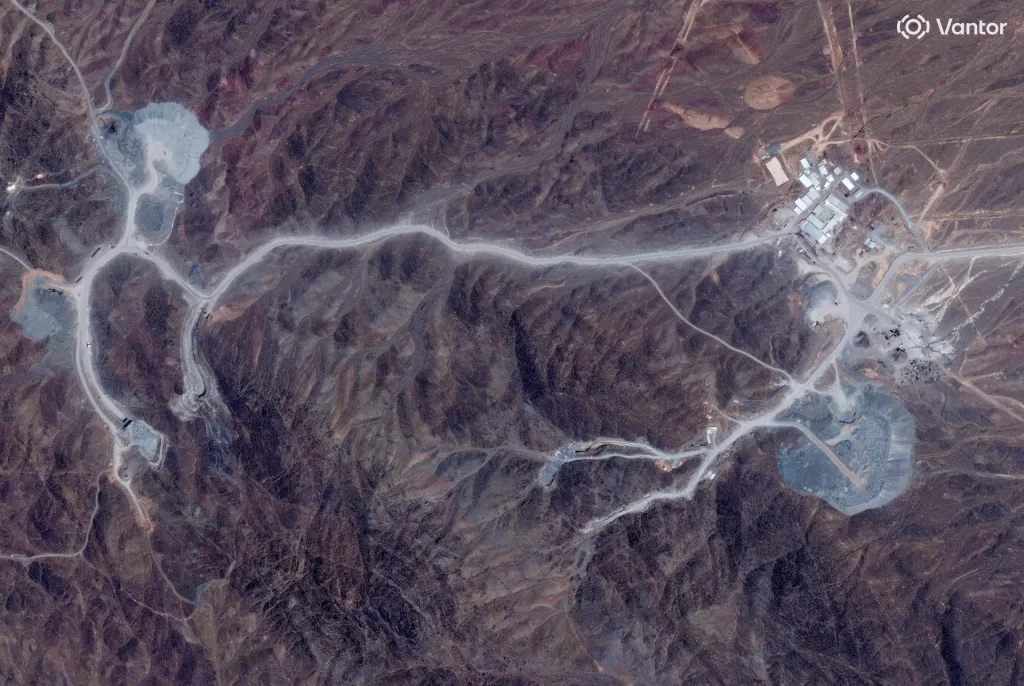
It should be noted here up front that there are actually assessed to be two independent tunnel networks under Pickaxe Mountain. One was built circa 2007, and the construction of the other began around 2020. The entire complex, which is contained within a single large security perimeter, is situated immediately to the southwest of Iran’s nuclear facility at Natanz, as seen in the satellite image we obtained from Vantor below. As an aside, Natanz was one of the facilities that U.S. forces struck during Operation Midnight Hammer. Natanz and Pickaxe Mountain are roughly in the center of Iran.
In the past, Iran has openly discussed plans to produce centrifuges to support its nuclear enrichment efforts at the newer facility at Pickaxe Mountain. It is also estimated to be large enough to house an actual enrichment plant, as well as other nuclear infrastructure, but exactly what is inside remains unconfirmed. Hewitt’s question yesterday reflected the fact that international inspectors have not been given any access to the overall site to date.
In light of strikes on other Iranian nuclear sites since last year, there is also the possibility that Iran may have relocated nuclear assets from other facilities to the more extensively hardened ones under Pickaxe Mountain.
In terms of activity, satellite imagery TWZ has obtained from Vantor, seen below, does show dump trucks and other vehicles moving in and out of one of two entrances to the newer tunnel network on the western side of Pickaxe Mountain on June 21. There are also two other entrances on the eastern side.
Previous satellite imagery had shown Iran taking steps to at least partially block access to the newer facility after the start of U.S. and Israeli strikes on February 28, according to the Institute for Science and International Security (ISIS) think tank. Before the conflict erupted, Iran was also observed to have buried and hardened the entrances to the tunnel network built in 2007, again per ISIS’ assessments.
IRAN NUCLEAR UPDATE: Possible NEW Passive Defensive Measures Noted at Pickaxe Mountain
Based upon newly available satellite imagery of the Pickaxe Mountain underground complex, just south of the Natanz Nuclear Complex, it appears that as early as April 22nd, the two eastern… pic.twitter.com/KGAhBkLks8
Last year, TWZ had called attention to efforts to at least partially seal up Iran’s nuclear facility at Fordow before Operation Midnight Hammer. Similar activity has been observed in the past year at Natanz, Isfahan (also written Esfahan), and other hardened nuclear sites in Iran. As we have explored in detail in the past, sealing tunnel entrances and other access points creates an important deterrent to ground raids, as well as potentially offering additional hardening against standoff strikes. We will come back to this later on.
“Unlike the situation at both the Fordow and Esfahan tunnel entrances, this material [at the eastern entrances to the newer facility at Pickaxe Mountain] does not provide complete tunnel entrance obscuration at either portal,” ISIS noted in an assessment back in May. “Nonetheless, this material would appear to be sufficient to significantly hinder rapid ingress/egress by vehicles and would require the use of heavy earth moving equipment to gain such access and clear an unobstructed path inside. At present, we do not yet see evidence of such blockage having been undertaken at the two western tunnel portals of the larger complex.”
A shot in the door and not from above?
All of this brings us back to Trump’s comment about the possibility of a “nice big fat shot right in the front door” at Pickaxe Mountain. For years, experts have talked about the likelihood that the main caverns under the mountain are beyond the reach of even the largest known conventional bunker buster bomb in U.S. inventory, the 30,000-pound-class GBU-57/B Massive Ordnance Penetrator (MOP). The MOP was developed, at least in part, specifically to hold underground facilities in Iran at risk. Construction at Pickaxe Mountain, especially in the past five years, is a clear response to U.S. threats.
GBU-57 MOP test
MOPs were the centerpiece during the Operation Midnight Hammer strikes, with 12 being dropped on Fordow and another two on Natanz. To get at the actual targets at Fordow, six MOPs were dropped on two specific ventilation shafts, with each successive bomb burrowing deeper down into the complex below. This underscores the challenges that would be involved in attempting a similar operation against Pickaxe Mountain.
A graphic with details about the employment of MOPs on strikes at Fordow during Operation Midnight Hammer. US Military
The available stockpile of MOPs was also understood to be relatively limited even before Operation Midnight Hammer, and it is unknown how many are currently in inventory. The U.S. Air Force is now in the process of acquiring a successor to MOP, called the GBU-76/B Next Generation Penetrator (NGP), but that is not expected to enter service for some time.
The United States does also have Earth-penetrating B61-11 gravity bombs in its nuclear stockpile, specifically to prosecute extremely deeply buried strategic targets. However, there is next to no chance the U.S. government would initiate the use of nuclear weapons against Iran absent anything approaching a proportionate, imminent threat or attack. Doing so would be a beyond massive escalation with serious worldwide ramifications, and there is no indication that American authorities are at all considering taking that step.
As with the strikes on Fordow, multiple bombs could be dropped on the same impact point to try to penetrate further down into Pickaxe Mountain. Whether there might be similar ventilation shafts or other weak points that could be exploited at Pickaxe Mountain is unknown. Trump’s remarks to Hugh Hewitt would certainly seem to suggest otherwise.
A strike “right in the front door” on the tunnel entrances at Pickaxe Mountain would be another option to at least hamper access to the facility inside for a time. This could be combined with strikes aimed at sections of the tunnel networks that run deeper inside the facility, but that are still close enough to the surface to be reachable by available conventional munitions. For instance, MOPs may not be able to hit the main cavern areas, but they could possibly hit certain tunnels that might lead to them.
A B-2 bomber drops a GBU-57/B MOP during a test. USAF
Even a combined strike on entrances and shallow tunnels at Pickaxe Mountain could still present certain challenges. Firm intelligence on exactly where the tunnels snake under the mountain could be limited, making it difficult to select the best impact points. This is exactly why the U.S. military has been investing heavily in advanced, void-sensing fuzes for MOP and other bunker buster bombs for decades now. These fuzes detect when a munition has penetrated into a sufficiently large space, such as a room or tunnel in an underground facility, to help maximize damage. Fuzes that can effectively ‘count’ floors also help to ensure the munition has burrowed sufficiently deep before detonating.
It is possible that additional tactics, techniques, and procedures could be brought to bear to increase the effectiveness of any strikes on Pickaxe Mountain and further complicate any efforts to dig out the site afterward. Just last month, TWZ explored in detail the benefits of near-horizontal strikes on fortified targets, as well as of ‘skipping’ munitions into tunnel and cave entrances. The Pentagon’s 2027 Fiscal Year budget proposal had revealed interest in enhancing the capabilities of 2,000-pound-class Joint Direct Attack Munition-Extended Range (JDAM-ER) precision-guided glide bombs in the bunker-busting role, which could further enable these kinds of lateral strikes. If appropriate funding is allocated, the Defense Threat Reduction Agency (DTRA) would be responsible for leading this work. DTRA is a multi-faceted organization focused on responding to Weapons of Mass Destruction (WMD) threats, and notably played a critical role in the development of the MOP.
As noted earlier, the U.S. military could conduct follow-on strikes on the entry points at Pickaxe Mountain to disrupt any attempt to regain access, as well. Trump’s conversation with Hugh Hewitt yesterday indicates that the site is, unsurprisingly, already under heavy surveillance, including by regular spy satellite passes. Currently, this is the tactic being employed at other critical sites, like the similar mountain bunker facility in Isfahan, where it’s thought that much of Iran’s enriched uranium is buried. By striking any equipment or personnel attempting to access the collapsed tunnels, the problem could theoretically be ‘maintenanced’ indefinitely.
Limited access to underground sites for a protracted period of time might have second-order impacts, too. This would depend on whether the equipment or anything else contained therein requires regular maintenance or other attention to remain usable or otherwise prevent degradation.
Other considerations
Mounting a major operation against Pickaxe Mountain of any kind could entail additional complexities and risks. A total of 125 aircraft, including seven B-2 bombers, as well as fighters, tankers, and other supporting platforms, took part in Operation Midnight Hammer. U.S. Navy vessels in the Arabian Sea also conducted Tomahawk cruise missile strikes and otherwise supported the operation. At the same time, Iranian forces, including the country’s air defense capabilities, have been significantly degraded by U.S. and Israeli strikes since then.
A briefing slide depicting just a small portion of the resources involved in Operation Midnight Hammer. US Military
“Going after the fissile material, I think, is a bigger operation. Again, I think we have the capabilities to do this. Within our Special Operations community, we have people that are trained to do this and have the right relationships and connections and other things to allow us to get in and do that,” retired U.S. Gen. Joseph Votel, who previously served as head of U.S. Central Command (CENTCOM), told TWZ‘s Howard Altman when asked about this in an interview in March. “So you’d have to be able to project that force onto the ground. This would be going to a place like Natanz or Isfahan – probably one of those locations. Those are well inland – several hundred miles into Iran, a country of the same size as the state of Alaska. So it’s big and it’s diverse. It’s largely in an open plain, so you don’t have a lot of natural terrain protection there. That would have to be taken into consideration.”
Getting into sites where Iran has deliberately sealed entry points would require heavy machinery and skilled operators, as well as time to do that work. That, in turn, has impacts on the force protection requirements for an operation that could be expected to last days, if not weeks. These forces would be well within the reach of Iranian artillery, drones and other weapons, as well as ground forces and direct fires. It is also interesting to consider here that if at least some of the entrances to the facilities underneath Pickaxe Mountain are not currently completely sealed off, the raid package could be lighter and the operation faster. In September 2024, Israeli ground forces were notably able to destroy an underground missile factory in Syria after gathering significant amounts of intelligence in an overnight operation. That being said, one would expect a site as sensitive as Pickaxe Mountain to be better defended on the ground, even if the ‘doors are open.’
100 Shaldag soldiers raid and dismantle Syrian missile factory in secret operation
There is a question here of the relative value of strikes on Pickaxe Mountain, especially depending on what U.S. planners think they could reasonably achieve. As noted earlier, exactly what is under the mountain at this point is not clear.
“It remains unclear when it could be operational, based on assessing satellite imagery,” David Albright, President and Founder of the ISIS think tank, wrote in a post on X just yesterday. “Recently, we were told that the site was not attacked in the two previous wars [the 12-Day War in 2025 and operations this year] because nothing of sufficient value was inside it.”
Pickaxe Mtn to be attacked?
We have often written about Pickaxe mountain on our website over the last five years. A recurring question over the last year has been why was it not attacked. Trump’s announcement a few hours ago means an attack could happen soon.
“Perhaps that assessment has changed,” Albright continued. “But just as likely, Trump does not want to leave Iran with a deeply buried nuclear-related site as the regime appears to be sending signals it is starting to rebuild its nuclear weapons capabilities aimed at making nuclear weapons.”
President Trump’s response yesterday to Hugh Hewitt’s specific mention of Pickaxe Mountain does point to there being some degree of concern about this target within the current administration. Trump being so familiar with the site and its weaponeering challenges is particularly notable.
Still, how soon a U.S. strike on Pickaxe Mountain might actually come, if at all, and what that might entail, remains to be seen. Though destroying the facility would be an extremely tall order, there are still other options to make it hard for Iran to make use of it, at least in the near term.
US President Donald Trump is threatening to attack a heavily-fortified underground nuclear facility in Iran known as ‘Pickaxe Mountain’. It followed a third night of US strikes and a demand the US be paid 20% of the value of all cargo passing through the Strait of Hormuz.
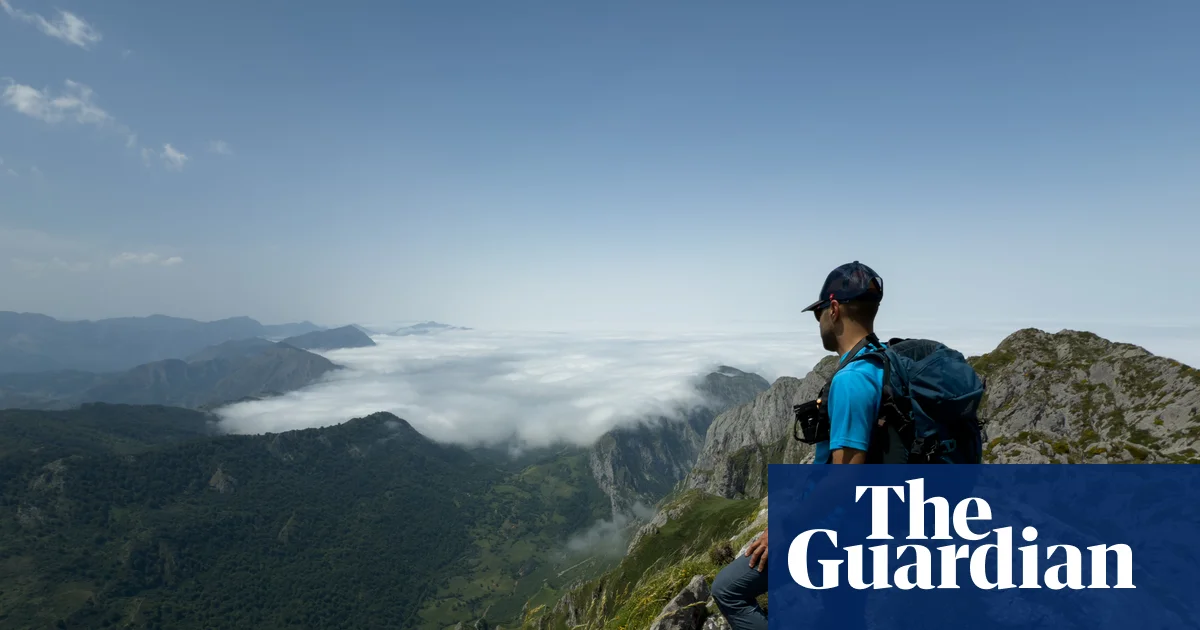
Halfway across the first glacial depression, I leave the footpath to stand on a snow patch, disturbing a spider that runs off across the frozen crystals. A few yards farther along, the mountainside is awash with colour: tiny Alpine flowers alive with bees and crickets in a world surrounded by jagged peaks. A pair of chamois watch from a crag, then clatter off up an almost vertical face. Having stopped walking, I’m cooling down fast and put on a jacket. I am in Spain, I tell myself, during a European heatwave.
When I tear myself away from the wildlife, my hiking group are distant dots on a path that is snaking up a wall of rock. This is the Picos de Europa mountain range in northern Spain, a cluster of peaks rising to more than 2,500m and famed for the steepness of its slopes. I set off in pursuit, catching up with the group as they scramble over a ridge to find an unexpected view: a gun turret from a second world war aircraft carrier that is now a mountain refuge hut. (Cabin Verónica was cut from the USS Pulau in 1961 at a Bilbao breakers’ yard and dragged up here by mule.)
Illustration: Guardian Graphics
The custodian, Jorge, took it on as a project eight years ago and has since made it his summer home, adding solar power and water tanks to the gleaming aluminium dome. “I love it,” he says, grinning while he makes coffee in the tiny kitchen. “Why would I need cities and crowds when I have this?” The panoramas are spectacular. Far below, down the valley, a bearded vulture is soaring, one of a small number successfully reintroduced in 2005. The hut sleeps a maximum of six, too small for our group, but it’s popular with climbers and solo walkers.
This trip seems determined to throw up contradictions and improbabilities. For a start, on the Portsmouth to Bilbao ferry, I was alone on deck at 5am, surrounded by a cold fog so dense that I couldn’t see the waves below the rail. We were motionless, it seemed, in the outer reaches of the cosmos. As I stared down, the intergalactic mist lifted a fraction and three dolphins burst from the swell, reminding me that I was on planet Earth and not a spaceship. This ferry route, and its sister route to Santander, crosses an oceanic canyon 4,000m deep and cetacean sightings are common. The on-board expert, André, tells me he has seen orcas and several whale species, including the rare Cuvier’s beaked whale.
Cabin Verónica is made from the gun turret of a second world war aircraft carrier
The Picos mountains that stand to the west of Bilbao have always had a reputation for the unexpected. In Spanish history, they were a centre for resistance to Roman rule and later the Moors. They have flowers and butterflies not found elsewhere; the chamois is a unique subspecies, and there are bears and wolves too. Beneath the soaring peaks lies another surprise: an underworld network of rivers and giant caverns almost a mile deep.
Our hike across the range started to the north, walking first up to the mountain hut Vegarredonda at 1,410m. There’s a sprinkling of these huts across the Picos, most off-grid and supplied by mule. Expect good conversation, generous food portions and a plastic-covered mattress in what some might call “a snoremitory”. I am saved by the generosity of Arten, one of our group, who hands me silica gel earplugs. They work well, and in the morning I wake to find everybody already gone to breakfast.
Food is a major element of the Picos experience. That morning we hike to a few stone cabins by a lake, Ercina, and come across a handwritten sign advertising homemade cheese. Bruno and Cristina, our guides, get very excited. In a little stone-walled workshop, an old lady is sitting on a rustic milking stool, dressed in a nylon housecoat, waiting for customers.
“My grandfather built this cabin in 1944 when I was three years old,” says Maria. “Everyone would come up here for summer, bringing their animals with them. Now there’s only me.”
The pastures of the Picos mountains
Hung on the walls are her ancestors’ drinking horns and wooden platters; on the shelves are wheels of cheese. The Picos technique is to blend milk from sheep, cows and goats. The results are delicious. “I feared this tradition might die,” Maria says. “But my son is interested, so there is hope it will continue.”
Leaving Maria, and still eating the cheese, we turn up a side valley and ascend steadily, passing boulders that harbour tiny gardens of saxifrage and stonecrop in their hollows. A wallcreeper flits away, one of the rarer birds that live here. Chamois pose on distant ridges, never far from the snow patches. Their world is shrinking, however, as Spain’s heatwaves encroach higher and higher. (I was glad to have travelled by ferry; as a foot passenger I produced less than 10% as much CO2 as flying, according to the Direct Ferries carbon calculator.)
The night is spent in the Refugio Vega de Ario, a hut with the best cooking, and also hosting the Oxford University caving team. After more than 60 years of exploration and several generations of speleologists mapping some of the most extensive cave systems in the world, they tell me they are on the brink of connecting two huge cave networks. I promise to come back and see it – when the stairs are installed.
The next day, we cross one of the few places where you will see a car in the Picos, the village of Poncebos, which is on a fine gorge walk alongside the Rio Cares. From there, we ascend again through flower-strewn meadows and abandoned farmhouses into the clouds. Then, with perfect dramatic timing, the mists part to reveal the climactic wonder of these mountains: the Picu Urriellu, a soaring 2,529m pinnacle of rock under which is one of Europe’s most spectacular mountain huts, the Vega de Urriellu.
This is one of the most popular huts and sleeps 96, with many more camped nearby, but the place remains friendly and sociable. We stand outside with Bruno and Cristina as they point out their favourite climbing routes. Around us are small huddles of climbing groups discussing their plans. The south face is popular with guided groups; the west is a 750m monster.
The Picos are awash with colourful flowers
The glacial depressions, with their spiders and flowers, lie ahead, but this is where I would choose to linger. You would not catch me down a cave, but I’m tempted by what Bruno describes as excellent climbing routes. As the sun goes down, the rock turns orange, giving Urriellu its Spanish name, Naranjo de Bulnes – the Bulnes orange.
Dusk falls, and I stroll up a mountain track for more panoramas, but find the world below the hut all smothered in cloud. I perch on a boulder and, after some time, become aware that I am being watched. A chamois is standing poised on a ledge above, its delicate curving horns silhouetted against the twilight like twin question marks. I watch the last orange glow fade on Urriellu’s summit, then glance back to that ledge, but the chamois has gone.
The trip was provided by KE Adventure Travel; the eight-daytraverse of the Picos starts at £1,295, including all meals, accommodation and guides. Brittany Ferries sails up to twice weekly from Portsmouth to Bilbao and Santander, and from Plymouth to Santander, from £128 for foot passengers in August
PARIS — There’s a present-day answer to the question that was posed in verse by the French medieval poet and street brawler François Villon: “Where are the snows of yesteryear?”
They’re right here, in high summer, on Paris’ oldest bridge, the Pont Neuf, where an enormous art installation, a trompe l’oeil inflatable snow-clad mountain range, has arisen over the river Seine.
Using about 200,000 square feet of printed fabric, Paris-born street artist JR has created “La Caverne du Pont Neuf.” It’s his version of and homage to the innovative work of groundbreaking environmental artists Christo and Jeanne-Claude.
They’re the fabled duo who first wrapped the arches of this same bridge in straw-colored fabric in 1985. Over the years, they also surrounded 11 islands in Florida’s Biscayne Bay with flamingo-pink cloth, hung saffron-colored fabric “gates” in New York’s Central Park, installed a “running fence” of billowing white material across nearly 25 miles of Sonoma and Marin counties and, in 1991, planted 3,100 yellow umbrellas, blooming like 20-foot-tall poppies, through the Tejon Pass north of L.A.
I interviewed Christo in 2011, and he was eloquent about how his and his wife’s work alters perceptions of nature, and about the deliberately transient character of the art itself. JR, an acolyte of their work, told me in an email that “an ephemeral artwork forces you to come now, and usually to come with other people. The visit becomes a shared moment … and this moment becomes a memory.”
In a city celebrated for artworks that have survived for centuries, this installation was very nearly too transient. A kooky hailstorm in late May, a heat wave in June, followed by ruthlessly ripping winds, delayed the opening by days. At last, beginning one midnight, the air pumps began and the work arose like a limestone-colored soufflé. It will be open around the clock until June 28.
Plus ça change, plus c’est la même chose. Back in 1985, Christo’s engineer on the Pont Neuf project, Ted Dougherty, pointed out that above 25 mph, “wind is not our friend.”
The piece works from two vantage points: from afar — visible from a lot of central Paris — and also from inside it, in the “cave” part. Pedestrians crossing the bridge pass through a fabricated interior, a cavern-like space printed in 3D realism and enhanced with a specially designed scent to evoke the dank, earthy aroma of humankind’s early habitations.
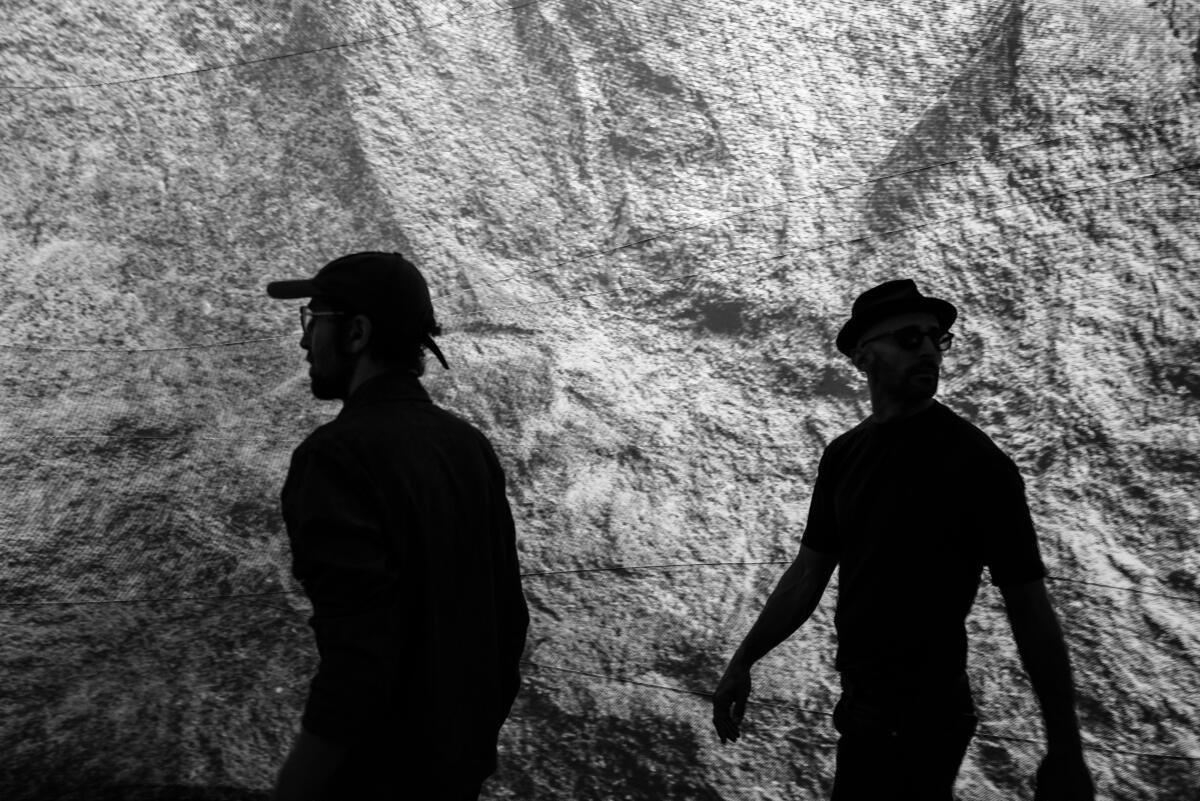
JR and Thomas Bangalter in “La Caverne du Pont Neuf” in Paris.
(Tara-Jay Bangalter)
JR intended it to be both. “From the start I designed two works in one. There is the silhouette — what you catch from the quais, from the bridges, from a boat on the Seine or simply walking past on your way somewhere else. That image belongs to everyone, including the people who never chose to look at art that day.”
And then, he said, “there is the inside, which is slower and more intimate, almost in the dark, hard to photograph.” That aspect is “a journey to cross the bridge, to go from darkness to light.”
When Christo and Jeanne-Claude wrapped the arches of the Pont Neuf more than 40 years ago, it took years of planning and permits to make it happen. “La Caverne du Pont Neuf” was a breeze by comparison.
JR, whose other vast outdoor works have delivered double-takes of humans’ scale and their architecture, told me that cities have come to understand “that public art brings people together and that the image travels around the world. Once Christo showed it could be done safely and beautifully, the conversation changed. It was much easier for me to have my project accepted, thanks to them. They also proved the economic positive impact to the cities they worked in. I believe there should be more large-scale, ambitious public art projects.”
It’s one thing to conceive of such a project and another altogether to make it happen — so much technology, compared to, say, mixing paints and choosing a paintbrush. But the science that “La Caverne” required “is the art, not an obstacle to it,” JR said.
“Trompe l’oeil turns adults back into children,” JR said.
(Elea Jeanne Schmitter)
All the canvas, the engineering, the meticulous assembly, the permits — “none of that is preparation for the work, it is the work. Christo taught me this. The process is visible, and even more after the storm we experienced a couple of days before opening to the public. Nature always reminds you who is in charge. When the wind tore the canvas before we opened, we took it down, re-sewed it, reinforced it,” all in full public view.
“Where I stay careful is in not letting the technology become the subject. The augmented reality by Snap’s AR Studio adds to the project, doesn’t take you away from it.”
That air should be JR’s vital collaborator — no complex and costly scaffolding for these magic mountains — is nothing new in Paris.
The first free flight of humans above the earth, on Nov. 21, 1783, sent aloft two men in a hot-air balloon crafted by the Montgolfier brothers from silk fancifully painted in blue and gold with figures of the zodiac. It wafted across Paris for about 25 minutes at about 3,000 feet. Ephemeral, yes — and unforgettable.
Artists and couturiers are fond of the whimsy of trompe l’oeil, the trick of the eye, the illusion of reality. I am a sucker for it, for fashion like that of clothing designer Elsa Schiaparelli. JR has used it often, as a massive-scale magical deception to make the Louvre Pyramid “disappear” into the old Louvre, and opening up an imaginary subterranean world below the Eiffel Tower.
“Trompe l’oeil turns adults back into children,” he told me. “You know it isn’t real, you know that ‘La Caverne du Pont-Neuf’ is not made of rock, that this is printed canvas. And yet your eye wants to believe it, and for a moment you let yourself. That gap between knowing and believing is where the play happens, and people love being inside that gap.”
I wanted to know more the moment I read “Sister Elsie Peak” on an old map.
I discovered the name while researching trails around Mt. Lukens, the highest peak in Los Angeles proper. Looking at the peak’s location on a historical map of L.A. County’s mountains, I noticed that it was previously named for a woman I’d never heard of.
Few of Southern California’s mountain peaks are named after women, so Sister Elsie Peak stuck with me. Who was she? And why was her mountain renamed to instead honor local leader Theodore Lukens?
In this edition of The Wild, our weekly outdoors newsletter, I will take you with me on my arduous journey to find the origins of the first known name for Mt. Lukens. Over the past week, I enlisted help from multiple librarians, map experts and one gracious historian (who you’ll meet later). We all scoured newspaper archives and history books, catching the fever of curiosity that seems to consume anyone who tries to find out who Sister Elsie was.
You are reading The Wild newsletter
Sign up to get expert tips on the best of Southern California’s beaches, trails, parks, deserts, forests and mountains in your inbox every Thursday
By continuing, you agree to our Terms of Service, which include arbitration and a class action waiver. You agree that we and our third-party vendors may collect and use your information, including through cookies, pixels and similar technologies, for the purposes set forth in our Privacy Policy such as personalizing your experience and ads.
What we collectively found was this: Sister Elsie was most likely not a real person, and her legend was most widely shared in the early 20th century by a local landowner who was known to embellish, including claiming that Josephine Peak near Mt. Lukens was named after his daughter. (It wasn’t.)
There appears to be no record anywhere — in newspapers, in history books, in Catholic Church records — as to the existence of a Sister Elsie or, as you’ll learn more about below, an alleged orphanage, ranch or school that she ran in the Tujunga area for Indigenous children or the broader Indigenous community.
In that same vein, I want to call something out before we begin: Stories about the relationships between colonizers and Indigenous peoples often get romanticized (see: Thanksgiving), with storytellers and early historians intentionally leaving out any details of forced assimilation or the American genocide. I cannot report anything concrete about how Sister Elsie actually treated Indigenous people in large part because I don’t believe she was real.
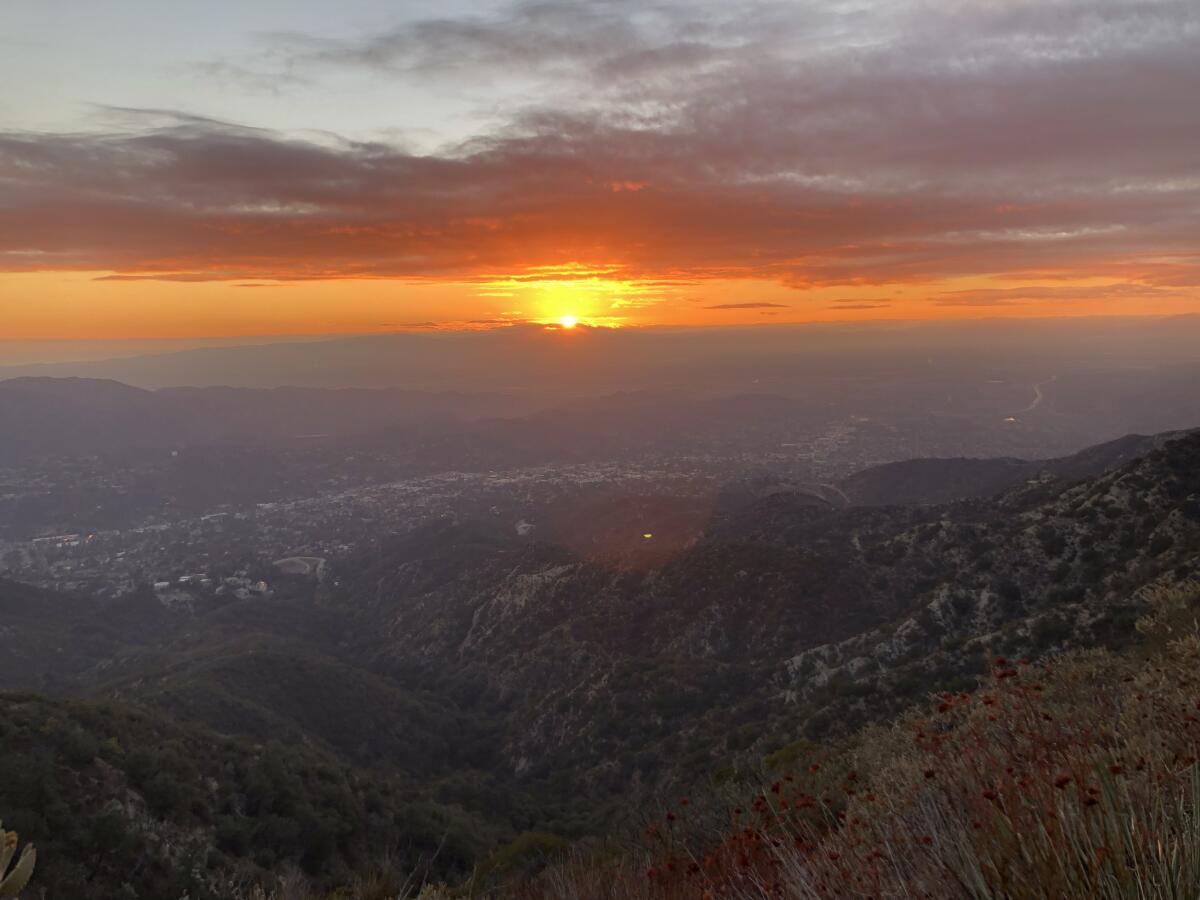
The sunset as viewed from a trail near Mt. Lukens in the San Gabriel Mountains.
(Jaclyn Cosgrove / Los Angeles Times)
OK, I’ve held you in suspense long enough. Let’s jump into everything under the actual sun that I could find about Sister Elsie Peak.
To begin my reporting, I contacted Times editorial library director Cary Schneider, who is always eager to help me with prospective stories (i.e. highly specific internet rabbit holes I’ve fallen down).
Cary found what might be the earliest mention in a local newspaper: A story in the Monrovia Daily News on April 23, 1910, in which a writer mentions a new trail leading to Sister Elsie Peak, but tragically gives no details of its namesake.
Next, we jump 20 years into the future when The Times and the Pasadena Star-News covered the dedication of Sister Elsie’s Well in Tujunga. Both publications described the well in their stories on April 28, 1930, as named after “the Catholic nun” who ran a school for Indigenous children “in the days of the Spanish missions.” The Times called her a “pioneer nun and teacher.”
Multiple radio towers and other infrastructure sit at the top of Mt. Lukens, as seen on a 2022 hike there.
(Jaclyn Cosgrove / Los Angeles Times)
The dedication occurred on the land of Philip Begue, a crucial character to understand in the Sister Elsie legend, as he’s believed to have either spread or made up the story, according to a local historian. Begue’s family bought land around Tujunga and La Crescenta in 1882, and later, Begue was an early pioneer and one of the first forest rangers in what would later become Angeles National Forest.
Throughout the late 1920s and 1930s, Begue seemed set on sharing the story of Sister Elsie. In 1934, he told the Pasadena Star-News that the sister “ministered to the sick and needy” Indigenous people.
A Times story on Sept. 29, 1935, announced a barbecue fundraiser for a local Catholic institution at the “old Basque rancho” owned by Begue. “The ranch on Honolulu avenue was famous in early days when Los Angeles was a pueblo and Sister Elsie had a children’s home where the ranch now stands.” The Begue family planned to cook “hundreds of pounds of meat for the affair.”
Times columnist Harry Carr offered in his column, the Lancer, a completely different take. Carr wrote on April 3, 1935, that Sister Elsie Peak was named “for a nun who lost her life trying to walk from San Fernando to San Gabriel.” No, he doesn’t provide a source for where he learned that information. Trust me: I too shook my fist at the sky.
The last rays of sun blanket across Mt. Lukens, as seen from Dunsmore Canyon in Deukmejian Wilderness Park near Glendale.
(Jaclyn Cosgrove / Los Angeles Times)
I would be remiss to mention that the oldest reference to a “Sister Elsie” in The Times’ archives appears to be an 1889 story about — buckle up — a psychic medium in Azusa. For a brief and beautiful moment, Cary and I hoped Sister Elsie Peak would turn out to be named after Elsie Wheeler, a spiritualist medium whose own story relates to an astrological tool. Alas, the peak was named before she was born (which doesn’t work unless she was a really good psychic). That said, a peak named after a mythical nun and a clairvoyant feels arguably appropriate for the highest point in L.A.
Cary also discovered one of my favorite facts about the Sister Elsie legend — that it was turned into a play titled “Sister Elsie in Tujunga.” It was written by Frances Muir Pomeroy, superintendent of summer school at Our Lady of Lourdes Catholic Church. It was said to be about “the experiences of Sister Elsie when she conducted an orphanage here many years ago,” according to a 1938 Times story.
There are other references to Sister Elsie in The Times’ archives over the next several decades, but nothing that gives concrete evidence that she actually existed.
Cary advised me to contact the Los Angeles Public Library. Librarian Kelly C. Wallace, who specializes in California history, quickly got back to me.
Knowing that Cary had already scoured The Times’ archives, Wallace sifted through the agency’s Los Angeles Area Historical Newspapers database, which contains the Los Angeles Daily Star (1870-1879), the Los Angeles Evening Post-Record (1896-1936) and the Los Angeles Star (1851-1871), along with community newspapers such as the Eagle Rock Sentinel and the Highland Park Herald. She found little there.
The trail through Stone Canyon to reach Mt. Lukens.
(Mary Forgione / Los Angeles Times)
This is especially puzzling if Sister Elsie did exist because, before the advent of television, newspapers reported seemingly everything that we now post on social media — detailed trip reports, the attendees of parties, birth announcements, and even basic road repairs.
Wallace did discover a few interesting tidbits in books, but curiously nothing before 1930.
The earliest reference that Wallace found was in the 1938 book “History of La Crescenta-La Canada Valleys” by Grace J. Oberbeck. She spoke to Begue, who spun quite the yarn:
“On El Rancho de las Hermanas, the ranch of the sisters, a group of nuns who had an orphanage not far distant, kept a herd of cows which was looked after by” local Indigenous people “who supplied milk to the school whenever needed. Sister Elsie was the much loved nun in charge of” the Indigenous dairy workers, “and her name was given to the well. Almost directly north from here towers a high peak of the Sierra Madre range and this bears the name of Sister Elsie Peak.”
Legendary outdoors writer and historian John W. Robinson, Wallace found, told the Sister Elsie story in his 1977 book “The San Gabriels,” but followed it up with a correction in his 1983 tome, “The San Gabriels II”: “The derivation of Mt. Lukens’ original name, Sister Elsie Peak, is clouded in uncertainty. Exhaustive research into Catholic Church records fails to find any evidence of a nun named Sister Elsie nor an orphanage named El Rancho de Dos Hermanas.”
You’re telling me, John!
Wallace also found an entirely different story about Sister Elsie on page 47 of “The San Fernando Valley” by Jackson Mayers, published in 1976.
“Sister Elsie, a Sister of Charity, came to Tujunga from Los Angeles between 1850 and 1875 to work with” Indigenous people “at a school and orphanage. Near Haines Canyon was Sister Elsie’s well; Sister Elsie’s Peak was named, it is said, because when troubled she would gain strength by raising her eyes to that eminence, one whose top she was to be buried. Others held that two nuns on their way from Mission San Fernando to Mission San Gabriel lost their way in Tujunga and died atop the peak.”
There is tragically no footnote on the page, so I have no idea who Mayers’ source was.
I hoped that finding out when Sister Elsie Peak was named would help, but that also proved to be a dead end.
Local historian Mike Lawler, former president of the Historical Society of the Crescenta Valley, told Realtor Sharon Hales in a 2016 interview that cartographer George M. Wheeler and his team named the mountaintop Sister Elsie Peak during their survey of California in the late 1800s.
“We don’t know why he named it Sister Elsie Peak,” Lawler said. “The reasons why he named everything are lost to history. They were destroyed in the 1906 San Francisco earthquake.”
This led me to contact the staff at the David Rumsey Map Center at Stanford University Library, as its collections are vast, and I hoped maybe they’d somehow find half a charred page of notes with Sister Elsie’s biography scrawled in quill pen.
Instead, Kristina Larsen, the center’s associate curator, came up short, finding only that a misspelling, “Sister Else Pk” was on the 1881 land classification map from Wheeler.
Evan Thornberry, the center’s head and curator, unearthed “Vignettes of California Catholicism,” a 1988 book by Monsignor Francis J. Weber, longtime archivist for the Archdiocese of Los Angeles at the San Fernando Mission.
Weber conducted an exhaustive search for the existence of Sister Elsie and found no proof of any existence of Sister Elsie or a Catholic orphanage in the Tujunga area at the time.
Weber offered my favorite suggestion for why no one can find any hint of Sister Elsie’s existence: “Maybe the good Sister was kidnapped by Martians!”
If so, I hope someone there takes better care to protect knowledge regarding the names of that planet’s mountains.
You’d think I’d give up here, right?
Instead, I contacted historian Kristine Gunnell, who wrote “Daughters of Charity: Women, Religious Mission and Hospital Care in Los Angeles, 1856-1927” (Vincentian Studies Institute).
I hoped Gunnell would have an answer, as Sister Elsie was said to be in the Sisters of Charity, an American version of the Daughters of Charity, a group that was founded in France in the 1600s with an aim of serving low-income and sick people.
The Daughters group eventually inspired American Catholic women to serve in a similar way, first forming the Sisters of Charity until the groups essentially merged. In the 1850s, as more people moved to the American West, a bishop in the L.A. area requested that Daughters of Charity come to L.A., Gunnell said.
But, there’s no Sister Elsie referenced in Gunnell’s book.
Gunnell said after hearing from me, she contacted a history professor from DePaul University who is compiling a database about all the Daughters of Charity who served in California. He found no one referred to as “Sister Elsie” between 1850 and 1900.
A 1931 news story references that Sister Elsie treated Indigenous children diagnosed with typhoid fever.
Tujunga “was only a day’s wagon ride from Los Angeles, and if these Tongva were Catholic or had Catholic connections, the sisters may have considered their request,” Gunnell wrote to me. “I was hoping that I’d be able to find a record of the typhoid outbreak in Tujunga in the 1860s or 1870s and cross reference it with the Daughters’ records. It’s a good story, and the sisters likely would’ve reported it if it’s true. However, I can’t isolate a specific outbreak.”
Later, Gunnell and I hopped on a Zoom call to commiserate.
With all of our research before us, we reached the same conclusion: A Catholic sister could have feasibly traveled to Tujunga at the request of a bishop to help Indigenous people, but currently there is no record of a woman known as Sister Elsie who did so. There’s no record of much of anything told in the Sister Elsie story. It seems, instead, to have been an urban legend of its time.
At least for now.
Hikers in Elysian Park.
(Dania Maxwell / Los Angeles Times)
3 things to do
1. Reach for the rainbow in L.A. One Down Dog, an L.A. yoga and fitness studio, will host a Pride hike from 10:30 a.m. to noon Saturday in Elysian Park. Guests will hike a loop trail through the park. For more details, register at eventbrite.com.
2. Marvel at mollusks in Malibu The Wishtoyo Chumash Foundation will host a tidepooling event from 8 a.m. to 1 p.m. June 19 near the Wishtoyo Chumash Village (33904 Pacific Coast Highway) in Malibu. Guests will learn about Wishtoyo Village, which is typically not open to the public. All experience levels welcome. Learn more at the foundation’s Instagram page.
3. Learn along the L.A. River in Downey The California Native Plant Society and Friends of the L.A. River will host a guided bike ride along the L.A. River. Naturalist Cris Sarabia will teach participants about local ecology during the ride. Binoculars will be provided. Guests should bring safety gear and water. Learn more at the group’s Instagram page. Register at folar.org.
The must-read
Burn damage to the Torrey pine grove at Santa Rosa Island.
(Kayla Bartkowski / Los Angeles Times)
The length of time that it will take for Santa Rosa Island to recover after a blaze scorched about one-third of the island remains unclear, Times staff writer Grace Toohey wrote after a recent visit to the island. The fire, which grew to 18,379 acres, is now fully contained. Firefighters faced vicious winds and, at times, 30-foot flames. “They held the line, and we have them to thank for saving housing, saving the island, saving the history of the Santa Rosa Island,” said Ethan McKinley, superintendent of Channel Islands National Park. The island has long been a respite for hikers and backpackers, including Times staff writer Lila Seidman, who shared her experiences on the island and her grief that came in the wake of the blaze. “Now fear clouds the memories: Does the rugged, magical place of my mind’s eye still exist?” Seidman wrote.
Happy adventuring,
P.S.
I have a flurry of good California animal news to share. First, three mule deer were the first animals to walk over California’s first wildlife crossing over State Route 97 in Siskiyou County. Second, scientists have feared that the population of endangered steelhead trout in the Santa Monica Mountains were killed in massive debris flows after the Palisades fire. However, researchers recently spotted the fish — and their babies — in Topanga Creek. And finally, the California Department of Fish and Wildlife shared earlier this week that five orphaned black bear cubs that were rehabilitated and released into northern California in November successfully hibernated through the winter and returned to the landscape this spring healthy and active, according to recent data reviewed by the agency’s scientists.
For more insider tips on Southern California’s beaches, trails and parks, check out past editions of The Wild. And to view this newsletter in your browser, click here.
Now open is a revamped, kids-focused area in Looney Tunes Land, a remake of the former Bugs Bunny World and Whistlestop Park. All told, it’s a 5-acre space with nine rides, including two kiddie coasters, as well as still-to-come play areas, a live show and an in-development augmented reality experience.
You’re reading Mr. Todd’s Wild Ride newsletter
Todd Martens’ newsletter delivers news and commentary on the past, present and future of theme parks, right from the theme park capital of the world — Southern California.
By continuing, you agree to our Terms of Service, which include arbitration and a class action waiver. You agree that we and our third-party vendors may collect and use your information, including through cookies, pixels and similar technologies, for the purposes set forth in our Privacy Policy such as personalizing your experience and ads.
I last walked through the area about two summers ago, and it was in a derelict state. I’m happy to report it’s more welcoming, prettier and dotted with plant life and landscaping.
Gone is the vintage Magic Flyer, once Magic Mountain’s oldest coaster (the park’s eldest thrill seeker is now Gold Rusher). Also among the casualties: Tweety’s Escape, a steel swing that placed children in birdcages that had begun to look like mini jails. It was a grim-appearing ride.
The remaining attractions have all received some much-needed TLC. Some even have added mini storylines. What was Whistlestop Train, for instance, is now Taz’s Tasmanian Train Tours. It follows a narrative in which the ride’s titular character has escaped the zoo and is eluding capture, generally causing havoc on the countryside. It’s a calm, slow-moving ride through a small green space, and we see failed attempts to trap Taz, such as an overgrown mice contraption. The ride concludes with a mechanical not-so-hidden Taz, but not before glimpsing a statue of Tasmanian She-Devil in full kiss mode.
A look into the Bugs Bunny-focused area of Magic Mountain’s new Looney Tunes Land.
(Myung J. Chun / Los Angeles Times)
The reimagining comes two years after Six Flags Entertainment Corp. and the Cedar Fair Entertainment Co. completed a merger, which in SoCal brought Magic Mountain and Knott’s Berry Farm under the same ownership. Six Flags’ corporate creative producer Clayton Lawrence says post-merger, the company pinpointed upping the family appeal at Magic Mountain as among its first orders of business.
That meant last summer devoting resources to improving the Hurricane Harbor water park, which Lawrence says specifically attracts families and grandparents. This year, attention was turned to the primary park in Looney Tunes Land.
“We really thought about what this park needs,” Lawrence says. “What will the parents need? How do we slow the guests down a little bit? This park has so many thrills in it — so many coasters — that we wanted to create a place that was nice to take a break from all the action and also develop areas where grandparents and parents could watch little ones burn off energy.”
It’s safe to say that Magic Mountain’s core audience is likely always going to be thrill seekers. And that fan base will be served next year with the planned opening of a new coaster that will overlook the Looney Tunes area.
The kiddie coaster the Road Runner Express at Six Flags Magic Mountain.
(Myung J. Chun / Los Angeles Times)
Magic Mountain attracted 3.3 million visitors in 2024, according to data released by the Themed Entertainment Assn. While Lawrence was not able to break down which percentage of that number included those traveling with children 12 and under, it’s safe to say that a greater family appeal is viewed as one of the ways to boost a SoCal audience.
“There’s a lot of people who grew up coming up here, or their first ride was inside Bugs Bunny World,” Lawrence says. “A lot of families have a daredevil teen who can go on the rides, but they also have a little one. This is about the multi-demo family.”
Looney Tunes Land is broken into four mini areas — Taz-Mania, Road Runner Ridge, Bugs Bunny Play Park and Camp Duck Amok. While there are no major distinctions between the spaces, there are slight differences. Taz’s footprints, for instance, are found in the gravel-colored pavement of Taz-Mania, and in the Daffy Duck locale the flooring looks a bit like rockwork. A small outback-like trail in Taz-Mania will soon be home to an augmented reality game, and a much-needed green space in the Bugs Bunny spot will later this summer be populated with tunnels and little climbing structures.
Asqwer Turki, 13, poses for a picture with Wile E. Coyote at the new Looney Tunes Land at Magic Mountain.
(Myung J. Chun / Los Angeles Times)
There are fun additions to spot on the refreshed rides. The Canyon Cruiser beginner’s coaster, for example, nods to classic Looney Tunes cartoons, specifically prank-filled episodes featuring Daffy Duck, Bugs Bunny and Elmer Fudd. The children’s theater has been remade into Bunny Bowl, and given giant carrots that call the attention of guests.
Such light thematic touches, said Magic Mountain President Brian Oerding, have been missing from parts of the park. They’re vital, he says, in lengthening a guest’s day.
“We’ve learned that softening the hardscape creates a better environment, a better experience, and that means you’re going to want to hang out more,” Oerding says. “Some folks will walk by black asphalt and not think anything about it, but when you look into Looney Tunes Land, and you look at the softness of the pavement and the additional landscaping, we’ve created a happier space. Mom and Dad are happier, and that means they’ll hang out longer.”
Mountain Park President Brian Oerding officially opens the new Looney Tunes Land at Magic Mountain.
(Myung J. Chun / Los Angeles Times)
Looney Tunes Land has also given Magic Mountain some much-needed in-park entertainment, as the area has been lacking a live show for a number of years. “Vacation Mayhem” comes in at just under 15 minutes and features Bugs, Daffy, Porky Pig and Sylvester imagining their perfect getaway spots in song.
Things go wrong, of course, and Bugs even explores some vices by gambling in Las Vegas, which was an odd choice I thought for a kids show, but Looney Tunes did always have a bit of an edge. Nevertheless, the musical numbers, ranging from reworkings of “The Gold Diggers’ Song (We’re in the Money)” to “Hello Muddah, Hello Fadduh (A Letter From Camp)” keep it zipping along.
“If we don’t believe that entertainment and character shows are important, we’re missing it,” Oerding says. “Yes, the rides are cool, but we haven’t done an actual entertainment show in here in a long time.”
And Lawrence says Looney Tunes is essentially a model for the entire park. No, that doesn’t necessarily mean more kiddie rides in the coming years, only that Six Flags is looking at other places where the park can use some beautification.
“This is what we want to do for the rest of the park,” Lawrence says. “Disciplined design. Nice hardscape.”
And here’s hoping for some more plants and an additional fountain or two.
This week in SoCal theme parks
Alexis Rosales of Bell gets drenched by Luke Brodowski, performing as Fluke Mayfield at Knott’s Berry Farm’s Ghost Town Alive! in 2024.
(Allen J. Schaben / Los Angeles Times)
It’s the most wonderful time of the year. Knott’s Berry Farm begins its summer season on Friday, and that means the return of Ghost Town Alive! This interactive live show, now a decade old, is unlike anything at any other SoCal park, and in my mind it’s the best summer entertainment available. This hybrid live-action role-playing game and work of interactive theater enables guests to live out mini-Wild West adventures while interacting with more than two dozen actors. Players follow a loose story centered on the drama in the fictional town of Calico, in the park’s Ghost Town area. It’s silly, it’s wacky and there’s even a daily newspaper. Ghost Town Alive! runs on select days, and I’ll see you there Friday.
World Cup, Lego Style! Carlsbad’s Legoland is celebrating the arrival of the World Cup with a host of limited-time activities and Lego creations. The park, for instance, has built a 30-foot-long re-creation of SoFi Stadium, and elsewhere has created brick versions of a host of soccer stars. There are interactive events as well, such as accuracy challenges and games that have attendees trying to score goals off of Lego minifigures. Legoland’s FIFIA World Cup Experience 2026 launches Thursday and runs through July 19.
Oogie Boogie Bash tickets drop — and a Haunted Mansionstreet parade? The Disneyland Resort’s popular after-hours event Oogie Boogie Bash returns Aug. 18, and tickets for Magic Key passholders go on sale June 16 (the general public sale is June 18). New this year to the Disney California Adventure experience is what the resort is calling “Madame Leota’s Swinging Wake.” Though not a full-scale parade, expect Haunted Mansion characters — the concept art shows floats of the attraction’s “stretching room” portraits — as well as ghostly dancers. But with something new, something must depart. “Madame Leota’s Swinging Wake” is replacing the “Frightfully Fun Parade.” Ticket prices vary by day, starting at $139. October dates, for instance, top off at $199.
“Harry Potter” will hover above Dodger Stadium. A theme park-like drone show is arriving Saturday at Dodger Stadium. More than 1,200 drones will soar over the park as part of a “Harry Potter”-inspired production, which will also feature music, trivia and an appearance from the film’s Bonnie Wright (Ginny Weasley). Expect re-creations of “Potter” iconography such as Hogwarts Castle, magical creatures, the Sorting Hat and more. The hourlong show begins at 9 p.m. and Butterbeer will be on hand. Tickets start at $52.90 for adults.
Tell us your stories. Ask us your questions.
Have a theme park tale to share? Whether it was a good day or less-than-perfect day, I would love to hear about it. Have a question? A tip? A fun photo from the parks to share? Email me at todd.martens@latimes.com. I may feature your note in an upcoming newsletter.
Ride on,
Todd Martens
P.S.
Last week I put out a call for Disneyland fans to share their Carousel of Progress memories. The theater attraction, centered around a rotating auditorium, debuted at the 1964 World’s Fair before making its way to Disneyland in 1967. It was moved to Florida’s Walt Disney World in 1975. The Walt Disney Co. announced recently that the Florida version would be undergoing a top-to-bottom overhaul, but its dedication to technological optimism throughout the decades would remain.
I’m thoroughly enjoying the remembrances. Many cited it as a favorite. “My father was a musician, and it became a family tradition that we’d sit in the back row and sing ‘[There’s] a Great Big Beautiful Tomorrow’ loudly at the top of our lungs from the very beginning of the ride, which I’m sure newcomers thought was weird and probably annoying,” wrote one reader. Another noted, “The mid-60s were exciting years to be a kid, as the future seemed so promising and exciting; the [Carousel of Progress] plugged right into that enthusiasm.”
Many shared similar sentiments. “The animated activities of the characters and their dialogue embraced the ‘Happiest Place on Earth” theme that was prevalent throughout Disneyland in those earlier days,” said one fan. A few, however, called out that the attraction was sponsored by General Electric, making it feel a bit like an advertisement. As one reader summarized: “It was incredibly clunky product placement, even to a kid’s ears.”
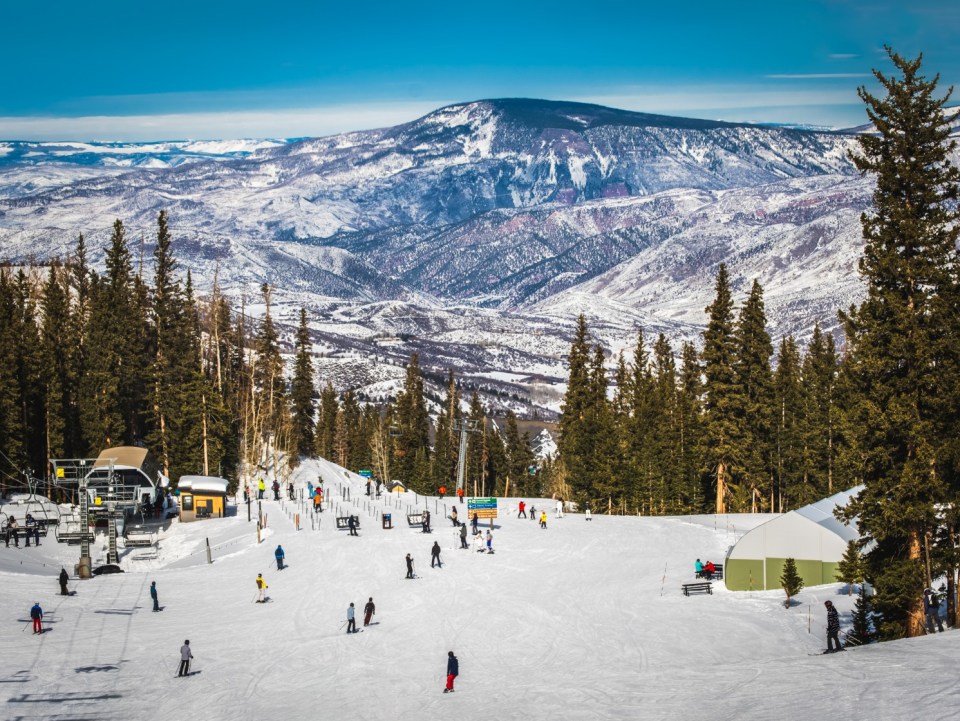
ONE of the world’s most iconic mountain resorts is set to close its airport for months.
Attracting millions of ski enthusiasts and keen hikers every year, it’s a place loved by A-listers, with the likes of Goldie Hawn and Mariah Carey boasting luxury homes in the stunning area.
Sign up for the Travel newsletter
Thank you!
Aspen is a popular ski resort visited by millions every yearCredit: Lana2011The town’s airport is being given a $575million revamp while it stops flightsCredit: John M. Chase
But those wanting to jet off to Aspen, Colorado, next year are set to have their plans hindered.
Located in the Rocky Mountains, the outdoor haven, frequented by the Kardashians, can ordinarily be reached via flights to Aspen/Pitkin County Airport (ASE).
However, the travel hub has now confirmed that flights will stop and the airport will close its doors for seven months from next spring.
As of April 4, 2027, the airport will grind to a halt for a staggering 229 days.
The closure will allow for a major airport regeneration to take place, with runway reconstructions planned.
Neither commercial nor private aircrafts will be permitted to use the airport while the project is going on.
Flights will not resume until November 19, 2027, but the works are not expected to be completed fully until 2029.
The airport usually connects major US cities like LA, Dallas, Chicago, Atlanta and Denver to the ski hotspot.
The renovation project, which is predicted to cost a hefty $575million, will allow the airport’s decades-old terminal building to be modernised.
Aspen/Pitkin County Airport director Diane Jackson said: “Our team is committed to coordinating with federal partners, airlines, general aviation partners, and the broader community as we prepare for this important project and the future of the airport.
“This project is a long-term investment in the safety, reliability, and future of Aspen/Pitkin County Airport, and we will continue to engage with our community every step of the way,” her statement continued.
I travelled across Norway by rail on the spectacular Bergensbanen, running between Oslo and Bergen, and the unforgettable Flåmsbana branch line. The Bergensbanen crosses the high mountain plateau of Hardangervidda, passing lakes, forests and snow‑covered peaks before descending toward the fjords of western Norway. At Myrdal, I transferred on to the steep Flåmsbana, which drops dramatically to Flåm on the Aurlandsfjord, with waterfalls and sheer-sided valleys at every turn. Daniel
Charmed by the Vienna to Zagreb train
Zidani Most station in Slovenia. Photograph: PJR Transport/Alamy
The journey from Vienna to Zagreb saw mountainous central Europe relax into Balkan charm. Stunning Alpine scenery melted into forest, settling down into rolling hills as we passed through Graz and reached the Slovene border, stopping for an hour’s changeover at the tiny Zidani Most station, where we enjoyed afternoon beers gazing over lush Slovenian countryside. The connection to Zagreb boasted dramatic lake scenery that gave way to farm land, golden in evening light, as we passed into Croatia, soon rattling into its underrated capital. We booked this through Omio, which came in relatively cheaply at £41. Matt
Profile
Readers’ tips: send a tip for a chance to win a £200 voucher for a Coolstays break
Show
Guardian Travel readers’ tips
Every week we ask our readers for recommendations from their travels. A selection of tips will be featured online and may appear in print. To enter the latest competition visit the readers’ tips homepage
–
Vintage locomotives in Tuscany
The Treno Natura operates old steam engines from Siena. Photograph: Image Broker/Alamy
We took the Treno Natura from Siena last May for a whole day out in the beautiful Tuscan countryside. It’s a real steam engine with classic coaches. Most passengers were friendly locals: we only encountered two other foreign tourists, a Swiss couple. A band came aboard to entertain us, and an optional walk through vineyards was also available. Fabulous value at only €42 each. Nigel Gould
Historic gem in Brandenburg, Germany
The Buckower Kleinbahn . Photograph: Imago/Alamy
I took the RB26 train from Berlin-Lichtenberg to Müncheberg (45 mins) and changed for the Buckower Kleinbahn historic narrow-gauge train that runs from April to October. Opened in 1930 as an early electric railway, it closed as a regular service in the late 1990s. It is now volunteers who run the line that takes you through the rolling hills of the Märkische Schweiz in Brandenburg to the pretty spa town of Buckow. Here, I visited the residence of Bertolt Brecht and Helene Weigel on the peaceful reedy shores of Lake Schermützel, and then relaxed on the beach after a hike through the woodlands. I returned refreshed to the Berlin bustle. Rachael
Alpine beauty on the Montreux to Interlaken line
Switzerland’s MOB trains are among the most scenic in the world. Photograph: Imago/Alamy
From Montreux station I took the MOB railway to Interlaken. Weaving up through vineyards, Lac Léman shimmers below as the panorama broadens. Suddenly, you’re in pine forests and glimpsing jagged mountain crests. Bridges straddle rushing white water. The clanging and hooting warnings for road crossings. A long tunnel. Then burst into alpine pastures peppered with chalets. Le Pays d’Enhaut. Valleys filled with crisp air, summer cowbells, flowers and crickets – perfect for long walks. Or winter-snow-muffled land, all skis and fondues. Arriving in Château-d’Œx feels like discovering a new world. Christian Vassie
Slow travel at its best: Belgrade to Bar
On board a train near the Mala Rijeka viaduct in Montenegro. Photograph: JB Dodane/Alamy
The train trip from Belgrade to Bar must be one of the slowest in Europe, taking 11 hours to cover 296 miles. At €23, it was probably the best-value travel money I’ve ever spent. In fact, the train trip was about the only time in my life when I longed for a journey to go slower rather than faster. It took me through some of the most dramatic scenery I’ve ever seen. Passing through deep gorges, canyons and mountain peaks, the train crossed more than 400 bridges and seemed to stop at every village. The Mala Rijeka viaduct was a highlight. The route took in spectacular dams, ancient monasteries and stone houses where old black-clad women waved at us from open kitchen windows. At one point, the passengers got out to feed a herd of goats and once we were overtaken by a mountain cowboy on a galloping horse. For the last part, you can see swimmers and sunbathers on Adriatic beaches. Peter
Through Italy’s Apennines to Rome from the Adriatic
The train from Pescara to Rome passes through the Valle Peligna in the Apennines. Photograph: Marzolino/Getty Images
The cross-country east-west train trip from Pescara on the Adriatic to Rome is magnificent. It traverses the spine of Italy, single track all the way across the Apennines, stopping at towns such as Sulmona and Avezzano. The scenery changes as the route traverses mountain passes and ridiculous gradients before descending to plains over a period of 3 to 4 hours. Stephen
The watchmakers’ railway in France and Switzerland
Hotel de Ville, Le Locle. Photograph: Image Professionals /Alamy
When time is not important, a little-known French railway line allows you to enter Switzerland through the valley of the watchmakers. The line from Besançon in France drifts through the beautiful Jura foothills, and on to Le Locle, a town at the centre of the Swiss watchmaking industry since the 1600s, terminating at La-Chaux-de-Fonds. No one got on or off at L’Hôpital-du-Grosbois, a byway station named after a leprosy hospital. At Morteau, the French border station, the douanes (customs officials) seemingly left a long time ago. A line that Dr Beeching would have closed still delivers you into Switzerland “on time”. Martin
Best way to see the Pyrenees? On a little yellow train
Our reader’s view from the Little Yellow Train. Photograph: Joe Brownen
Le Train Jaune runs between Villefranche-de-Conflent and Latour-de-Carol in France. Le Canari, as it’s known locally, climbs to 1,595 metres at Bolquère-Eyne during its spectacular 40-mile (63km) route. Fresh mountain air, breathtaking views and valley-crossing suspension bridges can all be experienced either from the train’s bright yellow open-air wagons or from within the cosy comfort of its carriages. It is the best way to discover the wonders of the Pyrenees. My wife and I went for our honeymoon and fell in love with the little yellow train. Joe Brownen
Winning tip: urban drama on the Porto metro
The train rattles across the Dom Luís I bridge over the River Douro. Photograph: Sean Harrison/Alamy
A controversial choice, perhaps, but I love the surprise of urban rail. Porto’s metro D line heading south probably tops the list for the fact it emerges dramatically from the darkness of the underground to suddenly skim rooftops and then rattles across the fantastic Eiffel-inspired Dom Luís I bridge (it was completed in 1886 by Théophile Seyrig, a former partner of Gustave Eiffel). Choosing to walk back across the metal deck is a completely different experience. Amy
After a day spent hiking across the Col d’Entrèves glacier, a sugar hit is required. I descend on the cable car and join the queue at the ice-cream counter. Above me, surrounded by jagged peaks, looms the huge white figure of Mont Blanc, serene and pure against a brilliant blue sky. Although it’s late afternoon, people are still heading up the mountain, and there are two clear groups. On one side are the tourists, who are about to be lifted into unfamiliar frozen realms at 3,375 metres (11,072ft), hoping to grab a picture and return. Mixed among them are the weathered faces of mountain experts: hikers confidently heading for a high-altitude hut, or climbers with coils of rope.
How many of those tourists, I wonder, are wishing they could be mountaineers, secretly regretting the twists of fate that kept them away from that path? But all is not lost. The aspiring adventurer, no matter what age or background, can begin the journey to competence in the mountains. The annual mountain festival I am attending aims to facilitate that by offering the chance to gain hands-on experience with experts.
An ice-climbing lesson. Photograph: Piotr Drozdz
I have been up on the glacier with an Italian Alpine guide, who was coaching me in crossing the ice safely. Next to me when I make it to the lemon sorbet is Meta, a musician from Berlin, who has just been rock climbing. “I’ve only ever climbed indoors,” she says. “But I want to get experience outdoors. This seemed the perfect way to start.” What had held her back? She raises an eyebrow. “Berlin doesn’t have any mountains.” And how was it? “Amazing. I definitely want to do more.”
The Arc’teryx Alpine Academy in Chamonix began 16 years ago with a focus on rock climbing, but has since extended its range. There’s now a UK festival too in the Lake District in May. These days, there’s tuition in everything from Alpine botany to advanced multi-pitch climbing. Max from Rome is buzzing after a day of trail-running with experts. “They were so helpful, sharing their knowledge and tips.”
When we get back to the festival base camp, I meet others who have been out studying photography and mountain geology. Frenchman Jean-Luc is in a state of blissful shock. “I went on a climbing course and found myself teamed up with Jim Pope,” he says. “Can you imagine? He’s a climbing hero of mine, and was so friendly and encouraging. I still can’t believe it happened.” Elvin and Annie from Stockholm did an introduction to ice-climbing and thoroughly enjoyed it.
Meta and I watch the male and female Alpine guides chatting. “Look at them,” she says. “I want to be like that: with that physique and those skills.” She turns back to me, laughing. “They are cool.”
Live bands perform at the festival
Rock climbing as a sport is cool right now. My local climbing wall is full of cool. Hamish McArthur, one of the stars of world climbing and an expert tutor at the festival, began his career on that wall in York.
Meanwhile, the crowd is enjoying the festival. There is a programme of music too, from live bands to DJs, and the London band Kokoroko are playing as I tour the stalls. There’s one where you can borrow equipment for a day, just to try it. That solves one tricky part of the how to get started equation. At another stall, I learn how to wash my waterproofs correctly and do small repairs. At the next tent, I get a beer and wander over a small grassy hill to discover Austrian climber Alex Luger chatting to a small group about psychology and climbing. Alex is a professional climber turned psychotherapist who specialises in facing fears, an appropriate area of expertise for a man who has scaled some of the most terrifying rock walls on the planet. “I enjoy meeting such a variety of people,” he tells me afterwards. “And facing fears is not just about climbing; it applies to many situations.”
Next to the food tent, I meet organiser Stéphane Tenailleau, from the brand Arc’teryx, who is also facing his fears. “Sending 800 people, some of them total beginners, into the mountains carries a certain amount of risk.” That number includes disadvantaged kids from Paris and other underprivileged groups.
All too soon, the festival is over, but nearby Geneva provides an interesting coda. I stroll around the historic old town, my need to climb still burning. On the side of a cable car station overlooking the city, I find a climbing wall and instructor Pierre, who turns out to be an unsung genius of motivational psychology. I had always regarded the crux of a climb, the hardest bit, as the moment when I give up. Pierre rewires my brain. On the 20-metre concrete wall, with Lake Geneva far below, I reach the pinch point and get ready to fail.
“That desire to stop,” pipes up Pierre, who seems to know exactly what I’m thinking, “that is the dark place of climbing. Now balance your mind and body. Breathe. Move your left foot 2cm to the right. Extend the ankle. And now go on.”
And I do.
The trip was provided by Geneva Tourism, with accommodation at the Crowne Plaza Geneva, doubles from CHF 225 (£212). The 2026 Arc’teryx Alpine Academy in Chamonix, with a range of individually priced clinics, takes place 2-5 July. Other locations for the festival include the Lake District, 23-25 May
The best way to climb a mountain is one step at a time.
Especially when you’re wearing skates.
And the Kings will be wearing skates and staring at a very large mountain when they take the ice Sunday for Game 4 of their best-of-seven Stanley Cup playoff series with the Colorado Avalanche, a loss away from elimination.
“You’ve just got to start with the first one,” defenseman Mikey Anderson said after a fast-paced 45-minute practice Saturday. “You try to win the first one, and then reset and go from there.”
Since the Kings trail 3-0 a win in Sunday’s matinee at Crypto.com Arena will do little more than extend the series one game, sending the teams back to Denver. To advance to the second round, the Kings need to win four in a row against the team that posted the NHL’s best record in the regular season.
How big a mountain is that? Well, the Avalanche haven’t lost four in a row since October and the Kings haven’t won a first-round playoff series since 2014.
One step at a time.
“You just have to win one, that’s first off. And then the hardest one will be the next one,” Kings interim coach D.J. Smith said. “And then, you know, it’s just momentum changes. But you can’t think about that without winning one, and you can’t think about winning one without winning the first period.
“You’re up against it, but I don’t think you can think about winning the series. You just got to think about winning one game.”
The series has been a lot closer than the deficit would indicate. The Kings have won the battle of the special teams, with their penalty kill shutting out the NHL’s highest-scoring team on nine chances. They’ve also scored a power-play goal in each of three games and held Nathan MacKinnon, the league’s top goal-scorer, to one assist in three games.
MacKinnon didn’t even take a shot in Game 3, yet Colorado won 4-2 with two goals bouncing in off the skates of Kings forward Adrian Kempe and goalie Anton Forsberg while another was scored into an empty net.
“You still lose the game,” Anderson said. “This time of year doesn’t really matter. You can say it feels good, you do all these good things. But if you don’t win the game, it’s kind of it’s the only thing that matters right now.”
ings center Scott Laughton (21) checks Avalanche defenseman Sam Malinski (70) into the boards during the second period of Game 2 in Denver.
(Jack Dempsey / Associated Press)
Added forward Scott Laughton, “Sometimes you get the bounce, sometimes you don’t. You have to have a very-narrow minded focus. We’ve got to stick to the process.”
The Kings have only four goals in the series and have scored just once at even strength, so Smith scrambled his bottom two forward lines in practice Saturday in a search for speed in the offensive end. But he said he doesn’t plan any major changes for Game 4, adding the Kings just need to check harder, move the puck better and get to the net more.
“I think that the game plan is correct,” he said.
However the Kings have taken just 76 shots in the three games, making things far too easy for Avalanche goalie Scott Wedgewood, who has been brilliant.
“We’ve got to find ways to put the puck in the net, whether that’s crashing the nets, making the play for an empty netter. It doesn’t matter at this point,” said Kings’ captain Anze Kopitar, whose 20-year NHL career ends when his team’s season does. “We’ve got to find a way.”
Smith, who rallied the Kings into the playoffs after taking over for Jim Hiller with 23 games left in the regular season, is making his Stanley Cup playoff debut as a head coach. But he’s been in this position before. As an assistant with Windsor in the Ontario Hockey League, Smith coached a team that overcame a 3-0 deficit and went on to win the league title.
That was a big mountain. And they climbed it one step at a time.
“We’ve just got to play our best game one time, and then we’ll worry about the next game,” Smith said. “But we have to find a way to score more while playing the exact same defense.
“Is it hard? Yes. Are we going to give it everything we got? Yes. I think you’re going to see our best game in the series.”