It even has special features to ensure drivers don’t feel like they’re ‘floating’

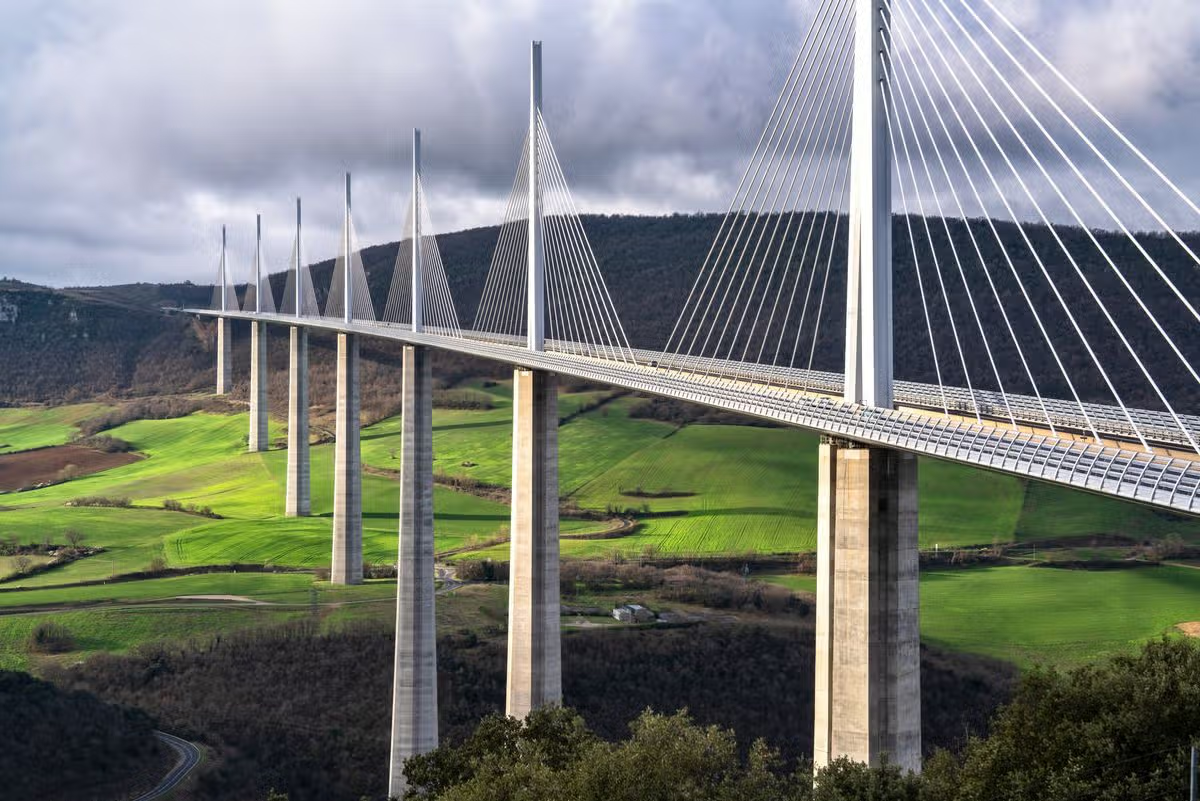
The bridge is the tallest in the world(Image: Achim Thomae/Getty)
The world’s tallest bridge is so high that an entire skyscraper could fit underneath it. While many would expect the highest bridge to be in the likes of China or the US, it is actually in France.
The Millau Viaduct is part of a motorway that connects Paris to the Mediterranean. It was designed by British architect Norman Foster and is in Southern France.
Work completed in 2004 and the cost of construction was approximately €394 million (£345 million). It has an impressive height of height of 343 metres (1,125 ft), which is higher than the iconic Eiffel Tower.
The Paris skyscraper stands at 330 metres (1,083 feet). Millau Viaduct is 2460 metres long and touches the bottom of the Tarn valley just nine times along its length.
Le Shuttle said: “Plans for a road crossing to alleviate the traffic through the town of Millau date from the 1980s.
“British architect Sir Norman Foster was among the team that designed the viaduct, which was considered the most viable solution to cross the valley and river, with the least ecological impact on the area. Construction of the viaduct began in 2001.”
There is no pedestrian access to the viaduct as it is a high-speed motorway. However, it does attract tourism and there are guided informational tours.
Tours include taking a designated nature path to a viewing platform below the bridge and even inside one of the tallest pylons. A marathon takes place every year over the viaduct, and the Tour de France has passed under the viaduct a number of times.
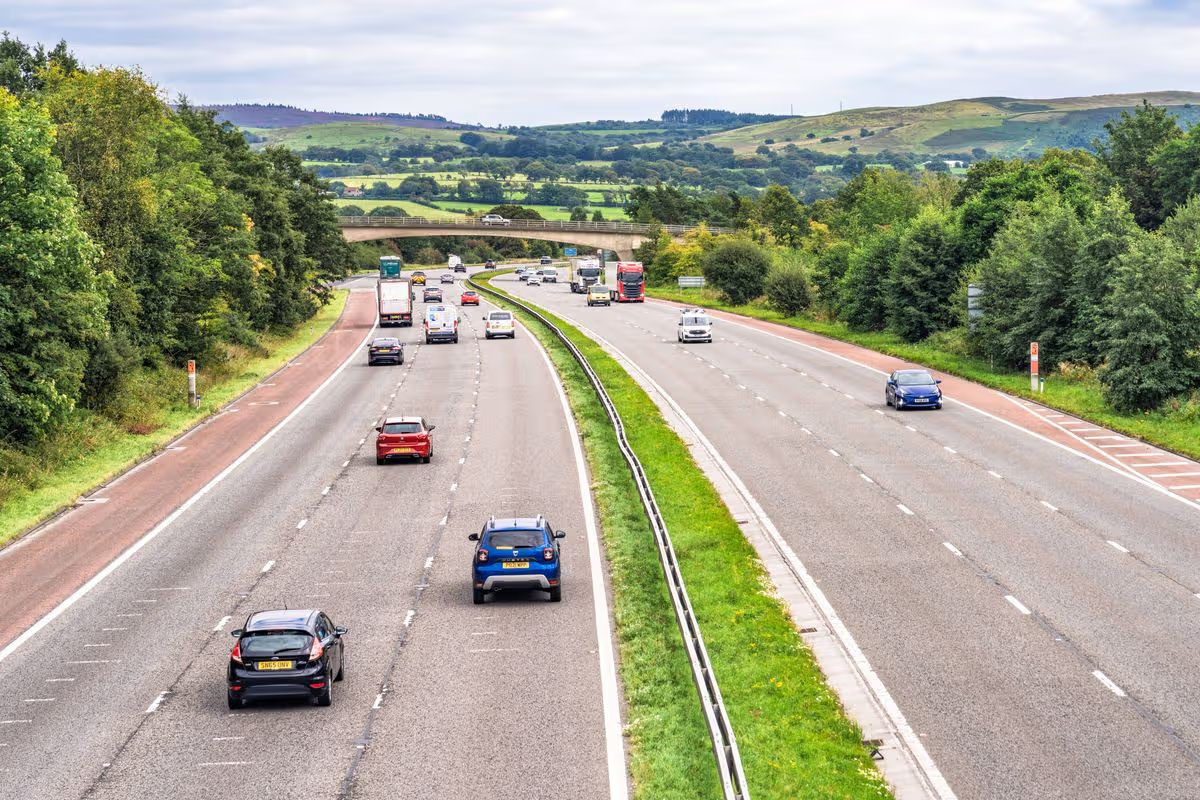
The viaduct features a slight curve that extends up to 20km on the road on either side. It helps drivers settle the feeling of “floating” when driving on a long, straight bridge.
Enjoy Travel explained: “It has two lanes in each direction and interestingly, the bridge is not straight as this could induce a sensation of floating for drivers.
“To remedy this, the architects designed the bridge to have a slight curve, which is 20km in range. Another design feature that improves safety, is the road’s slight incline of 3%, which improves visibility and reassures the driver.
“The bridge is exposed to strong gusts of up to 151km/h, so designers installed side screens that cut the wind’s impact by 50 per cent.”
Visitors have left positive reviews about their experience of the viaduct on TripAdvisor. One said: “Love bridges. This is one not to be missed. Be sure to take a look at it from below to get a real sense of it. Real engineering feat.”
Another added: “An absolutely superb place! The viaduct and the surrounding landscape are so beautiful that you feel like you are part of a painting or drawing! It is truly a work of engineering of the highest level.”
Someone else commented: “Visited today after it been on my bucket list. Great visitors centre, cafe and toilets. Parking is free and you can walk up a 470m path to an awesome view point. You can see the viaduct and surrounding areas. Drove over the bridge with stunning views.”