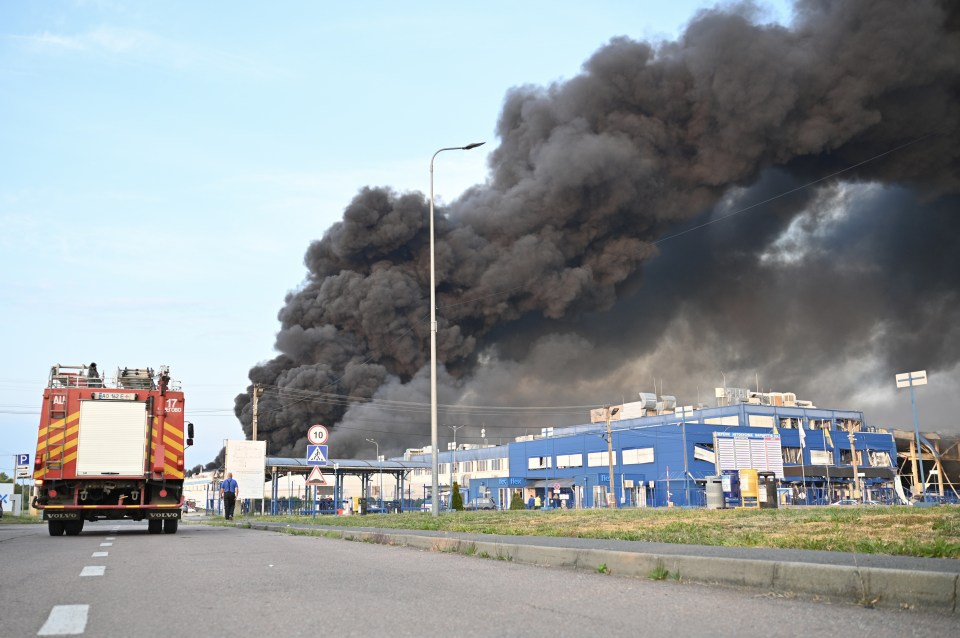
ALMOST 150 miners were trapped underground in eastern Ukraine after Russia bombed a coal facility, killing one worker.
The terrifying ordeal comes as details about the security guarantees Trump is prepared to offer Ukraine begin to emerge – namely big guns and intel, according to officials.
8
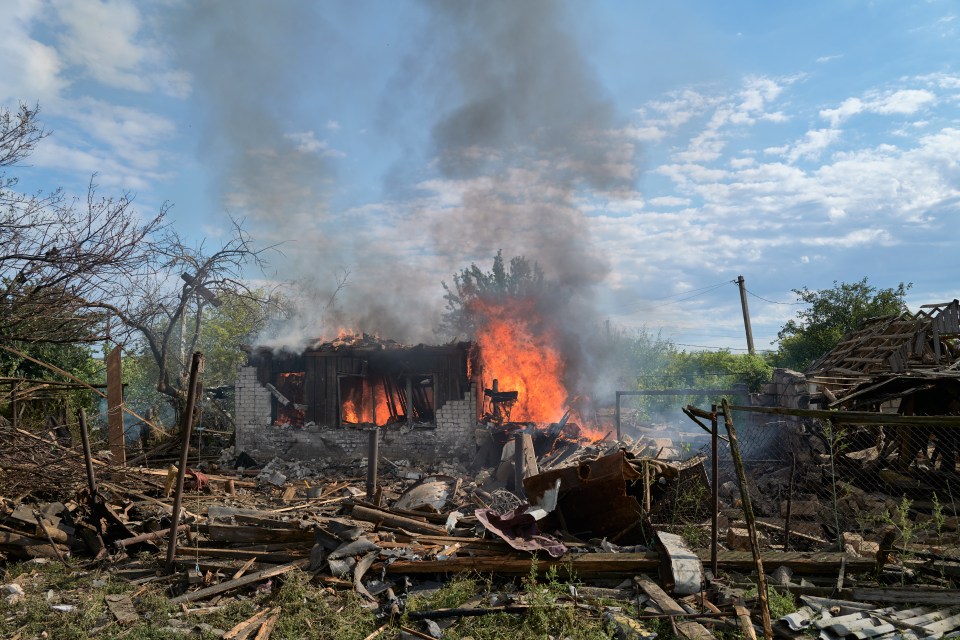
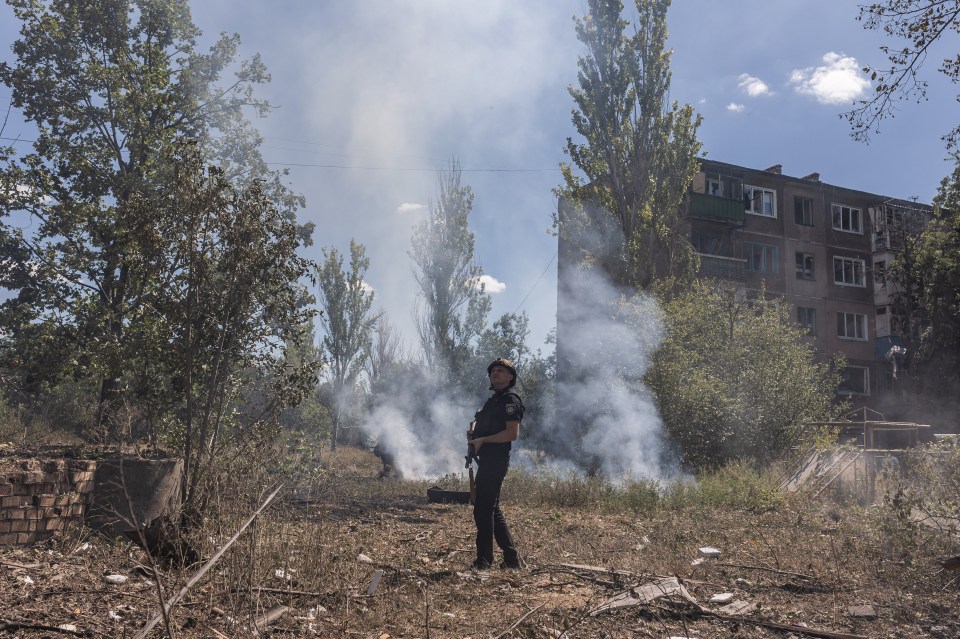
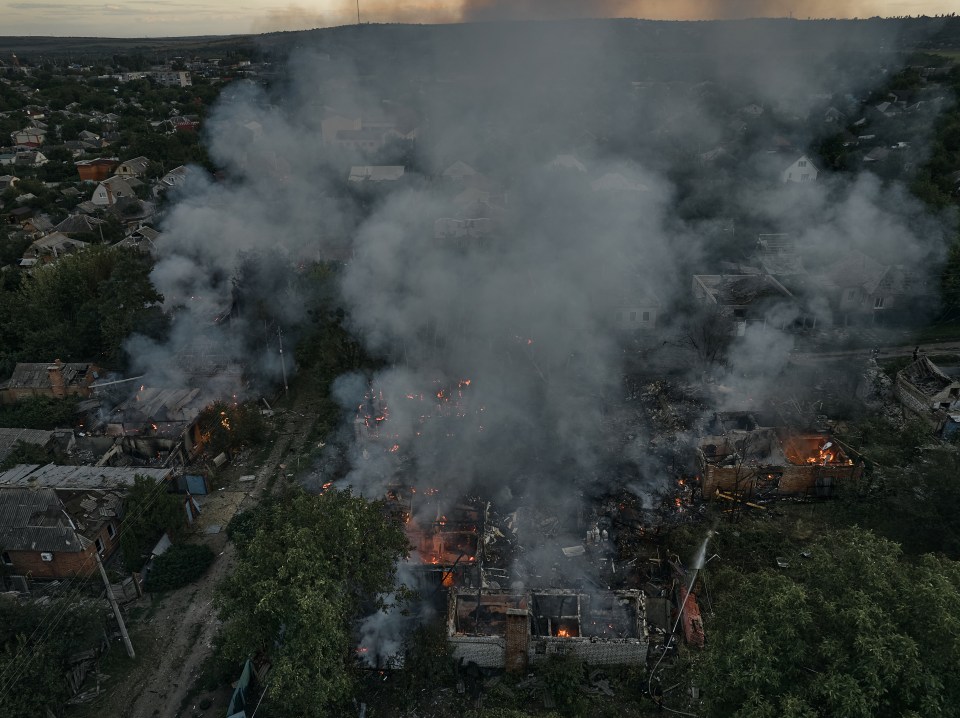
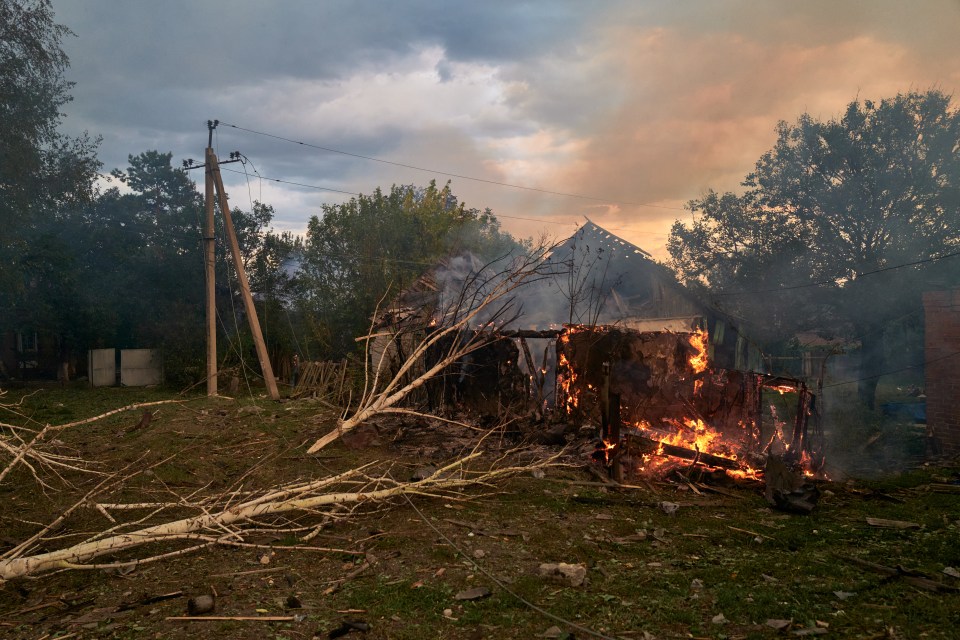
A village burns in the Donetsk Oblast – where almost 150 miners were trapped undergroundCredit: Getty
8
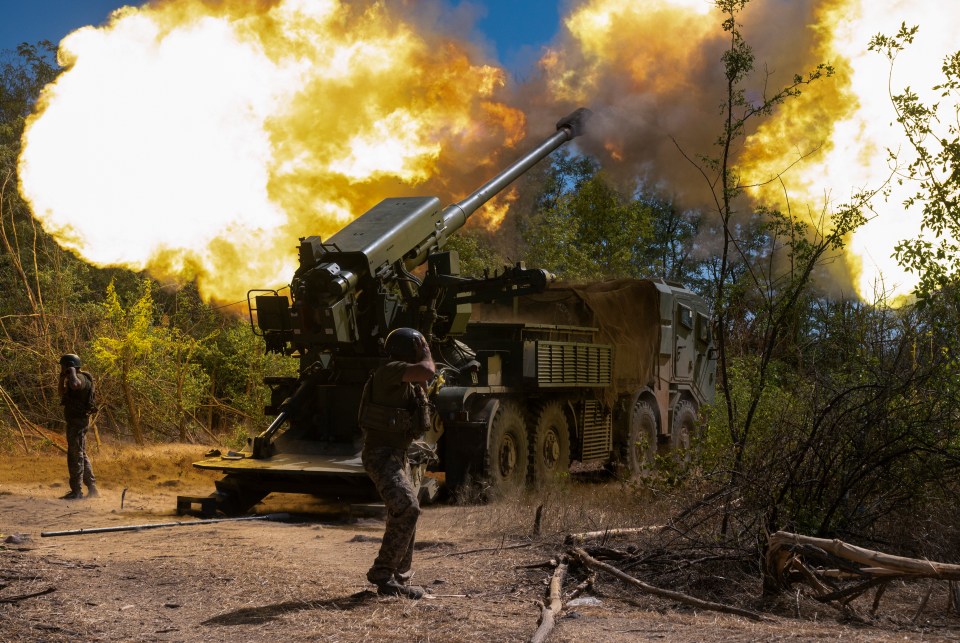
The US is reportedly prepared to supply air defence guns to Ukraine
8
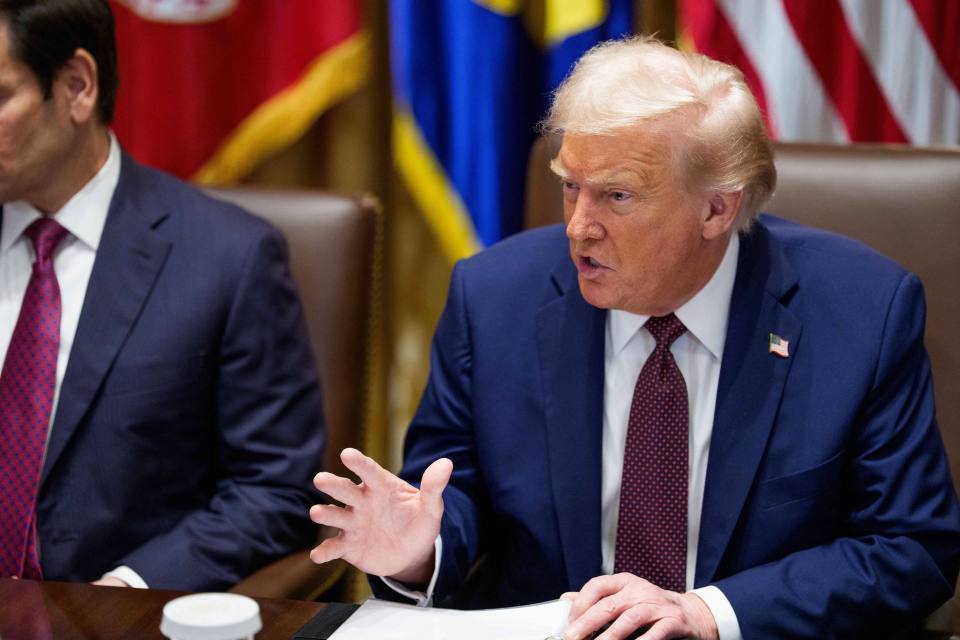
Trump firmed up the details of security guarantees he will offer Ukraine, according to officialsCredit: The Mega Agency
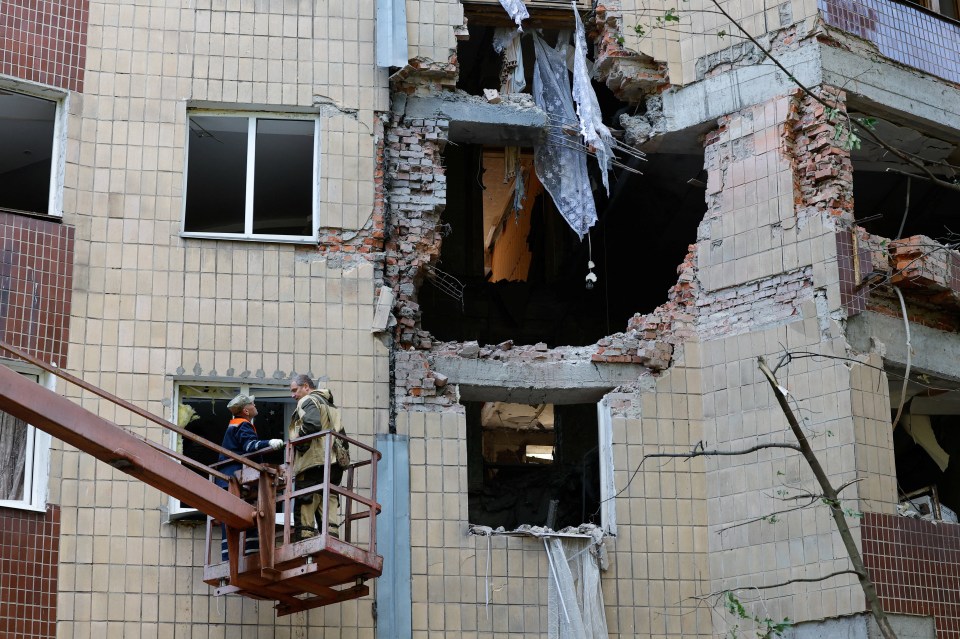
One miner was killed and three injured by the shelling on the coal mine – while 146 were left stuck inside the dark labyrinth.
The mine belongs to DETK, Ukraine’s largest energy company.
A spokesperson for them said: “The attack damaged the company’s buildings and equipment and caused a power outage.
“At the time, 146 miners were underground, and efforts to bring them to the surface are ongoing.”
The precise location of the trapped miners was not revealed by the firm, but a union leader reported they were stuck in the Dobropillia community in Donetsk.
It was reported later in the day that all the miners had been rescued and brought back to the surface.
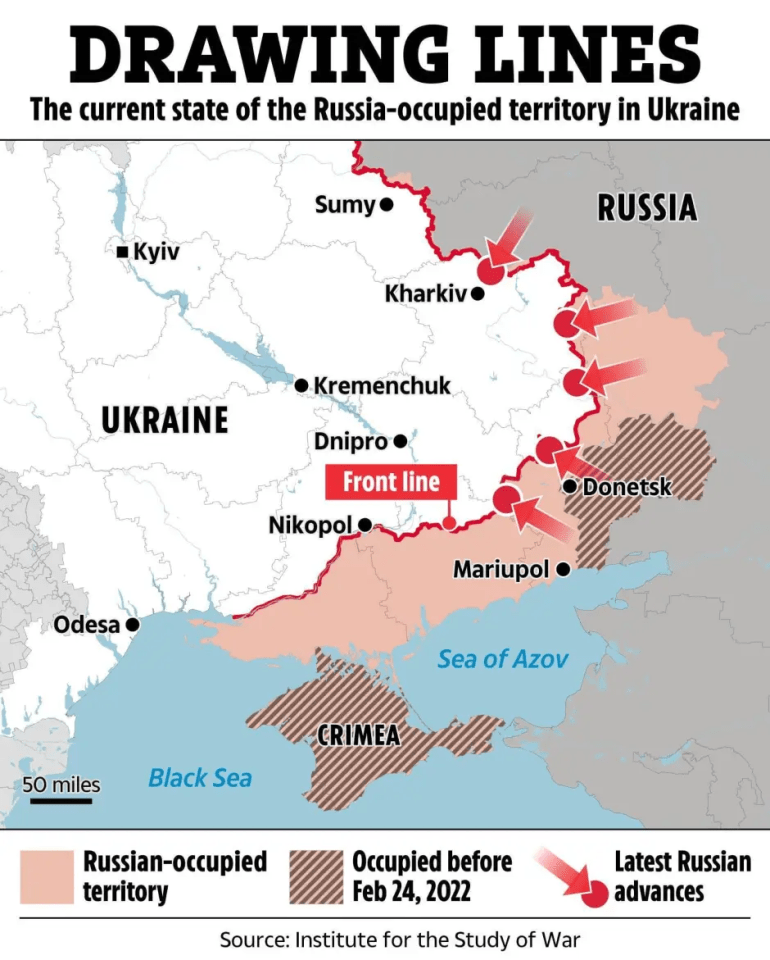
Donetsk, one half of the Donbas region, has mostly been overrun by Russia – but its famous “fortress belt” is still clinging on.
Russia has demanded Ukraine hands over the remaining land in exchange for peace – a proposal Zelensky screwed up and threw out.
Meanwhile, details have finally emerged about the security guarantees the US could give to Ukraine in the event of a peace deal.
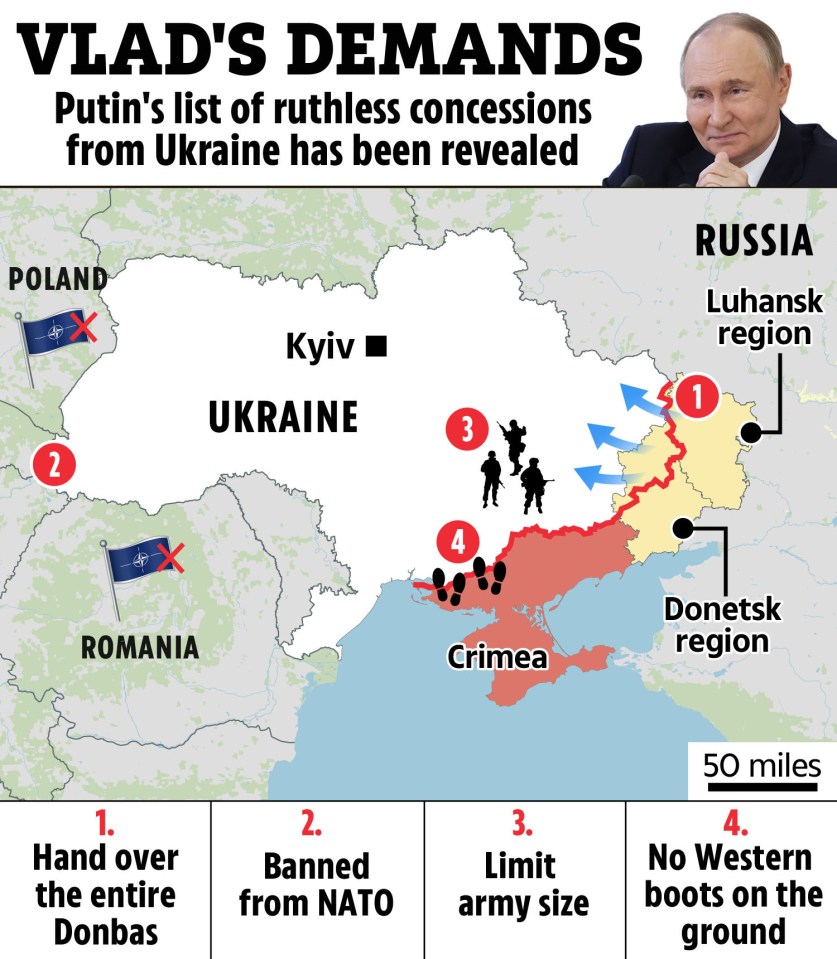
‘Laughing’ Putin ‘laying a trap’ as tyrant’s wild new demands for peace revealed: No Western troops, Donbas AND no NATO
Trump first confirmed the US would be involved in Ukraine‘s long-term safety during the White House summit with European leaders – but did not specify what they would look like.
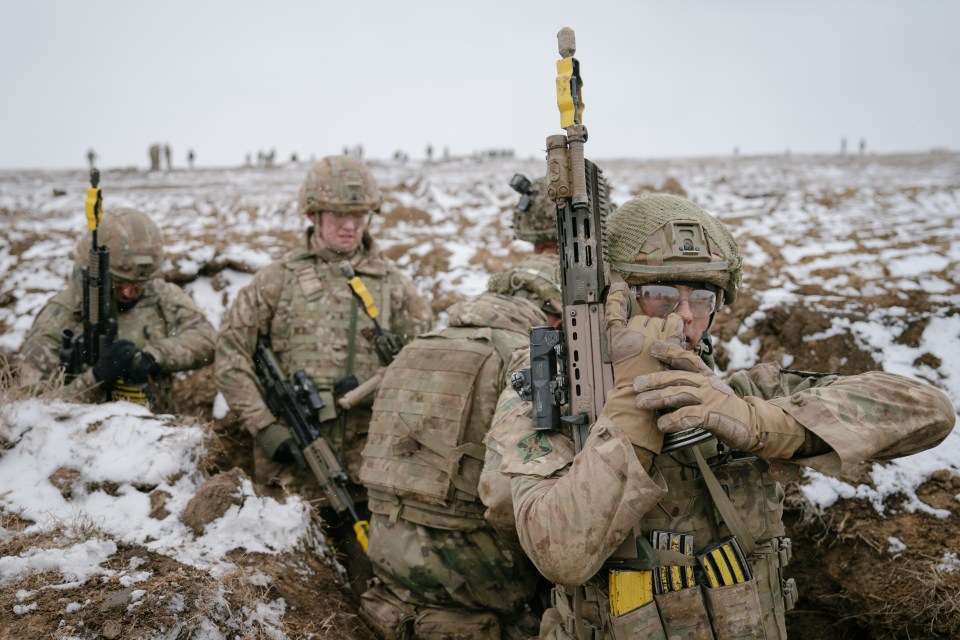
We learned they would definitely not include American boots on the ground – though Trump suggested other willing nations would send manpower.
Now, the US has said it is willing to provide intelligence and battlefield leadership to Ukraine‘s army as part of a deal, reports the Financial Times citing four briefed officials.
Senior US officials have reportedly told European leaders in discussions since the summit that Washington would offer “strategic enablers” to the brave defenders.
8
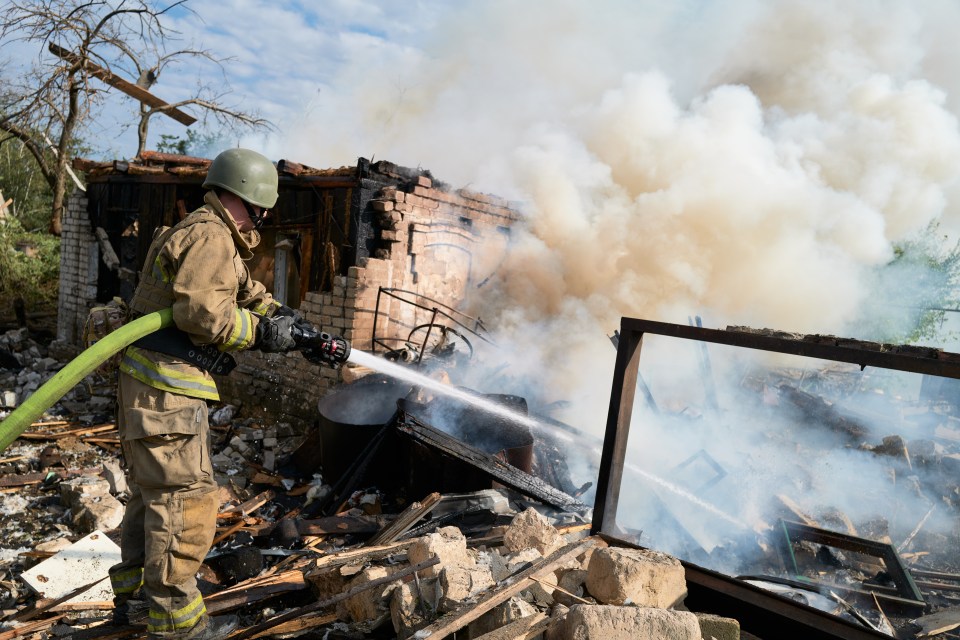
A firefighter extinguishes a burning house following a ‘random’ Russian Shahed drone strikeCredit: Getty
8
A US electronics manufacturer in Ukraine was hit by Russian strikes last weekCredit: Getty
8
These would include intelligence, surveillance and reconnaissance, command and control, and air defence weapons.
The objective of these helping hands would be to deter any future Russian attacks.
Members of the Coalition of the Willing – including the UK and France – are expected to take more active roles in Ukraine’s defence.
It’s not clear which countries, if any, would commit to sending troops to the frontline.
Nations have admitted that any deployment of boots would only happen under robust US support.
8
Putin made the Donbas region a key point of discussion at the Alaska summitCredit: Getty
8
Putin wants to block Ukraine from ever joining NATO
This package of military aid offered by the US is dependent on European countries committing to sending tens of thousands of troops to Ukraine.
It could be retracted if that requirement is not fulfilled, the officials warned.
Nonetheless, the promises now firmed up with details mark a major shift in America’s attitude towards the future protection of Ukraine.
Just earlier this year, Trump had ruled out the States having any part in it.
First, however, a peace deal must be reached.
Trump and European leaders have pushed hard for a head-to-head meeting between Zelensky and Putin, but the Kremlin has once again stalled.
Concern is rising that the Alaska summit will turn out to have been fruitless.
The EU’s top diplomat, Kaja Kallas, even warned that the red-carpet event even gave Putin “everything he wanted” without demanding a single concession from him.
We’ve read quite a bit about President Trump’s “hot mic” comment, during a meeting with European leaders about the Russian war against Ukraine, that Vladimir Putin “wants to make a deal for me, as crazy as it sounds.”
Pundits debated whether this was an embarrassment for Trump; they wondered why he would say such an important thing in a whisper to French President Emmanuel Macron — as if Trump’s verbal goulash were something new. Headlines were full of the word “deal” for a while, including three days later, when they were reporting that Trump said Putin might not want “to make a deal.” And, of course, there is no deal.
The press coverage of the meeting in Alaska said there were lots of “constructive” conversations. Putin spoke about “neighborly” talks and the “constructive atmosphere of mutual respect” in his conversations with Trump. There were reports about agreements “in principle” on various things under discussion, although there were no details about what they might be.
I covered more than a few superpower summits, first as a reporter for the Associated Press and later for the New York Times. Although that was more than 30 years ago, the smoke and mirrors nonsense usually produced by meetings like these has not changed. Verbal gas is abundant and facts almost nonexistent. Trump’s comments were worth about as much as anything else he has said on the subject, which is almost nothing. And yet, they were reported and parsed endlessly as if they had the same meaning as other presidents’ words had in the past.
I had a powerful sense of deja vu from a five-day trip to Afghanistan in January 1987. The Kremlin had finally agreed to let a group of Western journalists visit Kabul and Jalalabad to witness the “cease-fire” that had been announced a few days before we arrived. The visit was billed as an Afghan government tour, which nobody — especially the Afghan government — believed.
We saw no fighting, although we could see artillery fire in the hills at night. Some of the “specials,” as we wire service correspondents called the major media then, reported that we were fired on. We were not.
Mostly, we shopped for rugs and drank cold Heinekens, which were unavailable in Moscow but mysteriously well stocked at the Intercontinental Hotel in Kabul. We were ushered to various peace and unity events between the Afghan and Russian peoples and toured the huge Soviet military camps just outside Kabul with a U.S. official (allegedly a diplomat from the Embassy, but we knew from experience that this person was from the Central Intelligence Agency).
On Jan. 19, we were taken (each reporter in an individual government car with a minder) to a news conference by Mohammad Najib, the Afghan leader whose name had been Najibullah until he changed it to make it sound less religious for his Bolshevik friends. Najib said that Afghanistan and the Soviet Union had agreed “in principle” on a “timetable for withdrawal” of Soviet occupation forces.
At that point, the Reuters correspondent, who was fairly new to Moscow still, bolted from the room and raced back to our hotel, where there was one Telex machine for us all to send our stories back to Moscow. He filed a bulletin on the announcement. When the rest of us made our leisurely return, we were greeted with messages from our home offices demanding to know about the big deal to end the war in Afghanistan.
We wrote our stories, which were about a business-as-usual press conference that yielded no real news. We each appended a message to explain why the Reuters report was just plain wrong. Talk of Soviet withdrawal was common, and always wrong. The very idea that the puppet government in Kabul had something to say about it or was a party to any serious discussions about ending the war was absurd. The most pithy comment came from the Agence France-Presse reporter, who told her editors that the Reuters story was “merde.” The Soviet military did not withdraw until February 1989, more than two years later, following its own schedule.
Much of the recent coverage about Russia and Ukraine reminds me of that Afghan news flash in 1987. The Kremlin has never been, was not then and is not now interested in negotiation or compromise. Under Soviet communism and under Putin, diplomacy is a zero-sum game whose only goal is to restore Russian hegemony over Eastern Europe. And yet, for some reason, the American media and the country’s diplomats seem as oblivious today as they always were. After the summit, they announced breathlessly that there was no peace deal out of the summit, although they all knew going in that there was no deal on the table and there never was going to be one.
But of course Putin wants a “deal” on Ukraine. It’s the same deal he has wanted since he violated international law (not for the first time) and invaded Ukraine on Feb. 24, 2022. He wants to redraw the boundaries of Ukraine to give him even more territory than he has already seized, and he wants to be sure Ukraine remains out of NATO and under Moscow’s military thumb as he has done with other former Soviet regions, like Georgia, which he invaded in 2008 as soon as the country dared to suggest it might be interested in NATO membership. His latest nonsense was to demand that Russia be part of any postwar security arrangements. He wants the NATO allies to stop treating him like the war criminal that he is and to be seen as an equal actor on the international stage with NATO and especially the United States.
That he got, in abundance, from Trump in Alaska, starting with the location. Trump invited Putin to the United States during a period of travel bans to and from Russia, immediately giving the Russian dictator a huge PR win. It also, conveniently, put him in the only NATO country where he is not wanted on charges of crimes against humanity.
As for peace talks, check the headlines from Ukraine before, during and after the Alaska summit: The Russians have stepped up their killing and destruction in Ukraine with new ferocity and have been grabbing as much land in eastern Ukraine as they can. Every square inch of that land — and more the Kremlin has not yet occupied — will be part of any “deal” that Putin will accept. Trump himself has been talking about “land swaps” (as he has from the start of the war, by the way) — a nonsensical idea when you consider the land Ukraine holds is its sovereign territory and the land Russian holds was stolen.
The brilliant M. Gessen, perhaps the leading authority on dictatorship, published an essay in the New York Review, “Autocracy: Rules for Survival,” shortly after the 2016 election. “Rule #2: Do not be taken in by small signs of normality,” they wrote.
A U.S. president and a Russian leader sitting down to talk and emerging with bluster about progress seems normal enough, perhaps encouraging when American-Russian relations have been at a historic low. Just remember that coming from these two men, the comments signify nothing — or, worse, make us wonder what Trump has given away to Putin with his talk of land swaps.
Andrew Rosenthal, a former reporter, editor and columnist, was Moscow bureau chief for the Associated Press and Washington editor and later editorial page editor for the New York Times.
The exchange comes amid diplomatic efforts to solve the conflict and a Ukrainian drone attack on Russia overnight.
Russia and Ukraine have each exchanged 146 prisoners of war (POWs) after mediation by the United Arab Emirates, the Russian Ministry of Defence says about the latest in a series of exchanges that has seen hundreds of POWs released this year.
“On August 24, 146 Russian servicemen were returned from the territory controlled” by Kyiv, the ministry said on Telegram on Sunday.
“In exchange, 146 prisoners of war of the Ukrainian Armed Forces were transferred” to Ukraine, it added.
The ministry said the freed Russians were in Belarus receiving psychological and medical care.
Large-scale prisoner exchanges were the only tangible result of three rounds of talks between Russian and Ukrainian delegations in Istanbul from May to July.
They remain one of the few areas of cooperation between the two countries since Russia’s war on its neighbour began in 2022.
Russia also said “eight citizens of the Russian Federation – residents of the Kursk region, illegally detained” by Kyiv, were also returned as part of the exchange. Kursk sits on the border with Ukraine.
On Sunday, Russia also accused Ukraine of carrying out an overnight drone attack on a nuclear plant that caused a fire and damaged an auxiliary transformer.
The attack forced a 50 percent reduction in the operating capacity at reactor number three at the Kursk Nuclear Power Plant, 60km (38 miles) from the Russia-Ukraine border, according to Russian officials, who added that several power and energy facilities were targeted in the strikes.
US revokes permission
Meanwhile, Ukrainian President Volodymyr Zelenskyy said Washington has revoked permission for strikes in Russia with United States-manufactured weapons, confirming an earlier report in US media.
He added that Kyiv has lately been using its own weapons to hit its enemy and does not consult on this with Washington.
Russian Foreign Minister Sergey Lavrov slammed Zelenskyy on Sunday for “obstinately insisting, setting conditions, demanding an immediate meeting at all costs” with Russian President Vladimir Putin.
The developments came as Ukraine marked its Independence Day on Sunday, commemorating its 1991 declaration of independence from the Soviet Union.
The efforts to settle the conflict have been ongoing since US President Donald Trump held talks in Alaska with Putin a week ago, but Trump has been unable thus far to coax Putin into a meeting with Zelenskyy.
Trump said on Friday that in two weeks he should know whether progress is possible in his bid to end the Russia-Ukraine war as he again raised the prospect of imposing sanctions on Moscow.
UKRAINIAN forces claim to have killed three perpetrators of the Bucha massacre in a slew of revenge bombings.
It comes as Kyiv marked its Independence Day by unleashing a wave of drone strikes crippling key energy infrastructure in Russia.
11
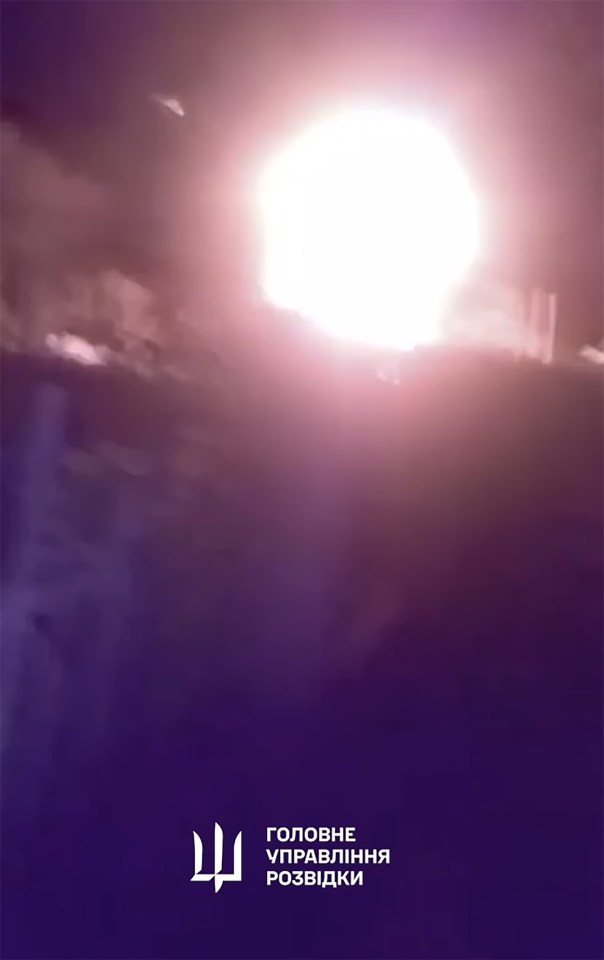
Ukrainian GUR military intelligence claims to have killed three Russian war criminals during bombings in the occupied Luhansk region of Ukraine.Credit: East2West
11
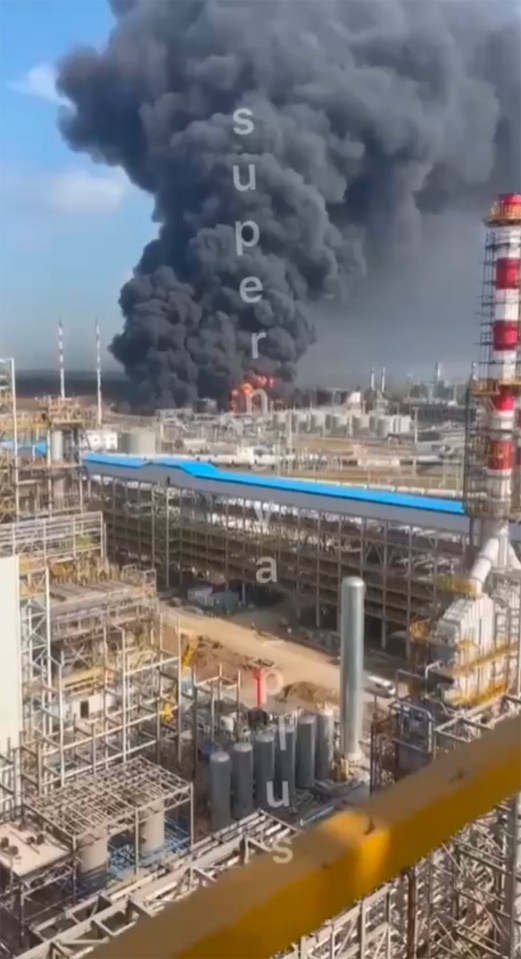
Ukraine’s heavy overnight drone attacks sparked fires at key energy facilities in the major Ust-Luga portCredit: East2West
11
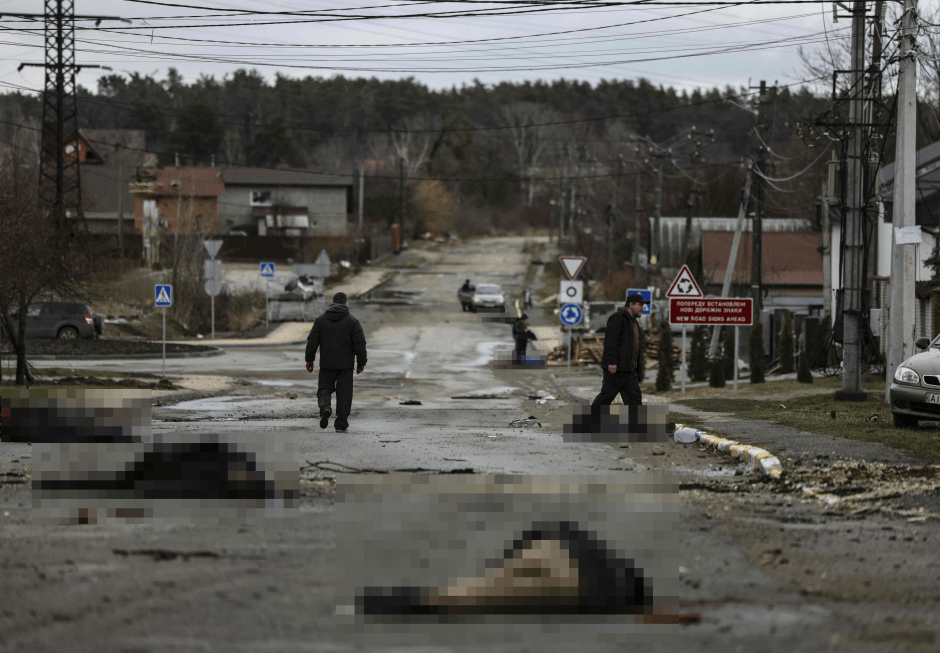
Bodies of civilians were left lying in the streets of BuchaCredit: Afp
11
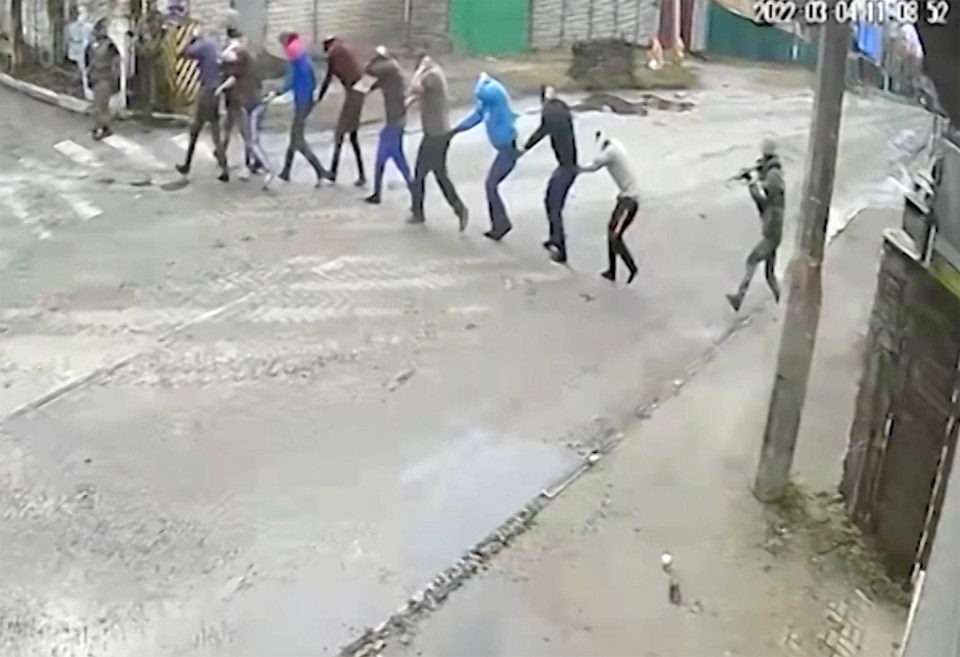
Russians rounding up civilians during the massacre in Bucha, Ukraine, in 2022.Credit: East2West
11
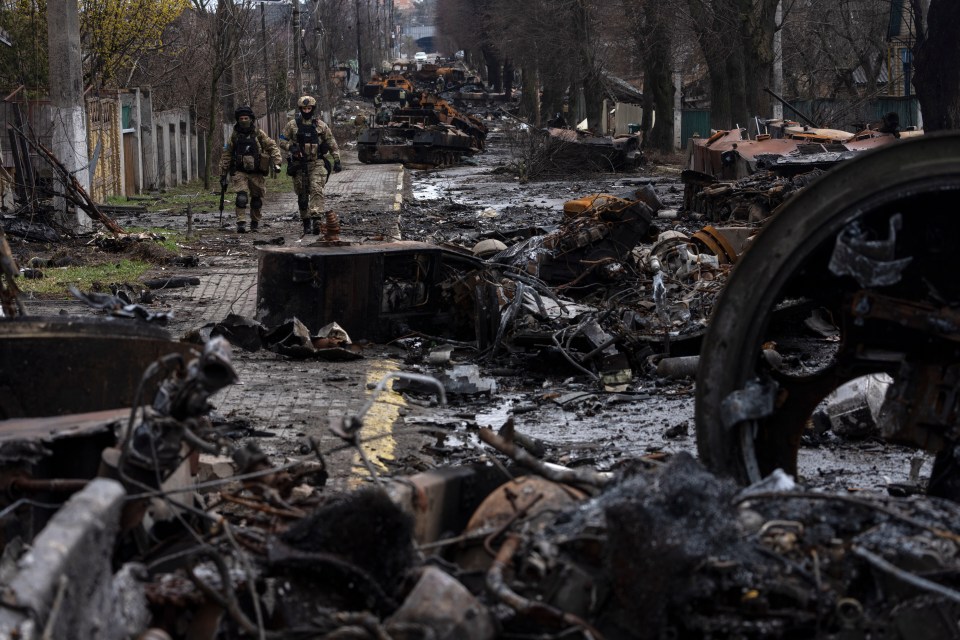
Soldiers walk amid destroyed Russian tanks in Bucha in 2022Credit: AP
Ukraine‘s military intelligence unit GUR said three Russian soldiers dubbed “Butchers of Bucha” were wiped out in surgical bombings in the Russian-occupied Luhansk region.
They were targeted in the Luhansk region while operating as a mobile air defence group to cover a Russian military-repair base.
Bucha is a town close to Kyiv where Russian troops were accused of perpetrating appalling war crimes as they sought to storm Kyiv in 2022.
Hundreds of Ukrainian people were subjected to executions, torture, mutilation, and sexual violence including rape used by as weapon of war.
After the Russian retreat, mass graves were found where dozens of bodies were hastily buried by Putin’s occupying force.
There were numerous accounts of indiscriminate killings of civilians, including those seeking to flee the violence.
The revenge attack came in Kalynove village, where the Russian soldiers were linked to the Bucha atrocities.
Ukrainian military officials said: “In 2022, [these dead] Russian occupiers directly took part in committing war crimes in the city of Bucha.
“The detonation was in the yard of an apartment building where six Russian invaders were staying with their military transport.
“As a result of the explosion, two enemy pickups with machine guns were destroyed, one landed with ammunition.”
Vlad bombs American factory in Ukraine injuring 23 as Trump suggests Kyiv should attack Russia to win war
“There will be just retribution for every war crime committed against the Ukrainian people.”
Meanwhile, the Russia‘s defence ministry said at least 95 Ukrainian drones had been intercepted across more than a dozen Russian regions.
The attaclc come on August 24, the day that Ukraine celebrates its declaration of independence from the Soviet Union in 1991.
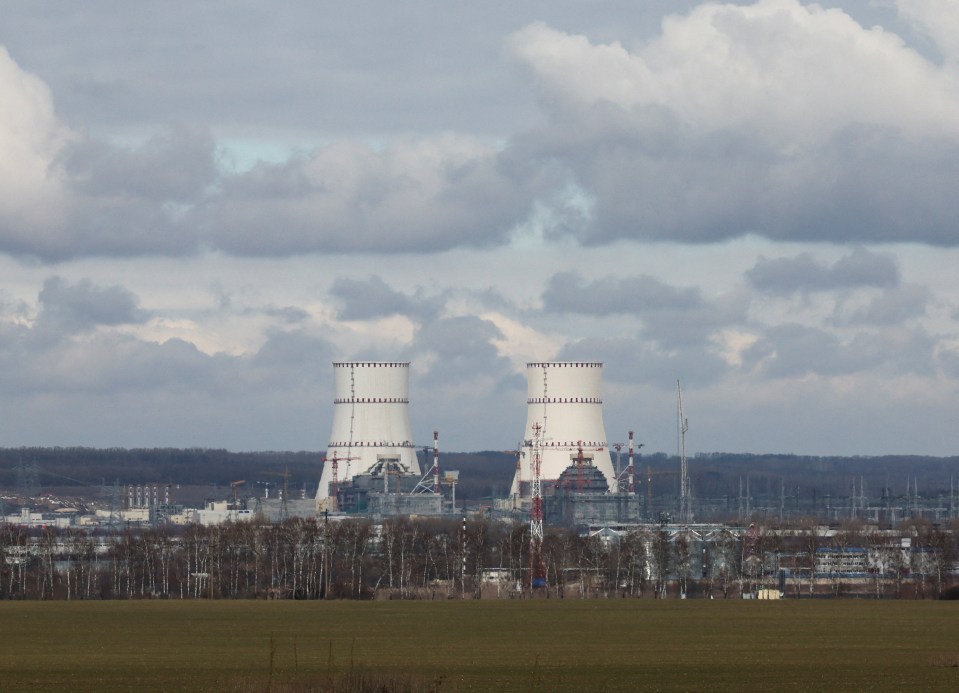
One of the drones was shot down over the Kursk Nuclear Power Plant in western Russia, one of the country’s biggest energy nuclear facility.
It detonated upon impact and sparked a fire, forcing a sharp fall in the capacity of a reactor at according to the facility.
The plant said the fire had been extinguished, adding there were no casualties or increased radiation levels.
There was damage to a transformer which supplies the plant, and the power of reactor number three was reduced by 50 per cent.
Russian authorities said Ukrainian drones had also been shot down over areas sometimes far from the front, including Saint Petersburg in the northwest.
11
A view shows the Kursk Nuclear Power Plant (KNPP) in the course of Russia-Ukraine conflictCredit: Reuters
11
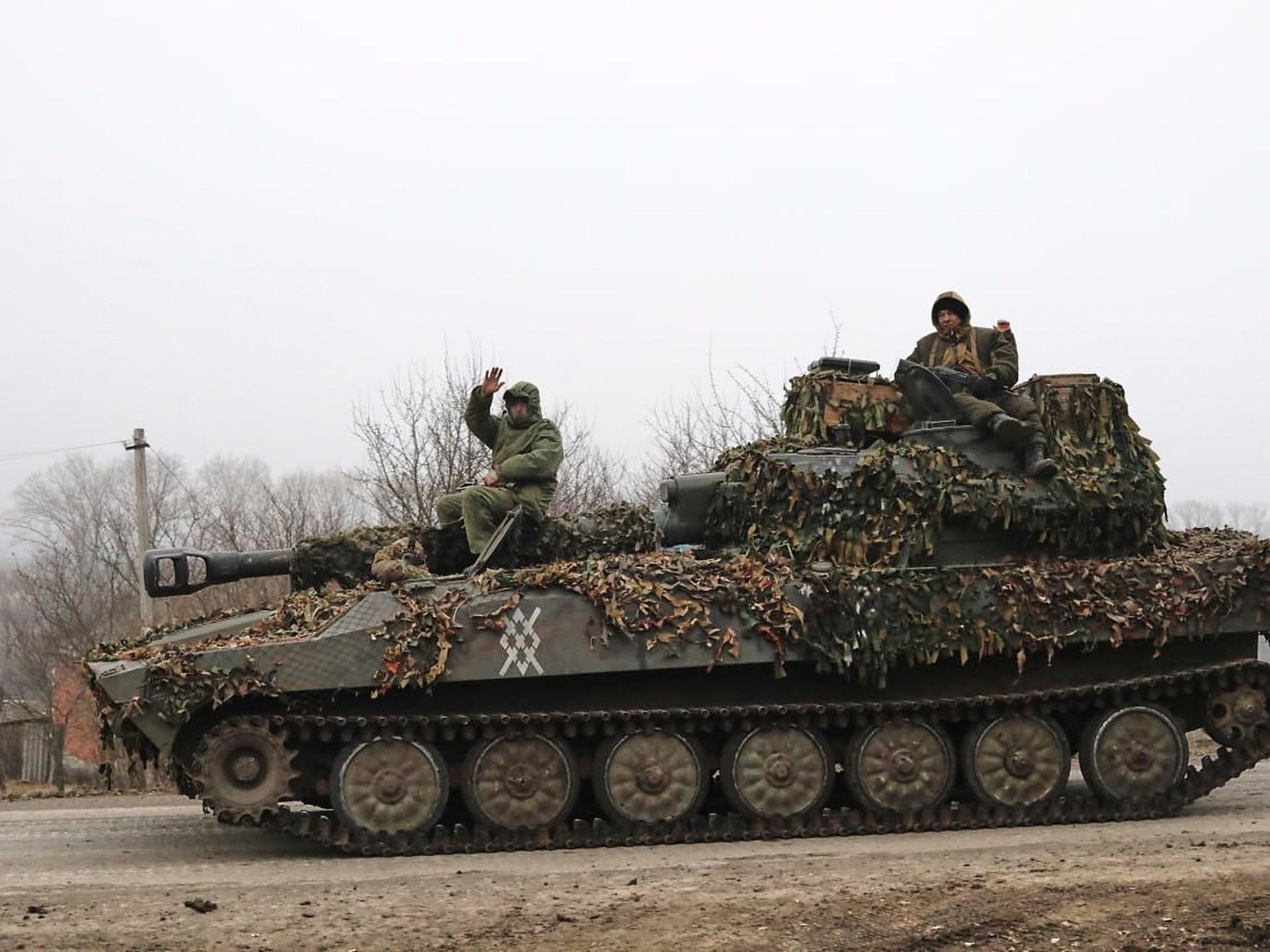
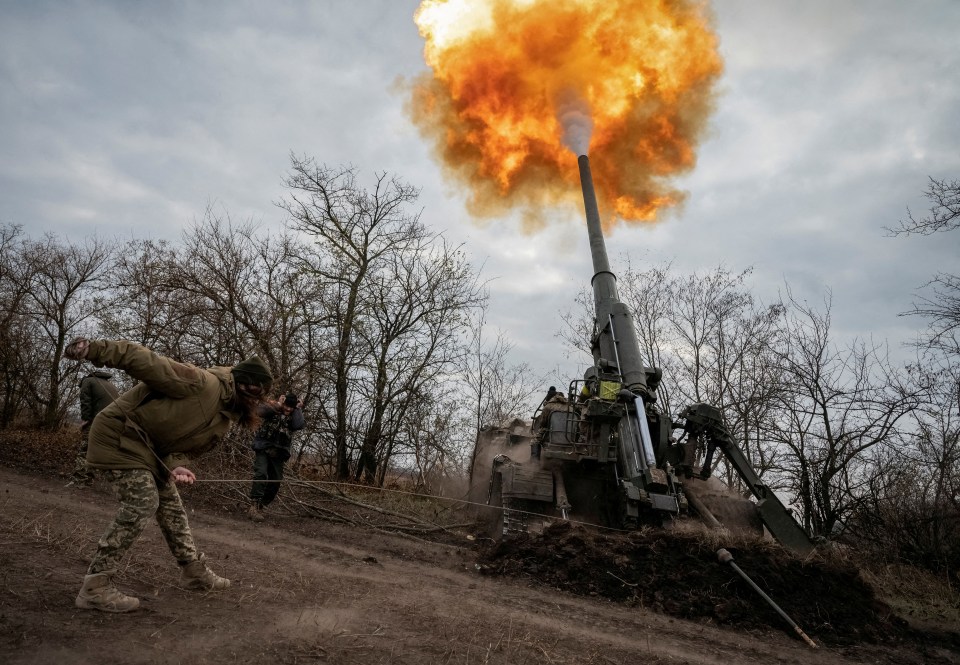
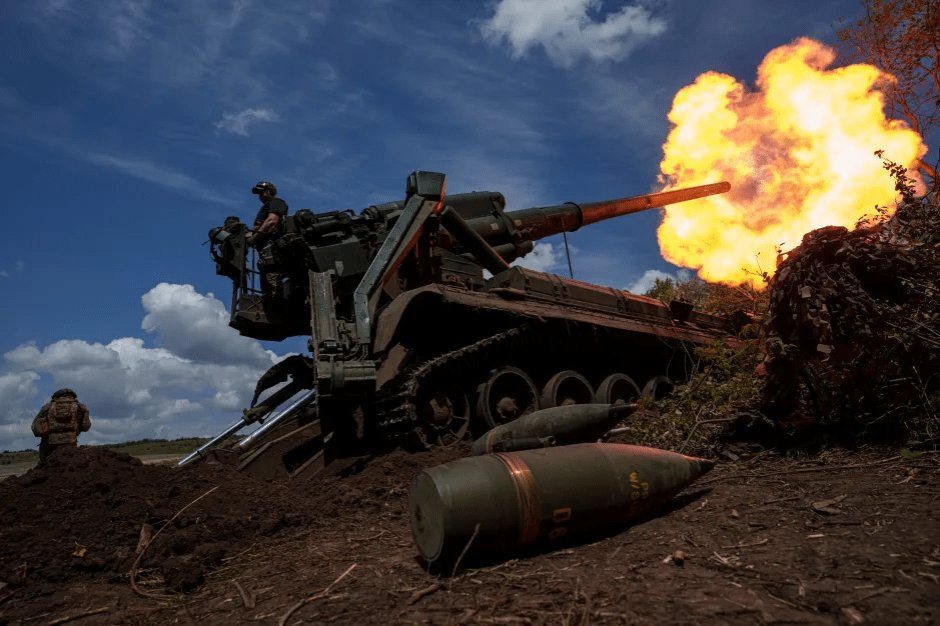
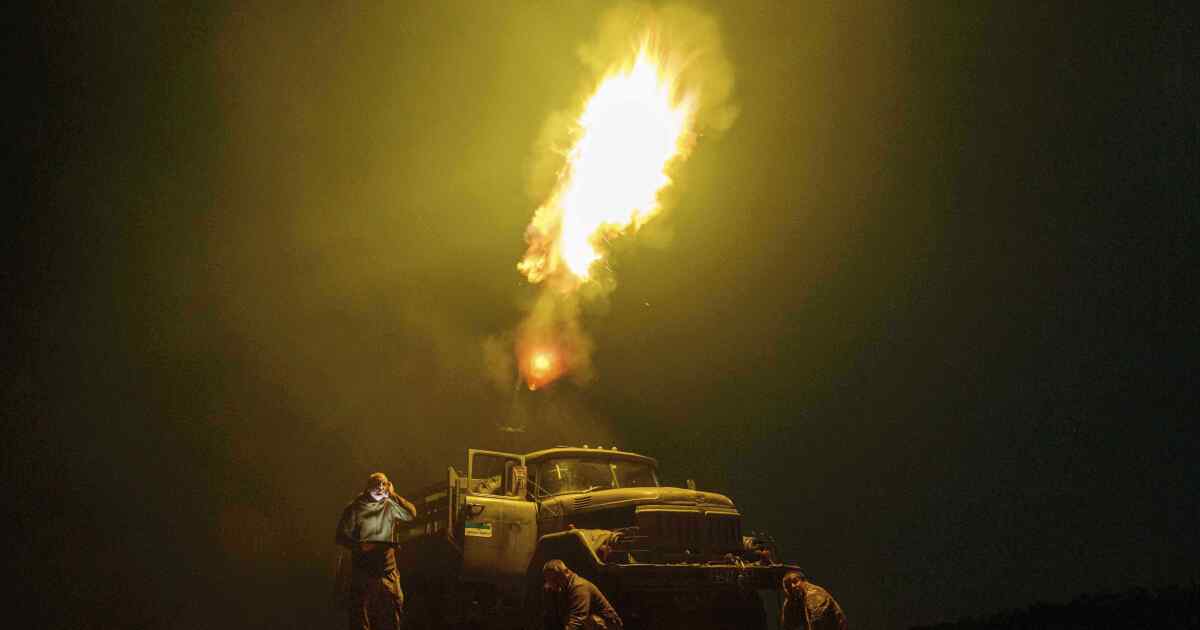
A Ukrainian servicewoman fires a 2S7 Pion self-propelled gunCredit: Reuters
11
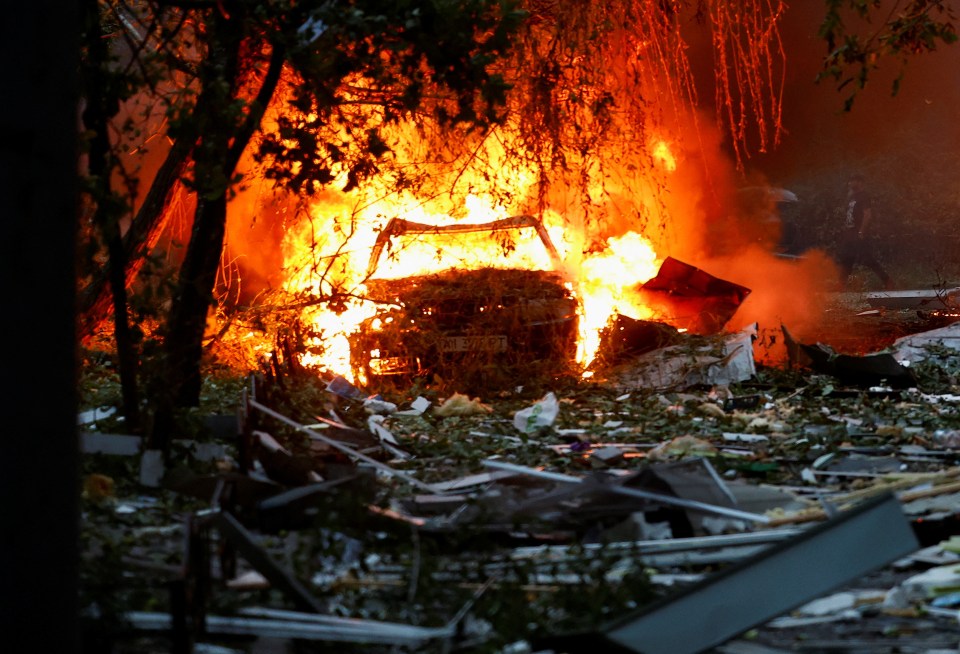
A car damaged during Russian missile and drone strikes burnCredit: Reuters
The attacks caused tourist mayhem at St Petersburg’s Pulkovo airport as more than 99 flights were diverted or delayed at the busy hub.
Ten drones were shot down over the port of Ust-Luga on the Gulf of Finland, sparking a fire at a fuel terminal owned by Russian energy group Novatek, regional governor Aleksandr Drozdenko said.
Ukrainian president Volodymyr Zelensky said: “This is how Ukraine strikes when its calls for peace are ignored.
“Today, both the US and Europe agree: Ukraine has not yet fully won, but it will certainly not lose. Ukraine has secured its independence. Ukraine is not a victim; it is a fighter.”
Ukraine meanwhile said Russia had attacked it overnight with a ballistic missile and 72 Iranian-made Shahed attack drones, 48 of which the air force said had been shot down.
A Russian drone strike killed a 47-year-old woman in the eastern region of Dnipropetrovsk, the governor said.
It came amid Donald Trump’s rising frustration with Putin for dragging out the war.
Washington is now trying to get Moscow to agree to a one-on-one meeting with Zelensky.
Pressure has been mounting on Putin to sit down with Zelensky since the White House summit – but the latest language from Russia looks suspiciously like well-worn stalling tactics.
Trump hoped he would be able to convince Putin to stop the bloodshed when he met the dictator in Anchorage.
But since then, little tangible progress has been made towards a peace deal.
11
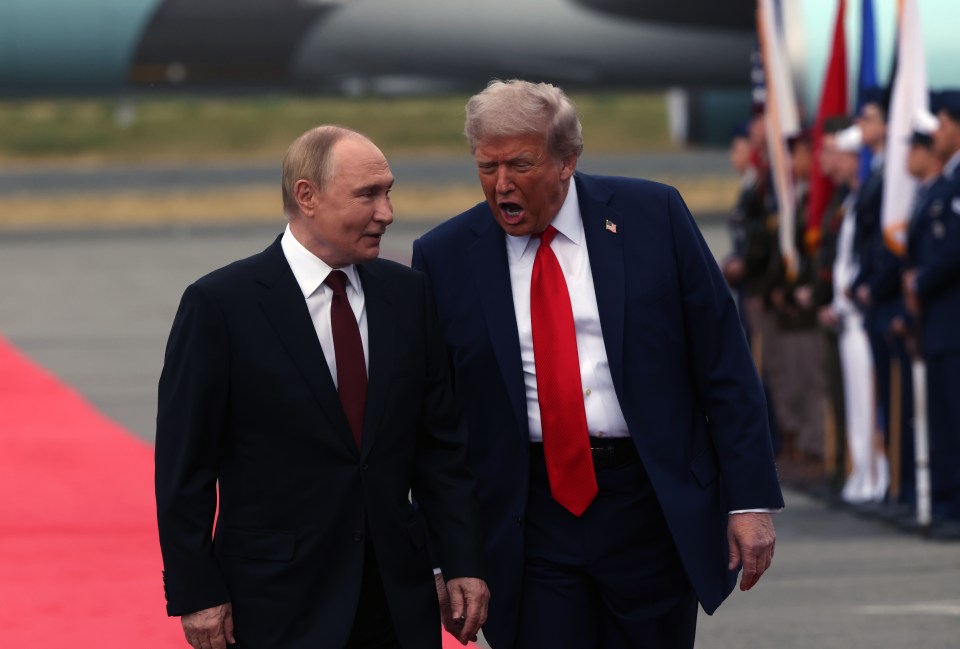
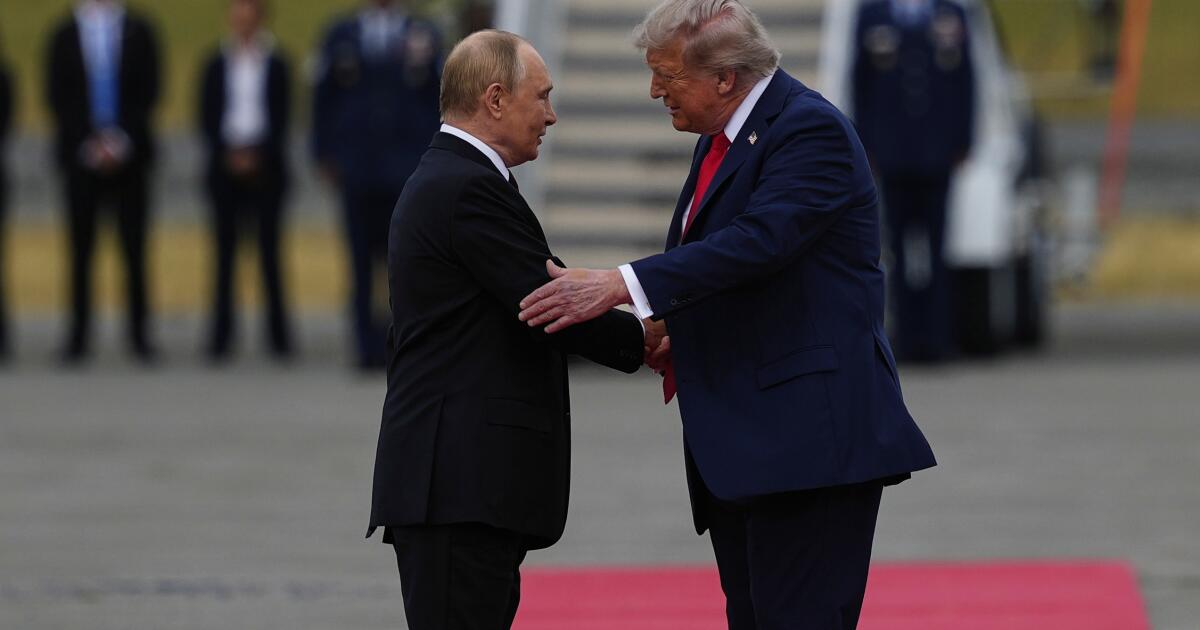
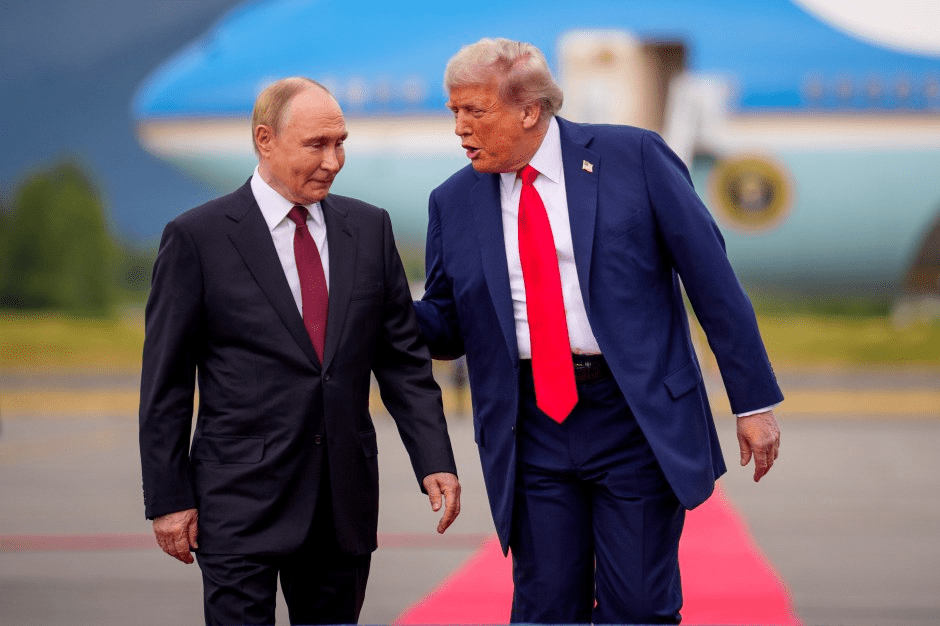
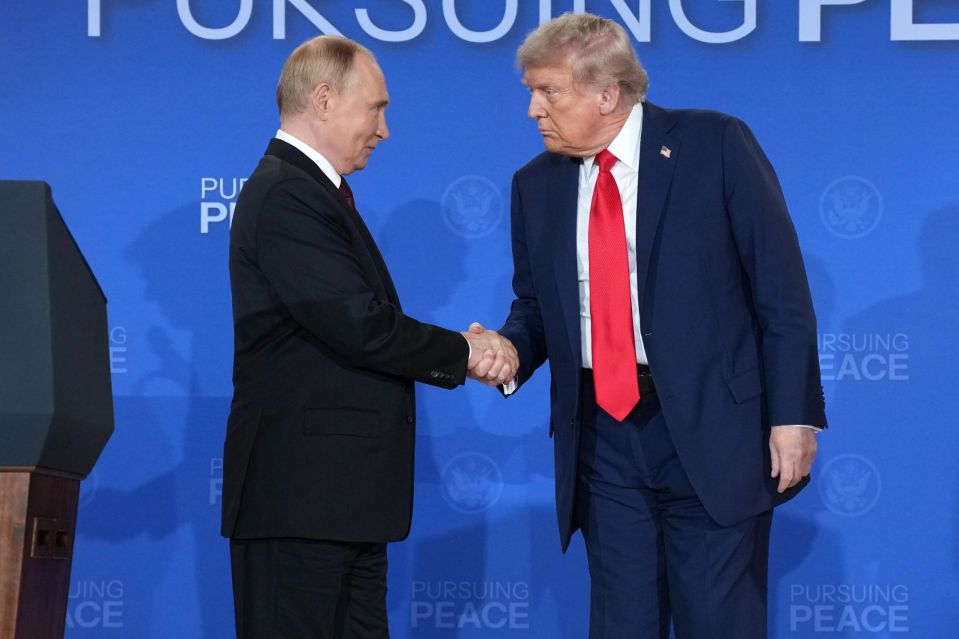
Donald Trump and Vladimir Putin meet on the tarmac in AlaskaCredit: Reuters
In a social media post, Trump appeared to hint that he is open to Ukraine launching more attacks on Russia.
He suggested that it would be “impossible” for Ukraine to win the war without attacking Russia.
He said: “It is very hard, if not impossible, to win a war without attacking an invader’s country.
“It’s like a great team in sports that has a fantastic defence, but is not allowed to play offence.
“There is no chance of winning! It is like that with Ukraine and Russia.”
Trump sets deadline
He set a two-week time frame for assessing peace talks between Russia and Ukraine.
Don told Todd Starnes on Newsmax: “I would say within two weeks we’re going to know one way or the other.
“After that, we’ll have to maybe take a different tack.”
Foreign Minister Sergei Lavrov said Putin is ready to meet Zelensky only after working through a list of vague “issues”.
Lavrov said: “Our president has repeatedly said that he is ready to meet, including with Mr Zelensky.”
But he insisted the meeting would only happen “with the understanding that all issues that require consideration at the highest level will be well worked out”.
11
Putin has been accused of stalling peace talksCredit: Afp
11
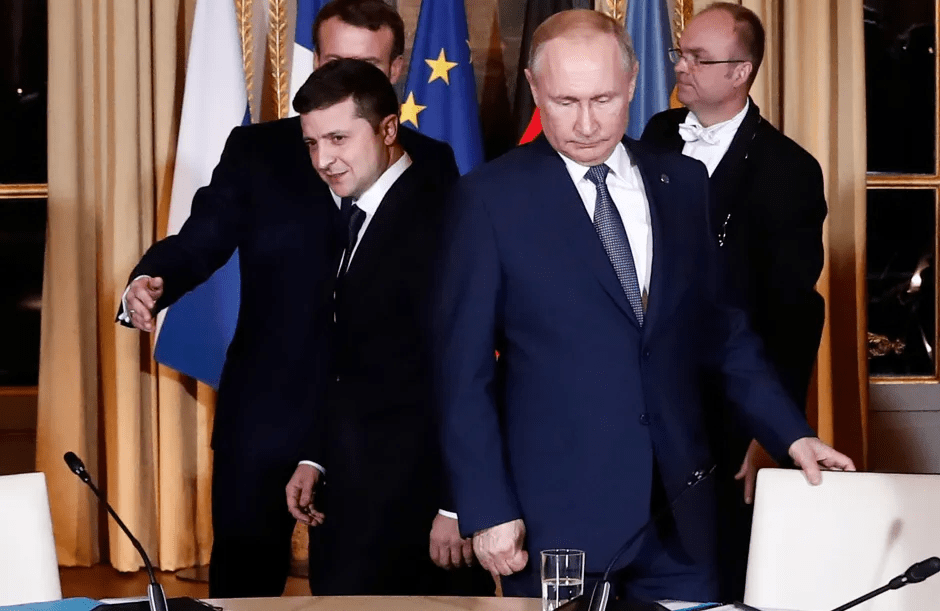
Zelensky and Putin attend a meeting on Ukraine with French President and German Chancelor at the Elysee Palace in 2019Credit: AFP
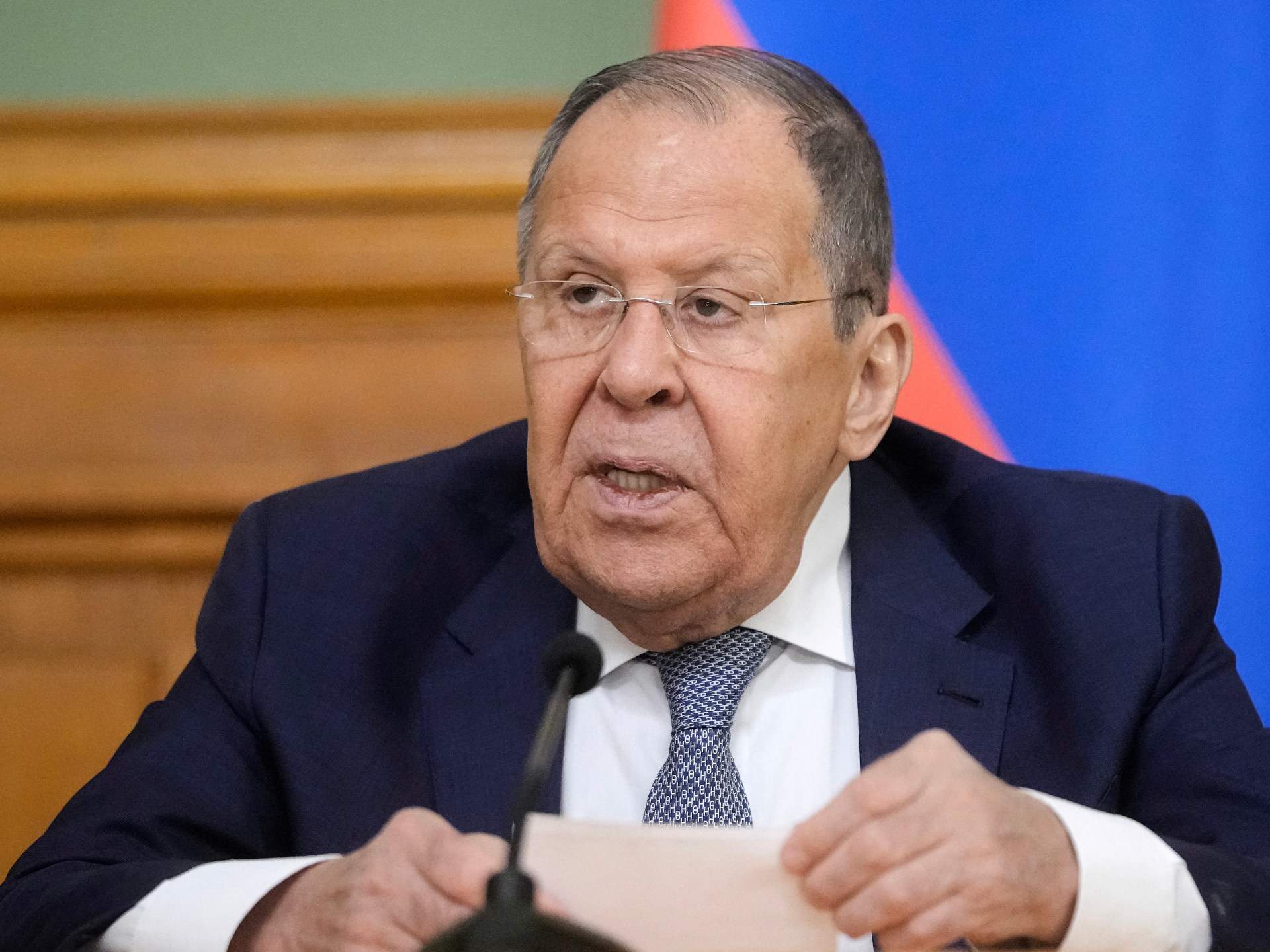
Foreign Minister Sergey Lavrov says discussing Ukraine security issues without Russia is a ‘road to nowhere’.
Russia has warned that attempting to resolve security issues relating to Ukraine without the participation of Moscow is a “road to nowhere”, days after European leaders met US President Donald Trump to discuss security guarantees for Kyiv.
“We cannot agree with the fact that now it is proposed to resolve questions of security, collective security, without the Russian Federation. This will not work,” Russian Foreign Minister Sergey Lavrov said on Wednesday.
“I am sure that in the West and above all in the United States they understand perfectly well that seriously discussing security issues without the Russian Federation is a utopia; it’s a road to nowhere.”
The minister’s comments come two days after US President Donald Trump hosted Ukraine’s President Volodymyr Zelenskyy alongside prominent European leaders at the White House, and days after Trump met with Russian President Vladimir Putin.
The Russian official said any summit between Putin and Zelenskyy “must be prepared in the most meticulous way” so the meeting does not lead to a “deterioration” of the situation around the conflict.
Lavrov also accused European leaders of making “clumsy attempts” to change the US president’s position on Ukraine.
“We have only seen aggressive escalation of the situation and rather clumsy attempts to change the position of the US president,” he said, referring to Monday’s meeting.
“We did not hear any constructive ideas from the Europeans there,” Lavrov added.
NATO talks
NATO military chiefs are due to meet on Wednesday to discuss the details of potential security guarantees for Ukraine amid efforts to broker a ceasefire to Russia’s offensive.
NATO’s Military Committee said that 32 defence chiefs from across the alliance would hold a video conference.
US General Alexus Grynkewich, who oversees NATO’s operations in Europe, will also take part in the talks.
Kyiv’s European allies are looking to set up a force that could backstop any peace agreement, and a coalition of 30 countries, including European nations, Japan and Australia, have signed up to support the initiative.
Military chiefs are considering how that security force might work. The role that the US might play is unclear. Trump on Tuesday ruled out sending US troops to help defend Ukraine against Russia.
Russia has repeatedly said that it would not accept NATO troops in Ukraine.
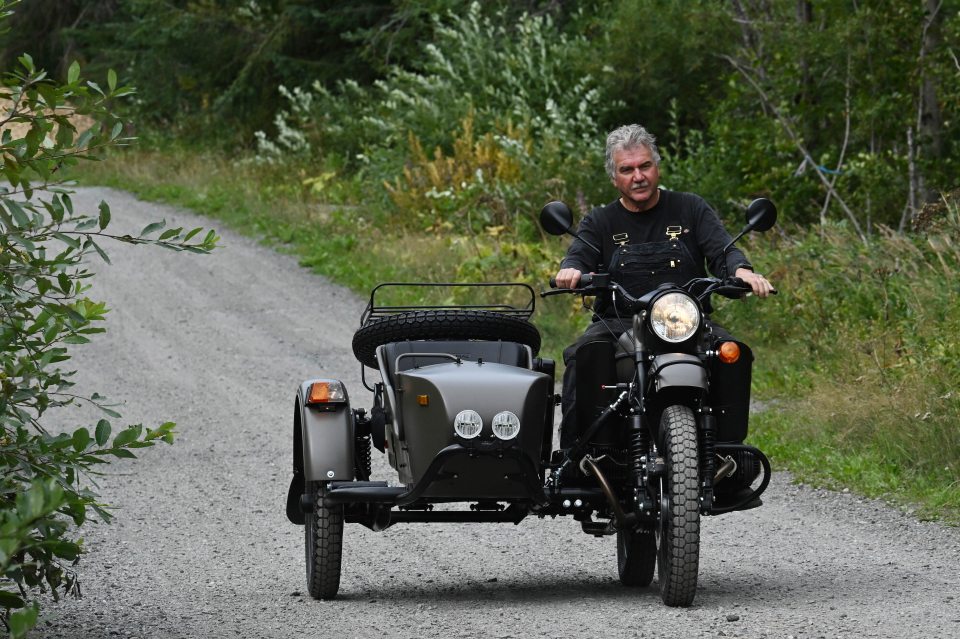
Manufacturing firm Ural, a motors company founded in 1941 in Western Siberia when it was under Joseph Stalin’s Soviet Union, now operates in Kazakhstan.
Warren complained he was unable to obtain the correct parts to fix the motorcycle because of supply-and-demand issues and sanctions on Russia.
State-sponsored Russian media spotted Warren running errands on the bike one week before the Trump and Putin summit.
He said: “It went viral, it went crazy, and I have no idea why, because Im really just a super-duper normal guy.
“They just interviewed some old guy on a Ural, and for some reason they think its cool.”
On August 13, two days before the Trump-Putin summit to discuss the war in Ukraine, Warren received a call from a Russian journalist.
They told him: “They’ve decided to give you a bike.”
Warren said he was also sent a document noting the gift was arranged through the Russian Embassy in the States.
The Alaska man thought it was a scam – but after Trump and Putin departed Joint Base Elmendorf-Richardson following their three-hour summit, he got another call about the bike.
Hilarious moment Zelensky gets revenge on reporter who criticised him for not wearing suit to first Oval Office meeting
Warren was told his new £16,000 bike was at the same base the world leaders had met at.
He was instructed to go to an Anchorage hotel for the handoff.
After arriving alongside his wife, he met six Russian men who presented him with the mind-boggling gift.
“I dropped my jaw,” he said.
“I went, ‘You’ve got to be joking me’.”
He said the men only asked to interview and picture him.
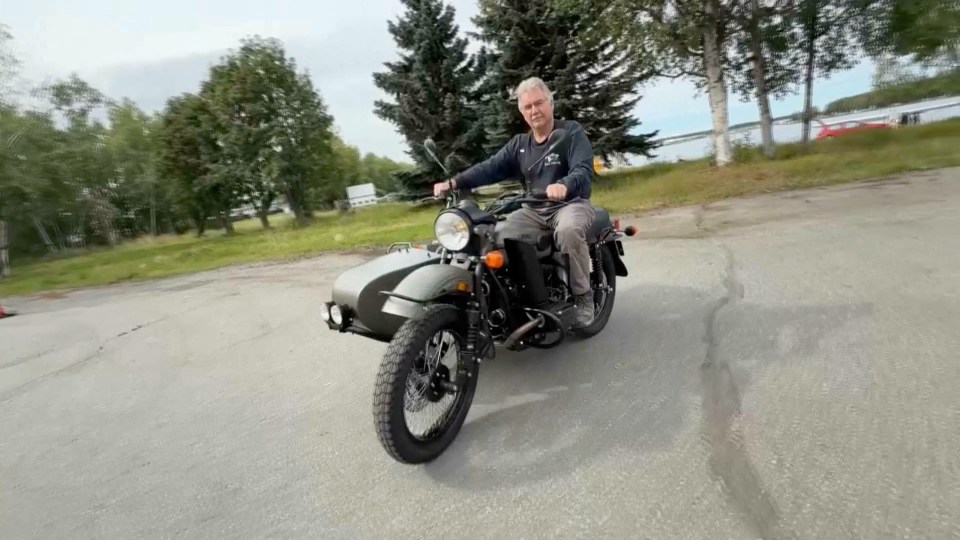
Two reporters and someone from the group got on the bike with him while he drove around the car park to show it off.
The lucky punter had reservations about the Ural being a malicious Russian scam.
8
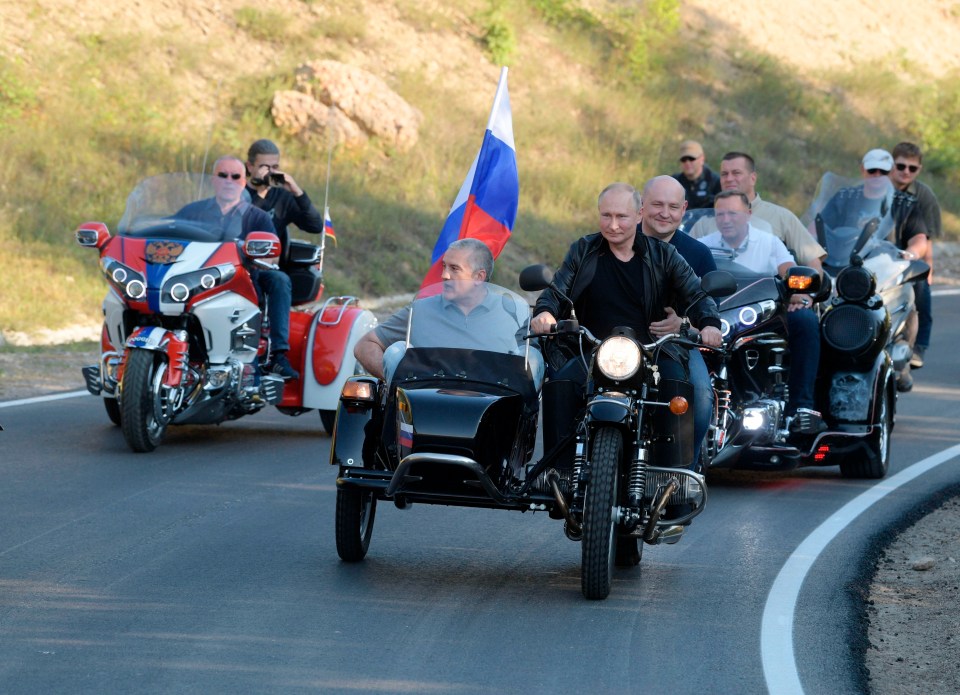
Putin pictured driving a motorbike in 2019Credit: AP:Associated Press
8
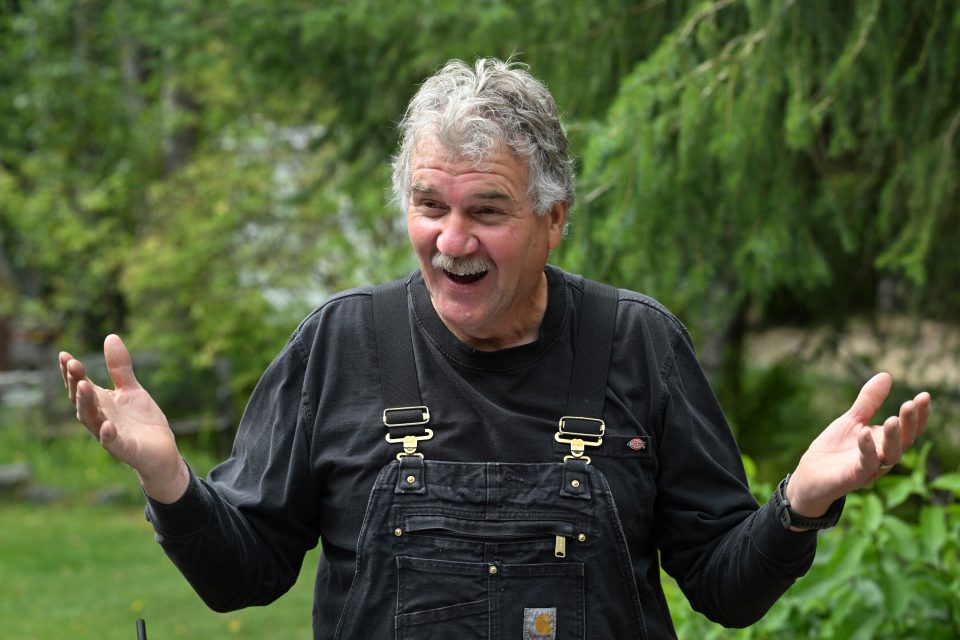
Warren posing with his old and new bikeCredit: AP
8
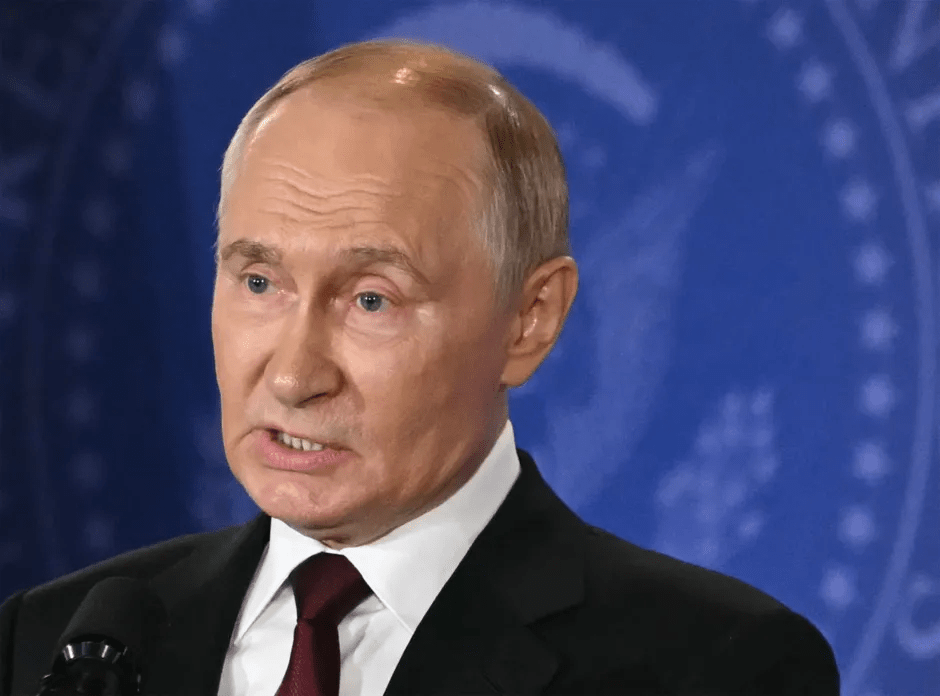
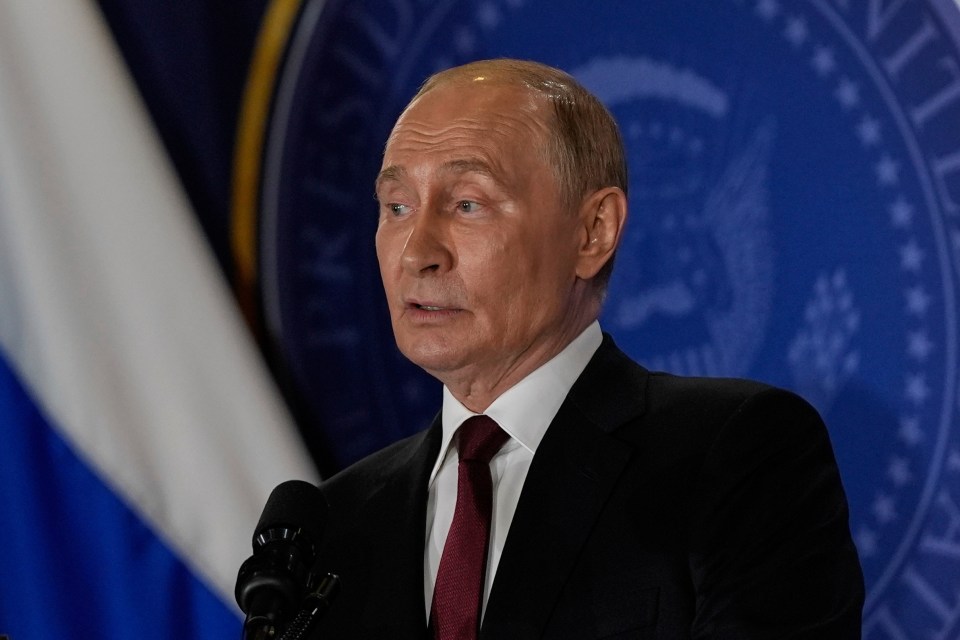
Putin speaking during the press conference in Alaska on FridayCredit: AP
But he accepted the gift, which according to its paperwork was manufactured on August 12.
He said: “The obvious thing here is that it rolled off the showroom floor and slid into a jet within probably 24 hours.”
And he told the Daily Mail: “I’m dumbfounded. I guess I should probably write Putin a thank you letter or something.
“I haven’t. I’ve been so busy it hasn’t really sunk in yet.”
He added: “It’s super cool, you know? I mean, it’s just such a unique bike.”
It comes as Putin continues to wage his bloody war on Ukraine.
The despot unleashed a fresh breakthrough assault just hours before his summit with Trump.
And just hours after Trump’s summit with European allies, Russia blitzed Ukraine over Monday night with 270 drones and missiles.
The brutal attacks targeted energy and transport infrastructure.
Just before Zelesnky and his European counterparts were set to meet Trump on Monday, another vicious attack killed 14 people and injured dozens in Ukraine.
8
He said he should write a thank you letter to PutinCredit: AP
8
Russia launches fresh strikes on Ukraine, August 19Credit: Getty
STRICKEN Ukraine will be forced to surrender large swathes of its eastern territory and forget about ever joining Nato under peace terms haggled by Donald Trump and Vladimir Putin.
Allies have offered “ironclad” security assurances to protect Ukraine from future Russian aggression if a peace deal can be forged.
But it would stop short of Nato Article 5 status, which sees members of the alliance leap to the aid of any member that is attacked.
Ukraine’s desire to join Nato has been blamed as a root cause of President Putin’s invasion.
He has insisted “Nyet” — Russian for “No” — over the proposal.
But the future security of Ukraine is the number one condition of its president, Volodymyr Zelensky.
British and other European troops could be committed to police the peace, with President Trump finally conceding the Americans would play a vital role in the future defence of Ukraine.
Last night, German Chancellor Friedrich Merz publicly stated: “The good news is that America is ready to participate in such security guarantees and is not leaving it to the Europeans alone.”
And PM Sir Keir Starmer said Mr Trump’s “leadership in pursuit of an end to the killing” should be commended.
Calls for an immediate ceasefire were dropped by world leaders yesterday, after Mr Trump announced he was instead pursuing a more stable and lasting “peace deal”.
Trump-Putin latest- Don says ‘no deal’ on Ukraine war & holds call with Zelensky after saying it’s now ‘up to him’
The Sun has been told a surrender deal would see Ukraine forced to reject Nato membership and other “multinational deals”.
Negotiations would also begin about ceding control of the Donetsk and Luhansk regions of Eastern Ukraine which are, in part, heavily occupied by Russian troops.
There was confusion last night over whether the talks would focus on territory currently held by the Kremlin invaders, or whether the wider regions were on the table.
Yesterday, EU leaders insisted: “Russia cannot have a veto against Ukraine’s pathway to EU and Nato.”
However, that does not rule out Mr Zelensky deciding to withdraw Ukraine’s stated aim to join both alliances as part of the wider deal.
Battered Ukraine will be outlawed from joining NATOCredit: Reuters
Russia has long claimed Donetsk and Luhansk are more loyal to Moscow than Kyiv, while Mr Zelensky has publicly ruled out giving up the land.
However, he is under massive pressure to concede and end the bloody three-and-a-half year conflict, which has seen more than a million deaths.
European leaders were locked in talks with the White House this weekend, as the world scrambled to catch up with what Mr Trump had offered Mr Putin to end the war.
Last night, UK government sources said the PM was playing a key role in selling the terms of the deal to wider Western allies in a series of calls following the talks between the Americans and Russians.
I welcome the openness of the United States, alongside Europe, to provide robust security guarantees to Ukraine as part of any deal. This is important progress and will be crucial in deterring Putin from coming back for more
Sir Keir Starmer’s statement
President Trump yesterday insisted it is time for Mr Zelensky to choose whether to agree with the terms of the deal — as the pair prepared to meet tomorrow.
The White House has also offered to play host to a trilateral summit between the Russians and Ukrainians if the deal is within reach.
Speaking following Friday’s talks, where he met with his Russian counterpart for the first time in six years, President Trump insisted it was “a great and very successful day in Alaska!”
He wrote on his Truth Social website: “The meeting with President Vladimir Putin of Russia went very well, as did a late night phone call with President Zelensky of Ukraine, and various European Leaders, including the highly respected Secretary General of Nato.
8
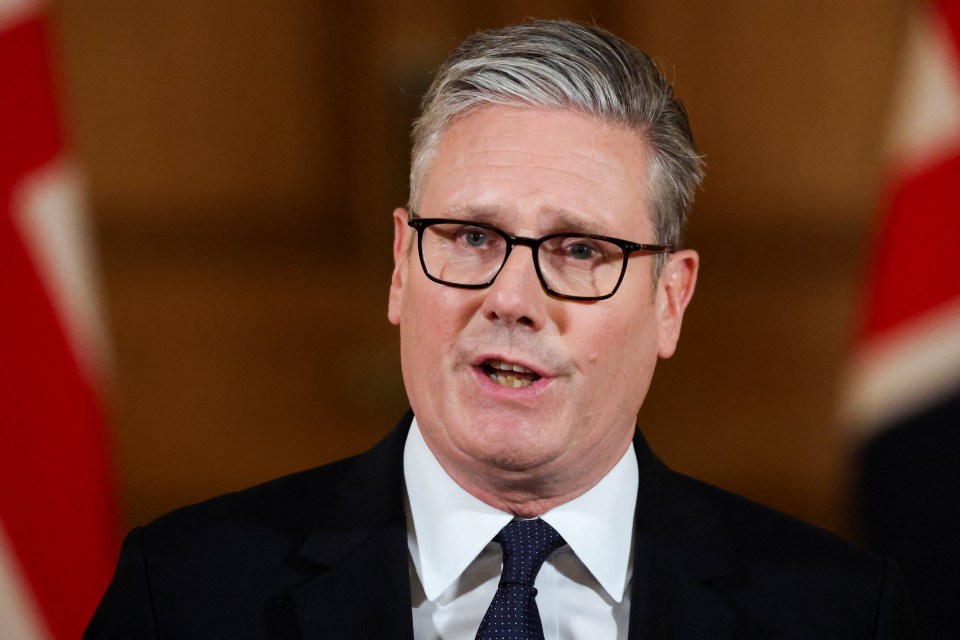
PM Sir Keir Starmer said Mr Trump’s ‘leadership in pursuit of an end to the killing’ should be commendedCredit: Getty
8
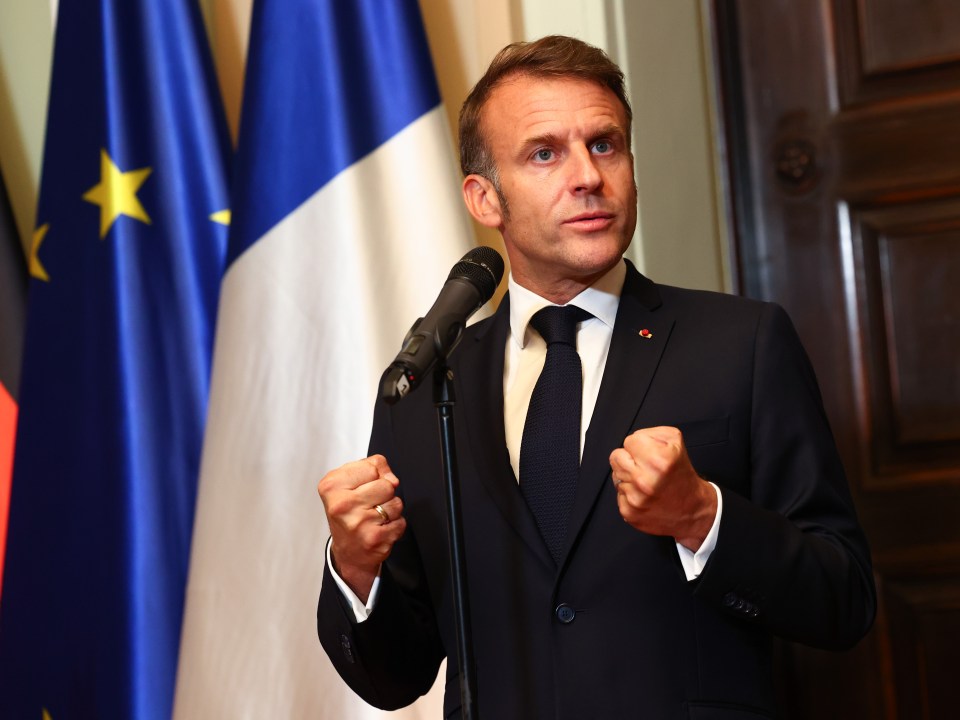
France’s Emmanuel Macron and Italy’s Giorgia Meloni, said: ‘We are clear Ukraine must have ironclad security guarantees to effectively defend its sovereignty and territorial integrity’Credit: Getty
“It was determined by all that the best way to end the horrific war between Russia and Ukraine is to go directly to a Peace Agreement, which would end the war, and not a mere Ceasefire Agreement, which often times do not hold up. President Zelensky will be coming to D.C., the Oval Office, on Monday afternoon. If all works out, we will then schedule a meeting with President Putin.
“Potentially, millions of people’s lives will be saved. Thank you for your attention to this matter!”
In a televised address released by the Kremlin, he said: “The conversation was very frank, substantive, and, in my opinion, brings us closer to the necessary decisions.”
He added: “We have not had direct negotiations of this kind at this level for a long time. We had the opportunity to calmly and in detail reiterate our position.”
We are clear that Ukraine must have ironclad security guarantees to effectively defend its sovereignty and territorial integrity. No limitations should be placed on Ukraine’s armed forces or on its cooperation with third countries. Russia cannot have a veto against Ukraine‘s pathway to EU and NATO
European statement
In a long statement, President Zelensky welcomed the offer of security guarantees outlined by Mr Trump, in a tentative sign he may be willing to sign up to the terms.
He wrote: “A real peace must be achieved, one that will be lasting, not just another pause between Russian invasions. Killings must stop as soon as possible, the fire must cease both on the battlefield and in the sky, as well as against our port infrastructure.
“All Ukrainian prisoners of war and civilians must be released, and the children abducted by Russia must be returned.
“Thousands of our people remain in captivity — they all must be brought home. Pressure on Russia must be maintained while the aggression and occupation continue.”
He went on: “In my conversation with President Trump, I said that sanctions should be strengthened if there is no trilateral meeting or if Russia tries to evade an honest end to the war. Sanctions are an effective tool.
“Security must be guaranteed reliably and in the long term, with involvement of Europe and the US.
“All issues important to Ukraine must be discussed with Ukraine’s participation, and no issue, particularly territorial ones, can be decided without Ukraine. I thank our partners who are helping.”
Yesterday the PM was taking part in a round of behind the scenes diplomacy, speaking to the White House and European capitals.
He heaped praise on Mr Trump, saying his “efforts have brought us closer than ever before to ending Russia’s illegal war in Ukraine”.
He went on: “His leadership in pursuit of an end to the killing should be commended.”
But the PM warned: “While progress has been made, the next step must be further talks involving President Zelensky.
8
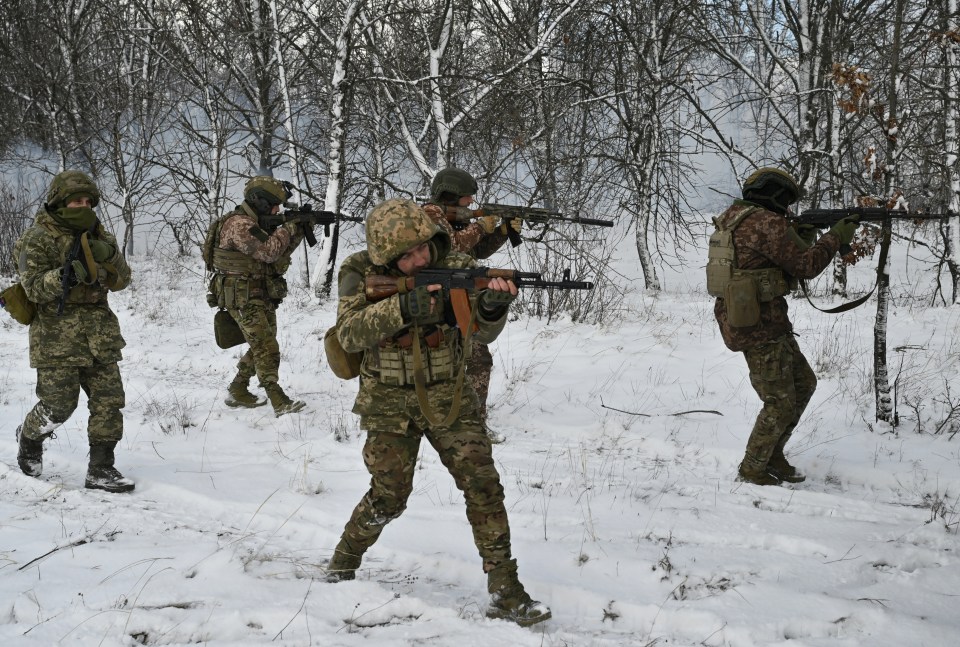
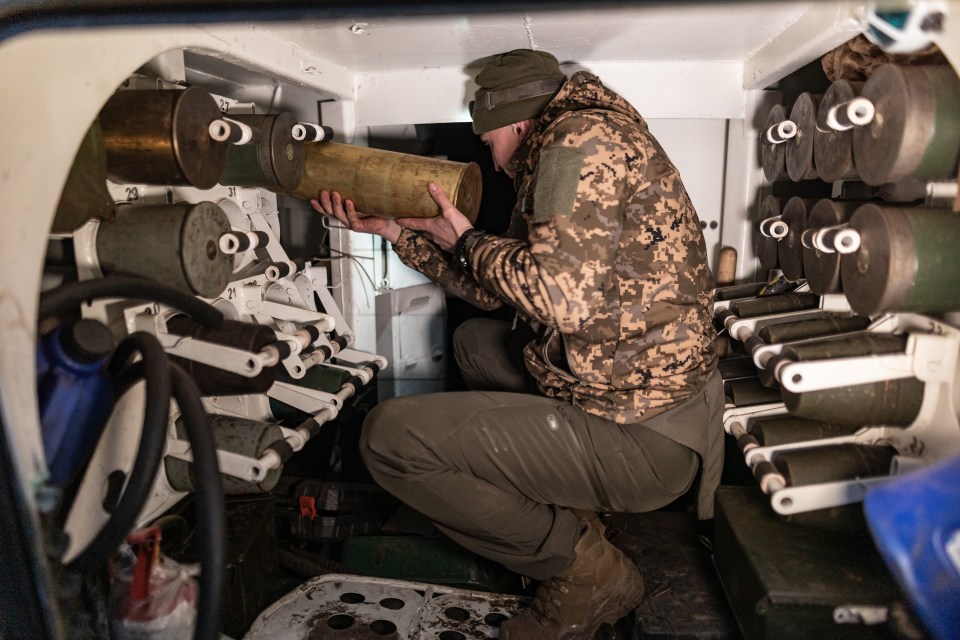
Negotiations would begin about ceding control of the Donetsk and Luhansk regions of Eastern Ukraine, pictured a soldier loading artilleryCredit: Getty
The path to peace in Ukraine cannot be decided without him. I spoke to President Zelensky, President Trump and other European partners, and we all stand ready to support this next phase.
“I welcome the openness of the United States, alongside Europe, to provide robust security guarantees to Ukraine as part of any deal.
“This is important progress and will be crucial in deterring Putin from coming back for more.
“In the meantime, until he stops his barbaric assault, we will keep tightening the screws on his war machine with even more sanctions, which have already had a punishing impact on the Russian economy and its people. Our unwavering support for Ukraine will continue as long as it takes.”
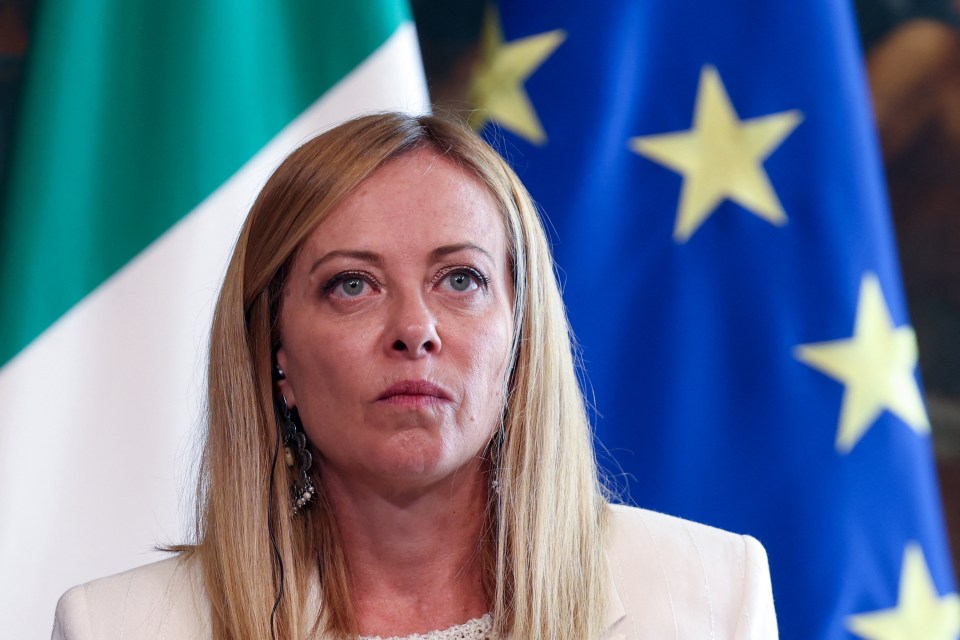
In a joint statement, Sir Keir and European leaders including France’s Emmanuel Macron and Italy’s Giorgia Meloni, said: “We are clear Ukraine must have ironclad security guarantees to effectively defend its sovereignty and territorial integrity.
“No limitations should be placed on Ukraine’s armed forces or on its cooperation with third countries.
Russia cannot have a veto against Ukraine‘s pathway to EU and Nato.
8
Italian leader Giorgia Meloni made a joint statement with MacronCredit: The Mega Agency
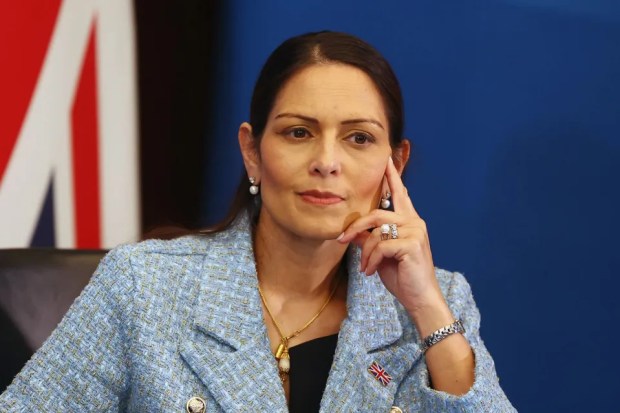
DONALD Trump was right to bring Vladimir Putin to the negotiating table on Friday, says Dame Priti Patel.
The Shadow Foreign Secretary gave her support to the US President’s efforts — while adding that Britain must keep up “tightening the screws” on the Russian tyrant’s regime.
The Tory grandee told The Sun on Sunday: “It is right President Trump has brought Putin to the negotiating table.
“And we support his efforts in ending Russia’s illegal invasion of Ukraine.
“Now is the time for the Euro-Atlantic partnership to be stronger than ever in supporting Ukraine, and forcing Putin to end his barbaric war.
“The British government must lead the charge, as we have done, in keeping pressure on Putin through sanctions — and demonstrate we can lead efforts to support Ukraine, and tighten the screws on Russia.”
But others had concerns that no ceasefire had been reached yesterday — even with Mr Trump having warned Putin of “severe consequences” if fighting did not stop.
Former Tory leader Sir Iain Duncan Smith said: “Trump has to tell him to agree to a ceasefire or he will up the ante on sanctions, secondary sanctions and weapons to Ukraine. Putin has to fear what Trump can do — more than his own generals and politicians who would come after him.”
He added that Trump “must understand who Putin is, a KGB man who has one purpose in life — to recreate the Soviet Union”.
Former PM Boris Johnson also said that Trump was right to make a move as Putin was weaker than he seemed owing to the war’s damage to Russia’s economy.
Most Labour MPs remained quiet on the talks. Crossbench peer and intelligence expert Lord Peter Ricketts said they were a “clear win” for Putin.
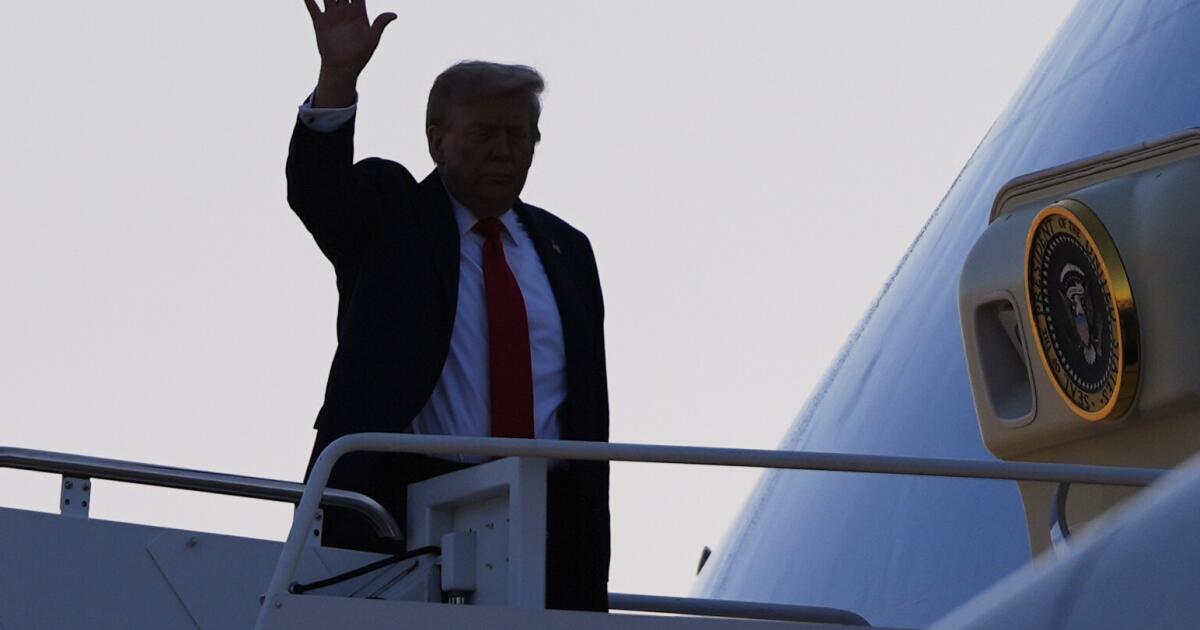
ANCHORAGE — President Trump is on his way to Alaska for a high-stakes summit with Vladimir Putin, indicating he will take a tougher line with the Russian leader over a ceasefire in Ukraine after three brutal years of war.
Speaking with reporters aboard Air Force One, Trump said Putin would face “economically severe” consequences if negotiations in Anchorage today fail to yield progress toward peace. He said that only Ukraine could decide whether to cede territory to Moscow. And he expressed support for U.S. security guarantees for Ukraine in any future peace agreement, so long as they fall short of NATO membership for the beleaguered nation.
“Yes, it would be very severe,” Trump said. “Very severe.”
Traveling from Moscow, Putin is bringing along several Russian business leaders, according to the Kremlin, a sign he hopes to begin discussions on normalizing relations with Washington. But Trump said he would not discuss business opportunities until the war is settled.
It’s a position that will relieve allies in Europe that have been hoping Trump would approach Putin with a firm hand, after months of applying pressure on Ukraine’s president, Volodymyr Zelensky, to prepare to make concessions to Moscow.
Zelensky was not invited to the Alaska negotiations. But Trump said he hoped his meeting on Friday would lead to direct talks “very shortly.”
Trump had said in recent days that a peace deal would include the “swapping” of land, a prospect roundly rejected in Kyiv. The Ukrainian constitution prohibits territorial concessions without the support of a public referendum.
“They’ll be discussed, but I’ve got to let Ukraine make that decision,” the president said of land swaps. “I’m not here to negotiate for Ukraine. I’m here to get them to the table.”
Trump will host Putin at the Elmendorf Air Force Base in Anchorage later on Friday, the first meeting between a U.S. and Russian president since 2021.
Russian Foreign Ministry officials said Wednesday that Putin’s war aims remain “unchanged.” And an aggressive Russian advance along the front lines this week provided evidence to military analysts that Moscow has no plans to implement a ceasefire.
The two leaders are expected to greet one another on the tarmac before meeting privately. Afterward, they will take an expanded lunch meeting with their aides, followed by a news conference, according to the White House.
DONALD Trump and Vladimir Putin are just hours away from holding a historic one-on-one meeting which could shape global politics.
The world’s eyes are poised on Alaska today as leaders of both superpowers prepare to sit down in a peace summit that could decide the fate of Ukraine.
10
Trump is reportedly planning to make a bombshell offer to Putin to crack a ceasefire dealCredit: Reuters
10
Dozens of civilians in Sloviansk woke up to their homes being bombed in Russian drone strikes just hours before the meetingCredit: Getty
10
The summit could mark the beginning of the end of the bloody warCredit: AP
10
On Thursday afternoon, Trump likened the high-stakes talks to a game of chess as he warned there is a 25 per cent chance it could end in failure.
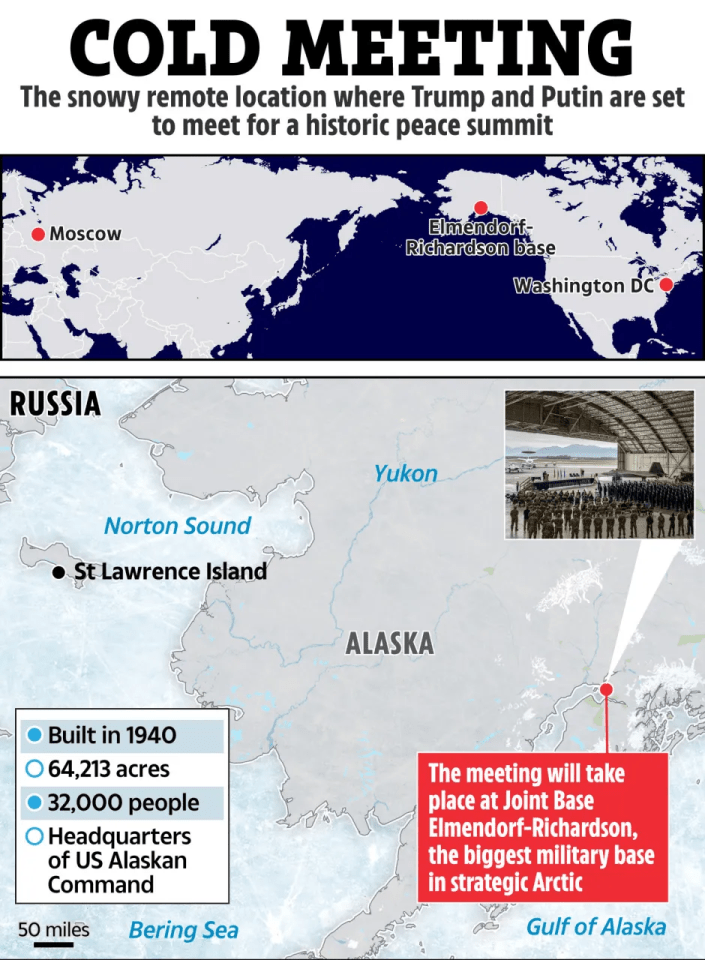
Trump and Putin are set to meet one-on-one at Elmendorf-Richardson base near Anchorage at 11.30am local time (8.30pm UK) — under extraordinary security.
Putin, who rarely travels abroad since launching his full-scale invasion, will arrive with his feared “Musketeers” bodyguards.
They are notorious for coming armed with everything from armour-piercing pistols to the infamous nuclear briefcase — and even a “poo suitcase” to stop any analysis of Vlad’s health.
The Cold War-era military base has been locked down by US and Russian forces since the meeting was announced last week.
Over 32,000 troops, air defences, and electronic jamming systems are all in place waiting for today’s link up.
The crunch talks will be followed by a joint press conference by both leaders.
The main topic of the meeting will be crisis in Ukraine with Trump pushing to strike a deal with the Kremlin to end the bloodshed.
Also on the agenda will be trade and economic cooperation, Kremlin aide Yuri Ushakov added.
Russia punches through frontline & deploys 110k troops days before Don talks
Trump and Putin will also have a wider meeting with delegations from Washington and Moscow.
They will then attend a working lunch with their security entourage.
For Trump, the meeting stands as a chance to bring peace to war-torn Ukraine and end a conflict which he said would never have started if he were the president back in 2022.
And for Putin, the meeting will decide how much territory he can grab before ending his bloody assault.
The Russian leader, who has consistently rejected calls for a ceasefire, said that he wants peace but that his demands for ending his invasion were “unchanged”.
One major sticking point for Moscow is the annexation of more Ukrainian territory – one of Putin’s long-term demands.
It is understood that Trump will try to convince Putin to make peace by offering him deals and concessions.
10
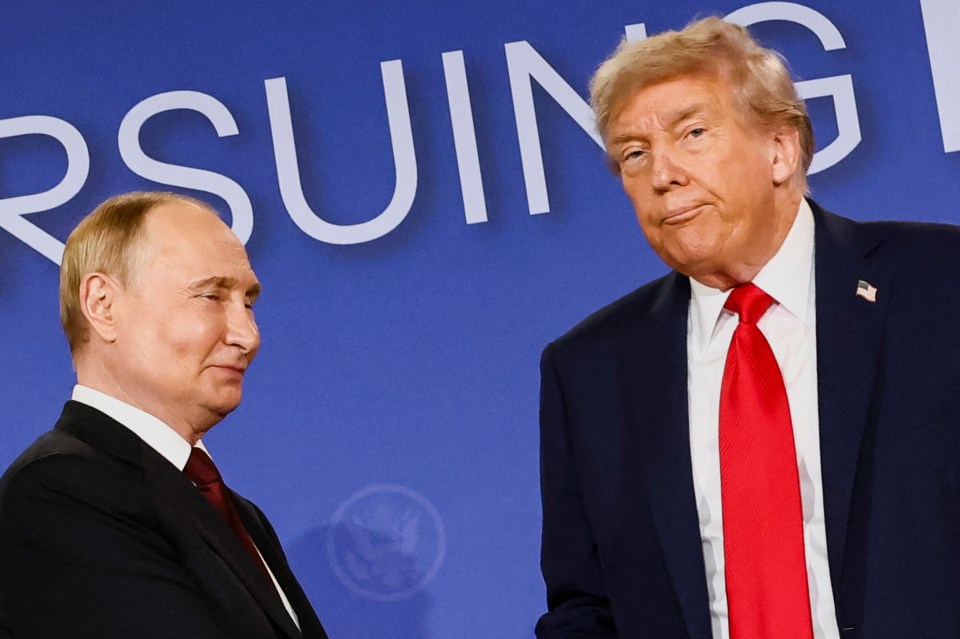
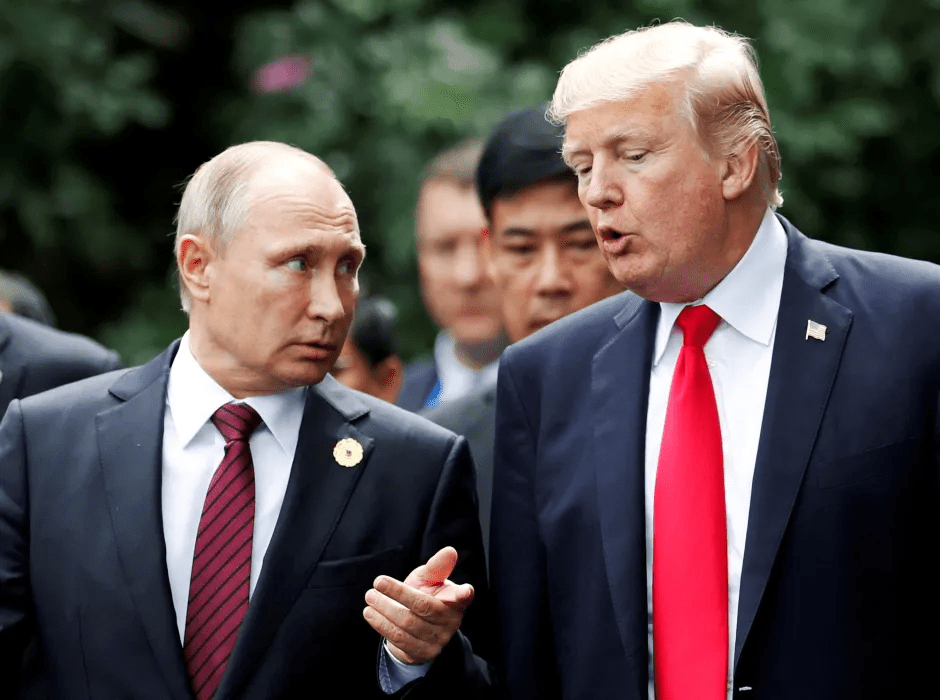
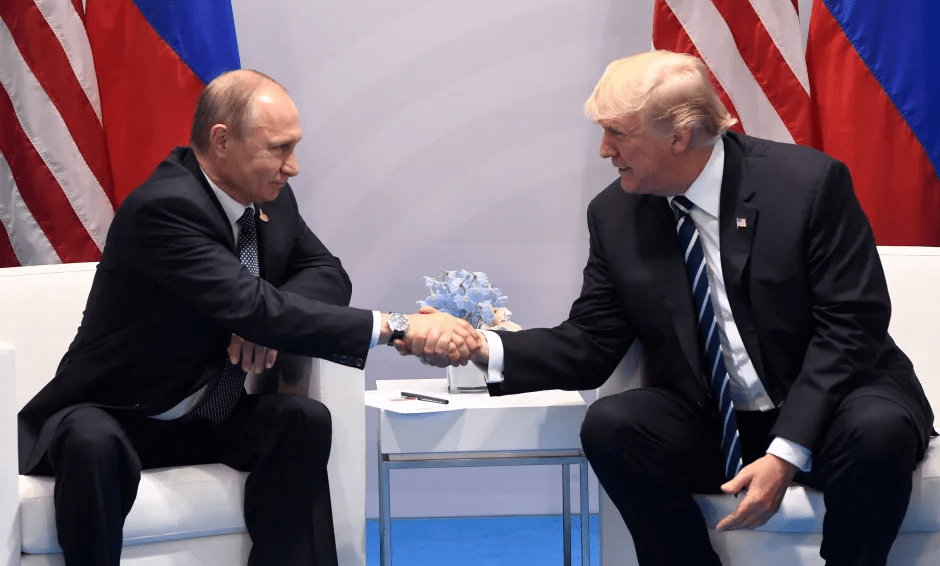
Trump and Putin shake hands during a meeting in 2017Credit: AFP or licensors
10
A Russian airstrike on Sloviansk, Ukraine came just hours before the historic meetingCredit: Getty
10
Though Washington has said that it will not engage in any agreement on a final peace deal without Ukraine’s formal involvement in the negotiations.
Trump has insisted a deal won’t be made without Ukraine’s blessing with a second meeting set to be arranged soon.
He hinted at a more “important” second round of talks taking place “very quickly” — this time with Volodymyr Zelensky and “maybe some European leaders” in the room.
Putin has tried to sweeten the mood, praising Trump’s “sincere efforts” for peace, even as Zelensky warns he is “bluffing”.
If Putin agrees to a possible ceasefire, both leaders will reach the next stage of peace-making, where they are expected to hold a trilateral meeting with Ukraine’s president, Volodymyr Zelensky.
Trump has vowed “very severe consequences” if this turns out to be the case.
Zelensky, fresh from meetings with German Chancellor Friedrich Merz and UK PM Sir Keir Starmer, has warned that any talks without Ukraine risk disaster.
The deal will include opening up Alaska’s natural resources to Moscow and lifting some of the American sanctions on Russia’s aviation industry, The Telegraph revealed.
DONALD Trump and Vladimir Putin last met in person at the G20 summit in Osaka, Japan, on June 28, 2019.
It was during Trump’s first term as the president of America.
The meeting is widely remembered for a moment where Trump, with a smile, publicly warned the Russian leader: “Don’t meddle in the election, please.”
Their private discussions reportedly touched upon arms control, trade, and regional security issues
More than anyone else, the meeting will be key to European leaders who have long supported Ukraine and warned against future Russian aggression.
Zelensky and European leaders are likely to reject any settlement proposals by the US that demand Ukraine give up further land.
They want to freeze the current frontline as it is – giving away the territory already being held by the Russians.
Zelensky has reiterated that Ukraine will not cede any further territory to Russia.
But it may not be up to the embattled leader if he is presented with a take it or leave it offer in the latter stages of the peace process.
Trump announced on Friday that the only way to resolve the issues is for both sides to accept losses of land.
He said: “It’s complicated, actually. Nothing is easy. It’s very complicated.
“We’re going to get some switched. There’ll be some swapping of territories to the betterment of both.”
The MAGA president said he would try to return territory to Ukraine.
10
European leader met with Zelensky ahead of the talks with Trump and PutinCredit: PA
10
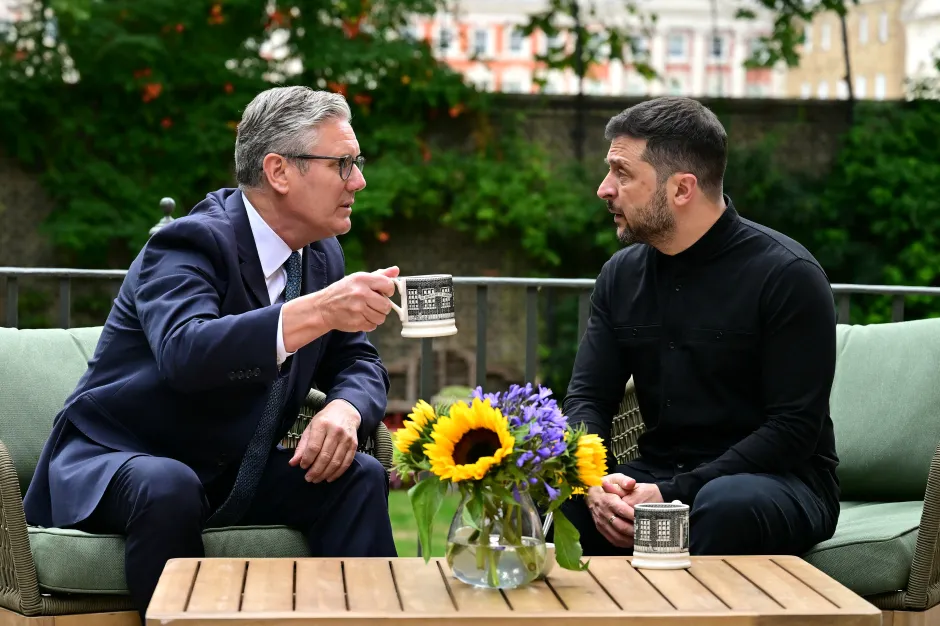
Starmer talks with Zelensky in the garden of 10 Downing StreetCredit: AFP
Don added: “Russia has occupied a big portion of Ukraine. They’ve occupied some very prime territory.
“We’re going to try and get some of that territory back for Ukraine.”
After Trump held a call with the European leaders on Thursday, German Chancellor Friedrich Merz confirmed that Trump reaffirmed that Trump would not negotiate territorial issues with Putin.
Meanwhile, French President Emmanuel Macron will not be engaging in any “schemes for territory swaps” during the summit.
The summit is set to take place at Elmendorf-Richardson base, one of the most strategic locations in the Arctic.
Bristling with troops from the US Air Force, Army, Navy and Marine Corps, as well as National Guardsmen and Reserves, it is a symbolic location for both the US and Russia.
ANCHORAGE — Vladimir Putin is lavishing praise on President Trump ahead of their high-stakes summit in Alaska on Friday, thanking his host for “energetic and sincere efforts to stop the fighting” in Ukraine over three years since the Russian leader attempted to conquer the country.
Trump, at the White House, also expressed optimism ahead of the talks, telling reporters he believes Putin “would like to see a deal” after suffering more than a million Russian casualties on the battlefield.
Yet Russian Foreign Ministry officials said Wednesday that Putin’s war aims remain “unchanged.” And an aggressive Russian advance along the front lines this week provided evidence to military analysts that Moscow has no plans to implement a ceasefire.
It was a day of diplomatic maneuvering ahead of an extraordinary visit from a Russian president to the U.S. homeland, and the first audience Putin has received with a Western leader since the war began.
“It’s going to be very interesting — we’re going to find out where everybody stands,” Trump told reporters in the Oval Office on Thursday. “If it’s a bad meeting, it’ll end very quickly. And if it’s a good meeting, we’re going to end up getting peace in the very near future.”
Putin’s positioning ahead of the summit, and Trump’s eagerness for a deal, continue to fuel worries across Europe and in Ukraine that the Alaska negotiations could result in a bilateral agreement designed by Moscow and endorsed by Washington that sidelines Kyiv.
In London, Britain’s prime minister, Keir Starmer, hosted Ukrainian President Volodymyr Zelensky on Thursday, offering support for Trump’s effort while placing the onus on Putin to “prove he is serious about peace.”
“They agreed there had been a powerful sense of unity and a strong resolve to achieve a just and lasting peace in Ukraine,” 10 Downing Street said in a statement.
Trump said the Alaska summit, to be held at Joint Base Elmendorf-Richardson in Anchorage, is meant to “set the table” for direct talks between Putin and Zelensky that could include himself and European leaders.
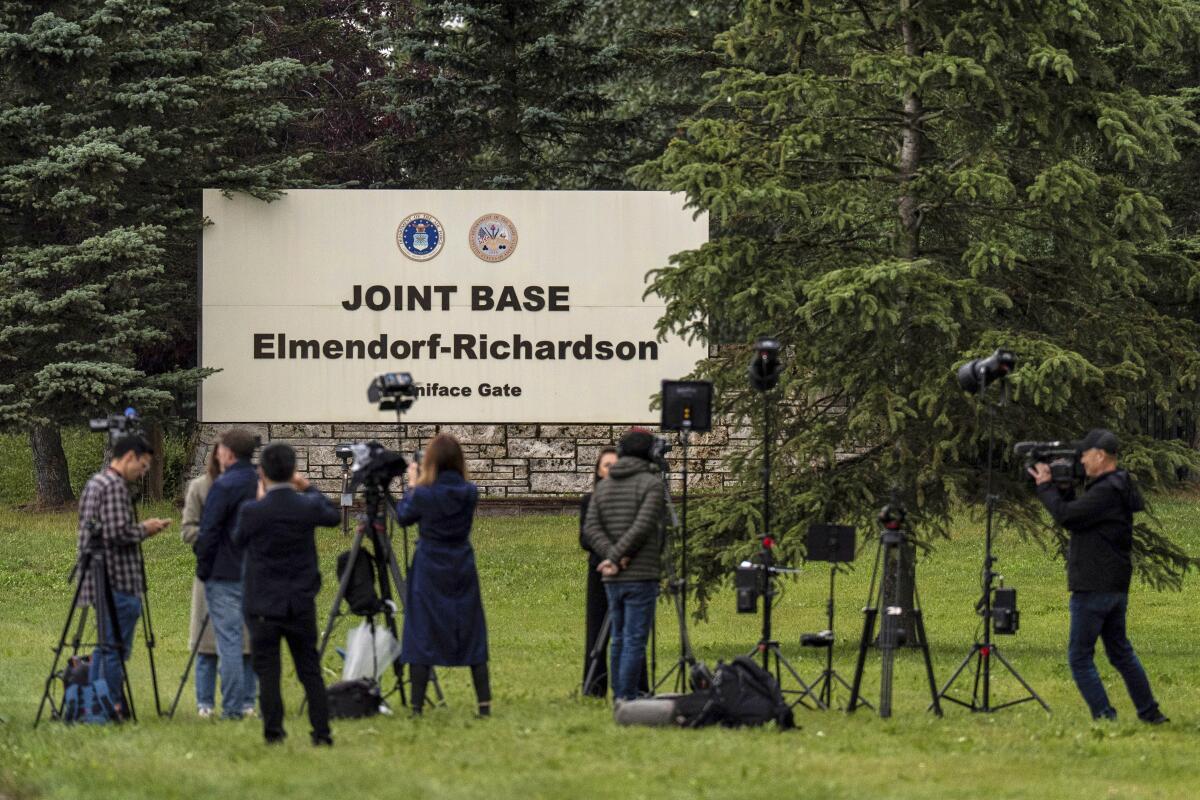
Journalists stand outside Joint Base Elmendorf-Richardson in Anchorage on Thursday ahead of Friday’s summit between President Trump and Russian President Vladimir Putin.
(Jae C. Hong / Associated Press)
But addressing reporters, Trump suggested that denying Putin dominion over all of Ukraine — and allowing him to hold on to the territories he has seized militarily — would be concession enough from Moscow. The president had said in recent days that land “swapping” would be part of an ultimate peace settlement, a statement rejected by Kyiv.
“I think President Putin would like to see a deal,” Trump said. “I think if I weren’t president, he would take over all of Ukraine.”
“I am president, and he’s not going to mess around with me,” he added.
Russian state media reported Thursday that Putin had gathered his advisors to inform them of “how the negotiation process on the Ukrainian crisis is going.”
Trump, “in my opinion, quite energetic and sincere efforts to stop the fighting, stop the crisis and reach agreements that are of interest to all parties involved in this conflict,” Putin said.
But U.S. efforts to get Russia to halt the fighting have proved futile for months, with Moscow pressing forward in an offensive that has secured incremental gains on the battlefield.
“Putin thinks that he is winning this war militarily,” said Frederick Kagan, director of the Critical Threats Project, which collaborates with the Institute for the Study of War to produce daily battlefield assessments on the conflict. “He’s also confident that Western support for Ukraine, and particularly U.S. support, will break, and that when it does, Ukraine will collapse, and he’ll be able to take control of the whole thing.”
“It’s been his theory of victory for a long time,” Kagan said, “and it’s a huge part of the problem, because he’s not going to make any concessions so long as he’s confident that he’s winning.”
Russian incursions along a strategic portion of the front line, near a crucial Ukrainian logistics hub, spooked Ukraine’s supporters earlier this week. While serious, Kagan said that Russia does not hold the territory, and said that the conditions for offensive Russian operations had been set over the course of months.
“The Russians continue to have the initiative, and they continue to make gains,” he added. “The first step in changing Putin’s calculation about the war is to urgently help the Ukrainians stop the gains.”
Zelensky, after meeting with Starmer in London, said that he and the British leader had “discussed expectations for the meeting in Alaska and possible prospects.”
“We also discussed in considerable detail the security guarantees that can make peace truly durable,” Zelensky said, “if the United States succeeds in pressing Russia to stop the killings and engage in genuine, substantive diplomacy.”
Trump and Putin plan on arriving of the U.S. airbase within moments of one another, and are expected to meet on the tarmac before retreating into a private meeting.
Bilateral meetings between Russian President Vladimir Putin and his U.S. counterparts were a regular occurrence early in his 25-year tenure.
But as tensions mounted between Moscow and the West following the illegal annexation of Ukraine’s Crimean Peninsula in 2014 and allegations of meddling with the 2016 U.S. elections, those meetings became increasingly less frequent, and their tone appeared less friendly.
Here’s what to know about past meetings between Russian and U.S. presidents:
Putin and Joe Biden
Putin and Biden met only once while holding the presidency –- in Geneva in June 2021.
Russia was massing troops on the border with Ukraine, where large swaths of land in the east had long been occupied by Moscow-backed forces; Washington repeatedly accused Russia of cyberattacks. The Kremlin was intensifying its domestic crackdown on dissent, jailing opposition leader Alexei Navalny months earlier and harshly suppressing protests demanding his release.
Putin and Biden talked for three hours, with no breakthroughs. They exchanged expressions of mutual respect, but firmly restated their starkly different views on various issues.
They spoke again via videoconference in December 2021 as tensions heightened over Ukraine. Biden threatened sanctions if Russia invaded, and Putin demanded guarantees that Kyiv wouldn’t join NATO –- something Washington and its allies said was a nonstarter.
Another phone call between the two came in February 2022, less than two weeks before the full-scale invasion. Then the high-level contacts stopped cold, with no publicly disclosed conversations between them since the invasion.
Putin and Donald Trump
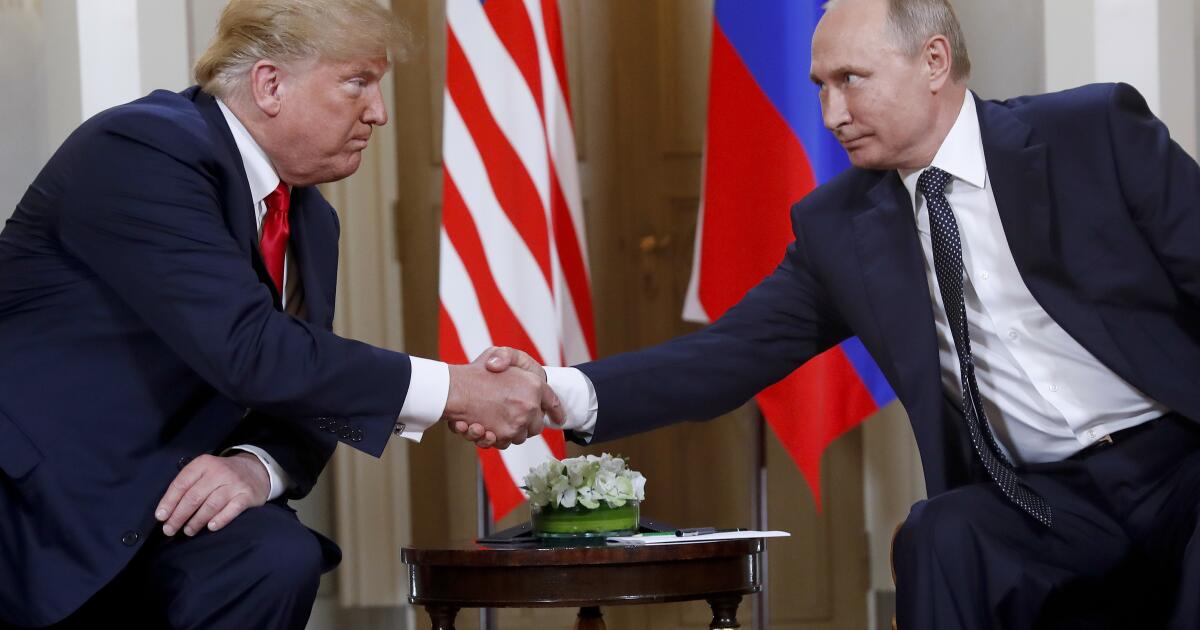
Putin met President Trump six times during the American’s first term — at and on the sidelines of G20 and APEC gatherings — but most famously in Helsinki in July 2018. That’s where Trump stood next to Putin and appeared to accept his insistence that Moscow had not interfered with the 2016 U.S. presidential election and openly questioned the firm finding by his own intelligence agencies.
His remarks were a stark illustration of Trump’s willingness to upend decades of U.S. foreign policy and rattle Western allies in service of his political concerns.
“I have great confidence in my intelligence people, but I will tell you that President Putin was extremely strong and powerful in his denial today,” Trump said. “He just said it’s not Russia. I will say this: I don’t see any reason why it would be.”
Since Trump returned to the White House this year, he and Putin have had about a half-dozen publicly disclosed telephone conversations.
Putin and Barack Obama
President Obama met with Putin nine times, and there were 12 more meetings with Dmitry Medvedev, who served as president in 2008-12. Putin became prime minister in a move that allowed him to reset Russia’s presidential term limits and run again in 2012.
Obama traveled to Russia twice — once to meet Medvedev in 2009 and again for a G20 summit 2013. Medvedev and Putin also traveled to the U.S.
Under Medvedev, Moscow and Washington talked of “resetting” Russia-U.S. relations post-Cold War and worked on arms control treaties. U.S. State Secretary Hillary Clinton famously presented a big “reset” button to Foreign Minister Sergey Lavrov at a meeting in 2009. One problem: instead of “reset” in Russian, they used another word meaning “overload.”
After Putin returned to office in 2012, tensions rose between the two countries. The Kremlin accused the West of interfering with Russian domestic affairs, saying it fomented anti-government protests that rocked Moscow just as Putin sought reelection. The authorities cracked down on dissent and civil society, drawing international condemnation.
Obama canceled his visit to Moscow in 2013 after Russia granted asylum to Edward Snowden, a former National Security Agency contractor and whistleblower.
In 2014, the Kremlin illegally annexed Crimea and threw its weight behind a separatist insurgency in eastern Ukraine. The U.S. and its allies responded with crippling sanctions. Relations plummeted to the lowest point since the Cold War.
The Kremlin’s 2015 military intervention in Syria to prop up Bashar Assad further complicated ties. Putin and Obama last met in China in September 2016, on the sidelines of a G20 summit, and held talks focused on Ukraine and Syria.
Putin and George W. Bush
Putin and President Bush met 28 times during Bush’s two terms, according to the Russian state news agency Tass. They hosted each other for talks and informal meetings in Russia and the U.S., met regularly on the sidelines of international summits and forums, and boasted of improving ties between onetime rivals.
After the first meeting with Putin in 2001, Bush said he “looked the man in the eye” and “found him very straightforward and trustworthy,” getting “a sense of his soul.”
In 2002, they signed the Strategic Offensive Reductions Treaty -– a nuclear arms pact that significantly reduced both countries’ strategic nuclear warhead arsenal.
Putin was the first world leader to call Bush after the 9/11 terrorist attack, offering his condolences and support, and welcomed the U.S. military deployment on the territory of Moscow’s Central Asian allies for action in Afghanistan.
He has called Bush “a decent person and a good friend,” adding that good relations with him helped find a way out of “the most acute and conflict situations.”
Putin and Bill Clinton
President Clinton traveled to Moscow in June 2000, less than a month after Putin was inaugurated as president for the first time in a tenure that has stretched to the present day.
The two had a one-on-one meeting, an informal dinner, a tour of the Kremlin from Putin, and attended a jazz concert. Their agenda included discussions on arms control, turbulence in Russia’s North Caucasus region, and the situation in the Balkans.
At a news conference the next day, Clinton said Russia under Putin “has the chance to build prosperity and strength, while safeguarding that freedom and the rule of law.”
The two also met in July of that same year at the G8 summit in Japan, in September — at the Millennium Summit at the U.N. headquarters in New York, and in November at the APEC summit in Brunei.
In an interview with former Fox News host Tucker Carlson last year, Putin said he asked Clinton in 2000 if Russia could join NATO, and the U.S. president reportedly said it was “interesting,” and, “I think yes,” but later backtracked and said it “wasn’t possible at the moment.” Putin used the anecdote to illustrate his point about the West’s hostility toward Russia, “a big country with its own opinion.”
“We just realized that they are not waiting for us there, that’s all. OK, fine,” he said.
Litvinova writes for the Associated Press. AP writer Yuras Karmanau contributed to this report.
WASHINGTON — President Trump said Monday that he expected to determine mere moments into his meeting with Russian leader Vladimir Putin this week whether it would be possible to work out a deal to halt the war in Ukraine.
“At the end of that meeting, probably the first two minutes, I’ll know exactly whether or not a deal can be made,” Trump said at a White House press conference that he called to announce plans for a federal takeover of Washington’s police force to help combat crime.
He said he thought Friday’s sitdown with Putin in Alaska would be “really a feel-out meeting.” Trump added that “it’ll be good, but it might be bad” and predicted he may say, “lots of luck, keep fighting. Or I may say, we can make a deal.”
Putin wants to lock in Russia’s gains since invading Ukraine in February 2022 as Trump presses for a ceasefire that has remained out of reach. Trump’s eagerness to reach a deal has raised fears in Ukraine and Europe about such an agreement favoring Russia, without sufficient input from Ukraine. Trump has alternately harshly criticized both leaders after promising — and so far failing — to swiftly end the conflict.
The Trump-Putin meeting so far isn’t going to include Zelensky
Trump on Monday ducked repeated chances to say that he would push for Ukrainian President Volodymyr Zelensky to take part in his discussions with Putin, and was especially dismissive of Zelensky and his need to be part of an effort to seek peace.
He said the Ukrainian president had been to “a lot of meetings” without managing to halt a war that Russia started. Trump also noted that Zelensky had been in power for the duration of the war and said “nothing happened” during that time. He contrasted that with Putin, who has wielded power in Russia for decades.
Trump said that, after his meeting with Putin, “The next meeting will be with Zelensky and Putin” but it could also be a meeting with “Putin and Zelensky and me.”
European allies have pushed for Ukraine’s involvement, fearful that discussions could otherwise favor Moscow.
To that point, Trump said he would call Zelensky and European leaders after his discussion with Putin to “tell them what kind of a deal — I’m not going to make a deal. It’s not up to me to make a deal.”
Trump spent the early part of his administration decrying Zelensky, even suggesting he was a dictator because his country has not held elections during the war. Zelensky was hounded out of the Oval Office in February after Trump and Vice President JD Vance suggested he hadn’t been grateful enough for U.S. support.
Trump’s up and down relations with Putin
More recently, Trump has expressed frustration with Putin that Russia hasn’t appeared to take a push for a ceasefire more seriously, and softened his tone toward Zelensky. His comments Monday suggested he might have had another change of heart.
“President Putin invited me to get involved,” Trump said. He noted that he thought it was “very respectful” that Putin is coming to the U.S. for Friday’s meeting, instead of insisting that Trump go to Russia.
“I’d like to see a ceasefire. I’d like to see the best deal that can be made for both parties,” Trump said.
The president repeated that any major agreement could involve land swaps, without elaborating. He had threatened Moscow with more economic sanctions if more isn’t done to work toward a ceasefire, but suggested Monday that, should Friday’s meeting be successful, he could see a day when the U.S. and Russia normalize trade relations.
Putin is expected to be unwavering in his demands to keep all the territory his forces now occupy and to prevent Ukraine from joining NATO, with the long-term aim of returning it to Moscow’s sphere of influence.
Zelensky insists he will never consent to any formal Russian annexation of Ukrainian territory or give up a bid for NATO membership.
Putin believes he has the advantage on the ground as Ukrainian forces struggle to hold back Russian advances along the 600-mile front. On the front lines, few Ukrainian soldiers believe there’s an end in sight to the war.
Europeans will prepare with a virtual meeting on Ukraine this week
With the Europeans and Ukrainians so far not invited to the summit, Germany sought to prepare by inviting Trump, Zelensky, the NATO chief and several other European leaders for a virtual meeting on Wednesday.
The German chancellery said the talks would seek additional ways to pressure Russia and prepare for peace negotiations and “related issues of territorial claims and security.”
Steffen Meyer, spokesperson for German Chancellor Friedrich Merz, said the German government “has always emphasized that borders must not be shifted by force” and that Ukraine should decide its own fate “independently and autonomously.”
Earlier, a Ukrainian drone attack killed one person and wounded two others in a region some 260 miles east of Moscow.
Russia’s Defense Ministry said its air defenses intercepted and destroyed a total of 39 Ukrainian drones overnight and Monday morning over several Russian regions as well as over the Crimean Peninsula, which Russia annexed in 2014.
UKRAINE’S fight against Putin’s illegal invasion is vital for all of Europe.
The Ukrainian people are fighting bravely for their freedom, their independence and their rights.
4
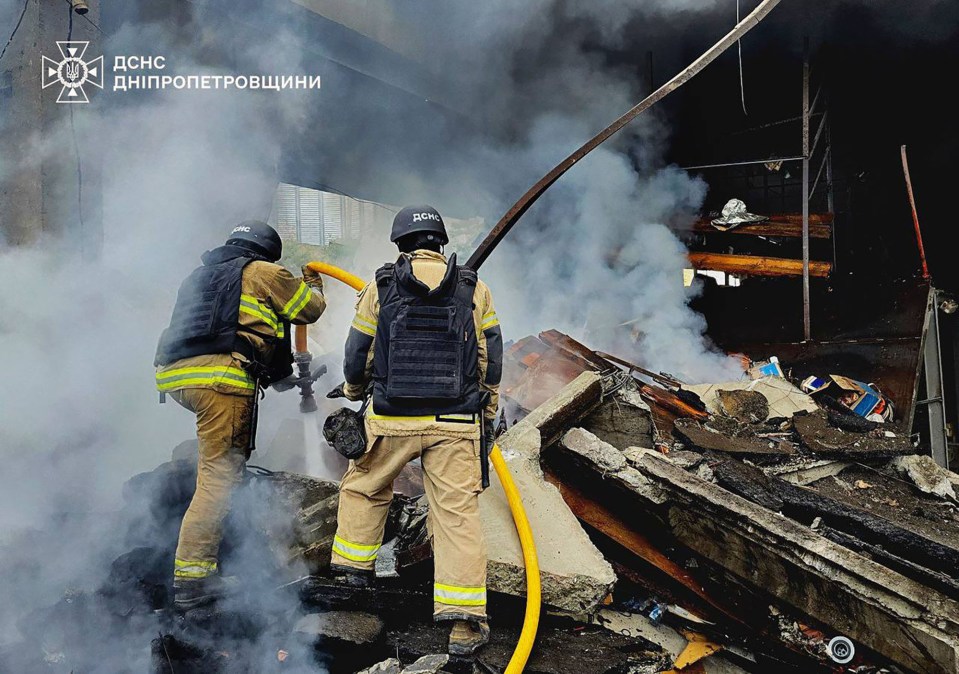
Firefighters at scene of a Russian rocket attack on Dnipro in eastern UkraineCredit: East2West
4
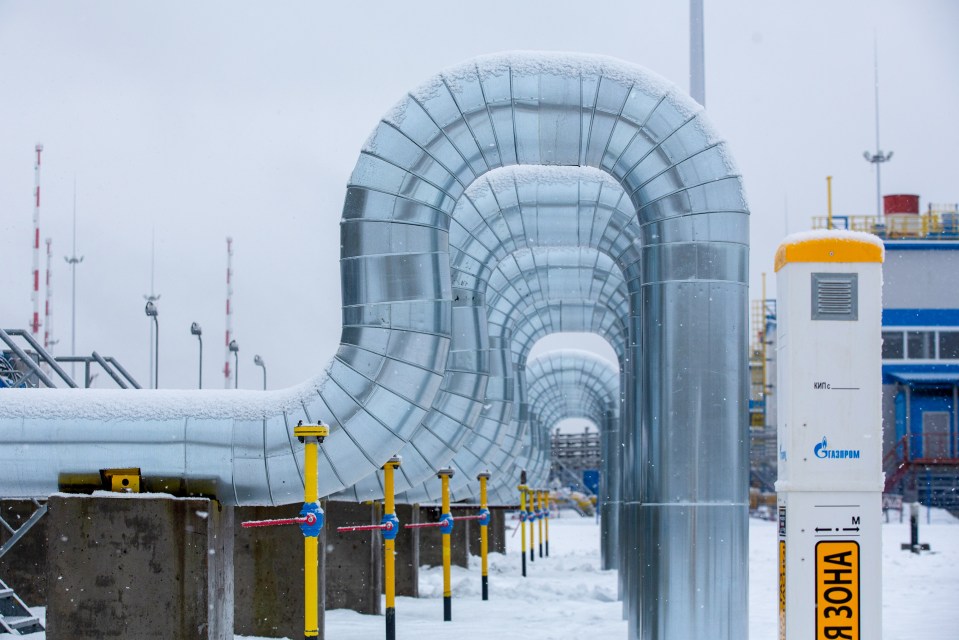
A Russian gas pipelineCredit: Getty
But American security is on the line there, as well as British and European security.
That is why we and European allies have been providers of military aid to Ukraine.
And we recognise the indispensable role of the US in that.
It is also why President Trump’s recent decision to make more weapons available for Ukraine’s brave resistance is very welcome.
And we share the President’s frustration with Putin’s continual delaying tactics and maximalist demands.
It is clear that Putin is not negotiating in good faith.
Tighten screws
The pressure must continue to grow on Putin, to make clear that this awful war, and his wanton campaign of aggression, must come to an end.
As the UK and US get down to hard talks ahead of next week’s summit, Europe must ramp up the pressure, too.
We, as HM Opposition, will not write the Government a blank cheque.
But we stand squarely with them in defending our national interest and that means resisting Putin’s illegal war.
Nazi lies, Vlad’s propaganda & troops on border… chilling signs Putin ready to invade ANOTHER European nation after Ukraine
Russia has so far failed to achieve its war objectives.
It has suffered enormous casualties and, in desperation, Putin has had to turn to Iran for weapons and North Korea for troops.
Three years on, and despite what Russia claims, the cost to its economy has been enormous and is unsustainable.
I am proud the Conservative government, working with allies, helped to drive forward the largest and most severe set of sanctions Russia has ever seen to cripple Putin’s war machine.
Through the tough and wide-ranging sanctions delivered by the international community, Putin has been denied $400billion of funds since February 2022 — money that could otherwise have been spent on this illegal war.
But we cannot stop here. The screws must continue to tighten.
Pulling in the same direction
The US is right that we need all the world’s major economies to be pulling in the same direction.
There can be no place for Russian oil on our continent. There must be no safe harbour for Russian ships.
There must be no let-up in our collective fight against Russia in every corner of the continent.
That is why Britain must continue to maintain a leadership position in this fight.
4
The entire Euro-Atlantic alliance must be unflinching in the face of Putin’s aggressionCredit: Getty
4
President Trump’s tariffs on India in part show that there can be no place for Russian oilCredit: Getty
We must take the lead in mobilising sanctioned Russian sovereign assets to help Ukraine.
We must ensure our Government is using the full weight of the Whitehall legal machine to find more creative mechanisms through which those assets can be legally leveraged to support Ukraine’s military efforts.
And we must encourage all our European partners to do exactly the same.
It is clear that by leveraging our full economic might, and crippling Russia’s, we can continue to support Ukraine, and force Putin to the table.
The entire Euro-Atlantic alliance must be unflinching in the face of Putin’s aggression.
From sanctions, to Operation Interflex and the 100-year Partnership, Britain’s support for Ukraine has been unwavering and must continue to be so.
Shoulder to shoulder
So we must stand up for the territorial integrity of Ukraine and ensure that at no stage is Putin’s aggression rewarded.
Because the lesson of the past 20 years is crystal clear: Putin only comes back for more.
We must stand shoulder to shoulder with our Ukrainian friends as they fight not just an imperialist Russian, but a whole axis of authoritarian states seeking to sow destruction on our own continent.
Ukraine is in a battle for its own sovereignty as well as the principles that underpin our whole way of life — democracy, liberty and the rule of law.
Britain has a history of standing up to threatening authoritarianism.
The invasion of Ukraine demands that we do so again.
We must keep rising to the challenge.
Putin has to know that if he tests the Euro-Atlantic alliance, he will fail.
The coming week could bring an important moment in the war between Russia and Ukraine, as President Trump’s deadline for the Kremlin to reach a peace deal approaches — or it could simply melt away.
Trump’s special envoy Steve Witkoff was expected in Moscow in the middle of this week, just before Trump’s Friday deadline for the Kremlin to stop the killing or face potentially severe economic penalties from Washington.
Previous Trump promises, threats and cajoling have failed to yield results., and the stubborn diplomatic stalemate will be hard to clear away. Meanwhile, Ukraine is losing more territory on the front line, although there is no sign of a looming collapse of its defenses.
Trump envoy expected at Kremlin
Witkoff was expected to land in the Russian capital on Wednesday or Thursday, according to Trump, following his trip to Israel and Gaza.
“They would like to see” Witkoff, Trump said Sunday of the Russians. “They’ve asked that he meet so we’ll see what happens.”
Trump, exasperated that Russian President Vladimir Putin hasn’t heeded his calls to stop bombing Ukrainian cities, a week ago moved up his ultimatum to impose additional sanctions on Russia as well as introduce secondary tariffs targeting countries that buy Russian oil, including China and India.
Kremlin spokesman Dmitry Peskov said Monday that officials are happy to meet with Trump’s envoy. “We are always glad to see Mr. Witkoff in Moscow,” he said. “We consider [talks with Witkoff] important, substantive and very useful.”
Trump not sure sanctions will work
Trump said Sunday that Russia has proved to be “pretty good at avoiding sanctions.”
“They’re wily characters,” he said of the Russians.
The Kremlin has insisted that international sanctions imposed since its February 2022 invasion of its neighbor have had a limited impact.
Ukraine insists the sanctions are taking their toll on Moscow’s war machine and wants Western allies to ramp them up. Ukrainian President Volodymyr Zelensky on Monday urged the United States, Europe and other nations to impose stronger secondary sanctions on Moscow’s energy, trade and banking sectors.
Trump’s comments appeared to signal he doesn’t have much hope that sanctions will force Putin’s hand.
The secondary sanctions also complicate Washington’s relations with China and India, who stand accused of helping finance Russia’s war effort by buying its oil.
Since taking office in January, Trump has found that stopping the war is harder than he perhaps imagined.
Senior American officials have warned that the U.S. could walk away from the conflict if peace efforts make no progress.
Putin shows no signs of concessions
The diplomatic atmosphere has become more heated as Trump’s deadline approaches.
Putin announced last Friday that Russia’s new hypersonic missile, the Oreshnik, has entered service.
The Russian leader has hailed its capabilities, saying its multiple warheads that plunge to a target at speeds of up to Mach 10 cannot be intercepted. They are so powerful, he said, that the use of several of them in one conventional strike could be as devastating as a nuclear attack.
Also, one of Putin’s top lieutenants warned that the Ukraine war could nudge Russia and the U.S. into armed conflict.
Trump responded to what he called the “highly provocative statements” by former Russian President Dmitry Medvedev by ordering the repositioning of two U.S. nuclear submarines.
Putin has repeated the same message throughout the war: He will only accept a settlement on his terms and will keep fighting until they’re met.
Thousands of troops, civilians have died
Russia’s relentless pounding of urban areas behind the front line have killed more than 12,000 Ukrainian civilians, according to the United Nations. It has pushed on with that tactic despite Trump’s public calls for it to stop over the past three months.
On the 620-mile front line, Russia’s bigger army has made slow and costly progress. It is carrying out a sustained operation to take the eastern city of Pokrovsk, a key logistical hub whose fall could open the way for a deeper drive into Ukraine.
Ukraine has developed technology that has allowed it to launch long-range drone attacks deep inside Russia. In its latest strike it hit an oil depot near Russia’s Black Sea resort of Sochi, starting a major fire.
Russia is no longer bound by a moratorium on the deployment of short- and medium-range nuclear missiles, the Russian Ministry of Foreign Affairs has said, with former President Dmitry Medvedev blaming NATO’s “anti-Russian policy” and warning that Moscow will take “further steps” in response.
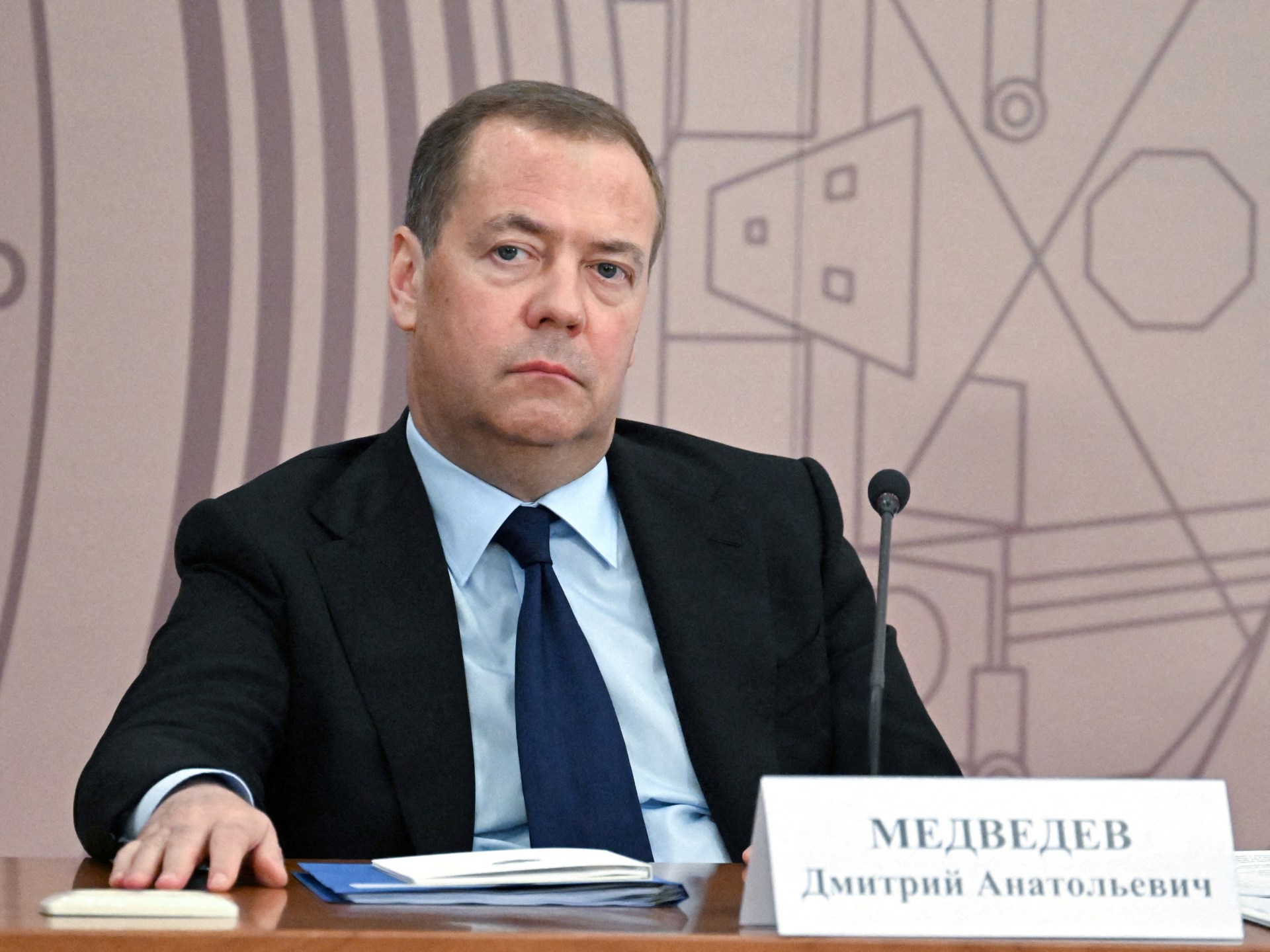
Medvedev, who has engaged in a war of words on social media with United States President Donald Trump, made his latest broadside after the Foreign Ministry’s announcement on Monday.
“The Russian Foreign Ministry’s statement on the withdrawal of the moratorium on the deployment of medium- and short-range missiles is the result of NATO countries’ anti-Russian policy,” Medvedev posted in English on the X social media platform.
“This is a new reality all our opponents will have to reckon with. Expect further steps,” he said.
Medvedev, who serves as the deputy head of Russia’s powerful Security Council and has made several hawkish comments on Russia’s nuclear capabilities in recent years, did not elaborate on what “further steps” may entail.
Last week, Trump said that he had ordered two US nuclear submarines to be repositioned to “the appropriate regions” in response to Medvedev’s remarks about the risk of war between Washington and Moscow.
The Russian Foreign Ministry’s statement on the withdrawal of the moratorium on the deployment of medium- and short-range missiles is the result of NATO countries’ anti-Russian policy. This is a new reality all our opponents will have to reckon with. Expect further steps.
In its statement, Russia’s Foreign Ministry said the developing situation in Europe and the Asia Pacific prompted its reassessment on the deployment of short- and medium-range missiles.
“Since the situation is developing towards the actual deployment of US-made land-based medium- and short-range missiles in Europe and the Asia-Pacific region, the Russian Foreign Ministry notes that the conditions for maintaining a unilateral moratorium on the deployment of similar weapons have disappeared,” the ministry said.
Russian President Vladimir Putin and Foreign Minister Sergey Lavrov said last year that Moscow may have to respond to what they described as provocations by the US and NATO by lifting restrictions on missile deployment.
Lavrov told Russia’s state news agency RIA Novosti in December that Moscow’s unilateral moratorium on the deployment of such missiles was “practically no longer viable and will have to be abandoned”.
“The United States arrogantly ignored warnings from Russia and China and, in practice, moved on to deploying weapons of this class in various regions of the world,” Lavrov told the news agency.
The US withdrew from the Intermediate-Range Nuclear Forces (INF) treaty in 2019, under the first Trump administration, citing Russian non-compliance, but Moscow had said that it would not deploy such weapons provided that Washington did not do so.
The INF treaty, signed in 1987 by Soviet leader Mikhail Gorbachev and US President Ronald Reagan, had eliminated an entire class of weapons: ground-launched nuclear missiles with a range of 500 to 5,500km (311 to 3,418 miles).
In its first public reaction to Trump’s comments on the repositioning of US submarines, the Kremlin on Monday played down the remarks and said it was not looking to get into a public spat with the US president.
“In this case, it is obvious that American submarines are already on combat duty. This is an ongoing process, that’s the first thing,” Kremlin spokesman Dmitry Peskov told reporters.
“But in general, of course, we would not want to get involved in such a controversy and would not want to comment on it in any way,” he said.
“Of course, we believe that everyone should be very, very careful with nuclear rhetoric,” he added.
The episode comes at a delicate moment, with Trump threatening to impose new sanctions on Russia and buyers of its oil, including India and China, unless President Vladimir Putin agrees by Friday to a ceasefire in Moscow’s war on Ukraine.
Putin said last week that peace talks had made some positive progress but that Russia had the momentum in its war against Ukraine, signalling no shift in his position despite the looming deadline.
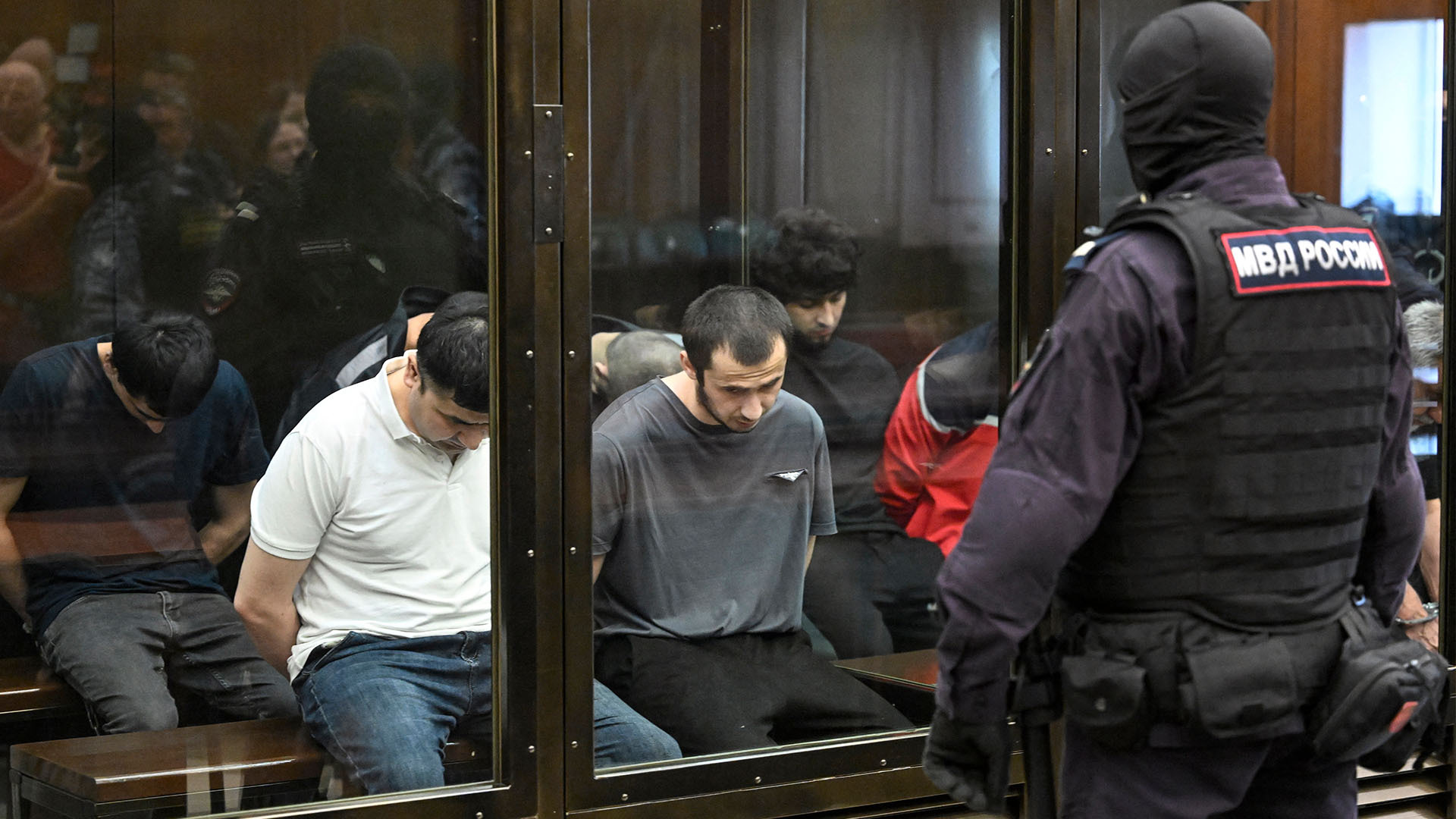
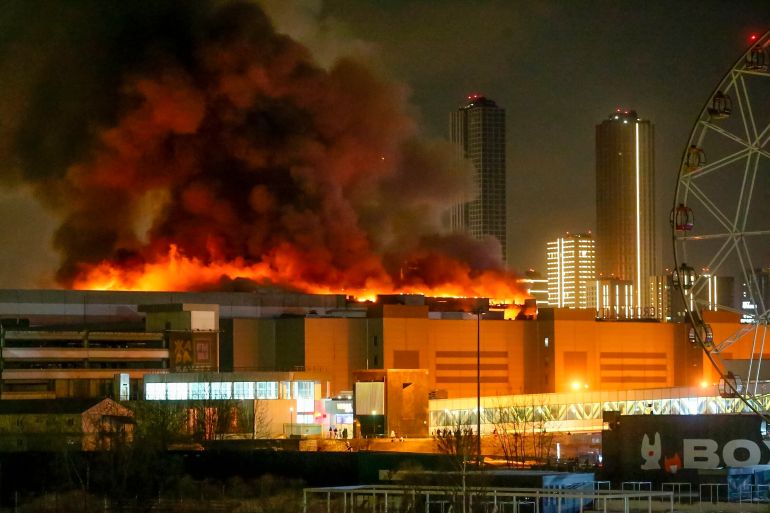
Nineteen suspects accused of being involved in the 2024 shooting attack in a Moscow concert hall that killed 149 people, and wounded over 600, have appeared in court in a glass cage at the beginning of their trial. A faction of the Islamic State group claimed responsibility for the attack.
Russian President Vladimir Putin claims, without providing evidence, that Ukraine was involved in the attack, an allegation Kyiv vehemently denies.
The trial has begun for 19 defendants accused of involvement in the 2024 shooting attack in a Moscow concert hall that killed 149 people, and wounded over 600, in one of the deadliest attacks in the capital since the era of the Russian-Chechen wars in the 1990s and 2000s.
The suspects appearing in court on Monday, under heavy security, kept their heads bowed as they sat in the defendants’ cage.
An ISIL (ISIS) affiliate claimed responsibility for the March 22, 2024 massacre at the Crocus City Hall concert venue in which four gunmen shot people who were waiting for a show by a rock band and then set the building on fire. ISIL’s Afghan branch – also known as ISKP (ISIS-K) – claimed responsibility for the attack.
A massive blaze is seen at the Crocus City Hall on the western edge of Moscow, Russia, Friday, March 22, 2024. Several gunmen burst into the concert hall and fired automatic weapons at the crowd, killing dozens [Sergei Vedyashkin/Moscow News Agency via AP]
President Vladimir Putin and other Russian officials have claimed, without providing any evidence, that Ukraine was involved in the attack, an allegation Kyiv has vehemently denied.
The Investigative Committee, Russia’s top criminal investigation agency, concluded in June that the attack had been “planned and carried out in the interests of the current leadership of Ukraine in order to destabilise the political situation in our country”. It also said the four suspected gunmen tried to flee to Ukraine afterward.
The four, all identified as citizens of Tajikistan, were arrested hours after the attack and later appeared in a Moscow court with signs of having been beaten.
The committee said earlier this year that six other suspects were charged in absentia and placed on Russia’s wanted list for allegedly recruiting and organising the training of the four. Other defendants in the trial were accused of helping them.
In 2002, some 40 rebels from Chechnya stormed the Dubrovka Theatre in Moscow and took around 800 people hostage while demanding an end to Putin’s war in the separatist southern republic.
Putin refused to negotiate with the fighters, and the standoff ended with mass death days later when Russian special services pumped a powerful gas into the building to stun the hostage-takers before storming it. Most of the 129 hostages who died were killed by the gas.
WASHINGTON — In a warning to Russia, President Donald Trump said Friday he’s ordering the repositioning of two U.S. nuclear submarines “based on the highly provocative statements” of the country’s former president Dmitry Medvedev.
Trump posted on his social media site that based on the “highly provocative statements” from Medvedev he had “ordered two Nuclear Submarines to be positioned in the appropriate regions, just in case these foolish and inflammatory statements are more than just that.”
The president added, “Words are very important, and can often lead to unintended consequences, I hope this will not be one of those instances.”
It wasn’t immediately clear what impact Trump’s order would have on U.S. nuclear subs, which are routinely on patrol in the world’s hotspots, but it comes at a delicate moment in the Trump administration’s relations with Moscow.
Trump has said that special envoy Steve Witkoff is heading to Russia to push Moscow to agree to a ceasefire in its war with Ukraine and has threatened new economic sanctions if progress is not made. He cut his 50-day deadline for action to 10 days, with that window set to expire next week.
The post about the sub repositioning came after Trump, in the wee hours of Thursday morning, had posted that Medvedev was a “failed former President of Russia” and warned him to “watch his words.” Medvedev responded hours later by writing, “Russia is right on everything and will continue to go its own way.”
Medvedev was president from 2008 to 2012 while Putin was barred from seeking a second consecutive term but stepped aside to let him run again. Now deputy chairman of Russia’s National Security Council, which Putin chairs, Medvedev has been known for his provocative and inflammatory statements since the start of the war in 2022, a U-turn from his presidency, when he was seen as liberal and progressive.
He has frequently wielded nuclear threats and lobbed insults at Western leaders on social media. Some observers have argued that with his extravagant rhetoric, Medvedev is seeking to score political points with Putin and Russian military hawks.
Trump and Medvedev have gotten into online spats before.
On July 15, after Trump announced plans to supply Ukraine with more weapons via its NATO allies and threatened additional tariffs against Moscow, Medvedev posted, “Trump issued a theatrical ultimatum to the Kremlin. The world shuddered, expecting the consequences. Belligerent Europe was disappointed. Russia didn’t care.”
Earlier this week, he wrote, “Trump’s playing the ultimatum game with Russia: 50 days or 10” and added, “He should remember 2 things: 1. Russia isn’t Israel or even Iran. 2. Each new ultimatum is a threat and a step towards war. Not between Russia and Ukraine, but with his own country.”
Weissert writes for the Associated Press. AP writer Dasha Litvinova in Tallinn, Estonia, contributed to this report.
US president’s remarks follow report saying he encouraged Kyiv to step up strikes inside Russian territory.
United States President Donald Trump has said Ukraine should not target Moscow after he reportedly asked Ukrainian President Volodymyr Zelenskyy if Kyiv could strike the Russian capital if he provided long-range weaponry.
Trump made the comments after The Financial Times on Tuesday reported that the US president had encouraged Zelenskyy to step up strikes deep inside Russian territory during their phone call on July 4.
The report, which cited two unnamed people familiar with the discussion, said Trump had also asked his Ukrainian counterpart whether he could hit Moscow and St Petersburg if supplied with weapons with enough range.
In response to a question on Tuesday about whether Zelenskyy should target Moscow, Trump told reporters at the White House that he should not.
Trump also told reporters that “we’re not looking” at providing Kyiv with longer-range missiles.
White House Press Secretary Karoline Leavitt appeared to confirm the discussion in a statement provided to multiple media outlets, but said it had been taken out of context.
“President Trump was merely asking a question, not encouraging further killing,” Leavitt said in the statement provided to outlets including ABC News and USA Today.
In a sharp pivot in his stance on the war, Trump on Monday announced that he would supply more weapons to Ukraine, and threatened to impose steep secondary tariffs on Russia’s trade partners if a peace deal is not reached within 50 days.
After returning to the White House in January, Trump repeatedly cast Washington’s support for Ukraine as a drain on the US and accused Zelenskyy of hindering efforts to make peace.
But the US president’s tone has shifted in recent weeks amid growing frustration with Russian President Vladimir Putin’s refusal to negotiate an end to his invasion.
On Tuesday, the Kremlin said Trump’s recent statements, including the threat of sanctions, were “very serious” and that it would need time to assess the situation.
“We certainly need time to analyse what was said in Washington,” Kremlin spokesperson Dmitry Peskov told reporters in Moscow.
“And if and when President Putin deems it necessary, he will definitely comment.”
Russian airline Nordwind will begin direct service between Moscow and North Korean capital Pyongyang later this month, Russia’s Transport Ministry announced. Ties between the two countries have grown closer since a summit between North Korean leader Kim Jong Un (R) and Russian President Vladimir Putin (L) last year. File Kremlin Pool Photo by Vladimir Smirnov/Sputnik/EPA-EFE
SEOUL, July 15 (UPI) —North Korea and Russia will begin operating direct flight service linking their capital cities of Pyongyang and Moscow later this month, Russia’s Transport Ministry announced.
Nordwind Airlines, a Russian budget carrier, will begin direct flights between the two cities on July 27, the ministry said Monday night on its Telegram channel. Travel time will be about eight hours.
“For the first time, the capitals of Russia and the DPRK will be connected by direct flights,” the ministry said, using the official acronym for North Korea.
“Further flights will be operated once a month — to create sustainable demand and load flights,” the ministry added.
Currently, the only direct flights between the two countries are operated by North Korea’s Air Koryo, connecting Pyongyang with Vladivostok in Russia’s Far East.
The announcement comes amid growing military and economic ties between Russia and North Korea, highlighted by Pyongyang supplying troops and weapons to Moscow for its war against Ukraine.
North Korea has gradually begun opening up to international tourism after sealing its borders at the start of the COVID-19 pandemic in January 2020. So far, foreign visitors have come almost exclusively from Russia.
Russian travelers were the first to return to North Korea post-COVID on the Pyongyang-Vladivostok Air Koryo route early last year. Direct rail service between Pyongyang and Moscow also resumed in June after a five-year suspension.
Last week, the North welcomed around 10 Russian guests — including Foreign Minister Sergei Lavrov — to its sprawling new beach resort on the east coast, Russia’s Kommersant newspaper reported on Monday.
The Wonsan Kalma coastal tourist area runs along 2.5 miles of beachfront and has a capacity for up to 20,000 guests. At a ribbon-cutting ceremony last month, North Korean leader Kim Jong Un called the completion of the resort one of the country’s “greatest successes this year” and said it would “play a leading role in establishing the tourist culture of the DPRK.”
Launched in 2014, the Wonsan project was initially slated to open in April 2019 but faced numerous setbacks, including international sanctions on materials and COVID-19 pandemic closures.
During his visit to Wonsan last week, Lavrov said that Russia also plans to restore maritime passenger routes between the two countries.
“Our Korean friends have expressed interest in having more Russians at the wonderful resort of Wonsan and other resorts in the DPRK,” Lavrov said at a press conference. “I have no doubt that this will happen.”