Moscow mayor reports intercepting 1,600 drones during ‘unprecedented’ attack, accusing Ukraine of election interference.
Published On 20 Sep 202620 Sep 2026
At least two people have been killed and a major refinery has been damaged as hundreds of drones targeted the Russian capital, Moscow, and its surrounding region on the final day of the country’s parliamentary elections.
Moscow’s Mayor Sergei Sobyanin said on Sunday that more than 1,600 drones had been intercepted and shot down, 450 of which were heading for Moscow.
Recommended Stories
list of 3 itemsend of list
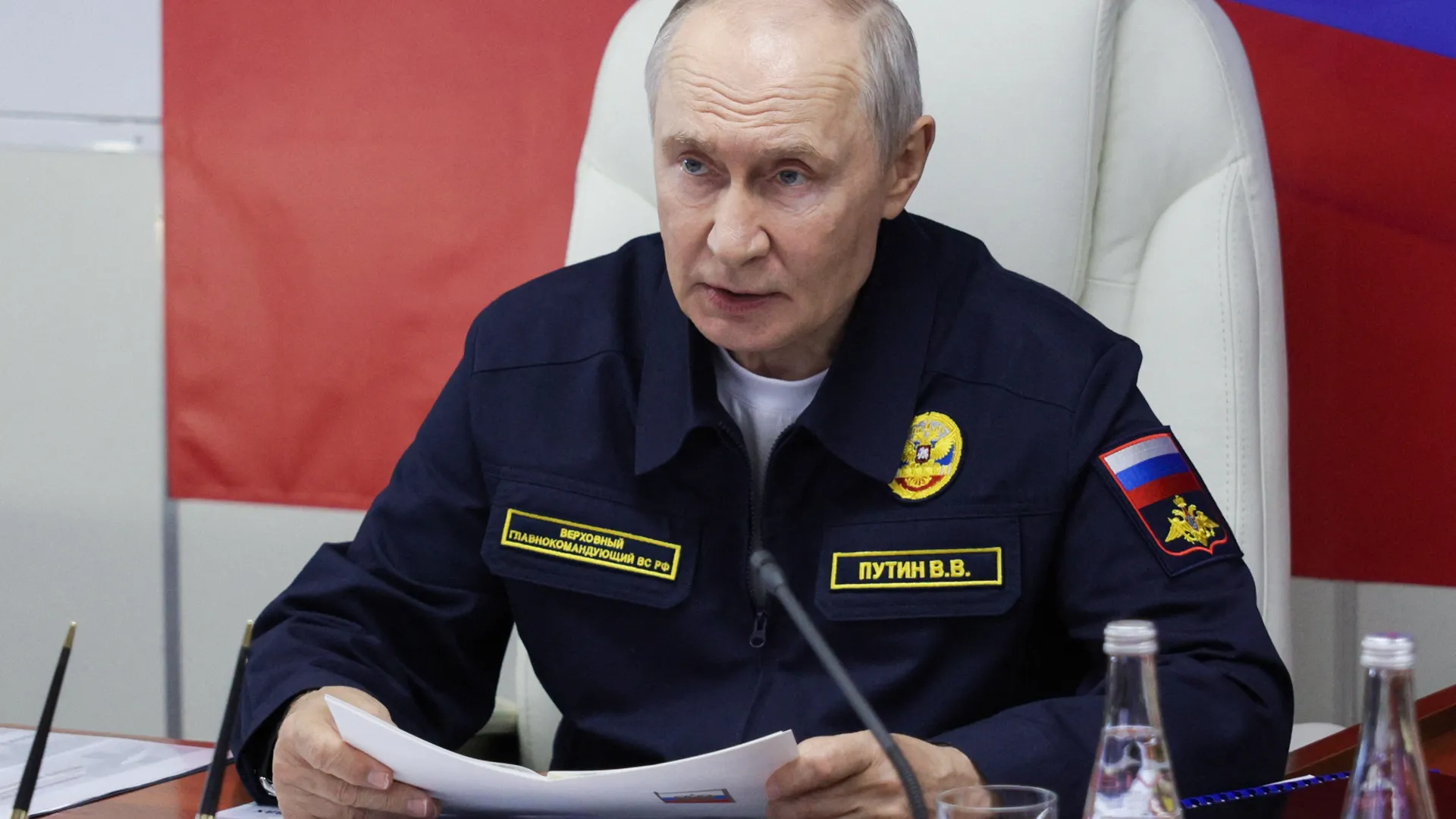
He also accused Ukraine of attempting to interfere with a tightly controlled three-day election that is set to tighten President Vladimir Putin’s 26-year grip on power.
“The unprecedented attack was clearly planned with the aim of disrupting the elections. The enemy did not succeed,” he said on Telegram.
Moscow regional Governor Andrey Vorobyov said on social media that a 44-year-old woman and an elderly man were killed in two separate locations.
A fire triggered by a drone crashing into a 21-storey building forced the evacuation of 400 people, Vorobyov said.
The strikes come as Kyiv has intensified its long-range drone campaign against Russia, particularly targeting energy infrastructure to cut off a vital source of Kremlin revenue used to fund its war effort, now in its fifth year.
“A facility on the territory of the Moscow Oil Refinery has been damaged,” Sobyanin added, saying that no casualties were reported so far and emergency services were on the scene.
The major refinery has already been hit by Ukrainian strikes in recent months.
The latest strike follows claims by US President Donald Trump on Monday that Ukraine and Russia had agreed not to target each other’s energy facilities.
It also comes as Russians vote in the country’s first parliamentary elections since Moscow sent troops into Ukraine in February 2022, igniting a war that has killed hundreds of thousands of people. Moscow has also organised voting in parts of Ukraine that it has seized in the four-and-a-half-year war.
Meanwhile, Ukraine’s Air Force Command reported that Russia launched 138 drones of various types across the country overnight, according to the Interfax-Ukraine news agency.
It added that air defences managed to shoot down or neutralise 101 of them.
Second day of strikes on fuel stations suggest a new campaign focused on civilian areas in the Ukrainian capital.
Published On 11 Sep 202611 Sep 2026
Russian drone attacks on two fuel stations in Kyiv have killed two people and injured others, as Moscow continues to target civilian areas.
They were struck early on Friday within ten minutes of each other in the capital’s Obolonskyi and Dniprovskyi districts, shortly after emergency sirens rang out, Mayor Vitali Klitschko said in a statement.
Recommended Stories
list of 3 itemsend of list
Russia also targeted fuel stations in Kyiv on Thursday, suggesting a new campaign focused on civilian areas in the capital. Ukrainian authorities have warned people to avoid filling up when air raid sirens sound.
One person died at the scene of one of the attacks, Klitschko said, while the other died in hospital. Six people required hospital treatment.
While fuel stations near the eastern and southern battle lines have been hit regularly for months, authorities have long warned that the attacks could extend to the capital as an intimidation strategy.
Russia and Ukraine both deny targeting civilians as the conflict – started with Moscow’s invasion in February 2022 – has developed into a series of daily attacks with missiles and drones.
Other Russian drone strikes overnight hit near a shopping mall in Pavlohrad, leaving five dead and 67 injured, while a mother and son were injured in Zaporizhzhia when a drone hit an apartment building and a mall.
Ukraine’s Minister of Foreign Affairs, Andrii Sybiha, declared Friday a day of mourning.
On Thursday, he condemned Russia for attacking civilian areas in a bid to sow fear.
“Russia is systematically attacking places where it knows people will be spending their time going about their daily lives, seeking to maximise casualties, spread fear and put pressure on Ukrainian society,” he stated.
Ukraine unleashed its own large-scale drone attack through the night, with Russia’s Ministry of Defence reporting that its forces shot down 777 drones in 16 regions.
Two people were killed and three injured in Tula, to the south of Moscow, local authorities reported.
Two of US President Donald Trump’s top envoys have arrived in Moscow ahead of a weekend of talks aimed at accelerating efforts to end the war in Ukraine.
Steve Witkoff and Jared Kushner will hold talks in the Russian capital before travelling to Kyiv on Sunday for discussions with Ukraine.
Trump told reporters on Friday that Witkoff and Kushner were “bringing with them a proposal to end the war”. So far, efforts from the US and its allies to broker a peace deal have failed to deliver a breakthrough.
Both Russia and Ukraine have said they will halt strikes on each others’ capital cities for three days while the delegation conducts its visit.
Zelensky said on Saturday that he had spoken to the envoys, who have “already begun working with the Russian side today”.
“The plan for tomorrow’s diplomatic engagements in Kyiv, involving the US team, has been approved. We are waiting for Steve Witkoff and Jared Kushner and are ready for a substantive conversation,” he added.
“From now through the end of Saturday, as well as on Sunday and Monday, Ukraine is ready to refrain from strikes on Moscow, and we expect the Russians to do the same regarding Kyiv.”
Russian state media reported that President Vladimir Putin had ordered a halt to strikes on Kyiv for three days due to the US visit.
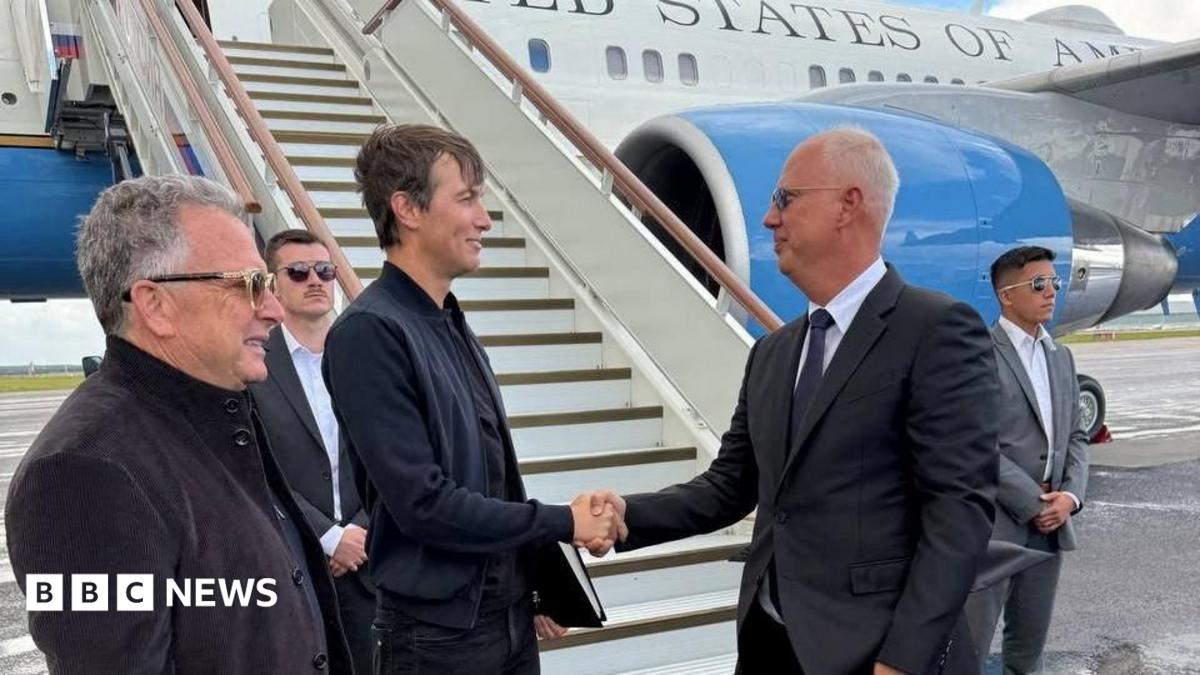
Witkoff and Kushner were pictured being greeted by Russian official Kirill Dmitriev after landing at Moscow’s Vnukovo Airport.
Flight tracking data showed a US government plane had travelled from Helsinki, Finland, where it had flown to from the US earlier in the day.
US news outlet Axios reported that the US envoys would separately meet both Russian President Vladimir Putin and Ukrainian President Volodymyr Zelensky.
Kushner and Witkoff have visited Russia several times but the talks on Sunday would be the first in Ukraine.
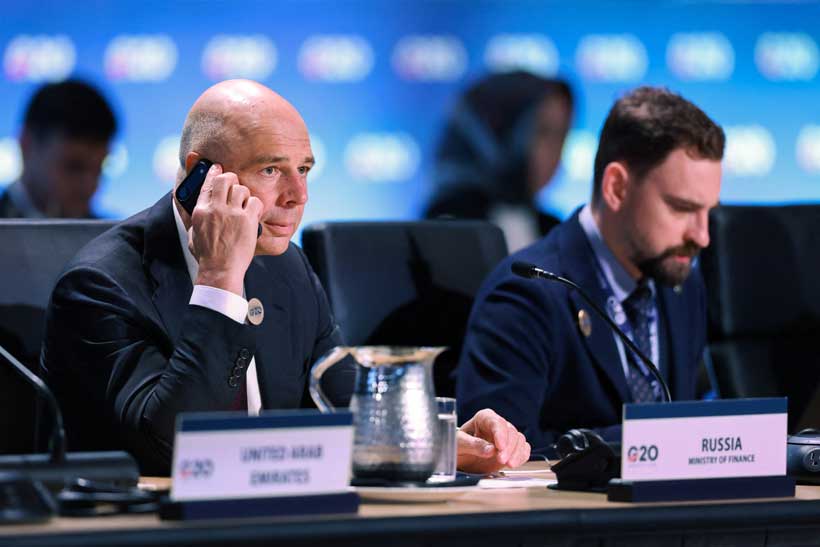
On 31 August, in Asheville, North Carolina, Anton Siluanov sat down at a G20 finance ministers’ meeting for the first time since Russia invaded Ukraine. When he tried to open a conversation about areas of mutual interest, US Treasury Secretary Scott Bessent cut him off: nothing is possible until the war is over. European ministers refused to appear beside him in the traditional group photograph, and the photograph was taken without him.
The snub is not the story. The composition of the delegation is. Ten days earlier, Deputy Foreign Minister Sergey Ryabkov had told a Russian outlet that Moscow was ready to hear new ideas for ending the war, provided they aligned with the goals Putin has set and with realities on the ground. Read alongside Asheville, that statement stops looking like an opening and starts looking like an invoice. Moscow is not testing whether it can stop fighting. It is testing what stopping would be worth, and it sent its finance minister to find out.
The Missing Fifth of Donetsk
Stay ahead of the geopolitical week.
MD Briefing delivers expert analysis across five global fronts — the Indo-Pacific, energy, geoeconomics, European security, and the Middle East — every Monday morning. Free.
Four and a half years in, the war has settled into an asymmetry that neither side’s rhetoric captures. Russian forces hold roughly 80 percent of Donetsk oblast and virtually all of Luhansk, according to the Institute for the Study of War. The missing fifth of Donetsk is the “fortress belt”, the fortified urban chain of Kostiantynivka, Druzhkivka, Kramatorsk and Sloviansk that has anchored Ukraine’s eastern defence since 2014. Putin has issued fifteen separate deadlines to take Donetsk since 2022 and missed all of them. The current one expires on 31 December 2026.
Diplomacy has been dormant since March, when a scheduled round collapsed as Washington went to war with Iran alongside Israel. Before that came a 28-point American framework, drafted with Russian input in late 2025, that would have recognised Crimea, Luhansk and the whole of Donetsk as de facto Russian, frozen the southern front, and phased Russia back into the global economy. Kyiv and Europe forced it into revision. In August, Volodymyr Zelensky put forward a joint Ukrainian-American-European counter-proposal built on three planks: a ceasefire, reciprocal withdrawal from the current line, and security guarantees underwritten by the EU and NATO. Moscow has not responded to it.
There have been growing concerns in Europe over expanding Russian aggression and specifically the possibility it could attack a NATO country to test the alliance’s resolve. There are also reports that Putin will drastically increase offensive operations in Ukraine due to the massive damage his country is now taking from long-range drone and cruise missile strikes, as well as failed peace talks. Reports even state that he is mulling the use of tactical nuclear weapon in order to stop these attacks and change the tide of the years-long conflict, a possibility which we will discuss more later in this piece. Iran, of course, is also a major issue, but it seems, at least based on reporting, it had taken a backseat to whatever the director was trying to accomplish in Moscow.
Wednesday evening, The Wall Street Journal reported that Ratcliffe was in Moscow to deliver a message to Putin not to attack NATO countries. His visit “followed new U.S. intelligence assessments, reported earlier by The Wall Street Journal, that Russian President Vladimir Putin could try to test the resolve of the North Atlantic Treaty Organization with a limited assault on an allied country in the next few years,” the newspaper noted. We have been reporting on major concerns over exactly this for weeks now.
U.S. officials “are concerned that Putin, squeezed in Ukraine and under pressure at home, could launch an assault ranging from a cyberattack to a small-scale land incursion, likely on a Baltic nation, the Journal added.
“Kremlin spokesman Dmitry Peskov told reporters in Moscow on Wednesday that Ratcliffe held talks with Russian intelligence officials during his time in the Russian capital, but he didn’t meet with Putin. Putin was briefed on the talks, Peskov said,” according to the publication.
EXCLUSIVE: CIA Director John Ratcliffe made a surprise visit to Moscow this week to deliver a warning to Russia: Don’t attack NATO countries, according to people briefed on the visit
“The U.S. official, who was briefed on the investigation into the alleged sabotage plot, said the explosives fitted to the drone as well as the structure of the lethal device were ‘typical’ of those used by Russia’s GRU,” ABC added. “This U.S. assessment was made in conjunction with German security and intelligence agencies, the source added.
⚡️US intel links explosive drone found at German airport to Russia’s military intelligence.
The drone’s structure and explosives were “typical” of those used by Russia’s GRU, U.S. intelligence officials told ABC News.https://t.co/g7IsdhNOeT
Meanwhile, President Donald Trump downplayed the Ratcliffe trip, which has sparked a wide range of speculation about its purpose.
The president called it “semi-routine.”
That statement is hard to square considering how rare having a CIA director rush to Moscow is. The last time this happened was just prior to the war in Ukraine breaking out into the destructive reality we see today.
Q: Why did CIA Director Ratcliffe go to Russia? Rumors say Putin is going to test NATO’s resolve, or Iranian sanctions, or Russia attacking England?
As we noted earlier in this story, Putin is reportedly considering escalating attacks on Ukraine, including the possible use of tactical nuclear weapons, Bloomberg reported, citing “three people close to the Kremlin.”
“For now, Russia is weighing an intensification of powerful conventional ballistic missile attacks on Kyiv, including the center of the capital, and infrastructure targets in other Ukrainian cities.”
At issue, Bloomberg suggested, is that negotiation “frameworks have all effectively collapsed, leaving the two warring sides back at square one.”
Russia is preparing to escalate attacks on Ukraine after concluding that negotiations for a peace deal have reached a dead end, according to three people close to the Kremlin. https://t.co/y7gMjOmf2J
Moreover, the Kremlin “has also abandoned reliance on what it believed was an understanding reached between Putin and Trump at their summit in Alaska last August,” Bloomberg noted.
You can see video from that encounter below.
Such a deal would have required the Trump administration to force Ukraine into giving up the eastern Donetsk region, a demand Kyiv has rejected as it continues to hold out against a Russian onslaught that has gained little ground.
The White House this evening pushed back on the notion that negotiations between Ukraine and Russia have reached an insurmountable impasse. A peace deal has been a major objective for President Donald Trump, who famously promised that he would end the conflict on his first day in office.
“The president wants this war settled so that the senseless killing ends,” a White House official told TWZ. “The president and his team remain committed to continuing to play a constructive role in ending the war between Russia and Ukraine, and he remains optimistic that we’ll ultimately get a peace deal done.”
The United States “continues to play a constructive role in speaking to both sides in working towards bringing the war to an end,” the official added. “We are the only country in the world that can play that role.”
The level of current U.S. involvement in negotiations is unclear. Trump envoys Steve Witkoff and his son-in-law Jared Kushner were expected to travel to Moscow after an eight-month break and to visit Kyiv for the first time, but no date has emerged for either trip, Bloomberg noted. Last week, Radio Free Europe reporter Alex Raufaglu stated on X that the pair’s trip to Ukraine was delayed, but not canceled, by ongoing Russian attacks on Kyiv.
NEW!! Sources tell me the highly anticipated Witkoff-Kushner trip to Ukraine has been “slightly delayed, not cancelled” — due to last week’s intensified missile and drone strikes on Kyiv.
Putin is not about to cave under economic pressure, Bloomberg suggested, citing its sources. Nor will he end hostilities as Ukraine continues to pound Russian refineries and logistics networks. These attacks are having a devastating effect on the Russian economy and creating increasing frustration among the populace.
Whether Putin actually does escalate attacks remains to be seen. With increased production of ballistic missiles and new ones from North Korea, he may have new means of sustaining conventional attacks. As for a nuclear one, he has constantly rattled that saber for years. As Bloomberg noted, in the past, there have been reports that China and India have frequently urged him to refrain from that steep climb up the escalation ladder.
We raised the question of Putin using tactical nuclear weapons on Ukraine several months after he launched his full-on invasion, asking the world’s top nuclear proliferation experts of the likelihood it would happen. You can read this feature here, but our expert’s sentiments were made long before Ukraine was picking apart Russia infrastructure on a daily basis, with a standoff weapons armada growing by the day.
So, while it isn’t exactly clear what was discussed in this meeting or its primary objective, none of the reported reasons are encouraging. Quite the opposite, they point to the possibility of a darker new phase in the Russia-NATO standoff.
Weekly insights and analysis on the latest developments in military technology, strategy, and foreign policy.
A U.S. Air Force C-17 Globemaster III has made a highly unusual visit to Moscow today, landing at Vnukovo Airport after flying from Riga, Latvia, according to publicly available flight-tracking data. The purpose of the flight remains unclear for now. It does come as Ukrainian President Volodymyr Zelensky says he has identified a potential opportunity for new U.S. mediation to help end the Russian war in Ukraine.
Flight-tracking data identified the C-17, operating under the callsign RCH4555, departing Riga at approximately 8:50 a.m. Moscow time and arriving at Vnukovo at around 10:04 a.m. Video posted to social media also shows the C-17 on approach to Vnukovo.
U.S. Air Force Boeing C-17A Globemaster III strategic airlifter descending to land at the Vnukovo International Airport in Moscow on Tuesday morning.
— Status-6 (War & Military News) (@Archer83Able) August 25, 2026
RCH4555 had flown from Joint Base McGuire-Dix-Lakehurst, New Jersey, to Joint Base Lindsey Graham (formerly Joint Base Charleston), South Carolina, on August 22. A day later, the aircraft touched down at Joint Base Andrews in Maryland, before departing for Riga. The plane then continued to Moscow two days later.
Probably the first US C-17 in years seen over Russia few moments ago
There are unconfirmed reports, citing observers on the ground, that an aircraft that might have been a U.S. Air Force C-40B was also on the ground at Riga earlier today. The C-40B is a militarized version of the commercial Boeing 737-700 and is often used to shuttle high-ranking government and military leaders.
An observer in Riga, Latvia reported a white aircraft, likely a U.S. Air Force C-40B, parked near the C-17A Globemaster III that arrived in Moscow earlier this morning.
The earlier stop at Joint Base Andrews is also notable. Situated just outside Washington, D.C., this is not simply an ordinary transport base. It is the home of the 89th Airlift Wing, which operates the Air Force’s Special Air Mission (SAM) fleet and supports senior U.S. officials and foreign dignitaries. The wing’s mission includes providing airlift for the president, vice president, senior executive staff, high-ranking government officials, and foreign dignitaries.
Joint Base Andrews is also where the Air Force’s Roll-On Conference Capsules (ROCC) are kept. The Air Force deploys ROCCs onboard certain C-17s to give senior leaders a secure, quiet place to conduct business in the middle of a noisy, often-crowded cargo aircraft. They serve as a mobile SCIF, office, and apartment all in one. Their extensive communications include multiple options for unsecured and secure voice, data, and video teleconferencing. These capsules replaced the previous Silver Bullet Command and Control Module, a converted Airstream trailer, which was phased out in recent years for reasons you can read more about here.
A graphic showing the Roll-On Conference Capsule from SelecTech. SelecTech
The C-17 is otherwise well-equipped for carrying high-ranking officials on overseas trips, including into potentially hostile areas. The planes have a defensive suite that includes multiple types of expendable decoys and the laser-based Large Aircraft Infrared Countermeasure System (LAIRCM).
The Globemaster III’s primary mission is as a strategic airlifter, and it is typically used for transporting personnel, equipment, and other cargo. With those capabilities, the aircraft are also regularly used to bring advance parties to countries ahead of major state and other diplomatic visits. For presidential visits, this can even include Marine One helicopters and vehicles for the official motorcade.
A U.S. Air Force C-17A from Joint Base Charleston deploys flares as part of a training event over the Atlantic in a military operating area outside Charleston, South Carolina, June 5, 2021. Master Sgt. Chris Hibben
The presence of an active-duty U.S. military transport aircraft in the Russian capital is highly unusual and immediately attracted attention from open-source intelligence and aviation observers.
Theories on today’s highly unusual movement of a US military aircraft to Moscow Vnukovo airport 1. Prisoner swap 2. Mission by senior intelligence official to warn against escalation by Russia, eg in Baltics 3. New diplomatic opening pic.twitter.com/OhqlHYQeKs
At this stage, the purpose of the Moscow flight and what the aircraft carried are not publicly confirmed. We have reached out to the Office of the Secretary of Defense, Air Mobility Command, and the U.S. Air Forces in Europe for more details about the mission. The Office of the Secretary of Defense directed us to contact the Air Force.
Nevertheless, any kind of U.S. military aircraft traveling from the Washington area via Riga and then into Moscow represents an exceptionally unusual movement based on current relations between Moscow and the West.
Washington and Moscow have maintained official diplomatic channels despite the broader deterioration in relations against the backdrop of the war in Ukraine. Since U.S. President Donald Trump began his second term in 2025, ties between the two countries have both warmed and cooled again at times. Trump notably met with Russian President Vladimir Putin in person at Joint Base Elmendorf-Richardson in Anchorage, Alaska, on August 15, 2025. This was the first summit between leaders of the two nations since Russia launched its full-scale invasion of Ukraine in 2022.
Russian President Vladimir Putin disembarks his presidential aircraft at Joint Base Elmendorf-Richardson, Alaska, August 15, 2025. Staff Sgt. Seth LaCount
More recent U.S.-mediated peace efforts have largely stalled in recent months, including when Ukraine refused Russian demands to cede more territory. However, over the weekend, Ukraine’s President Volodymyr Zelensky did say he saw a window for new diplomatic efforts, at least to reach a ceasefire until the end of next summer. He has also drafted a page of ideas with U.S. and European officials to be presented to Moscow, according to Reuters.
For its part, Moscow has continued to signal that it is prepared to engage with Washington, while U.S. envoys Steve Witkoff and Jared Kushner have been discussed as potential participants in further talks. Witkoff and Kushner were last in Moscow in January.
There have also been reports that FBI Director Kash Patel is planning to visit Russia later this year, although such a trip is not thought to be expected until mid-October.
This is very much a developing story, and we will watch with interest to see when the C-17 departs Moscow, its destination, and any other clues as to the purpose of this mission.
Update, 4:10 p.m., Central European Time (CET) –
RusskayaPravda reports that the Russian government says it has no information about the C-17 flight, and Kremlin spokesman Dmitry Peskov claimed that Russian officials had no meetings scheduled this week with representatives of the U.S. administration.
Other Russian media outlets reported that this is the first time that a U.S. Air Force C-17 had arrived in Moscow since 2017. Kommersant, meanwhile, noted that another U.S. military aircraft — a Gulfstream C-37B — landed at Vnukovo in February 2025 after departing from Andrews Air Force Base.
That earlier flight carried Russian citizen Alexander Vinnik after his release from a U.S. prison. Vinnik returned to Russia as part of a prisoner exchange that also involved American citizen Marc Fogel.
Potentially, the flight today could be related to a prisoner exchange, although a C-17 would be an unsual choice for this.
Unconfirmed reports out of Russia suggest the C-17 may have arrived in connection with American citizen Charles Wayne Zimmerman, who was sentenced to five years in prison in January after Russian authorities found weapons and ammunition aboard his yacht.
Zimmerman sailed from the U.S. to Sochi on June 19, 2025, reportedly to meet a Russian woman he had met online. He pleaded guilty, saying he was unfamiliar with Russian law and believed weapons kept aboard his yacht for self-defense were permitted.
A source cited by Ostorozhno Media said Zimmerman signed a clemency petition at his prison this summer, which was then sent to Moscow.
For now, there is no official confirmation linking the American aircraft’s arrival to Zimmerman.
A convoy of cars with U.S. diplomatic license plates has been spotted in the capital of the Russian Federation.
Update, 4:15 p.m., Central European Time (CET) –
A remarkable capture of the arrival of the C-17A by an individual on the ground confirms beyond a doubt the location. In the foreground is the distinctive Tupolev Tu-104B jetliner, registration CCCP-42507, that is preserved as a gate-guard monument outside Vnukovo International Airport in Moscow.
Update, 4:20 p.m., Central European Time (CET) –
A video being shared on social media shows what is claimed to be a motorcade with American diplomatic license plates spotted on the streets of Moscow today, with a local police escort.
Russian media report that a motorcade with American diplomatic license plates was spotted on the streets of Moscow following reports that a U.S. Air Force Boeing C-17 Globemaster III had landed at Vnukovo Airport. https://t.co/EiKsKdnu6tpic.twitter.com/Hzrppj9fFy
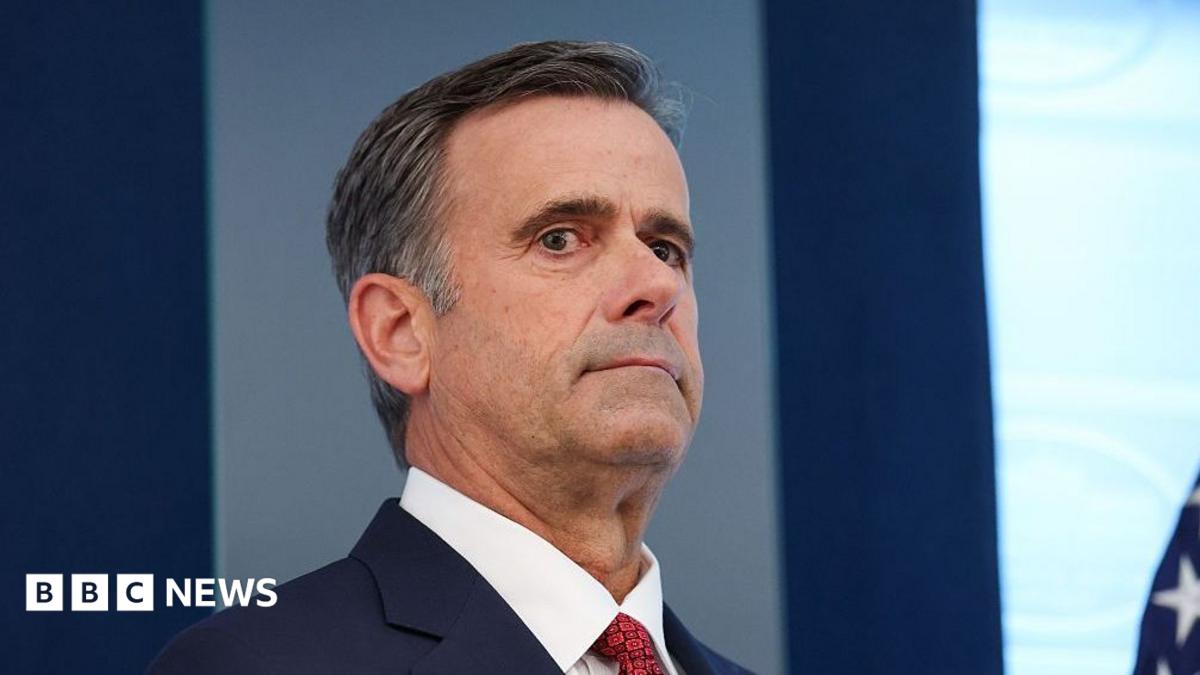
Citing multiple unnamed sources, CBSreports that the C-17 brought CIA Director John Ratcliffe to Moscow for undisclosed meetings. This would be his first known trip to Russia as CIA director, though he has maintained contact with Russian intelligence counterparts.
NEW: CIA Director John Ratcliffe flew to Moscow today aboard a US Air Force C-17 for meetings, according to CBS News citing multiple sources.
The Kremlin said it had “no information” about the visit.
CNN is also now reporting that CIA Director Ratcliffe traveled to Moscow overnight to meet with Russian officials, citing a U.S. official familiar with his travel. The same official declined to share the substance of the meetings or the topics set to be discussed.
If I had to wager, I’d say Ratcliffe is in Moscow to warn about Russian escalation against Europe/NATO. Linked to U.S. intelligence shared with Poles, Balts and Scandinavians, and comes amid a noticeable uptick in suspected GRU sabotage operations and Russian drone activity. See…
The Financial Times now reports that the Trump administration last week requested that Kyiv not strike Moscow, St. Petersburg, and northern regions of Russia with its long-range missiles and drones on Monday, Tuesday, and Wednesday of this week. This was due to Washington planning to end an aircraft carrying a senior-level official to the Russian capital, according to people familiar with the request.
Scoop @FT: Trump administration officials last week requested that Kyiv not strike Moscow, St Petersburg and nothern regions of Russia with its long range missiles and drones on Monday, Tuesday and Wednesday when the US would send a plane carrying a senior-level official to the…
TheWall Street Journal now reports the possibility that CIA Director Ratcliffe was in Moscow to dissuade Russia from mobilizing and launching an attack on Europe. Given the intense NATO intelligence-gathering activity along the eastern flank over the past week, it seems the situation is indeed quite tense.
The U.S. has collected intelligence showing Russia’s early preparations for a possible military mobilization in Ukraine and plans for testing the North Atlantic Treaty Organization’s resolve, the WSJ has reported.
Flight-tracking data identifies the C-17, again operating under the callsign RCH4555, now departing Moscow for Riga.
RCH4555, a U.S. Air Force C-17A Globemaster lll which landed in Moscow early today carrying CIA Director John Ratcliffe for a series of high-level meetings with Russian officials, has just departed Moscow bound for Riga, Latvia. pic.twitter.com/9I4AG8dcA9
The trip is thought to be Ratcliffe’s first trip to Russia as CIA director, although he has maintained contact with his intelligence counterparts in Moscow.
John Foreman, who served as a British military attaché to Moscow between 2019 and 2022, told Radio 4’s PM programme that the visit could be focused on “escalation management” given speculation recent drone activity in Germany could be linked to Russia.
He said: “The Americans don’t normally send such a high ranking official to Moscow unannounced at short notice unless something is up.”
Foreman said the trip could also concern the release of US detainees currently being held in Russia.
Ratcliffe played a role in negotiations for the release of Russian-American citizen Ksenia Karelina’s, who was jailed in Russia for over a year after being accused of providing support to Ukraine.
The CIA was also involved in a 2024 prisoner swap deal with Russia that saw the release of Wall Street Journal reporter Evan Gershkovich, as well as former US marine Paul Whelan and Russian-American journalist Alsu Kurmasheva.
The US has had strained relations with Russia since it launched a full-scale invasion of Ukraine in 2022. Since then, Russia has been isolated on the world stage and faced international economic sanctions.
Ratcliffe appears to be one of the highest-ranking US officials to visit the country during President Donald Trump’s second term.
Trump met Russian President Vladimir Putin at a summit in Alaska last year but the meeting did not lead to a breakthrough. Subsequent US-led peace talks between Russia and Ukraine appear to have stalled.