Al Michaels has been making play-by-play calls for prime time NFL games for 40 years.
His next game will be Saturday, when the Chicago Bears host the Green Bay Packers in an NFC wild-card game on Amazon Prime Video.
It won’t be his last.
Michaels will return to call games for Prime Video’s NFL coverage next season, the streaming service confirmed Friday. The 81-year-old Sports Broadcasting Hall of Famer has been the play-by-play announcer for “Thursday Night Football,” with color commentator Kirk Herbstreit, since Prime Video acquired the rights to those games starting in the 2022 season.
After initially receiving a three-year deal from Amazon, which expired after 2024, Michaels reportedly worked this season under a one-year deal. Michaels told Sports Illustrated’s Jimmy Traina in November that he would be happy to return in 2026 if Amazon would have him.
“It’s a two-way street here,” Michaels said. “They could tell me, ‘We got to move on, it’s time to make a transition,’ all that. I don’t know, that could happen. But as of the moment as we sit here on this mid-November afternoon, I feel really good, still love what I do and, again, work with a tremendous crew. So, yeah, I think at this moment in time, I would like to continue, yes.”
One of Michaels’ first jobs out of college was a very brief stint with the legendary Chick Hearn on Lakers radio broadcasts in 1967. Since then, he has gone on to announce some of the biggest moments in sports history, including his signature “Do you believe in miracles? Yes!” call of the 1980 U.S. Olympic team’s upset of the Soviet Union.
Prep Rally is devoted to the SoCal high school sports experience, bringing you scores, stories and a behind-the-scenes look at what makes prep sports so popular.
A few weeks ago, I wondered whether Nicolás Maduro was a Juan Vicente Gómez 2.0, that other dictator who held power in Venezuela for almost three decades at the beginning of the 20th century. We now know that wasn’t the case. Gómez, from the very beginning, exercised terror within the country, but he forged an alliance with American oil companies that allowed him to perpetuate the regime until his death 90 years ago. Maduro also practiced that terror, but failed to consolidate all the internal and external support he needed. When he wanted to fully surrender to the United States, the playing field had already shifted. As the saying goes, “too little, too late.”
In the conclusion of that other article, I wondered if Venezuela was on the verge of a new 1936, the year the country inaugurated a new era after the dictator’s death. It was then that the masses burst onto the public scene, modern political parties emerged, unions were organized, and solutions to the country’s serious problems began to be discussed. Today, after the US military intervention and Maduro’s capture on January 3, 2026, history is being rewritten minute by minute.
Now, as this year begins, we can break down the situation into three levels.
First, there are the celebrations. Venezuelans abroad are filled with euphoria, while within the country the reaction is more silent and private. The dictator is gone, but the dictatorship persists. The torturers remain in power. But seeing a tyrant fall, one who mocked the country with ironic brutality is a poetic justice many of us hoped for, and there remains the hope that he will also be tried for his crimes against humanity, a record that ranges from extrajudicial executions and state terrorism to the material and emotional destruction of an entire country.
Maduro, perhaps, never imagined this end, trusting that 20th century international law would protect his tyranny. But times have changed. Each power guards what it considers its own backyard, and the law of the strongest has returned, without euphemism. Herein lies the second level. It is fine to question all foreign intervention and its legality, but after the mega-fraud of July 28, 2024, regional diplomacy proved insufficient, and too many turned a blind eye. The half-hearted diplomatic attempts of Brazil, Colombia, and Mexico proved useless in achieving the transition.
The return of exiles, the demolition of the old La Rotunda prison—a symbol of political oppression like El Helicoide today—and still fragile guarantees of political participation generated new expectations during the López Contreras regime.
The region is also responsible for this outcome. Nor can we forget that it was during the Hugo Chávez era that we fell into this geopolitical trap, losing the independence and sovereignty we had achieved during the democratic years. Ideological factions, authoritarian tendencies, and an international rebellion contrary to national interests placed us in a vulnerable position in a much larger game that is not our own.
And the third level is the possibility, amidst the evident contradictions, of rebuilding Venezuelan democracy. There are many possible scenarios, and we know that we are now at the mercy of external decisions where, for the United States, the priority is not so much restoring democracy as securing its interests. With a game of musical chairs within chavismo-madurismo, Delcy Rodríguez now becomes the figure ruling from Miraflores Palace. As president, she will try to prolong her interim term and cling to power, continuing the lobbying she has been doing for some time, as a reliable ally for the United States and who could be the proconsul they need beyond an interim period. The country also faces the feudal structures left behind by chavismo, where military, regional, and economic factions that continue to control everything could engage in a power struggle of coups and counter-coups.
However, there is also the possibility that Venezuelan democratic society (which carries in its DNA the struggles of the past and present) can begin to reconstitute itself. For this to happen, it is essential to demand the release of all political prisoners, the return of exiles, an end to censorship, and a profound and peaceful institutional change that allows for the dismantling of the regime from within, by its own figures. This is a dynamic already observed in other transition processes, capable of laying the foundations for lasting social transformations, with reconciliation, but also with justice.
In this phase of the process, the main leadership of María Corina Machado and the legitimacy of Edmundo González Urrutia are recognized, but it is also the moment to convene the entire democratic leadership to build the agreements that will make future governance possible. The coming months constitute a true critical path, a fragile bridge where both the best and worst scenarios can materialize.
History does not repeat itself, but there are logics and precedents that help us better understand the processes of change. In 1936, the transformation did not occur due to foreign intervention, but rather due to the death of Gómez. The then Minister of War and Navy, Eleazar López Contreras, assumed the acting presidency. In the last weeks of December 1935, some looting and disturbances occurred, which were quickly controlled, and the new leader managed to retain power.
Venezuelans can do their part: To demand change step by step and navigate this minefield with caution, where everything, once again, could go very wrong.
The regime seemed immovable: the same ministers, the same lawmakers, the same system, sustained by consolidated power groups that demanded mere continuity. However, a timid opening began. The return of exiles, the demolition of the old La Rotunda prison (a symbol of political oppression), and still fragile guarantees of political participation generated new expectations.
On February 14, 1936, after attempts to reinstate censorship and prolong the suspension of constitutional guarantees, the people of Caracas took to the streets and, in a defiant gesture, demanded that the government go beyond minimal concessions. Overwhelmed by pressure from students, unions, and the press, López Contreras presented the February Plan a few days later, abandoning half-measures and initiating what would be a true political opening, Venezuela-style.
The situation today is more complex than in 1936. The main actors have shown no qualms, and Venezuelan society remains wounded and shackled by the cumulative repression of all these years. But the demands cannot be abandoned, nor can the future be left to external tutelage or the continuation of oppression. A new horizon is possible, and although there are external factors beyond our control, Venezuelans can do their part: To demand change step by step and navigate this minefield with caution, where everything, once again, could go very wrong. It has been achieved before, and today, with greater awareness and determination (because we have learned something), it is possible to build and consolidate a shared vision for our country.
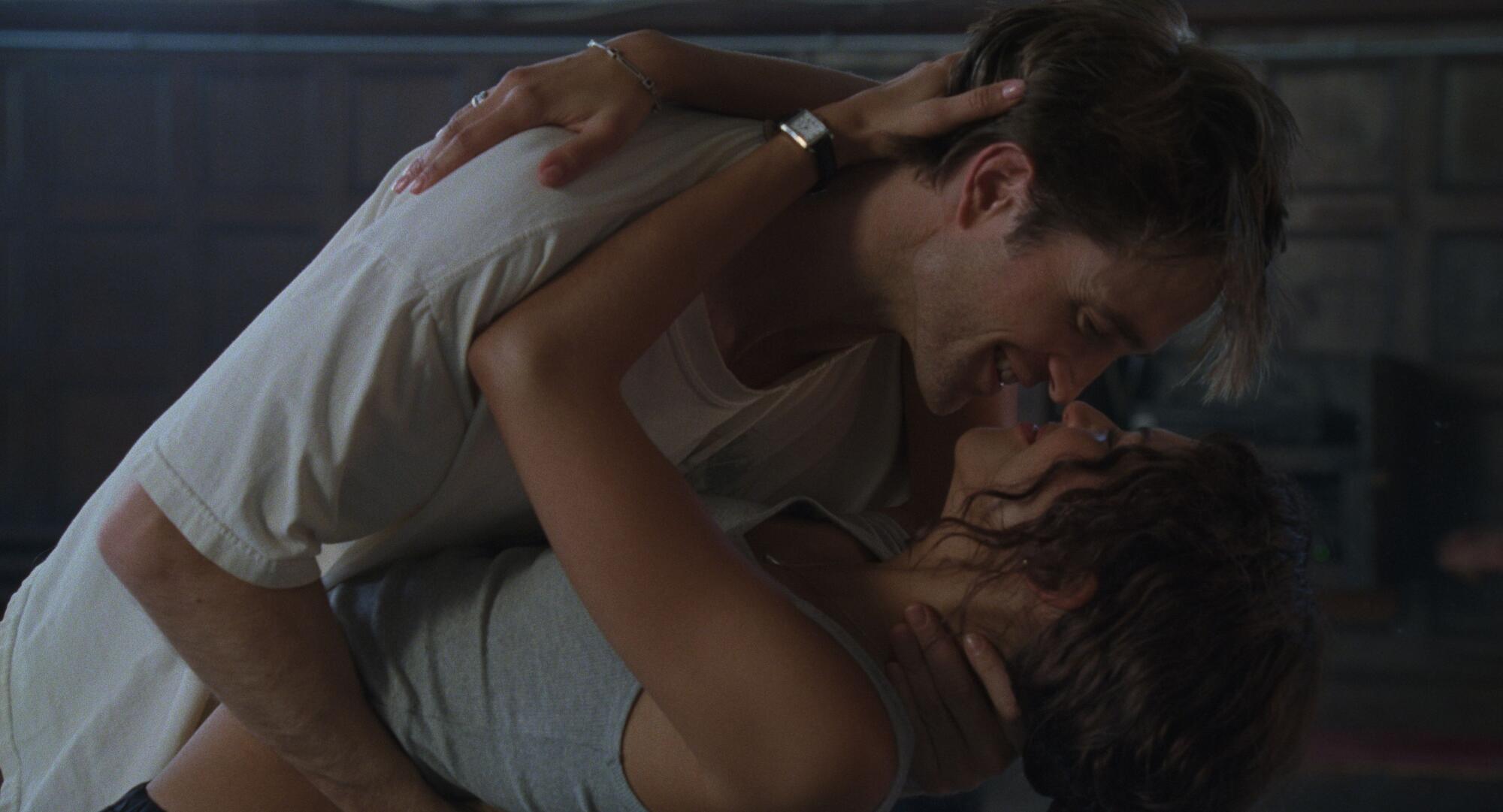
House of Guinness featured a particular scene which has had everyone talking.
09:20, 30 Sep 2025Updated 13:42, 07 Jan 2026
House of Guinness is on Netflix and the historical drama was the creation of Peaky Blinders boss, Steven Knight. Having been out for months already, the series continues to be a huge hit with new fans continuing to tune in.
While it did not bother him filming completely naked, he did have one worry about the audience following the show’s release.
Speaking to Town & Country, he was asked if he considers the large audience of Netflix intimidating, to which he said: “Yeah, definitely when I did the naked scene [laughs].
“Definitely when I did that, I was sat in that bath and I was like, ‘Oh wait, it’s gonna be like millions of people’.
“My focus is usually on the other person, less so than what I’m experiencing, but on the day that you’re getting naked, you’re like, ‘Oh god, I hope my f****** granny doesn’t see this!’
“Moments like that happen! But for the most part, I don’t think about the reach of the show, no.”
Taking to X to share their thoughts on the bath scene, Sharon SL shared: “Is no one talking about Arthur’s bath scene? What was that I just saw?”
Stoops commented: “Did NOT expect to see that in the bath scene, holy hell.”
Addressing the future of the series, Boyle said he would love to return for a second season if it was given the green light by Netflix.
Speaking exclusively to Reach titles at a screening of the series, he said: “If they want to do a second season, I’d love to. I think the scripts were amazing and I really enjoyed the cast and directors.
“I loved it, I love the end product. It’s a show I’m really proud of and if they wanted to go again I’d be overjoyed.”
At this moment in time, the series is yet to be renewed for a second season. This could be because director Knight is focusing on the upcoming Peaky Blinders film, titled The Immortal Man. The film is due to be released in March 2026 and it sees the return of Cillian Murphy as Tommy Shelby.
House of Guinness is on Netflix
**For the latest showbiz, TV, movie and streaming news, go to the new Everything Gossipwebsite**
Will Jacks drops a simple catch on the boundary as England miss the chance to remove Travis Head, who remains unbeaten on 121 on day three of the fifth Ashes Test in Sydney.
LOVE Island star Paige Thorne was left with a bloodied nose after her boyfriend accidentally punched her in the face on a ski slope.
Paige, 28, and Josh Foreman filmed themselves having fun on the slopes of Avoriaz, France, as they sledded down a mountain on his snowboard.
Sign up for the Showbiz newsletter
Thank you!
Love Island’s Paige Thorne was left bloodied in a ski slope accidentCredit: TikTokShe staggered to the bottom of the slope with blood oozing from her noseCredit: TikTok
After one failed attempt, they had another go and burst out laughing as they came to a stop in the powdery snow close to the bottom.
But as they lay giggling, the snowboard began to slide down the slope.
Josh reacted quickly and sprung up to chase it down, unwittingly bashing Paige’s face in the process.
She staggered down the remainder of the slope on foot filming herself on a selfie stick saying: “I’ve got a nose bleed.”
When she eventually caught up with Josh she said: “You punched me in the nose as you stood up.”
Shocked, he replied: “Shut up! Did you get it on camera?”
In the comments, one follower wrote: “Omg he didn’t even realise lol. Bet that hurt! What are you filming with just out of interest?”
Paige replied: “I know, he’s got such thick gloves he had no clue! Surprisingly it didn’t but I think because of the altitude and the cold it just made it real easy to bleed lol x.”
The paramedic found the mountains tough going overall, writing that the region wasn’t for “the faint-hearted”.
Paige recently faced backlash for saying she has “let herself go” after putting on 6lbs since she and Josh started dating.
She said on TikTok: “I honestly thought it was a myth – you get a boyfriend, you find the right one, you settle down and then do you know what happens?
“You stop caring about your appearance, you let yourself go, yada yada yada.
“I always thought no, that will never be me.”
However, Paige said that she’s been “smashing” three advent calendar chocolates a day, as well as skipping the gym – which has led to her skin breaking out and a gain of 6lbs.
The comments section of the TikTok was almost immediately filled with people responding to Paige’s weight admission, with many insisting she needs to be more responsible with her videos.
“This is a toxic message to girls,” one raged.
Paige and boyfriend Josh slid down the mountain on his snowboardCredit: TikTokThe smitten couple went pubic in the summerCredit: Instagram/@paigethornex
Despite the behind-the-scenes difficulties, I’m A Celebrity… Get Me Out Of Here! star Jack Osbourne said he had a “great time” on the show and is “glad” he did it
16:03, 02 Jan 2026Updated 16:05, 02 Jan 2026
Jack Osbourne said he ‘lost it’ with bosses during filming for a challenge (Image: ITV/Shutterstock)
I’m A Celebrity… Get Me Out Of Here! 2025 star Jack Osbourne said he “lost [his] s**t” with show producers, following technical difficulties during filming. The 40-year-old impressed hosts Ant and Dec, as well as viewers, with his bravery throughout the series, particularly when he earned all 12 stars for camp in an underwater challenge.
As part of his stint, the reality star also took part in a Dark Room Challenge alongside Shona McGarty, Eddie Kadi and Lisa Riley, where they had the opportunity to win photos from home.
During the task, the group was split into pairs: one pair entered a dark gallery to describe framed pictures to their teammates, while the other two searched the unlit room for matching photos based on those descriptions.
Each team had to find and match the correct photos in complete darkness, with limited visibility and creatures dropped on them in true I’m A Celebrity style.
Reflecting on this challenge, the Osbournes star said there was a tense moment during filming that wasn’t shown to viewers.
According to Jack, he and other campmates had to redo a part of a challenge due to technical difficulties.
Discussing his experience on the Trying Not To Die Podcast, the son of Sharon Osbourne and the late Ozzy Osbourne said: “I got really p****d at one point and went f*****g nuts.
“What happened was, I got selected to go and do a challenge, not a trial, and it was an opportunity to win pictures from home.
“I had to stick my hands in these boxes overhead that had these heavy light switches.”
While trying to complete the mission however, the reality star said there were “problems” with the trial and he kept having to stop and start.
“I’d be in there doing it and it wasn’t working correctly, I’d be getting eaten to s**t,” he recalled.
“And so I had to go in three times to do it and I just lost my s**t, I was like, ‘What the f**k is going on?’
“They were like, ‘Sorry it’s technical problems’ and this, that and the other and I just said, ‘This is b******t’.
“I was like, ‘I’m not earning anything more by keep going in because you guys didn’t properly prep this and test it, I’m having to get eaten alive by these crazy ants’.”
Jack said he had been so badly bitten by green ants after 15 minutes that he looked like he had “chickenpox.”
He continued: “It was late, it was at night, there were clearly some technical problems but I just didn’t like that they weren’t being straight up about it.
“Just be honest and be like, ‘Hey there’s a problem, we f****d it up, we didn’t get the shots we needed, can you just go back in please? We know it’s horrible’. I lost it.”
Reach PLC have contacted a representative for ITV for comment.
Despite these technical challenges, Jack said he is “glad” he did the show and had “a great time”.
Following his exit from the jungle, he reunited with his campmates for the Coming Out programme after Angry Ginge was crowned the new King of the Jungle.
From Anthony Solorzano: Through tears, Indiana quarterback Fernando Mendoza thanked every member of his family after becoming the first Hoosier to ever win the Heisman Trophy. The Cuban American quarterback recognized his family for believing in him throughout his career.
He was a two-star high school recruit who drew little attention before finally landing an opportunity to play at California. After three years with the Golden Bears, including a redshirt year, he transferred to Indiana. On Thursday, the No. 1 Hoosiers will take the field at the Rose Bowl, where they will face college football traditional power Alabama in the College Football Playoff quarterfinals.
Pressure is familiar for Mendoza. He’s faced challenges throughout his career — from proving himself as an overlooked high school athlete to earning his starting role at Cal.
Anytime Mendoza has met a hurdle, he considers how to help those around him shine.
“I know that’s my responsibility to my coaches, to my teammates and to the entire team, to be able to be sharp mentally and not have outside influences, pressures and noise able to impact my game,” Mendoza said. “I think one thing is just keeping the process on how I got here, how the entire team got to this place, which is keeping the process that I’ve kept for every single game.”
The Hoosiers finished the season undefeated. They will play for their first Rose Bowl victory in 57 years and it’ll be the second year in a row Indiana has reached the College Football Playoff.
“His leadership has increased in those crucial moments and I think that’s what makes him such a special player — because when the stakes are the highest, he steps up and gets the team going,” Indiana linebacker Isaiah Jones said. “He’s a guy that people want to get behind and run a play for.”
Texas Christian running back Jeremy Payne carries the ball during a 30-27 win over USC in Alamo Bowl.
(Kenneth Richmond / Getty Images)
From Ryan Kartje: Two years ago, a day after he decided to fire Alex Grinch as USC‘s defensive coordinator, Lincoln Riley made a promise to those concerned about the future of the Trojans’ defense.
“I have complete belief, conviction. We will play great defense here,” the coach said in November 2023. “It is going to happen. There’s not a reason in the world why it can’t.”
Two years later, another defensive coordinator is out the door at USC. The day after Grinch’s replacement, D’Anton Lynn, left to take the same job at Penn State, Riley stood in front of reporters, assuring everyone once again that soon enough, USC would be great on that side of the ball.
“The arrow,” he said Tuesday, “is pointing straight up.”
“The opportunity for us to make a hire, to continue to make us better and to go from being a very good defense to being a great defense is the goal.”
UCLA women’s basketball coach Cori Close reacts during a win over Penn State on Wednesday.
(Greg Fiume / Getty Images)
From Ben Bolch: As she spoke about her team’s growth amid its first conference trip, Cori Close steered her comments toward something else she would like to nurture: coverage of women’s college basketball.
It was a topic that the UCLA coach had thrust into the national spotlight three days earlier when she voiced her frustration with a lack of reporting on a top-20 showdown involving her No. 4 Bruins and No. 19 Ohio State.
Now, after her team’s runaway 97-61 victory over Penn State on Wednesday inside Rec Hall, Close glanced at the 10 reporters on a Zoom call and doubled down on her previous remarks.
“The reality of what my comments were after Ohio State were, I have two really passionate agendas in regards to this, and that is, I want to be a pioneer of growing the game, period,” Close said. “I want to really be a part of the surge that’s happening and I want to be a part of telling these amazing stories that these players have, and they’re incredible young women as well as amazing basketball players.”
Tired from hosting family for the holidays and planning on rising early for a workout, the 2004 Heisman Trophy winner and star USC quarterback did not stay up to catch the end of his alma mater’s game against Texas Christian in the Alamo Bowl on Tuesday night.
He likely does not regret that decision.
After allowing a 10-point lead to slip away in the final minutes of regulation, the Trojans eventually lost 30-27 in overtime after TCU running back Jeremy Payne caught a check-down pass on third-and-20 and broke multiple tackles on his way to the end zone for a 35-yard, game-winning touchdown.
Lakers coach JJ Redick reacts during a loss to the Detroit Pistons at Crypto.com Arena on Tuesday night.
(Gina Ferazzi / Los Angeles Times)
From Thuc Nhi Nguyen: The Lakers started the day by singing “Happy Birthday” to LeBron James as the superstar forward turned 41 on Tuesday. They ended by singing another familiar, but more somber tune.
The Lakers got blown out again Tuesday, letting a close game devolve into a 128-106 loss to the Detroit Pistons. James scored 17 points with four assists and five turnovers while the Lakers (20-11) lost by 20 points for the sixth time this season. They are tied for the third-most 20-point losses in the league, yet somehow are still clinging to fifth place in the Western Conference standings.
“The intent and the, like, effort was there for the most part tonight,” coach JJ Redick said. “… The turnovers and the fast-break points, they kill you.”
The year 2025 was more tumultuous than any silly football game and its accompanying overwrought metaphors. It was a year that knocked me flat, tearing me apart from so many things that once anchored me, setting me afloat in a sea of guilt and despair and ultimate uncertainty.
JJ Harel of Sherman Oaks Notre Dame is gearing up to defend his state championship in the high jump.
(Craig Weston)
From Eric Sondheimer: It’s time to peer into my crystal ball to see what 2026 has in store for the Southland’s high school athletes (and a few former ones), coaches and fans:
JJ Harel of Sherman Oaks Notre Dame, armed with passports from the United States, Israel and Australia, will soar so far past 7 feet in the high jump that national organizations from three different countries will fight to have him represent their team.
Striker Pence, a sophomore pitcher at Corona Santiago with a 100-mph fastball, will receive an endorsement deal from a radar gun company.
The UCLA-USC women’s basketball games will have so many celebrities and former players wanting to be seen that TMZ won’t need to pay for video.
Tampa Bay defenseman Darren Raddysh, left, scores on Ducks goaltender Lukas Dostal in overtime of the Lightning’s 4-3 win Wednesday at Honda Center.
(Mark J. Terrill / Associated Press)
From the Associated Press:Darren Raddysh scored midway through overtime, and the Tampa Bay Lightning blew three one-goal leads before beating the Ducks 4-3 on Wednesday for their fifth consecutive victory.
Tampa Bay coach Jon Cooper celebrated his 1,000th regular-season game in charge with his 595th victory as the longest-tenured bench boss in the NHL. The Lightning’s coach since March 2013 has also led them in 155 playoff games, won two championships and reached four Stanley Cup Finals.
Nikita Kucherov had a goal and an assist as the Lightning skated off with a win in the opener of their three-game California trip when Raddysh converted a pass from Brandon Hagel, who had three assists.
1902 — Michigan beats Stanford 49-0 in the first Rose Bowl. Neil Snow scores four touchdowns in a game that ends with eight minutes to play. The Wolverines earned the nickname as the “Point a Minute” team, having scored 501 points in their ten games. The next Rose Bowl game does not occur until 1916.
1916 — Washington State beats Brown 14-0 in the return of the Rose Bowl. Brown halfback Fritz Pollard, the first African-American to play in the Rose Bowl, gains just 47 yards in the rain-soaked game. After a scoreless first half, Washington State scores on short runs by Ralph Boone and Carl Dietz.
1934 — Columbia upsets Stanford 7-0 in the Rose Bowl when Al Barabas scores in the third quarter on a 17-yard hidden-ball play.
1935 — Bucknell beats Miami 26-0 in the first Orange Bowl.
1935 — Tulane beats Temple 20-14 in the first Sugar Bowl. The Green Wave complete a 14-0 comeback when Temple defender Horace Mowery tips a pass into the direction of Dick Hardy, who takes it in to the end zone.
1961 — The Houston Oilers beat the Los Angeles Chargers 24-16 to win the first AFL Championship.
1961 — Boston Bruins rookie Willie O’Ree, the first black player in NHL history, scores his first goal in a 3-2 win over the Montreal Canadiens at Boston Garden.
1971 — Notre Dame ends Texas’ 30-game winning streak with a 24-11 win in the Cotton Bowl.
1991 — Georgia Tech routs Nebraska 45-21 in the Citrus Bowl to finish as college football’s only unbeaten team (11-0-1).
1992 — Miami beats Nebraska 22-0 in the Orange Bowl, the first shutout of the Cornhuskers since 1973, and finishes with a 12-0 record.
1993 — No. 2 Alabama wins its first national championship in 13 years and deprives Miami of its fifth title as the Crimson Tide defense humbles the No. 1 Hurricanes 34-13 in the Sugar Bowl.
1993 — Florida State beats Nebraska 27-14 in the Orange Bowl to set an NCAA record by winning eight consecutive bowl games.
2000 — Georgia’s Hap Hines kicks a 21-yard field goal in overtime to complete the greatest comeback in bowl history. The Bulldogs pull out a 28-25 victory over Purdue after trailing 25-0 early in the second quarter in the Outback Bowl.
2006 — New England’s Doug Flutie converts the NFL’s first successful drop kick in 64 years during a 28-26 loss to Miami.
2007 — Boise State, after tying the game with seven seconds to go in regulation, stuns No. 7 Oklahoma 43-42 in overtime to win the Fiesta Bowl. The No. 9 Broncos win on Ian Johnson’s 2-point conversion run after receiver Vinny Perretta throws a fourth-down touchdown pass to Derek Schouman.
2008 — Sidney Crosby’s shootout goal gives Pittsburgh a 2-1 win over the Buffalo Sabres in the inaugral outdoor Winter Classic in front of a league-record 71,217 fans. In elements way more suited for football than hockey, Crosby wins the NHL’s second outdoor game — and first in the United States — in the most dramatic of fashion at Ralph Wilson Stadium, home to the NFL’s Buffalo Bills.
2012 — Backup quarterback Matt Flynn throws for a franchise-record six touchdowns to give Green Bay a 45-41 victory over the Detroit Lions.
2014 — Central Florida pulls off one of the biggest upsets of the bowl season by outlasting No. 6 Baylor 52-42 in the Fiesta Bowl. It’s the highest-scoring game in Fiesta Bowl history and second-highest BCS bowl ever.
2015 — Marcus Mariota and Oregon roll past defending national champion Florida State 59-20 to turn the first College Football Playoff semifinal into a Rose Bowl rout.
2015 — Cardale Jones turns in another savvy performance in his second college start and Ezekiel Elliott runs for a Sugar Bowl-record 230 yards, leading Ohio State to a 42-35 upset of top-ranked Alabama in the second semifinal of the College Football Playoff.
2018 — Sony Michel’s 27-yard touchdown run in double overtime gives Georgia a 54-48 win over Oklahoma in a Rose Bowl. It’s the first overtime game in the 104-year history of the Rose Bowl, the highest-scoring Rose Bowl ever and the first College Football Playoff game to go into overtime.
2022 — Chicago Bulls forward DeMar DeRozen becomes first player in NBA history to hit buzzer-beaters on consecutive days; hits three-pointers to beat Washington Wizards, 120-119 and previous night Indiana Pacers, 108-106.
Until next time…
That concludes today’s newsletter. If you have any feedback, ideas for improvement or things you’d like to see, email me at houston.mitchell@latimes.com. To get this newsletter in your inbox, click here.
This article contains spoilers from the series finale of “Stranger Things.”
At this moment, somewhere on the internet, “Stranger Things” fans are rabidly and rapidly giving their feedback on how the series resolved the years-long plight of horrors faced by their favorite ragtag troop from Hawkins. But for Noah Schnapp, it didn’t matter how the story concluded. When filming on the final season wrapped last December, it was a bleak ending. At least initially.
The Netflix drama, to this point, had taken up half of Schnapp’s life. When he was 11, he began portraying Will Byers, the baby-faced boy who was abducted while biking home at night from a friend’s house and pulled into an alternate dimension known as the Upside Down. It was the catalyst that linked Will to its powerful creatures that tormented him and his inner circle for years. All the while, Schnapp and his fictional alter ego became increasingly intertwined. Like Will, he was a boy coming of age in his own upside down dimension — fame — while stepping into his true self.
“I will never forget that last day and how that last scene felt — it was just so surreal,” he said. “The goodbye was hard. I grappled with this feeling like my life is over and I’m in a crisis, this is my whole identity and all I’ve ever known, and now it’s ending.”
But for Will, “Stranger Things,” created by Matt and Ross Duffer, concluded on more hopeful terms. He began the two-hour series finale — released in the closing hours of 2025, both on the platform and in select movie theaters nationwide — knowing he had no secrets that could be weaponized against him, making him better positioned to help put an end to the Upside Down — and its otherwordly creatures.
Over two separate interviews from New York — a video call and, later, a phone call 20 minutes after I viewed the final episode — Schnapp discussed the complexity of amassing fame as a child actor, the parallel sexual identity journeys he and his character took, and life after “Stranger Things.”
Lucas (Caleb McLaughlin), Nancy (Natalia Dyer), Dustin (Gaten Matarazzo), Steve (Joe Keery), Jonathan (Charlie Heaton), Mike (Finn Wolfhard), Will (Noah Schnapp) and Robin (Maya Hawke) in “Stranger Things.”
(Netflix)
How does it feel to have it finally be out there?
Oh, man, it’s such a relief, honestly. No more worrying. It’s a happy, happy relief.
How did you spend the past two hours? I know you saw the finale with the cast already. Did you watch it again with the public?
Absolutely not. I’m celebrating the New Year, trying not to over stress about what people are saying and stay distracted.
So you’re not going to look at fan reaction tonight?
Probably not. My friends are texting me already, like, “Oh my God, I loved it,” or “Oh my god, I’m sobbing right now.” But no, I haven’t checked anything online.
We get a glimpse of Will’s fate. This idea that he finds his place, deep happiness and acceptance … and maybe love. What did you think of Will’s ending?
I think it was perfect. It felt really hopeful to see what the future can hold for a character like that, that I also kind of relate to, at least in terms of sexual identity. It was nice to see him get his happy ending and learn that it was it was never about Mike. It was about finding the person that was right for him, and in the meantime, kind of just loving himself. I’m just happy he got his happy ending. That’s that’s what he deserved.
Do you think he’ll remain good friends with Mike, Dustin, Caleb, Max — everyone?
Of course. They are forever tied together. Their books stand on the shelf, all next to each other, and especially Mike. They have that conversation which was actually written — now I can say it. It was not originally in the script, but I had the Duffers include it.
Oh, tell me about that. Why did you think it was important for them to have that conversation?
That scene on the tower, it’s a short little moment, but I felt like, with the coming out scene, there wasn’t enough closure between Will and Mike. So they included that moment, just so you get to see that Mike loves him as a best friend, and they will always be friends, which was nice. This relationship has been a slow burn for so many years, and so many people have an attachment and hopes for how it would come to a close. The coming out scene was so focused on on Will’s feelings that there wasn’t time for them to have a separate conversation, so I just felt like it was necessary for them to close out their specific chapter together. It feels very real to many situations I’ve had in my life where I’ve had a best friend that I’ve fallen for, and they ended up being straight and they love me still, just the same. It doesn’t make things weird. It felt very authentic to many experiences I’ve had in my life, and I’m glad it ended positively for him.
Series finales leave viewers to fill in the blanks beyond the chapters they close. We don’t have a real sense of how these characters are going to process the aftermath of what they’ve experienced, or how they’ll handle the trauma. Is that something you think about?
Of course. The story leads the audience to hope that these characters come to acceptance and peace after all these years of suffering. We end together as a group, this show started together as a group in Mike’s basement, and it’s right back to that core lesson of the show — believing in the magic of childhood and friendship and nurturing that and keeping that alive. And when they all say, “I believe that Eleven still exists,” I think it’s a metaphor that they’re saying they believe that the magic of childhood will exist forever and they hold on to that and take that with them into their lives.
I want to talk more about Eleven. Before we get to the theory that Mike has, what do you remember about shooting the scene where Eleven decides to stay back? Each one of you were so emotional in that moment.
I think of Millie as my own sister, so I tried to just make it feel as real as possible for me and imagine what that would feel like to see my own sister be taken from me. And it was so easy to access the emotions for that, because Millie does feel like family to me. I personally believe that she [Eleven] is still alive. I am hopeful about it. What I think is interesting is so many people expected so many people to die, a big massacre —
Did you think that it would go that way, at any point?
Our show has never been a show that’s killing off main characters left and right. I think, too, the big part of this season was tying it back into Season 1 and bringing things full circle. Eleven’s goodbye scene with Mike felt really perfectly full-circle and not traumatic and left the viewers with a question, but still hopeful and satisfied. I’m sure everyone’s going to have lots to say, positive and negative as they always do — that’s OK — but I personally loved how the Duffers closed it.
Earlier in the episode, there’s the exchange between Will and Henry, where Will is in his mind, and he sees what happened to Henry in that cave and is trying to appeal to his humanity. What did that unlock for you about the journey of these two young men and how they navigated their respective traumas?
It was satisfying for me as a viewer to understand these two characters, though, they are so polar opposite in their places in the story, are really inherently the same and come from the same emotions and sensitivity. The only difference is that the villain gives into this evil and Will fights it. It was just really cool as an actor to play those parallels and shooting it, we had to move in the same physical ways when his hand goes back in the same way — and watching how he [Jamie Campbell Bower] did a scene and matching it perfectly was really fun.
There were quite the needle drops in this episode from Prince — “When Doves Cry” and “Purple Rain.” Also “Heroes” from David Bowie. Were these songs played a lot on the set while filming this last episode?
“Heroes” by David Bowie, they were playing over and over on those last takes. “Purple Rain,” they were playing out loud. Usually we don’t get to actually listen to songs while we’re filming, but just to get a vibe, they were playing it on the speakers while we were in the truck. It was a fun episode to film, and also so difficult because they didn’t give us the freaking script for Episode 8 for so long. They were so lock and key about it. And you’re reading it in parts. We didn’t get a screener for it, so I only got to watch it once recently. It felt like watching a brand new episode when I watched it. When those credits hit … man.
1
2
1.Will Byers (Schnapp) “comes out” to his inner circle in Episode 7.(Netflix)2.Will (Schnapp) is embraced by his brother and friends — Eleven (Millie Bobby Brown), Jonathan (Charlie Heaton) and Mike (Finn Wolfhard).(Netflix)
Will had a big moment in Episode 7. Fans have long felt that the undercurrent of Will’s journey was his sexuality. How was it to face that moment as Will?
I knew this scene and this moment was coming for years, and I’d just been anxiously awaiting it, to see how it would be written, how I would perform in it. I’d been building it up in my head for years. I remember reading it alone in my room for the first time and I just cried. Then in the performance, I was so nervous because I always thought it would be a one-on-one with Joyce, but it was the full cast. It also came at a time close to when I came out personally and I never had that moment to come out to the whole cast in my own life. It almost felt like this extra pressure of, “Oh, it’s this personal thing too that I’m now having to share with them” and “are they gonna judge me personally for …” I don’t know, there’s all these layers of pressure for the performance, and the personal part of it and making sure it’s good.
We were filming the scene on the stages at like 3 a.m. and I was so tired and worried that I would mess it up, but it was cathartic as hell. I totally felt a stronger bond with everyone in the cast. Regardless of the critics and the excitement of the show, this is actually going to touch so many kids out there. If I was sitting there watching that at 12 years old with my parents and saw how all the characters hug him after it and embrace him and cheer him on and say, “We love you,” I might have come out right there and then too. I think this will have a real positive impact on so many young little boys and girls out there like me.
How would you say your relationship to your identity has changed as you’ve gotten older? How did Will help you? And how do you think you helped Will?
When I was younger, I always felt this pressure — like interviewers would ask me, “Do you feel a personal connection? Anything personally close to the character?” I would always kind of deflect. And I would say, “Well, no, he’s [Will] not queer. He’s just growing up slower, and he’s suffering from his trauma.” I felt defensive over Will, to almost make sure that he wasn’t gay because I felt it personally, and I was kind of like compensating for it. Our stories there were intertwined and, eventually, as I got older, I noticed how people, they really dive deeper into that sexual identity for him. And I saw people with such positive reactions to it. It definitely had an impact on me, like, “Oh, people don’t care as much as I used to think they did.” It helped me in my own journey. I think having accepted it publicly before having done this scene, changed everything for me. It allowed me to to fully be vulnerable and feel all the real emotions as much as possible in that scene, which was my goal, to make it feel just like I was living it. If I was still hiding, I wouldn’t have been able to really authentically show that.
Noah Schnapp on connecting with his character’s coming out journey: “I think having accepted it publicly before having done this scene, changed everything for me. It allowed me to to fully be vulnerable and feel all the real emotions as much as possible in that scene, which was my goal, to make it feel just like I was living it.”
(Evelyn Freja / For The Times)
You said you knew about Will’s sexuality for years — was it since the start of the show or did that conversation come later?
To be honest, we never sat down and had an explicit conversation of “Look, your character is gay.” It was more just hinted at from the beginning. I always thought about it, but pushed it down because of my own internal things. I think by Season 3 and 4, it became so obvious that it didn’t have to be said. It was just clear. I think once we got to Season 5, there was this unspoken, agreed upon thing that it was coming. It’s been building to this moment of acceptance so it’s going to be this season. It wasn’t in the first six after the table read, so then I started needling them, like, “Is it in [Episode] 7? Is it in 8? How are you going to write it? I need to see, I need to see, I need to see.” And they’re like, “just let us write it.” They were nervous. I could tell they were scared to have others see it because I’m sure it’s hard to write something like that and not make it corny or inauthentic.
Because most people don’t have a big coming out moment like that.
That’s also the thing. What I struggled with in the scene was I wanted to make sure I’m not coming out as Noah in 2023 on TikTok. This is Will coming out in 1987, or whatever year it is — it’s a totally different landscape, and you really have to separate the two as much as it was part of my own journey.
Your character is coming out at a time when he would be considered, for lack of a better term, the monster.
Totally. It’s such a good queer character. It’s so well-written, with the monster and Vecna as the parallel of his own identity; to harness these powers, he has to accept his own inner struggles.
How does your experience of coming out as a young adult under the spotlight parallel the fears Will feels in this fictional world populated by monsters?
It was different. It’s the pressures of the job and the career. I was like, “Why do I have to talk to my agents and my publicists about my sexual identity, who I want to be with in bed?” But they’re like, “No, this is something you have to consider because it affects the roles you get and how people perceive you. This is a conversation we have to have if you tell the public or if you just keep it personal.”
With Will, in the ‘80s, he’s suffering from this whole AIDS epidemic that was going on during the Reagan administration, where the president wouldn’t even acknowledge that gay people existed. If you were, if you did come out, people thought that you were contagious and had a disease and would get other people sick. It was a totally different landscape. I really made sure to educate myself on that difference. But I’d be lying if I said I wasn’t trying to take some personal anecdote into it. Right before the scene, I reread all the “coming out” texts I sent and tried to listen to the songs that I would listen to when I was trying to build up the courage to come out to my mom. I did try to bring in myself to [that scene], but also understand that it’s not exactly the same.
Is it too personal to ask you to share the name of one of the songs?
This is so embarrassing, but I listened to “Brave” by Sarah Bareilles because she’s like, “Say what you want to say, and let the words fall out …” It would always just give me the confidence. Every time. Every person I came out to, I listened to that before and was like, “OK, I can do it now.”
In Vol. 1 of the final season of “Stranger Things,” Will Byers (Schnapp) develops significant powers that allow him to control Demogorgons and fight Vecna by channeling the Upside Down’s hive mind.
(Netflix)
I want to return to that other moment this season, which had the fandom on the edge of their seat: Will coming into his powers. Have you seen the TikToks of people recording themselves as they watched that reveal?
Yeah. I’m fully on TikTok, but I’ve made sure to have my friends keep me up to date and send me the edits and what people are saying. My friends were sending me TikToks to be, like, “Noah, people are saying Will is hot.” I’m like, [bashfully hides his face with his hands] “What?” I knew people would freak out at the reveal, it’s such an exciting moment. But I did not at all expect people would be calling Will Byers hot. That’s funny, but it’s cool. As a kid, I always wanted to be the Spider-Man, and this was kind of my Spider-Man-superhero “Save the Day” moment. And it’s so fun doing that stuff because there are no rules. And the Duffers definitely put a lot of trust into me with that this year.
It was a demanding sequence — you popped your blood vessels.
I look back at some of those scenes and I was giving too much for what it was, these little moments. You never know how they cut it together and what ends up being important and what ends up being a tiny little moment. A lot of this stuff is very physical that they have me do, and it was me screaming all night, at the top of my lungs. Even the way my neck tensed up — I couldn’t, move my neck after some of these days because you’re straining.
The show is, in part, about kids coming of age. Tell me about your upbringing and life in Scarsdale, N.Y., before “Stranger Things.”
I had a very normal childhood. All the guys were into sports; I tried doing that growing up, and I just hated it and never felt like I was good at it or fit into those boys and what they were doing. I remember my dad being like, “He’s gonna do sports.” And my mom was like, “No, stop putting him in sports. He’s picking the flowers at the outside of the baseball field. That’s not for him. Let’s put him in the arts.” They put me in this class where you do acting, singing, dancing. And I just thrived. I did that for a few years and the teacher saw that I loved it so much and recommended that I audition in front of an agent. I started doing real auditions. By fifth grade, sixth grade, I got my first films. It was a great place to grow up and having that normal childhood and not growing up too fast was always very important to me. And still now, that’s why I’m in college and didn’t just rush into adult life.
You say that, but your first big on screen role was as Tom Hanks’ son in ”Bridge of Spies,” which was directed by Steven Spielberg. What stands out from that experience?
I just look back and think like, how crazy that my first thing was with these legends of Hollywood. I remember Tom Hanks never sticking to a script; he always just made it work for what was right for the scene, right for the character. They’re just so down to earth, such great people. And what a place to start.
Would you say you were ambitious as a child? How did you view the acting thing?
I looked back at a video the other day — I was 9 or 10. I went to a pond with my mom, and I was like, “One day, I’m gonna be a huge actor. And following my dreams.” It made me realize, when I was younger, I did have that passion and hope to do this long term.
“I went to a pond with my mom, and I was like, ‘One day, I’m gonna be a huge actor. And following my dreams,’” Schnapp recalls. “It made me realize, when I was younger, I did have that passion and hope to do this long term.”(Evelyn Freja / For The Times)
I will never know what it’s like to be a young person thrust into the global spotlight. I want you to pretend like I am an alien or a Demogorgon with no concept of this world, and tell me what it has been like growing up in the spotlight.
My problem was I’m so unapologetically myself, and I’ve always been like that, so I never learned to be properly media trained and curated into a certain way. I always just existed and did what I wanted to do. I learned over time, it’s good to create some privacy and distance for your own mental health. When the show came out, I was 10 years old. I was at camp and I didn’t have any contact with the outside world and my mom would send me emails that I was getting fan pages and blue check marks, and people started recognizing me, and I loved it. I love my fans so much. I would get their phone numbers and meet up with them, and my parents would be like, “Noah, this is not normal. You need to create boundaries with them.” Now I look back, and more of my life has been this than not now, so it’s all I’ve ever known was being famous and it just feels normal.
Coming of age on its own is so hard. You’re leaving one stage of your life and going into another. But to do that and have everything you say, your mistakes magnified, seems overwhelming.
It’s the worst; the fact that it’s all public, every weird look I’ve worn, every bad thing I’ve said. I hate that, but it is what it is. That’s what it is growing up in the spotlight, everything has its pros and cons.
Has there a moment where it felt too overwhelming? How do you protect yourself?
Every few weeks I’m like, “Oh, this is too overwhelming. I can’t do this anymore.” When I put my phone away, it all becomes OK. I learned that social media and all that is not real life. It just feels like so much pressure when you live so deep in your phone and what everyone’s saying and having to live up to these standards and feel like your life is over if you don’t do this, or this person doesn’t like whatever. Trying to please everyone in this industry is impossible and the only way to accept that is to detach from the online world and just live in the real world. I remember how much I love it and how many real, loving fans support me, and how I actually make a difference in a lot people’s lives, genuinely, and that actually matters.
Noah Schnapp says Winona Ryder, who played his mother Joyce on “Stranger Things,” was a motherly figure in real life, too. “I adore her truly.”
(Netflix)
Winona Ryder plays your mom, and she knows what it’s like navigating fame at a young age. Did she give you any advice or was she protective of you on set?
So protective. She always says, she never had kids, so we were her secondary children. I look back at our texts from 2017, when the show was first starting, and I had to do my first crying scene or all these “first” things I was so nervous for, and she would send these paragraphs being like, “Oh, sweetie, you’re nervous. Don’t worry a second. Come meet me before the scene. I’ll sit down with you and we’ll run through it. I’ll make sure you’re OK.” I remember I sent her a picture and I had this rope burn from Season 2 because I was screaming in a chair and my wrists were all scabbed and I was crying because it hurt, and she ran me to the set medic and stayed with me all night and made sure I was OK. She was such a mother figure to me, and I adore her truly. Even now, it’s nice to see our relationship has grown from her being protective over me to me feeling protective over her.
We see Nancy, Jonathan, Steve and Robin up on the rooftop talking about not losing touch, making a point of staying in contact. There’s also Dustin’s valedictorian speech. Each had moments that felt like they paralleled the ending of this unique experience you’ve all gone through together. Did you all make a similar pact?
Oh, absolutely. That day of graduation, we felt like we were really graduating. I loved the coda part of the episode. That last day of shooting was hard, when I was putting my book on the shelf, that was when they told me, “OK, Noah, this is your last shot.” I broke down. I couldn’t do the freaking take, every time, it was just so emotional. Luckily, there’s one that I’m little less emotional, but that day was just so sad. I remember when they said “Cut!”, and that was it, and we — me, Caleb, Gaten, Finn and Sadie — standing in that little set, arms around each other, huddled up, not saying any words, just crying. It was complete silence outside. There were hundreds of people waiting [outside on the set] for us to cheer and celebrate, and we were waiting in there, like, “We go out when we’re ready.” We all agreed, gathered ourselves and walked out of that set to 100 people cheering, screaming, there was confetti dropping, clapping and we gave speeches. It didn’t feel real. You’re so in it for so many years, and then it’s just over.
What do you remember about the day after wrapping?
We ended up sleeping on the set. We made a little fort in the D&D basement. It was so cute, so wholesome — a perfect way to end it. I remember driving back with Caleb [McLaughlin, who plays Lucas] the next morning and he dropped me off. It was really foggy that day, really gloomy, and just so somber and tense. And we said goodbye so quietly. It felt like we left a funeral, like grieving something. The next day, I had to fly to L.A. for a call back, and I was just sitting alone in a hotel room — I felt so empty. This is all I’ve this all I’ve ever been attached to, this is my whole identity, my whole life. But then, the next day, I was like, “Oh, life keeps going. And it’s OK.” It was really just that one day after that was tough.
To your point, this isn’t your first professional on screen role, but it is your longest. How do you feel you’ve grown as an actor across these 10 years, these five seasons?
This show has taught me so much. When I was younger, I felt like scared to have any kind of opinion or perspective or speak up on what I felt was right for the character; now, I’m like, “No, I played this character for 10 years. I have a right to say, ‘No, he would wear this’ or ‘he would say this’ or ‘this scene doesn’t work or represent the story well.’” Just learning to not be bound to the script; it’s OK to play and explore and try different things. That’s what makes it feel authentic when you have those spontaneous little moments that aren’t written. I’m excited to continue to learn and grow in different ways in film and theater.
So it feels like the right time for you to say goodbye to Will?
Totally. It’s kind of crazy how right of a time it is. I’m graduating in a few months at the same time as this show is ending. I’m an adult now. It all happened at the right time, and this season came at the perfect time with my sexual identity journey. Everything was timed really well.
Are you thinking about what you want next? The kind of projects you want to do or the way you want to move through your career?
Oh my God, absolutely, the second I wrapped last year, I was like, “What’s next?” I’d love to do theater. I loved doing that as a kid and want to explore that. And do other films. But no set path, I’m just excited for what’s next.
The Duffer Brothers call you in 10 years and say we have an idea for how to revisit Will Byers, are you in?
I think my work is done with that character. The story for him has been told. So if that ever happened, I would honestly probably stray away from that. But of course, I would love to work with the Duffers again on another project. But this story is done.
PALM BEACH, Fla. — President Trump is scheduled to meet with Israeli Prime Minister Benjamin Netanyahu Monday, as Washington looks to create fresh momentum for a U.S.-brokered ceasefire in Gaza that could be in danger of stalling before a complicated second phase.
Trump could use the face-to-face at his Mar-a-Lago estate in Florida to try to leverage his strong relationship with Netanyahu and look for ways to speed up the peace process. Before that, Netanyahu met separately with Secretary of State Marco Rubio.
The ceasefire between Israel and Hamas that Trump championed has mostly held, but progress has slowed recently. Both sides accuse each other of violations, and divisions have emerged among the U.S., Israel and Arab countries about the path forward.
The truce’s first phase began in October, days after the two-year anniversary of the initial Hamas-led attack on Israel that killed about 1,200 people. All but one of the 251 hostages taken then have been released, alive or dead.
The Israeli leader has signaled he is in no rush to move forward with the next phase as long as the remains of Ran Gvili are still in Gaza. Netanyahu’s office said he met with Gvili’s parents in Florida.
Now comes the next, far more complicated part. Trump’s 20-point plan — which was approved by the U.N. Security Council — lays out an ambitious vision for ending Hamas’ rule of Gaza.
Iran and other topics likely to come up
The two leaders also are expected to discuss other topics, including Iran, whose nuclear capabilities Trump insists were “completely and fully obliterated” after U.S. strikes on its nuclear sites in June. Israeli officials have been quoted in local media as expressing concern about Iran rebuilding its supply of long-range missiles capable of striking Israel.
There are many key facets of the ceasefire’s second phase that Israel’s leader doesn’t support or has even openly opposed, said Mona Yacoubian, director and senior adviser of the Middle East program at the Center for Strategic and International Studies.
“This is going to be a really tall order, I think, for President Trump to get Netanyahu to agree,” she said.
“How he does that, what kind of pressure he puts on Netanyahu, I think, is going to be important to watch for,” said Yacoubian, who also said the two could exhibit ”a broader clash of approaches to the region.”
Next phase is complex
If successful, the second phase would see the rebuilding of a demilitarized Gaza under international supervision by a group chaired by Trump and known as the Board of Peace. The Palestinians would form a “technocratic, apolitical” committee to run daily affairs in Gaza, under Board of Peace supervision.
It further calls for normalized relations between Israel and the Arab world, and a possible pathway to Palestinian independence. Then there are thorny logistical and humanitarian questions, including rebuilding war-ravaged Gaza, disarming Hamas and creating a security apparatus called the International Stabilization Force.
The Board of Peace would oversee Gaza’s reconstruction under a two-year, renewable U.N. mandate. Its members had been expected to be named by the end of the year and might even be revealed after Monday’s meeting, but the announcement could be pushed into next month.
Netanyahu was the first foreign leader to meet Trump at the White House in his second term, but this will be their first in-person meeting since Trump went to Israel in October to mark the start of the ceasefire’s initial phase. Netanyahu has been to Mar-a-Lago before, including in July 2024 when Trump was still seeking reelection.
Much remains unsettled
Their latest meeting comes after U.S. Mideast envoy Steve Witkoff and the president’s son-in-law, Jared Kushner, recently huddled in Florida with officials from Egypt, Qatar and Turkey, which have been mediating the ceasefire.
Two main challenges have complicated moving to the second phase, according to an official who was briefed on those meetings. Israeli officials have been taking a lot of time to vet and approve members of the Palestinian technocratic committee from a list given to them by the mediators, and Israel continues its military strikes.
Trump’s plan also calls for the stabilization force, proposed as a multinational body, to maintain security. But it, too, has yet to be formed. Whether details will be forthcoming after Monday’s meeting is unclear.
A Western diplomat said there is a “huge gulf” between the U.S.-Israeli understanding of the force’s mandate and that of other major countries in the region, as well as European governments.
All spoke on the condition of anonymity to provide details that haven’t been made public.
The U.S. and Israel want the force to have a “commanding role” in security duties, including disarming Hamas and other militant groups. But countries being courted to contribute troops fear that mandate will make it an “occupation force,” the diplomat said.
Hamas has said it is ready to discuss “freezing or storing” its arsenal of weapons but insists it has a right to armed resistance as long as Israel occupies Palestinian territory. One U.S. official said a potential plan might be to offer cash incentives in exchange for weapons, echoing a “buyback” program Witkoff has previously floated.
Questions about Gaza reconstruction
One displaced man in Khan Yunis, Iyad Abu Sakla, said Trump needed to urge Netanyahu to allow Palestinians to return to their homes. Under the agreement, most Palestinians are permitted in a zone just under half the size of Gaza.
“We are exhausted. This displacement is bad; it’s cold and freezing. Enough lying to us and enough insulting our intelligence,” Sakla said.
Israeli bombardment and ground operations have transformed neighborhoods across Gaza into rubble-strewn wastelands, with blackened shells of buildings and mounds of debris stretching in all directions.
Egypt, Qatar, Saudi Arabia and Turkey are pressing for a negotiated deal on disarming Hamas and on additional Israeli withdrawal from Gaza before moving to next elements of the plan, including deployment of the international security force and reconstruction, three Arab officials said.
Three other officials, including two Americans, said the United Arab Emirates has agreed to fund reconstruction, including new communities, although they said plans have not been settled.
All the officials spoke on condition of anonymity to discuss internal deliberations between the various countries. The UAE did not respond to multiple requests for comment.
Weissert, Mednick and Magdy write for the Associated Press. AP writers Darlene Superville in Washington and Lee Keath and Fatma Khaled in Cairo contributed to this report.
This article contains spoilers from Season 5, Vol. 2, of “Stranger Things.”
What could be more gulp-inducing than trying to defeat a nightmarish vine-covered villain and wipe out an eerie and horror-filled alternate dimension? Maybe writing a satisfying conclusion to a mega-popular TV show built on that idea.
Ross and Matt Duffer, the sibling masterminds behind Netflix’s “Stranger Things,” are closer to finding out if they’ve achieved that in the eyes of the show’s fans. On this morning in early December, the duo are in their own alternate dimension limbo with the show’s final season release — Vol. 1 is out and they’re bracing for impact with Vol. 2.
“The day that [Vol. 1] was released, I paced around all day,” Matt says. “I did absolutely nothing, just waiting for reactions to come in and reviews to come in because you really never know how people are going to react. There’s pros and cons to the show growing in size in the way it did — people just take it apart to an insane degree. It’s scary, always scary. You never really get used to it.”
But the self-doubt keeps them sharp, he says. “It forces you to not get lazy.”
“It’s a balance between feeling very confident, then it swings to being very insecure about it — and it’s hard to keep sight,” Ross adds. “You watch these episodes dozens and dozens of times over and over again. And the strange thing about this show is that a very small group of people had seen the episodes, a really small circle, then suddenly you’re just blasting it out to millions of people all at the same time.”
The pair are sitting on a couch in the office they share — “E.T.,” “Alien” and “Batman Returns” posters adorn the walls — at their facilities, Upside Down Productions, in Los Angeles. While they were able to revel in fan reaction for a few days after the release of Vol. 1, they’re back in work mode. At this point, they still have to finalize sound and color, as well as some visual effects, on the series finale.
“Very boring visual effects,” Matt quips. “If I have to look at one more shot of spores and fog, I’m going to lose my mind.”
Nancy Wheeler (Natalia Dyer), Jonathan Byers (Charlie Heaton), Steve Harrington (Joe Keery) and Dustin Henderson (Gaten Matarazzo) in Season 5 of “Stranger Things.”
(Netflix)
For now, the drip-drop release around the year-end holidays continues, with Vol. 2 (Episodes 5 through 7) now streaming. The episodes contain some of the season’s bigger emotional beats, including one of TV’s most amicable breakups between teenagers, a mended friendship and a character finally living his true self openly. The Duffers discussed that and more in this edited conversation.
Let’s start with those final 10 minutes of Episode 7. Will [Noah Schnapp] shares a part of himself that he’s kept secret for a long time. He realizes that if he wants to be successful in defeating Vecna, he can’t feel afraid about this part of myself. How did you decide Will’s coming out would be revealed?
Matt: It’s something that we’ve been planning to do for a really long time. Initially, it was planned for Season 4, and we just felt it was unearned by the end of it. We wrote that scene with him in the back of the van and him talking to Jonathan [Charlie Heaton]. But I like the idea of Will slowly building to this moment. He has a breakthrough in Episode 4 in a major way, but he has this one final step to take in order to really unlock his full potential. Something we really wanted to do with the show is tie his emotional growth with these powers that he’s developed.
Ross: Putting it at the penultimate [episode] ultimately made sense because what we’re trying to do with the second volume is get our characters in a place where they all felt confident in themselves. Will being one of the major character arcs that carries through the season, but also with Dustin [Gaten Matarazzo] and Steve [Joe Keery] and Nancy [Natalia Dyer] and Jonathan — we wanted to get people, before they go into this final battle, having dealt with their internal fears and doubts.
Matt: Because that’s what Vecna weaponizes against you. If you don’t have that self-hatred or self-doubt or those insecurities, then he can’t hurt you. When Will purges himself of that, he becomes unstoppable — or that’s the hope.
1
2
1.Noah Schnapp as Will Byers, the show’s central character.2.With his mother, Joyce (Winona Ryder). In Season 5, Vol. 2, Will comes out to her and his friends. “It’s something that we’ve been planning to do for a really long time,” says creator Matt Duffer.(Netflix)
What did you want that moment to be? What didn’t you want it to be?
Ross: We were nervous about it because you want to get it right, particularly working with Noah, who had recently come out himself. When he read it and we got his blessing, we felt really, really good about it. For us, it clicked writing it when we started talking about, “What are Will’s actual fears here in the future?” When the show really works for us is when we can combine both our mythology and the supernatural with the emotional. In this case, it’s going: Vecna is taking these fears and weaponizing them against Will, so Will actually talking to the group about these fears, as opposed to keeping them to himself — that’s when the scene really clicked.
The original plan was for him to come out to Joyce [Winona Ryder], and we started writing it and it felt really wrong because if he’s really going to be confronting these fears, he has to open up to to his friends as well. Once we did that, and we put the group in there, and we had him talk about what he saw in his future, that’s when the scene felt, as a coming-out scene, like something very unique to this show.
Matt: It’s the scene we spent the longest on this season because we were so anxious about it and getting it right. It was the most important scene of the season. I can’t emphasize enough how much the actors influence the characters, and their journeys as people really feed into what we’re writing and how we write those characters. You’re trying to channel Noah and what he went through and his growth, which we’ve watched as a person, as he’s found himself. Most of what is in the show is the first take, the first close-up that we did of Noah. It was incredible to watch because it’s one of those moments where Noah was not acting. Those words were real that he was saying. It was very emotional. It felt so real to Noah, so truthful to him. Hopefully the scene feels like that to other people because a lot of kids are watching. You feel a certain responsibility, especially with scenes like that. You can’t be careless about it.
Shipping is a hallmark in every fandom. There’s a moment where Will mentions a crush he’s harbored. He doesn’t directly state it’s Mike, but Mike knows. The viewer knows. How would you describe their dynamic?
Ross: There is a lot of shipping that’s going on with this show. In terms of all the relationships — this goes with the Will storyline, it goes with Jonathan and Nancy — for us and the writers, what’s interesting is not who ends up with who. What’s interesting to us is, how are our characters growing as people? And most of the time, the answer to that is them finding strength within themselves as opposed to finding strength with someone else. When we were talking about Will, those are the conversations that we have. How do we get Will in a place that he feels confident and strong? And that, ultimately, is him confronting these fears and exposing himself to everyone, including Mike.
Matt: When we were growing up, shipping was not a thing. This is a new thing and it gets intense. Part of me likes it because it shows how passionate people are for the show. I don’t mind people interpreting things however they want. Obviously, Ross and I have what we intended. Ross touched on it thematically — in [Episode] 4, when Will finds his power, what we were intending was not that his love for Mike gives him these powers, but his love for himself and tapping back into how he felt when he was younger — that was the key to unlocking his full potential.
Ross: It’s more of an important message to put out to younger viewers. When I’m thinking about my younger self and our struggle growing up, to put out a message that’s “It’ll all be right if this secret crush you have works out” versus “You don’t need that.” Even if it disappoints some people, it’s the more important message to put out into the world.
Matt: Not one crush of mine worked out. It hurts you, though, right? If you feel feelings and it’s unrequited, it feels like an attack on you or makes you feel unwanted. So much of the show is two things: just our love for the supernatural in the movies that we grew up on, and the other part of it is dealing with all the feelings that we had growing up. The best thing for me in the world is when younger people come up to us, the very few that recognize us, and tell us how it helped help them through a difficult time in their lives. Even Robin’s speech to Will, giving him the confidence to come out, that makes it all worth it.
“To write them being back together and friends again was just such a relief,” says Ross Duffer of Dustin, left, and Steve.
(Netflix)
I want to move on to Dustin and Steve. The strain on their relationship comes to a head in these episodes, but also reaches a reconciliation. That moment between them on the collapsing stairwell —
Matt: It’s a very short moment, but incredibly emotional. We were really moved by Gaten and Joe’s performance. It wasn’t hard for them to get into that spot. They’re very close, they have a very sweet friendship that’s not entirely dissimilar from their friendship on the show. The one frustrating thing about the show being split in the way it is, is we didn’t put out a season of the show in Volume 1 — that’s half of a show. I’m excited for people to see Volume 2, mostly for the Steve-Dustin resolution.
Ross: It was hard even writing it, keeping them apart. We felt it was right, emotionally, but to write them being back together and friends again was just such a relief because we’ve missed them, and hopefully the audience has too.
And I love that Steve gets to have his a-ha moment where he comes up with what may be the plan that ends all this.
Ross: It’s funny, we’ve joked about this; he’s very convenient for us as writers because he’s always confused. He doesn’t know what’s going on. Dustin dings him for that in Episode 5, and it was so satisfying to have Steve come up with the final plan, or the linchpin for the final plan. That was such a thrill to write to finally give Steve a moment because the brainstorming almost always goes to Dustin.
Nancy and Jonathan, at one point, are bracing for imminent death and find themselves having this touching and tender moment, sharing confessions and hard truths. What was the lay of conversation for what you wanted from that moment — there’s the acknowledgment of their trauma bond and a slightly romantic unproposal?
Matt: It’s not dissimilar, in some ways, to the Mike-Will stuff. These are people who do love each other very much; it’s just a question of, “What does that mean? What does the future look like for them?” Whenever we talked about Jonathan-Nancy — there’s got to be this feeling that they feel like they must be together because of what they’ve been through, and how could you ever connect with somebody else who hadn’t been through the same thing? But are they right, in the long run, for each other? We wanted to express that as best as we can.
Ross: It was a challenging idea. We’ve been building to it, but to get it across in five-ish minutes, it’s a complicated thing. It’s not just a soap opera where it’s shipping and who’s going to end up with who. I’ve been through experiences similar to this, when you’re with someone for a very long time, you grow so close and you go through so many things together, and it reaches a point where you go, “Well, how could someone else understand?” But at the same time, is that suffocating to your own self-growth? So when we were talking about Nancy and Jonathan, and where do they go from here, it felt like for Nancy to really grow, it’s not about Steve, it’s not about Jonathan, it’s about giving herself the space.
Matt:And for Jonathan. They both felt the same way, they just weren’t expressing it. Especially when you’re young, you have trouble understanding or expressing those feelings. We wanted to put them in a life-or-death situation where it’s their last opportunity to confess. The reference for that scene was “Almost Famous,” when the plane’s about to crash and everybody, in the moment of near-death, tells everybody everything. And then the plane doesn’t crash and it’s awkward. This is the opposite.
Matt, left, and Ross Duffer are closer to releasing the “Stranger Things” series finale. Is it a happy ending? “Even in victory, it’s not confetti and dance parties,” Ross says.
(Jason Armond / Los Angeles Times)
To return to this idea of the characters wrestling with what life looks like after this is over, if it’s ever over — is a happy or triumphant ending possible? Do you even think of it in those terms?
Matt: It’s weird because we didn’t realize until we had finished writing it, how much was a reflection on the show itself. Everybody had a tricky year emotionally; it was a real roller-coaster in terms of dealing with the fact that something we had been putting everything into for 10 years was coming to an end. Ultimately, the show is more about childhood, coming of age and leaving that behind for a new part of your life. It’s not really a question of a happy ending versus a not-happy ending. It’s just a question of capturing what it feels like to move on. It’s a bittersweet thing, but I think it’s something that everybody goes through.
Ross: Even in victory, it’s not confetti and dance parties. It’s a little more complicated than that. I remember “Lord of the Rings,” reading it and watching the films as a kid — there’s that moment when they’re just back in the Shire, and there’s bit of like, “How can you understand? And how do you move on from this?” I remember at the time, when I was younger, feeling a bit of disappointment. I was like, “Can’t they just come back and everyone just celebrate and there’s a party and then we fade out?” But watching it older now, there’s something so much more resonant about it. That’s why we talk so much over the course of this season about “Even if we are able to defeat Vecna, what does that look like for all of us?” Because this Vecna and the evil in the Upside Down brought all these people together.
Matt: In terms of the parallels to the show ending, that’s really a complicated and confusing mix of emotions. Everybody’s sad to move on, but then there’s that sense that you have to move on. We try to capture that feeling.
I need you to tell me what the workflow is like on a show like this. It’s lore, science and nerd-heavy. What are the checks and balances of making sure you’re not messing things up?
Matt: The challenge, especially as the lore and mythology has gotten too complicated, is to ensure that it’s not weighing down the show and that there’s enough room for the characters. That is more important than anything. What we’ve been trying to do as much as possible with this season, because there is so much mythology, is tie it into characters and their growth.
Ross: For instance, the Jonathan-Nancy scene — the melting lab was not an idea we had and then thought, “Oh, we could put Jonathan and Nancy in the situation.” We know we want this conversation with Jonathan and Nancy. How do we get there? Then going, “Oh, what if the dark matter makes the lab unstable?” Most of the time, you’re starting character first, and then we’re adjusting the mythology in order to make those character moments work.
Matt: But also, a melting lab is cool! Everybody was super enthusiastic about that — Netflix, our production designer.
Ross: Other dimensions, everyone was fine with the wormholes. But when we suddenly go, “The lab is going to melt,” everyone was like, “Excuse me?” No one knew how to do it.
Matt: We had to fight for that melting lab, from a production and cost standpoint.
I thought we were going to have a “Titanic” situation.
Ross: Oh, “Titanic” was a reference. But we wanted them both on the table.
1
2
1.Max Mayfield (Sadie Sink), left, and Holly Wheeler (Nell Fisher).2.Jamie Campbell Bower as Vecna.(Netflix)
There’s a massive culture of forecasting and dissecting — it can be overwhelming to me as a viewer because I feel like I’m not watching closely enough. But I also love seeing how people interpret things.
Ross: Especially with the superfans, the tiniest of detail is picked up on. I think it’s fun for them because they’re rewatching this over and over again, so every little minute thing is seen as something significant even when that wasn’t our intention — not that we don’t plant things for later and do Easter eggs, but 99.9% of the writers’ room is just talking about these characters in the story they’re on. That is hopefully how you’re going to be watching the show because it can get overwhelming when you see this stuff online. But at the end of the day, we’re having people engage with a long-form story, so it makes us generally happy.
Matt: But you hit on something important, which is everybody experiences the show very differently. Sometimes I go, “What show are you watching?” Whatever show they’re watching is a completely different show than the show we thought we wrote. Then sometimes, some are on exactly our wavelength. And you see this with debates over the season. Season 3 is either the best season ever or the worst season ever. This is why you can’t write to fans, because which fan are you writing to? It would be impossible. Ross and I just try to write what we think is cool and what our writers think is cool.
There are so many theories out there about how the show is ending. Has there been one where the person got it or close to it?
Ross: I remember Season 4 someone early, very early, before we’d even released it, had figured out the Henry-Vecna-One thing, which was pretty impressive. This season, though, I have not seen anyone get the ending correct, which is, hopefully, a good thing.
Matt: I think it’s good. We’ll find out. I like that the ending is not obvious to people.
My understanding is the final scene of the series is one you’ve had in mind for about seven or so years. In the end, did you reach it the way you thought you would?
Matt: Yes. The show changed a lot in the course of seven years, so aspects of it certainly changed. But I think the fundamental state, more or less, the scene is what we always thought it was going to be.
Ross: I would say there was a key idea that we came up with, breaking [Season] 5, that wasn’t in there seven years ago. There was one element that we changed, but generally it is what we always hoped it would be. After the finale is out, we’ll be happy to tell you.
Matt: It didn’t change the scene, it just added something that I think was really important.
You spoke earlier about the circle of people that you share episodes with. How do you know you’re on the right path?
Ross: It’s such a small group. It really comes down to just our group of writers. What I love about our writers’ room is, even with Matt and I, people are very happy to tell us that an idea is not working. It’s usually everyone building off of each other, and then someone synthesizes those ideas, pitches it out to the room, and you feel this collective relief and excitement within that room. And when that happens, we go, “That’s it. That’s the idea.”
Matt: This is how we’ve always worked, once the draft is written, Ross and I will do multiple passes to the point where we’re really happy and confident. We don’t like turning in anything even remotely rough to Netflix. But the final episode, that was actually weird. We didn’t get any notes from Netflix or the producers. It is that first draft that we turned in. We did multiple drafts of it, but once we turned it in, that was it.
Were you on time with that draft?
Matt: We’re never on time, as you can tell with the gaps between seasons. Ross and I are not the fast. We were actually writing it in the midst of shooting, which was not a great idea. But Ross and I do the best work when we have a gun to our heads.
Ross: There’s not a single finale of the show that wasn’t written in the midst of production, but we like it because it allows us to get a sense of what the season is, what’s working, how the actors are performing, and we can really write to that. If you look at our season finales, generally, they’re some of our better episodes, part of it because the story is culminating, but also because we’ve learned over the course of the season what this season really is, what is really clicking. Then you can lean into that.
Matt: The only weird thing to have is because we were behind, and this has never happened before, is the Holly sequences that are in Henry’s mind, that’s in summer, so we couldn’t wait to shoot those. We were shooting any scene in the woods with Holly before the script was done. That was odd because we were handing actors scripts and scenes when they hadn’t even finished the episode. But it worked out quite well.
But now, I don’t know if it’s because of us, but Netflix won’t start shooting a season of anything until all the scripts are written. I do think they’re missing out on something because … like the sense of discovery that it allows. That’s the nerve-racking thing to me about doing a movie next, is we won’t have that ability to have it evolve.
What was the reaction at the table read for the series finale that stood out to you?
Matt: As nervous as we are of how the audience is going to react, it will never match the nerves we had in terms of how the actors were going to react to it. They’ve been in it with us since the beginning and they’re so invested in these characters. I think everybody was crying. Noah started crying first, then it just spread from there.
How do you feel you’ve changed since starting the show?
Matt: It’s hard to know. You have to try to remember back to how we were 10 years ago. We were really green. We had only directed one movie before. And we never directed television before. We’ve become, hopefully, better leaders and more confident and better at communicating. Ross and I, because we’re twins, we were really good at communicating with each other, but not with other people, and I think we’ve gotten a lot better at working with a large group of people, and hopefully we’ve evolved as as filmmakers.
Ross: There was a lot of fear making that first season. It was almost out of panic and fear both, if we get this wrong — our first movie was a failure — if we mess up, we’ll never be able to tell a story again. And the lack of experience, especially in terms of production. Production was scary because our production on the movie was such a challenge and it was a traumatic experience. Now, we know so much more. We keep making it hard for ourselves because we keep raising the bar in terms of the scale of the production [and] the number of people we’re hiring. But at this point, we can walk into a set, we’re much more flexible now if actors are coming in with ideas that are different from what we had planned, there’s a lot more ability to explore.
Caleb McLaughlin, left, Finn Wolfhard, Millie Bobby Brown and Gaten Matarazzo when they were much younger in “Stranger Things.”
(Netflix)
To expand on the learning curve, there was a recent report that said Millie Bobby Brown had filed a complaint of bullying and harassment against David Harbour. As first-time showrunners, how was it helming a show with young actors and figuring out how to balance the responsibility of making sure they feel safe and cared for on set?
Matt: Ross and I just love working with kids, and it was fun this season to go back to that, in terms of bringing in a new generation of kids. Mostly what we try to do is treat them respectfully and listen to them and listen to their ideas. I think you just get so much better work out of them that way. We’ve become very close because we got to know them when they were really young. It feels less parental and more like an older brother situation, and we try to make it very relaxed so they’re not nervous around us, and they certainly are not. I think what’s been challenging, and mostly challenging for the kids, who are no longer kids anymore, is when the show became bigger and [dealing with] social media. I think if something’s been damaging, it’s social media. I saw it happening with Jake [Connelly], who plays Derek this year.
Ross: And Nell [Fisher, who plays Holly], as well. That is something you feel more helpless about. But what has been beneficial for them, for Jake and Nell, [is] the kids that have been through it can help them through this more. Millie’s been through it. Finn’s been through it.
Matt: That’s the thing — yes, they have us, but they also have each other to get through this. I always think that that’s the key in terms of how they all turned out as grounded as they are. We were with all of them on this press tour, and I’m constantly impressed by how level-headed and grounded they are, and how ego-less they are; that they’re not broken by what they’ve been through. It’s been great with Jake to see it completely turn around. But that doesn’t excuse what people were doing before. It’s disgusting. I wish they had gone through this without social media.
A big talking point in Hollywood right now has been the bidding war for Warner Bros. Discovery. You have forged relationships with both Paramount and Netflix, the companies vying for it. How are you feeling about this moment and where things seem to be headed?
Matt: It’s just so hard to know what things are going to be like. It’s hard to say anything right now. Ross and I have been pretty open about wanting to make sure that the theatrical experience is preserved. For as long as stories have been told, it’s often in front of a group. There’s something about the communal experience and I just don’t want people being isolated. But as long as things are getting in theaters, I think it’s going to be OK. I’m trying to be optimistic about it.
Ross: I think the two fears are, with whatever happens, is you want to try to protect theatrical, which is in not the best state right now. And if you keep shrinking these windows, it just continues to de-incentivize people to go to the theater. That is not something we want to see. It’s a reason why we’re making a movie for theaters next; we believe in it and want to fight for it. The other is you need competition for artists because that’s the whole reason “Stranger Things” exists in the first place. If it’s too much consolidation, then shows like this are just going to become increasingly extinct.
Was it an easy sell, getting Netflix on board with releasing the series finale in theaters?
Matt: Yeah, actually. This is where the internet can frustrate me because something starts as a rumor and then goes around, then it’s fact. We pitched the idea to Netflix marketing — it was mine and Ross’ idea, then [Chief Content Officer Bela Bajaria] called us — it was only about five days [later] and [she] said, “Yeah, let’s do it.” We’re really grateful for them for supporting us. I cannot wait to go sneak into some theaters and watch it.
RYAN Thomas has admitted he almost dumped fiancé Lucy Mecklenburgh after “self sabotaging” during the early stages of their relationship.
The pair are engaged and share two children now but the former Coronation Street star has revealed it all nearly didn’t happen.
Sign up for the Showbiz newsletter
Thank you!
Ryan Thomas has admitted he nearly dumped Lucy MecklenburghCredit: Instagram/@thethomasfamThe pair opened up about their relationship on The Thomas Bros podcastCredit: Instagram/@thethomasfam
The two first met on The Island with Bear Grylls before coming back to the UK and going on proper dates.
On the latest episode of his podcast with his brothers Adam and Scott, The Thomas Bros, the trio were joined by Lucy and Adam’s wife Caroline.
Talk soon turned to Ryan and Lucy’s relationship as they recalled what happened right at the beginning of their blossoming romance.
Love Island star Scott began: “Ryan asked you to be his girlfriend…”
Lucy added: “On our first date yeah,” as Ryan jumped in: “But wait wait we’d been on an island for a month.”
Scott interjected: “No no wait but how did it… this is cringing me out.”
Lucy continued: “Well we’ve known each other for like two months, we’d been on the island for a month together.”
“Did you not say ‘Are we official?’, Scott asked as Ryan said: “I would never say that I’m old school.”
Former TOWIE star Lucy then dropped: “It gets worse. He later on told me he was meeting me, because I was working in Manchester, meeting me to say “No, no I’m not interested.’
Ryan interrupted to say: ‘I was just a bit like… ugh I dunno I just found it a bit unattractive that someone actually liked me and once I got them I was like “No it’s not for me.”‘
“Then when I went to meet her…”, he added, as Lucy said: “It’s mad isn’t it.”
Clarifying what he was intending to do, Scott exclaimed: “So you were going to break it off and then you saw her.”
Ryan divulged: “And she looked incredible. And she was like super cool and we had this kiss in the car, yeah in Adam’s car.
“I don’t know why you had your shoes off… but your foot were on the dashboard. And I went ‘Yeah I’m in.’”
The couple got engaged back in June 2019 while on holiday in Italy together.
They welcomed son Roman into the world in March 2020 before having daughter Lilah Rae two years later.
Ryan is also dad to singer and Waterloo Road star, Scarlett Thomas, who he shares with ex Tina O’Brien.
Speaking on the podcast, he expressed: “We got to the hotel, lovely room, went for dinner in this beautiful new restaurant overlooking the whole of Manchester.
‘It just slowly, I just started to feel it bubbling.
“And every time a conversation come up, it was a debate, right, rather than conversation it was like, you just felt the energy was all off.
“I thought she’s gone to the toilet, 10 minutes has passed, 15 minutes has passed, half an hour passed!
“And I was still sat there. So I text her and said ‘long toilet break’.
“I rang her, and it went boom down, I rang her again, and it went down, and then I was like okay, so she’s not coming back.”
The couple got engaged back in 2019Credit: SplashThey share children Roman and Lilah-Rae togetherCredit: Getty
Princess Kate and her daughter Princess Charlotte shared a touching moment at the royals’ carol concert, Together At Christmas, that had fans in tears, as Louis stole the show
19:56, 24 Dec 2025Updated 19:57, 24 Dec 2025
The Princess of Wales opens royal Christmas concert with touching duet with Princess Charlotte(Image: Kensington Palace)
The Princess of Wales and her daughter, Charlotte, delighted fans by sharing a. beautiful moment together at the royal carol service. The concert was filmed at the beginning of December but aired on ITV on Christmas Eve.
Opening the concert, Catherine and Charlotte took to the piano together for a song. As a voiceover from the Princess spoke about the meaning of Christmas, a pre-recorded duet with her daughter played.
The mother and daughter played Holm Sound, a 2020 piece of music by Erland Cooper. It was written for the composer’s mother, Charlotte. Cooper hails from the Orkney Islands, and his work is inspired by nature and connection, themes which, according to ITV, are of deep importance to The Princess of Wales.
“Omg! It’s The Princess of Wales and Princess Charlotte on the piano!” one fan wrote online. Another added: “Aaaw, a mother daughter duet from the Princess of Wales and Princess Charlotte. How lovely.”
A third said: “The Princess of Wales and Princess Charlotte! So beautiful.” Another added: “Princess Charlotte and our beautiful Princess of Wales playing piano together. What a beautiful vision and spoken words – Together at Christmas. Wow.”
One emotional fan particularly loved Catherine’s speech: “What a gorgeous opening, well spoken and incredibly thoughtful. 1st speech I’ve wanted to listen to this festive season. Found myself quite tearful.”
The Royal Family teased Kate and Charlotte’s musical moment before the concert. They posted a teaser of Kate on the piano to Instagram with the caption: “A special duet…” Fans were excited, and many remembered when the princess accompanied Tom Walker on the piano in 2021.
The Princess has been playing the piano since she was a child. Her second public performance came in 2023 when she appeared in a segment of the Eurovision Song Contest’s opening sequence. She has passed on her love of the piano to her daughter.
During the concert, fans also pointed out how lovely it was to see the whole of Kate and Prince William’s family together. “Beautiful images of the Prince & Princess of Wales & their three gorgeous children. What a wonderful example of family unity & love.”
William and Kate have two sons, as well as Charlotte. George is their eldest, and Louis is their youngest. The younger son is known for his tendency to steal the show at big events, with his outgoing and often silly nature.
In 2023, Louis made many smile as he provided some hilarity to the service. During one song, he leaned over and blew out his sister’s candle. Charlotte was left giggling at her brother’s behaviour, as were many fans.
But there was one sign this weekend that appeared to back the speculation. As Karen and Carlos spoke to host Claudia Winkleman, there appeared to be tension brewing in the studio. Elated by their performance ahead of taking home the Glitterball Trophy, Carlos and Karen were both extremely emotional.
Carlos told Claudia that Karen had unlocked his inner “team player” throughout their time on the show. He said: “I came to Strictly after competing live.
“I was self-centred, I was me, me, me. It’s no wonder I didn’t get a partner last year because I’m not grateful.” But Nancy, who this year didn’t have a famous partner, didn’t look impressed as she wrapped her arm around Johannes Radebe.
As the moment aired on screens, fans instantly took to social media to share their thoughts with one writing: “Could Nancy even attempt to hide her dislike for Carlos?” A second penned: “If you don’t like him then stay out of camera shot and keep your feelings to yourself.”
“Nancy so not bothered by Carlos’s tears,” said a third. A fourth typed: “‘No wonder I didn’t get a partner last year.’ Bit of a dig at Nancy, Luba and Neil. For context, Nancy and Carlos were BFFs until a big fallout last year, I think it was.”
However, after Karen and Carlos were announced as the winners, Nancy appeared to offer an olive branch. Sharing a snap of this year’s stars on Instagram, she said: “Congratulations for all the final couples! And Well‑deserved Winner @kazcarney and Carlos. Thank you for all the tears and laughing Strictly 2025.”
But she failed to tag Carlos in the post, which didn’t go unnoticed. One follower said in the comments: “Brilliant series! Shame there seems to be a bad atmosphere between you and Carlos. I guess, in my ideal world, I want you all to be BFFs.” “Now Nancy is not tagging Carlos in her post for Karen. They clearly had a big fallout,” commented another.
Meanwhile, a third said: “Gutted Nancy and Carlos are no longer friends. I hope the final has made them patch things up.” Carlos and Nancy met as children and instantly became close friends. At one point, he said she was his “favourite sister,” while Nancy also called Carlos her “baby brother.”
However, last year the pair unfollowed one another on social media. It was also reported that they would avoid speaking to one another backstage on the BBC One dancing competition. Meanwhile, Nancy was said to be extremely disappointed this year after not getting matched with a celebrity.
It was claimed she was “absolutely incensed” having performed well during the Christmas special, which aired almost a year ago to the day.
The Mirror has approached Nancy’s spokesperson for comment.
IT’S no question Sydney Sweeney has cemented her status as one of Hollywood’s most talked about sex symbols – and the actress often pairs red-hot outfits to match.
Since her rise from Euphoria to international stardom the A-lister hasn’t shied away from showing off her now famous assets.
Sign up for the Showbiz newsletter
Thank you!
Sydney Sweeney has cemented her status as one of Hollywood’s most talk-about sex symbolsCredit: GettyActress Sydney Sweeney hasn’t shied away from showing off her now famous assetsCredit: Not known, clear with picture desk
This week, Sweeney leaned fully into old Hollywood glamour, turning heads as she put on a busty display for her upcoming flick The Housemaid, which is already getting buzzy reviews after a few recent misses in her repertoire.
But one thing the blonde bombshell’s fans never tire of is her plethora of sexy outfits.
From barely-there ’nude’ red carpet moments to plunging gowns and racy lingerie, let’s take a look at some of the actresses’ most raunchiest ever looks…
Sydney went braless with her bare chest on display under her figure-hugging attireCredit: Getty

In one of her sexiest outfits ever, the actress went almost naked in a jaw-dropping sheer chainmail style silver dress that left very little to the imagination.
Back in October, the White Lotus star went braless with her bare chest on display under her figure-hugging attire, which featured a floor-skimming hemline and elbow-length sleeves.
The see-through fabric gave a glimpse at her famous boobs, as well as the skin on her torso and thighs, making her appear pretty much naked in the exposing gown.
Sydney opted to keep the rest of her look minimal as it was clear that the dress was the statement piece here.
Monroe Muse
Sydney oozed sexiness in the striking halterneck with corset detail for the premiere of The HousemaidCredit: Getty
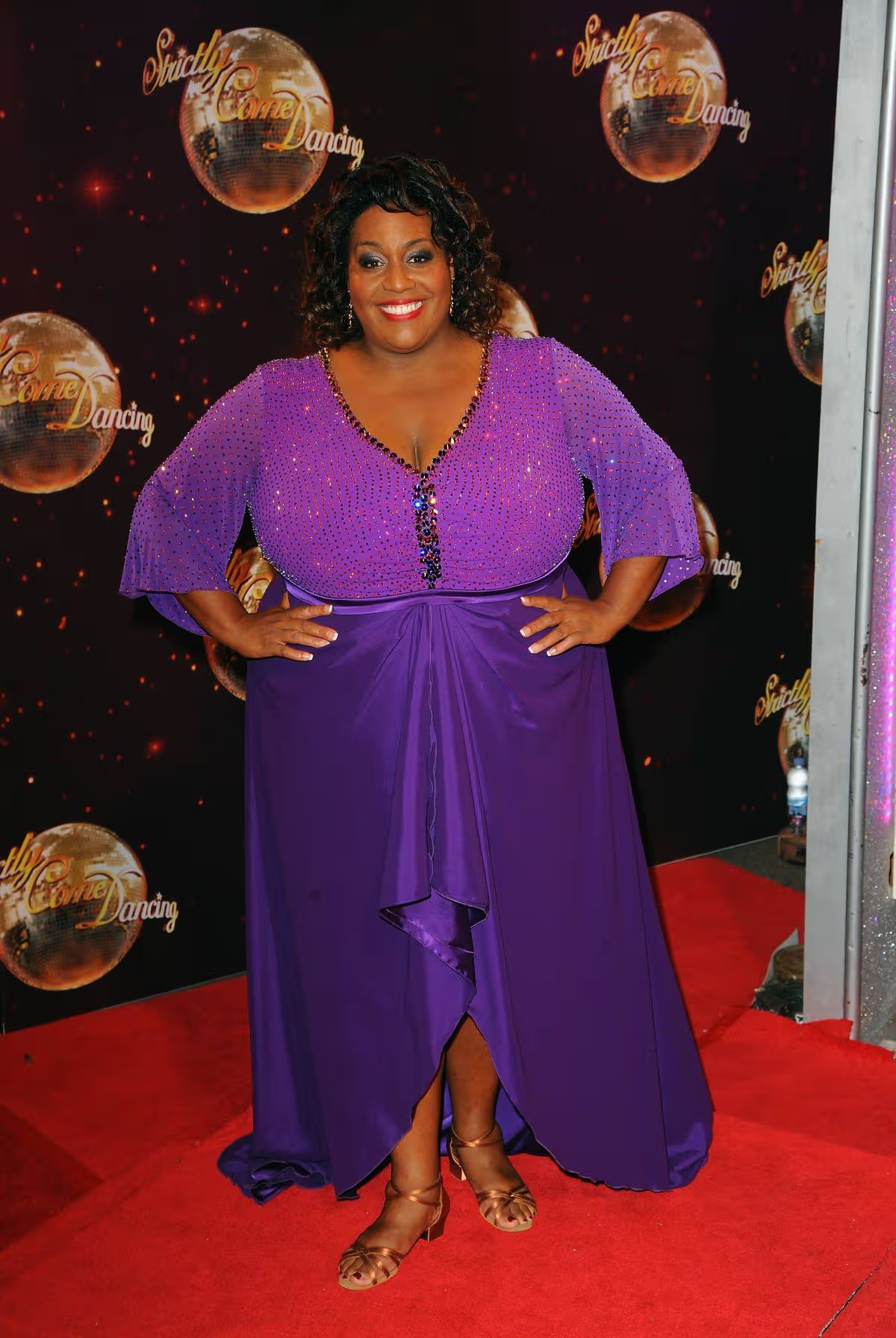
Sydney looked a vision in a plunging white gown adorned with a fur trim that seemed to be inspired by the late Marilyn Monroe.
The star showed out with her revealing red carpet look for the premiere of The Housemaid alongside her co-star Amanda Seyfried.
Sydney oozed sexiness in the striking halterneck, with corset detail to highlight her curves and a floor-length hemline.
The American’s bust was on full display, bursting out of the dress as she posed for the cameras.
Baring It All
The star stripped down to a lacy lingerie ensemble in this daring lookCredit: Frankies Bikinis
As one of the biggest young starlets in Hollywood Sydney has endured more than her fair share of criticism.
She was once slammed by Hollywood producer Carol Baum, who criticised her looks and acting ability, saying: “She’s not pretty, she can’t act. Why is she so hot?”
Taking it in her stride the actress remains unafraid to push boundaries with her exposing outfits.
Sweeney looked the classic bombshell in a sizzling photoshoot for her swimwear collection with Frankies Bikinis.
The star stripped down to a lacy lingerie ensemble, dressed in black head-to-toe in this daring look.
Sheer Sweens
The risqué gown had Sydney grabbing at the fabric to cover her modestyCredit: Splash
Back in 2023, the actress flew to her namesake Aussie city for the premiere of rom-com Anyone But You.
And it was transparent to all that fans loved meeting her. . . and her see-through dress.
The gown had a pair hot pants and a bikini style top fitted into the bodice of the almost completely sheer overlay.
The risqué gown had Sydney grabbing at the fabric to cover her modesty and clutching at her chest.
Playing Dress-up
Sydney’s racy costume showed off her natural curves with its leotard revealing her busty display and plunging necklineCredit: Instagram
The two-time Emmy nominee swapped the gowns for a more revealing number, as she dressed up as the Dragon from Shrek for her Friends-giving party this year.
The star dazzled, in her plunging red sequined leotard, black tights, stilettos and a horned headband for the holiday.
The racy costume showed off her natural curves, with the leotard revealing her busty display and plunging neckline.
She celebrated the Friendsgiving festivities alongside her boyfriend Scooter Braun.
Lace and Grace
Although a more modest look for Sydney, the actress still managed to find a way to reel in the sex appealCredit: Getty
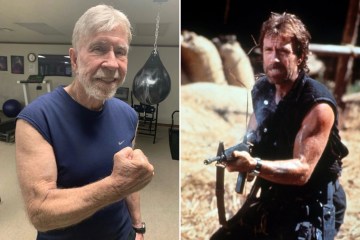
The actress opted for a bridal style dress with white lace stockings when attending the Southwest Film Festival.
The gown covered the movie star’s cleavage this time but revealed a sexy thigh high slit adorned with a white lace stocking.
Although a more modest look for Sydney, the actress still managed to find a way to reel in the sex appeal.
Over the years, the star has been vastly underestimated, with Sydney famously declaring the biggest misconception people have about her is she’s just “a dumb blonde with big t**s.”
But when it comes to her outfits she’s certainly unafraid to push boundaries, and is unapologetic in her confidence.
Latex Look
Sydney put on a raunchy display for this next look opting for a latex figure hugging topCredit: Getty
The Euphoria star looked striking in a black outfit, whilst out at Variety’s annual Power of Young Hollywood event.
Sydney put on a raunchy show for this next look, opting for a latex figure hugging top which clung on to her every curve.
The plunging neck line had her assets very much front and centre, while the leather skirt boasted a split and a flash of her pins.
Teasing her fans
Sydney wowed in a gorgeous tool gown which was half see through due to the mesh stripes placed on the dressCredit: Getty

Back in 2023, Sydney wowed in a gorgeous tule gown which was mostly transparent due to the mesh stripes placed on the dress.
The sheer fabric exposed her midriff, abs and thighs whilst the strapless neckline left her arms and shoulders on show.
Much of the scrutiny around Sydney revolves around her physical appearance, which has fanned debates about the double standards that women face in Hollywood.
Known for choosing roles that lean into hyper-sexualised archetypes, she’s become a lightning rod for public debate.
Known for choosing roles that lean into hyper-sexualised archetypes Sydney’s become a lightning rod for public debateCredit: Getty
It is often said that film directors are siloed off from one another, that they don’t get to watch how others work. So when you put a group of them together, as with the six participants in The Envelope’s 2025 Oscar Directors Roundtable, they are quick to share all sorts of ideas. Like where they prefer to sit in a movie theater — centered in a row or on an aisle? How far back is the best for sound, or so the screen runs up to the edges of your peripheral vision? Should you even take the worst seats in the house, since somebody will eventually be asked to pay money to sit there?
Guillermo del Toro, there with his adaptation of Mary Shelley’s classic novel “Frankenstein,” likes the top of the first quarter of the theater. Rian Johnson, who finds new twists for Benoit Blanc in his third “Knives Out” detective story, “Wake Up Dead Man,” says, “I look for wherever Guillermo’s sitting.” Nia DaCosta, who made the bold, adventurous Ibsen adaptation “Hedda,” likes the top of the first third. Mona Fastvold, who explores the life of the founder of the religious movement known as the Shakers in “The Testament of Ann Lee,” likes the center a little farther back. Jon M. Chu, who made the second part of a musical adaptation with “Wicked: For Good,” sits dead center — and has been known to talk to the theater manager if the sound isn’t loud enough. And Benny Safdie, who explores the rise and fall of mixed martial arts fighter Mark Kerr in “The Smashing Machine,” tries to find a spot where he can fidget in his seat and not bother anyone.
Read on for more excerpts of their conversation about the art of adaptation, navigating budget constraints at any scale and much more.
Jon, I’ve heard you say that with “Wicked: For Good,” you wanted the film to be deeper but not darker. And it doesn’t pull any punches as far as dealing with themes of antiauthoritarianism. What was it like to have those very serious ideas and yet still have this be a buoyant, crowd-pleasing musical?
Chu: The reason we made it was because it had that meat to it, and it was always a two-movie, yearlong experience that set up the fairy tale first. And Movie 2 is kind of where we all are, this moment of this fairy tale shattered in front of us.
I have five children now, so I’m thinking about how to present stories to my kids. Do I still believe in the possibility of dreams and the American Dream? “For Good” really gets to delve into that stuff. And because it was shorter than the first half, we get more room to do it. We added new songs to explore that idea. So it all felt really fitting. Movie 1 could be an answer. Movie 2 is much more of a challenge: Who are we gonna be now that we know the truth?
All of your films in their own way are speaking to right now. Rian, “Wake Up Dead Man” is specifically set in the year 2025 and all the “Knives Out” pictures have been dealing with our contemporary reality. What makes you want to do that?
Johnson: That kind of started for me with the first movie. This is a genre, the murder mystery genre, that I love and that I’m just seeing so much of growing up. But it’s also a genre where most of what I had seen throughout my whole life, murder mysteries are period pieces set usually in a cozy little bubble of a little “Queensfordshire” place in England.
And I guess my realization was, that’s not what Agatha Christie did. She was not writing period pieces. She wasn’t an incredibly political writer, but she was always writing to her time. It’s not trying to do anything radical in terms of making it new or updating it, but let’s set it very much unapologetically in the modern moment. … You have a group of suspects that have a hierarchy of power amongst them and the person at the top they all wanna bump off — it’s such a potent vehicle for building a little microcosm of society.
Benny, one of my favorite things in “The Smashing Machine” is that it’s funny to realize setting a story at the turn of millennium is a period piece now. What was it like crafting this very specific, recent time period?
Safdie: It’s a time period that I think everybody thinks is just yesterday. But when you actually get into the nitty-gritty, it’s a long time ago. And things were very different and everybody knows exactly what those things are too. Because it was heavily documented, there was so much footage of it, it’s so top of mind. And I think a large amount of people also want to go back there a little bit, to this time where the internet was just kind of happening. People want to go back to this simpler moment. But trying to re-create what that feels like is what I was really going after — just thinking about how you would live in that time, and then represent that in the movie. Because I did want it to kind of feel like time travel.
Guillermo, you’ve spoken so much about how “Frankenstein” has been a lifelong dream project for you. Now that it’s done, where does that leave you?
Del Toro: There’s a massive postpartum depression, No. 1, and it’s real. And it affected me more than I thought it would, to be candid. But fortunately, I’ve been very interested in two new themes that are going to be sure to produce blockbusters, which is memory and regret. The dynamic duo of past 60. And I always thought about that in the abstract, but now I try to make the movies not only about the moment I’m in, but about me.
And I’m seriously trying to express what makes me uneasy, what makes me believe in the possibilities of grace even in the most horrible circumstances. And I’m not talking only social, but personal or philosophical. Something happens when the six clicks in on the counter. And all you can do is [ask], “Do I feel I have something to say, genuinely?” And then you go to that. Cronenberg, I had dinner with him when he was turning 74, and he said you have to scare yourself into being young again.
Nia, “Hedda” is such a bold adaptation of the play “Hedda Gabler.” You switched the gender of one of the main characters. You aren’t afraid to inject issues of race and class and sexual identity into the story. Were you ever concerned that you were asking too much of this classic text?
DaCosta: I wrote it on spec, so I wasn’t thinking about anything besides letting my freak flag fly, basically. I just thought, “This character makes more sense as a woman.” OK, what does that mean now? How does that affect the rest of the story? And then I just go from there. And then it ended up being really bountiful and generative.
And then when I met Tessa [Thompson] three years later, I thought, “Oh, when I write this, eventually Tessa will play Hedda.” So now she’s Black. OK, what does that mean? And Tessa’s also mixed-race. So then you get that element of it as well. And then I chose the 1950s, and then I chose England and the country house. You just treat these things as truths, and the story has to go in a certain direction. So I never worry about those things. Maybe because I’m a Black woman, so my presence or my identity for some people will complicate the story. But for me, it just is life.
Guillermo, in adapting “Frankenstein,” did you feel like you were dealing with the Mary Shelley text and also all the Frankenstein movies that we know?
Del Toro: I put all the cinematic stuff on the side. I didn’t want to make an erudite cinematic movie or a referential movie. I have lived with the three iterations of the text for my entire life. And there’s a lot of the interstitial stuff that I took from her biography, fusing with my biography, because even if you sing a song everybody knows, you’re doing it with your lungs. And your passion and your pain and your throat. … It’s the difference between seeing a living animal and taxidermy. If you just want the text, then buy the text. You cannot be more faithful to that text than reading the text. But if you want to see how we interact and resuscitate something into being emotional again, then that’s what we try to do.
Mona, “The Testament of Ann Lee” is a story told with music, but is it a musical? Is that a question you asked yourself as you were making it?
Fastvold: I consider it a musical. I do. But it’s just a different kind of musical. No one’s singing dialogue. It’s not magic when they start to sing. I think, as I was writing the script with Brady [Corbet], we realized early on it had to be a musical because the Shakers worship through ecstatic song and dance. They would be moved by the divine spirit and then receive a song or a piece of movement, and then they would start to sing and dance. Their life was a musical, so that’s what it had to be. And that was exciting to me, to create the whole structure of that.
But it couldn’t be, “OK, here’s a story and then here’s an amazing musical number.” It had to come from this place of worship. So all the musical bits and pieces of the film, our moments of feeling moved by the spirit and having this sort of religious experience, it had to be grounded in that and it had to be really organic-sounding and -looking. So we had to ground it in live recordings and create the soundscape and the music in dialogue with my choreographers. Every body slap and stomp is part of the rhythm and the music of it, because it couldn’t just be where diegetic audio fades out and then there’s this great, wonderful piece.
Chu: In a weird way, we all make musicals. All the movies, everybody has a take on how music integrates with it.
Del Toro: I was aiming for opera.
Guillermo, Jon, both of your films have a sense of scale to them. What kind of challenges does that present? Is it wrangling all the extras? Is it having the sets built on time? Jon, just the number of florists credited at the end of “Wicked: For Good” is wild.
Chu: It’s like building Disneyland, essentially. We had the warehouses going — there’s first a recording studio, so we’re recording music while their dance rehearsals are going on. You have hundreds and hundreds of people. Then you go to the costumes department and then you have the hair, just the wigs alone. People are getting there at 2:30 in the morning. And that’s before you even start the day.
We were planning two movies at the same time. So we had 20-something musical numbers rehearsed and worked with our cinematographer and our team to understand everything and build sets around these pieces. And then you get there on the day and how do I say, “Hey, all that stuff we did, this is actually happening over here. Let’s move everything over here”? I felt the hardest thing was being OK with wasting money if it was the right thing to do at that moment. I needed to feel free and had everybody aware that if I’m moving all of a sudden, we’ve got to go and we’ve got to figure it out. And I think that’s where the magic is.
Del Toro: To me, it’s three things. The first one is tonal, meaning everything that you do, you’re not doing eye candy, you’re doing eye protein. You’re telling a story. So it’s not about looking good or looking big. It’s about, does the gesture happen at the right moment? Because you can make gestures on the wrong moment of the film, and they don’t have a dramatic impact. I say we designed the movie for the Creature to feel real, of a piece with the world. So that’s the first one.
The second one: Is it expressing something different every time we go to a bigger thing? It’s not about the scale. And the final one to me is, does it feel real in the world? So the way I go at it is, there’s no typeface, no paint, no photograph, nothing, that cannot be investigated and designed to within an inch of its life. Even great movies, I’m very fidgety. I go, “That’s not a painting from the 1930s. Somebody painted it much later.” Or a typeface or a carnival banner or something like that. So at the end of the day, if you do your job right, you have a world and people just get into it almost like a vibe. Nobody should notice, but if you do it right, they want to experience it over and over again.
Rian, you make a really bold decision in “Wake Up Dead Man,” where the signature character of the series, Daniel Craig’s Benoit Blanc, is offscreen for much of the first 45 minutes or so of the movie. Did you have to convince people that’s the way things should go?
Johnson: Not really. For this one, first of all, it is a little closer to actually a traditional detective structure. That’s kind of how most Agatha Christie books work, is you meet the suspects in the first act. You get a very good idea of who’s gonna get bumped off. And then, end of the first act, the murder happens, and then the detective shows up and starts to solve it. So there was a precedent for it. But the real reason I had done backflips in the previous two movies to get around that was so we could get Blanc in there earlier. The reason it made sense for this [is] because Father Jud, who’s played by Josh O’Connor, [is] kind of the protagonist of it because of the themes of religion, and so the whole lay of the land was more complicated and delicate in this one to set up. I felt like the audience would be best served by having that runway and getting the time before this powerhouse that is Daniel playing Benoit Blanc comes in and brings this whole new energy to it.
The other thing that I’ve landed on with them is you have to constantly resist the candy of the mystery. You have to always remind yourself [that] the mystery elements are not a load-bearing wall, that those are never going to keep an audience entertained or engaged. You need to do the same thing you do in any movie where you have an emotional, bold line going that’s thrown at the beginning, that lands at the end. And the mystery then has to support that.
Mona, with “Ann Lee,” but also with “The Brutalist,” it seems like the movies that you and Brady Corbet are collaborating on together, you’re doing so much with relatively limited resources. What is it that the two of you are doing in these films that you’re able to make them seem so grand?
Fastvold: I mean, there’s no trick. I had to prep for almost a year for this one, because I knew that no one was going to give me a lot of money to make a musical about the founders of the Shakers. It was not gonna be this sexy pitch. It was a hard pitch. So I knew that it was going to be a limited budget. But at the same time, I just desperately wanted “Ann Lee” to have a really grand story. And I wanted there to be a believable, lush world. And I wanted to tell a story about her whole life, not just a day in her life.
So I had to make it work somehow. It was so much about saying, “OK, I’m working with my [director of photography], my production designer, my costume designer every weekend and night for months and months before we started official prep. And same with my choreographer and composer and with all of the cast as well, just rehearsing. Amanda [Seyfried] was rehearsing at night while she was shooting something else. She would go and have dance rehearsals at night, on the weekends, so we could keep on adjusting.
So the only way that I could, to quote David Lynch, get dreamy on set, which was something I really wanted, was by having so much prep time, and then just really knowing what my Plan A and B was, and to sort of experiment in advance more. And because I knew there’s no way that you can try and build a world and then have the same flexibility on this budget, it’s all about knowing every line item in my budget, what everything costs in Hungary, what everything costs in Sweden. “OK, this is how much a cherry picker in Hungary costs, and therefore I’m gonna take out two shots and only build half the roof.”
The 2025 Envelope Directors Roundtable. Top row, left to right: Rian Johnson, Benny Safdie, and Mona Fastvold. Bottom row, left to right: Nia DaCosta, Jon M. Chu and Guillermo del Toro.
Chu: I think that’s one of the biggest lessons I learned being a director. You don’t have a right to make your movie, because it costs so much and you need so much help. You do have to earn the right to make your movie. That is a part of our job.
Nia, you come to “Hedda” having just made a Marvel movie. You’ve just also finished a sequel to “28 Years Later.” Is there a secret through line for you that connects all these projects?
DaCosta: Being a nerd, Marvel, horror, comic books, for me, those things that I’ve done that I haven’t written are worlds that I loved as a kid. So “Candyman” was hugely important to me when I was younger. I used to love Marvel comics as a kid. “28 Days Later” is one of my formative films that I watched. And so when the opportunities came up to be a part of those worlds, it was really exciting for me. And then “Hedda,” I’m a theater nerd too, so I just really go by my passion, and I’m really compelled by just interesting characters.
“Hedda” and “28 Years Later” are very different films, but for me, they were so similar because I learned from my experience jumping into the studio system after making a sub-million-dollar movie [“Little Woods”] what works for me and what doesn’t work for me. And what works for me is really being given authorship. And so I’m setting the tone early. We’re not here to battle. We’re here to make the vision that I have. And if you’re into it, cool and great, let’s work together. If you’re not into it, then it doesn’t have to exist or I’ll find another way for it to exist.
Del Toro: The ambition should always be beyond the budget. If they give you $130 [million], you want to make a movie that is $260 [million]. But the way to that I found by doing “Devil’s Backbone,” which is $3 million, or “Shape of Water,” which is $19.3. “Shape of Water” opened with all the different sets in the first 15 minutes. And then it’s two sets. Lab, apartment, lab, apartment, lab, apartment. I always tell the departments, let’s choose meatballs and gravy. Where do we put the real resources? You reach a plateau no matter what the budget. Never spend money on a plateau. It always needs to mean something.
Safdie: You pick and choose the moments when you’re gonna get big. We were doing the hospital scene and then we built the plane in the hallway of the hospital. Because that was the most affordable. But there was a column in the middle of the plane, and I would always joke that we should go through the column. I find those limitations exciting. Because you really have to figure it out.
Rian, “Glass Onion” had a more robust theatrical release than “Dead Man” has gotten. Do you feel like as filmmakers that all of you are being put in this position of fighting for the future of theaters and moviegoing?
Johnson: I actually feel incredibly optimistic at this moment about the future of moviemaking. I don’t feel that way because we’re all picking up signs and marching down the street and preaching to people that they need to keep this sacred. I feel optimistic about it because I go to movie theaters and I see them packed with young people who want to go to movie theaters and have that experience.
And I see them coming out for new movies. I see them at revival cinemas. I see theaters at 2 p.m. on a Tuesday showing a Melville film that are just full of young people who are excited. And then you see it with movies that have come out this year. You see it with something like Ryan [Coogler]’s movie, “Sinners,” or with so many films that have struck chords with audiences and created cultural events. You can’t wag your finger at people and say, “You should be going to the theater and having this theatrical experience,” but you feel it rising right now. And so for me, it’s less that I want to advocate for it. It’s more that I want to ride that wave of it coming up.
The setting looked almost cozy: Los Angeles Mayor Karen Bass and a podcast host seated inside her home in two comfy chairs, talking about President Trump, ICE raids, public schools and the Palisades fire.
The recording session inside the library at Getty House, the official mayor’s residence, lasted an hour. Once it ended, the two shook hands and the room broke into applause.
Then, the mayor kept talking — and let it rip.
Bass gave a blunt assessment of the emergency response to the Palisades and Eaton fires. “Both sides botched it,” she said.
“They didn’t tell people they were on fire,” she said to Matt Welch, host of “The Fifth Column” podcast.
The mayor’s informal remarks, which lasted around four minutes, came at the tail end of a 66-minute video added to “The Fifth Column’s” YouTube channel last month. In recent weeks, it was replaced by a shorter, 62-minute version — one that omits her more freewheeling final thoughts.
The exact date of the interview was not immediately clear. The video premiered on Nov. 25, according to the podcast’s YouTube channel.
Welch declined to say whether Bass asked for the end of the video to be cut. He had no comment on why the final four minutes can’t be found on the YouTube version of the podcast.
“We’re not going to be talking about any of that right now,” he told The Times before hanging up.
Bass’ team confirmed that her office asked for the final minutes of the video to be removed. “The interview had clearly ended and they acknowledged that when they took it down,” the mayor’s team said Tuesday in an email.
In the longer video, Bass also talked about being blamed for the handling of the Eaton fire in Altadena, which is in unincorporated Los Angeles County, outside of L.A. city limits. Altadena is represented by L.A. County Supervisor Kathryn Barger, not Bass.
“No one goes after the Board of Supervisors,” Bass said on the original 66-minute video. “I’m responsible for everything.”
Bass, in an interview with The Times, said she made those remarks after the podcast was over, during what she called a “casual conversation” — a situation she called “unfortunate.” Nevertheless, she stood by her take, saying she has made similar pronouncements about the emergency response “numerous times.”
In the case of the city, Bass said, the fire department failed to pre-deploy to the Palisades and require firefighters to stay for an extra shift, as The Times first reported in January. In Altadena, she said, residents did not receive timely notices to evacuate.
“The city and the county did a lot of things that we would look back at and say was very unfortunate,” she told The Times.
Bass was out of the country on a diplomatic mission to Ghana when the Palisades fire first broke out on Jan. 7. When she returned, she was unsteady in her handling of questions surrounding the emergency response.
Former L.A. schools superintendent Austin Beutner, who is running against Bass in the June 2 primary election, called the mayor’s use of the word “botched” a “stunning admission of failure on behalf of the mayor” on “the biggest crisis Los Angeles has faced in a generation.”
“She’s admitting that she failed her constituents,” Beutner said.
Bass isn’t the first L.A. elected official to use the word “botched” in connection with the Palisades fire, which destroyed thousands of homes and left 12 people dead. Last month, during a meeting on the effort to rebuild in the Palisades, City Councilmember Monica Rodriguez said that Bass’ office had mishandled the recovery, at least in the first few months.
“Let’s be honest,” she told one of the mayor’s staffers. “You guys have to be the first to acknowledge that your office has botched the first few months of this recovery.”
Bass has defended her handling of that work, pointing to an accelerated debris removal process and her own emergency orders cutting red tape for rebuilding projects. The recovery, she told Welch, is moving faster than many other major wildfires, including the 2023 Lahaina fire in Hawaii.
“It’s important to state the facts, especially because in this environment … there’s a number of people out there who have been very, very deliberate in spreading misinformation,” she said.
Bass, who formally launched her reelection campaign over the weekend, has been giving interviews to a growing list of nontraditional outlets. She recently fielded questions on “Naked Lunch with Phil Rosenthal + David Wild.” She also went on “Big Boy’s Off Air Leadership Series” to discuss the Palisades fire and several other issues.
On “Big Boy’s Off Air,” Bass said she was in conflict with then-Fire Chief Kristin Crowley over her handling of the fire. When she ousted Crowley in February, she cited the LAFD’s failure to properly deploy resources ahead of the fierce winds. She also accused Crowley of refusing to participate in an after-action report on the fire.
Bass told Big Boy, the host of the program, that firefighters “were sent home and they shouldn’t have been.”
She also called the revelation that the Jan. 1 Lachman fire reignited days later, causing the Palisades fire, “shocking.” The Times has reported that an LAFD battalion chief ordered firefighters to leave the burn area, despite signs that the fire wasn’t fully extinguished.
Bass said that had she known of the danger facing the region in early January, she wouldn’t have gone to Long Beach, let alone Ghana.
Asked where blame should be assigned, Bass said: “At the end of the day, I’m the mayor, OK? But I am not a firefighter.”
On “The Fifth Column,” Bass spent much of the hour discussing the effect of federal immigration raids on Los Angeles and the effort to rewrite the City Charter to improve the city’s overall governmental structure. She also described the “overwhelming trauma” experienced by fire victims in the Palisades and elsewhere.
“To lose your home, it’s not just the structure. You lost everything inside there. You lost your memories,” she said. “You lost your sense of community, your sense of belonging. You know, it’s overwhelming grief and it’s collective grief, because then you have thousands of people that are experiencing this too.”
In the final four minutes, Welch told Bass that he viewed the Palisades fire as inevitable, given the ferocious strength of the Santa Ana winds that day. “As someone who grew up here, that fire was going to happen,” he said.
“Right,” Bass responded.
Welch continued: “If it’s 100 mile an hour winds and it’s dry, someone’s going to sneeze and there’s going to be a fire.”
“But if you look at the response in Palisades and the county,” Bass replied, “neither side —”
The mayor paused for a moment. “Both sides botched it.”
The singer of the band lights up a cigarette and smoke drifts into the theater. Ditto for the pungent aroma of marijuana when a few band members share a joint. “Stereophonic,” which is playing at the Hollywood Pantages through Jan. 2, isn’t biographical, but it sure feels close.
The authenticity springs in part from the quality of the songs being recorded by the fictional band on stage, which were written by Will Butler, a multi-instrumentalist and former member of the Grammy Award-winning band Arcade Fire.
“Stereophonic,” which holds the record for the most Tony nominations of all time for a play, unfolds over the course of a single year as a rock band on the cusp of megastardom struggles to record its second album as the first reaches No. 1 on the charts. While the pressure to produce a hit builds, the band falls apart. For proof of the formula’s resilience, look no further than the success of VH1’s “Behind the Music” series, which plumbed the depths of dozens of rock ’n’ roll train wrecks.
“We really tried to just make something real,” Butler said during an interview in the small, cluttered green room at Amoeba Music before he joined the cast of the show for a brief in-store performance. “This is three hours of what it’s like to make a record.”
Is it ever. There is something inherently combustible about being in a band. (Full disclosure: I played in a semi-popular indie band for a decade, which imploded with huge amounts of drama right on cue. I know at least a dozen other groups that have unraveled in similar fashion.) Despite, or rather because of, Arcade Fire’s massive popularity, Butler knows the crash-and-burn nature of being in a band. He joined Arcade Fire after one of its original members quit in the middle of an encore following a fight with the lead singer — Butler’s older brother, Win Butler.
Will Butler left Arcade Fire at the end of 2021, saying at the time that the decision came about organically. “There was no acute reason beyond that I’ve changed — and the band has changed — over the last almost 20 years. Time for new things,” he wrote on social media.
Will Butler performs at Amoeba Music with Claire DeJean and the stars of the Broadway tour of “Stereophonic,” which follows the rise of a struggling 1970s rock band.
(Jason Armond / Los Angeles Times)
“Stereophonic” was one of those new things, and Butler has brought his understanding of volatile band dynamics to bear in his work on the show, as well as his thoughts on the fragile, ephemeral nature of recording in a studio.
“There’s a little booth, and you go into the booth and you lose your mind,” Butler said of the experience of laying down a track. “And you exit the booth and you’re just a boring human.”
The boring — and boorish — parts of that humanity are on display in “Stereophonic,” where there is more control room conflict than actual music making. This also feels true to form. Romances blossom and bottom out in spectacular fashion. Drugs are consumed in copious amounts — particularly cocaine. This is 1976, after all. The long-suffering recording engineer reaches his breaking point after becoming totally fed up with the band’s self-absorbed, self-destructive behavior.
Human beings weren’t meant to create art in this particular kind of pressure cooker. Until they do. There is a moment in the making of every great song when each musician becomes part of the whole during the act of recording, and the band’s genius is temporarily realized. The song can’t be made by any one member — it can only come from the spontaneous transcendence of the group.
This moment happens in “Stereophonic” after a truly frustrating number of stops and starts, when the group plays a song so beautifully that the theater erupts in effusive applause. This is why the band stays together despite its constant feuding — and why the audience has come.
“We really tried to just make something real,” Will Butler said of “Stereophonic.” “This is three hours of what it’s like to make a record.”
(Jason Armond / Los Angeles Times)
“The music in this show has to crack open the world because it’s so much talking and it’s so much sitting around,” Butler said. “And then when they play music, you have to instantly realize why they’re together.”
Butler first met playwright David Adjmi and heard his idea for the show in 2014. Butler was intrigued, but had to wait for the script before he could work on the music in earnest. The songs needed to fit into the script like puzzle pieces, Butler said. Sometimes he needed to write a whole song and other times he needed to focus on composing the first 30 seconds of a song — which would be heard on repeat.
“And then we cast it, and now the music exists in a different way,” Butler said, noting that the music changes with every new cast. A cast — like a band — has its own particular strengths and weaknesses. No rhythm section is ever the same. You know John Bonham’s tom fills when you hear them, just as you can immediately recognize the sound of Ringo Starr’s hi-hats.
None of the actors in the national tour cast of “Stereophonic” — except for the drummer — are trained musicians.
(Julieta Cervantes)
The whole process of constructing “Stereophonic” as a play is very meta — with Butler producing the band that is in turn producing itself onstage in the studio. During the course of the show, one of the songs is actually recorded live and played back from the control room. It is slightly different each time, in ways both meaningful and incidental. Just like in real life.
The in-store performance at Amoeba, however, is wildly different from what happens onstage at the Pantages. The cast members are not — with the exception of the drummer — trained musicians, and stripped of the confidence that comes with costumes and a set, they appear somewhat vulnerable in the process.
This is in stark contrast to Butler, who displays all the verve and conviction of a bona fide rock star. The cast will do the same across the street later that night. For the moment, however, Butler is showing them just how it’s done.
Sarah typically works on Christmas Day. She has devoted countless Christmases to caring for newborns on the same emergency neonatal unit where her own baby was born prematurely this year
Dave wanted to do something special for his wife Sarah(Image: Doug Jackson/PinPep)
This is the heartwarming moment Sarah Alcock found out that her husband had nominated her for a once-in-a-lifetime holiday.
Christmas for the 35-year-old doesn’t tend to be spent tucking into a roast, opening presents and relaxing with the family.
In fact, Sarah typically works on Christmas Day. The Oakwood, Derby mum has missed out on many a festive day at home due to work nursing shifts at Queen’s Medical Centre in Nottingham, where her own baby was born prematurely this year.
Born at just 25 weeks, weighing 1lb 12oz, the eight-month-old will be celebrating her first Christmas this year, but with staffing pressures mounting, she has volunteered to step in again to help her fellow colleagues out.
Her husband, Dave, a marketing manager, from Oakwood, Derby, wanted to recognise how hard Sarah works, so he nominated her to win a break with easyJet.
“She’s a hero. Her work doesn’t stop just because it’s Christmas, so she has to go there regardless of the date,” he explained.
Alongside Sarah, NHS nurse Nicky Starkowitz and care home manager Niccii Gillett, who also selflessly work every Christmas, were gifted holidays as part of a campaign by tour operator easyJet Holidays to recognise the UK’s hidden heroes.
Nicky faced a breast cancer diagnosis in August this year and tragically, her four-year-old son Raffi was also diagnosed with a rare and aggressive brain cancer in March. Her husband Neil said: “With everything going on this year we haven’t managed to get away or get the opportunity to do anything as a family together.”
Nicky added that “just to go away somewhere, as a family, and have time away together would be so nice”.
The holidays are a special easyJet Holidays escape, to give recognised key workers quality time with friends and family in the sunshine. They have been gifted to Christmas heroes after new research by easyJet Holidays found over 10 million Brits will be spending time apart from their families due to work commitments this year.
Nearly a third (28%) of key workers also feel that they haven’t taken a proper break in the past year, with nearly a quarter (22%) not likely to have a choice over whether they can work on Christmas Day or not.
Matt Callaghan, Chief Operating Officer at easyJet Holidays, said: “At Christmas especially, we’re reminded how many people quietly put others first, often sacrificing precious time with their own families. Our key workers do this year after year, and our communities simply wouldn’t function without them.
“This is easyJet holidays’ way of saying thank you – giving a few of these Christmas heroes the chance to properly step away, rest, and spend quality time together, whether that’s in the sunshine or exploring a new city. It’s about recognising the people who give so much, especially at this time of year.”
The easyJet Holidays poll uncovered the professions we feel most grateful for at Christmas, with nurses, paramedics, care workers and delivery drivers among them.
Just under a quarter (23%) of Brits say they leave out a gift for the postal workers at Christmas, while over a fifth (22%) say they do the same for binmen.
Six in ten also say Christmas makes them feel more generous towards others, with 51% saying they compliment others more during the festive period, while more than three in ten (31%) check in with their neighbours.
Top 10 professions Brits feel most grateful for at Christmas: