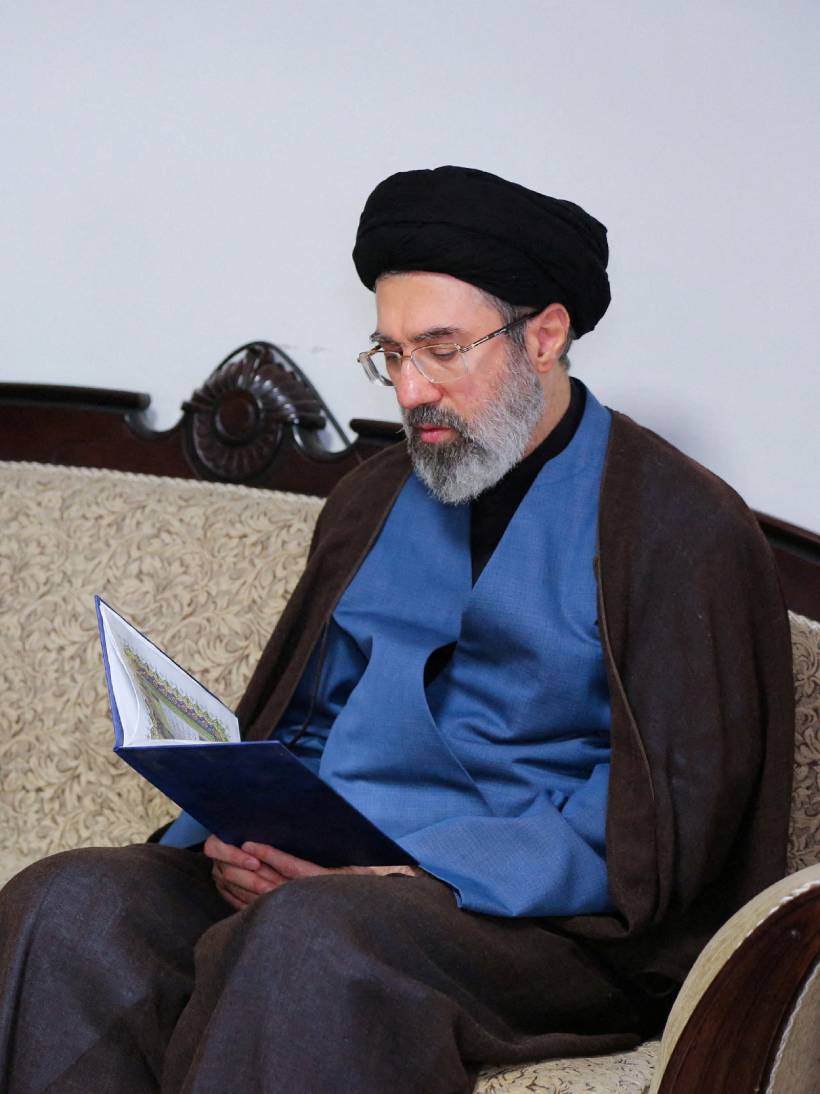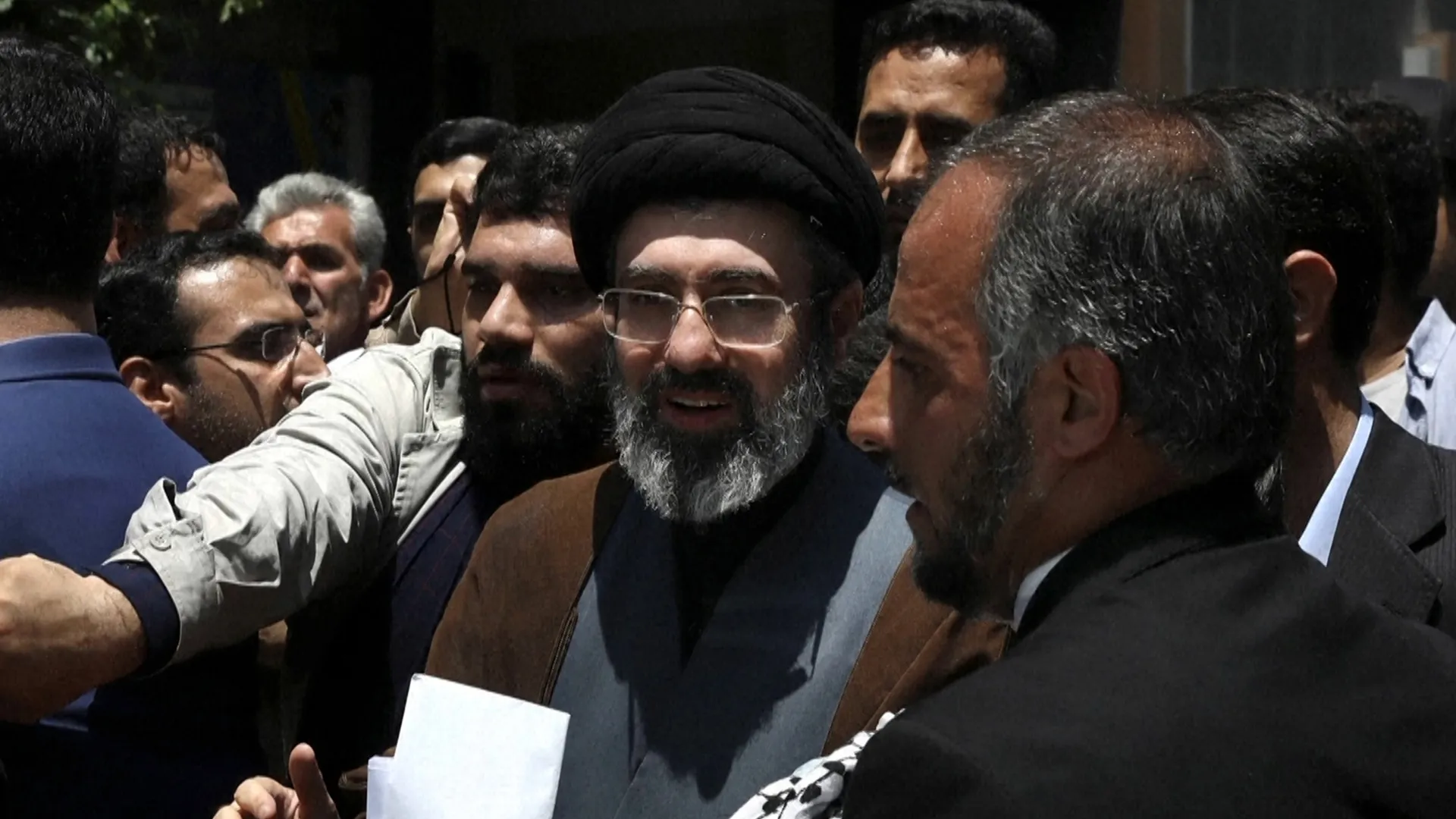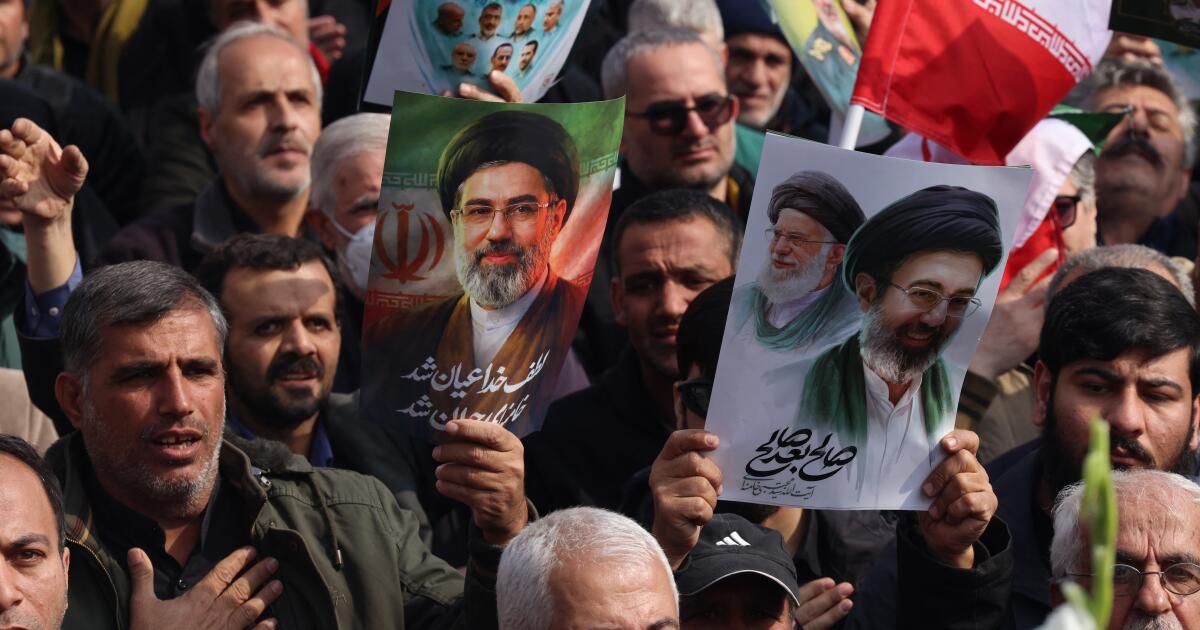
Mojtaba

U.S. is in the dark on Mojtaba Khamenei’s views on the bomb

Days after he was named Iran’s next supreme leader, and over a week since U.S. and Israeli bombing wiped out much of his family, Mojtaba Khamenei issued his first statement on Thursday demanding vengeance against the alliance over the war it unleashed.

He called on Iranian forces to continue thwarting vital shipping traffic through the Strait of Hormuz. He vowed to open new fronts against the United States and Israel. And he warned that Gulf states hosting U.S. bases would remain targets of Iranian attack.

Yet, what concerned the White House most was what the new supreme leader didn’t say.

Khamenei made no mention of a strategic endeavor that had brought the Islamic Republic to war: Its nuclear program, suspected for decades of harboring military dimensions.

The omission was not lost on officials in the Trump administration, who told The Times they are largely in the dark over the new supreme leader’s stance on whether Iran should break out to build a nuclear weapon.

Khamenei’s deep alliance with the Islamic Revolutionary Guard Corps, which has advocated for weaponization in the past, has raised concern that the new leader will depart from his father’s long-standing position against building a bomb.

U.S. intelligence assessments long held that the late ayatollah, Ali Khamenei, had adopted a strategy of remaining at the threshold of developing a nuclear weapon while avoiding the costs and risks of actually building one. In 2003, as the United States invaded Iraq over false claims that Saddam Hussein possessed weapons of mass destruction, Khamenei issued a religious edict — a fatwa — declaring nuclear weapons to be forbidden under Islam.

That doctrine is now in doubt, with the new supreme leader wounded and stewing underground over the U.S. assault that has devastated Iran’s military and killed his father, his mother and his sister, among other family members.

Concern among U.S. officials comes as Trump has expressed interest in ending the war “very soon,” even though a stockpile of uranium — a key ingredient in the construction of nuclear weapons — remains buried but accessible to Iranian authorities.

Defense officials are skeptical that the nuclear program can be fully dismantled without sending in a substantial U.S. ground force, an escalation that Trump has sought to avoid. But ending the war with Iran’s nuclear infrastructure partially intact could have devastating repercussions. The U.S.-Israeli campaign could force the new Iranian leader to conclude that regime survival requires a nuclear deterrent, one official said.

“Even if President Trump declares victory tomorrow, and points to the damage done to Iran’s conventional military, the fact of the matter is you have a more hardline regime in place with the key ingredients for a nuclear weapon,” said Eric Brewer, deputy vice president of the nuclear materials security program at the Nuclear Threat Initiative, who noted that Tehran still has a stockpile of 60% enriched uranium — close to weapons grade — and advanced centrifuges to take it over the finish line.

“What’s the plan for day after,” Brewer added, “as Iran starts to build back, and potentially seeks nuclear weapons?”

Patrick Clawson, director of the Iran program at the Washington Institute for Near East Policy, said that Mojtaba Khamenei’s position on the nuclear program has been a stubborn mystery. Reports spreading on social media that he opposed the Joint Comprehensive Plan of Action, a nuclear deal brokered among world powers and Iran during the Obama administration, are unsubstantiated, he said.

“While Mojtaba often advised his father on domestic issues, there is much less information about his position on foreign affairs, other than opposition to Israel,” Clawson said. “I have never seen any indications he took a position about the JCPOA.”

President Trump has outlined the destruction of Iran’s nuclear capabilities as a major goal. But in closed door briefings to Congress, defense officials have been less emphatic, according to Democratic lawmakers.

On Tuesday, shortly after Khamenei was named to succeed his father, Defense Secretary Pete Hegseth warned him to disavow continued nuclear work in an exchange with reporters.

“He would be wise to heed the words of our president, which is to not pursue nuclear weapons,” Hegseth said, “and come out and state as such.”
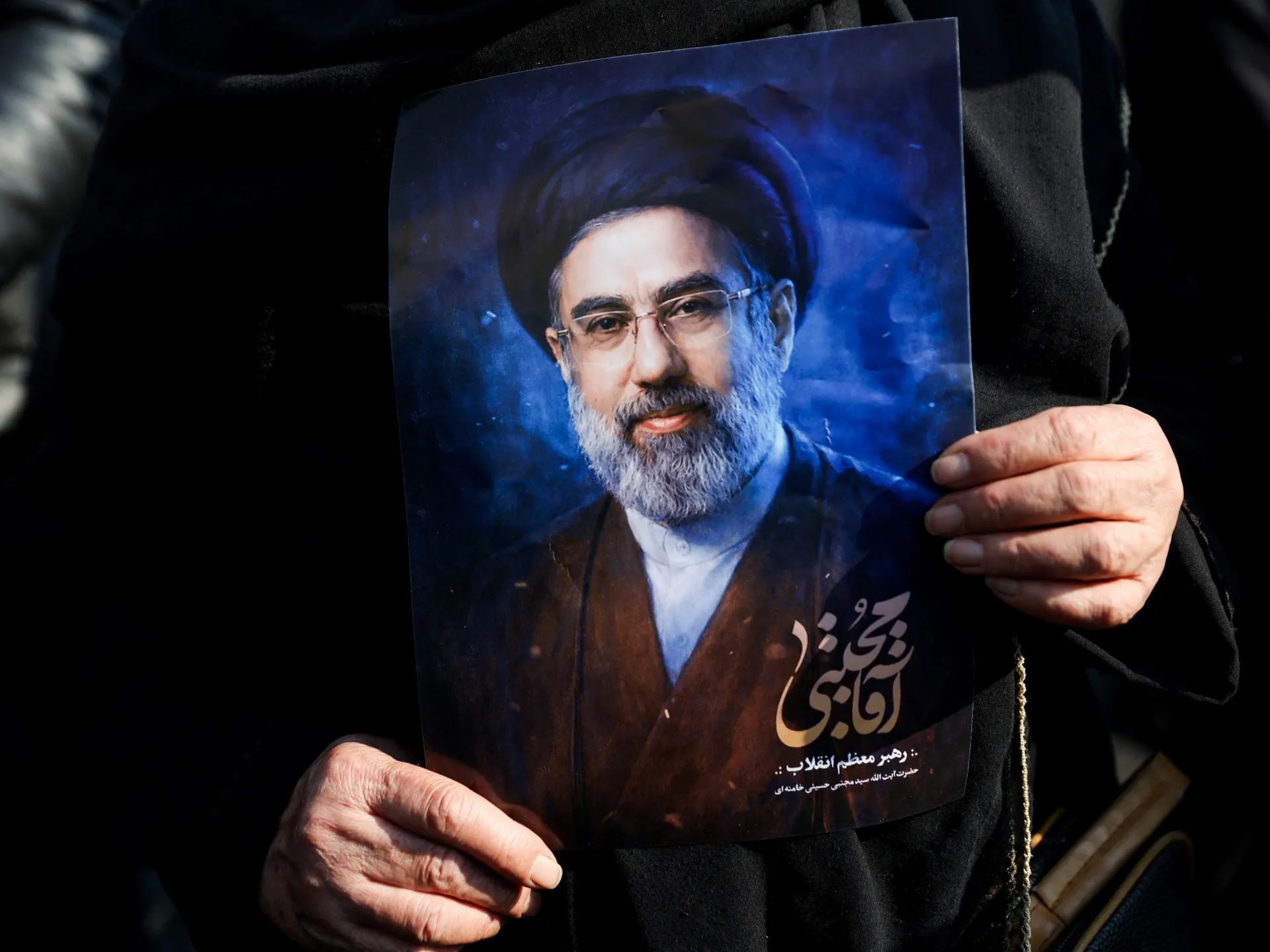
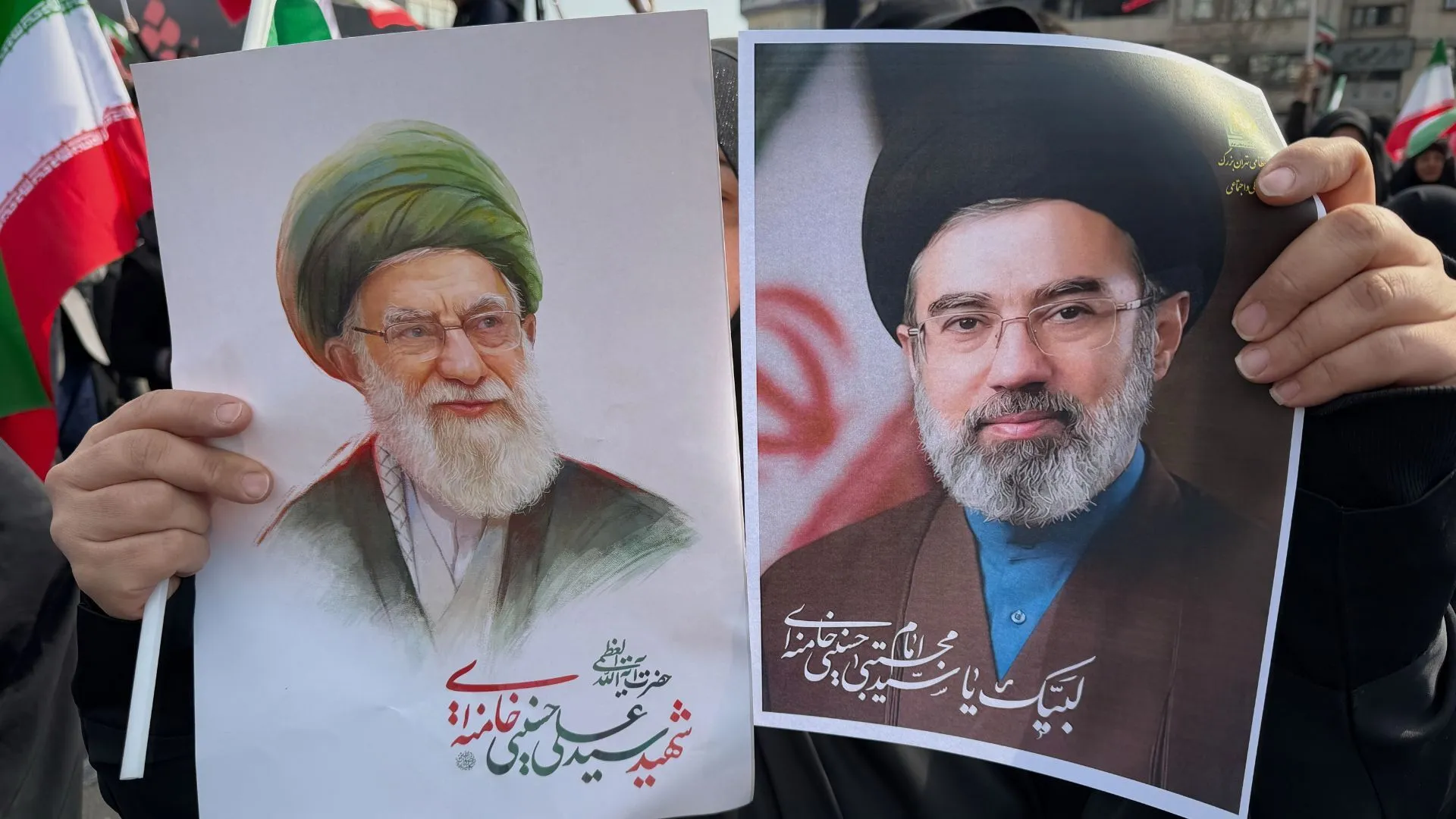
Source link

World reacts to appointment of Mojtaba Khamenei as Iran’s supreme leader | US-Israel war on Iran News

Iran’s new Supreme Leader Mojtaba Khamenei has never held a formal position in government, but his appointment as his late father’s successor amid the US-Israeli war on his country was not unexpected.

Iran’s Assembly of Experts appointed the 56-year-old mid-ranking religious scholar to the position on Sunday, just over a week after his late father, Ayatollah Ali Khamenei, was killed in United States-Israeli strikes.

Recommended Stories

list of 3 itemsend of list

Khamenei, who has strong ties with the Islamic Revolutionary Guard Corps (IRGC) and his late father’s still-influential office, is seen as a hardliner who will provide continuity in the country.

His appointment, which came after he lost both his father and his wife in strikes, was interpreted as a defiant choice signalling continuity as the Islamic Republic faces the biggest crisis in its 47-year history.

Khamenei received immediate backing from figures in Iran’s political and security establishment, including IRGC leaders, President Masoud Pezeshkian and Ali Larijani, secretary of the Supreme National Security Council.

Outside the country, reactions were mixed:

Oman

Oman was a mediator in recent talks between Iran and the United States, which collapsed when the US and Israel unleashed their war on Iran last month.

Oman’s Sultan Haitham bin Tariq Al Said on Monday sent a “cable of congratulations” to Khamenei on his appointment as Iran’s new supreme leader, according to the official Oman News Agency.

Iraq

Iraqi Prime Minister Mohammed Shia al-Sudani also congratulated Khamenei on his appointment on Monday.

“We express our confidence in the ability of the new leadership in the Islamic Republic of Iran to manage this sensitive stage, and continue to strengthen the unity of the Iranian people in facing the current challenges,” al-Sudani said in a statement.

He reaffirmed Iraq’s solidarity and support for Iran and “all steps aimed at ending the conflict and rejecting military operations against its sovereignty, in order to preserve the stability of other countries in the region”.

United States

US President Donald Trump had previously dismissed Mojtaba Khamenei as a “lightweight”, and insisted he should have a say in appointing a new Iranian leader, which Tehran rejected.

On Monday, Trump told NBC News, “I think they made a big mistake. I don’t know if it’s going to last. I think they made a mistake.”

Later on Monday, he told CBS News: “I have no message for him.”

Trump said he has someone in mind to lead Iran, but did not elaborate.

Israel

The ⁠Israeli ⁠military has already threatened to kill any replacement for the late Ali Khamenei.

Israel’s Foreign Ministry said Monday that Mojtaba Khamenei was a “tyrant” like his slain father, and would continue what it described as the Iranian “regime’s brutality”.

In a post on X featuring a picture of Mojtaba Khamenei and his father Ayatollah Ali Khamenei, holding guns, the ministry wrote: “Mojtaba Khamenei. Like Father Like Son”.

“Mojtaba Khamenei’s hands are already stained with the bloodshed that defined his father’s rule. Another tyrant to continue the Iranian regime’s brutality,” said the ministry.

Russia

Russian President Vladimir Putin on Monday pledged “unwavering support” to Iran.

“I would like to reaffirm our unwavering support for Tehran and solidarity with our Iranian friends,” Putin said in a message to Khamenei, adding that “Russia has been and will remain a reliable partner” to Iran.

“At a time when Iran is confronting armed aggression, your tenure in this high position will undoubtedly require great courage and dedication,” the Russian leader said.

China

China’s Foreign Ministry spokesman Guo Jiakun told reporters on Monday that Iran’s decision to appoint the younger Khamenei was “based on its constitution”.

“China opposes interference in other countries’ internal affairs under any pretext, and Iran’s sovereignty, security, and territorial integrity should be respected,” he said when asked about the threats against the new leader.

Beijing is a close partner of Tehran and condemned the killing of the former supreme leader, but it has also criticised the Iranian counterstrikes against Gulf states.

Yemen’s Houthis

Yemen’s Houthi rebels on Monday welcomed the appointment of the new supreme leader.

“We congratulate the Islamic Republic of Iran, its leadership and people, on the selection of Sayyid Mojtaba Khamenei as Supreme Leader of the Islamic Revolution at this important and pivotal juncture,” the group said in a statement on Telegram.

It called his selection “a new victory for the Islamic Revolution and a resounding blow to the enemies of the Islamic Republic and the enemies of the nation”.

Source link

Who is Iran’s new supreme leader, Mojtaba Khamenei? | US-Israel war on Iran News

Mojtaba Khamenei replaces his assassinated father Ayatollah Ali Khamenei.

A new supreme leader in Iran – Mojtaba Khamenei – has replaced his assassinated father.

His selection sends a defiant message to the United States and Israel as they attack the country.

So, who is Iran’s new leader – and what does his appointment mean?

Presenter: Tom McRae

Guests:

Hassan Ahmadian – Associate professor at the University of Tehran

Mehran Kamrava – Professor at Georgetown University in Qatar and director of the Iranian Studies Unit at the Arab Center for Research and Policy Studies

Alex Vatanka – Senior fellow at the Middle East Institute in Washington, DC

Source link

Iran Names Mojtaba Khamenei Leader, Diming Hopes for Quick Peace

Iran on Monday named Mojtaba Khamenei as its new supreme leader following the killing of his father, Ali Khamenei, in strikes on the first day of the current war. The move signals that Iran’s ruling establishment intends to maintain its hardline course despite the dramatic loss of the country’s most powerful figure.

Mojtaba Khamenei, a 56-year-old Shi’ite cleric with strong connections to Iran’s security apparatus, was quickly endorsed by political leaders, military bodies and religious institutions. Public ceremonies and declarations of loyalty were organised across the country, reflecting a rapid effort by the political system to demonstrate continuity and stability at a moment of intense external pressure.

The appointment is widely seen as closing off any near-term possibility of a negotiated end to the conflict that has engulfed the region. With a figure closely aligned with Iran’s powerful security institutions now leading the state, analysts expect Tehran to maintain a confrontational stance rather than seek quick concessions.

Consolidation of power within the system

Iran’s political and military leadership rallied quickly behind the new leader. Statements from the defence establishment pledged unwavering loyalty to Mojtaba Khamenei, describing him as commander-in-chief and promising to follow him “until the last drop of our blood.”

The swift consolidation of authority highlights the enduring strength of the Islamic Republic’s institutional framework. The supreme leader sits at the top of Iran’s political hierarchy, exercising ultimate control over the military, judiciary and key elements of the state.

Supporters of the government described the succession as a demonstration that the system could withstand even the killing of its long-serving leader. Some Iranians interviewed by media outlets expressed pride and relief that the leadership transition had occurred quickly during wartime, viewing it as a sign of national resilience.

Others, however, reacted with disappointment or anxiety. Many critics of the government had hoped that the death of the elder Khamenei might open the door to political change. Instead, the elevation of his son long considered close to the security establishment suggests continuity rather than reform.

Divided reactions inside Iran

Public reactions within Iran have reflected the country’s deep political divisions. Supporters of the authorities praised Mojtaba Khamenei’s appointment as a defiant response to foreign pressure and an affirmation that the Islamic Republic remains intact.

Critics, however, say the change offers little hope for political liberalisation. Many opposition figures and activists have remained quiet, in part because of fears of repression during wartime. The government recently suppressed widespread protests, and security forces maintain a strong presence across major cities.

Observers note that Iran’s powerful security institutions including the Islamic Revolutionary Guard Corps retain extensive resources and influence. The Guard and associated networks also control major sectors of the economy, reinforcing the system’s ability to maintain power even during crises.

International pressure and escalating conflict

The leadership change comes amid escalating hostilities involving Israel and the United States. U.S. President Donald Trump has demanded Iran’s unconditional surrender and has suggested Washington should have influence over the selection of Iran’s supreme leader.

Trump has previously warned that any successor to Ali Khamenei could face the same fate if Iran continued what he described as hostile policies. Israeli officials have also indicated that senior Iranian leaders could remain targets unless Tehran abandons its military programmes and regional alliances.

Israel’s stated war aims include dismantling Iran’s missile and nuclear capabilities, and some officials have also spoken of ending the country’s clerical system of rule. Washington’s position initially focused on military capabilities but has hardened during the conflict.

Meanwhile, Israeli operations have expanded across the region, including strikes in Beirut and other areas linked to Iranian-backed groups such as Hezbollah. Fighting and airstrikes have resulted in significant casualties in Iran, Lebanon and Israel.

Energy shock and global economic impact

The war has triggered one of the most severe energy disruptions in decades. Shipping through the Strait of Hormuz, a narrow waterway near Iran’s coast through which roughly a fifth of global oil and liquefied natural gas supplies pass, has been effectively halted.

With tankers unable to move for more than a week, producers have faced storage shortages and in some cases have been forced to halt pumping. The supply shock sent Brent crude prices surging sharply, briefly approaching $120 per barrel before settling above $100.

The surge has rattled financial markets worldwide, pushing stock indexes in Asia and Europe sharply lower and raising fears of inflationary pressure in major economies. Rising fuel costs also carry political implications in the United States, where gasoline prices are closely watched by voters ahead of upcoming elections.

Regional fighting intensifies

Military operations have continued across multiple fronts. Israeli forces have struck targets in central Iran and carried out attacks on infrastructure, including an oil refinery that sent thick black smoke rising over the capital, Tehran.

At the same time, Iranian-aligned forces have launched attacks elsewhere in the region. A refinery in Bahrain was damaged in a strike that forced the national oil company to declare force majeure, further highlighting the widening scope of the conflict.

Casualties have mounted rapidly. Iranian officials say more than 1,300 civilians have been killed in U.S.-Israeli strikes, while deaths have also been reported in Lebanon and Israel. Israeli authorities confirmed fatalities from Iranian missile attacks, and several soldiers have been killed in fighting along the Lebanese border.

Iran’s system of rule

The role of supreme leader was created following the Iranian Revolution of 1979, which established the Islamic Republic under clerical leadership. The position combines religious authority with ultimate political power.

Ali Khamenei held the office for more than three decades, shaping Iran’s foreign policy and domestic governance during periods of sanctions, regional conflict and diplomatic negotiations with world powers. His death in wartime marked one of the most dramatic moments in the country’s modern political history.

Mojtaba Khamenei has long been viewed as an influential figure behind the scenes, particularly within security institutions. Though less publicly prominent than other clerics, he has been widely considered close to the Revolutionary Guard and to key power brokers within the political establishment.

Analysis: Hardline continuity and a longer war

The rapid elevation of Mojtaba Khamenei suggests that Iran’s ruling system is prioritising continuity and cohesion over reform or compromise. By choosing a figure closely aligned with the security establishment, the leadership appears determined to project strength during wartime.

This choice reduces the likelihood of immediate diplomatic concessions that might have opened a path to de-escalation. A leader closely tied to Iran’s military institutions is more likely to emphasise resistance and national defence rather than negotiation under pressure.

At the same time, the succession demonstrates the resilience of Iran’s political structure. Despite the loss of its long-time leader and ongoing military attacks, the state apparatus has moved quickly to stabilise authority and present a unified front.

For the wider region and the global economy, the implications are significant. If Iran continues to pursue a confrontational strategy under its new leader, the conflict could become prolonged, keeping energy markets volatile and increasing the risk of further escalation across the Middle East.

With information from Reuters.

Source link

Iran’s IRGC backs Mojtaba Khamenei as new supreme leader | Islamic Revolutionary Guard Corps

NewsFeed

Iran’s Islamic Revolutionary Guard Corps has pledged allegiance to Mojtaba Khamenei, the country’s newly-elected supreme leader. While some Iranians have celebrated, many are dismayed the 56-year-old cleric, accused of human rights abuses, has ascended to the country’s highest office.

Source link