Feds greenlight controversial Cadiz water project in California
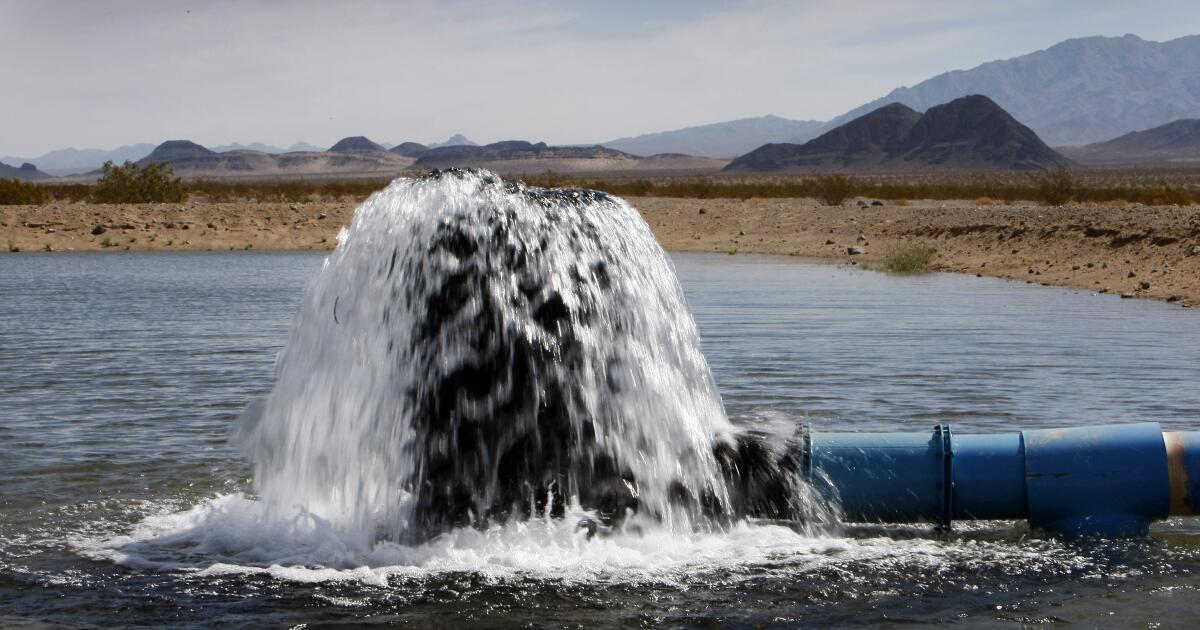
The Trump administration has signed off on a company’s plan to convert an oil and gas pipeline to pump groundwater from the Mojave Desert to thirsty California cities for the first time, a lucrative venture that critics say threatens natural springs and wildlife.
The federal Bureau of Land Management released documents Thursday saying that Cadiz Inc.’s plan to repurpose 162 miles of the pipeline to transport water “will not significantly affect” the environment.
“We’re excited to achieve this pivotal milestone. After many years of planning and environmental review, the project has now reached the construction stage,” said Susan Kennedy, chair and chief executive of Cadiz.
Environmental advocates and leaders of Native tribes, who have been fighting the project, criticized the decision.
“This groundwater mining proposal would drain the desert and rob the Mojave of its rare springs and wildlife habitat,” said Chance Wilcox, California desert associate director of the National Parks Conservation Assn. “It’s indefensible that the Trump administration would once again try to revive the pointless Cadiz project, by defying decades of scientific warnings and refusing to conduct an environmental review of the groundwater mining.”
The application for the federal authorization was filed by the Fenner Gap Mutual Water Co. The documents say the company plans to build seven pump stations, three of them located on federal land managed by the agency.
The 30-inch steel pipeline runs underground from Cadiz’s desert property, near the town of Amboy, northward to the town of Mojave.
The BLM said in its authorization that repurposing the pipeline for water “would comply with all applicable statutes and regulations.” The agency said it has “reasonably determined that the impacts of groundwater withdrawal associated with Cadiz’s groundwater extraction project are outside the scope of analysis.”
Cadiz’s attempts to export water from its property 200 miles east of Los Angeles have drawn controversy for decades.
In 2019, Gov. Gavin Newsom signed legislation that requires the project to undergo scientific study and gain approval from the State Lands Commission before it can take water from the Mojave and sell it to California cities.
Activists opposing the company’s plans include civil rights leader Dolores Huerta.
“Cadiz spells destruction for water, sacred lands, and the desert economy,” Huerta said in a statement. “It is exactly this type of greed and injustice that I have dedicated my life to oppose.”
Leaders of nearby tribes have also objected to Cadiz’s plans to pump from the desert aquifer near the Mojave Trails National Monument and Mojave National Preserve.
“It is the living heart of the desert,” said Daniel Leivas, chairman of the Chemehuevi Indian Tribe. “To drain it would be to drain the life out of the entire desert. No profit is worth such desecration.”
Chairman Timothy Williams of the Fort Mojave Indian Tribe said the company’s plan “to pump and sell 25 times more groundwater each year than the aquifer can replenish would desecrate our traditional territories.”
“Pumping more groundwater than is sustainably replenished is not only negligent, but dangerous to the American Desert Southwest,” he said in the joint statement with other opponents of the project.
For years, while pursuing its plan to sell water far away, the company has been using wells on its property to irrigate nearly 2,000 acres of farmland growing lemons, grapes and other crops. It has drilled more wells in anticipation of being able to export water once the government approved its pipeline.
The company intends to pipe water to communities in San Bernardino County and says it’s “expected to provide one of the lowest-cost sources of new water in the drought-plagued Southwest.” It says the federal permit “marks a key milestone as we finalize project financing with prospective investors.”
Cadiz bought the 220-mile pipeline from El Paso Natural Gas in 2020. Once construction is completed, the company says the pipeline will be able to transport up to 25,000 acre-feet of water per year — about 5% of what Los Angeles uses each year.
The Los Angeles-based corporation is also seeking to build a new pipeline along a railroad right-of-way to transport water to the south.
Environmental groups have repeatedly filed lawsuits challenging the project.
Ileene Anderson, a senior scientist at the Center for Biological Diversity, called the Trump administration’s decision “a green light for environmental destruction.”
She said six of the proposed pumping stations slated to be built are in the habitat of desert tortoises, a species in decline.
“We’ve successfully fended off this project before and we’ll continue to fight to stop this zombie from coming back,” Anderson said.
In 2021, the Biden administration reversed a Trump administration decision that had cleared the way for Cadiz to pipe water across public land. In 2022, a federal judge scrapped the pipeline permit that the Trump administration had issued.
But during President Trump’s second term, the company has again made headway on its plans. In February, Cadiz announced that the federal Environmental Protection Agency had invited it to submit an application for a $194-million low-interest loan for the northern pipeline project.
The company said in May that it reached an agreement with the federal Bureau of Reclamation to provide funding for a review of its potential role in “augmenting water supplies” along the shrinking Colorado River.
The company has also been lobbying the Trump administration. The group Public Citizen said in a recent report that Cadiz, through its nonprofit Fenner Gap Mutual Water Co., enlisted former Interior Secretary David Bernhardt’s new lobbying firm, the Bernhardt Group, and has spent at least $330,000 on lobbying in 2025 and 2026.
Records show lobbyist Luke Johnson has repeatedly accompanied Kennedy at meetings with Interior Department officials.
“The extensive influence of David Bernhardt’s boutique lobbying firm on the agency he formerly led highlights how insider firms staffed with former Trump officials have grown in recent years,” said Alan Zibel, a research director with Public Citizen. He said Bernhardt and his lobbyists “have learned how to master influence-peddling in the anything-goes era of Trump 2.0.”
Earlier this month, an Arizona water agency announced it signed an initial “memorandum of understanding” agreement to buy up to 10,000 acre-feet of water per year from Cadiz’s Mojave Groundwater Bank. The Central Arizona Irrigation and Drainage District provides water to farmlands in Pinal County, where growers are dealing with water cutbacks.
The company said that for this to happen, it would need to build pipelines and reach deals to exchange water across state lines.
Members of California’s congressional delegation have raised concerns. In a recent letter to Interior Secretary Doug Burgum, California Sens. Adam Schiff and Alex Padilla called for a thorough environmental review, saying that federal agencies and peer-reviewed scientific analyses have “warned of the significant and irreversible impacts that Cadiz’s project could have on federal lands and surrounding communities.”
Rep. Raul Ruiz (D-Indio) said in a letter to Burgum that he is concerned about the company’s long-standing effort to extract and export groundwater.
“The area I represent cannot afford to absorb the long-term costs of a commercially driven groundwater export scheme,” Ruiz said.