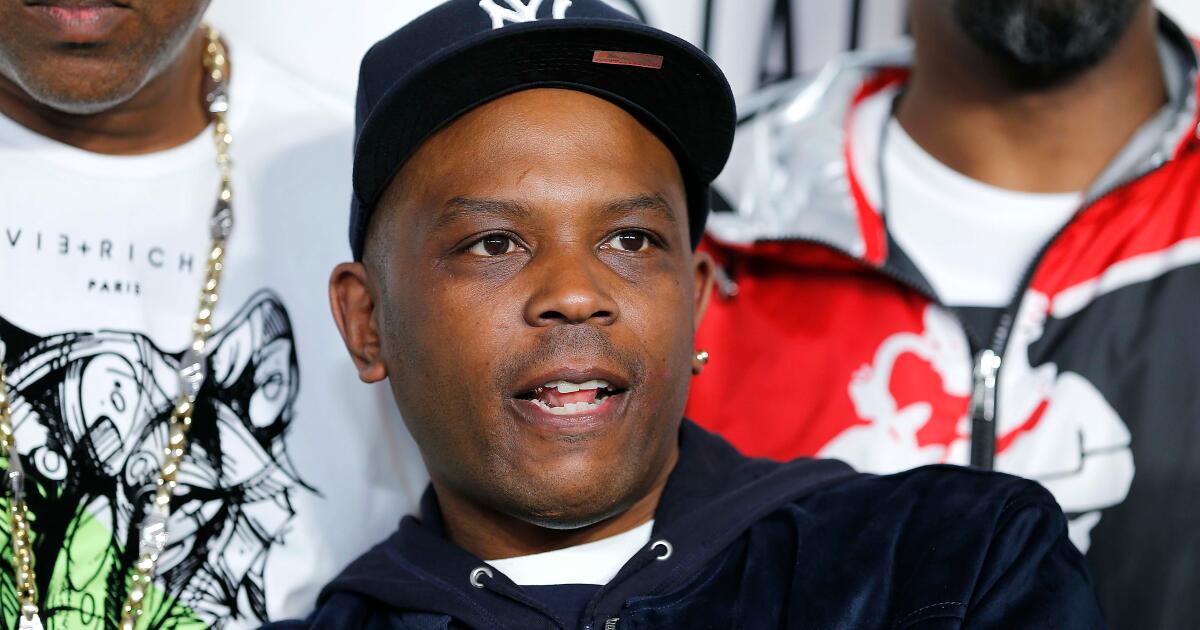
Oliver “Power” Grant, the close Wu-Tang Clan affiliate who oversaw the group’s enormously popular Wu Wear fashion line, has died. He was 52.
Grant’s death was confirmed by social media posts from several Wu-Tang members including Method Man, who wrote “Paradise my Brother safe Travels!!” under a post of the two together.
“We couldn’t have done it without him,” GZA wrote in his own post. “Wu wouldn’t have come to fruition without Power. His passing is a profound loss to us all.”
The group members’ posts did not cite a cause of death. The news was first reported by outlets including Okayplayer and Hot 97.
Grant, a childhood friend of Wu-Tang co-founder RZA’s older brother, was a crucial figure in the sprawling New York hip-hop collective’s ascent. Though he was not a performing member of the group, he helped raise capital for early recording sessions and structured Wu-Tang’s finances and record deals — no small feat for a collective with such a vast archipelago of group and solo projects.
“We knew that if a brother got a deal for 150k, he could keep the majority of it, but it also would facilitate and help the other brothers,” he told Passion of the Weiss in 2011. “It was part of our core and movement for us to spread the money around and help brothers eat, without a project out. It was like we were trust fund babies.”
His work set a precedent for autonomy and creative control as hip-hop became a commercial juggernaut in the ’90s.
“Everything that we learned was hard knock life, you figure it out as you go along, and take cues from those that are actively doing things,” he said. “I wasn’t a rapper, but the thrill of being a part of going and where they went, it was the inspiration for how it ended up that lead us all to going back, soaking up what we’d absorbed and coming back with ‘Protect Ya Neck.’”
He was also the driving force behind Wu Wear, the group’s wildly popular fashion line that netted tens of millions in revenue and became a fixture of ’90s hip-hop iconography. The line was later revamped as Wu-Tang Brand, and relaunched as Wu Wear in 2017. He also had cameos as an actor alongside Method Man in the 1998 hip-hop classic “Belly” and 1999’s “Black and White,” and served as an executive producer for the group’s many LPs.
Jeffrey Epstein pressured a media tycoon he did business with to quash coverage of allegations of his sexual abuse of girls, according to documents released by the United States Department of Justice.
Epstein leveraged close personal and professional ties with the Canadian-American billionaire Mortimer Zuckerman to try to influence the New York Daily News’s coverage of allegations against him after his 2008 conviction for soliciting a minor for prostitution, the documents show.
Recommended Stories
list of 4 itemsend of list
After Epstein reached out to Zuckerman, the then-owner of the Daily News, the tabloid first delayed its coverage of the allegations and then omitted details that the late financier had specifically requested be left out, according to the documents.
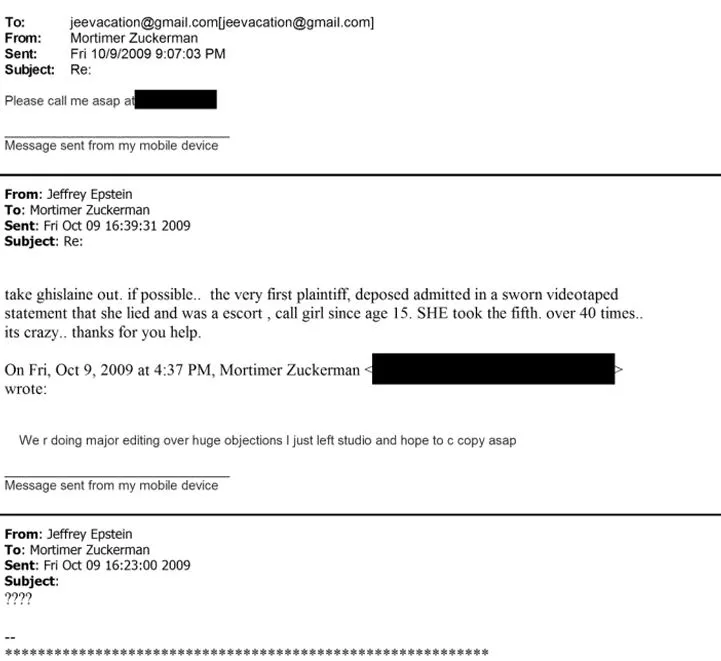
In an email dated October 9, 2009, Epstein shared a “proposed answer” to questions from the newspaper with Zuckerman that disputed allegations made against him and his girlfriend Ghislaine Maxwell, who is currently serving a 20-year sentence for child sex trafficking.
The allegations, which had been put to Epstein and Maxwell by then-Daily News journalist George Rush, included accusations that the pair had subjected a minor known as “Jane Doe No 102” to routine sexual abuse and had engaged in threesomes with “various underage girls”.
The allegations also included claims that Maxwell kept a computer database of “hundreds of girls and oversaw the schedule of girls who came to Epstein’s homes”.
In the proposed response that he shared with Zuckerman, Epstein said “no sex occurred” with Jane Doe No 102 and she had admitted in a deposition to being an “escort, call girl, and a massage parlor worker since the age of 15”.
“All of the adult establishments in which she admitted working require proof of age. Rc the rest of the questions,” Epstein’s email to Zuckerman said.
“These are all malicious fabrications designed to get Mr Edwards clients more money than they normally receive though she did testify under oath that she made as much as 2000 per day,” the email said, referring to Bradley J Edwards, a Florida-based lawyer who has represented many of Epstein’s accusers.
Later that day, Zuckerman told Epstein in an email that the Daily News was “doing major editing over huge objections” and he would “c copy asap”.
“take ghislaine out. if possible,” Epstein responded in an email a few minutes later.
“the very first plaintiff, deposed admitted in a sworn videotaped statement that she lied and was an escort , call girl since age 15. SHE took the fifth. over 40 times.. its crazy.. thanks for you help.”
“Please call me asap,” Zuckerman wrote to Epstein several hours later, before asking Epstein to call him again later that night.
The Daily News ultimately published an article on December 19, 2009, that described Epstein reaching a settlement with his accuser for an undisclosed amount of money.
The article noted that Epstein was facing “more than a dozen” lawsuits from women who accused him of sexually abusing them but made no mention of Maxwell or the allegations against her.
Zuckerman, a staunch supporter of Israel who served as head of the America-Israel Friendship League and the Conference of Presidents of Major American Jewish Organizations, has never been accused of any involvement in Epstein’s crimes.
The front page of the New York Daily News on August 12, 2020 [Bebeto Matthews/AP]
Rush, who left the Daily News in 2010, confirmed that Epstein had tried to “cajole” Zuckerman, the current owner of US News & World Report, into burying or shaping the story to Epstein’s liking.
Rush said the Daily News decided to delay publication after Epstein offered the newspaper an interview.
“Unfortunately, Epstein immediately insisted that the interview be off the record. He also used the conversation to make remorseless claims that he was a victim of overzealous prosecutors and shyster lawyers,” Rush told Al Jazeera.
Rush said Zuckerman, who sold the Daily News in 2017, never suggested that the newspaper cancel the story altogether or publish coverage that was favourable to Epstein.
“I do recall being advised to leave Ghislaine Maxwell out of the story,” Rush said.
“At the time, the paper’s lawyers had libel concerns, and I saw it as a necessary compromise.”
Rush said he had objected to the efforts to interfere in his story but the episode did not cause a “newsroom furore”.
“Most people hadn’t heard of Epstein at that point. I didn’t like Epstein and Maxwell trying to appeal to the owner,” he said.
“But I was relieved that the story wasn’t killed, just delayed, and hopeful that Epstein might say something quotable in the interview. It speaks to Epstein’s arrogance that he thought he had the power to get Mort to do his bidding.”
Zuckerman’s personal assistant and the Zuckerman STEM Leadership Program, an initiative founded by the billionaire to fund scientific collaboration between the US and Israel, did not reply to requests for comment from Al Jazeera.
Ties for two decades
Zuckerman’s ties to Epstein stretch back more than 20 years.
In 2005, Zuckerman, who also owned The Atlantic magazine from 1984 to 1999, worked with Epstein on the short-lived relaunch of the gossip-and-entertainment magazine Radar.
After a US congressional panel in September released a scrapbook prepared for Epstein’s 50th birthday in 2003, Zuckerman was among a slew of high-profile names revealed to have sent the financier their well-wishes.
But the latest tranche of files from the 2019 prosecution of Epstein, released last week by US authorities, show that Zuckerman’s relationship with the sex offender was much closer than previously believed.
In 2008, Zuckerman sought Epstein’s advice on his plans for passing on his estate, sharing sensitive details about his financial affairs in the process, including a copy of his will and an evaluation of his assets that put his net worth at $1.9bn.
In 2013, Epstein drafted several agreements to provide Zuckerman with “analysing, evaluating, planning and other services” related to the billionaire’s plans for passing on his wealth.
Epstein proposed a fee of $30m in a proposal drafted in June 2013 before offering his services for $21m in a revised proposal that December, according to the documents.
In correspondence around this period, Zuckerman appeared to hold Epstein’s claimed expertise in high regard.
“Your questions have been critical to my growing understanding of how much lies ahead before my finances are properly organized,” Zuckerman wrote to Epstein in an email dated October 12, 2013, after the financier had earlier claimed to have identified “wild errors” in Zuckerman’s accounting of his finances.
“You have been an invaluable friend and In the most constructive way a provocateur I am completely grateful and am now beginning to focus, in on the issues you have raised. With appreciation from a hesitant amateur Mort.”
Documents that were included in the release by the US Department of Justice of its Jeffrey Epstein investigative files [File: Jon Elswick/AP]
It is not clear whether Zuckerman ultimately signed the agreement proposed by Epstein.
Zuckerman and Epstein communicated regularly, and the two men arranged numerous dinners and other meetings over the years, according to the documents, including at the financier’s Manhattan home.
“Mort is now booked for tonight at 8:30…i am being asked if you could see him this weekend…please advise,” Lesley Groff, Epstein’s personal assistant, wrote on May 5, 2015, in one of many emails detailing appointments.
While Zuckerman turned to Epstein for financial advice, he also appeared to regard him as a friend.
“Hi there. You are very special. And a great friend. Mort,” Zuckerman wrote to Epstein in an email dated August 24, 2014.
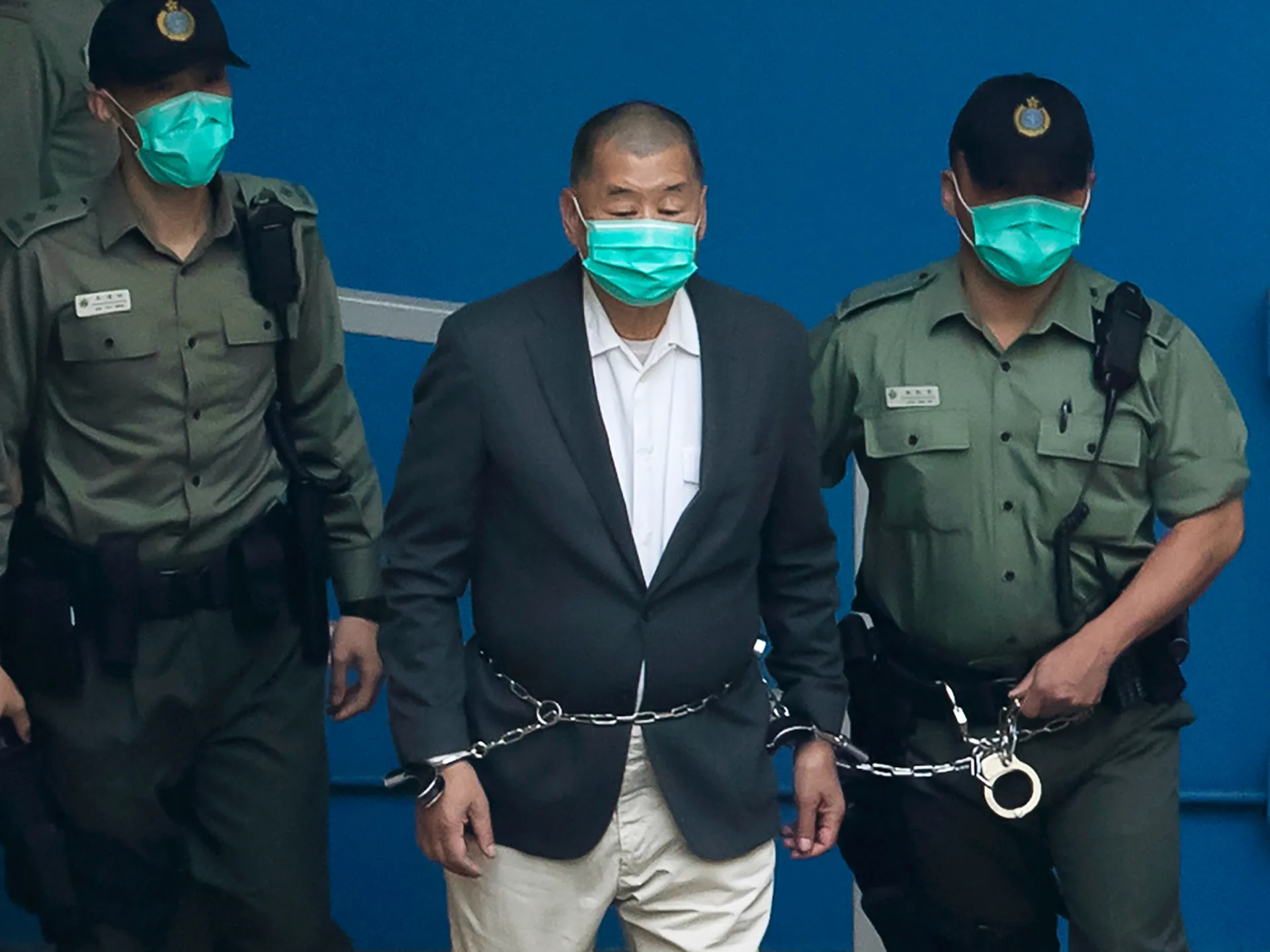
A court in Hong Kong has sentenced pro-democracy media tycoon Jimmy Lai to 20 years in jail following his conviction under a sweeping national security law imposed by Beijing.
A summary document by the court on Monday said 18 years of Lai’s sentence should be served consecutively to the existing five-year jail term in his fraud case.
Recommended Stories
list of 3 itemsend of list
The 78-year-old founder of the now defunct Apple Daily has already spent more than five years behind bars and was found guilty in December on two counts of foreign collusion and one count of seditious publication.
Given his age, the prison term could keep him behind bars for the rest of his life.
Ahead of the sentencing, rights groups and Western governments called for Lai’s release, with some denouncing the case as “nothing but a charade”.
Lai’s family, lawyer, supporters and former colleagues have warned that he could die in prison as he suffers from health conditions, including heart palpitations and high blood pressure.
Before Lai left the courtroom, he looked serious, as some people in the public gallery cried.
In addition to Lai, six former senior Apple Daily staffers, an activist and a paralegal were also sentenced on Monday.
His co-defendants received jail terms between 6 years and 3 months and 10 years.
The convicted journalists are publisher Cheung Kim-hung, associate publisher Chan Pui-man, editor-in-chief Ryan Law, executive editor-in-chief Lam Man-chung, executive editor-in-chief responsible for English news Fung Wai-kong and editorial writer Yeung Ching-kee.
Ahead of the sentencing, the Committee to Protect Journalists said in a statement that Lai’s trial “has been nothing but a charade from the start and shows total contempt for Hong Kong laws that are supposed to protect press freedom”.
Reporters Without Borders said the sentencing “will resonate far beyond Jimmy Lai himself, sending a decisive signal about the future of press freedom in the territory”.
Beijing has dismissed such criticism as attempts to smear Hong Kong’s judicial system, while Hong Kong authorities maintain that Lai’s case “has nothing to do with freedom of speech and of the press”.
Lai was one of the first prominent figures to be arrested under the security law, imposed in 2020. Within a year, some of Apple Daily’s senior journalists also were arrested. Police raids, prosecutions and a freeze of its assets forced the newspaper’s closure in June 2021.
The final edition sold a million copies.
Lai’s sentencing could heighten Beijing’s diplomatic tensions with foreign governments. His conviction has drawn criticism from the United Kingdom and the United States.
UK Prime Minister Keir Starmer said he had raised Lai’s case during his meeting with Chinese leader Xi Jinping in Beijing last month, adding that the discussion was “respectful”.
Lai is a British citizen.
US President Donald Trump said he felt “so badly” after the verdict and noted he spoke to Xi about Lai and “asked to consider his release”.
Lai’s daughter, Claire, told The Associated Press news agency that she hopes authorities see the wisdom in releasing her father, a Roman Catholic. She said their faith rests in God. “We will never stop fighting until he is free,” she said.
Ahead of the sentencing, Hong Kong Free Press reported that police detained a woman outside the West Kowloon court after finding an Apple Daily keychain in her possession.
At least two other activists were also searched, including Tsang Kin-shing, a member of the now-disbanded League of Social Democrats.
The sentencing comes against the backdrop of heightened restrictions on the Hong Kong press.
The Hong Kong Journalists Association said in 2024 that dozens of journalists faced “systematic and organised” harassment and intimidation, including leaked personal information and death threats.
According to Reporters Without Borders, at least 900 Hong Kong journalists lost their jobs in the four years following the enactment of the national security law in the city.