A Gocho Critique of Miraflores’ Foreign Policy
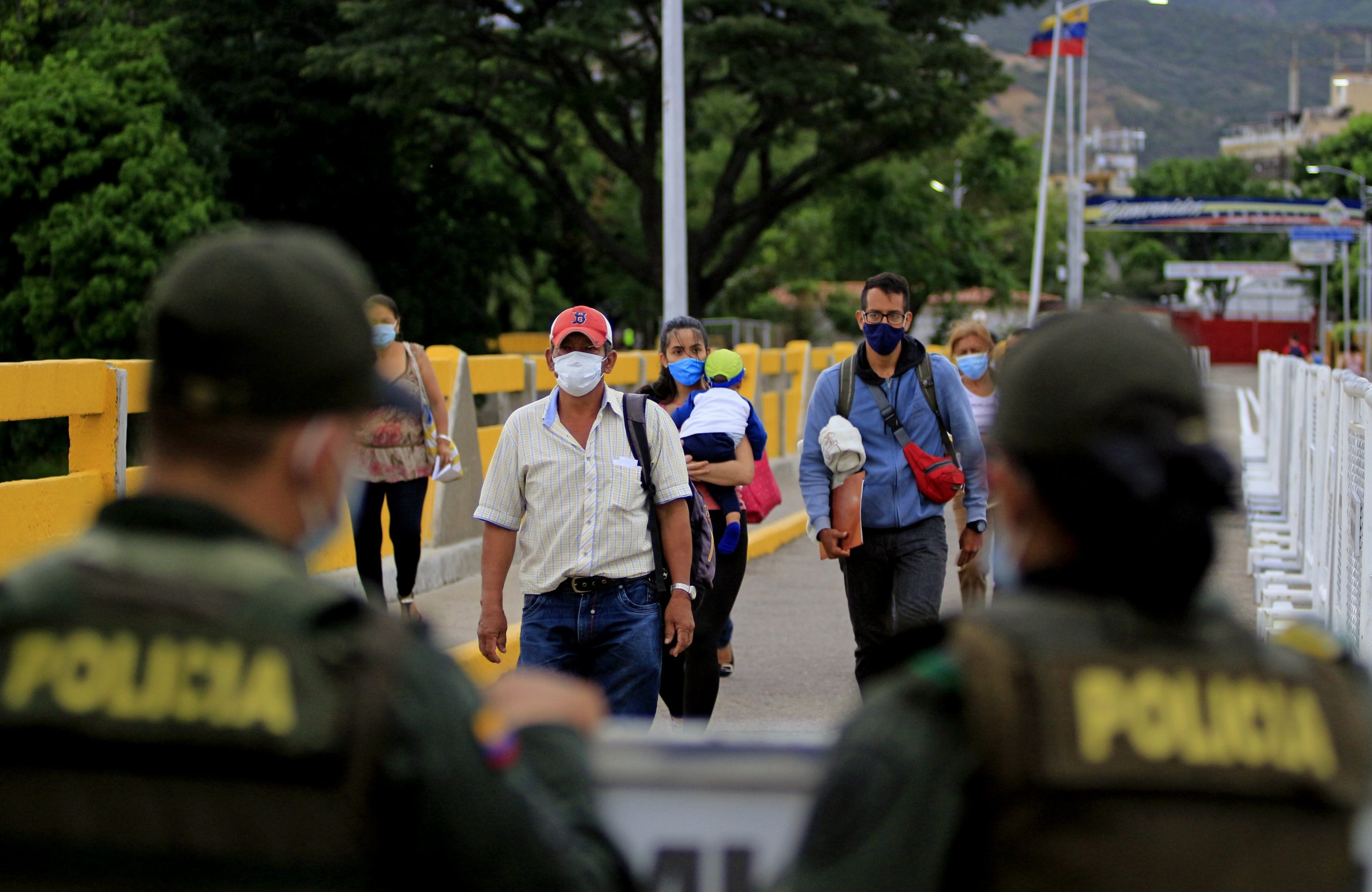
In October 2021, Venezuela announced the reopening of the Simón Bolívar bridge after the 2019 tensions and the COVID-19 border closures. The full reopening, including commercial and vehicular traffic, did not come until September 2022.
At first glance, the city of San Cristóbal, Táchira, doesn’t seem much different from the average city in Venezuela, apart from its geographical position in the Andean mountains. But if we take a more detailed look at the streets of this state capital, we will realize how we are in a very different system compared with the rest of the country.
Here, bolivars are not commonly used. We will start to see that in many shops we will not find Zelle accounts, but Bancolombia ones. Prices are not fixed in dollars but in Colombian Pesos. Here, it’s Colombian goods, services and money that help this moderately vibrant city to advance, in spite of the acute economic crisis that the whole country faces.
Typically, people who live in the center of the country like to frame Tachirenses as Colombians inside the border. This contrasts with how many young Tachirenses have crossed the border to Cúcuta, but had never visited any other Venezuelan city outside of the state.
A cruel reality lies beyond mainstream jokes: a region that has suffered from uninformed external decision-makers, repression, conflict and the crash of its main economic engine due to conflict between Caracas and Bogotá.
For more than a decade, Tachirenses and Zulianos suffered from a lack of consistent policies that gave them access to their sister regions in Colombia.
In Venezuela, foreign relations have often been viewed as exclusive to the political elite in the hallways of Caracas, far from the view and say of ordinary life. From CAP’s international tour in 1976 with all its grandiose framing, to the ideological sensationalism of Chávez’s foreign policy. But this view can only sustain itself inside the limitations of the Distrito Capital.
At first thought, the state of affairs in Tachira could be seen as a natural development thanks to its geographical proximity with Colombia. Yet this assumption ignores the recent historical facts: the systematic erosion of national and regional infrastructure owing to underinvestment, in addition to the lack of stable political relation between these nations. That has resulted in a Venezuelan state that relies on another country for its daily functioning.
As the 2015 border shutdown showed, personalist politics and centralized control in Caracas can threaten the livelihood of ordinary people in border states such as Táchira. Maduro escalated the diplomatic conflict with Colombia as a propaganda tool to frame his regime as a victim of foreign interference, with no regard for the economic fragility of the Andean Venezuelan states, which were already suffering heavy losses due to the inflationary spiral.
Foreign relations should guarantee the daily exchange of goods and services between private citizens, uneventful border activity, and the tranquility of Venezuelan travelers.
This marked a change that has not yet completely reversed. For more than a decade, Tachirenses and Zulianos suffered from a lack of consistent policies that gave them access to their sister regions in Colombia. This inconsistency has mangled the economic and social development of those regions. Despite these restrictions, the people found ways not to succumb to economic disaster and social decomposition, using the Peso, reselling essential goods from Colombia, and accessing services in that country such as specific healthcare procedures.
One particular case exemplifies this situation. Until 2024, there were almost no companies in Táchira that offered internet service. The few who offered it had very limited zones to operate, even within San Cristóbal. However, a large part of the city had internet service, thanks to independent companies that used Colombian Satellite internet to offer decent, consistent, and affordable connectivity. It wasn’t until my mother was offered the service of one of those independent companies in 2021 that I had internet in my own apartment, because the Venezuelan state-owned telecom company, CANTV, was not available in my seven-block residential condominium.
Nowadays you can access internet services, provided by Colombian and Venezuelan companies, in the whole state, even in sparsely populated areas. But even this shows how a failure to present a comprehensive and consistent relation with Colombia has left Tachirenses to reinvent themselves. This is not the way a decent government should work, and it is my reason for writing this.
Across the Colombo-Venezuelan border, improvements have failed to materialize since the January 3 military intervention.
Foreign relations should not be seen through the aforementioned lenses of distant ambassadors in luxury hotels. It should guarantee the daily exchange of goods and services between private citizens, uneventful border activity, and the tranquility of people when they desire to go to another city on the other side of the border. This is what Foreign Policy or Decent Foreign Policy should look like.
We stand at a historic crossroads as a nation. If we seek to create a new idea of Venezuela, we need to maintain a holistic vision of the country’s needs instead of antiquated visions of centralism. We must act according to our national motto, and act as a federation taking into account all of the voices, from the Essequibo River to the Andes.
A stable, efficient and normalized relation with Colombia must come to fruition, one that can cope and stabilize the current insecurity problems that plague the Colombo-Venezuelan border and beyond. Such relations would facilitate and better the lives of those who travel from San Antonio to Cucuta on a daily basis, or from Ureña to Villa del Rosario. These improvements have failed to materialize since the January 3 military intervention. It’s awfully necessary that Venezuela, which includes our particular corner, begins a comprehensive rebuild from years of economic mismanagement and social repression.
As a young Gocho studying abroad, I believe that I should give my two cents to the public conversation that has begun to spread. Like many others, I desire the opportunity to serve the country in a future where those issues start to become lessons taught at university. That’s why we need to start to convey ourselves, with our respective realities, to form the great project that involves us all.