minister

Iran’s foreign minister leaves Pakistan, heads to Russia for more talks | US-Israel war on Iran News

Abbas Araghchi will speak with ‘senior officials’ in Moscow, Iran’s Foreign Ministry says.

Iran’s top diplomat, Abbas Araghchi, has left Islamabad for Moscow, the Iranian Ministry of Foreign Affairs said, as mediators hope to keep the prospect of more Tehran-Washington talks alive.

Araghchi sandwiched a trip to Muscat, Oman, in between visits to the Pakistani capital, leaving on Sunday to be in Moscow the following day. But there was no indication that direct talks between Iran and the United States would resume.

Recommended Stories

list of 4 itemsend of list

However, in a sign that indirect efforts were ongoing, the Fars news agency reported that Iran had transmitted “written messages” to the Americans via mediator Pakistan, which were “about some of the red lines of the Islamic Republic of Iran, including nuclear issues and the Strait of Hormuz”.

But the messages were not part of any negotiations, Fars said.

US President Donald Trump last week indefinitely extended the ceasefire that Washington and Tehran agreed to on April 7, which has largely halted the fighting that began with joint US-Israeli strikes on Iran on February 28.

But a permanent settlement remains elusive, and the economic shockwaves of the war continue to reverberate around the globe.

Iran has effectively blocked the vital Strait of Hormuz, cutting off vast quantities of oil, natural gas and fertiliser from the global market, and sending prices soaring. The US has imposed a blockade of Iranian ports in response.

There had been hopes for a new round of talks on Saturday, with US envoys Steve Witkoff and Jared Kushner due to visit Islamabad, but Trump later told Fox News he had scrapped the trip, saying there was no point “sitting around talking about nothing”.

On Sunday, Trump told the same channel: “I said, we’re not doing this any more. We have all the cards. If they want to talk, they can come to us, or they can call us. You know, there is a telephone. We have nice, secure lines”.

Asked earlier whether cancelling the trip meant a return to open hostilities, Trump said: “No, it doesn’t mean that.”

Shuttle diplomacy

On Saturday, Araghchi met Pakistan’s military chief, Asim Munir, a key mediator, Prime Minister Shehbaz Sharif and Minister of Foreign Affairs Ishaq Dar, before flying on to Muscat. He returned to Islamabad on Sunday.

In Russia, Iran’s Foreign Ministry said he would speak with “senior officials”.

Russia’s Ministry of Foreign Affairs confirmed that Araghchi would visit Moscow, but did not say if he would meet President Vladimir Putin.

Amid the flurry of meetings, Araghchi signalled scepticism over Washington’s intentions, saying he had “yet to see if the US is truly serious about diplomacy”.

Source link

Mali’s Defence Minister Sadio Camara killed amid coordinated attacks | Conflict News

DEVELOPING STORY,

Camara’s house in the garrison town of Kati came under attack amid simultaneous attacks across the West African country.

Mali’s Defence Minister General Sadio Camara has been killed amid coordinated attacks on military sites across the country, sources told Al Jazeera.

The news on Sunday came a day after his residence in the garrison town of Kati came under attack during the simultaneous attacks launched by al-Qaeda affiliate and Tuareg rebels on Saturday.

Recommended Stories

list of 4 itemsend of list

Camara was a central figure in the military government that seized power after back-to-back coups in 2020 and 2021.

“He was one of the most influential figures within the ruling military leadership and had been seen by some as a possible future leader of Mali,” said Al Jazeera’s Nicolas Haque, who has reported extensively from Mali.

“His death is a major blow to the country’s armed forces.”

Haque said attackers carried out a suicide car bomb assault on Camara’s residence in Kati, a heavily fortified military town about 15km (9 miles) northwest of the capital, Bamako.

“Kati is considered one of the most secure locations in the country, yet fighters from the al-Qaeda-linked Jama’at Nusrat al-Islam wal-Muslimin, along with Tuareg fighters from the Liberation Front of Azawad, were able to launch the attack,” he said.

Gunmen also attacked several locations across Mali, including Bamako, as well as Gao and Kidal in the north, and the central city of Sevare.

“As we speak, people in the garrison town of Kidal can still hear heavy gunfire and loud explosions,” Haque added. “This remains an ongoing operation more than 24 hours after it began.”

Interim President Assimi Goita has come under pressure since the offensive, with analysts saying the authorities appeared to have been caught off guard by the latest wave of violence.

Haque said Goita was “alive and well in a secure location”.

“When the attack took place, he was moved to safety, so he remains in command of the military,” he said.

The African Union, the secretary-general of the Organisation of Islamic Cooperation and the US Bureau of African Affairs condemned the attacks across Mali.

Source link

EU credibility is on the line over Israel, says Spanish foreign minister | Russia-Ukraine war

NewsFeed

Spain’s foreign minister has warned the EU risks losing credibility if it fails to apply the same principles to Israel’s “perpetual war” in the Middle East as it does to Russia’s invasion of Ukraine. He urged a unified stance, citing human rights clauses in the EU–Israel agreement and criticising ongoing violence in Gaza, the West Bank and Lebanon.

Source link

South Korea minister denies U.S. intelligence sharing dispute

South Korea’s Unification Minister Chung Dong-young speaks to reporters at the Seoul Government Complex on April 20. Photo by Asia Today

April 20 (Asia Today) — South Korea’s unification minister on Monday rejected reports of a rift with the United States over intelligence sharing on North Korea, warning against speculation that could harm bilateral relations.

Chung Dong-young said he was concerned about claims suggesting a crisis in ties between Seoul and Washington following reports that the United States had limited the sharing of satellite intelligence after his recent remarks.

“I explained policy to underscore the seriousness of North Korea’s nuclear issue, and it is deeply regrettable that this is being framed as a leak of classified information,” Chung told reporters at the Seoul Government Complex.

He said his comments referencing a suspected nuclear facility in Kusong, North Pyongan Province, were based on publicly available information and had been mentioned previously during his confirmation hearing in July.

Chung questioned the timing of the controversy, noting that the same reference had been made months earlier without issue.

He added that since taking office, he has not received any classified intelligence reports related to North Korea’s nuclear facilities from domestic or foreign agencies.

South Korea’s Unification Ministry also said the remarks were based on previously published material, including reports by the Institute for Science and International Security, the RAND Corporation and the Center for Strategic and International Studies.

Chung dismissed suggestions that internal divisions within South Korea over alliance policy were behind the issue, saying he did not believe such factors were at play.

In a separate social media post, he also criticized what he described as politically motivated speculation, calling claims of an intelligence leak “groundless.”

The comments come amid heightened scrutiny over information sharing between South Korea and the United States on North Korea’s nuclear program.

— Reported by Asia Today; translated by UPI

© Asia Today. Unauthorized reproduction or redistribution prohibited.

Original Korean report: https://www.asiatoday.co.kr/kn/view.php?key=20260421010006305

Source link

France’s foreign minister says 85-year-old widow detained by ICE returns home

French Foreign Minister Jean-Noël Barrot said an 85-year-old French widow of an American military veteran who was in immigration custody in the United States returned home on Friday.

U.S. Immigration and Customs Enforcement agents detained Marie-Thérèse Ross in Alabama on April 1 after she overstayed her 90-day visa, according to the U.S. Department of Homeland Security.

“She returned to France this morning, this is a satisfaction for us,” Barrot told reporters during a visit to the southern city of Montpellier on Friday.

Barrot said he would not comment on the specific case, but said some of ICE methods are “not in line” with French standards and “not acceptable to us.” Barrot referred to “violence that raised our concerns,” without elaborating.

Ross was being held at a federal immigration detention facility in Louisiana.

She was among the thousands of people targeted by the Trump administration’s mass deportation agenda that has detained the spouses of U.S. soldiers and military veterans who previously received greater leniency under scrapped policies.

Ross married Alabama resident William Ross in April last year, Calhoun County marriage records show. Ross died in January, according to an obituary from his family, which says he was a former captain in the U.S. Army.

Source link

Iran foreign minister says Strait of Hormuz ‘completely open’ | US-Israel war on Iran News

Iran says ‘passage for all commercial vessels through Strait of Hormuz’ open during the Israel-Lebanon ceasefire.

The Strait of Hormuz is “completely open” for all commercial vessels and will remain so during the Israel-Lebanon ceasefire, Iran’s foreign minister has said.

“In line with the ceasefire in Lebanon, the passage for all commercial vessels through Strait of Hormuz is declared completely open for the remaining period of ceasefire,” Abbas Araghchi said in a post on X on Friday.

Recommended Stories

list of 3 itemsend of list

A 10-day ceasefire was agreed between Israel and Lebanon late on Thursday.

The passage of ⁠vessels through the ⁠strait will be on the coordinated route as ⁠already announced by ⁠Ports and ⁠Maritime Organisation of Iran, Araghchi added.

United States President Donald Trump confirmed in a social media post that the strait was “completely open and ready for business and full passage”.

More to come…

Source link

China dismisses Vice Minister of Foreign Affairs Sun Weidong | Xi Jinping News

Vice Foreign Minister Sun Weidong’s sudden dismissal comes amid a wave of removals amid anticorruption campaign.

Senior Chinese diplomat Sun Weidong has been dismissed from his post as vice minister of foreign affairs, in the latest case of a high-ranking official being removed from office by Beijing.

The Ministry of Human Resources announced the news in a brief post on its website on Tuesday, citing a decision of the State Council, the highest body of state power in China.

Recommended Stories

list of 4 itemsend of list

The post did not say why or when Sun had been dismissed, but the Ministry of Foreign Affairs website shows his last public engagements were meetings with the ambassadors of Brunei and Malaysia to China on March 13.

Two days earlier, Sun had met Pakistan’s ambassador to China to discuss bilateral cooperation, according to a post on diplomat Khalil Hashmi’s X account.

Dismissals of this kind in the Chinese government usually indicate high-level disciplinary action and are often followed by news of an investigation.

Sun’s dismissal notice included the removal of another official, An Lusheng, from his post as deputy director of the National Railway Administration.

Since coming to power in 2012, President Xi Jinping has carried out a wide-ranging anticorruption campaign targeting “tigers and flies”, meaning high- and low-ranking officials.

Last year, China investigated more than one million corruption cases and disciplined 938,000 people, according to its Central Commission for Discipline Inspection and National Supervisory Commission.

The list of cases involving disciplinary action included 69 provincial or ministerial-level officials, 4,155 bureau-level officials, 35,000 county-level officials, and 125,000 township-level officials, according to the commission’s year-end report.

Senior Chinese military officials have also been caught up in Xi’s anticorruption campaign sweeps.

Source link

Election loss for Hungarian Prime Minister Orbán has ripple effects for Trump, U.S. conservatives

The big election over the weekend was in a small European country nearly half a world away from Washington, but the defeat of Hungarian Prime Minister Viktor Orbán has significant reverberations in the United States.

That’s because President Trump and many U.S. conservatives have long embraced Orbán, who has become an icon among the global right for his anti-immigrant stance. The American president’s agenda has striking parallels with the way the Hungarian leader used the levers of government to tilt the media, judiciary and electoral system to keep his party in power for 16 years.

Trump supported Orbán’s reelection bid and even dispatched Vice President JD Vance to Budapest last week — in the midst of the Iran war — to stump for the incumbent.

Orbán’s loss was a reminder of how the war has diminished Trump’s ability to help allied politicians overseas, as well as of the limited ability of leaders to use their power to tilt voting in their direction in an age of worldwide discontent over incumbents of all ideological stripes.

“Oppositions can win despite a tilted playing field,” said Steven Levitsky, a politics professor at Harvard and coauthor of the book “How Democracies Die.” “Democracies are facing many challenges in many parts of the world, but so are autocracies.”

Orbán’s defeat has immediate global implications because he was the European leader closest to Russian President Vladimir Putin and had blocked European Union aid to Ukraine, which is defending itself after Russian’s 2022 invasion.

His fall was celebrated on Sunday by both Democrats and Republicans, some of whom criticized their own administration for such overt support for the Hungarian leader.

“Don’t fiddle-paddle in other democracies’ elections,” Republican Rep. Don Bacon of Nebraska said on the social media site X.

“The freedom-loving people of Hungary have voted decisively in favor of democracy and the rule of law,” posted Republican Sen. Roger Wicker of Mississippi.

Matt Schlapp, chairman of the American Conservative Union, is part of the wing of the American right that embraced Orbán. The Conservative Political Action Conference, which Schlapp’s group hosts, held its first European session in Budapest and has made Hungary a regular destination.

Orbán was a featured speaker at the group’s conference in Dallas in 2022.

Schlapp said there’s an easy explanation for Orbán’s loss.

“Eventually, democracies just want change,” he said. “In democracies, you don’t have kings, and the people in the end speak.”

“The people of Hungary were saying, ‘We’re having a difficult time with inflation, the economy and the war. Let’s try the new guy,’” Schlapp said, noting that he backs Trump’s Iran war but the turmoil it’s created, especially in European energy markets, hurt Orbán.

Diana Sosoaca, a far-right member of the European Parliament from Romania, on Sunday called Vance’s Hungarian visit “a big mistake” given widespread revulsion at the Iran war on the continent.

“You invite a representative of the United States of America, who created the big disorder in this world?” Sosoaca said in an interview posted by the Kremlin-controlled network RT, formerly known as Russia Today. “It was the biggest mistake he could do before the elections.”

How Orbán consolidated power

An anti-communist activist in his youth, Orbán was initially elected prime minister in 1998 but took a turn to the right after being voted out in 2002. Upon returning to office in 2010, Orbán and his Fidesz party implemented a legal framework to consolidate authority that he and his allies developed while he was out of power.

Orbán embraced what he dubbed “illiberal democracy,” building a barrier on Hungary’s southern border to block migrants from Africa and Asia who were moving northward through Europe. He and his party stifled LGBTQ+ rights, cracked down on freedom of the press and undermined judicial independence.

Orbán cemented his power when his Fidesz party won enough seats in Parliament during the 2010 global recession to rewrite the country’s constitution. They restructured the judiciary to funnel appointments to the bench through party loyalists, redrew legislative districts to make it much harder for Fidesz members to lose elections and helped push Hungary’s media companies to be sold to tycoons allied with Orban.

The European Union has declared Hungary an “electoral autocracy.”

Orbán backers have scoffed at suggestions that the Hungarian leader is an enemy of democracy, and on Sunday he quickly conceded his loss. Democrats have worried that Trump will try to use his own executive power to tilt November’s midterm elections or the 2028 presidential vote to his party, much as Trump tried to use his official powers to overturn Democrat Joe Biden’s win in the 2020 presidential election.

“Most importantly for American voters, even a guy who rigs the system can be defeated when the people unite and turn out against him,” said Ian Bassin of Protect Democracy, a nonpartisan group that says it combats authoritarianism.

Democrats weigh in

Democratic Rep. Ro Khanna of California took the opportunity to jab at Vance: “Your ally Orban conceded. In 2028, will you @JDVance follow suit if you lose?” he posted on X.

Levitsky said defenders of democracy shouldn’t take too much comfort from Orbán’s loss, noting that in some ways Trump has been more oppressive. He cited Trump’s use of the Justice Department to investigate political opponents and the shooting deaths of protesters by immigration officers — steps that Orban’s government never took, Levitsky said.

But Sen. Chris Van Hollen, a Maryland Democrat, said he sees parallels between Trump’s and Orban’s political projects, as well as the potential fate of their parties at the polls.

“He was essentially doing what Donald Trump is trying to do here in the United States,” Van Hollen said of Orban. “My read of the election is that the people of Hungary rejected that, just like people in the United States are rejecting that here at home.”

Trump made no public comments Sunday about the election results in Hungary.

Riccardi and Brown write for the Associated Press. Riccardi reported from Denver.

Source link

Hungary’s Viktor Orban concedes election loss after 16 years as prime minister

Hungarian Prime Minister Viktor Orban (R), pictured speaking with U.S. Vice President JD Vance in front of his office last week during Vance’s two-day trip to Hungary, is projected to lose his re-election campaign and has already conceded the race. Photo by Akos Kaiser/EPA

April 12 (UPI) — Hungarian Prime Minister Viktor Orban is projected to lose his re-election effort, with more than half the ballots counted, and has already conceded after 16 years in the position.

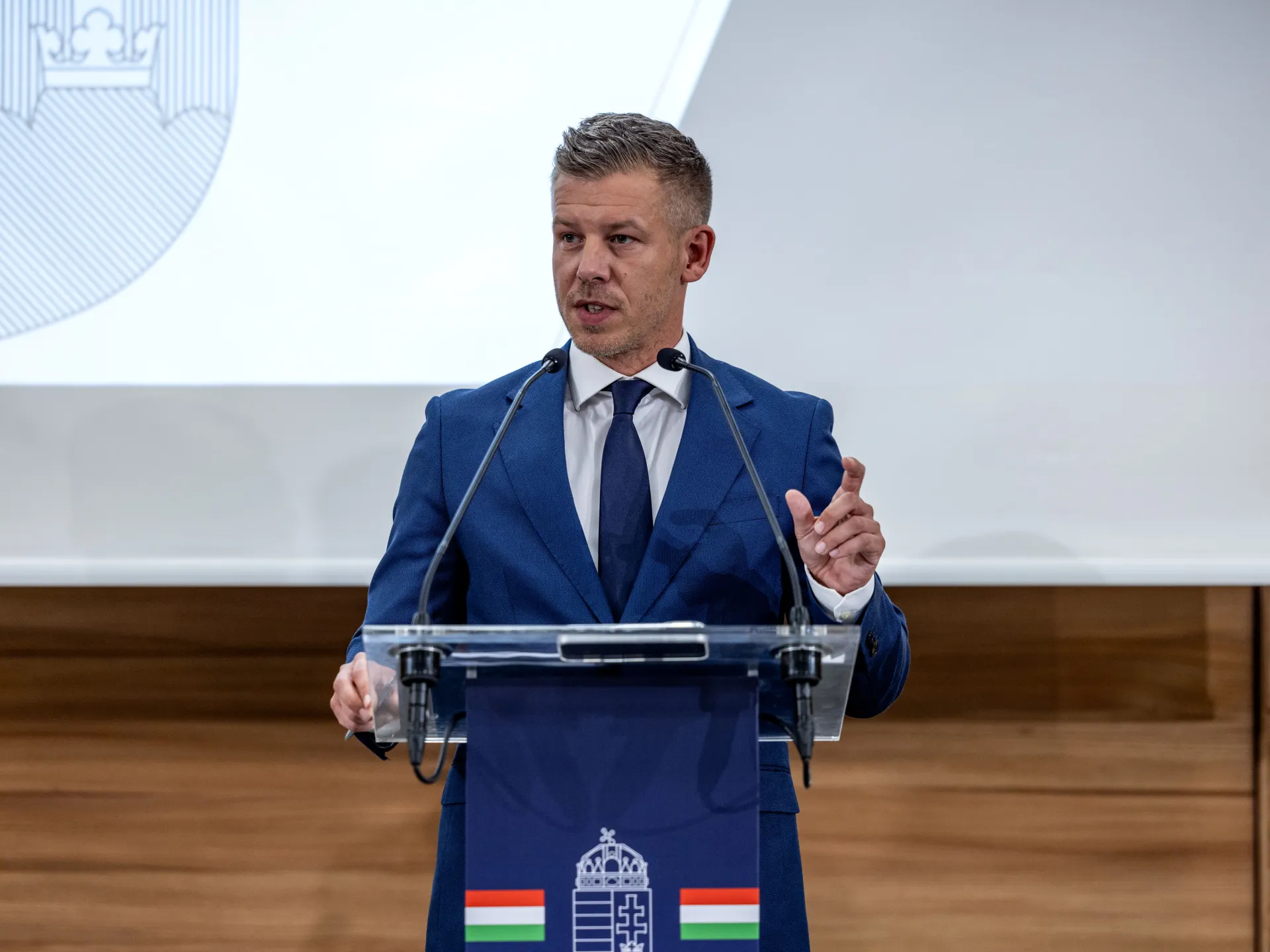
Peter Magyar and his Tisza party are projected to win a super-majority in Hungary’s parliament, taking 135 of 199 seats, and ending Orban’s long-time rule of the country, NBC News and The Washington Post reported.

Orban, who is an ally of both U.S. President Donald Trump and Russian President Vladimir Putin, spent his four terms as prime minister cracking down on courts and the media amid alleged corruption and illiberal rule of the country.

Magyar posted on Facebook that Orban called to congratulate the Tisza party leaders for their victory after what has been reported as a historic election that brought out nearly 80% of registered voters.

This is a developing story. Please check back for updates.

Secretary of Defense Pete Hegseth speaks during a press briefing at the Pentagon on Wednesday. Yesterday, the United States and Iran agreed to a two-week ceasefire, with the U.S. suspending bombing in Iran for two weeks if the country reopens the Straight of Hormuz. Photo by Bonnie Cash/UPI | License Photo

Source link

Unification minister calls resuming tourist railway to border with N. Korea starting point for peace

A train enters Dorasan Station near the border with North Korea on Friday. South Korea resumed tourist rail service to the border station for the first time in over six years. Pool Photo by Yonhap

Unification Minister Chung Dong-young said Friday the resumption of tourist rail service to the border with North Korea is a “small” starting point for establishing peace with Pyongyang, as Seoul reopened a long-closed border rail station.

Earlier in the day, South Korea resumed tourist rail service to and from its northernmost Dorasan Station in the border city of Paju, which is a symbol of inter-Korean cooperation that once connected the two Koreas.

“The resumption of train service is a small starting point toward establishing everyday peace, allowing people to experience it in their daily lives,” Chung said in a ceremony marking the event.

“When tourists can visit, see and experience the site of peace at Dorasan Station, peace will finally become an everyday language that breathes in our lives, rather than grand discourse,” he said.

The station, the northern endpoint of South Korea’s rail network just south of the inter-Korean border, was established after the then South and North Korean leaders agreed to connect their railways at a 2000 summit held amid a period of reconciliation between the two Koreas.

Freight trains once ran through Dorasan Station between the two Koreas, carrying materials and finished goods to and from the Kaesong Industrial Complex, a jointly operated factory park in North Korea that was shut down amid inter-Korean tensions in 2016.

Since then, the station had served tourist trains carrying passengers in South Korea to border areas, before closing completely in late 2019 due to the COVID-19 pandemic.

The resumption of the border station comes as Seoul continues efforts to resume dialogue and engagement with North Korea to reduce military tensions and establish peace, despite Pyongyang’s repeated rebuffs.

“Only peace and coexistence, as well as reconciliation and cooperation, are the path to mutual prosperity for the South and the North, not worthless animosity and confrontation,” Chung also noted.

He said he believes the two Koreas can surely establish new relations that accommodate the changing international situation and their respective national interests, expressing hope that their railways could be reconnected in the future.

The resumption of rail service to the station will allow tourists to travel by train beyond the Civilian Control Line, which restricts public access near the Demilitarized Zone (DMZ) separating the two Koreas.

The train, named “DMZ Peace Link,” departs from Seoul Station and stops at Unjeong and Imjingang before reaching Dorasan Station, where tourists can visit a nearby observation post and a tourist village.

It runs once on the second and fourth Fridays each month till May, before expanding to every Friday from June.

Going forward, the government, municipalities and the rail agency plan to add more tourist destinations near the border station to provide various programs aimed at promoting peace on the Korean Peninsula.

Source link

Canadian Prime Minister Mark Carney attracts yet another Conservative lawmaker to his Liberal Party

Canadian Prime Minister Mark Carney has attracted another opposition Conservative lawmaker to the Liberal party, further assuring that he will soon have a majority government.

Ontario Member of Parliament Marilyn Gladu alluded to President Trump’s threats to Canada’s sovereignty and economy for her decision to defect to Carney’s governing Liberals. Trump has talked about making Canada the 51st state and has applied punishing tariffs on certain key sectors.

“The past year has been like no other Canada has ever faced,” Gladu said in a statement Wednesday. “I’ve heard from constituents that you want serious leadership and a real plan to build a stronger and more independent Canadian economy.”

Gladu is the fifth Member of Parliament to defect to Carney and the fourth Conservative.

“She is going to be a great member of our team,” Carney said outside his office. “This all comes at a time when the country as a whole is uniting.”

The floor crossing puts the Liberals closer to having a majority government and being able to pass any bill without opposition party support.

With another lawmaker decamping from the Conservatives, the Liberals would have 171 Members of Parliament in the House of Commons. They need 172 to secure a majority government, which would allow them to unilaterally pass any bill.

Carney has called special elections for three districts for Monday that would give the Liberals a majority government if his party wins one of them.

The prime minister announced March 8 that votes will be cast April 13 in the Toronto-area districts of Scarborough Southwest and University-Rosedale, which are considered safe seats for the Liberals, and in the Montreal-area riding of Terrebonne, which is considered a toss-up.

The three other Conservative Members of Parliament who defected from their party to join the Liberals in recent months were Chris d’Entremont, Michael Ma and Matt Jeneroux.

Jeneroux referenced Carney’s speech at the World Economic Forum in Davos as helping his decision. In the speech, Carney condemned economic coercion by great powers against smaller countries and received widespread praise and attention for his remarks, upstaging Trump at the gathering.

Carney has moved the Liberals to the center since replacing Justin Trudeau as prime minister in 2025 and winning national elections

The defection is another blow to Conservative leader Pierre Poilievre, who lost the last national election last year and even his own seat in Parliament. He has since rejoined the House of Commons.

Poilievre won a party leadership review earlier this year but continues to have problems controlling his lawmakers.

Gillies writes for the Associated Press.

Source link

U.S. pressures Uruguay to break trade ties with China, minister says

Uruguay’s Minister of Economy and Finance Gabriel Oddone said the pressure by the United States to break trade ties with China is applied daily and channeled through different areas of the bilateral relationship. File Photo by Federico Gutierrez/EPA

March 27 (UPI) — Uruguayan Minister of Economy and Finance Gabriel Oddone said the United States is exerting “unimaginable” and “unsustainable” pressure on his South American country to break its trade relationship with China, according to remarks made at a private meeting.

The comments during a session with business leaders were reported by the local weekly Búsqueda.

With about 3.5 million inhabitants and a territory comparable to the state of Florida, Uruguay has had China as its main trading partner for more than 14 years, accounting for about 26% of its exports.

Oddone said the pressure is applied daily and channeled through different areas of the bilateral relationship.

According to attendees at the meeting with the Confederation of Business Chambers, the minister said that if Uruguay does not comply with Washington’s demands, its trade relationship with the administration of President Donald Trump “will not improve and could get worse.”

The remarks came Tuesday during a meeting at the Technological Laboratory of Uruguay, attended by more than 20 business representatives, along with the director of the Office of Planning and Budget, Rodrigo Arim.

The meeting lasted more than two hours and addressed economic and trade issues in a context described as “very complex.”

China is the main destination for key exports, such as beef, soybeans and cellulose. The pressure from the United States comes amid growing geopolitical rivalry between Washington and Beijing, which is affecting countries with trade ties to both powers.

According to attendees cited by Búsqueda, Oddone acknowledged that the government has “little room for maneuver” due to the fiscal situation inherited from the previous administration and internal differences within the ruling coalition over advancing economic reforms.

On the domestic front, the minister defended the country’s economic performance despite lower-than-expected growth.

Uruguay’s gross domestic product grew 1.8% in 2025, below the official projection of 2.6%, while analysts have already cut expectations for 2026 to around 1.6%.

Facing criticism from the private sector over the size and slow pace of the state, Oddone urged business leaders to also consider positive aspects.

“We should not only see the glass as half-empty,” he said, noting that the economy continues to grow despite an adverse international environment in which Uruguay is “swimming in dulce de leche,” a colloquial phrase interpreted as meaning it is difficult to move quickly.

The minister also ruled out improving competitiveness through a depreciation of the exchange rate.

“Uruguay is not going to become a cheap country,” he said, adding that improvements will come from microeconomic changes to reduce costs and streamline foreign trade.

Asked by Búsqueda, the minister declined to comment publicly on the meeting, as it was a private event. Some participants described it as useful, but with “mixed” feelings, while others said they valued explanations from the economic team.

At the close, Oddone adopted an optimistic tone.

“Believe me, we will do well,” he said, highlighting the country’s institutional and economic strengths to face an international scenario marked by trade tensions and regional slowdown.

Source link

Nepal’s former prime minister arrested over protest crackdowns

The former prime minister of Nepal was arrested early Saturday for his role in protesters being killed by police during youth-led rallies in September 2025 that spread nationwide over social media bans, government corruption and a weak economy. File Photo by Narendra Shrestha/EPA

March 28 (UPI) — Nepal’s former prime minister, KP Sharma Oli, was arrested on Saturday for crackdowns during protests last year, which more than 70 people being shot by police.

Former Home Minister Ramesh Lekhak was also arrested for the response to the so-called Gen Z protests, which started after the government shutdown access to social media sites and inspired larger protests across the country over government corruption and a faltering economy.

Oli, whose administration deployed the Nepali Army after violence as police employed brutal tactics to quell the initial rallies, including shooting people in their teens and early 20s, resigned as a result of the protests.

Oli and his attorneys have accused the new government of Balendra Shah and his cabinet has said that the arrests were unnecessary and illegal because neither is likely to flee the country.

“No one is above the law,” new Home Minister Sudan Gurung wrote on Instagram, The Guardian reported.

“We have taken former Prime Minister KP Sharma Oli and former Home Minister Ramesh Lekhak under control,” said Gurung, who was a significant figure in the protests. “This is not revenge against anyone, just the beginning of Justice.”

Shah, a former hip hop artist, ran partially on promises of holding former government officials accountable for the crackdowns and allowing police to shoot protesters, The BBC reported.

The day after police shot protesters at the youth-led rallies, the protests spread, with government offices set on fire, even more protesters killed and Oli’s resignation.

A government panel that investigated the protests recommended that Oli, Lekhak and other officials be tried for their roles in the deaths.

Although the panel’s report does not show that police were ordered to fire on protesters, it said that “no effort was made to stop or control the firing and, due to their negligent conduct, even minors lost their lives.”

If convicted, the men face up to 10 years in prison.

President Donald Trump stands with U.S. Secretary of Agriculture Brooke Rollins during an event celebrating farmers on the South Lawn of the White House on Friday. Photo by Aaron Schwartz/UPI | License Photo

Source link

Wafcon 2026: Minister insists Morocco was ready to host tournament

At the start of February, South African Sports Minister Gayton McKenzie was forced to clarify remarks from his deputy that South Africa was set to step in as Wafcon hosts, adding further fuel to talk of a potential switch from Morocco.

McKenzie went on to say that “South Africa has expressed its willingness to support Caf if required, should alternative hosting arrangements for the 2026 Wafcon become necessary”.

In response, Caf president Patrice Motsepe said “many” other nations were interested in hosting Wafcon but could not because they wanted to alter the dates of the tournament.

Motsepe went on to insist “we can’t change the dates” – a comment which has aged poorly, especially as this is not the first time Wafcon has been shunted around Africa’s footballing calendar, leading to accusations that women’s football is not seen as a priority.

While the men’s Afcon was merely delayed by the coronavirus pandemic, Wafcon 2020 was cancelled entirely. The 2024 edition was finally played last July, having been postponed for a year.

This time around, with only 12 days’ notice given, teams were in the final stages of their preparations. Ghana’s players, for example, were already in a training camp in the UAE.

“It just wouldn’t happen for other tournaments in women’s football – and especially in men’s football,” Ashleigh Plumptre told Sportsworld on the BBC World Service.

The Nigeria defender, who was part of the Super Falcons side who secured a record-breaking 10th title last July, says the fact that the 2026 tournament – the first to feature 16 teams – will double up as qualifying for next year’s Fifa Women’s World Cup in Brazil makes the late postponement more distressing.

“Many teams haven’t even been in the Afcon before, never mind had the chance to qualify for a World Cup. It also helps them financially,” Plumptre added.

“All I can do, and I’ve almost probably been forced to be put in this position, is just take day by day and prepare myself in the best way that I can because there’s so many things I’ve had to get accustomed to, and many other players in African football, where you kind of just have to go with it, because you have no other choice.”

Source link

Malaysia’s prime minister says Iran talks should end war | US-Israel war on Iran

NewsFeed

Malaysia’s Prime Minister Anwar Ibrahim said any talks with Iran must aim to end the war, not serve as a “tactical advantage” or temporary pause. He reaffirmed Iran’s right to defend its sovereignty while urging restraint to avoid wider regional fallout. His comments come as the US warns Iran to accept defeat or face being “hit harder”.

Source link

Iranian foreign minister rejects talks with US | US-Israel war on Iran

NewsFeed

“No negotiations have taken place.” Iran’s foreign minister, Abbas Araghchi says his country is not and will not negotiate with the US while it is under attack. A day earlier, President Trump said the US was already in talks with Iranian officials, which Tehran denied.

Source link

Venezuelan Defense Minister Replaced amid Rodríguez Cabinet Overhaul

Acting President Delcy Rodríguez (right) thanked Padrino López (left) for his service as defense minister. (AFP)

Caracas, March 19, 2026 (venezuelanalysis.com) – Venezuelan Acting President Delcy Rodríguez tapped Gustavo González López as the country’s new defense minister on Wednesday, replacing Vladimir Padrino López after more than a decade in the post.

“We thank General Vladimir Padrino López for his loyalty and for having been the first soldier in the defense of our country for so many years,” Rodríguez wrote on social media. In response, Padrino thanked the acting president and stated that “serving the Homeland” had been his “highest honor.”

Padrino had served as defense minister since October 2014. The four-star general staved off a number of US-backed coup attempts, including the May 2020 “Operation Gideon” failed mercenary invasion. 

In 2025, the Biden administration announced a $15 million bounty for information leading to Padrino’s capture as part of a “narcoterrorism” indictment against several Venezuelan leaders, including President Nicolás Maduro. However, US officials have not presented evidence tying Venezuelan high-ranking officials to narcotics activities. 

Padrino’s removal follows the January 3 US military strikes against Venezuela that saw special forces kidnap Maduro and First Lady Cilia Flores. Despite months of defense exercises in the face of escalating US threats, Venezuelan forces, particularly air defenses, were quickly neutralized by US bombing and electromagnetic warfare on January 3.

The Venezuelan armed forces have yet to offer a complete account of the operation, including a definitive list of casualties that are said to surpass 100. Padrino condemned the US attacks and pointed to Washington’s military superiority, arguing that it would have been “suicidal” for Venezuelan air force jets to take off and engage with the enemy.

The 60-year-old Gustavo González López previously held posts as interior minister and director of intelligence services and has been under US sanctions since 2015. A career military officer, he briefly studied at the School of the Americas in the early 1990s. 

Following the January 3 attacks, González was chosen by Rodríguez to lead the presidential guard. He was pictured alongside the acting president during a visit to Caracas from CIA Director John Ratcliffe on January 16. General Henry Navas will replace González as Commander of the Presidential Guard of Honor.

Rodríguez announced several other cabinet changes on Wednesday. She had previously replaced the industry, oil, tourism, healthcare, communications, and eco-socialism ministers as well.

Jorge Márquez and Rolando Alcalá will take over the housing and electricity portfolios, respectively. Furthermore, Supreme Court magistrate Carlos Alexis Castillo will serve as labor minister amid rising demands for minimum wage increases and labor rights, replacing veteran official Eduardo Piñate.

Former Caracas mayor Jacqueline Faría was likewise appointed as the new transport minister, replacing Aníbal Coronado after two months in the post. Faría’s appointment followed a public transportation strike in Caracas as private bus operators push to increase single-ride fares to 120 bolívars, roughly US $0.25 at the present exchange rate.

Wednesday’s cabinet changes also included Raúl Cazal becoming culture minister, replacing Ernesto Villegas, who had held the post since 2017. Villegas is one of the candidates shortlisted by the Venezuelan National Assembly for the vacant ombudsman post.

Finally, Rodríguez picked academic Ana María Sanjuan as minister of higher education, replacing Ricardo Sánchez. A trained psychologist and professor at the Central University of Venezuela (UCV), Sanjuan had participated in political dialogue initiatives as a representative of moderate opposition sectors.

Edited by Lucas Koerner in Fusagasugá, Colombia.


Source link

Unification minister warns war preparation raises conflict risks

South Korean Unification Minister Chung Dong-young speaks to reporters at a press briefing in Seoul, South Korea, 18 February 2026. Chung said South Korea will seek to reinstate a no-fly zone over the border with North Korea under the suspended 2018 inter-Korean military pact aimed at easing tensions, and expressed regret over drones sent by South Korean civilians into North Korea earlier this month. Photo by YONHAP / EPA

March 13 (Asia Today) — South Korea’s Unification Minister Chung Dong-young warned Friday that preparing for war could increase the likelihood of conflict on the Korean Peninsula, emphasizing that “peace itself is the path forward.”

Chung made the remarks during the third meeting of the Korean Peninsula Peace Strategy Advisory Group held at the Inter-Korean Talks Headquarters in Seoul.

“People often speak lightly of war and repeat the phrase that if you want peace, you must prepare for war,” Chung said. “But preparing for war only raises the chances of war.”

Chung also pointed to growing global instability, citing the upcoming U.S.-China summit and tensions related to the Iran crisis.

“The Korean Peninsula sits on unstable ground and tends to sway whenever global events shift,” he said.

Noting the global interconnectedness of security issues, Chung said the distance between Seoul and Tehran is about 6,700 kilometers but developments in the Middle East can still affect the Korean Peninsula.

“A war 6,700 kilometers away is shaking the Korean Peninsula,” he said, adding that the situation underscored the importance of maintaining peace and stability in the region.

Experts attending the meeting suggested that North Korea’s recently proposed “two-state theory” should be reinterpreted in light of current conditions.

They proposed linking it to the inter-Korean confederation stage of South Korea’s long-standing National Community Unification Plan and called for the creation of a new peace roadmap for the Korean Peninsula reflecting changing security dynamics.

Participants also urged the government to shift from a “pace-maker” role to a more proactive “peace-maker” role by expanding diplomatic engagement.

They recommended exploring multilateral approaches involving neighboring countries and international organizations in addition to dialogue between the United States and China.

— Reported by Asia Today; translated by UPI

© Asia Today. Unauthorized reproduction or redistribution prohibited.

Original Korean report: https://www.asiatoday.co.kr/kn/view.php?key=20260313010004062

Source link

Qatar’s interior minister says security situation ‘stable’ amid Iran war | US-Israel war on Iran News

Sheikh Khalifa bin Hamad says Qatar will ‘not hesitate’ to ensure its stability as US-Israeli war on Iran continues.

Qatar’s Interior Minister Sheikh Khalifa bin Hamad has said the situation in the Gulf country is “stable” amid Iranian drone and missile attacks launched across the Middle East in response to the US-Israeli war on Iran.

In an interview with Qatar Television on Friday, Sheikh Khalifa said the Qatari government had a plan in place to deal with the prospect of more Iranian attacks amid a regional war.

Recommended Stories

list of 3 itemsend of list

“The security situation in the country is stable, and we will not hesitate to take any measure that ensures the stability of our nation,” he said.

The interior minister said Qatar’s early warning system has been effective as authorities responded to reports of falling missile fragments at more than 600 sites across the country.

He added that Qatar has enough water to last for several months, as well as food reserves that will cover the nation’s needs for a year and a half.

Sheikh Khalifa’s remarks come as Qatar and other countries in the Gulf region have faced a barrage of Iranian attacks since the United States and Israel launched a war against Iran on February 28.

While Iran has said it is targeting US and Israeli military interests in the wider Middle East, the strikes have hit civilian infrastructure, including oil and gas facilities.

That has prompted a slowdown in regional energy production, which – coupled with Iran’s closure of the Strait of Hormuz, a key Gulf waterway – has raised concerns around the war’s effects on global economies.

Earlier this week, the United Nations Security Council passed a resolution denouncing the Iranian attacks on Gulf Cooperation Council (GCC) countries.

Sheikha Alya Ahmed bin Saif Al Thani, Qatar’s ambassador to the UN, had condemned the firings as “a clear violation of international law and the UN Charter”.

The attacks, she told reporters in New York on Wednesday, “impacts deeply the foundation of understanding upon which bilateral relations between our countries have been built”.

Source link

Qatar’s foreign minister says ‘regional countries are not an enemy of Iran’ | US-Israel war on Iran News

Mohammed bin Abdulaziz al-Khulaifi also says Qatar and Oman cannot act as mediators while under attack.

Qatar’s minister of state for foreign affairs has called for a de-escalation in hostilities across the Middle East and urged Iran and the US to return to the negotiation table for a mediated solution.

Speaking to Al Jazeera in an exclusive interview, Mohammed bin Abdulaziz al-Khulaifi said that Iran’s attacks on its regional neighbours bring “benefit for no one”.

Recommended Stories

list of 4 itemsend of list

Iran has responded to a nearly two-week-long bombardment campaign from the United States and Israel by firing missiles and drones at its neighbours in the Gulf region and beyond, causing casualties, damaging critical infrastructure and severely disrupting the region’s energy-driven economy.

Al-Khulaifi said Qatar remains “extremely worried” about the wider range of attacks, including against civilian infrastructure.

“It’s unfortunate where we are standing right now,” the minister said.

“We also believe that there is no pathway to a sustainable and long-lasting solution other than returning to the negotiation table,” he told Al Jazeera.

Qatar condemns in the “strongest terms, the unjustified and outrageous attacks on the state of Qatar that directly impact its own sovereignty”, he said.

Doha will continue to take “every possible and legal measure to defend and practise its exercise of self-defence against this aggression”, he added.

Al-Khulaifi said the conflict demands a “global solution” to ensure that the Gulf’s energy supply chain keeps moving through the Strait of Hormuz, where global traffic has been severely disrupted by the conflict.

Ensuring freedom of movement through the waterway is “very critical,” he noted.

It is notable, Al-Khulaifi pointed out, that Iran has targeted countries such as Qatar and Oman, which had previously served as regional mediators and tried to “build bridges between Iran and the West”.

Neither country can play that role as long as the attacks continue, he said.

“We will not be able to fulfil that role under attack, and that’s something the Iranians need to understand.”

Qatari Prime Minister Mohammed bin Abdulrahman Al Thani tried to convey those points during a phone call with Tehran several days ago, the foreign minister said, when he urged Iran to cease attacks on its neighbours.

“The regional countries are not an enemy of Iran, and the Iranians are not understanding that idea,” Al-Khulaifi told Al Jazeera.

Doha also remains in contact with officials in the US and has encouraged US President Donald Trump to cease hostilities, he said.

“Our line of communication is always open with our colleagues in the United States, and we keep encouraging and supporting the pathway of peace and resolving conflicts through peaceful means.

“We really hope that the parties can find that pathway, end military operations, and return to the negotiation table.”

Source link