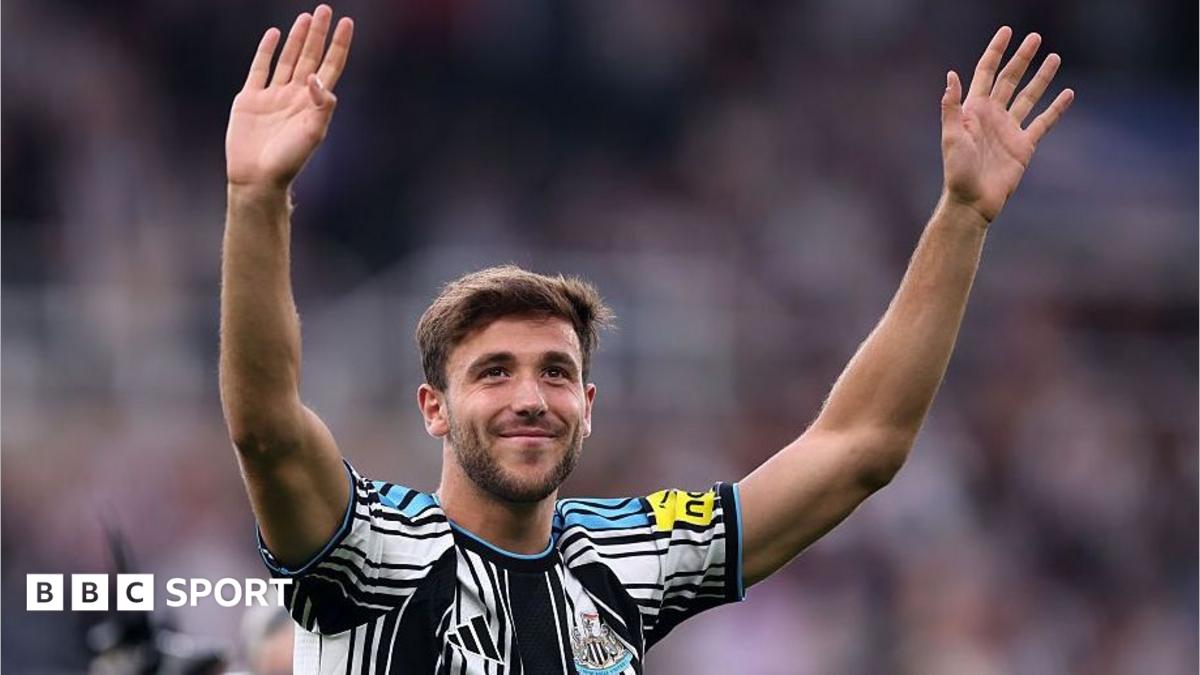
Gonzalez had a close relationship with Rodri and long humbly recognised that only a select number of players can start in his position at clubs bidding to challenge for the biggest honours.
Rodri was that man at Manchester City under Guardiola and, following the midfielder’s move to Barcelona, new manager Enzo Maresca has signed Ayyoub Bouaddi from Lille, having already brought in Elliot Anderson from Nottingham Forest.
It was still not easy for Gonzalez to leave Manchester City, where he felt settled, but Newcastle will give him the platform he has been longing for as a key player.
The enthusiastic Spaniard sees this as an opportunity to develop further, which has always been a driver.
“His mentality is top,” Toure said. “I would review games individually with the players and every time I had my laptop and sat next to him, he was so open to learning.
“He wanted me to show him and I wanted to help him because he was demanding in that way.
“You want to have players like this because they want to see what they do well and not well, and are open to criticism.
“He’s going to keep on improving because of his mentality.”
Gonzalez certainly did so when he left Barcelona, where his professional career started, and has such experience to fall back on.
Having spent a decade at Barca, and risen through the ranks, Gonzalez ultimately had to depart to truly flourish elsewhere.
Following a successful loan spell at Valencia, he joined Porto on a permanent basis at the age of 21 before earning a move to Manchester City.
Former Barcelona B team-mate Roger Riera feels he has developed “another vision” as a result.
“Nico has seen different countries and different styles of football,” he said. “He’s added a lot of things to his game, which have made him a more complete player.
MYLEENE Klass stuns as steps out in London showing off her toned legs in a figure-hugging mini dress.
The TV star, 48, was all smiles as she was snapped on her way to Smooth Radio following her glam appearance at a movie premiere this week.
Myleene Klass shows off her toned legs in a figure-hugging mini dress as she steps out in LondonCredit: BackGridThe TV star was all smiles as she was snapped on her way to Smooth RadioCredit: BackGrid
The Hear’Say star wowed as she strutted down the sunny streets of London in a grey mini dress.
The figure-hugging ensemble showed off the stars incredibly toned legs and natural curves.
Sign up for the Showbiz newsletter
Thank you!
She styled the look with a pair of matching sandals, chic pair of sunglasses and Chanel handbag with a leopard print scarf attached.
Myleene was all smiles opting to wear her blonde locks down and a bright red lip as she was snapped completing her coffee run and entering the Smooth Radio building.
The presenter put on an equally fierce display at The Dog Stars premiere this week alongside two lookalike daughters Ava and HeroCredit: GettyMyleene was all smiles opting to wear her blonde locks down and a bright red lip as she was snapped completing her coffee runCredit: BackGrid
The 48-year-old later went on to have son Apollo, three, with her now fiancée Simon Motson.
Myleene met Simon in 2015 after being set up on a blind date by her pal.
They got engaged six years ago but are still yet to tie the knot.
Myleene previously said: “She [Ava] has done the piano for eight hours a day, she went to the Royal Academy of Music, she had to audition, they didn’t just say ‘Myleene Klass‘s daughter is showing up, give her a place’, she had to audition, and that’s the point.
“You could call my children nepo babies all day long but they can play Rachmaninoff concertos like the best of them.”
Myleene confessed last year that both her daughter have weekend jobs as she was keen to instill in them the importance of earning their own money.
The former popstar added that she knows her kids are now equipped with the necessary skills to make their own way as adults.
Enjoy a two or three-night break sailing from Plymouth or Portsmouth to Santander with our great 2 for 1 offer
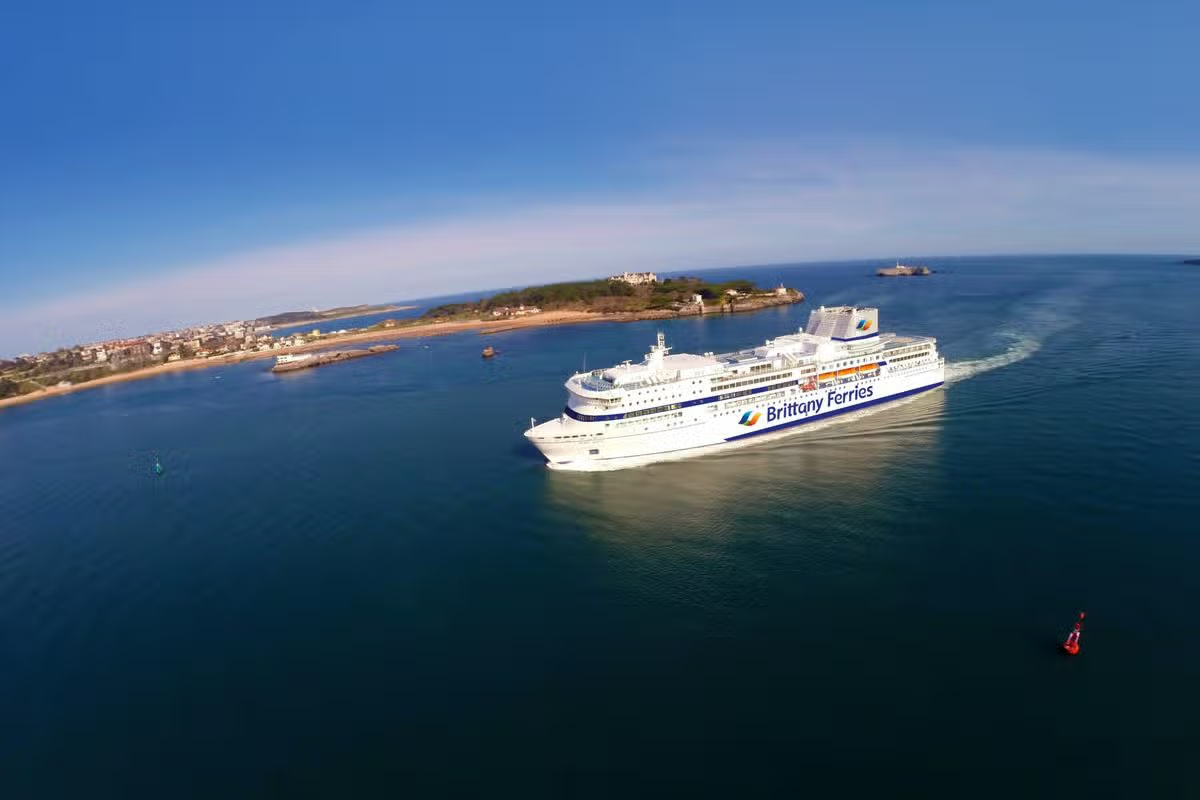
We’ve teamed up with Brittany Ferries to give readers a Spanish mini-cruise this Autumn and save pounds with an exclusive 2-for-1 offer.
We have two great offers with prices starting from as little as £49.50 per person* and both packages include en suite cabin accommodation and all port charges. You can travel from September 15 to November 2 with this great offer.
From Plymouth, sail on Brittany Ferries’ luxurious flagship Pont-Aven for two days and nights, with fine French food and wine served in elegant surroundings, a choice of bars with live entertainment, a large boutique with tempting duty-free prices, and even a spa and swimming pool. From Portsmouth, sail on the stylish and contemporary Salamanca for three nights, with the elegant Restaurant Azul, casual dining at La Taberna, the lively Plaza Mayor bar inspired by Salamanca’s famous city square, and a boutique with a great range of duty-free products.
En route to Spain, you can also spot wildlife. The Bay of Biscay is one of the most remarkable and reliable places to spot whales and dolphins in the world.
On arrival, both ships dock in Santander – the capital of Cantabria – with a little time to explore this vibrant resort city on foot. With tree-lined boulevards, elegant plazas, beautiful parks and a bustling town centre packed with shops, cafes and tapas bars, it offers a wonderful taste of northern Spain. Pont-Aven docks right in the heart of the city, with up to three hours ashore.
From Plymouth, departures operate on Wednesdays and Sundays. From Portsmouth, choose a Friday evening departure returning Monday, or a Monday evening departure returning Thursday.
HOW TO BOOK: Click hereto take up this offer. The offer is subject to availability.
Terms and conditions
The 2-for-1 discount applies only during the promotional period.
The promotional offer applies to a round trip as part of one booking i.e. departure and return. Departing and returning to Plymouth or Portsmouth – Santander.
Plymouth departures: The £49.50 per person price is based on 3 or 4 people sharing a 4-berth inside cabin.
Portsmouth departures: The £64.50 per person price is based on 2 people sharing a 4-berth inside cabin.
Single supplement of £94.50 applies
The offer is valid for foot passengers only.
Travel period is September 15 – November 2, 2026.
Full payment is required at the time of booking. It’s non-refundable and no amendments to bookings can be made.
The offer is bookable via the website only.
The offer is subject to availability.
Brittany Ferries terms of business apply to all bookings. For more information, read the terms and conditions here
The café is open seven days a week serving up cooked breakfasts, lunch, afternoon tea and kids meals.
There’s also a selection of homemade cakes and alcohol-like beers and boozy hot chocolates.
To entertain the kids, visitors can get competitive on the mini golf course found on-site which costs £5pp.
And children can burn some energy at the play area which has swings, a slide, rock wall and climbing frame.
If that isn’t enough, it even has its own shopping village.
One of the shops is AVM Furniture which sells a selection of antique, vintage and modern furniture as well as garden ornaments.
It even has its own B&B which starts from £68 based on two people sharingCredit: Hopley House
JO’S Accessories is a ladies’ boutique, there’s also The Crystal Boutique, SKULLS n’ MOR, E a pet shop and a reptile rescue sanctuary.
Families have raved about it, with one saying: “Absolutely perfect place for a large family to stay.”
Another added: “Me, my partner and my two children visited Hopley House last month….. to say we were impressed is an understatement!”
A third simply called it a “hidden gem”.
It also holds events throughout the year – at the moment it has a mini fairground is back with tea cups and a mini big wheel.
Visitors can also stay at Hopley House in one of its rooms which are found inside a converted barn.
Guests can enjoy a cooked breakfast and use the kitchen to make a home cooked mealCredit: Hopley HouseCurrently there’s a mini fairground at Hopley HouseCredit: Hopley House
Some of the rooms have original barn features, each with en suite or a private bathroom.
Guests can enjoy a cooked breakfast from the café or head to the farm shop for a homemade pizza.
Anyone staying overnight can also make use of a kitchen area which has a fridge and microwave.
Rooms start from £68 based on two people sharing or £42 for single occupancy.
One overnight guest said in a review: “Lovely stay at Hopley guest house, huge big room and the comfiest bed ever! The owner made us feel very welcome.
“My only regret is we didn’t book for longer.”
If you fancy another trip to the farm shop, check out the ‘Harrods of the North‘ that’s loved by Molly-Mae – with forest lodges and hot tubs.
New York City’s Mayor Zohran Mamdani congratulated Abdul El-Sayed on winning Michigan’s Democratic Senate primary, praising his focus on healthcare and cost of living. He dismissed Republican claims branding El-Sayed a ‘mini Mamdani’, joking, ‘he can lift a lot more than I can’.
Marella Cruises announces it’s first-ever musical theatre cruise – and one star of the show has already holidayed on the ship
17:49, 31 Jul 2026Updated 18:00, 31 Jul 2026
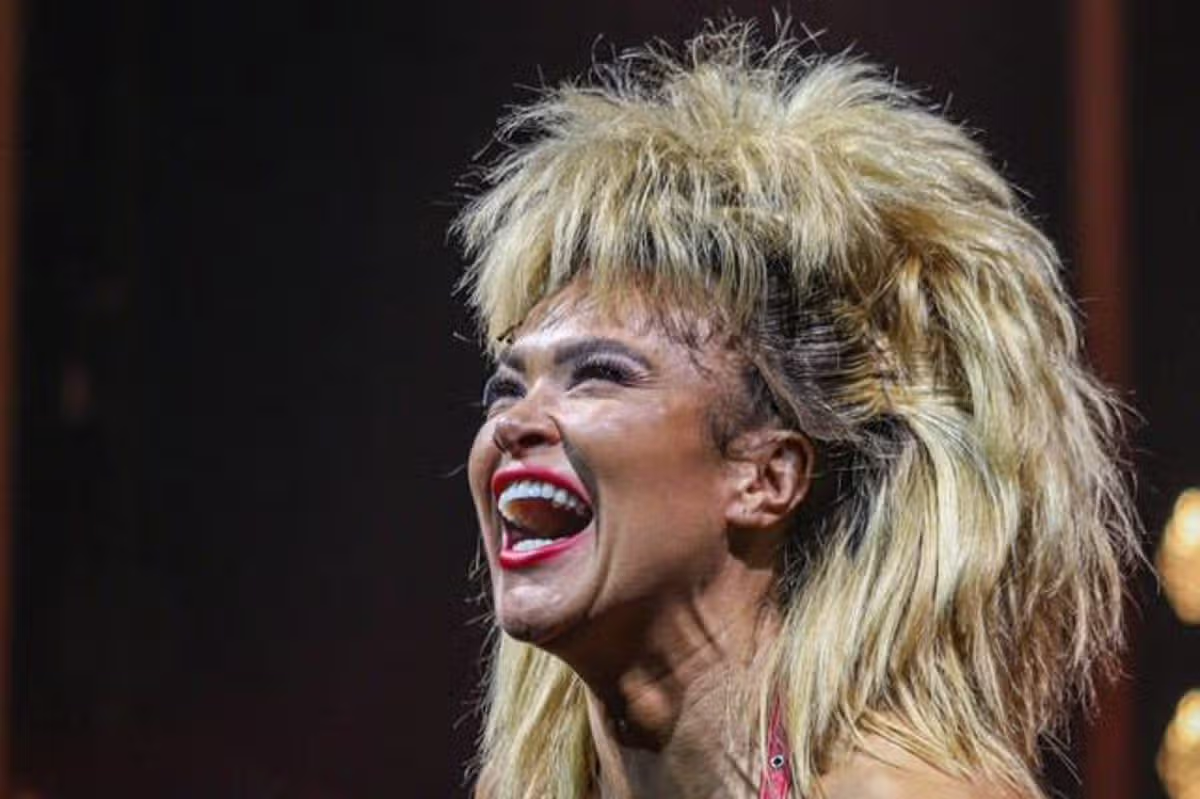
Zoe Birkett is announced as one of the headline acts for Marella Cruises first ever musical themed mini cruise
Former Pop Idol star Zoe Birkett says a family holiday aboard a Marella ship ticked all the boxes – and now she’s returning as one of the headline performers on the cruise line’s first-ever musical-themed sailing.
Zoe will join fellow West End favourites Lee Mead, who shot to fame after winning BBC show Any Dream Will Do, and Jenna Lee-James, best known for playing Elsa in Frozen in London.
The five-night cruise aboard Marella Voyager will depart in October 2026, promising guests a programme packed with show-stopping musical theatre numbers and live entertainment inspired by hit musicals.
For Zoe, however, the trip will feel like something of a homecoming.
The singer and actress, 41, revealed she holidayed on the very same Marella ship last year with her family after her dad persuaded them to give cruising a try.
“My dad loves cruises, he’s a total buff,” she said. “I’d never been before and he said, ‘Look, this is great for families.’ So we booked it and honestly it ticked all the boxes.”
Travelling with her nine-year-old daughter, Zoe said she quickly understood why cruises have become so popular with families.
“The entertainment was brilliant, the food was fab and if you want everything in one place, I think it’s perfect.”
The holiday wasn’t entirely anonymous, though.
“There were whispers on the first night and then the next day there was an influx of people saying, ‘Oh my God, that’s Tina Turner,” joked Zoe, with a few holidaymakers recognising her from her musicals past.
“It was really lovely. The entertainment team on board were fantastic and everybody was so friendly.”
Now she’ll be swapping the audience for the stage with a show celebrating the roles and artists that have shaped her career.
“I’ve got some Tina songs in there,” she explained. “I’ve got some Whitney Houston songs, some Janet Jackson and some Michael Jackson. I also talk about Pop Idol because a lot of people know me from way back.
“I like to boogie, so I do expect everybody to be dancing with me.”
Away from the cruise, Zoe has enjoyed a career spanning more than two decades, appearing in productions including Moulin Rouge! The Musical, The Bodyguard and The Witches. But she says portraying the legendary Tina Turner remains the defining role of her West End career.
“It was a career highlight,” she explains. “I had to delve very, very deep into her personal life, her career and everything she faced from misogyny, ageism, racism and violence. Then you’ve got her vocals on top of that and the dancing. It was probably the toughest thing that I’ve done, but also the most rewarding.”
The role demanded more than simply recreating Tina’s famous songs. “The way she walked was so particular and even the way she held her microphone. People who are hardcore fans want to see those little nuances.”
Although audiences only see the finished performance, Zoe admits life in the West End is far more demanding than many people realise.
“It’s incredible, but it’s extremely hard because you’re doing eight shows a week with only one day off. The life of a West End lead, the ensemble, the crew and wardrobe is definitely a sacrifice. Getting a show off the ground takes an incredible team and hours and hours of work, but it’s always worth it in the end because of the response you get from audiences.”
The former Pop Idol contestant was just 16 when she was thrust into the spotlight on one of Britain’s biggest television shows.
“The general experience of Pop Idol was fab because I was really looked after. Because I was only 16, my mum was allowed to be with me a lot of the time, which was brilliant.
“And Simon Cowell loved me! Which helped. I got off quite lightly!” she jokes.
She also formed a close bond with fellow teenage contestant Gareth Gates: “We were only 16 and 17 together all the time. We got on really well because we were going through very similar experiences.
“We were doing our GCSE’s one minute and then performing in front of a panel the next.”
Since then, Zoe has continued to diversify her career, recently touring stadiums with Take That, appearing in BBC comedy Smoggie Queens, presenting television programmes and working as a DJ.
After finishing the run of Take That tour dates, Zoe said: “The response online has been unbelievable.
“I text Gary Barlow afterwards and said, ‘You know where I am if you ever need another northerner with a soul-rock voice.’
“He replied, ‘I really hope to see you soon.’
“The Take That boys are just incredible. They are so professional but also so down to earth and they love to have a laugh. That tour will be in my heart forever. They made me feel so welcome.”
When she’s not performing on board, Zoe already has a plan for making the most of her return to cruising.
Describing her ideal day, Zoe says: “I’m a gym-aholic, so I’m straight to the gym first, then a nice breakfast, then relaxing by the pool.
“I definitely want to watch the theatre shows in the evenings as well because I remember thinking they were absolutely brilliant.”
Zoe Birkett will be headlining on Marella Cruises’ ‘Musical Med-leys’ in October 2026. The five-night first ever musical themed mini cruise includes musical style performances onboard Marella Voyager. Find out more about Marella Cruises’ holidays at www.tui.co.uk/cruise/
She captioned the post: “Straight men are automatically on thin ice,” seemingly giving fans a glimpse at what the upcoming series might entail.
Fans rushed to the comments to swoon over Olivia’s stunning snaps.
“Omg this look!!!!! You get better and better each time! Unbelievable,” penned one.
“Side boob summer,” said another.
“The fittest woman to ever exist,” wrote a third.
It comes after Olivia revealed the romantic gift she’d been sent by her boyfriend Pete Wicks.
Taking to Instagram, Olivia showed off the sweet and very romantic gift that Pete sent her.
He sent her some red roses to show he was thinking of her while they are apart.
She showed off the massive bouquet of red roses sent by Pete, along with a text he sent saying they were to “make her feel better” as she battled a hangover.
This all comes after Pete publicly opened up about his relationship with Olivia for the first time.
Joking about the loved-up snaps, where Olivia and Pete were seen smooching in a pool, Sam asked: “Question, if you don’t mind, why have I never been locked in an embrace with you in a pool?
“I’ve never been in that position with you before. You looked so comfortable and relaxed.”
Deliberately dodging the question, Pete replied: “I had a very, very lovely holiday.”
He added: “It was delightful. Switched off from the world as much as I could.
“We had lots of plans, we had lots of different things going on, we had a whole itinerary.”
Pete and Olivia are believed to have been dating since the presenter split from footballer husband Bradley Dack in January.