When Altayeb Alhadi was just six years old, his father died after a well collapsed in his village in White Nile state, south-central Sudan. Two months later, and his mother also died, leaving the five children in the family as orphans. As the eldest of the siblings, it was Altayeb’s responsibility to find work and help the family survive.
At 14, he travelled hundreds of kilometres from his home in Galli village to seek work in the north, where gold mines dot the landscape, so he could feed his siblings and keep them in school.
Recommended Stories
list of 3 itemsend of list
“We warned him about the dangers, but he was ambitious. Some relatives were already working in the area although they had found jobs in restaurants and other services rather than underground extraction,” Ayateb’s uncle Alhadi Hamid told Al Jazeera.
The boy initially worked in transport and other jobs, but when he heard lucrative stories from miners in the area, he began to search for gold in the surrounding mountains.
Altayeb died in an air strike attributed to the Egyptian military at a gold-mining site near Jabal Al-Aigdat in Sudan’s Red Sea region on October 10, which killed at least 72 miners, a few months after he began working at the site.
“It was less than 30 minutes since we separated, and he said he was going to the mine. We suddenly heard a loud sound of bombardment, and we ran. It was too chaotic with people running in all directions and many attacks taking place within a few minutes,” a fellow miner told Al Jazeera, speaking on condition of anonymity.
“We found Altayeb with his hand and leg [blown off] and a severe injury to his abdomen [which] was open. We tried to help him and took him to a safer place near a mountain. We were terrified. He died within hours. … We couldn’t believe how quickly things could happen.”
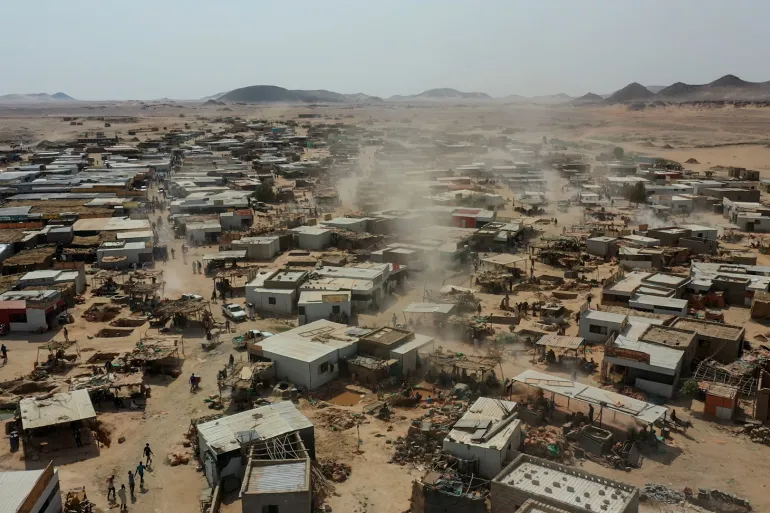
Dalago market in northern Sudan close to gold mines [FILE: Mojahid Satti/Al Jazeera]
Altayeb worked alongside about 15 young men and children, using basic tools to extract gold from the rocks. The miners worked night and day, taking the material they gathered to nearby mills for processing.
Proceeds from any gold found were shared, but earnings depended on the amount of gold recovered and individual agreements. On productive days, the group could earn more than $100, the miner said.
“We used to dig for two to three weeks until we found a gram or less. If the gold percentage in the well wasn’t good, we would change locations. When we found a gram or less, we sold it and shared the profit, which was about $100,” Altayeb’s former colleague said.
For young people supporting relatives, even irregular earnings in these dangerous gold mines can seem preferable to unemployment.
Altayeb told his siblings 10 days before his death that he would soon return home, his sister Rogaia Alhadi told local media.
Friends told the family that Altayeb visited them at a restaurant near the mining site on the morning of the attack, his uncle said. They shared a cup of tea before heading towards the mine for the final time. Minutes later, the air strike hit the area.
An artisanal miner breaking stones to extract gold, Dalago market [FILE: Mojahid Satti/Al Jazeera]
Authorities in Egypt have accused Sudanese miners of crossing its border and reportedly linked some to gold smuggling, drugs and human trafficking. The Sudanese side did not respond to these allegations.
Since a civil war between Sudan’s military and the Rapid Support Forces paramilitary group broke out in 2023, the economy has tanked and forced thousands with no other source of income to find work in the artisanal gold mines of northern Sudan.
This can vary from independent prospecting to working in investor-owned pits for a share of the proceeds. Earnings depend on the amount of gold found, equipment and fuel costs, and profit percentages agreed with financiers.
Although some miners strike gold, they still face an array of dangers, ranging from collapsing shafts and unstable ground to air strikes. Limited medical care makes mining, particularly in remote areas, especially hazardous.
Living conditions are also extremely hard. Mohamed Awadalkarim, who was a miner in River Nile state for 10 years, said workers often shelter in makeshift huts made from burlap sacks and plastic sheeting. Their diet consists mainly of lentils and sorghum porridge.
But for families without reliable incomes, mining offers a possible source of immediate earnings. Miners may spend hours searching for gold and not find enough to cover their expenses. Others share proceeds with investors or equipment owners, leaving them with limited money left.
Artisanal and small-scale mining accounted for 53.71 tonnes, or about 83 per cent, of Sudan’s declared gold production in 2024, but this was just in areas under government control, according to research by the Chatham House think tank. About one million people were involved in artisanal mining across Sudan’s 18 states, generating $1bn annually for the country.
An artisanal miner burning gold in Dalago Market, Sudan [FILE: Mojahid Satti/Al Jazeera]
Artisanal mines, while generally viewed as being outside the main war-funding networks, have still been exposed to violence.
On June 16, several people were reportedly killed and injured in attacks on mining sites near the Egyptian border, according to local sources and miners.
The repeated air strikes near Sudan’s border with Egypt have raised concerns about civilian protection, territorial sovereignty and accountability.
Egyptian authorities have accused Sudanese prospectors of crossing the border to mine near a concession managed by an Egyptian company, but there is little independent evidence to back these claims.
Sudanese military leader Abdel Fattah al-Burhan reportedly ordered a fact-finding committee involving prosecutors, judicial representatives and security agencies to investigate the attack. Findings from an inquiry into a similar incident announced in June have not been made public.
Altayeb paid the highest price in this regional conflict and the hunt for gold, which provides huge profits for some and meagre incomes for many.
Altayeb’s siblings are now living with their extended family, including uncles, aunts and cousins. People who know them are trying to help his brothers and sisters and are carrying out community initiatives in Galli to keep his memory alive.
“We will raise the children and care for them as he would have wanted. He was young, caring and brave, and he will always be remembered,” Altayeb said.
Bracken and heather ripple across the plateau. I exhale into the chill autumn air and my breath mists a view that reaches all the way to Gower and the ochre peaks of Bannau Brycheiniog (formerly the Brecon Beacons). Far below, the Ogmore valley’s terrace houses look like tiny constellations but up here on Tarren y Fforch, it’s just me and a few sheep taking springy steps between tufts of bilberries. If this corner of the south Wales valleys feels a long way from its coal mining past, that is, partly, the point.
I’m hiking the new Llwybr Coedwig Cymru Trail, or Wales Forest Trail. Running from Porthkerry Park, near Barry, to Pont Walby, close to Glynneath, this 50-mile (80km) pilot route is the first section of what the National Forest for Wales hopes will eventually be a trail linking woodlands across the length and breadth of Wales: a sylvan counterpart to the Wales Coast Path.
My father grew up in one of the valleys’ mining villages and, when I visited relatives there as a child, the disconnection of those post-industrial communities from the wild hills that loomed above them was striking. Mountain bikers have long discovered the region’s potential, but walkers still tend to head for the more obvious trails that wind through the national parks or along the coast. This pilot trail seems a good excuse to explore untapped footpaths.
The trail starts near the viaduct in Porthkerry Park. Photograph: Freespiritarchitecture/Alamy
With the sea behind me, I set off from the oak leaf sculpture that marks the trail’s start. The viaduct ahead once carried coal to Barry docks, but today it stands over Caffe Matteo, busy with dog walkers sipping cappuccinos. Leaving them behind, I cross the park between the soft greens of birch and oak trees.
I swerve on to a fern-fringed path and follow a stream to the outskirts of Barry. The next section is less lovely – a long stretch of roadside pavement until I enter Hensol Forest. The sunshine splinters through ancient pine trees and their needles cushion the ground. Weaving in and out of forest and fields, I soak up all the calm this long-distance forest-bathing exercise can offer until the Vale Resort comes into sight.
This vast hotel is popular with golfers, but also holds two trump cards for walkers: a spa where weary hikers can swim, sauna and steam their muscles limber again, and a bar serving energy-boosting Welsh rarebit spiked with ale mustard, Dragon cheddar and charred leeks.
Restored, I rejoin the trail the next morning, dipping along leafy lanes and footpaths as the roar of the M4 gets louder. I cross beneath it to enter Coedwig Gellihir, a small broadleaf woodland, then continue north into Pontyclun, before clambering down to the river at Ynysmaerdy Forest to pick up an old railway path to Coedely.
The trail has been designed to offer stretches for cyclists, pushchair users and horse riders, with more pavement-pounding and, in Thomastown, a reminder of the challenges faced by post-industrial communities. Leaving the village behind, the trail opens out again on to a little rocky path with soaring views of Ogwr Fach Valley.
One of the National Forest for Wales’s aims is to help communities connect with nearby woodlands. In Blackmill, the next village I come to, the trail passes Coed Bach Dimbath, a small community woodland where local groups have come together to build an otter hide, outdoor classroom and accessible paths.
“The woodland there had been inaccessible for decades, and now people can access it,” says Rhodri Hewitt of Natural Resources Wales, the trail’s project lead. “The valleys can feel desperately poor in places, but the River Ogmore is another world entirely.”
Continuing north to Nant-y-Moel, I come to Blaenogwr Farm, a Georgian farmstead marooned in the village, where I’m staying in a homely holiday cottage. I drop off my backpackand head across the road for fish with buttery potatoes and laverbread (made from edible seaweed) and cockle sauce at the Blaenogwr Hotel.
The holiday cottage at Blaenogwr Farm. Photograph: Rhiannon Batten
My final day’s walking starts with a climb up to that extraordinary plateau on Tarren y Fforch. Hewitt tells me that parts of the trail follow the paths miners took across these hills to work in pits in neighbouring valleys. I’m glad they had this antidote to the darkness and danger underground. Today’s route feels uplifting. I slip through an ancient gate on to open moorland and pick my way up the escarpment, meadow pipits chirruping around me.
Crossing the plateau, I enter Afan Forest park, a large commercial woodland that’s also home to a forest of wind turbines, a peat restoration project and a network of mountain-biking trails. I have an urge to be inside the forest rather than tracing its edges and detour on to a footpath leading up to the trig point at Craig y Llyn, the highest point of the valleys at 600m.
Continuing beneath branches dripping velvety lichen, I come to another spectacular viewpoint, as the land drops away to the waters of Llyn Fach and Llyn Fawr, with the peaks ofCorn Du and Pen y Fan shrouded in soft-focus drizzle behind them. Soon I dip into the loveliest stretch of forest along the whole trail.
The valley of Cwm Gwrelych is a designated geological site of special scientific interest because of the near complete 300m-year-old strata exposed here. But it’s also rainforest-like, cut through with waterfalls, a dark, glossy river and dense, broadleaf woodland. I feel completely enveloped in green as I hike the last couple of miles to the trail’s current end, the Isambard Kingdom Brunel-designed viaduct at Pont Walby. As I continue to Sgwd Gwladys pub with rooms in nearby Pontneddfechan, I remind myself that this is not a finished trail but the beginning of one.
The next morning, I pull on my boots one last time and set out in search of the waterfall the pub is named after. Mist rises from the river, shafts of sunlight turn the leaves amber and a heron glides past in cinematic slow-mo. When we spoke about the trail, Hewitt mentioned an old Welsh proverb: Dod yn ôl at fy nghoed, meaning “To return to my trees”, or finding your way back to a balanced state of mind. As I sit and admire SgwdGwladys’ thundering cascade, I realise this leafy trail has delivered exactly that.
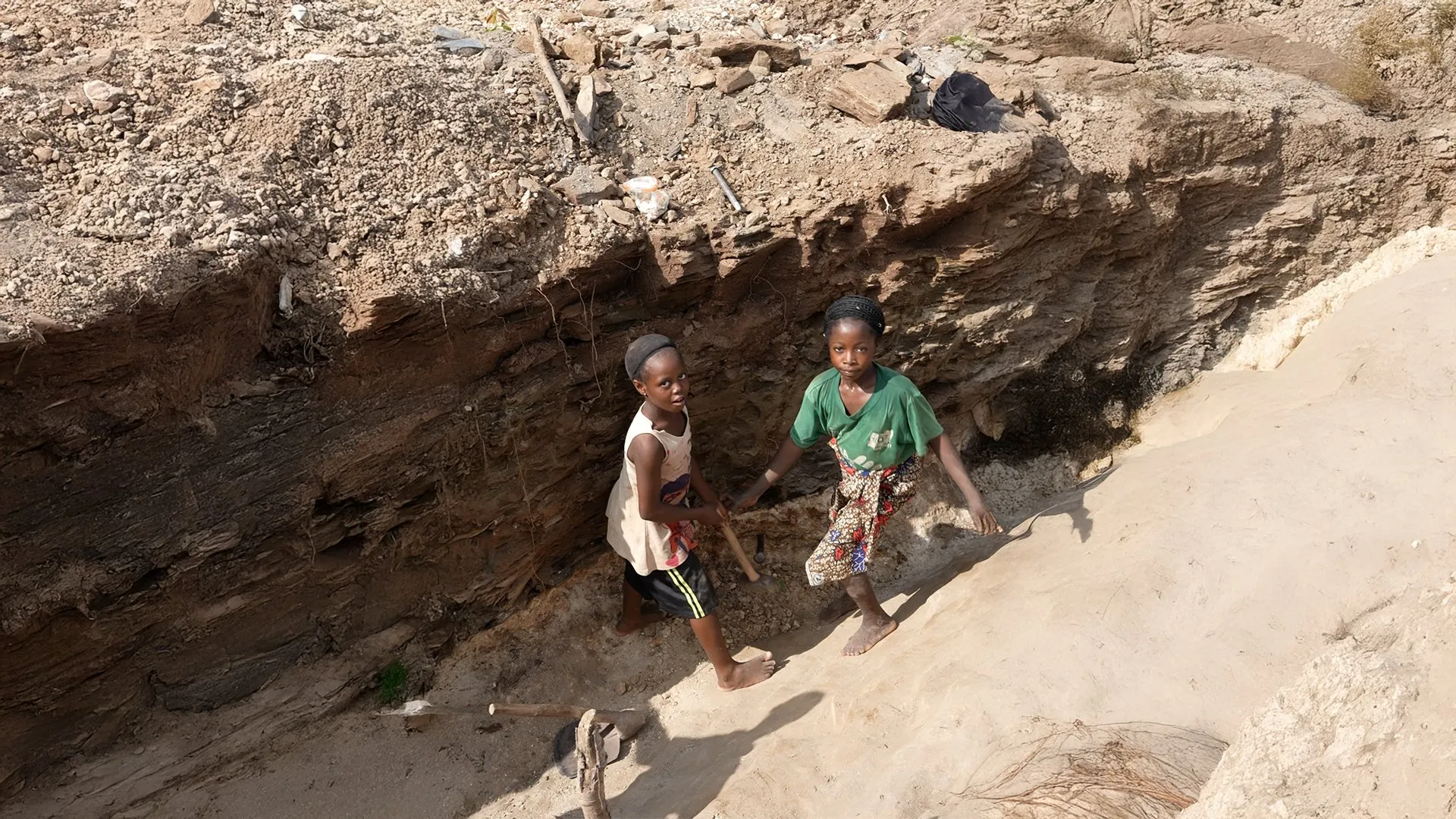
Nasarawa is at the heart of Nigeria’s lithium boom, where artisanal miners hope to benefit from the global clean energy race. But as investment grows, they say they face unsafe working conditions, child labour concerns and communities still waiting to see the benefits.
Afghan miners endure harsh conditions, relying on basic tools to extract precious emeralds in Panjshir’s steep valleys.
Panjshir, Afghanistan — At a packed hall in the offices of the Panjshir provincial government, an auction is under way and the bidding is brisk.
The buyers, many from Kabul and some from overseas, have already closely examined the small piles of roughly cut green stones, shining their phone flashlights through them to check their quality.
Recommended Stories
list of 4 itemsend of list
Bidding for the best stones is competitive.
“Panjshir emeralds have many buyers around the world because of their very high quality,” gem merchant Ghulam Mustafa Habibi told Al Jazeera. “This is why their price is higher compared with other emeralds around the world.”
Mining for gemstones in Afghanistan’s Panjshir valley [Mohsin Khan Momand/Al Jazeera]
By the end of the auction, nearly 3,000 carats of the precious stones were sold – the 23rd sale of its kind so far this year. The value of emeralds sold to date in Afghanistan is estimated to be nearly 400m Afghanis ($6.12m), a steep rise compared with last year.
For a country impoverished by years of war and burdened by international sanctions, the trade in precious minerals is a valuable resource, especially in the remote corner of northeastern Afghanistan.
“Thankfully, more than 15,000 people are currently employed in Panjshir’s mining sector,” says Muhammad Aman Rezaii, a mining official responsible for overseeing the operation of many small artisanal mining operations dotting the Panjshir valley.
On the valley’s steep hillsides, miners toil for hours underground to make a living. In the otherwise barren and rocky landscape, which yields little, the precious stones are a lifeline.
“There are hardly any companies or manufacturing factories here. The main source of employment is the mining sector,” said Rezaii, adding that they have identified more than 2,000 other mining sites which could be developed.
Afghan workers and Taliban officials near a mine [Mohsin Khan Momand/Al Jazeera]
Since taking power in 2021, the Taliban say they have signed deals with dozens of investors, mainly Chinese, Russian and Iranian, to mine gemstones and other valuable minerals.
According to the World Bank, state revenues rose 22 percent year-on-year in April and May, boosted by the auction of mines and other resources such as oil and precious minerals.
But Afghanistan’s gemstone mining sector is still lacking in international investment and expertise.
“There have been various proposals to establish an international market for Afghanistan’s precious minerals, particularly in Kabul,” Hafiz Muhammad Agha Hakim, the Governor of Panjshir province, told Al Jazeera.
“Processing machinery could be brought in so that these minerals can be processed and standardised here before being exported to markets around the world. At the moment, there is no standardised centre or proper processing facility.”
The steep valleys of Afghanistan’s Panjshir valley [Mohsin Khan Momand/Al Jazeera]
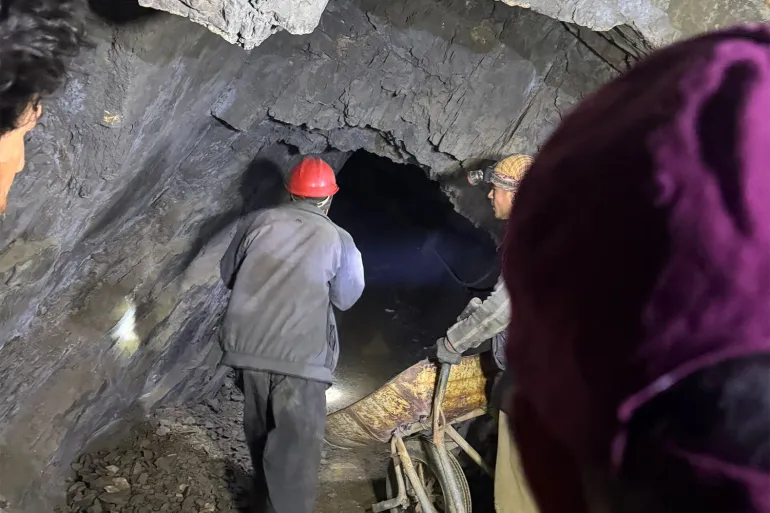
Back in the dusty confines of his mine, working in near-total darkness, miner Mahdi wields a crowbar while his friend beside him hits the surface with a hammer. He bemoans their lack of modern equipment.
“There are many challenges because we don’t have advanced equipment,” he says, taking a break from the digging. “We work only with basic tools such as shovels, pickaxes, drills and similar equipment.”
Rezaii said the miners need proper equipment that can make their work easier and safer, while also allowing the minerals to be extracted in a more professional manner. This would benefit the people of Afghanistan and particularly the miners,” he said.
“The area is vulnerable to landslides, avalanches, flooding and falling rocks. People here are working under extremely difficult and demanding conditions.”
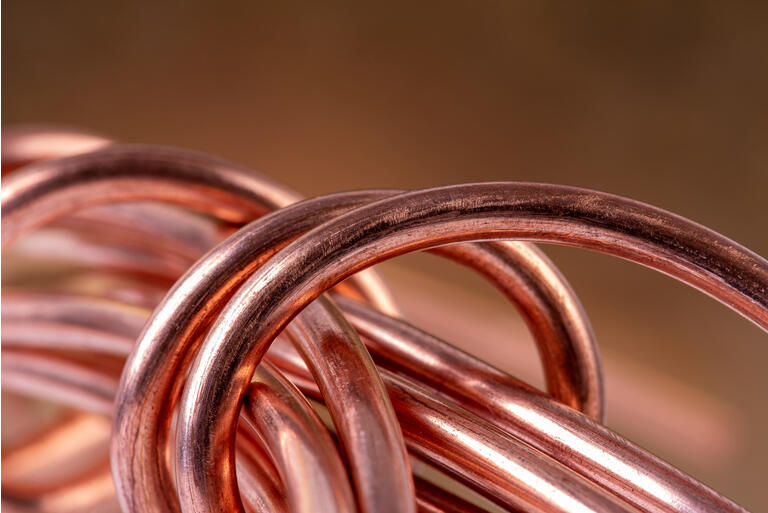
Workers at Antofagasta’s (ANFGF) Centinela copper and gold mine in Chile are poised to begin a strike Wednesday after government-mediated negotiations failed to produce an agreement.
The Minera Esperanza and Distrito Centinela unions said the key sticking point is a discrepancy
![Dalago market in northern Sudan close to gold mines [Mojahid Satti/Al Jazeera]](https://i0.wp.com/www.aljazeera.com/wp-content/uploads/2026/10/Sudan7-1792928509.jpg?w=640&ssl=1)
![An artisanal miner breaking stones to extract gold, Dalago market [Mojahid Satti/Al Jazeera]](https://i0.wp.com/www.aljazeera.com/wp-content/uploads/2026/10/Sudan5-1792928502.jpg?w=640&ssl=1)
![An artisanal miner burning gold in Dalago Market, Sudan [FILE: Mojahid Satti/Al Jazeera]](https://i0.wp.com/www.aljazeera.com/wp-content/uploads/2026/10/Sudan4-1792928499.jpg?w=640&ssl=1)

![Afghanistan's Taliban government has identified hundreds of new sites to mine gemstones [Mohsin Khan Momand/Al Jazeera]](https://i0.wp.com/occasionaldigest.com/wp-content/uploads/2026/10/6af0b991-fcb0-4aa6-928f-f9b31ad0a7c6-1790670633.jpg?w=640&ssl=1)
![Afghanistan's Taliban government has identified hundreds of new sites to mine gemstones [Mohsin Khan Momand/Al Jazeera]](https://i0.wp.com/occasionaldigest.com/wp-content/uploads/2026/10/be8b8562-a1e2-4e96-aaa5-eecd1e2e7d1b-1790670636.jpg?w=640&ssl=1)
![Afghanistan's Taliban government has identified hundreds of new sites to mine gemstones [Mohsin Khan Momand/Al Jazeera]](https://i0.wp.com/occasionaldigest.com/wp-content/uploads/2026/10/6af124e6-e19c-4c9e-ab0f-833eeba78cf0-1790670623.jpg?w=640&ssl=1)