military

Top global arms producers’ revenues surge as major wars rage: SIPRI report | Weapons News

Revenues from sales of weapons and military services by the 100 largest global arms-producing companies reached a record $679bn in 2024, according to new data released by the Stockholm International Peace Research Institute (SIPRI).

The Gaza and Ukraine wars, as well as global and regional geopolitical tensions and ever-higher military expenditures, increased revenues generated by the companies from sales of military goods and services to customers domestic and abroad by 5.9 percent compared to the year before, the organisation said in a report published on Monday.

Recommended Stories

list of 4 itemsend of list

The bulk of the global rise was attributed to companies based in Europe and the United States, but there were year-on-year increases in all regions except for Asia and Oceania, where issues within the Chinese arms industry drove down the regional total.

Lockheed Martin, Northrop Grumman and General Dynamics led the pack in the US, where the combined arms revenues of arms companies in the top 100 grew by 3.8 percent in 2024 to reach $334bn, with 30 out of the 39 US companies in the ranking increasing their revenues.

However, SIPRI said widespread delays and budget overruns continue to plague key projects such as the F-35 fighter jet, the Columbia and Virginia-class submarines, and the Sentinel intercontinental ballistic missile.

KIEL, GERMANY - SEPTEMBER 4: Soldiers standing guard in front of a IRIS-T SLM air defence system prior to the arrival of German Chancellor Olaf Scholz, Defence Minister Boris Pistorius and Lt. General Ingo Gerhartz, commander of the German air force (Inspekteur der Luftwaffe) during the operative launch of the Bundeswehr's first IRIS-T SLM air defence system at the Todendorf military base on September 4, 2024 in Panker, Germany. IRIS-T SLM, developed by Diehl Defence, is a medium-range system capable of bringing down drones, aircraft and missiles. Germany has already supplied Ukraine with at least three of the systems. (Photo by Gregor Fischer/Getty Images)
Soldiers stand guard in front of an IRIS-T SLM air defence system prior to the arrival of former German Chancellor Olaf Scholz and top military commanders at the Todendorf military base on September 4, 2024 in Panker, Germany [File: Gregor Fischer/Getty Images]

Elon Musk’s SpaceX appeared in the list of top global military manufacturers for the first time, after its arms revenues more than doubled compared with 2023 to reach $1.8bn.

Excluding Russia, there were 26 arms companies in the top 100 based in Europe, and 23 of them recorded increases in revenues from sales of weapons and equipment. Their aggregate arms revenues grew by 13 percent to $151bn.

After boosting revenues by 193 percent to reach $3.6bn through making artillery shells for Ukraine, Czech company Czechoslovak Group recorded the sharpest percentage increase in arms revenues of any top 100 company in 2024.

As Ukraine faces a relentless Russian offensive in its eastern regions, the country’s JSC Ukrainian Defense Industry increased its arms revenues by 41 percent to $3bn.

European arms companies have been investing in new production capacity to fight off Russia, the SIPRI report said, but it cautioned that sourcing materials – particularly in the case of dependence on critical minerals – could pose a “growing challenge” as China also tightens export controls.

Rostec and United Shipbuilding Corporation are the only two Russian arms companies in the ranking, and they also increased their combined arms revenues by 23 percent to $31.2bn despite being hit by Western-led sanctions over the Ukraine war.

Last year, weapons makers in Asia and Oceania still registered $130bn in revenues after a 1.2 percent decline compared to 2023.

The regional drop was due to a combined 10 percent decline in arms revenues among the eight Chinese arms companies in the ranking, most prominently the 31 percent fall in the arms revenues of NORINCO, China’s primary producer of land systems.

“A host of corruption allegations in Chinese arms procurement led to major arms contracts being postponed or cancelled in 2024,” said Nan Tian, Director of the SIPRI Military Expenditure and Arms Production Programme. “This deepens uncertainty around the status of China’s military modernisation efforts and when new capabilities will materialise.”

AT SEA, AUSTRALIA - MARCH 16: The USS Minnesota (SSN-783) Virginia-class fast attack submarine sails in the waters off the West Australian coast on March 16, 2025 in at sea, West Australian coast. The submarine was on a port visit. (Photo by Colin Murty-Pool/Getty Images)
The USS Minnesota (SSN-783) fast-attack submarine sails off the coast of Western Australia on March 16, 2025 [Colin Murty-Pool/Getty Images]

But Japanese and South Korean arms manufacturers’ sales surged on the back of strong demand from European as well as domestic customers amid simmering tensions over Taiwan and North Korea.

Five Japanese companies in the ranking increased their combined arms revenues by 40 percent to $13.3bn, while four South Korean producers saw a 31 percent jump to $14.1bn in revenue. South Korea’s largest arms company, Hanwha Group, recorded a 42 percent surge in 2024, with more than half coming from arms exports.

Israel reaps profits of Gaza genocide

For the first time, nine of the top 100 arms companies were based in the Middle East, according to SIPRI. The nine companies racked up a combined $31bn in revenue in 2024, showing a regional increase of 14 percent.

As the United Arab Emirates continues to face international allegations of arming the devastating war in Sudan, the institute noted its regional figure excludes Emirati-based EDGE Group due to a lack of revenue data for 2023. The UAE rejects the accusations.

The three Israeli arms companies in the ranking increased their combined arms revenues by 16 percent to $16.2bn amid the ongoing genocidal war on Gaza, which has killed nearly 70,000 Palestinians and destroyed most of the besieged enclave.

Elbit Systems pocketed $6.28bn in profits, followed by Israel Aerospace Industries with $5.19bn and Rafael Advanced Defense Systems with $4.7bn.

SIPRI said there was an international surge in interest in Israeli unmanned aerial vehicles and counter-drone systems. Rafael’s surge was tied to Iran, as demand for the company’s air defence systems rose to “unprecedented levels” after Iran’s large-scale retaliatory strikes against Israel in April and October 2024 that used ballistic missiles and drones.

Five Turkish companies were in the top 100 – also a record. Their combined arms revenues amounted to $10.1bn, showing an 11 percent increase.

Baykar, which makes, among other things, advanced drones most recently sold to Ukraine, saw 95 percent of its $1.9bn in arms revenue in 2024 come from exports to other countries.

Military companies from the United Kingdom, France, Germany, Italy, India, Taiwan, Norway, Canada, Spain, Poland and Indonesia were in the ranking as well.

Source link

What is driving US President’s Trump’s actions against Venezuela? | Military

Donald Trump declared Venezuela’s airspace ‘closed’ on Saturday.

Venezuela has accused Washington of a “colonial threat” against its sovereignty after US President Donald Trump said he was shutting down the country’s airspace.

The Latin American nation is on high alert after United States attacks on boats nearby and a major military deployment in the Caribbean that includes the world’s largest aircraft carrier.

Trump says he is fighting drug trafficking.

But is that the real reason?

Presenter: Bernard Smith

Guests:

Mark Pfeifle – US Republican strategist and a former White House deputy national security adviser

Paul Dobson – Independent journalist and political analyst in Venezuela

Christopher Sabatini – Senior research fellow for Latin America at Chatham House

Source link

Lawmakers voice support for congressional reviews of Trump’s military strikes on boats

Lawmakers from both parties said Sunday that they support congressional reviews of U.S. military strikes against vessels in the Caribbean Sea and eastern Pacific Ocean, citing a published report that Defense Secretary Pete Hegseth issued a verbal order for all crew members to be killed as part of a Sept. 2 attack.

The lawmakers said they did not know whether last week’s Washington Post report was true, and some Republicans were skeptical, but they said attacking survivors of an initial missile strike poses serious legal concerns.

“This rises to the level of a war crime if it’s true,” said Sen. Tim Kaine (D-Va.).

Rep. Michael R. Turner (R-Ohio), when asked about a follow-up strike aimed at people no longer able to fight, said Congress does not have information that that happened. He noted that leaders of the Armed Services Committee in both the House and Senate have opened investigations.

“Obviously, if that occurred, that would be very serious and I agree that that would be an illegal act,” Turner said.

Turner said there are concerns in Congress about the attacks on vessels that the Trump administration says are transporting drugs, but the allegation regarding the Sept. 2 attack “is completely outside anything that has been discussed with Congress, and there is an ongoing investigation.”

The comments from lawmakers during news show appearances come as the administration escalates a lethal maritime campaign that it says is needed to combat drug trafficking into the United States.

On Saturday, President Trump said the airspace “above and surrounding” Venezuela should be considered “closed in its entirety,” an assertion that raised more questions about the U.S. pressure on Venezuelan leader Nicolás Maduro. Maduro’s government accused Trump of making a ”colonial threat” and seeking to undermine the South American country’s sovereignty.

After the Post’s report, Hegseth said Friday on X that “fake news is delivering more fabricated, inflammatory, and derogatory reporting to discredit our incredible warriors fighting to protect the homeland.”

“Our current operations in the Caribbean are lawful under both U.S. and international law, with all actions in compliance with the law of armed conflict — and approved by the best military and civilian lawyers, up and down the chain of command,” Hegseth wrote.

Republican Sen. Roger Wicker of Mississippi, chairman of the Senate Armed Services Committee, and its top Democrat, Rhode Island Sen. Jack Reed, said in a joint statement late Friday that the committee “will be conducting vigorous oversight to determine the facts related to these circumstances.”

That was followed Saturday by the chairman of the House Armed Services Committee, Republican Rep. Mike Rogers of Alabama, and ranking Democratic member, Washington Rep. Adam Smith, issuing a joint statement saying the panel was committed to “providing rigorous oversight of the Department of Defense’s military operations in the Caribbean.”

“We take seriously the reports of follow-on strikes on boats alleged to be ferrying narcotics in the SOUTHCOM region and are taking bipartisan action to gather a full accounting of the operation in question,” Rogers and Smith said, referring to U.S. Southern Command.

Rep. Don Bacon (R-Neb.), asked about the Sept. 2 attack, said Hegseth deserves a chance to present his side.

“We should get to the truth. I don’t think he would be foolish enough to make this decision to say, ‘Kill everybody, kill the survivors,’ because that’s a clear violation of the law of war,” Bacon said. “So, I’m very suspicious that he would’ve done something like that because it would go against common sense.”

Kaine and Turner appeared on CBS’ “Face the Nation,” and Bacon was on ABC’s “This Week.”

Freking writes for the Associated Press.

Source link

How Would Venezuela’s Military Fight a US Invasion?

U. S. President Donald Trump announced that the airspace above and around Venezuela should be seen as fully closed. This statement comes as the U. S. increases pressure on President Nicolas Maduro’s government. Trump has mentioned the possibility of U. S. military strikes against drug boats in the region, which have already claimed over 80 lives, suggesting these strikes could lead to ground actions in Venezuela. Reports indicate that Trump has even discussed a potential call with Maduro regarding a U. S. visit.

The Venezuelan military is significantly less powerful than the U. S. military and suffers from poor training, low wages, and aging equipment. Maduro, in power since 2013, has kept military support by appointing officers to key government positions, but average soldiers earn only $100 a month, far below what families need for basic living. This situation has led to desertions, especially if an attack occurs. Venezuelan troops mainly have experience in dealing with unarmed civilians during protests. Although Maduro claims 8 million civilians are training in militias, estimates suggest only thousands could participate in defense.

In case of an attack, Venezuela is preparing guerrilla-style resistance, involving small military units carrying out sabotage actions. The military has around 5,000 Russian-made Igla missiles, with orders to disperse in the event of aggression. There are also Colombian guerrilla groups in Venezuela and armed collectives supporting the ruling party, which are accused of violent actions and ties to drug trafficking, although the government denies these allegations.

Source link

One killed in ‘riot’ in Iraq’s Erbil after attack on Khor Mor gas field | Politics News

Kurdish authorities say one killed, several wounded in riots in Erbil’s Gwer, as authorities try to restore power after attack on Khor Mor.

A group of “rioters” have opened fire at fuel tanker trucks in the northern Iraqi governorate of Erbil, killing at least one person and wounding several others, Kurdish authorities said, days after a rocket attack on the region’s Khor Mor gas field.

In a statement carried by the Iraqi News Agency late on Saturday, the Ministry of Interior of the Kurdistan Regional Government (KRG) linked the shooting to the Khor Mor attack.

Recommended Stories

list of 3 itemsend of list

The rocket attack hit a storage tank at the gas field, which is one of the region’s largest facilities, late on Wednesday, leading to production shutdown and extensive power cuts.

The ministry said the KRG sent liquid fuel to supply power plants following the Khor Mor attack, but that “a group of rioters blocked the road used by fuel tankers and civilians in Gwer, opening fire on passersby and travellers”.

The shooting “resulted in the death of one citizen and injuries to several others”, it said.

The ministry pledged action against the “riots”, saying “we will put an end to these acts of sabotage”.

The ministry statement followed an earlier report by the Iraqi News Agency in which it said there had been armed clashes between the Harkiya tribe and security forces in Erbil, near the village of Lajan on the Erbil-Gwer road.

The agency cited security forces as saying that the clashes, adjacent to the Lanaz Company refinery, had “resulted in fatalities and injuries”.


Meanwhile, Iraqi Kurdish Prime Minister Masrour Barzani has announced that the KRG has agreed with the company operating the Khor Mor gas field to restart production within hours to restore electricity.

The attack on Thursday on Khor Mor was the most significant violence since a series of drone attacks in July that cut production by about 150,000 barrels per day.

“I have spoken with the company’s [Dana Gas] leadership to thank them and their workforce for their extraordinary resilience and determination amid eleven attacks on the Khor Mor field,” Barzani said in a statement posted in English.

“I have urged [Iraqi] Prime Minister Mohammed Shia al-Sudani to hold the perpetrators of this attack accountable to the full extent of the law, whoever they may be and wherever they are,” Barzani added.

There has been no claim of responsibility for the attack on Khor Mor, and authorities have not said who was behind the attack.

Abdulkhaliq Talaat, a military expert and former official from the Kurdish region of northern Iraq, however, told the Rudaw news channel that the drone attack on the Khor Mor gas field was launched from an area under the control of Iraqi forces.

The storage tank at Khor Mor is part of new facilities partially financed by the US and built by a US contractor, an industry source told the Reuters news agency earlier this week.

The KRG exercises autonomy in parts of northern Iraq, where US companies have significant investments in energy.

Source link

Guinea-Bissau’s deposed president travels to Congo’s Brazzaville: Reports | Politics News

Umaro Sissoco Embalo arrives in the Republic of Congo after first seeking refuge in Senegal following this week’s coup.

Guinea-Bissau’s former president, Umaro Sissoco Embalo, has travelled to the Republic of Congo, the AFP and Associated Press news agencies are reporting, days after he was deposed in a military coup.

Califa Soares Cassama, Embalo’s chief of staff, confirmed to AP that the former president was in the Congolese capital, Brazzaville.

Recommended Stories

list of 3 itemsend of list

Unnamed Congolese government sources also told AFP that Embalo was in Brazzaville.

Embalo had initially sought refuge in neighbouring Senegal after a group of military officers on Wednesday announced that they had taken “full control” of Guinea-Bissau ahead of the release of provisional presidential election results.

The true motives for the coup remain unclear, with speculation and conspiracy theories circulating, including that it was carried out with Embalo’s blessing.

The coup has sparked a wave of international condemnation, with regional leaders and the United Nations calling on Guinea-Bissau’s new military leaders to restore constitutional order and allow the electoral process to complete its work.

Senegalese Prime Minister Ousmane Sonko condemned the events as a “sham” in remarks to lawmakers on Friday.

“We want the electoral process to continue,” Sonko said. “The [electoral] commission must be able to declare the winner.”

Many of Guinea-Bissau’s new military leaders are close to Embalo, including General Horta Inta-A, who was named as the transitional president earlier this week, and Ilidio Vieira Te, who was appointed prime minister.

Te had previously served as finance minister in Embalo’s government.

On Saturday, Inta-a appointed a 28-member government, most of whom are allies of the deposed president.

Separately, the country’s main opposition party, PAIGC, said in a statement that its headquarters had been “illegally invaded by heavily armed militia groups” in the capital, Bissau.

The party denounced the raid on Saturday as “an attack on stability, democracy and the rule of law” in Guinea-Bissau.

PAIGC had been barred from presenting a presidential candidate in last Sunday’s election, a move that drew criticism from civil rights groups who denounced an apparent crackdown on the opposition.

Both Embalo and his main challenger, Fernando Dias, had declared victory ahead of the release of the provisional vote results, which had been set for Thursday.

No results have been announced since the coup.

Source link

Belarus’s Lukashenko becomes second only leader to visit Myanmar since coup | Elections News

Alexander Lukashenko’s visit comes shortly before military government holds national polls widely condemned as a sham.

Belarusian President Alexander Lukashenko has arrived in Myanmar on a goodwill visit seen as lending support to the Southeast Asian country’s military government in advance of a widely condemned national election set to be held next month.

Myanmar state media reported on Friday that Senior General Min Aung Hlaing, the country’s self-installed de facto leader, met Lukashenko at the Presidential Palace in the capital, Naypyidaw.

Recommended Stories

list of 3 itemsend of list

“This visit demonstrated Belarus’s goodwill and trust towards Myanmar and marked a historic occasion. It is the first time in 26 years of diplomatic relations that a Belarusian Head of State has visited Myanmar,” military run outlet The Global New Light of Myanmar reported.

Lukashenko’s arrival at a military airport in Naypyidaw on Thursday night saw him welcomed by senior figures from Myanmar’s military government, including Prime Minister Nyo Saw, with full state honours and cultural performers.

After former Cambodian Prime Minister Hun Sen, Lukashenko is only the second foreign leader to visit Myanmar since its military overthrew Aung San Suu Kyi’s democratically elected National League for Democracy (NLD) government in a coup on February 1, 2021.

The Belarusian leader’s visit also comes just a month before the military is set to host national elections that many domestic and international observers have condemned as a sham. His visit is widely viewed as lending support to the polls, due to be held in late December, and which the military government has touted as a return to normalcy.

Following Lukashenko’s meeting with Min Aung Hlaing on Friday, The Global New Light also confirmed that Belarus plans to “send an observation team to Myanmar” to monitor the polls.

The leaders also agreed that “collaboration will also be strengthened in military technologies and trade”, a day after the Myanmar-Belarus Development Cooperation Roadmap 2026–2028 was signed in Yangon.

Belarus state media quoted Minister of Foreign Affairs Maxim Ryzhenkov as saying that Myanmar has “significant potential in various industrial sectors”, while Belarus has “expertise and modern technologies in mechanical engineering”.

“Myanmar plans to mechanise its agriculture, and we in Belarus produce a complete lineup of machinery and equipment. As our president says, no topics are off limits for our cooperation,” Ryzhenkov said.

Belarus’s government is widely regarded as authoritarian, with Lukashenko serving as the former Soviet state’s first and only president since the office was established in 1994.

Along with major backers China and Russia, Belarus is one of the very few countries that have continued to engage with Myanmar’s military leaders since the coup.

A popular protest movement in the immediate aftermath of the coup has since morphed into a years-long civil war, further weakening the Myanmar military’s control over the fractured country, where ethnic armed groups have fought decades-long wars for independence.

Preparing for the polls, military government census takers in late 2024 were only able to count populations in 145 of Myanmar’s 330 townships – indicating the military now controls less than half the country.

Other recent estimates place the military’s control as low as 21 percent of the country’s territory. Ethnic armed groups and the anti-regime People’s Defence Force – which have pledged to boycott and violently disrupt the upcoming polls – control approximately double that amount of territory.

Amid geographic limitations and raging violence, as well as the Myanmar military’s March 2023 dissolution of Aung San Suu Kyi’s hugely popular NLD, critics have pointed to the absurdity of holding elections in such circumstances.

Preparing for the polls, military leaders carried out a mass amnesty on Thursday, pardoning or dropping charges against 8,665 people imprisoned for opposing army governance.

Source link

S African ex-leader Zuma’s daughter quits parliament amid Russia war claims | Russia-Ukraine war News

Duduzile Zuma-Sambudla’s resignation comes amid an investigation into her role in luring South Africans to fight for Russia in war on Ukraine.

A daughter of former South African President Jacob Zuma has resigned from parliament amid allegations that she lured 17 men to fight as mercenaries in Russia’s war against Ukraine.

Duduzile Zuma-Sambudla’s resignation on Friday comes after police said she was under investigation for her alleged role in luring South Africans to Russia. The police announcement came after a group of men aged 20 to 39 ended up on the front lines of the conflict in Ukraine.

Recommended Stories

list of 4 itemsend of list

Zuma-Sambudla had served as a member of parliament since June 2024 for uMkhonto weSizwe (MK), an opposition party created by her father in 2023 following his expulsion from South Africa’s then-governing African National Congress.

“The national officials have accepted comrade Duduzile Zuma-Sambudla’s decision to resign and support her efforts to ensure that these young South Africans are brought back safely to their families,” the MK Party’s national chairperson, Nkosinathi Nhleko, told a news conference.

MK officials said Zuma-Sambudla’s resignation was voluntary and that her departure from the National Assembly and all other public roles was effective immediately.

The MK’s Nhleko also said that the party was not involved in luring the men to Russia and that Zuma-Sambudla’s resignation was not an admission of guilt, but added that MK would help support the families of the men stranded in Ukraine.

Zuma-Sambudla was present at the news conference but did not speak, and has not publicly responded to the accusations from her half-sister.

epa12517822 Duduzile Zuma-Sambudla (L), the daughter of former South African President Jacob Zuma, appears in court on charges of terrorism in Durban, South Africa, 11 November 2025. She pleaded not guilty to terrorism-related charges at the start of her trial. Zuma-Sambudla is being charged over comments she made on social media four years ago during deadly protests following the arrest of her father. EPA/STRINGER
Duduzile Zuma-Sambudla, left, the daughter of former South African President Jacob Zuma, appears in court on charges of terrorism in Durban, South Africa, on November 11, 2025 [EPA]

South Africa’s government said earlier this month that 17 of its citizens were stuck in Ukraine’s Donbas region after being tricked into fighting for mercenary forces under the pretext of lucrative employment contracts.

Then, last weekend, police said they would investigate Zuma-Sambudla after her half-sister made a formal request for the probe into her and two other people.

According to police, an affidavit submitted by Zuma-Sambudla’s half-sister, Nkosazana Bonganini Zuma-Mncube, alleged that Zuma-Sambudla and two other people tricked the South Africans into fighting by promising to provide them with security training in Russia. The identities of the other two people were unclear.

The affidavit alleges the South Africans were handed over to a Russian mercenary group and forced to fight in the conflict. It also says that eight of the 17 men were members of Zuma-Sambudla’s and Zuma-Mncube’s extended family.

South African presidential spokesperson Vincent Magwenya told Al Jazeera that the government had received “distress calls” from the group caught up in the Ukraine war, and authorities were “working ever so quietly” at all levels “to secure their safe return”.

“But also, there is an investigation that is ongoing, that’s looking at how they were recruited, who was involved, and what were they promised?” Magwenya said.

On Thursday, Jordan became the latest country to rebuke Russia for recruiting its citizens to fight, following the killing of two Jordanian nationals.

While Jordan did not specifically reference Russia’s war on Ukraine, the Jordanian Ministry of Foreign Affairs said it would “take all available measures” to end the further recruitment of Jordanians, and called for Moscow to terminate the contracts of its currently enlisted citizens.

Ukraine says Moscow has recruited at least 18,000 foreign fighters from 128 countries, according to figures shared by Ukrainian Brigadier General Dmytro Usov, who also said that almost 3,400 foreigners have died fighting for Russia.

Michael Appel, reporting for Al Jazeera from Johannesburg, said Zuma-Sambudla is seen as a divisive political figure in South Africa, and is already facing “serious charges” related to unrest in South Africa in 2021 that led to the deaths of hundreds of people.

She has denied any wrongdoing in that case and has pleaded not guilty to inciting violence through social media posts.

Source link

‘War crimes’: Deadly Israeli raids on Syria sparks outrage | Conflict

NewsFeed

Israel has carried out its deadliest incursion into southern Syria since the fall of President Bashar al-Assad. At least 13 people were killed in Beit Jinn. Al Jazeera’s Osama Bin Javaid reports Syrian officials reject Israel’s narrative and accuse it of violating international law.

Source link

‘Helicopters, artillery, tanks’: Syrians mourn victims of Israeli raid | Israel-Palestine conflict

NewsFeed

Video shows funeral processions in Syria’s Beit Jinn, after Israeli raids and missile strikes killed at least 13 people. Violent clashes erupted after Israel claimed it entered the village to arrest members of the Jama’a Islamiya militant group.

Source link

RSF military push for Kordofan leaves Sudan at risk of partition | Sudan war News

Sudan’s Rapid Support Forces (RSF) are pushing hard to take Kordofan. In the sights of the paramilitary force – accused of committing grave human rights abuses during Sudan’s war – are the cities and towns of the vast central region, such as Babnusa and el-Obeid.

The momentum is currently with the RSF, which defeated their Sudanese Armed Forces (SAF) opponents in el-Fasher, in the western region of Darfur, last month, unleashing a tidal wave of violence where they killed at least 1,500 people and forced thousands more to flee.

Recommended Stories

list of 3 itemsend of list

SAF soldiers are still able to repel RSF fighters in West Kordofan’s Babnusa, a major transport junction connecting several parts of the country. But continuing to hold the city will be difficult for the SAF, and if it does fall, then the RSF will likely press forward towards North Kordofan’s el-Obeid, and a vital gateway towards the capital Khartoum.

The RSF were forced out of Khartoum in March, a time when the SAF seemed to be on the ascendancy in the more-than-two-year war.

But now the tables have turned, and having lost Darfur completely with the fall of el-Fasher, the SAF now risks losing Kordofan, too.

“The RSF has momentum, which they will carry on through with,” said Dallia Abdelmoniem, a Sudanese political analyst, who pointed out that an RSF ally, the SPLM-N, already controls the Nuba Mountains region of South Kordofan.

“Hemedti was never going to be satisfied with just controlling the Darfur region – he wants the whole country,” she said, using a nickname for Mohamed Hamdan Dagalo, the head of the RSF.

With the SAF overstretched and cut off from reliable arms procurement, Abdelmoniem believes that the balance of power is shifting. “The SAF is weakened unless they miraculously get their hands on weaponry equal, if not better, to what the RSF has.”

Ceasefire talks

It is notable that the RSF advances have taken place despite ongoing mediation efforts from the so-called “Quad” – Egypt, Saudi Arabia, the United Arab Emirates, and the United States – aimed at reaching an end to the fighting.

The head of the SAF, Abdel Fattah al-Burhan, last Sunday rejected a ceasefire agreement proposed by the Quad, saying that the deal benefitted the RSF. He also criticised the UAE’s involvement in the Quad, accusing it of supporting the RSF, a claim Abu Dhabi has long denied.

For its part, the RSF announced on Monday an apparently unilateral three-month ceasefire. However, since the announcement, the RSF has continued to attack Babnusa.

The Quad mediation efforts, which have included a push from US President Donald Trump, may perplexingly be the reason for the recent escalation in fighting.

“The pressure for a ceasefire coming from the Quad, including Egypt and Saudi Arabia, is pushing the SAF and the RSF to gain a territorial advantage as quickly as possible in case something shifts during the mediation,” said Kholood Khair, the founding director of Confluence Advisory. “Each side will always try to maximise its position before the talks.”

Khair points out that both sides had been amassing weapons over the summer rainy season, when conditions were more difficult for fighting. Now that conditions are dry, the weapons are being “put to use”, particularly as the RSF is emboldened following its victory in el-Fasher.

The strategic importance of Kordofan makes it an important prize, particularly if any ceasefire deal freezes the areas under the control of each side.

“[Kordofan’s] location makes it important to control due to its agricultural, livestock, and petroleum resources,” said Retired Lieutenant Colonel Omar Arbab. “The battle for Kordofan is not merely territorial – it is about controlling Sudan’s economic backbone.”

Arbab added that there is a military logic to the RSF’s push towards Babnusa, as it is the gateway linking their forces in Darfur to el-Obeid. “If the RSF controls it, they could pose a threat to el-Obeid – and certainly will attempt to besiege it.”

“They’ve been shelling it consistently for weeks. If they take it, then they will redeploy some of those troops toward el-Obeid,” said Khair. Should the city fall, she warned, the political shockwave will be enormous. “It’s a huge mercantile centre, a regional capital, and a major economic win. It also brings the RSF several steps closer to Khartoum.”

INTERACTIVE-Sudan at a glance copy@2x-1763644491
[Al Jazeera]

Potential partition

Beyond the battlefield, analysts warn that Kordofan’s escalation is intensifying the fault lines fragmenting Sudan’s political and ethnic map.

Khair pointed out that the fall of el-Fasher had cemented the territorial fragmentation of western Sudan, but added that there were also “dozens of armed groups”, either aligned to the SAF, the RSF, or independent, that each controlled their own fiefdoms.

For Khair, the real driver of Sudan’s disintegration is not territory but identity. “This war has become extremely ethnicised, by both the SAF and the RSF, so they can mobilise troops. Because of that, you now have a split of communities who believe their ethnic interests are served by the SAF, by the RSF, or by other groups.”

This ethnic competition, she said, is now steering the trajectory of the war more than military strategy. “There’s no singular Sudanese project right now – not intellectually, militarily, politically, or economically – and that is catalysing fragmentation.”

Abdelmoniem, however, warns that some within the SAF may be willing to accept fragmentation. “Undoubtedly, there are elements within the SAF who would be more than happy for further fragmentation of the country so they can continue to rule over the Arab Sudanese side,” she said. “Losing Darfur is not an issue, and they’re willing to forgo the alliance with the joint forces over it,” she added, referring to former rebel groups largely based in Darfur and allied to the SAF.

Many Sudanese in Darfur are non-Arab, and have been targeted in particular by RSF attacks.

But any approach that abandons Darfur, Abdelmoniem believes, is unsustainable. “Without the joint forces and other groups under their political-military umbrella, they cannot win. And how do you contend with public opinion when the Sudanese people will view the SAF as the entity that lost or broke up the country?”

Arbab takes a more cautious view. While he acknowledges the reality of de facto breakage, he believes formal partition is unlikely. “Division is not currently on the table,” Arbab said, “because the structure of alliances on both sides requires a political project encompassing all of Sudan. Social complexities and the diversity of actors make such an option extremely difficult.”

Humanitarian fallout

As the front lines expand, Korodofan now faces the prospect of a humanitarian disaster on the scale seen in Darfur. Abdelmoniem drew a direct parallel to the warnings issued before the fall of el-Fasher. “The atrocities committed will be on a different scale,” she cautioned. “We might not get the video uploads like before, but the crimes will be committed.”

Abdemoniem said international inaction has emboldened all armed actors. “That sense of impunity prevails and will only increase the longer the international community is content with releasing statements and not doing much else.”

Arbab echoed that concern. Global attention, he said, was focused on el-Fasher because the violence there contained “elements of ethnic cleansing and crimes against humanity”. But Kordofan’s dynamics differ. In Babnusa, SAF and RSF forces come from the same overlapping tribal and ethnic communities, making the violence distinct from Darfur’s ethnic massacres. Yet the risks remain profound: reprisal killings, sieges, and mass displacement.

Khair warned that humanitarian access to Kordofan is already near impossible. “I don’t see SAF granting access, and I don’t see the RSF granting access into areas they control,” she said. Unlike Darfur, Kordofan lacks open borders where aid could be routed. “Access issues become even more heightened when you’re away from an international border.”

Source link

RSF converts hospital in Sudan’s West Kordofan into military base | Sudan war News

Sudan Doctors Network says military use of hospital is ‘a blatant violation of sanctity of medical institutions’.

The Rapid Support Forces (RSF) have converted a large part of Al-Nuhud Hospital in West Kordofan in wartorn Sudan’s south into a military command centre and barracks since their takeover of the city more than five months ago, according to the Sudan Doctors Network.

The nongovernmental organisation said on Friday that the RSF, the government-aligned Sudanese Armed Forces’ (SAF) bitter rival in the brutal three-year civil war, has been preventing the hospital from fulfilling its essential role in providing healthcare for the population.

Recommended Stories

list of 4 itemsend of list

“This military use of the health facility constitutes a blatant violation of the sanctity of medical institutions and undermines civilians’ right to access treatment,” the statement on Facebook said, adding that some of the medical personnel in the city have been accused of cooperating with the military before fleeing the city.

“As a result, the hospital is suffering from a severe shortage of healthcare workers, leaving the remaining medical services extremely limited and unable to meet patients’ needs,” it added.

Since April 2023, the SAF and the RSF have been locked in a war that regional and international mediation has failed to end.

The conflict has killed thousands of people and displaced millions of others, causing what the United Nations calls the world’s largest humanitarian disaster.

Fleeing the horrors of el-Fasher

Hundreds of Sudanese children have arrived in the town of Tawila in Sudan’s western Darfur region without their parents since the paramilitary Rapid Support Forces (RSF) seized control of the city of el-Fasher last month, a humanitarian group says.

The Norwegian Refugee Council (NRC) said on Thursday that at least 400 unaccompanied children had arrived in Tawila but that the real number was likely much higher.

The RSF seized control of el-Fasher – the capital of Sudan’s North Darfur state – on October 26 after an 18-month siege that cut residents off from food, medicine and other critical supplies.

The paramilitary group has been accused of committing mass killings, kidnappings and widespread acts of sexual violence in its takeover of the city. The Sudanese army has also been accused of committing atrocities during the war.

Washington’s truce proposal

The United States has recently presented Sudan’s warring parties with a proposal for a ceasefire, but neither side has formally accepted it.

The RSF unilaterally declared a cessation of hostilities on Monday in line with US wishes.

But on Tuesday, the SAF said it had repelled an attack on a base in Babnusa in West Kordofan state, the newest front line in the war.

Sudan’s army chief Abdel Fattah al-Burhan called on US President Donald Trump on Wednesday to bring peace to the country.

“The Sudanese people now look to Washington to take the next step: to build on the US president’s honesty and work with us – and those in the region who genuinely seek peace – to end this war,” Sudan’s de facto leader wrote in an op-ed published in The Wall Street Journal.

Attempts to broker peace between Burhan and his one-time deputy, RSF commander Mohamed Hamdan “Hemedti” Dagalo, have repeatedly failed over the course of the war that has killed tens of thousands of people, displaced 12 million and created the world’s largest hunger and displacement crises.

Trump took a public interest in the war for the first time last week, promising he would end it after Saudi Crown Prince Mohammed Bin Salman urged him to get involved.

Source link

In Geneva and Pokrovsk, Ukraine fights Trump peace plan and Putin’s troops | Russia-Ukraine war News

Ukraine has mounted a fierce defence of Pokrovsk for the fifth straight week since Russia’s concerted offensive began to take its eastern city, while at the same time it tries to finesse a Russian-inspired United States peace plan heavily criticised by US lawmakers.

The Russian Ministry of Defence said on Monday its “assault groups of the 2nd Army have completely liberated the Gornyak and Shakhtersky microdistricts in Pokrovsk.

On Tuesday, it said its forces were fighting in the Vostochny and Zapadny districts of Myrnohrad, to the east of Pokrovsk.

Both cities, in Ukraine’s Donetsk region, lie within an envelope which Russian forces have gradually tried to seal shut. Supplies and reinforcements can currently only reach Ukrainian forces from the west – and Russia claims to have effective fire control over those supply routes.

Ukrainian officials insisted the defence of Pokrovsk was still very much a contest. “Our positions are held in the centre of Pokrovsk, shooting battles continue, and the enemy fails to consolidate,” said Ukraine’s head of the Center for Countering Disinformation Andriy Kovalenko on Sunday, citing the 7th Air Assault Brigade fighting there.

Ukraine has evidently strained its resources to defend the Pokrovsk-Myrnohrad enclave, whereas the concentration of Russian offensive forces in Pokrovsk has not compromised their ability to assault elsewhere.

During November 20-27, Russia claimed to have seized Petropavlovka in Kharkiv, Novoselivka, Maslyakovka, Yampol, Stavki, Zvanovka, Petrovskoye, Ivanopolye and Vasyukovka in Donetsk, Tikhoye and Otradnoye in Dniperopetrovsk, and Novoye Zaporozhiye and Zatishye in Zaporizhia.

The Russian forces’ recent rate of advance has amounted to about half a dozen villages a week.

INTERACTIVE-WHO CONTROLS WHAT IN UKRAINE-1763991698
(Al Jazeera)
INTERACTIVE-WHO CONTROLS WHAT IN EASTERN UKRAINE copy-1763991685
(Al Jazeera)

But Ukraine disputes some of Russia’s claims.

On November 20, Russian chief of staff Valery Gerasimov said his forces had seized the city of Kupiansk in Ukraine’s northern Kharkiv region, and were setting upon retreating Ukrainian units on the left bank of the Oskil River.

But Kovalenko replied on the Telegram messaging service: “Russia did NOT occupy Kupiansk. Gerasimov is just a liar,” and he repeated the claim a week later.

Ukraine has also had successes on the ground, according to its commander-in-chief, Oleksandr Syrskii. “Despite enemy pressure, the Defence Forces of Ukraine managed to carry out counteroffensive actions in the Dobropillia direction from the end of August to October this year,” he said, referring to a failed Russian flanking manoeuvre towards a town northwest of Pokrovsk.

“As a result, the units split the enemy’s offensive group and liberated over 430 square kilometres [166 square miles] north of Pokrovsk. Russian losses amounted to more than 13,000 killed and wounded.”

Russia also kept up pressure on Ukraine’s rear, launching 1,169 drones and 25 missiles at its cities during the week of November 20-26. Ukraine downed 85 percent of the drones and 14 of the missiles, but Zelenskyy called for more short- and medium-range defences.

INTERACTIVE-WHO CONTROLS WHAT IN SOUTHERN UKRAINE-1763991689
(Al Jazeera)

Questionable diplomacy

Europe, Ukraine and members of the US Congress have all pushed back against a 28-point peace plan presented by the US administration of Donald Trump last week, describing it as too Russia-friendly.

In its original form, the plan granted key points that Russia has demanded. That included a promise from Ukraine never to join NATO and the surrendering of almost all the territory Russia has taken by force, along with the unoccupied remainder of Donetsk. The US and Ukraine’s other Western allies would have to recognise those annexations as legal.

Ukraine would have to hold an election within 100 days of the plan’s signature – one that Russia seems to believe would unseat Zelenskyy.

Russia has also demanded that Ukraine effectively disarm. The 28-point plan suggests reducing its armed forces by about a third, to 600,000 personnel.

“Right now is one of the hardest moments in our history,” Zelenskyy told the Ukrainian people after seeing the plan, describing it as a choice between “either the loss of our dignity or the risk of losing a key partner”.

The Republican chairman of the Senate Armed Services Committee Senator Roger Wicker said in a statement: “This so-called ‘peace plan’ has real problems, and I am highly skeptical it will achieve peace.”

Polish Premier Donald Tusk politely said on social media: “It would be good to know for sure who is the author of the plan and where was it created.”

The plan drew heavily from a Russian non-paper submitted to the White House in October, said the Reuters news agency.

“Trump’s 28-point plan, which we have, enshrines the key understandings reached during the Alaska summit,” Russian Foreign Minister Sergey Lavrov told reporters.

“I would say not all, but many provisions of this plan, they seem quite acceptable to us,” Putin aide Yury Ushakov told the TASS Russian state news agency.

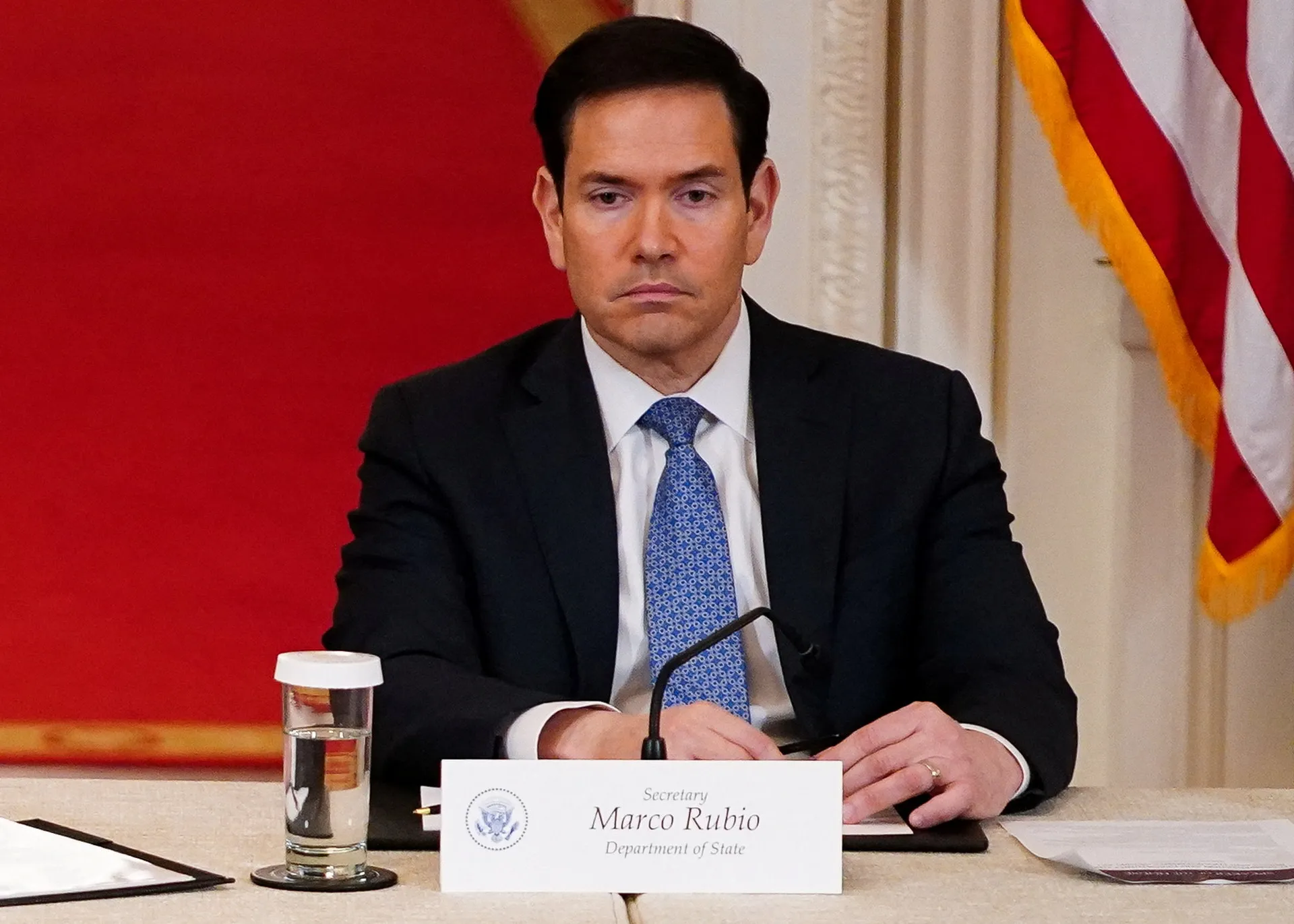
The United Kingdom, France and Germany drafted a counter-proposal on Sunday, and a Ukrainian delegation led by former Defence Minister Rustem Umerov met with US negotiators under Secretary of State Marco Rubio in Geneva to discuss both documents.

Europe ruled out accepting territorial exchanges resulting from aggression, and suggested territorial negotiations begin from the line of contact without prior Ukrainian concessions. It also suggested Ukraine maintain a strong army of no fewer than 800,000 people, and receive an effective NATO security guarantee.

Their joint statement on Monday simply said they would “continue intensive work”, with final decisions to be made by Trump and Zelenskyy.

Much had been done to refine the original 28 points into a workable agreement, said Zelenskyy. “Now the list of necessary steps to end the war can become doable,” he told Ukrainians somewhat cryptically, describing the work that remained as “very challenging”.

Ukraine has pushed for a meeting between Zelenskyy and Trump before December to thrash out the plan’s final form, but on Tuesday, Bloomberg released transcripts of a leaked telephone conversation between Trump confidant Steve Witkoff and Putin aide Yury Ushakov, in which Witkoff advised Ushakov to have Putin call Trump before Zelenskyy had a chance to meet him. Witkoff suggested that Putin flatter Trump as a peacemaker to win his favour and shape the peace plan directly with him.

That leak prompted opposition to Witkoff travelling to Moscow next week to discuss the reworked plan with Russian officials. The White House said he is to replace General Keith Kellogg, who resigned as mediator for Ukraine after seeing the original 28-point plan.

“It is clear that Witkoff fully favors the Russians. He cannot be trusted to lead these negotiations. Would a Russian paid agent do less than he?” wrote Republican Congressman Don Bacon on social media.

In his first extensive remarks on the peace proposal, in Bishkek, Kyrgyzstan on Thursday, Russian President Vladimir Putin backed away from an agreement with Ukraine, saying, “Signing documents with the Ukrainian leadership is pointless,” because Zelenskyy was a president who had outlived his mandate.

“I believe that the Ukrainian authorities made a fundamental and strategic mistake when they succumbed to the fear of participating in the presidential elections,” he said, referring to the spring of 2025, when Zelenskyy’s four-year term expired.

Zelenskyy was elected in 2019, and the parliament has twice extended his tenure under the constitutional provision of a national emergency.

Putin said the 28 points did not amount to a peace treaty, calling them “a set of questions that were proposed for discussion and final wording”.

“In general, we agree that this can be the basis for future agreements,” Putin said.

INTERACTIVE Ukraine Refugees-1763991679
(Al Jazeera)


Source link

Macron launches voluntary military service amid tensions with Russia

Nov. 27 (UPI) — French President Emmanuel Macron announced on Thursday the creation of a new voluntary military service amid concerns about a possible confrontation with Russia.

Calling it an “act of trust in our youth,” Macron made the announcement in a speech to troops stationed at a base just outside of Grenoble in southeast France, the BBC reported.

The new service will launch next summer, offering monthly payments to recruits, mostly aged 18 and 19, of at least 800 euros, or about $930, a month for 10 months of training, according to the BBC.

“The only way to avoid danger is to prepare for it,” Macron said. “We need to mobilise, mobilising the nation to defend itself, to be ready and remain respected.”

The new initiative seeks to recruit 3,000 initial volunteers and steadily increase to 50,000 youth joining by 2035, “depending on evolving threats,” with volunteers having the option to stay in the military or become reservists, the Wall Street Journal reported.

“We can’t go back to the times of conscription, but we’re in need of mobilization,” Macron said.

Macron has actively sought to bolster Ukraine’s defense against Russia’s ongoing invasion. France recently signed a deal to sell Ukraine 100 advanced fighter jets. More broadly, Macron helped spearhead the creation of the so-called “Coalition of the Willing,” a group of 34 mostly European countries willing to offer more security backing to Ukraine.

In his speech, Macron did not call out Russia, but said he was launching the initiative “at a time when all our European allies are moving forward in the face of a threat that weighs on us all, France cannot remain immobile,” The New York Times reported.

Other European countries, including Germany, Denmark and Poland, have looked into ways to increase the ranks of their respective armed forces, according to the Times.

Speaking during a press conference on Thursday, Russian President Vladimir Putin dismissed the idea that he was planning to attack Europe.

However, the specter of a confrontation between Russia and France has loomed, according to the BBC.

Recently, Gen Fabien Mandon, France’s chief of staff, raised alarms when he said the French military was planning around the assumption of a conflict with Russia in the coming years.

Source link

Guinea-Bissau’s deposed President Embalo arrives in Senegal after coup | Military News

Senegal’s Foreign Ministry says Umaro Sissoco Embalo arrived in the country a day after he was deposed in a military coup.

Guinea-Bissau’s deposed president, Umaro Sissoco Embalo, has arrived in Senegal, the country’s Ministry of Foreign Affairs has confirmed, a day after a group of military officers in Guinea-Bissau seized power in a coup.

Senegal’s Foreign Ministry said in a statement on Thursday night that Embalo had arrived in Senegal after authorities engaged with actors in Guinea-Bissau to try to secure his release.

Recommended Stories

list of 3 itemsend of list

Embalo reached Senegal on board an aircraft chartered by the Senegalese government, it said.

“The government of the Republic of Senegal reaffirms its readiness to work alongside ECOWAS, the African Union and all relevant partners, with a view to supporting dialogue, stability and the rapid restoration of constitutional order and democratic legitimacy in this brotherly nation,” the statement said.

Embalo was deposed on Wednesday after military officers announced they had seized “total control” of Guinea-Bissau ahead of the expected release of presidential election results in the West African nation.

Embalo had been vying for re-election against his main challenger, Fernando Dias. Both had declared victory ahead of the release of the provisional results.

But the main opposition PAIGC party was barred from presenting a presidential candidate, raising criticism from civil society groups, which said the election was illegitimate.

Dubbing themselves the “High Military Command for the Restoration of Order”, the military officers read out a statement on television on Wednesday, declaring that they had ordered the immediate suspension of the electoral process “until further notice”.

They also ordered the closure of Guinea-Bissau’s borders and an overnight curfew.

On Thursday, General Horta Inta-A was sworn in as the country’s transitional president, defending the military takeover by saying that there had been “sufficient [evidence] to justify the operation”.

But the coup – one of several to hit Guinea-Bissau since the country gained independence from Portugal in 1974 – has spurred widespread concern, including from regional bodies.

The chairperson of the African Union Commission condemned the situation earlier on Thursday, calling for the immediate and unconditional release of Embalo and all other detained officials.

Mahmoud Ali Youssouf also urged “all parties to exercise the utmost restraint in order to prevent any further deterioration of the situation”.

Source link

What was behind the coup in Guinea-Bissau days after the election? | Politics

Military takeover follows others in the region in recent years.

The military has seized power in Guinea-Bissau, a day before Sunday’s presidential election results were due to be announced.

The African Union and West African regional bloc ECOWAS have condemned the coup.

Why has it happened and what are the implications?

Presenter: Dareen Abughaida

Guests:

Kabir Adamu – Managing director of Beacon Security and Intelligence

Bram Posthumus – Political and economic analyst specialising in West Africa and the Sahel region

Ovigwe Eguegu – Peace and security policy analyst at the consultancy Development Reimagined

Source link

U.S., South Korean air forces’ military police strengthen ties

U.S. Air Force Brig. Gen. Brian Filler, director of Security Forces (L), speaks with Republic of Korea Air Force Col. Jongsung Woo (R), ROKAF Military Police Agency commander, during a site visit with 316th Security Forces Group at Joint Base Andrews in Maryland on Nov. 14. U.S. Air Force photo by Senior Airman Julia Lebens

Nov. 26 (UPI) — Officials with the U.S. Air Force and the Republic of Korea Air Force met this month to coordinate security efforts for the first time in 72 years.

Respective leaders of the USAF and the ROKAF military police units convened in Washington on Nov. 14 to strengthen relationships, assess security risks and explore mutual training opportunities, USAF officials announced on Tuesday.

USAF Security Forces Director Brig. Gen. Brian Filler and ROKAF Military Police Agency commander Col. Jongsun Woo also met in Washington.

“Our fruitful discussions highlighted the bond between our forces,” Filler said. “This is not merely a tactical alliance, but a vital strategic partnership forged in shared commitment, mutual respect and a common purpose.”

“By strengthening our relationship through combined training, knowledge sharing and unified strategic planning, we aim to build a robust and resilient deterrent against any potential threat to our collective security,” Filler added.

The visit included a trip to Joint Base Andrews in Maryland, where Filler and Woo met with the 316th Security Forces Group commander and others, examined counter-small unmanned aircraft systems, observed a military working dog demonstration and learned about the work done by the Ravens special-asset force that protects Air Force locations, equipment and staff.

“The site visit was an opportunity to demonstrate security forces competencies, not only our everyday battle rhythm but our warfighting capabilities as well,”316th SFG commander Col. Joseph Bincarousky said.

“It was interesting to compare and contrast our forces,” Bincarousky added. “We discussed opportunities for partnership between our air forces’ security forces.”

He said the discussion included how they could train together and learn from each other’s respective strengths and challenges.

Such discussions helped to emphasize the relationship between the USAF and the ROKAF, their commitment to collaborative defense and the continued importance of “interoperability in maintaining peace and stability,” Filler said.

“I look forward to furthering the ability of our forces to operate in a combined environment and expand training opportunities to establish a cohesive force able to withstand the uncertainties of emergent threats in the Indo-Pacific,” Filler added.

President Donald Trump shakes hands with the President of South Korea Lee Jae Myung during a meeting inside the Oval Office of the White House in Washington on Monday. Photo by Al Drago/UPI | License Photo

Source link

‘The worst one presented’: Sudan rejects US-led ceasefire proposal | Military

NewsFeed

Sudan’s army chief Abdel-Fattah al-Burhan blasted a new US-led ceasefire plan as “the worst one presented,” accusing mediators — including the United Arab Emirates — of bias. The RSF says it accepted the truce. Sudan’s 30-month war has killed tens of thousands and is the world’s largest humanitarian crisis.

Source link