Mike Johnson

Trump says he’s undecided on landmark housing bill, calls it ‘a yawn’

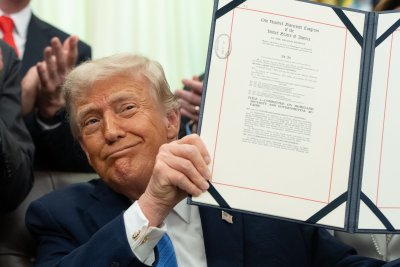
June 29 (UPI) — As Speaker of the House Mike Johnson prepared to send a bipartisan, landmark housing affordability bill to President Donald Trump‘s desk on Monday, the president told reporters that he remains undecided on whether to sign it.

Trump called the 21st Century ROAD to Housing Act” so unimportant,” CNN reported. One week ago, the president abruptly canceled the originally planned signing of the housing bill, which the Senate and House passed by overwhelming margins.

“When I look at the (housing) bill, it’s a bill,” Trump said to reporters Monday, The Hill reported. “When I look at the SAVE America Act, it’s about saving America.”

The housing bill is “a yawn,” the president said. “To me, compared to the SAVE America Act, everything is a big yawn.”

The housing bill’s provisions include measures that encourage renovating older homes, encourage communities to build more housing through funding and grant programs, cut some red-tape issues around building housing and effectively ban private equity from buying up single-family homes.

When canceling the original signing of the bill, Trump said he wouldn’t sign it until Congress passed the SAVE America Act, which would require voters to prove their citizenship before they register to vote

Critics say the controversial act could disenfranchise millions of Americans, and Republicans have said that they don’t have the votes to pass it.

Trump acknowledged this Monday, The Hill reported, saying the SAVE America Act is “probably not going to happen because we have four Republican senators, maybe five, that just won’t vote for it. It’s crazy.”

The president said that the housing bill’s bipartisan backing was part of his issue with it.

“It’s very bipartisan — that means the Democrats like it,”he said. “They’re getting things that I wouldn’t necessarily agree to.”

Speaker Johnson, a Republican, said Sunday that he believed Trump would sign the housing bill after it was sent to him, “because we’re delivering for the people, and that’s what he wants to do.”

If Trump does not sign the bill, it could still go into effect. The U.S. Constitution stipulates that a bill will become law automatically if a president does not take action for 10 days, as long as Congress is in session.

Trump could also veto the bill. If that happens, Congress has the power to override the veto by passing the act by a two-thirds vote in both the House and Senate.

Source link

Speaker Johnson to send housing affordability bill to Trump for signature Monday

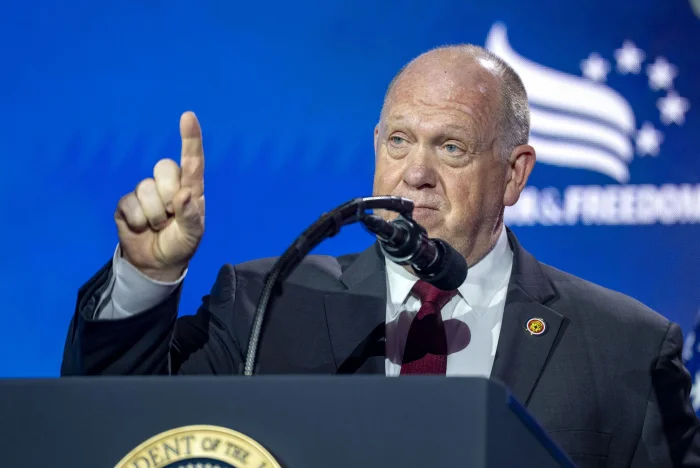
1 of 2 | Speaker of the House Mike Johnson speaks during the Faith and Freedom Coalition 2026 Road to Majority Policy Conference at the Washington Hilton in Washington, D.C., on Friday. He said Sunday he plans to send a housing affordability to President Donald Trump on Monday for a signature. Photo by Bonnie Cash/UPI | License Photo

June 28 (UPI) — Speaker of the House Mike Johnson said Sunday he plans to send housing affordability legislation to President Donald Trump for a signature Monday despite his refusal to sign the package last week.

In an appearance on Fox News’ Sunday Morning Futures, Johnson said he believes Trump will sign the legislation.

“I’m going to send the bill over to him Monday, and it will become law,” Johnson said.

“I certainly want him to take the biggest, boldest marker that he has and do that big Trump signature proudly on that legislation because we’re delivering for the people, and that’s what he wants to do.”

Both chambers of Congress overwhelmingly voted in favor of the 21st Century ROAD to Housing Act last week. The legislation seeks to lower housing costs, expand homeownership access, and limit corporate and institutional ownership for rental purposes.

The bill includes 60 pieces of legislation that would also seek to ease bureaucracy to hasten housing development, modernize federal housing programs and banking regulations, and incentivize local governments to prioritize housing.

The non-profit National Low Income Housing Coalition said the United States is facing a shortage of 7.2 million affordable units for low-income renters, resulting in a housing crisis in every state.

The House voted 358-32 and the Senate voted 85-5 in favor of the bill.

Trump was originally scheduled to sign the legislation Wednesday, but he canceled those plans, saying he won’t sign housing legislation until lawmakers approve the SAVE America voting bill.

There haven’t been enough votes to pass the legislation, which would require people to prove their citizenship before they can register to vote. Opponents to the law say it would disenfranchise millions of legitimate voters.

In an appearance Sunday on NewsNation‘s The Hill Sunday, Rep. Suhas Subramanyam, D-Va., said he wouldn’t be surprised if Trump doesn’t sign the housing legislation.

“I don’t know with this president, because he’s said that he doesn’t care about rising costs,” Subramanyam said.

“He said … if he doesn’t have a housing problem and his friends don’t have [a] problem with housing, then it doesn’t matter to him. So I actually wouldn’t be surprised if he doesn’t sign it.”

White House Border Czar Tom Homan speaks during the Faith and Freedom Coalition 2026 Road to Majority Policy Conference at the Washington Hilton on Friday. Photo by Bonnie Cash/UPI | License Photo

Source link

House sends Trump sweeping bipartisan housing package

June 23 (UPI) — Lawmakers in the U.S. House of Representatives on Tuesday overwhelmingly approved a sweeping bipartisan housing package that seeks to lower housing costs and expand homeownership access, sending the legislation to President Donald Trump to be signed into law.

The House voted 358-32 in favor of the 21st Century ROAD to Housing Act on Tuesday night, with 41 lawmakers not voting.

On Monday, the Senate passed the bill in a similarly overwhelming 85-5 outcome.

“This bill speaks to the real change that our constituents have been demanding, where everyone can afford a dignified place to call home, where tenants are protected and where working Americans can finally get ahead,” Rep. Maxine Waters, D-Calif., ranking member of the House Committee on Financial Services, said from the House floor on Tuesday.

The vote follows months of haggling over the bill’s content by the House and Senate and Democrats and Republicans. In the end, the sweeping bill includes more than 60 pieces of legislation, 36 of which were sponsored by bipartisan lawmakers, according to the Bipartisan Policy Center.

The bill aims to increase housing supply while lowering costs, limiting corporate and institutional ownership for rental purposes and expanding financing for lower-income individuals.

Provisions target bureaucracy to hasten development while seeking to modernize federal housing programs and banking regulations to expand local lending and offer incentives to local governments that prioritize more housing.

Habitat for Humanity, the global nonprofit aimed at helping families build homes, applauded the legislation’s passage on Tuesday, saying it “will bring homeownership within reach for more Americans by tackling longstanding barriers in the housing system.”

“With the passage of this major legislative package, Congress has demonstrated strong, bipartisan leadership by coming to an agreement and taking a critical step in addressing the nation’s housing affordability challenge,” Jonathan Reckford, chief executive officer at Habitat for Humanity International, said in a statement.

The steeply divided Congress came together to pass legislation as the United States faces what some have called a housing affordability crisis.

The United States is facing a housing shortage that is disproportionately affecting lower-income individuals.

According to the National Low Income Housing Coalition, the United States is experiencing a shortage of 7.2 million affordable units for low-income renters, with only 35 such rental homes in existence for every 100 low-income renter households.

The nonprofit said extremely low-income renters face the shortage in every state.

House Speaker Mike Johnson, R-La., described the 21st Century ROAD to Housing Act as “transformational legislation” that will “help the housing affordability problem, reduce regulations so builders can build, limit institutional investing in the housing market and bring the American Dream back into reach for millions of young and working families.”

“Congress is paving a path back to homeownership for American families who have been locked out for far too long,” he said in a social media statement Tuesday night.

Source link

Trump signs $70B bill to fund Homeland Security Dept. through 2028

June 10 (UPI) — President Donald Trump signed a bill to fund the Department of Homeland Security’s immigration enforcement agencies through 2028 after months of battles to prevent it from happening.

“This morning I’m thrilled to sign the Secure America Act to immediately and fully fund the Department of Homeland Security through the end of my term, so we won’t have to be talking about it anymore,” the president said in the Oval Office.

The Senate passed the $70 billion funding package on Friday, and the House approved it on Tuesday.

Democrats fought the funding for months, refusing to agree to the bill unless there were reforms to the organization after two American citizens — Renee Good and Alex Pretti — were killed by federal agents in Minneapolis earlier this year. But the measure was passed via reconciliation, which only requires a majority vote instead of 60 votes needed to overcome a filibuster.

“We’ll give the heroes of ICE and Border Patrol — and that’s what they are, they’re heroes, what they have to go through to keep us safe — the support and resources they need to defend our borders, protect our homeland and to keep America safe,” the president added He also gave House Speaker Mike Johnson, R-La., credit for passing the bill with a slim majority in the House.

“Despite Democrat efforts to shut down ICE and Border Patrol, Republicans have now fully funded these agencies through President Trump’s entire second term to the tune of nearly $70 billion,” Sen. Lindsey Graham, R-S.C., in a statement. “Thanks to President Trump, our border has gone from its weakest point to its most secure point in less than two years.”

Source link

House Republicans pull vote on Iran war powers measure

May 21 (UPI) — House Republicans abruptly pulled legislation to curb President Donald Trump‘s ability to continue the war with Iran on Thursday amid Democratic accusations that GOP leaders shelved the measure over fears it would pass.

House Concurrent Resolution 86 was listed on House Majority Leader Steve Scalise‘s schedule for possible consideration on Thursday but no vote was held before the House left Washington.

The resolution was delayed until after the lower chamber returns from recess on June 2, leaving Democrats fuming.

“Are we not voting on it because the American people are sick and tired of this illegal war that is costing tens of billions of dollars, gas prices are through the roof, people can’t afford their groceries? Is that why you’re pulling it?” Rep. Jim McGovern, D-Mass., asked on the House floor as cheers and boos erupted behind him.

“You guys don’t have the guts … to vote on this.”

The resolution, sponsored by Rep. Gregory Meeks, D-N.Y., directs Trump to remove U.S. forces from hostilities with Iran unless authorized by Congress.

Democrats put the measure forward amid a larger congressional push aimed at reining in Trump’s ability to go to war in the Middle East. Democrats in the Senate on Tuesday advanced similar legislation in the eighth vote they have forced on the matter since the war began Feb. 28.

While Democrats have said the war is illegal without congressional authorization, Trump and his Republican Party argue the effort is moot, claiming the war ended with a fragile cease-fire announced last month.

The Senate measure advanced with support from a handful of Republicans who have split from their party on the issue as the war has continued. In the House, where the GOP also holds a narrow majority, defections were anticipated. Republican Rep. Thomas Massie of Kentucky has supported previous similar measures.

“Let’s be clear: Republicans pulled this vote because they knew they were going to lose it,” Meeks, ranking member of the House Foreign Affairs Committee, said in a statement after the House recessed.

“They know this war is a political and strategic disaster. They know that as Americans head into Memorial Day weekend paying over [$]4.50 a gallon at the pump, they cannot go home and explain they voted to keep this war going. So, instead of casting that vote, they ran from it.”

Rep. Richard Neal, D-Mass., accused House Speaker Mike Johnson, R-La., and House Republicans of abdicating their responsibility by postponing the vote.

“This is a new low,” he said in a social media post.

“This is a disservice to the American people and the troops being put in harm’s way.”

House Minority Leader Hakeem Jeffries, D-N.Y., lambasted Trump for starting the war without articulating its objectives and exit strategy and without garnering public support or congressional approval for it.

“Even as we prepare to recognize our nation’s fallen heroes on Memorial Day, House Republicans refuse to show up and be accountable to the brave service members that have been recklessly put in harm’s way,” he said in a statement.

“The American people will remember in November.”

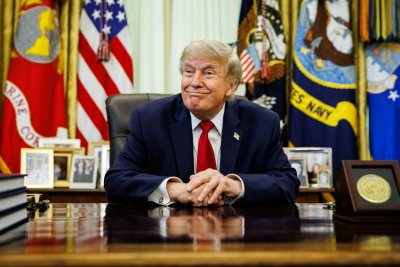
President Donald Trump speaks at an event with Environmental Protection Agency (EPA) Administrator Lee Zeldin in the Oval Office at the White House on Thursday. Photo by Al Drago/UPI | License Photo


Source link

House Ethics Committee investigates Republican Rep. Chuck Edwards

May 15 (UPI) — The House Ethics Committee has launched an investigation into Rep. Chuck Edwards over allegations of creating a hostile work environment and engaging in sexual harassment.

Little information about the probe was made public.

In a brief statement issued Thursday, the committee said it was “reviewing allegations that Representative Chuck Edwards may have created or fostered a hostile work environment and engaged in sexual harassment in violation of the Code of Official Conduct or any other applicable standard of conduct.”

The committee said that its investigation and public disclosure do not indicate a violation has occurred.

Edwards told The Hill that he welcomes the investigation and plans “to comply fully with the committee.”

“I am confident the investigation will expose the facts, not politically motivated fiction,” he said.

The announcement follows recent reports that the committee was investigating Edwards, with Axios having been the first to report on the development.

Specifics of the allegations were not clear, but Politico earlier this week reported that he allegedly had an improper relationship with a subordinate as well as allegedly engaged in sexually harassment.

The investigation comes on the heels of two high-profile House resignations last month over sexual misconduct allegations.

Rep. Eric Swalwell, D-Calif., stepped down amid accusations of sexual misconduct and abuse, while Tony Gonzales, R-Texas, resigned after admitting he had an affair with a former aide who died by suicide.

Amid growing concern and anger about alleged abuses by members of the lower chamber, House Speaker Mike Johnson, R-Ky., and House Minority Leader Hakeem Jeffries, D-N.Y., announced Wednesday the creation of a bipartisan partnership between their parties’ women’s caucuses to combat workplace sexual misconduct in Congress.

Reps. Teresa Leger Fernandez, D-N.M., and Kat Cammack, R-Fla., were designated to lead the effort as respective chairs of the Democratic and Republican Women’s Caucuses in the House.

“To state the obvious, all women should feel comfortable and safe working in the halls of Congress,” Johnson said in a statement, adding that he is happy Cammack and Leger Fernandez “will lead this bipartisan partnership to find ways we can continue to make Capitol Hill safer for women and all staff.”

Source link

Virginia voting on new congressional map drawn by Democrats

April 21 (UPI) — Voters are heading to the polls in Virginia on Tuesday to vote on a new congressional map drawn by state lawmakers.

Polls are open until 7 p.m. EST., with nearly 1.4 million early ballots already cast on a constitutional amendment to change the congressional map. The result of Tuesday’s vote could have significant implications for the midterm elections in November.

If the map, drawn by Democratic lawmakers, is approved by voters, Democrats would be favored to win 10 of the state’s 11 congressional districts. Democrats currently hold six of the state’s 11 congressional seats and Republicans hold five.

Virginia is just the latest state to weigh redrawing its congressional map mid-decade after Texas approved a map that will favor Republicans last year. Four Republican-led states have approved new congressional maps.

Democrats and Republicans outside of the state have lent their voices to campaigns for and against Virginia’s redistricting plan. President Donald Trump and House Speaker Mike Johnson, R-La., voiced their opposition to the plan, with Trump calling it “unfair.”

House Minority Leader Hakeem Jeffries, D-N.Y., has joined Virginia lawmakers Sen. Mark Warner and Sen. Tim Kaine at rallies to support redistricting. Former President Barack Obama has also been involved, appearing in ad campaigns calling on voters to vote “yes.”

“We’re giving Virginians a chance to vote — which Republican states have not done — about whether they want to have a congressional delegation that will stand up against Donald Trump’s tyranny if he tries to interfere with our elections,” Kaine said in an appearance on Fox News on Sunday.

The Virginia Supreme Court allowed Tuesday’s election to move forward but may still weigh in on whether the new congressional map is legal or not.

Secretary of Health and Human Services Robert F. Kennedy, Jr. speaks during a House Appropriations Subcommittee on Labor, Health and Human Services, Education, and Related Agencies hearing on the budget for the Department of Health and Human Services in the Rayburn House Office Building near the U.S. Capitol on Thursday. Photo by Bonnie Cash/UPI | License Photo

Source link