WASHINGTON — Senate Democrats’ top campaign spending group is wading into Mississippi’s U.S. Senate race for the first time this year, an aggressive move in a deep-red state that signals a party on the offensive as Republicans look to protect a slim majority.
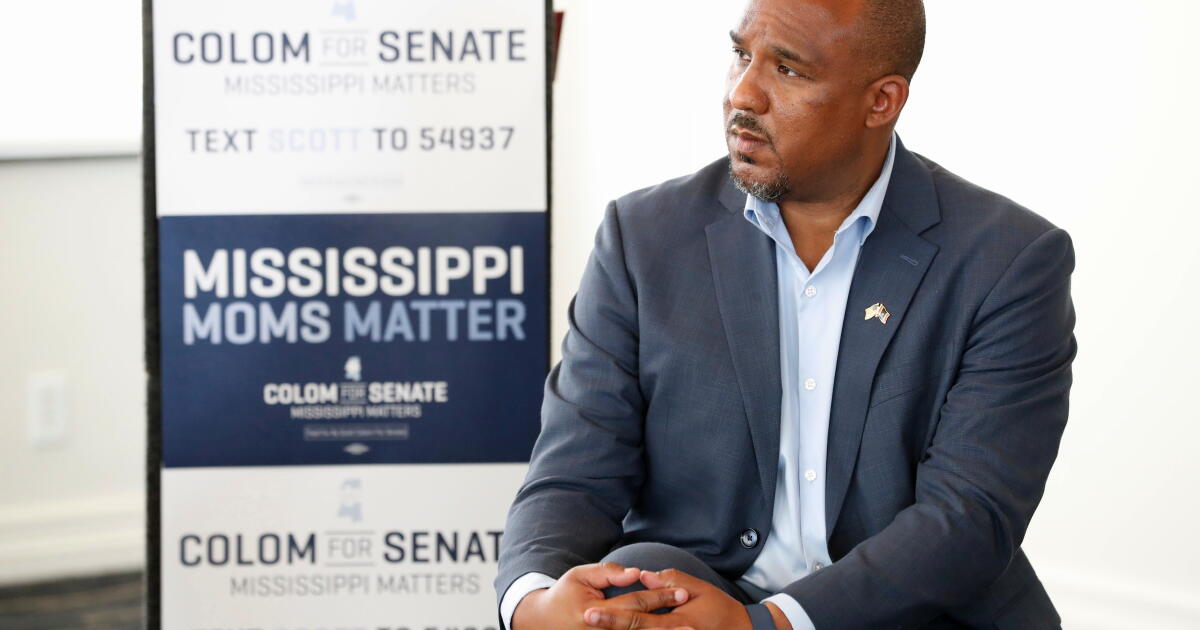
The Senate Majority PAC, aligned with Democratic Senate Leader Chuck Schumer of New York, will spend $1.2 million on a new television advertisement to boost Scott Colom, a district attorney, in his campaign against Republican Sen. Cindy Hyde-Smith. The ad, first disclosed to the Associated Press, is set to start Wednesday and run through Election Day.
“Senate Majority PAC has been watching this race closely, and it is clear Colom is running a competitive race that has put Hyde-Smith on her heels,” group spokesperson Lauren French said in a statement.
With just two weeks to go in the race, it’s unclear what impact the ad will have in a matchup that’s been set since Colom won a March primary. Still, it’s a substantial investment in a race that’s seen only about $8 million in total spending, with Colom outspending Hyde-Smith nearly $4.6 million to $3.2 million, according to AdImpact.
Hyde-Smith, first appointed and then elected in 2018, is running for reelection in a state Republicans have long dominated. In the 2024 presidential race, Republican Donald Trump won Mississippi by nearly 23 percentage points over Democrat Kamala Harris, and a Democrat hasn’t won a Senate race in the state since 1982.
However, some Democrats believe Hyde-Smith is vulnerable, and she underperformed Trump by 6 percentage points in 2020, the year he lost his White House reelection bid to Democrat Joe Biden.
The television ad touts Colom’s time as district attorney, while labeling Hyde-Smith a “do-nothing” senator.
“A decade in power, Hyde-Smith hasn’t passed one piece of legislation, but she did vote to kick people off Medicaid,” a narrator says in the ad, which will run on television stations statewide alongside a digital campaign.
Hyde-Smith’s campaign and the National Republican Senatorial Committee did not immediately respond to requests for comment.
Colom has raised Democratic hopes in a year when electoral winds are at their backs. Georgia Sen. Raphael Warnock was the latest high-profile Democrat to campaign with Colom last week, and Harris, who was Biden’s vice president, is set to rally with Colom on Thursday.
Republicans currently hold a 53-47 majority in the Senate and were expected to face a friendlier map this year with fewer seats to defend. But high costs and gas prices amid an unpopular war in Iran under a Republican president have made Democrats optimistic, with the Senate Majority PAC spending its final weeks investing in conservative territory. It’s already announced spending in Kansas, where megachurch pastor and Democratic nominee Adam Hamilton is trying to unseat Republican Sen. Roger Marshall.
Colom would be his state’s first Black senator since Reconstruction, the 12-year period after the U.S. Civil War when the 13th, 14th and 15th Amendments were adopted.
Some Democrats have criticized national groups for not spending more in Southern states like Mississippi.
“I worry, to be very honest, that Democrats are missing a real opportunity to invest in a serious and sustained way in the South,” Warnock said Sunday on NBC’s ”Meet the Press.”
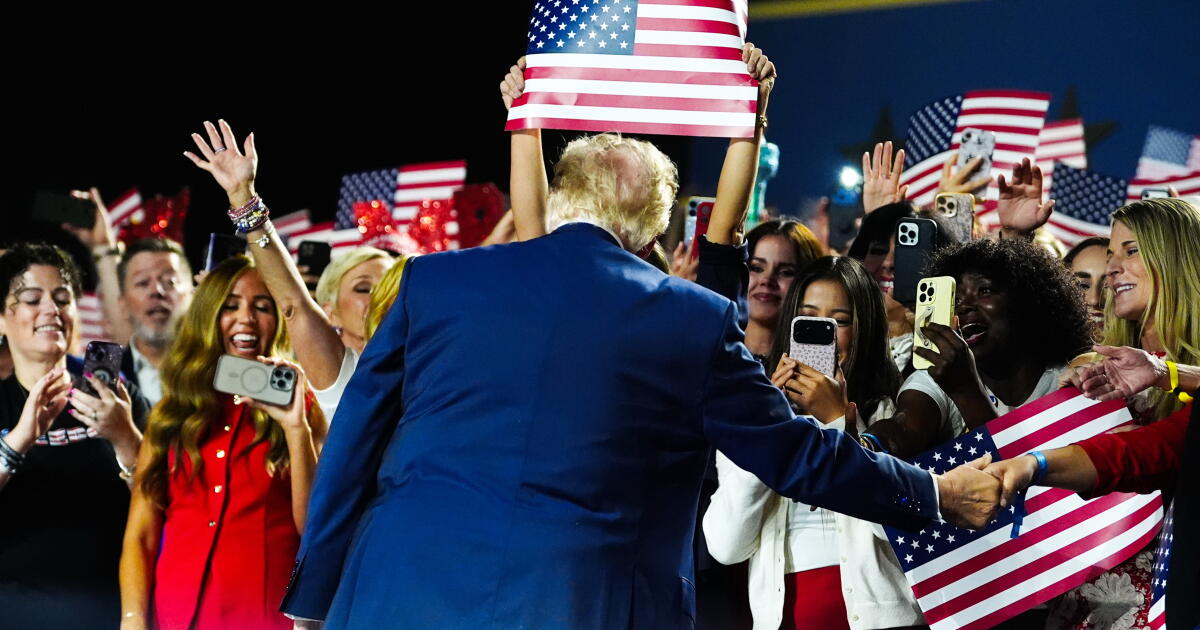
WASHINGTON — President Trump is hoping that $5,000 checks can juice Republican turnout in November’s midterm elections — but even some of his devoted fans are doubting that government payouts would arrive.
“I mean, I guess it’s good for some people. I really don’t care,” said Jamie Alvarez, who attended Trump’s recent Alaska rally in a red, white and blue outfit. “I don’t feel like your vote should be bought. I feel like you should vote for who you feel is going to do the best job.”
Joseph Eatherton was attending that same rally and said he was “not sure if it’s necessary.” When asked whether Trump could deliver on the promised money, he said, “I don’t know, and I hate being an armchair quarterback.”
The offering of government checks has become a go-to tactic for Trump when he faces a political jam. He’s previously endorsed $2,000 in dividends from tariff revenues and large refunds from spending cuts achieved by the Department of Government Efficiency, neither of which materialized. The latest example could reveal how much voters still trust Trump as they decide control of Congress in the midterm elections on Nov. 3.
Staunch supporters such as Lucy Martinez, the president of a Republican women’s club who attended a recent Trump rally in Texas, said there’s no doubt in their minds.
“I think that I will get the $5,000,” she said. Out of all the presidents, Trump is someone “who kept his promises to his people and all the United States.”
Trump has dished out payments as elections approach
However, many voters are already embittered by his economic leadership. His critics see a president who failed to tame inflation and keep America out of overseas conflicts, and whose agenda has fueled higher prices as the war with Iran appears to be at a stalemate.
“The trust on this is already gone for most people,” said Amy Frederiksen, a former Republican Minnesota Senate majority leader who now runs a public affairs firm.
“I just don’t see the energy around that line,” she added. “Most people know that’s a blatant over-the-top promise like several he’s made in the last couple of years, and they’re not buying it.”
As the midterms approach, Trump has also pledged a $90 payment to 20 million Medicare enrollees and $500 “rebates” for people the administration says were overcharged for their Obamacare plans. He has automatically enrolled every U.S. child in “Trump accounts” to invest in stocks.
The $5,000 payouts would only occur, Trump says, if Republicans keep their majorities in the House and Senate. Trump acknowledges that the cost would exceed $1 trillion, but it’s not clear that the White House is seriously engaging with the proposal’s ramifications, from the increased deficit to the likely boost to inflation.
The White House said the payments are possible because of Trump’s trade deals, investment commitments by foreign countries, government stakes in private companies and deals for oil and minerals.
The administration’s position is that the payments will help people recover from the inflation that began in 2021 under then-President Joe Biden, though Republicans, at the time, attributed that inflation to excessive government checks tied to pandemic relief.
When The Associated Press asked several weeks ago if the administration was modeling the economic impact from the checks, Christopher Phelan, chairman of the White House Council of Economic Advisers, said he would “refrain” from answering.
Roughly half of registered voters say Donald Trump does not keep his promises to Americans, according to an AP-NORC poll from September. About 3 in 10 say Trump tries to keep his promises but is unable to, while only about 2 in 10 say he keeps his promises.
Republican voters are more accommodating. About half say Trump tries to keep his promises but is unable to, and about 4 in 10 say he keeps his promises.
Trump is talking about the payments as a sure thing.
“If the Republicans win, you’ll each have $5,000 in your pocket and economic success for our country like we have never seen before,” he said at a Saturday rally in Kentucky. “And remember, ’cause they like to say, ‘Oh, well, maybe he won’t do that.’ Uh, I always do it.”
Campaign spending tracked by AdImpact suggests that Republicans are not running advertisements either on television or online about the promise. The few advertisements that do exist are from pro-Democratic groups such as Rolling Sea Action Fund that conclude with the voiceover, “Come on, do you really think he’s sending you a check? Yeah, right, we won’t get fooled again.”
At a Friday rally in Georgia, Trump noted that he had previously delivered a $1,776 “Trump dividend” to troops in the military. But those payments came from a congressionally approved housing supplement.
Trump claims the nation could not afford the payments if Democrats hold a chamber in Congress because the nation would be “flat broke.” But he said that one caveat is that the money could only be spent in the U.S., rather than in China, Japan or France. He joked that people should spend the check at his luxury club in Palm Beach, Florida.
“Let’s have lunch at Mar-a-Lago, where for $5,000, you’ll get one hamburger and a small dessert,” he told the crowd in Georgia.
Some in the crowd took Trump at his word that he would fight to get them the money. But they added the caveat that if he didn’t come through, it would not be his fault.
“I could use $5,000,” said Mike Boatman, a 58-year-old from Evansville, Indiana, who travels the country attending the president’s rallies. “I mean, he’s done everything he’s said he’s going to do.”
Boak, Bohrer and Barrow write for the Associated Press. Bohrer reported from Wasilla, Alaska, and Barrow reported from Dalton, Georgia. AP reporters Aaron Kessler and Linley Sanders in Washington and Lekan Oyekanmi in San Antonio, Texas, contributed to this report.
Chuck Schumer urges FCC to reject petition allowing AI robocalls ahead of key November midterm elections.
Published On 19 Oct 202619 Oct 2026
United States Senate Democratic leader Chuck Schumer of New York has urged the Federal Communications Commission (FCC) not to approve a petition by the conservative group Club for Growth to allow AI-generated robocalls ahead of the November midterm elections.
“Under this change, campaigns could use their opponents’ voice to send out a message that is, at best, disingenuous and, at worst, a blatant lie,” Schumer said on Monday.
Recommended Stories
list of 4 itemsend of list
The petition was originally filed on August 31, and the public comment period began on September 4 and expires on Monday.
Earlier this month, Anna Gomez, the Democratic member of the FCC, urged her colleagues not to allow consideration of the petition brought by the national conservative fiscal policy organisation.
Her concerns echoed Schumer’s. “[If] the FCC allows a dark money group to flood Americans’ phones with AI-generated robocalls they never agreed to receive, it would bring chaos so close to Election Day,” commissioner Gomez told the Reuters news agency at the time.
There is precedent for the concerns being raised. In the 2024 presidential election, ahead of the New Hampshire primary, voters received an AI-generated version in the voice of President Joe Biden, the then Democratic incumbent, telling them not to vote. The FCC said that a political consultant working with longshot primary challenger Dean Phillips was responsible.
At the state level, Louisiana, Tennessee and Vermont passed laws this year requiring disclosures for AI-generated campaign phone calls. While robocalls have been used in political campaigns for years, FCC rules prohibit such calls to cellphones without prior consent, but the restrictions do not apply to landlines.
Club for Growth’s president, David McIntosh, in a statement earlier this month, said that the group is asking for “the FCC to treat First Amendment-protected political speech the same way it already treats wireless calls about package deliveries, bank accounts, and doctor’s appointments”.
“There is no one at the FCC that has expressed any interest in moving to an order on this or any of the petitions, and there are zero plans to do so. The FCC seeks comment on petitions that come in as a matter of normal procedure,” a spokesperson for the FCC told Al Jazeera.
Thousands rallied across the US against President Donald Trump in ‘No Kings’ demonstrations, a movement that opposes what it sees as Trump’s abuse of power. Demonstrators urged people to vote early ahead of November’s midterm elections.
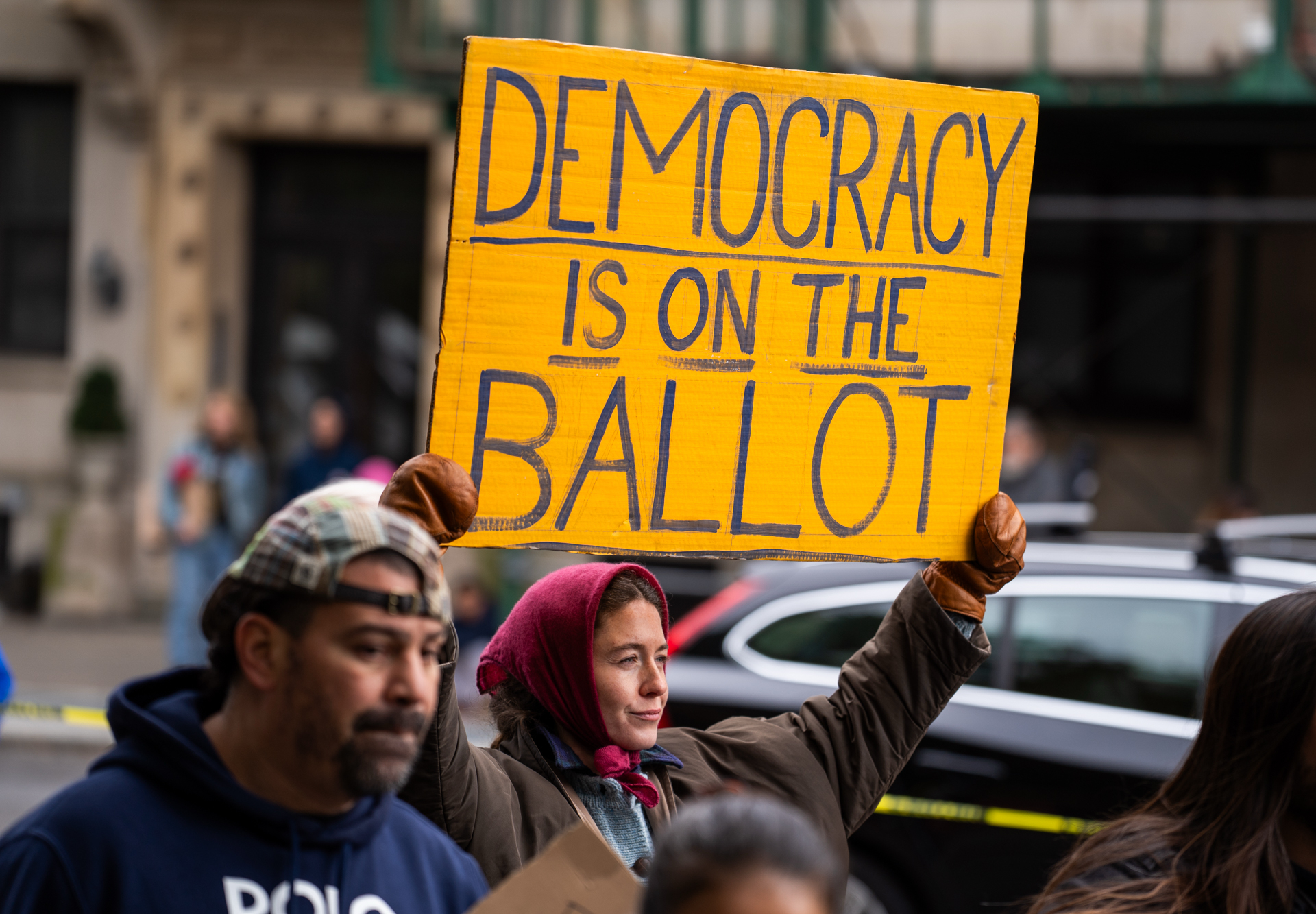
Rallies organised by the No Kings network opposed to United States President Donald Trump were held Saturday in cities and communities across the US, with an aim of getting people out to vote early in the midterm elections.
No Kings has more than 3,000 events planned across the US. The planned events, this time dubbed “No Kings: Vote Early”, were billed as nonpartisan, though they sought to build on nearly two years’ worth of No Kings marches and demonstrations by people upset with Trump’s presidency.
“It’s a day of nonpartisan voter participation: we are bringing our community together to make a plan to vote early and ensuring every eligible voter understands their options for how to vote and has the opportunity to make their voice heard,” organisers said in a statement.
By advocating for voting early, the “No Kings” organisers hope to cut off the potential for any malfeasance once election day rolls around.
A band entertained what appeared to be a few hundred people in caps and coats at the Lincoln Memorial in Washington, DC. Despite the chilly weather, many in the crowd danced to the tunes. “VOTE EARLY” and “HANDS OFF MY VOTE!” were among the many signs held aloft.
At an Atlanta rally, City Councilman Michael Julian Bond told the crowd to urge others to vote ahead of the November 3 general election.
“The Constitution gives you one power, right? That is the power to vote. Are you gonna use that power?” he said.
“You don’t see Superman giving up his power,” Bond continued. “You don’t see Black Panther giving up his power. You don’t see Wonder Woman giving up her magic lasso. So why would you give up your right, your power, your obligation to vote? Be a superhero, use your power. Go to the polls and vote.”
Trump has long been suspicious of mail voting and has claimed without evidence that voting fraud cost him the 2020 presidential election.
His administration sued California election officials Thursday, asking a judge to bar the state from counting mail-in ballots for the midterm elections from people whom the federal government has identified as “likely” noncitizens until their immigration status can be confirmed.
On Friday, the Department of Justice warned that local officials who process and tabulate ballots submitted by suspected noncitizen voters are putting themselves at risk of criminal investigation and potential prosecution.
Earlier that day, Democratic Senators Alex Padilla of California, Sheldon Whitehouse of Rhode Island and Dick Durbin of Illinois wrote to Attorney General Todd Blanche, demanding that the Justice Department commit to not seizing ballots or other election materials before the midterm elections are certified.
WASHINGTON — President Trump bypassed his White House chief of staff last week in selecting Katie Zacharia as his press secretary and chief messenger, triggering days of scathing headlines about her credentials and abilities before her ignominious resignation on Friday.
Susie Wiles, that senior-most aide ostensibly in charge of the president’s team, is facing his scrutiny over a different set of problems: widespread public anxiety over corruption in government under the Trump administration. The issue has surpassed the economy as the top concern of voters entering next month’s election, according a Fox News poll released this week.
Marco Rubio, the president’s secretary of State and national security advisor, has been silent on Trump’s decision to cut a deal with Moscow on diesel sales that could fuel Russia’s war against Ukraine. The president’s poll numbers have been below water across the board, but especially so on foreign policy, where over two-thirds of Americans disapprove of his job performance and support Kyiv’s fight for freedom.
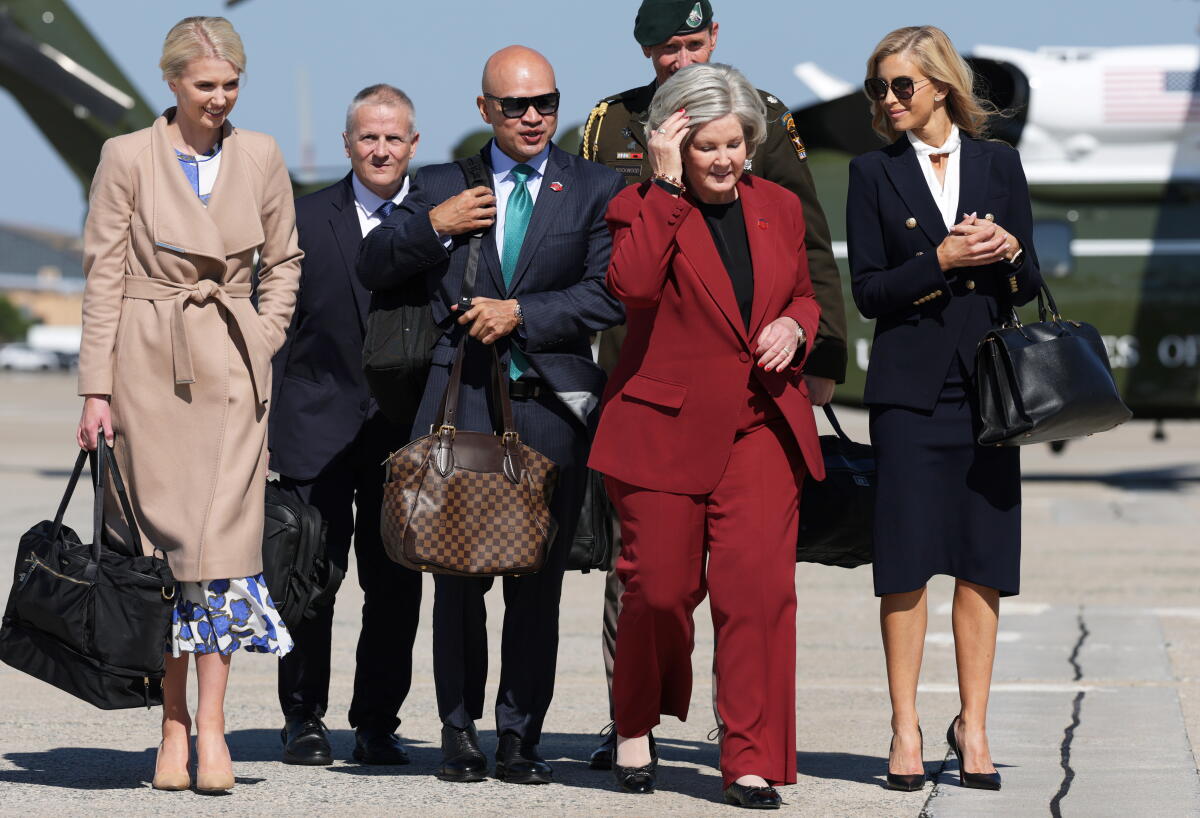
Trump aides walk to board Air Force One on Tuesday: Natalie Harp, Trump’s executive assistant, left; Walt Nauta, director of Oval Office operations (in sunglasses); Chief of Staff Susie Wiles; and then-Press Secretary Katie Zacharia.
(Alex Wong / Getty Images)
And on Thursday, the president was forced to reverse a course set out by Defense Secretary Pete Hegseth and the Pentagon to live-stream the execution of a convicted mass shooter by firing squad.
In the final stretch of the 2026 midterms, nearly two weeks out from election day, a White House that has enjoyed relative stability over the past two years has returned to the state of disarray that characterized much of Trump’s early political career, anticipating sweeping losses to Democrats in the House and Senate.
Staff upheaval is expected as officials brace for a blame game over Republican performance, with some distancing themselves from what they see as a fading political movement.
Polls suggest that Republicans are likely to lose control of the House, setting up two years of relentless congressional probes through the twilight of the Trump era, and that Democrats could even flip the Senate, winning in ruby red states from Ohio to Alaska.
It is historically a time for closing arguments, when politicians deliver their final pitches to voters in neat, disciplined packages.
Yet Trump’s campaign blitz across the country in recent weeks has generated a muddled message, dismissing the importance of the election itself at the risk of depressing Republican votes, overshadowing local candidates seeking distance from his record and touting an economy unrecognizable to most Americans.
President Trump walks ahead of Katie Zacharia at the White House.
(Win McNamee / Getty Images)
The president’s selection of Zacharia, who lasted just five days on the job, raised fresh questions about his message discipline in the final stretch.
And infighting within the White House has reinforced a narrative among political pundits that Democratic gains are a fait accompli, despite Zacharia, in her first and only press briefing, foretelling of Republican energy and excitement “never seen before in the history of midterms thanks to President Trump.”
Election officials across the country fear that, anticipating inevitable losses, Trump may be laying the ground to challenge the authenticity of the election results themselves.
“You know, this is the only guy that — it’s ‘promises made, promises kept,’ but he did more things than he promised,” Trump said Thursday, referring to himself in the third person. “I think we did. We did much more than we promised.”
The extent of the coming West Wing shakeup could be extensive, reaching into a Cabinet that has had far less turnover than Trump experienced in his first term.
Zacharia is the second senior official forced out by Trump in just three days, after Kimberly Guilfoyle, the former fiancée of one of Trump’s sons who served as U.S. ambassador to Greece, was revealed by the Wall Street Journal to have asked a Trump donor to pay off her $100,000 credit card bill.
Now, the president has begun asking political allies and donors about Wiles’ job performance, according to a recent Politico report, and several top administration officials are vying for her role, anticipating her resignation after the elections next month.
The conclusion of the midterms will also kick off the start of the 2028 presidential election season, when Republican hopefuls — including many from Trump’s Cabinet — are expected to launch exploratory committees.
British Defense Secretary Wes Streeting and U.S. Defense Secretary Pete Hegseth stand for anthems at the Pentagon on Thursday.
(Finn Gomez / Getty Images)
“We have to get through the midterms first,” Trump said at the end of August, asked about Hegseth reportedly considering a run. “I bet there’s a lot of people considering it that you don’t know about. You have a lot of people.”
The party of incumbent presidents regularly loses seats in midterm elections, and it is common for presidents to shake up their staffs halfway through a term.
But the last time a term-limited Republican president faced voters in midterm elections, in 2006, Democrats swept into power in both houses of Congress — and President George W. Bush’s political capital never recovered.
That year, 37% of voters said they approved of Bush’s job performance. Polls published this month by AP and Reuters have found Trump already below that threshold.
In the GOP presidential primaries that followed, candidates jockeying to replace Bush distanced themselves from his legacy. He ultimately left office with an approval rating of 25%.
Widespread voter disillusionment and pocketbook anxieties set a volatile stage for the GOP weeks before election night.
Published On 15 Oct 202615 Oct 2026
Voter sentiment across the United States is increasingly negative towards US President Donald Trump’s domestic and foreign policies, according to a new Associated Press-NORC Center for Public Affairs Research poll.
In the closing weeks before the November 3 US congressional midterm elections, 80 percent of Americans polled said the country needs substantial change or “complete and total upheaval” in how it is run, according to the survey of over 1,100 US adults released on Thursday.
Democrats and independents are much more likely than Republicans to want a total overhaul of the country’s direction, the survey found, but even Republican voters are still looking for some change. Slightly fewer than half, 45 percent, want substantial change, while 13 percent are seeking upheaval.
The results point to a pervasive appetite for legislative realignment that poses a risk to the Republican Party’s power as it looks to keep control of both houses of the US Congress.
Fuelled by soaring living costs, everyday economics is driving a majority of the electorate, with 85 percent of respondents saying the economy is one of the most significant issues in weighing their vote in the upcoming election. About eight in 10 registered voters disapprove of how Trump is handling the cost of living, and about three-quarters disapprove of his performance on the economy.
Only about one-third of registered voters overall have a “very” or “somewhat” favourable view of the Republican president, and a similar share approve of his performance as president.
More voters want Democrats to win control of Congress and have a more negative view of Republicans.
Immigration and crime rates are also top concerns for some voters, according to the survey results, with 45 percent of voters identifying them as top priorities, though the two issues are prioritised disproportionately by Republican voters who reference them more frequently than Democrats. Conversely, Democratic voters are more prone to name healthcare as their top priority.
Emerging cultural and technological concerns drew less immediate alarm across the board: 35 percent of voters ranked artificial intelligence as a substantial issue, while transgender issues sit significantly lower at 12 percent.
Healthcare is also considered a top issue for 69 percent of voters, while 64 percent cite the war on Iran as top-of-mind.
Despite their grievances, a majority of voters across both major American parties still value civic engagement.
About two-thirds of registered voters in the survey say it’s “extremely” important to vote in the upcoming election, while about two in 10 say it’s “very” important. Seventy-five percent of Democratic voters view it as “extremely” important, compared to roughly 60 percent of Republican respondents.
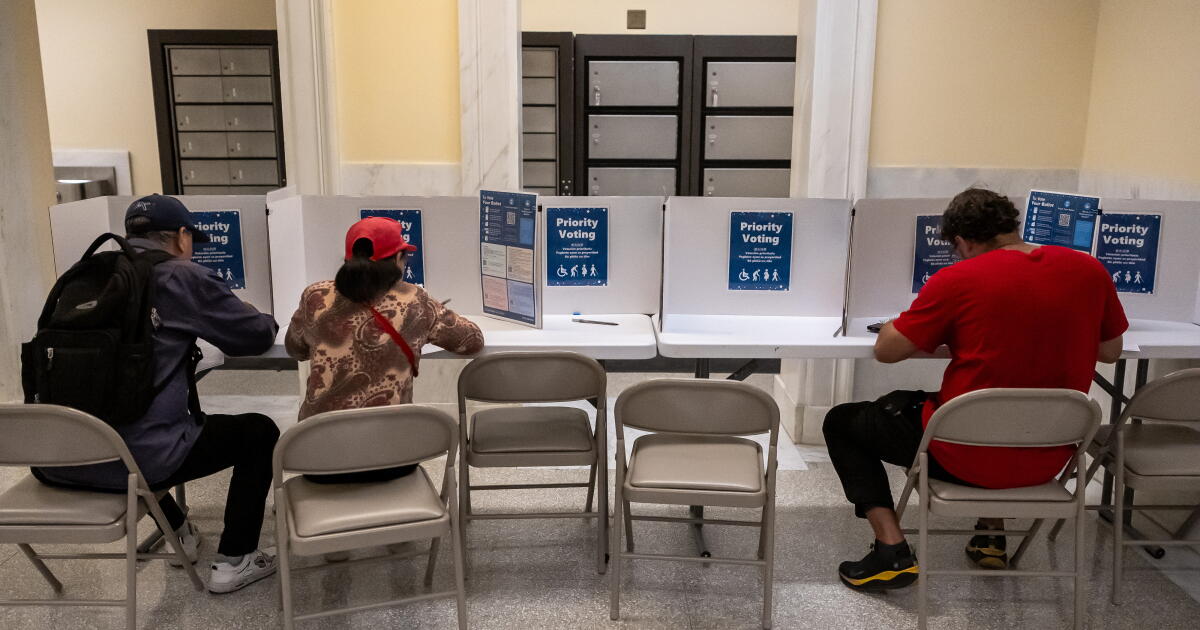
Los Angeles County voters are concerned about a host of voter fraud issues that could disrupt the Nov. 3 general election, even though they have a high degree of confidence in local elections officials, according to a new poll funded by the nonprofit California Community Foundation.
Nearly three-quarters of respondents expressed concern that false rumors and misleading information online could confuse voters or make them believe that their vote won’t count, the poll found. Other top concerns included politicians interfering with the election and mail-in ballots getting lost, stolen or delayed.
Still, most of the voters surveyed expressed confidence in the county’s handling of election proceedings, with 68% saying L.A. County does an excellent or good job at running elections and counting ballots.
Once presented with information about how the county handles elections, that number rose to 72%. Around three-quarters of respondents also believe that the upcoming election will be fair, secure and accurate, the poll found.
The online poll was conducted from Sept. 30 to Oct. 6 by Tulchin Research, a San Francisco-based public opinion firm. It surveyed 500 voters in L.A. County considered likely to cast ballots in the Nov. 3 election and has a margin of error of 4.4%.
“Voters feel good about the local officials running their elections. So, reinforcing the fact that that is who’s in charge of the election and how the process works is reassuring to folks,” said Ben Tulchin, the polling company’s president. “It … reduces their anxiety about some of the outside criticism that California, L.A. County faces.”
The poll was funded by the California Community Foundation, which awards millions of dollars in grants to local charitable groups, to support the “A Count You Can Trust Coalition,” an initiative aimed at enhancing trust in local elections.
Recent polling has suggested that potential federal interference in the Nov. 3 election is a top concern statewide for California voters. The local poll was administered to shed light on how L.A. County voters feel, said former Los Angeles Mayor Antonio Villaraigosa, who co-chairs the A Count You Can Trust group with Miguel Santana, who leads the California Community Foundation.
“This is the epicenter of the California vote,” Villaraigosa said. “The concern is not as great as it is statewide. Here in L.A. County, people seem to trust the vote to a greater degree.”
A recent poll by the UC Berkeley Institute of Governmental Studies, co-sponsored by The Times, found that 61% of California voters identified interference by the Trump administration as a “major concern.” President Trump has fueled doubts over election integrity, spreading unverified claims of widespread voter fraud in blue states such as California.
Young voters and Latino voters expressed the lowest levels of confidence in how the county runs elections, the new poll found. The findings suggest those demographics need “a lot more reassurance” that elections are safe and that their votes matter, Tulchin said.
“It’s not surprising at all, and it means we’ve got work to do,” Villaraigosa said. “We got a lot of work to do to communicate to those people and to make it clear that, in fact, this vote can be trusted.”
Villaraigosa said he plans to focus his efforts on social media engagement and creating video content with poll workers to speak on how vote-counting works in the county.
The poll also asked respondents whether “things in Los Angeles County are going in the right direction or do you feel things have gotten pretty seriously off on the wrong track?” Most — 62% — said wrong track, and 26% said right direction.
Among voter concerns in the upcoming election, 18% listed the economy, the cost of living and inflation as their biggest worry, followed by election integrity, fraud and interference at 17% of respondents. Concerns about Republicans and Trump “winning or retaining power” came in third, with 16% of respondents saying that is their biggest concern.
Homelessness and immigration, two issues that have been prominent the L.A. mayoral race between incumbent Karen Bass and Councilmember Nithya Raman, ranked low in the list of concerns for the surveyed voters. Tulchin noted that the focus of the survey was on election integrity, which could have had an effect on what issues were top of mind of respondents.
The survey findings indicate that L.A. County voters seem to trust the county more than voters statewide. Still, just over 30% of surveyed voters have a fair or poor view of how the county runs elections, Villaraigosa said.
“They’re concerned, but what we found in this poll is that there are a number of people who, while concerned, do trust this county,” he said.
Economists divided on Fed rate hike as inflation creates uncertainty in run-up to US midterm elections in a tense market.
United States consumer prices jumped in September in the final inflation report before the midterm elections, increasing chances of an interest rate hike later this month.
Annual inflation accelerated to 3.7 percent, up from 3.4 percent in August. On a monthly basis, prices rose by 0.6 percent, according to the Consumer Price Index report released by the Labor Department’s Bureau of Labor Statistics (BLS) on Wednesday.
Recommended Stories
list of 4 itemsend of list
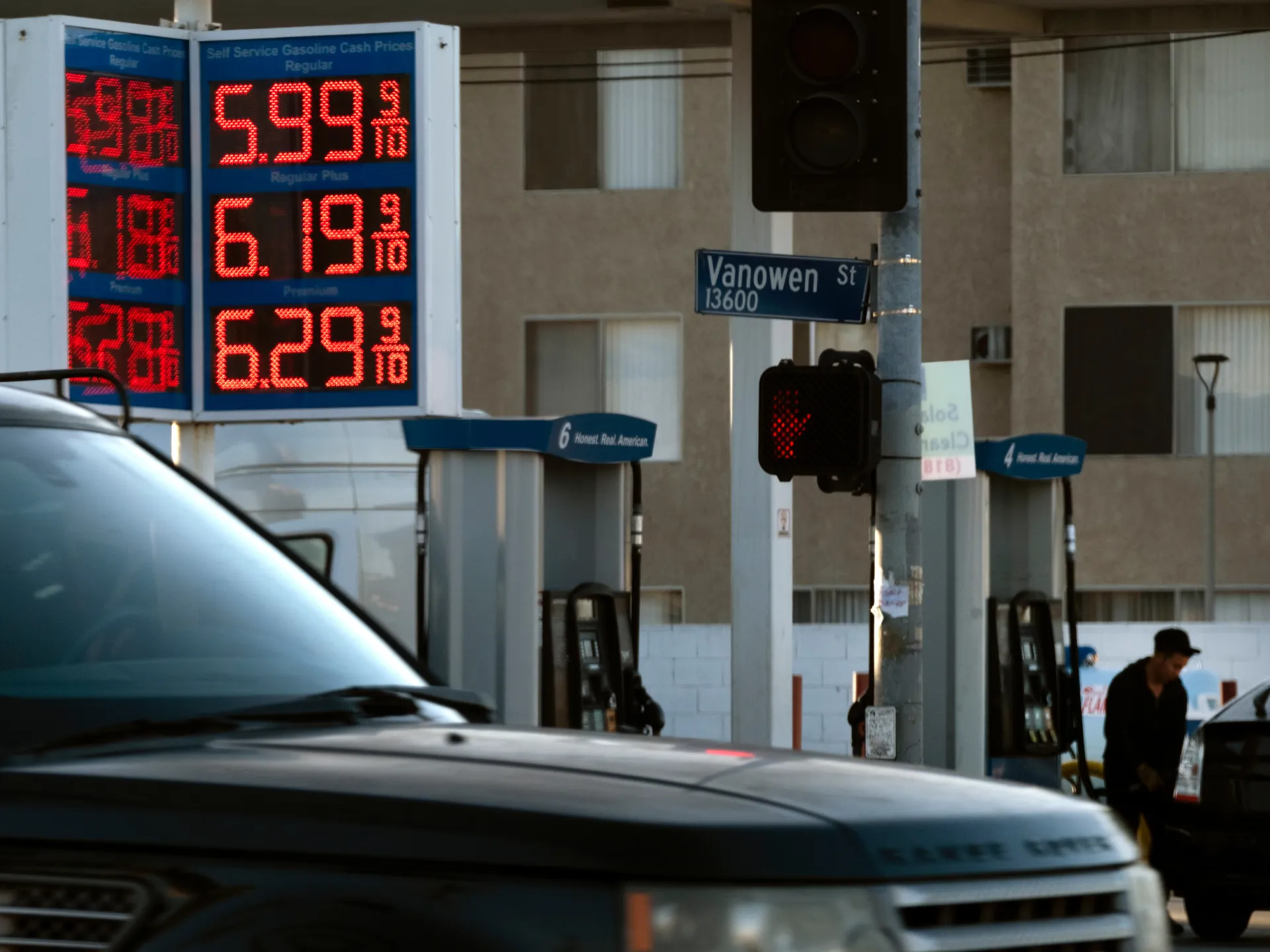
Petrol prices led the surge as tensions between the US and Iran, as well as Russia and Ukraine, weighed on global energy prices. Petrol prices rose 9.1 percent in September, accounting for more than half of the CPI monthly increase, according to the BLS. They were up 34.2 percent from the same time a year ago.
“The directionless war in Iran continues to disrupt global supply chains, driving up the prices of food and fuel,” Kyle Moore, chief economist at The Century Foundation, an economic think tank, said in a statement provided to Al Jazeera.
Petrol prices have continued to climb. The average price for a gallon of petrol is $4.33 ($1.14 per litre), compared with $4.31 a month ago, according to the American Automobile Association (AAA), which tracks daily petrol prices. Diesel prices are higher, at $6.29 per gallon (1.66 per litre), compared with $6.23 a month ago.
In a post on X, Patrick DeHaan, head of petroleum analysis for GasBuddy, said, “2026 has now seen more days with average gas prices over $4/gal than any year before: 158 days.”
Shelter costs also jumped 0.4 percent from the previous month, following a 0.3 percent increase in August. Food costs were a bright spot in the report, remaining unchanged overall.
Food away from home, including restaurant meals, rose 0.2 percent, but that increase was offset by a 0.1 percent decline in food-at-home prices, which track grocery costs.
At the grocery store, poultry prices jumped 0.7 percent, fruit and vegetable prices rose 0.5 percent, and juice prices increased 1.1 percent. However, milk prices dropped 2.1 percent and beef prices fell 0.9 percent.
Amid heavy investment in AI infrastructure, prices for computer software and accessories have jumped 28 percent from the same time last year.
“The AI boom is playing a huge part, and we have all read about the hundreds of billions being poured into data centers, AI firms, and models,” Rami Cassis, principal of Parabellum Investment, said in comments provided to Al Jazeera.
Fed pressures
The inflation data comes days before the US Federal Reserve’s interest rate decision later this month. Last month, the US central bank raised rates by 25 basis points, bringing the target range to 3.75–4.00 percent, the first hike in three years.
Economists are divided over whether the Fed will raise rates again or hold them steady. According to CME FedWatch, which tracks the likelihood of monetary policy decisions, there is a 52.9 percent chance that rates will remain in the 3.75–4.00 percent range, while a 47.1 percent chance of a quarter of a percentage point hike that would bring them to 4.00–4.25 percent.
The inflation data puts pressure on Republicans before the midterm elections on November 3. A recent Reuters/Ipsos poll showed that about 78 percent of Americans blamed US President Donald Trump’s policies for price increases.
US markets trended downward following the inflation report. The Nasdaq fell 0.8 percent and the S&P 500 dropped 0.6 percent, while the Dow Jones Industrial Average was roughly flat in midday trading.
Some called the 2024 US presidential election the “podcast election”. Two years on, the label looks less like hyperbole and more like a preview.
Host Josh Rushing is joined by Cenk Uygur, founder of The Young Turks, and Emily Jashinsky, host of After Party and an anchor at Breaking Points, to ask whether podcasts are genuinely widening political discourse – or simply letting candidates pick friendly rooms and dodge the scrutiny that comes with real journalism.
Presenter: Josh Rushing
Contributors: Cenk Uygur – Founder, The Young Turks Emily Jashinsky – Host of After Party and co-host of Breaking Points
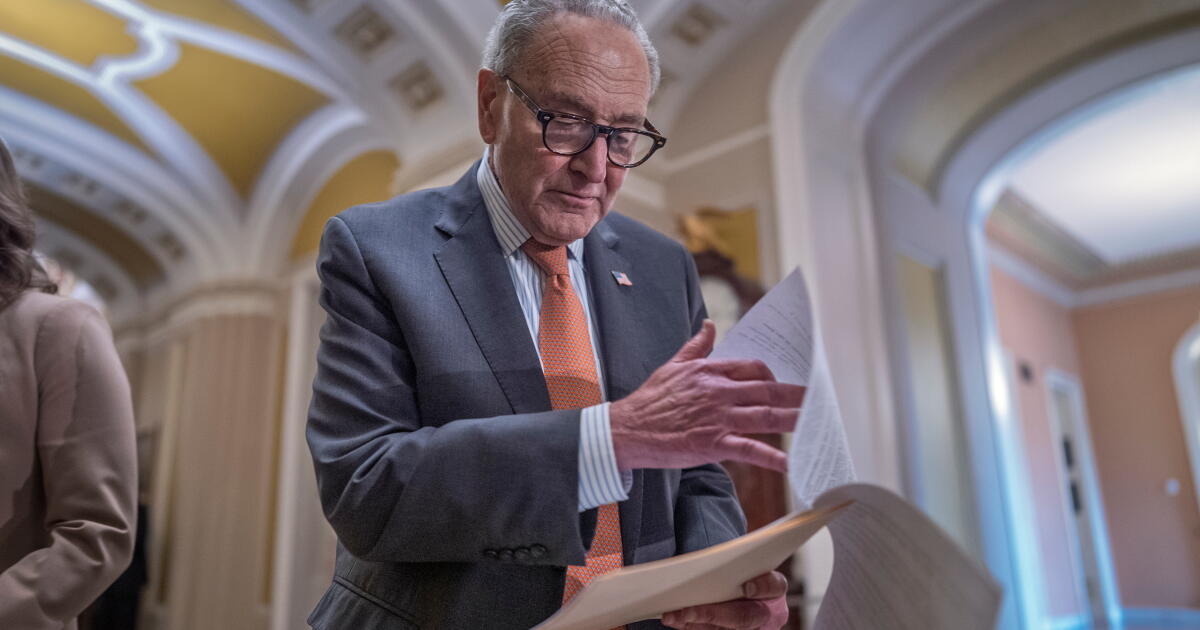
WASHINGTON — Chuck Schumer has won and lost Senate majorities since becoming Democratic leader a decade ago. But this year’s midterm elections could be his most important yet, with some in the party having said he needs to step down and make way for a new generation.
Schumer, who has directly or indirectly overseen his party’s Senate campaign arm in almost every election cycle over the last 20 years, has regained trust within his caucus, for now, as Democrats are hopeful of making gains in the midterm elections despite a difficult map that favors Republicans.
Allies of the New York Democrat say it’s a significant turnaround from last year, when the party was still reeling from major election losses. A low point came in the spring of 2025, when the party’s base erupted at Schumer for voting to keep President Trump’s government open.
Interviews with more than a dozen Democratic senators in recent weeks indicate that Schumer has recovered his political standing with many in his caucus. If Democrats gain seats in the election, colleagues expect him to easily win enough support in the closed-door leadership election, likely the week after Election Day.
Should they win a majority, a feat once seen as improbable, another term as leader would be nearly assured, many said. Both parties pick their Senate leaders by secret ballot, so no senator has to reveal their vote.
Still, nothing is guaranteed. While no Democrat has stepped up to challenge Schumer, that could quickly change if his party suffers an unexpected level of losses. And several Democratic candidates around the country have said publicly that they won’t vote for Schumer or have remained noncommittal.
Interviewed by The Associated Press earlier this month, Schumer stated unequivocally that he’s running for another term as leader. He said he believes Democrats have won more favor with voters over the last year and have a shot at winning the majority after fighting Trump’s tariffs, forcing more than a dozen votes to end the war in Iran and focusing on affordability, corruption and healthcare.
“I think our caucus is strong, it’s united,” Schumer said. “A year ago, everyone said it was out of reach. Today, we have a broader map, strong candidates, a clear contrast.”
Sen. Sheldon Whitehouse, D-R.I., said that “Senate seats in some ruby red states seem to be in play” because of candidates Schumer recruited.
Oregon Sen. Ron Wyden, a Democrat who has served with Schumer for almost 30 years, said that “if you had told us in 2025 that we’d be in the home stretch with a really good shot of taking the majority, it would have been like, ‘You’ve got to be kidding me.’ You can’t argue with results.”
And if Democrats don’t win additional seats? “I’m not thinking about that,” Wyden said.
Some senators won’t commit to supporting Schumer
While Schumer appears to be in a good position at the moment, many Democratic senators won’t say publicly whether they will support him — particularly those in the most progressive wing of the party.
“It’s a little bit too early to speculate on that right now,” said Sen. Bernie Sanders, a Vermont independent who caucuses with Democrats.
Massachusetts Sen. Elizabeth Warren said she is focused on November’s elections. “We’ll know a lot more after the midterms,” she said.
Freshman Sen. Elissa Slotkin of Michigan has called for a “new generation” of leaders across the party.
“It’s not a secret that Democrats still haven’t totally found their footing after Trump,” Slotkin said in a recent interview, adding that “we have to see what the results of the election are.”
It’s unclear if anyone else wants the job
Even if there are losses in Senate races, it’s unclear if any other Democrat wants the burden of being leader. Many are instead eyeing runs for the White House in 2028.
Speculation about a challenge to Schumer has centered on Sens. Chris Van Hollen of Maryland, Chris Murphy of Connecticut and Brian Schatz of Hawaii, who has already said he’s running for the No. 2 leadership spot to replace retiring Illinois Sen. Dick Durbin.
Asked about Schumer, Van Hollen said he doesn’t want to discuss it yet.
“Look, I think everybody wants to get through this election, and then we’ll go from there,” Van Hollen said in an interview before the Senate left Washington to campaign.
Several Senate candidates around the country have either said they won’t vote for Schumer if they are elected or remained noncommittal, including Troy Jackson in Maine, Adam Hamilton in Kansas and Abdul El-Sayed in Michigan.
At the same time, the Senate Majority PAC, which is closely aligned with Schumer, has put millions of dollars into those campaigns and others. Schumer backed El-Sayed’s primary opponent, but the two met in Washington last month.
El-Sayed said after the meeting that the party is united and “we’re having really productive conversations about what it takes to win.”
Schumer has kept his caucus close
Several of the Democratic senators who insisted on anonymity to share their views agreed that Schumer is likely to win another term as leader. There have been very few discussions about a change, said one, partially because Schumer has stayed close to almost everyone in his caucus, keeping them on speed dial in his famous flip phone. Another senator said that they aren’t aware of Schumer asking for any commitments just yet.
At the same time, some said they would like to see Schumer, who is up for reelection in 2028, announce that this is his last term as leader and commit to helping transition to a successor. A commitment like that could end the conversation, one senator said.
Another senator said that a commitment from Schumer about the future isn’t as important — what will matter is if they win in November.
All of the senators agreed that there are no obvious contenders right now to challenge him, but that could change quickly if Democrats lose Senate seats in November.
Schumer has turned the tables since 2025
Attitudes within the Democratic caucus have improved since last year, when the base revolted against Schumer for the March vote to keep the Republican president’s government open. Progressive groups like MoveOn called for him to step down, arguing that Democrats needed to fight harder against Trump and Republicans.
Schumer regained some favor with Democrats inside and outside the Capitol during a prolonged government shutdown a year ago and as he has repeatedly blocked Trump’s nominees and Republican legislation.
But while the calls to resign or step aside have waned, many are still agitating for change.
“Our priority right now is organizing and making sure we elect a new generation laser-focused on affordability and fighting corruption,” said Joel Payne, a national spokesman for MoveOn.
Referring to the 2025 calls for Schumer to step aside, Payne said the group’s members have “already rendered a judgment on Schumer’s tenure and made clear they’re eager for new leadership that energizes the party base.”
It’s unclear, though, whether calls from the progressive wing of the party will influence the secret ballot vote, in which Schumer needs only a majority to win.
Sen. Ben Ray Lujan, D-N.M., dismissed the talk about Schumer’s future.
“It’s hard to lose if no one else is challenging you,” he said.
Jalonick writes for the Associated Press. AP writers Steven Sloan, Seung Min Kim and Joey Cappelletti contributed to this report.
The barrage of spending comes as Republicans fight to overcome Trump’s declining popularity and cost of living concerns.
By Reuters and The Associated Press
Published On 12 Oct 202612 Oct 2026
Elon Musk, the trillionaire tech mogul and backer of far-right causes, has reportedly spent $366m since last year to buoy the Republican Party in the United States midterm elections.
The New York Times first reported on Monday that Musk has spent $276m since July alone, including $158m for a super PAC focused on Republican Senate candidates, making him the largest single donor this year.
Recommended Stories
list of 3 itemsend of list
Musk is considered a close ally of President Donald Trump, the leader of the Republican Party, and was a special government adviser to the White House last year.
Musk’s political action committee, America PAC, has confirmed the spending totals. In a statement to The New York Times, a spokesperson framed the record amount as necessary to defend Congress from a Democratic takeover during the midterm races.
“These robust investments have allowed the GOP apparatus to get its message out so Republicans can have a fighting chance to defy history,” America PAC spokesman Andrew Romeo told the Times.
The barrage of spending by Musk comes as Republican candidates are fighting to overcome Trump’s low popularity and rising concerns about the cost of living among US voters.
Democrats are hoping to capitalise on voter dissatisfaction with Trump’s tenure to seize control of Congress, where Republicans currently hold majorities in both the House of Representatives and the Senate.
The influence of wealthy donors and PACs has long been the subject of criticism. Opponents argue that such spending distorts US politics in favour of powerful interests.
Musk became the world’s first trillionaire in June, when his aerospace company SpaceX made its initial public offering (IPO) on the Nasdaq stock exchange.
The tech entrepreneur had previously said that he planned to step back from his involvement in US politics, stating in May that he had “done enough” and did not have plans for large spending efforts.
Still, Musk has leveraged his tech holdings and wealth to support right-wing groups around the world.
Last year, for instance, politicians in Germany accused Musk of trying to meddle in the national election. Musk has been a vocal backer of the Alternative for Germany (AfD) party, which has been accused of adopting a discriminatory stance on immigration and other issues.
Voters in the US will head to the polls on November 3 to cast their ballots in the midterms, which will decide key state and local races, as well as congressional majorities.
The Republican Party is considered to have a sizeable financial advantage over the Democrats ahead of the race, with heavy spending from groups such as MAGA Inc, a pro-Trump super PAC named for the president’s “Make America Great Again” movement.
As of August, MAGA Inc reportedly had $416m in its coffers. The tracking site AdImpact found that it had spent $22m over the past month alone on the tight race unfolding for the open Senate seat in Texas.
Trump has also increased his campaign activities, hosting a string of rallies in the final weeks before the election to help Republicans push their message.
But Democrats appear confident that the Republicans’ spending advantage will not be enough to counter the effects of growing dissatisfaction with Trump.
“Republicans are hoping to buy these elections, injecting tens of millions into races to try and outrun their unpopular candidates, unpopular president and unpopular economy,” said Lauren French, a spokesperson for Democrats’ Senate Majority PAC.
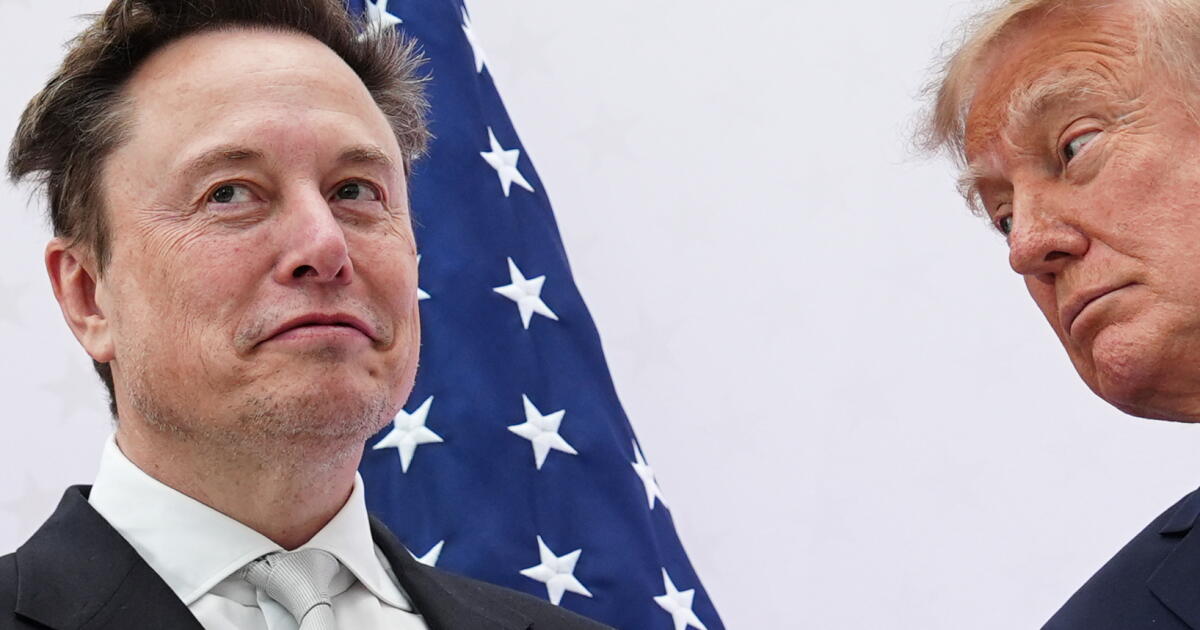
NEW YORK — Elon Musk, the world’s only trillionaire, has quietly become the biggest known donor in this year’s midterm elections, doling out more than $276 million since July to try to save Republican majorities in Congress.
The numbers, first reported by the New York Times ahead of this week’s federal filing deadline, were confirmed by Andrew Romeo, a spokesperson for Musk’s super PAC.
The money includes $158 million given to the Senate Leadership Fund, the main super PAC supporting Republican Senate candidates, one of the largest known political donations in American history, according to the Times.
Another $76 million went to America PAC, a Musk super PAC, which has once again built out a major turnout operation like the one it used to help elect President Trump by knocking on doors in 2024.
Musk also provided $10 million to Lone Star Liberty PAC, a group that supports the Republican nominee for Senate in Texas, Ken Paxton. The race has been a major focus of Musk’s efforts.
It’s a dramatic turnaround since last May, when Musk said he intended to cut back on future political spending. “I think I’ve done enough,” he said at the time.
Despite the cash infusion, Musk has generally kept a lower profile than in 2024, when he appeared on stage next to Trump at rallies, and in the early days of the president’s second term, when he led the Department of Government Efficiency.
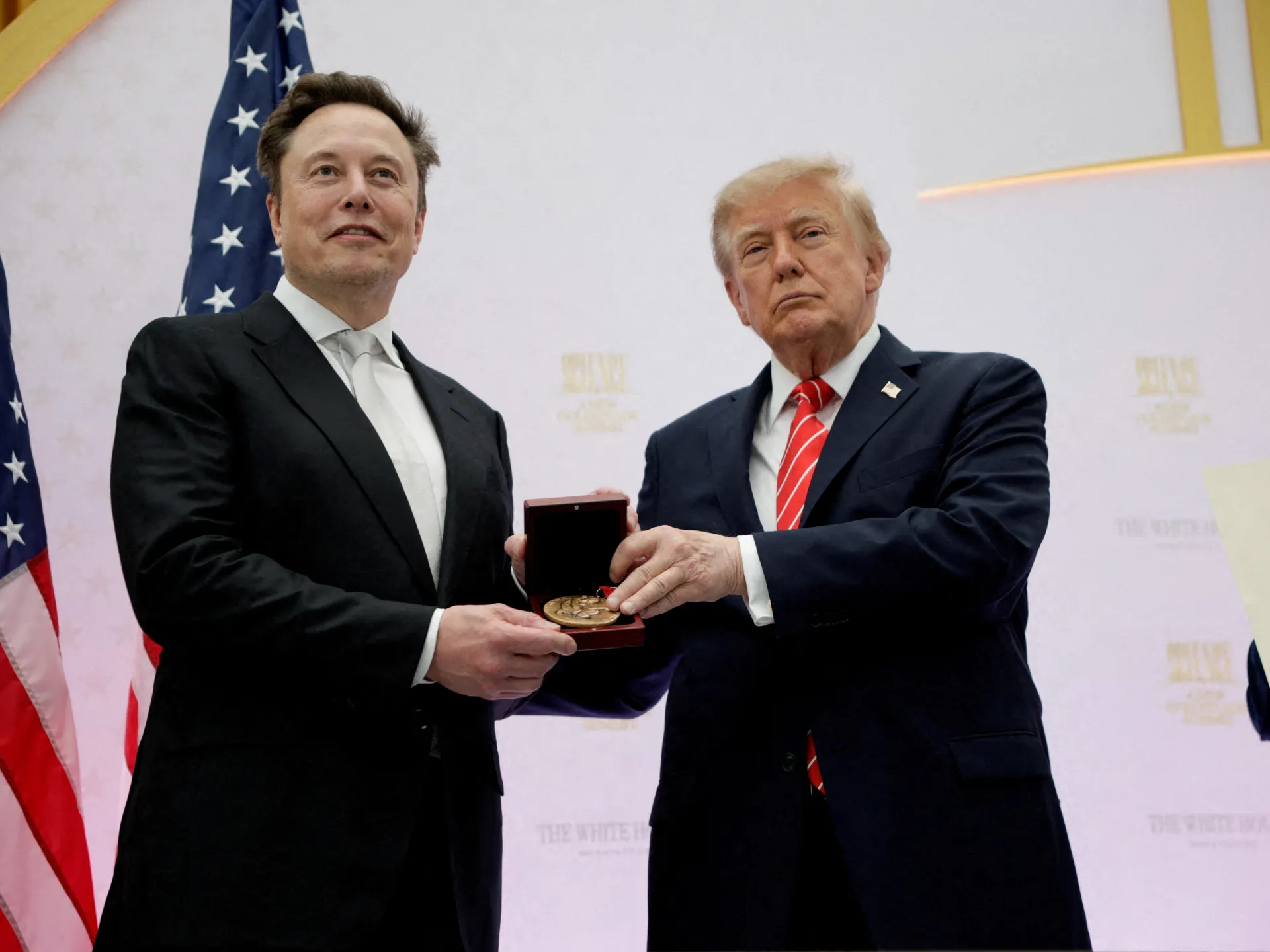
He had a falling out with Trump while leaving his government post, but the two have since reconciled. Trump presented Musk with the National Medal of Science last week.
Musk’s net worth has fluctuated around the trillion-dollar line this year based on changes in stock prices, but he topped $1 trillion again last week according to Forbes magazine.
Republican have a gaping financial advantage over their Democratic counterparts — a disparity that has been a rare bright spot for a party that is bracing for major potential losses amid deep voter frustration over the president’s performance, stubbornly high prices and the unpopular war with Iran.
They have been using the money to blanket the airwaves in the race’s final stretch.
“These robust investments have allowed the G.O.P. apparatus to get its message out so Republicans can have a fighting chance to defy history,” Romeo told the Times.
Democrats responded to the news by accusing Republicans of using vast amounts of cash to mask their shortcomings.
“Republicans are hoping to buy these elections, injecting tens of millions into races to try and outrun their unpopular candidates, unpopular president, and unpopular economy,” said Lauren French, a spokesperson for Democrats’ Senate Majority PAC.
President Trump has pushed Congress to pass a proof-of-citizenship law, signed an executive order seeking a national voter ID requirement and tried to limit mail voting through U.S. Postal Service changes.
None of those moves succeeded in time to affect this year’s midterm elections. It’s a different matter in the states.
More than three dozen voting laws passed in Republican-controlled states are taking effect for the first time this year, many of them containing elements of Trump’s stalled proposals. They include changes to what IDs are acceptable to register for the first time and requirements to show proof of citizenship, an issue the Republican president has tried but failed to get through Congress.
“Trump’s attacks on our elections are deeply damaging, but they are not happening in isolation,” said Sophia Lin Lakin, director of the American Civil Liberties Union’s Voting Rights Project. ”Across the country, states are also advancing restrictions that make it harder for eligible voters to cast a ballot.”
Republican lawmakers who support the tighter voting laws, especially around voter ID, describe them as common sense changes that help build trust in elections.
Trump and other Republicans have been pushing for more restrictive rules since the president’s false claims of widespread fraud in his 2020 election loss to Democrat Joe Biden. Trump’s false claims have resonated with Republican voters, a majority of whom believe Biden was not legitimately elected despite all evidence to the contrary. Trump lost dozens of court challenges, his own attorney general found no evidence of widespread fraud, and reviews, audits and recounts in the battleground states where he contested his loss all affirmed Biden’s victory.
Among the changes confronting voters as early voting gets underway: Students in New Hampshire can no longer use student IDs; Utah voters returning mail ballots must include more information on the envelope; and some voters in Mississippi might need birth certificates or passports to verify their identities.
Changes to voter ID requirements are challenged
New Hampshire state Rep. Donald McFarlane said he sponsored the bill to eliminate student IDs as acceptable for voting because colleges don’t have the same controls when issuing those cards as government agencies.
“The change removes a special exception and applies the same government-issued ID standard to all voters,” he said, adding that his bill had bipartisan support.
Students, he said, can still get state IDs free of charge.
The new requirements have not gone unchallenged.
In South Dakota, the ACLU has filed a lawsuit seeking to halt a new law that includes requiring voters registering for the first time to present the most common forms of ID — driver’s licenses, Tribal IDs and non-driver state IDs. They must be presented in person at places that accept registration.
“Proof of citizenship in itself is not terrible,” said Kathryn Johnson, president of the League of Women Voters of South Dakota.
Her concern is the requirement to present the IDs in person.
“We’re kind of a remote state, so sometimes it takes a drive, and you have to coordinate, you have to take off work, and all of these kinds of things,” she said.
Some Democrats also have expressed support for voter ID during recent debates. Pennsylvania Gov. Josh Shapiro said he was open to the idea as long as it wasn’t based on “conspiracy theories.” When legislatures change their state’s voting laws, they typically give election offices and voters time to adjust. Trump wanted federal voter ID and proof-of-citizenship legislation to take effect immediately, forcing election officials and voters to comply in the middle of the midterms.
Ohio seeks to scrub voter rolls
Ohio has a proof of citizenship requirement in effect for the first time this year for those registering to vote or updating their voter registration information at a Bureau of Motor Vehicles location. The state also eliminated its four-day grace period for mail ballots, which now must be received at local election offices by Election Day.
Yet the biggest concern for voting rights groups is an ongoing purge of the state’s voter rolls. The databases used to check citizenship against voter registration lists can be outdated, said Freda Levenson, legal director of the ACLU of Ohio, which has sued to overturn the law.
“Vast numbers of perfectly eligible voters are vulnerable to being disenfranchised,” she said.
Republican state Sen. Theresa Gavarone, one of the primary sponsors of the bill, challenged the ACLU’s legal action and said the problem it addresses is a real one.
“In the past two years, hundreds of noncitizens have been removed from Ohio’s voter rolls,” she said in an email. “Every single vote cast by a noncitizen disenfranchises a lawful Ohio voter.”
Voters have mixed views on the changes
Outside an early voting center in Wayne County, Ohio, retired steel worker Dan Walter, an independent voter, said he opposes requiring documentary proof of citizenship to vote.
“It’s to keep people from voting, it sounds to me like,” he said.
His wife, Jody, a retired aerospace executive and a Democrat, said she felt the same way about Ohio’s new requirement for registering to vote.
“A driver’s license doesn’t prove citizenship, and that’s all they ask for now,” she said. “It’s going to be an obstacle for so many people.”
Genia Fortune had a different view. A nurse, the Millersburg resident described herself as an independent and said she voted for President Barack Obama, a Democrat, and later for Trump. She believes Trump’s false claims that the 2020 election was stolen and sees requiring documentary proof of citizenship as a necessary precaution.
“I just feel like you need to be a citizen and show proof of ID,” she said.
Voting and election laws have become a regular target for legislatures
The Trump administration has pushed multiple strategies to influence this year’s midterm elections, most of them stymied by Congress or the courts.
Chris Diaz, director of legislative tracking at the Voting Rights Lab, said the group has seen several versions of the Republican president’s proposals passed by his allies in the states.
A recently released report by the group highlighted some of the key areas drawing Republican lawmakers’ attention, including mail balloting, voter ID and the hunt for noncitizens on voter rolls.
Noncitizen voting has been a focus of the Trump administration despite it being a rare problem. The U.S. Department of Justice recently announced it had brought charges in roughly 90 cases for various types of election misconduct, including 50 against people who are alleged to have voted as noncitizens. The U.S. had 227 million registered voters for the 2024 presidential election.
The Brennan Center for Justice has identified nearly 40 laws in 21 states taking effect this election season that will make it harder for eligible voters to register, stay on the rolls or cast ballots.
The report from the center, part of the New York University School of Law, found that many of the new laws target subsets of voters.
“What I want voters to take away from this is that elections are still run by the states and there are still people in many states who are trying to make it harder for you to vote,” said Sean Morales-Doyle, senior director of the center’s Voting Rights and Elections Program. “But that’s all the more reason to go make a plan to vote and participate.”
Fields and Smyth write for the Associated Press. Fields reported from Washington and Smyth reported from Wooster and Millersburg, Ohio.
A federal judge ruled against the Justice Department’s use of voter data to cross-reference an immigration database.
Published On 9 Oct 20269 Oct 2026
A United States judge has ruled that the Justice Department unlawfully sought state voter rolls to cross-check against a federal immigration database and identify voters it considered ineligible.
US District Judge Sparkle Sooknanan’s decision on Friday marks another setback for President Donald Trump’s efforts to expand federal oversight of elections ahead of the midterms, as Republicans seek to retain control of Congress.
Recommended Stories
list of 3 itemsend of list
In a 78-page ruling siding with watchdog group Common Cause, Sooknanan said the administration had understated the risk of wrongly removing eligible citizens from voter rolls because of inaccuracies in the Systematic Alien Verification for Entitlements (SAVE) database.
“The challenged policy represents the federal government’s attempt to decide who gets to vote,” Sooknanan wrote, adding that Congress had left that authority to the states.
The Justice Department said it was reviewing the ruling.
Ming Cheung, a senior staff attorney with the American Civil Liberties Union’s Voting Rights Project, said the ruling made clear that the administration could not use the federal government to disrupt elections or put voters’ rights at risk.
“The Trump administration has repeatedly taken extreme measures to interfere with how elections are run, undermine confidence in the results, and create confusion,” Cheung said in a statement.
Last year, Trump directed the department to crack down on voting by ineligible people, despite research showing voter fraud is rare. The department subsequently demanded unredacted voter rolls from nearly all 50 states, including sensitive personal information.
Eighteen states, mostly Republican-led, complied. The department cross-checked their data against SAVE and flagged people identified as noncitizens for potential removal from voter rolls.
Sooknanan said the database could contain outdated citizenship records, potentially misidentifying naturalised US citizens.
The department has also sued 30 states and Washington, DC, over their refusal to provide voter data. Twenty-six cases have been dismissed.
In a separate case in June, Sooknanan blocked the expanded use of the SAVE database for voter roll checks, an order the US Supreme Court temporarily paused last month.
Federal law bars systematic voter roll purges in the 90 days before a federal election, which could limit the ruling’s practical effect before the November 3 vote.
Oil prices drop as Trump dismisses speculation of pre-midterm military action against Iran.
Published On 9 Oct 20269 Oct 2026
United States President Donald Trump has said the US will not attack Iran before the November 3 midterm elections.
The US president said late on Thursday: “we are having productive discussions with the Islamic Republic of Iran,” in a post on Truth Social. “We will not be attacking Iran at any time prior to the midterm elections to be held in the United States on November 3rd.”
Recommended Stories
list of 3 itemsend of list
Oil prices fell early on Friday as Middle East supply concerns eased somewhat after tensions in the energy-rich Gulf region had mounted in recent weeks.
The possibility of renewed fighting had appeared to drive up oil prices in trading on Thursday. Some analysts believe Trump’s comments were an attempt to try and bring prices back down.
Iran’s Foreign Minister Abbas Araghchi said Tehran is reviewing the US response to its seven-day plan to reopen the Strait of Hormuz, and that Iran will respond within the “next few days”.
He added that negotiations are continuing through mediators, Iran’s Tasnim news agency reported.
Hormuz explosions
Iranian media reported “massive explosions” in the southern Strait of Hormuz on Friday, with Fars citing unnamed military sources as saying tankers using “unauthorised” routes may have struck sea mines.
On Tuesday, US Vice President JD Vance said Iran must make a “meaningful” reduction in its uranium enrichment capacity as part of an agreement to end the war. Experts say this demand may signal a softening of Washington’s earlier insistence that Tehran abandon enrichment altogether.
On Monday, Iranian President Masoud Pezeshkian said negotiations with Washington were “futile”, accusing the US of using negotiations to attack Iran.
Russian President Vladimir Putin told Pezeshkian that Russia will “do everything” to help end the US-led war on Iran, Russian news agencies reported on Thursday.
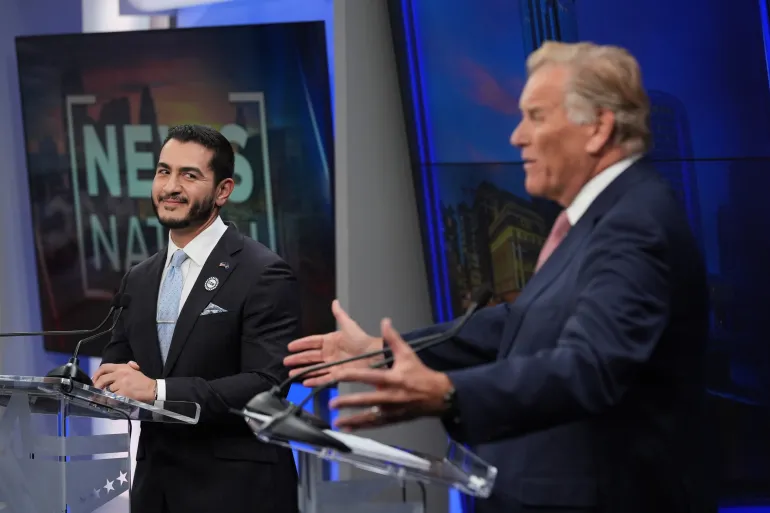
The leading candidates in Michigan’s heated Senate race have faced off in their first televised debate, with less than a month remaining before the United States midterm elections.
Thursday’s hour-long debate was a microcosm of how tense the toss-up race has become.
Recommended Stories
list of 3 itemsend of list
Democratic nominee Abdul El-Sayed, formerly the health director for Wayne County, repeatedly sought to paint his Republican adversary Mike Rogers as a yacht-owning millionaire out of touch with ordinary voters.
For his part, Rogers, a former member of the US House of Representatives, lobbed accusations at El-Sayed that he was soft on “terrorism” and had foreign sympathies.
The Michigan-born El-Sayed has repeatedly faced Islamophobic attacks while on the campaign trail, with Republican President Donald Trump labelling him an “extremist, terrorist sympathizer” whose history “goes back to the days of the Jihad”. If elected, El-Sayed would be the first Muslim member of the US Senate.
The two candidates spent much of their hour onstage together speaking over one another, as they exchanged pointed barbs.
“He can’t condemn a terrorist act that happened on our soil in the state of Michigan. He can’t bring himself to condemn –,” Rogers began, referencing a March attack on a synagogue.
“I did condemn it,” El-Sayed said, jumping in. “No, you did not,” Rogers replied, with El-Sayed quickly responding, “You make stuff up. You make stuff up.”
The Senate race in Michigan is considered key to the battle for control of the US Senate. Democrats are seeking to flip both chambers of Congress, but shifting control of the Senate will be a tougher prospect, given that only a third of its 100 seats are on the November 3 ballot.
Host Rick Albin at times struggled to keep the debate on track, as tensions rose.
“We’ve got dozens of questions we want to get to. You can’t litigate all of these with 14 different rebuttals, so please work with me,” Albin told the two candidates at one point.
Here are the key takeaways from the evening’s debate.
Republican nominee Mike Rogers, right, speaks during a televised debate with Democratic nominee Abdul El-Sayed [Paul Sancya/Pool via AP Photo]
Rogers insinuates El-Sayed family ties to ‘terrorism watch list’
The ferocity of the debate was underscored by the high volume of ad hominem attacks the candidates deployed against each other.
But Rogers repeatedly pushed a series of attacks that seemed to centre on El-Sayed’s identity as a Muslim.
In response to a question about healthcare, Rogers said that El-Sayed has “taken money from individuals on his campaign who openly support Hamas, Hezbollah, al-Qaeda”.
Later, when asked about his position on surveillance by Flock cameras, Rogers argued that such technology has helped catch people suspected of terrorism. He then implied that El-Sayed’s concerns about the cameras were suggestive.
“Why would that bother you?” Rogers asked El-Sayed. “Well, if you have somebody in your family that might be on the terrorism watch list …”
El-Sayed interjected, seeming to dare Rogers to continue his thought.
“Are you going to go ahead and say that I’m a – go ahead and say it,” El-Sayed said. “You’ve been tiptoeing about it the whole time. Just say it. Just say it. Go ahead and say it.”
Muslim and Arab candidates in the US have frequently been subjected to Islamophobic attacks on the campaign trail, accusing them of support for “terrorism” and Islamic fundamentalism.
Republican Mike Rogers insinuated El-Sayed may have family on the ‘terrorism watch list’ [Paul Sancya/Pool via AP Photo]
Both sides agree on ending the Iran war
There were issues, however, on which both candidates found a measure of common ground.
Both Rogers and El-Sayed agreed the US-Israeli war against Iran should end, but they had opposite views on Washington’s relationship with Israel and its role in the conflict.
High gasoline prices and inflation, El-Sayed said, were directly caused by the Iran war, and he blamed the Trump administration for Iran’s decision to shut down the Strait of Hormuz, a critical trade route.
“This is what happens when you start wars you never should be fighting,” El-Sayed said. “We literally taught the Iranian regime that they have a choke on the Strait of Hormuz, and now we’re living in that reality.”
Rogers agreed that “we need [the war] to come to an end”, but he also justified the conflict, saying that Iran’s uranium enrichment programme had been “set back twenty years”, echoing a frequent White House talking point.
The Trump administration has argued that the war was necessary to prevent Iran from creating a nuclear weapon, a goal Tehran has long denied.
Rogers’s position led El-Sayed to accuse him of “cheerleading” for the war and the Trump administration.
Democratic nominee Abdul El-Sayed pushed for an end to unconditional support for Israel [Paul Sancya/Pool via AP Photo]
Rogers backs continued Israel aid, El-Sayed calls for end
As part of the debate about US foreign policy, the candidates were also pressed on their positions about the US alliance with Israel.
The country is considered the largest overall recipient of US aid since World War II. From the start of Israel’s genocidal war on Gaza in October 2023 through September 2025, experts estimate that Israel received nearly $21.7bn in military aid.
El-Sayed has openly called for ending aid to Israel, and he has repeatedly denounced the conflict in Gaza as a genocide, in line with evaluations from United Nations experts and human rights watchdogs.
During the debate, he indicated he preferred US taxpayer dollars to be spent on domestic concerns like education and healthcare, rather than Israeli aid.
“He wants unconditional support for a foreign government,” El-Sayed said of Rogers. “I want unconditional support for kids in our schools, unconditional support for our healthcare, childcare.”
He also blamed Israel for the US military action in Iran. “I don’t want to be pushed into war by Israel, and I don’t want to be in war with Iran,” El-Sayed said.
Rogers, meanwhile, has joined most of his fellow Republicans in continuing to support aid for Israel. He argued that the country had “the right to defend itself in a very difficult neighbourhood”.
“Is there anything Israel could do that would lose your support?” the debate host asked.
“Listen, if they’re talking about using nuclear weapons, they would definitely lose my support,” Rogers replied.
Abdul El-Sayed, right, and Mike Rogers shake hands prior to their debate [Paul Sancya/Pool via AP Photo]
Another hot-button issue during the debate was Trump’s crackdown on immigration.
The Republican leader has pledged to carry out the largest mass deportation effort in US history, and his campaign has spurred human rights concerns.
When asked how they would approach the crackdown, both Rogers and El-Sayed agreed on tempering the militarised nature of the campaign.
In several cities, including Minneapolis, Minnesota, immigration authorities have been accused of racial profiling and using excessive force against immigrants and protesters, as well as violating their rights to due process.
Multiple fatal shootings have occurred during immigration enforcement operations, including the deaths of Renee Good and Alex Pretti in January.
Rogers indicated he would not have supported such confrontational operations, but he repeated a Trump claim that the raids were taking dangerous criminals off the streets.
“I think the public efforts in Minnesota were probably not appropriate,” Rogers said. “You always want to go in quiet, get the bad guy, get out of the neighbourhood for less problems. So that, to me, was something that they could have done differently.”
He later claimed that, under Trump, the country had seen “the largest decrease in murders ever recorded”.
El-Sayed, meanwhile, has previously voiced support for abolishing Immigration and Customs Enforcement (ICE), a key agency in Trump’s deportation campaign. He defended that stance on the debate stage.
“ICE right now is not about immigration enforcement. ICE is about terrorising our streets,” he said.
Mike Rogers speaks to reporters in the spin room after the debate on October 8, 2026 [Jim Vondruska/Reuters]
Candidates debate Canada trade war and tariffs
Donald Trump’s trade war with Canada, felt acutely in neighbouring Michigan, was another key topic of conversation.
El-Sayed depicted Rogers as an uncritical backer of Trump and his tariffs and tied him to past free trade deals such as the North American Free Trade Agreement (NAFTA), which paved the way for companies to shift manufacturing facilities out of the US – though Rogers did not enter Congress until 2001, eight years after NAFTA passed.
“You did that, man. That was your policy. NAFTA, that was your policy,” said El-Sayed.
Rogers sought to distance himself from the current trade war but expressed support for a deal with Canada that would loosen some of Ottawa’s tariffs on US goods.
“I would like to see the deal made,” said Rogers, adding that high Canadian tariffs for US goods “should be eliminated”.
Both candidates tried to strike a balance between criticism of the economic fallout of the trade war and qualifying their support for more selective tariffs, favoured by some industries and labour unions as a means of protecting domestic jobs.
WASHINGTON — President Trump said Thursday that he will not order a resumption of military strikes on Iran before the Nov. 3 midterm elections in the United States.
Trump, while stumping for Republicans this week, has hinted that he was confident that an endgame to the war could come in the days before or after the election, while also hinting that he remained open to resuming full-scale military operations against Iran.
For weeks, Trump has been threatening that a post-midterm election escalation in the seven-month-old war remains a viable option, despite his initial promises to Americans of a military campaign that would last a matter of weeks.
But Trump in a social media post on Thursday said the U.S. “will not be attacking Iran at any time prior to the Midterm Elections to be held in the United States on November 3rd.”
Trump added that his team has been “having productive discussions with the Islamic Republic of Iran.”
Negotiations had appeared at a standstill since Trump late last month publicly rejected Iran’s proposal to reopen the Strait of Hormuz within seven days if the U.S. met certain conditions.
Iran, however, said last week it had received a U.S. counterproposal. And Foreign Minister Abbas Araghchi on Thursday said he expected Tehran would offer a formal reply within days.
Trump’s post comes as the military has dispatched more resources to the region. U.S. officials have said a third aircraft carrier, the USS Theodore Roosevelt, and thousands of troops aboard it and accompanying ships could arrive as early as the end of October.
Trump’s announcement was made the same day the USS Abraham Lincoln was due to arrive to its home port in San Diego after a record-long deployment in support of the Iran war. There have been reports of crew stress and poor mental health, as well as supply shortages, including food and hygiene products.
The USS George Washington, which is usually based in Asia, relieved the Lincoln in August. The other aircraft carrier in the Middle East, the USS George H.W. Bush, has been deployed for about six months, but it pulled into Phuket, Thailand, for a port visit several days ago.
A Gallup survey highlights a deep – and historic – partisan divide over confidence in the country’s elections.
Published On 7 Oct 20267 Oct 2026
With less than a month to go before the United States’ pivotal midterms, a new survey found that most independent voters and supporters of President Donald Trump’s Republican Party do not believe the elections will be honest.
Polling from Gallup, released on Wednesday, found 37 percent of Republicans and 35 percent of independents have confidence in the country’s electoral system, significantly lower than US Democrats (63 percent).
Recommended Stories
list of 3 itemsend of list
Overall, 49 percent of Americans said they were confident in the honesty of elections, while 51 percent said they were not. Those figures are unchanged from the country’s last midterm election in 2022.
This “marks a change from 2025, the first year of Trump’s second term, when confidence was nominally higher among approvers (51 percent) than disapprovers (45 percent)”, Gallup wrote in a statement highlighting the results of the survey.
The numbers highlight a deep, historic partisan divide over confidence in US elections.
“Since 2025 and Trump’s return to the White House, the relationship between leadership approval and confidence in elections has disappeared,” Gallup wrote.
Gallup said that the US is the only country out of more than 100 polled annually over the past 15 years to show this pattern – trust in US election integrity is markedly higher among those who disapprove of the country’s leadership under Trump (52 percent) than those who approve (41 percent).
In more than 100 countries where the polling organisation tracks views of national leadership and confidence in elections, people who approve of their governments have generally been more likely to trust their country’s elections.
In 2025, 70 percent of people globally who approved of their national leadership expressed confidence in the honesty of their elections, compared with 30 percent among those who disapproved.
“The current US pattern is highly unusual compared with the rest of the world,” Gallup wrote.
Under former US President Joe Biden, 81 percent of Americans who approved of the government expressed confidence in elections, compared with just 30 percent of those who disapproved, according to Gallup.
Gallup said the unusual divide could have implications for the November elections, raising questions about whether some voters will view the results as legitimate.
The White House did not respond to a request for comment.
Donald Trump still decides who gets to call themselves MAGA – but what happens when that power has to pass to someone else?
Josh Rushing is joined by Rina Shah, a Republican strategist and one of the original Never Trumpers, and Emma Doyle, former deputy chief of staff in Trump’s first administration, to ask whether MAGA can outgrow its frontman, or whether, as both guests agree, MAGA simply is Donald Trump.
Contributors: Rina Shah – Republican strategist and political commentator Emma Doyle – Former White House deputy chief of staff
WASHINGTON — Political advertising warns about Democratic plots to defund the police. Campaign events feature law enforcement unions and tough talk about law and order. Stump speeches boast about record low levels of violent crime.
From coast to coast, Republicans are focusing on public disorder, illegal immigration and violent crime in midterm campaigns as voters sour on their party’s handling of the cost of living and the war with Iran.
Democrats have tried to counter the attacks by recruiting candidates with law enforcement backgrounds and emphasizing their own anti-crime plans, but Republicans believe it’s a rare opportunity to go on the offensive in an otherwise challenging year.
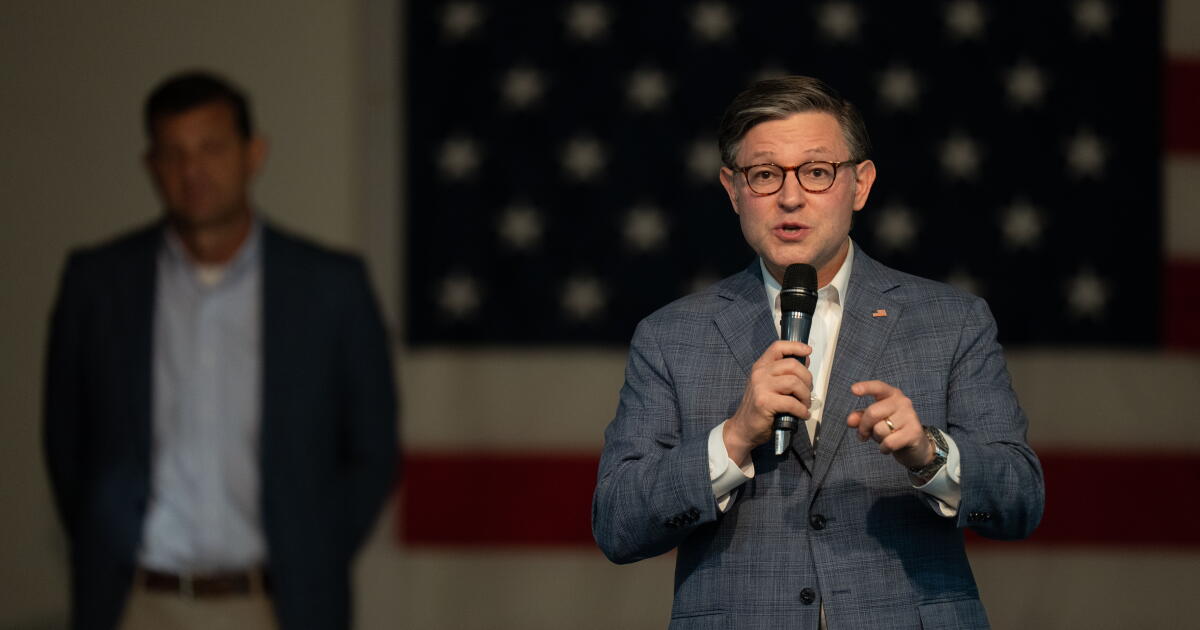
“Do you know that right now we have the lowest violent crime rate in 126 years in America right now? Because we emphasize the rule of law,” House Speaker Mike Johnson recently told an audience at Louisiana State University. Crime rates have generally trended down since the 1990s with a brief spike during the COVID pandemic. “We have the most secure border we have had in the past half century.”
President Trump returned to the topic Monday night in Nebraska, warning about how the country used to be before he returned to the White House.
“We had a border with people pouring in, crime like nobody’s ever seen,” he said.
Republicans say Democrats will ‘defund the police’
In Georgia, Michigan, Nevada, Texas and Wisconsin, Republican candidates for governor have attacked their Democratic rivals as weak on crime or warned they could cut police funding. Texas Gov. Greg Abbott, for instance, has lambasted Democratic nominee and state Rep. Gina Hinojosa for not supporting legislation that would require judges to deny bail to illegal immigrants charged with a violent crime.
Hinojosa has campaigned on her tenure as a civil rights lawyer and criticized Abbott’s crime policies as violating civil liberties.
Rick Jackson, a billionaire healthcare executive running in Georgia, has repeatedly attacked Democratic opponent Keisha Lance Bottoms over her tenure as Atlanta mayor.
“I grew up in the type of neighborhood Keisha Lance Bottoms abandoned,” Jackson said at a summer campaign rally. “I know who gets hurt when politicians defund the police.”
In an interview with Atlanta station 11Alive, Bottoms emphasized that her administration gave pay raises to police and firefighters, and said she called for increased federal funding for public safety during her time as mayor.
Crime warnings pervade congressional races
It’s a similar story in U.S. House races.
In Virginia’s first congressional district, Rep. Rob Wittman has attacked his Democratic opponent, prosecutor Shannon Taylor, over her allegedly “soft on crime” record in office. In Michigan’s 10th district, Republican Michael Bouchard is running on his service as a Bronze Star Army captain and son of a longtime local sheriff. He’s claimed his Democratic opponent, former prosecutor Christina Hines, supports “woke, soft on crime, socialist policies.”
In Colorado’s eighth district, Rep. Gabe Evans touts his time as a police officer against Democratic challenger Manny Rutinel. And in Wisconsin’s third district, Rep. Derrick Van Orden hopes to win a third race against Democratic nominee Rebecca Cooke by painting her as a communist who wants to defund the police.
Republicans hope that by reprising warnings of crime and disorder the party can reenergize their disillusioned base and win back skeptical moderate voters who have drifted over concerns like affordability.
Democratic rivals have responded in kind. Taylor aired an ad featuring 13 local sheriffs who endorsed her campaign. Rutinel aired ads with local police and rolled out a safety plan that called for greater police funding and drug prevention programs. Hines said she’ll continue to prioritize public safety and prosecute corruption in Washington. Cooke has vowed to fully fund police departments in Congress.
Not all Republicans see crime as a winning issue
It’s yet to be seen if the strategy will prove effective.
“We’ve got to talk about it. I think that in many ways, we are the victim of our own success because it’s off the headlines a little bit more,” said Sen. Eric Schmitt, a Missouri Republican and former state attorney general. “Having a completely secure border now, no one even talks about it. But that’s a huge accomplishment from where we were at before.”
An AP-NORC poll conducted in September found that border security — which Trump and Republicans often link to crime — was a relative strength for the Republican president, with 48% of U.S. adults saying they approved of his performance on the issue. But that was still a decline from a year ago, when his approval on border security was at 55%.
Not everyone in the party is sold on Republicans rehashing the crime message.
“I don’t see that bubbling up as a major issue for the voters,” said Sen. Thom Tillis, a North Carolina Republican who chose not to seek reelection this year. Aiming to make the race to succeed Tillis a referendum on crime, Republicans have run ads claiming that Democratic nominee Roy Cooper went easy on convicts during his two terms in the governor’s mansion.
Black political leaders have criticized the ads as racist and reminiscent of past Republican campaigns that used dog whistles to appeal to suburban white voters. Trump made the message explicit when he invoked the infamous 1988 “Willie Horton” ad and displayed dozens of mugshots of men of color on a jumbotron during a rally stumping for Michael Whatley, Cooper’s Republican rival.
In contrast to his party’s messaging, Tillis noted his state’s safety in recent years.
“Frankly, when I hear somebody talking about crime in Charlotte, I live 25 minutes from downtown. I’m not worried about walking through Charlotte at night,” said Tillis.
Democrats accuse Trump of corruption
National Democrats contend that Republicans’ message on violent crime is undercut by the Trump administration’s hardline immigration enforcement actions, which resulted in the killing of two American protesters in January and the fatal shootings of multiple undocumented people. They accuse Trump of corruption and have hammered Republicans for alleged complicity in the president’s self-dealing.
“This is the biggest criminal organization that we’ve ever seen,” said Sen. Ruben Gallego, an Arizona Democrat, of the current White House.
He added that, “Democrats should be pushing back with the fact that, if not for the fact that he was president, this guy would be leading some type of mafia right now.”
Lauren Bis, a White House spokeswoman, said “extreme Democrats are trying to deflect from their radical soft on crime agenda.”
There are few people, if any, who’ve tracked U.S. elections for longer or in greater depth than Charlie Cook.
Ever since 1984, when he started his eponymous political newsletter, Cook and his stellar crew of nonpartisan analysts have plumbed many thousands of races — for president, Congress, governor — following the money, sussing out the candidates, watching their ads and assaying the campaign landscape at a granular level.
What’s unusual, Cook suggested, is the prospect of big Democratic gains when Republicans started out this election season with so many advantages. (And that was before the GOP set off on a gerrymandering jag at Trump’s behest.)
Roughly two-thirds of the Senate seats up in November are in states Trump carried in 2024. Five of the seven toss-up races are in states Trump won, several by double digits.
On the House side, Republicans maintain control by an exceedingly narrow margin, meaning there aren’t a lot of low-hanging districts for Democrats to aim for. As Cook rightly noted, “A party cannot lose a seat they don’t have.”
We’ll get to predictions in a moment. (Patience, dear reader.)
First, let’s hear from Nathan Gonzales, another longtime election handicapper. He’s been tracking political contests nationwide for more than 25 years and edits and publishes Inside Elections — formerly the Rothenberg Political Report — another nonpartisan field guide to campaigns. Like Cook, he traffics in clear-eyed, dispassionate analysis, not partisan wish-casting or political spin.
A detail of the exhibit in the Epstein Files Bookmobile during a campaign stop for Democratic House candidate Bob Brooks at the United Steelworkers of America office in Bethlehem, Pa. Brooks is challenging Republican incumbent Ryan Mackenzie (R-Pa.) in Pennsylvania’s highly competitive 7th Congressional District in the upcoming midterm election.
(Alex Wong / Getty Images)
Trump’s performance — his approval rating is flirting with record lows — “has inspired Democrats, turned off independents and created a group of apathetic Republicans,” Gonzales said, “and those are the ingredients for a good or great Democratic year.”
He noted Democrats don’t need a big wave to seize control of the House. A pickup of just three seats would flip the House, marking the seventh straight midterm election in which one chamber or the other changed partisan hands.
(For the record, there is no authoritative definition of a wave election, though it’s generally agreed the term applies to an election in which one party or the other gains a large and lopsided number of House and Senate seats.)
It’s beginning to feel a lot like 2006, Gonzales said.
Gonzales and his team of experts believe the House is most likely gone for Republicans, forecasting a Democratic gain of seven to 15 seats, unless the bottom falls out for the GOP and their losses climb much higher.
In the Senate, where Democrats need to pick up four seats to take control, Gonzales sees the chamber teetering on a knife’s edge, forecasting a Democratic gain of three to five seats.
“It’s too late to fundamentally change the trajectory of this election,” Gonzales said. “But if Republicans can boost Republican turnout, it might be enough to save the Senate.”
For his part, Cook agrees that Mike Johnson may be nearing the end of his speakership. The best-case scenario for the GOP would be keeping its losses to 25 House seats or less, Cook said, which is right around the average for midterm elections going back well over half a century.
“It starts getting into eyebrow-raising territory if it gets north of 35,” Cook said, “because that shouldn’t be possible with the few competitive districts we have now.”
As for the Senate, he suggested the best Republicans can hope for is a net loss of two seats, keeping the GOP barely in control. (A loss of three would mean a 50-50 split, leaving Vice President JD Vance poised to be the tiebreaker on close votes — and wouldn’t he love having to drop off the 2028 campaign trail to be on hand, just in case.)
Of course, there’s still an election to be held, votes to be cast and ballots to be counted.