Iraq says more than 3,000 Syrians are among the ISIL-linked detainees transferred to one of its prisons by US military.
More than 5,000 ISIL-linked (ISIS) detainees have been transferred from Syrian jails to a prison in neighbouring Iraq so far, according to Iraq’s Ministry of Justice.
In comments to the Iraqi News Agency on Friday, ministry spokesperson Ahmed Laibi said the transfers and ongoing detention of the prisoners had been carried out at the request of an international coalition led by the United States to combat ISIL, of which Iraq is a key member.
Recommended Stories
list of 4 itemsend of list
In separate comments on the sidelines of the Munich Security Conference, Iraqi Foreign Minister Fuad Hussein gave a lower figure, telling Reuters that about 3,000 ISIL-linked detainees had been transferred.
He told the news agency that the process was ongoing and that Baghdad was in discussions with various countries about repatriating their nationals who had been transferred.
Iraq would need more financial assistance to deal with the intake, he said, adding that there had been a recent uptick in ISIL activity in Syria.
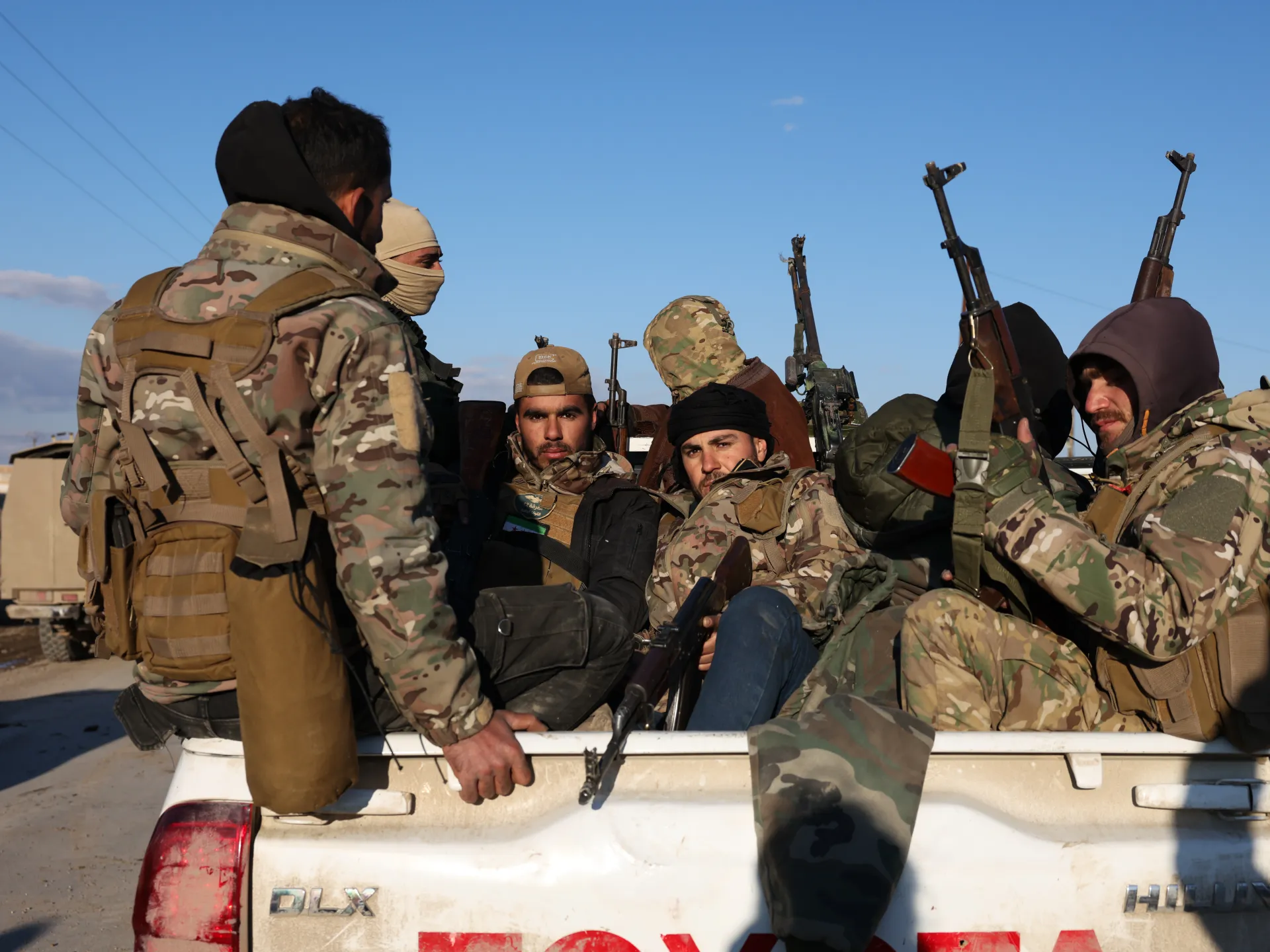
The US military has been transporting thousands of ISIL-linked prisoners from jails and detention centres previously run by the Kurdish-led Syrian Democratic Forces (SDF) in northeast Syria.
The transfers have come as control of the prisons has been handed over to the Syrian government, amid a push by Damascus to assert its authority over the full extent of a country still fragmented in the wake of a brutal war.
Deadly clashes with SDF forces broke out amid the Syrian army’s advance in recent weeks, including in and around key prison sites, resulting in some ISIL detainees escaping and raising fears the armed group could exploit any security vacuum to regroup.
A ceasefire has since been struck between the government and the SDF.
Detainees mostly Syrian nationals
Laibi, the Iraqi Justice Ministry spokesperson, said that of the 5,064 ISIL detainees transferred so far, more than 3,000 were Syrian, while at least 270 were Iraqi.
He said the detainees were being held in a single prison, in a section separated from other prisoners.
The detainees would all be investigated and prosecuted under Iraqi law, he said, while the responsibility for feeding the thousands of detainees was being handled by the international coalition, rather than Iraq.
Last month, lawyers for a group of French ISIL suspects who had been transported by the US military from Syria to Iraqi prisons in an earlier series of transfers claimed the inmates had been subjected to “torture and inhumane treatment” there.
Damascus becomes US’s main anti-ISIL partner
The US military has previously said up to 7,000 people with alleged ISIL links could be transferred to Iraqi-controlled facilities.
US Admiral Brad Cooper, the head of US forces in the Middle East, said last month that facilitating the secure transfer of detainees was critical to preventing mass breakouts that could pose a direct threat to the US and regional security.
The statement came shortly after the US special envoy to Syria said that Washington’s main partner against ISIL in Syria would be the Syrian government, rather than the SDF, which had held that position for years.
The shift followed Syria – under new President Ahmed al-Sharaa, the former leader of the armed group Hayat Tahrir al-Sham, who was once deemed a “Specially Designated Global Terrorist” by the US – joining the anti-ISIL coalition in November.
US departs Syrian base
The ongoing transfers of the detainees from Syria have come as the US military reduces its presence in the country, where it has conducted operations against ISIL for years.
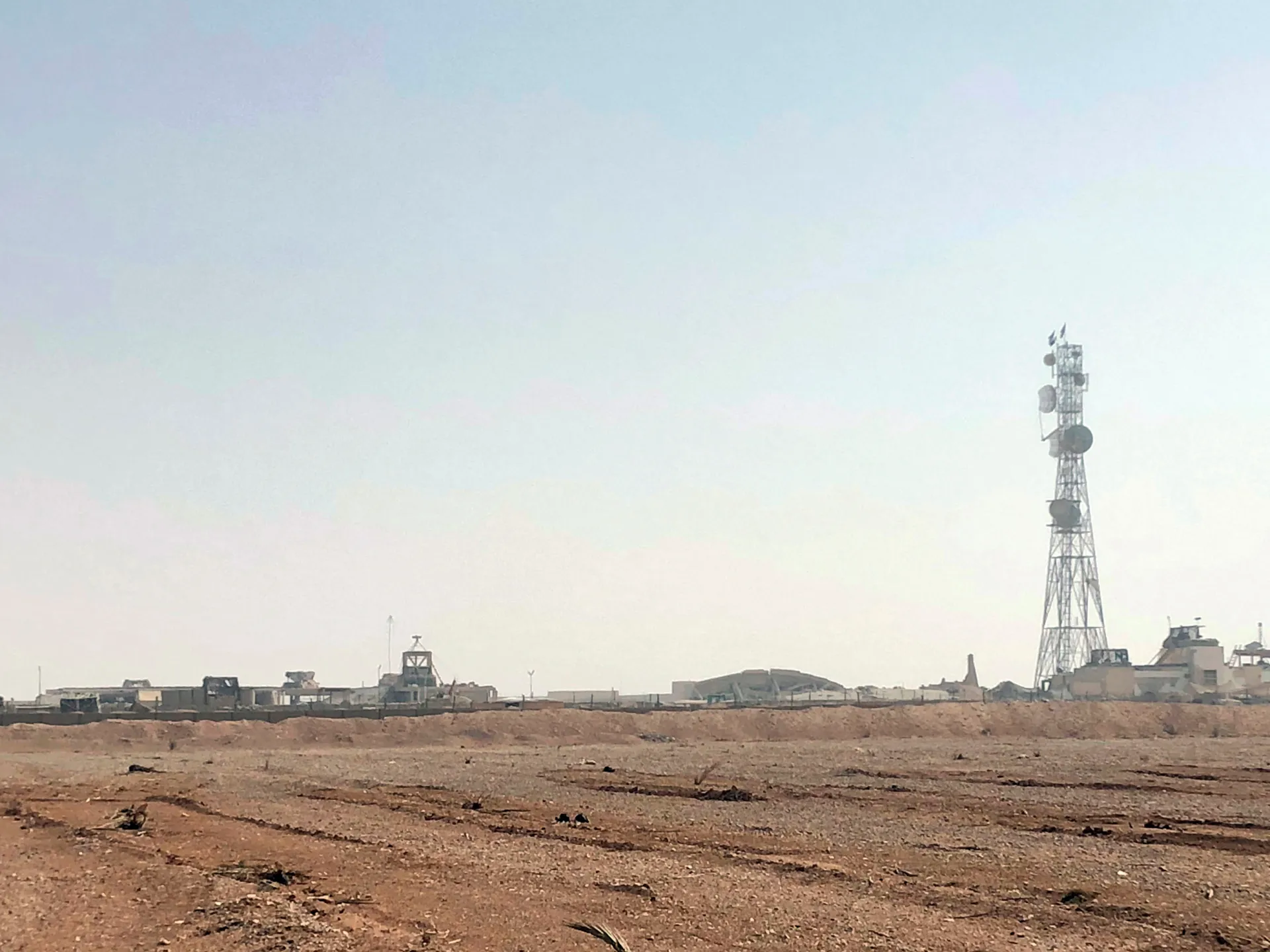
On Thursday, Syrian forces announced they had taken control of the al-Tanf military base, a strategic garrison near the border with Iraq and Jordan, following the withdrawal of US forces.
Cooper, the commander of US forces in the Middle East, said the departure was “part of a deliberate and conditions-based transition”, and that US forces remained “poised to respond to any [ISIL] threats that arise in the region as we support partner-led efforts” to prevent the group’s resurgence.
While ISIL was largely defeated in 2017 in Iraq and in Syria two years later, sleeper cells still carry out attacks in both countries.
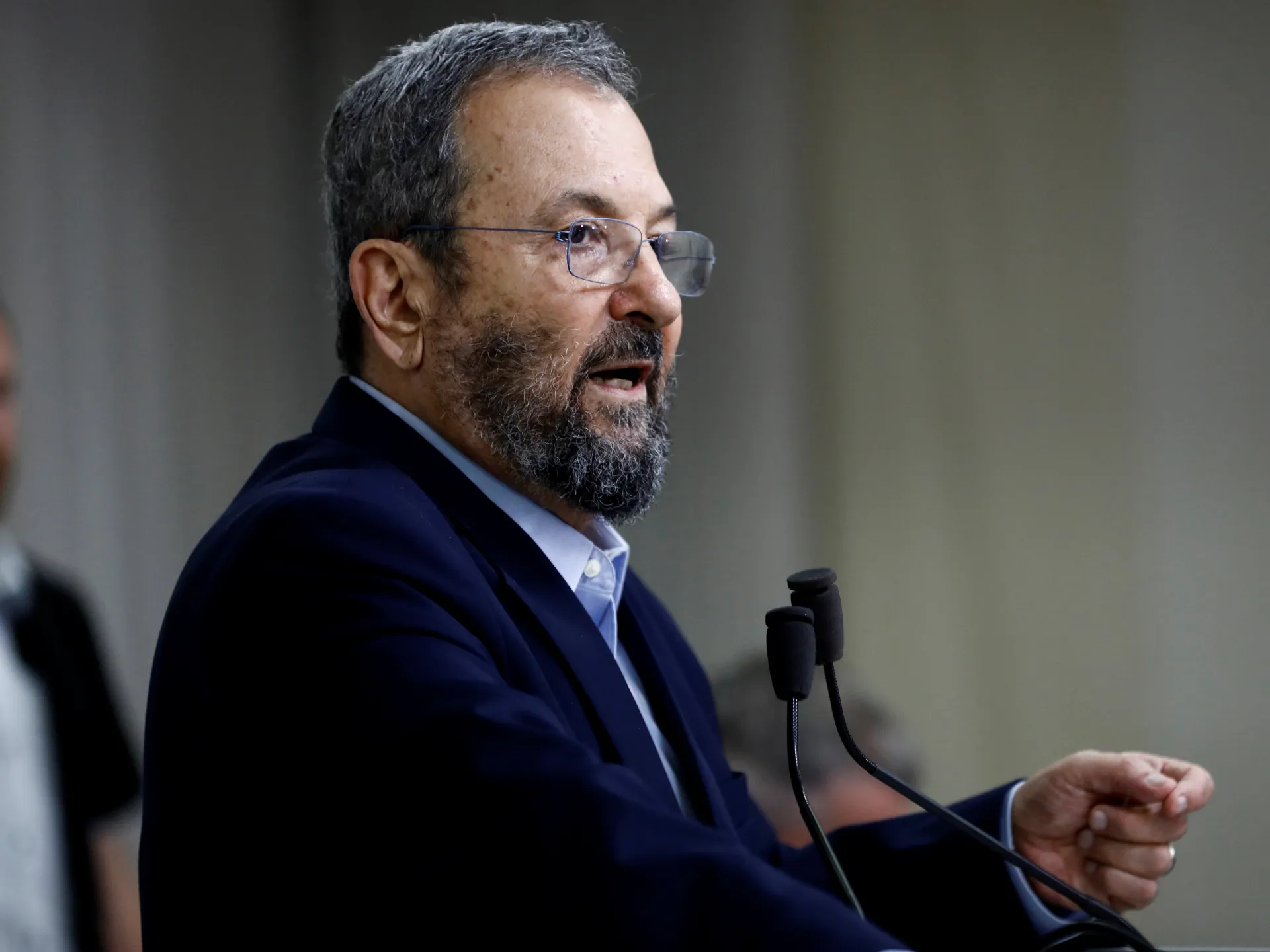
Former Israeli Prime Minister Ehud Barak has said he regrets maintaining a relationship with the convicted sex offender Jeffrey Epstein after the latter’s 2008 conviction for procuring a child for prostitution, as the reverberations from millions of files released pile up.
In an interview with Israel’s Channel 12 on Thursday, Barak gave his first comments on his relationship with Epstein, who died by suicide in prison in 2019, since the United States Department of Justice released a massive tranche of files relating to the late financier.
Recommended Stories
list of 4 itemsend of list
Barak, who led Israel from 1999 to 2001, expressed remorse over his lengthy relationship with Epstein, saying he regretted the moment he met the financier, to whom he was introduced by former Israeli President Shimon Peres at a large event in Washington in 2003, Peres referring to Epstein as a “good Jew”.
“I am responsible for all my actions and decisions. There is room to question whether I should have investigated more thoroughly. I regret not doing so,” said Barak.
But, despite Epstein having been convicted of procuring a minor for prostitution in 2008 and spending about a year in prison during the course of their relationship, Barak claimed he was unaware of the scope of Epstein’s crimes until a wider probe into him was opened in 2019.
“I did not know the manner of his crimes until 2019, and you probably didn’t know it either,” he said, according to Israeli media reports, claiming that in the 15 years he knew Epstein, he “never saw any unreasonable occurrence, or any unreasonable behaviour”.
Visits to home, island
Barak did not deny his contacts with Epstein after his 2008 conviction, which included staying, along with his wife, at the financier’s Manhattan home on multiple occasions between 2015 and 2019, as well as exchanging emails and meeting him in person.
He also acknowledged visiting Epstein’s notorious island in the US Virgin Islands, Little Saint James, where parties involving sex trafficking victims are said to have taken place.
He said it was a single visit, for three hours in broad daylight, accompanied by his wife and three guards, and that he saw nothing there except Epstein and some workers.
Barak sought to deflect his continued business and social contacts with Epstein after his 2008 conviction by saying that during that period, the financier was widely treated as someone who had “paid his debt to society” and been readmitted to public life.
It was not until the reopening of the investigation into him in 2019, which revealed the scale and severity of his actions, that his influential associates severed their ties with him, he said.
Epstein killed himself in prison that year while facing charges of sex trafficking underage girls.
The ties between the disgraced Epstein and Israel have come into sharp focus after the release of millions of documents.
The documents have revealed more details of Epstein’s interactions with members of the global elite, including Barak. But they also document his funding of Israeli groups, including Friends of the IDF (Israeli army), and the settler organisation the Jewish National Fund, as well as his ties to members of Israel’s overseas intelligence services, the Mossad.
During the interview, Barak was also asked about comments he had made in one recently unclassified recording with Epstein about Israel offsetting Palestinian population growth by absorbing one million Russian-speaking immigrants.
In the audio, the former Israeli leader also appeared to disparage Sephardi Jews from the Middle East and North Africa.
He said that in the past, Israel did what it could by taking Jews “from North Africa, from the Arabs, from whatever”, but added that the country could now “control the quality” of the population “much more effectively than our ancestors”.
“We can easily absorb another million. I used to tell [Russian President Vladimir] Putin always, what we need is just one more million,” he says in the audio, released by the US Department of Justice last month.
Such an immigration wave would mean “many young, beautiful girls would come, tall and slim”, from Russia to Israel, he says in the recording.
Addressing his comments, Barak said he was “not proud of that choice of words, but I did not say that to Putin”.
He denied that his remarks were racist, saying they were a conversation about the demographic challenge Israel faced from its growing Arab population.
Questions swirl over Norwegian diplomat
Barak claimed that while further documents may emerge from the released files detailing his ties to Epstein, none would reveal inappropriate conduct.
The release of the files, compiled by investigators looking into Epstein’s activities, have further revealed his links to a sprawling, global network of powerful contacts.
Among those involved is Terje Rod-Larsen, the Norwegian diplomat who was a key architect of the 1993 Oslo Accords, who is facing a storm of corruption and blackmail allegations after files revealed he was deeply embedded in Epstein’s inner circle.
Norwegian media investigations have exposed a relationship involving illicit loans, visa fraud for sex-trafficked women, and a beneficiary clause for his children in Epstein’s will worth millions of dollars, raising questions about whether Oslo’s foundational agreements of the two-state solution were brokered by a mediator vulnerable to elite blackmail and foreign intelligence pressure.
United States Treasury Secretary Scott Bessent has claimed that Washington engineered a dollar shortage in Iran to send the rial into freefall and cause protests on the streets.
In December and January, Iran was faced with one of the biggest antigovernment protests the country has seen since the Islamic revolution of 1979, prompted by the severe economic crisis.
Protests over soaring prices in Iran began with shopkeepers in Tehran who shuttered their shops and began demonstrating on December 28, 2025, after the rial plunged to a record low against the US dollar in late December. The protests then spread to other provinces of Iran.
Supreme Leader Ayatollah Ali Khamenei’s government responded with force. More than 6,800 protesters, including at least 150 children, are thought to have been killed in a sweeping crackdown by the government on the protest movement.
So, how did Washington create a “dollar shortage” in Iran, ultimately causing the rial to tank? And what effect has that had on the Iranian people?
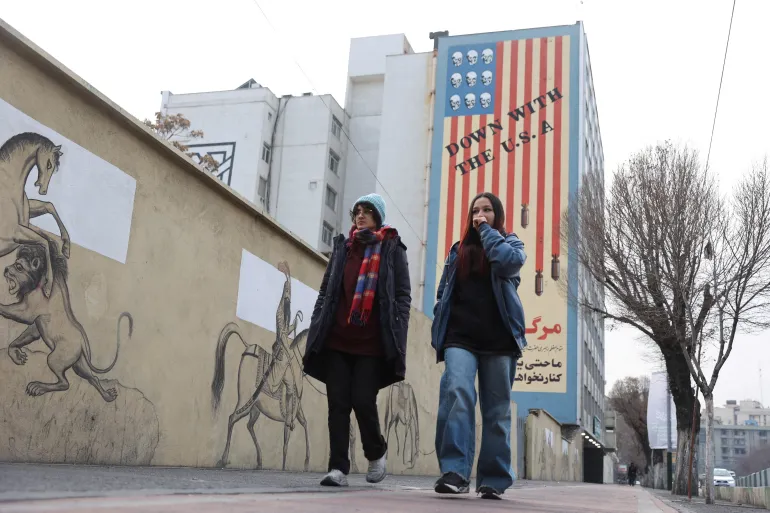
People walk next to an anti-US mural on a street as protests erupt over the collapse of the currency’s value in Tehran, Iran, January 2, 2026 [Majid Asgaripour/West Asia News Agency (WANA) via Reuters]
What is a ‘dollar shortage’?
A “dollar shortage” refers to when a country does not have enough US dollars to pay for things it needs from the rest of the world.
The US dollar is the main currency used in global trade, especially for oil, machinery and loan repayments, which means countries need a steady supply of it.
If exports fall and sanctions block access to the US financial system, dollars can become scarce. As a result, the local currency weakens, prices of imported goods rise, and inflation worsens.
In Iran, a “dollar shortage” was engineered by simultaneously blocking the two main channels of foreign exchange (FX) inflow: Oil exports and international banking access, said Mohammad Reza Farzanegan, an economist at Germany’s Marburg University. The US did this by imposing sanctions on Iranian oil, meaning anyone buying or selling it would be subject to punitive measures.
Given Iran’s dependence on oil for revenue, economic sanctions on its oil can create a severe FX constraint.
“By using secondary sanctions to threaten any global entity trading in dollars with Iran, the US traps Iran’s existing reserves abroad and prevents new dollars from entering the domestic market,” Farzanegan told Al Jazeera.
US Treasury Secretary Scott Bessent attends the 56th annual World Economic Forum (WEF) meeting in Davos, Switzerland, on January 20, 2026 [Denis Balibouse/Reuters]
What has US Treasury Secretary Scott Bessent said?
Replying to a query about dealing with Iran at a Congressional hearing last week, Treasury Secretary Bessent described the US strategy to send the Iranian currency plunging.
“What we [have done] at Treasury is created a dollar shortage in the country,” Bessent said, adding that the strategy came to a “grand culmination in December, when one of the largest banks in Iran went under … the Iranian currency went into freefall, inflation exploded, and hence, we have seen the Iranian people out on the street.
“We have seen the Iranian leadership wiring money out of the country like crazy,” Bessent added. “So the rats are leaving the ship, and that is a good sign that they know the end may be near.”
Before this, speaking with Fox News at the World Economic Forum last month in Davos, Bessent explained the role US sanctions played in driving the recent nationwide protests.
“President Trump ordered Treasury … to put maximum pressure on Iran, and it’s worked,” he said. “Because in December, their economy collapsed. They are not able to get imports, and this is why the people took to the streets.”
In both instances, Bessent referred to his earlier remarks at the Economic Club of New York, in March last year, when he outlined how the White House would leverage President Donald Trump’s “maximum pressure” campaign to collapse Iran’s economy.
In his address there, Bessent said the US “elevated a sanctions campaign against [Iran’s] export infrastructure, targeting all stages of Iran’s oil supply chain”, coupled with “vigorous government engagement and private sector outreach” to “close off Iran’s access to the international financial system”.
Iranian scholars stand in the Islamic seminary that was burned during Iran’s protests, in Tehran, Iran, January 21, 2026 [Majid Asgaripour/West Asia News Agency (WANA) via Reuters]
What effect did the dollar shortage have in Iran?
In January, the Iranian rial was trading at 1.5 million to the dollar – a sharp decline from about 700,000 a year earlier in January 2025 and about 900,000 in mid-2025. The plummeting currency triggered steep inflation, with food prices an average of 72 percent higher than last year.
In 2018, during his first presidency, Trump withdrew from the 2015 Joint Comprehensive Plan of Action, a deal between Iran and global powers limiting Tehran’s nuclear programme in return for sanctions relief.
Since re-election last January, President Trump has doubled down on his so-called “maximum pressure” to cripple Iran’s economy and corner Tehran to renegotiate its nuclear and regional policies. Last month, Trump threatened a 25 percent tariff on countries doing business with Iran.
Through the rigorous blocking of Iran from the global financial system by creating a dollar shortage, the US pushed Tehran towards a severe “import compression, [and as a result, Iran] cannot pay for the intermediate goods and machinery required for domestic production”, said Farzanegan, the economist.
The US strategy, he said, “is particularly devastating because it leverages commercial risk management against humanitarian needs”. In short, Washington’s strategy “makes the small Iranian market a commercial liability” for any company, even if they are only dealing with medicine, for instance, Farzanegan added.
A research paper published by Farzanegan and Iranian American economist Nader Habibi last year found that the size of Iran’s middle class would have expanded by an annual average of approximately 17 percentage points, between 2012 and 2019, if it were not for US action.
In 2019, the estimated size of loss in the middle-class share of the population in Iran was 28 percentage points, the research found.
“People lost their purchasing power, and savings were wiped out,” the economist told Al Jazeera. “This is a long-term destruction of the country’s human capital.”
Besides the US action is the existing vulnerability of Iran’s economic structure, with factors like long-term mismanagement, high rates of corruption and over-reliance on oil revenues making it fragile.
While the US sanctions created external shock, a lack of domestic structural reforms left the government with “no fiscal space to cushion the blow”.
What is the US’s endgame here – and will it succeed?
Bessent’s admission that Washington deliberately created a “dollar shortage” signals the US’s shift towards a total economic warfare narrative.
“This is economic statecraft; no shots fired,” Bessent said at the WEF in Davos last month.
“This admission may complicate the US’s diplomatic standing, as it confirms that the humanitarian channels for food and medicine are often rendered useless if the entire banking system is being targeted for collapse,” Farzanegan said.
Bruce Fein, a former US associate deputy attorney general who specialises in constitutional and international law, told Al Jazeera that this type of economic coercion is “as common as the sun rising in the east and setting in the west”, pointing to economic sanctions against Russia, Cuba, North Korea, China and Myanmar.
However, unlike in other cases where the US has applied economic pressure, Farzanegan said Iran’s case is “a unique experiment due to the duration and intensity of the pressure”.
Unlike Russia, which has a more diversified export base and larger reserves, Iran has been facing varied forms of sanctions for decades since the supreme leader took power in 1979.
“Iran has a sophisticated internal mechanism for sanctions circumvention that makes the ‘dollar shortage’ a game of cat-and-mouse rather than a one-time shock,” the economist said.
With a US armada currently stationed in the Arabian Sea, the US and Iran are in talks to defuse tensions. The US wants three key things from Iran: To stop enriching uranium as part of its nuclear programme, to get rid of its ballistic missiles and to stop arming non-state actors in the region.
Ultimately, observers say, the US wants regime change in Iran.
But Fein said his experience shows that economic sanctions alone “seldom, if ever, topple regimes … Regime change comes externally only with the use of military force.
“Iran’s dollar shortage will not oust the mullahs or Revolutionary Guard,” he said, referring to Iran’s current administrative structure.
The impoverishment of Iranians will diminish, Fein told Al Jazeera, “rather than promote the likelihood of a successful revolution because day-to-day survival will be the priority”.
Nablus, the occupied West Bank – For decades, the Zenabia Elementary School has been offering an intimate learning environment to aspiring young students from across the educational spectrum in the northern West Bank city of Nablus.
But now, due to Israel’s years-long withholding of tax revenues owed to the Palestinian Authority, the Palestinian school system is effectively broke. Like administrators at all government-run schools in the West Bank, the Zenabia school principal, Aisha al-Khatib, is struggling to keep her small, public school in session.
For most of the week, the Zenabia school is shuttered, and children roam the streets or stay at home. School supplies are woefully missing, with even regular schoolbooks now reduced to “bundles of pages”.
“We do everything we can, but we do not have the time or the materials or the consistency to properly teach our children and keep them off the streets,” says al-Khatib. “And this is everywhere in the West Bank.”
Targeting the education of Palestine’s children, she says, “means destroying the nation”.
Under the direction of far-right Finance Minister Bezalel Smotrich, Israel has systematically been withholding billions of dollars in tax revenues over the past two years that Israel collects on behalf of the Palestinian Authority (PA). The measure is partly intended to punish the PA for its longstanding policy of paying families of Palestinians imprisoned by Israel for resisting the occupation – even after the PA announced early last year that it was reforming such policies.
Public services have faced severe cuts, affecting the salaries of bureaucrats, sanitary workers, and the police.
But possibly nowhere has that budgetary crisis been felt more than in the education sector.
At Zenabia and elsewhere in the West Bank, public schools are currently only open for a maximum of three days a week. Teachers face long stretches of not being paid, and when they are, they only receive about 60 percent of what they were earning before, resulting in strikes.
And the effects of these cuts in education are showing up on the days when school is in session. Class time is so diminished at Zenabia that teachers focus almost solely on teaching mathematics, Arabic, and English, with subjects like the sciences being essentially cut altogether.
The result, educators warn, could be lasting educational gaps for a generation of Palestinian students.
“As principal of the school, I know that [the students] are not [at] the same [educational] level as before,” al-Khatib says.
‘We are always absent from school’
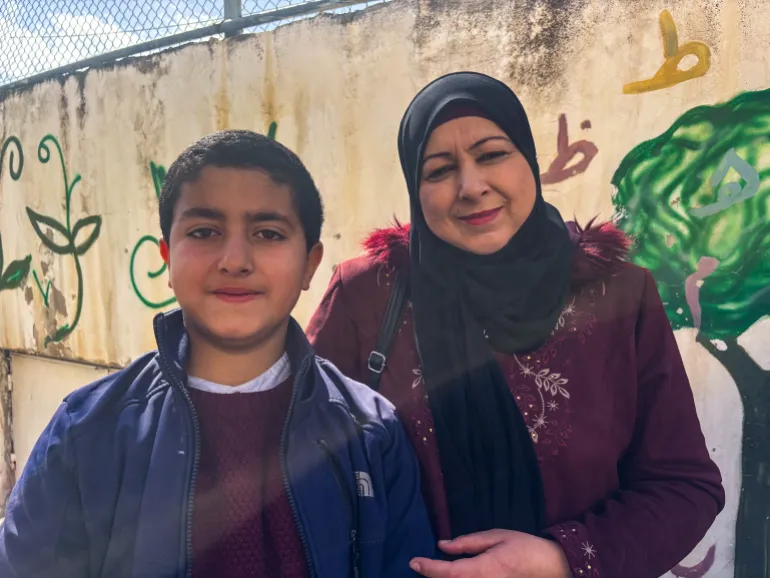
Spending most of his days out of school, star student Zaid Hasseneh, 10, tries to keep improving his English by looking up words on Google Translate. Zaid dreams of going to university someday in the United States, with hopes of becoming a doctor.
“I want my son to grow up to be cultured – not just memorise the material he learns at school,” says his mother, Eman. “No, I want his cultural knowledge to develop and become diverse and advanced.”
Eman helps Zaid when she can with his studies, but she is busy keeping the family afloat financially after her husband lost his work in Israel. Before Israel’s war on Gaza began in 2023, Eman’s husband worked in Tel Aviv as a mechanic. After Israel revoked his work permit, along with those of some 150,000 other West Bank Palestinians, he has been unable to find work. Eman now works in a halawa factory as the sole breadwinner.
“I go home tired from work, but I have to keep up with [Zaid] regularly,” says Eman. “I tell him, ‘The most important thing is studying. Studying is essential for life.’”
But Eman realises how limited she is in helping her son with his studies. “The teacher knows one thing, but I don’t know how to explain it,” says Eman. “And now, the books [they receive in school] aren’t complete books anymore. They’re bundles. Regular books are 130 pages, but these are 40 or 50 pages.”
To compound the dearth in school resources, students and their families describe erratic schedules that make cumulative learning a near impossibility. “The whole family’s routine is affected,” says Eman.
Even Zaid is now often spending his days out in the streets rather than studying in the classroom – or otherwise on his phone, playing mobile games.
That is the case for most students these days.
Muhammad and Ahmed al-Hajj joined Zenabia four years ago as six-year-olds when they faced extreme bullying in another school. They came to love the new school and the intimate setting it offers. But the twins now mostly spend their time on their phones. With their parents also struggling to earn enough money to get by, they’re left at home alone during their days off from school.
“It’s not good at all. We are always absent from school,” says one of the twins. “It’s not like a full schedule, and we try to study as much as we can, but still, we don’t feel good about it.”
Some families have switched their children over to private schools, but few can afford to do so. “My [monthly] salary is 2,000 shekels [$650],” explains Eman Hassaneh. “About 1,000 goes towards the home rent. Another 500 goes towards bills. And only very little is left for food. I cannot also take care of his education.”
Eman Hassaneh and her 10-year-old son, Zaid [Al Jazeera]
Teachers quitting, and mounting dropouts
Collectively, the PA’s multi-year budget cuts of billions of dollars are shrinking both the attendance of students and the number of teachers, too.
“Many of the teachers left working in the schools to work in factories because they do not get enough salary,” says al-Khatib. “And they don’t feel that they are giving what they need to give the students.”
Tamara Shtayeh, a teacher at Zenabia, nowadays only teaches maths, English, and Arabic due to the reduced funding. “As a teacher, the three-day solution is a bad solution because it doesn’t cover the minimum education that is needed,” she said. “Not for the students, and not for the teachers as well.”
Due to her reduced salary, Shtayeh, a mother of three girls, is selling products online on the side to support her family. Even the school’s principal, al-Khatib, says she can now only afford to send one of her two college-age daughters to university, with the other daughter staying at home.
School hours are reduced even further as Israeli soldiers regularly raid the surrounding areas, closing the school every time they do so. With the crisis stretching on for years now, Shtayeh is sensing a generational gap widening between the previous generation that received five days of school, and this one going to school for about half of that.
Shtayeh and al-Khatib worry about the lack of routine in the children’s lives. For every student like Zaid, who is devoted to educating himself despite the circumstances, many more students are dropping out of the system altogether.
Abu Zaid al-Hajj with his twin sons, Muhammad and Ahmed, age 10 [Al Jazeera]
Not far from Zenabia, Talal Adabiq, 15, now spends his days selling sweets and drinks for eight hours a day on the streets of Nablus.
“I don’t really like school,” says Talal. “I prefer working.”
Talal told his parents about a year ago that he wanted to drop out of school. Though they wanted him to continue his studies, he told them he did not find much use for school anymore – and he used the irregular school schedule to prove his point.
Offering to help support his struggling family financially, Talal subsequently dropped out of al-Kindi School. He now makes “about 40 to 50 shekels a day” ($13-16) hawking street goods.
As he sells lollipops and other sweets on a Tuesday afternoon, several teenage boys looked on nearby. They say they’re still in school, but on this budget-mandated day off, some of the boys joke about how “fun” it would be to not go to school at all.
Talal, meanwhile, shrugs off questions about what dropping out of school portends for his future. “God willing, things will be better,” says Talal. “I don’t know how.”
In the estimations of educators and representatives from the Palestinian Authority, about 5 to 10 percent of students have dropped out of school in the West Bank in the past two years.
Talal Adabiq, 15, has dropped out of school completely and now sells items on the street [Al Jazeera]
‘Our children deserve a chance at life’
While massive budget cuts roil the education sector, the Palestinian Authority is struggling to come up with solutions as its budgetary woes deepen – and schoolchildren otherwise face threats, violence and demolitions at the hands of Israeli soldiers, settlers and the Israeli Civil Administration.
Even before the war on Gaza began, the school sector was facing a variety of crises, with teacher strikes commonplace, as well as Israeli attacks on school infrastructure and children on their way to class, with at least 36 demolitions of 20 schools between 2010 and 2023.
But systemic attacks on education are now intensifying. According to Ghassan Daghlas, the governor of Nablus, in his district alone, three schools have been attacked in the last two months by settlers. In nearby Jalud last month, settlers set a school on fire. The rise in violence is leaving students at once traumatised and fearful of going to school, says Daghlas.
“In the past three months, most of the invasions that target homes in the Nablus district are targeting schoolchildren. They will take the kid along with one of the parents. They subject them to interrogation for a few hours,” says the governor. “What kind of psychological state will the students have after these interrogations?”
According to PA estimates, more than 84,000 students in the West Bank have had their education disrupted by incidents including settler attacks, military raids and demolitions of schools. More than 80 schools serving approximately 13,000 students are under threat of full or partial demolition by Israeli authorities in the West Bank and occupied East Jerusalem. Between July and September 2025 alone, more than 90 such education-related incidents were documented in the West Bank.
In Area C – the 60 percent of the West Bank under full Israeli military control – students from isolated villages sometimes have to walk several kilometres to reach their schools, in which they regularly face harassment or attacks from settlers as well as soldiers on the way, with a rising trend in settler outposts deliberately placed near schools.
“These are not individual acts by some violent settlers,” says Mahmoud al-Aloul, the vice chairman of the central committee of Fatah, the Palestinian Authority’s ruling political party. “Rather, it’s a general policy that is supported by the occupation.”
In 2025, Nablus governorate alone had 19 students killed by Israeli army gunfire, according to Daghlas. A total of 240 were injured.
Education officials say the longer the crisis persists, the greater the long-term impact will be as teacher attrition, interrupted learning and rising dropout rates compound over time.
“The continuation of the crisis means risking long-term institutional erosion, in which temporary solutions become permanent, and the regime becomes less able to restore its previous level of quality, efficiency and justice,” says Refaat Sabbah, the president of the Global Campaign for Education. “Saving education today is not a sectoral option, but a strategic necessity to protect society and its future.”
For Eman Hassaneh, that means safeguarding her son Zaid’s future hopes and dreams. “We hope all of these barriers to education won’t actually affect our children and their passion for learning,” she says.
Syria’s defence ministry says its forces have taken control of the strategic base amid coordination with the US.
By Al Jazeera and News Agencies
Published On 12 Feb 202612 Feb 2026
Share
Syrian forces have taken control of the strategic al-Tanf military base near the border with Iraq and Jordan, the Syrian defence ministry has said, amid the withdrawal of a longstanding United States troop presence at the base.
The ministry said in a statement on Thursday that Syrian Arab Army units had taken control of al-Tanf, securing the base and its surroundings, “through coordination between the Syrian and American sides”.
Recommended Stories
list of 4 itemsend of list
Army units had “begun deploying along the Syrian-Iraqi-Jordanian” border nearby, the ministry said, while border guards would be deployed in the coming days.
The base was established during Syria’s civil war in 2014 as a key hub for operations by the global coalition against ISIL (ISIS), which at the time controlled large areas of Syria and Iraq until the group was vanquished in 2017.
The US withdrawal from the base comes months after Syrian President Ahmed al-Sharaa, the former leader of the armed group Hayat Tahrir al-Sham, who the US once deemed a “Specially Designated Global Terrorist”, joined the anti-ISIL coalition in November.
The US military has not officially commented on the pullout, but Trump has expressed an interest in withdrawing US troops from Syria since his first term.
Syrian government expands control
The pullout also follows a US-brokered deal to integrate the Kurdish-led Syrian Democratic Forces – a key US partner in the fight against ISIL – into Syrian government institutions, an agreement the US hailed as a major step towards national unity and reconciliation in Syria.
Last month, as al-Sharaa’s government pushed to expand its control over the country, Syrian government forces captured large areas of previously Kurdish-held territory in northeast Syria, amid deadly clashes with the SDF.
Amid the advance of Syrian forces, the US military has been transferring thousands of ISIL prisoners from jails previously run by the SDF in northeastern Syria, as the facilities were transferred to Syrian government control.
US drawdown
While the size of the US deployment in Syria has fluctuated over the years, with precise figures often unclear due to the classified nature of many operations, a Pentagon announcement in July 2025 said there were about 1,500 American soldiers in Syria.
The size of the deployment currently stands at 900, The Associated Press reported.
Earlier this month, an Al Jazeera correspondent on the ground reported that US military personnel appeared to be drawing down their presence from watchtowers surrounding a military installation in the al-Shaddadi area in northeastern Hasakah province.
Soldiers were also seen lowering the US flag from one tower, while equipment used to manage aircraft takeoffs and landings at the base’s airstrip was no longer visible.
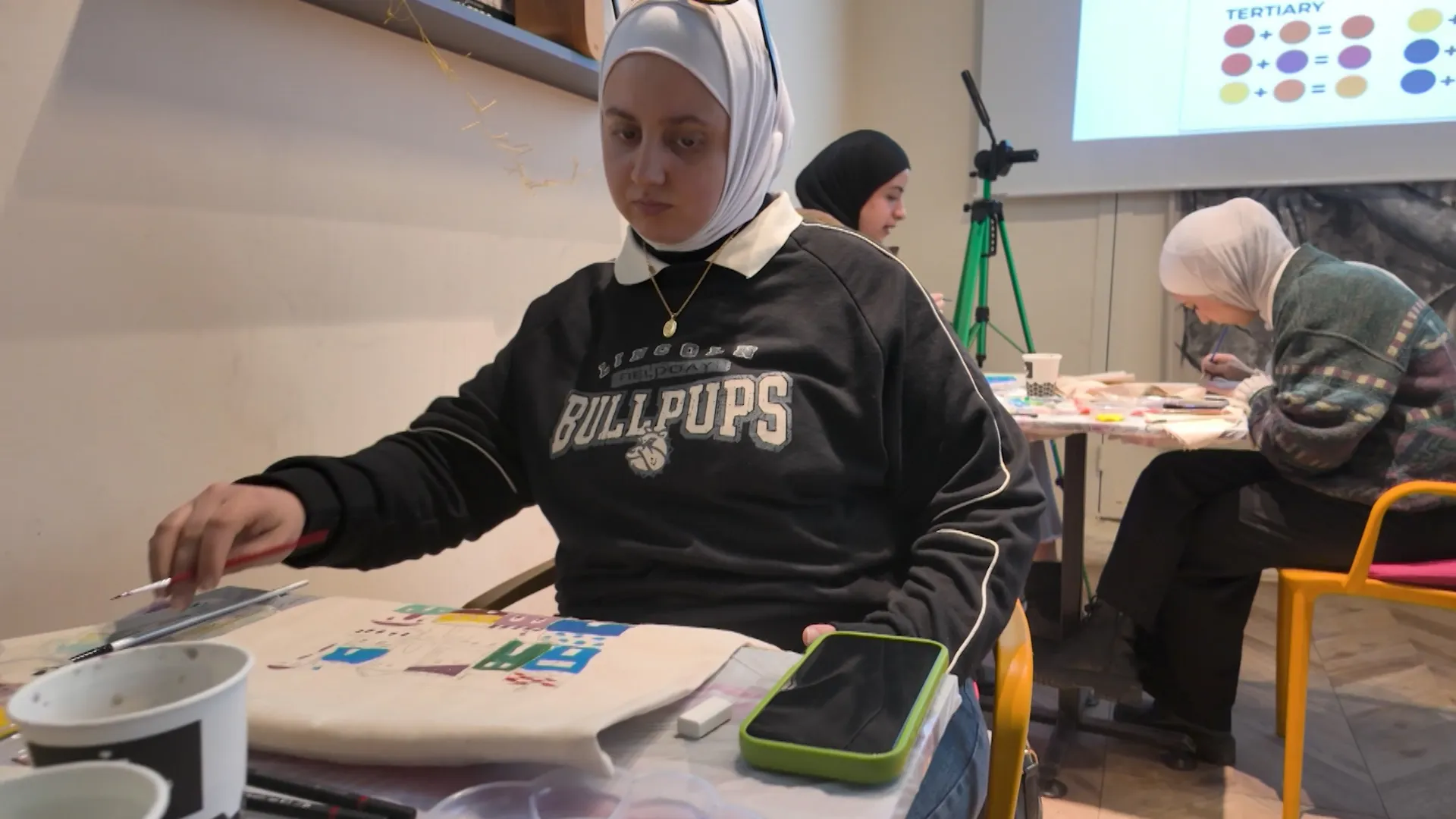
In Syria’s Aleppo, an artists’ collective is bringing Syrians from different religious and political backgrounds together in a creative shared space. Al Jazeera’s Zein Basravi had a look at how workshops, concerts and film screenings are helping rebuild trust in a city marked by years of war.
The Norwegian diplomat who was a key architect of the 1993 Oslo Accords is facing a storm of corruption and blackmail allegations after new documents revealed he was deeply embedded in the inner circle of late sex offender and financier Jeffrey Epstein.
Terje Rod-Larsen, a central figure in the Middle East “peace process” in the 1990s, is implicated in newly released United States Justice Department files and Norwegian media investigations that expose a relationship involving illicit loans, visa fraud for sex-trafficked women, and a beneficiary clause in Epstein’s will worth millions of dollars.
The revelations have sent shockwaves through the diplomatic community and led to the resignation of Rod-Larsen’s wife, Mona Juul – herself a pivotal figure in the Oslo negotiations – from her post as Norway’s ambassador to Jordan and Iraq this month. Her security clearance was also revoked.
Palestinian leaders are now questioning whether Oslo’s foundational agreements of the two-state solution were brokered by a mediator vulnerable to elite blackmail and foreign intelligence pressure.
The plan was heralded in the Western world at the time, and in the 30 years since, has been trampled on by successive Israeli governments, with the far-right leadership now openly pushing for annexation of the occupied West Bank.
Investigations by the Norwegian broadcaster NRK and newspaper Dagens Næringsliv (DN) detail how Rod-Larsen used his position as president of the International Peace Institute (IPI) think tank in New York to launder the reputation of Epstein’s associates.
According to the files, Rod-Larsen wrote official letters of recommendation to US authorities to secure visas for young Russian women in Epstein’s orbit, claiming they possessed “extraordinary abilities” suitable for research roles.
In reality, these women were often models with no academic background who were allegedly trafficked and abused by the financier. One victim told NRK she believed Epstein sent her to Rod-Larsen’s institute “to manipulate” her, while another described how the diplomat facilitated her visa after a direct request from Epstein’s assistant.
The transactional nature of the relationship was explicit. Documents show Epstein loaned Rod-Larsen $130,000 in 2013. More damningly, reports indicate that Epstein’s last will and testament included a clause bequeathing $5m each to Rod-Larsen’s two children – a total of $10m.
‘Oslo was a trap’
For Palestinians living under the reality of the failed agreements Rod-Larsen forged, the scandal offers a disturbing explanation for a “peace process” that many believe was rigged.
Mustafa Barghouti, general secretary of the Palestinian National Initiative political party, told Al Jazeera he was “not surprised at all” by the corruption allegations.
“We never felt comfortable with this person from the very first moment,” Barghouti said. “Oslo was a trap … and I have no doubt that Terje Rod-Larsen was being effectively influenced by the Israeli side all along.”
Barghouti argued that the revelation of millions of dollars potentially flowing from a Mossad-linked figure like Epstein to the Rod-Larsen family suggests the corruption was “directed to serve Israel’s interests against the interests of the Palestinian people”.
The ties between the disgraced Epstein and Israel have come into sharp focus after the release of millions of documents.
The documents have revealed more details of Epstein’s interactions with members of the global elite, including former Israeli Prime Minister Ehud Barak. But they also document his funding of Israeli groups, including Friends of the IDF (Israeli army), and the settler organisation the Jewish National Fund, as well as his ties to members of Israel’s overseas intelligence services, the Mossad.
The missing archive
The scandal has reignited calls in Norway to open the “private archive” Rod-Larsen kept regarding the 1993 secret negotiations.
Media investigations have revealed that documents from the critical period between January and September 1993 are missing from the official Foreign Ministry archive. Critics argue these missing files could obscure the extent to which personal leverage or blackmail played a role in the concessions extracted from the Palestinian leadership during the secret talks.
Governing by blackmail
Analysts argue the Rod-Larsen case is symptomatic of a wider system of global governance driven by systematic blackmail and intelligence operations.
Wissam Afifa, a political analyst based in Gaza, drew a parallel between the exploitation of minors on Epstein’s island and the geopolitical treatment of Palestinians.
“We, as Palestinians, were treated as minors … considered as having no right to demand our rights,” Afifa said. “Today we discover that a large part of the international system is essentially ‘Epstein Island’”.
Afifa suggested that the “silence” of the international community regarding the current genocidal war on Gaza could be linked to similar networks of influence and extortion.
“The world was managed from Epstein’s island … in dark rooms,” Afifa added. “We are victims of the influence network that Epstein managed with politicians, leaders and states”.
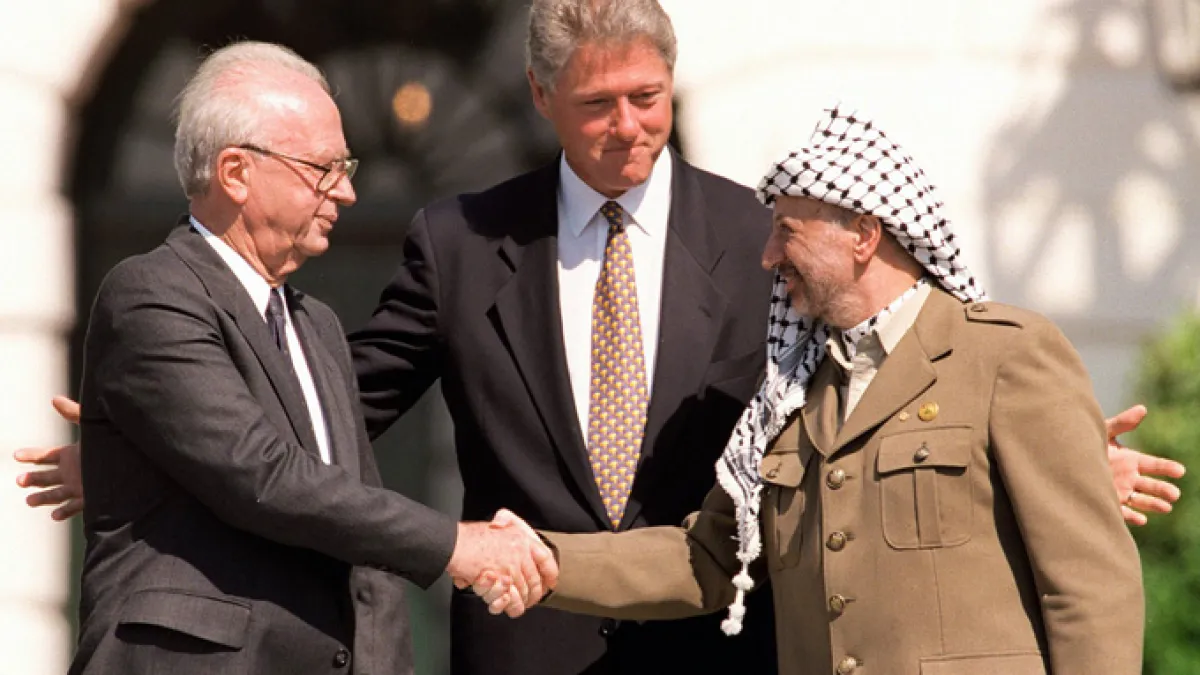
As Norwegian authorities, including the economic crime unit Okokrim, open investigations into the scandal, the legacy of the diplomat who once shook hands on the White House lawn lies in tatters, casting a long shadow over the history of deeply flawed Middle East peacemaking.
The Sudan Doctors Network said the deadly strike was carried out by the paramilitary Rapid Support Forces.
Published On 12 Feb 202612 Feb 2026
Share
A drone attack on a mosque in central Sudan has killed two children and injured 13 more, according to a Sudanese doctor’s association, amid a rise in similar attacks across the region.
The Sudan Doctors Network said the attack was carried out at dawn on Wednesday by the Rapid Support Forces (RSF), a paramilitary group engaged in a three-year civil war with the Sudanese Armed Forces.
Recommended Stories
list of 4 itemsend of list
The children were reportedly studying the Quran at the Sheikh Ahmed al-Badawi Mosque in North Kordofan State when the building was hit by a drone in a “blatant violation of international humanitarian law and a grave assault on places of worship”, the doctors’ group said in a Facebook post.
“Targeting children inside mosques is a fully constituted crime that cannot be justified under any pretext and represents a dangerous escalation in the pattern of repeated violations against civilians,” the doctors said.
The Sudan Doctors Network said the RSF has previously targeted other religious buildings for attack, including a church in Khartoum and another mosque in el-Fasher, reflecting a “systematic pattern that shows clear disregard for the sanctity of life and religious sites”.
“The network calls on the international community, the United Nations, and human rights and humanitarian organizations to take urgent action to pressure for the end to the targeting of civilians, ensure their protection, open safe corridors for the delivery of medical and humanitarian aid, and work to document these violations and hold those responsible accountable,” it said.
The UN separately said on Wednesday that a recent series of drone attacks have been reported on civilian infrastructure in Sudan’s South Kordofan, North Kordofan and West Kordofan states.
A World Food Programme (WFP) warehouse in Kadugli was also hit by a suspected rocket attack on Tuesday night, according to UN spokesperson Stephane Dujarric. He did not say which group was responsible for the attack.
“The fact that we have to reiterate almost every day that civilians and civilian infrastructure, places of worship, schools and hospitals cannot and should not be targeted is a tragedy in itself,” Dujarric told reporters.
The UN has warned that Sudan’s civil war is expanding from western Darfur into the Kordofan region.
It has documented more than 90 civilian deaths and 142 injuries caused by drone strikes between the end of January and February 6, which were carried out by the RSF and Sudanese Armed Forces.
Targets included a WFP convoy, markets, health facilities and residential neighbourhoods in southern and northern Kordofan, the UN said.
Winning bidders include Chevron, Eni, QatarEnergy and Aiteo.
Published On 11 Feb 202611 Feb 2026
Share
Libya has assigned new oil and gas exploration rights to foreign firms, aiming to revamp the sector after years of civil strife.
The country’s National Oil Corporation (NOC) announced the results of its first licensing round since 2007 on Wednesday. Winners included US oil giant Chevron and Africa’s largest privately-owned energy company, Nigeria’s Aiteo.
Recommended Stories
list of 3 itemsend of list
Other winning bidders were consortia: Spain’s Repsol with British Petroleum, Eni North Africa with QatarEnergy, and Repsol with Hungary’s MOLGroup and Turkiye Petrolleri.
The licensing awards signal some renewed interest in Libya’s oil sector, which foreign investors had long been wary of after the country erupted into conflict in 2011 with the overthrow of longtime ruler Muammar Gaddafi. But experts said the response was smaller than expected.
“It is likely that lingering uncertainty over Libya’s political dysfunction and insecurity in the areas around the blocks on offer were factors in the underwhelming response,” Hamish Kinnear, an analyst with UK-based risk consultancy Verisk Maplecroft, told the AFP news agency.
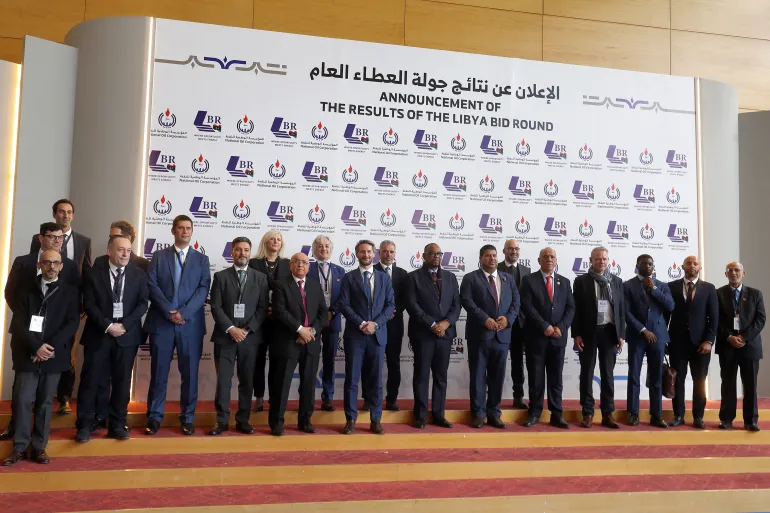
Masoud Suleiman Musa, acting chairman of Libya’s National Oil Corporation, and other corporate representatives attend a conference announcing grants of oil exploration and production licences, in Tripoli, Libya, February 11 [Mahmud Turkia/AFP]
Libya remains politically divided between rival administrations in the east and west, and disputes over the central bank and oil revenues often disrupt production at key oil fields.
‘Return of trust’
The licensing round, in which five of 20 blocks on offer were awarded, follows a $20bn deal last month with France’s TotalEnergies and ConocoPhillips to boost oil production over 25 years.
Prime Minister Abdelhamid Dbeibah, who announced the deal, said the goal was to increase daily oil production by 850,000 barrels within that timeframe. Libya currently produces approximately 1.4 million bpd.
The round used a new, more investor-friendly contract model to replace the rigid terms that previously deterred investment.
NOC chief Masoud Suleman said a committee will be created to further “improve the terms” of the bidding system and negotiate with candidates to grant unallocated blocks.
Speaking at the bid’s announcement ceremony, he said “a return of trust and resuming institutional work in one of the country’s most important sectors after a long period of pause and challenges.”
“They are part of a broader national path that aims for prosperity, growth, the return of normalcy,” he added.
Beirut, Lebanon – The Lebanese and Syrian governments have reached a deal to repatriate about 300 Syrian inmates in Lebanese prisons back to their home country in a move that could pave the way for better relations between the two neighbours.
The issue of Syrian prisoners in Lebanon has been a priority for Damascus since the fall of Bashar al-Assad’s regime in December 2024. Relations between the two countries have long been marked by what many Lebanese describe as nearly 30 years of occupation and a tutelage rule by Syria over Lebanon, which ended when Syria withdrew its troops in 2005.
Recommended Stories
list of 3 itemsend of list
About 2,400 Syrian prisoners are currently in Lebanese prisons. Some are held on “terrorism” charges while others are held for links to attacks against the Lebanese army. But most have never been tried despite having spent years in jail, largely due to a myriad of issues, including political gridlock, judicial strikes and general political indifference.
And while the deal reached on Friday may signal the beginning of a new relationship between Syria and Lebanon – one built on mutual respect rather than Syria’s direct or indirect control of the smaller state on its western border – it did not come about without any public controversy.
In Syrian eyes, many of the prisoners are being held for political rather than judicial reasons. The government of President Ahmed al-Sharaa believes they are in prison mostly due to the influence of the former al-Assad regime and its Hezbollah allies in Lebanon.
But for many Lebanese, anyone accused of attacks against the Lebanese armed forces should not be released.
“Lebanon has long insisted that anyone Syrian or otherwise accused of committing serious crimes against the Lebanese army should not be extradited,” David Wood, the senior Lebanon analyst at the International Crisis Group, told Al Jazeera. “That has been one key obstacle to resolving this prisoner agreement up until now.”
Political prisoners?
Lebanese-Syrian relations have long been complex. Under Syrian President Hafez al-Assad and later his son Bashar, Syrian forces controlled Lebanon from 1976 to 2005.
Even after Syrian troops withdrew from Lebanon, Syria maintained influence over Lebanon via its allies there, including the political and military group Hezbollah.
When the 2011 Syrian uprising began and was subsequently repressed by Bashar al-Assad’s regime, Syria’s border with Lebanon soon became a hotspot for the transportation of people – both fighters and refugees – weapons and drugs.
Under the agreement signed by Lebanese and Syrian officials, about 300 Syrian prisoners in Lebanese jails will be transferred to Syria in the next three months [Wael Hamzeh/EPA]
In Lebanon, the Syrian war had a strong impact. It spilled over into clashes in the northern city of Tripoli; the Battle of Abra, which involved firebrand anti-Assad sheikh Ahmad al-Assir and Lebanese-Palestinian pop star Fadel Shaker; battles with Hezbollah and the Lebanese army on one side and ISIL (ISIS) and al-Qaeda-aligned groups on the other; and attacks on Beirut’s southern suburbs.
In the intervening years, hundreds of Syrians were arrested by Lebanese authorities and held in Lebanon’s overcrowded prisons.
When the al-Assad regime fell, the new Syrian government quickly looked to reframe the relationship with Lebanon, expressing an interest in building ties based on mutual respect and interests.
Among Damascus’s priorities were delineating their shared border and economic and security cooperation. But it also prioritised the repatriation of Syrians in Lebanese prisons.
“The allegation from Damascus is that in many cases the reason for [imprisonment] is political and specifically due to perceived ties between the inmates and groups that were opposed to the former regime of Bashar al-Assad,” Wood said. In its view, “it was actually Assad’s Lebanese allies who conspired to make sure that these people were imprisoned in Lebanon.”
By that logic, the fall of al-Assad and the weakening of Hezbollah after Israel’s 2024 war on Lebanon meant that these prisoners should be released.
Some Lebanese disagree and see the issue as more of a grey area. Even if the Syrian prisoners in question had fought Hezbollah, it had been at a time when the Shia group had been coordinating with the Lebanese army – and, for many Lebanese, fighting the army is a red line.
An important step
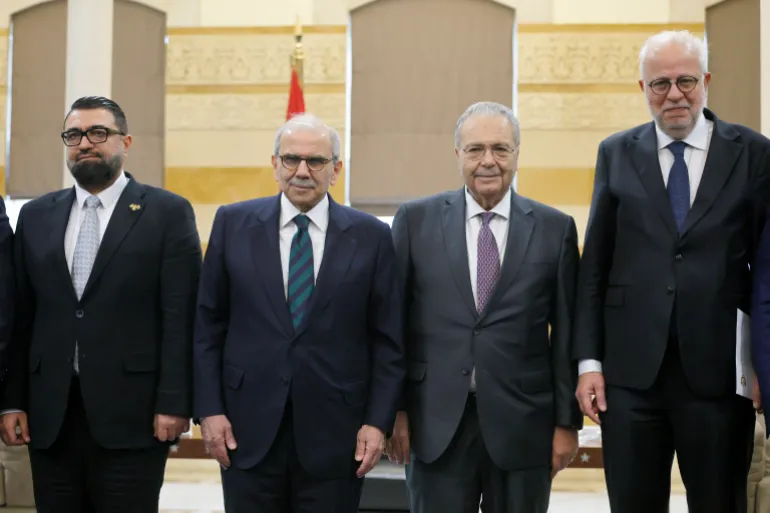
On Friday, the agreement was signed with a number of Lebanese ministers present, including Prime Minister Nawaf Salam, Deputy Prime Minister Tarek Mitri and the two countries’ justice ministers.
“This is a very important first step on the road of a comprehensive treatment regarding Syrian prisoners in Lebanese prisons,” Mitri said to reporters on Friday.
Syrian Justice Minister Mazhar al-Wais said: “This step will boost existing confidence, and we hope that relations will progress more.”
The agreement reportedly stipulates that over the next three months, about 300 prisoners will be repatriated to Syria and those serving time for serious crimes, such as rape or murder for example, must have served 10 or more years of their sentences in Lebanese prisons to be eligible for repatriation.
Lebanese prisoners, such as al-Assir, are not included in the deal.
But other issues remain. Among them are Lebanon’s backlogged judicial system and issues related to Lebanese inmates in Syrian prisons.
Only about 750 Syrian prisoners out of the 2,400 have been convicted. That means roughly 65 percent of prisoners are not eligible for repatriation yet.
Fadel Abdulghany of the Syrian Network for Human Rights described this as a “two-track” problem. On his personal website, Abdulghany noted that the transfer of prisoners convicted with final sentences can be carried out with a “swift step”.
However, for those who have yet to be convicted, the issue is not as straightforward. A mechanism for pretrial detention has not yet been agreed by the respective authorities.
“This is not merely a Syrian issue but one that touches the very structure of the Lebanese criminal justice system,” Abdulghany wrote. “Therefore, transferring convicts will not resolve the problem, because the root cause is the slow pace of procedures in Lebanon and the accumulation of detainees held without trial, along with the ensuing issues concerning the legality and continuation of their detention.”
He warned that such detainees could be used as political bargaining chips by Hezbollah. Some members or supporters of the group blame these prisoners for car bombings or other such attacks on their villages. While many of those attacks were on Shia Muslim areas where Hezbollah support is predominant, Christian villages, such as al-Qaa and Ras Baalbeck in the Bekaa Valley, were also subject to attacks.
‘There are no names’
Marcel Baloukji, a former brigadier general who oversaw the Lebanese army’s border committee with Syria, told Al Jazeera that the 300 or so prisoners who are to be transferred do not include many of the more hardened prisoners associated with ISIL or al-Qaeda whom Lebanese authorities have apprehended over the years.
But Baloukji also pointed out that the issue of Lebanese prisoners in Syrian jails is still important for the Lebanese side. Under the al-Assad regime, more than 100,000 people were forcibly disappeared, including hundreds or potentially thousands of Lebanese, going as far back as the Lebanese Civil War.
Mass graves have been found around Syria since the fall of the regime. However, much work needs to be done to identify all the bodies. Until now, the vast majority have still not been identified – neither Syrian nor Lebanese.
“There’s still a problem because there has to be an exchange between Lebanon and Syria,” Baloukji said. “There’s no one there. Most of them are not identified. There are no names.”
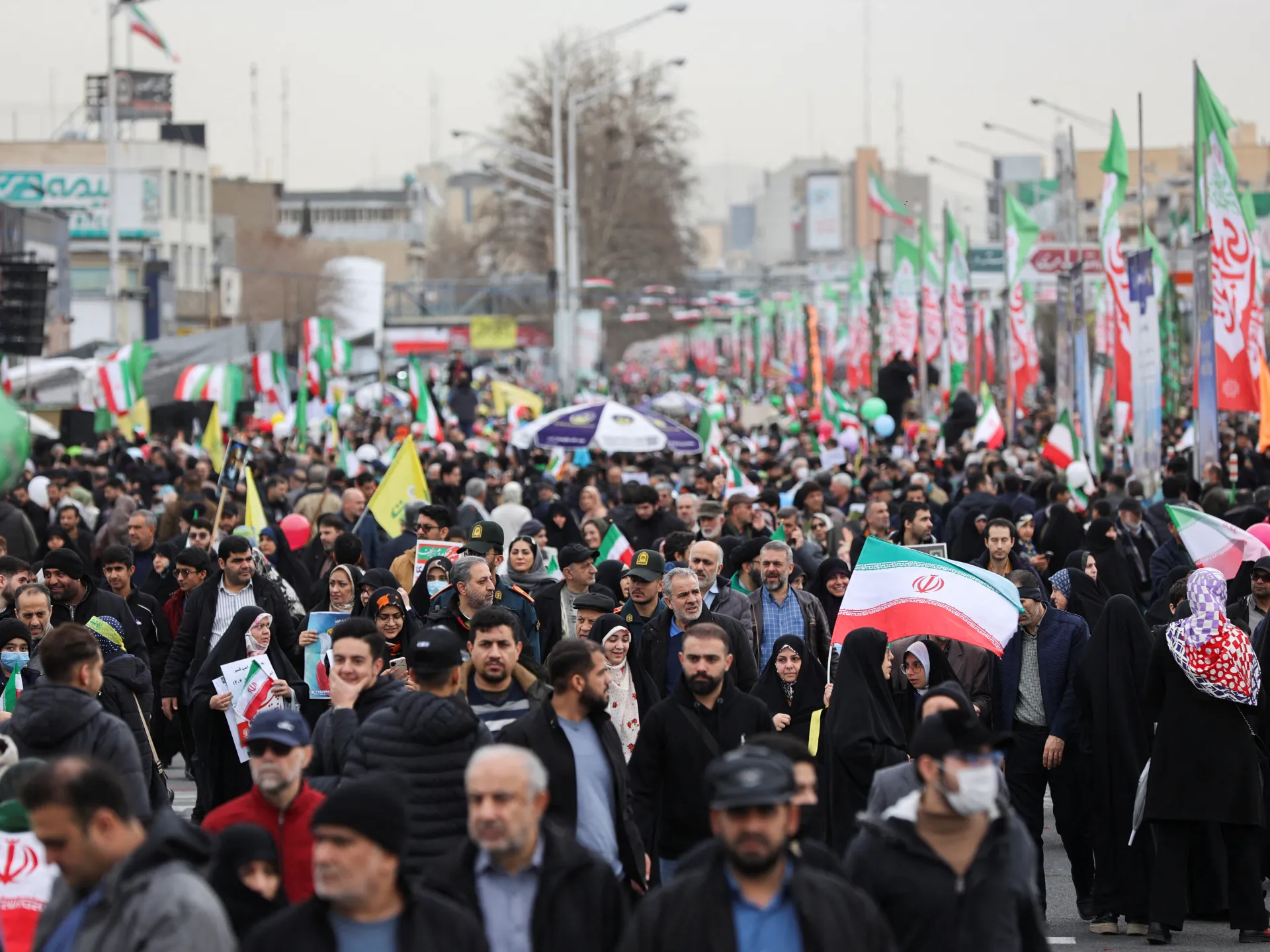
Tehran, Iran – Iran’s authorities have ratcheted up the messaging and reciprocal threats against the United States during state-organised rallies and celebrations commemorating the Islamic revolution across the country, one month after deadly nationwide protests.
Chants of “Death to America” and “Death to Israel” rang out on Wednesday in the state-run annual demonstrations, on a day of immense symbolic significance for the Islamic republic that consolidated its power during the 1979 revolution.
Recommended Stories
list of 3 itemsend of list
Near Enghelab (Islamic revolution) Square in downtown Tehran, authorities propped up five coffins for some of the top commanders in the US military.
The coffins had the US flag painted on them, and included the names and images of Central Command chief Brad Cooper, Chief of Staff Randy Alan George and others.
This year’s festivities are especially important to the theocratic establishment as they follow the 12-day war with Israel and the US in June, the nationwide protests starting in late December, and in defiance of a potentially looming war with the US.
Threatened with assassination by the US and Israel, Iran’s Supreme Leader Ayatollah Ali Khamenei did not make an appearance in the events. He also missed a highly symbolic annual meeting with army and air force commanders for the first time in his 36-year rule.
The 86-year-old supreme leader released a video message calling on Iranians to “disappoint the enemy” by participating in the revolution anniversary. All other senior political, military and judicial authorities also released similar messages urging supporters to mobilise.
An 81-year-old private businessman who was arrested and had his assets confiscated for observing a strike during the nationwide protests also wrote in a confession letter released by state media this week that he would participate in the rallies.
The Fars news agency, affiliated with the Islamic Revolutionary Guard Corps (IRGC), released a video of a “symbol of the devil” being burned during a state-organised event in the capital. The burned effigy appeared to depict a man with horns sitting on a pedestal marked with the US and Israeli flags.
People also burned and trampled on US and Israeli flags, while ballistic and cruise missiles capable of reaching Israel and the wreckage of Israeli drones shot down during last year’s war were displayed.
These are the types of missiles that Tehran has called its own red line, as Israeli Prime Minister Benjamin Netanyahu tries to corral US President Donald Trump into following the Israeli narrative that Iran’s missile programme, as well as its nuclear one, should be on the negotiating table.
State television flew helicopters over designated areas in Tehran and other cities where demonstrations were being held and described another “epic saga”, using a term favoured by Iranian authorities to talk about the annual demonstrations.
Those attending the rallies were hailed as “the dear people of Islamic Iran” who were marching to bolster the security of the country.
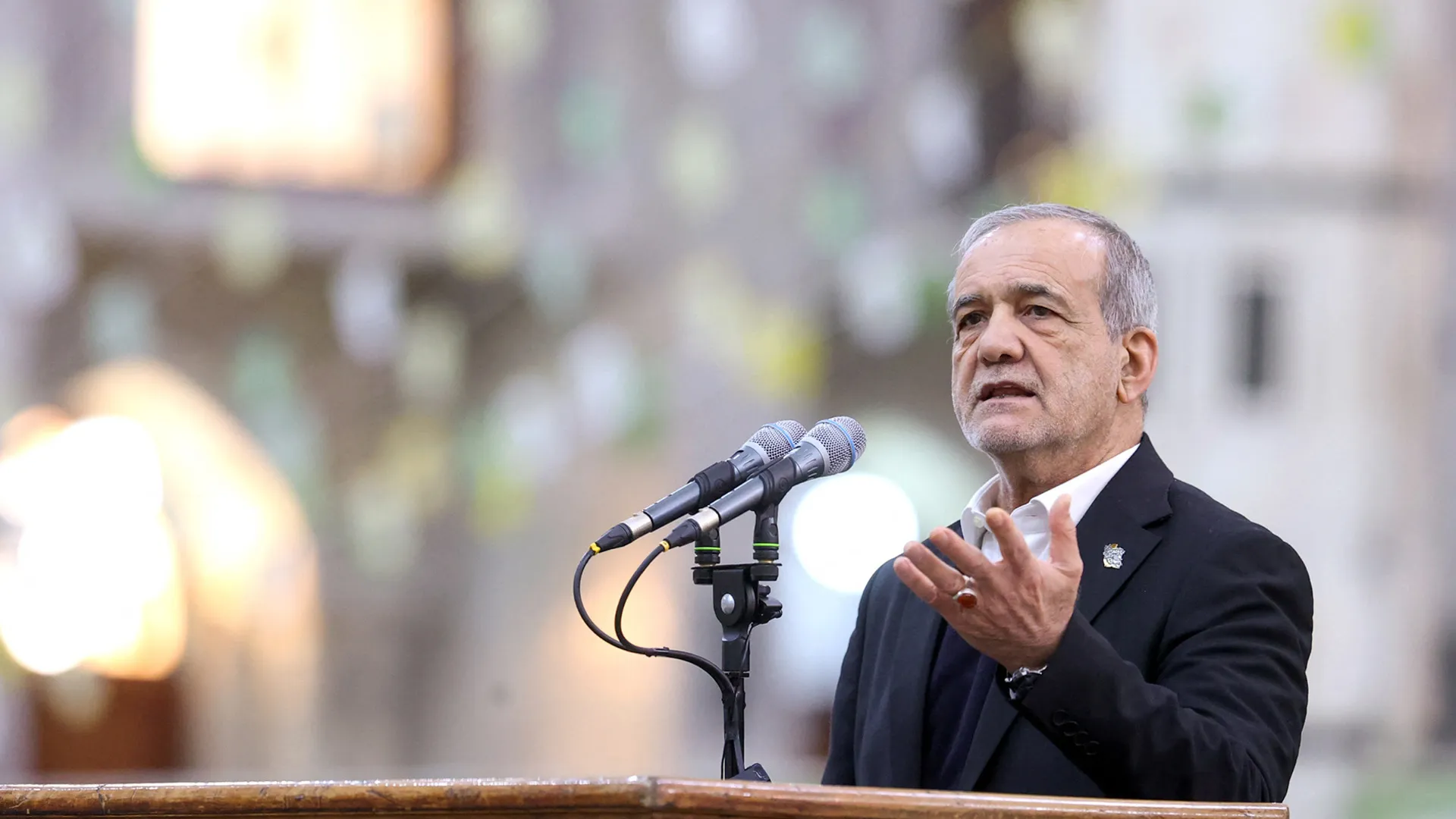
Iranian President Masoud Pezeshkian called for national unity in the face of external threats while insisting that his government is willing to negotiate over its nuclear programme.
Addressing the crowds in Tehran’s Azadi Square, Pezeshkian called for solidarity among Iranians in the face of “conspiracies from imperial powers”.
Competing chants
Huge fireworks exploding around the iconic Milad Tower on Tuesday night to celebrate the revolution anniversary were so loud that they alarmed some residents and hearkened back to the bombing runs of Israeli fighter jets during the 12-day war.
Translation: I was driving when suddenly there was the sound of an explosion and the sky lit up, I thought only that it was war and that I had to be beside my parents. I lifted my head again and saw that it was fireworks – as if they were shooting into people’s hearts to prove it wasn’t war. It was worse, because the elites were celebrating while we’re in mourning for those fallen [during the protests]. In Tehran and across the country, the authorities called on supporters of the establishment to shout “Allahu Akbar” in the streets and from their homes at 9pm local time on Tuesday night. Numerous videos circulating online show some people shouting those words, only to be met by competing shouts of “Death to the dictator” or cursing from their neighbours.
The authorities also discussed the nationwide protests during Wednesday’s events, and celebrated what they described as a triumph over “enemies”.
Ahmad Vahidi, the deputy head of the IRGC, told a state-organised event in Shiraz that Wednesday’s rallies marked a third “great defeat” for the US and Israel over recent months.
He said the 12-day war was the first one, and the second was the state-organised counterdemonstrations held on January 12, days after most of the protest killings were carried out on the nights of January 8 and 9.
Like Vahidi, police chief Ahmad-Reza Radan called the protests another “sedition” and said they were “a great project by the global arrogance” that was quashed.
The Iranian government claims that 3,117 people lost their lives during the unprecedented protest killings, all of them at the hands of “terrorists” and “rioters” armed and funded from abroad.
The US-based Human Rights Activists News Agency says it has confirmed about 7,000 deaths so far and is investigating nearly 12,000 other cases. United Nations Special Rapporteur on Iran Mai Sato said more than 20,000 civilians may have been killed but information remains limited amid heavy internet filtering by the state.
The UN and international human rights organisations have accused state security forces of being behind the killings. The UN Human Rights Council last month issued a resolution condemning the killings and calling on the Islamic republic to “prevent extrajudicial killing, other forms of arbitrary deprivation of life, enforced disappearance, sexual and gender-based violence” and other actions violating its human rights obligations.
Iran’s President Masoud Pezeshkian spoke out against intervention by ‘alien Westerners’ during a rally to mark the anniversary of the Islamic revolution. Celebrations have been taking place after weeks of US threats of military action.
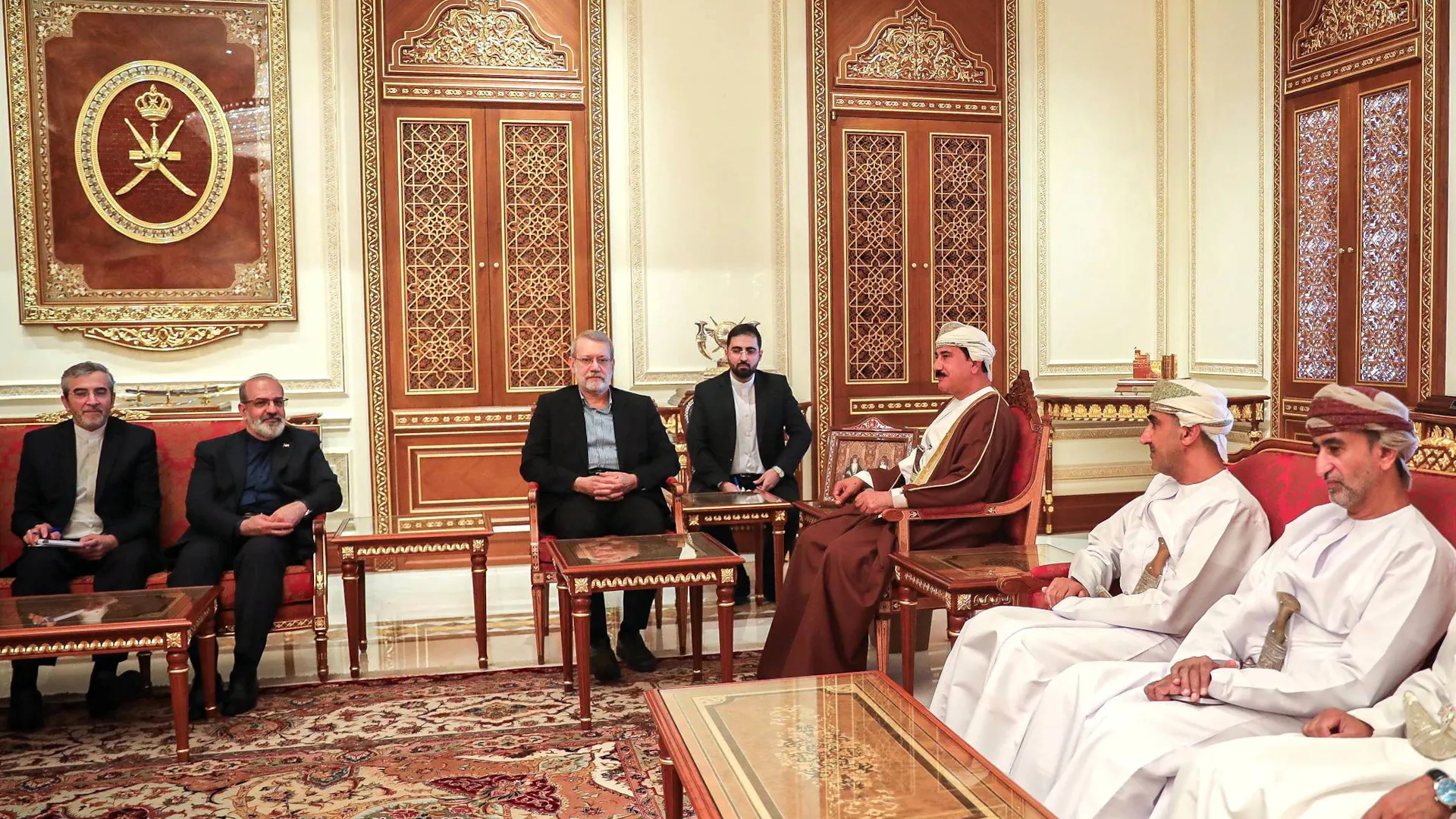
Senior Iranian official Ali Larijani has said Tehran is ready to engage in ‘realistic’ nuclear talks with the United States. Speaking in Muscat during a visit to mediator nation Oman, he said issues must be resolved through dialogue and not the ‘language of force’.
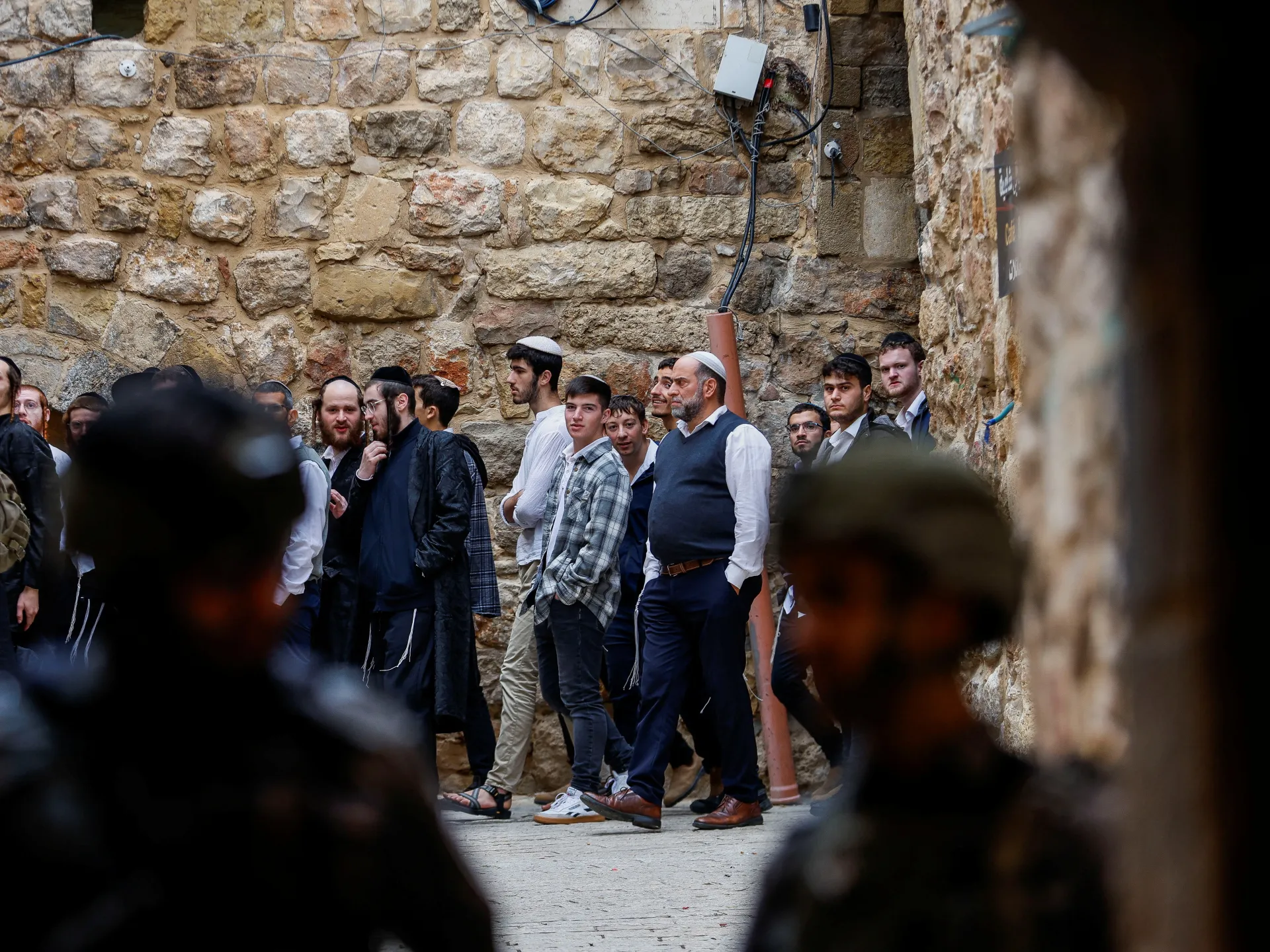
Israeli government moves to change rules around land registration in the West Bank, making it easier for Israeli Jews to buy property in the illegally occupied territory, are raising alarm among Palestinians, fearful that the new rules will establish defacto Israeli annexation.
The Israeli cabinet announced the decisions on Sunday. In addition to allowing Jews to buy property in the West Bank – a Palestinian territory that Israel has occupied since 1967 in defiance of international law – the Israeli government has also ordered that land registries in the West Bank be opened up to the public.
That means that it will be easier for Israelis looking to take territory in the West Bank to find out who the owner of the land is, opening them up to harassment and pressure.
The cabinet also decreed that authority over building permits for illegal Jewish settlements in Hebron, and the Ibrahimi Mosque compound, would pass to Israel from the Palestinian Hebron municipality.
Moataz Abu Sneina has seen Israel’s efforts to seize Palestinian land first hand. He is the director of the Ibrahimi Mosque in Hebron, a Palestinian national symbol and an important Islamic holy site due to its connection to the Prophet Ibrahim, also known as Abraham.
Abu Sneina said that the latest Israeli decisions reflect a clear intention to increase Israeli control over Hebron’s Old City, and the Ibrahimi Mosque compound.
“What is happening today is the most serious development since 1967,” Abu Sneina said. “We view it with grave concern for the Old City and the Ibrahimi Mosque, which is the symbol and beating heart of Hebron, and the shrine of the patriarchs and prophets.”
The Ibrahimi Mosque site is also revered by Jews, who refer to it as the Tomb of the Patriarchs.
An Israeli Jewish settler killed 29 Palestinians after opening fire on Muslims praying at the mosque in 1994. Shortly afterwards, Israeli authorities divided the site into Jewish and Muslim prayer areas, and far-right Israeli settlers continue to strengthen their control over areas of Hebron.
Despite only numbering a few hundred, the settlers have taken over large areas of the city centre, protected by the Israeli military.
Abu Sneina explained that Israel has repeatedly attempted to strengthen its foothold inside Hebron and the mosque, and that the latest government moves are a continuation of Israeli policy that has only increased since the October 2023 start of Israel’s genocidal war on Gaza.
“This has taken the form of increased settler incursions, restrictions on worshippers, control over entry and exit, and bans on the call to prayer – all part of a systematic policy aimed at complete control over the holy site,” Abu Sneina said.
“[Israel] continues to violate all agreements, foremost the Hebron Protocol, closing most entrances to the mosque and leaving only one fully controlled access point,” he added. “This paves the way for a new division or an even harsher reality than the temporal and spatial division imposed since the 1994 massacre.”
Taking over Hebron
Mohannad al-Jaabari, the director of the Hebron Rehabilitation Committee, a Palestinian organisation focused on the restoration of Hebron’s Old City, said that the Israeli government was already increasing its presence on the ground, in an effort to take control of the city.
He pointed to the confiscation of shops belonging to the Hebron Municipality in the Old City, the construction of dozens of illegal settlement units, and the reconfiguration of water pipes by connecting them to an Israeli water company’s network, creating what he described as “a massive apartheid system”.
Al-Jaabari warned that the ultimate goal is to establish a Jewish quarter linking settlements to the Ibrahimi Mosque by emptying Palestinian neighbourhoods of their residents.
“All Hebron institutions are preparing for a difficult phase,” he said. “We are bracing for a fierce attack on Palestinian institutions, foremost the Rehabilitation Committee.”
The Israeli government’s latest decisions open the door for what has happened in Hebron to happen elsewhere, with Israeli settlers establishing a presence in other Palestinian cities, forcing locals out, experts say.
Nabil Faraj, a Palestinian journalist and political analyst, called the Israeli government’s moves “dangerous” and added that they “have driven the final nail into the coffin of the peace process”.
He explained that Israel is reengineering the geographic landscape of the West Bank, expanding infrastructure to serve settlements, and seeking to strip the Palestinian Authority of administrative and security control.
The Hebron model
Palestinians in Bethlehem are now worried that they will get a taste of what Hebron has already experienced.
One of the Israeli cabinet’s decisions on Sunday stipulated that the Bilal bin Rabah Mosque in the city, known to Jews as Rachel’s Tomb, would be placed under Israeli administration for cleaning and maintenance, after previously being under the jurisdiction of the Bethlehem municipality. The mosque’s cemetery has also been affected.
“It will affect the living and the dead,” said Bassam Abu Srour, who lives in Bethlehem’s Aida refugee camp. “Annexing the area would prevent burials and visits to the Islamic cemetery. This is extremely serious and completely unacceptable to us.”
In Bethlehem, Hebron, and the rest of the West Bank, Palestinians feel powerless to stop what they view as a creeping annexation.
Mamdouh al-Natsheh, a shop owner in Hebron, said he now has a growing sense that what is unfolding is an attempt to impose a permanent reality.
“The city is being taken from its people step by step,” he said. “Daily restrictions are turning it into a fixed policy that suffocates every detail of life.”
He added that the deepest impact is on children and young people, growing up in a city that is “divided and constantly monitored”, stripping them of a natural sense of the future.
“I fear the day will come when we are told this area has been officially annexed, and that our presence depends on permits,” al-Natsheh said. “In Hebron, a house is not just walls – it is history and identity. Any annexation means the loss of security and stability.”
Leqaa Kordia’s family say they were left in the dark when the 33-year-old was rushed from an immigration detention centre in Texas to a nearby hospital late last week.
For more than 12 hours, Kordia’s family and legal representation said they were given no information about her whereabouts and condition. Her cousin, Hamzah Abushaban, said the family was “stonewalled, like hardcore”, as they searched for answers.
Recommended Stories
list of 3 itemsend of list
“Full transparency: Many people in her family thought she might have died, especially with the secrecy of her condition,” Abushaban told Al Jazeera. “Sometimes, silence speaks for itself.”
Her family and legal team confirmed on Tuesday that she has been released from the hospital. Kordia had suffered a seizure, but her family has only had fleeting contact with her since the medical emergency.
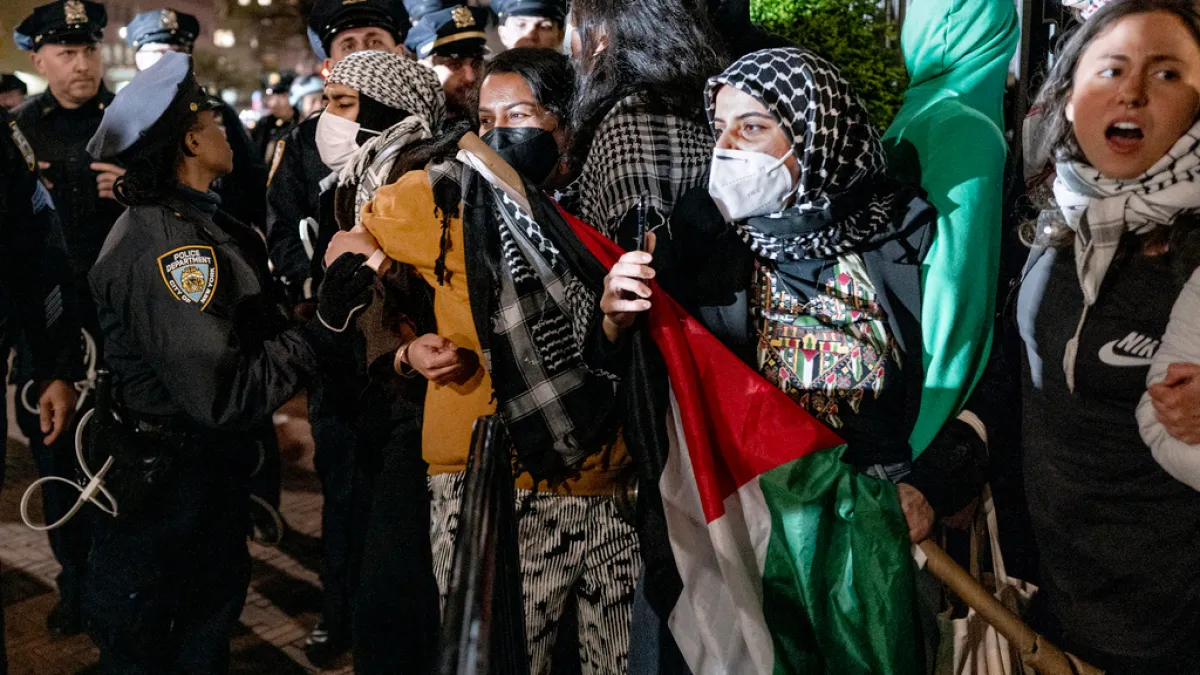
The ordeal is the latest turn in Kordia’s nearly yearlong detention, which began when she was among several protesters targeted by immigration officials for taking part in pro-Palestine demonstrations at Columbia University in 2024.
Kordia remains the only person targeted in connection with the demonstration who is still in immigration detention.
Personal losses helped inspire her protest: Nearly 200 members of her family have been killed in Israel’s genocidal war on Gaza.
Her recent medical emergency underscores the dangers she faces from her continued detention, not to mention the urgent need for her release, according to Abushaban.
“She’s a fighter, but she’s not fooling anyone,” he said. “She’s still very sick”
‘Arbitrarily detained’
On Monday, Amnesty International joined calls for Kordia’s release, echoing her family’s assertion that she is being unfairly targeted for her pro-Palestine advocacy.
“She has been arbitrarily detained for over ten months for exercising her rights to free speech and protest,” Justin Mazzola, the deputy director of research at Amnesty International USA, said in a statement.
“The Trump administration must stop playing cruel political games with Leqaa’s life. Leqaa Kordia must be immediately released, and there must be accountability for the flagrant violation of her human rights.”
Kordia’s lawyers have also alleged unjust treatment, noting that federal judges had twice ruled she was eligible to be released on bond.
Each time, her release has been blocked after immigration officials filed “discretionary stay” requests to keep her in custody while the government appealed.
Since March 2025, the administration of President Donald Trump has targeted a range of student activists for deportation. They include Mahmoud Khalil and Mohsen Mahdawi, both of Columbia University, and Rumeysa Ozturk, who attended Tufts University in Massachusetts.
But those pro-Palestinian student activists have all successfully petitioned for their release as their cases continue in immigration court, though courts have signalled that they could be taken back into custody.
Kordia, however, has not had that same success.
Kordia came to the US in 2016 from the town of Ramallah in the occupied West Bank. Initially, she arrived using a visitor’s visa, later transitioning to a student visa.
Eventually, she applied for permanent residency through her mother, a US citizen residing in New Jersey.
But her legal team has said she was wrongly advised by a trusted mentor that the initial approval of her application meant she had legal status. She subsequently allowed her student visa to lapse.
Immigration officials have, in turn, maintained that Kordia was detained for overstaying her student visa, not for her pro-Palestine advocacy.
However, in an initial news release announcing Kordia’s arrest in March 2025, the Department of Homeland Security suggested that she and a second protester – who allegedly “self-deported” – were targeted for their advocacy.
“It is a privilege to be granted a visa to live and study in the United States of America,” Homeland Security Secretary Kristi Noem said in the release.
“When you advocate for violence and terrorism, that privilege should be revoked, and you should not be in this country.”
‘Intentionally dehumanising’
In his statement on Monday, Mazzola accused immigration officials of showing “blatant disregard” for Kordia’s human rights in detention, pointing to the deterioration of her health.
Kordia has been held at the Prairieland Detention Facility, some 2,400km (1,500 miles) away from her family in New Jersey.
Laila El-Haddad, an author and advocate, said she visited Kordia in December, finding her “very thin, very gaunt” as she complained about unsanitary conditions and a lack of nutritious food at the crowded facility.
“She talked about this being a place that is intentionally dehumanising; that aims to strip her and others of their dignity and their humanity,” she told Al Jazeera.
Kordia’s lawyers and family, meanwhile, said she regularly suffers dizzy spells, fainting and other signs of subpar nutrition.
Still, El-Haddad found that Kordia remained upbeat, and she described the 33-year-old as a pillar of support for other detainees.
“She’s very humble. She kept talking about how ‘I’m not a leader or an activist,’” El-Haddad remembered.
El-Hadded added that Kordia’s case has not gotten as much attention as those of other student protesters, but her story is just as powerful.
“She wasn’t a public-facing activist or speaker in the way some of the other [targeted protesters] were,” El-Hadded explained.
“But she found herself in a position and felt compelled [to protest] because of her own humanity and because she was a person with a deep moral compass and consciousness to act and to speak out.”
Abushaban said he has felt Kordia’s absence acutely at family events. It has been a year of missed birthdays, holidays and other gatherings.
He called for US officials, regardless of political affiliation, to have empathy for her plight.
“I was born and raised here, and the rest of my family were all born and raised here,” he said. “And just because we are Palestinians, we still have to feel suppressed in this country.”


![Eman Hassaneh and her 10-year-old son, Zaid [Al Jazeera]](https://i0.wp.com/www.aljazeera.com/wp-content/uploads/2026/02/Eman-Hassaneh-and-her-son-Zaid-2-1770951543.jpg?w=640&ssl=1)
![Abu Zaid al-Hajj with his twin sons, Muhammad and Ahmed, age 10 [Al Jazeera]](https://i0.wp.com/www.aljazeera.com/wp-content/uploads/2026/02/Abu-Zaid-Al-Hajj-with-his-sons-Muhammad-and-Ahmed-2-1770951593.jpg?w=640&ssl=1)