Middle East

Africa Cup of Nations 2025: Full match schedule, teams, groups and format | Football News

  • The Africa Cup of Nations, commonly known as AFCON, will be held in Morocco this year and kicks off in the capital, Rabat, on Sunday.
  • Host nation Morocco take on Comoros in the opening match of the four week tournament.
  • The final will be held on January 18 at the 69,500-capacity Prince Moulay Abdellah Stadium in Rabat.
  • Nine venues across six cities have been selected for the continental showpiece event.
  • The 24 participating teams have been drawn into six groups, with 68 matches in total.
  • The group stage will run until December 31, with the knockout stage starting on January 3.

Here are the details on the teams, groups, format, match fixtures, kickoff times and venues for AFCON 2025:

Teams and groups

Group A: Morocco, Mali, Zambia, Comoros
Group B: Egypt, South Africa, Angola, Zimbabwe
Group C: Nigeria, Tunisia, Uganda, Tanzania
Group D: Senegal, DR Congo, Benin, Botswana
Group E: Algeria, Burkina Faso, Equatorial Guinea, Sudan
Group F: Ivory Coast, Cameroon, Gabon, Mozambique

Recommended Stories

list of 4 itemsend of list

Format

The top two teams of each group, along with the best four third-placed teams, will advance to the knockout stage, beginning with the round of 16. That is followed by the quarterfinals, semifinals and the final. There is also a third-place playoff between the two losing semifinalists.

In the knockout stages, if a match is level at the end of normal playing time, teams will play 30 minutes of extra time and, if required, a penalty shootout.

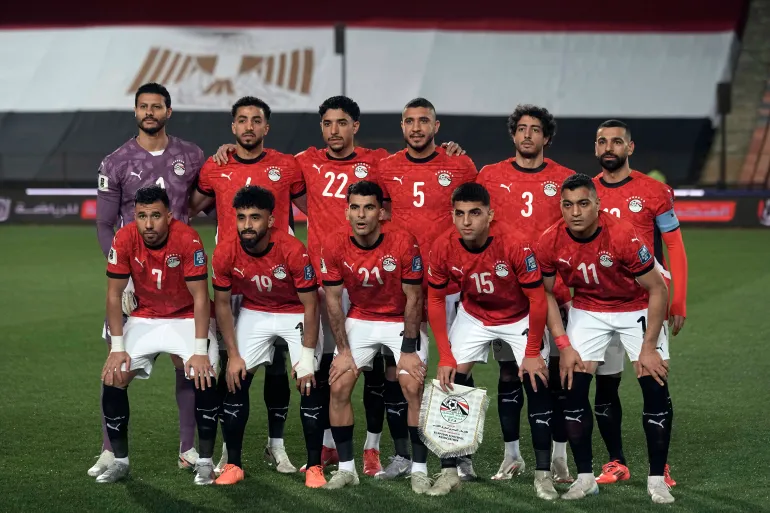
Egypt's national team soccer players pose for a group picture before their match with Sierra Leone in the World Cup 2026 qualifying soccer match at Cairo International Stadium, Egypt, Tuesday, March 25, 2025. (AP Photo/Amr Nabil)
Egypt are the most successful team in Africa with a record seven AFCON titles, though they last won the trophy in 2010 [File: Amr Nabil/AP]

Match schedule

⚽ Group Stage

December 21

Group A: Morocco vs Comoros (Prince Moulay Abdellah Stadium, 8pm/19:00 GMT)

December 22

Group A: Mali vs Zambia (Stade Mohammed V, 3:30pm/14:30 GMT)

Group B: Egypt vs Zimbabwe (Adrar Stadium, 6pm/17:00 GMT)

Group B: South Africa vs Angola (Marrakesh Stadium, 8:30pm/19:30 GMT)

December 23

Group C: Nigeria vs Tanzania (Fez Stadium, 1pm/12:00 GMT)

Group C: Tunisia vs Uganda (Prince Moulay Abdellah Stadium, 3:30pm/14:30 GMT)

Group D: Senegal vs Botswana (Ibn Batouta Stadium, 6pm/17:00 GMT)

Group D: DR Congo vs Benin (Al Barid Stadium, 8:30pm/19:30 GMT)

December 24

Group E: Algeria vs Sudan (Moulay Hassan Stadium, 1pm/12:00 GMT)

Group E: Burkina Faso vs Equatorial Guinea (Stade Mohammed V, 3:30pm/14:30 GMT)

Group F: Ivory Coast vs Mozambique (Marrakesh Stadium, 6pm/17:00 GMT)

Group F: Cameroon vs Gabon(Adrar Stadium, 8:30pm/19:30 GMT)

Rest day on Christmas

December 26

Group A: Morocco vs Mali (Prince Moulay Abdellah Stadium, 1pm/12:00 GMT)

Group A: Zambia vs Comoros (Stade Mohammed V, 3:30pm/14:30 GMT)

Group B: Egypt vs South Africa (Adrar Stadium, 6pm/17:00 GMT)

Group B: Angola vs Zimbabwe (Marrakesh Stadium, 8:30pm/19:30 GMT)

December 27

Group C: Nigeria vs Tunisia (Fez Stadium, 1pm/12:00 GMT)

Group C: Uganda vs Tanzania (Al Barid Stadium, 3:30pm/14:30 GMT)

Group D: Senegal vs DR Congo (Ibn Batouta Stadium, 6pm/17:00 GMT)

Group D: Benin vs Botswana (Prince Moulay Abdellah Stadium, 8:30pm/19:30 GMT)

December 28

Group E: Algeria vs Burkina Faso (Moulay Hassan Stadium, 1pm/12:00 GMT)

Group E: Equatorial Guinea vs Sudan (Stade Mohammed V, 3:30pm/14:30 GMT)

Group F: Ivory Coast vs Cameroon (Marrakesh Stadium, 6pm/17:00 GMT)

Group F: Gabon vs Mozambique (Adrar Stadium, 8:30pm/19:30 GMT)

December 29

Group A: Comoros vs Mali (Stade Mohammed V, 6:30pm/17:30 GMT)

Group A: Zambia vs Morocco (Prince Moulay Abdellah Stadium, 6:30pm/17:30 GMT)

Group B: Angola vs Egypt (Adrar Stadium, 8:30pm/19:30 GMT)

Group B: Zimbabwe vs South Africa (Marrakesh Stadium, 8:30pm/19:30 GMT)

December 30

Group C: Tanzania vs Tunisia (Prince Moulay Abdellah Stadium, 6pm/17:00 GMT)

Group C: Uganda vs Nigeria (Fez Stadium, 6pm/17:00 GMT)

Group D: Benin vs Senegal (Ibn Batouta Stadium, 8:30pm/19:30 GMT)

Group D: Botswana vs DR Congo (Al Barid Stadium, 8:30pm/19:30 GMT)

December 31

Group E: Equatorial Guinea vs Algeria (Moulay Hassan Stadium, 6pm/17:00 GMT)

Group E: Sudan vs Burkina Faso (Stade Mohammed V, 6pm/17:00 GMT)

Group F: Gabon vs Ivory Coast (Marrakesh Stadium, 8:30pm/19:30 GMT)

Group F: Mozambique vs Cameroon (Adrar Stadium, 8:30pm/19:30 GMT)

Rest days on January 1 and 2 

External view of Prince Moulay Abdellah Stadium.
External view of the 69,500-capacity Prince Moulay Abdellah Stadium in Rabat, which will be used for the AFCON final on January 18 [Emre Asikci/Anadolu via Getty Images]

⚽ Round of 16

January 3

Winner Group D vs 3rd Group B/E/F (Ibn Batouta Stadium, 6pm/17:00 GMT)

Runner-up Group A vs Runner-up Group C (Stade Mohammed V, 8:30pm local/19:30 GMT)

January 4

Winner Group A vs 3rd Group C/D/E (Prince Moulay Abdellah Stadium, 6pm/17:00 GMT)

Runner-up Group B vs Runner-up Group F (Al Barid Stadium, 8:30pm local/19:30 GMT)

January 5

Winner Group B vs 3rd Group A/C/D (Adrar Stadium, 6pm/17:00 GMT)

Winner Group C vs 3rd Group A/B/F (Fez Stadium, 8:30pm local/19:30 GMT)

January 6

Winner Group E vs Runner-up Group D (Moulay Hassan Stadium, 6pm/17:00 GMT)

Winner Group F vs Runner-up Group E (Marrakesh Stadium, 8:30pm local/19:30 GMT)

Rest days on January 7 and 8

⚽ Quarterfinals

January 9

Quarterfinal 1 (Ibn Batouta Stadium, 6pm/17:00 GMT)

Quarterfinal 2 (Prince Moulay Abdellah Stadium, 8:30pm/19:30 GMT)

January 10

Quarterfinal 3 (Marrakesh Stadium, 6pm/17:00 GMT)

Quarterfinal 4 (Adrar Stadium, 8:30pm/19:30 GMT)

Rest days on January 11, 12 and 13 

⚽ Semifinals

January 14

Winner QF1 vs Winner QF4 (Ibn Batouta Stadium, 6pm/17:00 GMT)

Winner QF3 vs Winner QF2 (Prince Moulay Abdellah Stadium, 8:30pm/19:30 GMT)

Rest days on January 15 and 16

⚽ Third-place playoff

January 17

Loser SF1 vs Loser SF2 (Stade Mohammed V, 8pm local/19:00 GMT)

⚽ Final

January 18

Winner SF1 vs Winner SF2 (Prince Moulay Abdellah Stadium, 8pm local/19:00 GMT)

Interior view of Prince Moulay Abdellah Stadium.
Internal view of the Prince Moulay Abdellah Stadium in Rabat [File: Emre Asikci/Anadolu via Getty Images]

Source link

Questions linger about gun reform, anti-Semitism after Bondi Beach shooting | Gun Violence News

Australian Prime Minister Anthony Albanese has pledged a review of his country’s gun laws and added support for Jewish Australians, as his government faces scrutiny following a deadly shooting at Sydney’s Bondi Beach.

On Monday afternoon, Albanese faced reporters to answer questions about the shooting, which took place a day earlier, during a local Hanukkah celebration. At least 15 people have died, including a 10-year-old girl, and dozens are reported injured.

Recommended Stories

list of 4 itemsend of list

“What we saw yesterday was an act of pure evil, an act of terror, an act of anti-Semitism: an attack on the first day of Hanukkah, targeted at the Jewish community,” Albanese said in prepared remarks, after visiting the crime scene.

“A dark day in Australia’s history, on what should have been a day of light.”

The Australian government has yet to name the suspected attackers, identifying them only as a 50-year-old man and his 24-year-old son. The father died in a shootout with police, while the son is currently being treated at a local hospital.

Hanukkah is sometimes called the Festival of Lights, and in Monday’s news conference, Albanese encouraged Australians to participate in a show of solidarity with the country’s Jewish community.

“I would urge and join with others who have urged Australians across the country to light a candle, put it in their front window tonight at 6:47pm [19:47 GMT] to show that light will indeed defeat darkness – part of what Hanukkah celebrates, of course,” he said. “We are stronger than the cowards who did this.”

But while Albanese and other officials urged calm, critics questioned whether the government had done enough to curtail both anti-Semitism and gun violence.

Netanyahu spurs scrutiny

One of Albanese’s highest-profile critics in the wake of the attack was Israeli Prime Minister Benjamin Netanyahu.

The right-wing Israeli leader blamed Albanese’s centre-left government for failing to protect Australia’s Jewish community. He also linked the shooting to Australia’s recent decision to recognise Palestinian statehood.

“Your call for a Palestinian state pours fuel on the anti-Semitic fire,” Netanyahu said in remarks directed at Albanese, voicing sentiments he later repeated in a social media post.

“It emboldens those who menace Australian Jews and encourages the Jew hatred now stalking your streets.”

Those remarks fuelled outrage and accusations that Netanyahu was leveraging the tragedy for political aims.

In a post on social media, UN special rapporteur Ben Saul also criticised Netanyahu for linking Australia’s recognition of Palestinian statehood to Sunday’s shootings.

“I am disgusted that the Israeli PM links Australia’s principled support for a Palestinian State with yesterday’s terrorist attack in Bondi,” said Saul, who also serves as an international law chair at the University of Sydney.

“Australia has taken extensive measures to prevent anti-semitism,” Saul added.

When asked on Monday morning about Netanyahu’s remarks, Albanese said his focus was on bringing people together.

“This is a moment for national unity,” the Australian prime minister told reporters in Sydney. “This is a moment for Australians to come together. That’s precisely what we’ll be doing.”

He also said his government would beef up funding and support to protect Jewish community members, including covering the costs of guard services.

“We’re extending the funding for the National Council for Jewish Community Security and its state-based community security groups, to provide overall security cover to the Jewish community,” Albanese said.

“We’re also working with Jewish community organisations to see how we can best support charity efforts, including through tax-deductible status for donations.”

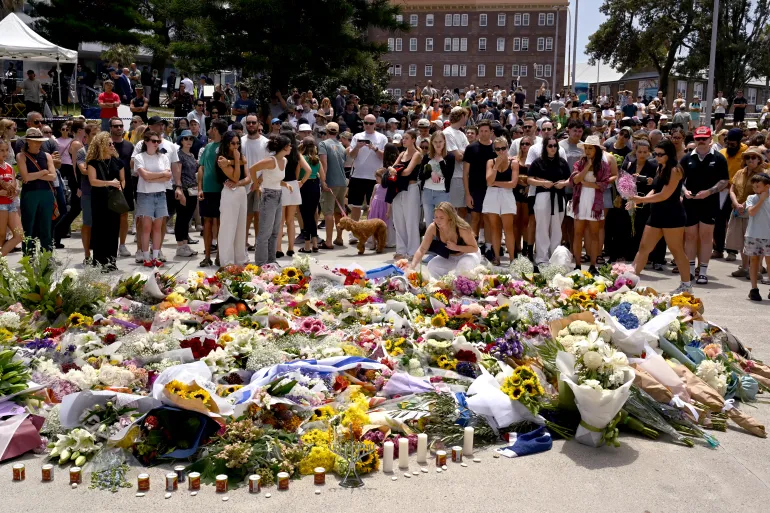
Mourners gather by floral tributes at the Bondi Pavillion in memory of the victims of a shooting at Bondi Beach, in Sydney on December 15, 2025.
Mourners gather by floral tributes at the Bondi Pavilion in Sydney on December 15, 2025 [Saeed Khan/AFP]

Australia’s gun reforms under scrutiny

Albanese also told reporters on Monday afternoon that he would be convening a meeting of state premiers to discuss “tougher gun laws, including limits on the number of guns that can be used or licensed by individuals”.

“People’s circumstances change. People can be radicalised over a period of time. Licences should not be in perpetuity,” said Albanese.

His remarks follow questions about the six guns recovered from the scene of the shooting and the revelation that the 24-year-old suspect had previously come under police scrutiny.

Officials have repeatedly said the 50-year-old suspect had “met the eligibility criteria for a firearms licence”, and that the 24-year-old was previously not deemed to be a threat.

Australia introduced some of the world’s strictest gun laws, including bans on automatic and semiautomatic rifles and shotguns, after a shooter killed 35 people in the Tasmanian town of Port Arthur in 1996.

The 1996 reforms, introduced under former Prime Minister John Howard, were hailed as a success after Australia saw no mass shootings occur for close to two decades.

However, according to a recent report from the Australia Institute, the implementation of the laws has lapsed in recent years, with more guns now in the country than before 1996.

On Monday, Albanese said the reforms had “made an enormous difference” and were a “proud moment” of bipartisan action, but that reviews were now needed to ensure better coordination between states.

Chris Minns, the premier of New South Wales, where the shooting took place, also told reporters on Monday he would be reviewing gun laws.

“We want to make sure that prospective reform and change in New South Wales has a lasting impact,” Minns said. “It’s not the last time I’ll be mentioning it, and you can expect action soon.”

Sunday’s shooting at Bondi Beach follows several other mass shootings in recent years, including a 2022 attack in Wieambilla, Queensland, linked to Christian fundamentalist ideology that left six people dead.

An Australian man was also responsible for the attack in 2019 that killed 51 people at a mosque in Christchurch, New Zealand, where semiautomatic weapons are still sold.

Source link